
This article discusses psychoactive substances intended for adults (18+). If you have a health condition or take medication, consult a doctor before use. Our age policy
Blue Lotus vs Kanna: Effects & Safety
Definition
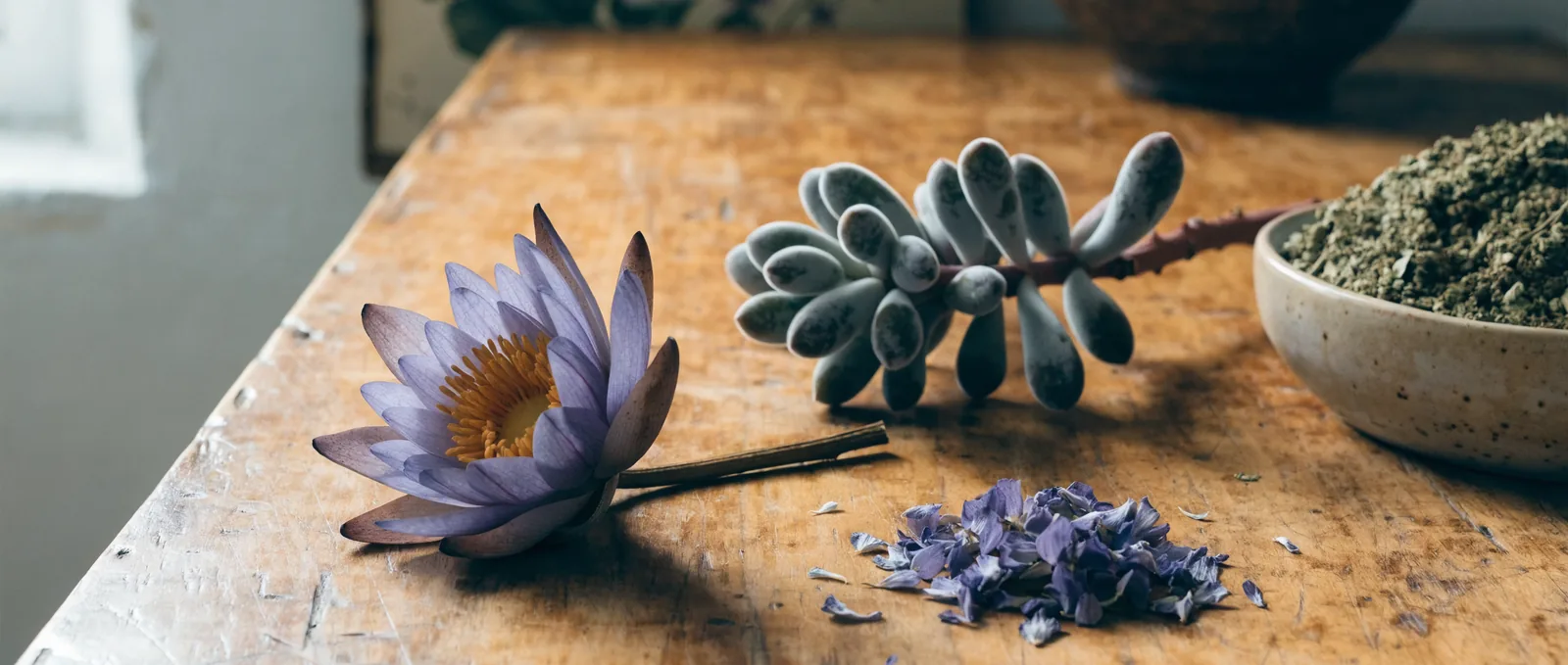
Blue lotus (Nymphaea caerulea) and kanna (Sceletium tortuosum) are two botanically unrelated plants that both get shelved under 'relaxing herbs' but work through entirely different receptor systems — dopaminergic aporphines in one, serotonergic mesembrines in the other (Harvey et al., 2011).
18+ only This guide is written for adults. Effects and dosing ranges described below apply to adult physiology; neither botanical is appropriate for people under 18.
Blue lotus vs kanna is a comparison between two unrelated botanicals that both get shelved as "relaxing herbs" but act on entirely different receptor systems — dopaminergic in one, serotonergic in the other. People weighing up blue lotus vs kanna usually want the same thing — a gentle, plant-based softening of the evening — but the two work in completely different ways. Blue lotus (Nymphaea caerulea) sits in the dopaminergic corner via aporphine alkaloids; kanna (Sceletium tortuosum) is a serotonergic actor built around mesembrine. Same shelf at the smartshop when you buy either, different pharmacology entirely.
Side-by-side at a glance
Blue lotus vs kanna differ across every meaningful dimension — family, alkaloids, mechanism, onset, duration and interaction risk. The table below lays out the core differences in one place.
| Dimension | Blue lotus (Nymphaea caerulea) | Kanna (Sceletium tortuosum) |
|---|---|---|
| Botanical family | Nymphaeaceae — a true water lily | Aizoaceae — a South African succulent |
| Principal alkaloids | Aporphines: nuciferine, apomorphine analogs (Poklis et al., 2017) | Mesembrine, mesembrenone, mesembrenol (Patnala & Kanfer, 2009) |
| Proposed mechanism | Partial dopamine D1/D2 receptor activity (contested in humans) | Serotonin reuptake inhibition + PDE4 inhibition (Harvey et al., 2011) |
| Reported character | Mild sedation, dream-tinged, warm-body | Anxiolytic, mood-lifting, mildly stimulating at low doses |
| Onset (tea/plant) | 30–60 minutes | 15–45 minutes |
| Duration | 2–4 hours | 1–3 hours |
| Traditional use window | Evening, pre-sleep, ceremonial | Daytime social/anxiety softening |
| Load-bearing interaction risk | Dopaminergic drugs; antihypertensives | SSRIs, SNRIs, MAOIs (serotonin syndrome risk) |
| Human research base | Thin; mostly chemistry and anecdote | Small clinical trials on Zembrin extract (Terburg et al., 2013) |
Two plants, two entirely different genera
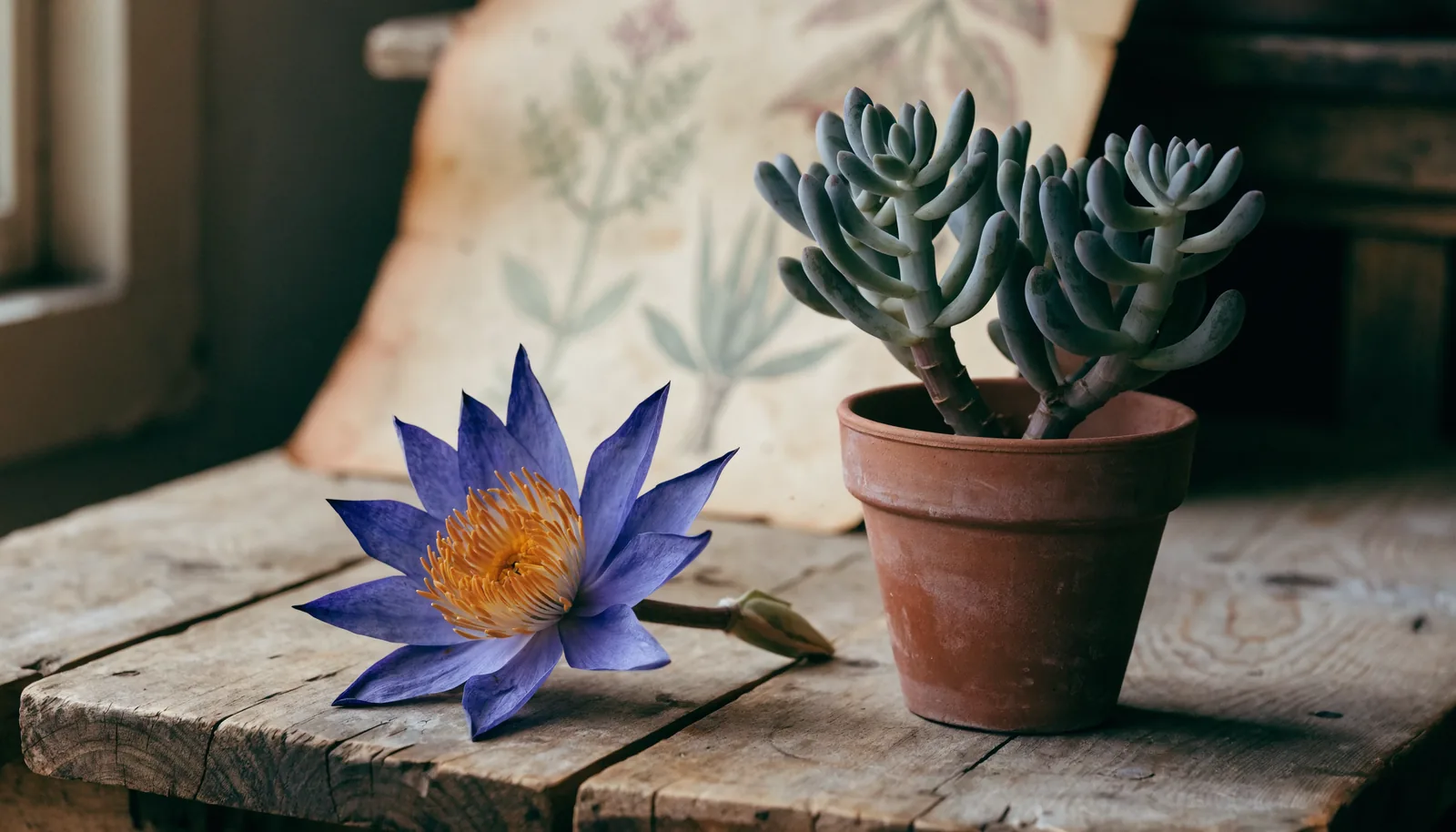
Blue lotus and kanna belong to completely separate botanical families with no shared ancestry. Blue lotus is Nymphaea caerulea, an aquatic Nymphaeaceae water lily best known from Egyptian tomb reliefs. Kanna is Sceletium tortuosum, a low-growing Aizoaceae succulent from the semi-arid Karoo region of South Africa, historically chewed or fermented by Khoisan communities (Smith et al., 1996). One grows in water, one grows in dust. Their chemistry followed those different environments in completely separate directions.
Everything downstream — the receptors they touch, the way they feel, who shouldn't use them — flows from that split. Treating blue lotus vs kanna as interchangeable "relaxing herbs" is where most confusion starts. Honest limitation: even ethnobotanical texts sometimes group them together for shelf convenience, and that framing has spread further than it should.
The chemistry split: aporphines vs mesembrines
The two plants contain entirely different alkaloid classes with no chemical overlap. Nymphaea caerulea contains aporphine alkaloids, principally nuciferine, with apomorphine and apomorphine analogs identified in analytical work on plant material (Poklis et al., 2017). Aporphines interact with dopamine receptors — the proposed pharmacological basis for the mild sedation and the dream-adjacent quality users describe. Human pharmacokinetic data is genuinely thin, so the mechanism remains contested rather than confirmed.
Sceletium tortuosum is a different story. Its active alkaloids are mesembrine, mesembrenone, mesembrenol and related structures (Patnala & Kanfer, 2009). Mesembrine acts as a serotonin reuptake inhibitor (SRI); mesembrenone additionally inhibits phosphodiesterase-4 (PDE4). A 2013 fMRI study of the standardised Zembrin extract (25mg) found reduced amygdala reactivity to fearful faces in healthy volunteers (Terburg et al., 2013) — small sample, but the mechanistic story is more grounded than blue lotus's.
The consequence: kanna's interaction profile lives in the serotonergic corner (SSRIs, SNRIs, MAOIs, tramadol, triptans), while blue lotus's lives in the dopaminergic and cardiovascular corner (Parkinson's medications, apomorphine itself, metoclopramide, domperidone, antihypertensives). The lotus interactions guide and the kanna and SSRIs article cover each side in full. The short version is that combining either with the wrong prescription is a serious concern, and combining them with each other stacks two poorly-characterised alkaloid classes with no clinical safety data at all.
How they actually feel (with hedges intact)
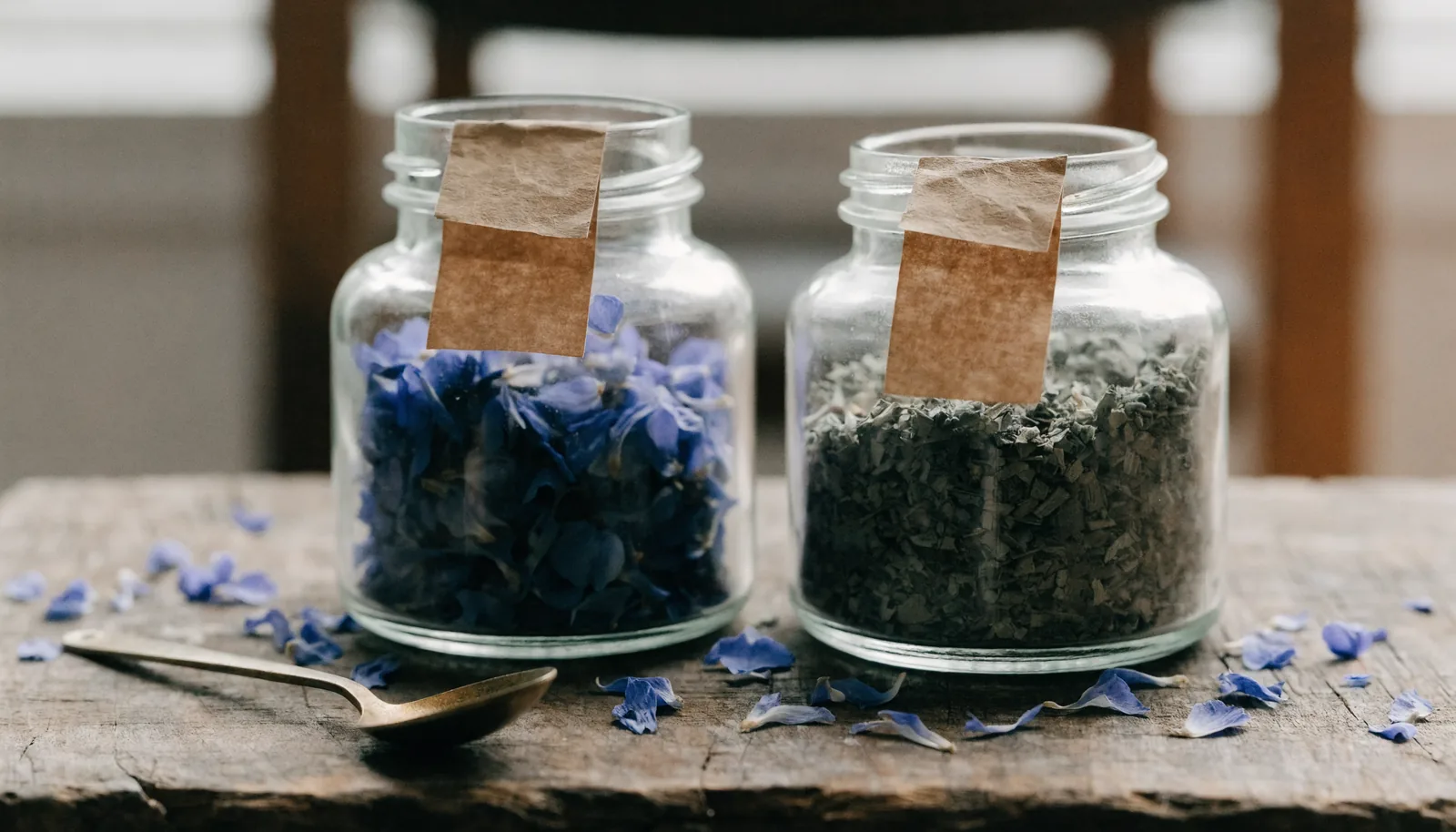
Blue lotus feels warm and sedating; kanna feels bright and anxiety-softening — that's the core experiential split. Users report blue lotus as a warm, slightly sedating, dream-tinged evening tea — not intoxicating in the way alcohol is, more of a soft glassy quality. The Nymphaeaceae we carry is typically brewed as a hot infusion from shredded petals or dosed as a concentrated extract, and the effect sits closer to a mild muscle-relaxant/anxiolytic tea than to any classical psychoactive category. Controlled human studies are absent, so "feels like" is genuinely all we have here.
Kanna is described more often as a daytime mood-softener — reduced social anxiety, mild lift, slight clarity — with users reporting that low doses can feel almost stimulating and higher doses more sedating. The Zembrin trial found measurable reduction in amygdala reactivity at 25mg (Terburg et al., 2013), which lines up with what users describe as "the edge coming off." At higher plant-material doses some users report mild nausea; unlike blue lotus, it isn't traditionally associated with dream effects.
Plant material vs extract — not interchangeable
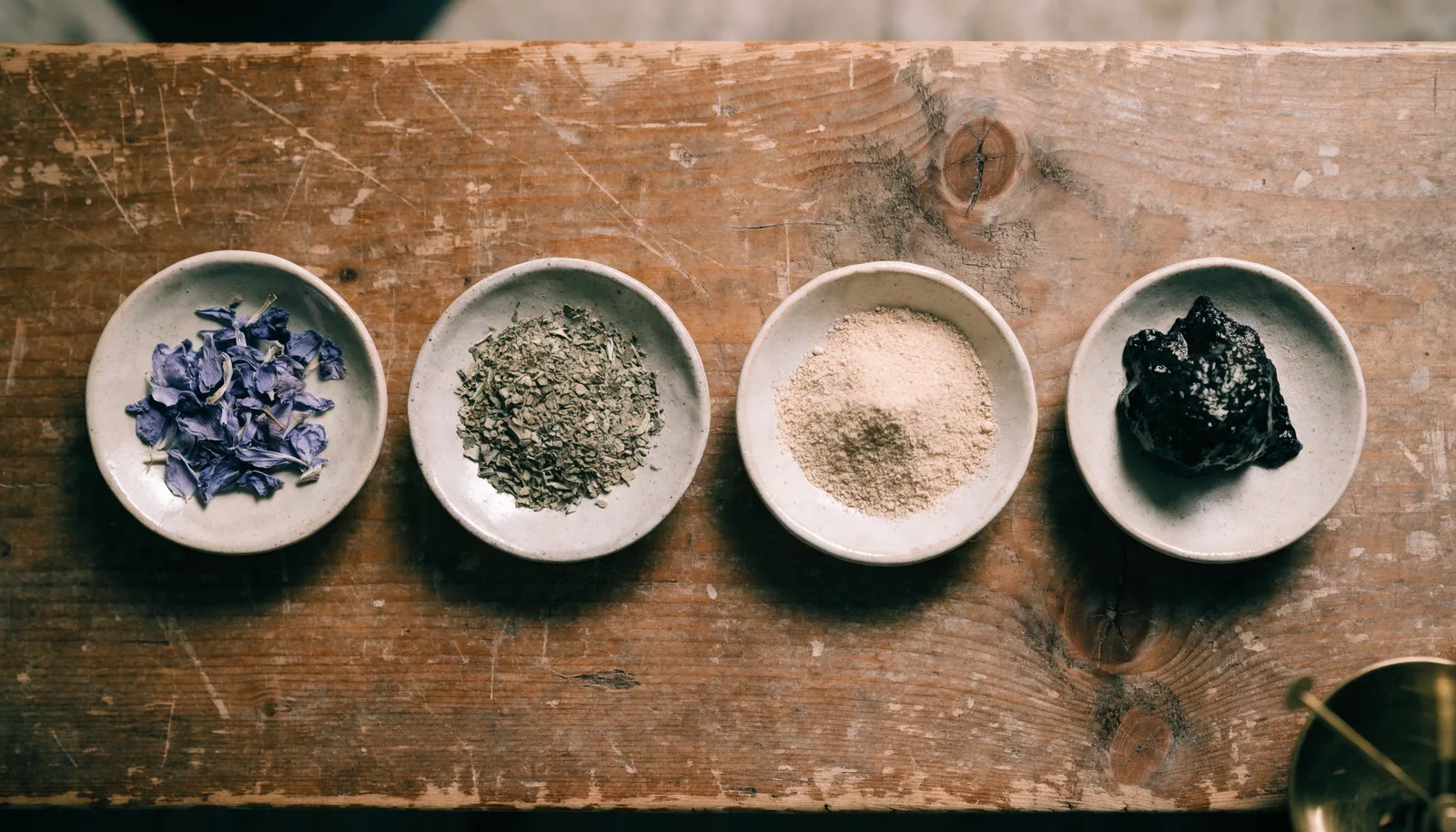
Extracts and raw plant material are not dose-equivalent for either botanical. This one matters equally for both. Shredded Nymphaea caerulea petals brewed as tea are a very different proposition to a 20x or 25x resin or powder concentrate — extracts concentrate the aporphine alkaloids relative to plant material, so effective extract doses are substantially smaller, and the cardiovascular/dopaminergic interaction concern applies with greater weight. Dose figures for shredded petals cannot be transferred onto extracts.
The same principle applies to kanna plant material versus extracts. Standardised extracts (like Zembrin, dosed clinically at 8–25mg) sit in a different range from crude fermented plant material (traditional doses cited in the ethnobotanical literature run 50–200mg of prepared herb; Smith et al., 1996). If you order or get either botanical in a new form, treat it as a new substance and recalibrate from the low end.
Who should skip one or both
Both botanicals share pregnancy, breastfeeding and machinery exclusions; beyond that the lists diverge sharply. Both share some baseline exclusions: pregnancy, breastfeeding, and driving or operating machinery within roughly four hours of use. Beyond that, the exclusion lists diverge.
Skip blue lotus if you take: levodopa, pramipexole, ropinirole, apomorphine (the same aporphine class, therapeutically prescribed), dopamine-active antiemetics like metoclopramide or domperidone, or antihypertensives — the additive blood-pressure lowering is the load-bearing concern. Uncontrolled hypertension or hypotension is an exclusion in its own right. MAOIs are a theoretical concern via the aporphine class.
Skip kanna if you take: SSRIs, SNRIs, MAOIs, tramadol, triptans, or any other serotonergic medication — the SRI activity of mesembrine creates a serotonin syndrome risk. This is the single most important thing to know about kanna, and the reason "kanna vs blue lotus for someone on antidepressants" isn't really a comparison at all — kanna is off the table, blue lotus needs a conversation with a prescriber about the dopaminergic angle.
The two products land in different baskets. Kanna gets bought on Wednesday afternoon, blue lotus on Friday evening. Same customer, different jobs — the daytime social-softening job and the wind-down-and-sleep job. Almost nobody who understands both actually swaps one for the other, and when someone asks us to compare them side by side we usually end up recommending they buy one, live with it for a fortnight, and only then try the other.
Traditional context — briefly
Blue lotus has 3,500 years of documented Egyptian ceremonial use; kanna has roughly 400 years of documented Khoisan use. Blue lotus (Nymphaea caerulea) appears on Egyptian tomb walls and papyri from roughly 1500 BCE onward, held to the nose in banquet scenes and depicted alongside mandrake in ways that suggest ceremonial and possibly psychoactive use (Emboden, 1989). Whether the tomb-relief context translates into anything modern is genuinely unclear — the archaeological evidence tells us it mattered to them, not that it will do the specific thing modern users want.
Kanna's traditional use is better documented as a chewed or fermented masticatory among Khoisan groups in southern Africa, first recorded by Dutch colonial writers in the late 1600s (Smith et al., 1996). The traditional preparation involved bruising the plant material and fermenting it, which appears to shift the alkaloid balance — modern extracts don't necessarily replicate this. The EMCDDA has not classified either plant in its formal monitoring reports, and neither appears in the Beckley Foundation's core research programme, which gives you a sense of how thin the Western scientific attention has been to date.
Verdict: which one, when?
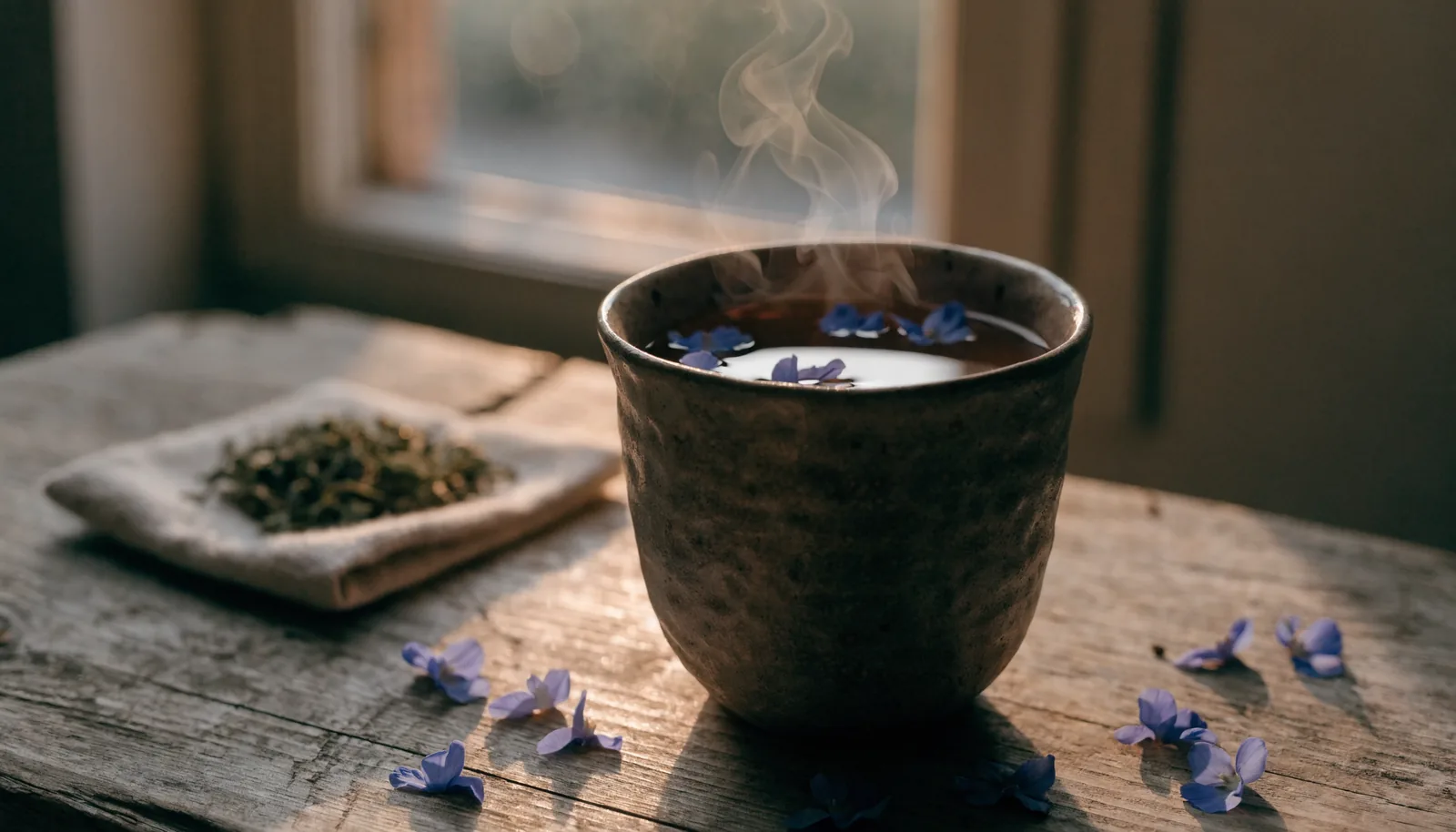
Blue lotus fits an evening wind-down job; kanna fits a daytime anxiety-softening job — they aren't really competitors. If you want an evening tea with a soft, dream-adjacent quality, and you're not on cardiovascular or dopaminergic medication, Nymphaea caerulea is the one that fits that job. If you want a daytime social-anxiety softener, and you're not on serotonergic medication, kanna is the one that fits that job. The framing "which is stronger" or "which is better" misses the point — they solve different problems for different times of day via different receptor systems.
What you shouldn't do: treat blue lotus vs kanna as interchangeable, stack them (no clinical data on the combination), or reach for either as a replacement for prescribed medication for anxiety, depression, sleep disorders, or cardiovascular conditions. The evidence base for both is thin enough that even single-plant claims need hedging — combined claims are entirely uncharted.
Related Azarius products
Our blue lotus selection includes shredded Nymphaea caerulea petals (10g/20g), Nymphaea ampla (white lotus), Nelumbo nucifera (pink/sacred lotus), plus dried extract, liquid extract and resin forms. Our kanna range covers dried plant material and standardised extracts. Most people comparing the two buy one at a time rather than both together — it makes it far easier to tell which effect came from which plant.
Last updated: August 2026
Frequently Asked Questions
9 questionsCan you take blue lotus and kanna together?
Which is stronger, blue lotus or kanna?
Is kanna or blue lotus better for sleep?
Do blue lotus and kanna have the same drug interactions?
Are blue lotus and kanna in the same plant family?
Can either replace prescription antidepressants or anxiety medication?
How long do blue lotus and kanna effects last?
What is the single main difference between blue lotus and kanna?
Is blue lotus stimulating or relaxing? What about kanna?
About this article


Adam Parsons is an external cannabis and psychedelics writer and editor who contributes to Azarius's wiki as both author and reviewer. On the writing side, he authors Azarius's kratom and kanna clusters, drawing on exten
This wiki article was drafted with AI assistance and reviewed by Adam Parsons, External contributor. Editorial oversight by Joshua Askew.
Medical disclaimer. This content is for informational purposes only and does not constitute medical advice. Consult a qualified healthcare provider before use of any substance.
Last reviewed August 23, 2026
References (6)
- [1]Emboden, W. A. (1989). The sacred journey in dynastic Egypt: Shamanistic trance in the context of the narcotic water lily and the mandrake. Journal of Psychoactive Drugs, 21(1), 61–75. DOI: 10.1080/02791072.1989.10472145
- [2]Harvey, A. L., Young, L. C., Viljoen, A. M., & Gericke, N. P. (2011). Pharmacological actions of the South African medicinal and functional food plant Sceletium tortuosum and its principal alkaloids. Journal of Ethnopharmacology, 137(3), 1124–1129. DOI: 10.1016/j.jep.2011.07.035
- [3]Patnala, S., & Kanfer, I. (2009). Investigations of the phytochemical content of Sceletium tortuosum following the preparation of "Kougoed" by fermentation of plant material. Journal of Ethnopharmacology, 121(1), 86–91. DOI: 10.1016/j.jep.2008.10.008
- [4]Poklis, J. L., Mulder, H. A., Halquist, M. S., Wolf, C. E., Poklis, A., & Peace, M. R. (2017). The blue lotus flower (Nymphea caerulea) resin used in a new type of electronic cigarette, the re-buildable dripping atomizer. Journal of Psychoactive Drugs, 49(3), 175–181. DOI: 10.1080/02791072.2017.1290304
- [5]Smith, M. T., Crouch, N. R., Gericke, N., & Hirst, M. (1996). Psychoactive constituents of the genus Sceletium N.E.Br. and other Mesembryanthemaceae: A review. Journal of Ethnopharmacology, 50(3), 119–130. DOI: 10.1016/0378-8741(95)01342-3
- [6]Terburg, D., Syal, S., Rosenberger, L. A., Heany, S., Phillips, N., Gericke, N., Stein, D. J., & van Honk, J. (2013). Acute effects of Sceletium tortuosum (Zembrin), a dual 5-HT reuptake and PDE4 inhibitor, in the human amygdala. Neuropsychopharmacology, 38(13), 2708–2716. DOI: 10.1038/npp.2013.183
Related Articles
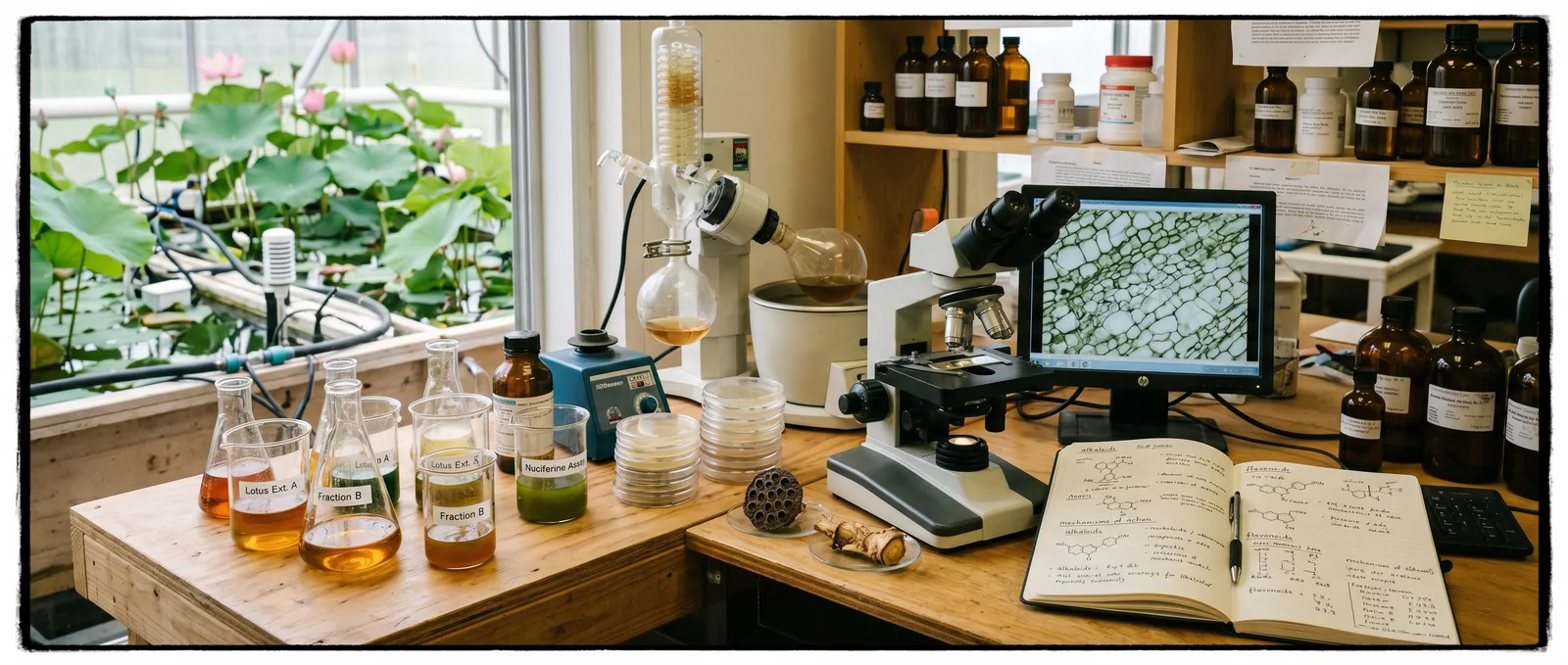
Lotus Clinical Research Overview
What does lotus clinical research actually show? A critical review of Nymphaea caerulea and Nelumbo nucifera pharmacology, preclinical data, and…
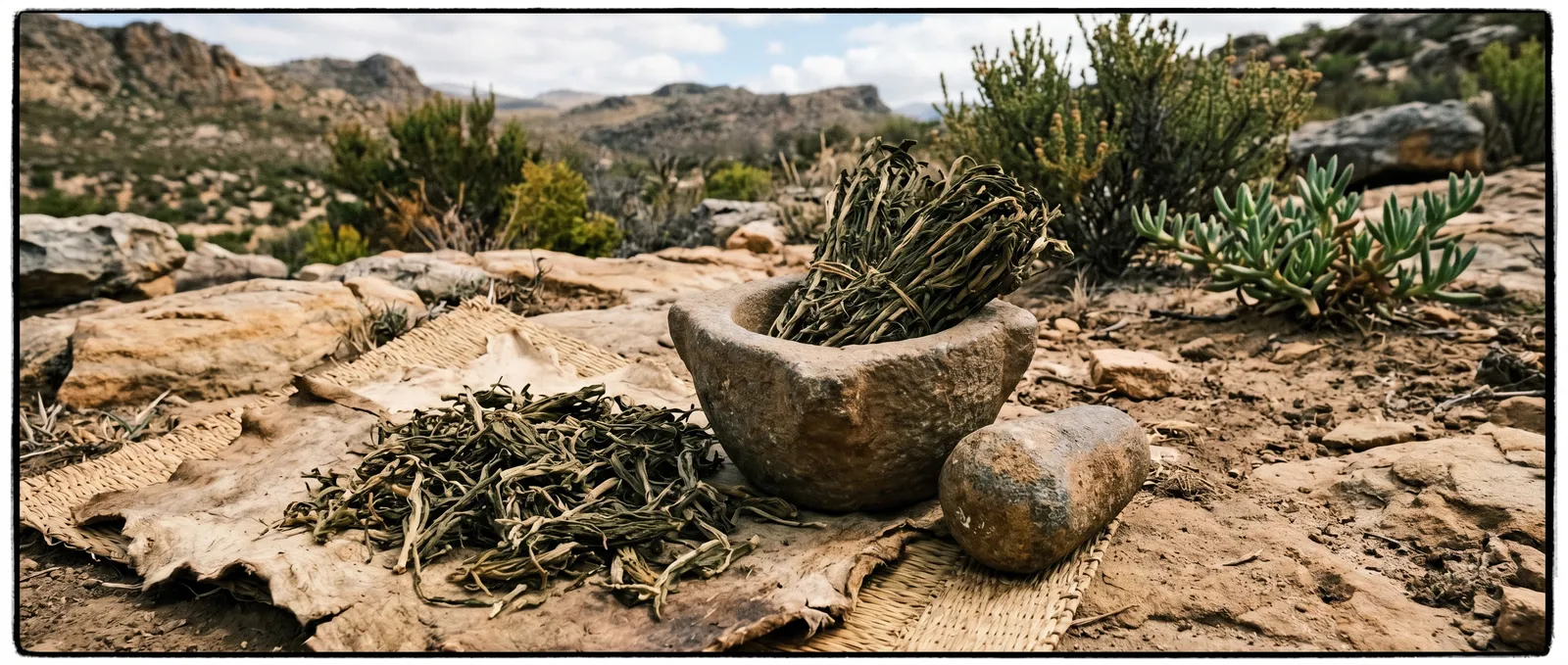
Kanna South Africa To West History
Sceletium tortuosum was used by San and Khoekhoe communities in southern Africa for centuries before European colonists first documented it in the 1660s.
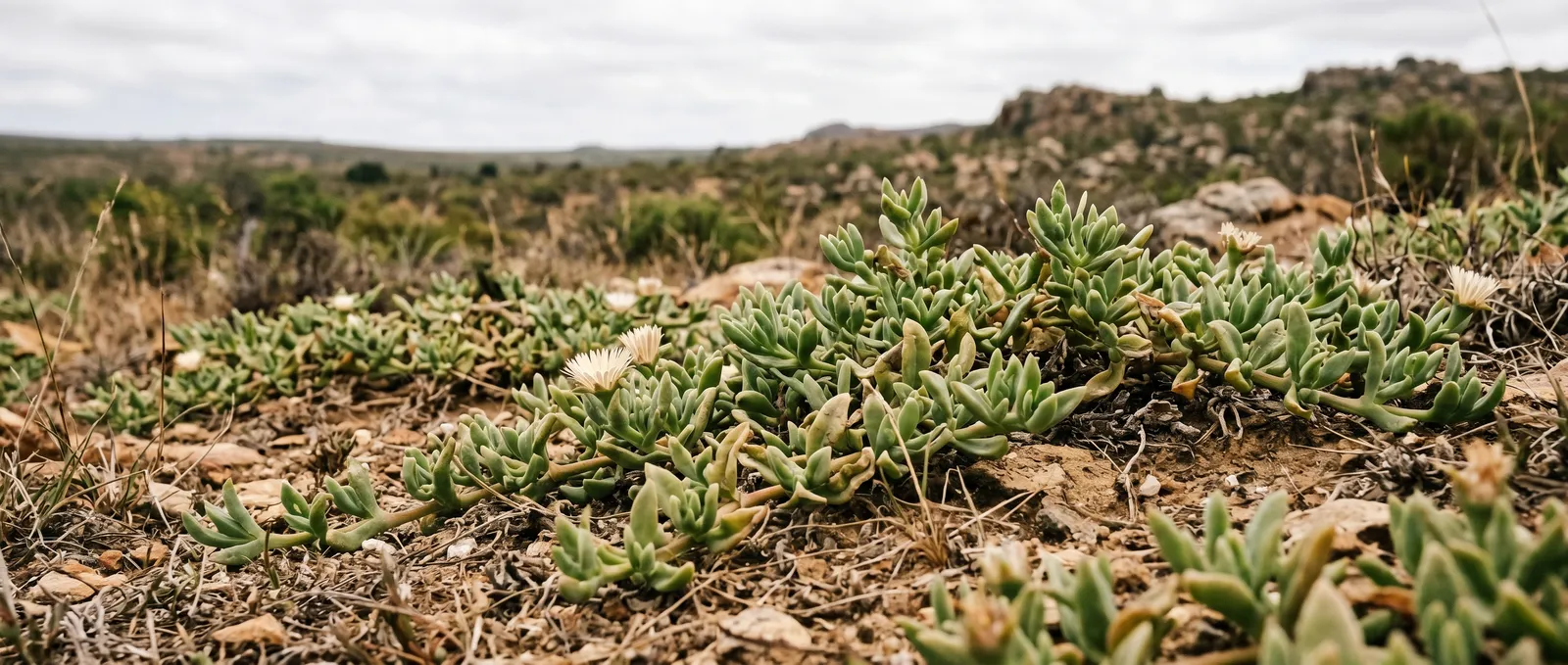
Sceletium Tortuosum Plant
Learn about the sceletium tortuosum plant: botany, alkaloids, fermentation, safety warnings, and where to buy kanna.
Kanna Pharmacokinetics Explained
Complete guide to kanna pharmacokinetics: how Sceletium tortuosum alkaloids are absorbed, metabolised via CYP2D6, and eliminated.
Kanna Chemistry: Sceletium Alkaloids Explained
Kanna chemistry explained: mesembrine, mesembrenone, their mechanisms, how fermentation and extraction change alkaloid profiles, and why it matters…
Rapé Shamanic Snuff Guide: How to Use It Safely
A practical rapé shamanic snuff guide covering dose, kuripe technique, effects, nicotine safety, interactions and Amazonian tradition.
White Sage Salvia Apiana Cultural Smudging Guide
Salvia apiana is a non-psychoactive shrub native to southern California's coastal sage scrub, burned as ceremonial incense in Indigenous North American…
Mulungu Erythrina Traditional Amazonian Use — Bark, Alkaloids & Research
Erythrina mulungu is a Brazilian legume tree whose bark has been brewed as a calming decoction in rural folk medicine for generations.
Wild Dagga Leonotis Leonurus Botany — Taxonomy, Chemistry & Traditional Use Guide
Leonotis leonurus (L.) R.Br., known as wild dagga or lion's tail, is a southern African shrub in the mint family (Lamiaceae) bearing dense whorls of orange…