
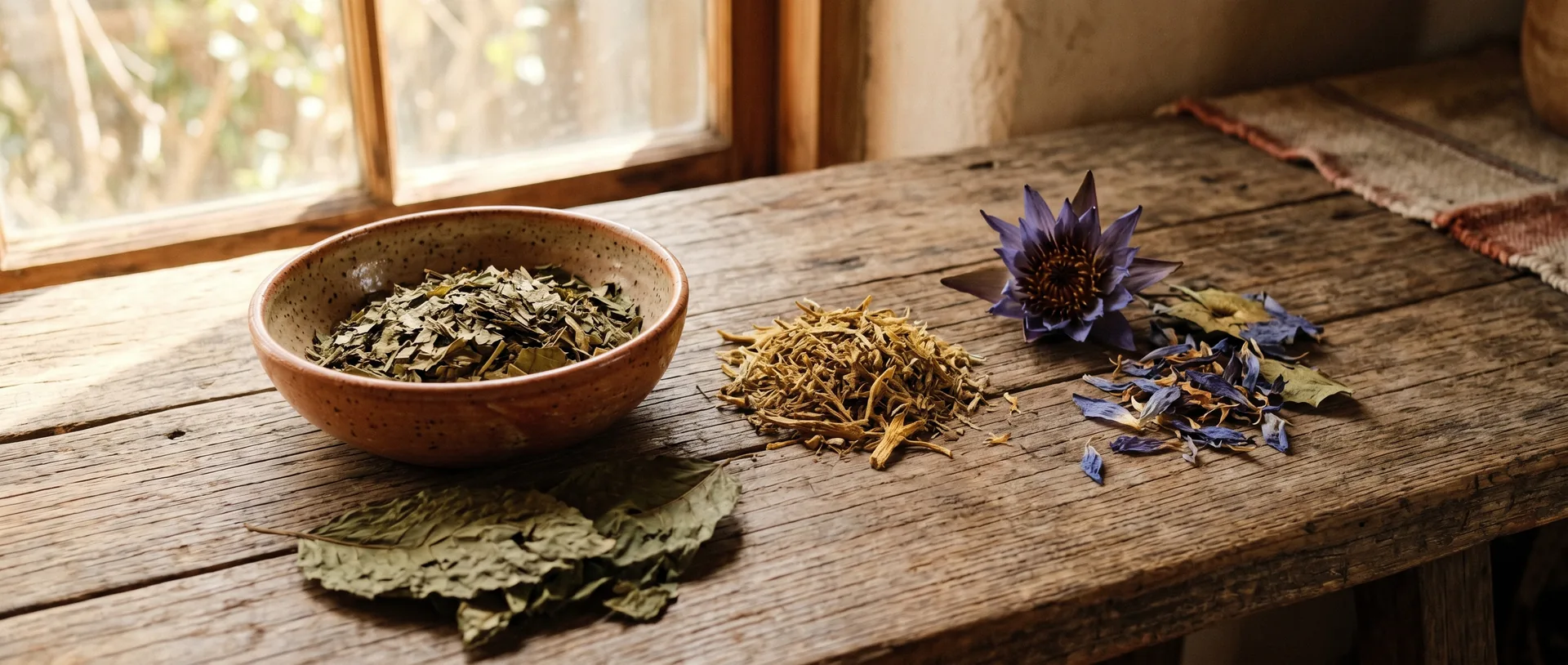
Ethnobotanicals
Kratom, kanna, blue lotus, and dream herbs — traditional plants with centuries of documented use and modern research.
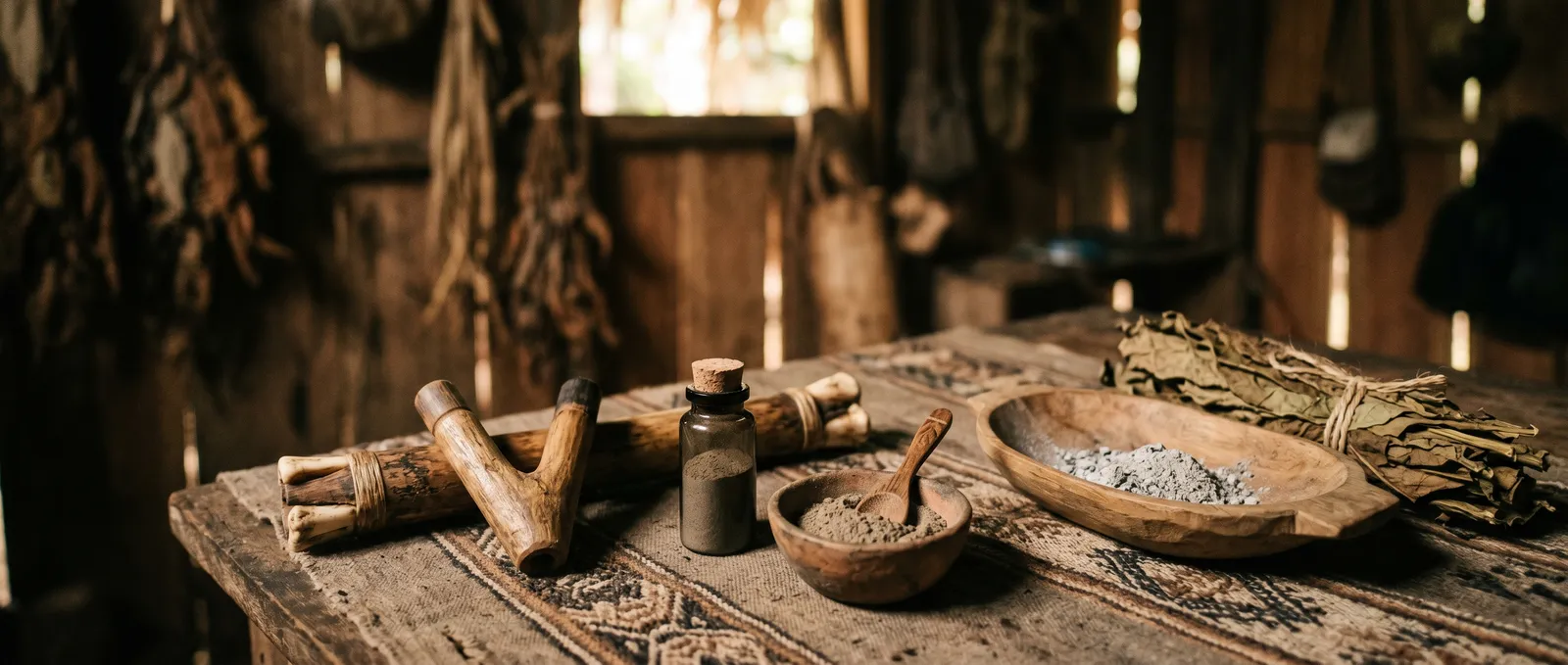
Rapé Shamanic Snuff Guide: How to Use It Safely
Rapé is a finely powdered Amazonian shamanic snuff made from Nicotiana rustica tobacco blended with sacred tree ashes, blown into the nostrils via a kuripe or tepi pipe and used ceremonially by peoples such as the Huni Kuin and Yawanawá (Barbosa et al., 2014).
Explore by species
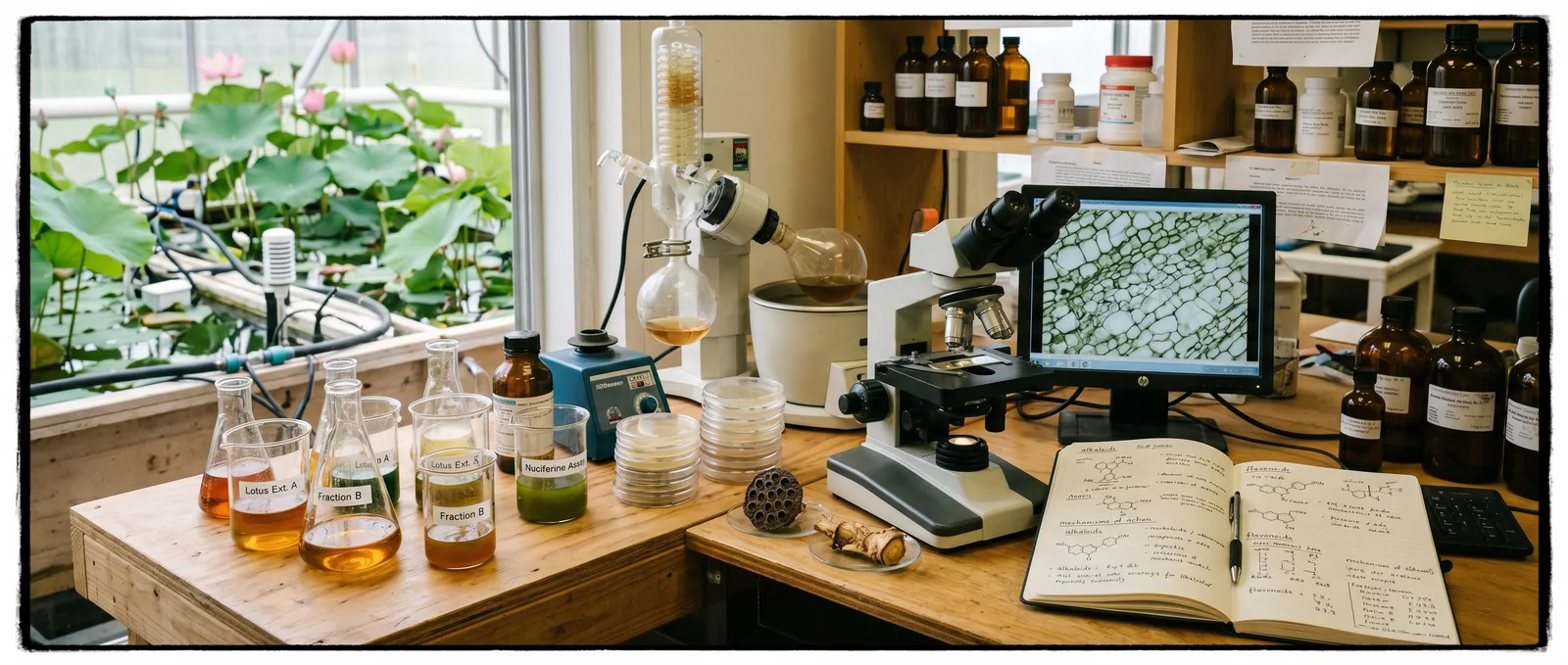
Blue Lotus
16 articles
What does lotus clinical research actually show? A critical review of Nymphaea caerulea and Nelumbo nucifera pharmacology, preclinical data, and…
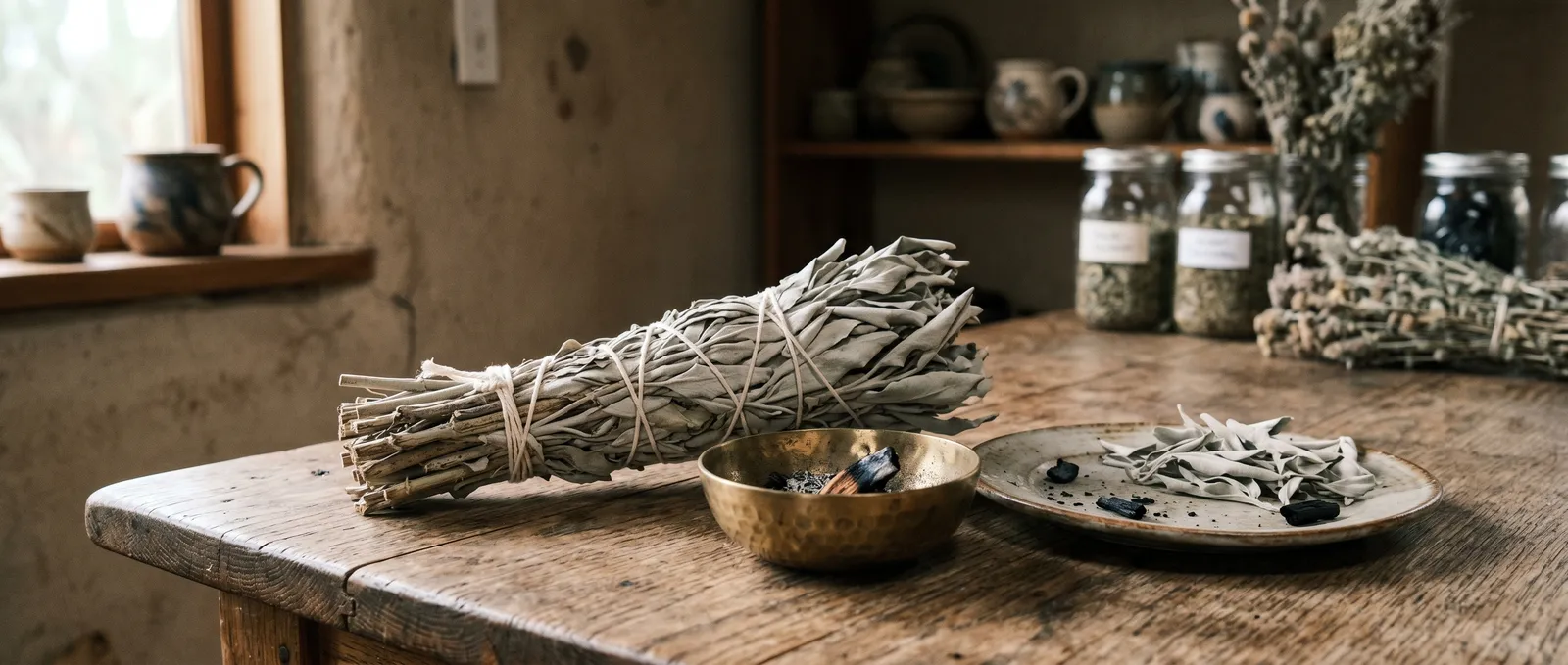
Traditional Herbs
7 articles
Traditional herbs across cultures — from white sage and mulungu to wild dagga — carry distinct ethnobotanical histories. Explore botany, cultural use, and context for each plant.
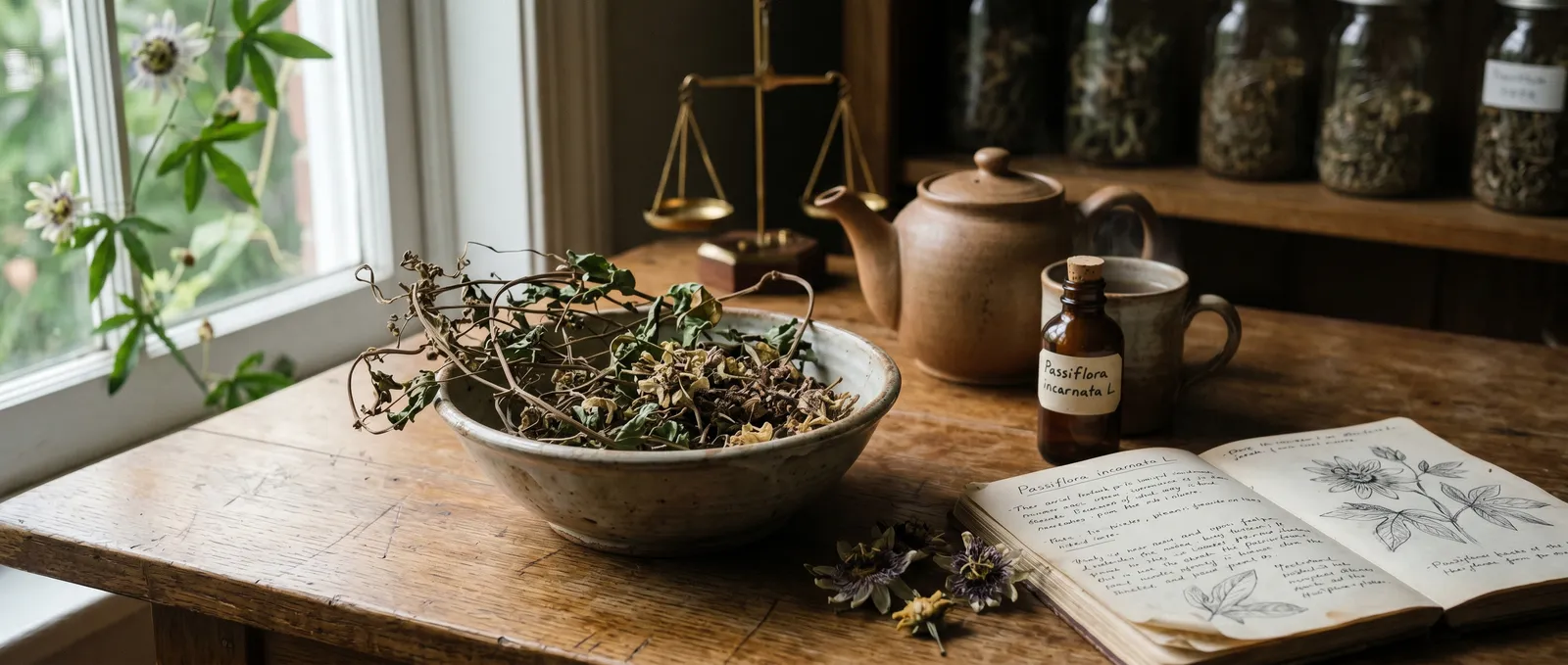
Relaxant Herbs
5 articles
Relaxant herbs like passionflower, valerian, and lemon balm have a long history of traditional use for tension and sleep. Compare research overviews, formats, and traditional preparations.
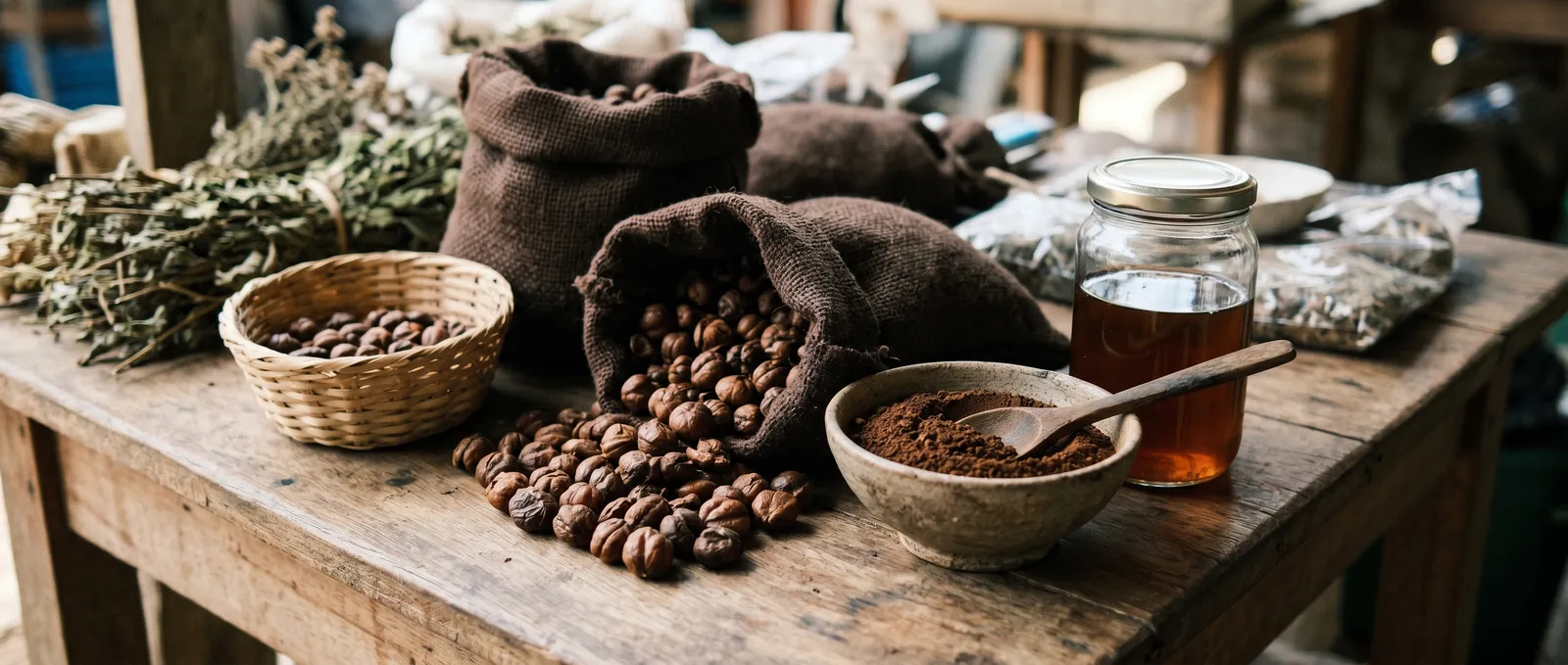
Stimulant Herbs
1 article
Stimulant herbs like guarana, kola nut, and damiana have traditional use as energising or mood-lifting plants. Compare botany, traditional preparations, and active-compound profiles.
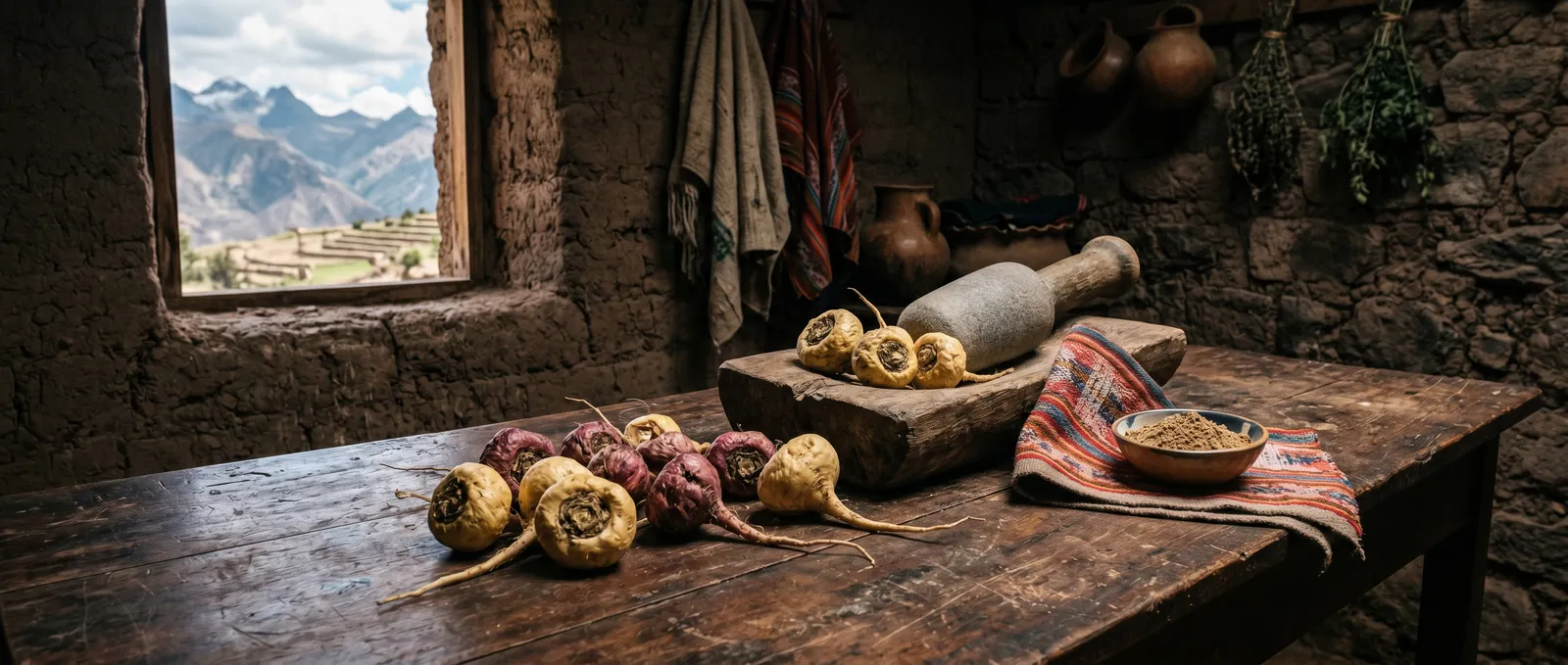
Adaptogens
2 articles
Adaptogens are plants traditionally used to help the body resist physical, chemical, or biological stressors. Read evidence-led guides on maca, ginkgo, and other classical adaptogens.
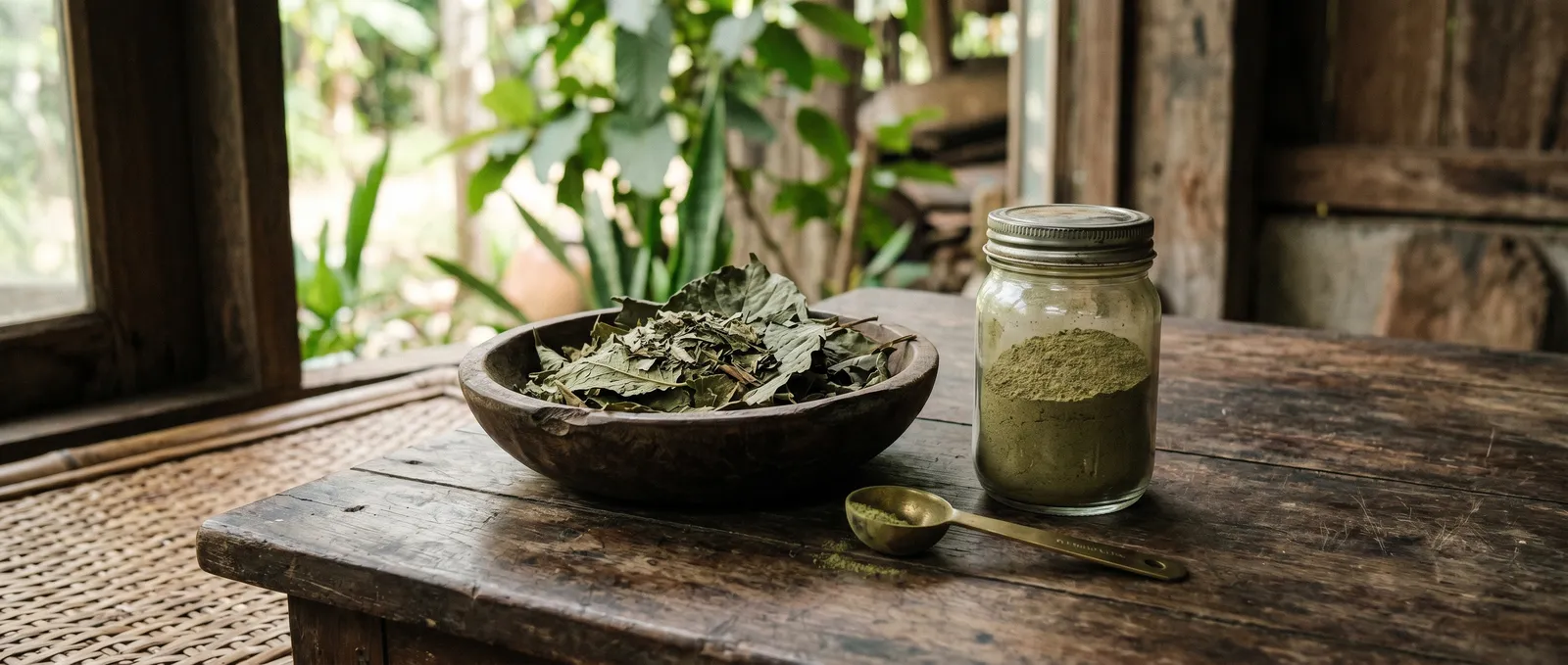
Kratom
28 articles
What is kratom? A complete guide to Mitragyna speciosa — alkaloid chemistry, dose ranges, effects, drug interactions, and harm reduction.
Kanna
18 articles
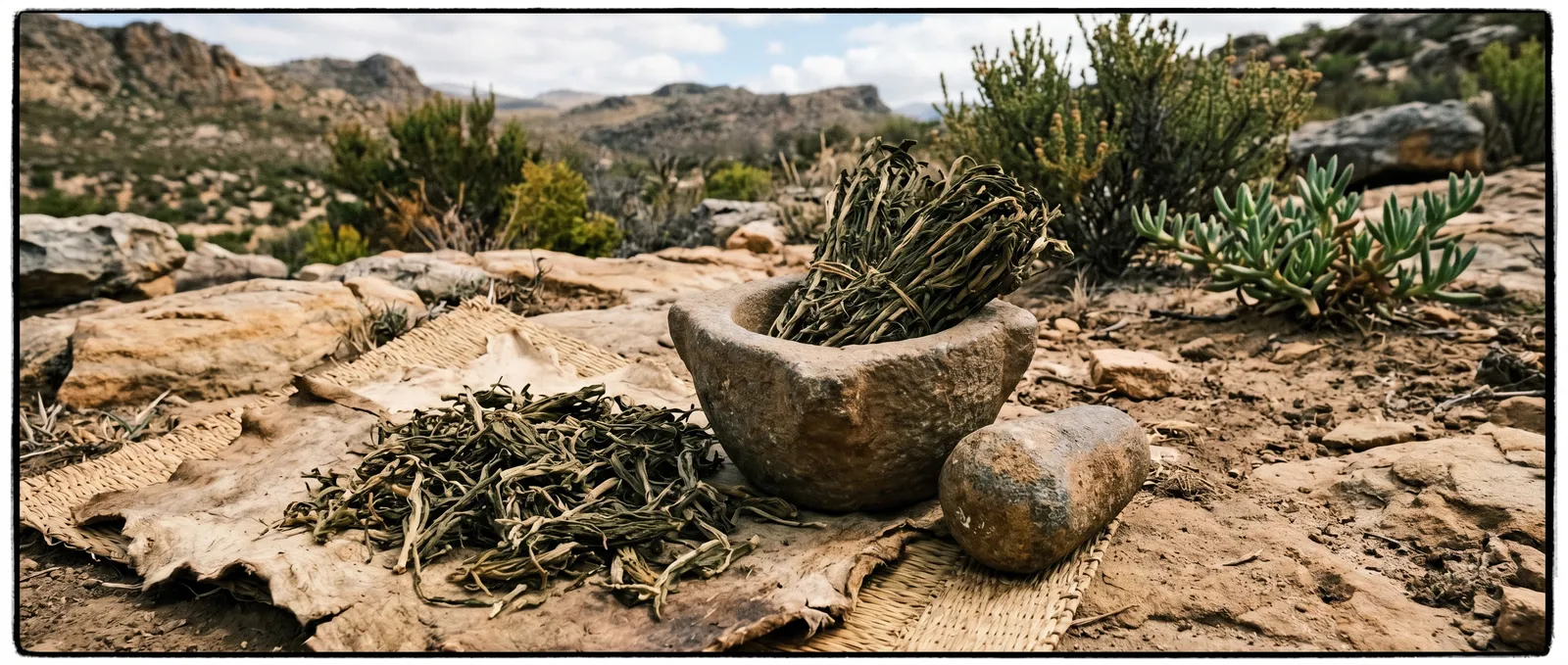
Sceletium tortuosum was used by San and Khoekhoe communities in southern Africa for centuries before European colonists first documented it in the 1660s.