
This article discusses psychoactive substances intended for adults (18+). If you have a health condition or take medication, consult a doctor before use. Our age policy
How to Prepare Lotus Tea: A Step-by-Step Brewing Guide
Definition
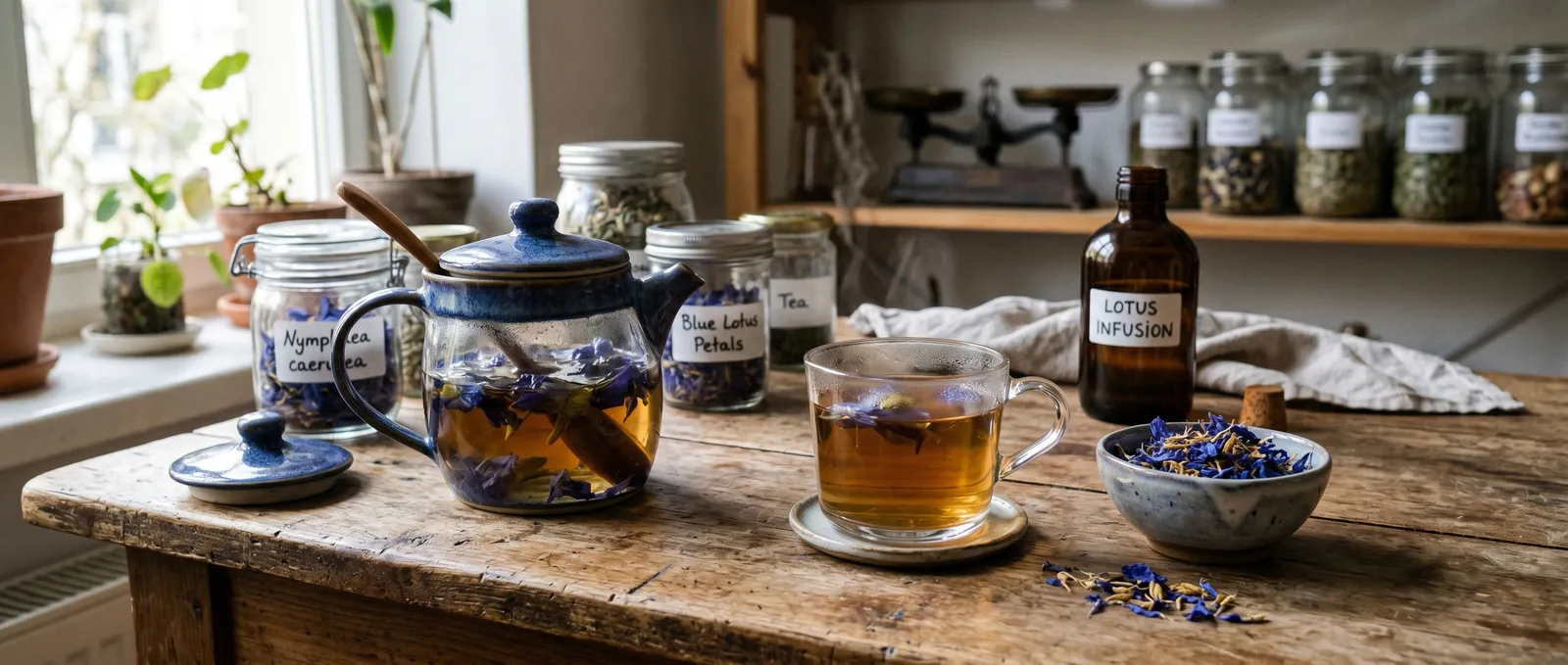
Lotus tea is a hot-water infusion of dried petals from Nymphaea caerulea (blue lotus), Nymphaea ampla (white lotus), or Nelumbo nucifera (pink lotus) that is used to extract the aporphine alkaloid nuciferine and related compounds into a drinkable form. Aqueous extraction at sub-boiling temperatures effectively recovers the principal alkaloids (Pomierny et al., 2020). The method is simple but species choice, water temperature, and steep duration all influence the result.
Lotus tea is a hot-water infusion of dried petals from Nymphaea caerulea (blue lotus), Nymphaea ampla (white lotus), or Nelumbo nucifera (pink lotus) that is used to extract the aporphine alkaloid nuciferine and related compounds into a drinkable form. Brewing lotus tea from dried petals is one of the oldest and gentlest ways to experience these alkaloids. The method is straightforward: steep dried petals in hot (not boiling) water for a controlled time, strain, and drink. But the details matter. Water temperature, steep duration, and petal-to-water ratio all influence how much alkaloid content ends up in your cup versus staying locked in the plant fibre. This guide walks through each step of preparing lotus tea, covers the differences between species and product forms, and flags what you need to know before your first brew.
Adult audience (18+). The dosing ranges and effects described in this article apply to adult physiology. This content is not intended for minors.
Before You Start: Species and Form Matter
The species you choose and the product form you buy are the two variables that most dramatically change what ends up in your cup of lotus tea. Not all lotus tea is the same — and treating different species as interchangeable is a genuine mistake.
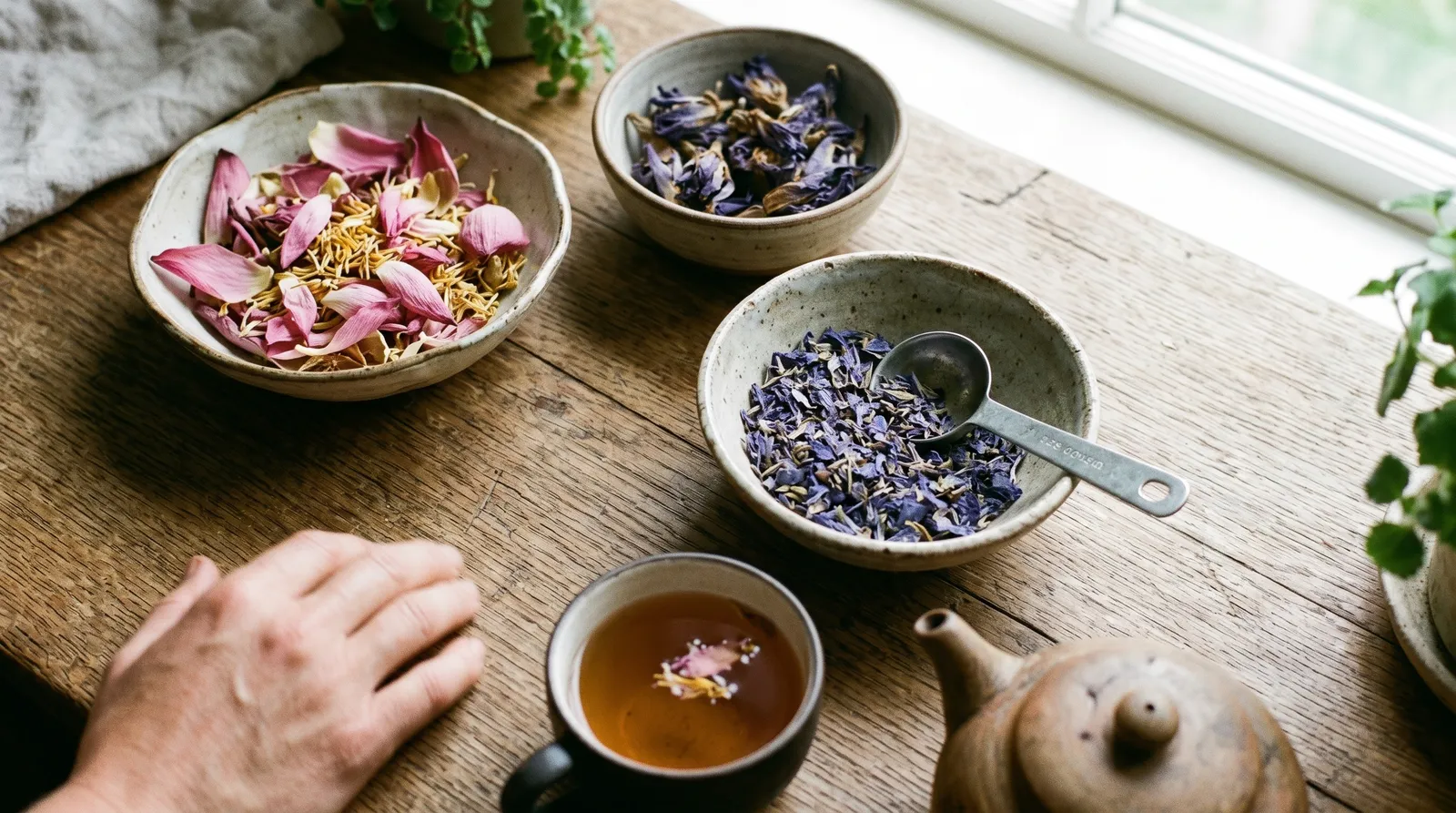
Nymphaea caerulea (blue lotus) contains the aporphine alkaloids nuciferine and apomorphine. These are the compounds behind the mild sedation and the dream-related effects that users report. Nymphaea ampla (white lotus) shares a broadly similar alkaloid profile within the Nymphaea genus, though direct comparative studies are thin. Nelumbo nucifera (pink lotus) belongs to an entirely different plant family (Nelumbonaceae, not Nymphaeaceae) and while it shares nuciferine with the Nymphaea species, it also contains nelumbine, liensinine, and neferine — bisbenzylisoquinoline alkaloids not found in blue or white lotus. The upshot: a pink lotus infusion is not interchangeable with one made from blue lotus, and treating them as the same thing is a mistake.
Form matters just as much. Shredded dried petals are the standard starting material for lotus tea. Dried extracts, liquid extracts, and resin concentrate the aporphine alkaloids relative to raw plant material, meaning extract doses are substantially smaller. If you want to get dried petals for brewing, look for shredded petals specifically — whole flowers are harder to weigh accurately and steep unevenly. You can order dried blue lotus petals, dried white lotus petals, or dried pink lotus petals from the Azarius catalogue. Do not dissolve a chunk of extract in hot water and assume the dose is equivalent — it is not, and the cardiovascular and dopaminergic interaction risks scale with concentration.
What You Need
A standard lotus tea setup requires only basic kitchen items — no specialist equipment necessary.
- Dried shredded petals — Nymphaea caerulea, Nymphaea ampla, or Nelumbo nucifera, depending on your preference. You can buy dried blue lotus petals, dried white lotus petals, or dried pink lotus petals from the Azarius catalogue.
- A kitchen scale accurate to 0.1 g (eyeballing petal weight is unreliable — dried petals are fluffy and volume varies wildly)
- A kettle or saucepan
- A thermometer (optional but useful)
- A fine-mesh strainer or tea infuser
- A mug or teapot
- Optional additions: honey, lemon juice, or a mild herbal base (peppermint works well) for flavour
Step 1 — Weigh Your Petals
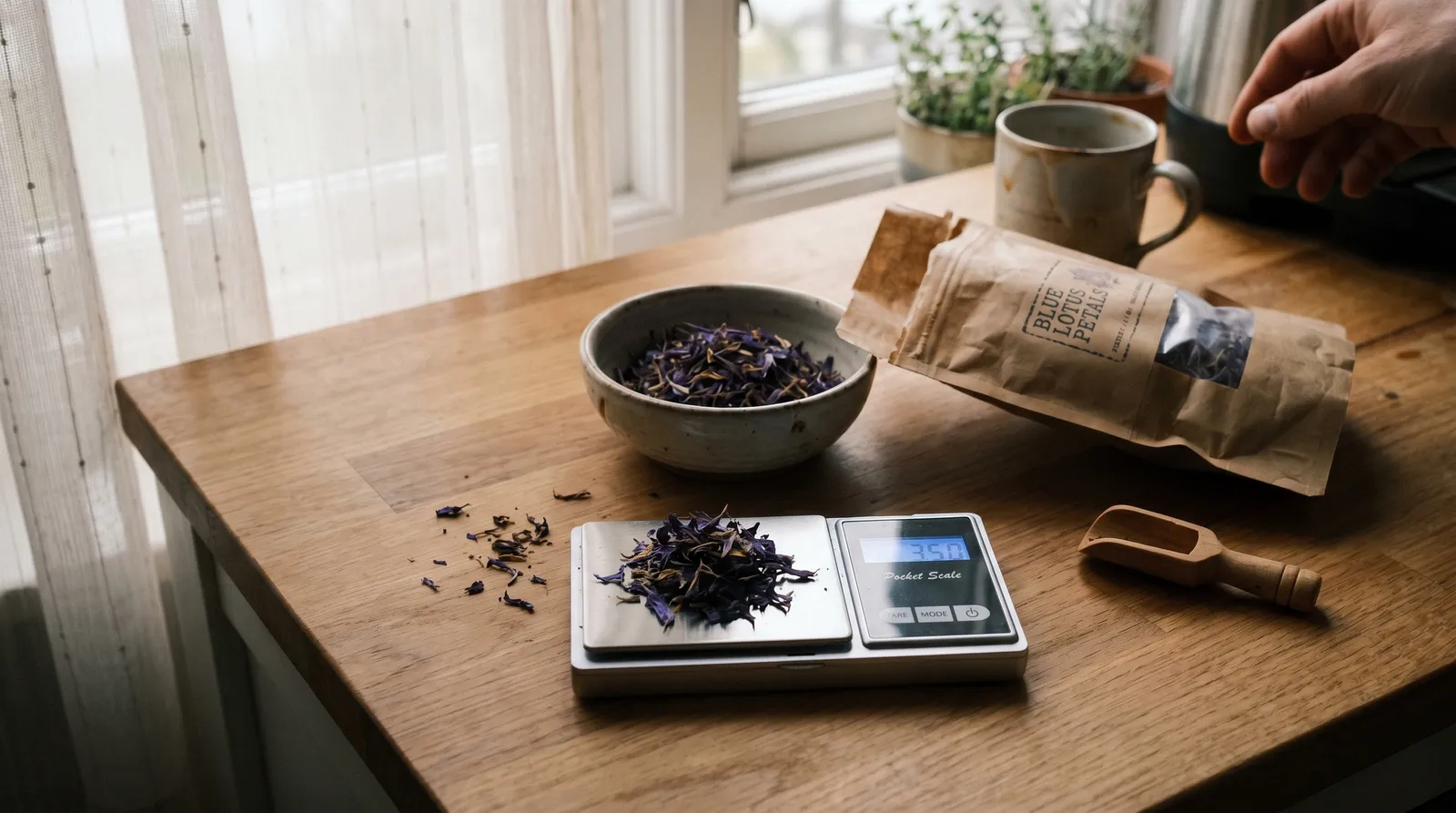
Accurate weighing is the single most important step in preparing lotus tea — it is the difference between a gentle cup and an uncomfortably sedating one.
For Nymphaea caerulea (blue lotus) shredded petals, the dose ranges reported in community use are roughly:
| Intensity | Dried petals per cup | Notes |
|---|---|---|
| Light | 1–1.5 g | Subtle relaxation; a reasonable starting point for a first session |
| Standard | 1.5–2 g | The range most commonly described in user reports |
| Strong | 2.5–3 g | More pronounced sedation; not advisable without prior experience at lower amounts |
These figures come from user-reported ranges and informal community consensus rather than controlled clinical dose-response studies, which remain sparse for Nymphaea caerulea specifically. The European Monitoring Centre for Drugs and Drug Addiction (EMCDDA) has noted the limited clinical data available for Nymphaea species, which is worth keeping in mind when interpreting community dosing advice. For Nymphaea ampla (white lotus), comparable ranges are typically cited, though direct pharmacokinetic comparison data between the two Nymphaea species is limited. For Nelumbo nucifera (pink lotus), the additional bisbenzylisoquinoline alkaloids (liensinine, neferine) mean the experience profile differs; users often describe a calmer, less dreamy quality compared to Nymphaea caerulea, though this is anecdotal rather than clinically established.
Weigh your petals on a scale. A heaped teaspoon of shredded Nymphaea caerulea petals weighs roughly 0.5–0.8 g depending on how finely they are shredded, so volume-based guessing puts you in a wide range. If you are trying lotus tea for the first time, start at the lighter end.
Step 2 — Heat Your Water to 80–90°C
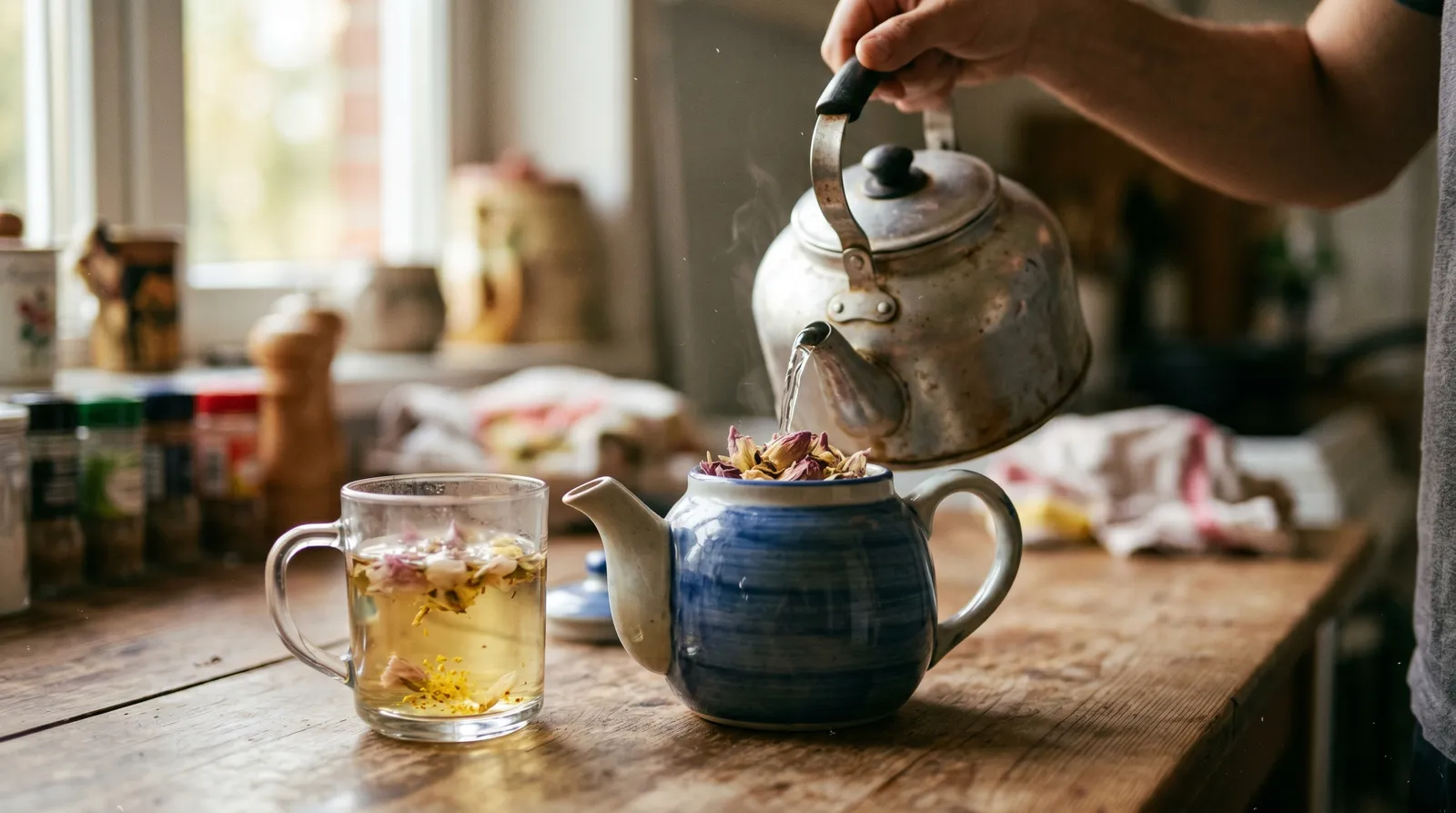
The ideal water temperature for lotus tea is 80–90°C — hot enough to extract alkaloids efficiently, cool enough to preserve flavour and delicate aromatic compounds. Boiling water (100°C) is too hot. Nuciferine is reasonably heat-stable, but a rolling boil can degrade some of the more delicate aromatic compounds and gives the brew a harsher, more tannic flavour — particularly with Nymphaea petals, which become noticeably more bitter when scalded.
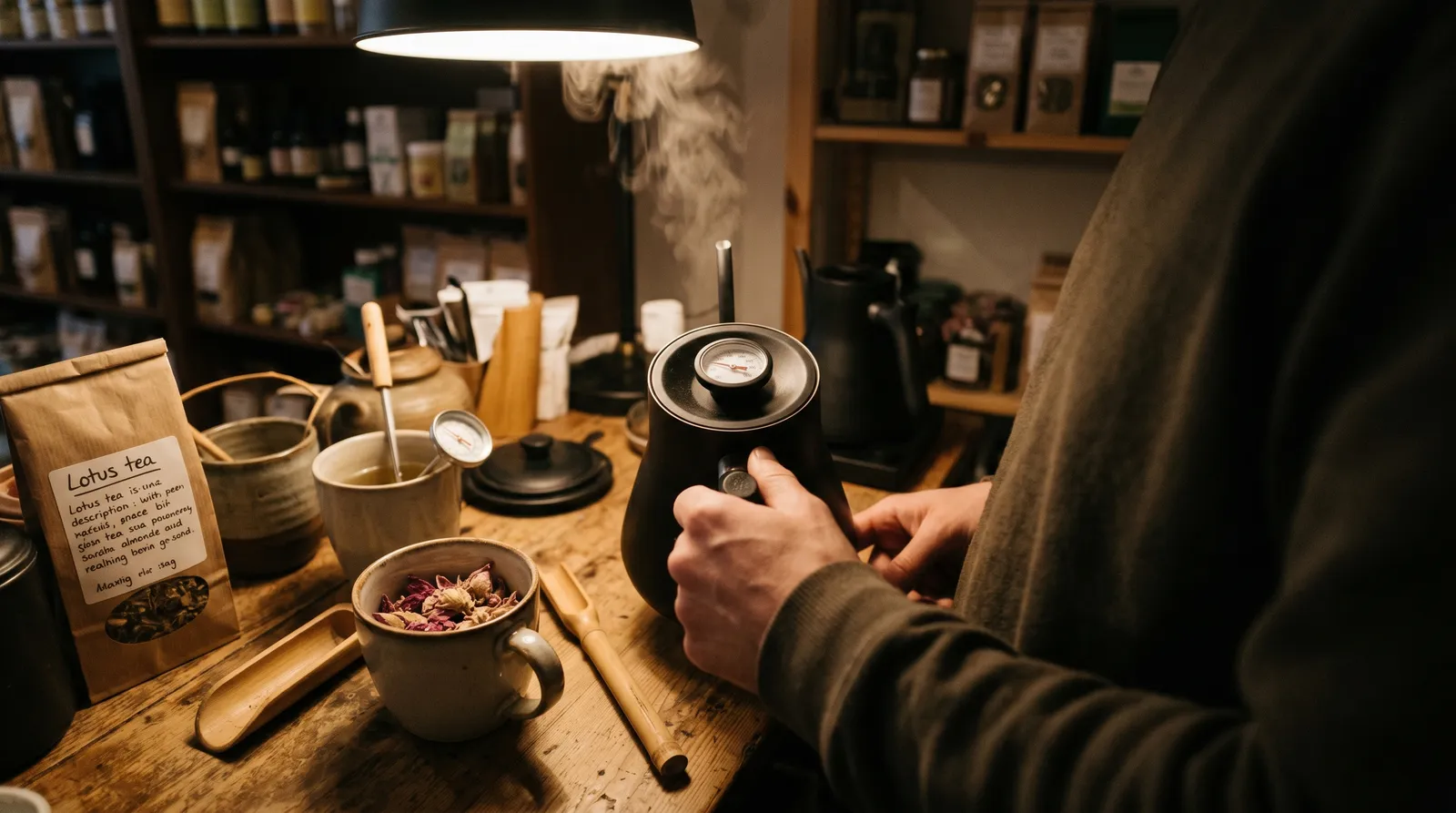
If you do not have a thermometer, bring the kettle to a boil and let it sit with the lid off for two to three minutes. That typically drops the temperature into the right window. Pour roughly 200–250 ml per cup — one standard mug's worth.
Step 3 — Steep for 10 to 15 Minutes
A 10-to-15-minute steep is the extraction window that balances alkaloid recovery against bitterness in lotus tea. Place the weighed petals into your mug, teapot, or infuser. Pour the hot water over them. Cover the vessel — a saucer over a mug works fine — to keep the heat in and reduce evaporation of volatile compounds.
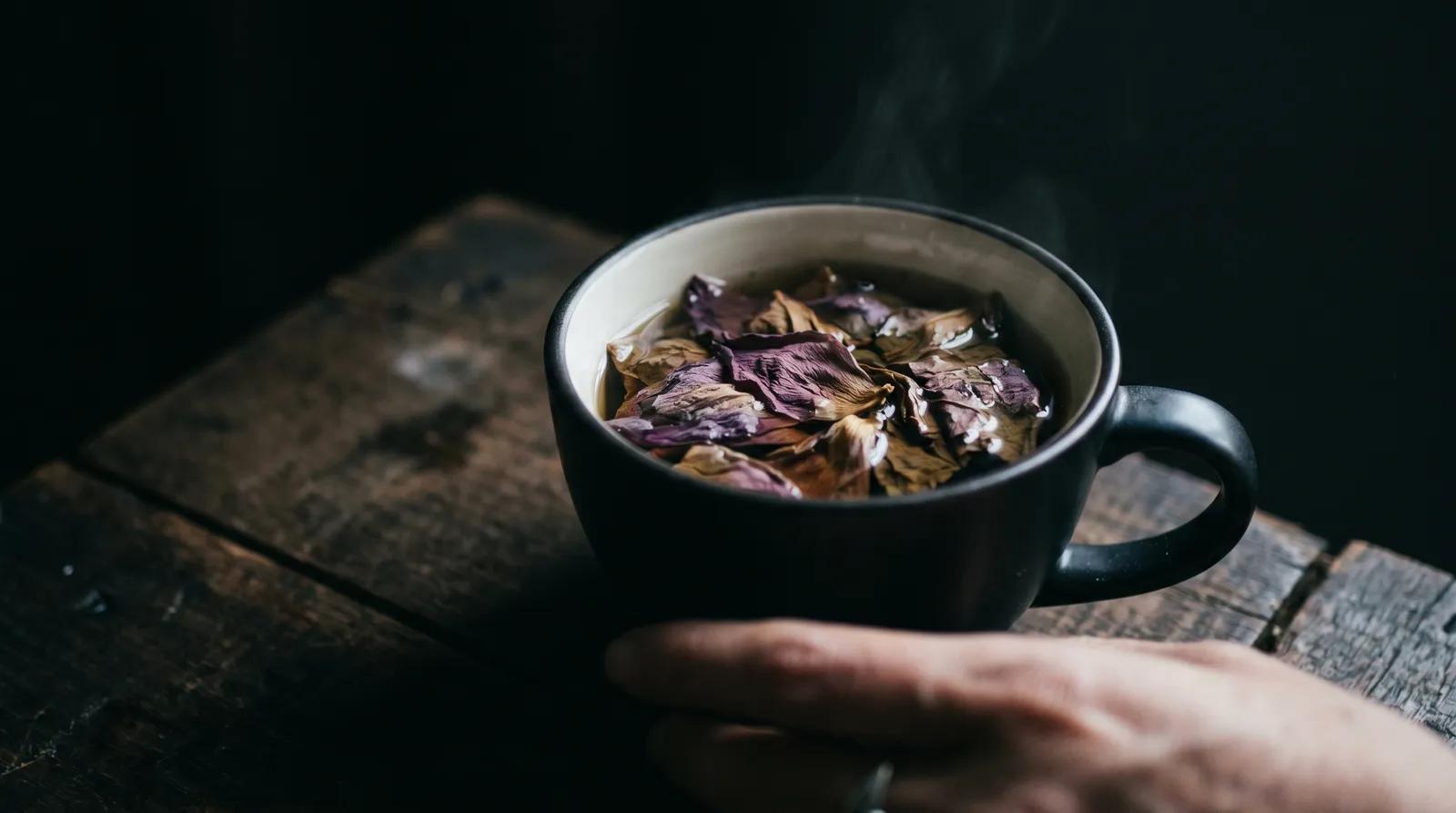
Steep for a minimum of 10 minutes. Fifteen minutes is the sweet spot most experienced users settle on. Going beyond 20 minutes does not appear to extract meaningfully more alkaloid content but does increase bitterness, especially with Nymphaea caerulea. If you are using a saucepan on the hob instead, keep the heat at the lowest setting — you want a gentle simmer, not a boil. A 2020 phytochemical analysis of Nymphaea caerulea petal material confirmed that aqueous extraction at sub-boiling temperatures recovered the principal aporphine alkaloids effectively (Pomierny et al., 2020), which aligns with the practical advice to avoid a hard boil.
Some users gently press the petals against the side of the mug with a spoon during steeping to help release more material. This is a reasonable habit — it increases surface-area contact — but it is not a game-changer.
Step 4 — Strain and Flavour
Well-brewed lotus tea should be a pale gold to amber colour depending on species and steep time. Remove the petals with your strainer or lift out the infuser. Nymphaea caerulea tends toward a lighter golden hue; Nelumbo nucifera brews slightly darker.
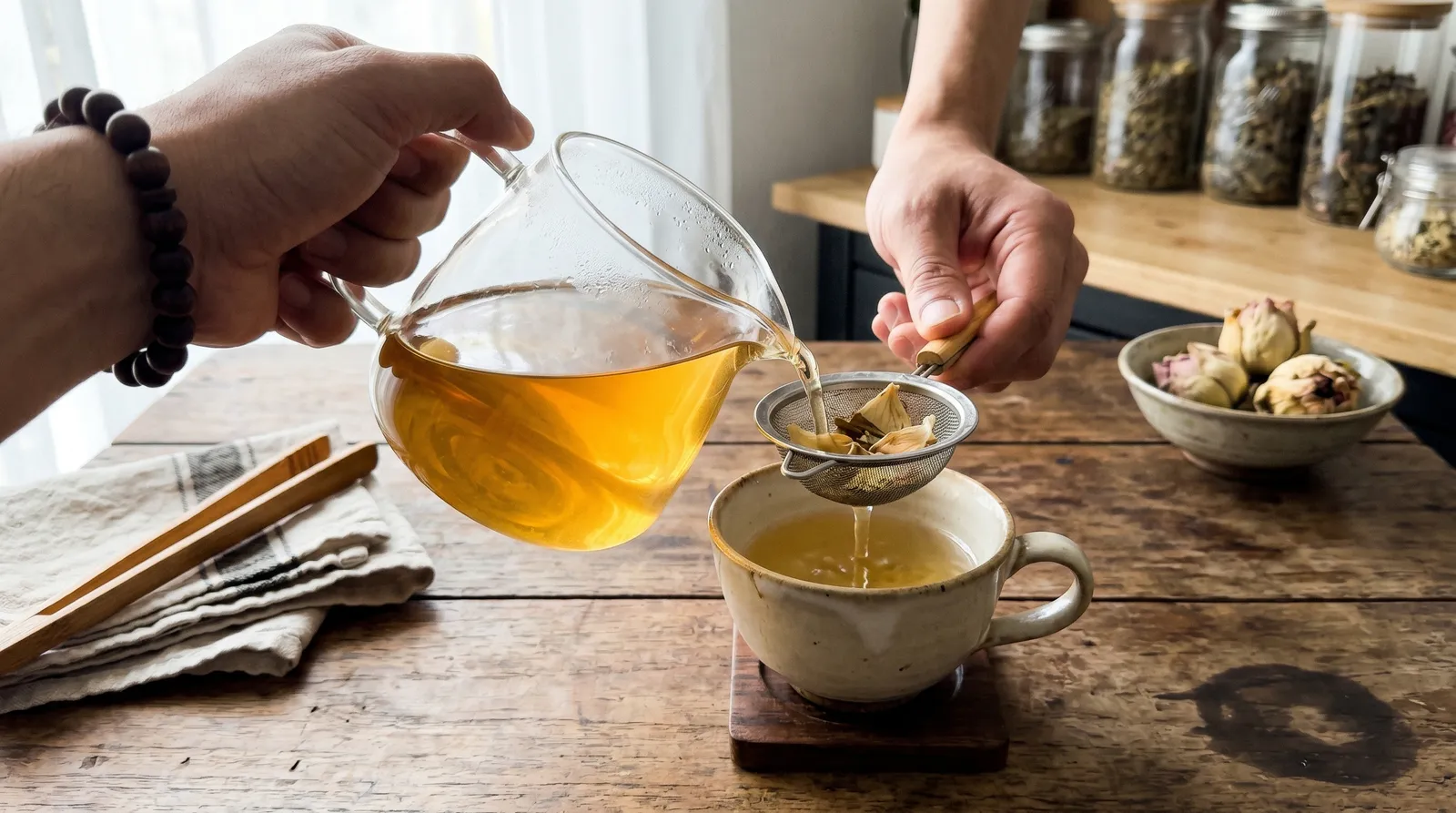
The flavour of a plain infusion is mild and slightly floral, with a faint earthy bitterness — not unpleasant, but not exactly exciting either. Most people add something:
- Honey — a teaspoon rounds off the bitterness nicely
- Lemon juice — a squeeze brightens the flavour and may slightly improve alkaloid solubility (the mild acidity helps, though this is a marginal effect rather than a dramatic one)
- A base blend — steeping the petals alongside a bag of peppermint or chamomile gives you a more complete-tasting drink
Avoid adding milk or cream. The fats can bind to some alkaloid compounds and may reduce bioavailability, though this has not been studied specifically for nuciferine. It is a reasonable precaution borrowed from general phytochemistry principles.
Step 5 — Timing and What to Expect
Most users feel the first effects of lotus tea within 20 to 40 minutes after drinking on a relatively empty stomach. A light snack is fine, but a full meal will delay onset. The experience is a mild sense of relaxation, slight warmth, and for Nymphaea caerulea specifically, a quality that users often describe as "dreamy." The proposed mechanism involves the aporphine alkaloids nuciferine and apomorphine interacting with dopamine receptors — partial D1/D2 agonism has been suggested based on in-vitro data, though human pharmacokinetic confirmation remains limited (Agnihotri et al., 2008).
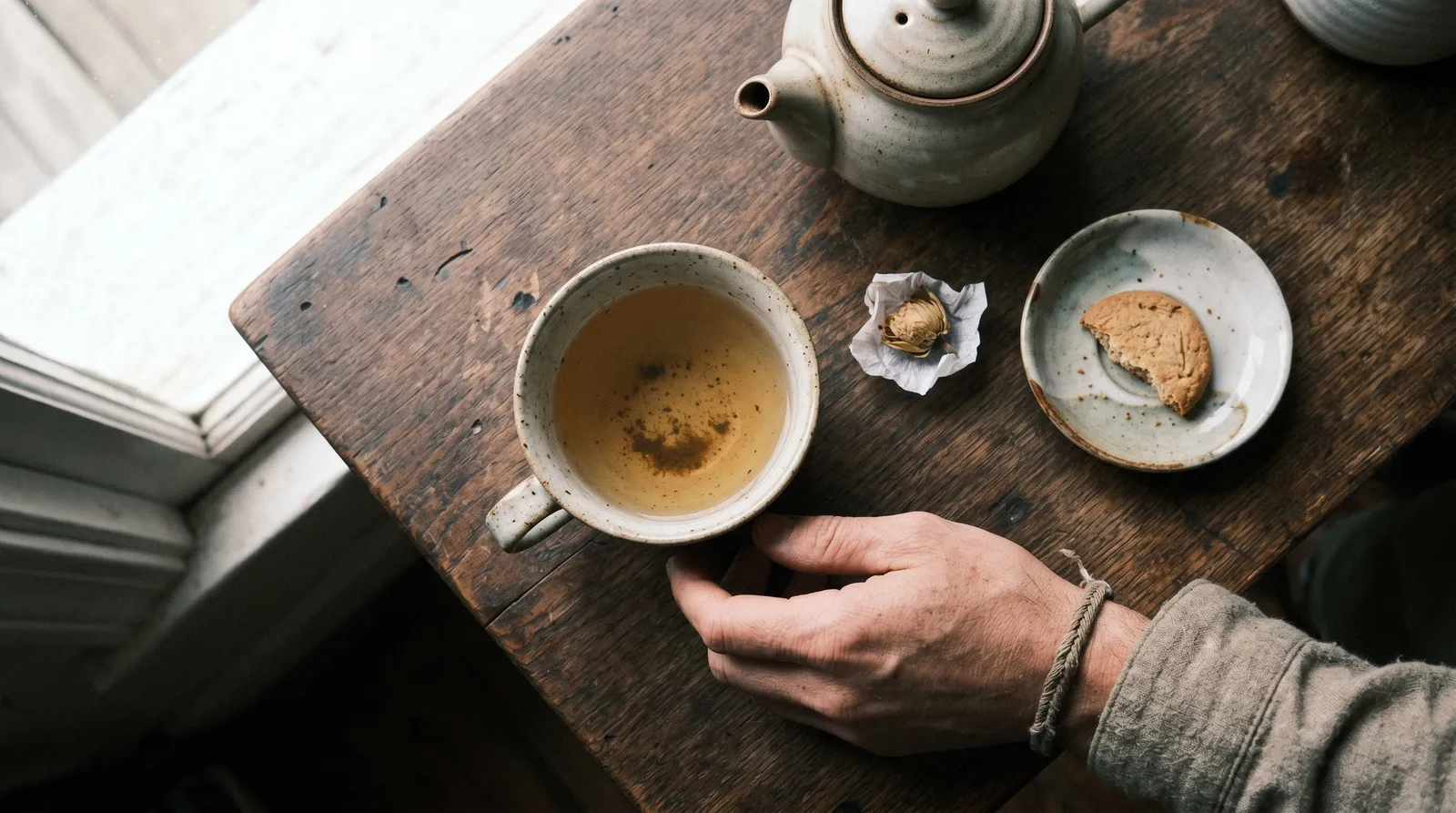
The overall experience from a single cup made with shredded petals is mild. Users consistently describe it as gentle rather than overwhelming. Duration is typically two to three hours, tapering gradually. Some users report enhanced dream vividness when drinking in the evening, though this effect has not been examined in controlled studies.
Do not drive or operate machinery for at least four hours after drinking. The mild sedation, combined with the reported dream-enhancement quality, makes it clearly inappropriate for anything requiring full alertness — even if the effects feel subtle to you.
Brewing Method Compared: Infusion Versus Wine and Smoking
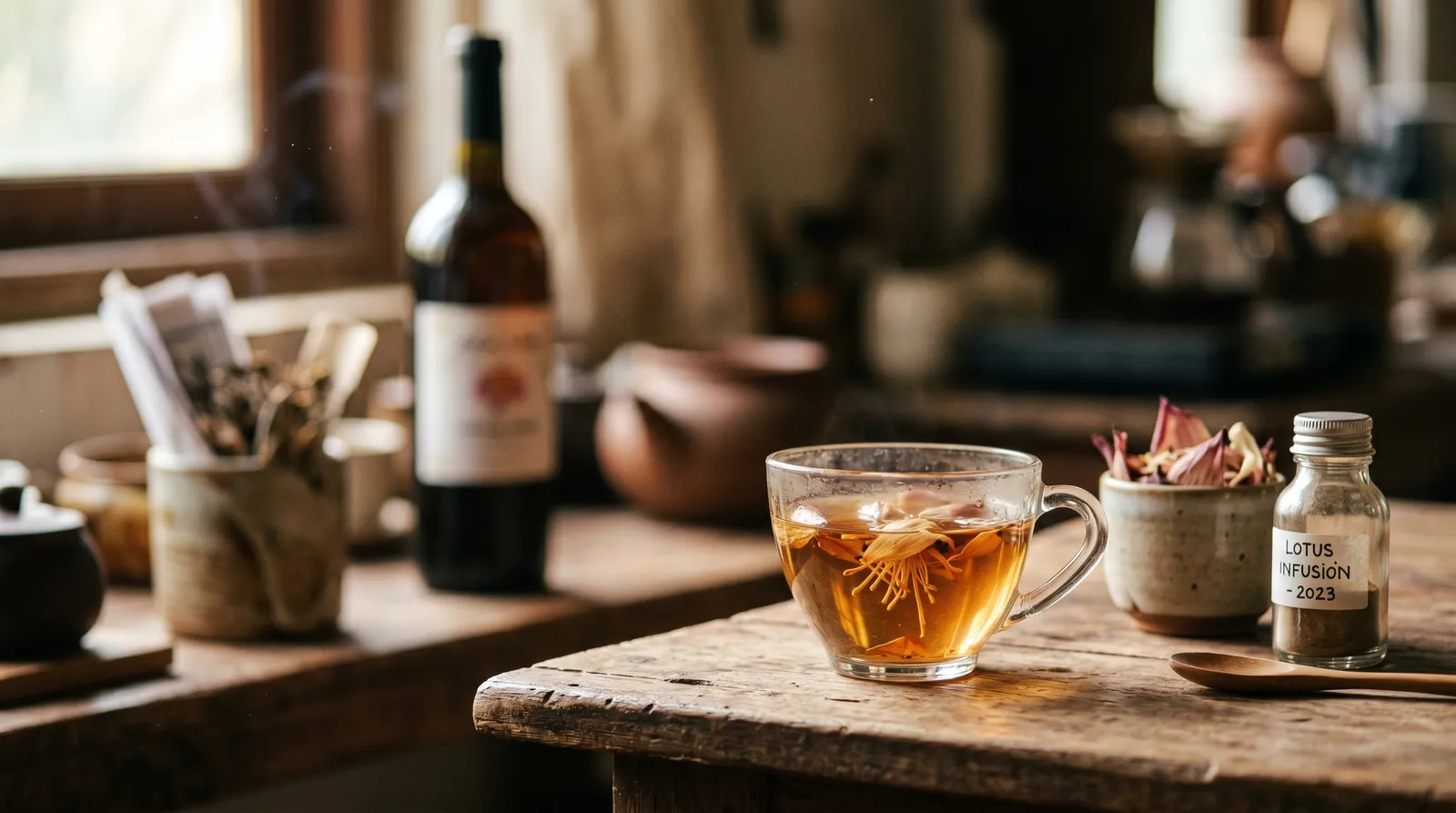
Hot-water infusion is the gentlest extraction method for making lotus tea, but it is not the only one — and understanding the differences helps you decide what suits you. Compared to lotus wine (petals macerated in wine for days to weeks), a hot-water brew produces a milder, shorter-duration experience. The alcohol in wine acts as a more efficient solvent for aporphine alkaloids than water alone, so wine preparations are typically stronger cup-for-cup. If you want to explore the wine method, see the dedicated article How to Make Lotus Wine in the Azarius wiki. Smoking dried petals, by contrast, produces a faster onset (minutes rather than 20–40 minutes) but a shorter duration and a harsher experience on the throat. For most people exploring lotus for the first time, a hot-water infusion is the most forgiving method — the slow onset gives you time to gauge how you respond before committing to a full dose.
Common Mistakes When Brewing Lotus Tea
The most frequent errors when preparing lotus tea are avoidable once you know what to watch for — here are the ones that come up most often.
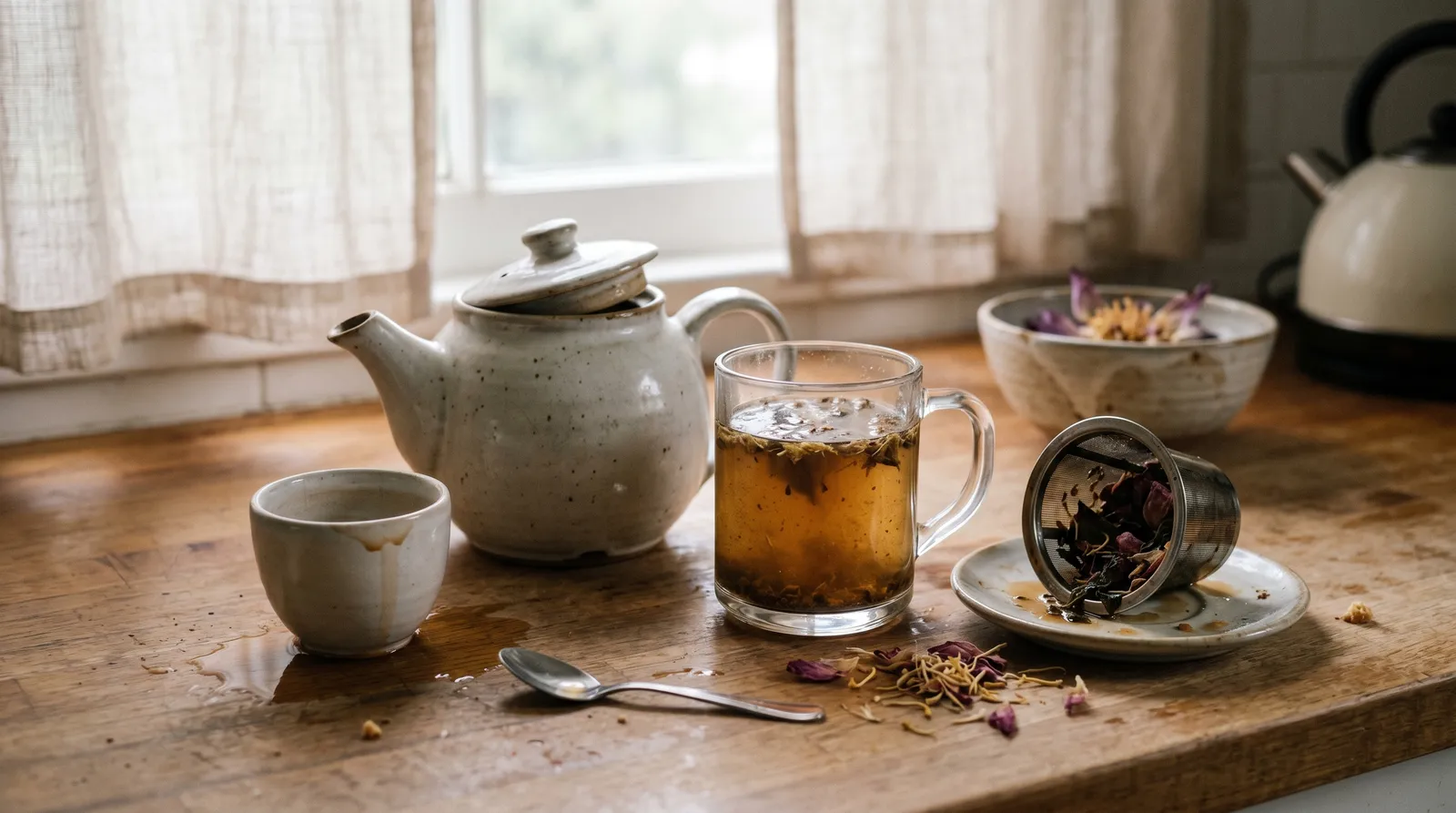
- Using boiling water directly on the petals. Let it cool first. You are making a gentle infusion, not cooking stock.
- Not weighing the petals. "A pinch" of shredded petals can be 0.3 g or 1.5 g depending on your fingers and how tightly the material is packed. Use a scale.
- Steeping for only three to five minutes. This is not green tea. The alkaloids need time to migrate into the water. Ten minutes minimum.
- Dissolving extract in water and calling it an infusion. Dried extracts, liquid extracts, and resin are concentrated forms. Their doses are not interchangeable with shredded-petal doses. If you want to use an extract, follow the specific guidance for that product form — do not eyeball it into a mug of hot water.
- Redosing too quickly. If you do not feel much after 30 minutes, wait. The full onset can take up to an hour, especially on a fuller stomach. Making a second cup before the first has peaked is how people end up more sedated than they intended.
What We Honestly Do Not Know
There are real gaps in the evidence base for lotus tea, and pretending otherwise would be irresponsible. No controlled human pharmacokinetic study has measured nuciferine blood levels after drinking a standard cup brewed from Nymphaea caerulea petals. We do not know the exact bioavailability of nuciferine via aqueous extraction compared to alcohol extraction or inhalation. The dose-response figures in the table above are community-derived, not clinically validated. And the dream-enhancement effect — probably the single most discussed property of blue lotus — has never been examined in a sleep-lab setting. We report what users consistently describe, but we flag clearly that anecdote is not evidence. The Beckley Foundation's broader psychedelic research programme has not, to our knowledge, published work specifically on Nymphaea caerulea, which shows how under-studied this plant remains compared to other psychoactive botanicals.
Interactions and Who Should Use Caution
The aporphine alkaloids in Nymphaea caerulea and Nymphaea ampla interact with dopamine receptors, creating real interaction concerns even with a mild lotus tea preparation. Apomorphine analogs can lower blood pressure, meaning anyone taking antihypertensives or living with cardiovascular conditions should be cautious about combining. The dopaminergic activity also flags interactions with Parkinson's medications (levodopa, pramipexole, ropinirole, and notably apomorphine itself — stacking plant-derived aporphine alkaloids on top of therapeutic apomorphine is a bad idea), dopamine-receptor-active antiemetics (metoclopramide, domperidone), and there is a theoretical concern around MAOIs via the aporphine class. For a fuller breakdown, see the dedicated article Lotus Interactions and Caution Notes in the Azarius wiki.
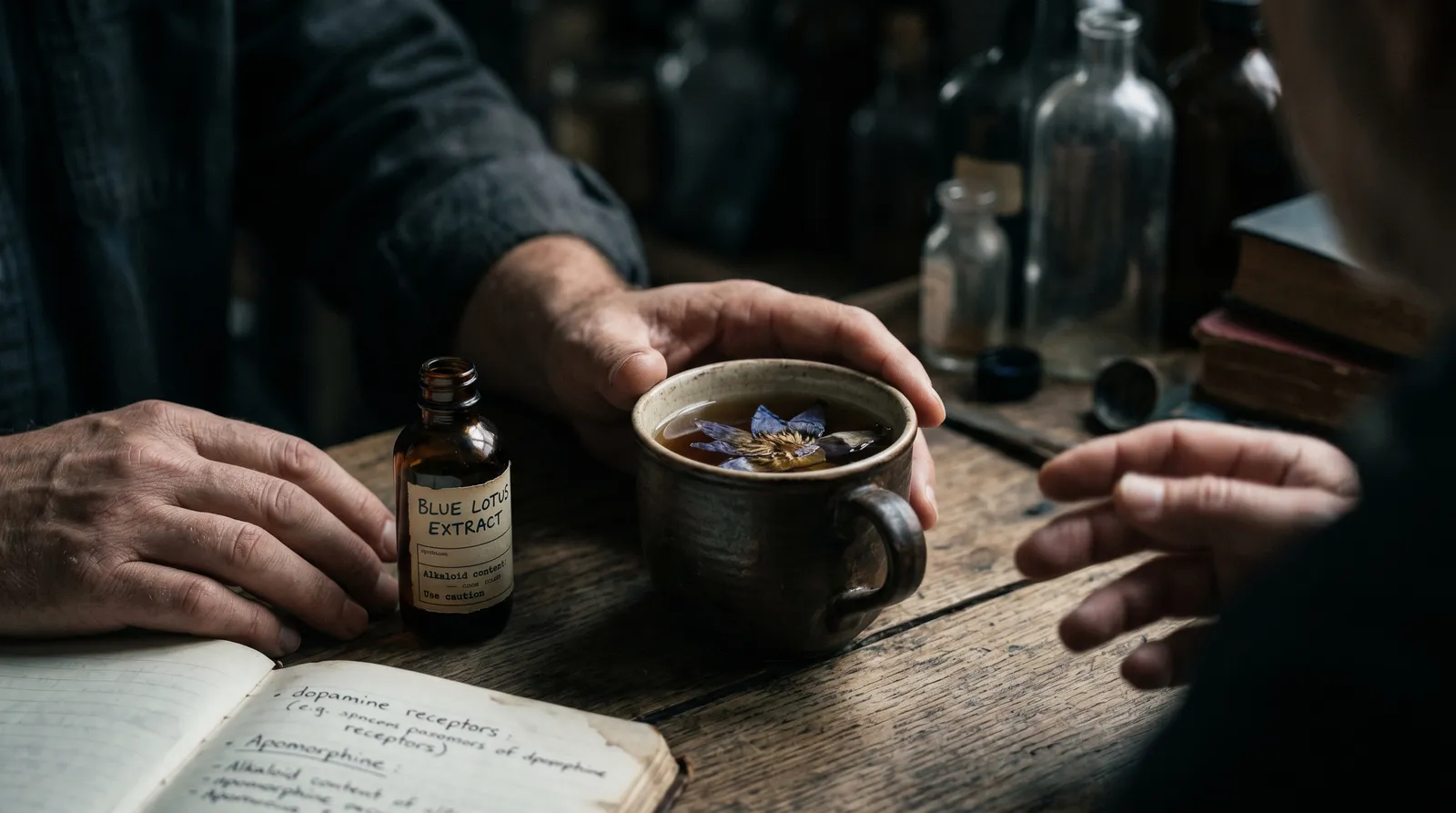
Nelumbo nucifera (pink lotus) shares the nuciferine overlap but adds its own bisbenzylisoquinoline alkaloids (liensinine, neferine), which have demonstrated cardiovascular activity in preclinical studies — liensinine has shown anti-arrhythmic properties in animal models (Qian, 2002). The interaction profile is not identical to the Nymphaea species, and anyone on cardiovascular medication should treat pink lotus infusions with the same caution.
Cold-Brew Lotus Tea Variation
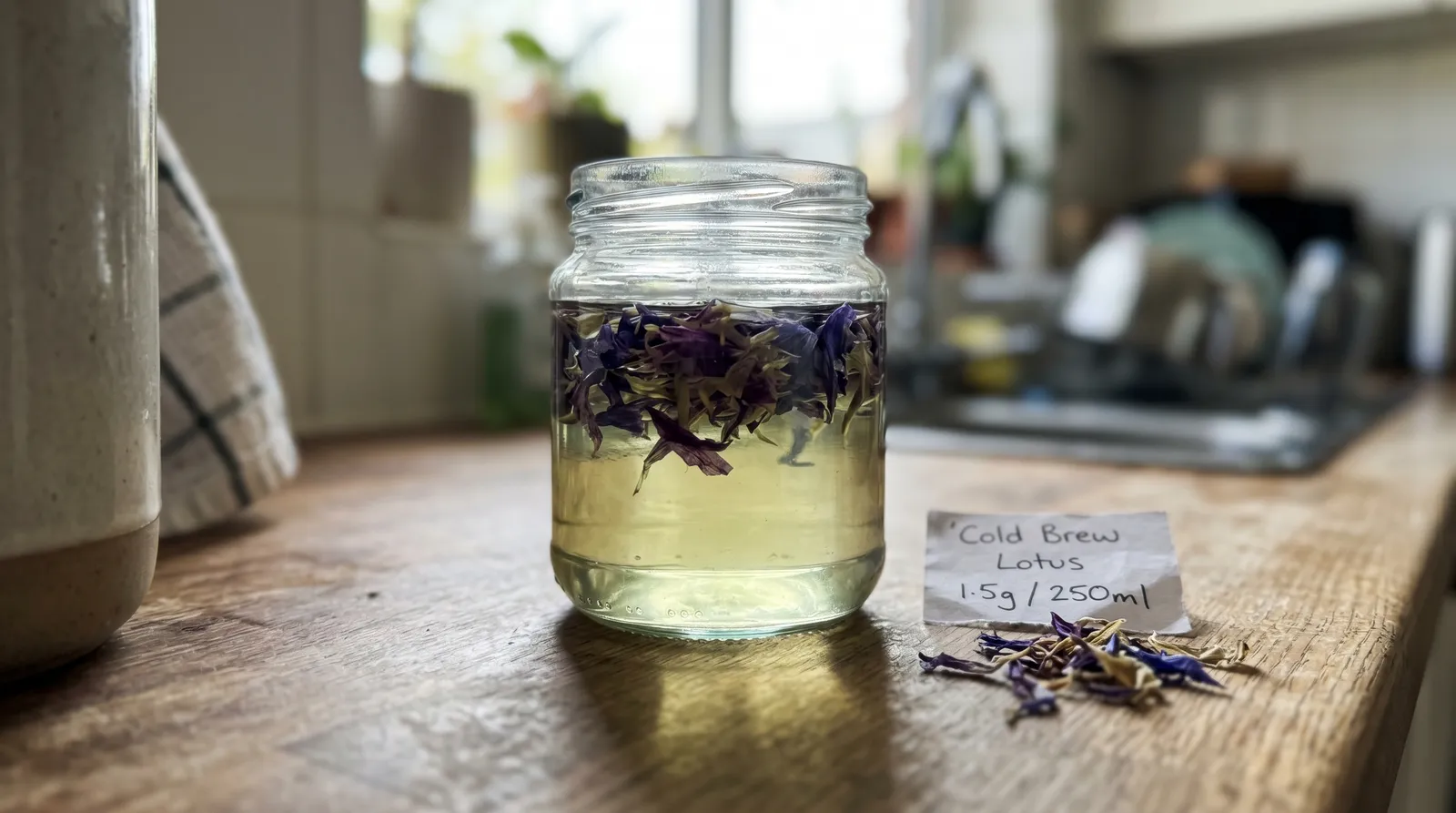
Cold brewing trades extraction efficiency for a smoother, more floral flavour profile in your lotus tea. The method: place 1.5–2 g of shredded Nymphaea caerulea petals in 250 ml of room-temperature water, cover, and refrigerate for 6–8 hours (overnight works well). Strain in the morning. The resulting drink is milder in flavour — less bitterness, more floral — and users report a slightly gentler onset, though whether this reflects a genuine difference in alkaloid extraction efficiency or simply a slower absorption from a cold liquid is unclear. No comparative extraction data exists for cold versus hot infusion of Nymphaea alkaloids specifically.
Storage of Leftover Brew
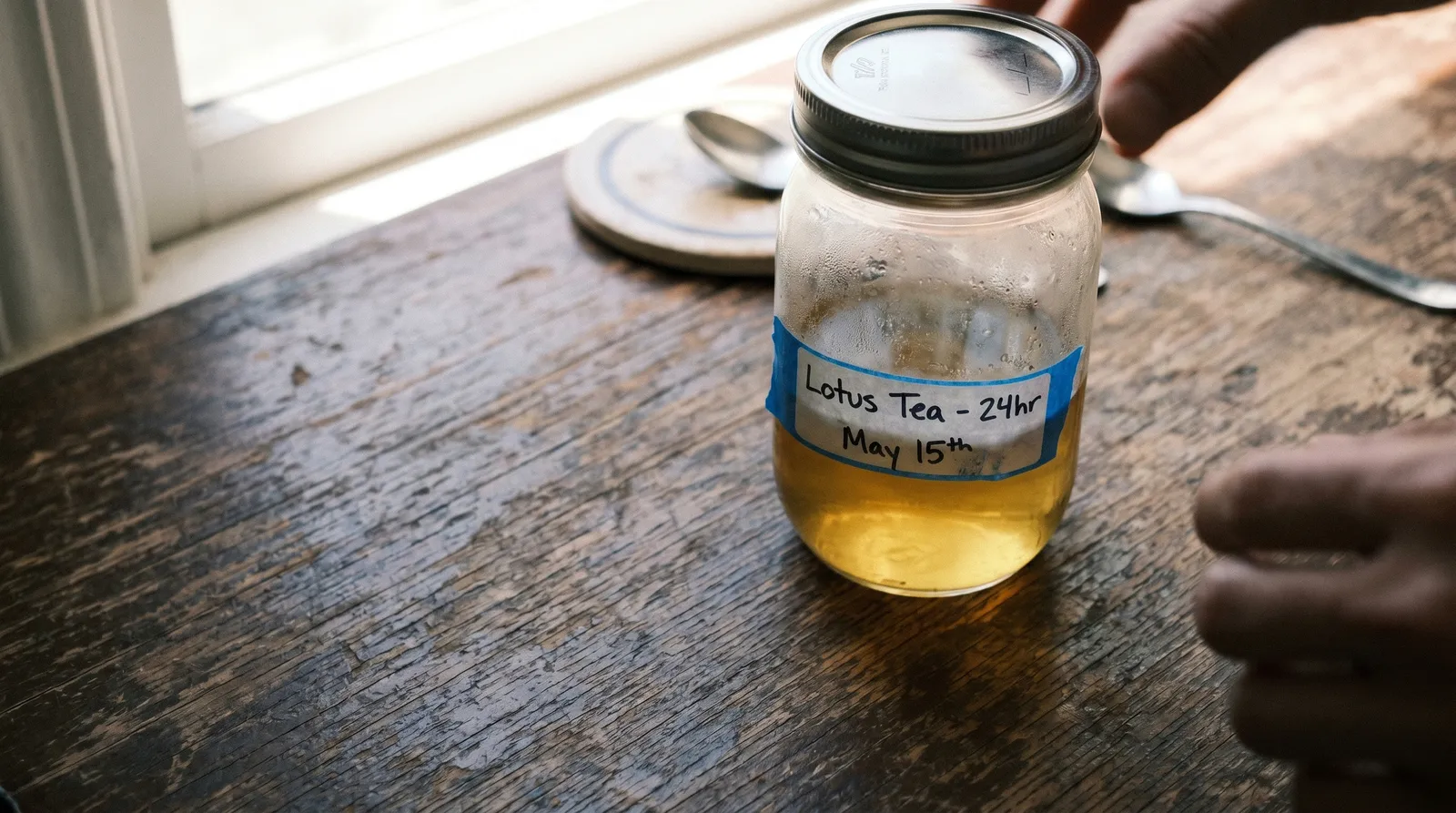
Brewed lotus tea does not keep well — drink it within the session. If you must store the liquid, refrigerate it in a sealed container and consume within 24 hours. There is no stability data for nuciferine in aqueous solution at fridge temperatures, so beyond a day you are guessing — and a day-old herbal infusion is not exactly appetising regardless.
Where to Buy Dried Lotus Petals for Lotus Tea
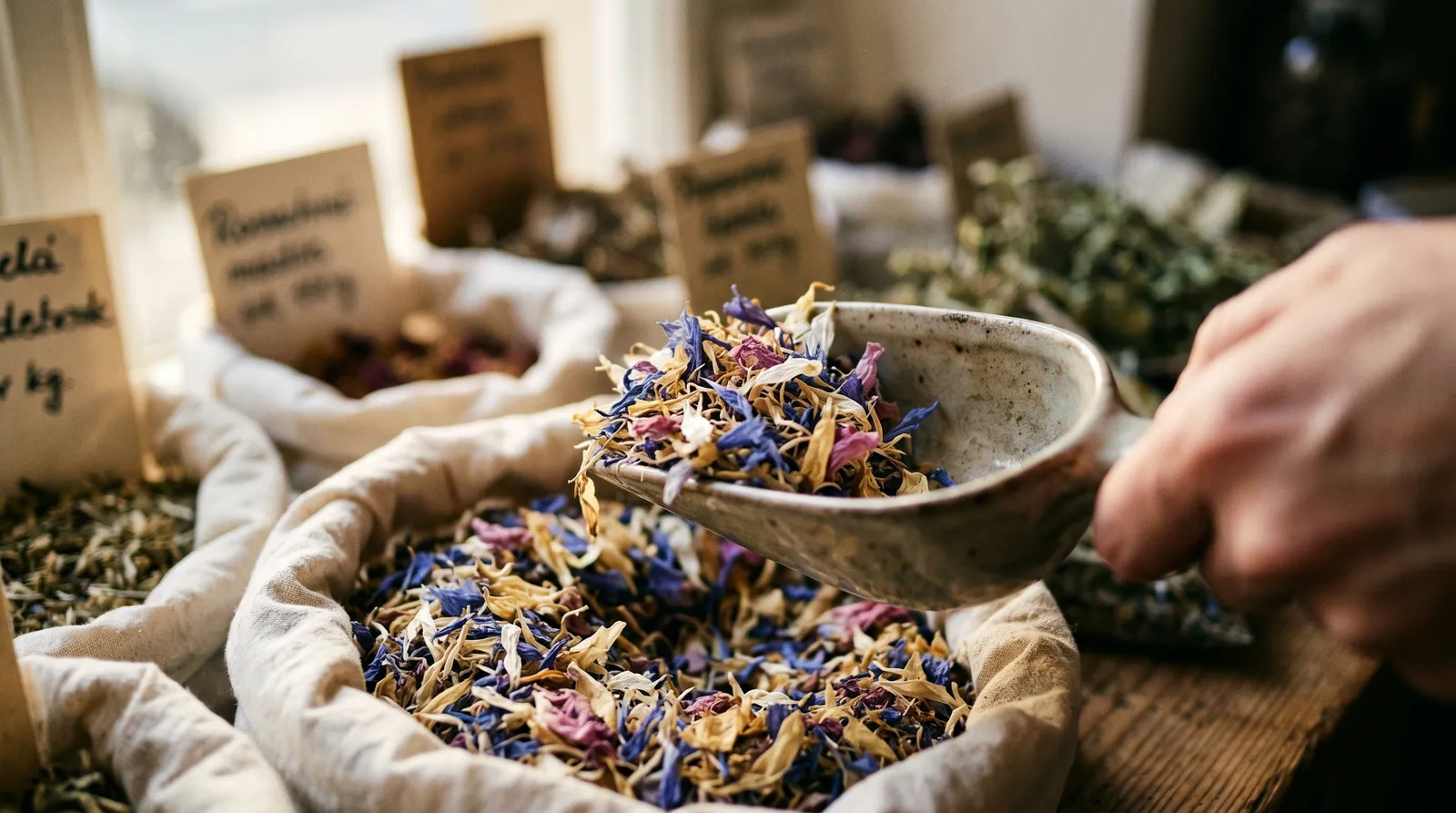
You can buy dried blue lotus petals, dried white lotus petals, and dried pink lotus petals from the Azarius catalogue. For brewing lotus tea specifically, order shredded petals rather than whole flowers — they steep more evenly and are far easier to weigh accurately on a kitchen scale. Azarius also stocks blue lotus extract and blue lotus resin for users who prefer concentrated forms, though these require different dosing and are not covered by the brewing method in this guide. If you are new to lotus, get shredded petals and start with the infusion method — it is the most forgiving route to finding your preferred dose.
Last updated: April 2026
Frequently Asked Questions
10 questionsCan I reuse lotus petals for a second cup of tea?
Does adding lemon juice to lotus tea make it stronger?
Is cold-brewed lotus tea less potent than hot-brewed?
Can I mix blue lotus and pink lotus petals in the same tea?
How long does brewed lotus tea stay fresh?
Where can I buy dried lotus petals for tea?
What is the ideal water temperature for brewing lotus tea?
How many grams of dried lotus petals should I use per cup?
Can I brew lotus tea in a French press?
Does lotus tea contain caffeine?
About this article


Adam Parsons is an external cannabis and psychedelics writer and editor who contributes to Azarius's wiki as both author and reviewer. On the writing side, he authors Azarius's kratom and kanna clusters, drawing on exten
This wiki article was drafted with AI assistance and reviewed by Adam Parsons, External contributor. Editorial oversight by Joshua Askew.
Medical disclaimer. This content is for informational purposes only and does not constitute medical advice. Consult a qualified healthcare provider before use of any substance.
Last reviewed April 19, 2026
References (4)
- [1]Agnihotri, V.K., ElSohly, H.N., Khan, S.I., Smillie, T.J., Khan, I.A., & Walker, L.A. (2008). Constituents of Nelumbo nucifera leaves and their antimalarial and antifungal activity. Phytochemistry Letters , 1(2), 89–93. DOI: 10.1016/j.phytol.2008.03.003
- [2]European Monitoring Centre for Drugs and Drug Addiction (EMCDDA). Drug profiles and risk assessments — Nymphaea species.
- [3]Pomierny, B., Krysiak, J., Starek, M., & Starek, M. (2020). Phytochemical analysis and antioxidant activity of Nymphaea caerulea extracts. Journal of Analytical Methods in Chemistry , 2020.
- [4]Qian, J.Q. (2002). Cardiovascular pharmacological effects of bisbenzylisoquinoline alkaloid derivatives. Acta Pharmacologica Sinica , 23(12), 1086–1092.
Related Articles
Blue Lotus vs Kanna: Effects & Safety
Blue lotus vs kanna compared — Nymphaea caerulea's aporphine profile against Sceletium tortuosum's mesembrine chemistry, with interaction warnings.
Lotus Clinical Research Overview
What does lotus clinical research actually show? A critical review of Nymphaea caerulea and Nelumbo nucifera pharmacology, preclinical data, and…
Kanna South Africa To West History
Sceletium tortuosum was used by San and Khoekhoe communities in southern Africa for centuries before European colonists first documented it in the 1660s.
Sceletium Tortuosum Plant
Learn about the sceletium tortuosum plant: botany, alkaloids, fermentation, safety warnings, and where to buy kanna.
Kanna Pharmacokinetics Explained
Complete guide to kanna pharmacokinetics: how Sceletium tortuosum alkaloids are absorbed, metabolised via CYP2D6, and eliminated.
Kanna Chemistry: Sceletium Alkaloids Explained
Kanna chemistry explained: mesembrine, mesembrenone, their mechanisms, how fermentation and extraction change alkaloid profiles, and why it matters…
Rapé Shamanic Snuff Guide: How to Use It Safely
A practical rapé shamanic snuff guide covering dose, kuripe technique, effects, nicotine safety, interactions and Amazonian tradition.
White Sage Salvia Apiana Cultural Smudging Guide
Salvia apiana is a non-psychoactive shrub native to southern California's coastal sage scrub, burned as ceremonial incense in Indigenous North American…
Mulungu Erythrina Traditional Amazonian Use — Bark, Alkaloids & Research
Erythrina mulungu is a Brazilian legume tree whose bark has been brewed as a calming decoction in rural folk medicine for generations.