
This article discusses psychoactive substances intended for adults (18+). If you have a health condition or take medication, consult a doctor before use. Our age policy
Sceletium Tortuosum Plant
Definition
Sceletium Tortuosum Plant is a low-growing succulent native to southern Africa (family Aizoaceae) and the sole botanical source of kanna, traditionally used by the Khoisan peoples and notable for its mesembrine-type alkaloids that act on serotonin pathways.
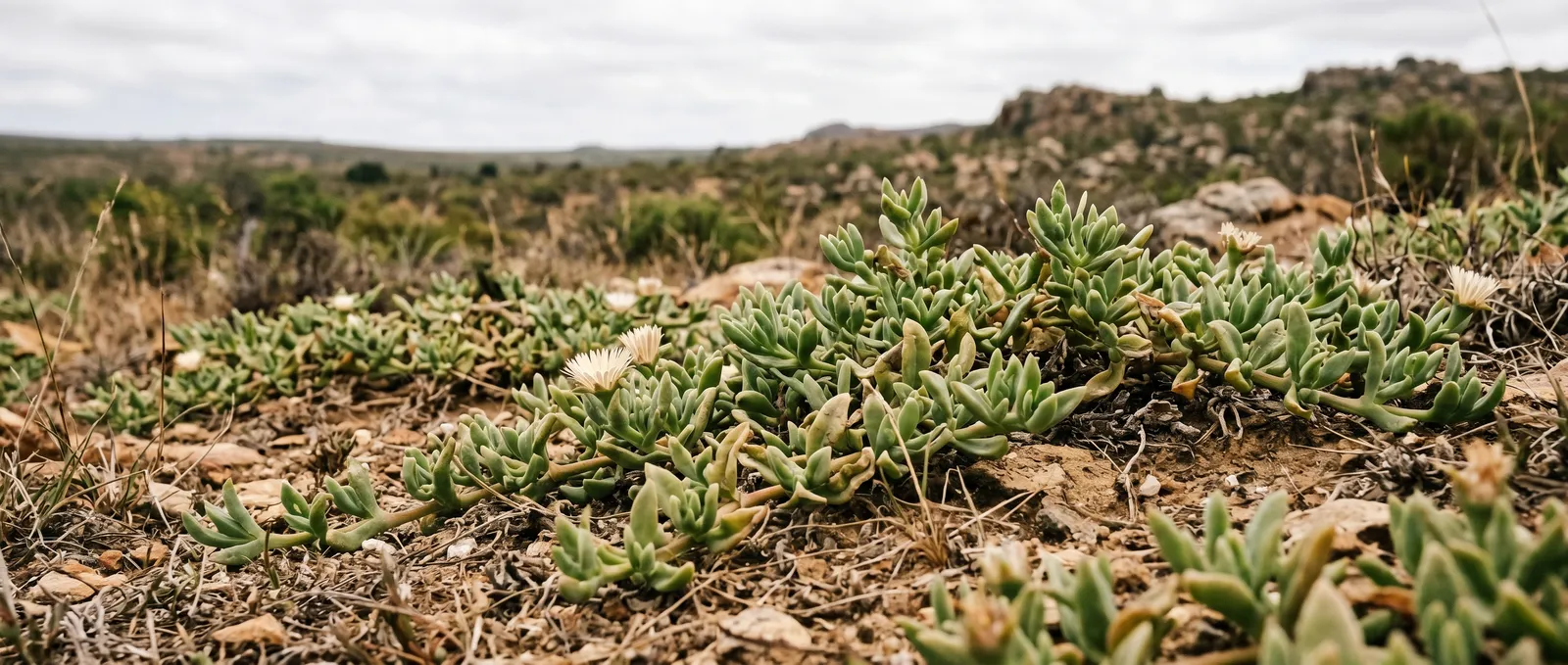
Sceletium tortuosum is a low-growing succulent native to southern Africa, belonging to the family Aizoaceae — the same group as the ice plants you might see trailing over a Mediterranean wall. It produces small white or pale yellow flowers and fleshy leaves that store water in arid conditions. The sceletium tortuosum plant is the sole botanical source of kanna, a preparation with documented use among the Khoisan peoples (San and Khoekhoe) stretching back centuries. What makes it pharmacologically interesting is a cluster of mesembrine-type alkaloids concentrated primarily in the aerial parts — the leaves and stems — which interact with serotonin pathways in ways researchers are still working to pin down.
Adult audience (18+). The dosing ranges and effects described in this article apply to adult physiology. This content is not intended for minors.
Disclaimer: This article is for informational purposes only and does not constitute medical advice. The sceletium tortuosum plant and its preparations have serotonergic activity and carry interaction risks. Do not use kanna as a substitute for professional medical treatment. If you are taking any medication — particularly antidepressants or other serotonergic substances — consult a qualified healthcare provider before using any kanna product. Azarius does not make therapeutic claims about this plant.
Botany and Habitat
Sceletium tortuosum is a ground-cover succulent rarely exceeding 15 cm in height, native to the rocky semi-arid soils of South Africa's Western and Eastern Cape. It thrives in regions that receive sporadic rainfall and bake under intense sun for much of the year. The sceletium tortuosum plant is well adapted to these conditions: its succulent leaves store moisture, and its root system is shallow but wide-spreading.
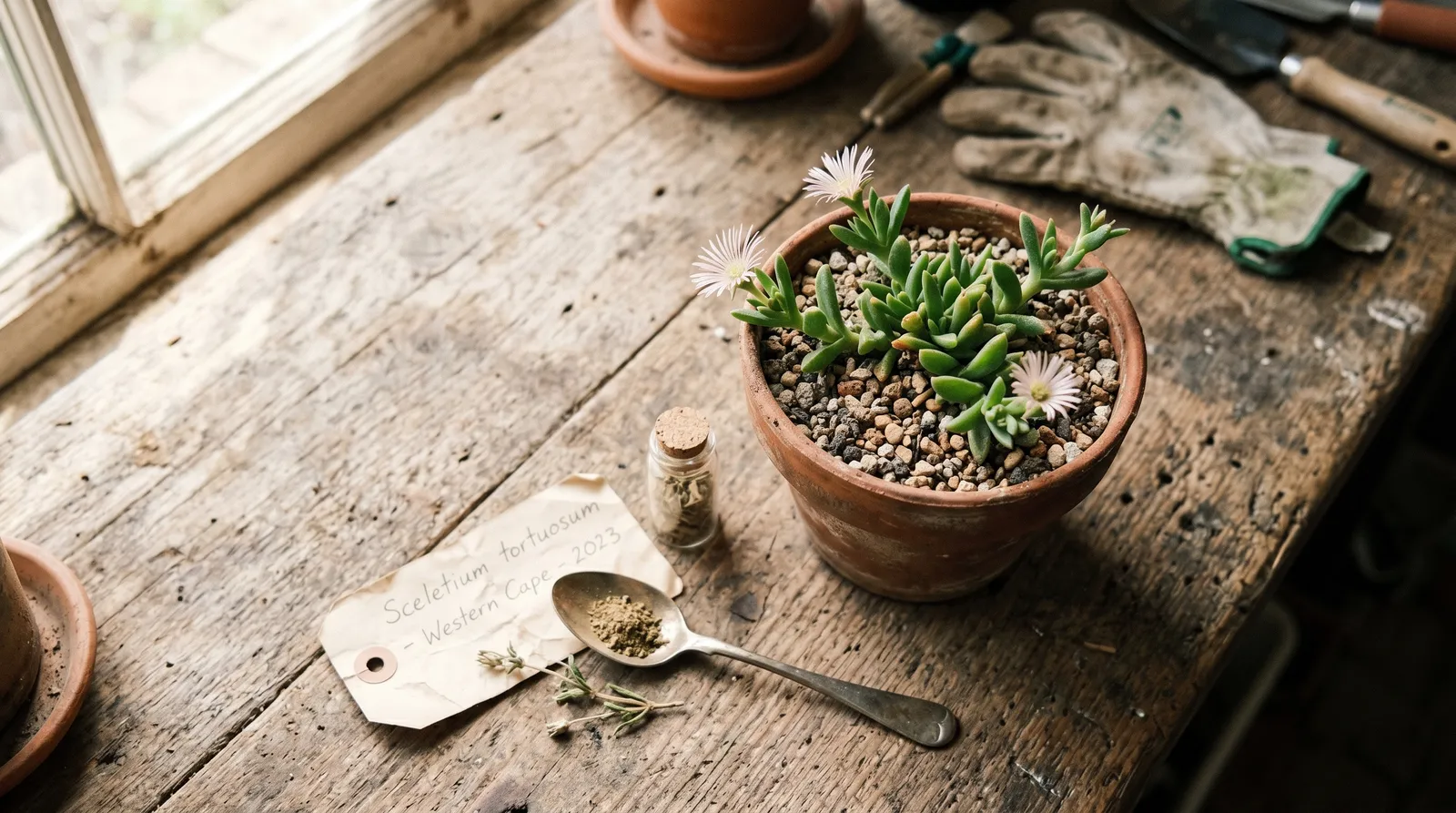
Taxonomically, it sits within the Mesembryanthemaceae (now usually folded into Aizoaceae), a large family of succulent plants sometimes called mesembs by collectors. Several Sceletium species exist — including S. emarcidum, S. expansum, and S. strictum — but S. tortuosum is the species most consistently associated with traditional kanna use and the one that has received the bulk of phytochemical attention. Smith et al. (1996) provided key taxonomic revision of the genus, clarifying species boundaries that had been muddled in earlier literature.
The name "sceletium" itself comes from the Latin sceletus (skeleton), referring to the skeletonised leaf veins that become visible as the fleshy tissue dries — a distinctive feature that makes dried specimens relatively easy to identify. When the leaves lose moisture, the mesophyll tissue degrades, leaving behind a lace-like network of vascular strands. It is an oddly beautiful effect, and it is also the reason the dried sceletium tortuosum plant material looks nothing like the living succulent.
Alkaloid Chemistry
The sceletium tortuosum plant contains four principal alkaloids — mesembrine, mesembrenone, mesembrenol, and mesembranol — all sharing a common octahydroindolone skeleton but differing in their pharmacological profiles (Gericke & Viljoen, 2008).
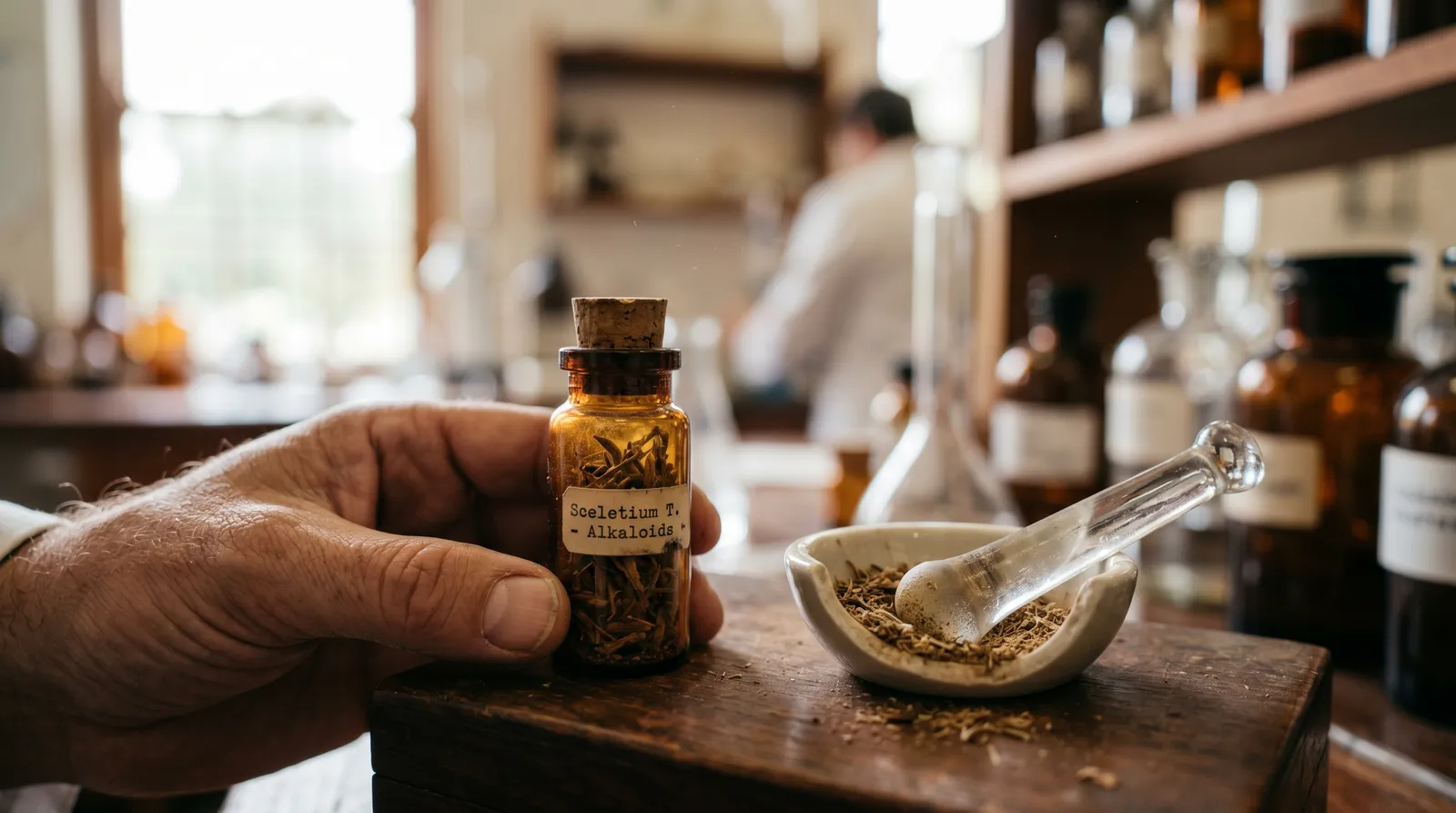
Mesembrine is generally considered the most pharmacologically active alkaloid. In vitro data indicate it acts as a serotonin reuptake inhibitor, and there is also evidence for phosphodiesterase-4 (PDE4) inhibition (Harvey et al., 2011). The relative contribution of each mechanism in living humans remains an open question — most of the mechanistic work has been done in cell assays and animal models, not clinical pharmacokinetic studies. Mesembrenone appears to share some serotonergic activity but may differ in potency and selectivity. Mesembrenol and mesembranol are less well characterised.
| Alkaloid | Primary Mechanism (in vitro) | Relative Abundance | Characterisation Level |
|---|---|---|---|
| Mesembrine | Serotonin reuptake inhibition, PDE4 inhibition | Major (varies with fermentation) | Well characterised |
| Mesembrenone | Serotonergic activity (lower potency suggested) | Major (increases with fermentation) | Moderately characterised |
| Mesembrenol | Not fully established | Minor | Poorly characterised |
| Mesembranol | Not fully established | Minor | Poorly characterised |
| Material Type | Total Alkaloid Range (% dry weight) | Dominant Alkaloid | Source |
|---|---|---|---|
| Unfermented aerial parts | 0.3–2.3% | Mesembrine | Shikanga et al. (2012) |
| Fermented aerial parts | 0.3–1.5% (estimated) | Mesembrenone (ratio shifts) | Gericke & Viljoen (2008) |
| Roots | Trace to negligible | N/A | Smith et al. (1996) |
Alkaloid content varies significantly depending on the plant part, the growing conditions, the time of harvest, and — critically — whether the material has been fermented. These figures come from a limited number of analytical studies and should not be treated as universal constants. Wild-harvested material, cultivated material, and commercially processed material can all differ substantially.
Traditional Preparation and Fermentation
Fermentation is the traditional processing step that transforms raw sceletium tortuosum plant material into kougoed, the form actually used by the Khoisan peoples. The aerial parts of the plant were crushed or bruised, then placed in a sealed container (traditionally an animal skin bag) and left to ferment for several days. According to ethnobotanical accounts compiled by Smith et al. (1996), this process was considered essential to producing the desired effects.
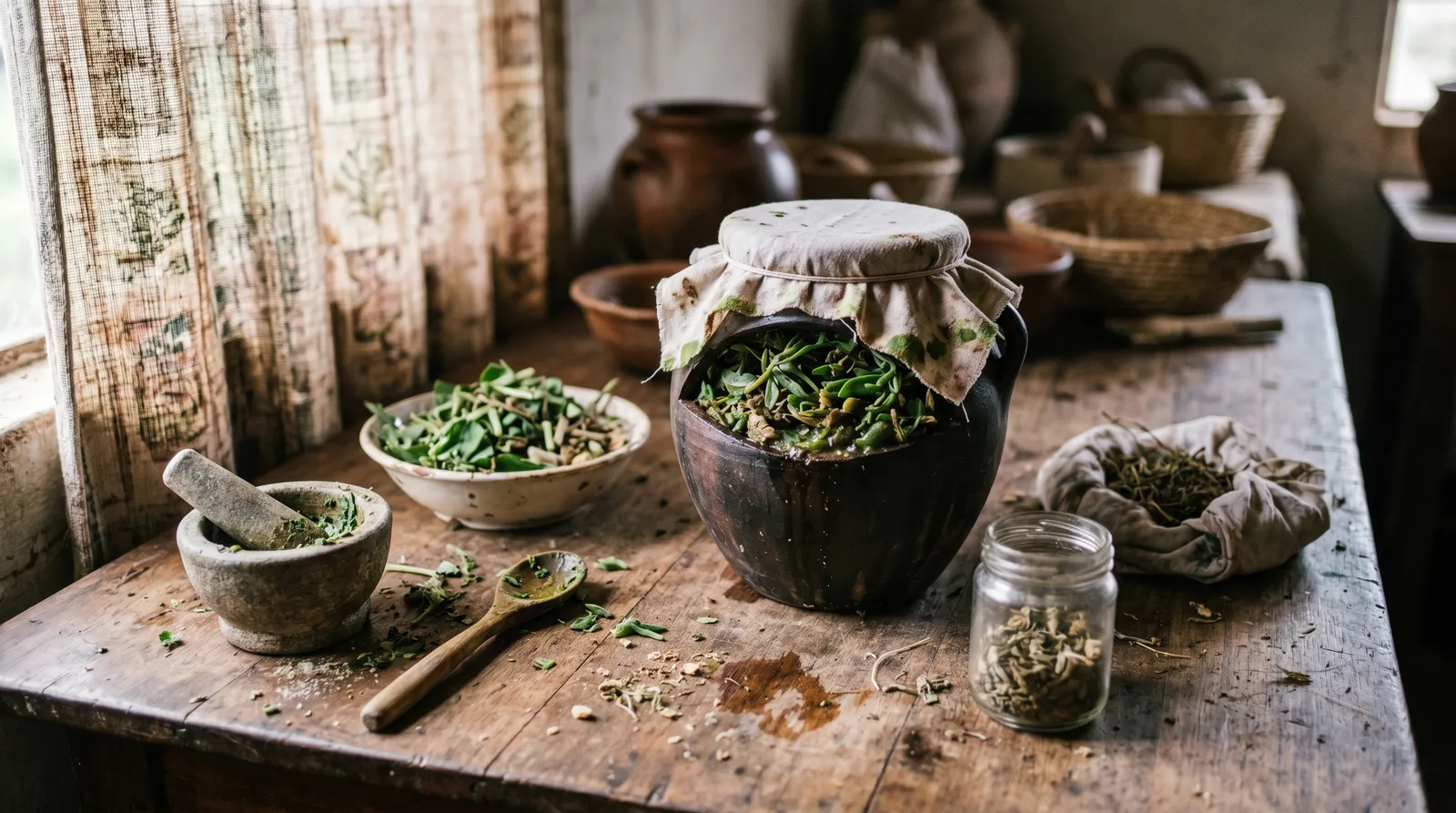
Fermentation alters the alkaloid profile. It reduces oxalate content — oxalic acid is present in many Aizoaceae and can be an irritant — and shifts the ratio of mesembrine to mesembrenone. Unfermented and fermented sceletium tortuosum plant material are, in pharmacological terms, different products. This distinction matters for anyone reading about kanna: when historical sources describe the effects of kougoed, they are describing fermented material, not raw leaf.
Traditional routes of administration included chewing the fermented material (sometimes mixed with other plant matter), smoking it, or preparing it as a tea-like infusion. The San and Khoekhoe used kanna in social, ritual, and practical contexts — ethnobotanical sources describe its use before long hunts, during social gatherings, and in spiritual practice. The earliest European written account comes from the Dutch East India Company in 1662, when Jan van Riebeeck's expedition recorded the Khoikhoi trading and using a plant preparation matching the description of kougoed (Smith et al., 1996).
Plant Material Versus Extracts
Raw or dried sceletium tortuosum plant material and concentrated kanna extracts deliver fundamentally different alkaloid doses per milligram consumed. This is a distinction that trips people up, so it is worth being explicit.
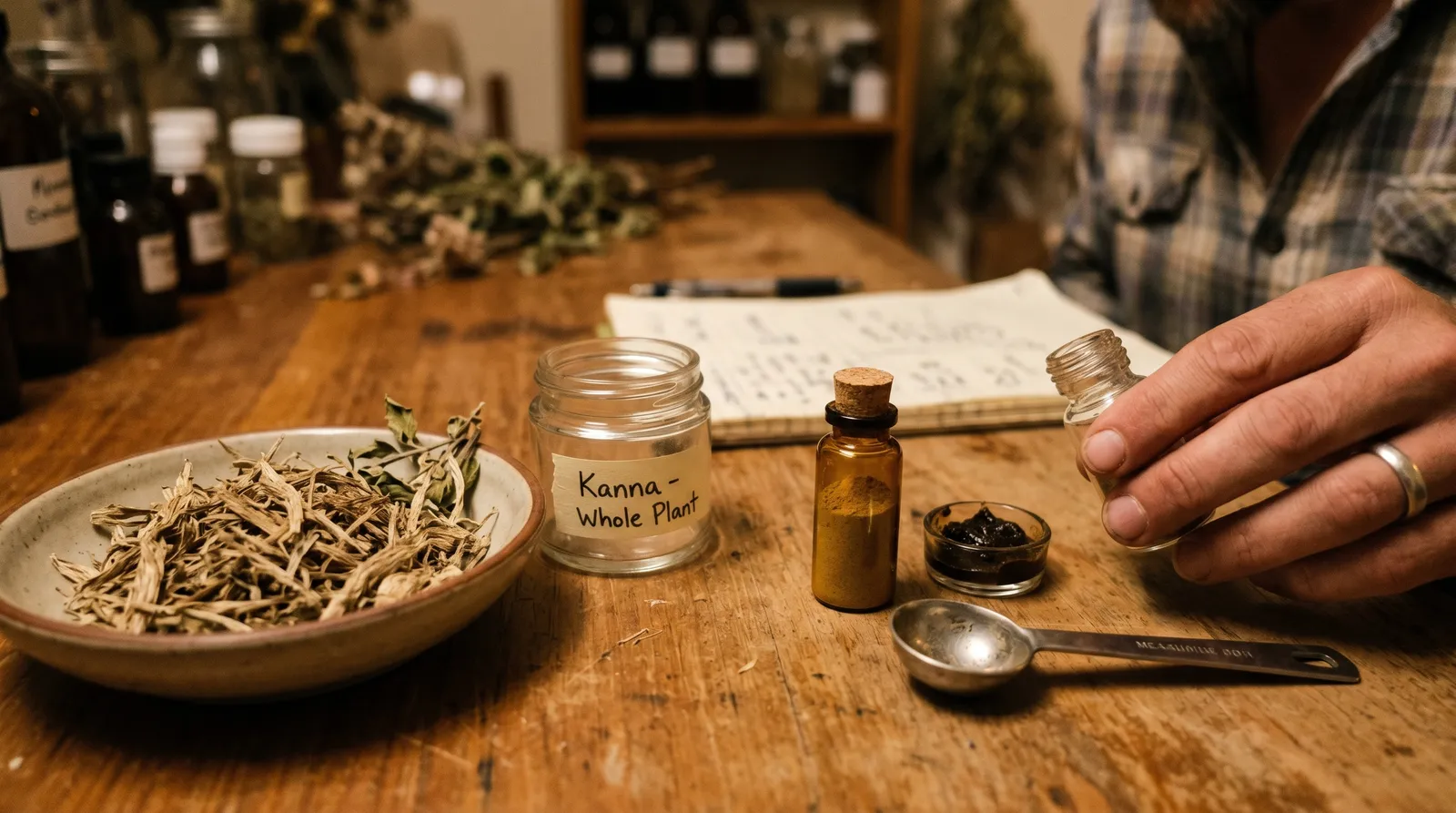
Plant material contains the full spectrum of alkaloids at their naturally occurring concentrations. Extracts — whether simple ethanol extractions or standardised preparations — concentrate specific alkaloids, particularly mesembrine, relative to the bulk plant material.
A 10:1 extract, for instance, means roughly ten parts of sceletium tortuosum plant material were used to produce one part of extract. A 25:1 concentrate is proportionally more potent per milligram. The practical result: effective doses for concentrated extracts are measured in milligrams (typically 25–50 mg in published clinical research on a specific standardised preparation), while traditional plant material doses are measured in hundreds of milligrams to grams.
Most published clinical research on kanna — including the small trials reporting effects on anxiety- and mood-related outcomes — used a specific standardised extract, not general plant material or non-standardised extracts. Those trial results apply to that preparation at that dose. Assuming that any kanna product will produce the same outcomes at any dose is a mistake the evidence does not support. The alkaloid profile, concentration, and bioavailability can differ enormously between products.
How Sceletium Tortuosum Compares to Other Serotonergic Botanicals
The sceletium tortuosum plant differs from other serotonergic botanicals primarily in its mechanism of action: mesembrine acts as a serotonin reuptake inhibitor with additional PDE4 inhibition, a dual profile not shared by the most commonly compared plants. People sometimes ask how it stacks up against St John's Wort and griffonia (the source of 5-HTP), and the comparison is instructive but limited.
St John's Wort (Hypericum perforatum) has a much larger clinical evidence base, with multiple meta-analyses supporting its use for mild to moderate depression, but it works through a different and broader mechanism involving multiple neurotransmitter systems. Griffonia simplicifolia provides 5-HTP, a direct serotonin precursor, which is mechanistically distinct from reuptake inhibition. Sceletium's mesembrine acts more like a conventional SSRI in its reuptake-blocking profile, but with the added PDE4 component that neither St John's Wort nor 5-HTP shares. Each has a different risk profile, and none should be combined with each other or with pharmaceutical antidepressants. For those interested in comparing these botanicals side by side, the Azarius wiki pages on St John's Wort and Griffonia simplicifolia cover each in detail. Blue lotus is another ethnobotanical sometimes mentioned alongside kanna, though its active compounds and mechanisms are entirely different — the Azarius blue lotus wiki page explains the distinction.
Serotonergic Activity and Safety
The sceletium tortuosum plant carries a confirmed serotonergic interaction risk because its alkaloids have demonstrated serotonin reuptake inhibition in vitro (Harvey et al., 2011). Do not combine kanna — in any form, but especially concentrated extracts — with SSRIs, SNRIs, MAOIs, tricyclic antidepressants, or other serotonergic substances including 5-HTP, St John's Wort, and MDMA. The risk is serotonin syndrome: a condition characterised by agitation, hyperthermia, rapid heart rate, and in severe cases, seizures. The European Monitoring Centre for Drugs and Drug Addiction (EMCDDA) has noted the serotonergic properties of mesembrine-type alkaloids in its assessments of novel psychoactive substances. Anyone currently taking antidepressant medication should not use kanna without medical supervision.
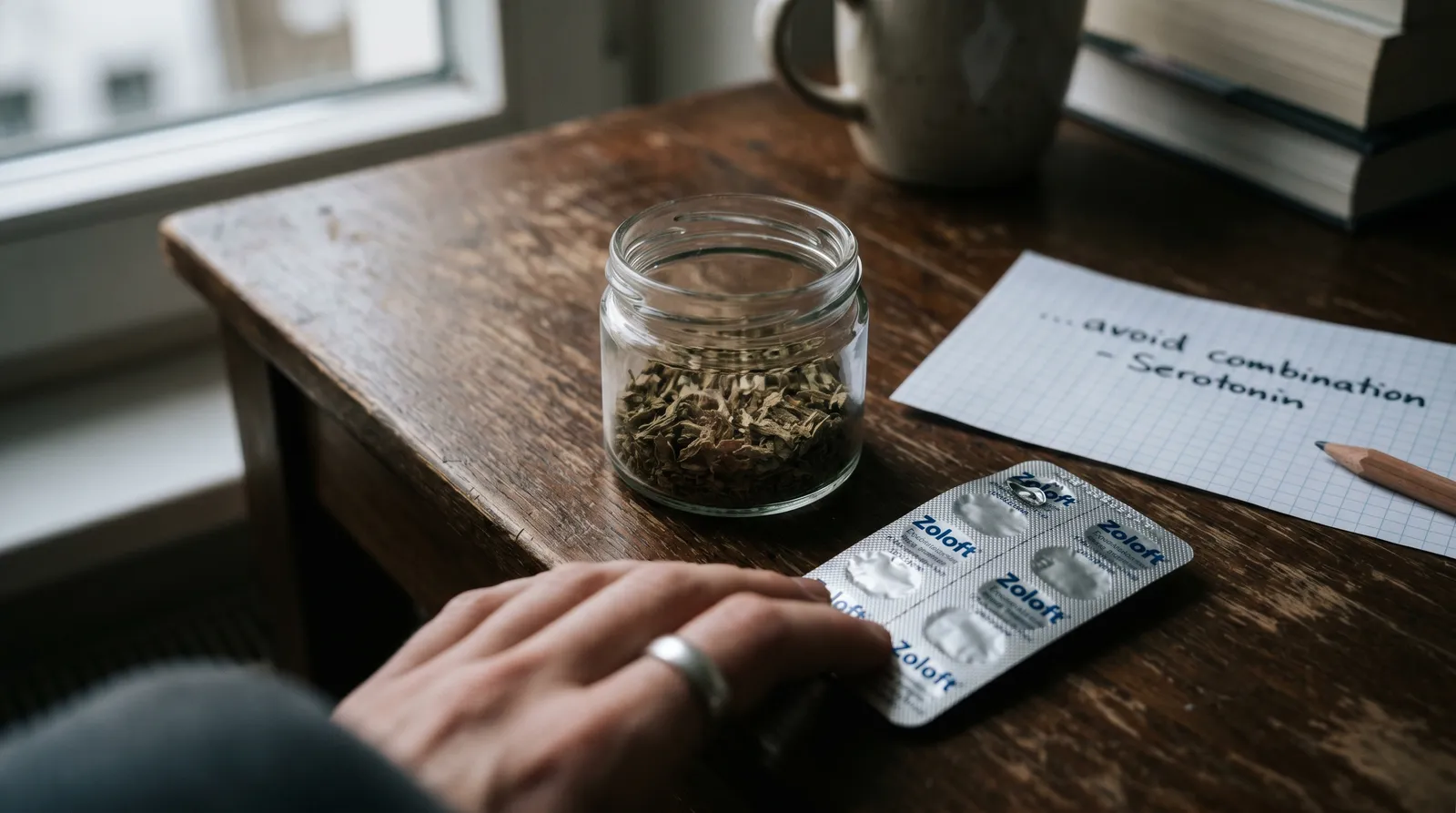
This warning applies with greater weight to extracts than to raw sceletium tortuosum plant material, simply because extracts deliver higher alkaloid concentrations per dose. But it applies to both. And note that some antidepressants — fluoxetine in particular — have long half-lives, meaning pharmacologically active metabolites can persist for weeks after discontinuation. A gap of a few days is not necessarily sufficient.
Long-term safety data for chronic daily use of kanna in any form is thin. The clinical trials that exist are short-duration studies with small sample sizes. Some users report using kanna regularly without apparent adverse effects, but "some users report" is not the same as "established in controlled studies." If you are considering regular use, that gap in the evidence base is worth sitting with honestly.
What the Research Actually Shows
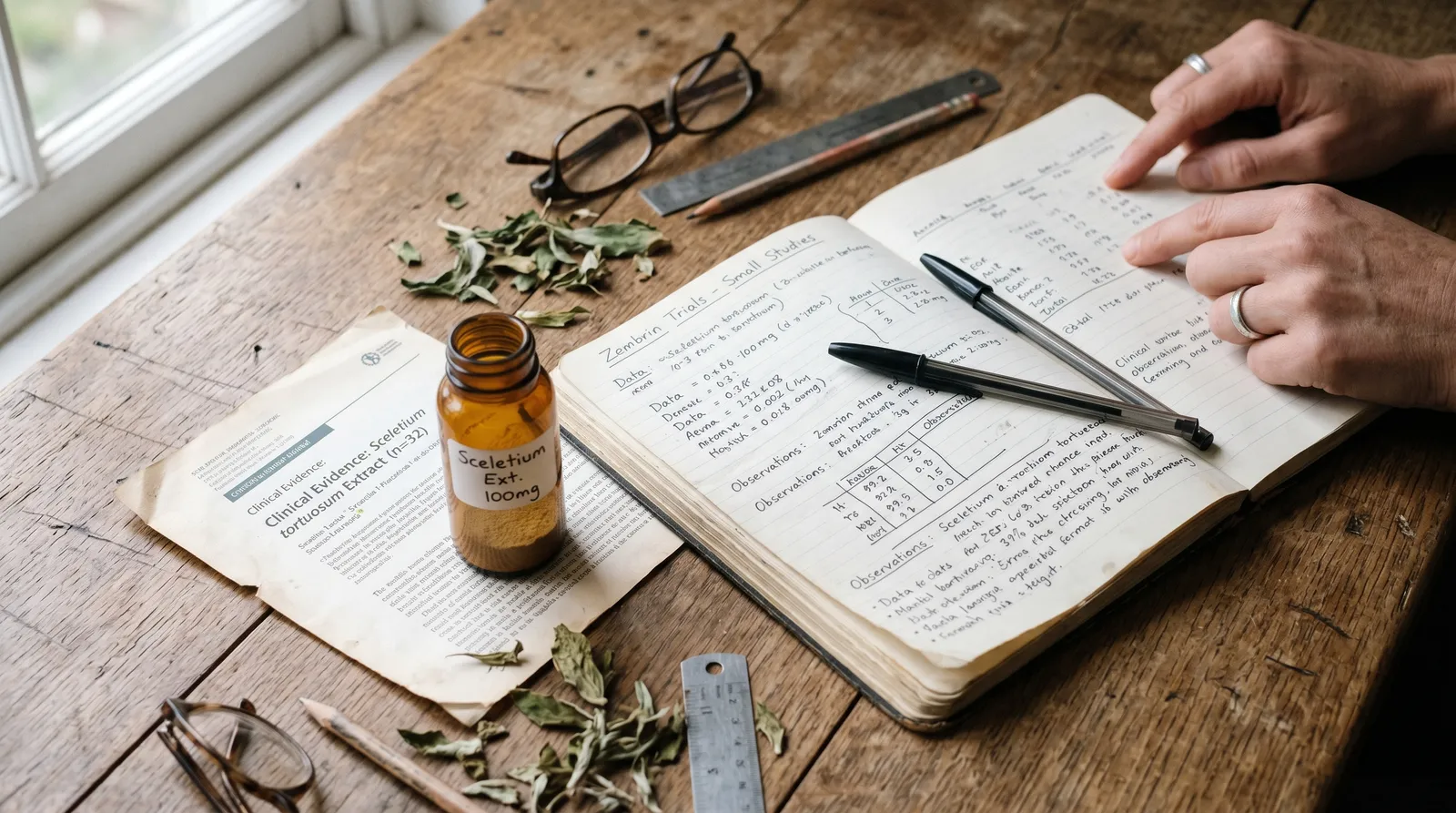
The clinical evidence for the sceletium tortuosum plant consists primarily of small trials on a single standardised extract, making the body of research coherent but early-stage. Here is what holds up and what does not.
The strong ground: the principal alkaloids are well characterised, and their presence in the plant is not in dispute. Traditional Khoisan use is documented ethnobotanically across multiple sources. In vitro serotonin reuptake inhibition and PDE4 inhibition have been demonstrated for mesembrine (Harvey et al., 2011).
The contested middle: clinical trials on a specific standardised extract have reported effects on anxiety-related outcomes — Terburg et al. (2013) found that a single 25 mg dose of the standardised preparation reduced amygdala reactivity to fearful faces in an fMRI study with 16 healthy volunteers. That is a real finding, but it is a small study using a specific preparation, measuring a neuroimaging proxy rather than a clinical anxiety endpoint. It does not mean "kanna reduces anxiety" as a general statement.
The thin edges: claims sometimes circulated online — that kanna, according to unsubstantiated anecdotal reports, could help with depression, social anxiety disorder, PTSD, or addiction — are either anecdotal or extrapolated well beyond what limited data on a single standardised extract can support, according to Gericke & Viljoen (2008) and subsequent reviewers. No controlled clinical trial has demonstrated efficacy for any of these conditions. The pharmacokinetics in humans (onset, peak plasma concentration, half-life) are poorly characterised across different forms and routes of administration. And the assumption that non-standardised plant material produces the same effect profile as the standardised preparation used in trials has not been tested.
None of this means the sceletium tortuosum plant is without genuine pharmacological activity. It means the evidence is early-stage.
How to Buy Sceletium Tortuosum Plant Material
Product quality varies enormously across the kanna market, so choosing where to buy sceletium tortuosum plant material is one of the most consequential decisions you can make. Not all kanna products are equivalent — alkaloid content depends on the source material, processing method, and whether the product has been standardised or tested. When you order from a reputable supplier, you should expect clear labelling that distinguishes between raw plant material, fermented kougoed, and concentrated extracts.
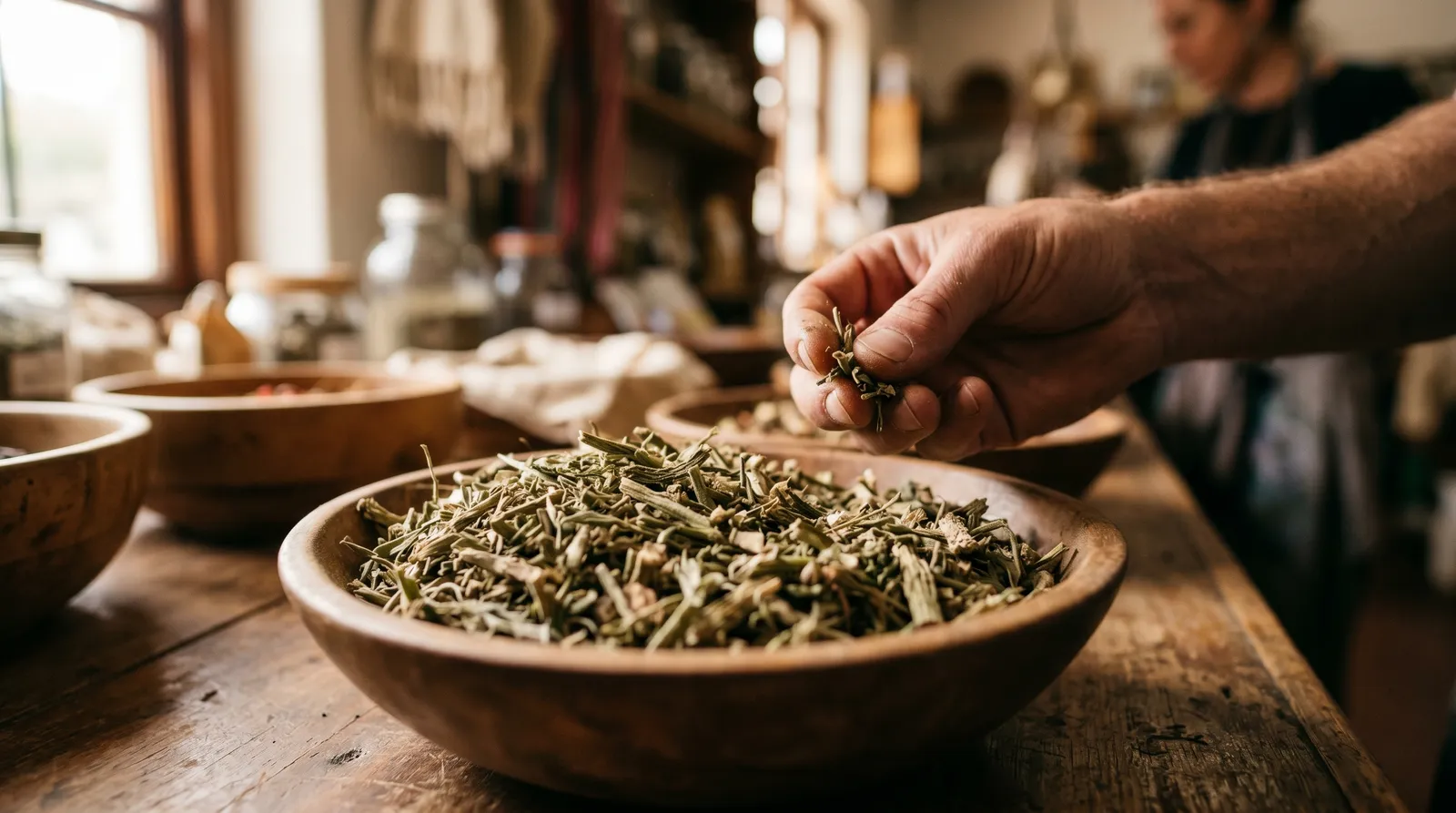
We carry dried sceletium tortuosum plant material alongside kanna extracts in several concentrations. If you want to buy kanna extract, we stock both moderate-strength and high-concentration options. You can order these directly from the Azarius kanna product page. We also carry related botanicals in our herbs and seeds category, including other ethnobotanical preparations from the African continent. For those exploring mood-supporting herbs more broadly, our selection includes St John's Wort, griffonia (5-HTP source), and blue lotus — each covered on its own Azarius wiki page explaining what the evidence does and does not support. You can also browse the smartshop herbs collection for a wider range of ethnobotanicals, or get in touch with our team if you need help choosing between products.
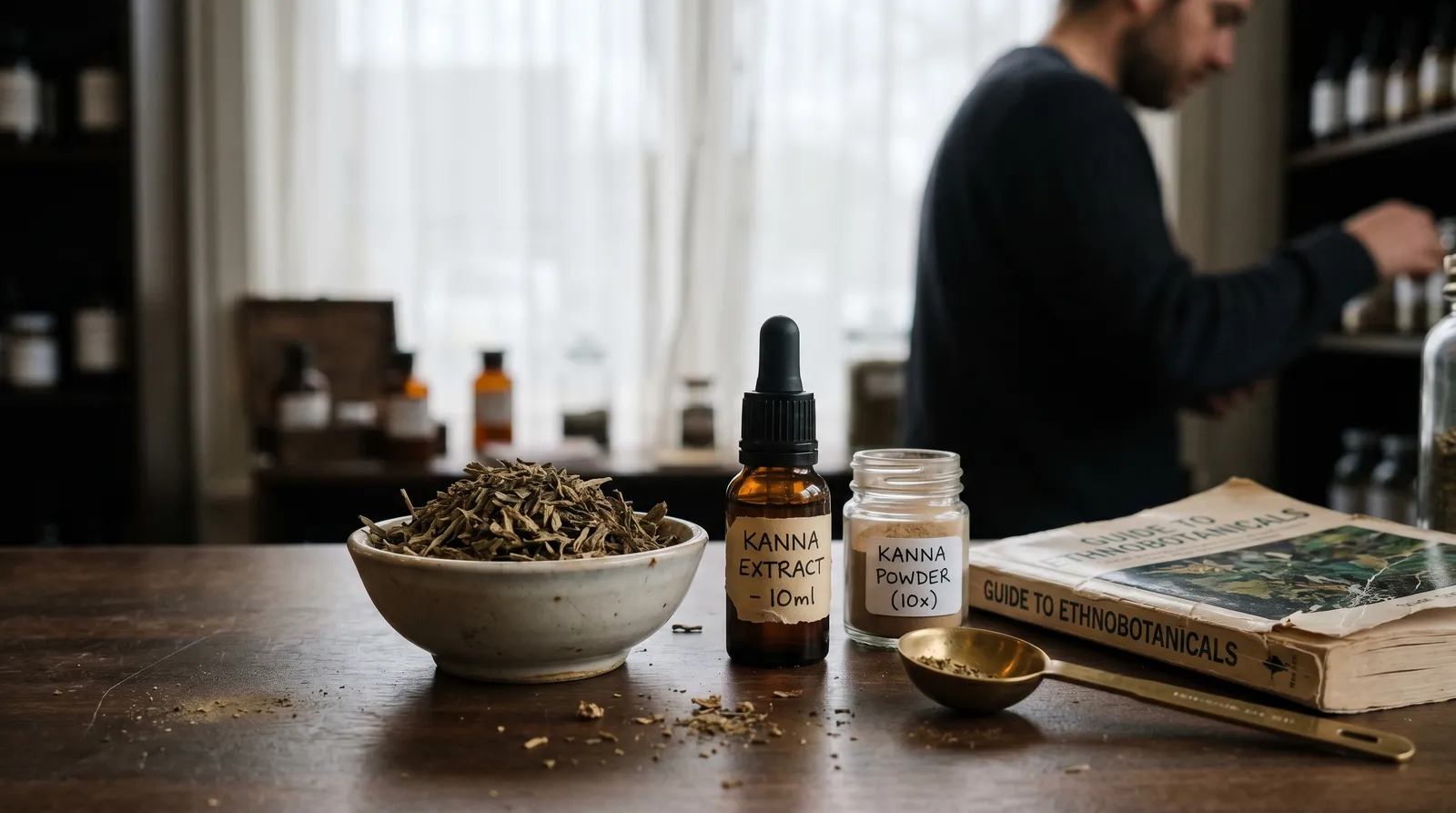
One thing we have noticed over the years: people who order sceletium tortuosum plant material expecting an instant, dramatic mood shift are usually the ones who come back disappointed. This is not MDMA. The effects, particularly from plant material, are subtle. If you go in expecting subtlety, you are more likely to appreciate what it actually does.
A regular customer once told us he had tried three different kanna products from other vendors before landing on our dried plant material — his complaint with the others was inconsistency. One batch would feel noticeably active, the next would do almost nothing. That is the reality of working with raw botanicals: batch-to-batch variation is inherent. Standardised extracts reduce that variability, which is their main practical advantage, but they also narrow the alkaloid profile compared to whole plant material. There is a genuine trade-off, and we think it is worth being upfront about rather than pretending every product delivers identical results.
We will also be honest about what we do not know. We cannot tell you exactly how much mesembrine is in any given batch of dried plant material — that would require analytical testing of each harvest, which is not standard practice for raw botanicals at this scale. What we can tell you is that our kanna extracts come with specified concentration ratios, and our dried plant material is sourced from cultivated South African stock. If you are unsure which form suits you, get in touch — we are happy to walk you through the options.
There is another limitation worth mentioning: we do not have independent third-party alkaloid assays for every batch of raw sceletium tortuosum plant material we sell. The extracts come with concentration ratios from the manufacturer, but for whole dried herb, what you get is cultivated South African material processed to our supplier's standards. We trust that supply chain, but we are not going to pretend it is the same as a pharmaceutical-grade certificate of analysis. If absolute alkaloid quantification matters to you, a standardised extract is the safer bet.
He had read about the Latin etymology and the skeletonised leaf veins and assumed that was the common name. Honestly, it is a better name than most. He ended up ordering both the dried sceletium tortuosum plant material and a moderate-strength extract to compare them side by side, which is actually something we recommend if you want to understand the difference firsthand rather than taking our word for it.
For those interested in exploring kanna, you can buy sceletium tortuosum plant material and extracts directly from the Azarius kanna product page. We also recommend browsing the smartshop herbs collection for related ethnobotanicals.
Last updated: April 2026
Frequently Asked Questions
6 questionsWhat is the difference between Sceletium tortuosum plant material and kanna extract?
Why is Sceletium tortuosum fermented traditionally?
What are the main alkaloids in Sceletium tortuosum?
Can Sceletium tortuosum be combined with antidepressants?
Does clinical research on kanna apply to all Sceletium tortuosum products?
How does Sceletium tortuosum compare to St John's Wort?
About this article


Adam Parsons is an external cannabis and psychedelics writer and editor who contributes to Azarius's wiki as both author and reviewer. On the writing side, he authors Azarius's kratom and kanna clusters, drawing on exten
This wiki article was drafted with AI assistance and reviewed by Adam Parsons, External contributor. Editorial oversight by Joshua Askew.
Medical disclaimer. This content is for informational purposes only and does not constitute medical advice. Consult a qualified healthcare provider before use of any substance.
Last reviewed May 12, 2026
References (6)
- [1]Gericke, N. & Viljoen, A.M. (2008). Sceletium — a review update. Journal of Ethnopharmacology , 119(3), 653–663. DOI: 10.1016/j.jep.2008.07.043
- [2]Harvey, A.L. et al. (2011). Pharmacological actions of the South African medicinal and functional food plant Sceletium tortuosum and its principal alkaloids. Journal of Ethnopharmacology , 137(3), 1124–1129. DOI: 10.1016/j.jep.2011.07.035
- [3]Shikanga, E.A. et al. (2012). Seasonal variation in the chemical composition of Sceletium tortuosum . South African Journal of Botany , 82, 49–54.
- [4]Smith, M.T. et al. (1996). Psychoactive constituents of the genus Sceletium N.E.Br. and other Mesembryanthemaceae: a review. Journal of Ethnopharmacology , 50(3), 119–130. DOI: 10.1016/0378-8741(95)01342-3
- [5]Terburg, D. et al. (2013). Acute effects of Sceletium tortuosum (Zembrin), a dual 5-HT reuptake and PDE4 inhibitor, in the human amygdala and its connection to the hypothalamus. Neuropsychopharmacology , 38(13), 2708–2716. DOI: 10.1038/npp.2013.183
- [6]European Monitoring Centre for Drugs and Drug Addiction (EMCDDA). Risk assessments of novel psychoactive substances. Available at emcdda.europa.eu.
Related Articles
Blue Lotus vs Kanna: Effects & Safety
Blue lotus vs kanna compared — Nymphaea caerulea's aporphine profile against Sceletium tortuosum's mesembrine chemistry, with interaction warnings.
Lotus Clinical Research Overview
What does lotus clinical research actually show? A critical review of Nymphaea caerulea and Nelumbo nucifera pharmacology, preclinical data, and…
Kanna South Africa To West History
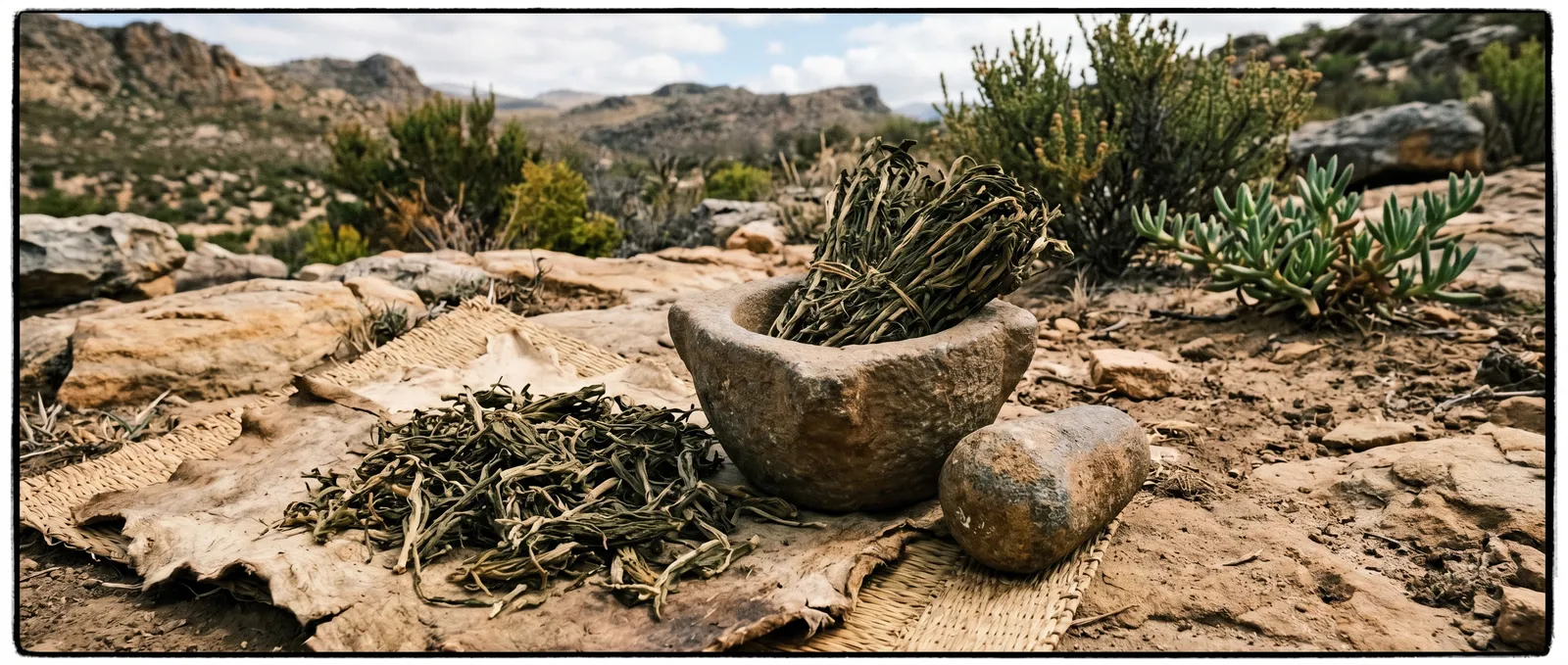
Sceletium tortuosum was used by San and Khoekhoe communities in southern Africa for centuries before European colonists first documented it in the 1660s.
Kanna Pharmacokinetics Explained
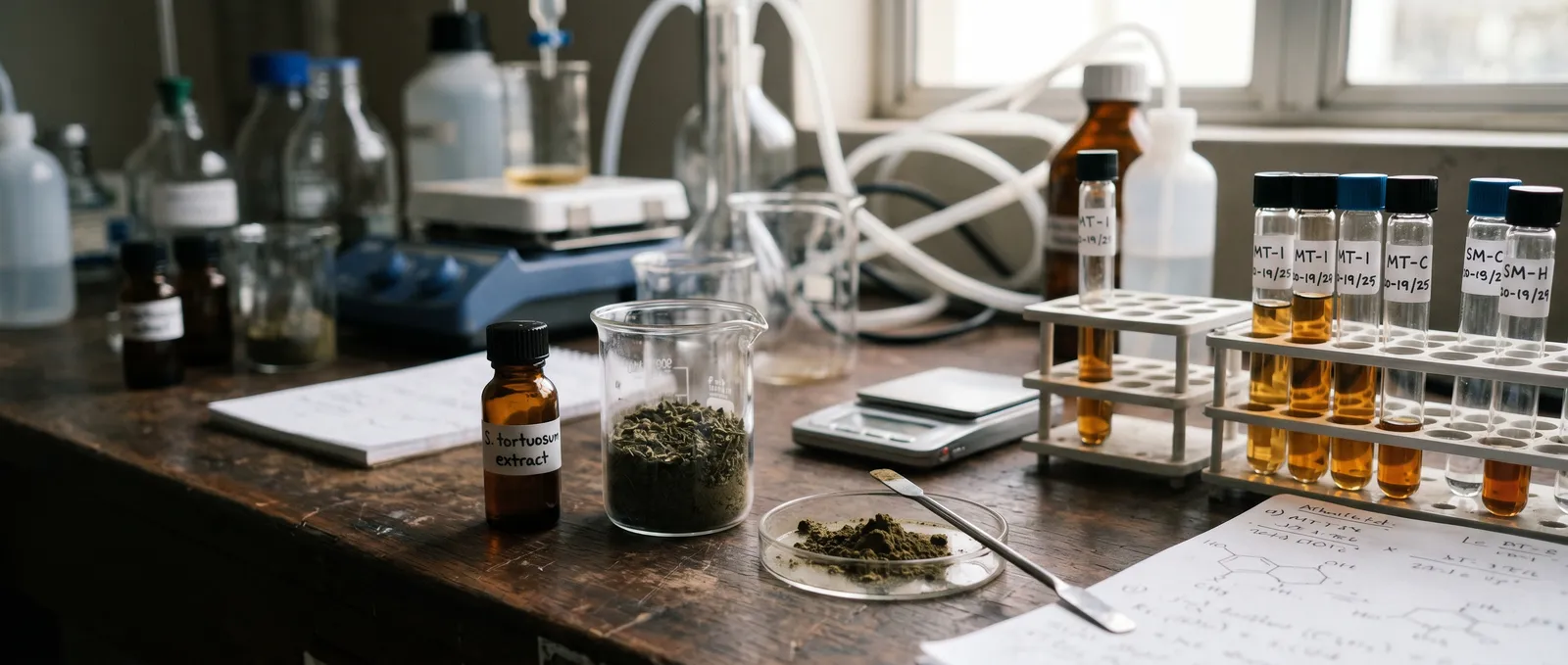
Complete guide to kanna pharmacokinetics: how Sceletium tortuosum alkaloids are absorbed, metabolised via CYP2D6, and eliminated.
Kanna Chemistry: Sceletium Alkaloids Explained
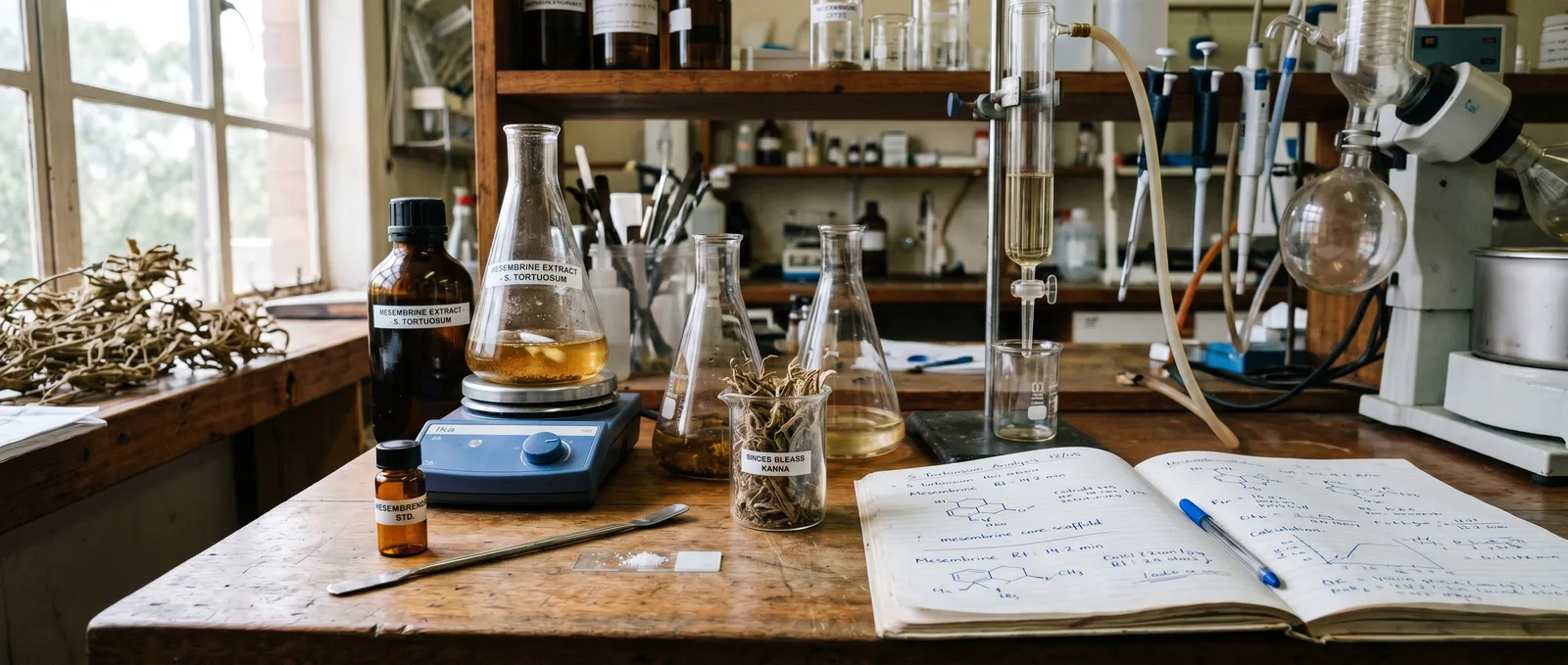
Kanna chemistry explained: mesembrine, mesembrenone, their mechanisms, how fermentation and extraction change alkaloid profiles, and why it matters…
Rapé Shamanic Snuff Guide: How to Use It Safely
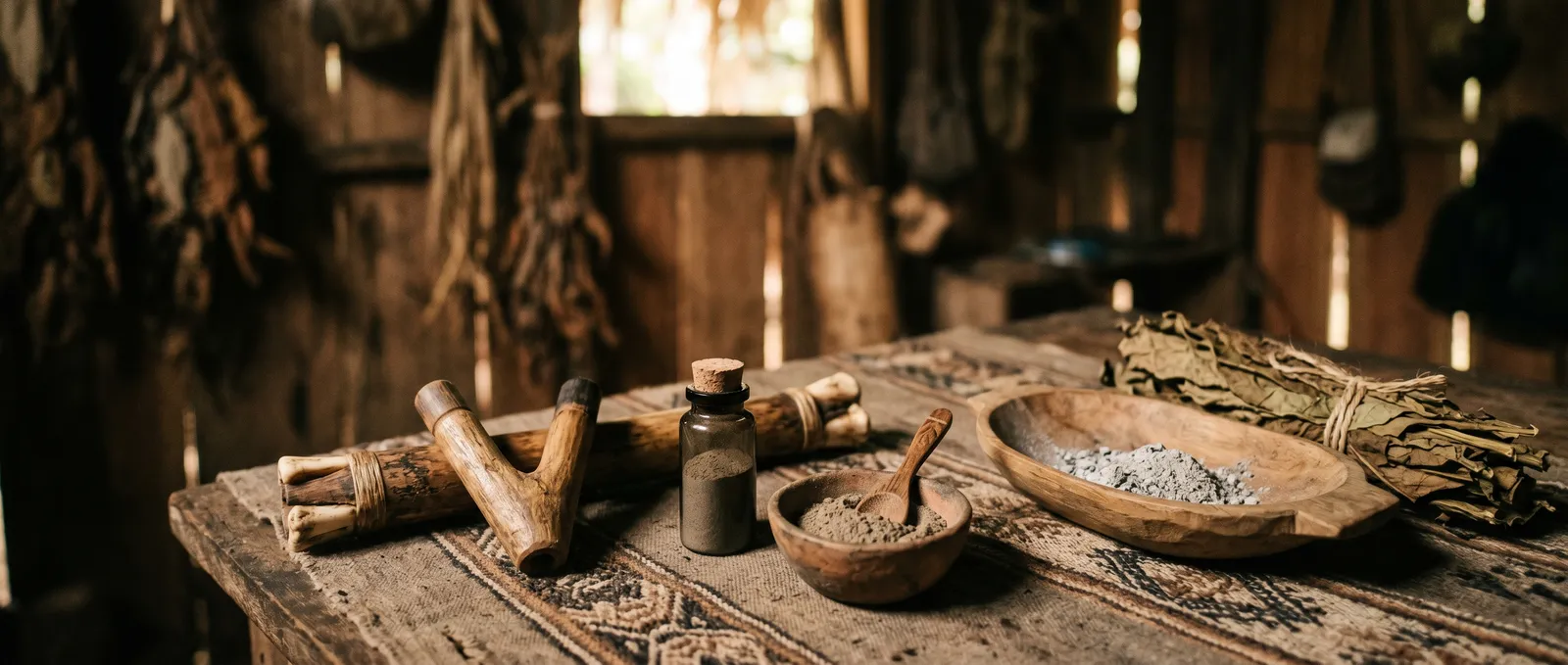
A practical rapé shamanic snuff guide covering dose, kuripe technique, effects, nicotine safety, interactions and Amazonian tradition.
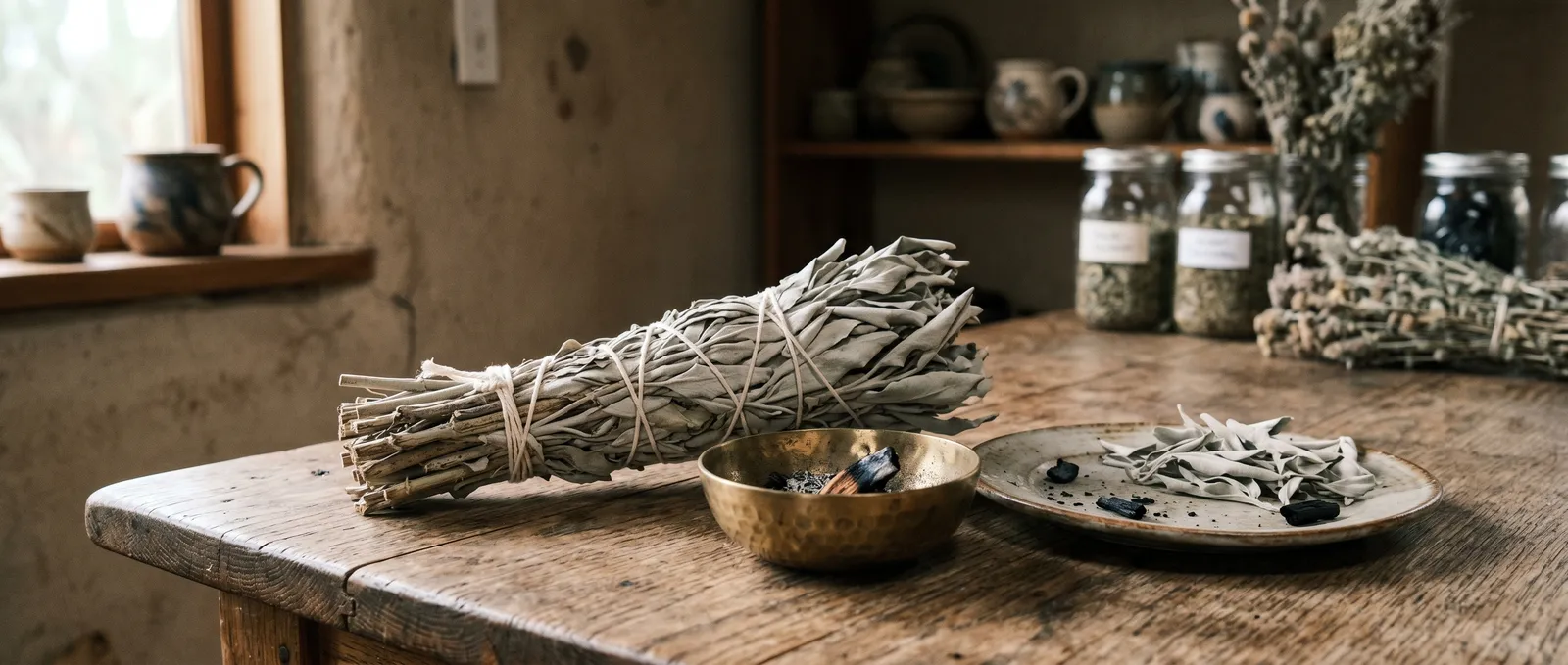
White Sage Salvia Apiana Cultural Smudging Guide
Salvia apiana is a non-psychoactive shrub native to southern California's coastal sage scrub, burned as ceremonial incense in Indigenous North American…
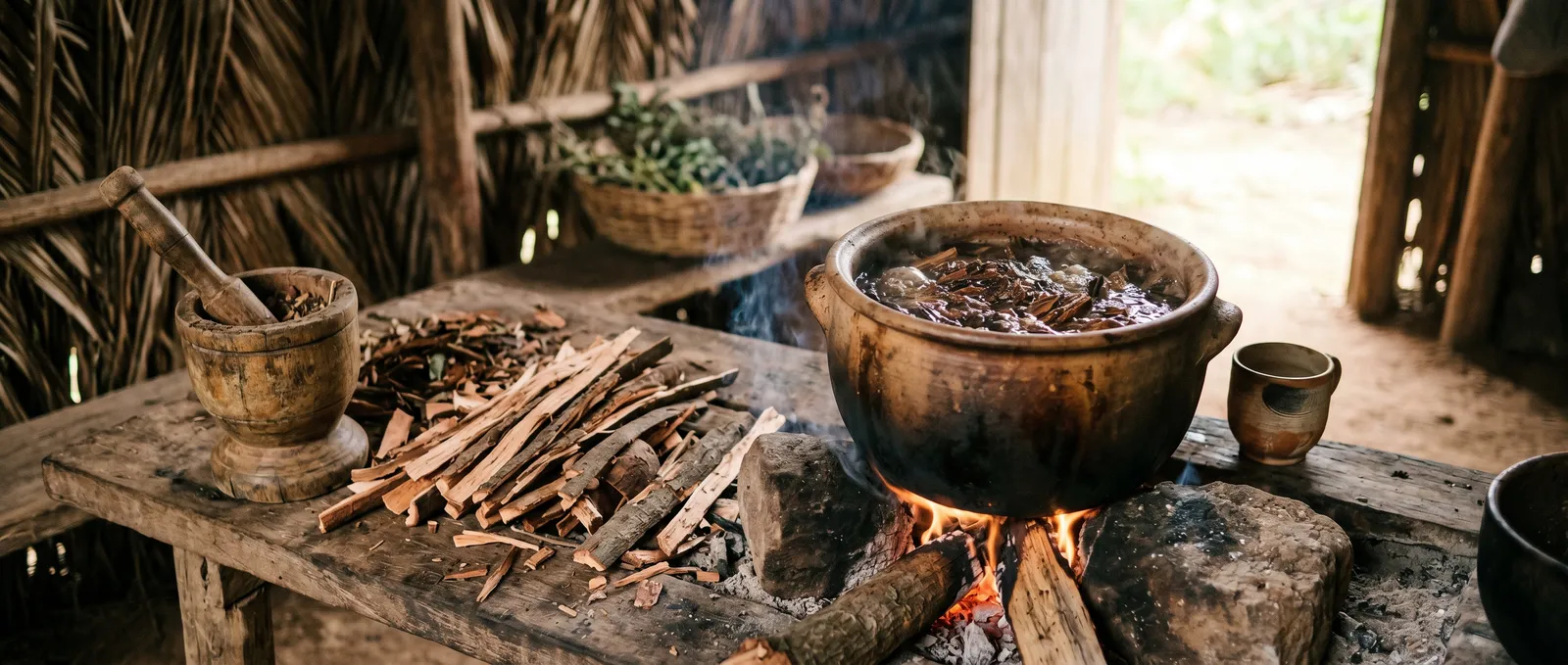
Mulungu Erythrina Traditional Amazonian Use — Bark, Alkaloids & Research
Erythrina mulungu is a Brazilian legume tree whose bark has been brewed as a calming decoction in rural folk medicine for generations.
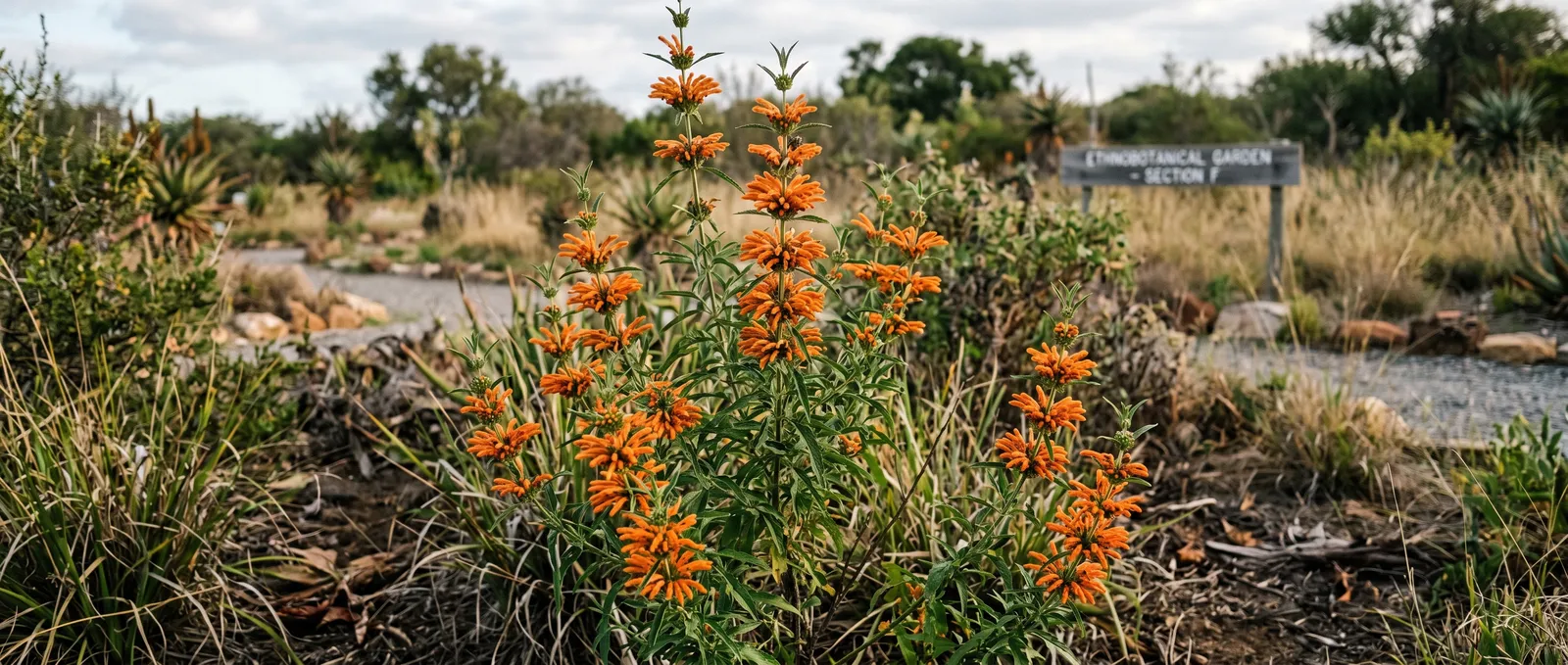
Wild Dagga Leonotis Leonurus Botany — Taxonomy, Chemistry & Traditional Use Guide
Leonotis leonurus (L.) R.Br., known as wild dagga or lion's tail, is a southern African shrub in the mint family (Lamiaceae) bearing dense whorls of orange…