
This article discusses psychoactive substances intended for adults (18+). If you have a health condition or take medication, consult a doctor before use. Our age policy
Blue Lotus Effects
Definition
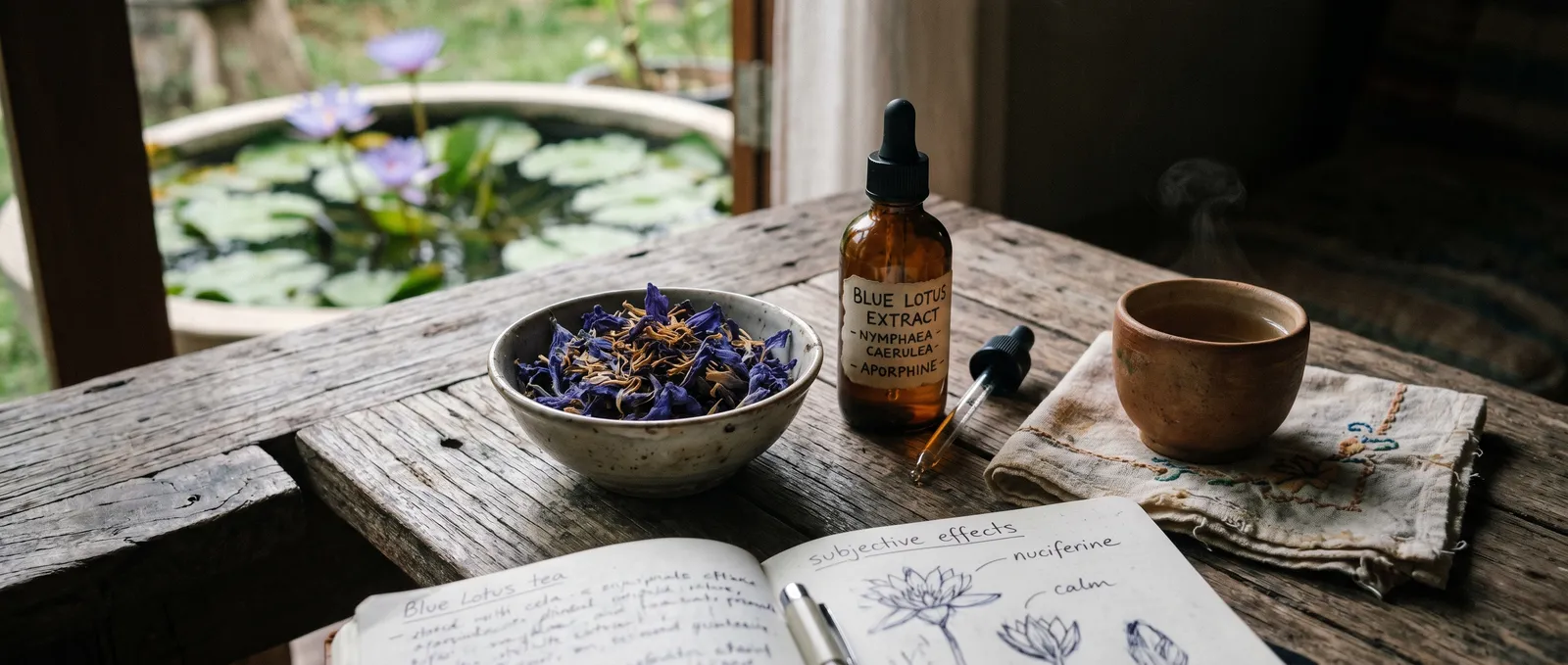
Blue lotus effects is a term describing the subjective and pharmacological responses produced by Nymphaea caerulea, a water lily whose aporphine alkaloids — nuciferine and apomorphine — act as partial dopamine-receptor agonists (Agnihotri et al., 2008). Users report mild sedation, gentle mood lift, and enhanced dream vividness, though human pharmacokinetic data remains limited.
Blue lotus effects is a term that describes the subjective and pharmacological responses produced by Nymphaea caerulea, a water lily that contains aporphine alkaloids — principally nuciferine and apomorphine — which interact with dopamine receptors to produce mild sedation, a subtle shift in mood, and what many users describe as enhanced dream vividness. These blue lotus effects are modest compared to classical psychoactive substances, sitting closer to a glass of wine than anything approaching a strong sedative. Understanding what this plant actually does — and what it doesn't — requires separating the pharmacology from the marketing noise.
Adult audience (18+). The dosing ranges and effects described in this article apply to adult physiology. This content is not intended for minors.
This article is for informational purposes only and does not constitute medical advice. Consult a qualified healthcare professional before using Nymphaea caerulea, especially if you take medication or have a pre-existing health condition.
What the Alkaloids Actually Do
The two principal alkaloids responsible for blue lotus effects are nuciferine and apomorphine, both aporphine-class compounds that bind directly to dopamine and serotonin receptors. According to Agnihotri et al. (2008), nuciferine acts as a partial agonist at dopamine D2 receptors and also shows affinity for serotonin 5-HT2A receptors in receptor-binding assays. Apomorphine, the more pharmacologically characterised of the two, is a non-selective dopamine agonist — the same compound used clinically (in purified, synthetic form) for Parkinson's disease and erectile dysfunction, though the concentrations present in dried Nymphaea caerulea petals are substantially lower than therapeutic doses of pharmaceutical apomorphine.
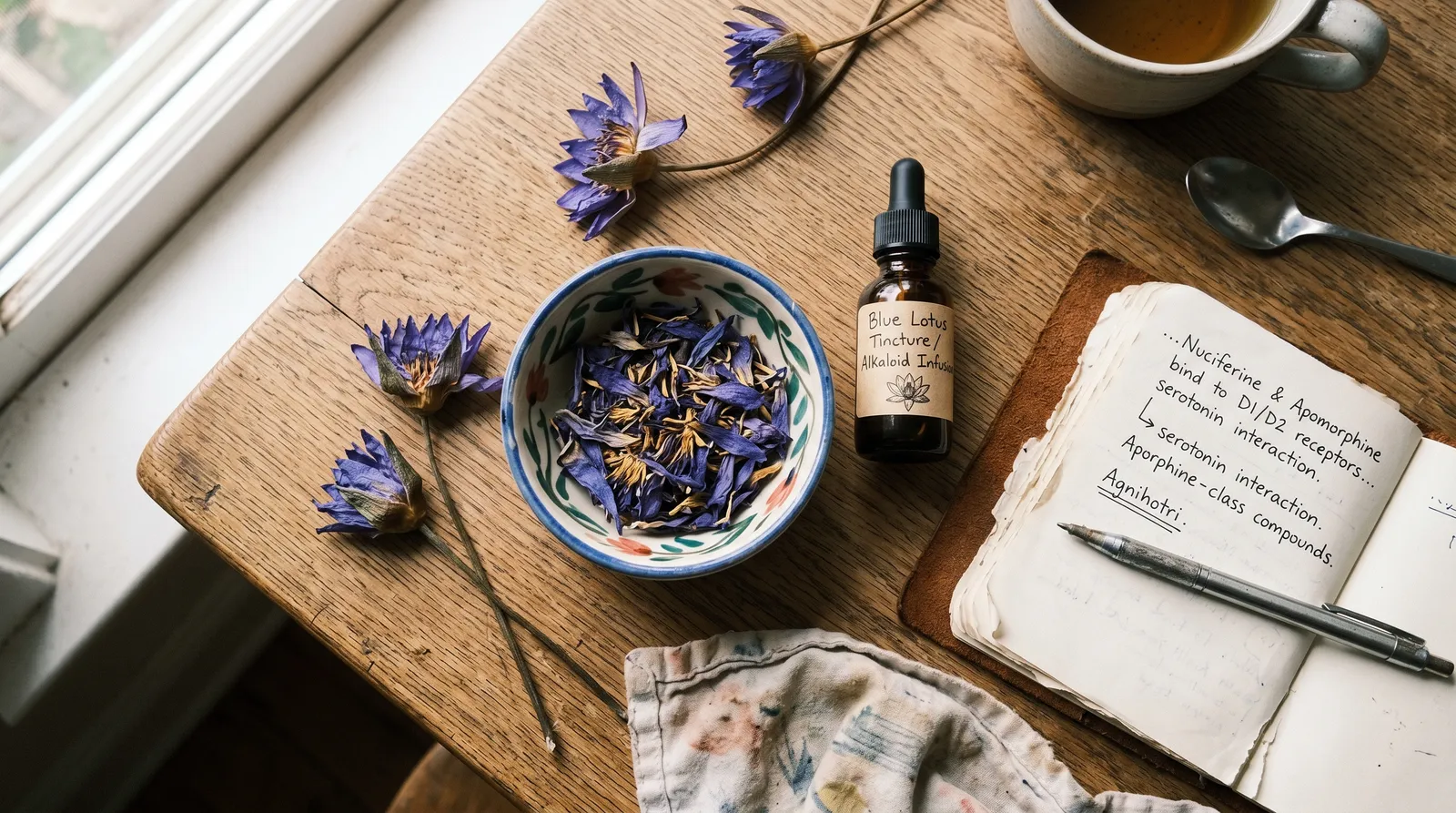
The proposed mechanism works roughly like this: partial dopamine-receptor stimulation at low doses produces mild relaxation and a gentle mood lift, while the serotonergic activity may contribute to the dream-related blue lotus effects users report. Importantly, the human pharmacokinetic data for these alkaloids as delivered via plant material (tea, smoke, or extract) remains limited — most receptor-binding work comes from in-vitro studies or animal models.
Reported Blue Lotus Effects by Route of Administration
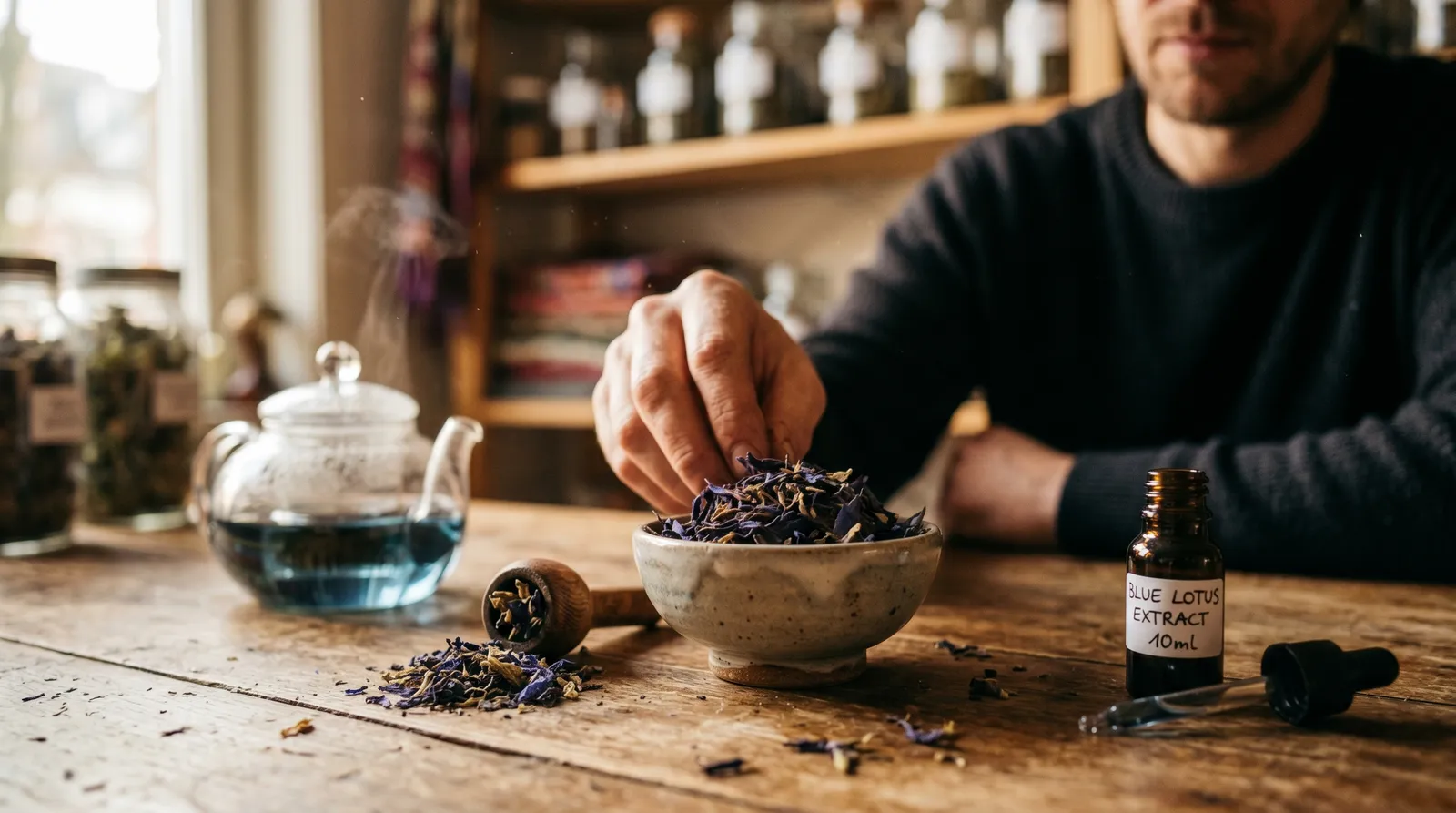
Blue lotus effects vary meaningfully depending on how you consume the plant material, with tea, smoked petals, and concentrated extracts each delivering the alkaloid payload at different speeds and intensities. Extracts concentrate nuciferine and apomorphine relative to raw plant material — meaning extract portions are substantially smaller and carry greater interaction risk. The following represents what users consistently report, not clinically verified outcomes:
| Route | Onset | Duration | Character of Effects (User Reports) |
|---|---|---|---|
| Tea (dried petals) | 20–40 minutes | 2–3 hours | Gentle relaxation, mild warmth, slight mood lift |
| Smoked (dried petals) | 2–5 minutes | 30–60 minutes | Faster onset, more noticeable head-change, shorter duration |
| Extract (varies by concentration) | 15–30 minutes | 2–4 hours | Stronger sedation, more pronounced dream effects, greater cardiovascular load |
The common thread across routes is subtlety. Users consistently describe blue lotus effects as gentle — a softening of mental edges rather than a dramatic alteration of consciousness. Those expecting something powerful are typically disappointed; those approaching it as a mild evening wind-down tend to find it more satisfying.
Dream Enhancement
Enhanced dream vividness and recall is the most distinctive and consistently reported blue lotus effect, with users frequently describing more colourful, narrative-rich dreams when consuming the plant in the hours before sleep. This effect has no controlled clinical data behind it — it sits entirely in the anecdotal category. However, the consistency of reports across decades of use (and across multiple online communities) suggests something pharmacologically real is occurring, likely mediated through the dopaminergic and serotonergic receptor activity of nuciferine, according to receptor-binding profiles described by Agnihotri et al. (2008).

A plausible hypothesis: partial D2 agonism during the transition into REM sleep may alter dream architecture in a way that increases vividness and emotional intensity. This remains speculative — no sleep-lab studies using Nymphaea caerulea have been published as of early 2026.
Mood and Relaxation
A mild anxiolytic quality — a reduction in mental chatter and a sense of calm contentment — is the most commonly reported waking blue lotus effect. Some describe it as mildly euphoric, though "contentment" better captures the typical intensity. According to Emboden (1981), ancient Egyptian ceremonial use of Nymphaea caerulea appears to have centred on its relaxant and mildly intoxicating properties, as depicted in tomb reliefs showing the flower being held to the nose during banquets. Whether this represents the same subjective experience modern users describe is unknowable, but the consistency across millennia is notable.

The relaxation effect appears to scale with the amount consumed. At lower amounts of dried petals as tea, users report subtle calm. At higher amounts or with concentrated extracts, sedation becomes more pronounced and some users report feeling genuinely drowsy. The boundary between "pleasant relaxation" and "unwanted sedation" varies between individuals and is poorly characterised in any formal research context.
Blue Lotus Effects Compared to Other Botanicals
Blue lotus effects sit between kava and passionflower in terms of intensity — lighter in body load than kava, more dream-active than passionflower, and less purely sedating than valerian. Compared to valerian root, which acts primarily through GABAergic mechanisms and tends toward straightforward sedation, Nymphaea caerulea offers a more varied experience — the dopaminergic component adds a subtle mood-lift quality that valerian lacks entirely. Compared to kava, which produces more pronounced anxiolysis and muscle relaxation through kavalactone activity, blue lotus effects are gentler and less physically heavy. And compared to passionflower, which shares a mild calming profile, Nymphaea caerulea distinguishes itself through the dream-enhancement dimension that passionflower does not reliably produce.
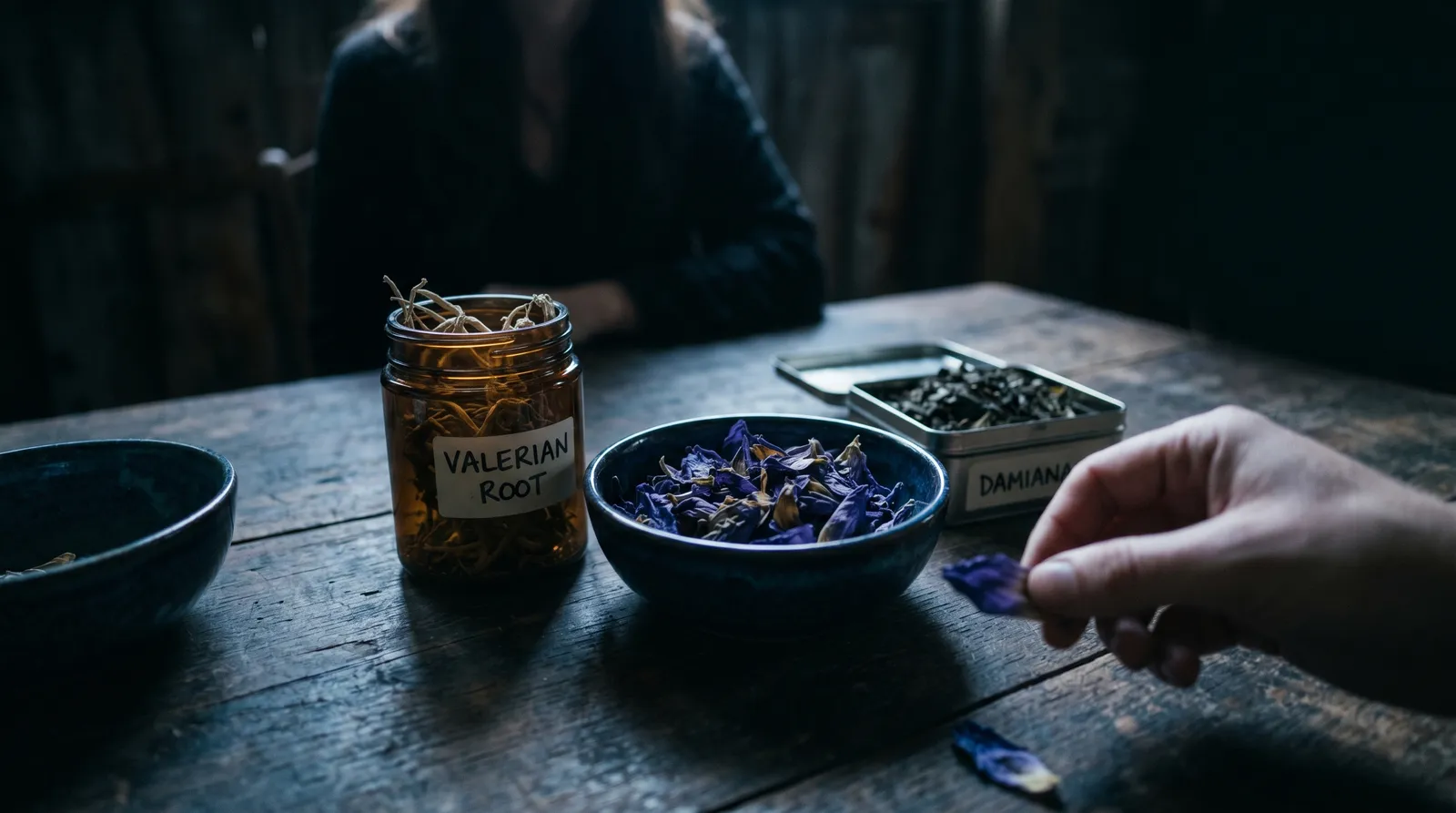
If you are looking to buy blue lotus for the first time, the comparison to kava is probably the most useful framing: expect something in the same general territory of "relaxing evening botanical," but lighter in body load and with the added possibility of more vivid dreams. Those who want to order blue lotus alongside other calming herbs sometimes combine it with passionflower tea, though we always recommend trying each botanical individually first to understand your personal response. You can get blue lotus as shredded petals or extract from the Azarius smartshop — and for comparison purposes, we also carry Valerian Root, Kava Kava, and Passionflower in the relaxing herbs category.
What Makes Nymphaea Caerulea Pharmacologically Distinct
Nymphaea caerulea is one of very few recreational botanicals whose primary mechanism involves direct dopamine-receptor agonism rather than GABA modulation, serotonin reuptake effects, or opioid-receptor activity. This makes its pharmacological profile genuinely unusual among plants people use for relaxation. The dual dopaminergic-serotonergic activity of nuciferine — partial D2 agonism combined with 5-HT2A affinity — is a receptor-binding signature that, according to the EMCDDA's technical review of novel psychoactive plants (2023), is not replicated by any other commonly available botanical product. This uniqueness is precisely why blue lotus effects feel different from other herbal relaxants: the mechanism is fundamentally different.
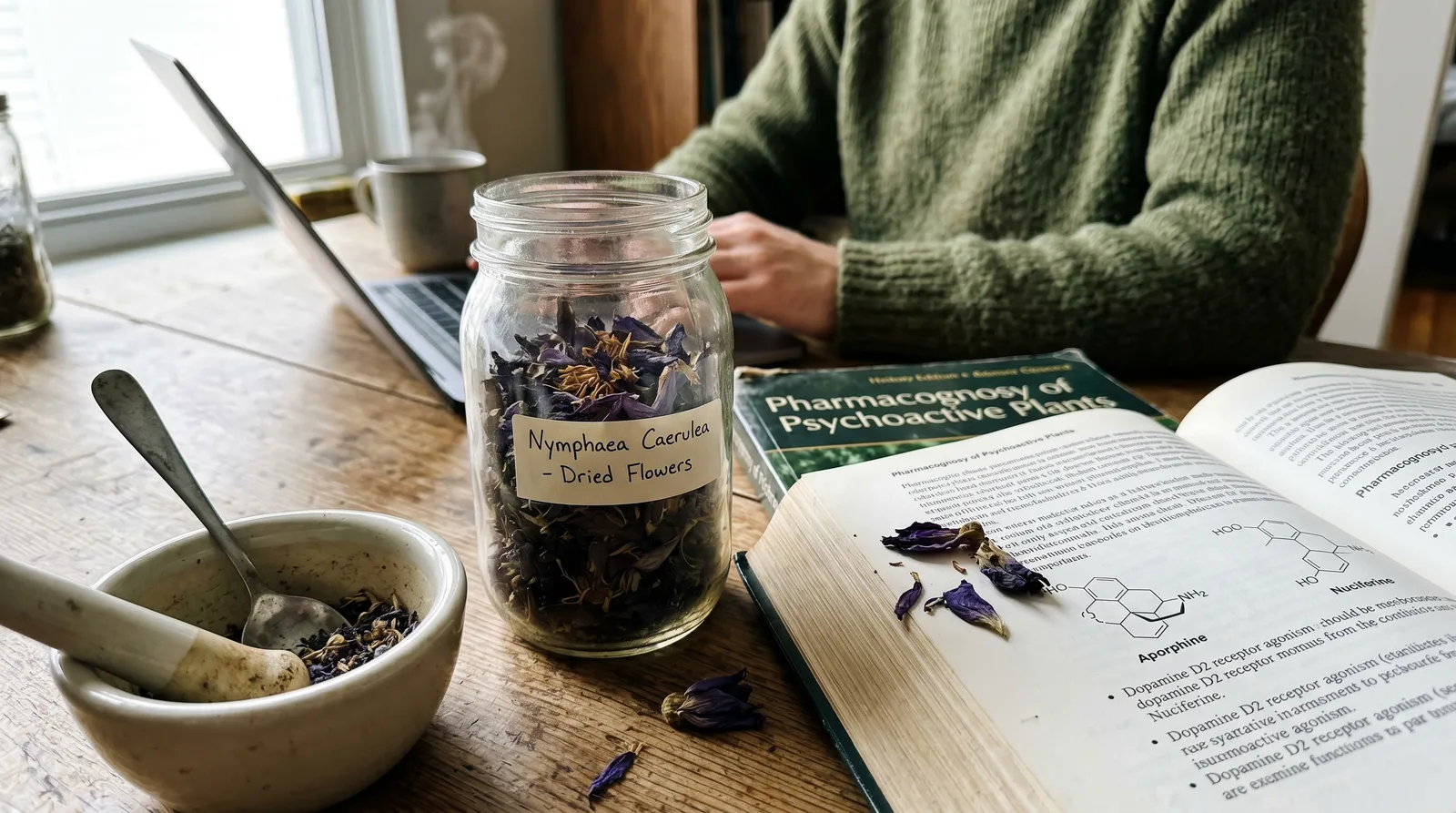
The historical dimension adds another layer of distinction. As documented by Emboden (1981) and corroborated by Beckley Foundation reviews of ethnobotanical literature (2019), Nymphaea caerulea is one of the oldest documented psychoactive plants in human use, with depictions in Egyptian art dating to approximately 1500 BCE. The fact that a plant with such a long history of human use still lacks modern clinical pharmacokinetic data is, frankly, a gap that reflects research funding priorities rather than a lack of interesting pharmacology.
What Blue Lotus Does Not Do
Blue lotus does not produce hallucinations, does not act on opioid receptors, and does not function as a proven aphrodisiac at the concentrations found in plant material. Several claims commonly attributed to blue lotus effects either lack evidence or conflate Nymphaea caerulea with Nelumbo nucifera (sacred lotus, a botanically distinct plant from a different family). To be direct about what the evidence does not support:
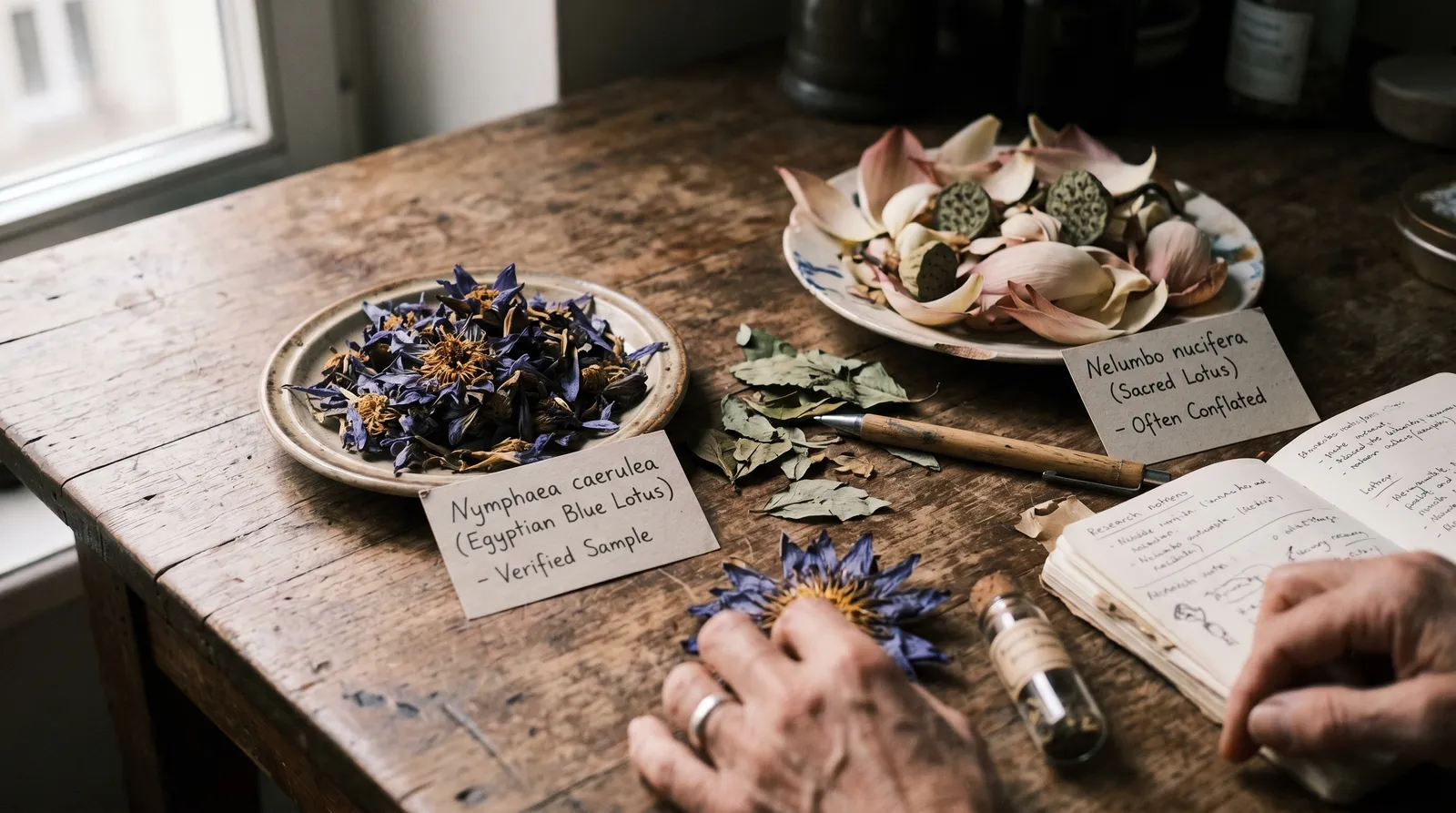
- It does not produce hallucinations at normal amounts. Some sources claim visual distortions. At typical consumption levels, Nymphaea caerulea does not produce perceptual distortion. Extremely high amounts may produce confusion or disorientation, but this is not a visionary experience — it is more likely mild toxicity.
- It is not an opioid. Despite sometimes being grouped with "natural painkillers," the aporphine alkaloids in Nymphaea caerulea do not bind to opioid receptors in any meaningful way.
- It is not a proven aphrodisiac. While apomorphine (the pharmaceutical) has clinical use for erectile dysfunction, the concentrations in plant material are far below therapeutic thresholds. Users occasionally report mild enhancement of physical sensation, but this may simply reflect general relaxation.
Duration and Timeline
Blue lotus effects from tea typically begin within 20–40 minutes, peak around the 1-hour mark, and taper over 2–3 hours. Smoked material acts faster (within minutes) but dissipates within an hour. Extracts tend to produce a longer, more sustained effect window — up to 4 hours in some reports — owing to the higher alkaloid concentration.

The dream-enhancement effect, if it occurs, typically manifests during sleep that night rather than as an acute waking effect. Many users consume Nymphaea caerulea specifically in the 1–2 hours before bed for this reason.
Safety Considerations
The aporphine alkaloids in Nymphaea caerulea interact with dopamine receptors, which creates genuine concern when combined with dopaminergic medications. According to Inanaga et al. (2014), the same receptor system is targeted by Parkinson's medications (levodopa, pramipexole, ropinirole) and certain antiemetics (metoclopramide, domperidone). Combining Nymphaea caerulea with these medications risks unpredictable dopaminergic effects. For a detailed breakdown of specific medication interactions, see the dedicated Azarius wiki article on blue lotus interactions.

Apomorphine analogs can lower blood pressure, as noted in the pharmacological review by Inanaga et al. (2014). Anyone taking antihypertensives or managing cardiovascular disease — particularly uncontrolled blood pressure — should consult a healthcare professional before considering Nymphaea caerulea. The cardiovascular interaction profile in humans remains poorly characterised, which itself is a reason for caution rather than reassurance.
The mild sedation produced by Nymphaea caerulea, combined with the dream-related cognitive effects, makes driving or operating machinery inappropriate within approximately 4 hours of use. This applies with greater force to extracts than to shredded petals brewed as tea, given the higher alkaloid concentration in extract form.
Pregnancy and breastfeeding: no safety data exists. Consult a healthcare professional.
Plant Material Versus Extract
Extracts produce substantially stronger blue lotus effects than dried petals at equivalent weights, typically concentrating aporphine alkaloids by a factor of 5–10x or more. A serving that produces gentle relaxation from brewed petals could produce significant sedation and blood-pressure effects from an equivalent weight of extract. The two forms are not interchangeable, and anyone familiar with the effects of Nymphaea caerulea petals should not assume the same weight of extract will behave similarly.
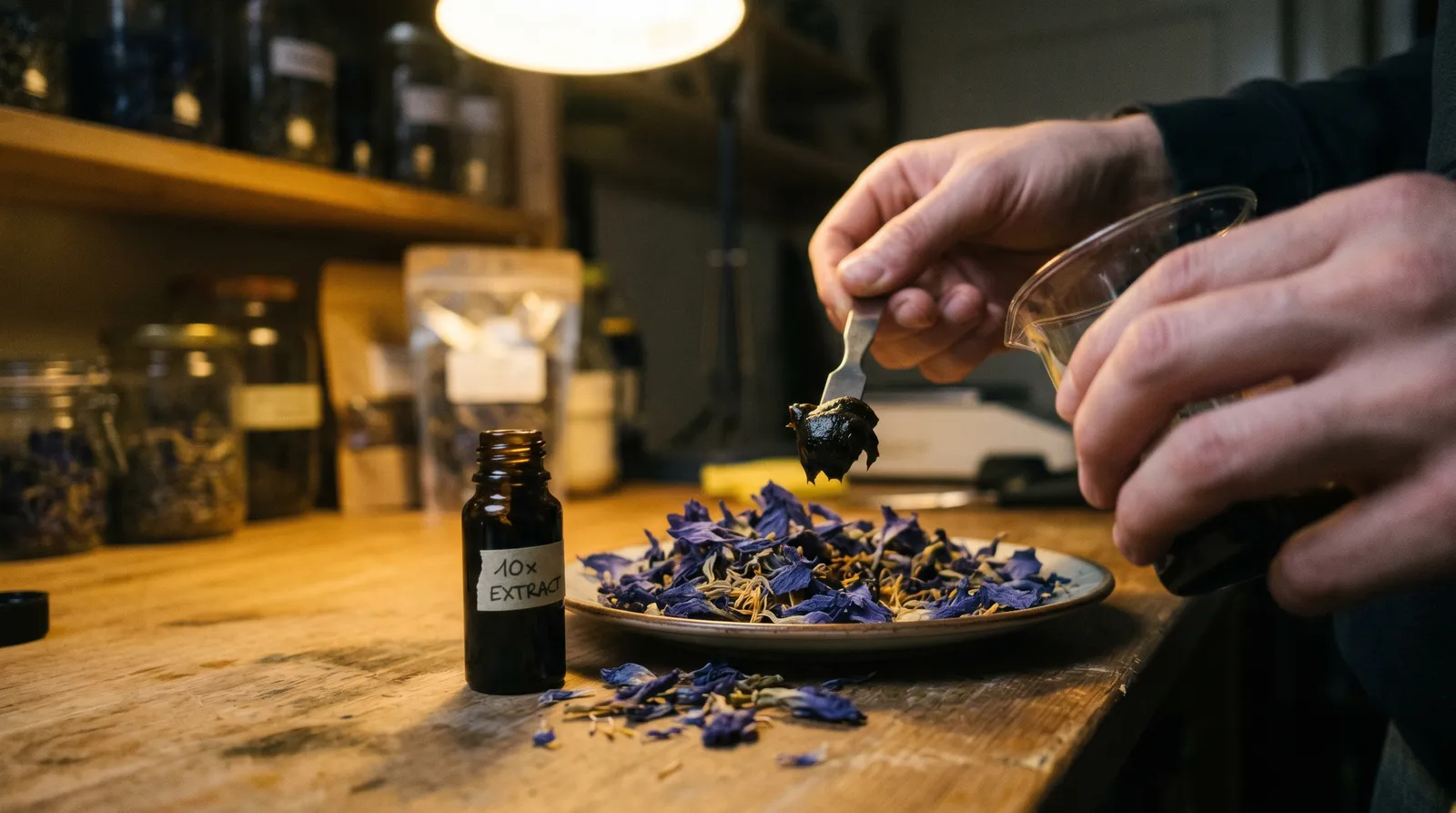
If you want to get blue lotus in extract form, begin conservatively and increase gradually. Many customers who buy blue lotus extract for the first time are surprised by the potency difference — this is the single most common source of unexpectedly strong experiences that people report back to us. Whether you order blue lotus as shredded petals or as a concentrated extract, beginning with less and adjusting upward remains the most sensible approach. We carry both Blue Lotus Shredded Petals and Blue Lotus 20x Extract in the Azarius relaxing herbs category — first-timers almost always do better with the shredded petals.
How Blue Lotus Fits Into an Evening Routine
Blue lotus effects are best suited to quiet, low-stimulation evenings where the goal is gentle unwinding rather than socialising or staying alert. Users who report the most satisfaction tend to brew Nymphaea caerulea tea roughly 90 minutes before bed, pair it with a calm activity like reading or journaling, and avoid screens during the onset window. The plant does not force relaxation — it nudges toward it, and that nudge lands better when the environment cooperates.
Last updated: April 2026
Frequently Asked Questions
10 questionsHow long do blue lotus effects last?
Does blue lotus cause hallucinations?
Is blue lotus stronger as an extract or as dried petals?
Can you drive after using blue lotus?
How does blue lotus affect dreams?
Where can I buy blue lotus?
Can you mix blue lotus with alcohol or other substances?
What are the side effects of blue lotus?
How quickly do blue lotus effects kick in?
Does blue lotus build tolerance with frequent use?
About this article


Adam Parsons is an external cannabis and psychedelics writer and editor who contributes to Azarius's wiki as both author and reviewer. On the writing side, he authors Azarius's kratom and kanna clusters, drawing on exten
This wiki article was drafted with AI assistance and reviewed by Adam Parsons, External contributor. Editorial oversight by Joshua Askew.
Medical disclaimer. This content is for informational purposes only and does not constitute medical advice. Consult a qualified healthcare provider before use of any substance.
Last reviewed April 24, 2026
References (5)
- [1]Agnihotri, V.K. et al. (2008). "Constituents of Nymphaea caerulea." Phytochemistry Letters , 1(4), 199–203.
- [2]Emboden, W.A. (1981). "Transcultural use of narcotic water lilies in ancient Egyptian and Maya drug ritual." Journal of Ethnopharmacology , 3(1), 39–83. DOI: 10.1016/0378-8741(81)90013-1
- [3]EMCDDA (2023). "Technical review: Novel psychoactive plants in European markets." European Monitoring Centre for Drugs and Drug Addiction.
- [4]Inanaga, K. et al. (2014). "Aporphine alkaloids: pharmacological actions and mechanisms." Current Topics in Medicinal Chemistry , 14(2), 200–217.
- [5]Beckley Foundation (2019). "Ethnobotanical psychoactive plants: Historical and contemporary use patterns." Beckley Foundation Research Report.
Related Articles
Blue Lotus vs Kanna: Effects & Safety
Blue lotus vs kanna compared — Nymphaea caerulea's aporphine profile against Sceletium tortuosum's mesembrine chemistry, with interaction warnings.

Lotus Clinical Research Overview
What does lotus clinical research actually show? A critical review of Nymphaea caerulea and Nelumbo nucifera pharmacology, preclinical data, and…
Kanna South Africa To West History
Sceletium tortuosum was used by San and Khoekhoe communities in southern Africa for centuries before European colonists first documented it in the 1660s.

Sceletium Tortuosum Plant
Learn about the sceletium tortuosum plant: botany, alkaloids, fermentation, safety warnings, and where to buy kanna.
Kanna Pharmacokinetics Explained
Complete guide to kanna pharmacokinetics: how Sceletium tortuosum alkaloids are absorbed, metabolised via CYP2D6, and eliminated.
Kanna Chemistry: Sceletium Alkaloids Explained
Kanna chemistry explained: mesembrine, mesembrenone, their mechanisms, how fermentation and extraction change alkaloid profiles, and why it matters…

Rapé Shamanic Snuff Guide: How to Use It Safely
A practical rapé shamanic snuff guide covering dose, kuripe technique, effects, nicotine safety, interactions and Amazonian tradition.

White Sage Salvia Apiana Cultural Smudging Guide
Salvia apiana is a non-psychoactive shrub native to southern California's coastal sage scrub, burned as ceremonial incense in Indigenous North American…

Mulungu Erythrina Traditional Amazonian Use — Bark, Alkaloids & Research
Erythrina mulungu is a Brazilian legume tree whose bark has been brewed as a calming decoction in rural folk medicine for generations.