
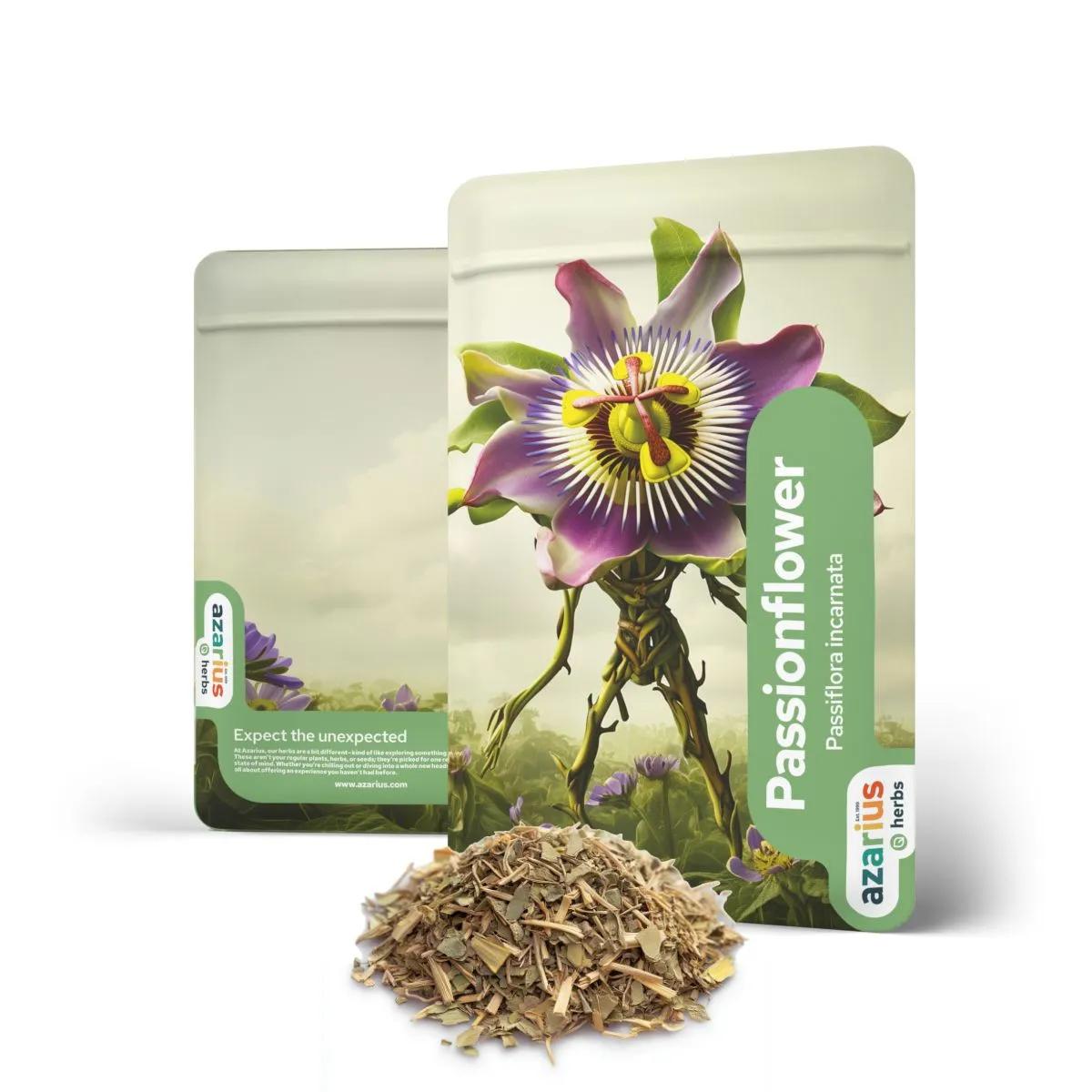
Passionflower (Passiflora incarnata) is a climbing vine whose dried aerial parts have been brewed as a calming evening tea for centuries. This category covers the three formats we stock at Azarius: whole cut-and-sifted herb, pure leaf, and a concentrated 10:1 extract powder. Buy passionflower here if you're after a caffeine-free botanical to shop alongside chamomile, valerian or lemon balm in your evening cupboard. Stocked since 1999, shipped across the EU.
How to Buy Passionflower — Format Guide
The format you buy matters more than the brand. Passiflora incarnata is Passiflora incarnata — what changes is how concentrated it is, which parts of the plant you're getting, and how you prepare it. Before you order, decide between whole herb, leaf-only, or extract.
| Format | What it is | Good for |
|---|---|---|
| Cut & sifted herb | Whole aerial parts — leaves, stems, tendrils | First-time buyers who want a straightforward evening tea |
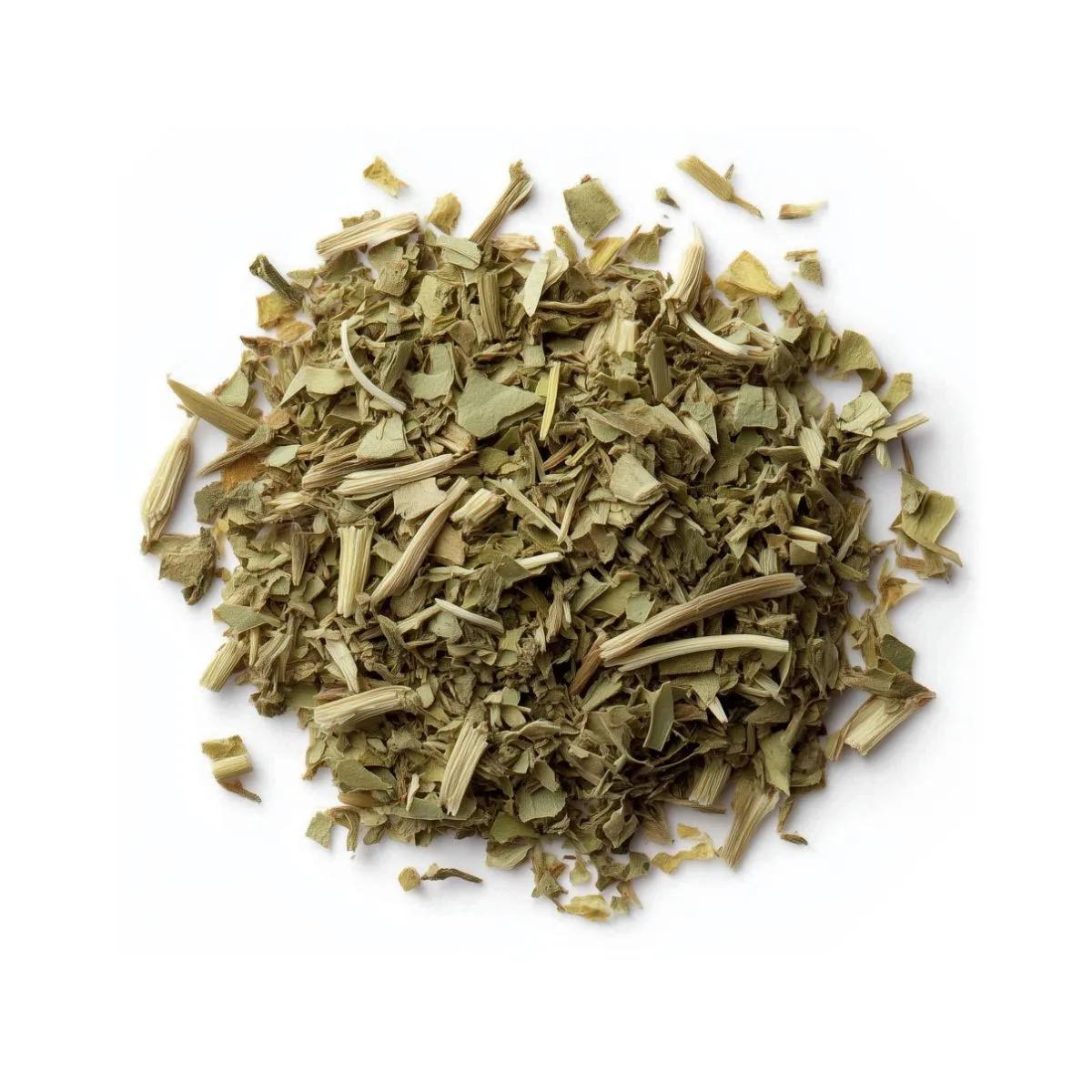
| Leaves only | Just the dried leaves, cleaner cup | People who want to smoke-blend or mix with chamomile |
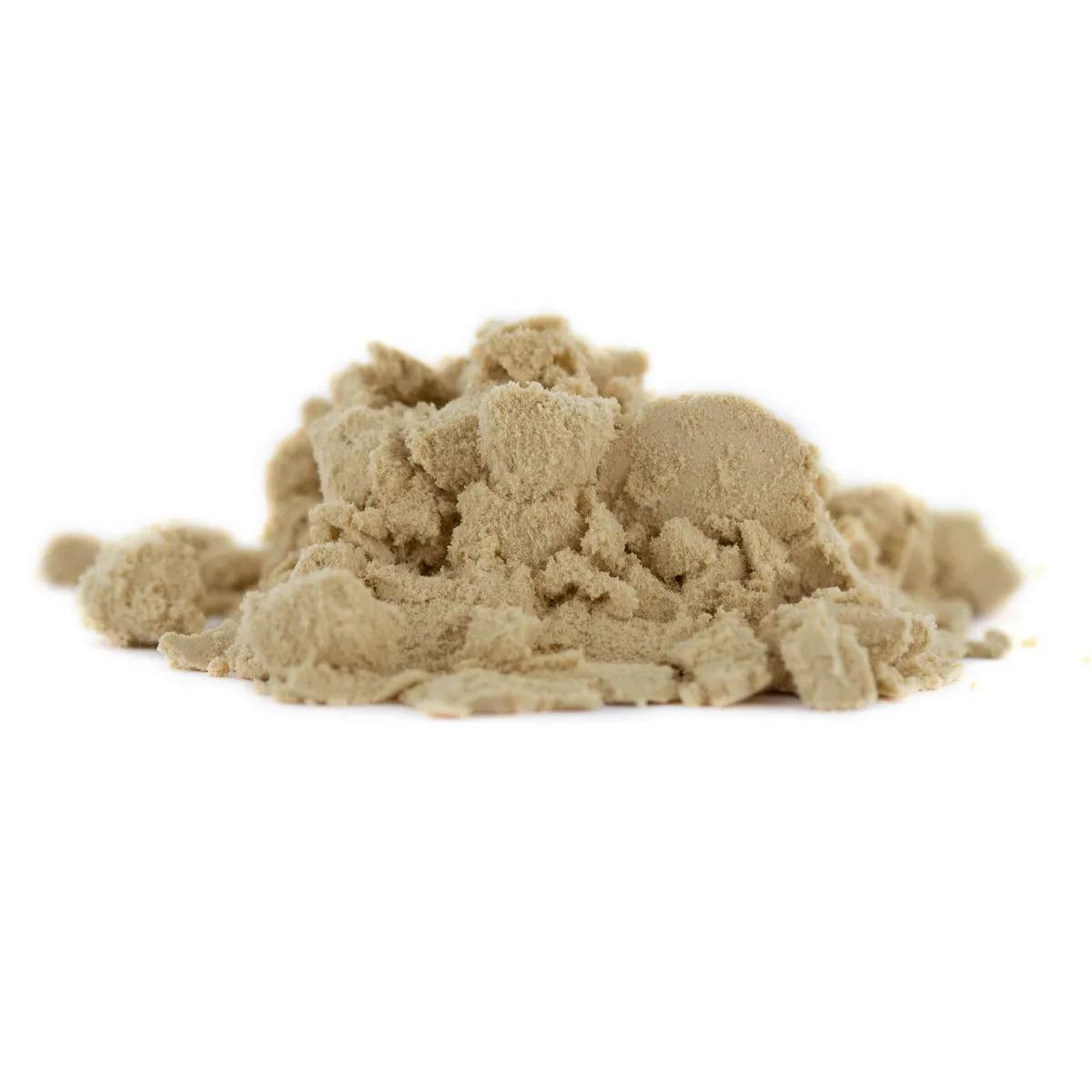
| 10x extract | Concentrated powder, ten parts herb to one | Regular drinkers who want less plant matter per cup |
Our three passionflower products cover these bases: the standard Passionflower herb (cut and sifted aerial parts), Passionflower Leaves (leaf-only, slightly smoother in tea and usable in herbal smoke blends), and Passionflower 10x Extract (a concentrated powder where a small scoop replaces a heaped teaspoon of loose herb).
Passionflower vs Other Calming Herbs
Passionflower sits in the middle of the calming-herb shelf — gentler than valerian (which is potent but smells like old socks), a bit more characterful than chamomile, and less sedating than hops. Traditionally used as a mild evening tisane, it's the herb people reach for when chamomile feels too soft but valerian feels too heavy. A 2011 pilot study by Ngan & Conduit in Phytotherapy Research observed modest sleep-quality improvements in adults drinking passionflower tea over one week — one of the reasons the herb shows up in so many European evening blends.
If you already buy chamomile and want to expand your herbal tea drawer, passionflower is the obvious next step.
How to Choose Which Passionflower to Order
New to the herb? Start with the cut-and-sifted Passionflower. It's the format most European monographs are written around, it brews like any loose-leaf tea, and you'll quickly learn whether the mildly bitter, hay-like flavour is for you. One teaspoon in a strainer, ten minutes in hot water, done.
Already a regular drinker? The 10x extract is the format to get. You use a fraction of the material per cup, it dissolves straight into hot water with no straining, and it's easier to travel with. The trade-off is you lose the ritual of loose-leaf brewing, which some people genuinely miss.
Smoking or blending with other herbs? Buy the leaves. Stem material burns harsh; leaf-only material doesn't. It also makes a cleaner-tasting cup if you're sensitive to the woody notes in whole-herb preparations.
Honest limitation: passionflower is not a knock-out herb. If you're expecting something that sedates you within twenty minutes, you'll be disappointed — that's valerian or hops territory. Passionflower is the gentle end of the calming shelf, which is exactly why it works well as a nightly cup rather than an occasional rescue remedy.
Often bought with passionflower: chamomile flowers, lemon balm, valerian root, and mugwort. If you're building an evening tea cupboard from scratch, grab chamomile alongside the cut-and-sifted herb and you're sorted.
Frequently Asked Questions
What's the difference between passionflower herb and passionflower leaves?
The herb is cut-and-sifted aerial parts — leaves, stems, tendrils — which is how most European monographs and studies describe the material. Leaves-only is what it says on the tin: just the leaves, no stem. Leaf-only brews smoother and is the format to choose for herbal smoke blends; whole herb is the standard for tea.
Is the 10x extract stronger than regular passionflower tea?
It's more concentrated per gram — ten grams of dried herb condensed into one gram of powder. Whether it feels "stronger" depends on how much you use. A small scoop of extract roughly matches a heaped teaspoon of loose herb. Regular drinkers buy it to save space and skip straining; beginners are better off with the loose herb first.
Can I mix passionflower with chamomile or valerian?
Yes, and it's one of the most common blends. A 50/50 passionflower-chamomile cup is the classic gentle evening tea. Adding valerian gives a heavier, more sedating brew — good if sleep is the goal, less good if you dislike valerian's strong smell. Start with single herbs first so you know what each one actually does for you.
Does passionflower taste bad?
Mildly bitter and earthy, with a hay-like note — not unpleasant, but not sweet either. Most people drink it plain or with a splash of honey. If you find the flavour too grassy on its own, blending with chamomile softens it considerably. The 10x extract has a more concentrated bitterness, which is why most people dissolve it in a flavoured tea rather than drinking it neat.
Last updated: April 2026