
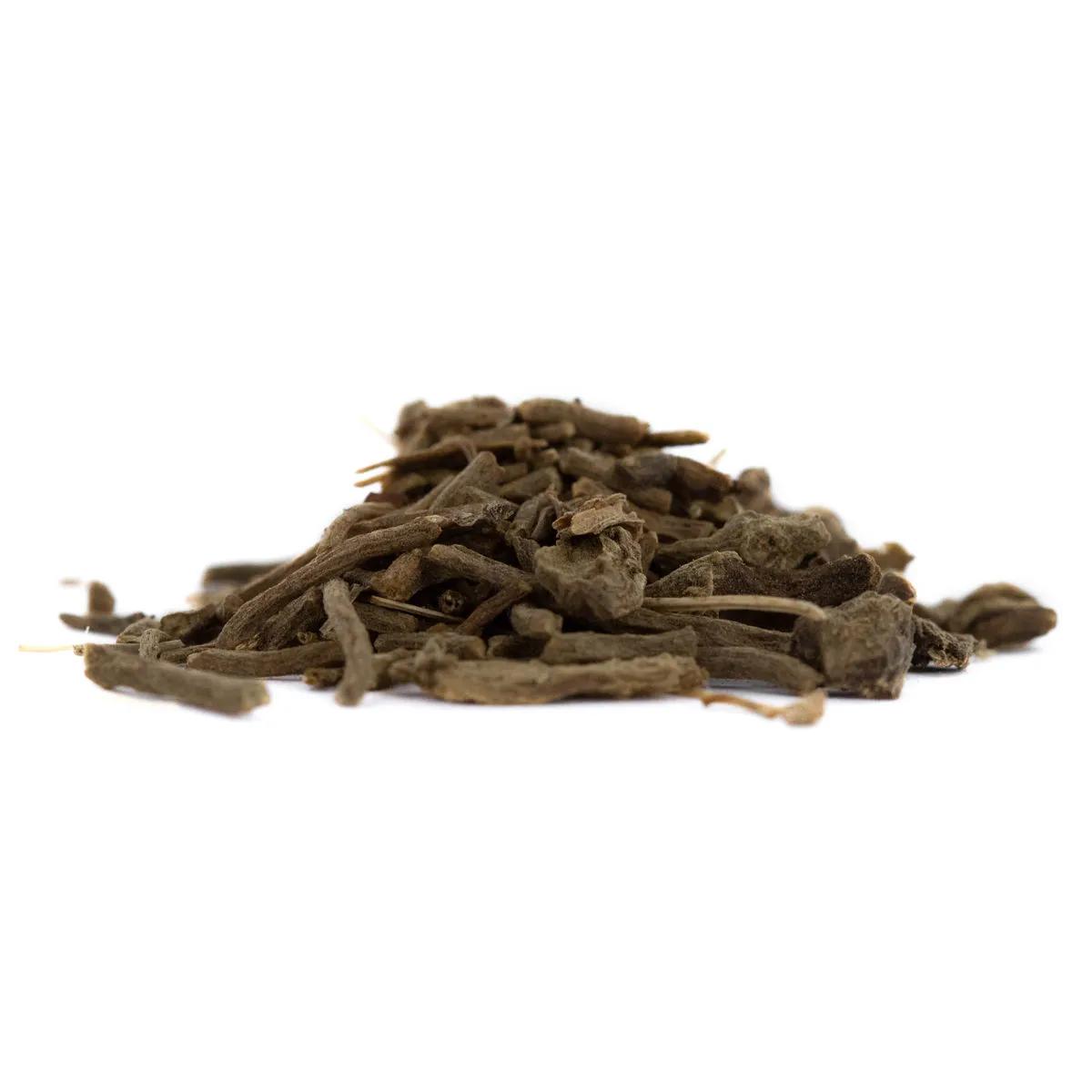
Valerian root is a dried botanical herb used for centuries as a sleep-supporting tea ingredient, and it's one of the oldest sedative herbs in the European tradition. If you're looking to buy valerian for bedtime brews, tincture-making, or herbal blends, you're in the right corner of the shop. Azarius has been stocking dried herbs and botanicals since 1999, and valerian has been on the shelf the whole time.
Buy Valerian Root — What to Know Before You Order
Valerian (Valeriana officinalis) is a perennial flowering plant whose dried root has been brewed, tinctured, and capsuled for sleep support since at least the days of Hippocrates. The smell is famously pungent — think old gym socks with a woody edge — which is why it's traditionally blended with other herbs rather than sipped solo. According to a systematic review published in PMC (Fernández-San-Martín et al., 2010), valerian has been one of the most-studied botanical sleep aids, with insomnia affecting roughly one-third of the adult population globally.
We carry one valerian product right now: dried, cut root sold by weight — the raw material, not a capsule or standardised extract. That matters, because the format you buy changes how you use it.
Dried Root vs Capsules vs Tincture — Which Format to Buy
Before you order valerian, decide which format suits you. Each has trade-offs.
| Format | Onset | Dose control | Good for |
|---|---|---|---|
| Dried root (tea) | 30–60 min | Rough — steep time matters | Herbalists, blenders, ritual tea drinkers |
| Capsules / extract | 30–90 min | Precise mg | People who hate the taste |
| Tincture | 15–45 min | Drop-counted | Travellers, quick dosing |
| Tea bags (pre-blend) | 30–60 min | Fixed per bag | First-time buyers |
The cut-and-sifted dried root you'll find here is the most versatile format. You can brew it, tincture it in vodka, or blend it with other sedative herbs like hops, passionflower, or kava. According to a 2023 randomised trial (PMC10796483), valerian extract produced statistically significant improvements in sleep quality versus placebo over 8 weeks in 80 adults with sleep complaints — and the traditional tea has been used long before extracts existed.
Who Valerian Suits — and Who Should Skip It
Valerian isn't universally loved. A small percentage of people find it stimulating rather than sedating — the so-called paradoxical response. If you've never tried it, brew a weak cup first and see where your body lands. Research reviewed by Shinjyo et al. (2020, PMC7585905) noted that a single 300mg extract dose reduced intrinsic brain activity linked to anxiety in clinical participants, so the calming effect is real for most — but not all.
Skip valerian if you're already on CNS depressants (benzos, sleep medication, strong antihistamines), pregnant or breastfeeding, or planning to drive within a few hours of your cup. Valerian has documented interactions with sedative medications, and mixing them is not a shortcut to better sleep — it's a shortcut to groggy mornings.
How to Choose Your Valerian
- First-time buyers: start with the dried cut root. Brew a small cup, blended 50/50 with something more palatable like chamomile or lemon balm, and see how your body responds before committing to a nightly ritual.
- Herbal tea drinkers: the dried root is what you want — cut and sifted, ready to simmer. Pair it with hops or passionflower for a classic "sleep blend" profile.
- Precision dosers: if you want a consistent milligram count every night, a standardised extract capsule (not currently in this category) is the better fit.
When in doubt, start with the dried root. It's the traditional format, the most flexible, and the one we'd reach for ourselves on a restless Sunday night.
Frequently Asked Questions
What does valerian root tea taste like?
Earthy, woody, and — let's be honest — a bit funky. Some people describe it as sweaty socks in a cup. Blending with mint, chamomile, or lemon balm makes it drinkable. The smell is stronger than the taste, oddly enough.
How much valerian root do I use for tea?
Traditional herbal references suggest steeping 2–3g of dried root per cup for 10–15 minutes. Clinical studies on valerian extracts have typically used 300–600mg of standardised material (Fernández-San-Martín et al., 2010), but tea preparations deliver a different compound profile than capsules.
Can I buy valerian and take it every night?
Research on nightly use runs up to 8 weeks in controlled trials (PMC10796483, 2023). Long-term safety beyond that is less studied. Most herbalists suggest cycling — a few weeks on, a week off — rather than indefinite daily use.
Does valerian interact with other herbs or medications?
Yes. It shouldn't be combined with prescription sedatives, sleep medication, or alcohol. With other calming herbs like hops, passionflower, or kava, it's traditionally blended — but start with smaller amounts when combining, not larger.
What's the difference between valerian root and valerian extract?
Root is the raw dried botanical — you brew, tincture, or blend it yourself. Extract is a concentrated preparation, usually standardised to a specific compound percentage and sold in capsules. Extracts give precise dosing; root gives flexibility and traditional preparation.
Last updated: April 2026