
This article discusses psychoactive substances intended for adults (18+). If you have a health condition or take medication, consult a doctor before use. Our age policy
Lotus Interactions

Definition
Lotus interactions revolve around aporphine alkaloids — chiefly nuciferine and apomorphine — that act on dopamine receptors and lower blood pressure. Ye et al. (2015) demonstrated that Nelumbo nucifera alkaloids inhibit CYP2D6 in vitro, flagging a concrete metabolic interaction pathway. No clinical interaction trials exist for any lotus species, making pharmacological reasoning the primary basis for risk assessment.
Lotus interactions is a drug-interaction and safety profile that covers the risks of combining aporphine alkaloids — principally nuciferine and apomorphine — found in Nymphaea caerulea (blue lotus) and, to a varying degree, in Nymphaea ampla (white lotus) and Nelumbo nucifera (pink/sacred lotus) with prescription medications, over-the-counter drugs, and other psychoactive substances. These alkaloids act on dopamine receptors and can lower blood pressure, which means lotus interactions carry real potential with cardiovascular medications, dopaminergic drugs, and central-nervous-system depressants. The evidence base for specific drug–lotus interactions is thin — no randomised controlled trials exist — but the pharmacological mechanisms are well enough characterised to flag concrete risks. This article maps those lotus interactions by drug class, distinguishes between genera where the alkaloid profiles diverge, and flags the additional concern that concentrated extracts amplify every lotus interaction listed below. Anyone who plans to buy blue lotus products or order pink lotus extracts should review this page carefully before combining them with any medication.
Adult audience (18+). The dosing ranges and effects described in this article apply to adult physiology. This content is not intended for minors.
Disclaimer — this article is for informational purposes only and does not constitute medical advice. If you take any prescription or over-the-counter medication, consult your physician or pharmacist before using any lotus species or lotus extract. Nothing on this page should be used to diagnose, treat, or replace professional medical guidance.
Primary Interaction Table
The primary lotus interactions group into roughly ten drug classes, each with a distinct mechanism of concern. Risk ratings reflect pharmacological plausibility and the limited clinical or case-report data available — not large-scale human trials, which do not exist for any lotus species. Where a mechanism applies specifically to Nymphaea (blue/white lotus) or Nelumbo (pink lotus), the species column notes this. Where the mechanism involves nuciferine — shared across all three species — the entry reads "All three species."

| Drug class | Examples | Proposed mechanism | Species relevance | Risk level |
|---|---|---|---|---|
| Dopaminergic Parkinson's medications | Levodopa, pramipexole, ropinirole, apomorphine (injectable) | Additive or competitive dopamine-receptor activity. Nuciferine is a partial D2 agonist; apomorphine in N. caerulea is the same molecule used therapeutically. Stacking risks unpredictable motor and cardiovascular effects. | All three species (nuciferine). Nymphaea caerulea carries additional risk via apomorphine content. | High — avoid combination |
| Dopamine-receptor antiemetics | Metoclopramide, domperidone | These drugs block dopamine D2 receptors to reduce nausea. Aporphine alkaloids agonise the same receptors, potentially reducing antiemetic efficacy or causing unpredictable receptor competition. | All three species (nuciferine). Nymphaea caerulea heightened via apomorphine. | Moderate — likely reduces drug efficacy |
| Antihypertensives | ACE inhibitors (ramipril, enalapril), ARBs (losartan, valsartan), calcium-channel blockers (amlodipine), beta-blockers (metoprolol, propranolol) | Apomorphine analogs lower blood pressure via peripheral vasodilation and dopamine-mediated mechanisms. Adding lotus may cause additive hypotension — dizziness, fainting, falls. | All three species. Nymphaea caerulea carries the strongest signal due to apomorphine. | Moderate — risk of symptomatic hypotension |
| MAOIs (monoamine oxidase inhibitors) | Phenelzine, tranylcypromine, moclobemide, selegiline; also ayahuasca (contains harmine/harmaline) | Theoretical: aporphine alkaloids are monoamine-active. MAO inhibition could slow their metabolism, raising effective plasma concentrations. No human data, but the pharmacological logic is sound enough to flag. | All three species. | Moderate — theoretical but pharmacologically plausible |
| Sedatives and CNS depressants | Benzodiazepines (diazepam, alprazolam), Z-drugs (zolpidem, zopiclone), barbiturates, gabapentinoids (pregabalin, gabapentin) | Additive sedation. Nuciferine's proposed partial dopamine agonism produces mild sedation on its own; combining with GABAergic sedatives deepens CNS depression. | All three species. | Moderate — additive sedation, impaired coordination |
| Alcohol | Ethanol in any form | Same additive sedation pathway as above, plus alcohol's own vasodilatory effect compounds the blood-pressure-lowering risk. | All three species. | Moderate — additive sedation and hypotension |
| Antipsychotics (D2 antagonists) | Haloperidol, risperidone, olanzapine, quetiapine, aripiprazole | Antipsychotics block D2 receptors; aporphine alkaloids agonise them. Unpredictable receptor competition could alter antipsychotic efficacy or side-effect profile. Aripiprazole is itself a partial D2 agonist, adding a further layer of complexity. | All three species. | Moderate — may alter antipsychotic efficacy |
| CYP2D6 substrates | Codeine, tramadol, dextromethorphan, fluoxetine, paroxetine, tamoxifen, many beta-blockers | A 2015 in-vitro study found that alkaloid compounds in Nelumbo nucifera leaves inhibit CYP2D6 isoenzyme activity (Ye et al., 2015). If this translates to humans, co-administration could raise plasma levels of CYP2D6-metabolised drugs. | Demonstrated for Nelumbo nucifera. Not yet tested for Nymphaea species, though nuciferine is shared. | Moderate — in-vitro signal, human relevance uncertain |
| Opioids | Morphine, oxycodone, codeine, tramadol, fentanyl | Additive sedation and respiratory depression risk. The CYP2D6 inhibition concern (above) is also relevant for codeine and tramadol, which require CYP2D6 for activation — inhibition could either reduce analgesic effect or, paradoxically, alter metabolite ratios. | All three species (sedation). Nelumbo nucifera specifically for CYP2D6. | High — respiratory depression risk |
| Erectile-dysfunction medications (PDE5 inhibitors) | Sildenafil, tadalafil, vardenafil | PDE5 inhibitors lower blood pressure. Combined with the vasodilatory effect of apomorphine analogs, the result could be significant hypotension. | All three species. Nymphaea caerulea heightened. | Moderate — additive hypotension |
| Nelumbo-specific alkaloid interactions (liensinine, neferine) | Antiarrhythmics (amiodarone, flecainide), calcium-channel blockers | Liensinine and neferine in Nelumbo nucifera have demonstrated calcium-channel-blocking and antiarrhythmic activity in vitro (Chen et al., 2013). Combining with prescription antiarrhythmics or calcium-channel blockers could produce additive cardiac effects. | Nelumbo nucifera only. Does NOT apply to Nymphaea species. | Moderate — in-vitro signal, cardiac relevance |
Why the Species Distinction Matters for Lotus Interactions
Different lotus species produce different alkaloid profiles, and this directly determines which lotus interactions apply to which product. Nymphaea caerulea (blue lotus) and Nymphaea ampla (white lotus) belong to the family Nymphaeaceae. Their principal active alkaloids are aporphines — nuciferine and apomorphine — with the lotus interactions profile dominated by dopamine-receptor activity and blood-pressure effects. Nelumbo nucifera (pink/sacred lotus) sits in an entirely separate family, Nelumbonaceae. It shares nuciferine with the Nymphaea species but adds nelumbine, liensinine, and neferine — bisbenzylisoquinoline alkaloids with distinct pharmacology, including calcium-channel blockade and antiarrhythmic effects demonstrated in vitro (Chen et al., 2013).
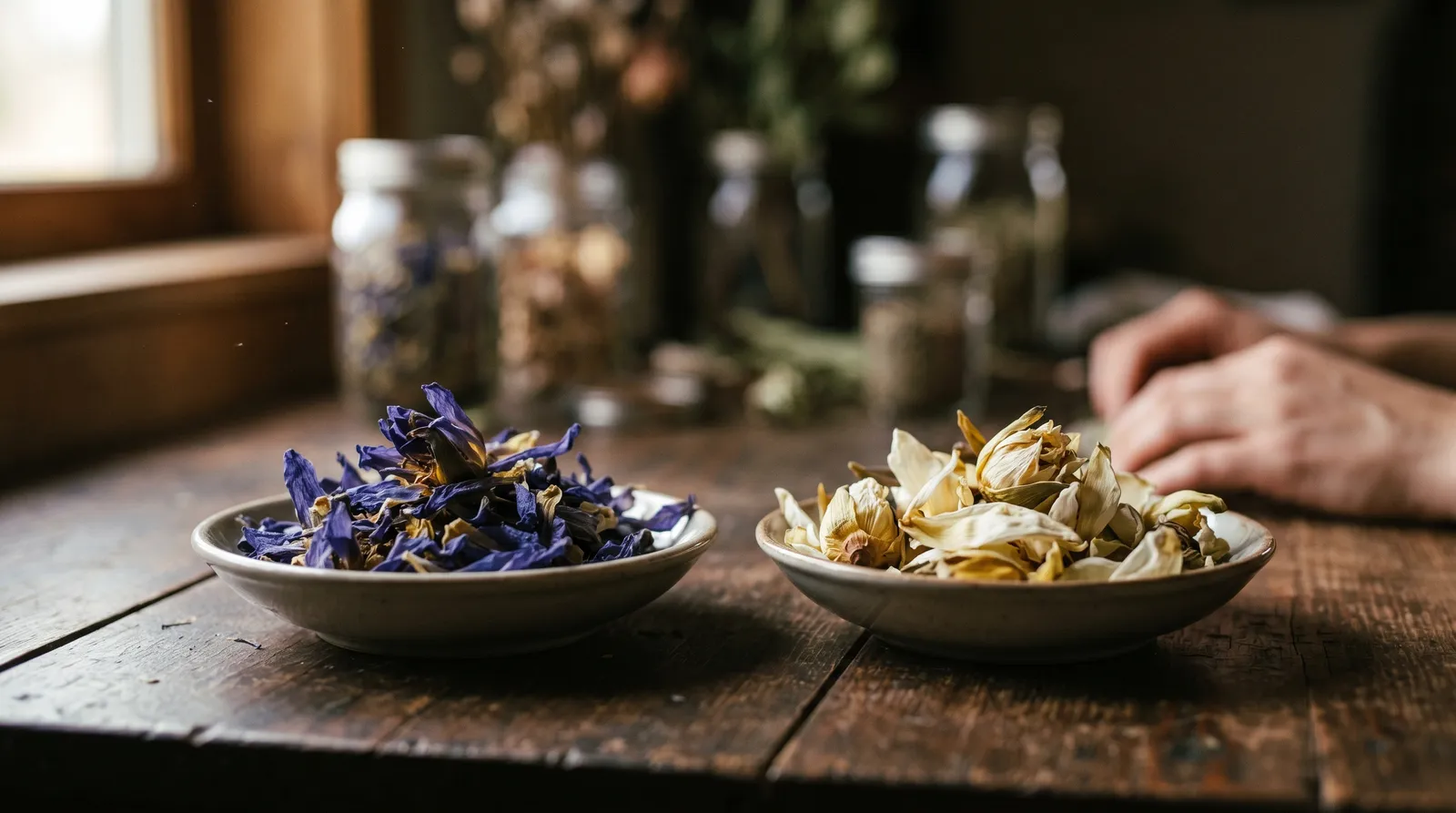
Someone taking an antiarrhythmic like amiodarone faces a specific concern with Nelumbo nucifera that does not apply to Nymphaea caerulea. Conversely, the apomorphine content of Nymphaea caerulea — the same molecule used in injectable form for Parkinson's disease — creates a particularly direct lotus interaction with dopaminergic medications that is less pronounced (though not absent, via nuciferine) in Nelumbo nucifera.
Treating "lotus" as a single entity when evaluating drug interactions is a mistake. Always identify which species you are using before cross-referencing the table above. If you buy blue lotus shredded flowers or order a pink lotus extract, check the Latin name on the label — the interaction profile depends on it.
The Extract vs Plant-Material Problem
Extracts amplify every lotus interaction listed in this article because they concentrate aporphine alkaloids dramatically relative to shredded petals. A dried extract or resin may contain five to fifty times the alkaloid load of the equivalent weight in raw plant material, depending on the extraction ratio (which is not always stated on the label). Liquid extracts vary similarly.

This matters for lotus interactions in a direct, practical way. Someone brewing a mild tea from 3–5 g of shredded Nymphaea caerulea petals is getting a substantially lower alkaloid dose than someone taking 0.5 g of a concentrated extract. The cardiovascular and dopaminergic lotus interaction risks are correspondingly higher with extracts. If you are taking any medication listed in the table above and still choose to use lotus, the distinction between plant material and extract is not academic — it is the difference between a mild concern and a serious one.
No published dose-response curves exist for any lotus species in humans, which means there is no way to calculate a "safe" co-administration dose with precision. The responsible position is to avoid the combination entirely when the interacting medication is cardiovascular, dopaminergic, or a CNS depressant.
The CYP2D6 Signal in Nelumbo nucifera
CYP2D6 inhibition is the most concrete metabolic lotus interaction identified to date. Ye et al. (2015) found that alkaloid compounds in Nelumbo nucifera leaves exert a potent inhibitory effect on the CYP2D6 isoenzyme in vitro. CYP2D6 metabolises roughly 25% of all clinically used drugs, including several opioids (codeine, tramadol), antidepressants (fluoxetine, paroxetine), antipsychotics, beta-blockers, and tamoxifen.
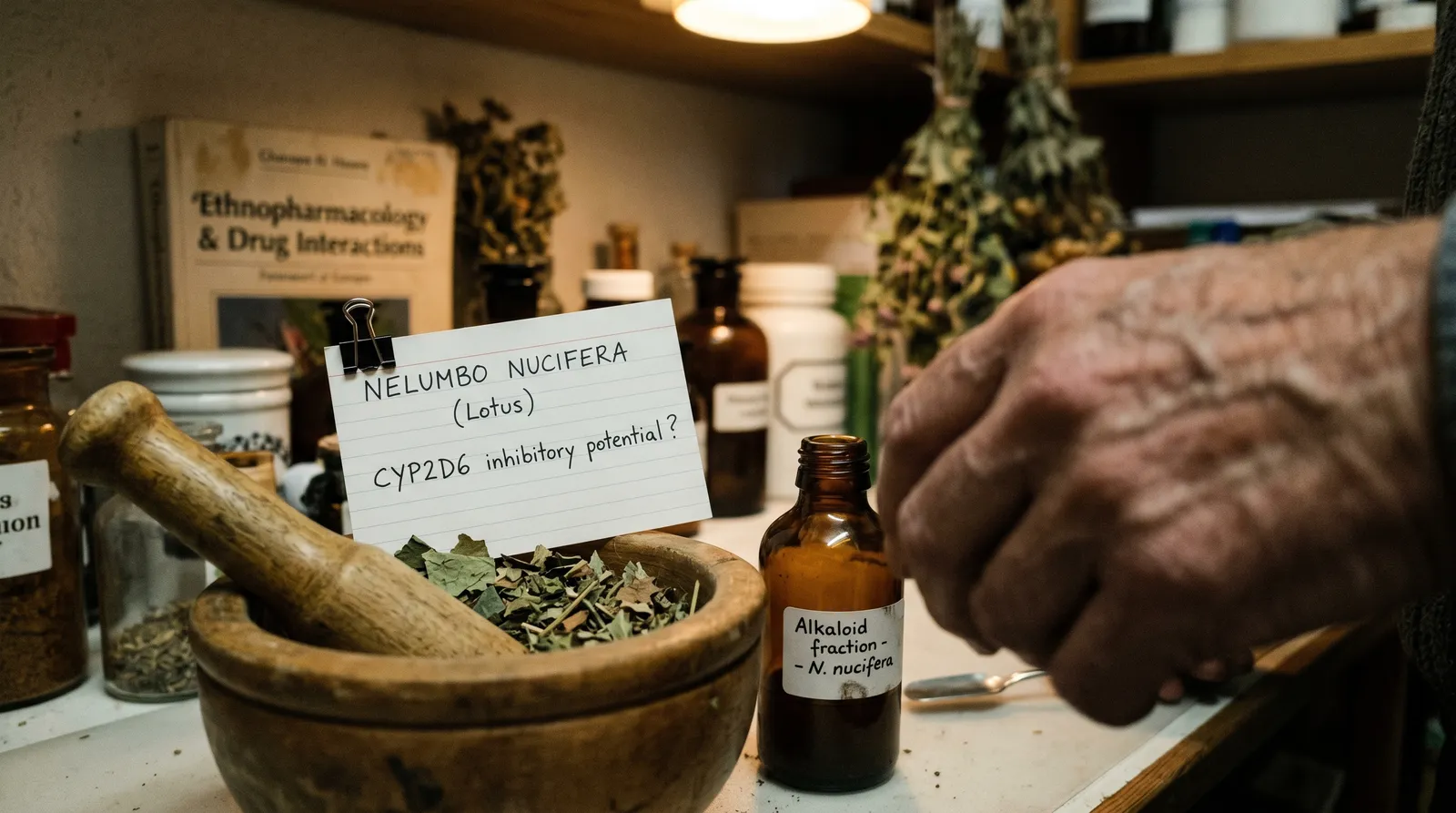
If this inhibition translates to human oral dosing — a big "if," since in-vitro enzyme inhibition does not always predict clinical significance — then Nelumbo nucifera could raise plasma levels of co-administered CYP2D6 substrates. For drugs with narrow therapeutic windows (tamoxifen, some antiarrhythmics, codeine's conversion to morphine), even a modest change in metabolism could be clinically meaningful.
Whether Nymphaea species share this CYP2D6 inhibition has not been tested. Nuciferine is common to both genera, so the possibility exists, but no data confirms or refutes it. This is a genuine gap in the evidence — not a reason to assume safety, but not a basis for definitive warnings either.
MAOI Interactions: Theoretical but Worth Flagging
No published case reports document a lotus–MAOI interaction, making this the most speculative category in the lotus interactions table. The concern is theoretical, grounded in the fact that aporphine alkaloids are monoamine-active compounds and MAO inhibition could slow their hepatic metabolism, raising effective concentrations. Classical MAOIs (phenelzine, tranylcypromine) carry the broadest risk. Reversible MAO-A inhibitors (moclobemide) and selective MAO-B inhibitors (selegiline at low doses) present a lower but non-zero concern.

The same logic applies to botanical MAO inhibitors — notably the harmine and harmaline in ayahuasca brews or Syrian rue (Peganum harmala). Combining lotus with ayahuasca or with Syrian rue adds a pharmacological layer that has not been studied in any formal setting. Users report combining blue lotus tea with ayahuasca in ceremonial contexts, but anecdotal tolerance does not equal established safety. For anyone considering this combination, reviewing the Syrian Rue page and the Ayahuasca page on this wiki is worthwhile before proceeding.
Cardiovascular Risk Profile
Blood-pressure lowering is the most clinically documented lotus interaction mechanism. Injectable apomorphine (the pharmaceutical version of the same molecule found in Nymphaea caerulea) carries a well-documented orthostatic hypotension risk in its prescribing information. The concentration of apomorphine in blue lotus plant material is orders of magnitude lower than a therapeutic injection, but the direction of the effect is the same, and it becomes more relevant with concentrated extracts.

For someone with well-controlled hypertension on medication, adding a vasodilatory botanical introduces a variable their prescriber has not accounted for. For someone with uncontrolled hypertension or hypotension, the risk is more acute. And for anyone combining lotus with another vasodilator — alcohol, PDE5 inhibitors (sildenafil, tadalafil), nitrates — the additive effect on blood pressure could produce symptomatic drops: dizziness, light-headedness, fainting, or falls.
Nelumbo nucifera adds a second cardiovascular pathway via liensinine and neferine, which have shown calcium-channel-blocking activity in vitro (Chen et al., 2013). This is the same mechanism used by prescription calcium-channel blockers like amlodipine and verapamil. The clinical relevance in humans consuming lotus tea or extract is unknown, but the pharmacological overlap is clear enough to flag for anyone already on a calcium-channel blocker or antiarrhythmic.
Sedation, Driving, and Machinery
Sedation is the lotus interaction most commonly experienced by users in practice. Nuciferine's proposed partial dopamine-receptor agonism produces mild sedation — this is one of the effects users most commonly report, alongside the dream-enhancement effect that has made Nymphaea caerulea popular in the first place. Combined with any other sedative substance (benzodiazepines, Z-drugs, gabapentinoids, alcohol, opioids, antihistamines), the sedation deepens.

Driving or operating machinery within approximately four hours of using any lotus species is clearly inappropriate. The sedation may feel mild and manageable in a relaxed setting, but reaction times and coordination are not reliable self-assessments — particularly when the substance also promotes a dreamy, inward-focused mental state. This applies to shredded-petal tea and to extracts alike, though the sedation from extracts tends to be more pronounced.
Pregnancy and Breastfeeding
No safety data exists for any lotus species during pregnancy or breastfeeding — this is a hard boundary, not a grey area. The aporphine alkaloids cross the blood-brain barrier (that is the basis of their psychoactive effects), and whether they cross the placental barrier or enter breast milk has not been studied. Given the dopaminergic activity and the complete absence of reproductive safety data, avoidance during pregnancy and breastfeeding is the only defensible position for all three species — Nymphaea caerulea, Nymphaea ampla, and Nelumbo nucifera.

Another thing we hear regularly: "I've used lotus dozens of times with no problems, so I'll be fine adding my new medication." That reasoning is flawed. The lotus on its own may be well-tolerated, but the interaction is about what happens when two pharmacologically active substances meet in your body simultaneously. A clean track record with lotus alone tells you nothing about how it will behave alongside a freshly prescribed beta-blocker or antipsychotic.
How Lotus Interactions Compare to Other Botanicals
Lotus interactions are narrower in scope than those of some other ethnobotanicals but more pharmacologically specific. Compared to kratom, which hits opioid receptors and carries broad CYP3A4 interaction concerns, lotus targets dopamine receptors and (for Nelumbo) calcium channels — a more focused but still clinically relevant profile. Compared to kanna (Sceletium tortuosum), which acts as a serotonin-reuptake inhibitor with clear SSRI interaction risk, lotus is more dopaminergic than serotonergic. And compared to valerian or passionflower, which are primarily GABAergic sedatives, lotus adds the cardiovascular dimension that those herbs lack. The point is not that lotus is more or less dangerous than these alternatives — it is that the interaction profile is distinct, and substituting one botanical for another does not eliminate interaction risk; it changes which medications are affected.
What We Honestly Do Not Know
The lotus interactions profile above is built largely from pharmacological reasoning — "this alkaloid hits this receptor, and so does this drug, so combining them is a concern." That reasoning is sound, but it is not the same as having clinical interaction studies. No randomised controlled trial has tested any lotus species against any medication listed above. The CYP2D6 data from Ye et al. (2015) is the closest thing to a direct interaction study, and it is in-vitro only.

Long-term lotus interaction effects are entirely uncharacterised. Someone using lotus tea daily alongside a beta-blocker for months — there is simply no data on what happens. The acute pharmacological concerns (additive hypotension, additive sedation, dopaminergic competition) are well-grounded, but chronic effects remain a genuine unknown.
This does not mean the lotus interactions are not real. It means the severity ratings in the table above are conservative estimates based on mechanism, not measured outcomes. Treat them as minimum plausible risk, not worst-case speculation. We would rather be upfront about the limits of current knowledge than pretend certainty where none exists.
Practical Steps Before You Buy Lotus Products
Taking a few precautions before you order any lotus product can meaningfully reduce your risk of a harmful lotus interaction. First, identify the species — check the Latin name on the label. Blue lotus shredded flowers from Azarius are Nymphaea caerulea; pink lotus products are Nelumbo nucifera. The interaction profiles differ, and the table above is only useful if you know which species you have. Second, if you take any medication listed in the table, bring this page to your pharmacist — they can cross-reference the alkaloid mechanisms against your specific prescription regimen. Third, if you choose to proceed despite a potential interaction, start with the lowest possible dose of the mildest preparation (shredded petals as tea, not a concentrated extract) and do not combine with alcohol or other sedatives. Fourth, never drive or operate machinery after using any lotus species. These steps do not eliminate risk, but they represent the minimum responsible approach for anyone navigating lotus interactions with concurrent medication use.

Last updated: April 2026
Frequently Asked Questions
9 questionsCan I drink blue lotus tea while taking blood pressure medication?
Does pink lotus interact differently with medications than blue lotus?
Is it safe to combine lotus with alcohol?
Are lotus extracts more dangerous for drug interactions than dried petals?
Can lotus interfere with antipsychotic medications?
Can blue lotus interact with Parkinson's medications like levodopa?
Can lotus reduce the effectiveness of anti-nausea medications like metoclopramide?
Should I avoid lotus before surgery or anesthesia?
Can blue lotus interact with SSRI antidepressants?
About this article


Adam Parsons is an external cannabis and psychedelics writer and editor who contributes to Azarius's wiki as both author and reviewer. On the writing side, he authors Azarius's kratom and kanna clusters, drawing on exten
This wiki article was drafted with AI assistance and reviewed by Adam Parsons, External contributor. Editorial oversight by Joshua Askew.
Medical disclaimer. This content is for informational purposes only and does not constitute medical advice. Consult a qualified healthcare provider before use of any substance.
Last reviewed April 24, 2026
References (4)
- [1]Chen, S., et al. (2013). Cardiovascular effects of bisbenzylisoquinoline alkaloids isolated from Nelumbo nucifera . Journal of Ethnopharmacology , 150(1), 187–192.
- [2]Ye, L., et al. (2015). Inhibitory effects of alkaloids from Nelumbo nucifera leaves on CYP2D6 isoenzyme. Pharmaceutical Biology , 53(9), 1356–1359.
- [3]Agnihotri, V.K., et al. (2008). Constituents of Nymphaea caerulea . Phytochemistry Letters , 1(2), 83–86.
- [4]European Medicines Agency (2012). Apomorphine hydrochloride — Summary of Product Characteristics. Orthostatic hypotension listed as common adverse reaction.
Related Articles
Blue Lotus vs Kanna: Effects & Safety
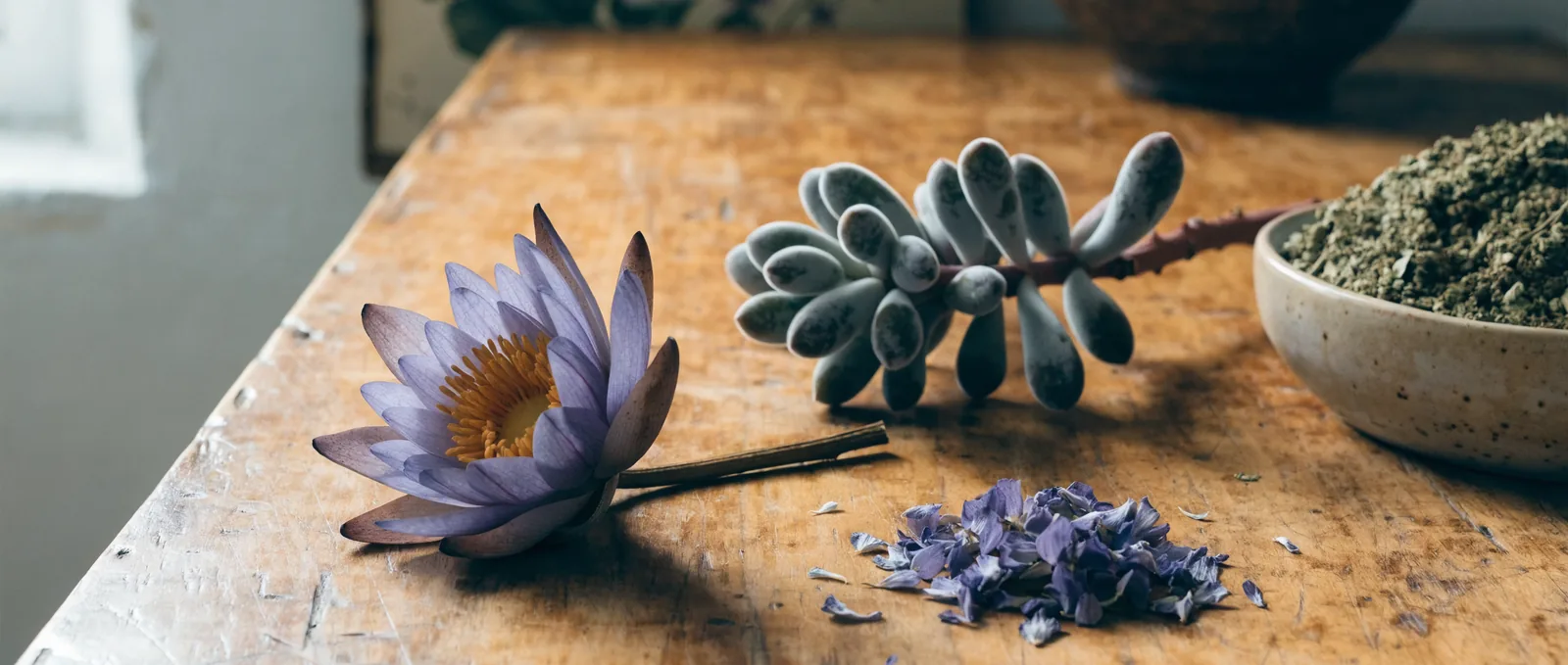
Blue lotus vs kanna compared — Nymphaea caerulea's aporphine profile against Sceletium tortuosum's mesembrine chemistry, with interaction warnings.

Lotus Clinical Research Overview
What does lotus clinical research actually show? A critical review of Nymphaea caerulea and Nelumbo nucifera pharmacology, preclinical data, and…
Kanna South Africa To West History
Sceletium tortuosum was used by San and Khoekhoe communities in southern Africa for centuries before European colonists first documented it in the 1660s.
Sceletium Tortuosum Plant
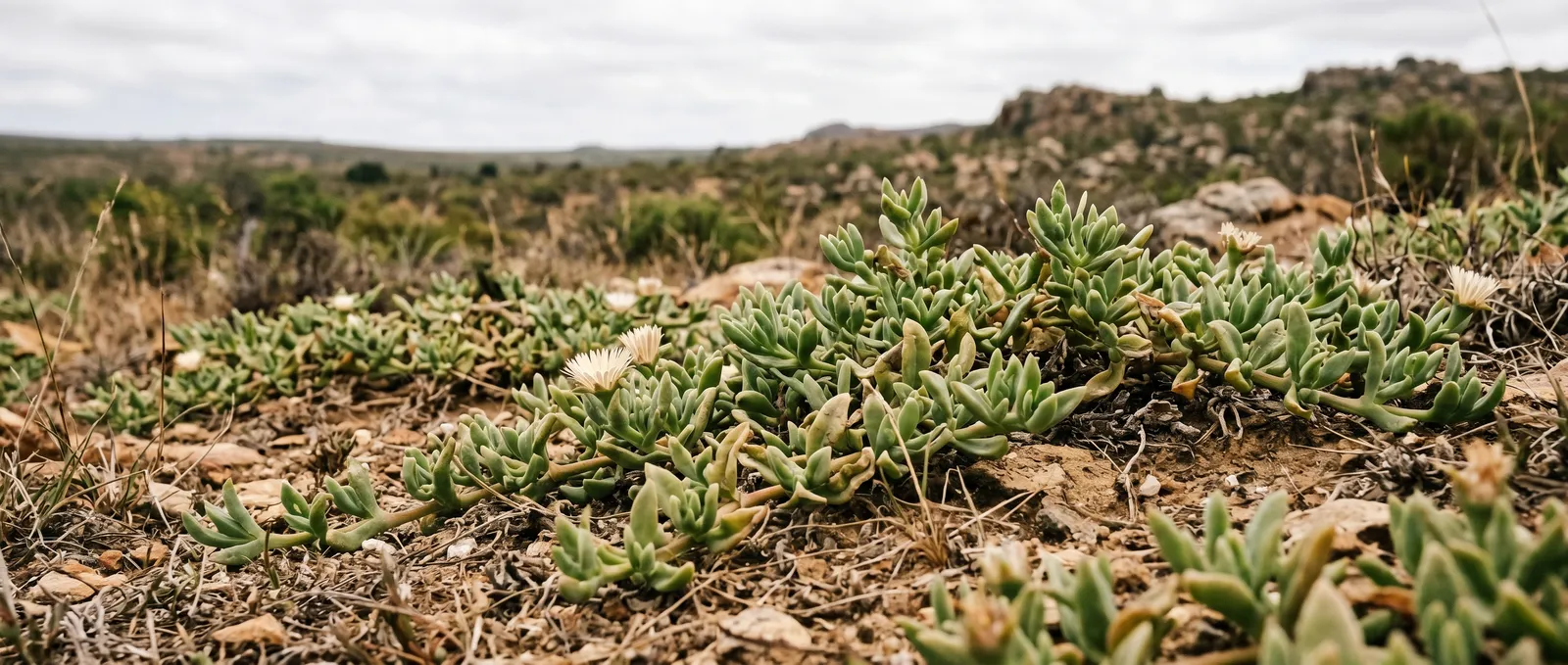
Learn about the sceletium tortuosum plant: botany, alkaloids, fermentation, safety warnings, and where to buy kanna.
Kanna Pharmacokinetics Explained
Complete guide to kanna pharmacokinetics: how Sceletium tortuosum alkaloids are absorbed, metabolised via CYP2D6, and eliminated.

Kanna Chemistry: Sceletium Alkaloids Explained
Kanna chemistry explained: mesembrine, mesembrenone, their mechanisms, how fermentation and extraction change alkaloid profiles, and why it matters…

Rapé Shamanic Snuff Guide: How to Use It Safely
A practical rapé shamanic snuff guide covering dose, kuripe technique, effects, nicotine safety, interactions and Amazonian tradition.

White Sage Salvia Apiana Cultural Smudging Guide
Salvia apiana is a non-psychoactive shrub native to southern California's coastal sage scrub, burned as ceremonial incense in Indigenous North American…

Mulungu Erythrina Traditional Amazonian Use — Bark, Alkaloids & Research
Erythrina mulungu is a Brazilian legume tree whose bark has been brewed as a calming decoction in rural folk medicine for generations.