
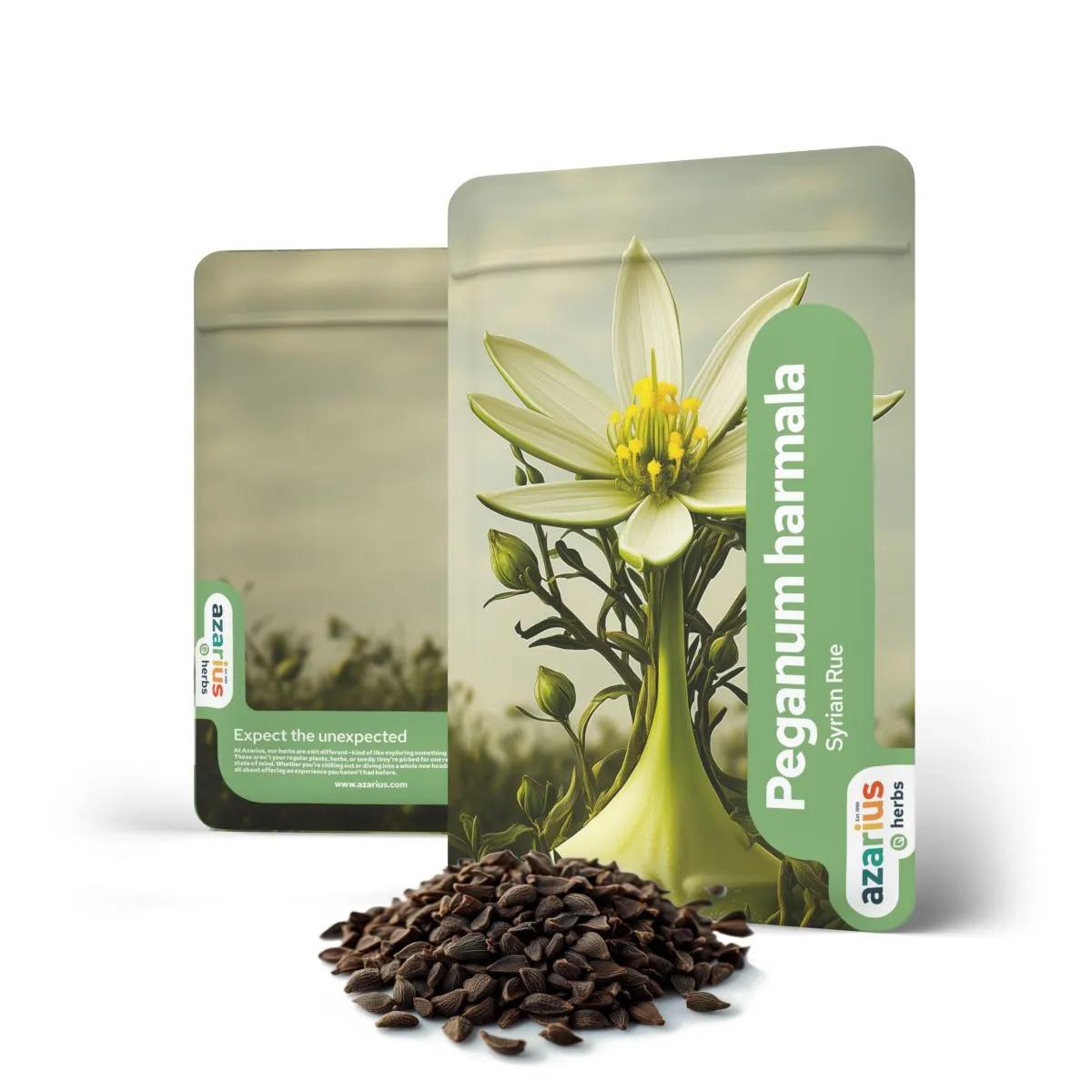
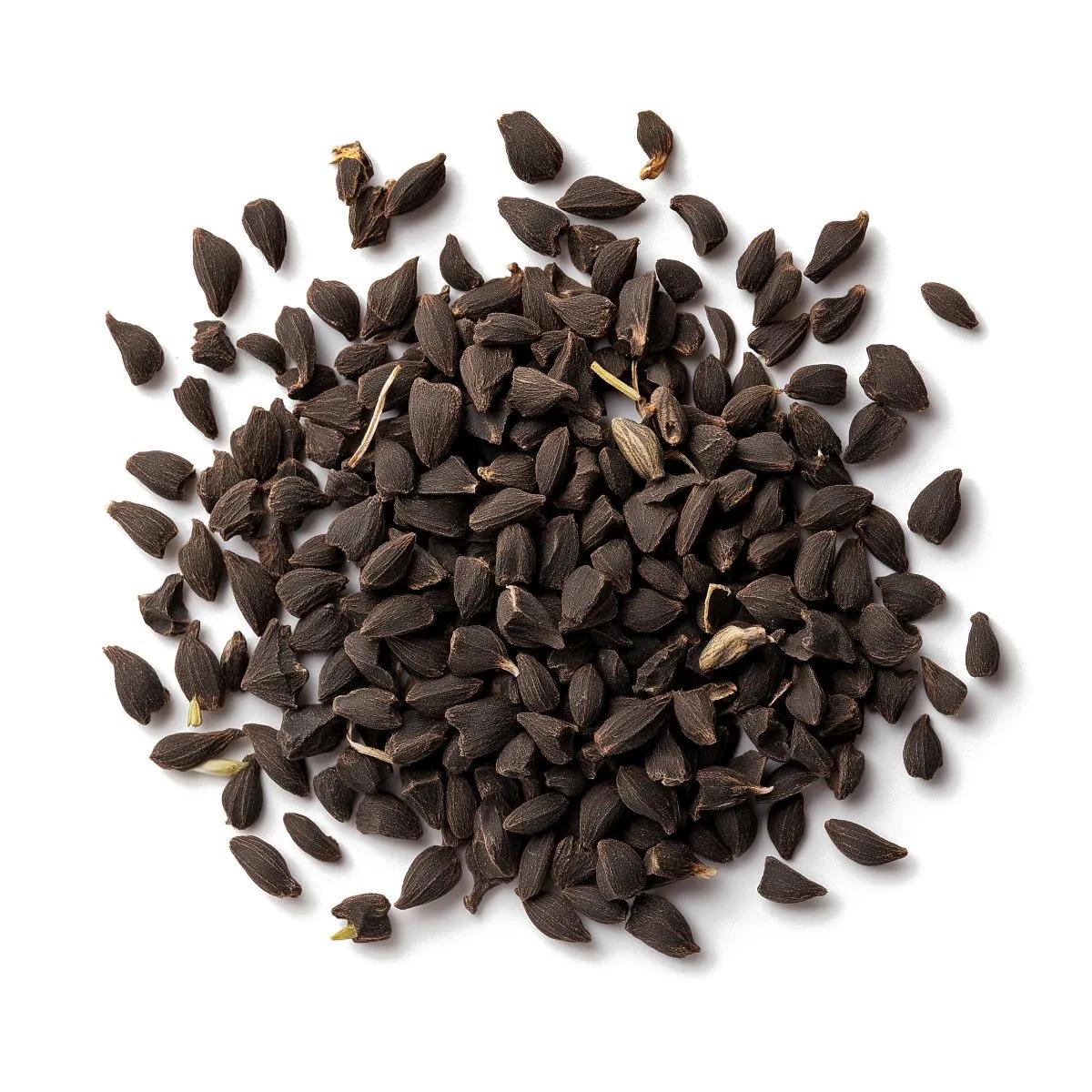
Peganum harmala — known widely as Syrian rue — is a desert shrub whose small brown seeds carry one of the highest natural concentrations of beta-carboline alkaloids on the planet. At Azarius we've stocked Syrian rue since the early 2000s for customers who want to buy the raw botanical for traditional preparations, dye-making, or research into MAO-inhibiting plants. Two formats in stock, both from the same species.
Buy Peganum Harmala Seeds — What This Category Actually Is
Syrian rue is a hardy perennial native to a belt running from the eastern Mediterranean through Central Asia to northern India. The seeds have been burned as incense, ground into red and orange textile dyes (that famous "Turkey red" on old rugs? Often this plant), and brewed in traditional Middle Eastern and Central Asian practice for well over a thousand years. Botanically it's in the Nitrariaceae family — not related to common rue (Ruta graveolens) despite the shared name, which confuses roughly half the people who order it for the first time.
What you're buying in this category is the raw seed material. No extracts, no standardised capsules, no tinctures. If you want to shop for something more processed, you'd be looking at a different format altogether — and we'd point you at a different aisle.
Seeds vs Extracts vs Other Beta-Carboline Sources — How to Choose
Raw seeds are the traditional format and the cheapest per gram of alkaloid content. Extracts (which we don't carry for this plant) concentrate the alkaloids but strip the accompanying plant matter and cost considerably more per dose-equivalent. Banisteriopsis caapi — the South American vine used in ayahuasca brewing — contains the same three beta-carbolines but in lower concentration, typically 0.4–1% compared to Syrian rue's 2–6%. That's why a handful of rue seeds goes where a serious bundle of caapi vine would need to.
Decision criteria worth weighing before you order:
- Purpose — incense, dye work, seed-saving and cultivation, or traditional tea preparation each favour different quantities
- Shelf life — whole seeds keep for years in a cool dark jar; ground material oxidises faster
- Preparation effort — raw seeds require grinding and extraction; you're doing the work a lab would otherwise do
- Alkaloid profile — Syrian rue skews heavily toward harmine and harmaline with less tetrahydroharmine than caapi, which affects the character of any brew
- Interactions — beta-carbolines are reversible MAO-A inhibitors and interact with SSRIs, tyramine-rich foods, and several common medications; this is the single biggest reason people decide not to buy
What's In Stock at Azarius
We carry two listings under this category, both whole seed: Peganum Harmala seeds and Peganum Harmala (herb listing, SKU SM0135). Same species, same plant, two entries that reflect how the product has been catalogued over 25 years of shop history. Pick whichever is in stock when you go to order — there's no meaningful difference in what arrives at your door.
How to Choose Between the Two Listings
Honestly? Flip a coin. Both listings ship the same whole seeds from the same botanical source. If one is out of stock, order the other. First-time buyers should get the smallest quantity available — you can always come back and buy more, but you can't un-order a kilo of seeds sitting in your kitchen cupboard three years from now.
Frequently Asked Questions
What is Peganum harmala used for traditionally?
Historically Syrian rue has been burned as protective incense across Turkey, Iran and Central Asia, used as a red textile dye, and brewed in traditional preparations. The plant appears in Zoroastrian, Islamic and pre-Islamic folk practice. We don't make health claims about it — the traditional uses are cultural and ethnobotanical.
Is Syrian rue the same as common rue (Ruta graveolens)?
No — completely different plants despite the shared English name. Common rue is a Mediterranean culinary and medicinal herb in the Rutaceae family. Syrian rue (Peganum harmala) is in the Nitrariaceae family and contains beta-carboline alkaloids the common rue doesn't have. Don't substitute one for the other in any recipe.
Can I grow Peganum harmala from the seeds you sell?
Yes — the seeds are viable and the plant grows readily in dry, sunny conditions with poor soil. It's a hardy perennial that tolerates frost once established. Scarify the seeds lightly and sow shallow. Plenty of our customers buy a small packet specifically for cultivation rather than any other purpose.
What should I know about MAO inhibition before I order?
Beta-carbolines (harmine, harmaline, tetrahydroharmine) are reversible MAO-A inhibitors. That means they interact with SSRIs, SNRIs, several other medications, and tyramine-rich foods like aged cheese, cured meats and fermented soy. If you're on any psychiatric medication, don't buy this plant without speaking to a doctor first. This is the single most important thing to understand.
How should I store the seeds?
Whole, dry, in an airtight jar, out of direct sunlight. Stored properly they keep their alkaloid content for years. Ground seed oxidises faster — grind only what you need, when you need it.
Last updated: April 2026