


.png)


African dream seeds are one of those ethnobotanical curiosities that sit at the crossroads of plant knowledge, oral tradition, and personal experience. Known botanically as Entada rheedii, these large “sea beans” have travelled via rivers and ocean currents for centuries, washing up far from where the vine grows and picking up stories along the way.1
Interest hasn’t faded because the seed is striking; it’s because people continue to explore its place in dreamwork, symbolism, and ancestral relationships. In this guide, African dream seeds are explained, focusing on historical and cultural context: how different communities have spoken about them, what roles they’ve played in traditional practice, and why their meaning still resonates.
Quick Summary
What Are African Dream Seeds?
African dream seeds are the hard, woody seeds of a large tropical liana (a climbing vine) called Entada rheedii. In everyday terms, they’re often described as “sea beans” because the pods and seeds can travel long distances by water, sometimes washing up on distant shores after drifting along rivers and ocean currents.
You’ll see several common names used interchangeably, including African dream bean, sea bean, and snuff box seed. The “snuff box” nickname comes from the fact that the seed’s shell is so tough and hollowed seeds have historically been used as small containers.
For identification, the seed is typically large and flattened, with a smooth, glossy surface that ranges from dark brown to near-black. Many have a lighter seam or ridge around the edge, and they feel noticeably heavy for their size. In the wild, they’re produced in long, thick pods that contain multiple seeds packed in a row.
Origins and Natural Habitat of Entada rheedii
Entada rheedii is native to parts of Southern and Eastern Africa, where it grows across warm, humid landscapes and follows water. You’ll typically find the vine scrambling through coastal thickets, riverine forest edges, and lowland woodland, using surrounding trees for support as it climbs towards light.
Its geography is closely tied to how the plant reproduces. After flowering and forming long, heavy pods, mature seeds drop and are carried away during the rains. This natural “rafting” is a big part of why the plant is so widely encountered: the seeds are buoyant and extremely durable, so they can travel downstream, then drift along coastlines on ocean currents.
That dispersal pattern also explains why African dream seeds show up far beyond the core growing regions, turning up as beachcombing finds, traded curiosities, and locally collected ethnobotanical materials.
Cultural and Historical Significance of African Dream Seeds
Long before they became an online talking point, these seeds held a place in living tradition. Across different communities, the seeds were valued not just as unusual objects but as carriers of meaning; something you might keep, gift, or bring into ritual settings because of what they represented.
Dreaming is often treated as more than private imagination in many African cultural contexts; it can be a space for guidance, warning, and connection. Within that framework, African dream seeds’ cultural significance is closely tied to the idea that dreams may open a channel to the ancestral realm, making the seed a symbolic ally in practices centred on remembrance and relationship.
Much of what’s known has been passed down through oral tradition rather than written records. Stories, rules of use, and interpretations were commonly passed between elders, healers, and families, and the seeds could appear in ceremonial practices where intention, respect, and community mattered as much as the plant itself.
African Dream Seeds and Dreaming Traditions
In many traditional settings, dreams are treated as meaningful events rather than mental “noise”. They can be read as messages, visits, or symbolic narratives that help a person make sense of relationships, obligations, and change.
Within that worldview, the seed’s role is often described in terms of supporting dream attention: encouraging a dreamer to remember, notice patterns, and approach sleep with intention. Rather than a lab-based model of cause and effect, African dream seeds' spiritual meaning tends to sit within a broader web of belief in which plants, ancestors, and the unseen world interact through ritual, respect, and context.
It’s also worth noting that interpretations aren’t universal. Meanings can differ across regions, families, and practitioners, and the same dream image may be interpreted differently depending on the dreamer’s life stage, community history, and the circumstances surrounding a ceremony.
Traditional Uses of African Dream Seeds
Traditional use tends to sit within a guided, intentional approach to dreaming rather than a recreational one. The seed’s place is usually framed as supportive: helping someone prepare for sleep, focus their mind, and treat dreaming as a practice with purpose.
In many accounts, the traditional uses of African dream seeds are closely tied to ritual contexts. That might mean being kept as a personal talisman, used in a ceremonial setting, or incorporated into a wider routine that includes prayer, song, cleansing, or storytelling, where the seed is one element among many.
Elders, healers, or spiritual practitioners often hold the responsibility for interpreting dreams and advising on appropriate use. Their role isn’t only practical; it’s also ethical, setting boundaries, passing on oral knowledge, and ensuring the practice remains respectful to ancestors, community rules, and the individual’s readiness to engage with what dreams may reveal.
Folklore vs Modern Interpretations
Folklore tends to frame these seeds within relationships, between dreamer and community, and between the living and the ancestral realm. Modern online discussion, by contrast, often treats them as a direct “dream enhancer”, with personal stories focusing on vividness, recall, or lucidity.
It’s important to hold those perspectives separately. While many users share experiences that they associate with an “active window” after use, sometimes the same night, sometimes after repeated nights, these are anecdotal patterns rather than guaranteed outcomes.
From a scientific standpoint, there’s currently no solid clinical evidence confirming specific dream effects in humans. That doesn’t erase the cultural value of the practice, but it does mean modern claims should be approached as unproven and highly individual, influenced by expectation, sleep quality, and ritual context.
African Dream Seeds vs African Dream Root: Key Differences Explained
A lot of modern confusion comes from the fact that “African dream” is used as a catch-all label for more than one traditional dream-related plant. African dream seeds properly refer to the large, hard seeds from a climbing vine, whereas “African dream root” is typically a different botanical entirely, sold in dried root form.
Botanically, they’re not interchangeable. Culturally, they can sit in different lineages of practice too, with local names, meanings, and preparation methods varying by region and community.
In terms of reputation, seeds are often discussed as symbolic tools for dream work and ancestral connection, while roots are more commonly marketed today as a direct dream booster. The two get conflated because online shops, forums, and social media often shorten both to the same nickname, stripping away the context that normally keeps them distinct.
Is African Dream Root Psychedelic?
In a strict sense, “psychedelic” usually refers to substances that reliably and noticeably alter perception, cognition, and sensory experience while you’re awake, often in a dose-dependent way.
African dream root is generally not placed in that category. Modern users may report changes around sleep and dream vividness, but that sits closer to dream modulation than classic psychoactive intoxication.
It also helps to separate symbolism from chemistry. A plant can be culturally powerful because of its role in dream interpretation and ancestral practice, without functioning like a psychedelic in the conventional, trip-like sense.
Are African Dream Seeds Used in Traditional Medicine?
This depends on what you mean by “medicine”. From an ethnobotanical perspective, a plant can be culturally significant and widely used without being a clinical “treatment” in the modern sense.
In many traditions, these seeds are better understood through their symbolic and ritual significance, especially in relation to dreaming, ancestry, and spiritual guidance. The knowledge is often transmitted through community practice, with trusted elders or practitioners shaping when, why, and how the seed is approached.
That context matters for readers used to wellness marketing. While the broader topic of Entada rheedii ethnobotany includes many forms of human–plant relationships, it’s not appropriate to frame dream seed traditions as proven therapies, and we avoid making medical claims about outcomes or benefits.2
Are African Dream Seeds Legal and Safe to Discuss?
In many places, these are sold and discussed as ethnobotanical seeds rather than controlled drugs, but legality can still vary by country and even by how a product is marketed. It’s always worth checking your local rules before buying, importing, or attempting any kind of preparation.
They’re also not recognised as an approved medicine, so you shouldn’t treat them as a therapeutic product or a substitute for professional care.
Safe discussion starts with respect: acknowledge the cultural roots of the practice, avoid sensational claims, and keep the focus on historical context and responsible curiosity rather than pushing guaranteed results or “quick-fix” narratives.
Why African Dream Seeds Still Fascinate People Today
Today’s fascination comes from more than one place. Spiritual explorers are drawn to the seed’s role in dreamwork, academics look at how plant knowledge travels across cultures, and many readers are simply curious about how meaning is carried through ritual.
Dream exploration discussions keep these seeds in circulation, but the most valuable angle is often cultural: learning where they originate, what they have represented, and how they’ve been used traditionally in contexts linked to ancestry and guidance.
Preserving that knowledge respectfully means resisting hype, crediting the communities that held these practices long before modern wellness trends, and staying honest about what’s belief, what’s anecdote, and what’s still unknown.
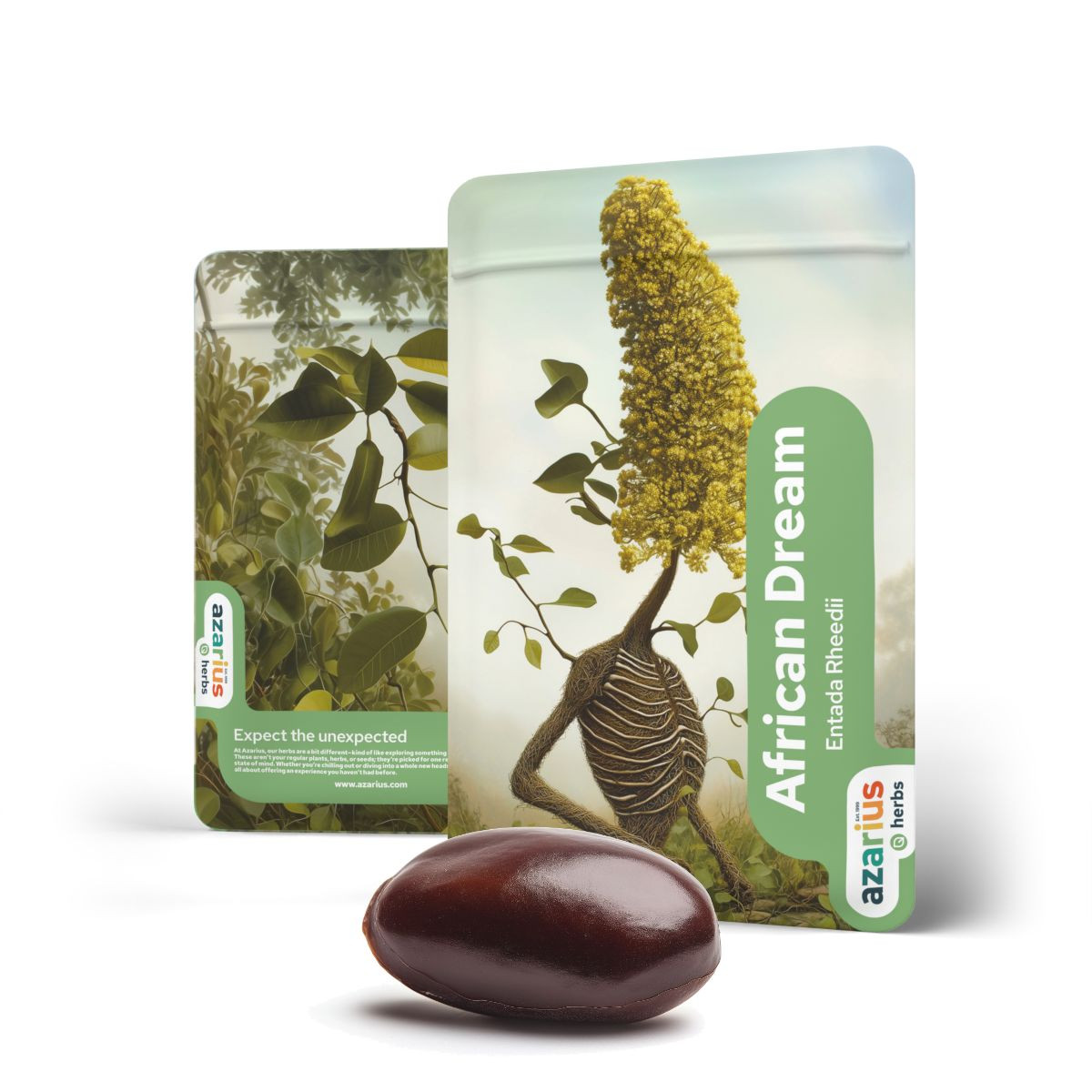
African Dream seed
Seed (1x)References
- Soni P, Marndi S, Sahu B, Acharya I, Mishra S. Morphology, distribution and ethnomedicinal uses of Entada rheedii: Largest seedpods of Fabaceae. Published online 2025. doi:https://doi.org/10.5281/zenodo.17093334 ↩︎
- Mona M. Okba, Sally A.W. El Awdan, Miriam F. Yousif, Kadriya S. El Deeb, Fathy M. Soliman, Entada rheedii seeds thioamides, phenolics, and saponins and its antiulcerogenic and antimicrobial activities. Journal of Applied Pharmaceutical Science. doi:https://doi.org/10.7324/japs.2018.8513 ↩︎