


.png)


From ancient herbal smoke rituals to relaxing teas, Damiana has played a multifaceted role in traditional medicine. But what exactly has it been used for? Its reputation is primarily centred on a few recurring themes: supporting sexual vitality, lifting mood, and settling the stomach.1
In this guide, we’ll examine the traditional uses of damiana through a respectful, historical lens, showing how it was prepared, why people reached for it, and what those traditions can (and can’t) tell us today.
What Is Damiana (Turnera diffusa)?
Damiana, best known botanically as Turnera diffusa, is a small, aromatic shrub in the passionflower family. It grows naturally in warm, dry landscapes, such as scrubland, coastal plains, and open woodland, across Mexico, Central America, and parts of the Caribbean.
In traditional settings, it’s valued less as a “single-ingredient fix” and more as a versatile companion herb: something you can sip, smoke, or blend, depending on the goal and the local custom. Ethnobotanical sources describe its long history in folk medicine, where it has been associated with sensuality, an uplifted mindset, and digestive comfort.2
What parts of the damiana plant are most commonly used in traditional remedies? Usually, the leaves (and sometimes the flowering tops). They’re harvested, dried, and then prepared in a few classic ways:
- Infusions and decoctions (everyday tea-style preparations)
- Tinctures and tonics (often combined with other herbs)
- Dried leaf smoking blends (ritual or recreational use)
This mix of preparation styles is a significant reason why damiana's traditional uses vary so widely from one community to the next.
Traditional Medicinal Uses of Damiana
Across Mexico and Central America, damiana herbal remedy uses have often focused on the “whole-person” blend of desire, mood, and digestion. In folk practice, it might be taken alone or paired with other local herbs as part of a tonic.
How was damiana historically used to support sexual health or as an aphrodisiac? Most commonly as a warm infusion, a more potent decoction, or a steeped liqueur, taken before intimate moments or as a short course to “restore” vitality. This tradition is also where the damiana aphrodisiac history becomes most visible in popular herbal writing.3
Beyond intimacy, people have used it for everyday balance:
- Damiana mood and anxiety relief in times of stress or low spirits
- Damiana digestion benefits after heavy meals or when appetite feels off
- Gentle relaxation in the evening, often via damiana tea uses
Aphrodisiac and Libido Booster
One of the most enduring themes in damiana's traditional uses is its reputation as a sensual herb. Historical accounts from Indigenous communities and Mexican folk medicine describe damiana leaf preparations as a means to warm the body, relax the mind, and stimulate desire, especially when stress, fatigue, or a low mood were thought to be hindering these effects.
Rather than being treated as a quick fix, damiana was commonly used as part of a broader tonic approach, taken over several days or weeks, or shared in social and ceremonial contexts. Preparations varied by region, but often included a tea, a more potent simmered drink, or a leaf-based liqueur.
Traditionally, it’s been used for both male and female libido support, with herbalists framing it as a gentle, balancing ally, supporting arousal, confidence, and intimacy as interconnected parts of wellbeing.
Mood and Nervous System Support
In folk traditions, Damiana wasn’t only about sensuality; it was also used as a steadying herb for the nerves. People reached for it when life felt “too much”: periods of worry, emotional heaviness, or that wired-but-tired feeling that can follow prolonged stress.
As a traditional tonic for stress and mild depression, it was typically prepared as a warm tea or combined into multi-herb blends meant to soothe, uplift, and help the body come back into balance. These cultural beliefs surrounding emotional balance often frame mood as something that could be supported through daily rituals, such as sharing an infusion in the evening, taking a small tonic before sleep, or using aromatic smoke to shift the atmosphere.4
This is where modern curiosity about damiana and its mood and anxiety-relieving properties usually begins: not as a cure, but as a gentle support ritual that encourages relaxation, comfort, and a more settled headspace.
Digestive and Urinary Support
In many folk traditions, damiana's digestive benefits were one reason it was kept in both the kitchen cupboard and the medicine bag. It was used after heavy meals to ease sluggish digestion and gentle bloating, and it also appears in traditional practices for easing urinary discomfort.2
What are the traditional ways damiana is prepared and consumed as a herbal remedy? Most often, the dried leaves were steeped as teas and infusions; simple, repeatable preparations that could be taken daily, either on their own or blended with other local herbs.
[static block id="22"]
Damiana Tea
A classic, everyday way to work with damiana is as a simple tea. Traditionally, dried leaves were lightly crumbled, covered with hot water, and left to steep until the brew turned golden and aromatic. Some communities preferred a longer simmer for a stronger, more bitter cup, especially when using it as a tonic rather than a casual drink.
In terms of damiana tea uses, it was often consumed in the evening to unwind, after meals to settle the stomach, or ahead of intimacy as part of a “warming” ritual. It could be taken on its own, sweetened with honey, or blended with other herbs, depending on local taste and intention.
If you’re wondering how to use damiana leaves in a traditional style, tea is usually the most straightforward starting point: gentle, repeatable, and easy to adjust to personal preference.
Smoking Damiana
Alongside teas and tonics, some communities have used dried damiana leaves as a smokeable herb. Historical rituals and uses vary by region, but the intention was often experiential: to shift mindset, encourage relaxation, or mark a transition, before rest, intimacy, or communal gatherings.
In this context, smoking wasn’t always about chasing a strong “effect”. It could be about scent, symbolism, and the act of taking a slow pause. The cultural significance sits in the ritual itself: using aromatic plant smoke to clear the mind, open conversation, and set an atmosphere that felt more connected.
From a modern harm-reduction perspective, it’s worth noting that inhaling any plant material can irritate the lungs. Many people who want to explore damiana’s traditional profile opt for gentler methods, such as infusions, instead.5
What Is the Most Effective Way to Take Damiana?
There isn’t one “most effective” option; what works best depends on your purpose, your preferred ritual, and how your body responds. In traditional contexts, warm preparations (especially teas) were common because they’re easy to make, gentle to adjust, and suitable for daily use.
In modern practice, effectiveness is typically shaped by a few practical factors: the dose you can take consistently, how quickly you want it to take effect, and absorption (a tea or tincture may feel different from a capsule simply because of how it’s taken).
| Method | Traditional Context | Modern Preference |
|---|---|---|
| Tea/infusion | Everyday tonic; relaxing, after meals | Ritual-friendly; easy to titrate |
| Tincture | Less common historically | Convenient; fast, measured drops |
| Capsules | Not traditional | Simple dosing; no taste |
| Smoking | Ritual/atmosphere | Fast onset; harsher on lungs |
Damiana in Traditional Cultures
What cultural groups have a history of using damiana as a herbal remedy? Most accounts place it firmly within Mexico and parts of Central America, where it grew as a familiar local shrub and was folded into household herbal practice. Over time, its reputation travelled through wider folk medicine networks, but the strongest roots remain in regional, place-based tradition.1
In Mexican and Central American herbalism, damiana was typically regarded as a versatile plant: a warming tonic, a digestive aid, and an herb associated with desire and vitality. It also appears in Indigenous medicine contexts, where plant use is often inseparable from community knowledge, seasonal cycles, and ceremonial practices.
Recorded rituals, beliefs, and folklore commonly describe damiana as a plant that supports balance between body and mind, rest and intimacy, the individual and the group. Whether served as a shared infusion, carried as a household remedy, or used in aromatic practices, the through-line is intention: using a local herb with respect, repetition, and meaning.
Is Damiana Safe? Traditional Wisdom and Modern Views
Traditionally, damiana was treated like many everyday herbs: used in modest amounts, taken as needed, and paused if it didn’t agree with the person. That “start low, go slow” mindset is still a sensible baseline, especially if you’re trying damiana for the first time.
Modern considerations are mostly about context. Concentrated forms (such as tinctures or high-strength extracts) can deliver more plant material faster than a casual cup of tea, so dosage is crucial. Potential interactions are also worth considering if you take prescription medications, particularly those that affect blood sugar or the central nervous system.4
As with most herbal products, a few common-sense contraindications apply: avoid use during pregnancy or breastfeeding unless a qualified healthcare professional advises otherwise, and exercise caution if you have an existing medical condition. If you experience nausea, dizziness, or any other unusual symptoms, stop and reassess.
For the safest route, keep it simple: choose a reputable source, use consistent amounts, and give your body time to respond.
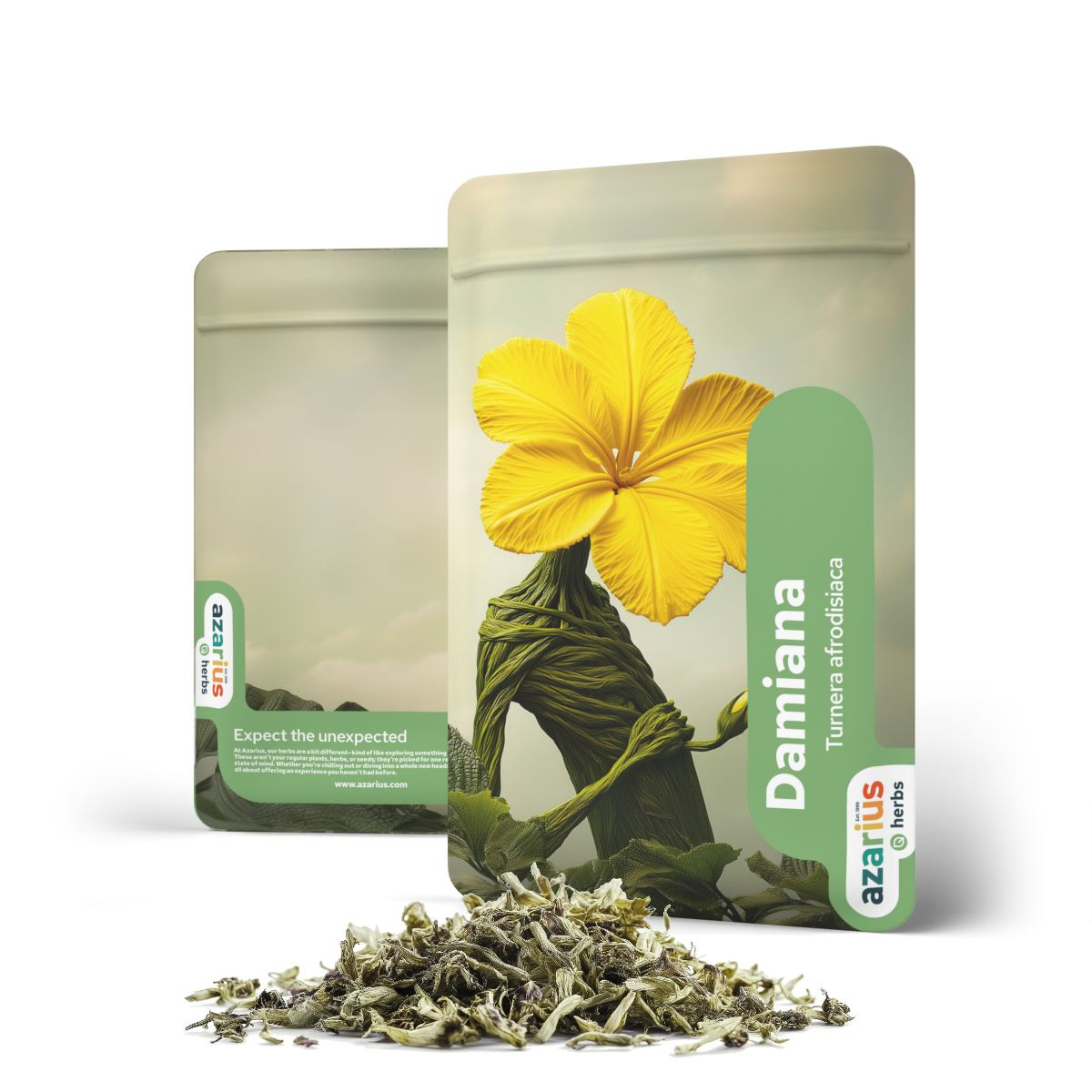
Damiana leaves
Dried leaves (80g)Why Damiana Still Matters: A Timeless Herbal Ally
Damiana has remained in the herbal conversation because it occupies a rare crossroads: everyday and ritual, practical and symbolic. Across generations, it has been prepared as a simple infusion, used in aromatic practices, and valued as a plant associated with digestion, relaxation, and intimacy.
Today’s wellness landscape is crowded with shortcuts and hype, which makes damiana’s story feel refreshingly grounded. It invites a slower approach, choosing a method that fits your intention, keeping doses sensible, and paying attention to how you actually feel.
The key takeaway is simple: damiana remains relevant not because it promises miracles, but because it offers a flexible, culturally rooted way to explore balance, comfort, and connection, when used with respect and common sense.
References
- M. Martínez, “Las Plantas Medicinales de México,” Ediciones Botas, México. Scientific Research Publishing. Scirp.org. Published 2025. Accessed January 6, 2026. https://www.scirp.org/reference/referencespapers?referenceid=433412 ↩︎
- Esquivel-Gutiérrez ER, Alcaraz-Meléndez L, Hernández-Herrera R, Torres A, Rodríguez-Jaramillo C. Effects of damiana (Turnera diffusa; var. diffusa and var. aphrodisiaca) on diabetic rats. Acta Universitaria. 2019;28(6):84-92. doi:https://doi.org/10.15174/au.2018.1761 ↩︎
- Arletti R, Benelli A, Cavazzuti E, Scarpetta G, Bertolini A. Stimulating property of Turnera diffusa and Pfaffia paniculata extracts on the sexual behavior of male rats. Psychopharmacology. 1999;143(1):15-19. doi:https://doi.org/10.1007/s002130050913 ↩︎
- Szewczyk K, Zidorn C. Ethnobotany, phytochemistry, and bioactivity of the genus Turnera (Passifloraceae) with a focus on damiana—Turnera diffusa. Journal of Ethnopharmacology. 2014;152(3):424-443. doi:https://doi.org/10.1016/j.jep.2014.01.019 ↩︎
- WHO monographs on selected medicinal plants. www.who.int. https://www.who.int/publications/i/item/9241545178 ↩︎