


.png)


This guide explores common Khat (Catha edulis) uses with a neutral, cultural lens: how sessions typically unfold, what people mean by “khat chewing”, and why leaves are often prized when they’re newly picked.
We’ll also look at alternatives some users prefer, including khat tea vs chewing, plus how fresh vs dried khat potency can differ in practice. Along the way, we’ll cover reported khat effects and the khat social customs that shape when, where, and with whom it’s used.
What Are the Most Common Methods People Use to Take Khat?
While khat is best known for being chewed, there are several common ways people prepare and consume it, depending on local tradition, access to fresh leaves, and personal preference. Put simply, traditional khat use usually centres on slowly chewing fresh sprigs, building a “cheek wad” over time as the juice is swallowed and the fibres are held in the cheek.
In the sections below, we’ll break down the primary methods, starting with the classic social chew, then touch on other preparations that show up in different regions and households.
Preparing the Leaves
Can khat leaves be used fresh, or are they processed before consumption? In most settings, they’re used fresh with minimal handling—typically sold as whole sprigs, which are then sorted and cleaned at home or during the session.
Freshness matters because the active compounds are thought to degrade after picking, which is why many users seek out tender, bright-green leaves and soft stems. Compared with older bundles, fresh vs dried khat potency is often described as sharper and more consistent.1
Preparation is usually simple and practical:
- Select the youngest leaves and fine tips; tougher stems are often set aside.
- Rinse quickly in cool water to remove dust or grit, then shake or pat dry.
- Keep the leaves loosely wrapped (not sealed) until use to help prevent wilting.
The Chewing Process
In a typical session, leaves are chewed slowly, leaf by leaf. People often tuck the pulp into one side of the mouth (the cheek) and keep adding to it over time.
As the fibres build up, users “build a quid” (a compact wad) that sits between cheek and gum. It’s common to rotate the wad to the other side now and then, both for comfort and to keep chewing manageable.
Sessions can last a long time, often up to 3–6 hours, because the plant is taken in gradually rather than all at once.2
The dosage of khat varies by individual, leaf strength, and tolerance, so it is recommended to start low and increase gradually. Many people begin with a small handful, wait to gauge effects, and avoid mixing with other stimulants.
Social Setting and Rituals
In many places where khat is part of everyday life, it’s rarely treated as a solo activity. Chewing circles (small group sessions at home, in cafés, or in community spaces) are a common format, with people arriving with bundles, settling in, and sharing time rather than rushing the experience.
The setting often shapes the rhythm of the session. Conversation is central, ranging from family catch-ups to politics, business, or storytelling, with quiet periods where everyone simply chews and listens. Music may play in the background, helping the session feel relaxed and communal.
Drinks are part of the ritual, too. Many people pair khat with tea (sometimes sweetened or spiced) to stay hydrated, warm up the throat, and balance the bitter, leafy taste. Depending on the group, snacks may be light or saved until afterwards when appetites return.
Alternative Methods of Khat Consumption
Is khat chewed or used in other ways? Chewing fresh leaves is the best-known approach, but it isn’t the only one people try.
In this section, we’ll look at a few alternative preparations that show up in different regions and households, often shaped by availability, convenience, and taste. These methods can also change how quickly the experience comes on and how easy it is to control the amount used.
Khat Tea or Infusions
Is khat ever made into tea or other drinks? Yes, although it’s less common than chewing, some people prepare khat as a hot infusion, particularly when fresh leaves are hard to source or when a gentler ritual is preferred.
The brewing method is usually straightforward: leaves (fresh or dried) are lightly crushed or torn, steeped in hot (but not boiling) water, and then strained. Some add sugar, honey, or spices to soften the naturally bitter taste. Because heat and time can affect what’s extracted, the experience may feel different from chewing, and it can be harder to judge strength by sight alone.3
Infusions are reported in pockets of East Africa and the Arabian Peninsula, as well as among diaspora communities adapting to what’s locally available. In social settings, it may be shared similarly to other herbal teas: poured in small cups alongside conversation.
Dried Khat Use
When fresh bundles aren’t available, some people turn to dried khat. Drying makes the plant easier to store and transport, which is one reason it shows up in diaspora communities where supply chains are inconsistent and “same-day fresh” isn’t realistic.
The trade-off is strength. As moisture leaves the plant, the aroma and bite change, and many users report a lower potency compared to fresh leaves. Because of this, dried material may be used in larger amounts or prepared differently—rehydrated briefly, steeped as an infusion, or chewed more for the ritual than for its intensity.
Even then, it can still play a similar social role: a familiar taste and routine shared with friends or family, adapted to local realities while keeping the cultural rhythm of a longer session.
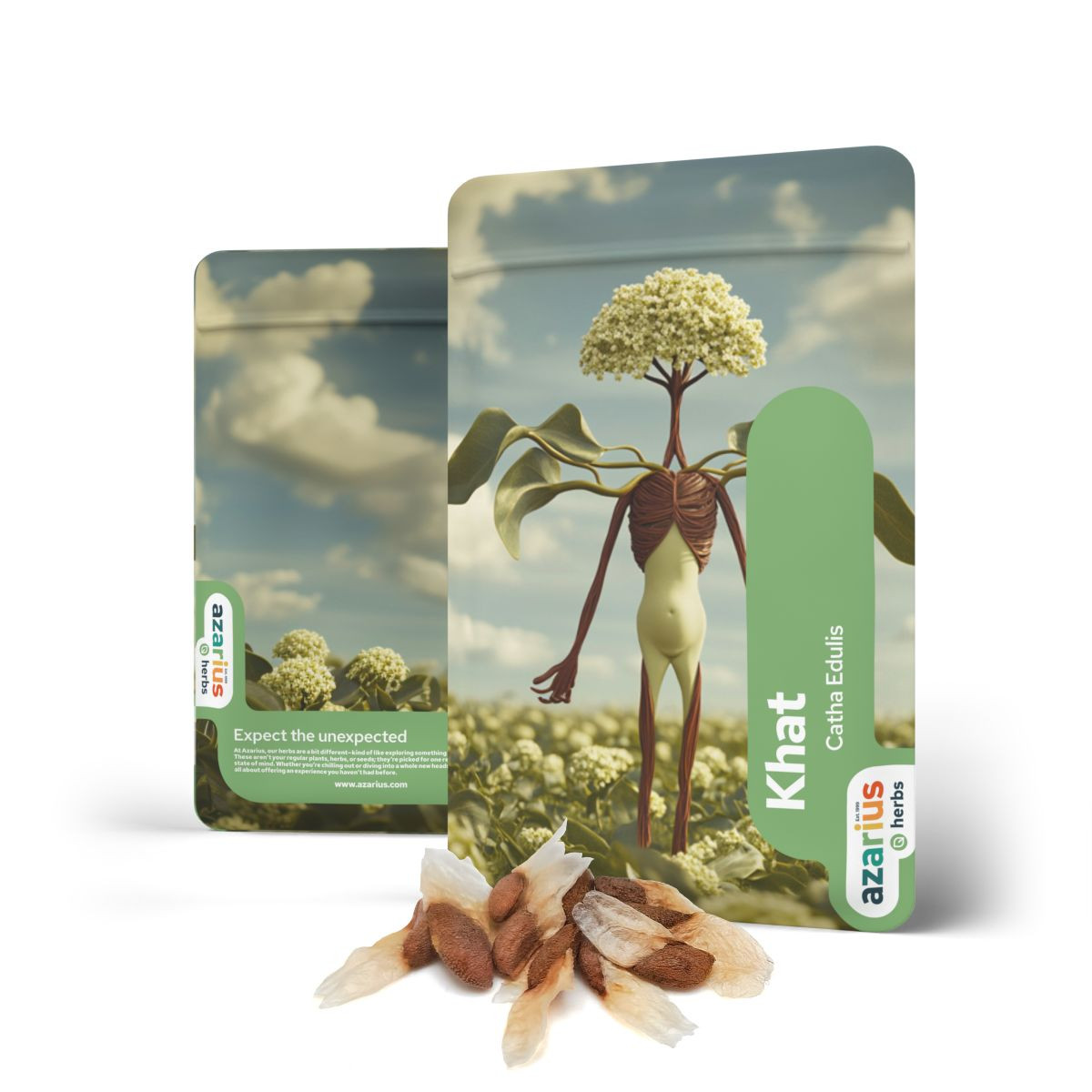
Khat Seeds
Khat Seeds (10x): A Natural Form of StimulationFresh vs Dried Khat: Does It Matter?
Yes, freshness matters because khat’s key stimulant alkaloid, cathinone, degrades after harvesting. As the leaves sit, especially in heat and during long journeys, the chemistry shifts, and the “fresh bite” people seek can soften.4
That drop in potency during transit is why access often dictates the method. In producing regions, leaves can be chewed soon after picking, making traditional sessions easier to maintain. Further afield, where shipping takes longer, or supply is inconsistent, people are more likely to encounter older or dried material and adapt by using larger amounts, extending sessions, or switching to infusions.
In other words, fresh vs dried khat potency isn’t just about strength; it can shape the entire ritual.
Health and Social Impacts of Khat Chewing
Khat effects are typically described as short-term stimulation,more alertness, talkativeness, and a lift in mood, often paired with reduced appetite. In a long session, that can also mean restlessness or feeling “wired” later in the evening.
As with many stimulants, there are potential downsides. Regular chewing may contribute to oral health issues (irritated gums, dry mouth, staining), and the timing of sessions can disrupt sleep, leading to insomnia. Some people also report a pattern of dependence, where the ritual becomes hard to skip, and the comedown feels flat or irritable.5
At the same time, the social role is significant: gatherings can be a space for community bonding, debate, and mutual support. That cultural relevance often sits in tension with legal restrictions in some countries, which can push use into private settings and add stress or stigma. A balanced view respects both realities.
How Long Does a Session of Khat Use Usually Last?
A typical khat chewing session is unhurried, often lasting around 3–6 hours. People usually build a steady “cheek pouch” over time rather than taking everything at once.
How long it runs depends on the freshness, the amount used, and the setting. Social gatherings can stretch longer, especially when there’s conversation, tea, food, and breaks, while more casual use may be shorter. Because it’s stimulating, sessions later in the day can make sleep harder for some people.
What We’ve Learned About Khat Chewing
To understand how khat is chewed and consumed, it helps to look beyond the plant and towards the practice. Most commonly, leaves are slowly chewed and held in the cheek over a long, social session, with freshness shaping intensity and pacing.
Alongside that core ritual, you’ll also see adaptations: dried material when supply is limited, and occasional teas or infusions when chewing isn’t practical. Across communities, the setting matters just as much as the method: shared time, conversation, and routine.
If you want to go deeper, it’s worth exploring khat’s history, health considerations, and the legal status where you live, so any curiosity stays grounded in context and informed choices.
References
- Silva B, Soares J, Rocha-Pereira C, Mladěnka P, Remião F. Khat, a Cultural Chewing Drug: A Toxicokinetic and Toxicodynamic Summary. Toxins. 2022;14(2):71. doi:https://doi.org/10.3390/toxins14020071 ↩︎
- World Health Organization. Assessment of khat (Catha edulis Forsk). WHO, 2006. Accessed January 9, 2026. https://iris.who.int/items/036ed5bd-e164-40b5-be71-ca05a8e90f75 ↩︎
- Cox G, Rampes H. Adverse effects of khat: a review. Advances in Psychiatric Treatment. 2003;9(6):456-463. doi:https://doi.org/10.1192/apt.9.6.456 ↩︎
- Nakajima M, Hoffman R, Abed Alsameai, Khalil NS, Mustafa al`Absi. Development of the Khat Knowledge, Attitudes and Perception Scale. Drug and Alcohol Review. 2018;37(6):802-809. doi:https://doi.org/10.1111/dar.12828 ↩︎
- Abebe W. Khat and synthetic cathinones: Emerging drugs of abuse with dental implications. Oral Surgery, Oral Medicine, Oral Pathology and Oral Radiology. 2018;125(2):140-146. doi:https://doi.org/10.1016/j.oooo.2017.11.015 ↩︎