
This article discusses psychoactive substances intended for adults (18+). If you have a health condition or take medication, consult a doctor before use. Our age policy
Kanna Pharmacokinetics Explained
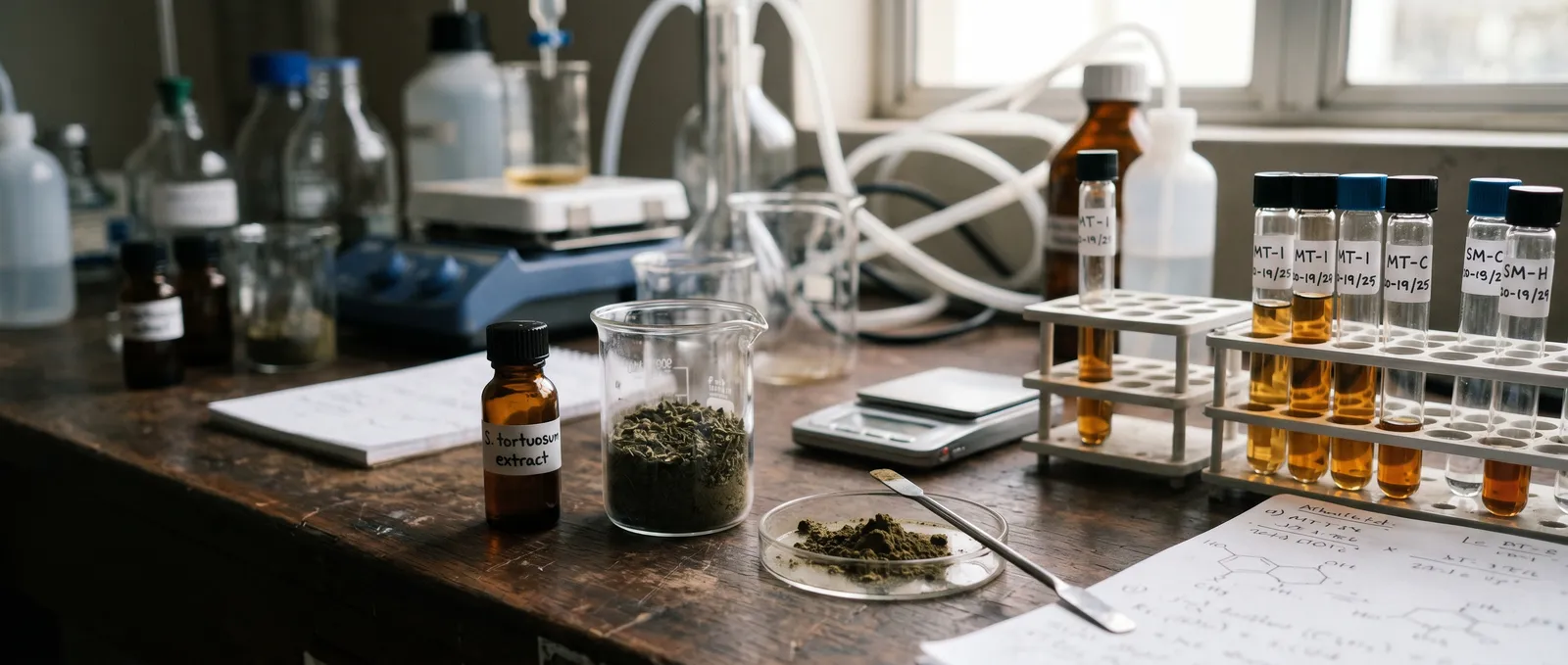
Definition
Kanna pharmacokinetics is the branch of pharmacology describing how Sceletium tortuosum alkaloids (mesembrine, mesembrenone, mesembrenol) are absorbed, distributed, metabolised via CYP2D6, and eliminated, with route of administration strongly affecting onset and bioavailability.
Kanna pharmacokinetics is a branch of pharmacology that describes how the body absorbs, distributes, metabolises, and eliminates the alkaloids found in Sceletium tortuosum. While the principal alkaloids (mesembrine, mesembrenone, and mesembrenol) are well-characterised chemically, published human data on what happens to these molecules after you actually take them remains thin. Most of what we can say draws on a small number of clinical pharmacokinetic assessments conducted with a specific standardised extract, plus in-vitro metabolism studies and the practical observations of thousands of users over the past two decades. This article unpacks what is known about kanna pharmacokinetics, flags what is not, and explains why route of administration matters so much.
Adult audience (18+). The dosing ranges and effects described in this article apply to adult physiology. This content is not intended for minors.
Disclaimer: This article is for educational purposes only and does not constitute medical advice. Kanna has serotonergic activity and may interact with medications. Do not combine kanna with SSRIs, SNRIs, MAOIs, or other serotonergic substances. If you are taking any medication or have a health condition, consult a qualified healthcare professional before using kanna. Individual responses vary significantly due to genetic and physiological factors described in this article.
What Pharmacokinetics Means for Kanna Users
Kanna pharmacokinetics describes what the body does to the plant's alkaloids after ingestion, as opposed to pharmacodynamics, which describes what those alkaloids do to the body. For kanna, the pharmacokinetic picture matters because the plant contains multiple active alkaloids that behave differently depending on how you take them, what form they are in, and how your individual liver enzymes process them.
The four standard pharmacokinetic phases — absorption, distribution, metabolism, and excretion (often abbreviated ADME) — each carry open questions for Sceletium alkaloids. The published literature is dominated by work on a single standardised 25:1 extract preparation used in clinical trials, and those findings should not be assumed to translate directly to raw plant material, fermented kougoed, or non-standardised extracts with different alkaloid ratios. That distinction runs through everything below and is central to understanding kanna pharmacokinetics in practice.
Absorption and Onset by Route
Oral kanna typically reaches detectable plasma levels within 30 minutes, with peak effects occurring 1–2 hours after ingestion. Absorption speed is the single most important variable in kanna pharmacokinetics, and it depends heavily on the route of administration. Oral ingestion — swallowing capsules, drinking a tea, or eating fermented plant material — subjects the alkaloids to first-pass metabolism in the liver before they reach systemic circulation. Users typically report onset times of 30 to 90 minutes for oral doses, though this range is broad and influenced by stomach contents, individual gastric motility, and the form consumed. A clinical pharmacokinetic study on the standardised extract reported detectable plasma mesembrine levels within approximately 30 minutes of oral dosing (Gericke, 2001), though the sample sizes in early Sceletium research were small.
Sublingual administration — holding powder or an extract under the tongue — bypasses first-pass hepatic metabolism to a degree, allowing alkaloids to absorb through the oral mucosa directly into the bloodstream. Users consistently describe a faster onset via this route, often within 10 to 20 minutes, and frequently report subjectively stronger effects at the same nominal dose. This is consistent with higher bioavailability resulting from partial avoidance of first-pass metabolism, though no published study has directly compared sublingual versus oral bioavailability of mesembrine in humans.
Insufflation (nasal administration) produces the fastest reported onset — sometimes within minutes — and is associated with the most intense initial effects. The nasal mucosa is highly vascularised, offering rapid absorption with minimal first-pass loss. However, insufflation also carries irritation risks to nasal tissue and makes dose control more difficult, particularly with concentrated extracts.
The critical point for kanna pharmacokinetics is that the same milligram quantity of the same preparation can produce meaningfully different plasma concentrations depending on route. This is not a minor pharmacological footnote — it directly affects both the intensity of effects and the magnitude of any interaction risk with serotonergic substances. The following table summarises the practical differences:
| Route | Typical Onset | Estimated Peak | Subjective Duration | First-Pass Metabolism |
|---|---|---|---|---|
| Oral (capsule/tea) | 30–90 min | 1–2 hours | 3–5 hours | Full |
| Sublingual | 10–20 min | 15–45 min | 2–4 hours | Partially bypassed |
| Insufflation | 2–10 min | 10–30 min | 1.5–3 hours | Largely bypassed |
Note: These figures are approximate, drawn from user reports and limited clinical data. Individual variation is substantial.
Plant Material Versus Extracts
Extract concentration directly determines how much alkaloid reaches the bloodstream per milligram consumed, making product type a key variable in kanna pharmacokinetics. Plant material contains Sceletium alkaloids at relatively low concentrations (typically 0.3–1.5% total alkaloids by dry weight, depending on harvest timing, plant part, and preparation method). Extracts — particularly standardised preparations at 25:1 or higher concentration ratios — deliver substantially more alkaloid per milligram of material consumed.
This means extract doses are much smaller in absolute weight, but the alkaloid load reaching the bloodstream per dose can be considerably higher. For kanna pharmacokinetics, the relevant variable is not how many milligrams of product you consume but how many milligrams of active alkaloid reach systemic circulation. A 25 mg dose of a 25:1 extract and a 625 mg dose of raw plant material may contain a similar total alkaloid quantity on paper, but their absorption profiles — including speed of onset, peak plasma concentration, and area under the curve — are unlikely to be identical because the matrix (plant fibre versus concentrated powder) affects dissolution and absorption rate.
Traditional fermented kougoed adds another variable. The fermentation process modifies the alkaloid profile, typically shifting the mesembrine-to-mesembrenone ratio and reducing oxalate content (Smith et al., 1996). Whether these changes meaningfully alter absorption kinetics in humans has not been studied directly, but the different alkaloid proportions mean the pharmacokinetic profile of fermented material is not interchangeable with that of unfermented plant or a mesembrine-standardised extract. If you want to explore the differences yourself, you can buy kanna in various forms — raw herb, fermented kougoed, and standardised extracts — from Azarius, and the choice of form is itself a pharmacokinetic decision. You can also order kanna extract UC2 or get kanna fermented kougoed to compare onset and duration firsthand.
Metabolism and the CYP2D6 Enzyme Question
Mesembrine is metabolised primarily by the cytochrome P450 enzyme CYP2D6, making genetic variation in this enzyme one of the most important individual factors in kanna pharmacokinetics (Cashman et al., 2009). This is pharmacokinetically significant for two reasons.
First, CYP2D6 is polymorphic — meaning genetic variation across the population produces "poor metabolisers," "intermediate metabolisers," "extensive metabolisers," and "ultra-rapid metabolisers." Roughly 5–10% of European populations are CYP2D6 poor metabolisers (Bradford, 2002). For these individuals, mesembrine clearance would be slower, resulting in higher plasma concentrations and longer duration of effect at any given dose. This likely accounts for some of the wide inter-individual variability in kanna response that users describe.
Second, CYP2D6 is inhibited by a number of common pharmaceuticals, including several SSRIs (notably fluoxetine and paroxetine) and other serotonergic drugs. If someone is taking a CYP2D6 inhibitor, their metabolism of mesembrine would be impaired, potentially increasing both the intensity and duration of kanna's serotonergic effects. This creates a pharmacokinetic interaction layered on top of the pharmacodynamic interaction — both the drug and the enzyme inhibition push serotonergic activity upward simultaneously.
This double-interaction mechanism is one reason why the combination of kanna with SSRIs, SNRIs, MAOIs, tricyclic antidepressants, and other serotonergic substances (including 5-HTP, St John's Wort, and MDMA) carries meaningful risk. Anyone taking serotonergic medication should not combine it with kanna. The kanna interactions article in the Azarius encyclopedia covers this in full detail.
The metabolites of mesembrine have not been fully characterised in humans. Whether any metabolites retain serotonergic or PDE4-inhibitory activity — and thus contribute to the overall effect profile — is an open question in kanna pharmacokinetics research.
Distribution, Peak, and Duration
Peak subjective effects occur roughly 1 to 2 hours after oral ingestion of the standardised extract, with total duration of noticeable effects ranging from 2 to 5 hours. Published data on the volume of distribution, protein binding, and tissue penetration of Sceletium alkaloids in humans is essentially absent beyond this observation. Sublingual and insufflated routes compress this timeline: faster peak, often within 15 to 45 minutes, and a somewhat shorter total duration, though individual reports vary widely.
The plasma half-life of mesembrine in humans has not been precisely established in published literature. Estimates based on the clinical pharmacokinetic work with the standardised extract suggest a half-life in the range of a few hours, but this figure should be treated as approximate. For practical purposes, the relevant point is that acute effects from a single dose generally resolve within 4 to 6 hours for most users and most routes — but pharmacologically active concentrations may persist longer, particularly in CYP2D6 poor metabolisers or those taking CYP2D6 inhibitors.
This residual-activity window matters for anyone considering sequential dosing or combining kanna with other substances later in the same day.
Excretion and Washout
Renal excretion of metabolites is the most likely primary elimination route for Sceletium alkaloids, based on analogy with other lipophilic plant alkaloids metabolised by CYP450 enzymes. The excretion pathway for kanna pharmacokinetics has not been characterised in published human studies. Whether any unchanged mesembrine is excreted renally, and what the terminal elimination half-life looks like, remain unknown.
One practical implication of this gap: the washout period — the time required for kanna alkaloids and active metabolites to be fully cleared from the body — cannot be stated with confidence. Users transitioning to or from serotonergic medications should be aware that residual kanna activity may persist beyond the subjective offset of effects. This is a conversation to have with a qualified clinician, particularly given the CYP2D6 variable described above.
How Kanna Pharmacokinetics Compares to Other Botanicals
Kanna's pharmacokinetic profile is far less documented than that of most comparable psychoactive botanicals. Compared to kratom, whose primary alkaloid mitragynine has a published oral half-life of roughly 3–4 hours and well-characterised CYP3A4 metabolism, kanna pharmacokinetics data is sparse. Compared to kava, where kavalactone absorption and hepatic metabolism have been studied in multiple clinical trials, Sceletium research is decades behind. Even blue lotus — another ethnobotanical with serotonergic properties — has similarly sparse pharmacokinetic data, making kanna's data gap the norm rather than the exception among psychoactive botanicals. The honest limitation is that the pharmacokinetic science simply has not caught up with the popularity of these plants, and anyone who claims precise bioavailability numbers for kanna is extrapolating well beyond the published evidence.
If you are interested in comparing experiences across different ethnobotanicals, Azarius carries a range of options in the herbs and seeds category. You can also explore the kanna effects article in the Azarius encyclopedia for a pharmacodynamic perspective that complements the pharmacokinetic picture described here, or read the kanna dosage guide for practical dose recommendations by route.
Kanna Pharmacokinetics Summary: Key Parameters at a Glance
Mesembrine is metabolised by CYP2D6, reaches peak plasma levels in 1–2 hours orally, and has an estimated half-life of several hours. The following table consolidates the known and estimated pharmacokinetic parameters for mesembrine, the principal active alkaloid in kanna, based on available clinical and in-vitro data.
| Parameter | Value / Estimate | Evidence Level |
|---|---|---|
| Primary metabolising enzyme | CYP2D6 | In-vitro confirmed (Cashman et al., 2009) |
| Oral onset | 30–90 minutes | Clinical observation + user reports |
| Oral time to peak | ~1–2 hours | Limited clinical data (Gericke, 2001) |
| Estimated half-life | Several hours (imprecise) | Inferred from clinical PK study |
| Oral bioavailability | Reduced by first-pass metabolism (not quantified) | Inferred |
| CYP2D6 poor metaboliser prevalence | 5–10% of Europeans | Published population data (Bradford, 2002) |
| Primary excretion route | Presumed renal (metabolites) | Inferred by analogy |
| Active metabolites identified | Not fully characterised | Data gap |
Note: Many of these values are estimates or inferences. Robust human pharmacokinetic studies with adequate sample sizes remain needed.
Why the Data Gaps Matter
The current state of kanna pharmacokinetics research contains more questions than answers. The standardised extract used in clinical trials has generated the only controlled pharmacokinetic data, and even that dataset is limited in sample size and scope. For raw plant material, fermented kougoed, and non-standardised extracts, human pharmacokinetic data essentially does not exist.
This does not mean kanna is inherently dangerous — it means that dose-response relationships, optimal timing, and interaction risks carry more uncertainty than they would for a well-studied pharmaceutical. The practical consequence is that starting with low doses, allowing adequate time to assess effects before redosing, and avoiding serotonergic combinations are not just generic harm-reduction advice — they are the rational response to a genuinely incomplete pharmacokinetic picture. Whether you order kanna from Azarius or anywhere else, this caution applies regardless of the product form. The EMCDDA and Beckley Foundation have both noted the need for more rigorous pharmacokinetic research on ethnobotanicals with CNS activity, and Sceletium is a prime candidate.
Last updated: April 2026

Frequently Asked Questions
6 questionsHow long does it take for kanna to reach peak blood levels?
Does CYP2D6 genetic variation affect kanna response?
Why does sublingual kanna feel stronger than swallowed kanna?
How long do kanna alkaloids stay in the body after effects wear off?
Are the pharmacokinetics of fermented kougoed different from kanna extract?
What is the most common kanna dosing mistake related to pharmacokinetics?
About this article


Adam Parsons is an external cannabis and psychedelics writer and editor who contributes to Azarius's wiki as both author and reviewer. On the writing side, he authors Azarius's kratom and kanna clusters, drawing on exten
This wiki article was drafted with AI assistance and reviewed by Adam Parsons, External contributor. Editorial oversight by Joshua Askew.
Medical disclaimer. This content is for informational purposes only and does not constitute medical advice. Consult a qualified healthcare provider before use of any substance.
Last reviewed May 12, 2026
References (6)
- [1]Bradford, L.D. (2002). CYP2D6 allele frequency in European Caucasians, Asians, Africans and their descendants. Pharmacogenomics , 3(2), 229–243. DOI: 10.1517/14622416.3.2.229
- [2]Cashman, J.R. et al. (2009). Metabolism of Sceletium tortuosum alkaloids by cytochrome P450 enzymes. Drug Metabolism and Disposition , 37(4), 827–834.
- [3]EMCDDA (European Monitoring Centre for Drugs and Drug Addiction). Risk assessment framework for novel psychoactive substances and botanical preparations with serotonergic activity.
- [4]Gericke, N. (2001). Clinical studies on Sceletium tortuosum . Presented data on pharmacokinetics of a standardised Sceletium extract.
- [5]Smith, M.T. et al. (1996). Psychoactive constituents of the genus Sceletium N.E.Br. and other Mesembryanthemaceae: a review. Journal of Ethnopharmacology , 50(3), 119–130. DOI: 10.1016/0378-8741(95)01342-3
- [6]Beckley Foundation. Research programme on psychoactive plant pharmacology and policy frameworks.
Related Articles

Blue Lotus vs Kanna: Effects & Safety
Blue lotus vs kanna compared — Nymphaea caerulea's aporphine profile against Sceletium tortuosum's mesembrine chemistry, with interaction warnings.
Lotus Clinical Research Overview
What does lotus clinical research actually show? A critical review of Nymphaea caerulea and Nelumbo nucifera pharmacology, preclinical data, and…
Kanna South Africa To West History
Sceletium tortuosum was used by San and Khoekhoe communities in southern Africa for centuries before European colonists first documented it in the 1660s.
Sceletium Tortuosum Plant
Learn about the sceletium tortuosum plant: botany, alkaloids, fermentation, safety warnings, and where to buy kanna.
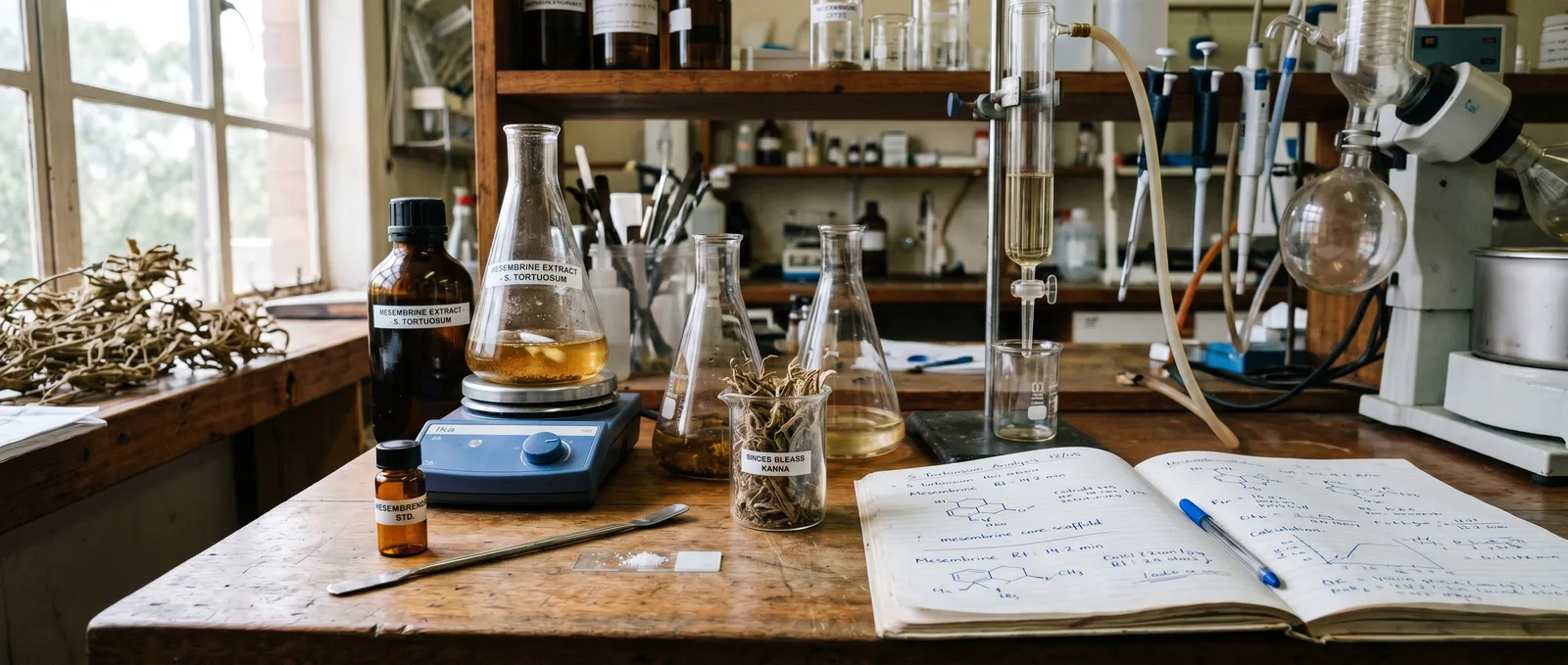
Kanna Chemistry: Sceletium Alkaloids Explained
Kanna chemistry explained: mesembrine, mesembrenone, their mechanisms, how fermentation and extraction change alkaloid profiles, and why it matters…

Rapé Shamanic Snuff Guide: How to Use It Safely
A practical rapé shamanic snuff guide covering dose, kuripe technique, effects, nicotine safety, interactions and Amazonian tradition.

White Sage Salvia Apiana Cultural Smudging Guide
Salvia apiana is a non-psychoactive shrub native to southern California's coastal sage scrub, burned as ceremonial incense in Indigenous North American…
Mulungu Erythrina Traditional Amazonian Use — Bark, Alkaloids & Research
Erythrina mulungu is a Brazilian legume tree whose bark has been brewed as a calming decoction in rural folk medicine for generations.
Wild Dagga Leonotis Leonurus Botany — Taxonomy, Chemistry & Traditional Use Guide
Leonotis leonurus (L.) R.Br., known as wild dagga or lion's tail, is a southern African shrub in the mint family (Lamiaceae) bearing dense whorls of orange…