
This article discusses psychoactive substances intended for adults (18+). If you have a health condition or take medication, consult a doctor before use. Our age policy
Kanna and SSRIs
Definition
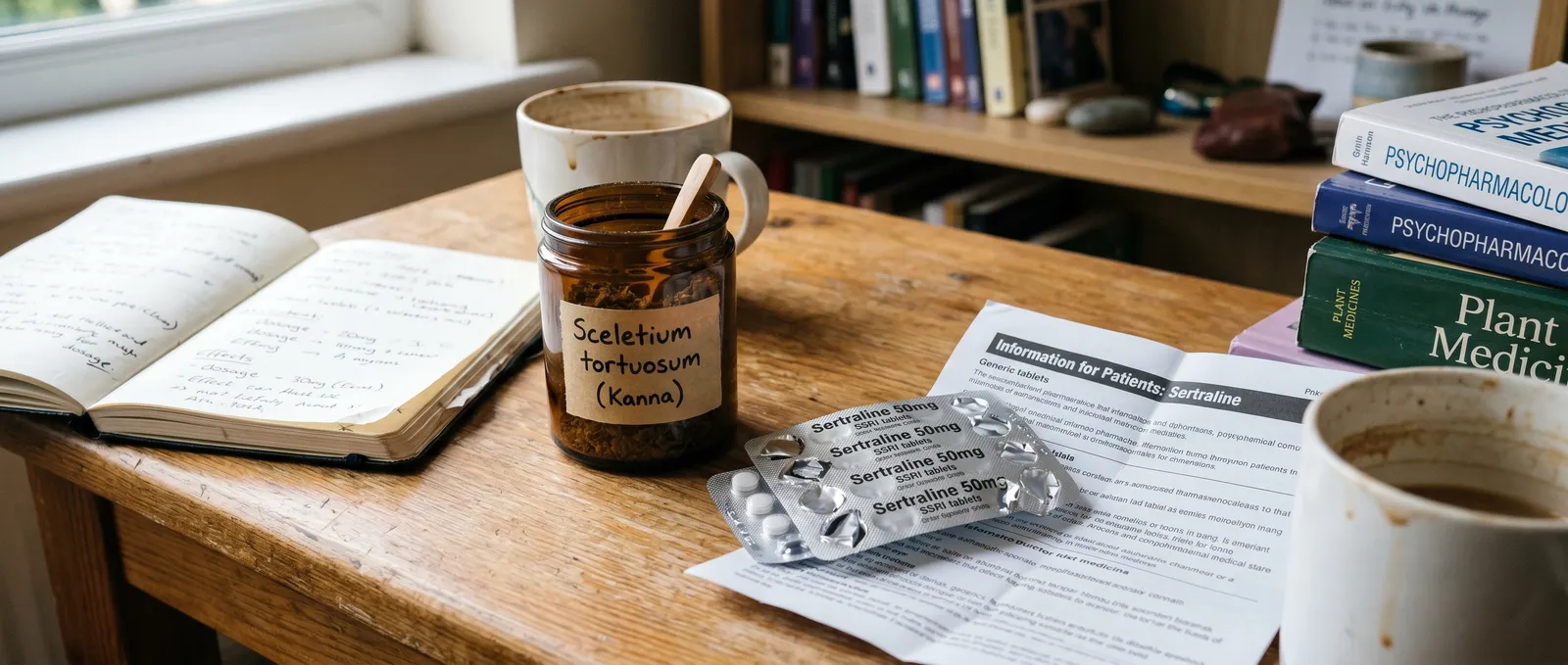
Kanna (Sceletium tortuosum) contains alkaloids with serotonin reuptake inhibitor activity, placing it in direct pharmacological overlap with SSRIs. Combining the two risks serotonin syndrome — a rare but potentially serious condition caused by excessive serotonergic stimulation (Boyer and Shannon, 2005). Anyone taking serotonergic medication should not use kanna.
Kanna (Sceletium tortuosum) has serotonergic activity — meaning it acts on the same neurotransmitter system that SSRIs are specifically designed to modulate. Combining kanna and SSRIs is a genuine pharmacological risk, not a theoretical footnote. If you're currently taking an SSRI, an SNRI, an MAOI, a tricyclic antidepressant, or any other serotonergic substance, this article explains exactly why kanna should stay off the table until you've spoken with a qualified clinician — and ideally not at all while those medications are active in your system.
Adult audience (18+). The dosing ranges and effects described in this article apply to adult physiology. This content is not intended for minors.
What SSRIs Do to Serotonin
SSRIs work by blocking the serotonin transporter (SERT) in the synaptic cleft, preventing the reuptake of serotonin and amplifying its signal. Selective serotonin reuptake inhibitors — fluoxetine, sertraline, citalopram, escitalopram, paroxetine, fluvoxamine — all share this core mechanism. Normally, after serotonin fires across a synapse, SERT hoovers it back into the presynaptic neuron for recycling. SSRIs sit in that transporter and block it, so serotonin lingers longer in the gap. According to Stahl (2013), this mechanism takes weeks of continuous dosing to produce its full downstream effects on mood regulation, which is why SSRIs aren't instant-acting — they gradually shift the baseline of serotonergic tone across multiple receptor subtypes.
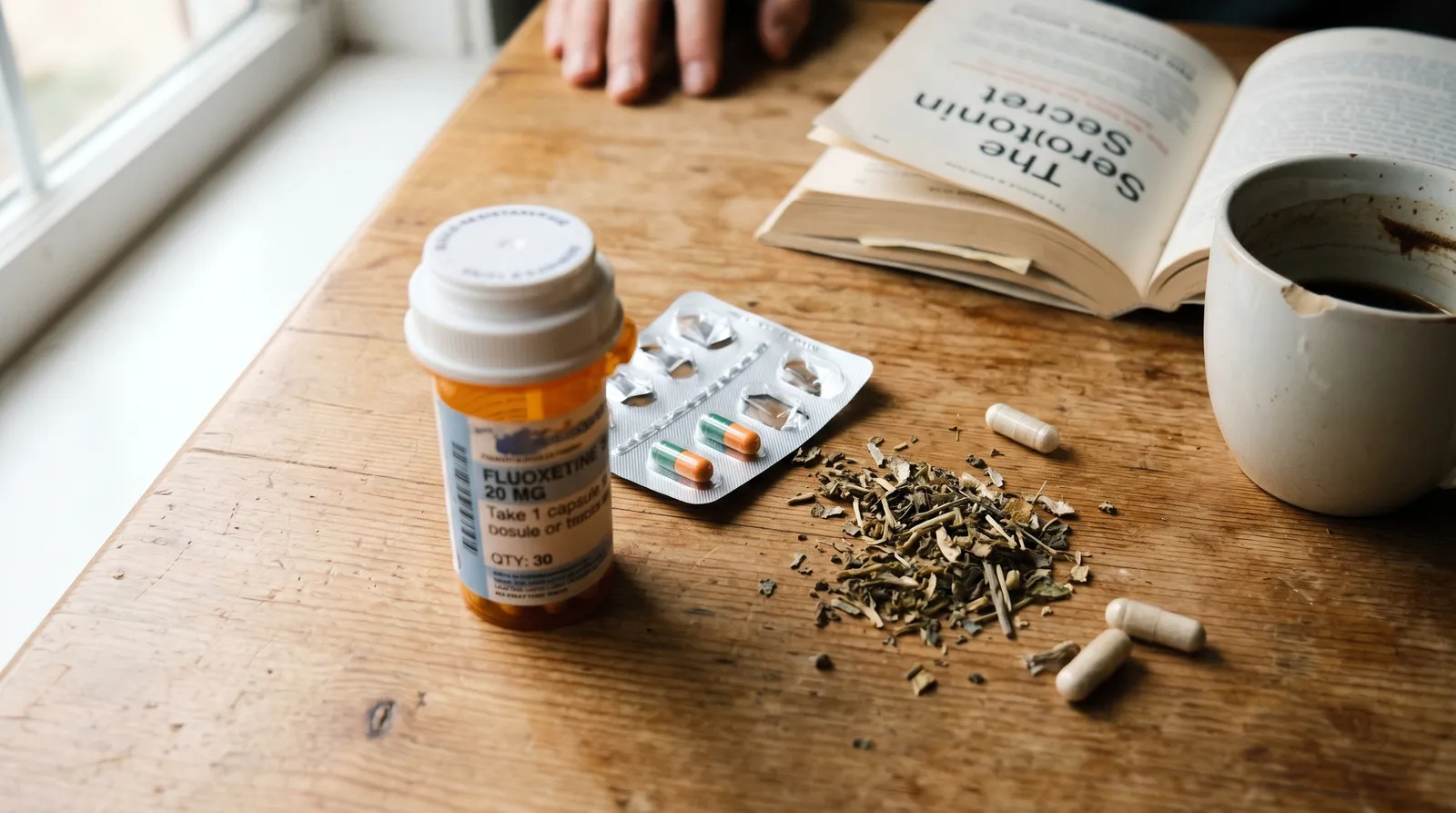
The critical point for anyone considering combining kanna and SSRIs together: SSRIs don't just nudge serotonin levels. They fundamentally alter how your brain handles serotonin turnover. Any additional substance that increases synaptic serotonin — whether by further blocking reuptake, inhibiting the enzymes that break serotonin down, or directly stimulating serotonin receptors — stacks on top of that altered baseline. This is why the interaction between kanna and SSRIs is pharmacologically predictable rather than merely speculative.
How Kanna Acts on the Same System
Kanna's principal alkaloids — mesembrine, mesembrenone, and mesembrenol — are serotonin reuptake inhibitors, placing them in direct pharmacological overlap with SSRIs. In vitro data indicates that mesembrine binds to SERT in a manner functionally similar to pharmaceutical SSRIs, though with different binding kinetics and potency (Harvey et al., 2011). Mesembrenone appears to contribute phosphodiesterase-4 (PDE4) inhibition as a secondary mechanism, though the relative contribution of SRI versus PDE4 inhibition in living humans remains contested — the in vitro picture doesn't translate neatly to what happens after oral ingestion, hepatic metabolism, and blood-brain barrier crossing.
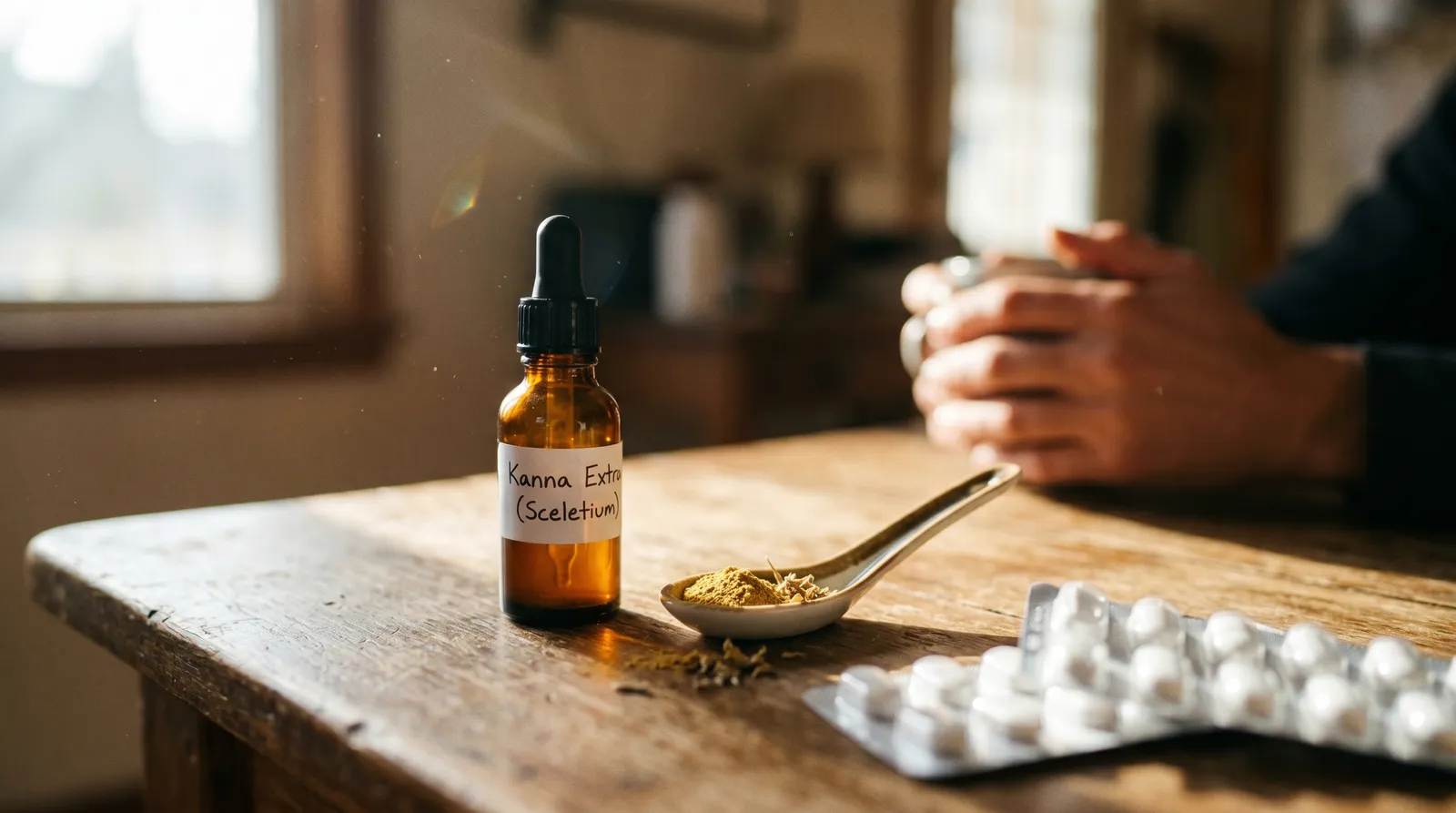
What is not contested: kanna has meaningful serotonergic activity. Whether that activity comes primarily through reuptake inhibition, PDE4 modulation, or some combination, the end result is increased serotonergic signalling. And that is precisely the problem when SSRIs are already in the picture — the interaction between kanna and SSRIs is not speculative but pharmacologically predictable.
It's also worth noting that extracts concentrate these alkaloids significantly compared to raw or fermented plant material. If you buy a standardised 25:1 kanna extract, it delivers a much higher alkaloid load per milligram than dried kougoed. The serotonergic interaction risk applies to both forms, but it applies with considerably greater weight to extracts. Those looking to order kanna products from Azarius should note that the product descriptions for Kanna Extract UC2 and Kanna Extreme Extract state the alkaloid concentration — information that matters directly for assessing interaction risk. You can also get fermented kanna (kougoed) and Kanna Smart Tablets through the Azarius kanna category, but none of these should be used alongside serotonergic medication.
Serotonin Syndrome: The Actual Risk
Serotonin syndrome is a potentially life-threatening condition caused by excessive serotonergic activity in the central nervous system. According to Boyer and Shannon (2005), the condition exists on a spectrum — mild cases involve agitation, tremor, diarrhoea, and dilated pupils. Moderate cases add muscle clonus (involuntary rhythmic contractions), hyperreflexia, and hyperthermia. Severe cases can progress to rigidity, temperatures above 41°C, seizures, and organ failure. Onset can be rapid — within hours of the precipitating dose.

The mechanism behind serotonin syndrome from kanna and SSRIs is straightforward: two substances that both increase synaptic serotonin, acting simultaneously, can push total serotonergic tone past the threshold where normal feedback mechanisms fail. An SSRI already elevates your baseline. Kanna's SRI activity stacks directly on top of that elevated baseline. The body doesn't distinguish between pharmaceutical serotonin reuptake inhibition and botanical serotonin reuptake inhibition — it just registers the total serotonergic load.
No published case reports specifically document serotonin syndrome from a kanna-plus-SSRI combination — the research base is simply too thin for that level of clinical documentation. But the pharmacological logic is clear, and the absence of case reports in a substance with limited clinical surveillance is not evidence of safety. It is evidence of limited surveillance. The European Monitoring Centre for Drugs and Drug Addiction (EMCDDA) has not published a dedicated risk assessment on kanna, which further shows the regulatory gap around this plant's interaction profile. The Beckley Foundation has similarly noted gaps in clinical data around serotonergic botanical interactions.
Recognising Serotonin Syndrome Symptoms
| Severity | Symptoms | Action Required |
|---|---|---|
| Mild | Agitation, restlessness, tremor, diarrhoea, dilated pupils | Stop all serotonergic substances; monitor closely; contact a clinician |
| Moderate | Muscle clonus, hyperreflexia, hyperthermia, sweating, rapid heart rate | Seek medical attention promptly |
| Severe | Muscle rigidity, temperature above 41°C, seizures, delirium, organ failure | Emergency medical care — call 112 (EU) or local emergency number immediately |
The Washout Problem
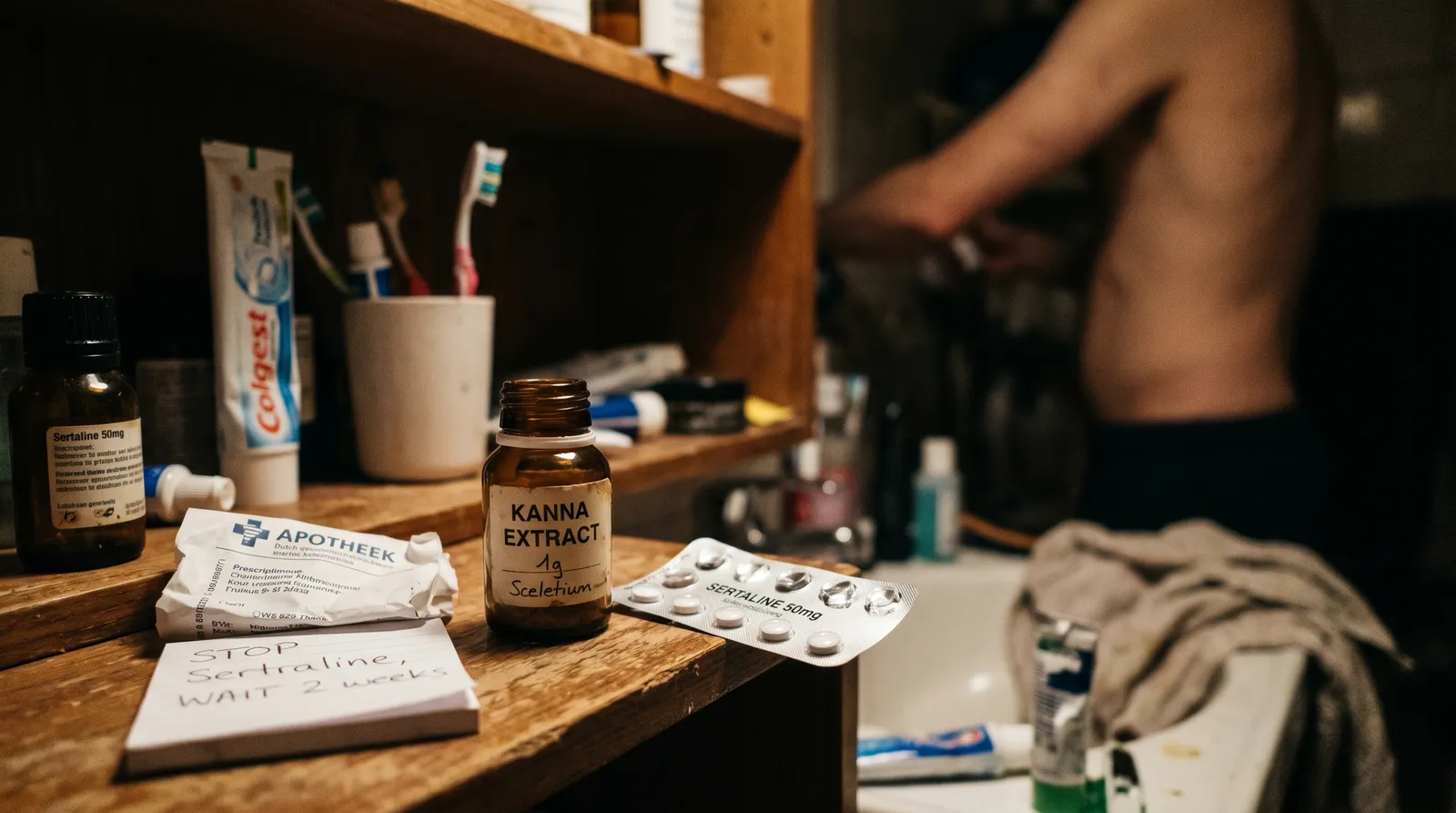
Stopping an SSRI does not immediately eliminate the interaction risk with kanna — residual drug activity can persist for days to weeks depending on the specific compound. SSRIs and their active metabolites have half-lives that vary enormously. Fluoxetine is the extreme case: its active metabolite norfluoxetine has a half-life of 4–16 days, meaning pharmacologically relevant concentrations can persist for five to six weeks after the last dose (Hiemke and Härtter, 2000). Sertraline's half-life is roughly 26 hours, but its metabolite desmethylsertraline lingers for 62–104 hours. Paroxetine sits around 21 hours with no major active metabolite, but its potent SERT binding means even low residual levels matter.
SSRI Half-Lives and Washout Estimates
| SSRI | Parent Half-Life | Active Metabolite Half-Life | Estimated Minimum Washout (5× longest half-life) |
|---|---|---|---|
| Fluoxetine | 1–3 days | 4–16 days (norfluoxetine) | ~5–6 weeks |
| Sertraline | ~26 hours | 62–104 hours (desmethylsertraline) | ~13–22 days |
| Paroxetine | ~21 hours | None significant | ~4–5 days |
| Citalopram | ~35 hours | None significant | ~7–8 days |
| Escitalopram | ~27–32 hours | None significant | ~6–7 days |
| Fluvoxamine | ~15–20 hours | None significant | ~4–5 days |
The practical consequence: if you've recently discontinued an SSRI, your serotonin system is not yet back to its unmedicated state. Introducing kanna during this washout window carries the same combination risk as taking kanna and SSRIs simultaneously — potentially a lower risk depending on residual drug levels, but a risk nonetheless. Anyone who has recently stopped an SSRI and is considering kanna should discuss timing with their prescribing clinician. A general rule of thumb used in clinical pharmacology is to wait at least five half-lives of the parent drug and its active metabolites before introducing another serotonergic substance — but individual variation in metabolism makes this a guideline, not a guarantee.
Other Serotonergic Substances Beyond SSRIs
The interaction risk between kanna and SSRIs extends to every class of serotonergic medication, not just SSRIs alone. The same combination risk applies to SNRIs (venlafaxine, duloxetine), MAOIs (phenelzine, tranylcypromine, moclobemide), and tricyclic antidepressants (amitriptyline, nortriptyline, clomipramine). MAOIs carry particular risk because they prevent the enzymatic breakdown of serotonin entirely — the combination of an MAOI with any SRI is one of the most dangerous serotonergic pairings in pharmacology.
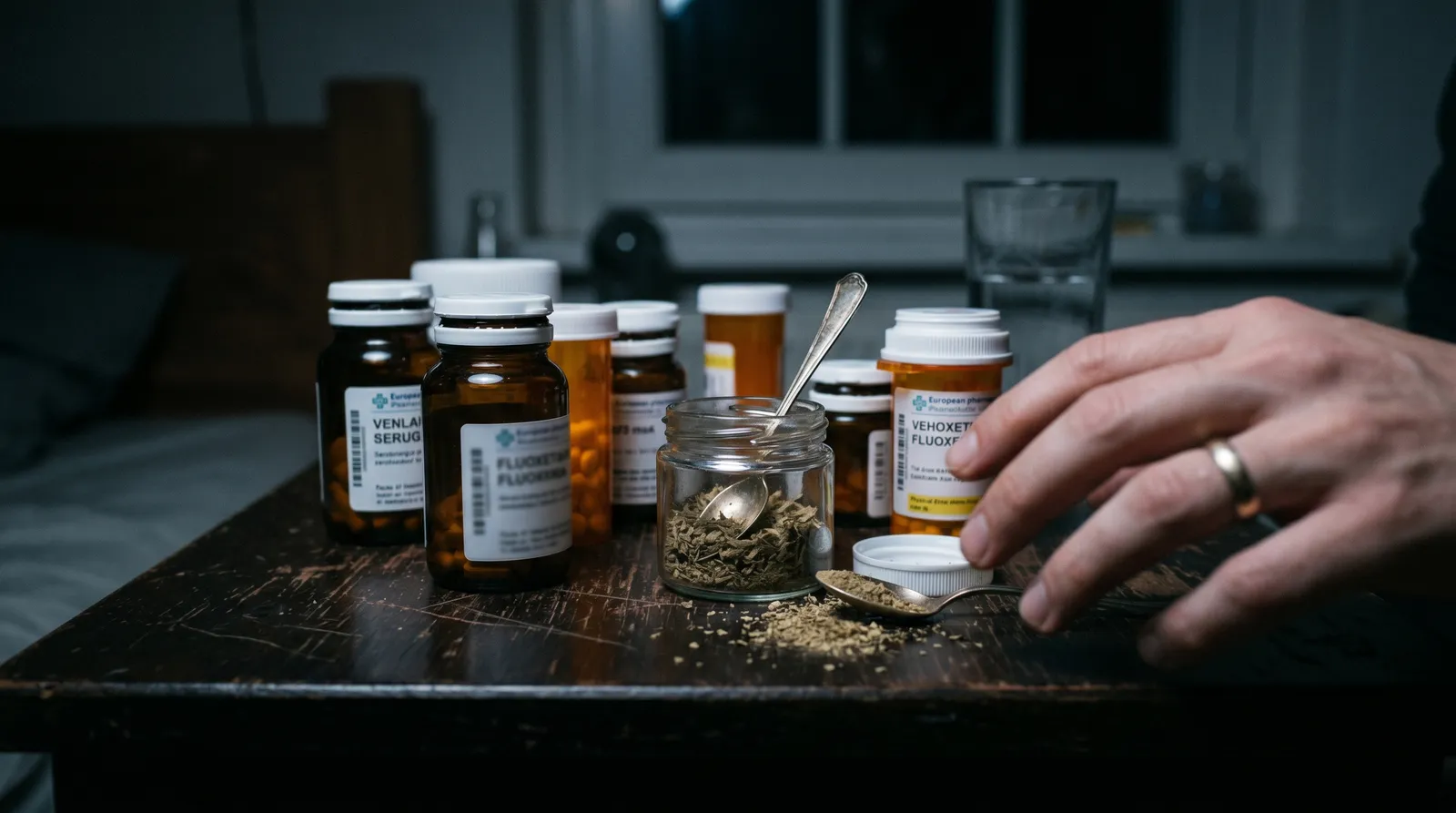
Beyond prescription medications, several commonly used substances also have serotonergic activity: 5-HTP (a direct serotonin precursor), St John's Wort (Hypericum perforatum, which has SRI properties of its own), MDMA (which causes massive serotonin release), and classical psychedelics such as psilocybin, LSD, and DMT (which are direct serotonin receptor agonists). None of these should be combined with kanna. For a complete breakdown of interaction mechanisms, the dedicated Azarius wiki article on kanna drug interactions covers each category in detail. The Beckley Foundation has published relevant material on serotonergic psychedelic interactions that provides additional context for those exploring this area.
What the Clinical Data Actually Shows
Published clinical trials on kanna have only been conducted using a specific standardised extract — not general kanna plant material, not fermented kougoed, and not the range of extracts available to order through retail channels. These trials, including Terburg et al. (2013), which observed reduced amygdala reactivity to threat stimuli at a 25 mg dose, explicitly excluded participants taking serotonergic medications. That exclusion criterion exists precisely because the researchers recognised the kanna and SSRIs interaction risk. The trials tell us something about the serotonergic potency of that specific preparation; they tell us nothing about what happens when you combine it with an SSRI, because the combination was deliberately avoided.
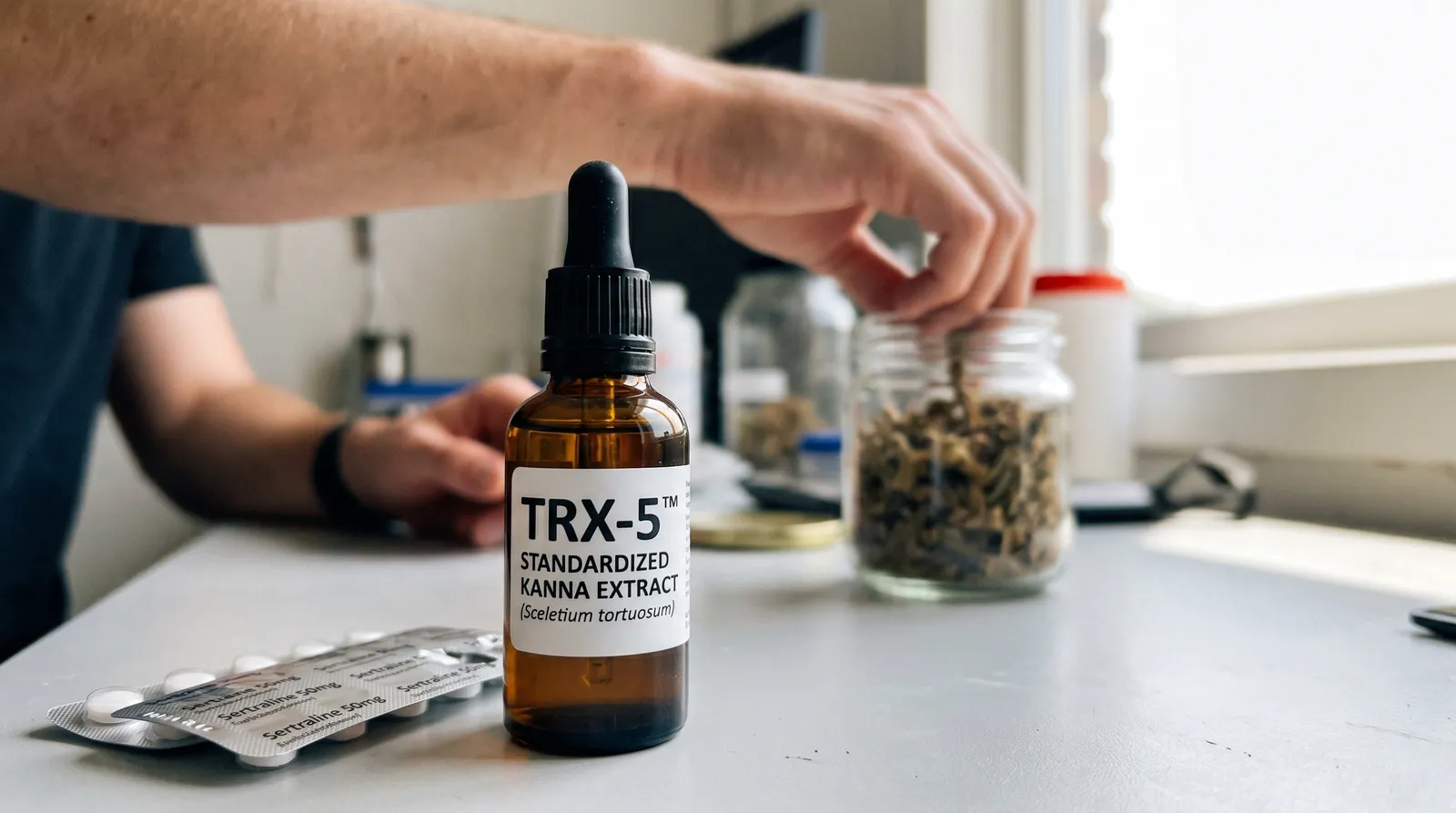
Transferring outcomes from those trials onto general kanna plant material or non-studied extracts is not scientifically valid. Different preparations contain different alkaloid ratios, different total alkaloid loads, and potentially different pharmacokinetic profiles. The interaction risk, however, applies across all preparations with meaningful mesembrine content — the mechanism doesn't care about the brand on the label.

Honestly, this is one of the areas where our knowledge has hard limits. We can tell you what the pharmacology says about the interaction between kanna and SSRIs. We can point you toward the published research. What we cannot do is assess your individual medication regimen, your metaboliser status, or your clinical history. That's a clinician's job, and it's one we take seriously enough not to attempt ourselves. When customers tell us they're on an SSRI, our consistent advice is: don't buy kanna until you've cleared it with your prescriber. No sale is worth a serotonin syndrome risk.
We've also noticed that some customers assume fermented kougoed is "mild enough" to be safe alongside SSRIs. It's milder than a concentrated extract, yes — but milder is not the same as safe. A lower dose of a serotonin reuptake inhibitor is still a serotonin reuptake inhibitor.
One more thing we hear regularly: customers who stopped their SSRI a few days ago and want to order kanna immediately. We always flag the washout issue. A few days is almost never enough, especially with fluoxetine. We'd rather lose a sale today and have you come back safely in a month than rush something that could genuinely hurt you.
Kanna Compared to Other Serotonergic Botanicals
Kanna is the most direct botanical serotonin reuptake inhibitor commonly available, which is why the kanna and SSRIs interaction deserves particular attention compared to other herbal products. Understanding how it compares to other serotonergic plants helps clarify the relative risk.
| Botanical | Primary Serotonergic Mechanism | SSRI Interaction Risk | Notes |
|---|---|---|---|
| Kanna (Sceletium tortuosum) | Serotonin reuptake inhibition (mesembrine) | High — direct mechanistic overlap | Also PDE4 inhibition; extracts concentrate alkaloids significantly |
| St John's Wort (Hypericum perforatum) | Serotonin reuptake inhibition + enzyme induction | High — documented serotonin syndrome cases | Also induces CYP3A4, potentially reducing SSRI blood levels unpredictably |
| 5-HTP | Direct serotonin precursor | Moderate to high — increases serotonin synthesis | Bypasses rate-limiting step in serotonin production |
| Valerian (Valeriana officinalis) | Primarily GABAergic; minimal serotonergic activity | Low | Different neurotransmitter system; not directly comparable |
| Passionflower (Passiflora incarnata) | Primarily GABAergic | Low | Some MAO-inhibiting compounds identified in vitro but clinical relevance uncertain |
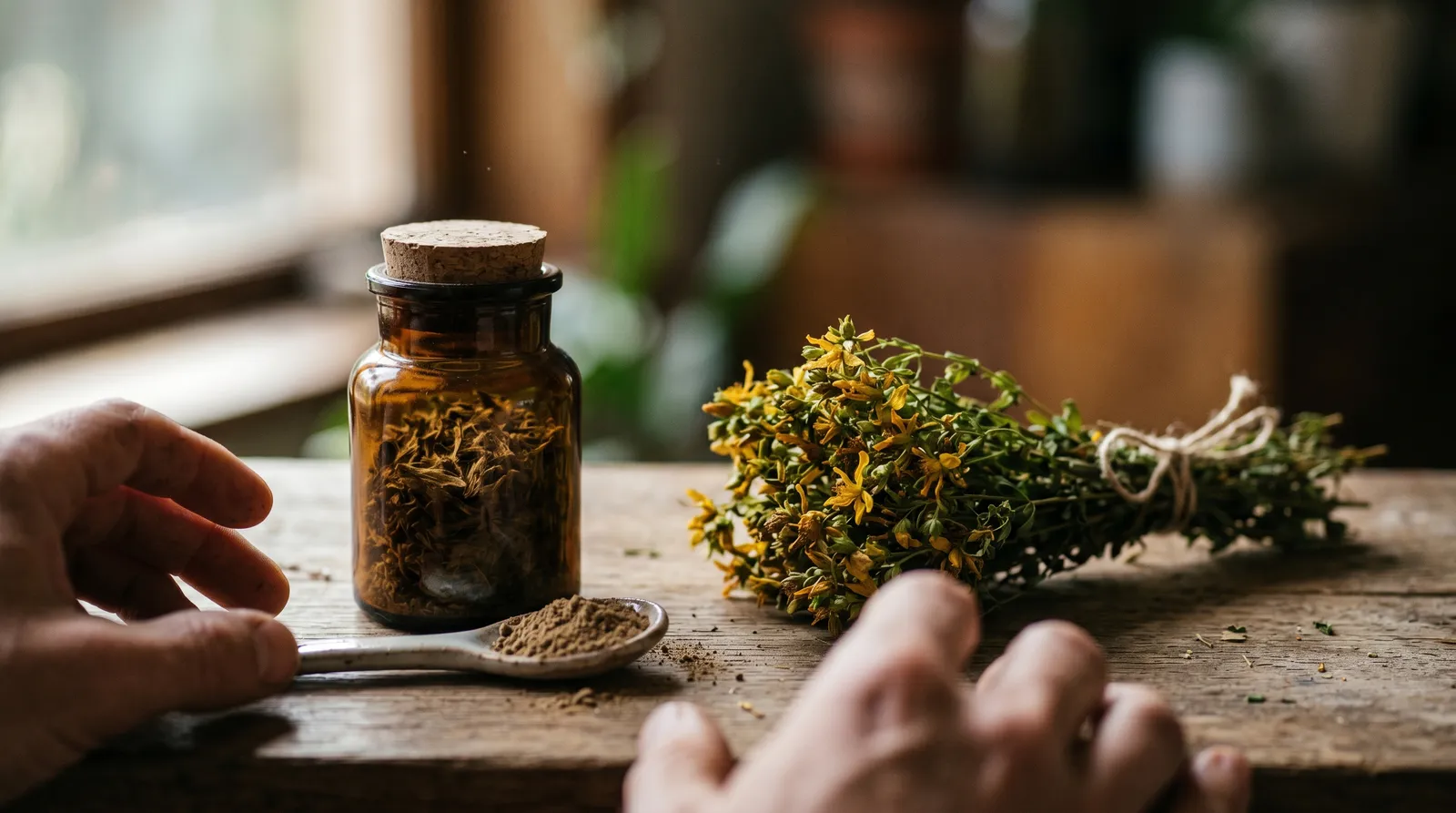
The comparison makes the point clearly: kanna's serotonin reuptake inhibition puts it in the same mechanistic category as St John's Wort, which has well-documented SSRI interaction warnings on pharmaceutical packaging across Europe. The difference is that St John's Wort has decades more clinical surveillance behind those warnings. Kanna's risk profile is pharmacologically comparable but less documented — which, again, is not the same as less risky. If you're browsing the Azarius herbal supplements category and wondering which botanicals are safe alongside your medication, this comparison table is a good starting point — but always verify with your prescriber.
Why We Take This Interaction Seriously at Azarius
We sell kanna because it's a fascinating ethnobotanical with genuine traditional use and emerging clinical interest. But selling it responsibly means being upfront about when people should not buy it. The kanna and SSRIs combination is our clearest example of a situation where the right advice is "not now" — or potentially "not at all" while serotonergic medication is part of your life.
Frankly, we wish more vendors were this direct about it. We've seen other retailers describe kanna as a "natural mood booster" without any mention of serotonergic interaction risk, and that bothers us. If you're going to sell a botanical SRI, you owe your customers the full picture. That's not just our opinion — it's basic harm reduction practice, and it's something the EMCDDA and Beckley Foundation have both advocated for in the context of psychoactive botanicals.
We also want to be honest about what we don't know. The clinical data on kanna is thin. The interaction data is thinner. We're working from pharmacological principles and limited in vitro research, not from large-scale human trials. That uncertainty cuts in the direction of caution, not experimentation.
The Bottom Line for Anyone on Antidepressants
Do not use kanna if you are currently taking any serotonergic medication — SSRIs, SNRIs, MAOIs, or tricyclics. Not plant material, not extracts, not fermented kougoed. The pharmacological overlap between kanna and SSRIs is direct and the potential consequence, serotonin syndrome, is serious enough that no reported mood benefit from kanna justifies the risk of an unmonitored combination.

If you have recently stopped a serotonergic medication, the washout period matters. Speak with the clinician who prescribed the medication about timing. For fluoxetine specifically, residual activity can persist for over a month.
If you are considering kanna as an alternative to a prescribed antidepressant, that is a conversation for a qualified clinician — not a decision to make based on anecdotal reports or retail information. Some users describe mood-related benefits from kanna, and clinical trials on a specific standardised extract have reported effects on anxiety-related outcomes in small samples, but none of this constitutes evidence that kanna can replace prescribed psychiatric medication. Self-substitution without medical guidance is not harm reduction; it's an uncontrolled experiment on your own neurochemistry.
This isn't about being cautious for caution's sake. It's about understanding that two substances acting on the same neurotransmitter system don't politely take turns. They stack. And with serotonin, stacking has a ceiling — one you do not want to hit. If you're ready to get kanna after confirming it's safe for your situation with a healthcare professional, the Azarius kanna category and the Azarius blog on kanna effects are good places to start your research.
Last updated: April 2026
Frequently Asked Questions
10 questionsCan I take kanna if I stopped my SSRI last week?
Is serotonin syndrome from kanna and SSRIs common?
Does the risk differ between kanna plant material and kanna extracts?
What are the early signs of serotonin syndrome to watch for?
Can I use kanna instead of my prescribed SSRI?
How does kanna compare to St John's Wort for SSRI interaction risk?
How long after stopping an SSRI is it safe to try kanna?
Does kanna interact with SNRIs or MAOIs the same way it does with SSRIs?
Can I drink alcohol while using kanna and an SSRI?
Does kanna show up on a drug test if I'm also taking an SSRI?
About this article


Adam Parsons is an external cannabis and psychedelics writer and editor who contributes to Azarius's wiki as both author and reviewer. On the writing side, he authors Azarius's kratom and kanna clusters, drawing on exten
This wiki article was drafted with AI assistance and reviewed by Adam Parsons, External contributor. Editorial oversight by Joshua Askew.
Medical disclaimer. This content is for informational purposes only and does not constitute medical advice. Consult a qualified healthcare provider before use of any substance.
Last reviewed April 24, 2026
References (7)
- [1]Boyer, E.W. and Shannon, M. (2005). 'The serotonin syndrome.' New England Journal of Medicine , 352(11), pp. 1112–1120. DOI: 10.1056/nejmra041867
- [2]Harvey, A.L. et al. (2011). 'Pharmacological actions of the South African medicinal and functional food plant Sceletium tortuosum and its principal alkaloids.' Journal of Ethnopharmacology , 137(3), pp. 1124–1129. DOI: 10.1016/j.jep.2011.07.035
- [3]Hiemke, C. and Härtter, S. (2000). 'Pharmacokinetics of selective serotonin reuptake inhibitors.' Pharmacology & Therapeutics , 85(1), pp. 11–28. DOI: 10.1016/s0163-7258(99)00048-0
- [4]Stahl, S.M. (2013). Stahl's Essential Psychopharmacology: Neuroscientific Basis and Practical Applications . 4th edn. Cambridge University Press.
- [5]Terburg, D. et al. (2013). 'Acute effects of Sceletium tortuosum (Zembrin), a dual 5-HT reuptake and PDE4 inhibitor, in the human amygdala and its connection to the hypothalamus.' Neuropsychopharmacology , 38(13), pp. 2708–2716. DOI: 10.1038/npp.2013.183
- [6]European Monitoring Centre for Drugs and Drug Addiction (EMCDDA). Drug profiles and risk assessments. Available at: emcdda.europa.eu.
- [7]Beckley Foundation. Research publications on serotonergic substances and drug interactions. Available at: beckleyfoundation.org.
Related Articles

Blue Lotus vs Kanna: Effects & Safety
Blue lotus vs kanna compared — Nymphaea caerulea's aporphine profile against Sceletium tortuosum's mesembrine chemistry, with interaction warnings.

Lotus Clinical Research Overview
What does lotus clinical research actually show? A critical review of Nymphaea caerulea and Nelumbo nucifera pharmacology, preclinical data, and…
Kanna South Africa To West History
Sceletium tortuosum was used by San and Khoekhoe communities in southern Africa for centuries before European colonists first documented it in the 1660s.
Sceletium Tortuosum Plant
Learn about the sceletium tortuosum plant: botany, alkaloids, fermentation, safety warnings, and where to buy kanna.
Kanna Pharmacokinetics Explained
Complete guide to kanna pharmacokinetics: how Sceletium tortuosum alkaloids are absorbed, metabolised via CYP2D6, and eliminated.

Kanna Chemistry: Sceletium Alkaloids Explained
Kanna chemistry explained: mesembrine, mesembrenone, their mechanisms, how fermentation and extraction change alkaloid profiles, and why it matters…

Rapé Shamanic Snuff Guide: How to Use It Safely
A practical rapé shamanic snuff guide covering dose, kuripe technique, effects, nicotine safety, interactions and Amazonian tradition.

White Sage Salvia Apiana Cultural Smudging Guide
Salvia apiana is a non-psychoactive shrub native to southern California's coastal sage scrub, burned as ceremonial incense in Indigenous North American…
Mulungu Erythrina Traditional Amazonian Use — Bark, Alkaloids & Research
Erythrina mulungu is a Brazilian legume tree whose bark has been brewed as a calming decoction in rural folk medicine for generations.