
This article discusses psychoactive substances intended for adults (18+). If you have a health condition or take medication, consult a doctor before use. Our age policy
Wild Dagga Leonotis Leonurus Botany — Taxonomy, Chemistry & Traditional Use Guide
Definition
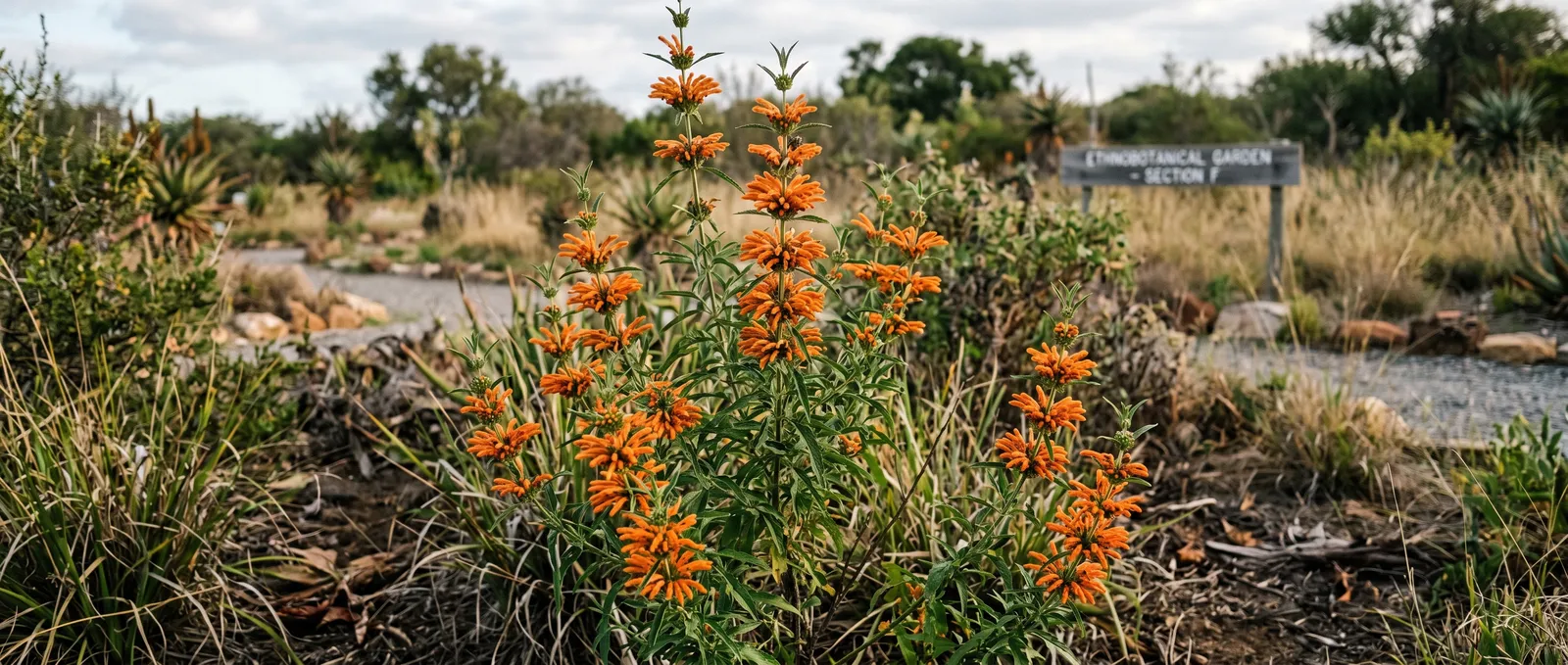
Leonotis leonurus (L.) R.Br., known as wild dagga or lion's tail, is a southern African shrub in the mint family (Lamiaceae) bearing dense whorls of orange tubular flowers pollinated by sunbirds. A 2015 phytochemical review by Nsuala et al. identified labdane diterpenoids — not the commonly cited leonurine — as the dominant secondary metabolites in leaf and flower extracts.
A Southern African Shrub with Orange Whorls
Wild dagga Leonotis leonurus botany is a branch of ethnobotanical study that examines one of southern Africa's most distinctive mint-family shrubs. Leonotis leonurus (L.) R.Br. is a flowering perennial shrub in the mint family (Lamiaceae) that produces striking orange tubular flowers arranged in dense globe-shaped whorls along tall stems, making it a rewarding subject for both field botanists and home growers looking to buy wild dagga for their gardens or herbal collections. Commonly called wild dagga, lion's tail, or wilde dagga in Afrikaans, this southern African native grows in grasslands, rocky outcrops, and disturbed soils from the Western Cape through KwaZulu-Natal and into parts of tropical East Africa. If you have ever seen a photograph of a tall, woody-stemmed bush covered in dense orange tubular flowers arranged in globe-shaped whorls, chances are good it was this species. The common name "wild dagga" translates loosely as "wild cannabis" — a nod to the plant's long history of being smoked by Khoikhoi and San communities in the southern Cape region, though botanically it has nothing whatsoever to do with Cannabis sativa.
Taxonomy and Naming
Leonotis leonurus sits within the family Lamiaceae (the mint or deadnettle family), which also includes familiar culinary herbs like basil, rosemary, and thyme. The genus Leonotis contains roughly nine accepted species, all native to sub-Saharan Africa except L. nepetifolia, which has naturalised across the tropics. The genus name comes from the Greek leon (lion) and ous (ear), referring to the shape of the corolla — the fused petals do look a bit like a furry ear if you squint. The species epithet leonurus doubles down: "lion's tail." Robert Brown formally published the current binomial in 1810, but the plant had already been described under several earlier names, including Phlomis leonurus L. (1753) by Linnaeus himself.
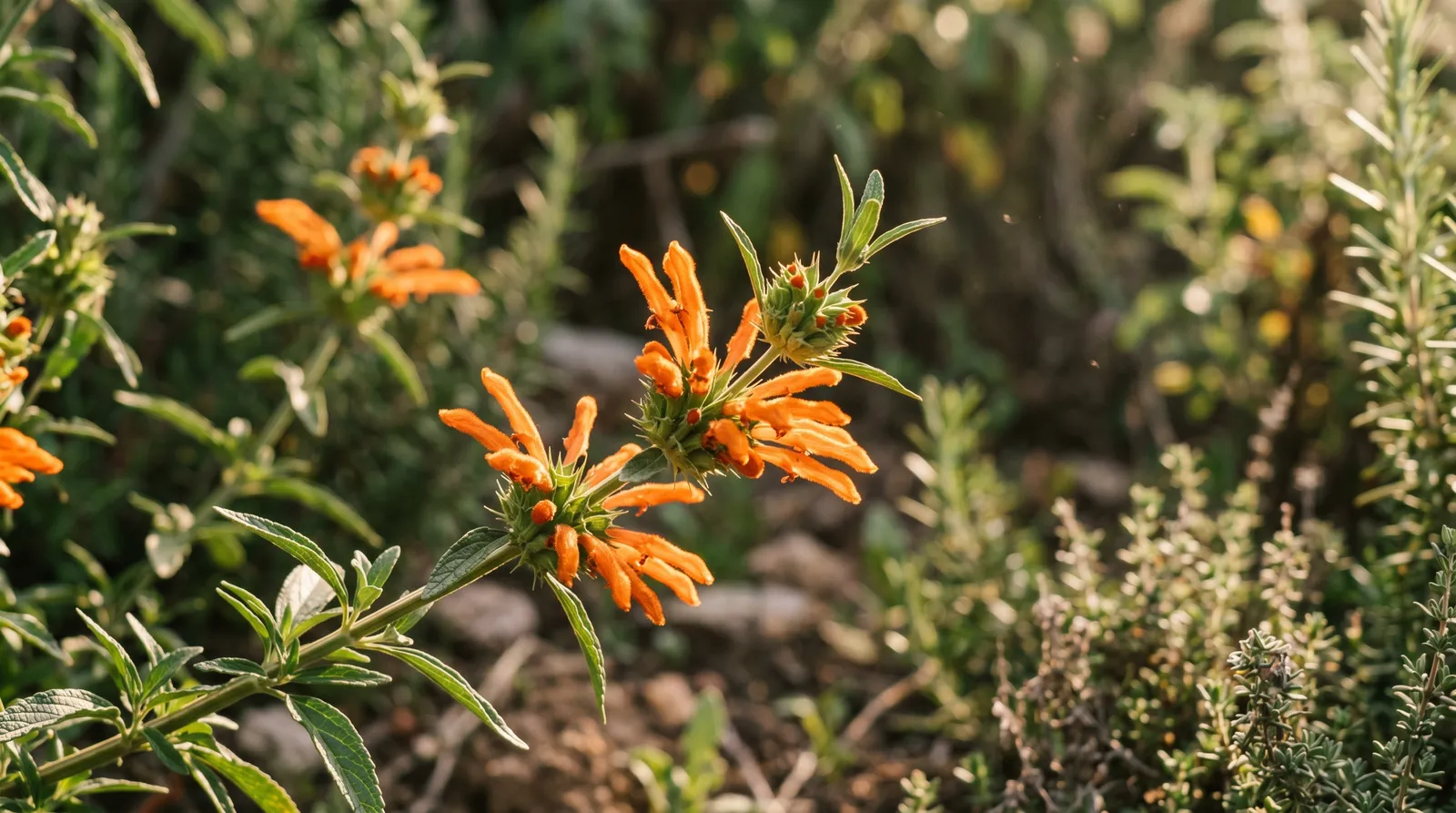
Within the species, two varieties are generally recognised: L. leonurus var. leonurus, with narrow, lanceolate leaves and the classic bright orange flowers, and L. leonurus var. albiflora, a white-flowered form that occasionally shows up in horticultural trade. A 2020 phylogenetic study by Makunga and colleagues confirmed that Leonotis forms a well-supported clade within Lamiaceae, distinct from the superficially similar genus Leonurus (motherwort), which is Eurasian (Makunga et al., 2020). Confusing the two genera is a surprisingly common error in popular ethnobotanical literature.
Morphology — What It Actually Looks Like
Wild dagga is a semi-woody shrub that typically reaches 1–3 metres in height, though specimens exceeding 4 metres have been recorded in sheltered, well-watered sites. The stems are square in cross-section — a classic Lamiaceae trait — and become woody and somewhat brittle with age. Leaves are opposite, narrowly lanceolate to ovate, 5–10 cm long, with crenate (scalloped) margins. Both leaves and stems carry a covering of fine trichomes that gives the plant a slightly rough, aromatic texture when handled.

The flowers are the standout feature. They are arranged in dense, spherical verticillasters (whorled clusters) spaced at intervals along the upper stem, each whorl containing 20–40 individual flowers. Each flower is a two-lipped tubular corolla, typically 40–50 mm long, densely covered in fine orange hairs. The upper lip is hooded and strongly arched; the lower lip is small and three-lobed. Flowering peaks in autumn (March–May in the Southern Hemisphere), though in frost-free gardens the plant can flower sporadically year-round. Pollination in the wild is primarily by sunbirds (Nectariniidae), whose long curved bills match the corolla tube almost exactly — a textbook case of ornithophily (Geerts & Pauw, 2009).
The fruit is a set of four nutlets enclosed in the persistent calyx, which hardens into a spiny cup after the petals drop. Seeds are small, dark brown, and roughly triangular.
Phytochemistry — The Compounds Inside
The dominant bioactive compound class in L. leonurus is the labdane-type diterpenoids, particularly marrubiin and premarrubiin, rather than the commonly cited leonurine. The chemistry of L. leonurus has been investigated since at least the 1930s, though the picture is still incomplete. The compound most frequently mentioned in popular sources is leonurine, a pseudo-alkaloid (technically a 4-guanidino-n-butylsyringate) first isolated from the related genus Leonurus. Whether leonurine is actually present in L. leonurus at pharmacologically relevant concentrations remains debated — a 2009 phytochemical screen by Oyourou et al. detected it only in trace amounts in leaf material, while finding higher concentrations of the labdane-type diterpenoids marrubiin and premarrubiin (Oyourou et al., 2009).
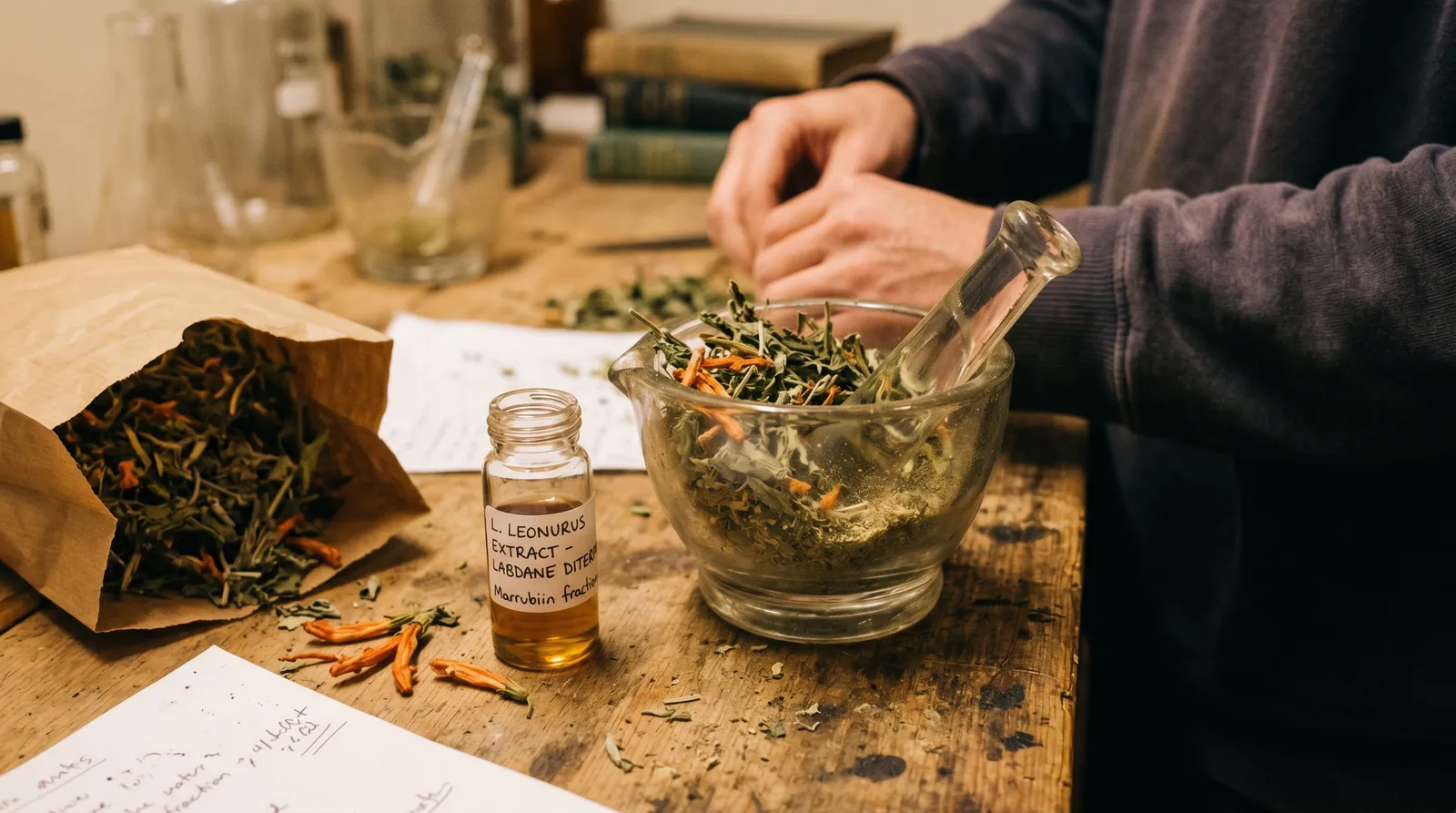
Other identified compound classes include flavonoids (notably apigenin and luteolin glycosides), iridoid glycosides, and volatile terpenoids that contribute to the plant's pungent, slightly resinous smell. A more recent LC-MS study by Nsuala et al. (2015) identified over 30 secondary metabolites in ethanolic leaf extracts, with marrubiin and the nepetoidin esters as the most abundant (Nsuala et al., 2015). The diterpenoid fraction — not leonurine — appears to be the dominant bioactive class based on current analytical data, though the pharmacology of individual compounds is still being mapped in cell and animal models rather than human trials.
Put simply: the popular claim that "leonurine is the active compound in wild dagga" is an oversimplification. The real chemistry is more varied, and the compound most associated with the plant's traditional reputation may actually be a minor constituent.
Comparison with Similar Lamiaceae Species
Leonotis leonurus is most often confused with two relatives: Leonotis nepetifolia (klip dagga) and Leonurus cardiaca (motherwort). The table below summarises key differences relevant to anyone looking to buy wild dagga products or identify the plant in the field.
| Feature | L. leonurus (wild dagga) | L. nepetifolia (klip dagga) | Leonurus cardiaca (motherwort) |
|---|---|---|---|
| Family | Lamiaceae | Lamiaceae | Lamiaceae |
| Life cycle | Perennial shrub | Annual or short-lived perennial | Herbaceous perennial |
| Leaf shape | Narrow, lanceolate | Broad, cordate (heart-shaped) | Palmate, deeply lobed |
| Flower colour | Bright orange (white in var. albiflora) | Orange, sometimes paler | Pink to pale purple |
| Native range | Southern Africa | Tropical Africa, now pantropical | Central Europe and Asia |
| Key diterpenoid | Marrubiin | Marrubiin (lower concentration) | Leonurine (confirmed) |
| Height | 1–3 m (up to 4 m) | 0.5–2.5 m | 0.5–1 m |
The distinction matters: if you order a Leonotis product and receive broad, heart-shaped leaves, you likely have L. nepetifolia rather than L. leonurus. Both species are used traditionally, but their phytochemical profiles differ in concentration and proportion of key diterpenoids.
Wild Dagga Leonotis leonurus Botany Compared to Cannabis Botany
Wild dagga Leonotis leonurus botany differs from cannabis botany at every taxonomic level above order. While both plants produce resinous trichomes and aromatic terpenoids, the similarities end there. L. leonurus belongs to the eudicot order Lamiales; Cannabis sativa sits in Rosales. Wild dagga's trichomes produce diterpenoids (marrubiin, premarrubiin) rather than cannabinoids, and its flowers are zygomorphic (bilaterally symmetrical) rather than the small, wind-pollinated clusters of cannabis. The EMCDDA's 2023 overview of novel herbal products notes that many plants marketed alongside cannabis share no pharmacological overlap with THC or CBD whatsoever, and wild dagga is a clear example (EMCDDA, 2023). For anyone interested in wild dagga Leonotis leonurus botany specifically, understanding this distinction prevents the most common misconception about the plant.
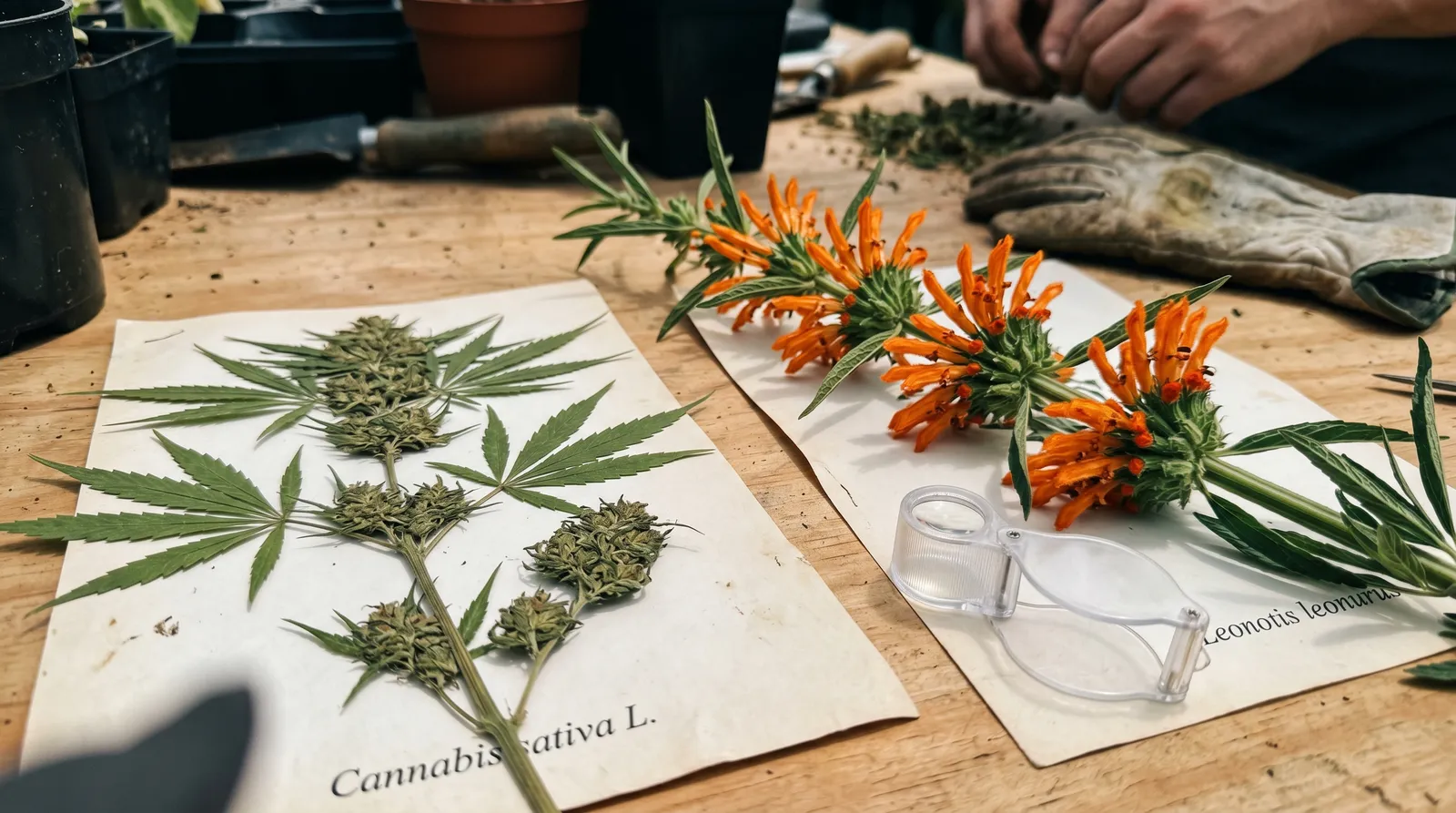
| Botanical trait | Leonotis leonurus | Cannabis sativa |
|---|---|---|
| Family | Lamiaceae | Cannabaceae |
| Order | Lamiales | Rosales |
| Stem cross-section | Square | Round (ridged) |
| Flower symmetry | Zygomorphic (two-lipped) | Actinomorphic / reduced |
| Pollination | Ornithophily (sunbirds) | Anemophily (wind) |
| Key secondary metabolites | Labdane diterpenoids, flavonoids | Cannabinoids, monoterpenoids |
| Trichome product | Marrubiin, premarrubiin | THC, CBD, CBG |
Habitat, Ecology, and Cultivation
L. leonurus thrives in well-drained, sandy or loamy soils in full sun across its native southern African range. It is drought-tolerant once established, surviving the dry winters of the Western Cape fynbos biome with ease. The South African National Biodiversity Institute (SANBI) lists the species as Least Concern, and it is common along roadsides, in abandoned farmland, and on the margins of indigenous forest (SANBI, 2023). It tolerates poor soils and light frost (down to about −3 °C briefly), which has made it popular in Mediterranean-climate gardens in California, southern Australia, and southern Europe.
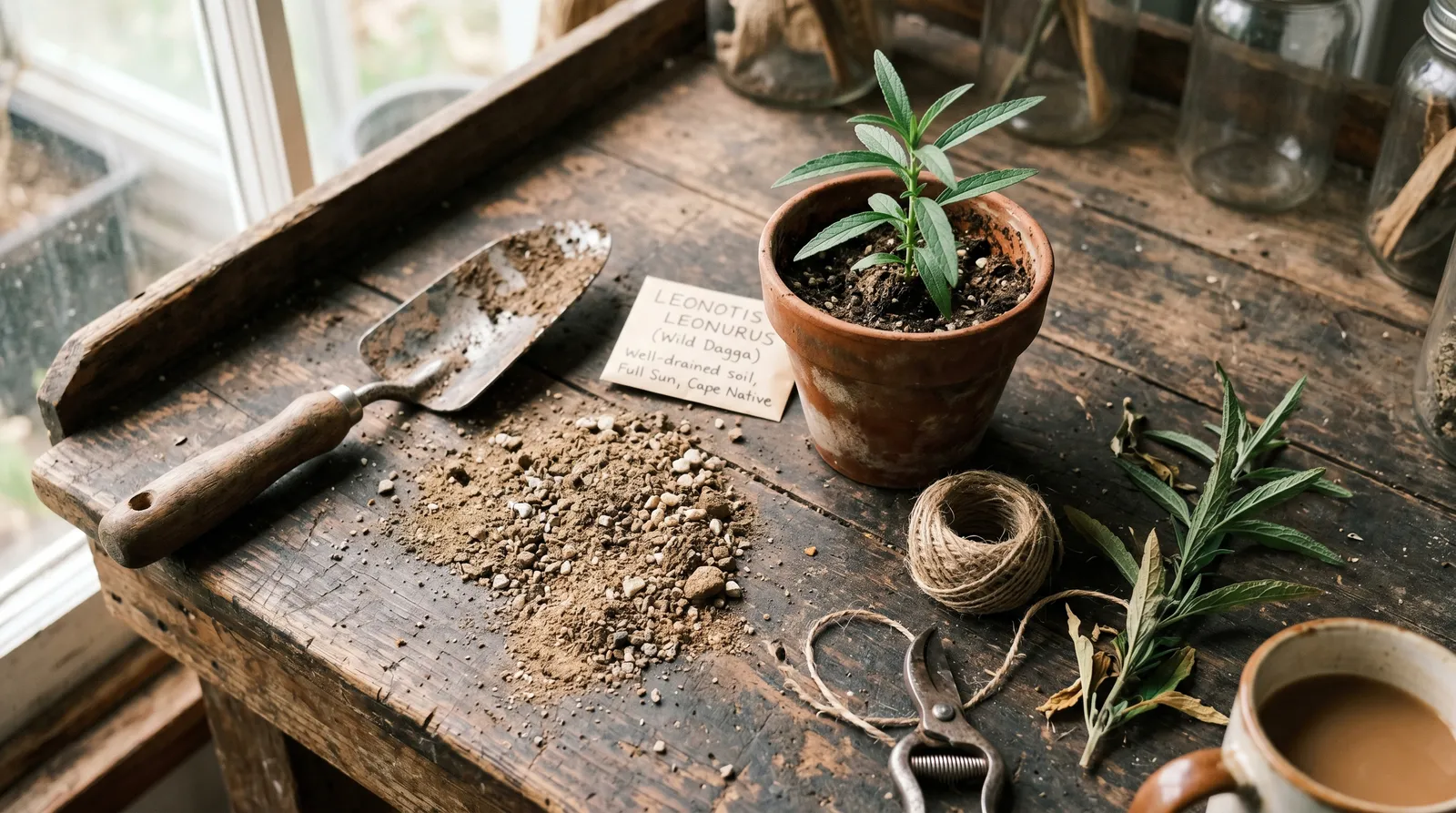
Outside its native range, L. leonurus can become mildly weedy — it self-seeds freely in disturbed ground and has been flagged as a minor environmental weed in parts of Hawaii and coastal California. In European cultivation it is generally well-behaved, dying back in hard winters and resprouting from the rootstock in spring if temperatures stay above about −5 °C. It grows fast from seed (germination in 14–21 days at 20 °C) and can reach flowering size within a single growing season.
Traditional Use in Southern Africa
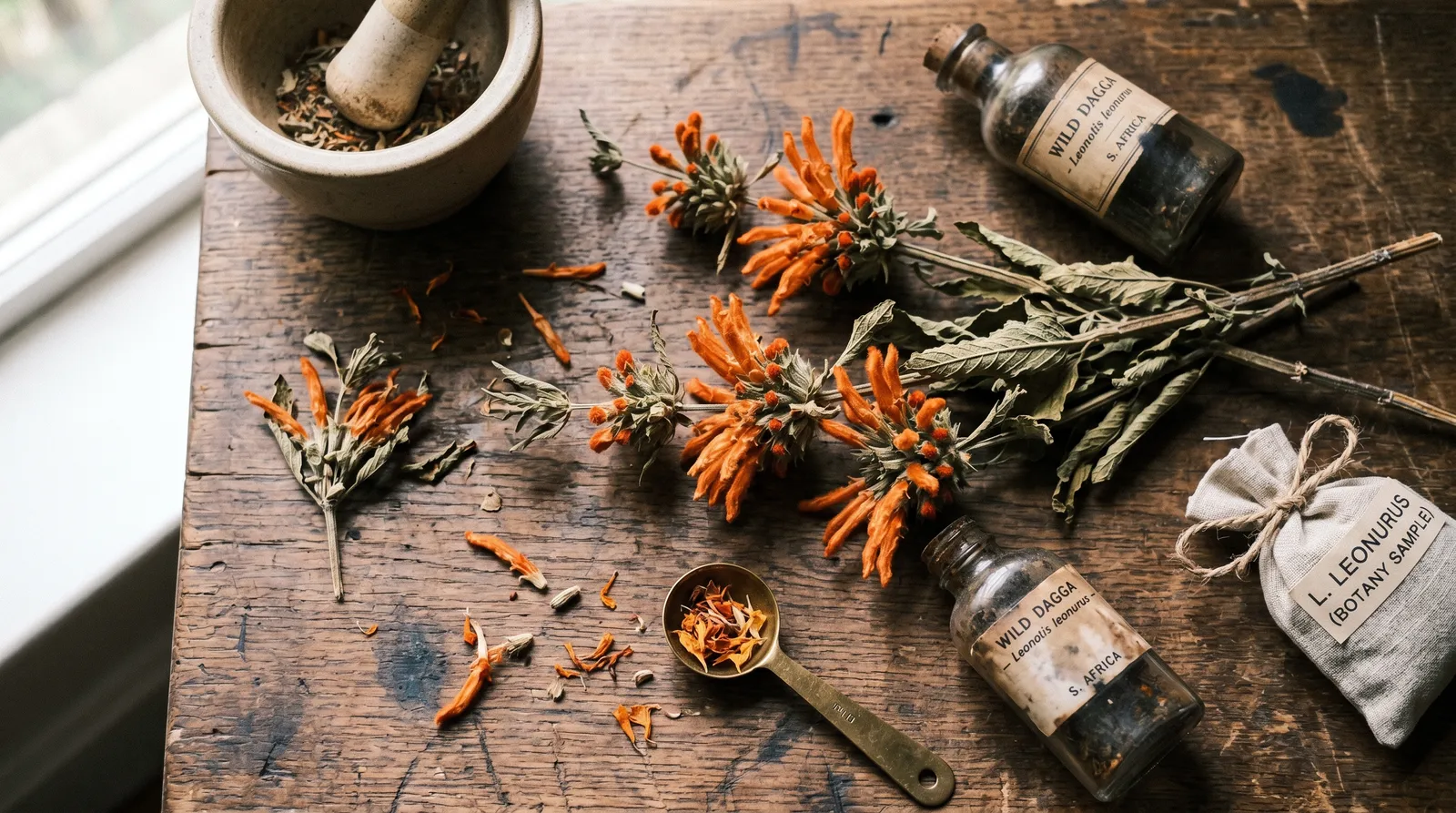
Khoikhoi communities in the Cape region smoked L. leonurus leaves and flowers long before European contact, a practice documented by colonists as early as the 17th century. The Zulu name umunyane and the Xhosa name umfincafincane both appear in 19th-century ethnographic sources. A review by Nsuala et al. (2015) catalogues traditional preparations including leaf decoctions applied topically for skin conditions, flower infusions taken orally for febrile illness, and dried flower material smoked alone or blended with other herbs. In a 2021 cross-sectional survey of traditional-medicine practitioners in the Eastern Cape, L. leonurus ranked among the ten most frequently cited plants, primarily in the context of topical preparations and smoking blends (Chanyandura et al., 2021).
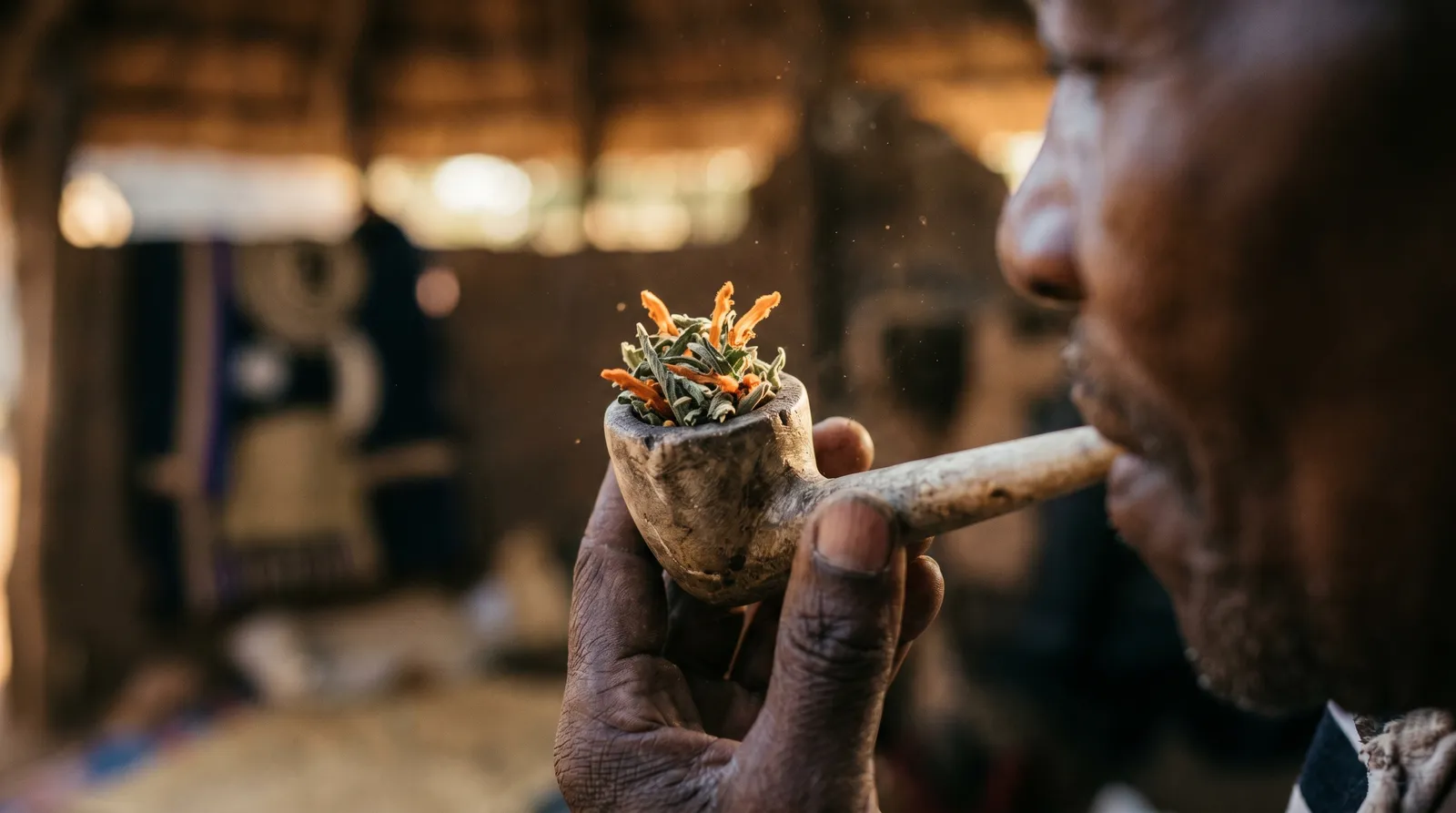
It is worth being clear: the peer-reviewed evidence base for specific pharmacological effects in humans is thin. Most published studies are in vitro or rodent-model work. No randomised controlled trial in humans has been published as of early 2026. The plant's reputation rests almost entirely on ethnographic documentation and anecdotal report, which is honest but also the reality for a large number of traditional herbs in this category.
How Wild Dagga Products Are Prepared
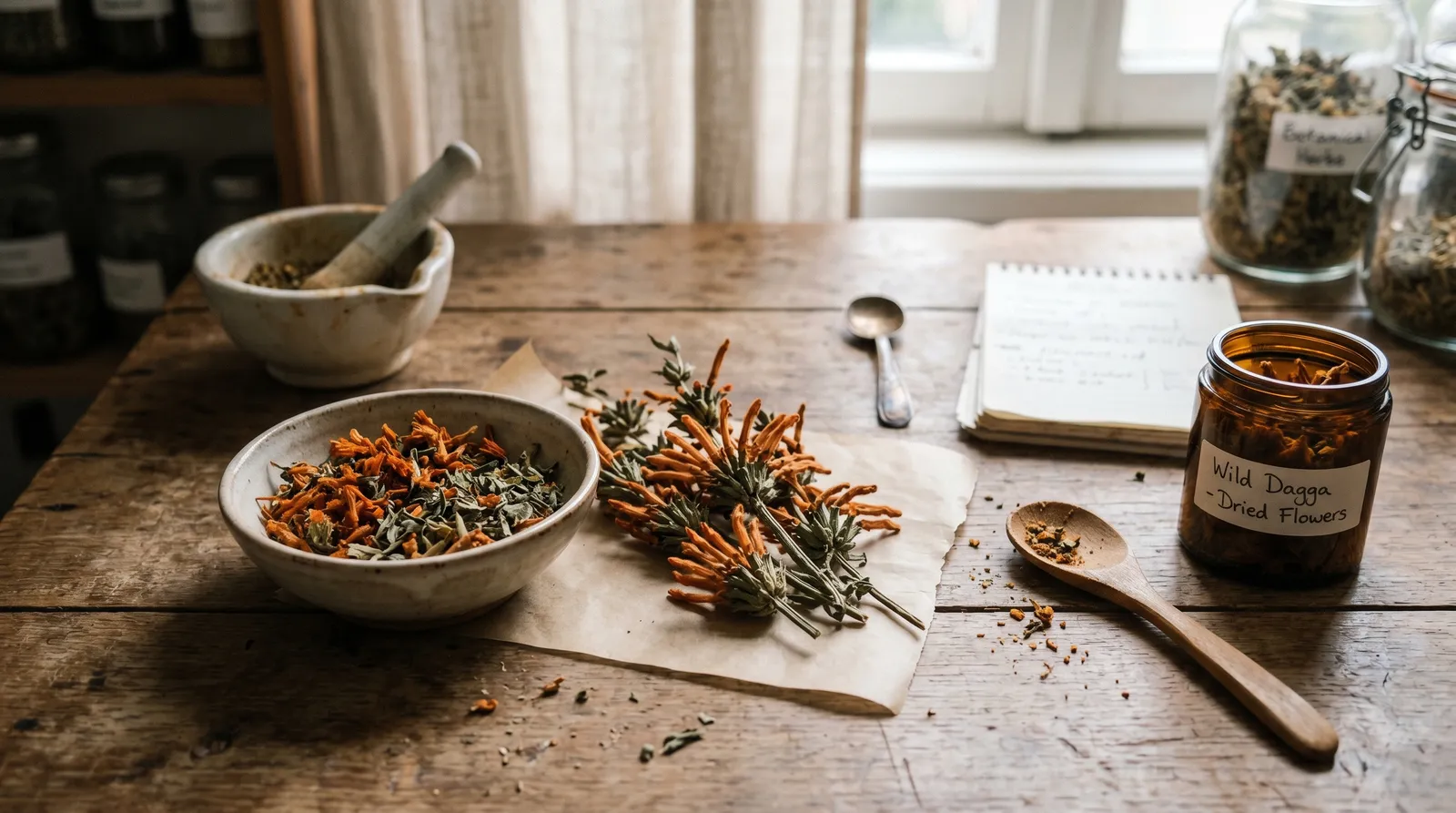
Dried wild dagga flowers and leaves are the most common preparation available when you buy Leonotis leonurus from an ethnobotanical supplier. The flowers are typically harvested at peak bloom, air-dried at low temperatures to preserve the diterpenoid content, and sold as loose dried material or in pre-measured portions. Concentrated extracts — often labelled 5x, 10x, or 20x — are produced by extracting the dried plant material with ethanol or another food-grade solvent, then evaporating the solvent and re-depositing the concentrated extract onto a smaller volume of leaf material. The "x" number indicates the ratio of starting material to finished product by weight. At Azarius, customers can get wild dagga as dried flowers, as a 20x extract, or blended with other ethnobotanical herbs like blue lotus or damiana in herbal smoking blends.
Combustion and Respiratory Caution
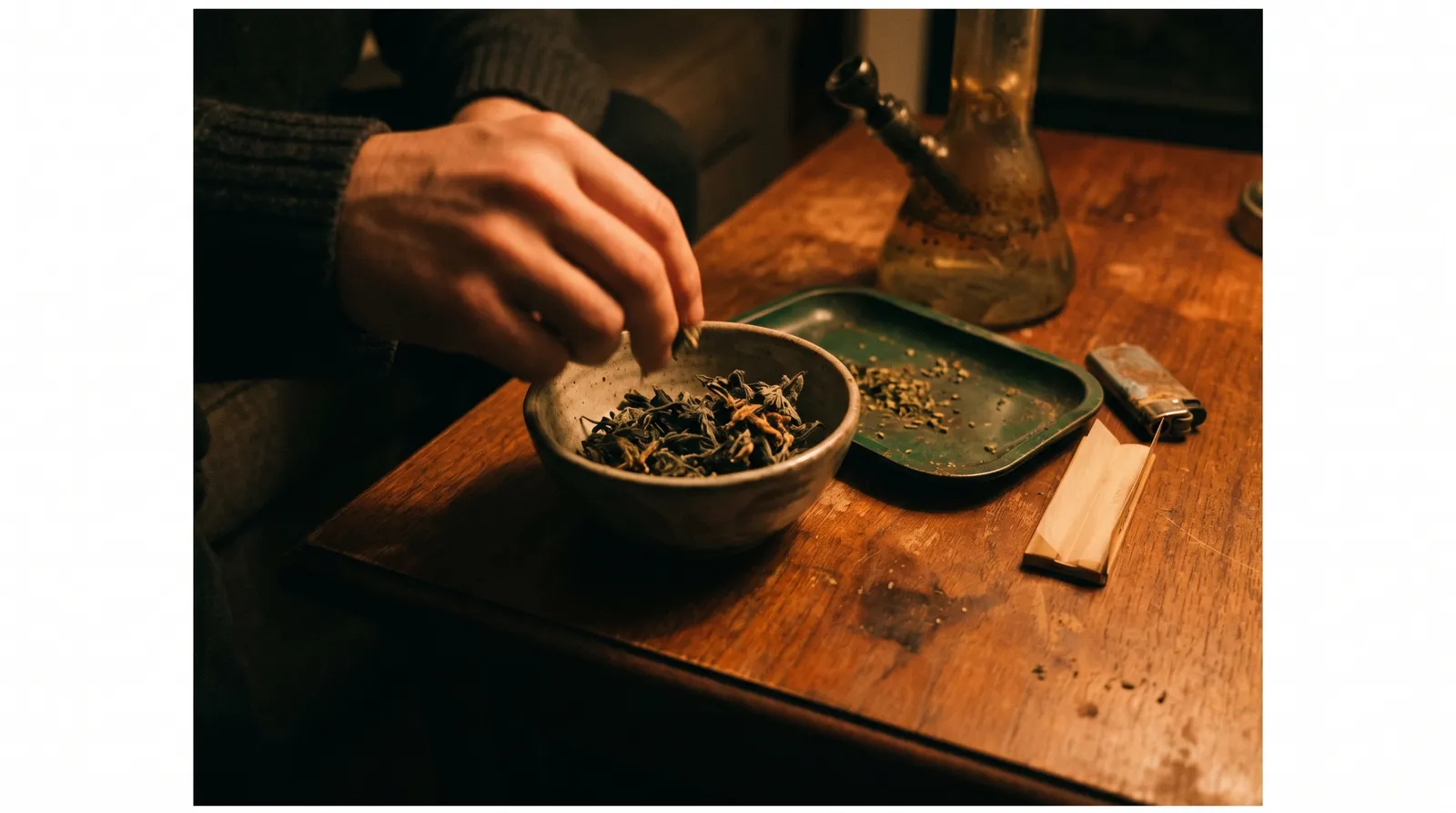
Burning any dried herb — whether tobacco, cannabis, damiana, or wild dagga — produces tar, carbon monoxide, and fine particulate matter. There is no "safe" combustion-based inhalation method. Vaporisation at lower temperatures reduces (but does not eliminate) particulate exposure; water filtration cools smoke but does not meaningfully filter tar. Anyone with asthma, COPD, or other respiratory conditions should avoid inhaling combusted plant material entirely.
This article is consumer education, not medical advice. Traditional and ceremonial uses are described for cultural and historical context. Botanicals can interact with medications and are not a substitute for professional care. If you are pregnant, nursing, taking prescription medication, or managing a health condition, consult a qualified healthcare practitioner before use.
References
- Chanyandura, J.T., Egan, B. et al. (2021). Social pharmacology and the most commonly used medicinal plants in the Eastern Cape, South Africa. Frontiers in Pharmacology, 12, 735820.
- EMCDDA (2023). European Monitoring Centre for Drugs and Drug Addiction — Novel herbal products overview. Lisbon: EMCDDA.
- Geerts, S. & Pauw, A. (2009). African sunbirds hover to pollinate an invasive hummingbird-pollinated plant. Oikos, 118(4), 573–579.
- Makunga, N.P. et al. (2020). Phylogenetic placement and phytochemical review of Leonotis (Lamiaceae). South African Journal of Botany, 130, 156–165.
- Nsuala, B.N., Enslin, G. & Viljoen, A. (2015). "Wild cannabis": A review of the traditional use and phytochemistry of Leonotis leonurus. Journal of Ethnopharmacology, 174, 520–539.
- Oyourou, J.N., Combrinck, S., Regnier, T. & Marston, A. (2009). Purification, stability and antifungal activity of marrubiin from Leonotis leonurus. Phytochemistry Letters, 2(4), 186–189.
- SANBI (2023). Leonotis leonurus (L.) R.Br. Red List of South African Plants. South African National Biodiversity Institute.
Last updated: April 2026
Frequently Asked Questions
11 questionsIs wild dagga related to cannabis?
What is the main active compound in Leonotis leonurus?
Can you grow wild dagga in Europe?
What is the difference between Leonotis leonurus and Leonotis nepetifolia?
Are there human clinical trials on wild dagga?
Where can I buy wild dagga flowers and extracts?
What does wild dagga smell and taste like?
Is wild dagga the same as motherwort?
How does wild dagga Leonotis leonurus botany differ from other Lamiaceae shrubs?
What pollinates wild dagga in the wild?
Can I order wild dagga extract online?
About this article


Adam Parsons is an external cannabis and psychedelics writer and editor who contributes to Azarius's wiki as both author and reviewer. On the writing side, he authors Azarius's kratom and kanna clusters, drawing on exten
This wiki article was drafted with AI assistance and reviewed by Adam Parsons, External contributor. Editorial oversight by Joshua Askew.
Medical disclaimer. This content is for informational purposes only and does not constitute medical advice. Consult a qualified healthcare provider before use of any substance.
Last reviewed April 26, 2026
Related Articles
Blue Lotus vs Kanna: Effects & Safety
Blue lotus vs kanna compared — Nymphaea caerulea's aporphine profile against Sceletium tortuosum's mesembrine chemistry, with interaction warnings.

Lotus Clinical Research Overview
What does lotus clinical research actually show? A critical review of Nymphaea caerulea and Nelumbo nucifera pharmacology, preclinical data, and…
Kanna South Africa To West History
Sceletium tortuosum was used by San and Khoekhoe communities in southern Africa for centuries before European colonists first documented it in the 1660s.
Sceletium Tortuosum Plant
Learn about the sceletium tortuosum plant: botany, alkaloids, fermentation, safety warnings, and where to buy kanna.
Kanna Pharmacokinetics Explained
Complete guide to kanna pharmacokinetics: how Sceletium tortuosum alkaloids are absorbed, metabolised via CYP2D6, and eliminated.

Kanna Chemistry: Sceletium Alkaloids Explained
Kanna chemistry explained: mesembrine, mesembrenone, their mechanisms, how fermentation and extraction change alkaloid profiles, and why it matters…
Rapé Shamanic Snuff Guide: How to Use It Safely
A practical rapé shamanic snuff guide covering dose, kuripe technique, effects, nicotine safety, interactions and Amazonian tradition.
White Sage Salvia Apiana Cultural Smudging Guide
Salvia apiana is a non-psychoactive shrub native to southern California's coastal sage scrub, burned as ceremonial incense in Indigenous North American…
Mulungu Erythrina Traditional Amazonian Use — Bark, Alkaloids & Research
Erythrina mulungu is a Brazilian legume tree whose bark has been brewed as a calming decoction in rural folk medicine for generations.