
This article discusses psychoactive substances intended for adults (18+). If you have a health condition or take medication, consult a doctor before use. Our age policy
San Pedro Cactus Care: First-Year Guide for New Owners
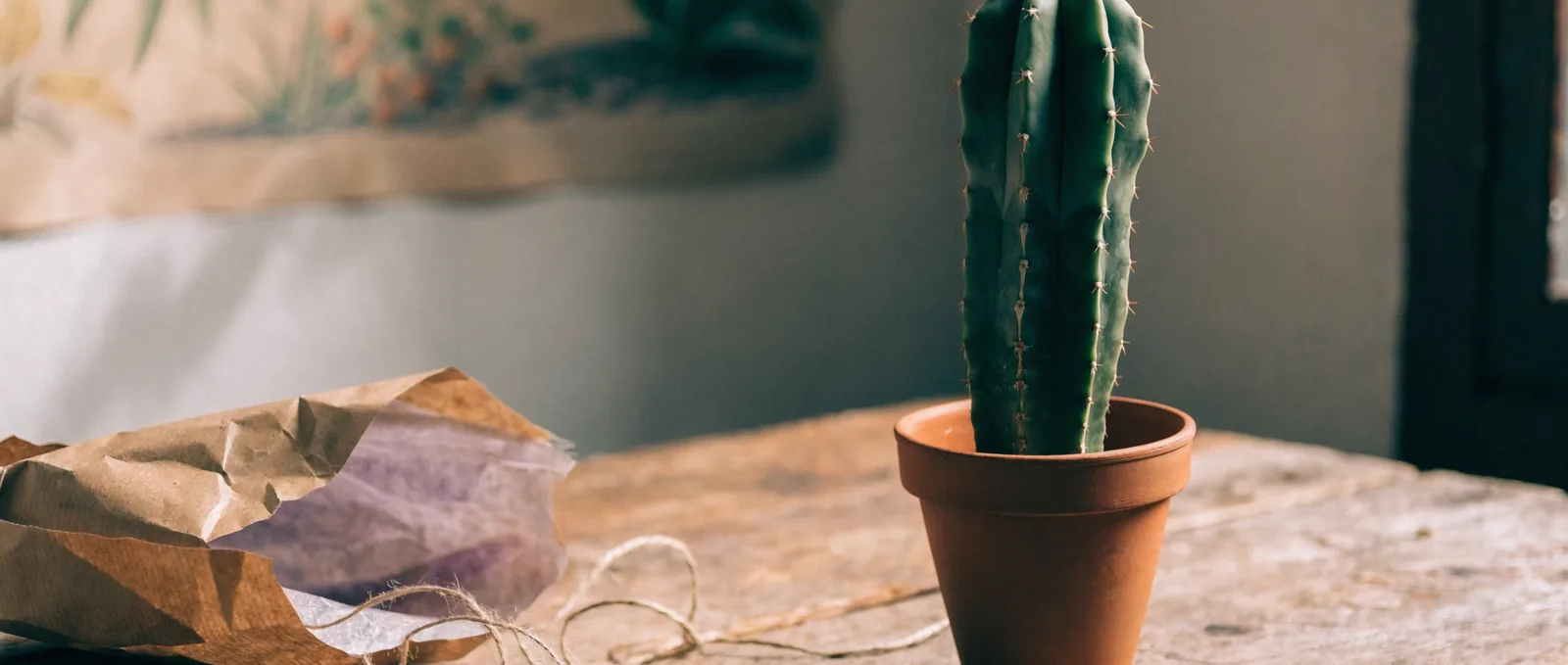
San pedro cactus care is a first-year routine that keeps Echinopsis columnar cacti and peyote buttons alive through their vulnerable rooting and dormancy phases. So the postman just dropped off a fresh San Pedro cutting or a tiny grafted peyote button, and now you're staring at it wondering what happens next. Good news: san pedro cactus care in the first year is mostly about doing less, not more. We've rooted hundreds of these cuttings at the shop since 1999, and the two ways people kill them are always the same — watering a fresh cut before it's calloused, and treating a peyote like a normal houseplant. This guide walks you through the first twelve months with your cactus, species by species, month by month, with a proper troubleshooting table for when things start looking weird. No dosing, no brewing — just how to keep the plant alive and thriving.
These are ornamental cacti, kept for their form, their ribbing and their slow architecture — that is the plant this guide is about.
Callusing and rooting a fresh San Pedro cactus cutting
A fresh San Pedro cutting needs to callus for 2–4 weeks in dry shade before it touches soil or water. Skip that step and you're planting a wet wound directly into a bacterial soup — root rot follows within days.
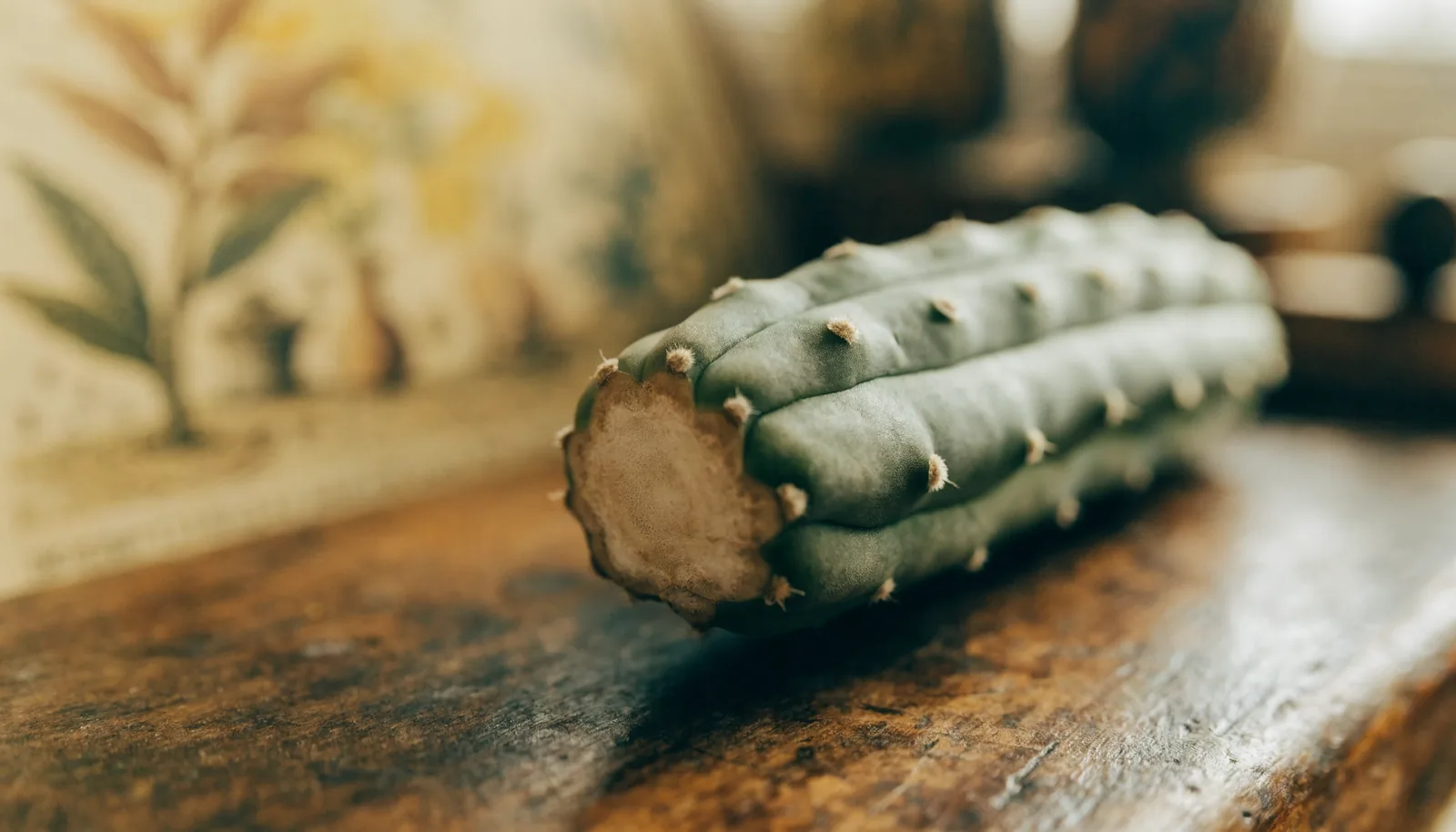
When your cutting arrives, unwrap it and check the cut end. If it's already dry and papery, someone did the work for you and you can pot within a week. If it's still moist or sappy, stand it upright in a dry, shaded corner — an empty flower pot works fine — with the cut end exposed to air. Angle the cut slightly so any residual moisture drains away from the tissue. A 45-degree bevel on the base helps water run off later and reduces the surface area sitting on soil.
Callus is done when the wound is hard, dry, and slightly recessed — knock it with a fingernail and it should feel like leather, not fruit. Now pot it in a gritty mix (we use roughly 50% mineral grit, 30% coco or peat, 20% perlite — our wiki guide to growing mescaline cacti as ornamentals breaks the substrate and pot choice down properly) with the calloused base sitting on top of the substrate, not buried. Do not water for another two weeks. Roots form in response to dryness, not moisture. First proper watering comes when you can see the cutting has anchored itself — give it a gentle wiggle around week 5–6 from arrival, and if it resists, water once, deeply, then let it dry completely before the next drink.
The single tip that saves the most cuttings
From our counter: if in doubt, wait another week. We've never seen a San Pedro cutting die from being potted too late. We've seen dozens die from being potted and watered too early — one customer last spring brought back a mushy pachanoi that had been watered on day two, and there was nothing left to save.
Month-by-month San Pedro cactus care calendar for European growers
European growers need to give their cactus a proper cold, dark winter — this is the single biggest difference from Peruvian conditions. Your cactus needs to know what season it is, and you dictate that with water and temperature.
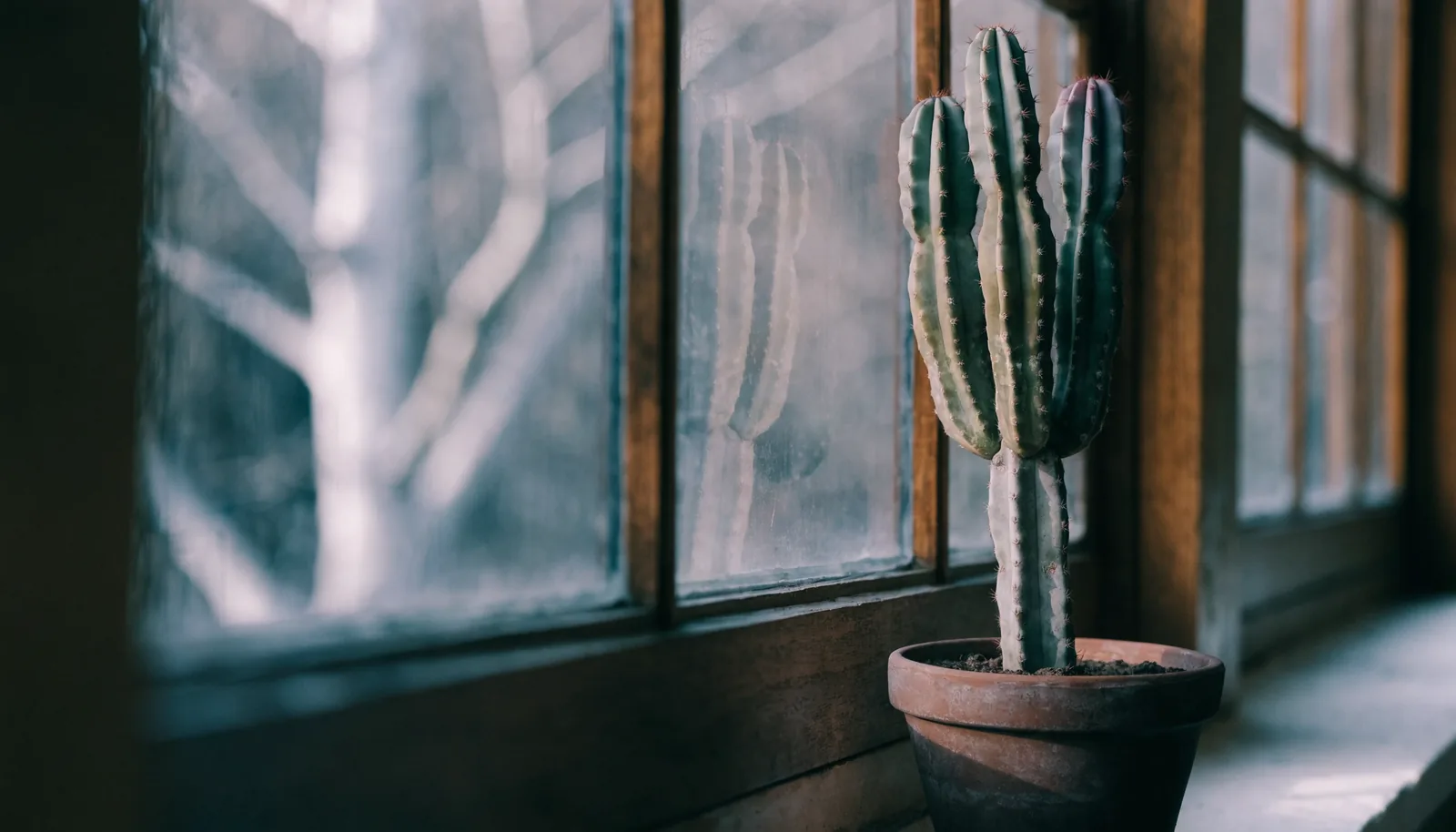
Here's the annual rhythm we follow at the shop for Echinopsis pachanoi, peruviana, and lageniformis in a Dutch/central-European climate:
| Month | Location | Watering | Notes |
|---|---|---|---|
| March | Bright windowsill, cool | First light water after 5+ months dry | Wake-up call. Look for green growth tip. |
| April | Move outdoors gradually | Every 10–14 days | Harden off over 2 weeks — start in shade. |
| May–June | Full sun outdoors | Weekly if hot, soak-and-dry | Fastest growth period. Feed low-N cactus fertiliser monthly. |
| July–August | Full sun | Every 5–10 days | Peak growth. San Pedro can add 20–40cm this window. |
| September | Full sun, reducing | Every 2 weeks | Stop fertilising. Start tapering water. |
| October | Bring indoors before first frost | Last small water | Under 10°C at night = time to come in. |
| November–February | Cool room (5–12°C), bright | Bone dry | Dormancy. Do not water. Cactus will slim slightly — this is correct. |
The dormancy is not optional. Cacti kept warm and watered through winter etiolate — they stretch into pale, weak growth that never recovers its ribbing. A cool, dry rest from November to March is what gives you thick, dark-green, properly ribbed columns the following summer.
Species-by-species care: San Pedro, Peruvian Torch, Bolivian Torch and peyote cactus
The three Echinopsis columnar cacti take near-identical care, but Lophophora williamsii — peyote — plays by completely different rules. Lump them together and you'll kill the peyote.
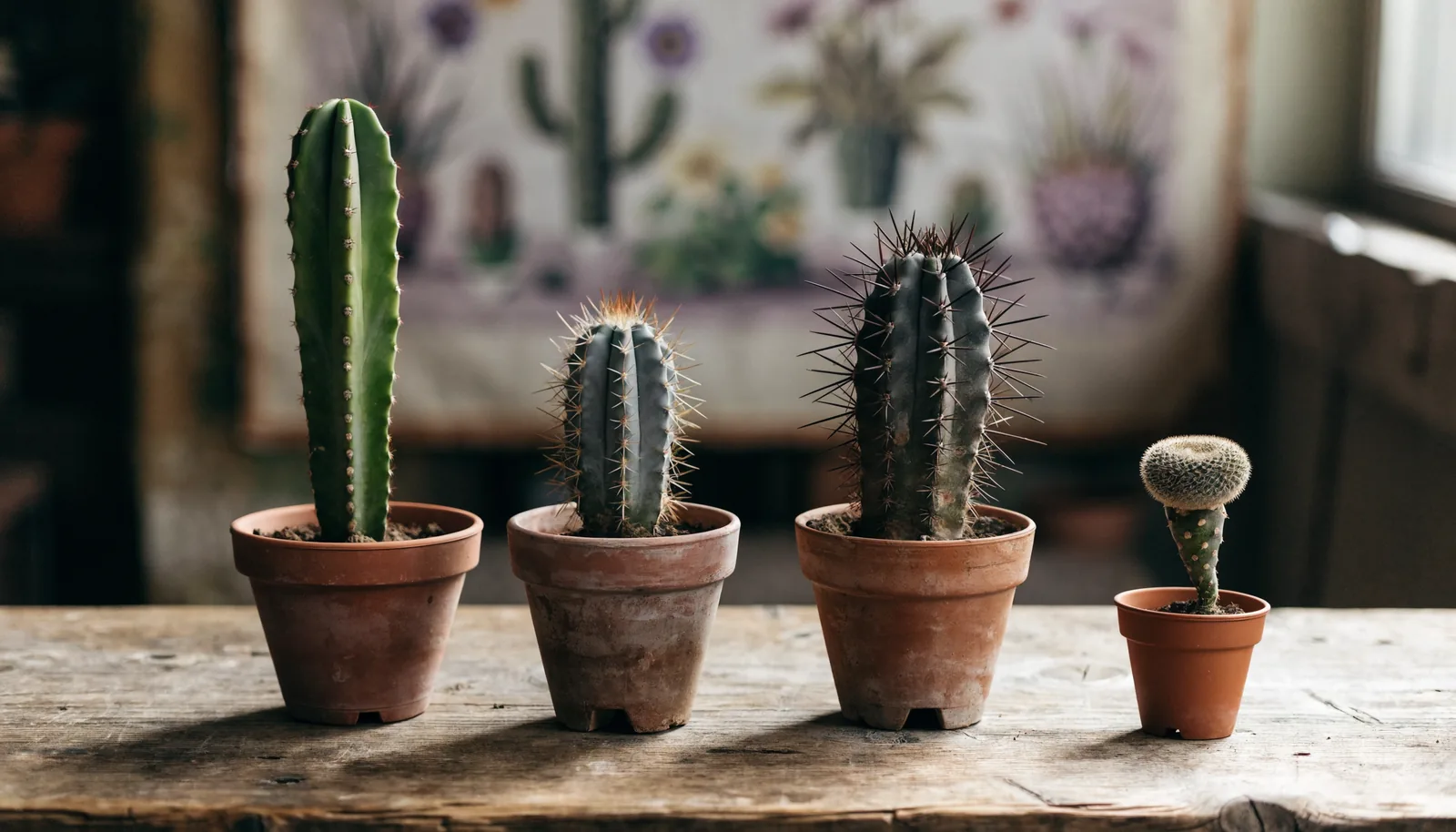
The three Trichocereus/Echinopsis columns
Echinopsis pachanoi (San Pedro) is the forgiving one. Fastest grower of the group, tolerates a bit more water, softer spines, brighter green. Realistic growth: 20–50cm per year on a healthy specimen in good conditions. Most of the cuttings we send out, including the San Pedro XL, are this species. Compared to peruviana, pachanoi is noticeably more tolerant of beginner mistakes.
Echinopsis peruviana (Peruvian Torch) is bluer, spinier, slower. Wants more sun and slightly less water than pachanoi. Grows 15–30cm per year. The waxy blue cuticle is a sunburn shield — don't scrub it off.
Echinopsis scopulicola (Super Pedro) is the fourth column worth knowing: near-spineless, fast, and the smoothest-skinned of the group. Care is identical to pachanoi, and the Super Pedro is arguably the easiest first cactus of the lot because there are no spines to fight while you pot it.
Echinopsis lageniformis (Bolivian Torch) is the toughest of the three, handles cold better, and has the meanest spines. Growth roughly 20–40cm per year. Corks at the base earliest of the three — this is normal, not a disease. If you are not sure which column you actually own, the wiki has a side-by-side on San Pedro vs Bolivian Torch identification.
Lophophora williamsii — the peyote cactus is a different animal
Peyote grows at what feels like geological pace. An own-root peyote button might add 1cm of diameter per year. A grafted specimen (typically on Pereskiopsis or Myrtillocactus) can put on 3–5cm per year while the graft holds — this is why almost every peyote in European collections is grafted, and why the peyote we stock comes that way. It is also why nursery-grown material matters: wild Lophophora populations are under real pressure, which the wiki covers in peyote conservation status.
Honest limitation: we can keep grafted peyote thriving on our shop bench, but even we can't make an own-root button hurry. If you want visible progress in year one, get a grafted specimen; if you want a plant your grandchildren might inherit, get own-root.
Peyote care differences:
- Taproot: own-root peyote grows a carrot-like taproot as long as the button is wide. Use a deep pot (10cm+), never a shallow one.
- Winter rest: completely bone-dry from October to April. No exceptions. Peyote in wet winter soil dies without warning.
- Light: bright but filtered. Full Dutch summer sun burns peyote where it barely tickles a San Pedro.
- Grafted vs own-root: if yours is grafted, treat it more like the rootstock — Pereskiopsis wants water and warmth almost year-round. Check which rootstock you have.
Troubleshooting the first year: common mescaline cactus problems
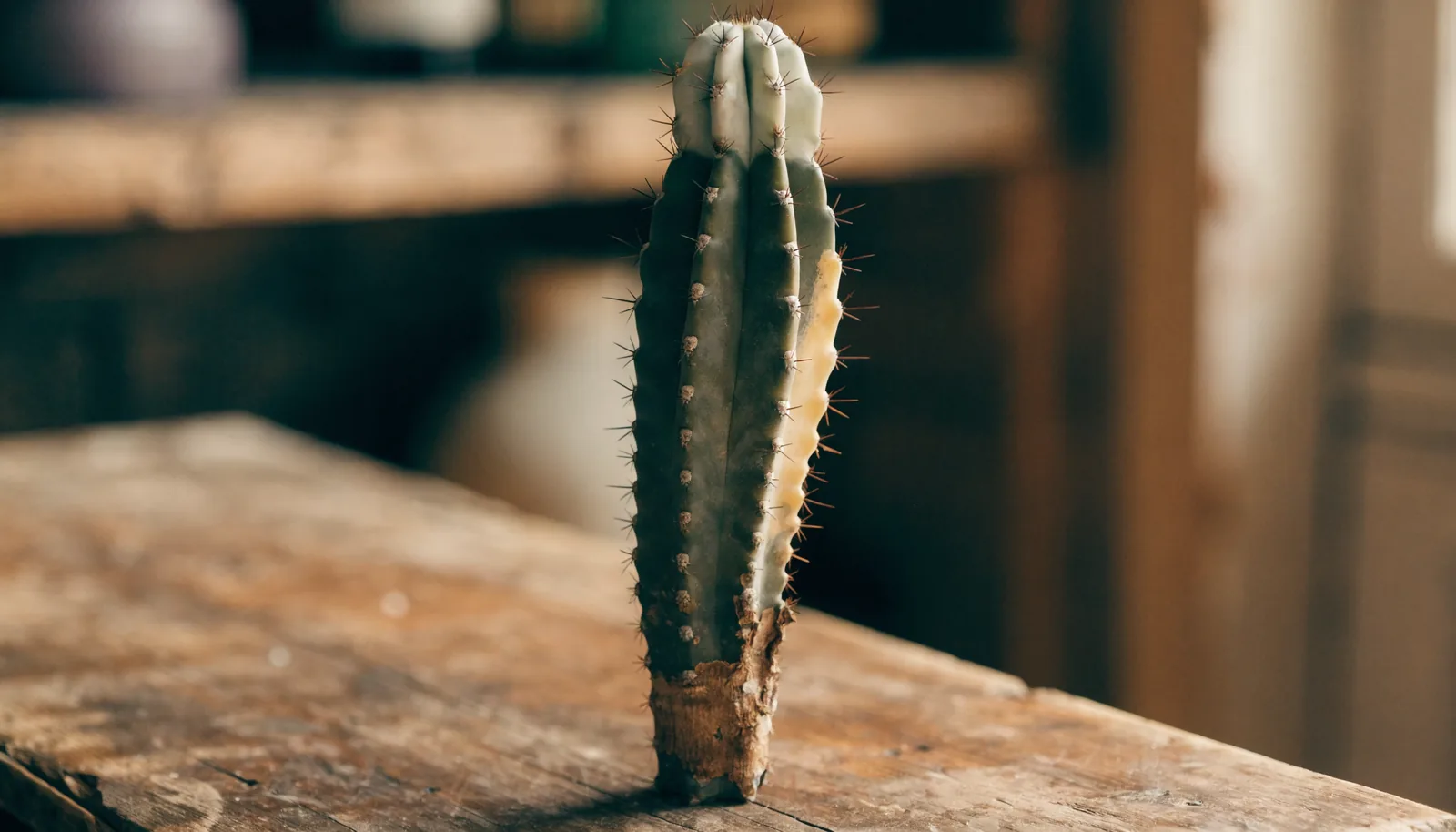
In our experience, the great majority of first-year problems in san pedro cactus care are cosmetic or cultural rather than fatal. Here's the field guide we walk customers through when they send us worried photos.
| Symptom | Cause | Fix |
|---|---|---|
| Long, pale, skinny new growth | Etiolation — not enough light | More sun, gradually. Old etiolated growth stays weird forever. |
| Soft, yellow-brown, mushy base | Root rot from overwatering | Unpot, cut above rot until tissue is clean and white, callus, re-root. |
| Brown, bark-like base tissue | Corking — natural ageing | Nothing to fix. Cosmetic only. |
| Orange or rust-coloured spots | Fungal spotting, often from cold+wet | Move to drier, warmer, brighter spot. Spots don't heal but growth continues clean. |
| Yellow-white bleached patches on sun-facing side | Sunburn | Shade immediately. Introduce sun over 2 weeks next time. |
| White cotton-wool tufts in ribs | Mealybugs | Cotton bud with 70% isopropyl alcohol. Repeat weekly for a month. |
| Fine webbing, stippled bronze skin | Red spider mite | Rinse plant, raise humidity, predatory mites or neem in bad cases. |
Growth rates and mescaline content by species — a reference table
Alkaloid content varies wildly between individual specimens of the same species, and cultivation conditions matter as much as genetics. People often ask which cactus is "strongest," and there's no single answer. Here's what the published literature reports for reference — the full chemistry sits in our wiki entry on what mescaline cacti are, and this table is only the horticultural slice of it — this is not a dosing guide, it's context for why one San Pedro is not the same as another. Ethnobotanical data referenced by EMCDDA monographs and academic sources agree that specimen variation dominates.
| Species | Reported mescaline range (dry weight) | Realistic yearly growth | Source |
|---|---|---|---|
| Echinopsis pachanoi (San Pedro) | ~0.025%–2.375% dry weight, wide variation between clones | 20–50cm/year outdoors in summer | Ogunbodede et al., 2010 |
| Echinopsis peruviana (Peruvian Torch) | Historically reported higher than pachanoi in some samples; overlaps considerably | 15–30cm/year | Trout & Friends, 1999 |
| Echinopsis lageniformis (Bolivian Torch) | Similar range to pachanoi; specimen variation dominates | 20–40cm/year | Ogunbodede et al., 2010 |
| Lophophora williamsii (peyote) | ~1%–6% dry weight in mature buttons | Own-root: ~1cm/year diameter. Grafted: 3–5cm/year | Bruhn & Holmstedt, 1974; Anderson, 1980; EMCDDA hallucinogens profile |
Fresh weight is roughly 8–15% of dry weight for these cacti, which is why every serious reference reports alkaloid content on a dry-weight basis. Effect profiles reported in the ethnobotanical literature describe mescaline experiences lasting 8–12 hours with onset around 45–90 minutes (Shulgin & Shulgin, PIHKAL, 1991; see also EMCDDA drug profiles), but effect quality and duration have no bearing on how you keep the plant alive — which is what this guide is about.
Why potency varies so much
Two San Pedros from the same batch of seed can differ by an order of magnitude in alkaloid content. Genetics is one factor; the other is stress. Cacti grown in poor light, poor soil, and irregular water often accumulate more secondary metabolites than pampered specimens — a botanical stress response. This is why old, weathered Peruvian mountain-grown cacti have a reputation the greenhouse-fat ones don't. It also means your beautifully grown windowsill San Pedro is a beautiful San Pedro first, and a chemistry set a distant second.
Frequently Asked Questions
Keep san pedro cactus care simple in year one: callus properly, water rarely, respect the winter rest, and give peyote its own separate rulebook. If you got a cutting or button from us at the Amsterdam smartshop, you can get San Pedro cuttings, grafted peyote, and Peruvian Torch specimens in our mescaline cacti category whenever you want to buy another to add to your collection.
Last updated: September 2026
About this article


Adam Parsons is an external cannabis and psychedelics writer and editor who contributes to Azarius's wiki as both author and reviewer. On the writing side, he authors Azarius's kratom and kanna clusters, drawing on exten
This blog article was drafted with AI assistance and reviewed by Adam Parsons, External contributor. Editorial oversight by Joshua Askew.
Last reviewed September 8, 2026
Related Articles
Peyote Cactus: Plant Profile and Care Guide
Peyote cactus care made simple: light, mineral soil, watering, winter rest and propagation, plus how Lophophora williamsii compares to San Pedro.
Amanita Muscaria: Botany, Chemistry and European Folklore
Amanita muscaria is the fly agaric of European fairy tales — and a poisonous mushroom, not a magic one. The botany, the deadly lookalikes, the muscimol chemistry and the Santa myth, straight.

8 Balcony Cannabis Strains Ranked by Height for Small Grows
Eight balcony cannabis strains ranked by verified height, cycle time and THC — so your grow fits under the railing and out of the neighbours'…
How to Lemon Tek Mushrooms: Method, Dose & Timing
Learn how to lemon tek mushrooms step by step: chemistry, dosing, timing and harm reduction for a faster, sharper and shorter psilocybin experience.
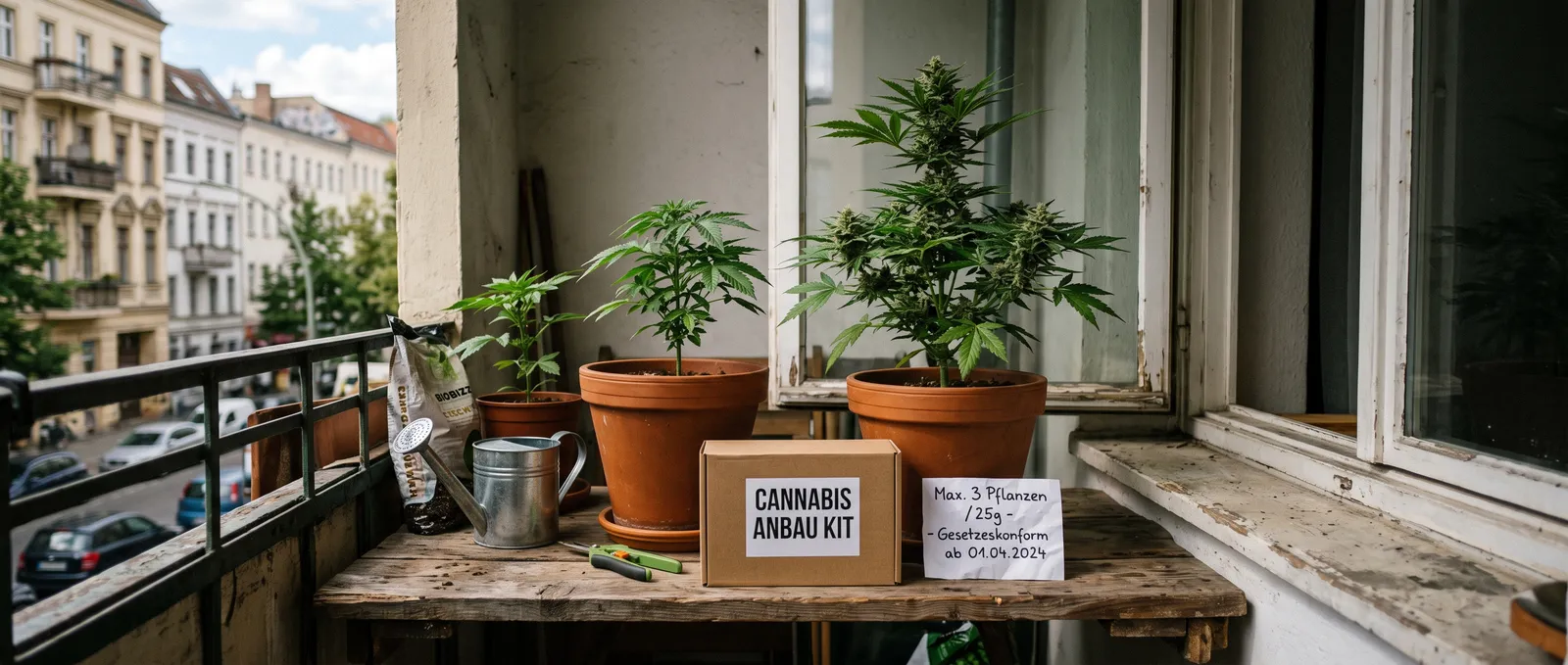
Cannabis in Germany: Is Weed Legal in 2026? CanG Rules
Is weed legal? How cannabis in Germany works after CanG: 25 g possession, three plants at home, Cannabis Social Clubs and city-by-city enforcement.
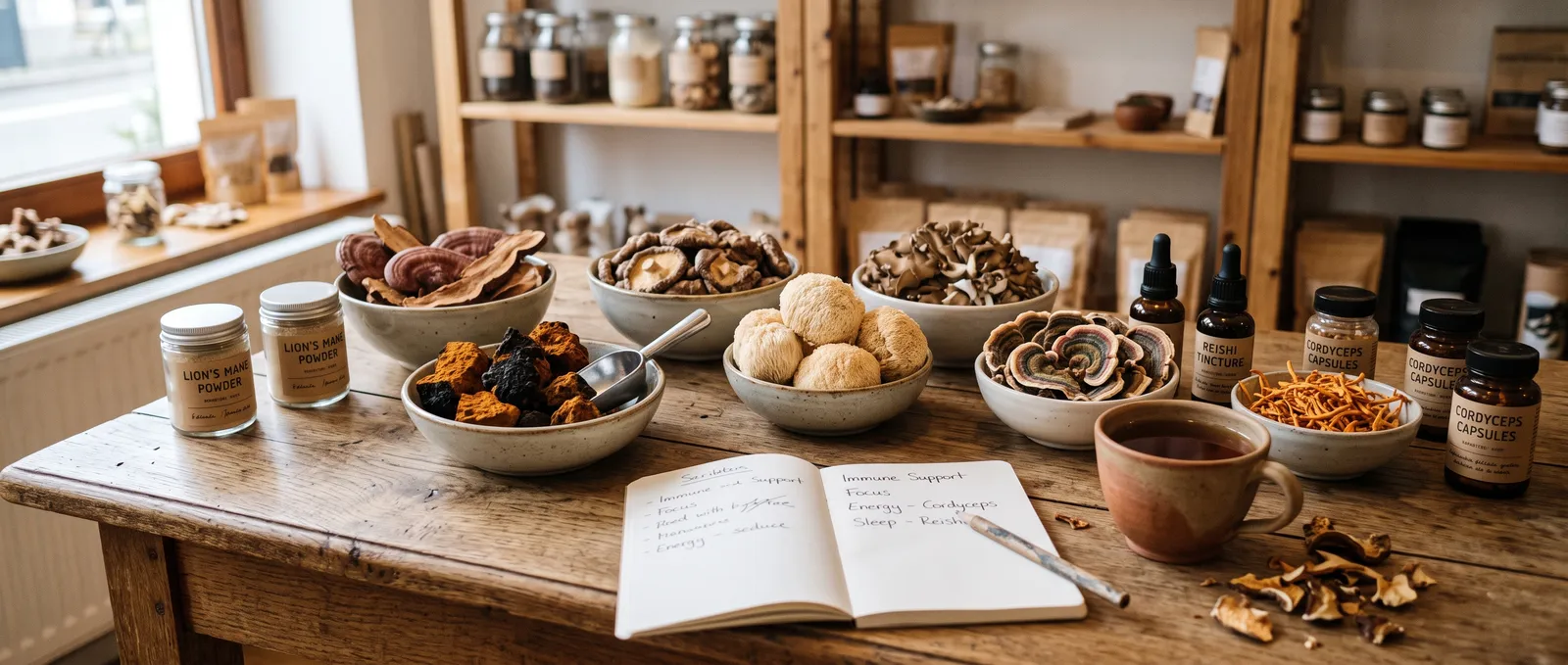
7 Functional Mushrooms and What People Use Them For
A practical guide to 7 functional mushrooms — lion's mane, reishi, cordyceps, chaga, maitake, shiitake, snow fungus — with traditional uses and…
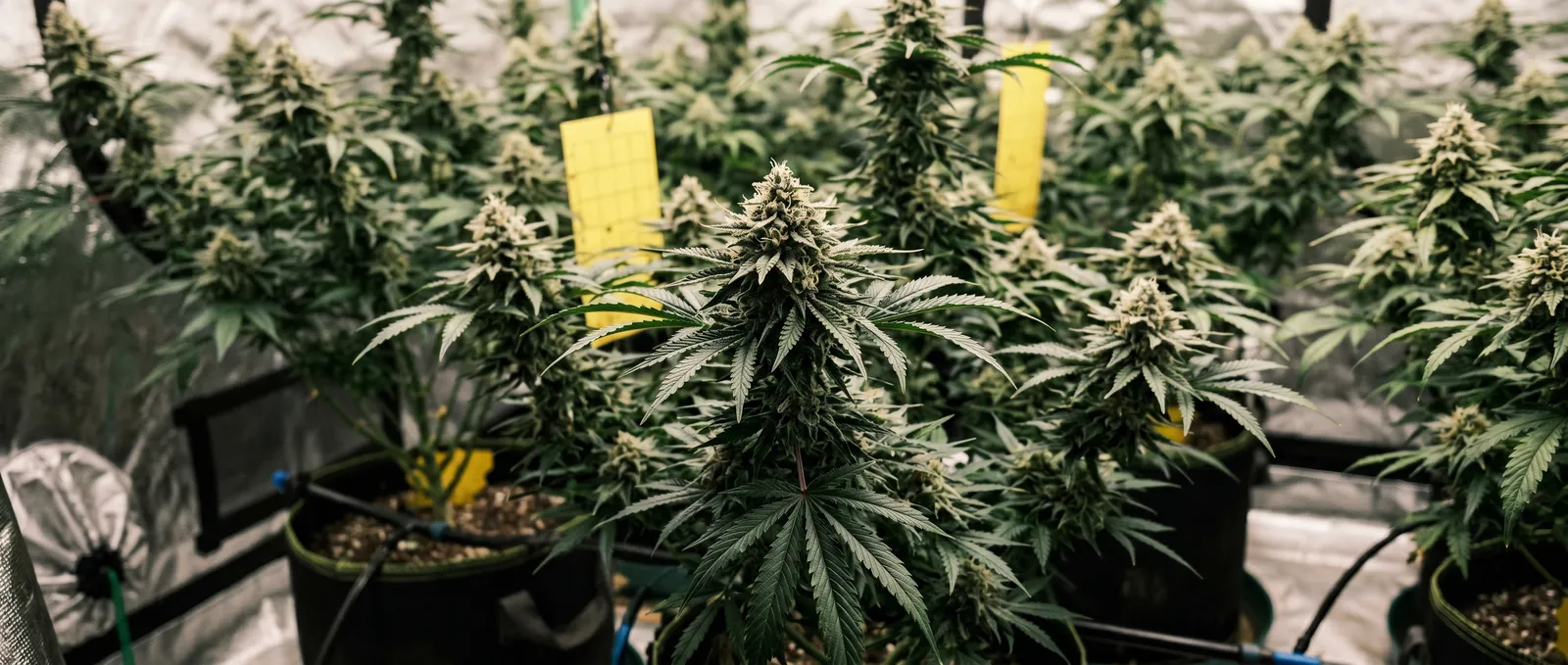
How to Increase Bud Weight: 5 Hidden Yield Killers
Healthy plants, light harvests? Mr. Grow It's 5 hidden bottlenecks and exactly how to increase bud weight — without touching your nutrients.
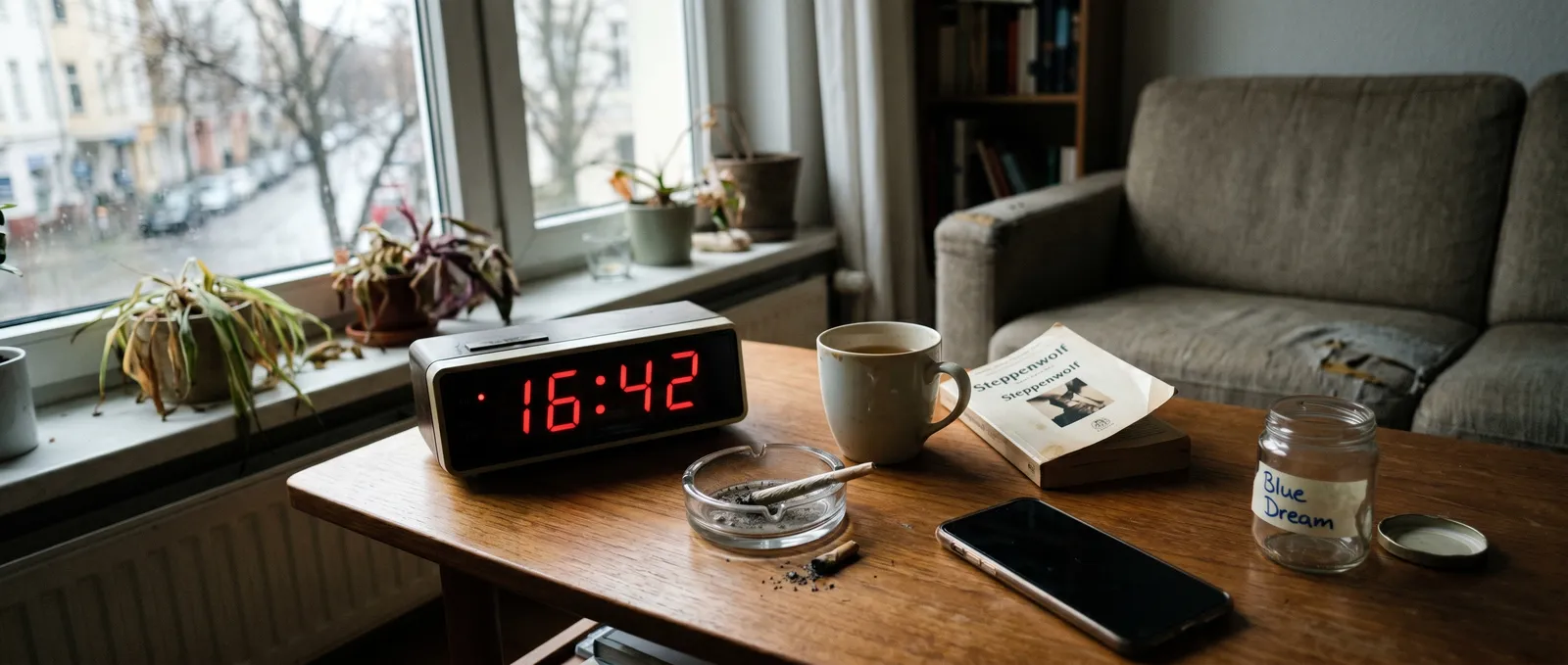
How Long Does Being High Last? Cannabis Timeline
How long does being high last? On average about 4 hours — but smoking, edibles, dose and tolerance change everything. The full science-backed timeline.

Cannabis Weed Weights & Measurements: Grams to Ounce Guide
Cannabis weed weights and measurements explained: grams, eighths, quarters, ounces and zips. Metric-first European reference with exact conversions.