
This article discusses psychoactive substances intended for adults (18+). If you have a health condition or take medication, consult a doctor before use. Our age policy
Amanita Muscaria: Botany, Chemistry and European Folklore
Definition
The red-and-white toadstool everyone recognises and almost nobody understands. Here's what Amanita muscaria actually is — botanically, chemically and historically.
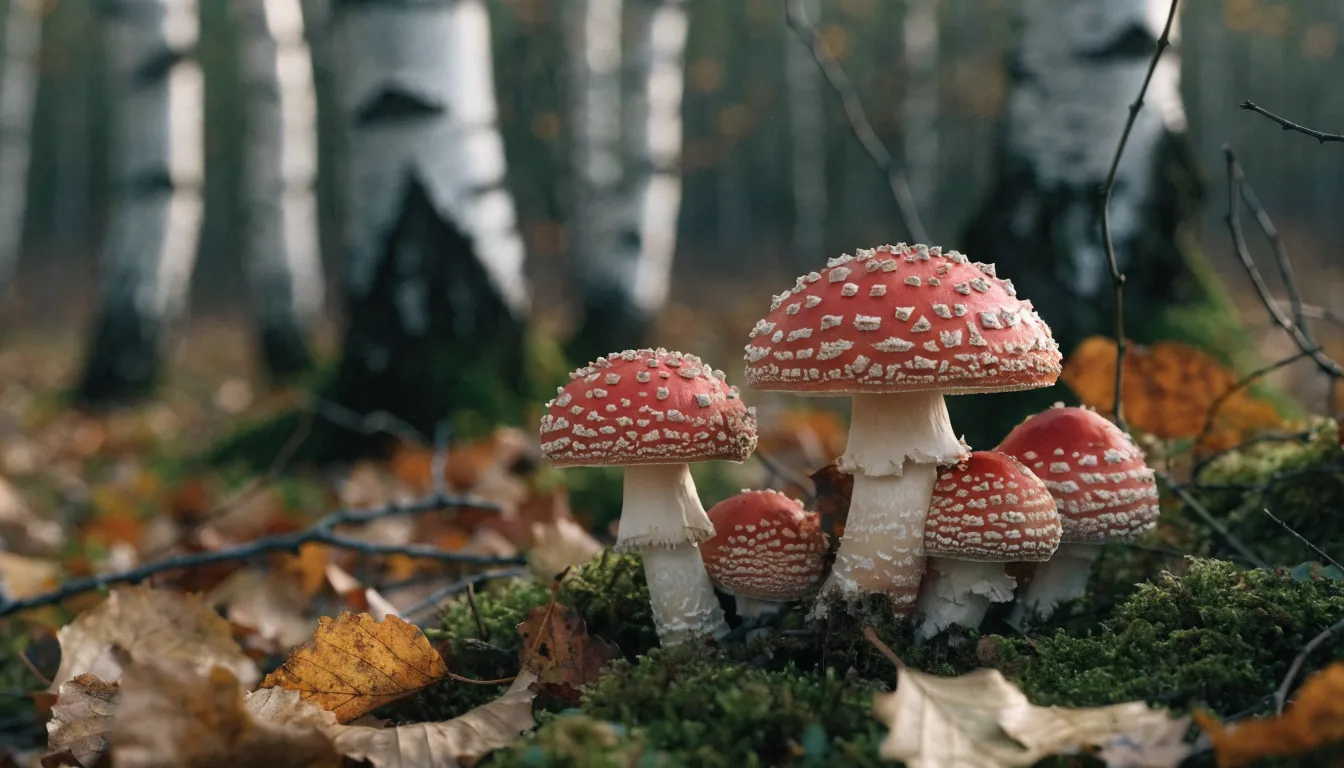
Amanita muscaria is a mycorrhizal mushroom that grows in partnership with birch and conifer roots across the Northern Hemisphere — the iconic red-and-white toadstool from every fairy tale you've ever read, and one of the most misunderstood fungi in European folklore. It's not a psilocybin mushroom, it's not a wellness product, and Azarius doesn't sell it. But it's a fascinating organism with strange chemistry and a stranger cultural history, so let's walk through what it actually is.
18+ only This guide is written for adults. It's purely educational — a species explainer, not a preparation guide, not a buying guide, not a recommendation. Amanita muscaria is toxic. We're covering it because people ask about it constantly, and the internet is full of nonsense on the topic. Better you get the botany, chemistry, and history straight from a source that isn't trying to sell you gummies.
What Amanita muscaria is, botanically and geographically across Europe
Amanita muscaria — the fly agaric — is a mycorrhizal basidiomycete fungus in the family Amanitaceae, forming symbiotic root partnerships with birch, pine, spruce, and fir. It's one of the most widely distributed mushrooms in the Northern Hemisphere, and in Europe you'll find it from the Scottish Highlands down to the Iberian Peninsula, across the Alps, throughout Scandinavia, and deep into the Siberian taiga.
The classic European fruiting body has a scarlet-to-crimson cap 8–20 cm across, decorated with the white or cream-coloured wart-like remnants of a universal veil. The stipe is white, bulbous at the base, with a ring (annulus) and a scaly volva. Gills are free and white. The species was formally described by Linnaeus in 1753 as Agaricus muscarius, then reclassified into the genus Amanita by Lamarck in 1783.
Fruiting in Europe typically runs from late August through November, peaking after autumn rains. The name "muscaria" comes from the Latin musca (fly) — for centuries central and eastern Europeans crushed the caps into milk to stun houseflies, a practice documented in Albertus Magnus's writings around 1256.
Identifying Amanita muscaria and its deadly European lookalikes
The red-and-white European fly agaric is one of the more recognisable mushrooms in the world — but the Amanita genus contains several of Europe's deadliest species, and beginners have died confusing them. This is why mycological societies across Europe repeat the same warning: never eat any Amanita based on a phone-app ID.
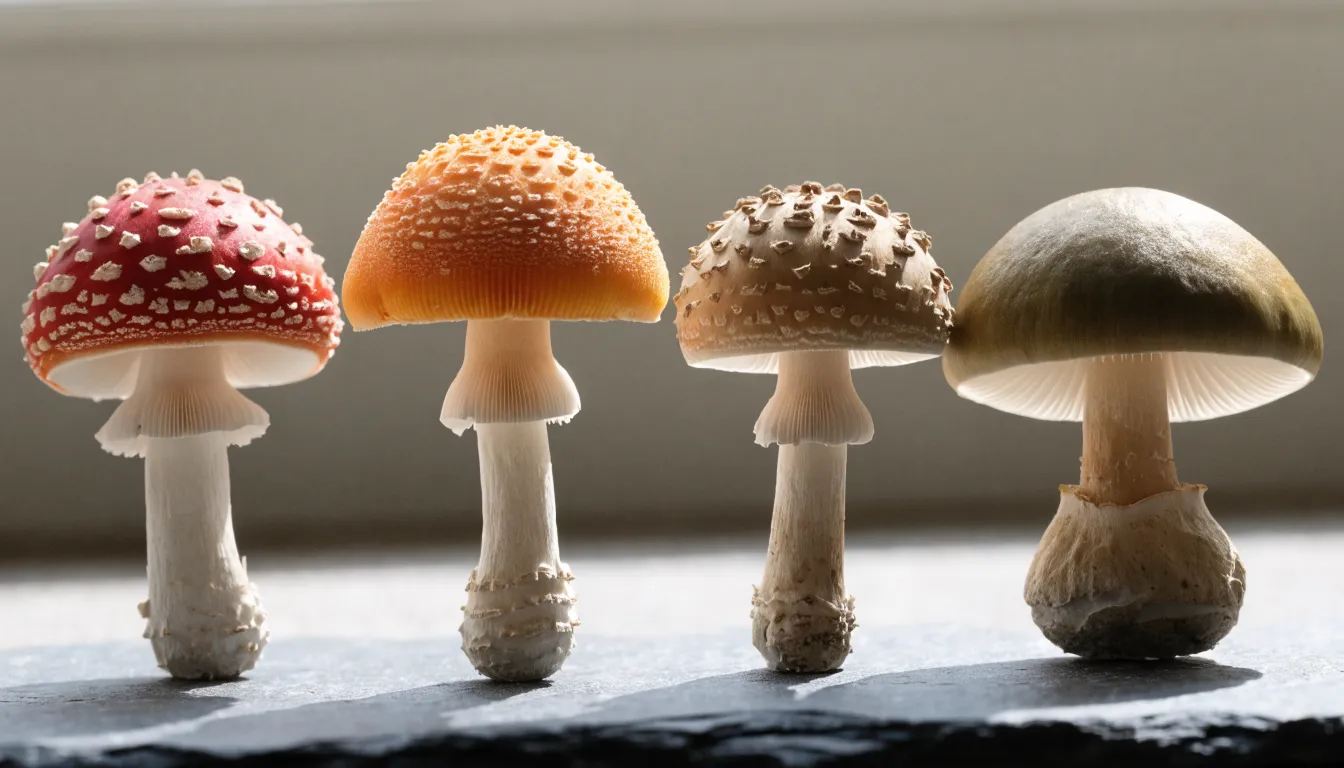
Amanita phalloides — the death cap
Amanita phalloides is responsible for the large majority of fatal mushroom poisonings worldwide — the amatoxin syndrome accounts for roughly 90% of mushroom-poisoning deaths, according to a review in Food and Chemical Toxicology (Garcia et al., 2015). It has a greenish-olive to yellowish cap, white gills, a ring, and a prominent sac-like volva at the base. The toxins involved are amatoxins — cyclic peptides that destroy liver cells and are not affected by cooking, drying, or freezing. A single mature cap contains enough alpha-amanitin to kill an adult.
Amanita pantherina — the panther cap
Amanita pantherina looks disturbingly like a brown-capped muscaria: tan to brown cap with white warts, white gills, ringed stipe. It contains the same ibotenic acid and muscimol as fly agaric, but at higher and more variable concentrations. Panther cap poisonings tend to be more severe, with deeper delirium and longer hospitalisations reported in European poison-centre case series.
Amanita muscaria var. guessowii
This variety carries yellow to orange caps instead of red. It's mostly a North American form but has been reported in parts of northern Europe. Chemically it's the same species — same ibotenic acid/muscimol profile — but the colour throws off casual identification.
| Species | Cap colour | Toxicity | Key ID feature |
|---|---|---|---|
| A. muscaria (typica) | Scarlet-red | Psychoactive, toxic | White warts, white gills, ring |
| A. muscaria var. guessowii | Orange-yellow | Psychoactive, toxic | Same as typica, different pigment |
| A. pantherina | Brown to tan | Highly psychoactive, toxic | Warts in concentric rings, no striated ring |
| A. phalloides | Olive-green | Lethal (amatoxins) | Sac-like volva, no warts, faint smell |
The chemistry of Amanita muscaria — ibotenic acid, muscimol, and GABA-A
Amanita muscaria contains two principal active compounds — ibotenic acid and muscimol — and they behave nothing like psilocybin. Ibotenic acid is a glutamate analogue and an NMDA receptor agonist. Muscimol is a potent, selective agonist at the GABA-A receptor. When ibotenic acid is decarboxylated (through heat, drying, or metabolism), it converts into muscimol, losing a carboxyl group. A 2025 review in Toxins (Stoeva-Grigorova et al.) puts that conversion at roughly 10–20% of ingested ibotenic acid, with the rest excreted unchanged.
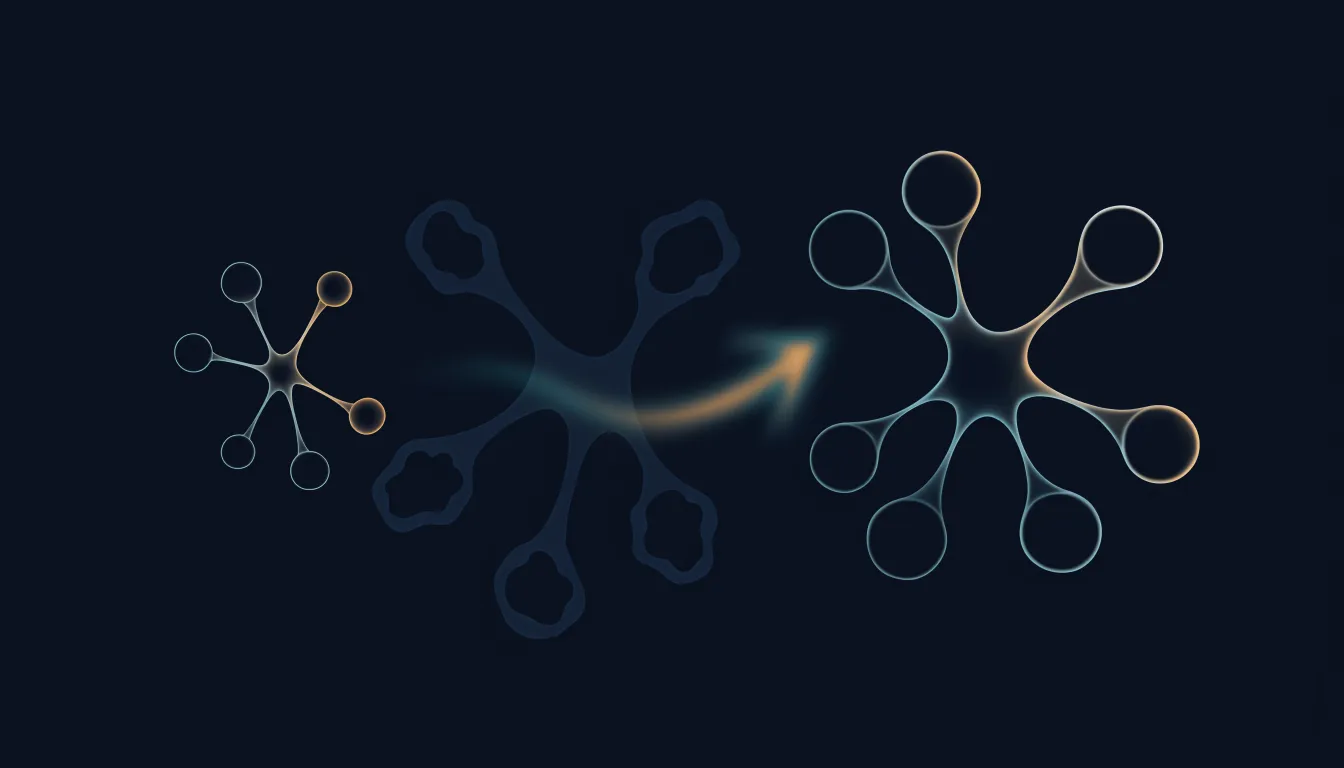
This is a completely different pharmacological system from classical psychedelics. Psilocybin (from Psilocybe cubensis and related species) is metabolised to psilocin, which acts primarily as a partial agonist at the serotonin 5-HT2A receptor. That's the mechanism behind the visual, cognitive, and mystical-type effects mapped in the Griffiths lab studies at Johns Hopkins — a receptor story we cover in more depth in our guide to psilocybin and the brain.
Muscimol does none of that. GABA-A is the brain's main inhibitory receptor system — the same target hit by benzodiazepines, alcohol, and Z-drugs like zolpidem. Pharmacologically, muscimol produces sedation, ataxia, dissociation, and delirium rather than serotonergic visual patterning. The standard reference review on the species (Michelot & Melendez-Howell, Mycological Research, 2003) explicitly notes that classifying fly agaric as a "psychedelic" alongside psilocybin is a category error — the receptor systems, subjective effects, and clinical presentations are distinct.
Small honest admission: the ratio of ibotenic acid to muscimol in any given fruiting body varies enormously — by geography, season, sub-species, and part of the mushroom. That's part of why the toxicological literature is messy.
Documented effects and the real toxicity profile of Amanita muscaria
Amanita muscaria is a poisonous mushroom — that's the plain-language summary, and poison-centre data supports it. A retrospective review by Moss & Hendrickson in Clinical Toxicology (2019) examined every ibotenic-acid and muscimol mushroom exposure reported to one regional poison centre between 2002 and 2016: 34 cases in total, 23 of them A. muscaria and 10 A. pantherina. Twenty-five patients were symptomatic, all but one within six hours, and five needed intubation. Panther cap came off worse on every axis — gastrointestinal symptoms in 80% of A. pantherina cases versus 35% of A. muscaria, and the same 70%-versus-35% split for both CNS depression and CNS excitation.
European clinical reporting describes the same toxidrome. A 2025 literature review with two Bulgarian case reports (Stoeva-Grigorova et al., Toxins) sets out the symptom picture that emergency departments actually see:
- Gastrointestinal distress — nausea, vomiting, abdominal pain (typically 30 minutes to 2 hours after ingestion)
- CNS depression alternating with agitation
- Ataxia and loss of motor coordination
- Delirium, confusion, hallucination-like states
- Myoclonic jerks and, in serious cases, seizures
- Coma in the most severe presentations
Fatalities from A. muscaria specifically are rare but documented. The same 2025 Toxins review puts mortality in accidental poisonings at roughly 2–5% of reported cases, with deaths driven by severe CNS depression and respiratory compromise rather than by organ damage. That is a fundamentally different picture from A. phalloides, where the mushroom itself destroys the liver.
Onset in reported cases runs from about 30 minutes to three hours, and the full intoxication resolves in roughly 24 hours with supportive care, the hallucinatory phase lasting up to eight of them. There is no specific antidote: management is supportive, with benzodiazepines for agitation and seizures.
Siberian and Sami ethnobotanical history — reindeer, shamans, and Soma
Amanita muscaria has one of the deepest ethnobotanical records of any European fungus, particularly among the peoples of Siberia and the Sami of Fennoscandia. Ethnographic accounts from the 18th century onwards — most famously Philip Johan von Strahlenberg's 1730 report on the Koryak — describe ritual use of dried fly agaric among Koryak, Chukchi, Itelmen, and Yukaghir communities.
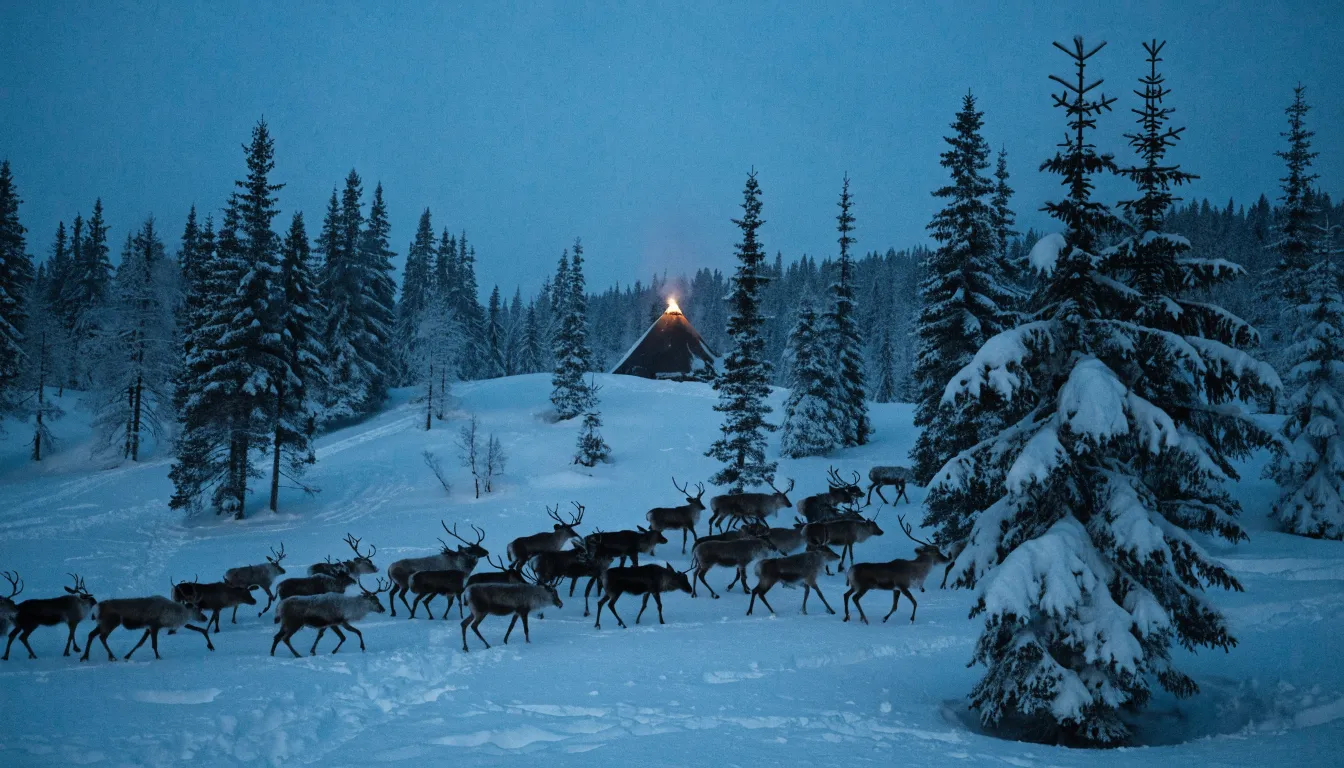
The reindeer connection is well-documented. Reindeer in these regions actively seek out and consume A. muscaria, and Sami herders observed the mushroom's effects on their animals. There are consistent anthropological accounts of reindeer behaving strangely after eating the mushrooms. The related — and more securely documented — Siberian practice was urine-drinking among human participants, since muscimol is excreted largely unchanged; Wasson's fieldwork in the 1960s gathered much of this material. It sits in the same ethnobotanical tradition as the deep-history arguments we unpack in Terence McKenna's theory of fungi and human evolution.
The Soma hypothesis is where things get properly contested. In his 1968 book Soma: Divine Mushroom of Immortality, R. Gordon Wasson argued that the Soma of the Rigveda — a sacred, deified plant preparation described in Vedic hymns composed roughly between 1500 and 1000 BCE — was Amanita muscaria. His argument rested on descriptions of Soma being pressed, on the absence of leaves/roots/seeds in the hymns, and on parallels with Siberian ritual. Later scholars have questioned it: David Flattery and Martin Schwartz argued for Peganum harmala (Syrian rue) in Haoma and Harmaline (1989), while others favour Ephedra. The Soma question is genuinely unresolved.
The Santa Claus and Christmas folklore claim — what historians actually support
The internet loves the theory that Santa Claus is a shamanic figure derived from Siberian Amanita muscaria rituals — the red-and-white colour scheme, the flying reindeer, gifts delivered through the smoke-hole of a yurt (later a chimney). It's a compelling story. It's also mostly modern speculation.
The theory was popularised by writers including John Rush (Mushrooms in Christian Art, 2011) and earlier by Jonathan Ott. Elements that do have some ethnographic support: Koryak shamans did use fly agaric ritually; smoke-hole entry to yurts is historically accurate; reindeer and A. muscaria have a genuine relationship in Siberian ecology.
Elements that historians push back on: the modern Santa Claus figure evolved primarily from the Dutch Sinterklaas tradition (rooted in Saint Nicholas of Myra, a 4th-century Greek bishop) via New York in the 19th century — a Dutch cultural export with rather better documentation than the Amsterdam smartshop, which we can at least date precisely to 1993, given his familiar visual form by Thomas Nast's illustrations in the 1860s and cemented by Coca-Cola advertising from 1931 onwards. The red-and-white colour scheme predates any Amanita association in Western iconography. Ronald Hutton, who wrote the standard survey of the subject in Shamans: Siberian Spirituality and the Western Imagination (2001), is blunt about the mismatch: Siberian shamans didn't travel by sleigh, didn't generally deal with reindeer spirits, only rarely took the mushroom to reach trance, and wore nothing resembling a red-and-white suit.
The honest answer: it's a fun story, some elements resonate, but the direct causal claim isn't supported by the primary historical record. File it under "interesting parallels" rather than "documented origin".
How Amanita muscaria differs from psilocybin mushrooms and truffles
Amanita muscaria and psilocybin-containing species (Psilocybe cubensis, P. semilanceata, sclerotia-producing species like P. tampanensis) are entirely different fungi with entirely different chemistry, effects, and cultural profiles. Grouping them as "magic mushrooms" is a folk category, not a scientific one.
| Feature | Amanita muscaria | Psilocybe (mushrooms/truffles) |
|---|---|---|
| Family | Amanitaceae | Hymenogastraceae |
| Active compounds | Ibotenic acid, muscimol | Psilocybin, psilocin, baeocystin |
| Primary receptor | GABA-A agonism | 5-HT2A partial agonism |
| Effect character | Sedative-dissociative, delirium | Serotonergic psychedelic |
| Toxicity profile | Poisonous; delirium, ataxia, seizures possible | Very low physiological toxicity (Nutt et al., 2010) |
| Cultural record | Siberian shamanism, European folklore | Mesoamerican ritual (Mazatec, Aztec); modern research |
David Nutt's 2010 Lancet paper on drug harms ranked psilocybin among the lowest-harm psychoactive substances studied — a finding echoed in the Global Drug Survey and multiple systematic reviews since. A. muscaria has never been evaluated in the same clinical trial framework because it isn't a serotonergic psychedelic and doesn't produce the same therapeutic-relevant effects being studied at Johns Hopkins, Imperial College London, or Maastricht.
The sclerotia-forming species behind our magic truffles — Pajaritos, Hollandia, Atlantis — sit on the psilocybin side of this table, which is also why the preparation people bring to them matters so much; that is the whole argument of our piece on set and setting. Amanita muscaria sits somewhere entirely different, biochemically and culturally. Same folk word, different organism, different everything.
Frequently Asked Questions
Last updated: August 2026
Frequently Asked Questions
5 questionsIs Amanita muscaria the same as a magic mushroom?
Is Amanita muscaria poisonous?
Why do reindeer eat fly agaric?
Is the Santa Claus / Amanita muscaria theory true?
Does Azarius sell Amanita muscaria?
About this article


Adam Parsons is an external cannabis and psychedelics writer and editor who contributes to Azarius's wiki as both author and reviewer. On the writing side, he authors Azarius's kratom and kanna clusters, drawing on exten
This blog article was drafted with AI assistance and reviewed by Adam Parsons, External contributor. Editorial oversight by Joshua Askew.
Last reviewed August 30, 2026
Related Articles
Peyote Cactus: Plant Profile and Care Guide
Peyote cactus care made simple: light, mineral soil, watering, winter rest and propagation, plus how Lophophora williamsii compares to San Pedro.
San Pedro Cactus Care: First-Year Guide for New Owners
Complete first-year san pedro cactus care guide: callusing, watering, dormancy, peyote differences, troubleshooting and species-by-species tips for…
8 Balcony Cannabis Strains Ranked by Height for Small Grows
Eight balcony cannabis strains ranked by verified height, cycle time and THC — so your grow fits under the railing and out of the neighbours'…
How to Lemon Tek Mushrooms: Method, Dose & Timing
Learn how to lemon tek mushrooms step by step: chemistry, dosing, timing and harm reduction for a faster, sharper and shorter psilocybin experience.
Cannabis in Germany: Is Weed Legal in 2026? CanG Rules
Is weed legal? How cannabis in Germany works after CanG: 25 g possession, three plants at home, Cannabis Social Clubs and city-by-city enforcement.
7 Functional Mushrooms and What People Use Them For
A practical guide to 7 functional mushrooms — lion's mane, reishi, cordyceps, chaga, maitake, shiitake, snow fungus — with traditional uses and…
How to Increase Bud Weight: 5 Hidden Yield Killers
Healthy plants, light harvests? Mr. Grow It's 5 hidden bottlenecks and exactly how to increase bud weight — without touching your nutrients.
How Long Does Being High Last? Cannabis Timeline
How long does being high last? On average about 4 hours — but smoking, edibles, dose and tolerance change everything. The full science-backed timeline.
Cannabis Weed Weights & Measurements: Grams to Ounce Guide
Cannabis weed weights and measurements explained: grams, eighths, quarters, ounces and zips. Metric-first European reference with exact conversions.