
Psilocybin and the Brain: What the Science Actually Shows
This article discusses psychoactive substances intended for adults (18+). If you have a health condition or take medication, consult a doctor before use. Our age policy.
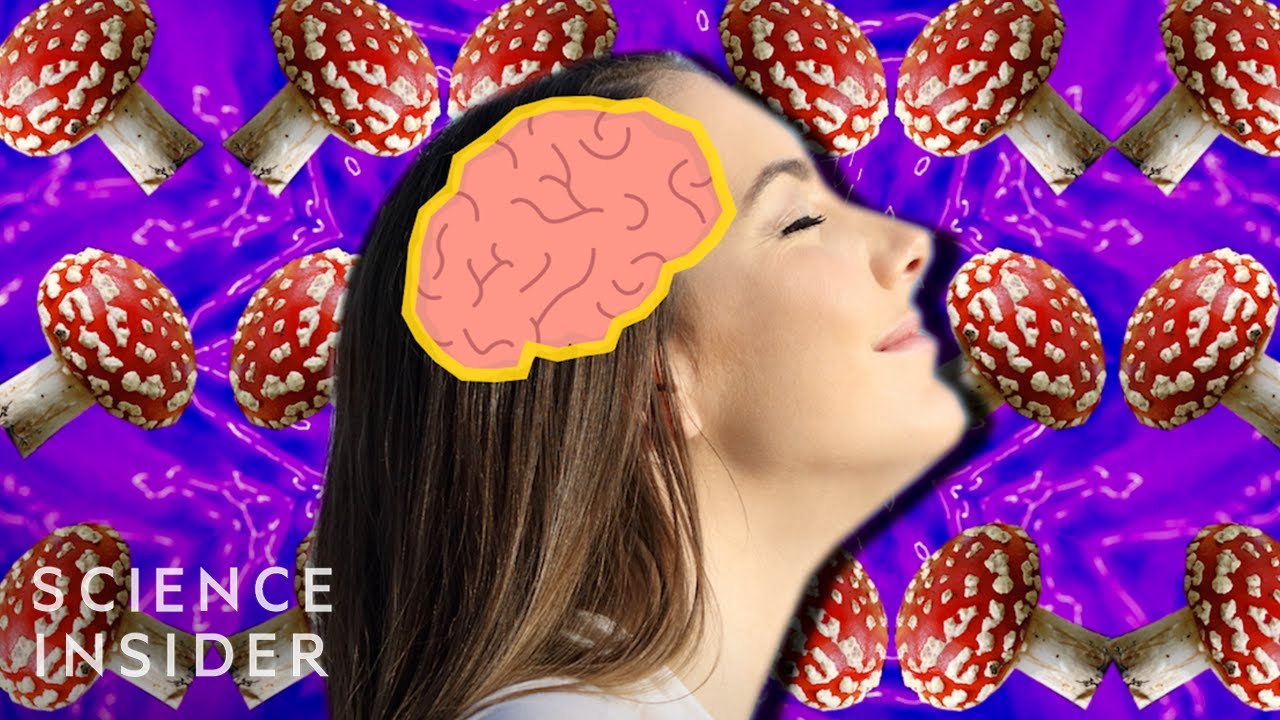
Psilocybin and the brain is a neuroscience topic that reveals how a single molecule can quietly rewrite what we know about human consciousness. The video above — "Magic Mushrooms and the Brain" — walks through the neuroscience in about ten minutes, and it's worth your time. This piece unpacks what's actually happening up there when psilocybin kicks in: which receptors it grabs, why your sense of self can dissolve, and why a handful of clinical studies have psychiatrists genuinely excited for the first time in decades. This is written for adults aged 18 and over.
18+ only
We've been selling psilocybin truffles since 1999, and the questions customers ask now are completely different from the ones we got fifteen years ago. Back then it was "how strong?" Now it's "what does it actually do to my brain?" Fair question. Here's the science, in plain language, with the studies that matter — whether you want to buy our Mexicana magic truffles, order a Golden Teacher grow kit, or simply understand the research before you get involved.
How psilocybin and psilocin work on serotonin 2A receptors
Psilocybin works by being converted into psilocin, which binds to serotonin 2A receptors on neurons and triggers cascading firing patterns across the brain. It's a classic psychedelic — the same chemical family as LSD and DMT — and it's found in more than 180 mushroom species worldwide. Researchers think it likely evolved as a chemical defence against insects that fancied a nibble on the fruiting body. Insects get a neurochemical surprise; we get one of the most studied compounds in modern neuroscience.

Once you swallow it, psilocybin itself doesn't do much. Your liver converts it into psilocin, the active molecule. Psilocin then binds tightly to a specific lock on your neurons called the serotonin 2A receptor — the same receptor system that normally handles mood, perception and cognition. When psilocin grabs hold, neurons start firing in cascading patterns that researchers have nicknamed "neuronal avalanching": one cell triggers the next, which triggers ten more, in waves that ripple across regions normally kept separate.
A "classic psychedelic" just means a compound that works primarily through this 2A receptor pathway. LSD, mescaline, DMT — same lock, different keys. It's why their subjective effects rhyme, even though the molecules look nothing alike.
What changes inside the brain
Two big shifts show up consistently on fMRI scans:
- Visual cortex activity goes up. This is the perceptual side — colours intensify, patterns emerge on closed eyelids, textures appear to breathe.
- The default mode network (DMN) goes quiet. The DMN is the set of brain regions that hum away when you're daydreaming, ruminating, or running your inner monologue. Dampen it, and the felt sense of "me" can soften or dissolve entirely — what researchers call ego dissolution (Carhart-Harris et al., 2012).
Brain connectivity, neuronal avalanching and the orchestra effect
The most therapeutically interesting effect of psilocybin is a transient boost in connectivity between brain regions that normally don't talk to each other much. Imagine an orchestra where each section has been rehearsing in separate rooms — strings here, brass there, percussion down the hall. Psilocin walks in and acts as a conductor for a few hours. Suddenly everyone can hear everyone else.

This is a temporary state, not permanent rewiring. The connectivity maps from psilocybin studies show the change during the session; the brain settles back to its normal compartmentalised pattern as the compound clears (Petri et al., 2014). What can persist is the insight gained while the conductor was in the room. People describe seeing a stuck problem — a depressive loop, an addictive habit, an unresolved grief — from an angle their default network had been blocking for years.
Researchers sometimes describe this as a condensed form of talk therapy. Months of cognitive work can apparently collapse into a single afternoon of cross-talk between regions. Honest limitation: most of these studies are small, with self-selected participants and inherent difficulty in blinding — you tend to notice when you've taken a psychedelic. The signal is strong, but the evidence base is still maturing.
Brain effects at a glance
| Brain change | What it does | Duration |
|---|---|---|
| 2A receptor binding | Triggers neuronal avalanching | 4–6 hours |
| Visual cortex activity up | Altered perception, visuals | During session |
| Default mode network down | Ego dissolution, loosened self-narrative | During session |
| Cross-region connectivity up | Fresh perspective on entrenched problems | Transient — insight may persist |
What clinical psilocybin research and safety data actually show
Clinical research on psilocybin shows durable mood improvements after a single supervised session, with safety profiles more favourable than many common substances (Nutt et al., 2010). In 2016, two landmark studies on depressed and anxious cancer patients found that more than 80% reported clinically meaningful mood improvement six months after a single high-dose psilocybin session (Griffiths et al., 2016; Ross et al., 2016). That's not a microdose result — that's one supervised session producing durable change in a population conventional antidepressants often fail.

A small smoking-cessation pilot from Johns Hopkins added another striking number: 80% of participants were still tobacco-free at the six-month follow-up, compared with roughly 35% for varenicline (sold as Champix or Chantix), currently the most effective pharmaceutical for quitting smoking (Johnson et al., 2014). Small sample, but a remarkable gap.
Compared with SSRIs, which often require weeks of daily dosing before any benefit and can produce sexual side effects and emotional blunting, psilocybin's model is radically different: one or two sessions, with the work done in a single afternoon. Emergency-treatment rates from the 2017 Global Drug Survey (Global Drug Survey, 2017):
- Psilocybin mushrooms: 0.3% of users sought emergency care
- MDMA/ecstasy: 0.9%
- Alcohol: 1.3%
No clear evidence of long-term brain damage has emerged in the literature. The real risks are situational and behavioural — falls, panic in unsafe settings, mixing with other substances, pre-existing psychiatric conditions. Set and setting matter more than dose in determining whether someone ends up in A&E.
Policy is starting to catch up with the science. Denver became the first US city to decriminalise psilocybin in May 2019, followed by Oakland, several US states, and Australia approving supervised therapeutic use in 2023.
From our counter
The single most common mistake we see, twenty-five years in: people eating a heavy meal beforehand. Psilocin absorption slows, onset stretches past the usual 30–60 minutes, and someone thinks "this isn't working" and redoses. Then both doses land at once, two hours later. Light food or empty stomach. Patience. With a steady starter strain like our Atlantis magic truffles, the orchestra will tune up — just give it time.
If you want to read further on psilocybin and the brain, our wiki and culture pieces cover the history, the deep evolutionary story of fungi and human consciousness, and the practical side of fresh Hollandia magic truffles in more depth. The science here is moving fast — the picture in 2030 will probably look different again.
Last updated: April 2026
Frequently Asked Questions
5 questionsDoes psilocybin permanently rewire the brain?
Why does psilocybin dissolve the sense of self?
How is psilocybin different from other classic psychedelics?
Is psilocybin safer than alcohol according to the research?
How can I get started with psilocybin truffles responsibly?
About this article

Luke Sholl has been writing about cannabis, cannabinoids, and the broader benefits of nature since 2011, and has personally grown cannabis in home grow tents for more than a decade. That first-hand cultivation experience
This blog article was drafted with AI assistance and reviewed by Luke Sholl, External contributor since 2026. Editorial oversight by Joshua Askew.
Medical disclaimer. This content is for informational purposes only and does not constitute medical advice. Consult a qualified healthcare provider before use of any substance.
Last reviewed June 21, 2026
References (7)
- [6a37bfcd8ce01300430fc56b]Carhart-Harris, R.L., Erritzoe, D., Williams, T., Stone, J.M., Reed, L.J., Colasanti, A., et al. (2012). Neural correlates of the psychedelic state as determined by fMRI studies with psilocybin. Proceedings of the National Academy of Sciences, 109(6), 2138-2143. DOI: 10.1073/pnas.1119598109
- [6a37bfcd8ce01300430fc56c]Petri, G., Expert, P., Turkheimer, F., Carhart-Harris, R., Nutt, D., Hellyer, P.J., et al. (2014). Homological scaffolds of brain functional networks. Journal of The Royal Society Interface, 11(101), 20140873. DOI: 10.1098/rsif.2014.0873
- [6a37bfcd8ce01300430fc56d]Griffiths, R.R., Johnson, M.W., Carducci, M.A., Umbricht, A., Richards, W.A., Richards, B.D., et al. (2016). Psilocybin produces substantial and sustained decreases in depression and anxiety in patients with life-threatening cancer: A randomized double-blind trial. Journal of Psychopharmacology, 30(12), 1181-1197. DOI: 10.1177/0269881116675513
- [6a37bfcd8ce01300430fc56e]Ross, S., Bossis, A., Guss, J., Agin-Liebes, G., Malone, T., Cohen, B., et al. (2016). Rapid and sustained symptom reduction following psilocybin treatment for anxiety and depression in patients with life-threatening cancer: a randomized controlled trial. Journal of Psychopharmacology, 30(12), 1165-1180. DOI: 10.1177/0269881116675512
- [6a37bfcd8ce01300430fc56f]Johnson, M.W., Garcia-Romeu, A., Cosimano, M.P., Griffiths, R.R. (2014). Pilot study of the 5-HT2AR agonist psilocybin in the treatment of tobacco addiction. Journal of Psychopharmacology, 28(11), 983-992. DOI: 10.1177/0269881114548296
- [6a37bfcd8ce01300430fc570]Nutt, D.J., King, L.A., Phillips, L.D. (2010). Drug harms in the UK: a multicriteria decision analysis. The Lancet, 376(9752), 1558-1565. DOI: 10.1016/S0140-6736(10)61462-6
- [6a37bfcd8ce01300430fc571]Global Drug Survey (2017). GDS2017 Key Findings Report. Global Drug Survey. Source
Related Articles
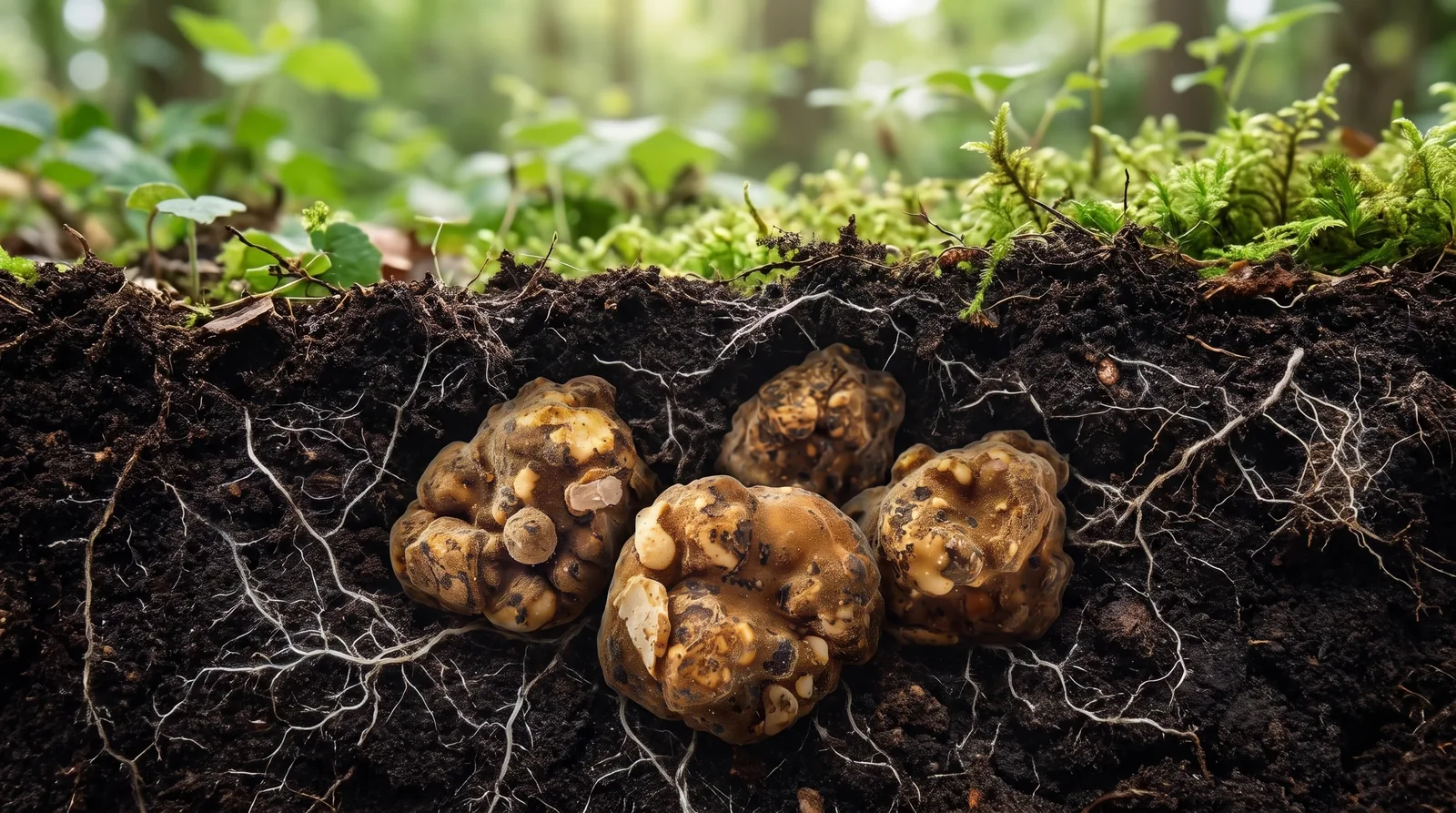
Sclerotia Formation: Why Magic Truffles Grow Underground
How sclerotia formation evolved as a fungal survival strategy — and what it means for truffle potency, structure, and storage.
Psychedelics and Predictive Processing: Sam Harris Explained
Sam Harris on psychedelics and predictive processing: how REBUS, the entropic brain and Johns Hopkins research reveal how your mind builds reality.
Kratom Effects on the Brain: What Hamilton Morris Found
Hamilton Morris's VICE film tested kratom effects on the brain. Here's the pharmacology, the nucleus accumbens finding, and the real story behind the…
Cannabis Combustion Chemistry: What 900°C Does to THC
Cannabis combustion chemistry explained: how 900°C creates formaldehyde, benzene and CO from cannabinoids, and how vaporising and edibles avoid it.