
This article discusses psychoactive substances intended for adults (18+). If you have a health condition or take medication, consult a doctor before use. Our age policy
Peyote Cactus: Plant Profile and Care Guide
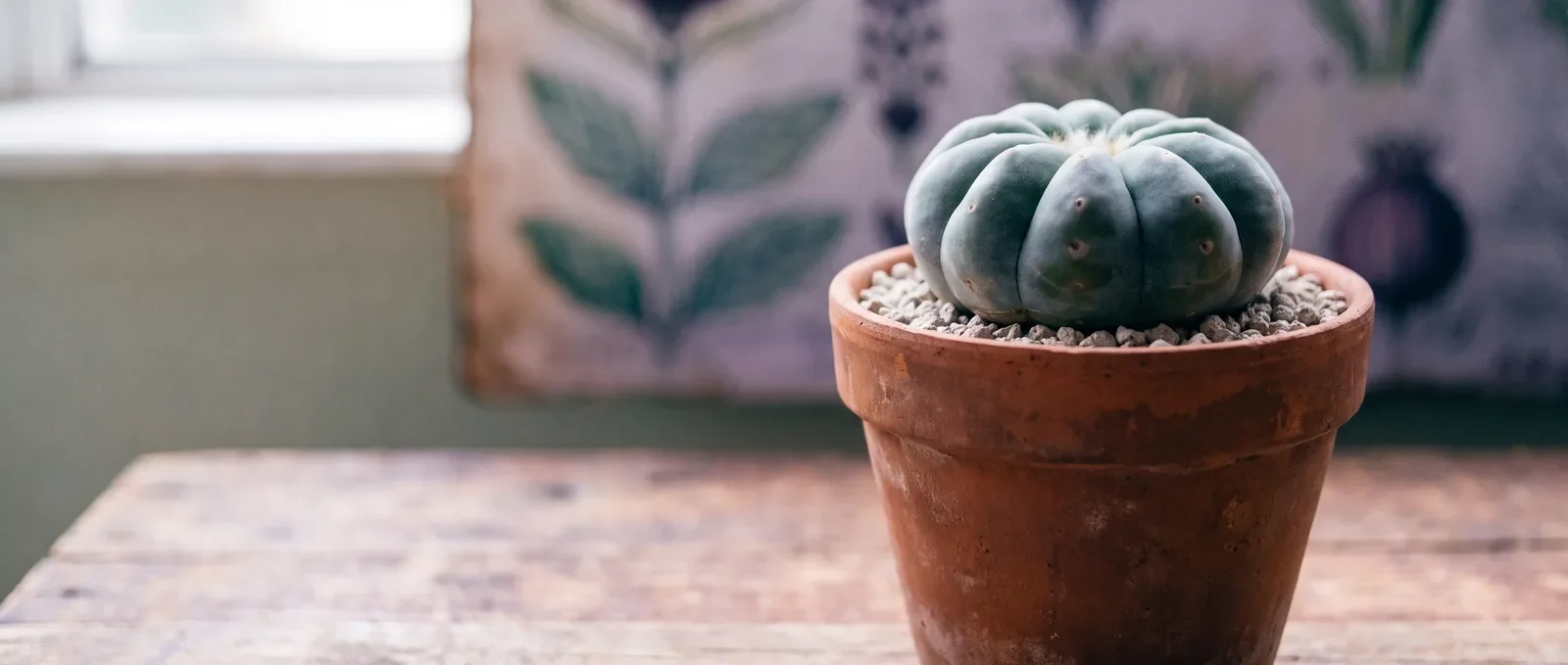
Definition
Grow a healthy peyote cactus with confidence: realistic growth expectations, the right gritty soil mix, a watering and winter rest routine that prevents rot, propagation from pups and seeds, and a clear comparison with fast-growing San Pedro, all from a practical grower's point of view.
The peyote cactus is a small, spineless desert cactus that rewards patience more than any other plant on your windowsill. Known botanically as Lophophora williamsii, it grows so slowly that you measure progress in millimetres per year, and that is exactly why growers love it. This guide covers what the plant is, how fast it really grows, how to keep it happy through a European year, and how to propagate it.
Quick tip before anything else: if your new plant arrives in soft, peaty compost, repot it into a gritty mineral mix within the first few weeks. That single change prevents more losses than anything else in this article.
What is the peyote cactus?
The peyote cactus is a low, button-shaped cactus native to the Chihuahuan Desert of north and central Mexico and southern Texas along the Rio Grande. It is blue-green, has no spines, and keeps most of its mass hidden underground in a thick taproot.
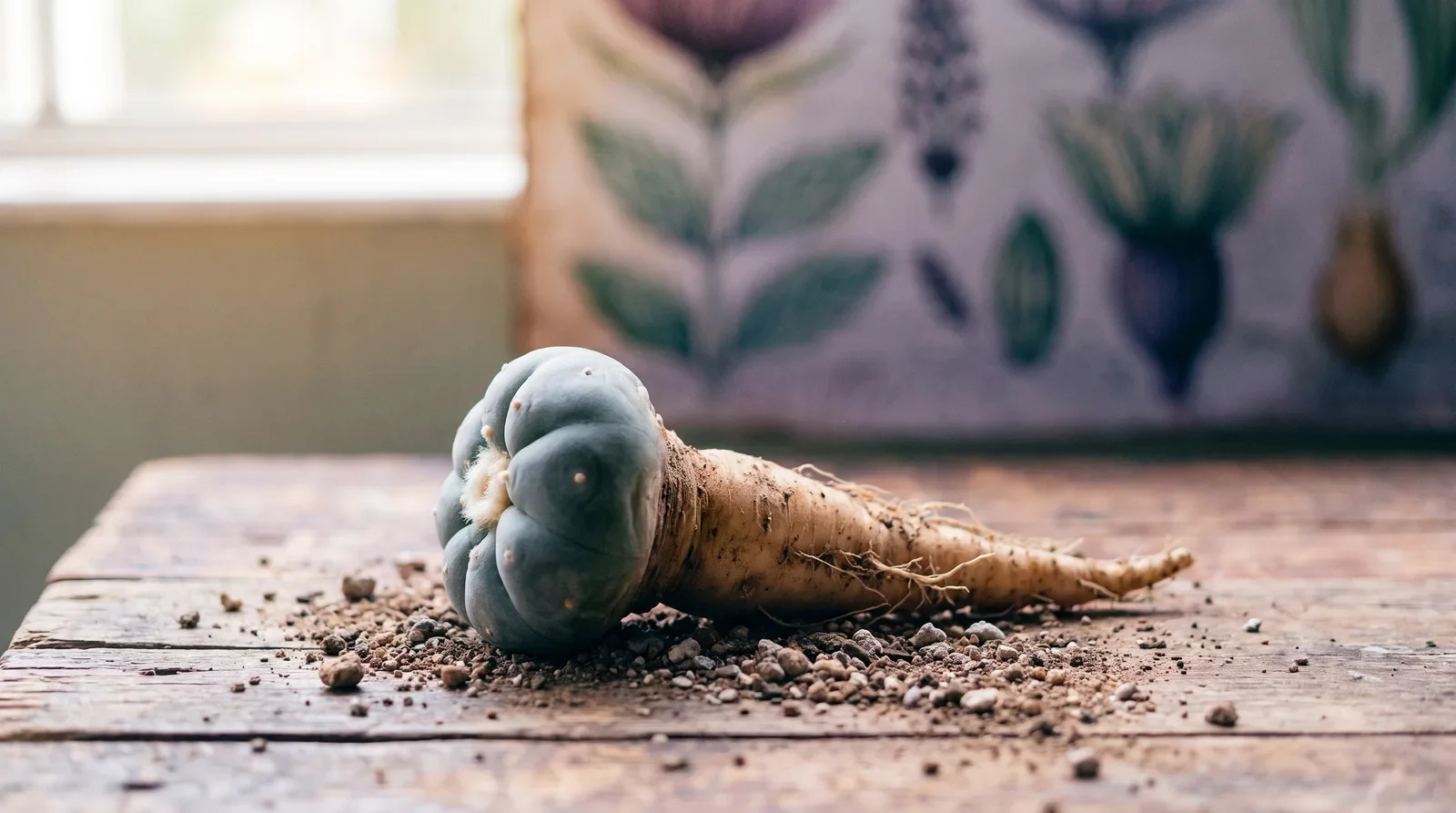
Above ground you see a soft, slightly squashy dome, usually 2-12 cm wide, divided into rounded ribs or tubercles. Where most cacti carry spines, peyote has small tufts of woolly hairs sitting on the areoles. These pale tufts are one of the easiest ways to tell it apart from look-alikes. The skin has a matte, almost chalky blue-green tone, and it shifts colour depending on light and stress.
Below ground is the bit most people never think about: a large, carrot-like taproot that holds most of the plant. In habitat, the button often sits nearly flush with the soil, and in drought it can pull itself partly into the ground. That root is the reason peyote needs a deep pot and a very free-draining mix, and it is also the reason overwatering kills it so quickly.
How fast does a peyote cactus grow?
A peyote cactus grows very slowly: seedlings are usually only a few millimetres to about 1 cm wide after their first year, and plants usually need 3-5 years of good care before they flower. In habitat, reaching 5-7 cm across often takes 10 years or more.
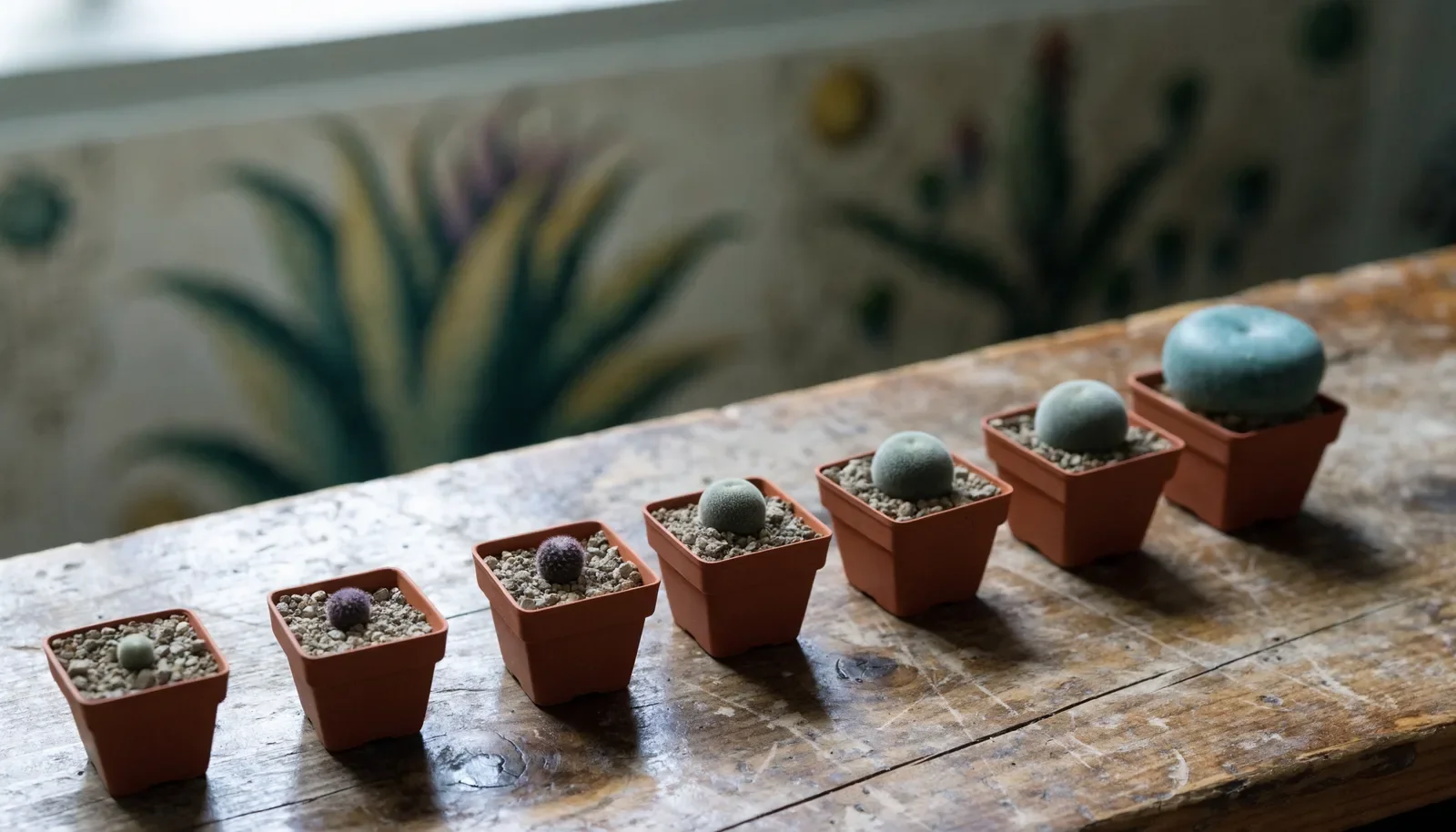
This is the part where expectations need resetting. If you are used to tomatoes, basil or even a San Pedro, peyote will feel like it is standing still. It isn't. It is building root first and button second, and visible growth tends to come in short bursts during warm, bright months. A healthy plant in a good setup might add a few millimetres of width in a season. That is normal, and it is no sign you are doing something wrong.
What about grafting?
Grafting is the main shortcut. Growers place young peyote seedlings onto a vigorous rootstock such as Pereskiopsis or Trichocereus, and the stock pumps water and nutrients into the scion far faster than its own root could. Grafted plants can reach flowering size in a fraction of the time.
The trade-off is form. Grafted peyote tends to look puffier, greener and less compact, it often offsets heavily, and it never develops that characteristic taproot. If you want a plant that looks like it came from the Chihuahuan Desert, grow it on its own roots. If you want flowers and pups quickly, a grafted plant is a fun project. Both are valid; just know which one you are buying.
Peyote cactus care: location, light, soil, watering, winter rest
Peyote cactus care comes down to bright light, a very mineral soil, deep watering only when the pot is bone dry, and a cool, dry winter rest from November to February. Get those four right and the plant mostly looks after itself.
Location and light
Give it bright light with some protection from harsh midday summer sun. A south or east-facing window works well, as does a greenhouse with light shading in high summer. In the wild, peyote often grows in the partial shade of shrubs, so full, unfiltered glass-magnified sun on a July afternoon is too much. Move a plant into stronger light gradually over two to three weeks, especially in spring after the winter rest, or it will scorch.
Soil and pot
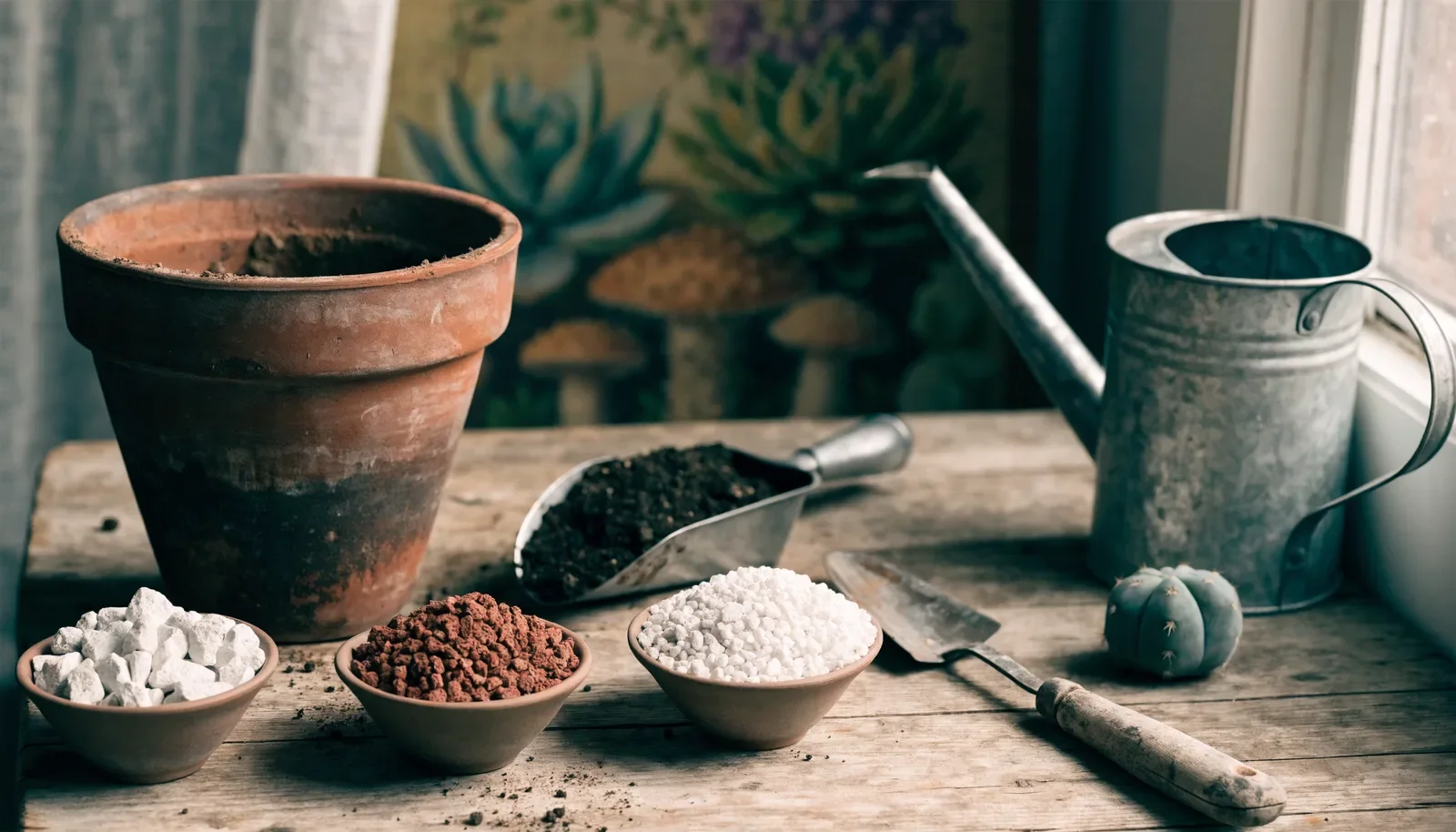
The best soil for peyote is mostly mineral: roughly 70-80% pumice, lava grit, perlite or akadama mixed with 20-30% cactus compost. It should feel gritty and fall apart in your hand, never clump. Use a deep pot to give the taproot room; a tall, narrow plant pot beats a shallow bowl every time. Terracotta dries faster than plastic, which is helpful if you tend to overwater.
Watering
Water only when the soil is completely dry right through. In warm summer weather that usually means roughly every 10-14 days. When you do water, soak the pot properly and let it drain fully. Never leave it standing in a saucer. In cooler, cloudy spells, wait longer. A gentle squeeze test helps: a well-hydrated button feels firm, a thirsty one feels slightly soft and may look a bit wrinkled.
Winter rest
From November to February, give no water at all. Keep the plant cool and dry at about 5-12 °C, frost-free and never below about 0 °C. An unheated spare room, a bright stairwell or a frost-protected greenhouse works. This rest period is what triggers flowering in spring, so skipping it by keeping the plant warm and watered on a living-room sill usually means a stretched, weak plant and no flowers.
Feeding and repotting
Feed lightly with a low-nitrogen cactus fertiliser at quarter to half strength once a month from April to August. Too much nitrogen makes the button soft and prone to splitting. Repot every 2-3 years in spring, ideally into dry soil, then wait about a week before the first watering so any damaged roots can seal.
Peyote care calendar at a glance
| Period | Water | Temperature | Light | Feeding |
|---|---|---|---|---|
| March | First light watering late in the month once days warm | 10-18 °C | Bright, ease into stronger light slowly | None |
| April-May | Soak and drain when fully dry | 15-25 °C | Bright, south or east window | Monthly, quarter to half strength |
| June-August | Roughly every 10-14 days in warmth | 20-30 °C | Bright with midday shading | Monthly, quarter to half strength |
| September-October | Reduce, longer gaps, stop by end of October | 12-20 °C | Bright | None |
| November-February | No water | 5-12 °C, frost-free | As bright as possible | None |
Common problems
- Rot from overwatering: the base turns soft, brown or translucent. Usually caused by wet soil in cool weather or a peaty mix. Act fast: unpot, cut away soft tissue and let it callus.
- Sunburn: bleached, yellow-white or brown patches after a sudden move into strong sun. The scars are permanent, so acclimatise gradually.
- Mealybugs and root mealybugs: white fluffy spots in the woolly tufts or a white powdery coating on the roots at repotting. Check the roots every time you repot.
- Red spider mite: fine speckling and a dull, rusty look, mostly in warm, dry indoor air. A brief misting of the surroundings and regular inspection help.
Peyote cactus flowering and propagation: pups and seeds
A mature peyote cactus flowers from the centre of the crown in spring and summer, producing pink to white blooms, followed by pink, club-shaped fruits full of small black seeds. You can propagate it from these seeds or from offsets, often called pups.
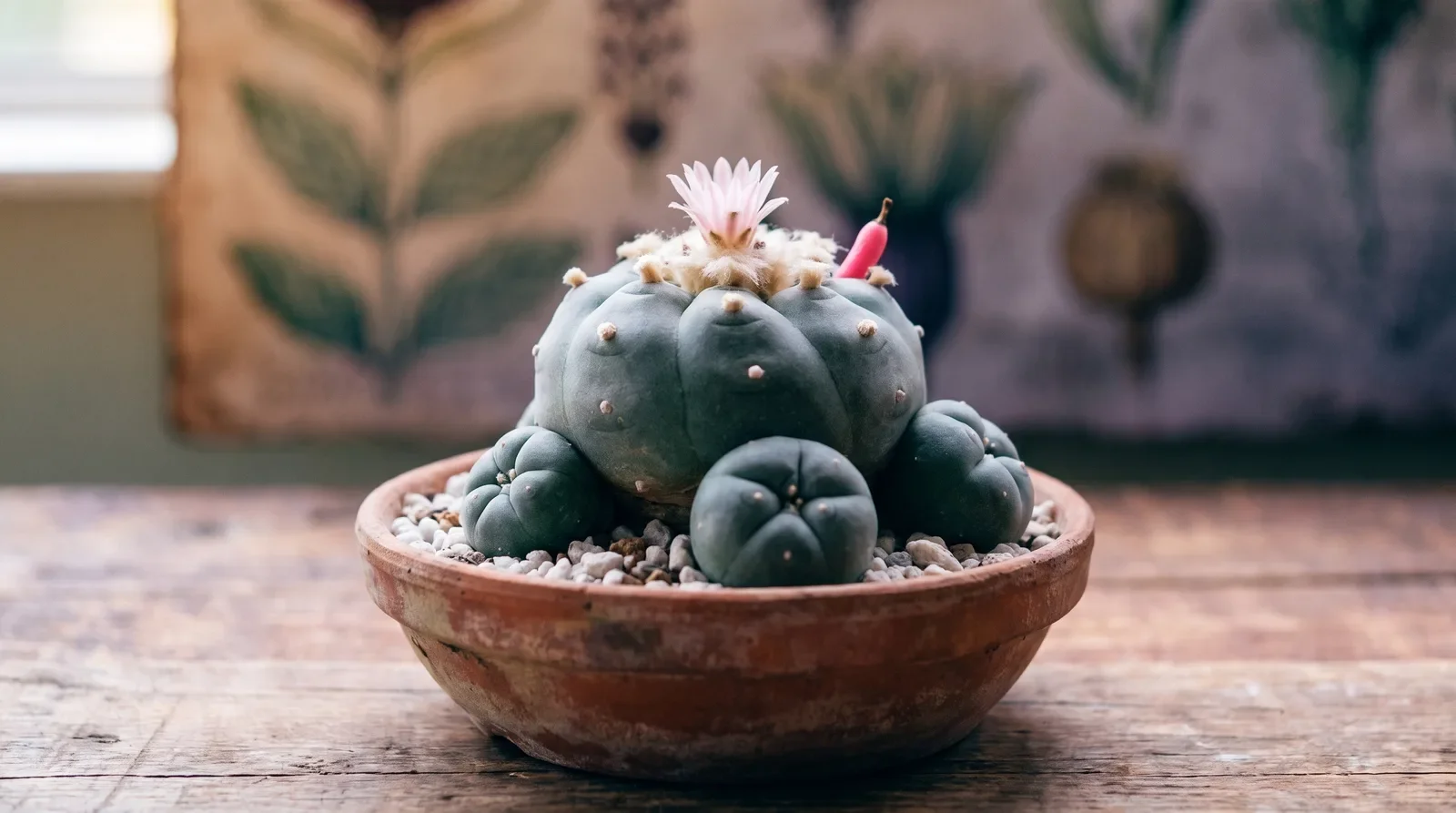
Flowers usually appear after a proper winter rest and pop up from the woolly centre of the button. Fruits develop slowly inside the woolly crown and usually take several months to ripen, sometimes only appearing the following season. Once ripe and slightly soft, they can be picked, and the seeds cleaned and dried for sowing.
Propagating from offsets
Older plants, and especially damaged or grafted ones, often form pups around the main button. To take one:
- Choose a pup at least 1-2 cm wide, ideally in late spring or early summer.
- Cut it cleanly with a sharp, clean knife at the narrowest point.
- Leave the cutting somewhere dry, bright and out of direct sun to callus for 1-2 weeks.
- Set it on top of a dry mineral mix, pressing it in only slightly.
- Wait until roots form before watering lightly, then treat it like a young plant.
Growing from seed
Sow seeds on the surface of a fine, sterile mineral mix, without covering them. Water from below, then keep them humid under a clear cover or in a closed propagator at 22-28 °C with bright, indirect light. Germination usually takes 1-3 weeks. After that, air the cover a little more each day over several weeks so the seedlings harden off gradually. Seedlings are tiny and slow, so keep them together in one pot for their first year or two.
Peyote cactus vs San Pedro: the differences
The peyote cactus is a slow, spineless, button-shaped cactus from the Chihuahuan Desert, while San Pedro (Echinopsis pachanoi, also listed as Trichocereus) is a fast, columnar cactus from the Andes that can grow 20-30 cm per year. They need quite different care.
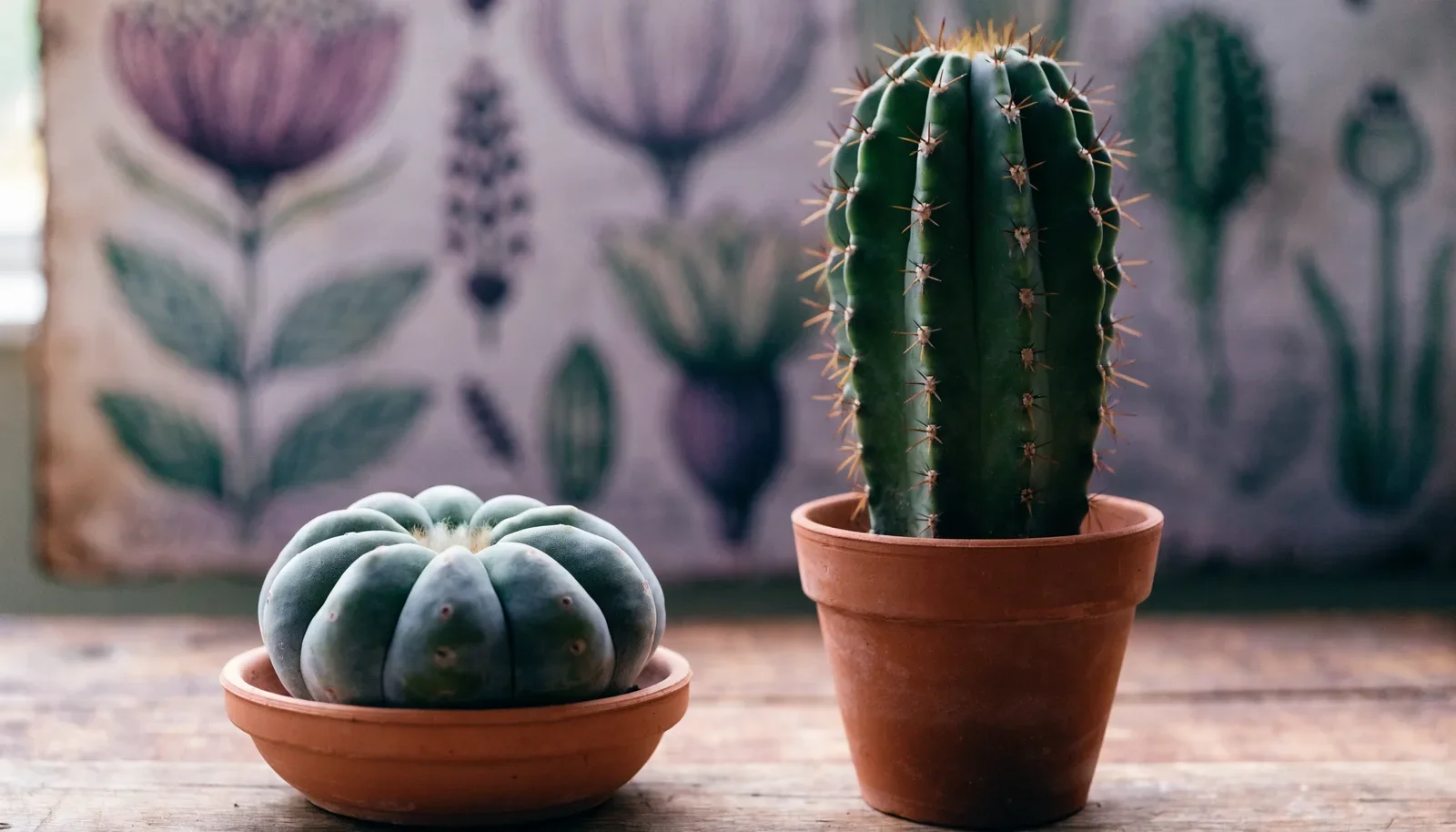
| Peyote | San Pedro | |
|---|---|---|
| Origin | Chihuahuan Desert, Mexico and southern Texas | Andes of South America |
| Shape | Low, round button with a large taproot | Tall, branching column |
| Spines | None, woolly tufts instead | Few, short spines |
| Growth speed | Millimetres per year | 20-30 cm per year in good conditions |
| Size | Usually 2-12 cm wide | Several metres tall over time |
| Care difficulty | Moderate, unforgiving of wet soil | Easy, tolerant and forgiving |
| Propagation | Seeds and pups, slow | Cuttings root easily, seeds also work |
If you want quick results, San Pedro is the friendlier first cactus. If you enjoy a slow, collector-style plant, peyote is the one. For the San Pedro side, including callusing and rooting fresh cuttings, see our San Pedro cactus care guide.
Peyote species protection and history
Peyote is classed as Vulnerable on the IUCN Red List, with wild populations declining from habitat loss and overharvesting. Because the plant grows so slowly, wild stands take many years to recover once removed.
The plant also has a long history among Indigenous peoples of Mexico and the southwestern United States, where it holds deep cultural and ceremonial significance that goes back many centuries. That history is one more reason to treat wild populations with respect.
The practical takeaway for growers is simple: buy nursery-grown or seed-grown plants, never wild-collected ones. The live peyote cactus in our shop comes in several sizes, starting from small 1-2 cm seedlings. Growing your own from seed is the gentlest option of all. For the fuller story, read our article on peyote species protection and conservation status.
Peyote is a plant for people who like to watch things happen slowly: gritty soil, deep pot, bright but filtered light, sparse watering and a proper cold, dry winter. Do that and your peyote cactus will reward you with flowers and, eventually, pups. You will find it alongside its relatives in our cacti collection.
Frequently Asked Questions
5 questionsHow long does a peyote cactus take to grow?
How often should I water peyote?
Can peyote grow outdoors in the UK?
Why is my peyote turning red or yellow?
Does peyote have spines?
About this article


Luke Sholl has been writing about cannabis, cannabinoids, and the broader benefits of nature since 2011, and has personally grown cannabis in home grow tents for more than a decade. That first-hand cultivation experience
This blog article was drafted with AI assistance and reviewed by Luke Sholl, External contributor since 2026. Editorial oversight by Joshua Askew.
Last reviewed October 3, 2026
Related Articles
San Pedro Cactus Care: First-Year Guide for New Owners
Complete first-year san pedro cactus care guide: callusing, watering, dormancy, peyote differences, troubleshooting and species-by-species tips for…
Amanita Muscaria: Botany, Chemistry and European Folklore
Amanita muscaria is the fly agaric of European fairy tales — and a poisonous mushroom, not a magic one. The botany, the deadly lookalikes, the muscimol chemistry and the Santa myth, straight.

8 Balcony Cannabis Strains Ranked by Height for Small Grows
Eight balcony cannabis strains ranked by verified height, cycle time and THC — so your grow fits under the railing and out of the neighbours'…
How to Lemon Tek Mushrooms: Method, Dose & Timing
Learn how to lemon tek mushrooms step by step: chemistry, dosing, timing and harm reduction for a faster, sharper and shorter psilocybin experience.
Cannabis in Germany: Is Weed Legal in 2026? CanG Rules
Is weed legal? How cannabis in Germany works after CanG: 25 g possession, three plants at home, Cannabis Social Clubs and city-by-city enforcement.
7 Functional Mushrooms and What People Use Them For
A practical guide to 7 functional mushrooms — lion's mane, reishi, cordyceps, chaga, maitake, shiitake, snow fungus — with traditional uses and…
How to Increase Bud Weight: 5 Hidden Yield Killers
Healthy plants, light harvests? Mr. Grow It's 5 hidden bottlenecks and exactly how to increase bud weight — without touching your nutrients.

How Long Does Being High Last? Cannabis Timeline
How long does being high last? On average about 4 hours — but smoking, edibles, dose and tolerance change everything. The full science-backed timeline.

Cannabis Weed Weights & Measurements: Grams to Ounce Guide
Cannabis weed weights and measurements explained: grams, eighths, quarters, ounces and zips. Metric-first European reference with exact conversions.