
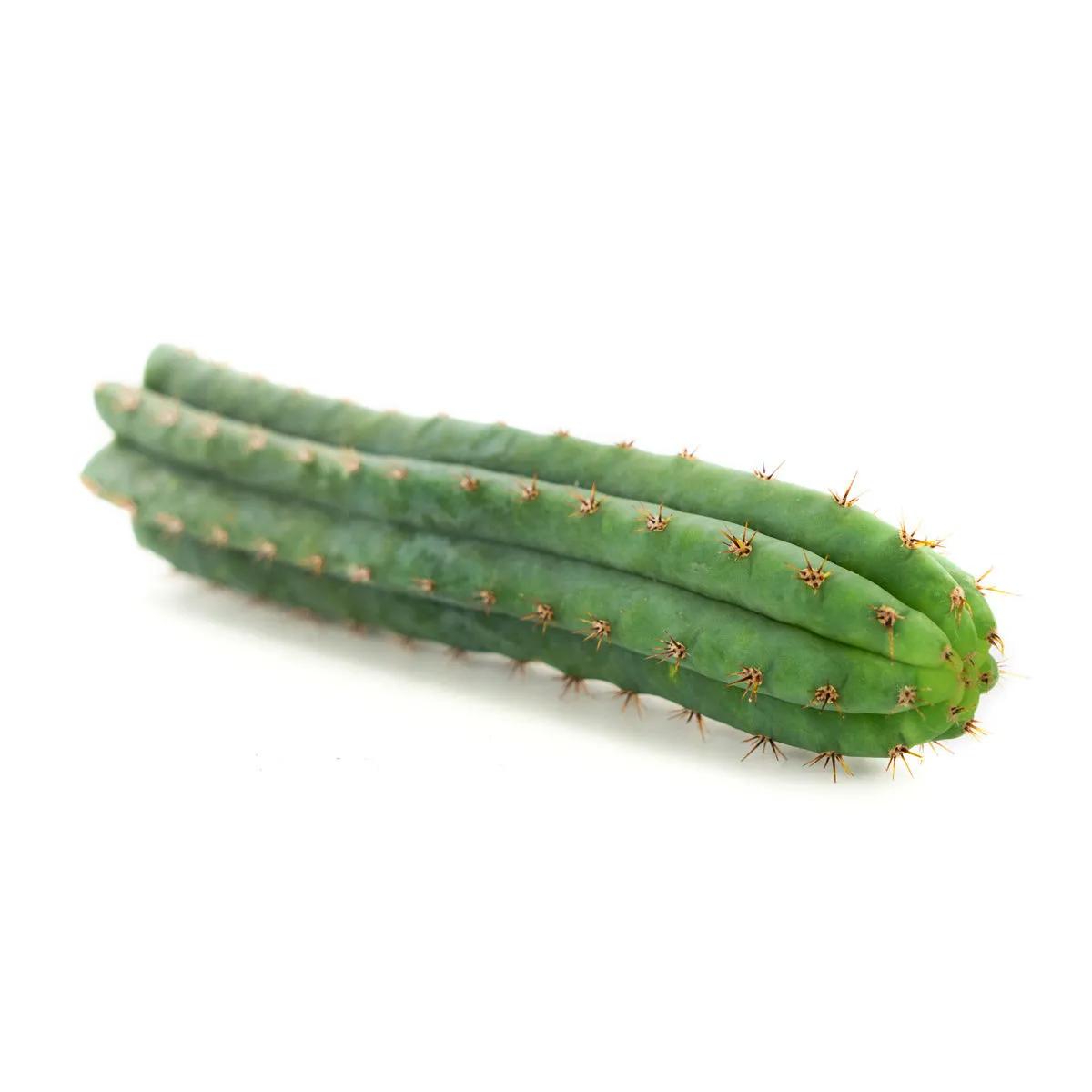
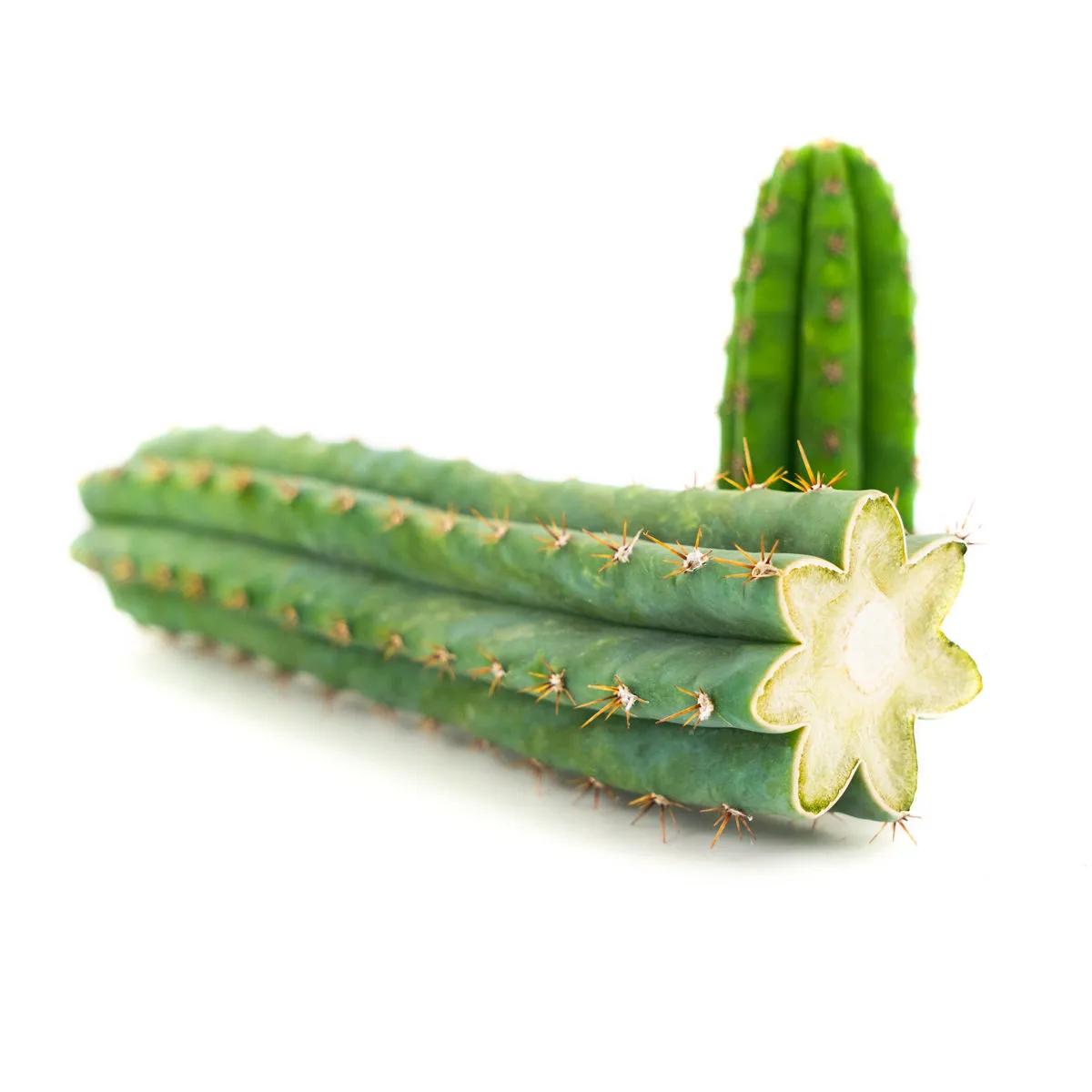
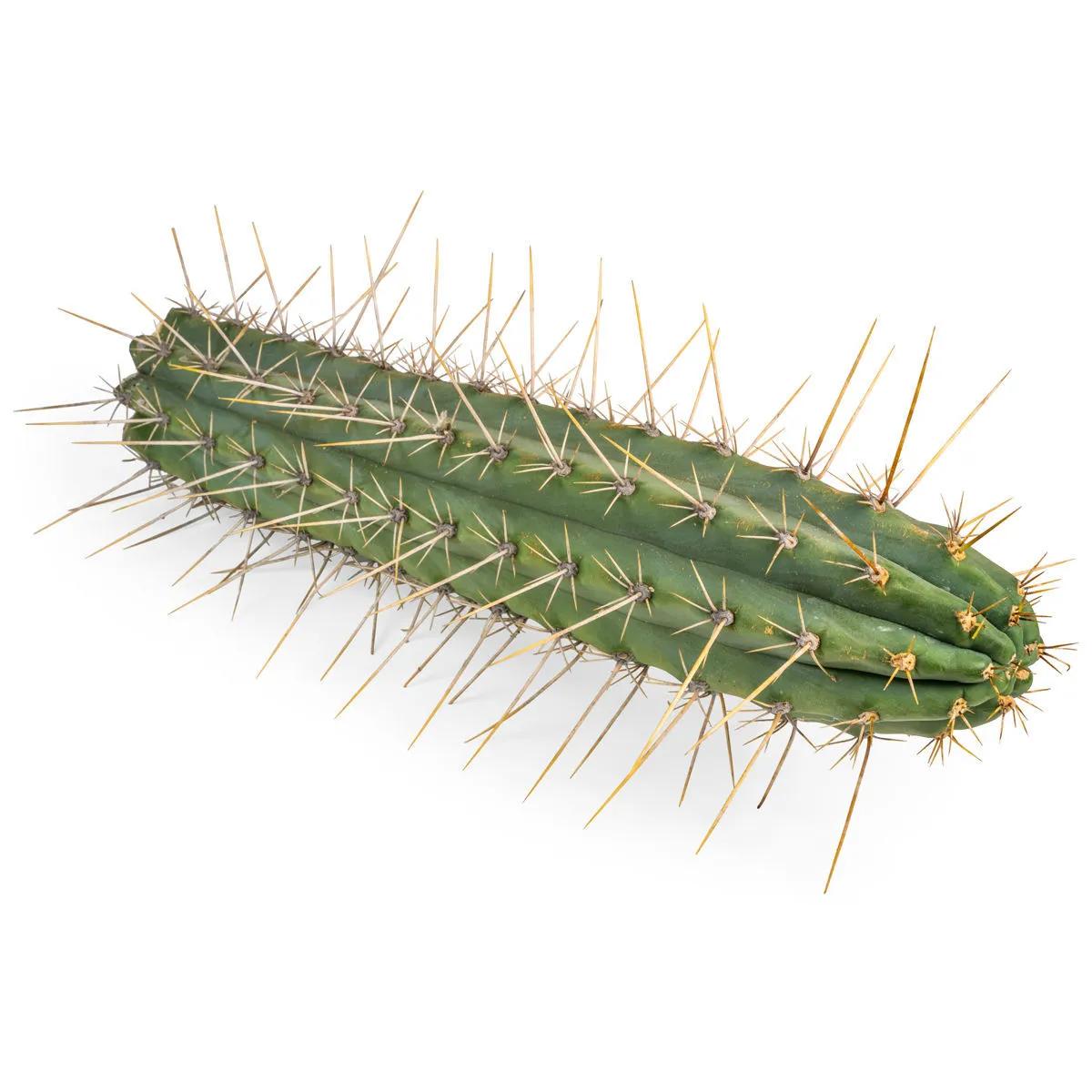
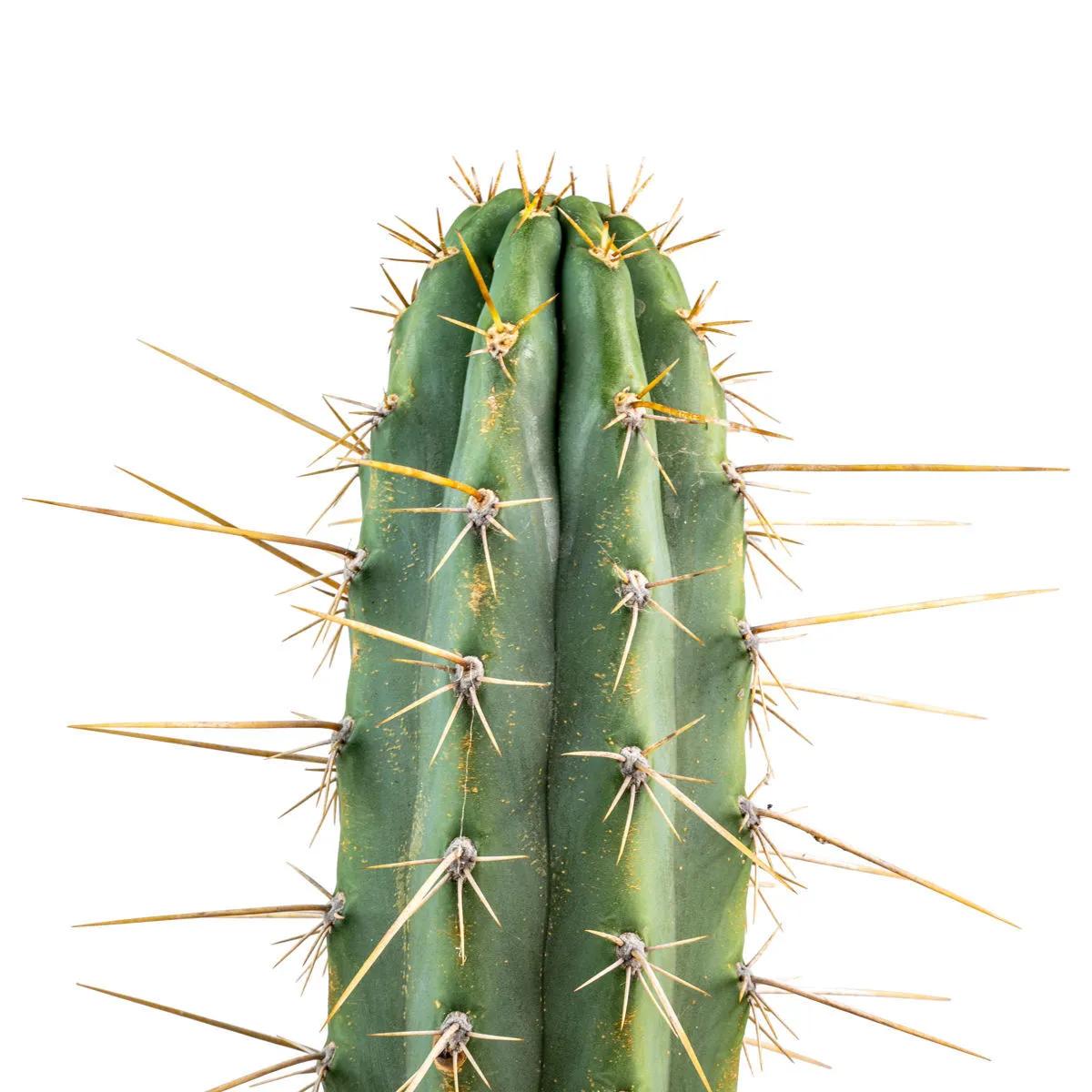
Peruvian Torch is a columnar mescaline cactus (Echinopsis peruviana) from the Andes that gives collectors a living, growing plant to pot up and keep for decades. We sell it as rooted cuttings for hobbyist growers and collectors — not powder, not extract, not dried shavings — so what you buy at Azarius is a plant to keep, pot on, and watch grow. We've been shipping cacti from Amsterdam since 1999, and this page walks you through what the format means before you order a size.
Buy Peruvian Torch cuttings — format guide
A Peruvian Torch cutting is a live section of cactus stem, rooted and ready to pot. That's the format. It's different from buying San Pedro powder, different from buying seeds, and different from getting a dried specimen — and the differences matter more than most first-time buyers realise.
Seeds are cheap but slow: Echinopsis peruviana seedlings take 2–3 years to reach a respectable size, and germination rates in a home setup hover around 50%. Dried material is a finished product with no future. A rooted cutting sits in the middle — you get a living plant that's already past the fragile seedling stage, and it'll keep growing at the cactus's natural pace of roughly 15–20 cm per year in good conditions. In our Amsterdam greenhouse we've measured established cuttings putting on up to 25 cm in a single warm summer. If you want a garden plant that gets taller every summer, cuttings are the only sensible starting point.
Cuttings vs seeds vs dried — what to order
Three quick comparisons before you commit:
- Cuttings — living plant, roots already established, visible growth within the first season. What we sell here.
- Seeds — cheapest per plant but expect 2–3 years before the cactus looks like anything. Good if you enjoy the growing process itself.
- Dried specimens — no growth potential, shorter shelf life than people assume. Not a category we prioritise.
Within the cuttings format, the only real decision is size. Small cuttings (around 10–11 cm) are the cheapest way in and perfectly healthy — they just need a couple of years of patience. Medium cuttings (25–30 cm) are the sweet spot for most buyers: enough plant to feel substantial, still easy to pot up and ship cleanly. Large and XL cuttings (50–60 cm) are for people who want presence immediately, or who are adding to an existing collection and don't want to wait.
What we carry in this category
We stock two products, both Echinopsis peruviana, both rooted:
- Peruvian Torch — available in small, medium and large cuttings. The standard entry point for the species.
- Peruvian Torch XL — a single larger-size listing for buyers who want a mature specimen from day one.
That's the shelf. If you're new to columnar cacti, buy the medium size first — it's the one we'd pick ourselves. Honest limitation: we don't stock seeds or dried material in this category, so if that's what you're after, you'll need to look elsewhere. If you already know your way around a San Pedro or a Bolivian Torch and want something with more vertical drama in the pot, order the XL.
Peruvian Torch vs San Pedro — the shop-floor version
People ask this constantly. Both are Echinopsis, both are Andean, both grow in similar columnar shapes. San Pedro (Echinopsis pachanoi) tends to have 1–4 short soft spines per areole and a slightly bluer-green skin. Peruvian Torch has 6–8 longer, sharper spines per areole and often a more silvery cast. Growth rates are comparable at 15–20 cm per year. For a collector, the honest answer is: get one of each. They look different enough side by side to justify the shelf space.
Frequently Asked Questions
How fast does a Peruvian Torch cutting grow?
In decent light and a free-draining cactus mix, expect around 15–20 cm of vertical growth per year once established. First season after potting is usually slower — the cutting is putting energy into root expansion before it pushes upward.
What size cutting should I buy first?
Start with the medium size if you want a plant that already looks like something. Go small if budget matters more than instant presence — it'll catch up within a few years. Order XL only if you want a mature specimen from day one.
Do I need a greenhouse to grow Peruvian Torch in Europe?
No, but you do need a bright south-facing windowsill in winter and ideally an outdoor summer spot. They tolerate brief cold down to a few degrees above freezing if kept bone dry, but wet roots plus cold is what kills them.
How is Peruvian Torch different from Bolivian Torch or San Pedro?
All three are Echinopsis columnar cacti from the Andes. Peruvian Torch (E. peruviana) has longer silvery spines, San Pedro (E. pachanoi) is smoother and bluer, Bolivian Torch (E. lageniformis) sits visually between the two. Care requirements are near-identical.
Can I ship a live cactus cutting across the EU?
Yes — we ship rooted cuttings across the EU under free movement of goods. Cuttings are packed to survive the journey; if yours arrives looking tired, give it a week in a bright spot before worrying.
Where can I learn more about Echinopsis peruviana?
The Amsterdam botanical references and city maps of cactus collections at the Hortus Botanicus are a good starting point for seeing mature specimens in person. For species background, the Azarius wiki and our grow blog cover propagation, soil mixes, and winter care in more depth.
Last updated: April 2026