
Buy more, pay less
Peruvian Torch Cactus (Echinopsis peruviana)
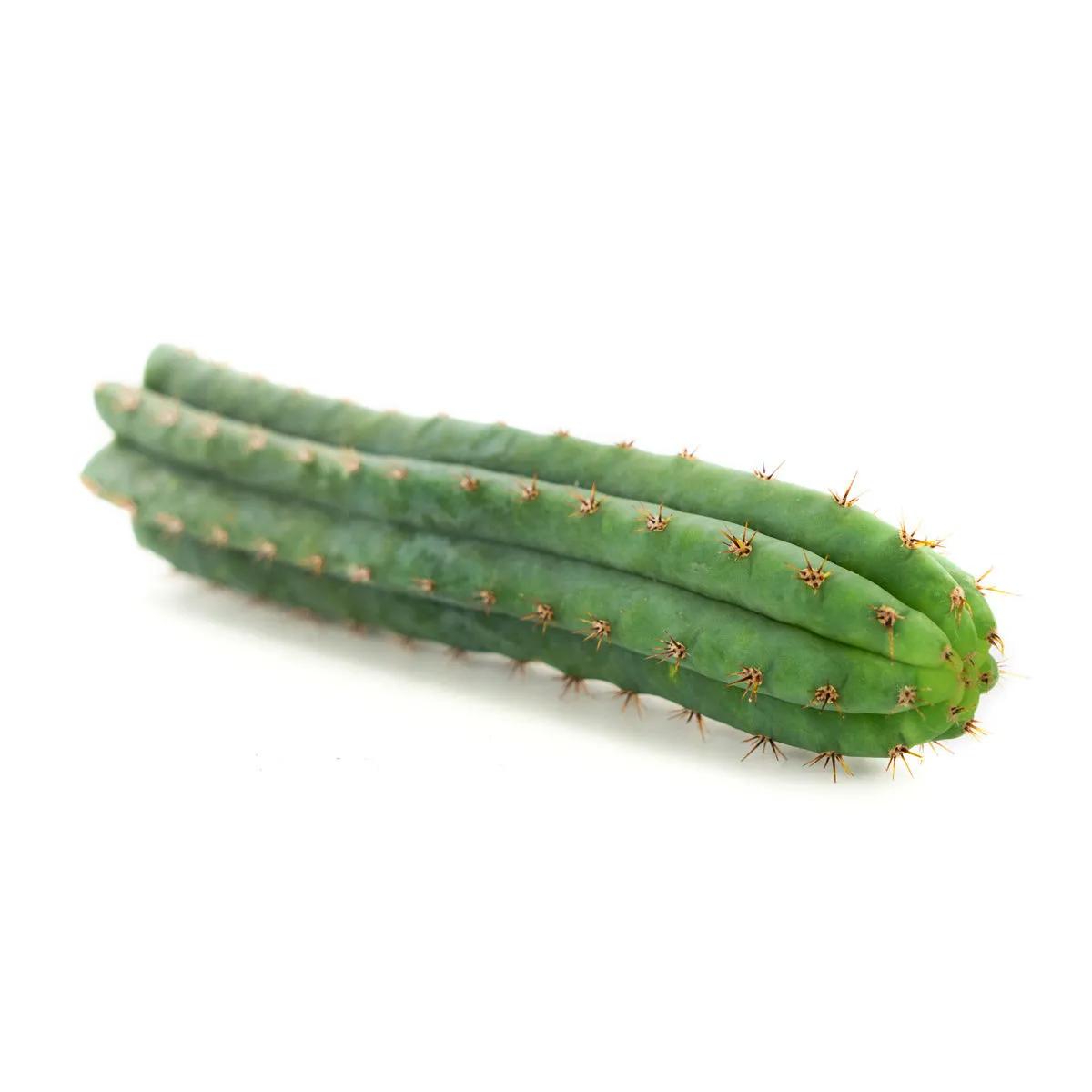
The Peruvian Torch is a fast-growing columnar cactus native to the high-altitude deserts of Peru and Ecuador, thriving at 2,000–3,000 metres above sea level. It contains the well-researched psychoactive alkaloid mescaline (3,4,5-trimethoxyphenethylamine) and has been part of Andean traditional practices for centuries. We sell rooted cuttings in three sizes — small, medium, and large — each ready to plant and grow at home. The bluish-green skin with its distinctive light blue glow makes this one of the most visually striking cacti you can keep on a windowsill or in a greenhouse.
Which Size Should You Pick?
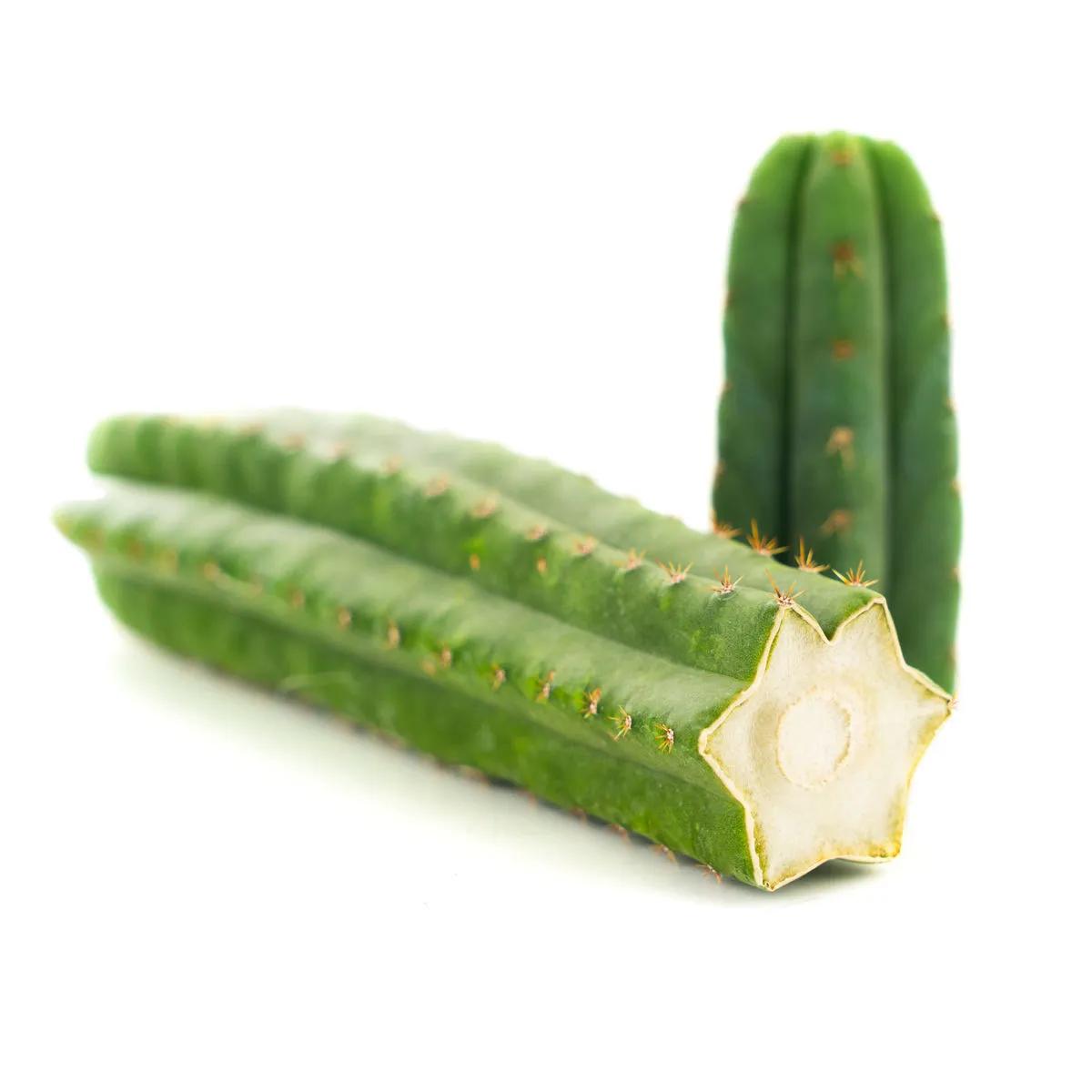
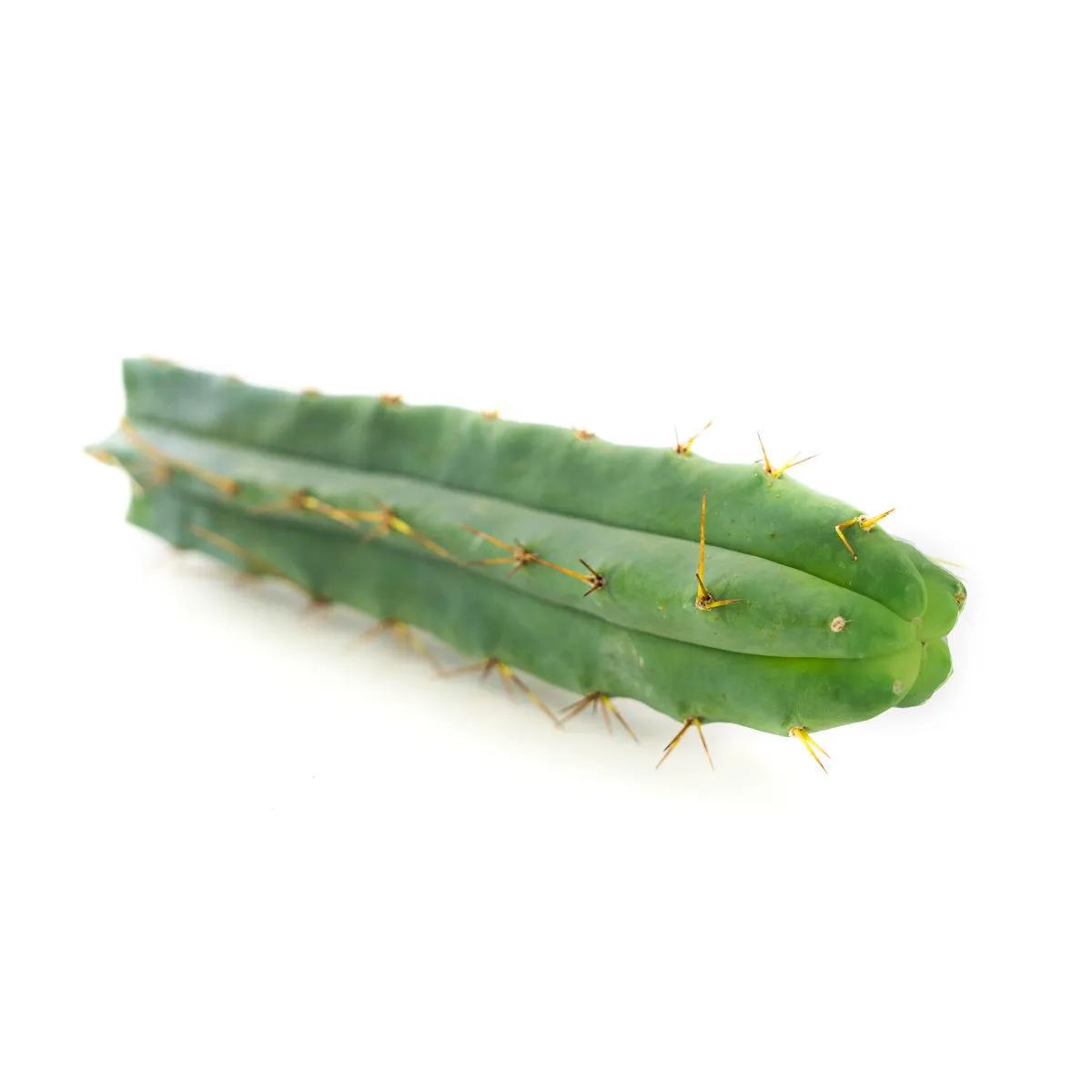
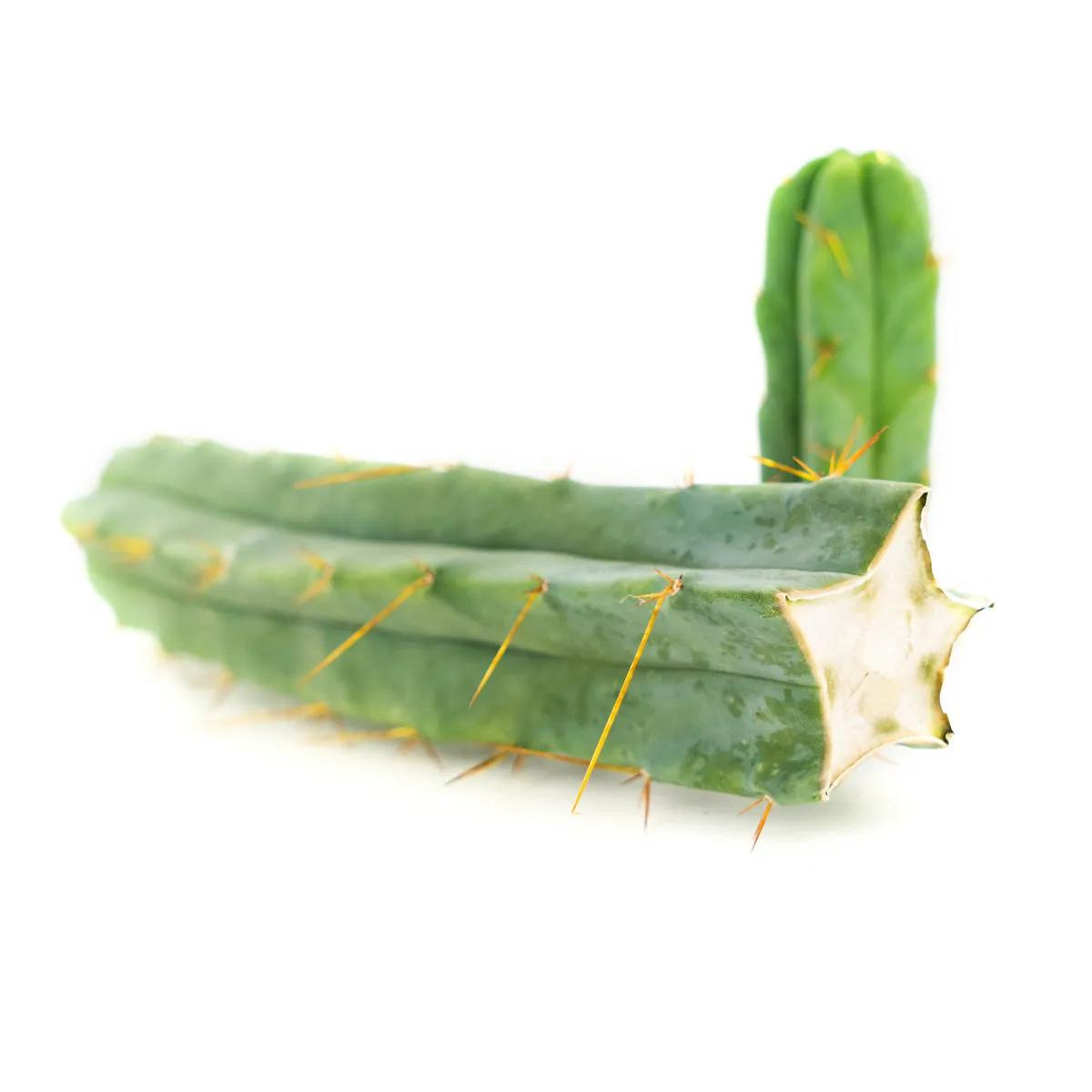
We carry three Peruvian Torch cuttings. The difference is straightforward: bigger cuttings establish faster and look more impressive sooner, but even the small one will grow into a proper column given time.
| Variant | Height | Best for |
|---|---|---|
| Small | 10–11 cm | Starting a collection without spending much. Fits any windowsill. Needs the most patience — expect 6–12 months before it really takes off. |
| Medium | 25–30 cm | The one we'd pick for most people. Already looks like a proper cactus, roots faster, and gives you a head start on growth. Good balance of size and price. |
| Large | 50–60 cm | Instant statement piece. Roots quickly and starts putting on new growth within weeks. If you want a mature-looking Peruvian Torch without waiting a year, this is it. |
What Makes the Peruvian Torch Special
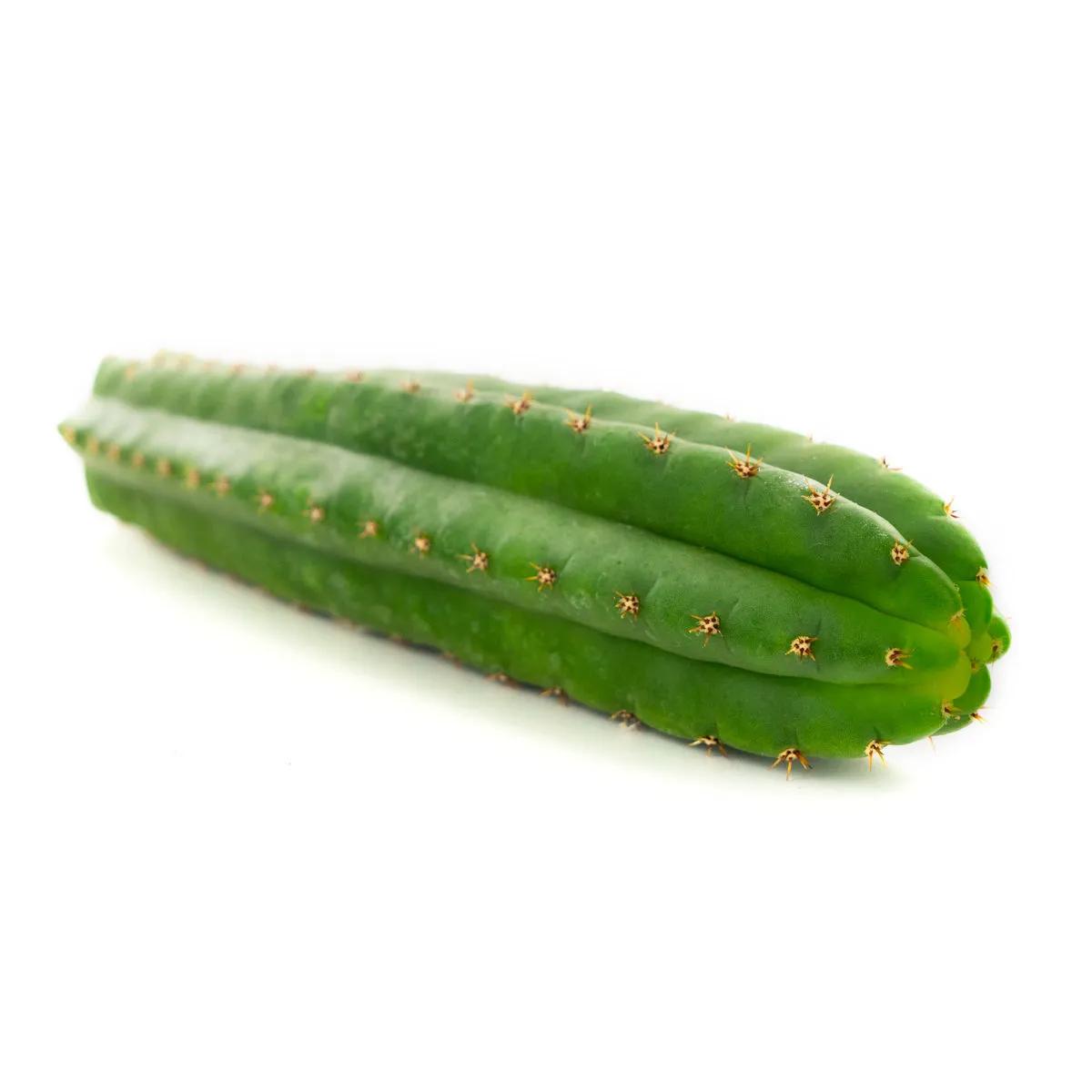
Echinopsis peruviana — previously classified as Trichocereus peruvianus — is a columnar cactus that reaches 3–6 metres tall and 8–18 cm in diameter in its natural habitat. It grows with 6–9 broadly rounded ribs, each lined with evenly spaced nodes about 2.5 cm apart. From those nodes, clusters of 6–8 spines emerge, each up to 4 cm long. The skin is a blue-green colour that genuinely glows in certain light — it's not something you notice in photos, but in person it catches your eye immediately.
Growth rate is where this cactus really stands out. Compared to the San Pedro (Echinopsis pachanoi), the Peruvian Torch tends to put on height faster in cultivation, especially once the root system is established. We've seen cuttings gain 15–20 cm in a single growing season under decent conditions. The trade-off? It's slightly more sensitive to overwatering than San Pedro, so you need to pay a bit more attention to your soil mix and watering schedule.
The mescaline content is the other headline. According to a review published in PMC, mescaline occurs naturally in several members of the Cactaceae family, including the Peruvian Torch (Pharmacokinetic and Pharmacodynamic Aspects of Peyote, PMC6864602). According to research published in the Journal of Psychopharmacology and indexed in PMC, mescaline use may produce experiences associated with spiritual significance and improvements in well-being (The Epidemiology of Mescaline Use, PMC8902264). Mescaline content varies between individual plants, growing conditions, and even which part of the cactus you're looking at — the outer green flesh typically contains more than the white inner tissue.
Mescaline: The Active Compound in Peruvian Torch
Mescaline is a phenethylamine with the chemical formula 3,4,5-trimethoxyphenethylamine. It acts primarily on serotonin receptors and produces altered perception of time and self, vivid visual patterns, and synesthesia — the crossing of senses where you might "see" sounds or "hear" colours. According to a review in PMC, clinical indications currently under investigation for psychedelic compounds include major depression and treatment-resistant depression (Psychedelic Therapies Reconsidered, PMC10700471).
The Peruvian Torch has deep roots in traditional Andean medicine. According to research on traditional medicinal plant use in Northern Peru, traditional medicine is gaining more respect from national governments and health providers, with Peru's National Program in Complementary Medicine recognising the role of plants like Echinopsis peruviana in indigenous healing practices (Traditional Medicinal Plant Use in Northern Peru, PMC1637095). This isn't a novelty cactus — it's a plant with thousands of years of cultural context behind it.
One honest note: mescaline is a potent compound. Side effects documented in the literature include nausea, vomiting, increased blood pressure, dizziness, increased body temperature, and difficulty with motor control. It is contraindicated for people who have previously experienced prolonged adverse psychological effects from similar substances. Set and setting matter enormously — more than dosage, in our experience.
How to Grow Your Peruvian Torch Cutting
Getting a Peruvian Torch cutting to root and thrive is straightforward if you follow a few rules. The most common mistake we see? Watering too early. The second most common? Using regular houseplant soil. Both will rot your cutting before it ever gets a chance.
- Prepare your soil mix. Use specialist cactus soil with roughly 25% washed sand and 35% perlite. Standard houseplant compost holds too much moisture and doesn't provide the right nutrient balance. The soil needs to drain freely but hold enough moisture to last about a week without drying out completely.
- Plant the cutting upright. Push it deep enough into the soil that it stands on its own without support. For the small 10–11 cm cutting, that means burying about 3–4 cm. For the large 50–60 cm cutting, you'll want 8–10 cm below the soil line.
- Do not use rooting hormone. This is counterintuitive if you've propagated other plants, but rooting hormone can damage cactus tissue and create entry points for bacterial or fungal rot. The Peruvian Torch develops roots perfectly well on its own.
- Do not water for 2–3 weeks. The cutting needs time to callous over at the base and begin sending out roots. Watering before roots exist just creates a wet environment for rot. Patience here is everything.
- Keep it out of direct sun and away from heat sources. Bright indirect light is what you want during the rooting phase. Direct sun on an unrooted cutting causes stress and dehydration before the plant can replace lost moisture.
- After 2–3 weeks, water sparingly. Give it a light drink and let the soil dry out completely between waterings. Once you see new growth at the tip — a lighter green section pushing upward — you know roots have established and you can gradually increase water and light.
- Move to a sunny spot once established. Peruvian Torch loves direct sun once rooted. A south-facing window, conservatory, or outdoor spot during summer months works well. In winter, reduce watering to once every 3–4 weeks and keep it above 5°C.
Peruvian Torch Specifications
| Specification | Detail |
|---|---|
| Botanical name | Echinopsis peruviana (syn. Trichocereus peruvianus) |
| Type | Columnar cactus |
| Native habitat | Andes, Peru and Ecuador, 2,000–3,000m altitude |
| Mature height | 3–6 metres |
| Mature diameter | 8–18 cm |
| Ribs | 6–9, broadly rounded |
| Spines | Up to 4 cm long, in clusters of 6–8 |
| Node spacing | Up to 2.5 cm |
| Colour | Bluish-green with light blue glow |
| Active compound | Mescaline (3,4,5-trimethoxyphenethylamine) |
| Growth rate | Fast for a cactus — 15–20 cm per growing season once established |
| Available sizes | Small (10–11 cm), Medium (25–30 cm), Large (50–60 cm) |
| Soil requirements | Cactus soil with 25% washed sand, 35% perlite |
| Minimum temperature | 5°C |
Complete your cactus setup: If you're growing Peruvian Torch, you'll want proper cactus soil and perlite to get the drainage right. Pair it with a San Pedro cactus for a proper mescaline cactus collection — the two species look fantastic side by side and have slightly different growth habits, so you get variety without needing different care routines.
Why Grow a Peruvian Torch at Home
There are two reasons people buy this cactus: the plant itself and what's inside it. Both are valid, and we'll talk about both honestly.
As a houseplant, the Peruvian Torch is genuinely impressive. That blue-green skin catches light differently throughout the day — in the morning it looks almost grey-green, and by afternoon in direct sun it takes on this luminous blue quality that photographs never quite capture. It grows fast enough that you actually notice progress month to month, which is satisfying in a way that slow-growing cacti like Lophophora just aren't. Within a couple of years, a medium cutting can reach over a metre tall. It's a living sculpture that requires almost no maintenance once established — water it every couple of weeks in summer, barely at all in winter, and it's happy.
On the ethnobotanical side, this is one of the most historically significant cacti in the Americas. According to research on the globalisation of traditional medicine in Northern Peru, Peruvian researchers have been studying approaches to medicinal plants that bridge Western and Eastern methodologies (The Globalization of Traditional Medicine, PMC3888705). The Peruvian Torch has been part of Andean ceremonial use for an estimated 3,000+ years. Growing one connects you to that history in a tangible way.
The honest limitation: mescaline content varies wildly between individual plants. Two cuttings from different mother plants can differ by an order of magnitude. Growing conditions, age, stress, and even the time of year all affect alkaloid concentration. If you're growing this purely as an ornamental cactus, none of that matters. If you're interested in the ethnobotanical aspects, just know that there's no way to predict potency from appearance alone.
Peruvian Torch vs San Pedro: Which One?
We get asked this constantly. Both are Echinopsis species, both contain mescaline, and both are columnar cacti from South America. The differences are real but subtle.
The Peruvian Torch grows faster and tends to be slightly more cold-tolerant. Its ribs are more pronounced, its spines are longer (up to 4 cm vs San Pedro's shorter, sometimes nearly absent spines), and its colour is distinctly bluer. San Pedro is slightly more forgiving of overwatering and tends to branch more readily, giving you a bushier plant over time. If you want a single tall column with striking colour, go Peruvian Torch. If you want a branching specimen that's a bit more tolerant of mistakes, San Pedro is your pick. Best option? Get both. They're different enough to be interesting side by side.
Frequently Asked Questions
How long does a Peruvian Torch cutting take to root?
Expect 2–4 weeks for initial root development after planting. You'll know roots have formed when you see fresh green growth at the tip of the cutting. Don't water during this period — the cutting needs dry conditions to callous and root properly.
Can I grow Peruvian Torch indoors year-round?
Yes, as long as it gets plenty of direct sunlight — a south-facing window is best. Growth will slow in winter due to shorter days, but the cactus will survive fine indoors. Keep it above 5°C and reduce watering to once every 3–4 weeks during the cold months.
Why shouldn't I use rooting hormone on a cactus cutting?
Rooting hormone can damage the soft tissue at the base of the cutting, creating openings for bacterial and fungal rot. Cacti have evolved to root from cuttings without assistance — the callous that forms naturally at the cut surface is the plant's own rooting mechanism.
What is the difference between Echinopsis peruviana and Trichocereus peruvianus?
They're the same plant. Trichocereus peruvianus was the older classification. Taxonomists reclassified it as Echinopsis peruviana, though many growers and shops still use the Trichocereus name. Both refer to the Peruvian Torch cactus.
How tall will my Peruvian Torch grow?
In its native Andes habitat, Peruvian Torch reaches 3–6 metres. In home cultivation, expect slower growth — a well-cared-for cutting can add 15–20 cm per growing season. In a pot on a windowsill, you're realistically looking at 1–2 metres over several years before it needs a bigger container.
Does the Peruvian Torch flower?
Yes, mature plants produce large white flowers that open at night — they're pollinated by moths in the wild. However, flowering in home cultivation is uncommon. The cactus typically needs to reach a significant size and age, plus experience a proper cold winter dormancy period, before it will bloom.
What are the effects of mescaline?
According to research, mescaline produces altered perception of time and self, vivid visual patterns, and synesthesia. Physical side effects documented in the literature include nausea, increased blood pressure, dizziness, and increased body temperature. According to a review in PMC, mescaline use may be associated with experiences of spiritual significance (PMC8902264).
Which size cutting should I buy if I've never grown cacti before?
Go with the medium (25–30 cm). It's large enough to root reliably and withstand minor care mistakes, but not so large that it's unwieldy to pot up. The small cutting works fine too, but it's less forgiving if you accidentally overwater or give it too much sun before it's rooted.
Last updated: April 2026
Related products
Medical disclaimer. This content is for informational purposes only and does not constitute medical advice. Consult a qualified healthcare provider before use of any substance.