
This article discusses psychoactive substances intended for adults (18+). If you have a health condition or take medication, consult a doctor before use. Our age policy
Growing Mescaline Cacti as Ornamental Plants
Definition
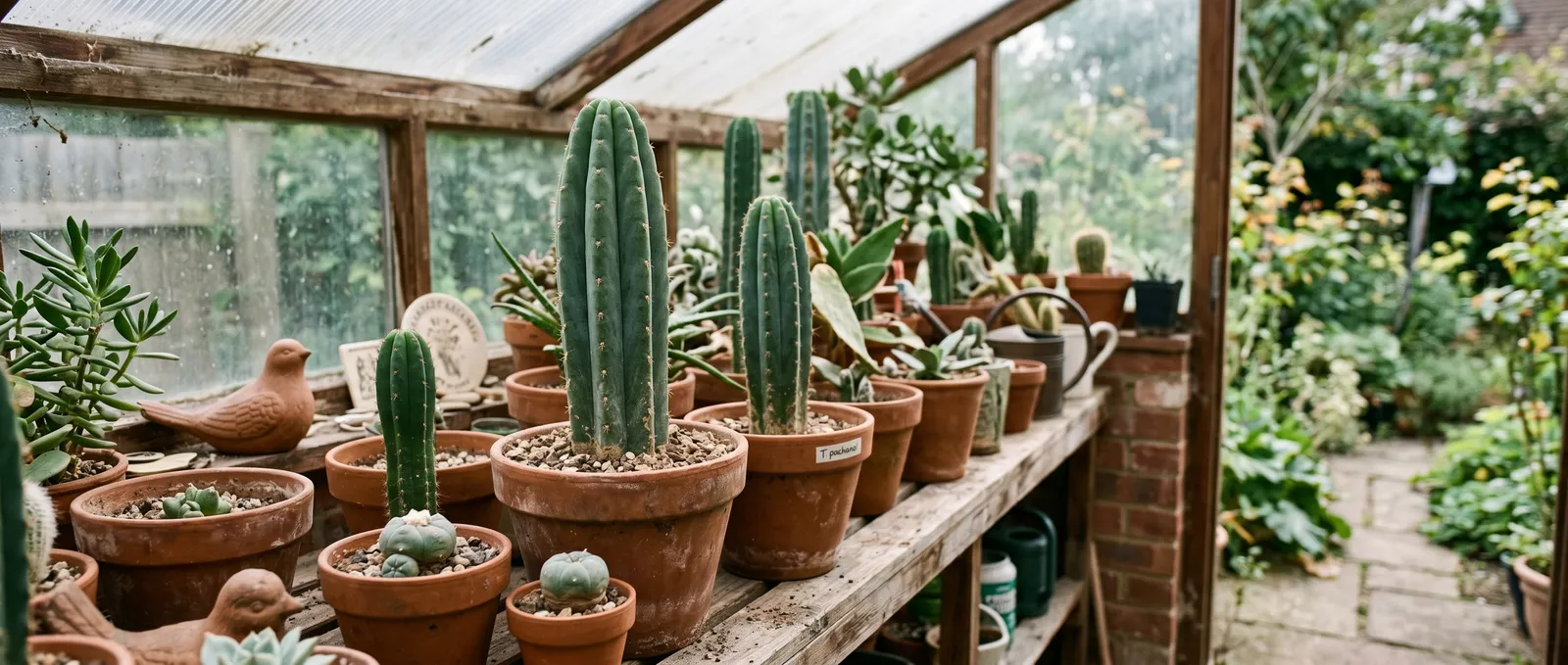
Growing mescaline cacti ornamental is a horticultural practice that involves cultivating species like San Pedro, Peruvian Torch, and peyote for their architectural beauty rather than consumption. San Pedro can grow up to 30 cm per year in favourable conditions (Anderson, 2001), making it one of the more rewarding columnar cacti for home growers across Europe.
18+ only — Growing mescaline cacti ornamental is a horticultural practice that involves cultivating species like Trichocereus pachanoi (San Pedro), Trichocereus peruvianus (Peruvian Torch), and Lophophora williamsii (peyote) for their striking architectural form and botanical interest — not for consumption. These columnar and globular cacti have been cultivated in gardens and collections for centuries. San Pedro, for instance, grows up to 30 cm per year in good conditions, making it one of the faster-growing columnar cacti you can keep (Anderson, 2001). This article stays narrow: soil, light, water, containers, and keeping these plants alive and thriving on a windowsill or balcony. For alkaloid chemistry, effects, or safety information, see the mescaline cacti pillar article on the Azarius encyclopedia.
Disclaimer: This article is for educational and informational purposes only. Growing mescaline cacti as ornamental plants may be subject to local regulations. Azarius does not encourage or condone any illegal activity. Always check and comply with the laws in your jurisdiction before purchasing or cultivating these species. Nothing in this guide constitutes medical, legal, or dosage advice.
What Is Ornamental Mescaline Cactus Growing?
Growing mescaline cacti ornamental is a horticultural discipline that focuses on cultivating mescaline-containing cactus species purely for their visual and botanical value. According to the European Monitoring Centre for Drugs and Drug Addiction (EMCDDA), several mescaline-containing cactus species are widely available as ornamental plants across Europe, and their cultivation for decorative purposes exists in a distinct context from any psychoactive use. This guide covers only the ornamental growing side — soil composition, lighting, watering cycles, container selection, and species-specific care. We do not provide instructions on extraction, preparation, or consumption.
Step 1: Choose Your Species Based on Your Space
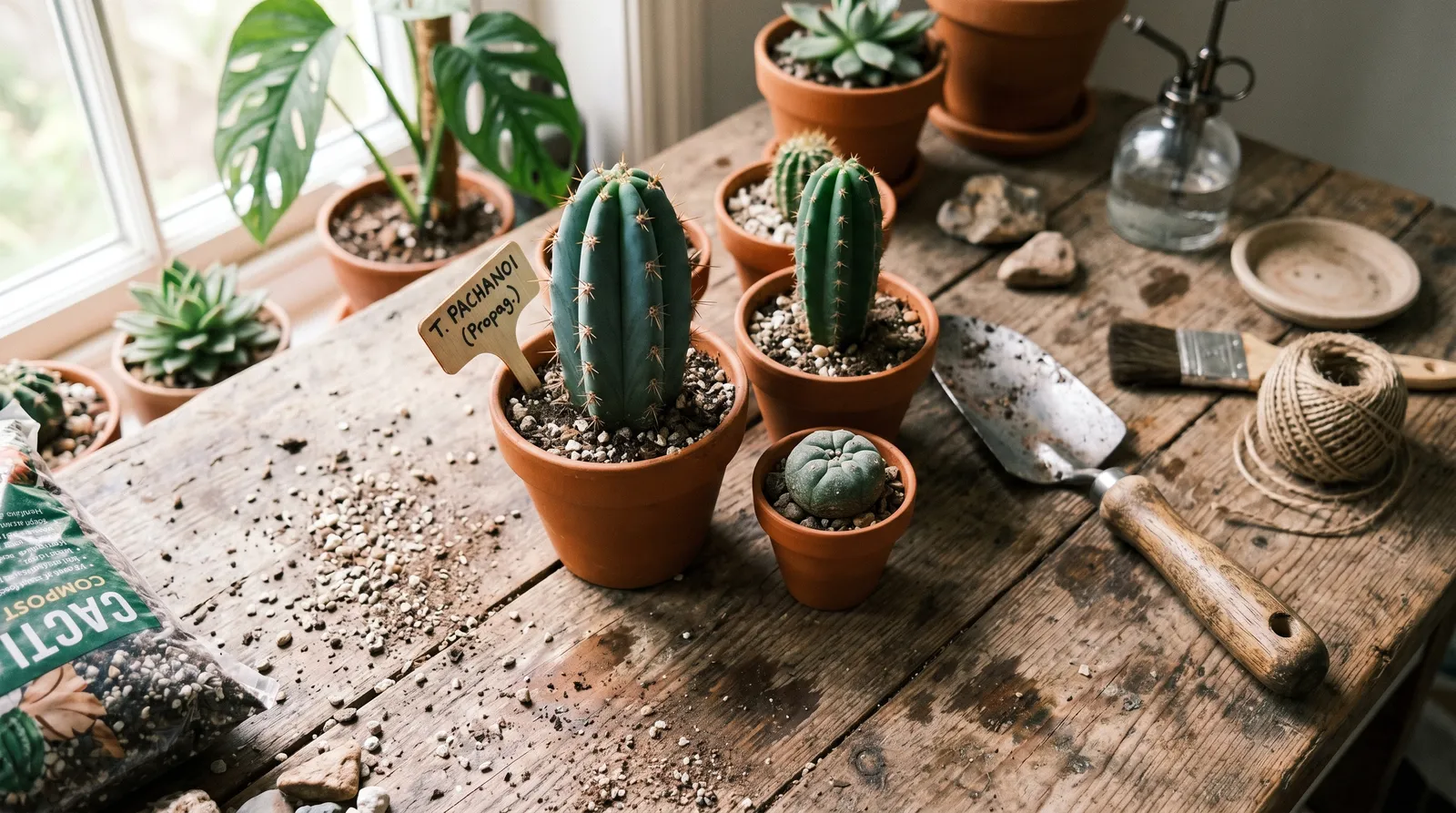
The best species for growing mescaline cacti ornamental depends on your available light, patience, and room. Not all mescaline-containing cacti grow the same way, and your space determines which species makes sense.
San Pedro (Trichocereus pachanoi) is the most forgiving for beginners. It's a columnar cactus that can reach 3–6 metres outdoors in its native Andes, but grows happily in a large pot indoors for years. It tolerates lower light than most cacti and handles occasional overwatering without immediately rotting. Expect a thick, blue-green column with 4–8 ribs and small clusters of areoles. If you want to buy San Pedro cuttings or seeds, the Azarius cactus seeds and cuttings category carries several options.
Peruvian Torch (Trichocereus peruvianus) is similar in shape but typically bluer in colour, with longer spines and a slightly slower growth rate. It wants more direct sun than San Pedro and is less tolerant of soggy roots. Visually, it's arguably the more dramatic specimen — the spines catch light beautifully. You can order Peruvian Torch seeds from the Azarius smartshop to get started with growing mescaline cacti ornamental.
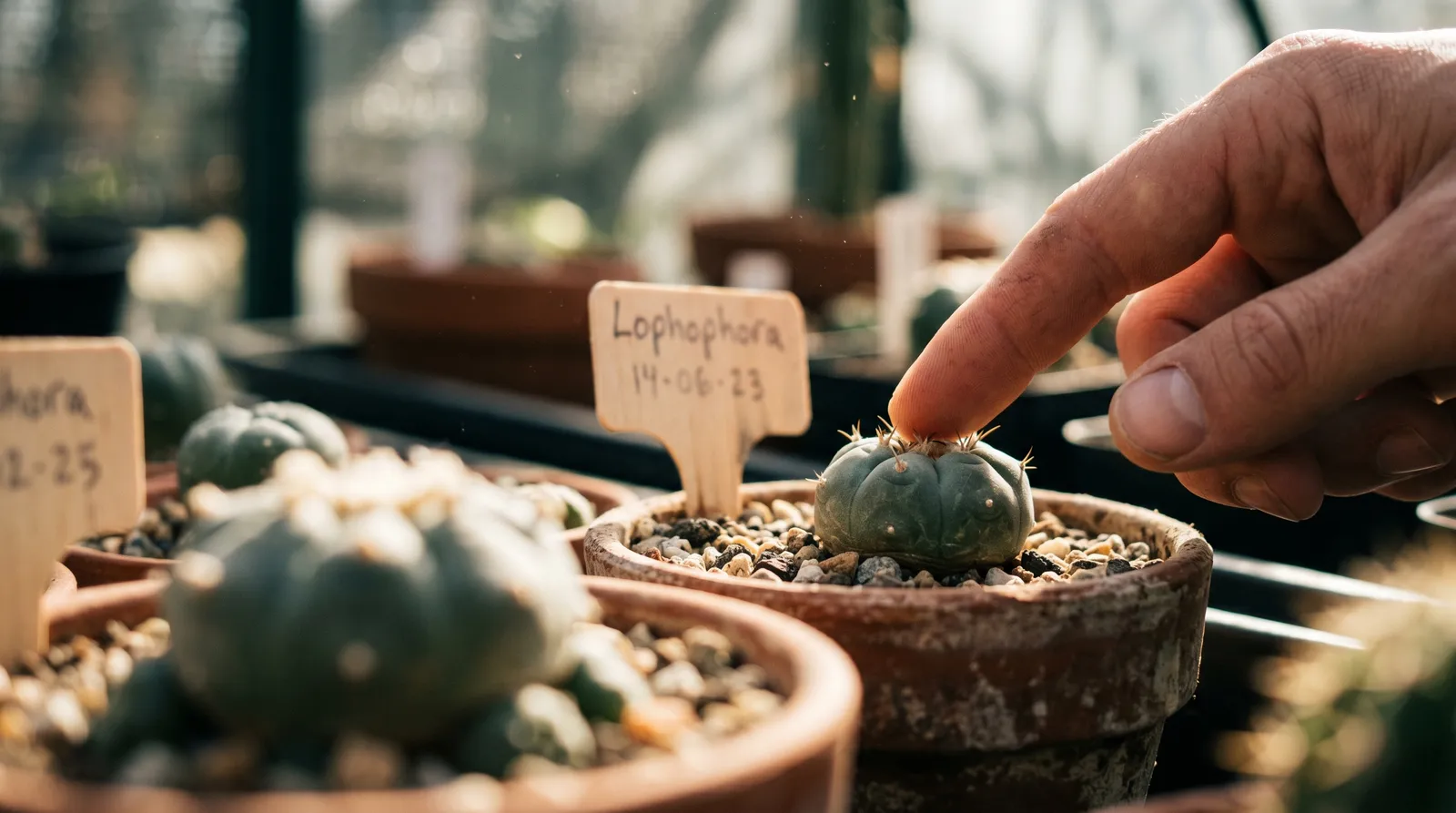
Peyote (Lophophora williamsii) is a completely different animal. It's a small, spineless, button-shaped cactus that rarely exceeds 7 cm in diameter. It grows painfully slowly — roughly 1–2 cm per year — and is far more demanding about drainage and watering cycles. A study reviewing peyote conservation noted that wild populations take 10–15 years to reach maturity (Terry et al., 2012). Growing one from seed is a long-term commitment measured in decades, not months.
If you have a sunny windowsill and want visible growth within a season, San Pedro is where to start. If you have patience measured in geological time, peyote is genuinely rewarding.
Step 2: Seeds Versus Cuttings — Pick Your Starting Point
Cuttings are faster by years; seeds are cheaper but far more demanding in the first twelve months. Here's how each route works for anyone growing mescaline cacti ornamental.
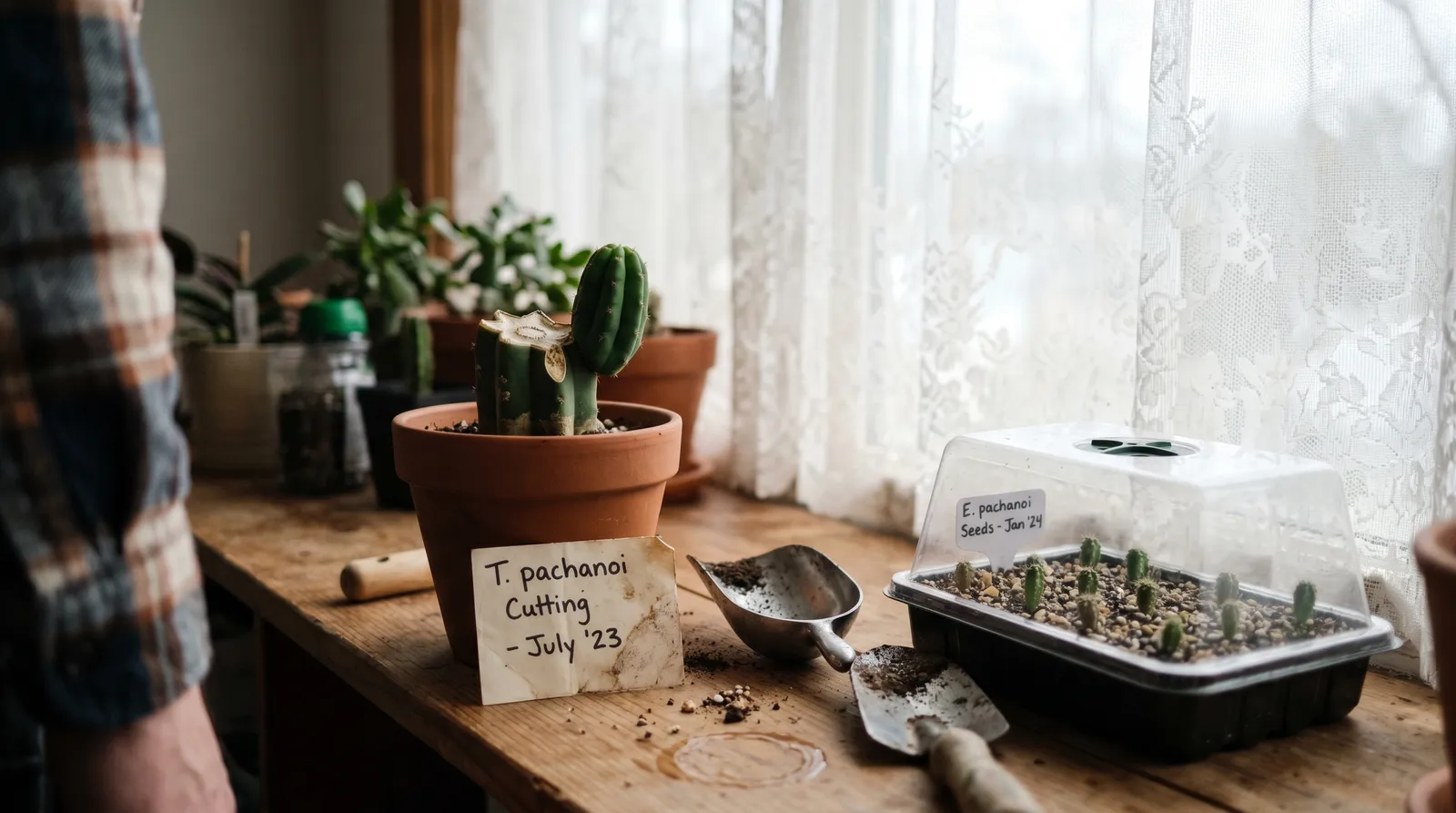
Cuttings give you a head start of years. A 20–30 cm San Pedro cutting, left to callus (dry at the cut end) for 2–3 weeks, will root in soil within a month and start pushing new growth within a season. This is the faster, more reliable route for Trichocereus species.
Seeds are cheaper and let you grow many plants at once, but they demand more care in the first year. Mescaline cactus seedlings are tiny — we're talking 3–5 mm after several months — and vulnerable to drying out, damping off (a fungal rot), and temperature swings.
To germinate seeds:
- Fill a shallow tray with a fine, well-draining mix (50% mineral grit, 50% cactus compost).
- Scatter seeds on the surface. Do not bury them — they need light to germinate. Press them gently into the soil.
- Mist with water until the surface is damp, then cover with cling film or a clear lid to hold humidity.
- Keep at 20–25 °C in bright indirect light. Direct sun through plastic will cook them.
- Germination takes 7–21 days for Trichocereus, potentially 30+ days for Lophophora.
- Once seedlings appear, gradually increase ventilation over 2–3 weeks to harden them off.
Peyote seeds are notoriously inconsistent germinators — expect 40–60% success rates even under good conditions, compared to 70–90% for San Pedro.
Step 3: Get the Soil Right (This Is Where Most People Fail)
The single most common cause of ornamental mescaline cactus death is waterlogged soil. Standard potting compost holds too much water for too long, and the roots rot before you notice anything is wrong (Anderson, 2001).
A good ornamental cactus mix for mescaline-containing species is roughly:
- 40–50% mineral component — perlite, pumice, or coarse horticultural grit (2–5 mm grain size)
- 30–40% organic component — cactus-specific compost or standard potting soil mixed with coarse sand
- 10–20% drainage booster — extra perlite or vermiculite at the bottom layer
For peyote specifically, push the mineral ratio higher — 60–70% mineral to 30–40% organic. These plants grow in near-gravel conditions in the Chihuahuan Desert. They don't want rich soil; they want something that dries within 2–3 days of watering.
The pH should sit between 6.0 and 7.5. Most cactus mixes land here naturally. If you're mixing your own, avoid anything with added peat — it goes hydrophobic when dry and then sits waterlogged when wet, which is the worst of both worlds.
Step 4: Choose the Right Pot
Terracotta is the best container material for growing mescaline cacti ornamental because its porous walls let moisture evaporate from the sides, helping prevent the waterlogged conditions that cause rot. Plastic pots work if you're disciplined about watering, but they're less forgiving.
For San Pedro and Peruvian Torch cuttings, start with a pot that's about 15–20 cm in diameter and at least 20 cm deep — their roots go down more than out. Peyote has a long taproot relative to its body size, so use a deeper pot than you'd expect for such a small plant. A 10 cm diameter pot that's 15 cm deep works well for the first few years.
Drainage holes are non-negotiable. No rocks at the bottom as a substitute — that old trick actually creates a perched water table and makes drainage worse, not better (Anderson, 2001). Just use pots with holes and a saucer underneath.
Step 5: Light — More Than You Think, Less Than You Fear
San Pedro needs at least 6 hours of bright light daily but tolerates partial shade better than most cacti, which is part of why it's so popular as an indoor ornamental. That said, "tolerates" doesn't mean "thrives." Give it the brightest spot you have — a south-facing window in the Northern Hemisphere, or outdoors in summer if temperatures stay above 10 °C at night.
Peruvian Torch wants more direct sun. If you're growing indoors in northern Europe (where winter daylight drops to 7–8 hours), a supplemental grow light makes a real difference. A basic full-spectrum LED running 12–14 hours per day through winter keeps the plant from etiolating — that stretched, pale, thin growth that happens when columnar cacti don't get enough light.
Peyote, despite its desert origins, actually burns in harsh direct midday sun. In the wild, it often grows partially shaded by scrub (Terry et al., 2012). Bright indirect light or morning sun with afternoon shade works best.
Seedlings of all species need protection from direct sun for the first 6–12 months. Bright indirect light or filtered sun through a sheer curtain is the sweet spot.
Step 6: Watering — The "Soak and Dry" Cycle
Overwatering kills more ornamental cacti than any other single factor, according to Anderson's complete review of cactus cultivation (Anderson, 2001). The rule is simple: water thoroughly until it runs out the drainage holes, then don't water again until the soil is completely dry at least 3–5 cm down. Stick your finger in. If there's any moisture, wait.
For San Pedro in active growth (spring through early autumn), this typically means watering every 7–14 days depending on pot size, temperature, and humidity. In winter, cut back to once a month or less. The plant is semi-dormant and barely drinking.
Peyote is even more drought-tolerant. During its winter dormancy (November through February in the Northern Hemisphere), don't water at all. The plant will shrink and wrinkle slightly — this is normal and actually triggers better growth when watering resumes in spring.
Use room-temperature water. Cold water shocks the roots and can cause stress marks on the skin of the cactus.
Step 7: Temperature and Overwintering
San Pedro tolerates temperatures from around 5 °C up to 40 °C. It's frost-hardy down to about −5 °C for brief periods if the soil is dry, though prolonged cold below 5 °C causes damage (Anderson, 2001). In most of northern Europe, bring it indoors by October.
Peruvian Torch is slightly less cold-tolerant. Keep it above 8 °C through winter.
Peyote needs a cool, dry winter rest (5–12 °C) to flower the following spring. An unheated room or cool windowsill works well — just keep it dry.
A cool winter dormancy period isn't just about survival. Anderson's study of cactus biology notes that many Trichocereus species require a temperature drop to initiate flowering (Anderson, 2001). If you want those spectacular white nocturnal flowers on a mature San Pedro, a cool winter rest is part of the deal.
San Pedro vs Peruvian Torch: Which Should You Buy?
San Pedro is the easier species for beginners, but Peruvian Torch is the more visually striking specimen. Here's an honest comparison to help you decide which to get first.
San Pedro grows faster (up to 30 cm per year versus roughly 15–20 cm for Peruvian Torch), tolerates lower light, and forgives watering mistakes more readily. It's the "starter cactus" for a reason. However, its spines are short and its colour is a relatively plain blue-green.
Peruvian Torch has longer, more dramatic spines and a deeper blue colour that many collectors prefer. The trade-off is that it demands more direct sunlight and is quicker to rot if overwatered. If you have a south-facing balcony with full sun, Peruvian Torch will reward you with a genuinely stunning specimen. If your best spot is a moderately bright windowsill, San Pedro is the safer bet.
We're honest about the limitation here: neither species will look its absolute best grown exclusively indoors in northern Europe without supplemental lighting. They'll survive, but outdoor summer growing produces noticeably thicker, more robust columns with better spine development.
Common Mistakes and Quick Fixes
Most problems with growing mescaline cacti ornamental come down to water, light, or soil — and nearly all are recoverable if caught early.
| Problem | Likely Cause | Fix |
|---|---|---|
| Soft, brown base | Root rot from overwatering or poor drainage | Cut above the rot with a sterile blade, let callus for 2–3 weeks, re-root in dry mineral mix (Anderson, 2001) |
| Thin, pale, stretched growth (etiolation) | Insufficient light | Move to brighter position or add grow light; the stretched section won't thicken but new growth will be normal |
| Orange or brown scarring on skin | Sunburn from sudden direct sun exposure | Acclimatise gradually over 1–2 weeks; scars are cosmetic and permanent but do not affect plant health |
| White cottony patches | Mealybugs | Dab with rubbing alcohol on a cotton bud; isolate the plant from other specimens |
| No growth for months | Winter dormancy (normal) or root-bound pot | Check roots; repot in spring if root-bound. Otherwise, wait for warmth to return |
| Corking (woody brown base) | Natural ageing in mature specimens | No action needed — it's structural, not disease (Anderson, 2001) |
Where to Buy Mescaline Cactus Seeds and Cuttings
The easiest way to start growing mescaline cacti ornamental is to buy seeds or cuttings from a reputable supplier. Azarius stocks San Pedro seeds, Peruvian Torch seeds, and live cactus cuttings in the cactus seeds and cuttings category. Seeds are the most affordable option and let you grow multiple specimens at once; cuttings give you a head start of several years. The Azarius smartshop also carries growing accessories and cactus-specific soil components. Always check local regulations in your jurisdiction before you order.
A Note on Conservation
Peyote is slow-growing and increasingly threatened in the wild. A 2014 review in the journal Biodiversity and Conservation argued that responsible cultivation may actually help reduce harvesting pressure on wild populations, particularly in the Chihuahuan Desert where habitat loss and overharvesting have reduced peyote density by an estimated 50% over the past century (Terry et al., 2012). Growing these plants ornamentally, from ethically sourced seeds, is one small way to keep the species genetically diverse and visible outside its shrinking native range — though the degree to which hobbyist cultivation offsets wild harvesting pressure remains debated among botanists.
The EMCDDA has noted the widespread availability of mescaline-containing cacti as ornamental plants across Europe, which shows both the popularity of these species among collectors and the importance of responsible cultivation practices.
Last updated: April 2026
Frequently Asked Questions
8 questionsCan you grow San Pedro cactus indoors in northern Europe?
How long does it take to grow peyote from seed?
What soil mix should I use for mescaline cacti?
How often should you water a San Pedro cactus?
Is growing San Pedro from cuttings faster than from seeds?
Where can I buy mescaline cactus seeds and cuttings in Europe?
How much light does a Peruvian Torch cactus need compared to San Pedro?
How big does a peyote cactus get when grown as a houseplant?
About this article


Joshua Askew serves as Editorial Director for Azarius wiki content. He is Managing Director at Yuqo, a content agency specialising in cannabis, psychedelics and ethnobotanical editorial work across multiple languages. Th
This wiki article was drafted with AI assistance and reviewed by Joshua Askew, Managing Director at Yuqo. Editorial oversight by Adam Parsons.
Medical disclaimer. This content is for informational purposes only and does not constitute medical advice. Consult a qualified healthcare provider before use of any substance.
Last reviewed April 24, 2026
References (4)
- [1]Anderson, E.F. (2001). The Cactus Family. Timber Press. Standard reference for cactus biology, taxonomy, and cultivation requirements.
- [2]Terry, M., Steelman, K.L., Guilderson, T., Dering, P., and Rowe, M.W. (2012). 'Lower Pecos and Coahuila peyote: new radiocarbon dates.' Journal of Archaeological Science, 33(7), pp. 1017–1021. Discusses peyote growth rates and conservation status.
- [3]Trout, K. (2014). San Pedro and Related Trichocereus Species. Mydriatic Productions. Detailed grower's guide covering soil, light, and propagation for Trichocereus.
- [4]European Monitoring Centre for Drugs and Drug Addiction (EMCDDA). Drug profiles: Mescaline. Available at emcdda.europa.eu.
Related Articles
Hawaiian Baby Woodrose Sourcing
Hawaiian baby woodrose sourcing is a practice that covers how to obtain quality Argyreia nervosa seeds — a vine whose seeds contain LSA (lysergic acid amide).
LSA Legal Status in Europe
LSA (lysergic acid amide, or ergine) occupies a legal grey zone across Europe — rarely scheduled as a compound, yet subject to varied NPS legislation that…
Ololiuqui Mazatec Tradition: Ceremonial Seeds of the Sierra Mazateca
Ololiuqui — the seeds of Turbina corymbosa — played a specific ceremonial role among the Mazatec people of Oaxaca, distinct from their better-known use of…
Morning Glory LSA Plants Family
Morning glory LSA plants family is a group of Convolvulaceae vines whose seeds contain d-lysergic acid amide (ergine), a naturally occurring tryptamine first…
Hawaiian Baby Woodrose Plant Botany
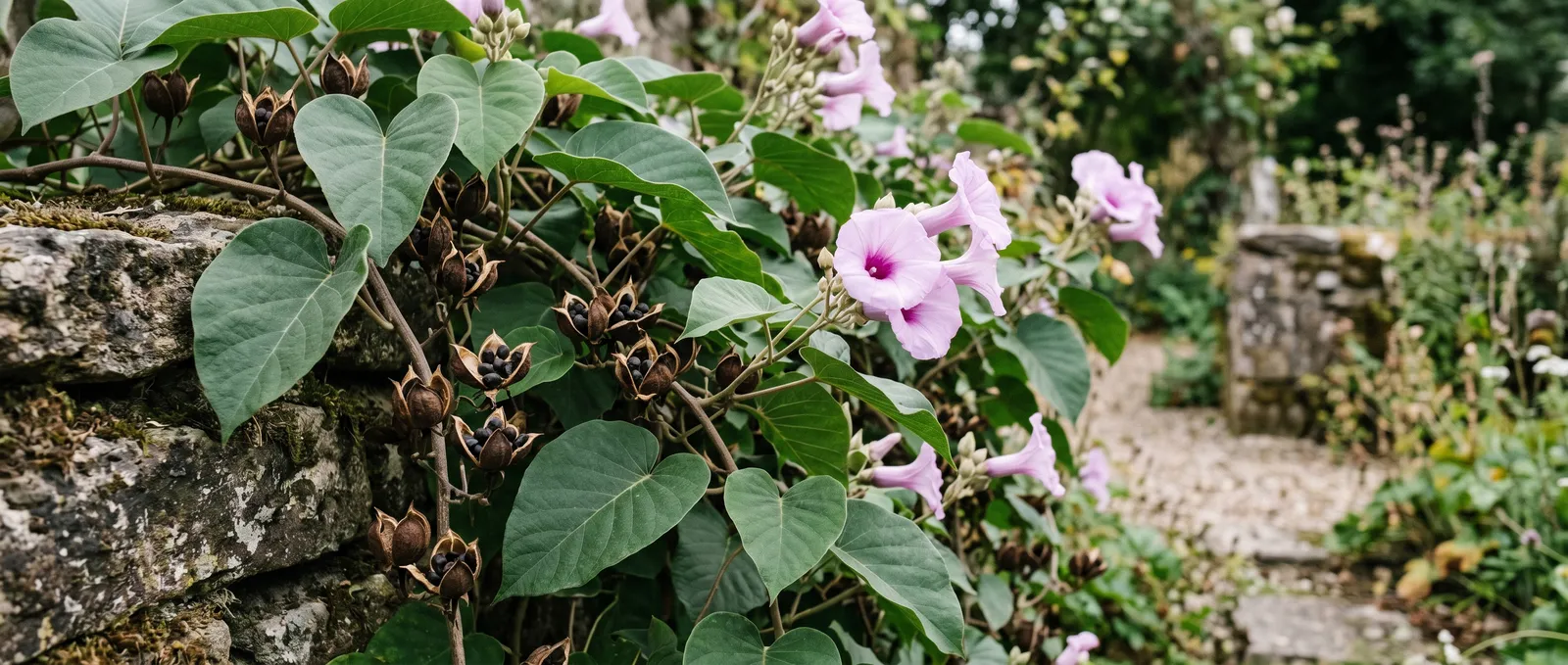
Argyreia nervosa, commonly called Hawaiian baby woodrose, is a perennial climbing vine native to the Indian subcontinent, not Hawai'i.
Magic Truffle Quality Indicators
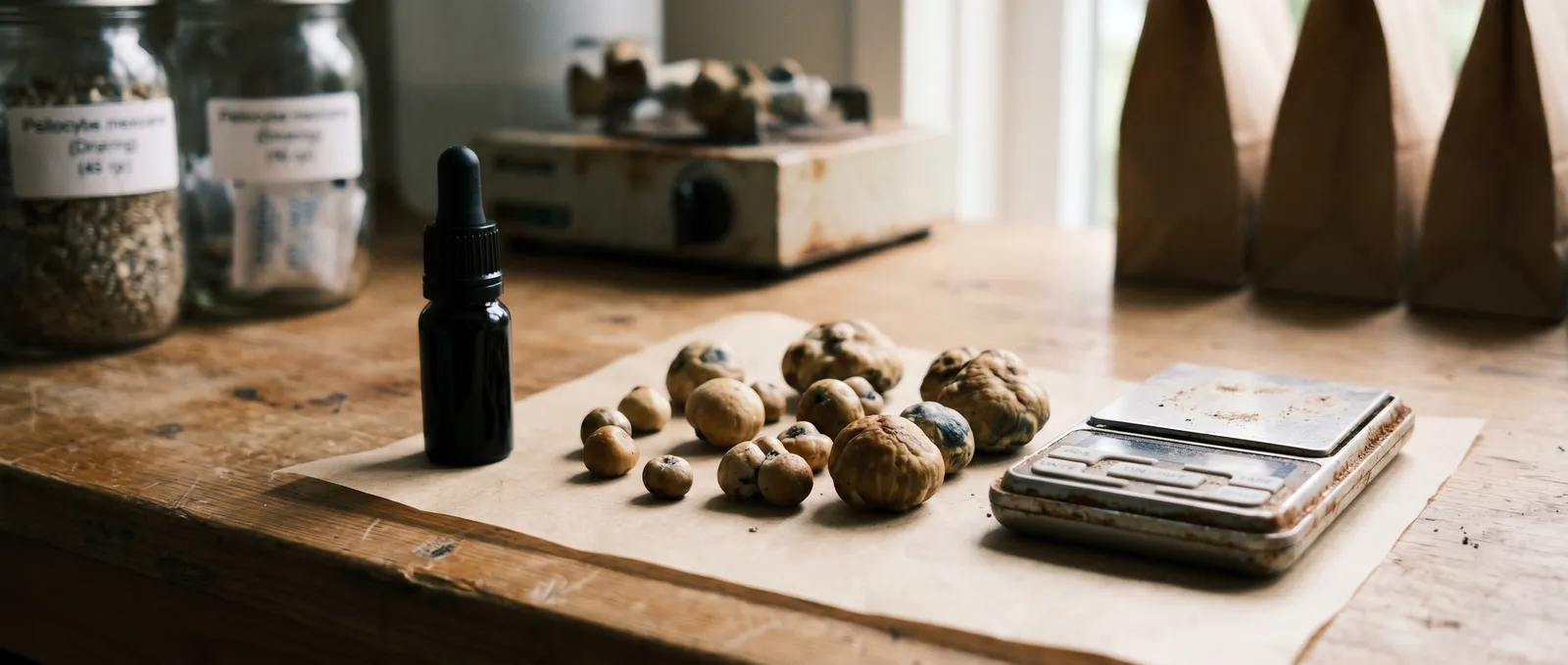
Magic truffle quality indicators are the measurable and sensory characteristics — psilocybin content, texture, aroma, packaging integrity, and storage…
Mescaline Cactus Market Observations
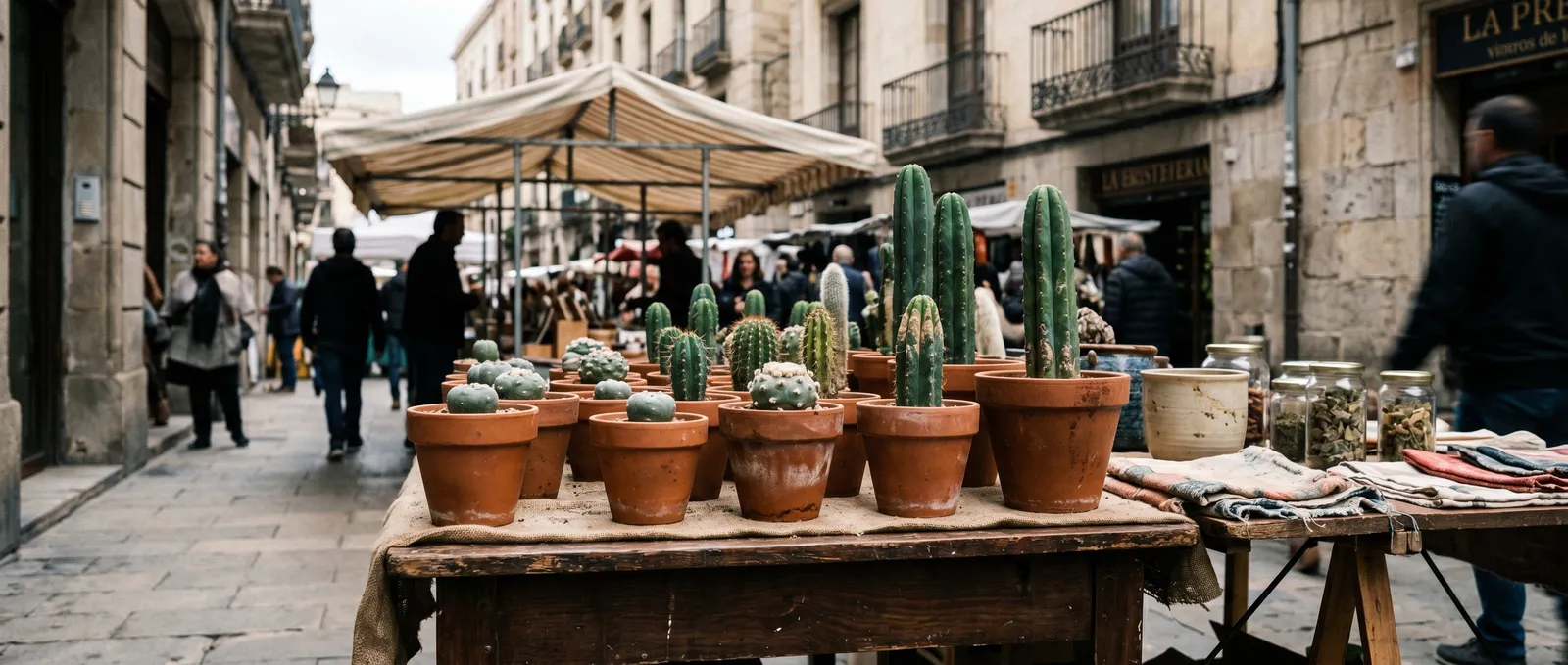
Mescaline cactus market observations is a research and retail term that describes the shifting patterns in sourcing, species selection, and consumption of…
Commercial Magic Truffle Cultivation
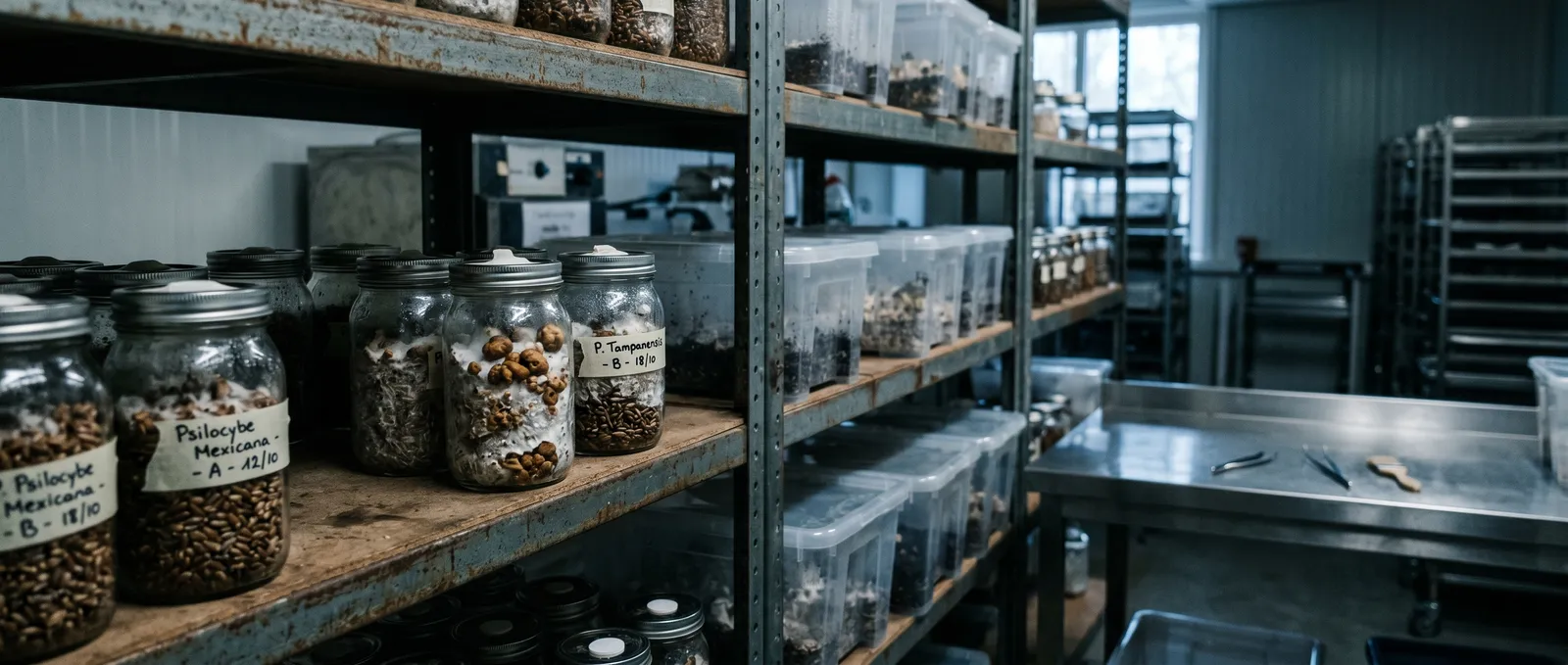
Commercial magic truffle cultivation is a large-scale agricultural process that produces psilocybin-containing sclerotia in climate-controlled indoor…
Huachuma Andean Tradition
The huachuma Andean tradition is a ceremonial healing lineage centred on the San Pedro cactus (Echinopsis pachanoi) that has been documented across at least…