
Polysaccharide Extraction from Mushrooms: Chemistry & Methods
Definition
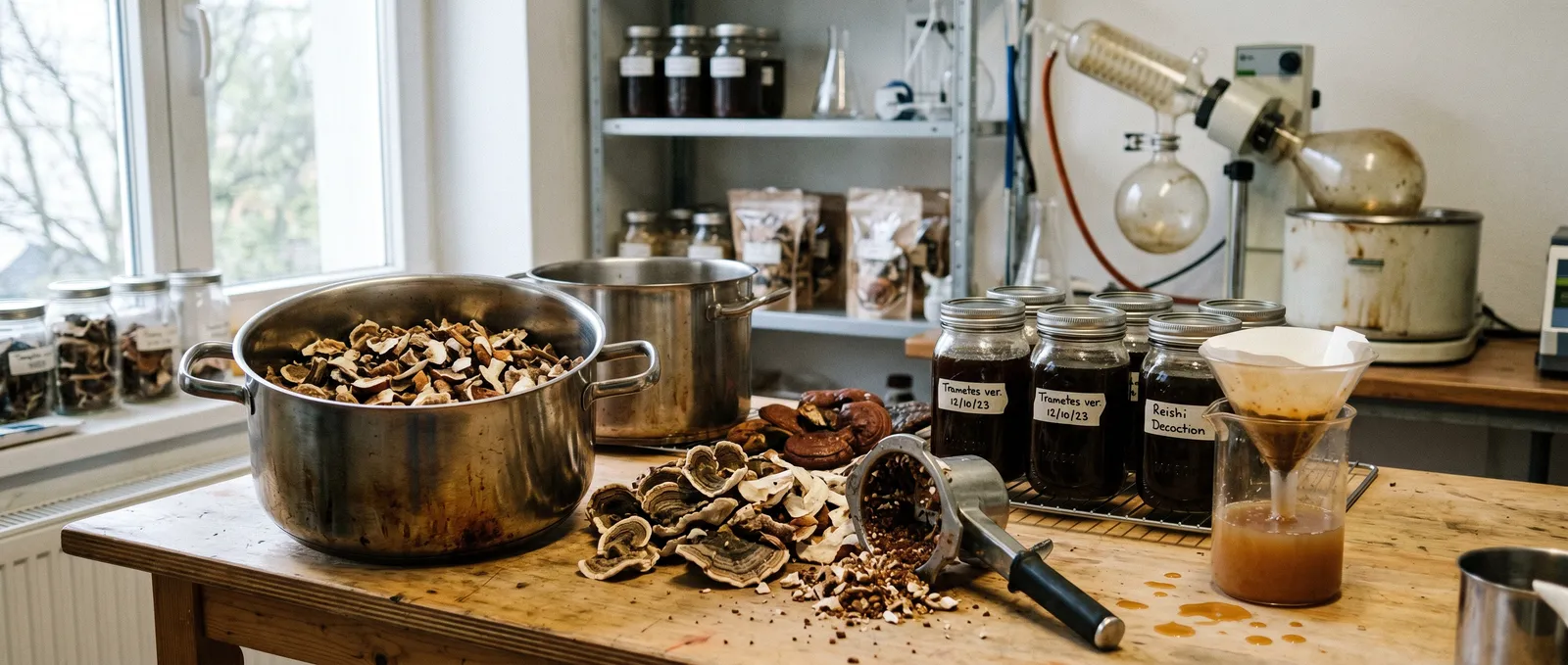
Polysaccharide extraction from mushrooms is a processing technique that breaks open chitin-rich fungal cell walls to isolate bioactive compounds — primarily beta-glucans — into a form the human body can absorb. As Zhu et al. (2015) characterised, the β-(1→3) and β-(1→6) branching pattern of fungal glucans distinguishes them from plant-derived polysaccharides and underpins their studied interactions with immune-cell receptors.
Polysaccharide extraction mushrooms processing is a technique that breaks open chitin-rich fungal cell walls to isolate bioactive compounds — primarily beta-glucans — into a form the human body can absorb. Polysaccharide extraction mushrooms methods determine whether the final product contains the specific beta-glucans, lentinan, PSK, PSP, or grifolan fractions that account for the bulk of immunological research on species like turkey tail, reishi, shiitake, and maitake. Polysaccharides are long chains of sugar molecules bonded together, and they are the compounds most often cited when people talk about functional mushrooms. But getting them out of a tough fungal cell wall and into a form your body can actually absorb is not straightforward. The extraction method shapes the final product more than most people realise, and understanding the chemistry behind polysaccharide extraction mushrooms processing helps you read a supplement label with sharper eyes. Whether you want to buy a reishi dual extract or order a turkey tail hot-water preparation, knowing what polysaccharide extraction from mushrooms actually involves puts you ahead of most supplement shoppers.
What Polysaccharides Actually Are
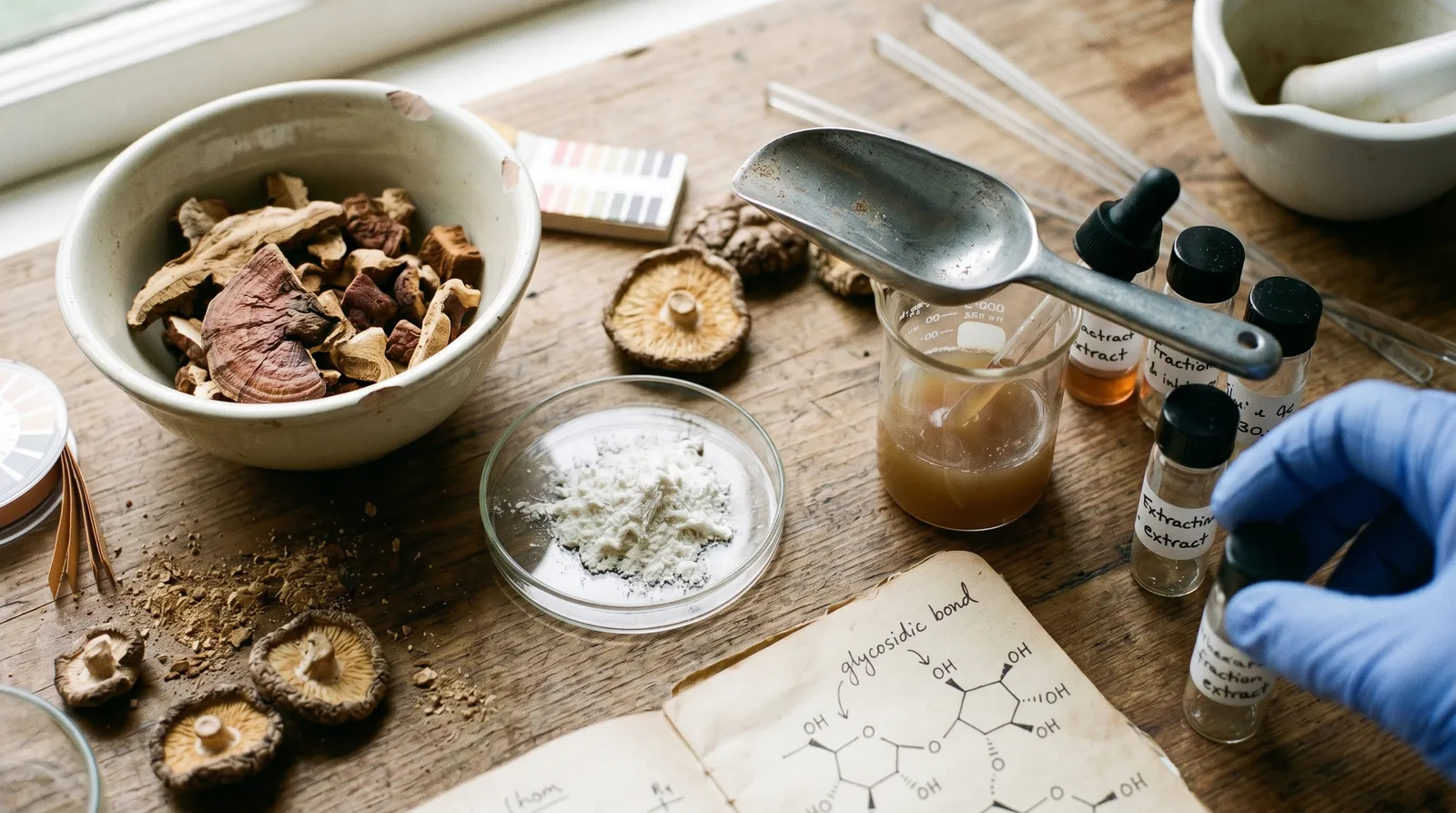
Polysaccharides are polymers — repeating chains of monosaccharide (simple sugar) units linked by glycosidic bonds — where the specific linkage pattern determines their biological relevance. Starch is a polysaccharide. So is cellulose. The ones that matter in functional mushroom research are primarily beta-glucans: glucose polymers linked by β-(1→3) and β-(1→6) glycosidic bonds. That specific branching pattern is what distinguishes fungal beta-glucans from the beta-glucans in oats or barley, and it is what researchers believe drives their interaction with immune-cell receptors (Zhu et al., 2015).
Different species produce polysaccharides with different molecular weights, branching patterns, and monosaccharide compositions. Lentinan, isolated from Lentinula edodes (shiitake), is a β-(1→3)-D-glucan with β-(1→6) branches and a molecular weight typically reported between 400–800 kDa (Chihara et al., 1970). PSK (polysaccharopeptide, also called krestin) from Trametes versicolor (turkey tail) is a protein-bound polysaccharide with a molecular weight around 100 kDa (Tsukagoshi et al., 1984). These are not interchangeable molecules. They differ in size, shape, solubility, and — critically — in the biological responses they've been studied for.
This matters because the phrase "polysaccharide content" on a supplement label tells you almost nothing about which polysaccharides are present. A product high in total polysaccharides might be rich in beta-glucans, or it might be rich in alpha-glucans from residual starch — particularly if the source material is mycelium grown on grain substrate. More on that distinction shortly.
Why Extraction Is Necessary
Extraction is necessary because fungal cell walls are built from chitin — the same tough polymer that forms insect exoskeletons — and humans cannot digest chitin efficiently. Unlike plant cells (cellulose walls), fungal cells lock their bioactive polysaccharides inside a matrix that your stomach acid and digestive enzymes cannot break down. This is why eating a raw or lightly cooked mushroom is not pharmacologically equivalent to consuming an extract, even if the starting material is identical.
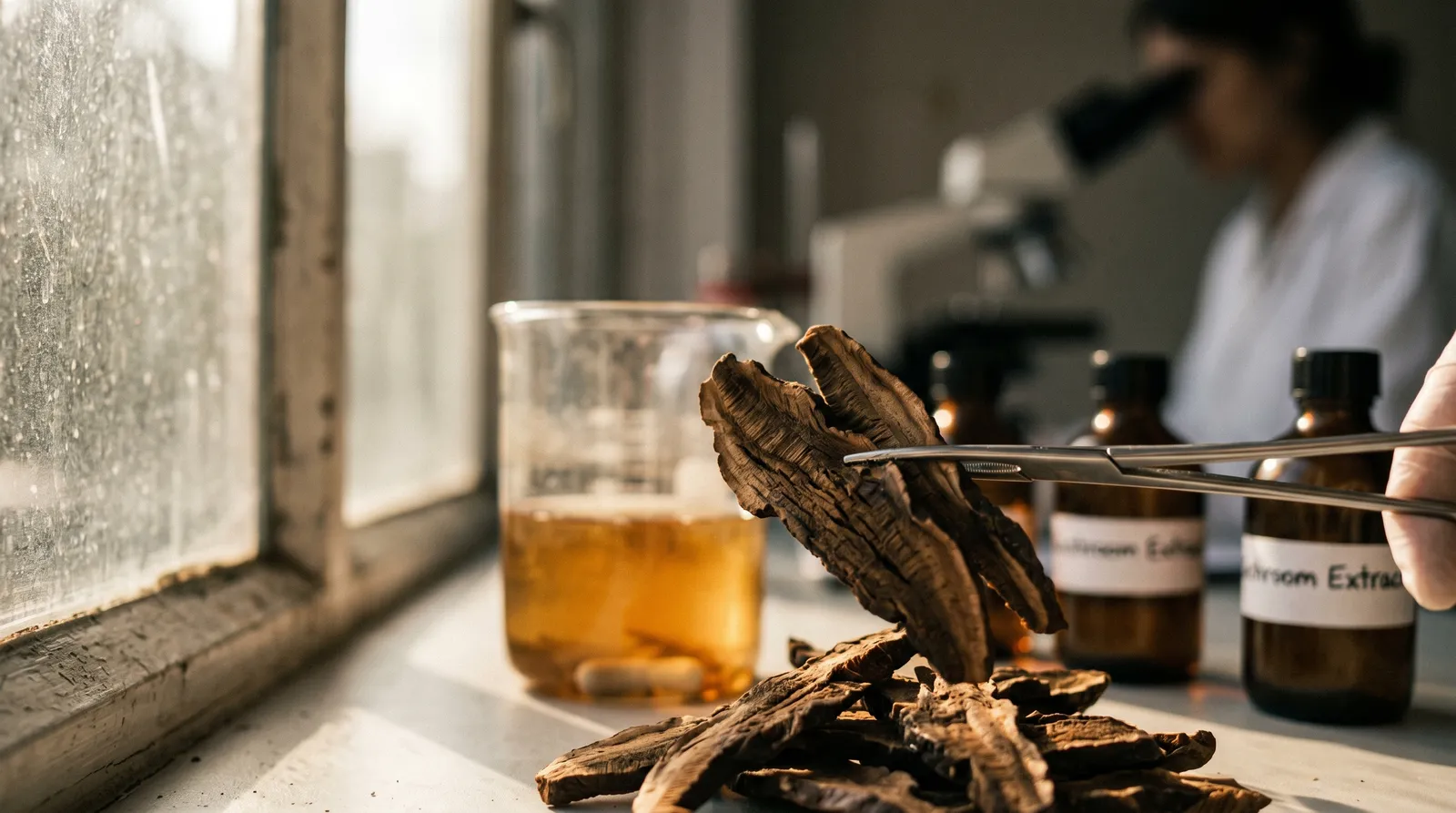
Polysaccharide extraction from mushrooms breaks open those cell walls and dissolves the target compounds into a solvent — water, ethanol, or both. The choice of solvent determines which compound classes end up in the final preparation. Polysaccharides, including beta-glucans, are water-soluble. Triterpenes (like the ganoderic acids in reishi) are largely water-insoluble and require alcohol. This is not a minor detail; it is the single most important variable in functional mushroom product design. Understanding polysaccharide extraction mushrooms chemistry at this level helps you evaluate whether a given product matches the research you are interested in. If you want to buy a well-characterised extract, knowing why extraction matters is the first step. You can browse the Azarius functional mushroom category to see which extraction method each product uses, and the Azarius wiki section on functional mushrooms explains the chemistry in species-specific detail.
Hot-Water Extraction
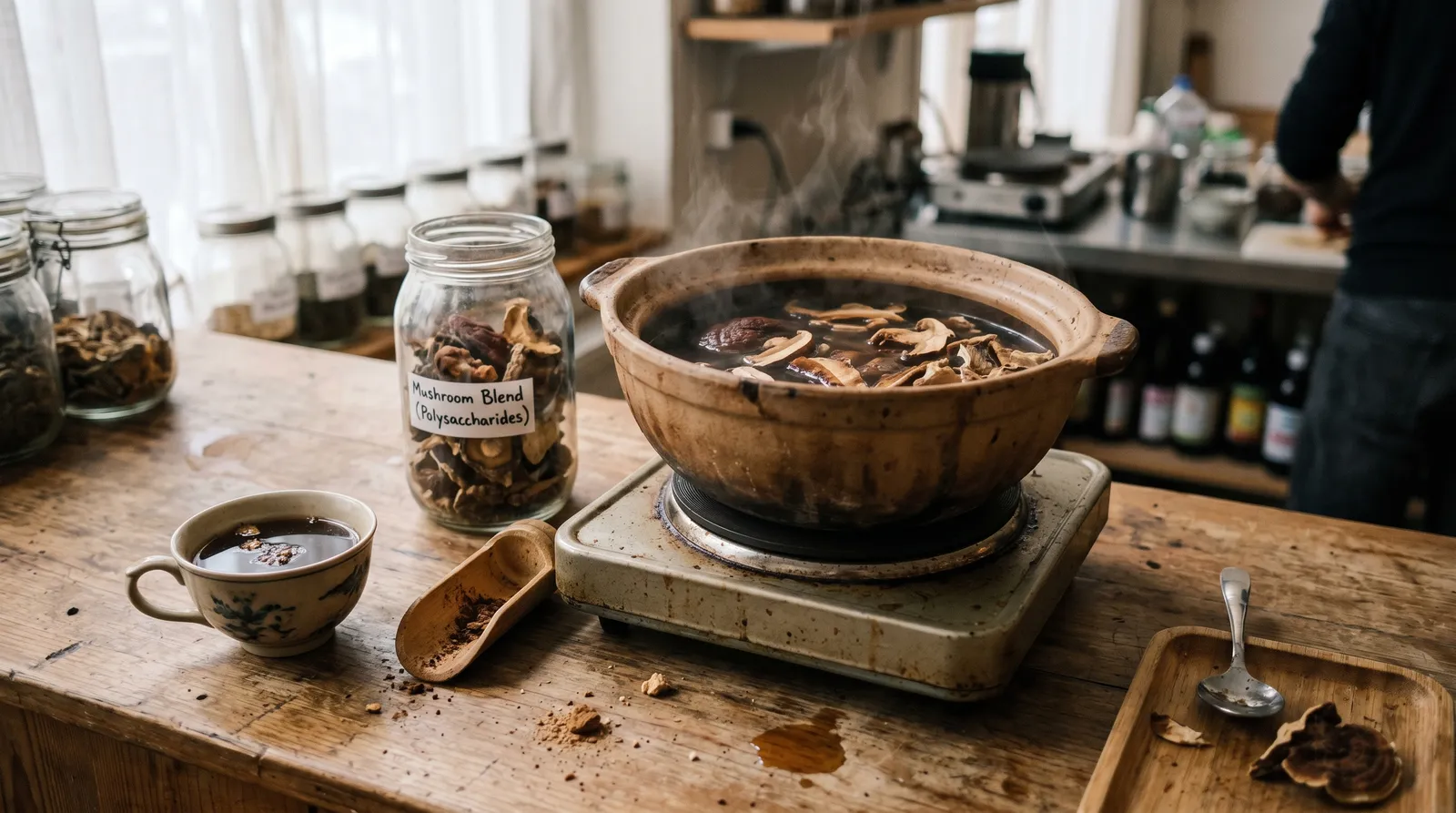
Hot-water extraction is the oldest and most widely validated method for isolating water-soluble beta-glucans from fungal biomass, used in traditional Chinese medicine decoctions for centuries. The standard laboratory protocol involves heating dried, milled mushroom material in water at 80–100°C for 2–8 hours, often repeated in multiple cycles. The liquid is then filtered, concentrated (usually by rotary evaporation or spray-drying), and the polysaccharides are precipitated out using ethanol — typically at a 3:1 or 4:1 ethanol-to-extract ratio. This ethanol precipitation step is what separates the high-molecular-weight polysaccharides from smaller sugars, amino acids, and other water-soluble compounds (Wang et al., 2017).
Yields vary considerably by species, growth stage, and particle size of the starting material. Zhang et al. (2007) reported hot-water extraction yields for Ganoderma lucidum polysaccharides ranging from 1.5% to 5.2% of dry weight depending on extraction temperature and duration. For Lentinula edodes, yields of 3–8% are common in the literature (Xu et al., 2014). These numbers matter when you see a product label claiming "30% polysaccharides" — that concentration has been achieved through extraction and concentration, not by simply drying and powdering the mushroom.
The limitation of hot-water extraction is that it captures almost none of the triterpene fraction. A hot-water reishi extract will be rich in beta-glucans and essentially devoid of ganoderic acids. If the research you are interested in concerns triterpenes — say, the in-vitro antiplatelet activity of ganoderic acid compounds — a hot-water extract is the wrong preparation to look at. You can browse the Azarius functional mushroom category to compare hot-water and dual-extracted reishi products side by side.
Alcohol Extraction and Dual Extraction
Ethanol extraction captures triterpenes, sterols, and aromatic terpenes that water cannot dissolve, using concentrations typically between 70–95% ethanol. This is the preparation behind most traditional reishi tinctures. However, alcohol denatures and precipitates polysaccharides rather than dissolving them — so an alcohol-only extract is essentially the inverse of a hot-water extract: rich in triterpenes, poor in beta-glucans.
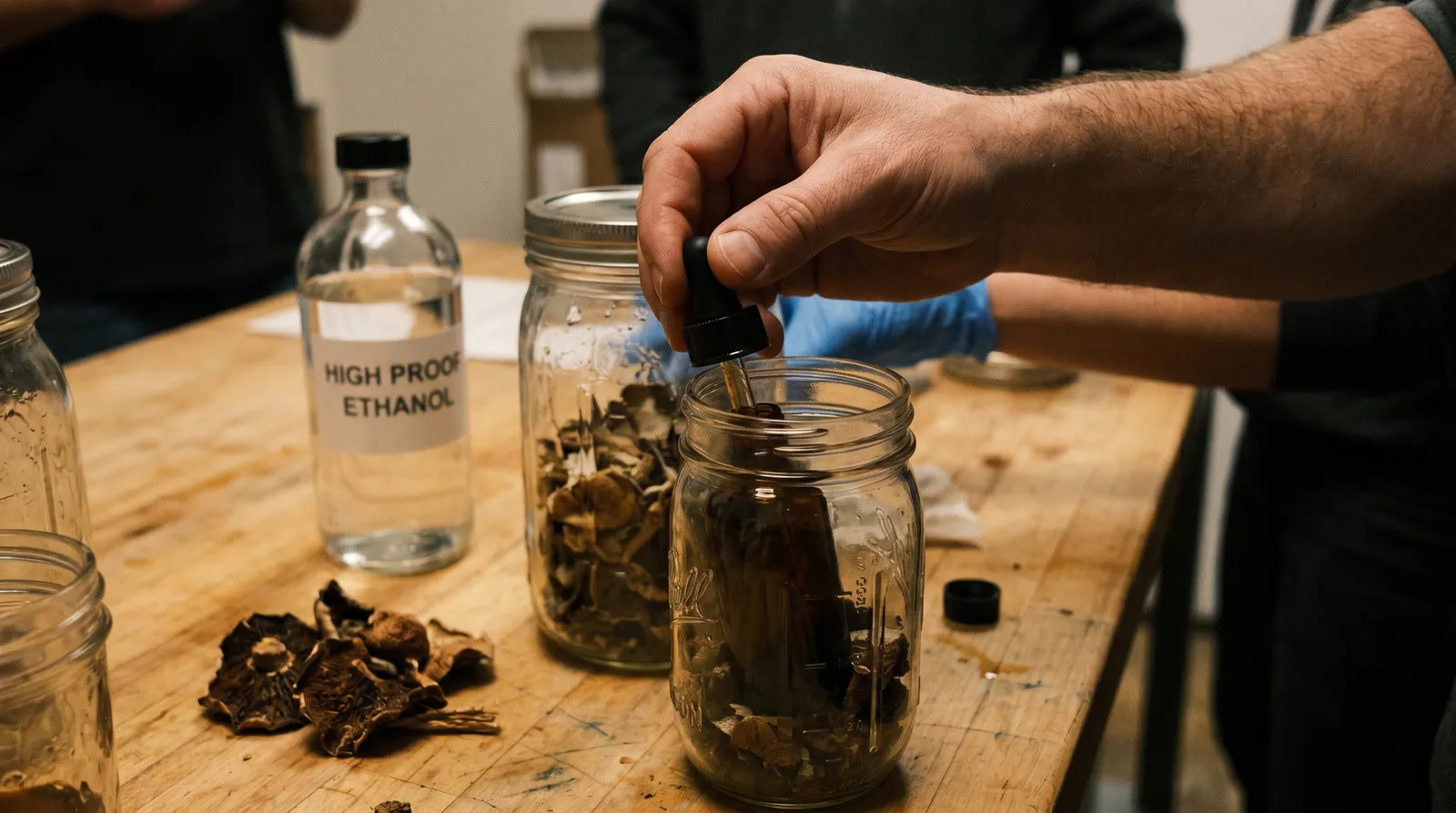
Dual extraction attempts to capture both compound classes by running hot-water and alcohol extraction sequentially (or, less commonly, simultaneously). The hot-water phase pulls polysaccharides; the alcohol phase pulls triterpenes; the two are then combined. This sounds elegant, and for species like reishi — where both polysaccharides and triterpenes have been studied — it makes pharmacological sense. But the ratio of water-phase to alcohol-phase in the final product matters, and most labels do not disclose it. A "dual extract" that is 90% water phase and 10% alcohol phase will have a very different triterpene concentration than one split 50/50.
It is also worth noting that dual extraction adds cost and complexity. For species where the research interest is overwhelmingly polysaccharide-focused — turkey tail, for instance, where PSK and PSP are the studied fractions — a hot-water extract may be more appropriate than a dual extract. The alcohol phase adds triterpenes that, for turkey tail specifically, have a thinner research base. When you order a turkey tail extract from the Azarius functional mushroom category, the product page notes whether it is hot-water or dual-extracted so you can match the preparation to the research.
Newer Extraction Approaches
Enzyme-assisted, ultrasound-assisted, and microwave-assisted extraction methods can improve polysaccharide yields by 30–60% compared to classical hot-water processing. In a study on Trifolium repens (not a mushroom, but illustrative of the principle), enzyme-assisted water extraction yielded 13.1% polysaccharides compared to 8.3% for hot water alone (Xu et al., 2016). UAE and MAE work by disrupting cell walls mechanically or thermally, improving solvent access to intracellular polysaccharides.
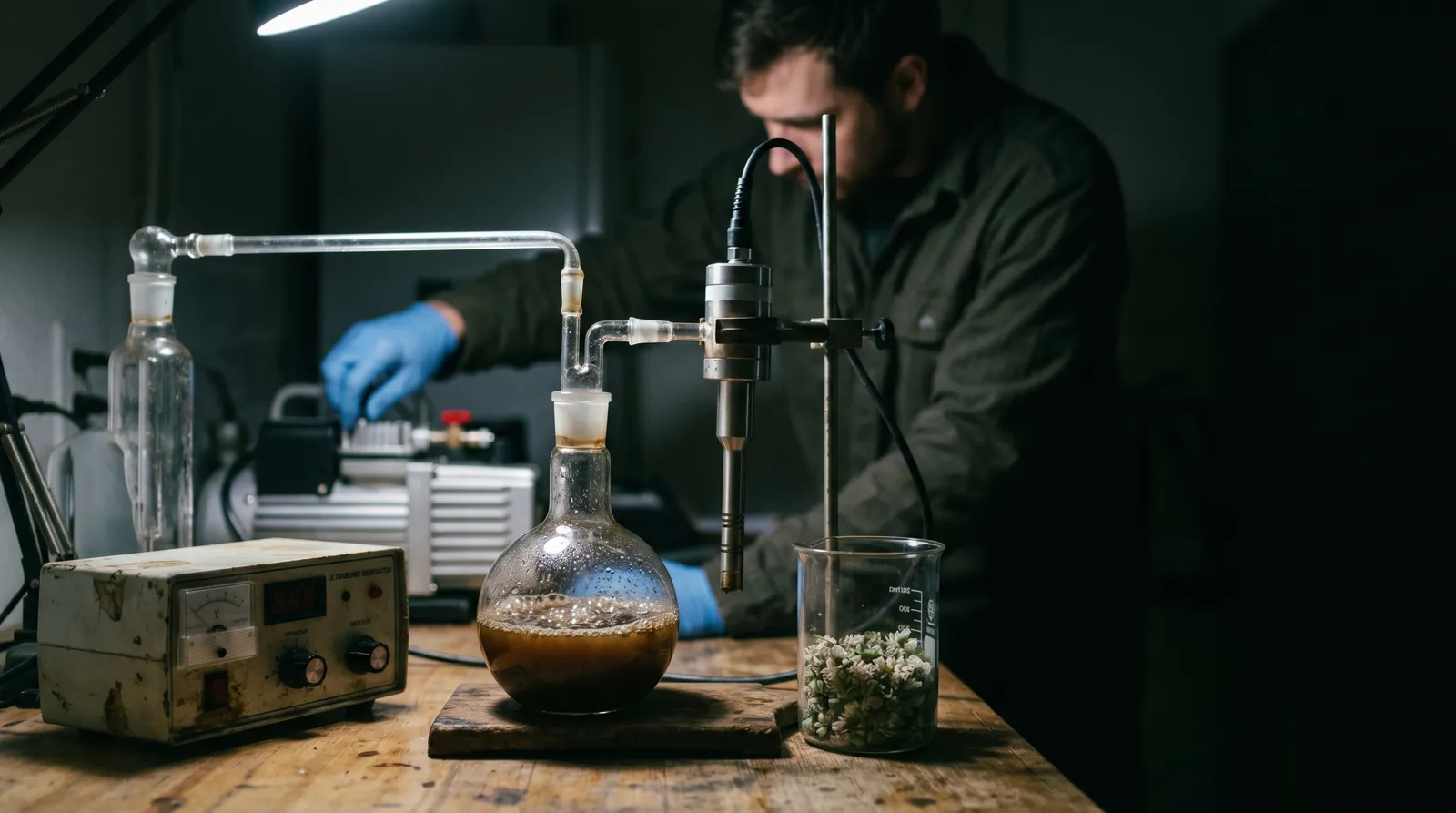
These methods can improve yield and reduce extraction time, but they also affect the molecular weight and branching structure of the extracted polysaccharides. Aggressive ultrasound treatment, for example, can fragment high-molecular-weight beta-glucans into smaller chains. Whether those smaller fragments retain the same biological activity is not always clear — some studies suggest molecular weight matters for receptor binding, with higher-molecular-weight glucans showing stronger macrophage activation in vitro (Bohn & BeMiller, 1995). The polysaccharide extraction mushrooms method, in other words, does not just affect how much polysaccharide you get. It can change what the polysaccharide looks like at the molecular level.
The Alpha-Glucan Problem and Source Material
Alpha-glucans from residual grain starch are the most common source of inflated polysaccharide numbers on supplement labels. Mycelium-on-grain products — where fungal mycelium is grown on and harvested together with a grain substrate like rice or oats — contain significant amounts of starch from that grain. Starch is an alpha-glucan (α-(1→4) linkages). Standard polysaccharide assays, including the phenol-sulphuric acid method, do not distinguish between alpha-glucans and beta-glucans. A product could test at 50% "polysaccharides" and have most of that figure come from residual grain starch rather than fungal beta-glucans (Reishi & Coors, 2017).
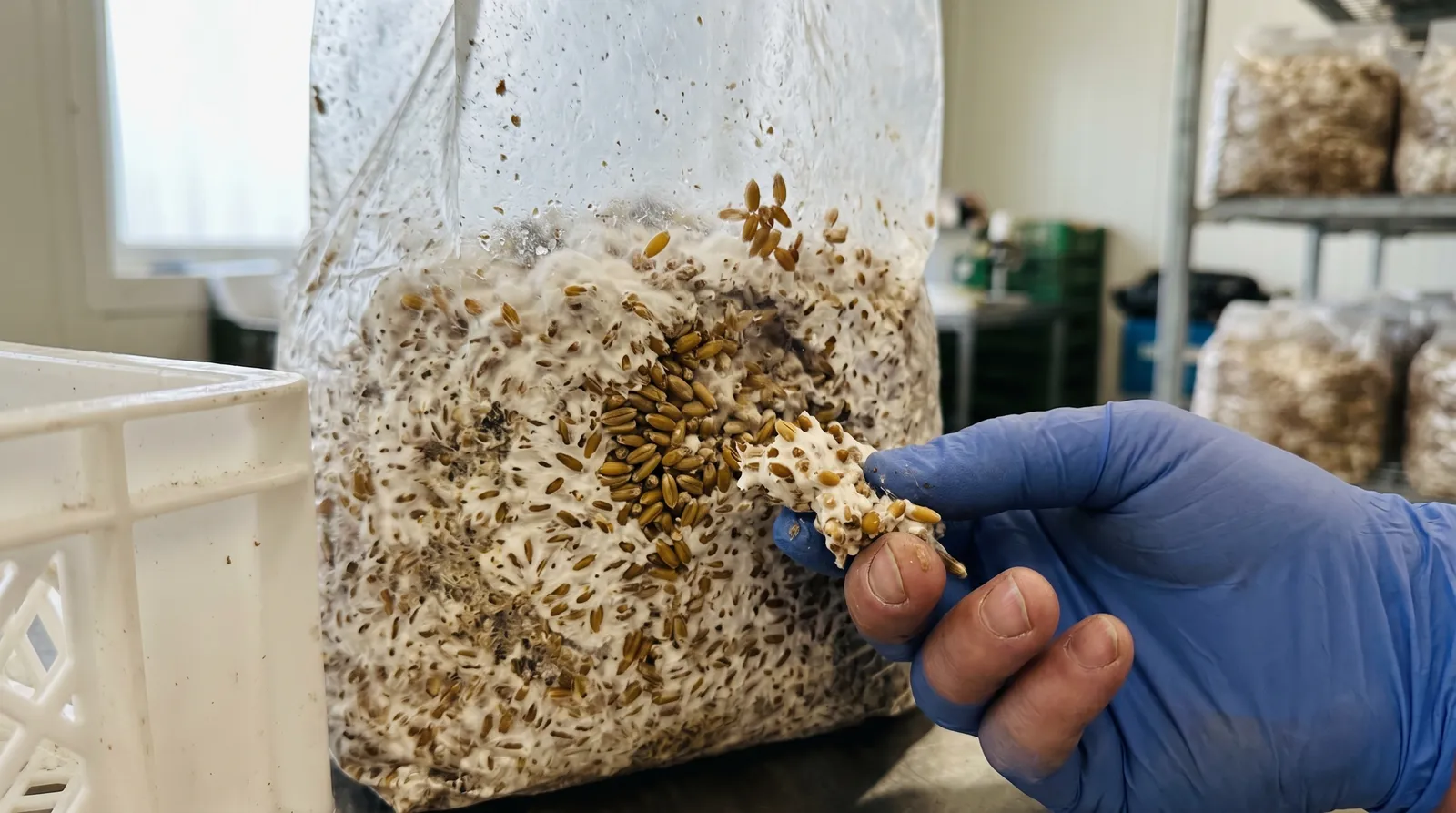
Fruiting-body extracts, by contrast, contain negligible starch. Their polysaccharide content is predominantly fungal beta-glucans. This is why beta-glucan-specific assays (such as the Megazyme method, which measures β-glucan after enzymatically removing α-glucans) give a more meaningful picture of what is actually in the product. If a label reports "polysaccharides" without specifying beta-glucans separately, the number is ambiguous — especially for mycelium-on-grain preparations.
This is a genuine industry disagreement, not a settled question. Some manufacturers argue that mycelium-on-grain preparations contain a broader spectrum of bioactive compounds (including extracellular metabolites produced during growth), and that reducing everything to a beta-glucan number misses the point. The counter-argument is that most of the published research on immune-modulating polysaccharides used isolated beta-glucan fractions or fruiting-body extracts, not mycelium-on-grain biomass — so transferring those research findings onto a mycelium-on-grain product is a stretch. Both positions have merit; neither has been conclusively resolved in clinical trials comparing the two preparations head-to-head in humans. The Azarius wiki section on functional mushrooms covers this debate in more detail for individual species.
Comparing Extraction Methods: A Summary
The six most common polysaccharide extraction mushrooms methods differ primarily in which compound classes they capture, their typical yield, and their key limitation. The table below compares them side by side.
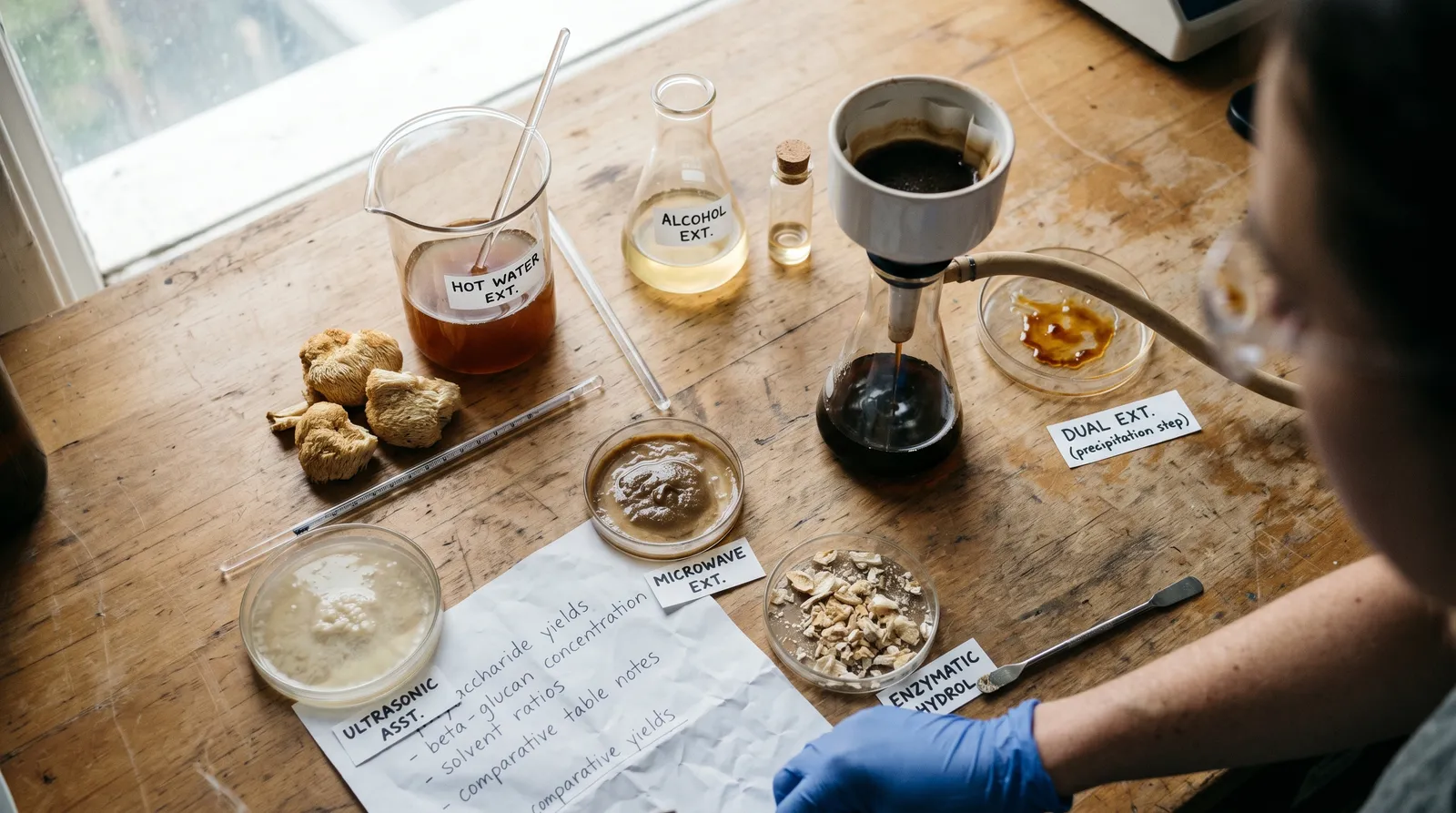
| Extraction Method | Primary Compounds Captured | Typical Yield (Polysaccharides) | Key Limitation |
|---|---|---|---|
| Hot-water (80–100°C) | Beta-glucans, water-soluble polysaccharides | 1.5–8% of dry weight | Misses triterpenes entirely |
| Ethanol (70–95%) | Triterpenes, sterols, aromatic terpenes | Minimal polysaccharide yield | Precipitates/denatures polysaccharides |
| Dual (water + ethanol) | Both polysaccharides and triterpenes | Varies by phase ratio | Phase ratio rarely disclosed on labels |
| Enzyme-assisted | Polysaccharides (enhanced yield) | Up to ~13% in some studies | Enzyme cost; may alter branching |
| Ultrasound-assisted (UAE) | Polysaccharides (enhanced yield) | Variable | Can fragment high-MW beta-glucans |
| Microwave-assisted (MAE) | Polysaccharides (enhanced yield) | Variable | Thermal degradation risk at high power |
Species-Specific Extraction Recommendations
| Species | Key Polysaccharide | Molecular Weight (kDa) | Recommended Extraction |
|---|---|---|---|
| Reishi (Ganoderma lucidum) | GL-polysaccharides + ganoderic acids | 10–1,000+ | Dual extraction (both compound classes studied) |
| Turkey Tail (Trametes versicolor) | PSK / PSP | ~100 | Hot-water extraction (polysaccharide-focused research) |
| Shiitake (Lentinula edodes) | Lentinan | 400–800 | Hot-water extraction |
| Maitake (Grifola frondosa) | Grifolan / D-fraction | ~100 | Hot-water extraction |
| Lion's Mane (Hericium erinaceus) | HEP + hericenones/erinacines | Variable | Dual extraction (terpenoids also studied) |
What the Research Actually Shows
Beta-glucans from multiple mushroom species have demonstrated measurable effects on macrophage activation and natural-killer-cell activity in laboratory settings, though human clinical trial data remains limited (Akramiene et al., 2007). Lentinan from shiitake and PSK from turkey tail have been studied in clinical oncology contexts — but those studies used specific isolated fractions administered in specific doses under medical supervision, not over-the-counter mushroom supplements (Sullivan et al., 2006).
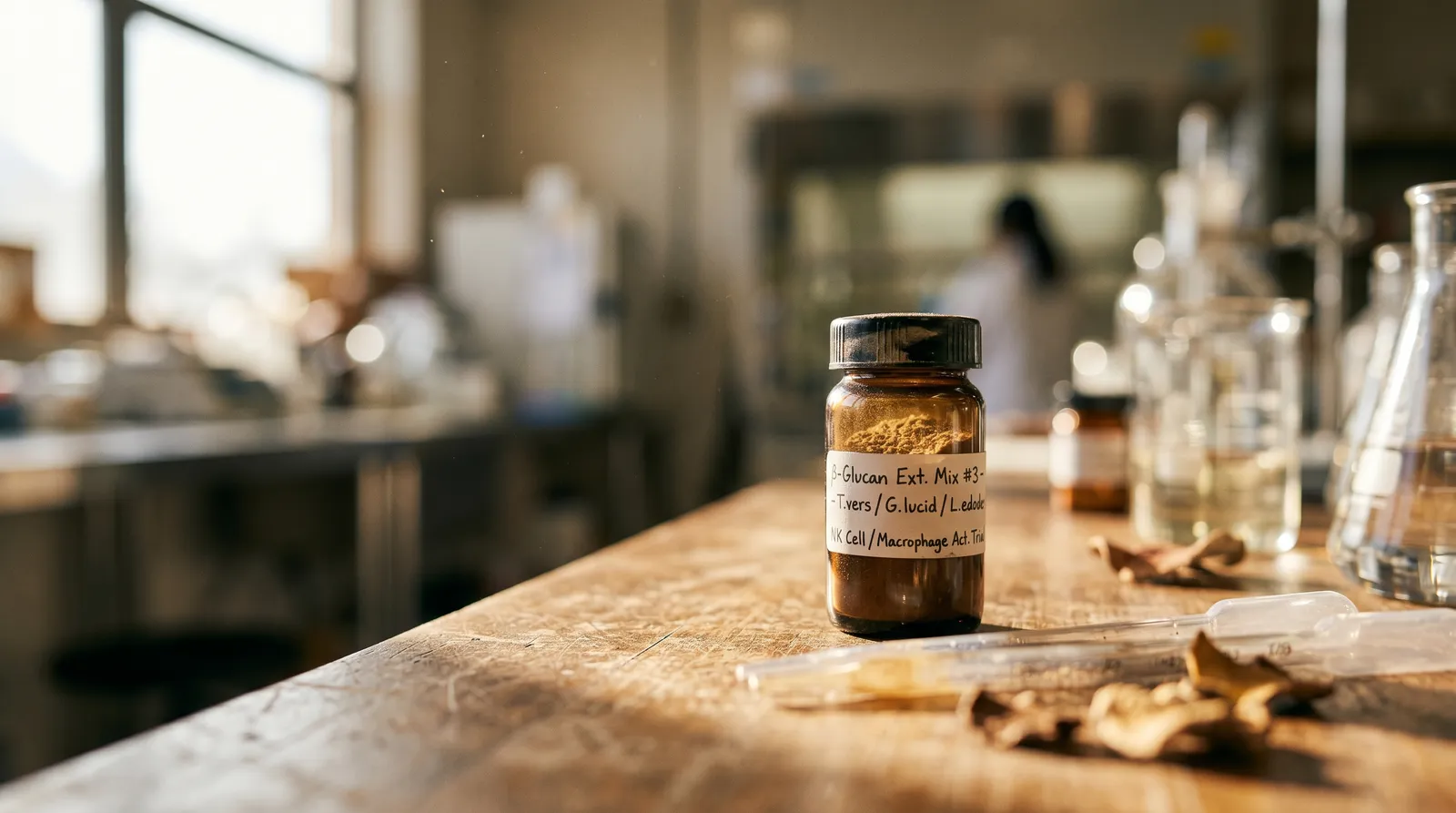
The gap between isolated-fraction research and whole-extract supplementation is real and wide. A study showing that purified lentinan at a defined dose activates a particular immune pathway does not demonstrate that a shiitake capsule from any given brand will do the same thing in your body. The polysaccharide extraction from mushrooms method, the source material, the concentration, the molecular weight distribution, and your individual gut biology all intervene between the laboratory finding and the real-world outcome.
Evidence for the clinical efficacy of oral polysaccharide supplements in healthy humans remains limited. Most human trials are small, use proprietary extracts, and measure surrogate markers (cytokine levels, NK-cell counts) rather than hard clinical endpoints. This does not mean the compounds are inert — it means the evidence base does not yet support the declarative claims that wellness marketing routinely makes. We think honesty about this gap is more useful than pretending it does not exist.
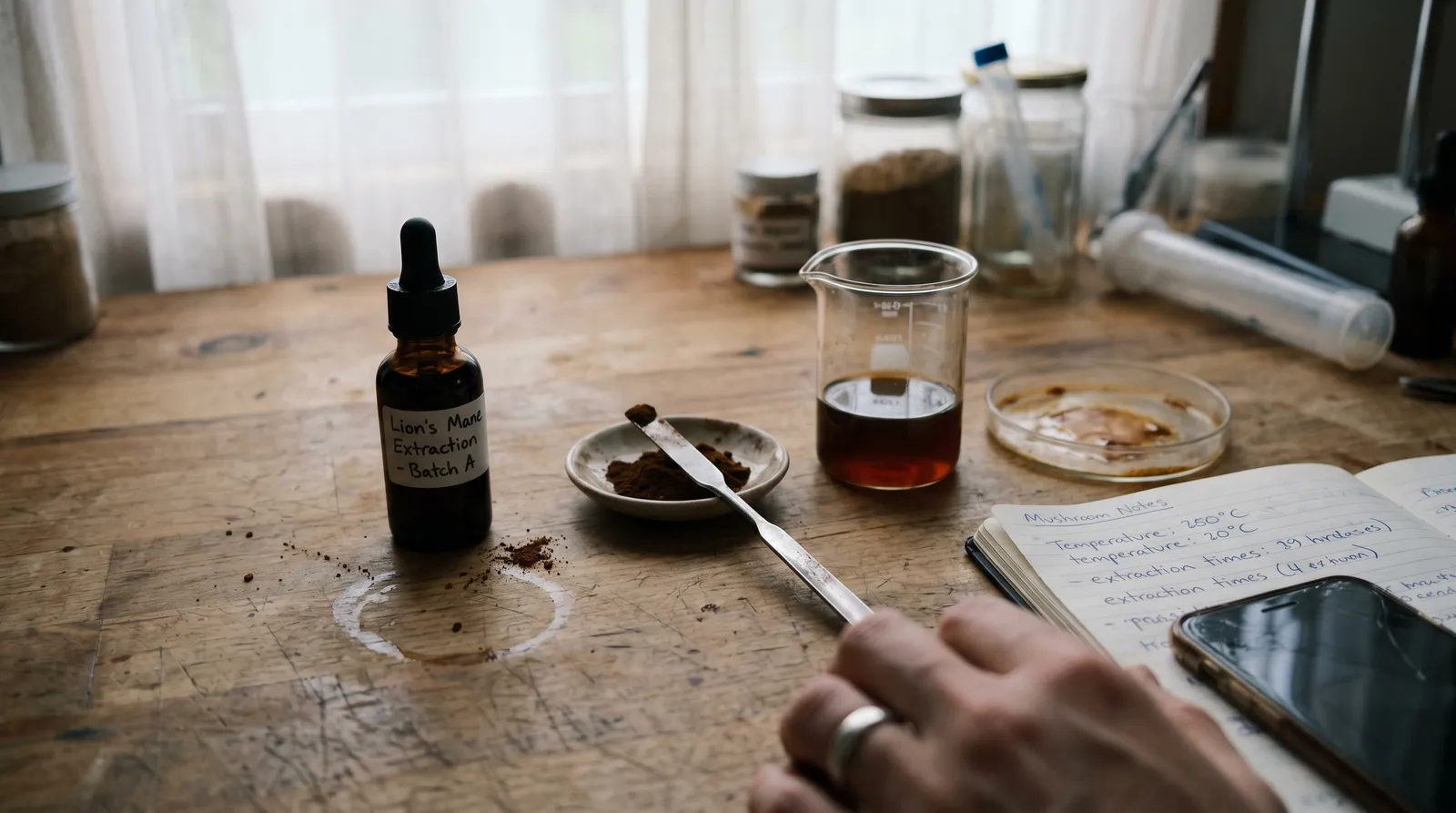
One honest limitation worth stating plainly: even we cannot tell you with certainty how a given polysaccharide extract will perform in your body. The in-vitro data is encouraging for several species, but the jump from petri dish to human physiology is large, and individual responses vary. What we can help with is making sure you understand what you are looking at on a label — so that when you order a mushroom extract, you know whether you are getting a hot-water preparation, a dual extract, or ground-up mycelium on rice flour.
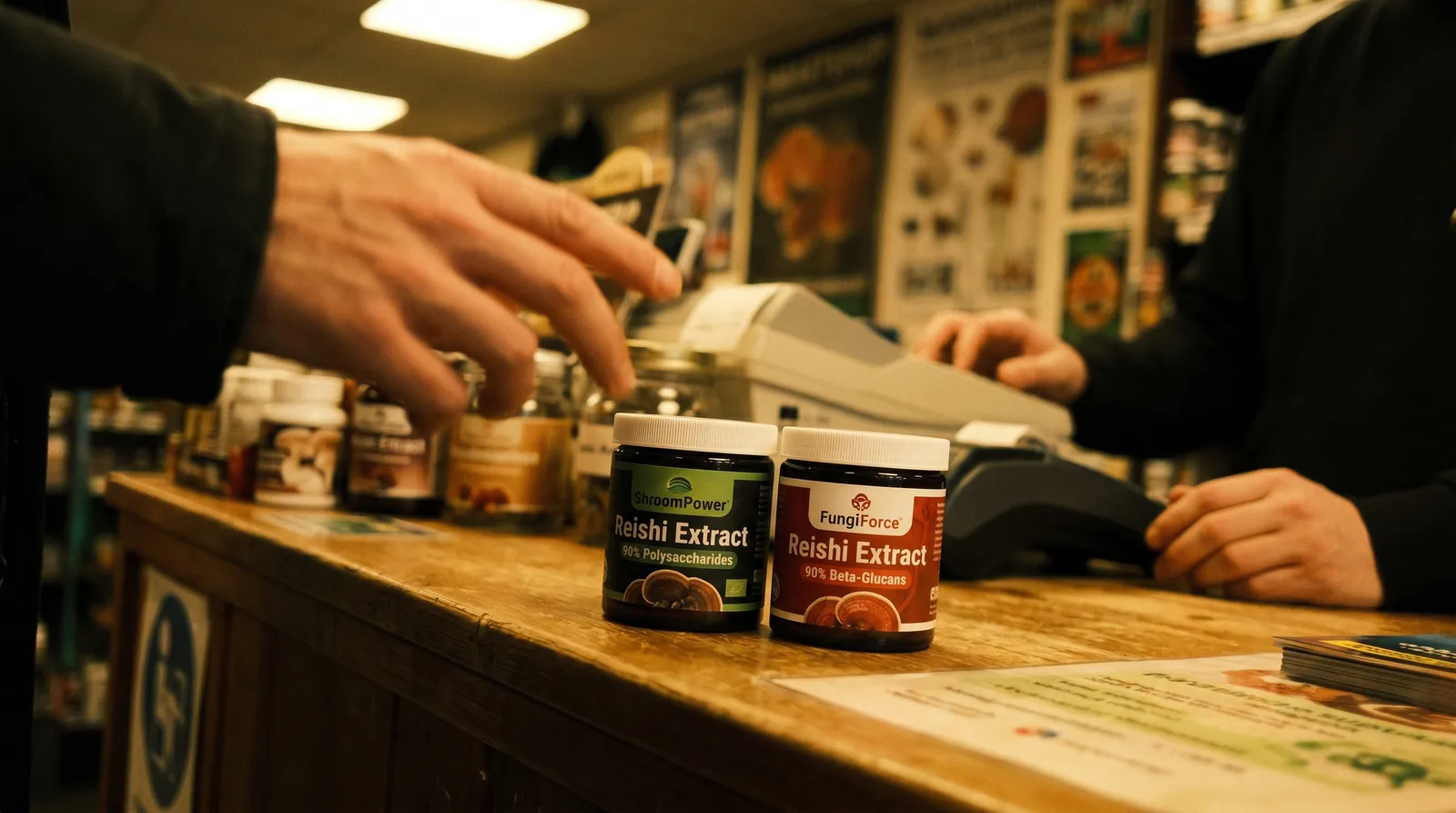
Another pattern: people who want to buy a lion's mane extract for cognitive support often do not realise that the compounds most studied for nerve-growth-factor activity — hericenones and erinacines — are terpenoids, not polysaccharides. A hot-water lion's mane extract will be beta-glucan-rich but may contain minimal hericenones. For lion's mane specifically, a dual extract or an ethanol-inclusive preparation is worth considering. We stock several lion's mane products in the Azarius functional mushroom category that specify their extraction method, and we always recommend checking the label for both beta-glucan and terpenoid content before you order.
Honest Limitations: What We Do Not Know
The biggest gap in polysaccharide extraction mushrooms research is the absence of standardised human bioavailability data for oral beta-glucan supplements. We know these molecules activate immune receptors in vitro. We know they survive gastric digestion in some forms. What we do not know — with clinical certainty — is how much of a given oral dose reaches the gut-associated lymphoid tissue in bioactive form, or how extraction method affects that bioavailability in living humans. This is not a minor caveat; it is the central unanswered question in functional mushroom supplementation.
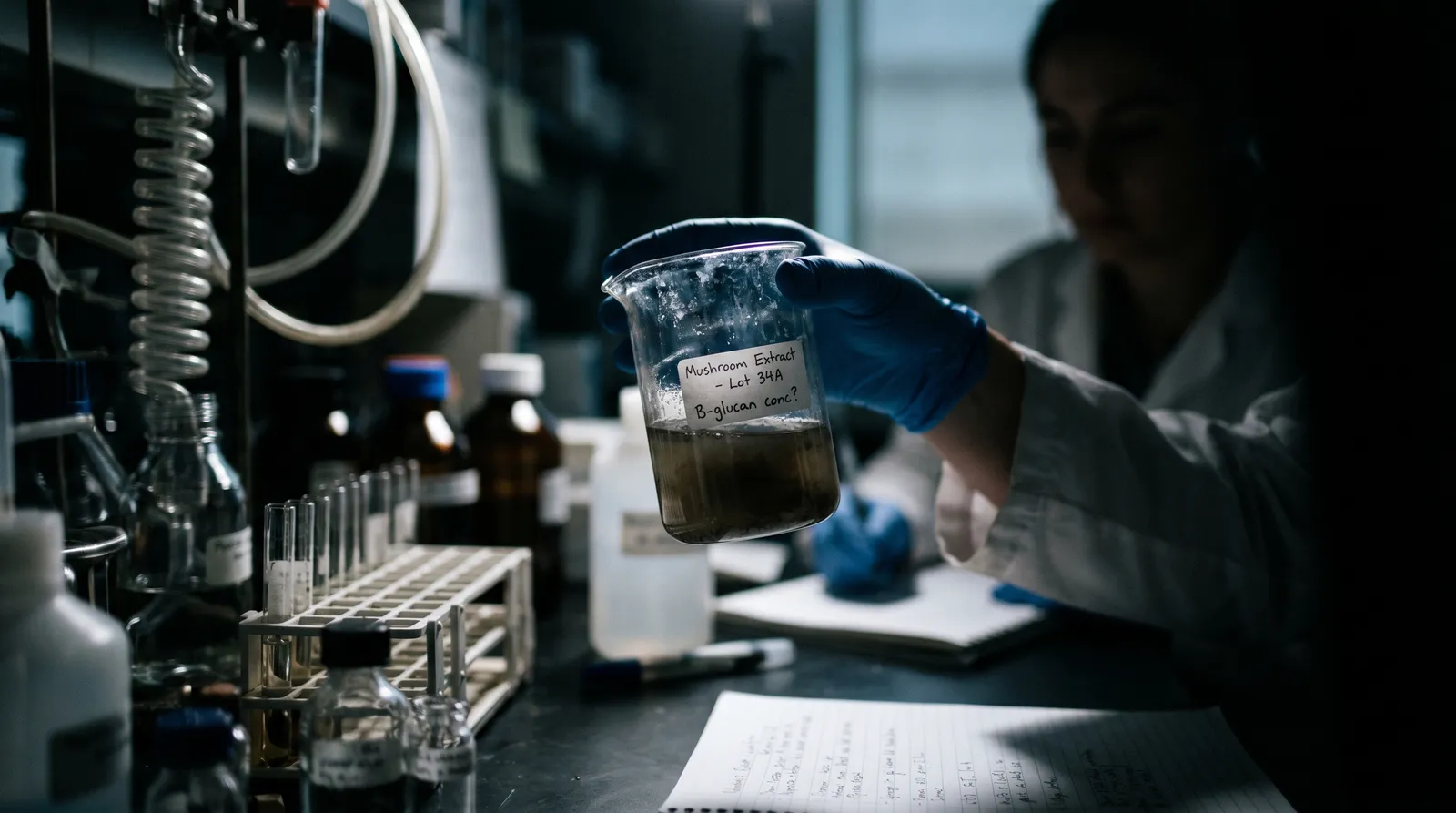
We also cannot tell you that one brand's polysaccharide extraction from mushrooms process is definitively superior to another's without head-to-head clinical comparison data — which, for most products on the market, does not exist. What we can say is that products disclosing extraction method, beta-glucan assay data, and source material give you more to work with than products that do not. Transparency is not proof of efficacy, but it is a necessary starting condition for informed purchasing.
How to Read a Mushroom Extract Label
A well-specified mushroom extract label should disclose the extraction method, the source material, and the beta-glucan percentage measured by a glucan-specific assay. Here is what to look for:
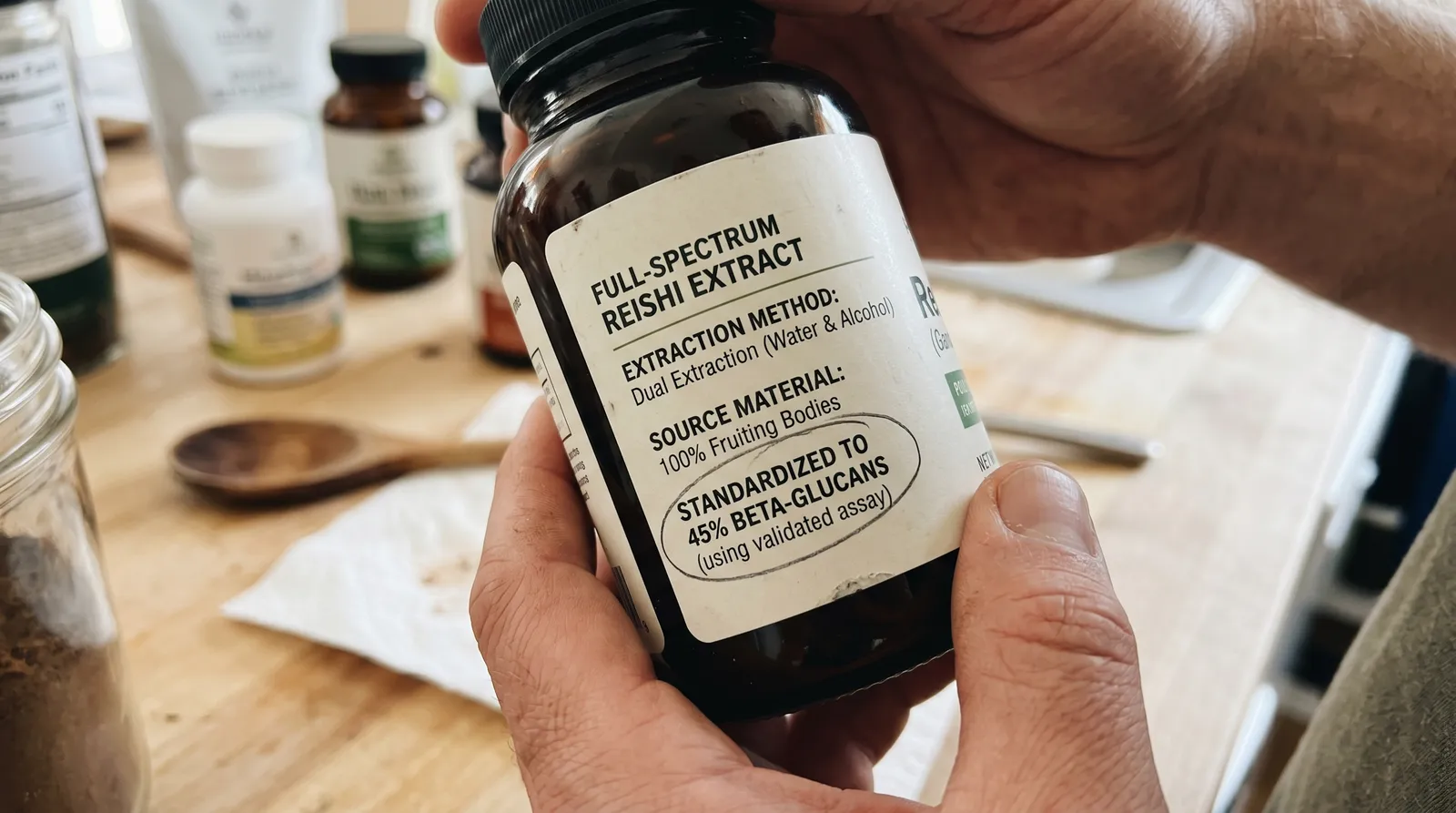
- Source material: Fruiting body, mycelium, or mycelium-on-grain. Fruiting-body extracts typically have higher confirmed beta-glucan content.
- Extraction method: Hot-water, ethanol, or dual. This tells you which compound classes are present.
- Beta-glucan percentage: More informative than "total polysaccharides." Look for Megazyme or equivalent assay results.
- Extract ratio: A 10:1 extract means 10 kg of raw material yielded 1 kg of extract. Higher ratios indicate greater concentration.
- Alpha-glucan or starch content: Some transparent manufacturers report this separately. Low alpha-glucan numbers in a fruiting-body extract confirm minimal starch contamination.
- Triterpene content (for reishi): If you buy reishi specifically for ganoderic acids, look for a stated triterpene percentage — this confirms an alcohol extraction phase was included.
If a product lists none of these details, that is itself informative. The best-characterised mushroom extracts on the market — the ones worth spending money on — get specific about their chemistry. Products from brands like Oriveda, Real Mushrooms, and Nammex-certified suppliers tend to disclose extraction method and beta-glucan assay data. You can find several of these in the Azarius functional mushroom category, and our product pages note the extraction method where the manufacturer provides it. The Azarius blog also publishes updated polysaccharide extraction mushrooms method comparisons when new products arrive.
Where to Buy Quality Polysaccharide Mushroom Extracts
You can buy polysaccharide-rich mushroom extracts from the Azarius functional mushroom category, where we stock fruiting-body extracts from suppliers who disclose extraction method and beta-glucan assay data. When you order from Azarius, each product page notes whether the extract is hot-water, dual, or ethanol-based, and we list the beta-glucan percentage where the manufacturer provides it. If you want to get started with polysaccharide extraction from mushrooms in supplement form, reishi and turkey tail fruiting-body extracts are the most research-supported starting points. Lion's mane dual extracts are also popular for customers interested in both polysaccharides and terpenoid compounds. Our customer service team can help you compare products if you are unsure which extraction method suits your interest — reach out before you buy if the label details are unclear. You can also browse the Azarius wiki section on functional mushrooms for species-specific guides, or read the Azarius blog for updated polysaccharide extraction mushrooms method comparisons and new product arrivals.
Safety Considerations
Polysaccharide-rich mushroom extracts should not be combined with immunosuppressant medications without medical supervision, because their immune-modulating mechanisms may work in direct opposition. This applies particularly to beta-glucan-dense species like reishi, turkey tail, maitake, and shiitake when used alongside methotrexate, tacrolimus, ciclosporin, or corticosteroids. Individuals with autoimmune conditions face a similar concern: beta-glucan-driven immune stimulation may theoretically oppose the goal of autoimmune therapy, though clinical data on this specific interaction is limited.
Reishi extracts have shown anticoagulant and antiplatelet effects in vitro and may interact with warfarin, apixaban, rivaroxaban, and other blood thinners — increasing bleeding risk. Cordyceps may affect blood sugar and could potentiate hypoglycaemic medications. The EMCDDA and other European monitoring bodies have not classified these mushroom extracts as controlled substances, but regulatory frameworks for supplement claims vary across EU member states. If you take prescription medication, speak with a healthcare provider before adding concentrated polysaccharide extracts to your routine. The dedicated Azarius wiki article on functional mushroom drug interactions covers these risks in greater detail.
Last updated: April 2026
Why does hot-water extraction concentrate polysaccharides but not triterpenes?
Beta-glucans and other fungal polysaccharides are water-soluble, so they dissolve readily in hot water. Triterpenes are largely hydrophobic and require an alcohol solvent. The two compound classes have different solubility profiles, which is why dual extraction exists — to capture both in a single preparation.
Can ultrasound-assisted extraction damage polysaccharide structure?
Yes. Aggressive ultrasound treatment can fragment high-molecular-weight beta-glucan chains into smaller molecules. Some in-vitro research suggests molecular weight affects receptor-binding activity, with larger glucans showing stronger macrophage activation (Bohn & BeMiller, 1995), so extraction intensity is a trade-off between yield and structural integrity.
How can you tell if a supplement label reports beta-glucans or total polysaccharides including starch?
Look for beta-glucan-specific assay results (e.g. the Megazyme method). A label reporting only "polysaccharides" without separating beta-glucans from alpha-glucans may include grain-derived starch — particularly in mycelium-on-grain products. Beta-glucan percentage is the more informative figure.
Does ethanol precipitation remove all non-polysaccharide compounds?
Not entirely. Ethanol precipitation at 3:1 or 4:1 ratios separates high-molecular-weight polysaccharides from smaller sugars and amino acids, but protein-bound polysaccharides like PSK may co-precipitate with attached protein fractions. Additional purification steps (deproteinisation, dialysis) are used in research settings to isolate purer fractions.
Is a dual-extracted mushroom product always better than a hot-water extract?
Not necessarily. For species where the research centres on polysaccharides — turkey tail being a clear example — a well-made hot-water extract may be more relevant than a dual extract. Dual extraction adds triterpenes, which matters most for species like reishi where both compound classes have been studied.
What should I look for when I buy a mushroom polysaccharide extract?
Look for the extraction method (hot-water, ethanol, or dual), the source material (fruiting body vs. mycelium-on-grain), and a beta-glucan percentage measured by a glucan-specific assay such as Megazyme. A transparent label that specifies these details indicates a better-characterised product. You can find well-specified extracts in the Azarius functional mushroom category.
Frequently Asked Questions
10 questionsWhy does hot-water extraction concentrate polysaccharides but not triterpenes?
Can ultrasound-assisted extraction damage polysaccharide structure?
How can you tell if a supplement label reports beta-glucans or total polysaccharides including starch?
Does ethanol precipitation remove all non-polysaccharide compounds?
Is a dual-extracted mushroom product always better than a hot-water extract?
What should I look for when I buy a mushroom polysaccharide extract?
What is the difference between alpha-glucans and beta-glucans in mushroom extracts?
Does the molecular weight of mushroom polysaccharides affect their bioactivity?
Why are mushroom fruiting bodies often preferred over mycelium for polysaccharide extraction?
Does freeze-drying preserve mushroom polysaccharides better than spray-drying?
About this article


Adam Parsons is an external cannabis and psychedelics writer and editor who contributes to Azarius's wiki as both author and reviewer. On the writing side, he authors Azarius's kratom and kanna clusters, drawing on exten
This wiki article was drafted with AI assistance and reviewed by Adam Parsons, External contributor. Editorial oversight by Joshua Askew.
Medical disclaimer. This content is for informational purposes only and does not constitute medical advice. Consult a qualified healthcare provider before use of any substance.
Last reviewed April 19, 2026
References (11)
- [1]Akramiene, D. et al. (2007). Effects of beta-glucans on the immune system. Medicina , 43(8), 597–606.
- [2]Bohn, J.A. & BeMiller, J.N. (1995). (1→3)-β-D-Glucans as biological response modifiers. Carbohydrate Polymers , 28(1), 3–14. DOI: 10.1016/0144-8617(95)00076-3
- [3]Chihara, G. et al. (1970). Inhibition of mouse sarcoma 180 by polysaccharides from Lentinus edodes. Nature , 222, 687–688.
- [4]Reishi, M.J. & Coors, R.G. (2017). Measuring beta-glucan in mushroom supplements: analytical challenges. International Journal of Medicinal Mushrooms , 19(10), 893–902.
- [5]Sullivan, R. et al. (2006). Medicinal mushrooms and cancer therapy. Perspectives in Biology and Medicine , 49(2), 159–170.
- [6]Tsukagoshi, S. et al. (1984). Krestin (PSK). Cancer Treatment Reviews , 11(2), 131–155. DOI: 10.1016/0305-7372(84)90005-7
- [7]Wang, Q. et al. (2017). Optimization of polysaccharide extraction from Ganoderma lucidum. Carbohydrate Polymers , 157, 267–274.
- [8]Xu, X. et al. (2014). Structural characterisation of polysaccharides from Lentinula edodes. Food Chemistry , 152, 231–237.
- [9]Xu, Y. et al. (2016). Enzyme-assisted extraction of plant polysaccharides. Food Research International , 89, 425–431.
- [10]Zhang, M. et al. (2007). Antitumor polysaccharides from mushrooms: a review. Food Research International , 40(7), 869–878.
- [11]Zhu, F. et al. (2015). Structures and functions of fungal beta-glucans. Applied Microbiology and Biotechnology , 99(19), 7879–7888.
Related Articles

Medicinal Mushrooms TCM Western Pharmacognosy Guide
Guide to medicinal mushrooms TCM Western pharmacognosy — how reishi, lion's mane, cordyceps are classified, extracted, and studied.
Research on Immune Modulation by Functional Mushrooms
What does research on immune modulation by functional mushrooms actually show? Beta-glucans, Dectin-1 signalling, human trials, and the honest gap...
Allergic Reactions & Mushroom Sensitivities
Understand allergic reactions and mushroom sensitivities: mould cross-reactivity, shiitake dermatitis, species-specific risks, and safer product…
Turkey Tail Trametes versicolor — Buy Supplements
Buy turkey tail Trametes versicolor supplements at Azarius. PSK and PSP evidence, beta-glucan dosage, extraction methods, and safety.
Triterpenes In Medicinal Mushrooms
Triterpenes in medicinal mushrooms are a class of 30-carbon terpenoid compounds produced as secondary metabolites by several functional mushroom species…
Chaga Siberian Nordic Folk Use
Chaga Siberian Nordic folk use is a centuries-old tradition in which indigenous Siberians and Nordic communities brewed the birch-parasitising fungus…
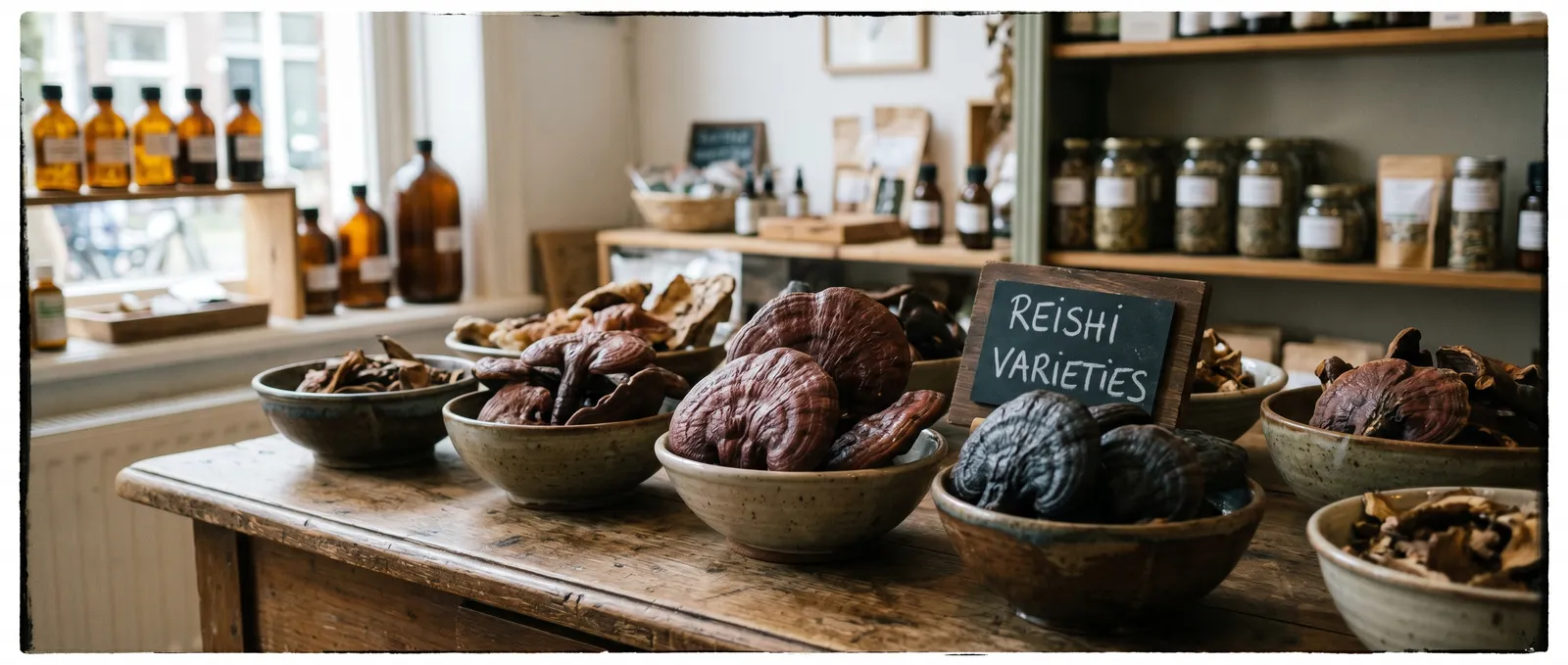
Red and Black Reishi Varieties
Red reishi (Ganoderma lucidum) and black reishi (Ganoderma sinense) both fall under the lingzhi umbrella in traditional Chinese medicine, but they differ in…
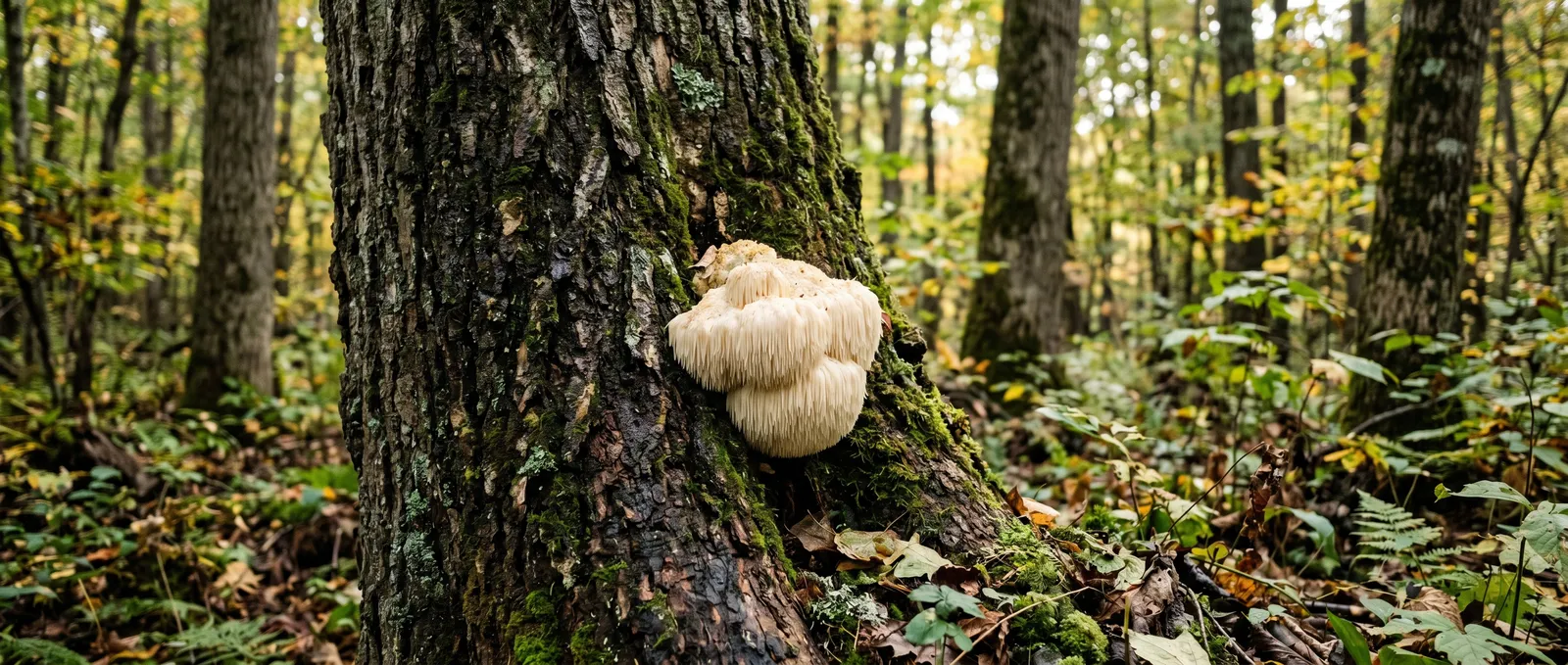
Lion's Mane Identification & Habitat
Hericium erinaceus is a tooth fungus that fruits as a single white, spine-covered mass on wounded or dead hardwood trees.
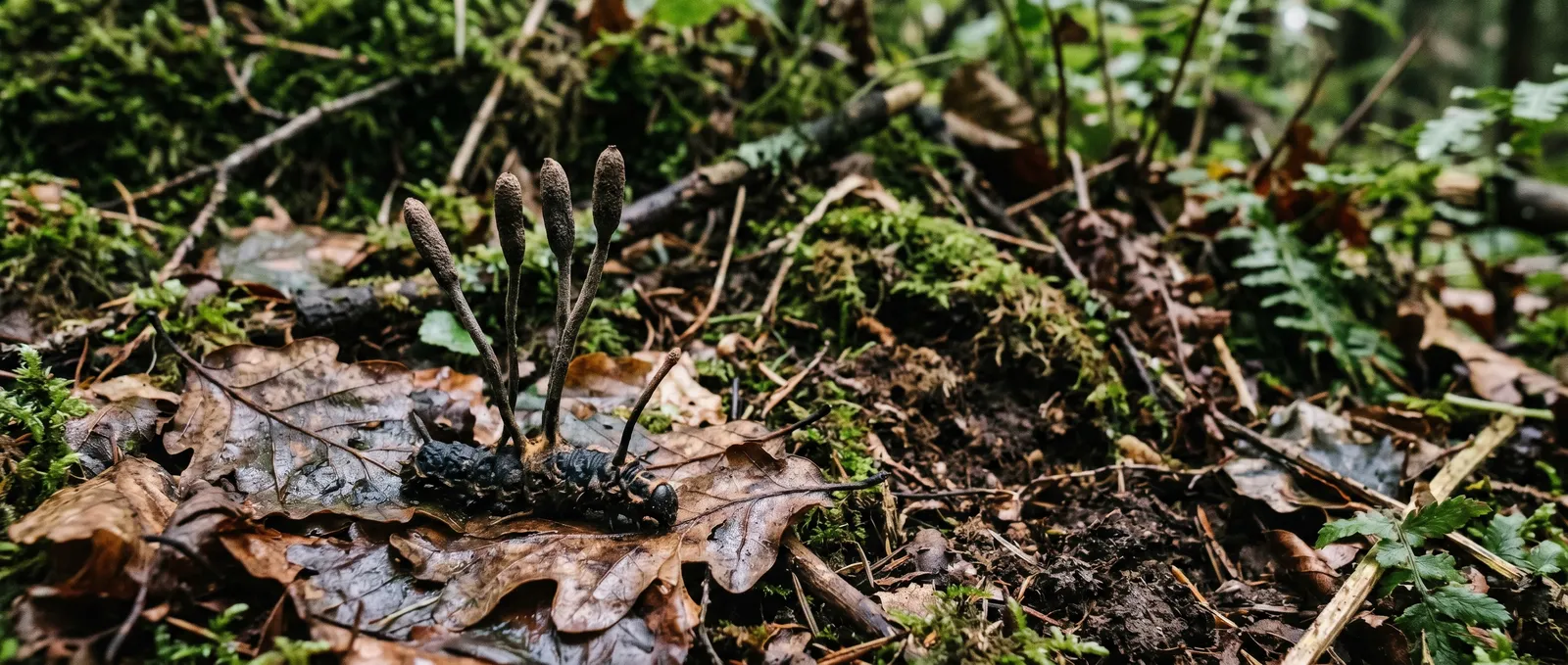
Cordyceps Lifecycle
The cordyceps lifecycle is a parasitic biological sequence in which a fungus infects an insect host, colonises its body from within, and erupts as a…