
Lion's Mane Identification & Habitat
Definition
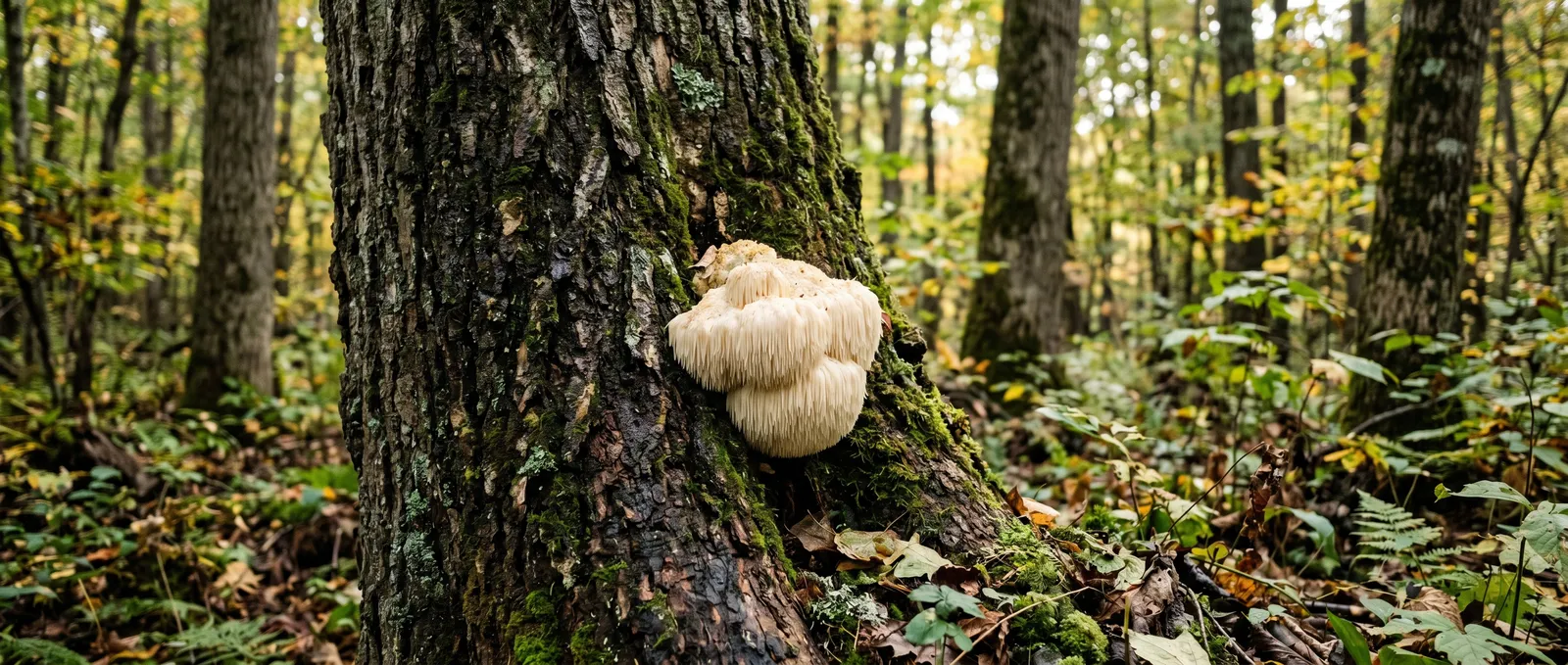
Hericium erinaceus is a tooth fungus that fruits as a single white, spine-covered mass on wounded or dead hardwood trees. Found across temperate forests in Europe, North America, and East Asia, it favours mature beech and oak — and has become increasingly rare in managed woodlands (Boddy et al., 2011).
Lion's mane identification habitat knowledge is essential for any forager hoping to find Hericium erinaceus — a saprotrophic fungus that fruits on hardwood trees across temperate forests in North America, Europe, and Asia. If you've ever spotted what looks like a white, shaggy beard growing out of a dying oak, you've likely found a lion's mane — or one of its close relatives. This guide covers how to identify the real thing, where it grows, what it feeds on, and which lookalikes might fool you in the field.
Disclaimer: This article is for educational and informational purposes only. It does not constitute medical advice, and nothing here should be interpreted as a recommendation to treat, diagnose, or cure any condition. Foraging wild mushrooms carries inherent risks — always verify identification with an experienced mycologist before consuming any wild fungus. In some jurisdictions, picking H. erinaceus is illegal. Check local regulations before foraging.
What Is Lion's Mane, Exactly?
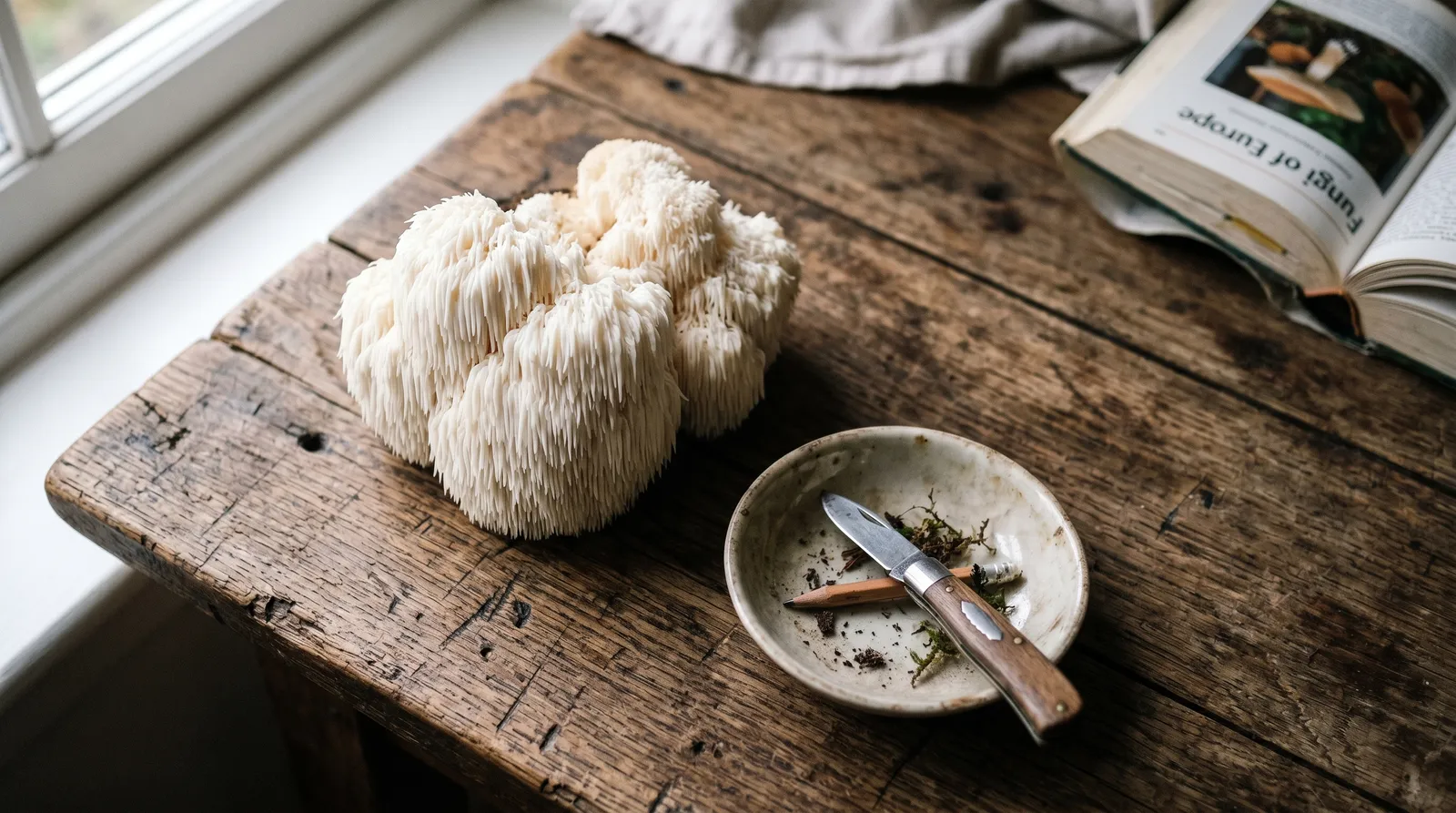
Hericium erinaceus is a tooth fungus in the family Hericiaceae, order Russulales — meaning it produces spores on downward-hanging spines rather than gills or pores. The species was first described by Christiaan Hendrik Persoon in 1797 and has accumulated a pile of common names since: lion's mane, bearded tooth, hedgehog mushroom (confusingly, since Hydnum repandum also claims that name), monkey head mushroom, and the Japanese yamabushitake.
Taxonomically, it belongs to a small genus. According to a phylogenetic study by Larsson & Larsson (2003), the Hericiaceae diverged early within the Russulales, making Hericium species somewhat unusual among their order. There are roughly 8–10 recognised Hericium species worldwide, though the exact count shifts as molecular work reclassifies older descriptions.
What makes H. erinaceus interesting beyond taxonomy is its chemistry. The fruiting body contains hericenones in the cap tissue and erinacines in the mycelium — two groups of terpenoid compounds that have drawn research attention for their ability to stimulate nerve growth factor (NGF) synthesis in vitro (Mori et al., 2009). But this article isn't about the pharmacology — for that, see our dedicated lion's mane benefits and research article on the Azarius wiki.
How to Identify Lion's Mane in the Wild
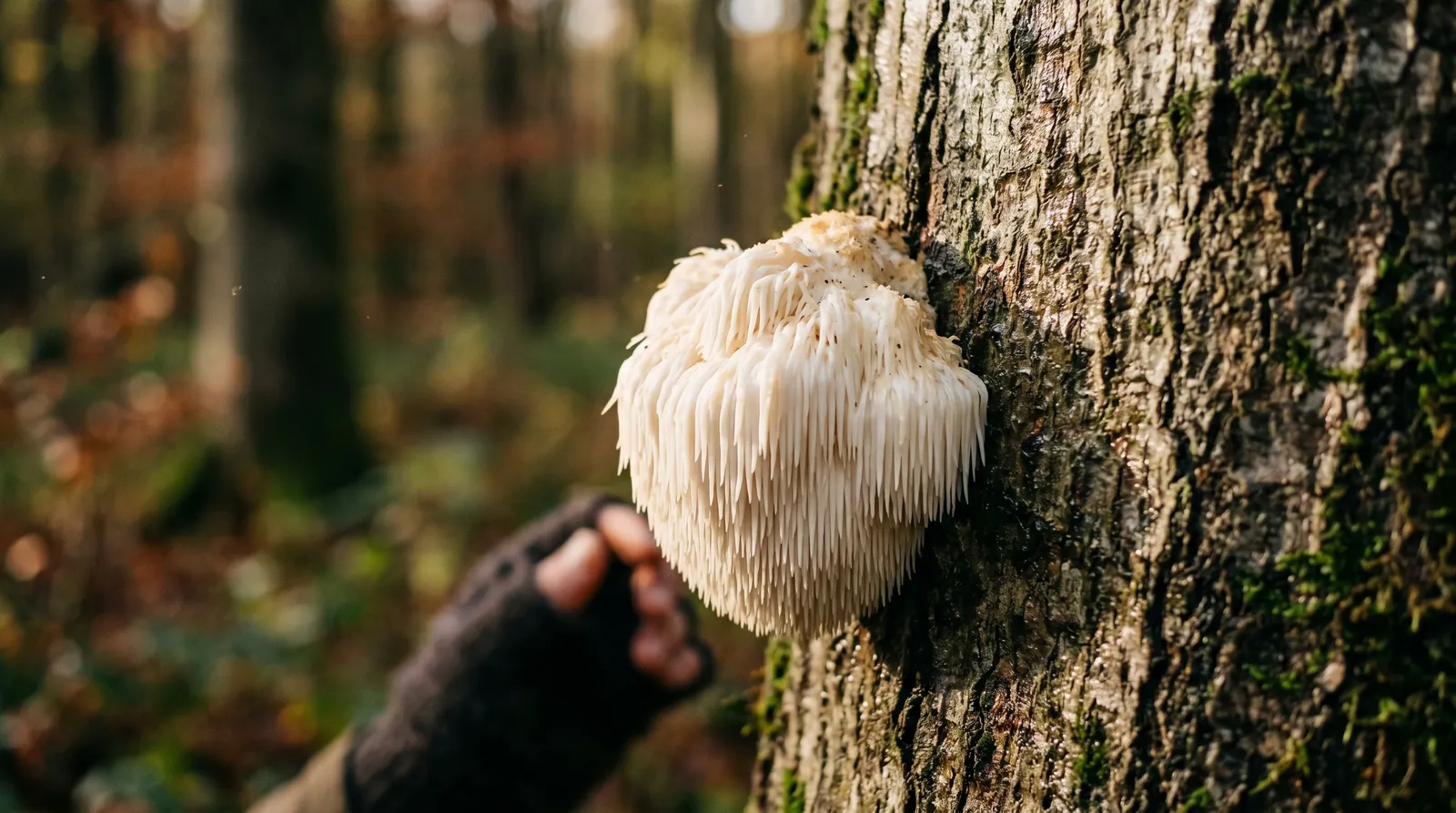
Lion's mane is one of the easier wild mushrooms to spot, provided you know what to look for. The fruiting body is a single, unbranched clump — no stem, no cap in the traditional sense. Reliable lion's mane identification habitat awareness starts with understanding these core features, since the mushroom grows directly from the wound site or dead section of a tree trunk, typically 1–3 metres off the ground.
Key lion's mane identification features:
- Shape: A globular to irregular mass, roughly 10–40 cm across when mature. Think of a white pompom or, as one forager put it, "a Lorax that grew on a tree."
- Spines: Long, soft, downward-hanging spines (teeth), typically 1–5 cm in length. These are densely packed and give the mushroom its characteristic shaggy appearance. Young specimens have short, uniform spines; older ones develop longer, more ragged teeth.
- Colour: Pure white when young and fresh. As the fruiting body ages, it turns cream, then yellowish, and eventually brownish. If you find one that's already brown and soggy, it's past its prime.
- Texture: Firm and slightly spongy when fresh. Squeeze it gently and it springs back. Waterlogged specimens feel heavy and limp.
- Spore print: White. Spores are roughly spherical, 5–7 µm, amyloid (they stain blue-black in Melzer's reagent).
- Smell: Mild, slightly sweet, sometimes compared to fresh seafood — particularly lobster or crab. This isn't just folklore; the amino acid profile genuinely overlaps with crustacean flavour compounds.
One thing that trips people up: lion's mane doesn't always look like the perfect white sphere you see in photographs. Wind exposure, insect damage, and dry spells can produce lopsided, partially browned, or stunted specimens. The spines are the giveaway — if they're long, unbranched, and hanging from a single mass, you're almost certainly looking at H. erinaceus.
Lookalike Species and How to Tell Them Apart
Lion's mane has no toxic lookalikes — that's the most important thing to know. Its closest relatives are all edible, but they differ in structure and, potentially, in bioactive compound profiles. If you're specifically after H. erinaceus for its erinacine and hericenone content, correct lion's mane identification matters.
| Species | Common Name | Key Difference from H. erinaceus | Edible? |
|---|---|---|---|
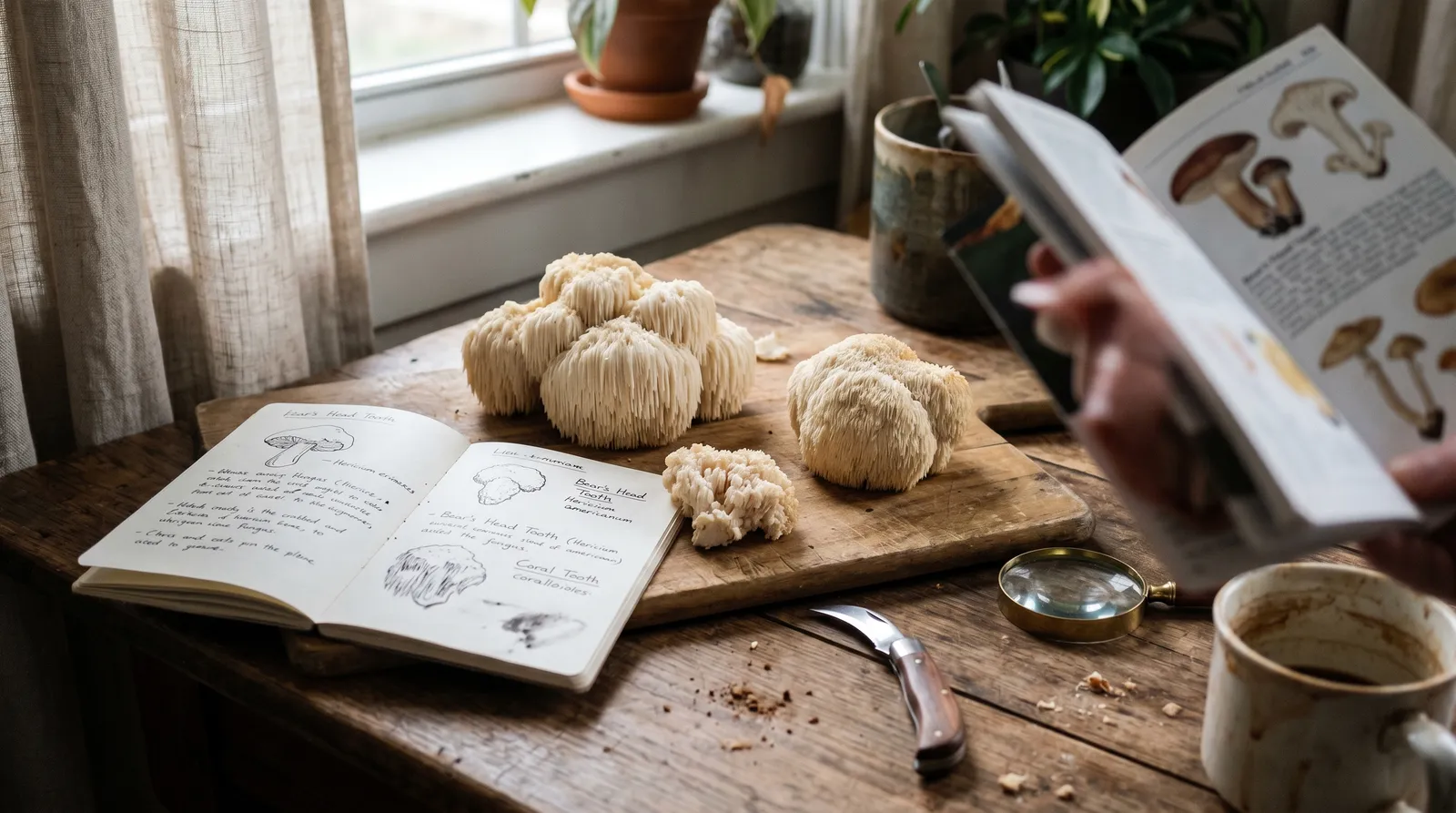
| Hericium americanum | Bear's Head Tooth | Spines hang from short branches rather than a single mass | Yes |
| Hericium coralloides | Comb Tooth / Coral Tooth | Highly branched structure; spines are shorter (under 1 cm) and arranged along coral-like branches | Yes |
| Clavulina cristata | White Coral Fungus | Grows from soil (not wood); branches are smooth, not spined; much smaller (2–8 cm tall) | Yes, but bland |
The critical distinction is structural. H. erinaceus forms a single, unbranched mass with all spines emerging from one central body. H. americanum and H. coralloides both branch — the spines hang from multiple arm-like projections. If you see branching, it's not true lion's mane. All three Hericium species are edible and tasty, but their chemical profiles differ, and most of the published NGF research specifically used H. erinaceus (Kawagishi et al., 1994).
Clavulina cristata is the odd one out. It's a coral fungus, not a tooth fungus, and it grows from the ground rather than from wood. It only makes the lookalike list because it's white and vaguely branching — a stretch, frankly, but it appears in enough field guides that it's worth mentioning.
Where Does Lion's Mane Grow?
Lion's mane is a wound parasite and saprotroph of hardwood trees, found across temperate forests on three continents. It colonises living trees through damaged bark — storm breaks, pruning wounds, insect bore holes — and continues feeding on the dead heartwood after the tree dies. Its preferred habitat and hosts across its range include:
- Europe: Beech (Fagus sylvatica) is the primary host. Oak (Quercus spp.) is a secondary host. In the UK, H. erinaceus is rare enough to be listed on Schedule 8 of the Wildlife and Countryside Act 1981, making it an offence to pick it without a licence. The species has Red List status in several European countries. Data from the EMCDDA's broader biodiversity monitoring and European fungal distribution maps confirm its patchy occurrence across the continent.
- North America: Oak, maple (Acer spp.), and birch (Betula spp.) are the most common hosts. Fruiting occurs from late summer through autumn, sometimes persisting into early winter in milder regions (Baroni, 2017).
- East Asia: Found on a range of broadleaf hardwoods in China, Japan, and Korea, where it has a long culinary and medicinal history.
The fungus favours temperate forests with mature or old-growth hardwoods. It's uncommon in managed plantations where damaged or dead trees are removed promptly — the very wounds and standing deadwood it needs to colonise are typically cleared. A 2013 survey of H. erinaceus distribution in England and Wales found only 46 confirmed sites, nearly all on veteran beech trees in ancient woodland (Boddy et al., 2011). The species' decline in Europe is closely tied to the loss of old-growth forest habitat.
Altitude matters less than tree age and forest management. Lion's mane has been recorded from sea level to around 1,500 metres in suitable habitat. It's more sensitive to humidity: the fruiting body is essentially a water-heavy mass of exposed tissue, and dry conditions cause it to abort or shrivel before maturity.
Can You Cultivate Lion's Mane?
Yes — lion's mane is one of the more straightforward gourmet species to grow at home, and it's a good option if you can't find it in the wild or if lion's mane identification habitat scouting in your area comes up empty. The mycelium colonises hardwood-based substrates readily. Common cultivation substrates include supplemented hardwood sawdust (typically oak or beech), straw/sawdust blends, and hardwood logs for outdoor cultivation.
Indoor growers typically use sterilised sawdust blocks supplemented with wheat bran (10–20% by dry weight). Colonisation takes 2–4 weeks at 20–24°C. Fruiting is triggered by dropping the temperature to 15–18°C, increasing humidity to 85–95%, and providing fresh air exchange. The mushroom fruits through slits cut in the bag, forming compact white masses that can reach harvest size in 7–14 days.
Log cultivation is slower but lower-maintenance. Drill holes in freshly cut hardwood logs, pack with spawn, seal with wax, and wait 6–18 months for the first flush. Logs can produce for 3–6 years depending on diameter and wood species. Oak and sugar maple logs tend to produce the best yields, though data on European beech log cultivation is thinner — most published yield studies focus on North American and East Asian hardwoods.
Whether cultivated specimens contain the same concentrations of hericenones and erinacines as wild fruiting bodies is an open question. A comparative analysis by Lee et al. (2016) found that substrate composition significantly influenced bioactive compound levels, with hardwood-based substrates outperforming grain-based ones. If you're growing for the chemistry rather than the kitchen, substrate choice matters.
Where to Buy Lion's Mane Products
Not everyone has access to old-growth beech forest or the patience for log cultivation. If you want to get the benefits of lion's mane without foraging or growing your own, you can buy lion's mane supplements, extracts, and grow kits from reputable suppliers. Azarius stocks several lion's mane products — including dual-extract tinctures and dried fruiting body capsules — in our mushroom supplements category. When choosing a product, look for extracts made from fruiting bodies rather than mycelium-on-grain, and check whether the manufacturer specifies beta-glucan or hericenone content. Our Azarius blog has a comparison of lion's mane extract types if you want to dig deeper into what separates a good supplement from a mediocre one.
Lion's Mane Compared to Other Functional Mushrooms
Lion's mane is often mentioned alongside reishi, cordyceps, and chaga in the functional mushroom space, but it occupies a distinct niche. Where reishi is primarily studied for immune modulation and cordyceps for exercise performance, lion's mane research centres on neurotrophin synthesis — specifically NGF and BDNF. Chaga shares lion's mane's preference for hardwood trees but is a polypore, not a tooth fungus, and its bioactive profile (betulinic acid, melanin) is entirely different. If you're browsing the Azarius mushroom supplements range, it's worth understanding these distinctions rather than treating all functional mushrooms as interchangeable. You can also order reishi and cordyceps products from Azarius if you want to compare effects firsthand.
Foraging Ethics and Practical Tips
Before heading into the woods with lion's mane identification habitat knowledge in hand, consider the ethical and practical side. In many European countries, H. erinaceus is legally protected — picking it can result in fines. Even where it's legal, responsible foraging means taking only what you'll use and leaving enough for spore dispersal.
If you do find a specimen, photograph it from multiple angles before harvesting. Note the host tree species, the height on the trunk, and whether the tree is living or dead — this information is valuable for local fungal recording schemes and helps build the distribution maps that conservation efforts depend on.
Last updated: April 2026
Frequently Asked Questions
9 questionsIs lion's mane easy to identify in the wild?
Does lion's mane have any toxic lookalikes?
What trees does lion's mane grow on?
Can you grow lion's mane at home?
Is lion's mane rare in Europe?
What time of year does lion's mane fruit in the wild?
How can you tell lion's mane apart from other Hericium species?
Is foraging lion's mane legal in protected areas?
How long does a lion's mane mushroom live on a tree?
About this article


Joshua Askew serves as Editorial Director for Azarius wiki content. He is Managing Director at Yuqo, a content agency specialising in cannabis, psychedelics and ethnobotanical editorial work across multiple languages. Th
This wiki article was drafted with AI assistance and reviewed by Joshua Askew, Managing Director at Yuqo. Editorial oversight by Adam Parsons.
Medical disclaimer. This content is for informational purposes only and does not constitute medical advice. Consult a qualified healthcare provider before use of any substance.
Last reviewed April 24, 2026
References (6)
- [1]Baroni, T.J. (2017). Mushrooms of the Northeastern United States and Eastern Canada. Timber Press.
- [2]Boddy, L. et al. (2011). Distribution and conservation status of Hericium erinaceus in England and Wales. Fungal Ecology, 4(4), 304–313.
- [3]Kawagishi, H. et al. (1994). Hericenones C, D and E, stimulators of nerve growth factor synthesis, from the mushroom Hericium erinaceum. Tetrahedron Letters, 35(10), 1569–1572.
- [4]Larsson, K.-H. & Larsson, E. (2003). Phylogenetic relationships of russuloid basidiomycetes with emphasis on aphyllophoralean taxa. Mycologia, 95(6), 1037–1065.
- [5]Lee, J.S. et al. (2016). Comparative analysis of bioactive compounds in Hericium erinaceus cultivated on different substrates. Mycobiology, 44(4), 341–348.
- [6]Mori, K. et al. (2009). Nerve growth factor-inducing activity of Hericium erinaceus in 1321N1 human astrocytoma cells. Biological & Pharmaceutical Bulletin, 31(9), 1727–1732.
Related Articles
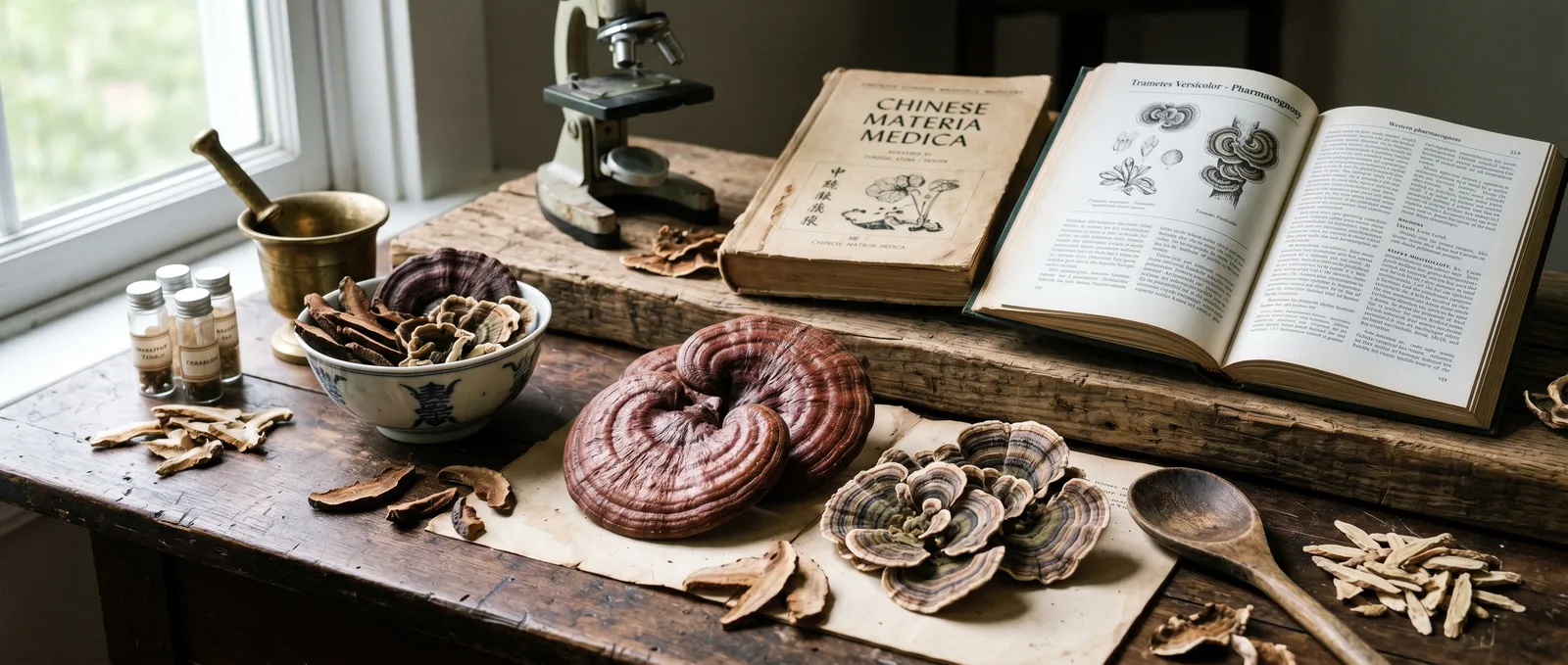
Medicinal Mushrooms TCM Western Pharmacognosy Guide
Guide to medicinal mushrooms TCM Western pharmacognosy — how reishi, lion's mane, cordyceps are classified, extracted, and studied.

Research on Immune Modulation by Functional Mushrooms
What does research on immune modulation by functional mushrooms actually show? Beta-glucans, Dectin-1 signalling, human trials, and the honest gap...
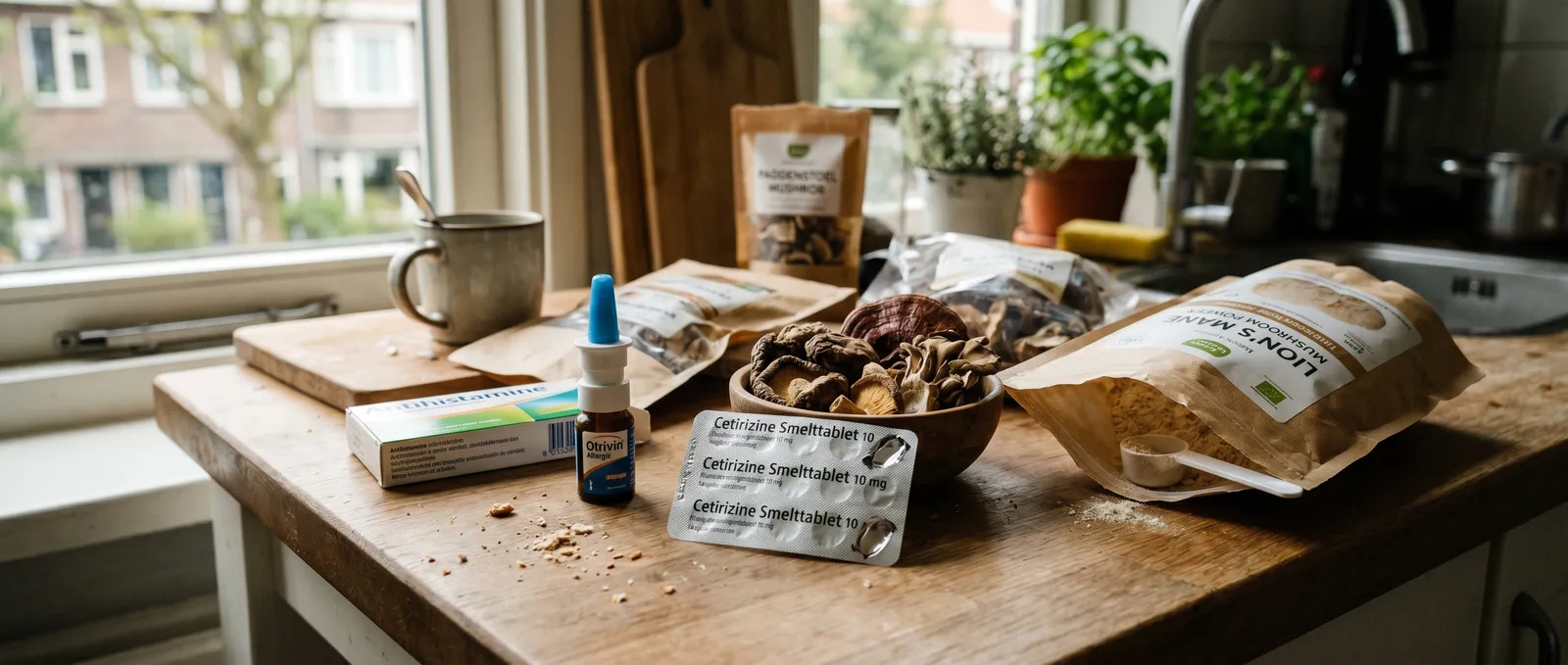
Allergic Reactions & Mushroom Sensitivities
Understand allergic reactions and mushroom sensitivities: mould cross-reactivity, shiitake dermatitis, species-specific risks, and safer product…
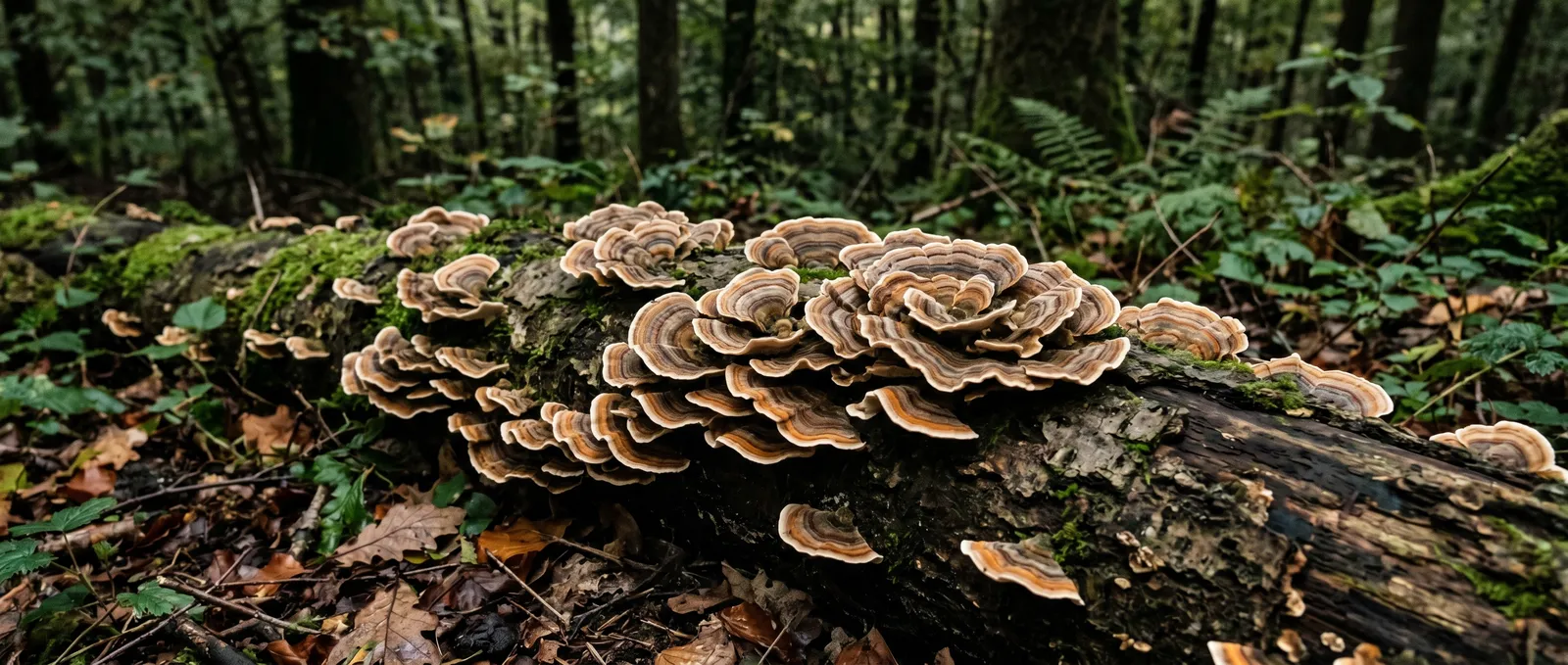
Turkey Tail Trametes versicolor — Buy Supplements
Buy turkey tail Trametes versicolor supplements at Azarius. PSK and PSP evidence, beta-glucan dosage, extraction methods, and safety.

Triterpenes In Medicinal Mushrooms
Triterpenes in medicinal mushrooms are a class of 30-carbon terpenoid compounds produced as secondary metabolites by several functional mushroom species…
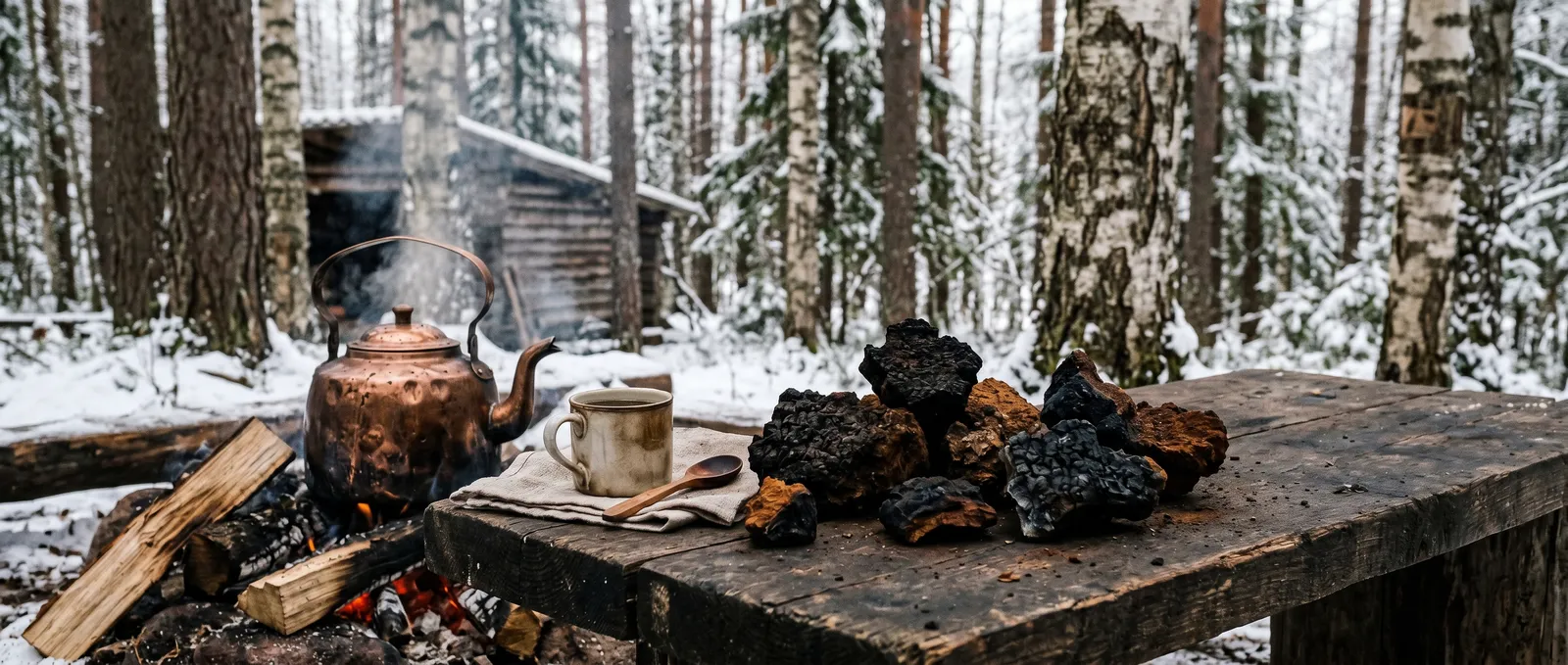
Chaga Siberian Nordic Folk Use
Chaga Siberian Nordic folk use is a centuries-old tradition in which indigenous Siberians and Nordic communities brewed the birch-parasitising fungus…
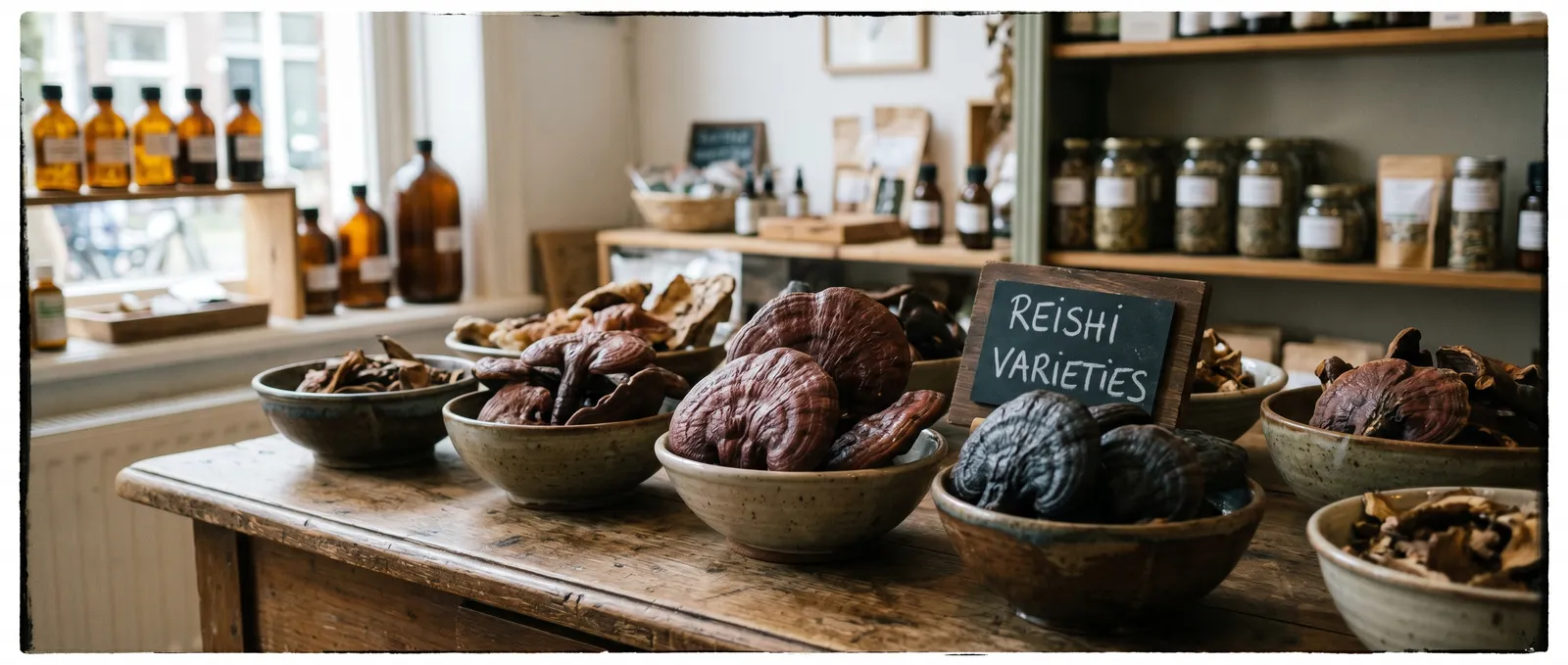
Red and Black Reishi Varieties
Red reishi (Ganoderma lucidum) and black reishi (Ganoderma sinense) both fall under the lingzhi umbrella in traditional Chinese medicine, but they differ in…
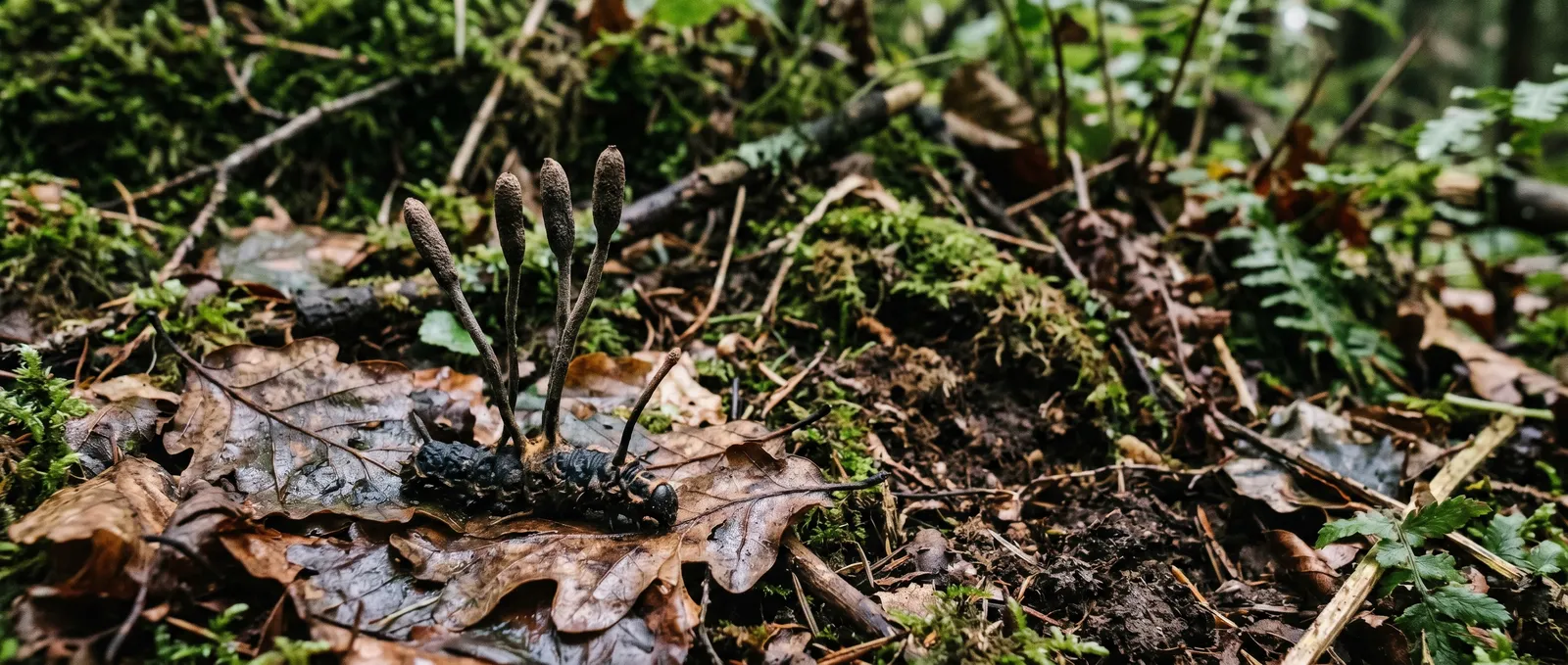
Cordyceps Lifecycle
The cordyceps lifecycle is a parasitic biological sequence in which a fungus infects an insect host, colonises its body from within, and erupts as a…
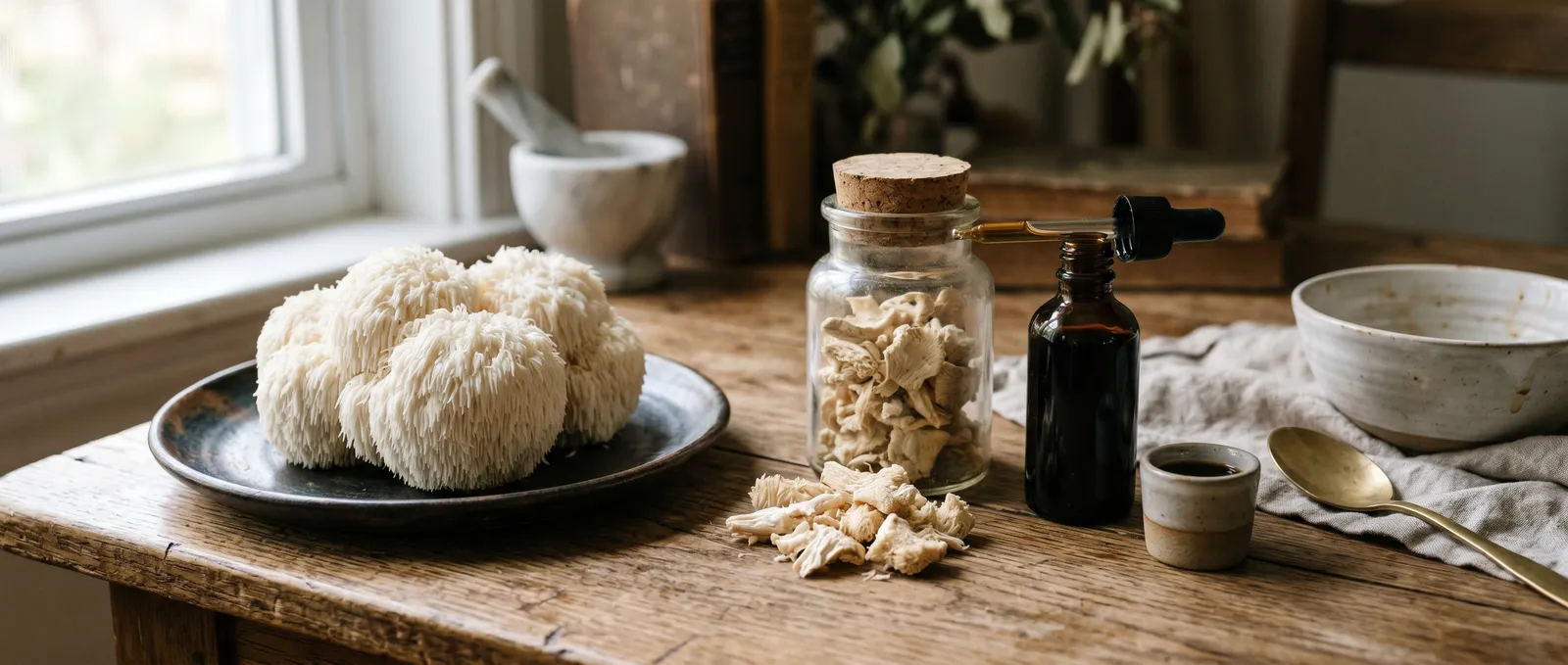
Lion's Mane Fresh Dried Extract: What's Actually Different?
Lion's mane fresh dried extract is a collective term for the main preparation forms of Hericium erinaceus — fresh fruiting bodies, dehydrated powder, and…