
Cordyceps Lifecycle
Definition
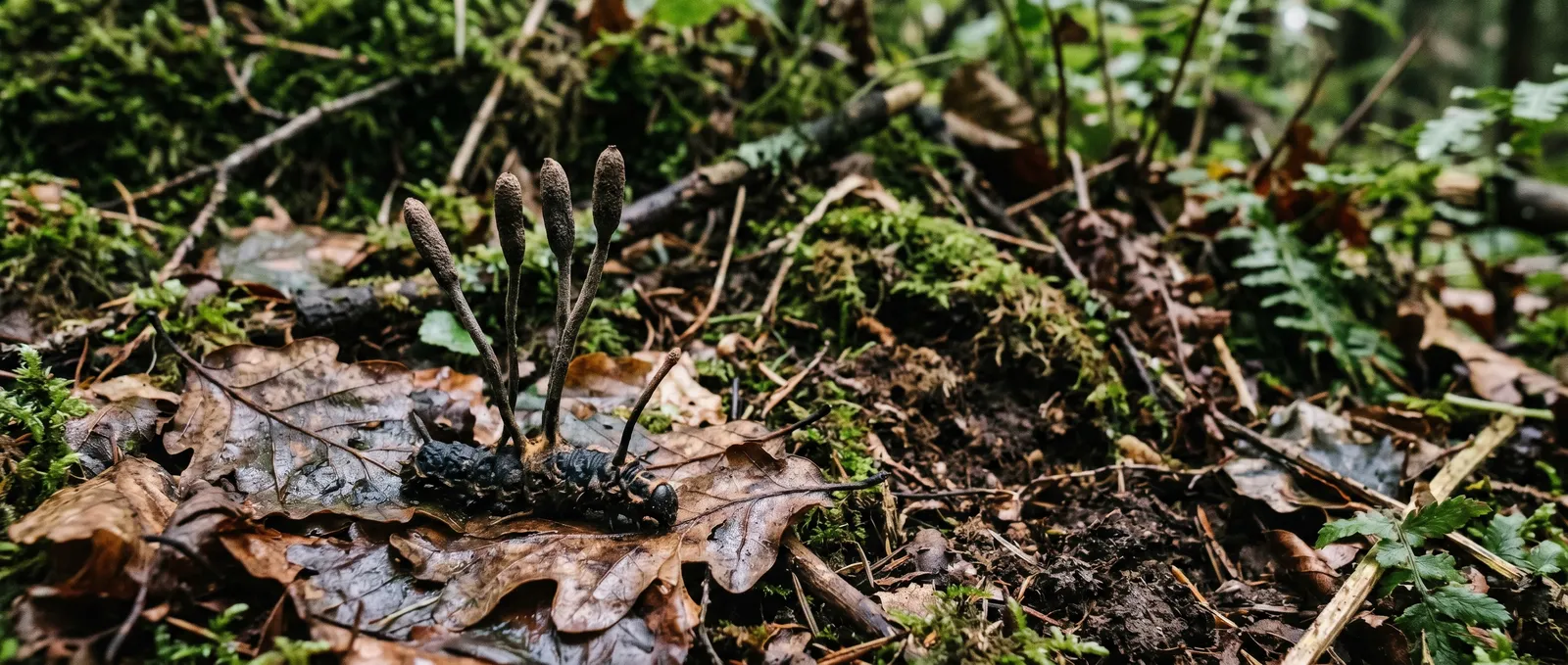
The cordyceps lifecycle is a parasitic biological sequence in which a fungus infects an insect host, colonises its body from within, and erupts as a spore-producing fruiting body. Over 400 species follow this pattern, with Ophiocordyceps sinensis and Cordyceps militaris being the most commercially relevant (Sung et al., 2007). Each cordyceps lifecycle stage produces a distinct chemical profile.
The cordyceps lifecycle is a parasitic biological sequence in which a fungus infects an insect host, colonises its body from within, and eventually erupts as a spore-producing fruiting body. It sounds like science fiction, but the cordyceps lifecycle has been documented across more than 400 Cordyceps species worldwide. Understanding how this cordyceps lifecycle actually works helps explain why wild cordyceps is so rare, why cultivated versions exist, and why the chemistry of the final product depends heavily on which stage of the cordyceps lifecycle you're looking at. If you want to buy cordyceps supplements, knowing the lifecycle behind the organism helps you evaluate what you're actually getting.
Disclaimer: This article is for educational purposes only and does not constitute medical advice. Cordyceps supplements are not intended to diagnose, treat, cure, or prevent any disease. Consult a qualified healthcare professional before using any functional mushroom product, especially if you are pregnant, nursing, or taking medication.
18+ only — this article covers a functional mushroom genus used in adult supplementation. The biology below applies to the organism itself; for dosing and effects information, see the dedicated cordyceps pillar article.
The Spore Stage — Where It All Starts
Every cordyceps lifecycle begins with ascospores — thread-like reproductive cells released from a mature fruiting body called a stroma. These spores are unusually elongated compared to most fungal species, sometimes reaching 5–10 µm in length, and they fragment into part-spores upon release. Wind carries them across alpine meadows, forest floors, or tropical canopies depending on the species. Ophiocordyceps sinensis (the famous caterpillar fungus of the Tibetan Plateau) releases its spores at altitudes between 3,000 and 5,000 metres, where they settle onto soil and vegetation frequented by ghost moth larvae (Thitarodes spp.).
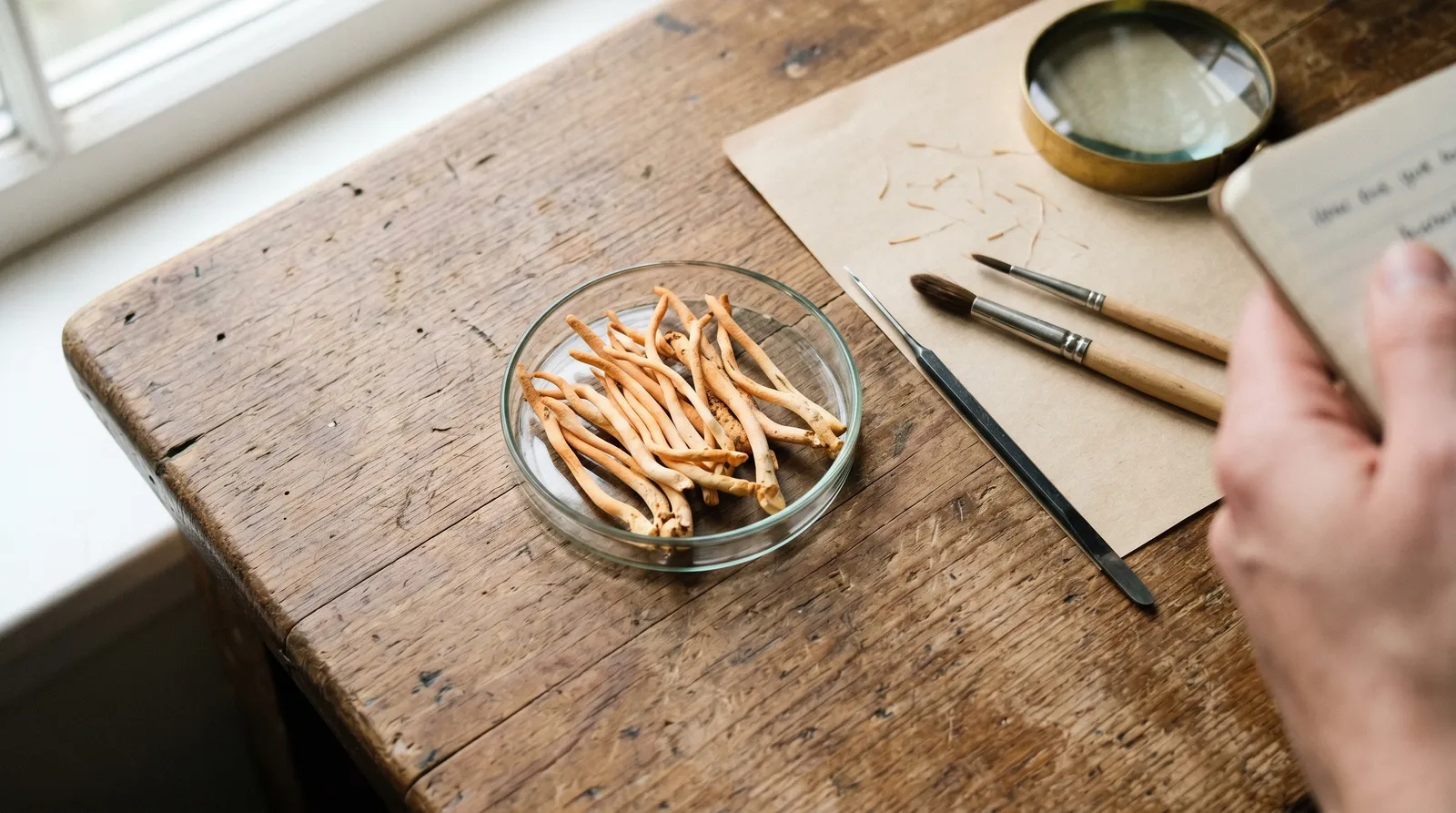
According to Sung et al. (2007), molecular phylogenetic analysis reclassified many traditional Cordyceps species into the genus Ophiocordyceps, which is why you'll see both names in the literature. The biology is the same — the taxonomy just caught up with the genetics.
Spore viability is short-lived. In field conditions on the Qinghai-Tibet Plateau, spores that don't contact a suitable host within days to weeks typically perish. This narrow window is one reason wild O. sinensis is so scarce and so expensive. Data from the EMCDDA's broader monitoring of natural product markets confirms that high-value fungal specimens like O. sinensis are increasingly subject to adulteration at the supply-chain level.
Infection and the Parasitic Phase
Cordyceps infection begins when a spore lands on or near a suitable insect host, germinates, and penetrates the cuticle using a combination of mechanical pressure and enzymatic degradation. The fungus produces proteases and chitinases — enzymes that dissolve the structural proteins and chitin holding the exoskeleton together. Once inside, the fungal cells switch to a yeast-like phase, budding and circulating through the host's haemolymph (insect blood) as blastospores.
This is where the cordyceps lifecycle gets properly weird. The fungus doesn't kill its host immediately. Instead, it colonises internal tissues gradually, consuming fat bodies and non-vital organs first while leaving the nervous system and muscles largely intact. In some Ophiocordyceps species — particularly O. unilateralis, the so-called "zombie ant fungus" — the parasite manipulates host behaviour. A 2011 study by Hughes et al. published in BMC Evolutionary Biology showed that infected carpenter ants climb to a specific height on vegetation, clamp their mandibles onto a leaf vein, and die in precisely that position. The fungus effectively drives the ant to an optimal microclimate for spore dispersal — about 25 cm above the forest floor, in conditions of roughly 95% humidity.
O. sinensis operates differently. Its host — the larva of a ghost moth — lives underground. The fungus mummifies the larva over the course of an entire Himalayan winter, converting soft tissue into a dense mass of fungal mycelium called a sclerotium. By spring, the larva is essentially a shell packed with hyphae, and the insect's original anatomy is almost entirely replaced.
Stroma Formation — The Fruiting Body Emerges
The stroma is the visible, club-shaped fruiting body that pushes outward from the mummified insect once the host is fully colonised. In O. sinensis, this happens as the ground thaws in late spring, with the stroma growing upward through soil to emerge at the surface. The structure is typically 4–10 cm long and dark brown to black.
The stroma contains perithecia — flask-shaped structures embedded just below the surface, each housing asci (spore-producing sacs). A single stroma can contain hundreds of perithecia, and each ascus holds eight ascospores. When conditions are right — sufficient moisture, appropriate temperature — the asci rupture and forcibly eject spores into the air. The whole cordyceps lifecycle then repeats, provided spores reach a new host.
For Cordyceps militaris, the more commonly cultivated species, the stroma is bright orange and typically erupts from pupae of moths or beetles. The cordyceps lifecycle mirrors O. sinensis in its broad strokes — spore, infection, colonisation, mummification, fruiting — but C. militaris is far less host-specific. This flexibility is exactly why it's the species used in commercial cultivation: it will fruit on grain-based substrates without any insect host at all, though the resulting chemistry differs somewhat from wild specimens.
Wild Versus Cultivated — Why the Cordyceps Lifecycle Matters for Chemistry
The bioactive profile of cordyceps depends directly on which cordyceps lifecycle stage you're dealing with. Wild O. sinensis — the combined larva-plus-stroma specimen — contains a complex mix of compounds produced during parasitic colonisation: cordycepin (3'-deoxyadenosine), adenosine, polysaccharides, ergosterol, and various amino acids. According to a comparative study by Li et al. (2019) published in Molecules, the amino acid composition and antioxidant capacity differ measurably between wild O. sinensis, cultivated O. sinensis mycelium (grown on grain without an insect host), and cultivated C. militaris fruiting bodies.
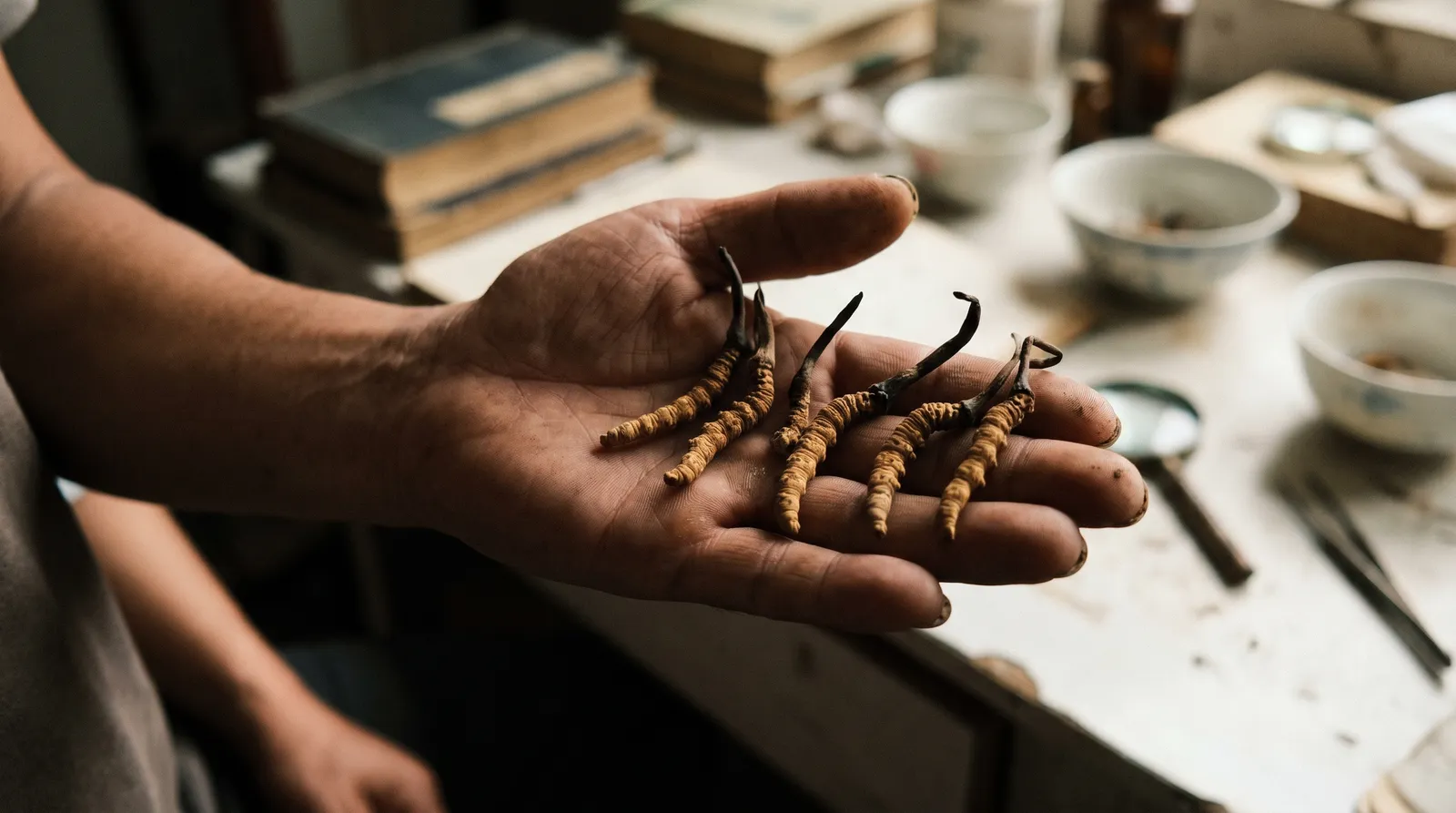
Cultivated C. militaris actually produces higher concentrations of cordycepin than wild O. sinensis in most analyses — Tuli et al. (2014) reported cordycepin levels in C. militaris fruiting bodies ranging from 2.59 to 9.45 mg/g depending on cultivation conditions. Wild O. sinensis typically contains less cordycepin but a broader spectrum of secondary metabolites, likely because the interaction between fungus and living insect tissue triggers metabolic pathways that grain substrates simply don't activate. Olatunji et al. (2018) noted that the host-parasite interaction produces different secondary metabolites depending on the specific insect species involved.
| Compound | Wild O. sinensis | Cultivated C. militaris | Grain-Grown Mycelium |
|---|---|---|---|
| Cordycepin | Low–moderate | High (2.59–9.45 mg/g) | Variable |
| Adenosine | Moderate | Moderate | Low–moderate |
| Polysaccharides | High | Moderate–high | Moderate (includes grain starch) |
| Ergosterol | Present | Present | Present |
| Secondary metabolites | Broad spectrum | Narrower spectrum | Narrowest spectrum |
| Lifecycle Stage | Biological Description | Commercial Product Form | Typical Cordycepin Level |
|---|---|---|---|
| Spore | Ascospores released from mature stroma | Not commercially available | N/A |
| Infection / colonisation | Fungus penetrates and grows inside insect host | Wild whole specimen (larva + early stroma) | Low |
| Mycelium (vegetative) | Hyphal network before fruiting | Mycelium on grain (CS-4 type products) | Variable |
| Fruiting body (stroma) | Club-shaped sexual reproductive structure | Fruiting body extract capsules | High (in C. militaris) |
This is worth keeping in mind when evaluating supplements. A "cordyceps" product grown on rice grain in a sterile lab and a wild-collected specimen from 4,500 metres in Tibet are biologically related but chemically distinct — a bit like comparing greenhouse tomatoes to ones grown in volcanic soil. Neither is fake; they're just different expressions of the same organism at different cordyceps lifecycle stages and under different environmental pressures. If you want to order cordyceps supplements or buy cordyceps capsules, look for products that specify the species (C. militaris or O. sinensis) and the cordyceps lifecycle stage (fruiting body vs. mycelium on grain) on the label. Azarius Cordyceps militaris capsules and Cordyceps militaris extract are both sourced from cultivated fruiting bodies for this reason.
Ecological Role and Population Dynamics
Cordyceps species function as natural population regulators in their ecosystems, keeping insect numbers in check rather than merely acting as parasites. In forest ecosystems, Ophiocordyceps species help prevent any single insect species from dominating. Hughes et al. (2011) described "graveyards" of infected ants beneath favoured leaf-biting positions, suggesting that infection rates can be substantial in localised areas.
For O. sinensis, overharvesting is a genuine conservation concern. The fungus requires a specific combination of high-altitude grassland, ghost moth larvae, and particular soil conditions. According to a 2018 review in Mycology by Shrestha et al., wild O. sinensis populations on the Tibetan Plateau have declined by an estimated 30–50% over two decades due to commercial collection pressure and climate change shifting suitable habitat upward. The cordyceps lifecycle's dependence on a single host genus and a narrow altitude band makes it exceptionally vulnerable — you can't just plant more.
This ecological fragility is another reason the supplement industry has shifted toward cultivated C. militaris. It sidesteps the conservation issue entirely while still producing the key bioactive compounds, particularly cordycepin and adenosine, that drive most of the research interest in the genus. The Beckley Foundation's broader work on natural psychoactive and bioactive organisms has highlighted how sustainable cultivation practices can reduce pressure on wild populations of commercially valuable species.
How to Identify Cordyceps Lifecycle Stages in Products
The cordyceps lifecycle stage listed on a product label determines what you're actually getting when you order cordyceps in supplement form. Here's a practical breakdown of what to look for on labels and in product descriptions:
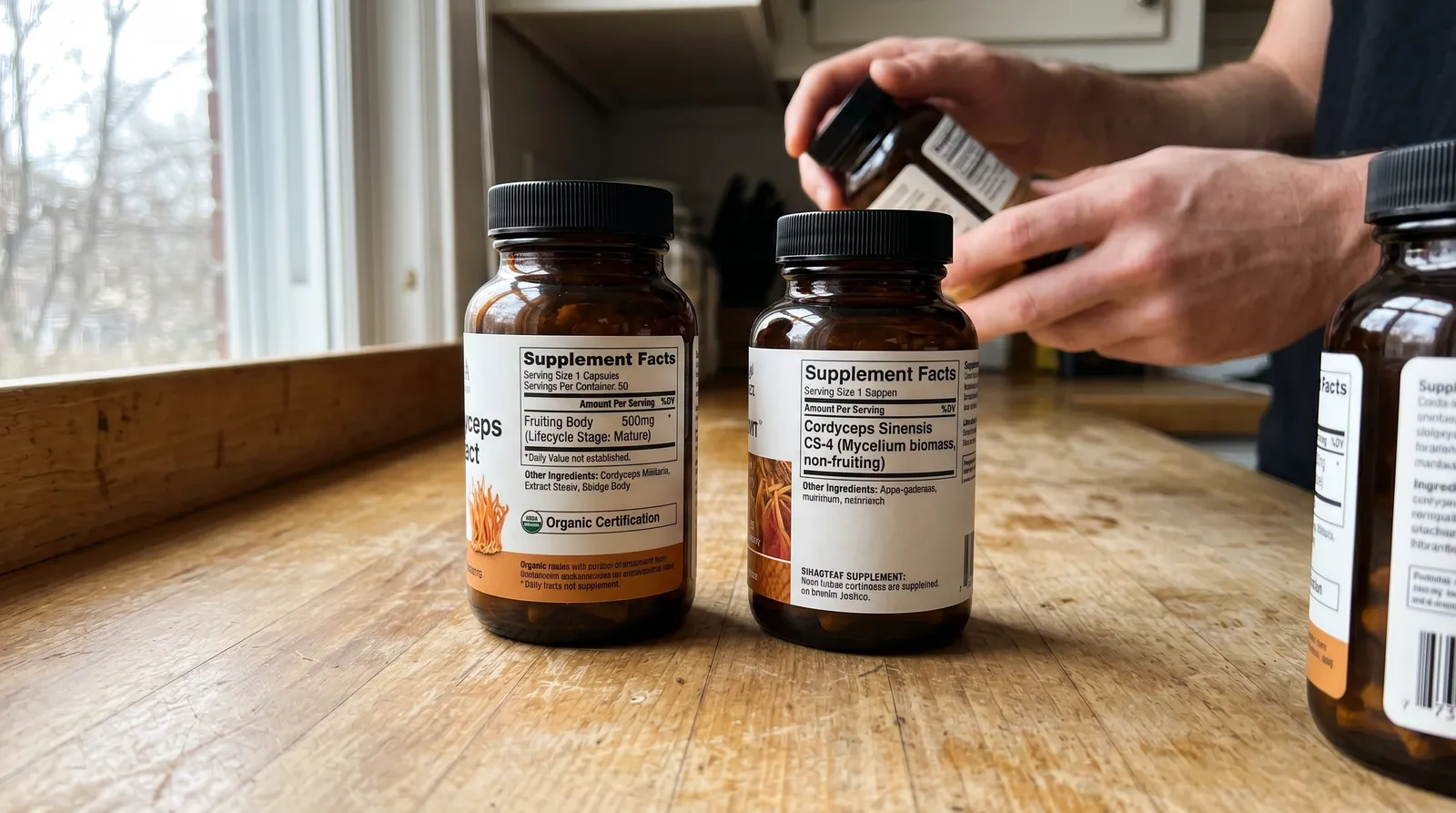
- Fruiting body (stroma): The sexual reproductive structure. Products labelled "fruiting body" or "fruit body extract" come from this stage. In cultivated C. militaris, these are the bright orange clubs grown on grain or liquid substrates.
- Mycelium on grain: The vegetative growth phase, harvested before fruiting. Often sold as "mycelial biomass." Contains fungal mycelium plus residual grain substrate, which can dilute active compound concentrations.
- CS-4 (Paecilomyces hepiali): A fermented mycelium product originally developed in China as a cultivated substitute for wild O. sinensis. It's technically an anamorph (asexual stage) isolate, not a full cordyceps lifecycle product.
- Wild whole specimen: The mummified larva plus attached stroma — the complete cordyceps lifecycle endpoint. Extremely rare and increasingly difficult to get sustainably.
Comparing Cordyceps to Other Functional Mushrooms
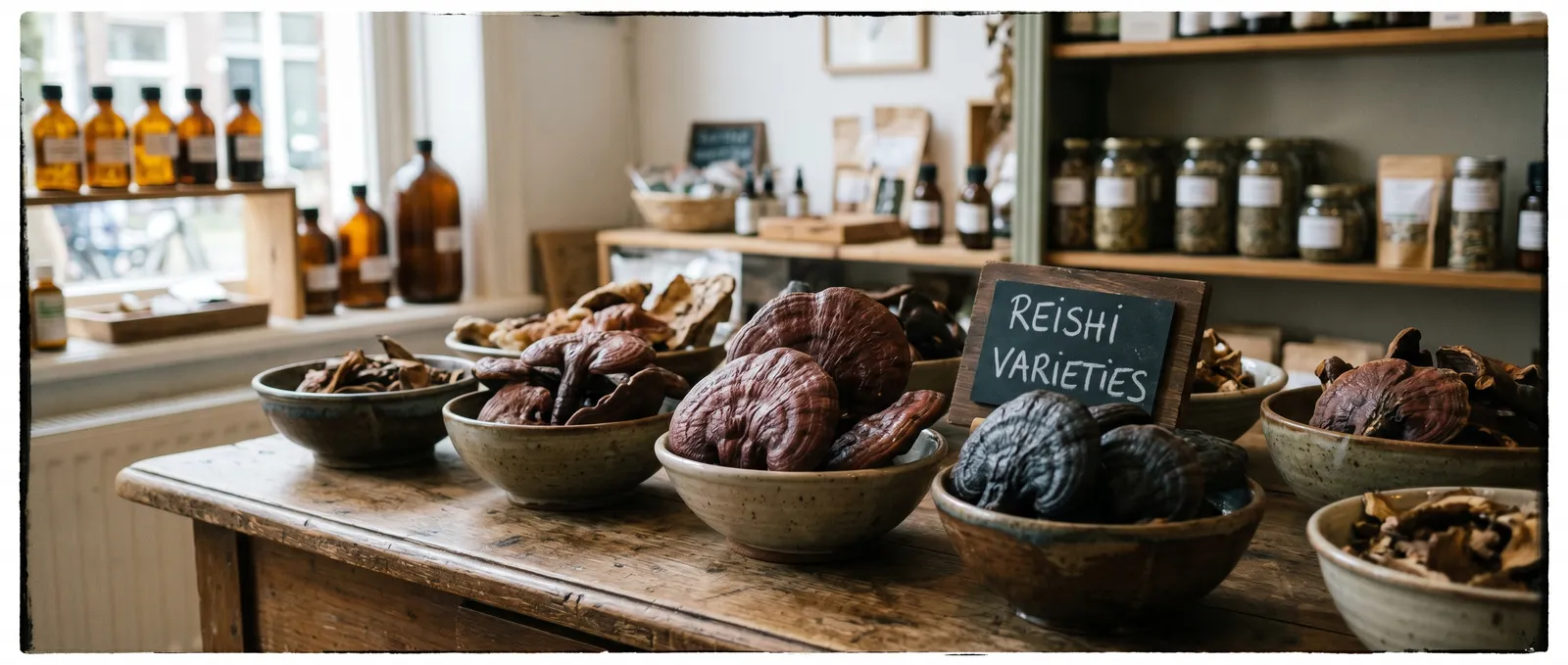
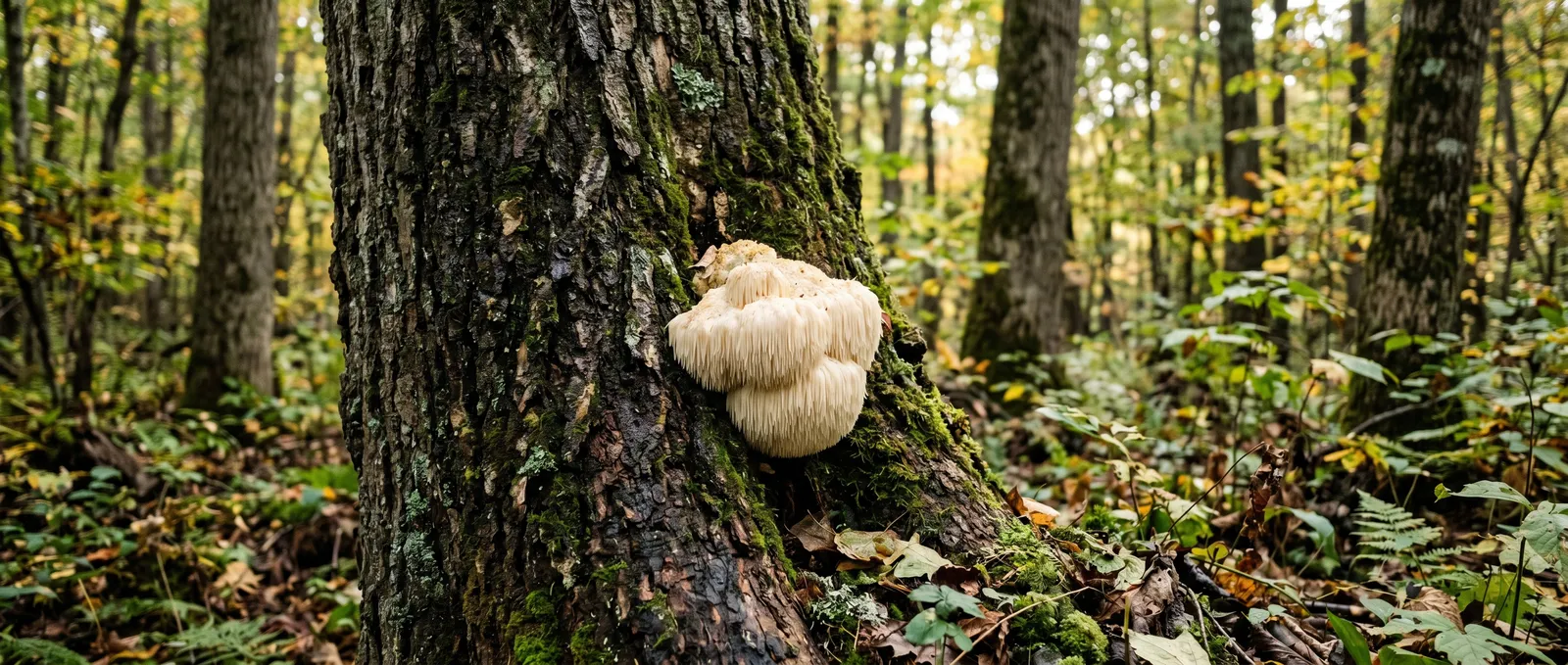
The cordyceps lifecycle is unique among commercially available functional mushrooms because it involves obligate insect parasitism in its wild form. No other mainstream supplement mushroom follows this pattern. Lion's mane (Hericium erinaceus) grows on dead or dying hardwood trees as a saprotroph — it decomposes wood rather than infecting living organisms. Reishi (Ganoderma lucidum) is also a wood-decay fungus with a straightforward lifecycle of spore germination, wood colonisation, and bracket-shaped fruiting body formation.
What makes the cordyceps lifecycle commercially significant is that the parasitic interaction itself generates unique chemistry. Lion's mane produces hericenones and erinacines through its interaction with wood substrates; cordyceps produces cordycepin and a broader suite of nucleosides through its interaction with living insect tissue. When you buy cordyceps alongside other functional mushrooms — say, as part of a mushroom stack — understanding these lifecycle differences helps explain why each species has a distinct bioactive profile. Azarius Lion's Mane capsules and Azarius Reishi capsules make useful comparison points if you're building a broader functional mushroom routine.
Last updated: April 2026
Frequently Asked Questions
10 questionsHow does cordyceps infect its insect host?
Why does cordyceps make ants climb before dying?
Does cultivated cordyceps have the same compounds as wild?
How long does the full cordyceps lifecycle take?
Is wild Ophiocordyceps sinensis endangered?
What should I look for when I buy cordyceps supplements?
How does cordyceps penetrate the insect exoskeleton?
Why are wild cordyceps spores only viable for a short time?
Can cordyceps infect humans or pets?
What is the difference between Cordyceps militaris and Ophiocordyceps sinensis?
About this article


Joshua Askew serves as Editorial Director for Azarius wiki content. He is Managing Director at Yuqo, a content agency specialising in cannabis, psychedelics and ethnobotanical editorial work across multiple languages. Th
This wiki article was drafted with AI assistance and reviewed by Joshua Askew, Managing Director at Yuqo. Editorial oversight by Adam Parsons.
Medical disclaimer. This content is for informational purposes only and does not constitute medical advice. Consult a qualified healthcare provider before use of any substance.
Last reviewed April 24, 2026
References (7)
- [1]Hughes, D.P. et al. (2011). 'Behavioral mechanisms and morphological symptoms of zombie ants dying from fungal infection.' BMC Evolutionary Biology, 11, 84.
- [2]Li, Y. et al. (2019). 'Comparative study of the composition of cultivated, naturally grown and wild Cordyceps.' Molecules, 24(7), 1423.
- [3]Olatunji, O.J. et al. (2018). 'The genus Cordyceps: An extensive review of its traditional uses, phytochemistry and pharmacology.' Fitoterapia, 129, 293–316.
- [4]Shrestha, U.B. et al. (2018). 'Conservation of caterpillar fungus (Ophiocordyceps sinensis) in the Himalaya.' Mycology, 9(4), 305–311.
- [5]Sung, G.H. et al. (2007). 'A multi-gene phylogeny of Clavicipitaceae (Ascomycota, Fungi): Identification of localized incongruence using a combinational bootstrap approach.' Molecular Phylogenetics and Evolution, 44(3), 1204–1223.
- [6]Tuli, H.S., Sandhu, S.S. & Sharma, A.K. (2014). 'Pharmacological and therapeutic potential of Cordyceps with special reference to cordycepin.' 3 Biotech, 4(1), 1–12.
- [7]EMCDDA (2023). European Drug Report: Trends and Developments. European Monitoring Centre for Drugs and Drug Addiction.
Related Articles

Medicinal Mushrooms TCM Western Pharmacognosy Guide
Guide to medicinal mushrooms TCM Western pharmacognosy — how reishi, lion's mane, cordyceps are classified, extracted, and studied.
Research on Immune Modulation by Functional Mushrooms
What does research on immune modulation by functional mushrooms actually show? Beta-glucans, Dectin-1 signalling, human trials, and the honest gap...
Allergic Reactions & Mushroom Sensitivities
Understand allergic reactions and mushroom sensitivities: mould cross-reactivity, shiitake dermatitis, species-specific risks, and safer product…
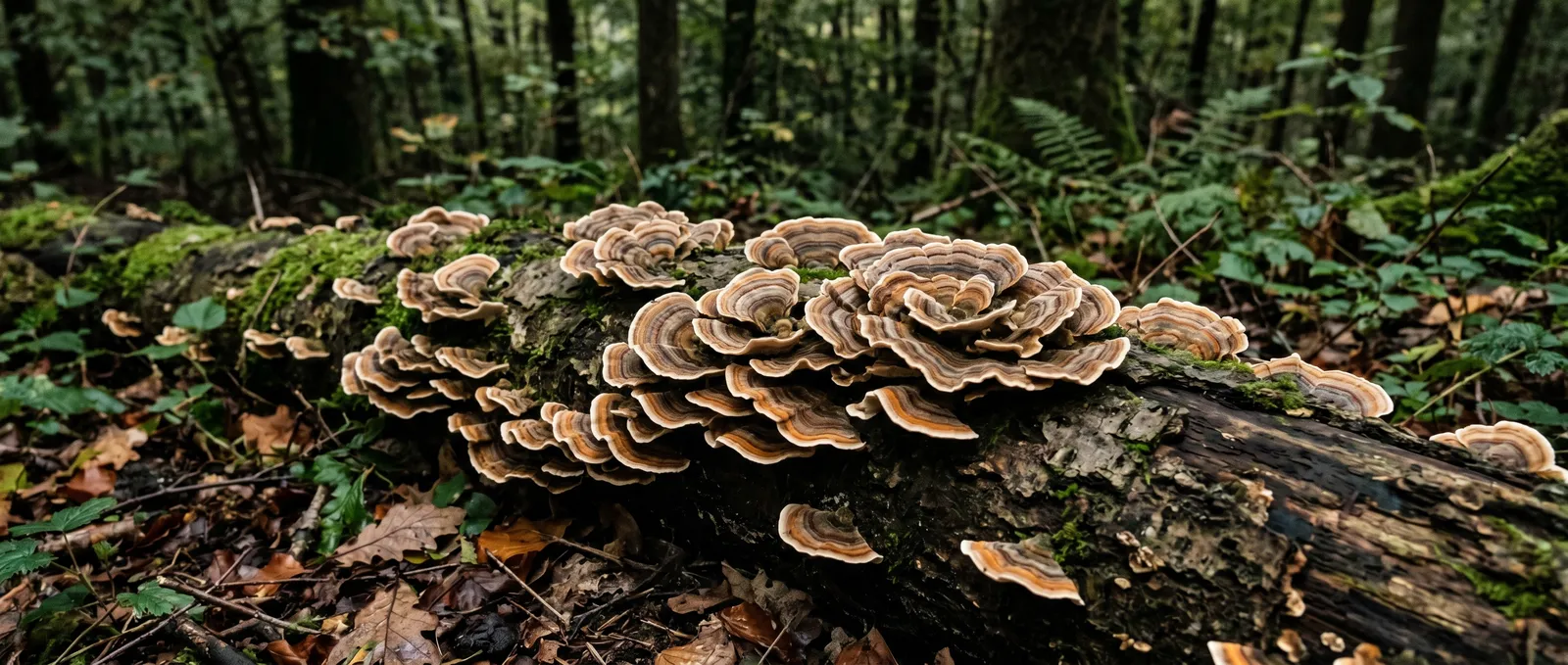
Turkey Tail Trametes versicolor — Buy Supplements
Buy turkey tail Trametes versicolor supplements at Azarius. PSK and PSP evidence, beta-glucan dosage, extraction methods, and safety.

Triterpenes In Medicinal Mushrooms
Triterpenes in medicinal mushrooms are a class of 30-carbon terpenoid compounds produced as secondary metabolites by several functional mushroom species…
Chaga Siberian Nordic Folk Use
Chaga Siberian Nordic folk use is a centuries-old tradition in which indigenous Siberians and Nordic communities brewed the birch-parasitising fungus…
Red and Black Reishi Varieties
Red reishi (Ganoderma lucidum) and black reishi (Ganoderma sinense) both fall under the lingzhi umbrella in traditional Chinese medicine, but they differ in…
Lion's Mane Identification & Habitat
Hericium erinaceus is a tooth fungus that fruits as a single white, spine-covered mass on wounded or dead hardwood trees.
Lion's Mane Fresh Dried Extract: What's Actually Different?
Lion's mane fresh dried extract is a collective term for the main preparation forms of Hericium erinaceus — fresh fruiting bodies, dehydrated powder, and…