
Turkey Tail Trametes versicolor — Buy Supplements
Definition
Turkey Tail Trametes versicolor is a polypore bracket fungus whose protein-bound beta-glucan fractions PSK and PSP have been studied as chemotherapy adjuncts in over eight randomised trials involving more than 8,000 gastric cancer patients (Sakamoto et al., 2006).
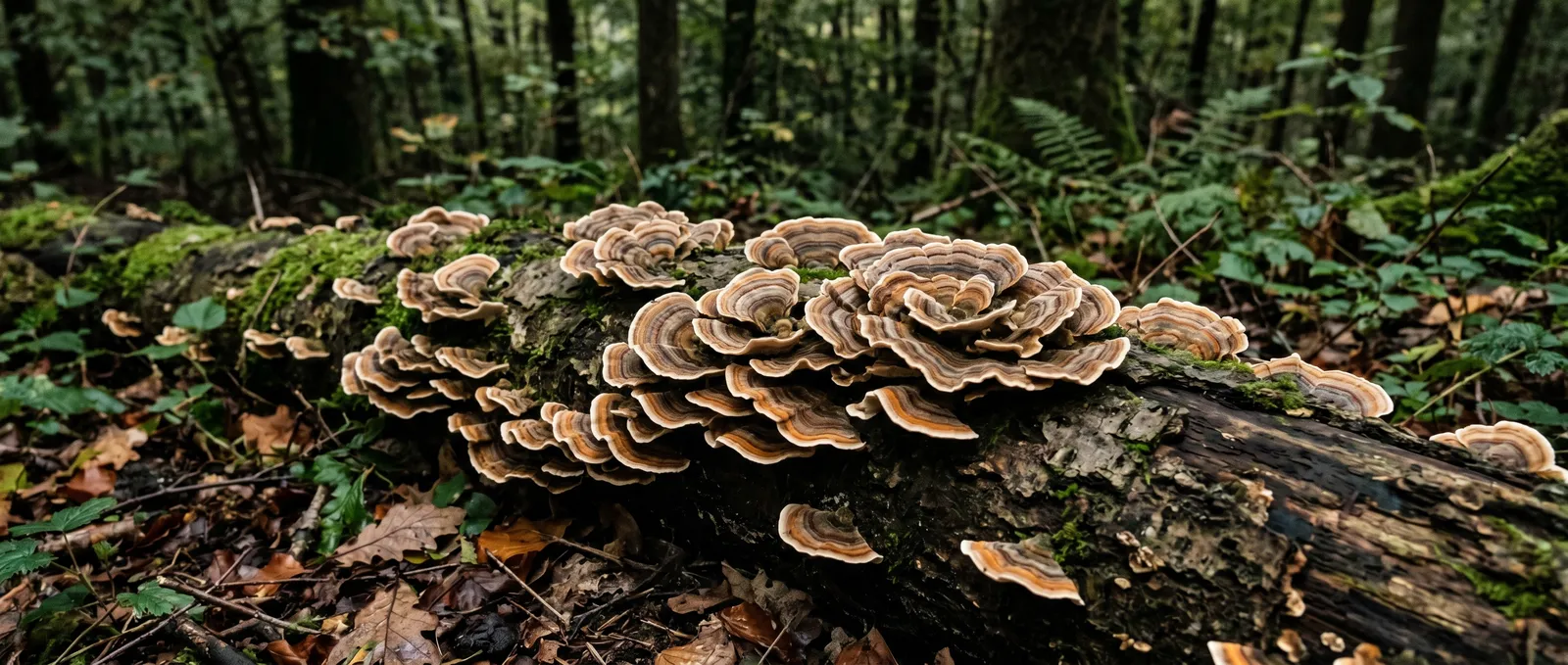
Turkey tail (Trametes versicolor) is a polypore bracket fungus found on dead hardwoods worldwide that has become the most clinically studied functional mushroom for immune-related endpoints, with Sakamoto et al. (2006) reviewing eight randomised controlled trials involving over 8,000 gastric cancer patients using PSK as a chemotherapy adjunct. For anyone looking to buy turkey tail Trametes versicolor supplements or order a functional mushroom extract, understanding what the research actually studied — and how far consumer products sit from that research — is essential. The Latin name translates roughly to "of many colours," a nod to the concentric bands of brown, grey, blue, and cream that fan out across its upper surface like, well, a turkey's tail. Unlike most functional mushrooms that entered Western awareness through traditional Chinese medicine (TCM) and stayed niche, turkey tail crossed into mainstream oncology research decades ago, primarily through two isolated polysaccharide fractions: PSK (polysaccharide-K, also called krestin) and PSP (polysaccharopeptide). These compounds have been studied more rigorously than almost any other mushroom-derived substances, though the gap between what the research examines and what an off-the-shelf supplement delivers remains wide.
What makes turkey tail interesting biochemically
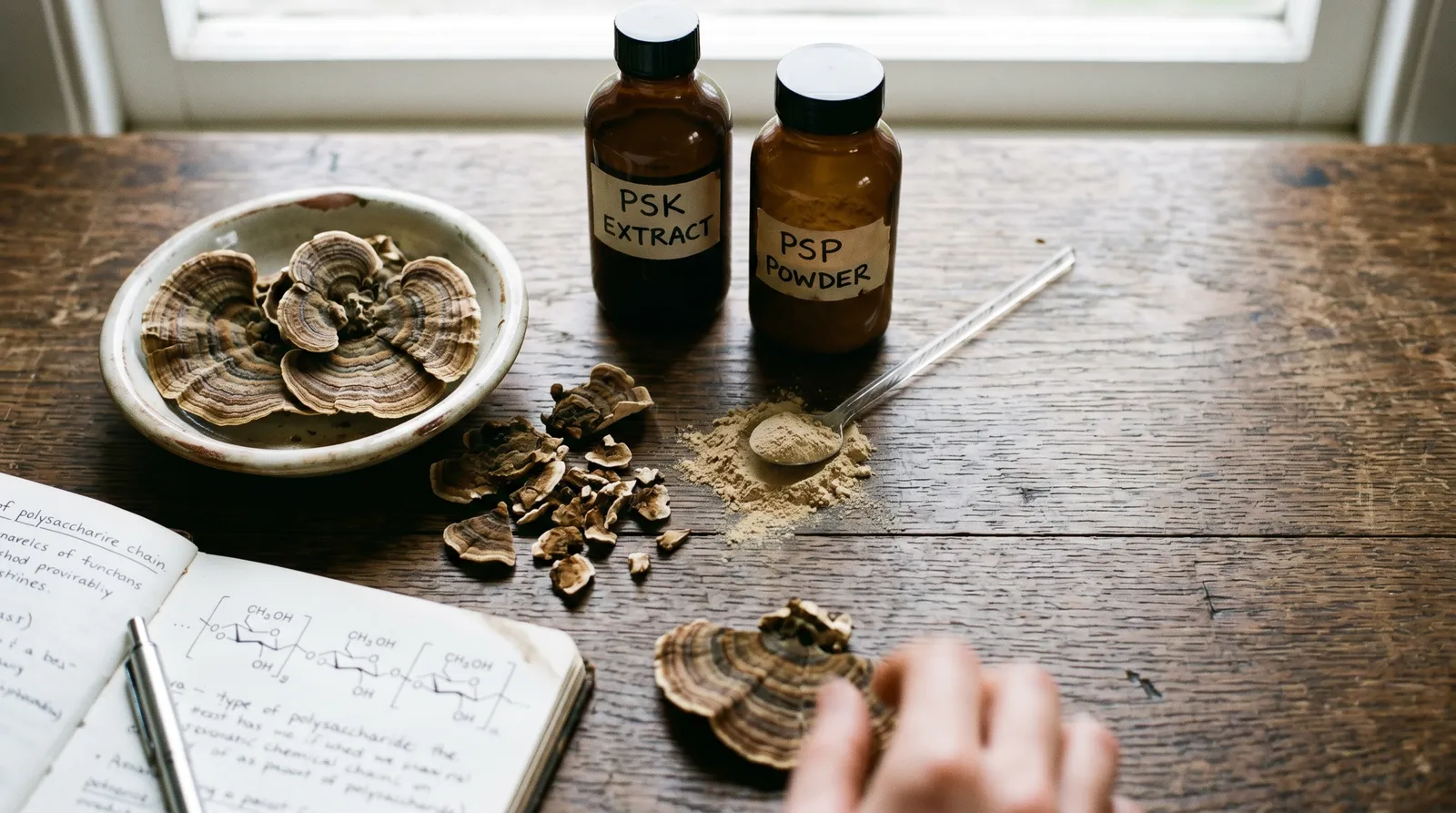
Turkey tail's bioactive chemistry centres on two protein-bound beta-glucan fractions — PSK and PSP — which together account for the vast majority of published clinical evidence on this species. PSK is a protein-bound polysaccharide first isolated in Japan in the 1960s and extracted using hot water from the CM-101 strain of Trametes versicolor. PSP was isolated later in China from the COV-1 strain, also via hot-water extraction but with a different protein-binding profile. Both are beta-glucan–protein complexes, but they are not identical compounds, and research on one does not automatically apply to the other.
Beyond PSK and PSP, the fruiting body contains other beta-glucans (including beta-1,3 and beta-1,6 glucans), sterols, phenolic compounds, and small quantities of triterpenes — though the triterpene profile is far less prominent than in reishi (Ganoderma lucidum). The polysaccharide content is the main event here, and hot-water extraction is the method that concentrates it. Alcohol extraction alone would miss most of the water-soluble beta-glucans, which is worth keeping in mind when evaluating different product formats.
The research on immune modulation
Turkey tail Trametes versicolor has the most extensive clinical evidence base for immune-related endpoints of any functional mushroom, based on decades of PSK and PSP research involving thousands of patients. The distinction between isolated pharmaceutical-grade fractions and consumer supplements matters enormously. Here is what the clinical literature actually shows.
PSK has been studied extensively in Japan since the 1970s. Tsukagoshi et al. (1984) reviewed early clinical trials using PSK as an adjunct in gastric and colorectal cancer treatment, reporting improvements in survival rates when PSK was added to standard chemotherapy regimens. A meta-analysis by Sakamoto et al. (2006) examined eight randomised controlled trials involving over 8,000 patients with gastric cancer and found that PSK combined with chemotherapy was associated with improved overall survival compared to chemotherapy alone. These are not small studies — this is a body of clinical work spanning decades.
PSP has a parallel but smaller evidence base, primarily from Chinese clinical research. Ng (1998) reviewed trials using PSP in patients with various cancers and reported measurable changes in immune markers, including natural killer cell activity and T-lymphocyte counts.
Here is where discipline matters: those trials used specific, standardised, pharmaceutical-grade polysaccharide fractions — PSK at doses typically around 3 g per day, extracted from defined strains under controlled conditions. The leap from "PSK at 3 g/day improved survival outcomes in gastric cancer patients receiving chemotherapy" to "turkey tail supplements support your immune system" is enormous, and it is a leap the evidence does not fully support making without qualification. The fractions used in clinical oncology research are not the same thing as a capsule of dried turkey tail powder or even a hot-water extract, unless that extract has been standardised to a known PSK or PSP content and dose.
In-vitro and animal-model work on whole turkey tail extracts does show measurable effects on immune markers. Standish et al. (2008) conducted a Phase I dose-escalation study using a Trametes versicolor preparation in breast cancer patients post-treatment and observed dose-related increases in natural killer cell activity and CD8+ T-cell counts. That study was small (n = 11) and designed to assess safety and immune response, not clinical efficacy — but it is one of the few human trials using a whole-mushroom preparation rather than an isolated fraction.
Gut health and the microbiome
Turkey tail's beta-glucans function as prebiotics that modify gut bacterial composition, according to a clinical trial by Pallav et al. (2014) comparing PSP supplementation to amoxicillin in 24 healthy volunteers. That small clinical trial found that PSP appeared to act as a prebiotic, modifying bacterial composition in the gut — specifically increasing populations of Bifidobacterium and Lactobacillus while not showing the broad disruption associated with antibiotics. The sample was small and the study design limited, but it points to an area where beta-glucans from turkey tail may have effects beyond classical immune-cell modulation. Animal-model studies have echoed these findings, though human data remain thin.
For context, the European Monitoring Centre for Drugs and Drug Addiction (EMCDDA) does not classify functional mushrooms as controlled substances, and turkey tail has no psychoactive properties — a point worth stating clearly since it shares shelf space with species that do have psychoactive effects.
Traditional use
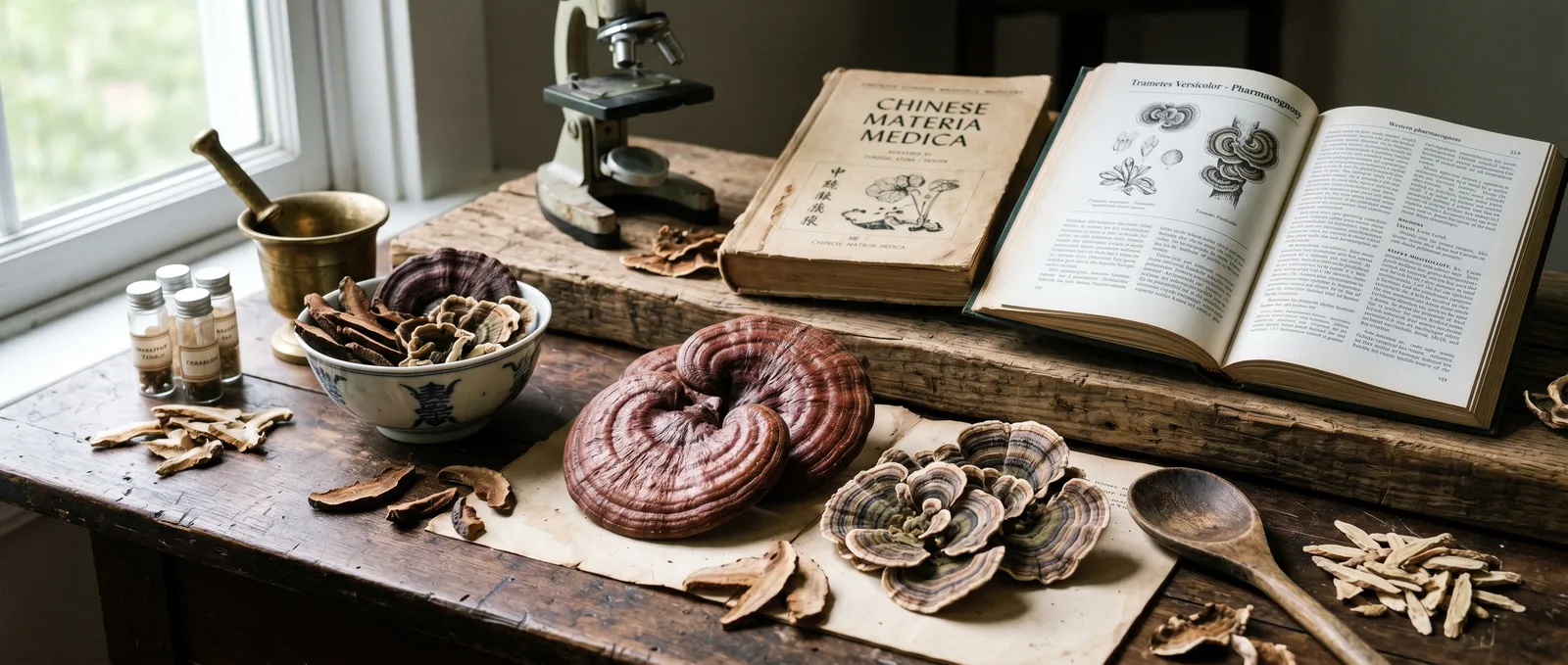
Turkey tail has been used in traditional medicine systems for centuries, with documented use in both Chinese and Japanese herbal traditions dating back to at least the Ming Dynasty. In TCM, it has been used under the name yun zhi (雲芝, "cloud fungus"). Traditional preparations were typically decoctions — the dried fungus simmered in water for extended periods, which is effectively a hot-water extraction. It was used to support general vitality and respiratory health, and it appears in classical TCM texts as a tonic mushroom rather than a treatment for specific diseases. Japanese traditional medicine (Kampo) also has a long history with this species, and it was the Japanese pharmaceutical industry that first isolated and commercialised PSK in the 1970s.
Extraction, source, and the mycelium question
Hot-water extraction of fruiting bodies is the preparation method most aligned with both traditional use and clinical research on turkey tail Trametes versicolor. Turkey tail fruiting bodies are tough, leathery, and inedible raw — they have always been consumed as decoctions or extracts, never eaten whole. The beta-glucan content of properly extracted fruiting bodies tends to be substantially higher than mycelium-on-grain preparations, where residual grain starch dilutes the active polysaccharide fraction. Some manufacturers test and report beta-glucan percentages; others do not. Without that number, you are guessing at potency.
Alcohol extraction captures different compounds (triterpenes, sterols) but turkey tail's triterpene profile is modest compared to reishi, so the added value of dual extraction is debatable for this species specifically. If the goal is polysaccharide content — and for turkey tail, it usually is — hot-water extract of fruiting body is the preparation closest to what the research actually studied. If you want to get a turkey tail product that matches the research profile, look for hot-water fruiting body extract with a stated beta-glucan percentage.
Key differences between turkey tail product formats
| Format | Beta-glucan content | Alignment with research | Notes |
|---|---|---|---|
| Hot-water fruiting body extract | Typically 25–50%+ | Closest to clinical preparations | Most traditional preparation method |
| Dual extract (water + alcohol) | Variable | Moderate | Captures triterpenes, but turkey tail's triterpene profile is modest |
| Mycelium-on-grain powder | Often below 15% | Low | Residual grain starch dilutes active compounds |
| Raw dried fruiting body powder | Low bioavailability | Low | Cell walls unbroken without extraction |
| Isolated PSK/PSP (pharmaceutical) | Standardised | Highest — this is what trials used | Not typically available as consumer supplement |
How turkey tail compares to other functional mushrooms
Turkey tail is the most clinically studied functional mushroom for immune-related endpoints, based on the PSK meta-analysis by Sakamoto et al. (2006) covering over 8,000 patients. Compared to lion's mane (Hericium erinaceus), which is studied primarily for nerve growth factor stimulation and cognitive effects, turkey tail's research profile is almost entirely immunological. Reishi (Ganoderma lucidum) shares the immune-modulation angle but brings a much richer triterpene profile and traditional use for sleep and stress — areas where turkey tail has essentially no data. Chaga (Inonotus obliquus) is often marketed alongside turkey tail as an immune mushroom, but chaga's clinical evidence base in humans is far thinner. If you are choosing between functional mushrooms specifically for the strength of immune-related clinical evidence, turkey tail — or more precisely, its PSK fraction — has the most robust dataset. For a broader overview, see the Azarius functional mushrooms wiki page.
Honest limitations of the current evidence
The biggest gap in the turkey tail literature is the absence of large-scale human trials on consumer-grade extracts — nearly all robust clinical data come from pharmaceutical-grade PSK or PSP fractions unavailable over the counter. The Standish et al. (2008) study on a whole-mushroom preparation is encouraging but had only 11 participants and was designed as a safety and dose-escalation trial, not an efficacy trial. Pallav et al. (2014) on gut microbiome effects included just 24 subjects. These are pilot-scale studies, and they are honest about their own limitations. We think the direction of evidence is promising, but anyone claiming certainty about what a consumer turkey tail supplement will do for your health is outrunning the data.
Safety and drug interactions
Turkey tail is generally well tolerated at doses up to 9 g per day over six months, with no dose-limiting toxicities reported in the Standish et al. (2008) Phase I study. Gastrointestinal effects — bloating, darkened stools, mild nausea — were the most commonly reported side effects across the literature. Allergic reactions are possible, particularly in individuals with fungal allergies; cross-reactivity with mould allergens is a real consideration.
The more serious concern is drug interactions. Turkey tail is a beta-glucan-rich, immune-modulating species. For anyone taking immunosuppressant medication — methotrexate, tacrolimus, ciclosporin, corticosteroids — the theoretical conflict is direct: beta-glucan immune stimulation, as described by Standish et al. (2008) and others, works in opposition to the goal of immunosuppressive therapy. The clinical evidence on this specific interaction is limited, but the mechanistic concern is well-founded, and the safe default is avoidance. Similarly, individuals with autoimmune conditions should approach any immune-modulating mushroom with caution, as upregulating immune activity is precisely what autoimmune therapy tries to prevent. For more detail, see the Azarius functional mushroom drug interactions article.
Data on use during pregnancy, breastfeeding, and in children are essentially absent from the clinical literature. The honest position is that safety in these populations has not been established.
Dosage in research
Clinical dosing of turkey tail has ranged from 3 g per day of isolated PSK in Japanese oncology trials to 9 g per day of whole-mushroom preparations in the Standish et al. (2008) dose-escalation study. Consumer supplements commonly suggest 1–3 g per day of extract, but the beta-glucan content per gram varies enormously between products. A gram of mycelium-on-grain powder is not a gram of hot-water-extracted fruiting body, and neither is a gram of PSK. Without knowing the beta-glucan percentage of a given product, dose comparisons to the clinical literature are unreliable.
- PSK (pharmaceutical-grade): 3 g/day in most Japanese oncology trials (Sakamoto et al., 2006)
- Whole-mushroom preparation: 3–9 g/day in the Standish et al. (2008) dose-escalation study
- Consumer extract (typical label suggestion): 1–3 g/day, but beta-glucan content varies widely
- Key variable: beta-glucan percentage per gram — without this, dosing is guesswork
- Duration in trials: typically 4 weeks to 6+ months depending on study design
Where to buy turkey tail Trametes versicolor supplements
The best turkey tail Trametes versicolor supplements to buy are hot-water fruiting body extracts that list a verified beta-glucan percentage on the label. We stock turkey tail extract products from brands including Real Mushrooms and Life Cykel, both of which provide beta-glucan content data. When you order turkey tail online, the single most important thing to check is whether the product specifies its beta-glucan content — if it does not, you cannot meaningfully compare it to the doses used in clinical research. The Azarius mushroom supplements category page lets you compare formats, and the functional mushrooms wiki page provides background on how different species compare. Customers who want a broader stack often pair turkey tail with lion's mane for cognitive support or reishi for stress and sleep — the Azarius functional mushroom blog covers common stacking approaches in more detail.
What the evidence actually supports
The clinical evidence for turkey tail's isolated polysaccharide fractions — PSK and PSP — is genuinely substantial, with Sakamoto et al. (2006) documenting improved survival across eight randomised trials in gastric cancer patients. Turkey tail Trametes versicolor sits in an unusual position among functional mushrooms: its evidence base is stronger than what exists for most other medicinal mushrooms, but the distance between a standardised pharmaceutical-grade PSK preparation used in Japanese oncology and a consumer-grade turkey tail supplement is real, and collapsing that distance with marketing language does nobody any favours.
The in-vitro immune-modulation data are consistent, the animal-model data are supportive, the small human trials on whole-mushroom preparations are encouraging, and the long-term safety profile appears favourable. What is missing is large-scale human clinical trial data on over-the-counter turkey tail extracts — the products people actually buy — showing defined health outcomes at defined doses. That gap is honest, and it is worth naming. If you want to get started with turkey tail, a hot-water fruiting body extract with a verified beta-glucan percentage is the format closest to what the research examined — and the Azarius mushroom supplements category is a reasonable place to compare options.
Last updated: April 2026
Frequently asked questions
What is the difference between PSK and PSP in turkey tail?
PSK (polysaccharide-K) and PSP (polysaccharopeptide) are both protein-bound beta-glucan fractions isolated from Trametes versicolor, but from different strains (CM-101 and COV-1 respectively) with different protein-binding profiles. Research on one does not automatically apply to the other, and neither is identical to a whole-mushroom supplement.
Does turkey tail research apply to over-the-counter supplements?
Most clinical trials used pharmaceutical-grade PSK at around 3 g per day — a standardised isolated fraction, not a consumer supplement. Whole-mushroom preparations have far less clinical data. Without knowing the beta-glucan content of a specific product, direct comparisons to the clinical literature are unreliable.
Is turkey tail safe to take with immunosuppressant medication?
The mechanistic concern is direct: beta-glucan immune stimulation opposes the goal of immunosuppressive therapy (methotrexate, tacrolimus, ciclosporin, corticosteroids). Clinical data on this specific interaction are limited, but the theoretical conflict is well-founded. Consult a healthcare provider before combining them.
Should turkey tail be hot-water extracted or dual extracted?
Hot-water extraction concentrates the water-soluble beta-glucans that define turkey tail's research profile. Since this species has a modest triterpene content compared to reishi, the added value of alcohol or dual extraction is debatable. For polysaccharide-focused use, hot-water extract of fruiting body is closest to what clinical studies examined.
Can turkey tail affect gut bacteria?
A small clinical trial by Pallav et al. (2014) found that PSP supplementation appeared to act as a prebiotic, increasing Bifidobacterium and Lactobacillus populations without the broad disruption seen with antibiotics. The sample was small (n = 24) and human data remain limited, but the prebiotic angle is an active area of research.
How does turkey tail compare to reishi and lion's mane?
Turkey tail has the strongest clinical evidence base for immune-related endpoints among functional mushrooms, primarily through PSK research. Reishi brings a richer triterpene profile with traditional use for sleep and stress. Lion's mane is studied mainly for cognitive and nerve growth factor effects. Each occupies a distinct research niche.
What dosage of turkey tail does the research support?
PSK trials typically used 3 g per day of the isolated fraction. The Standish et al. (2008) dose-escalation study used 3, 6, and 9 g per day of a whole Trametes versicolor preparation. Consumer supplements commonly suggest 1–3 g per day, but without knowing the beta-glucan percentage, dose comparisons to clinical research are unreliable.
Where can I buy turkey tail Trametes versicolor supplements?
Azarius stocks turkey tail extract products from brands including Real Mushrooms and Life Cykel, both of which provide beta-glucan content data. The most important thing to check when you buy turkey tail online is whether the product specifies its beta-glucan percentage — without it, you cannot meaningfully compare to clinical research doses.
Frequently Asked Questions
6 questionsWhat is the difference between PSK and PSP in turkey tail?
Does turkey tail research apply to over-the-counter supplements?
Is turkey tail safe to take with immunosuppressant medication?
Should turkey tail be hot-water extracted or dual extracted?
Can turkey tail affect gut bacteria?
How does turkey tail compare to reishi and lion's mane?
About this article


Adam Parsons is an external cannabis and psychedelics writer and editor who contributes to Azarius's wiki as both author and reviewer. On the writing side, he authors Azarius's kratom and kanna clusters, drawing on exten
This wiki article was drafted with AI assistance and reviewed by Adam Parsons, External contributor. Editorial oversight by Joshua Askew.
Medical disclaimer. This content is for informational purposes only and does not constitute medical advice. Consult a qualified healthcare provider before use of any substance.
Last reviewed May 12, 2026
References (1)
- [1]Sakamoto et al. (2006). [reference pending verification]
Related Articles
Medicinal Mushrooms TCM Western Pharmacognosy Guide
Guide to medicinal mushrooms TCM Western pharmacognosy — how reishi, lion's mane, cordyceps are classified, extracted, and studied.
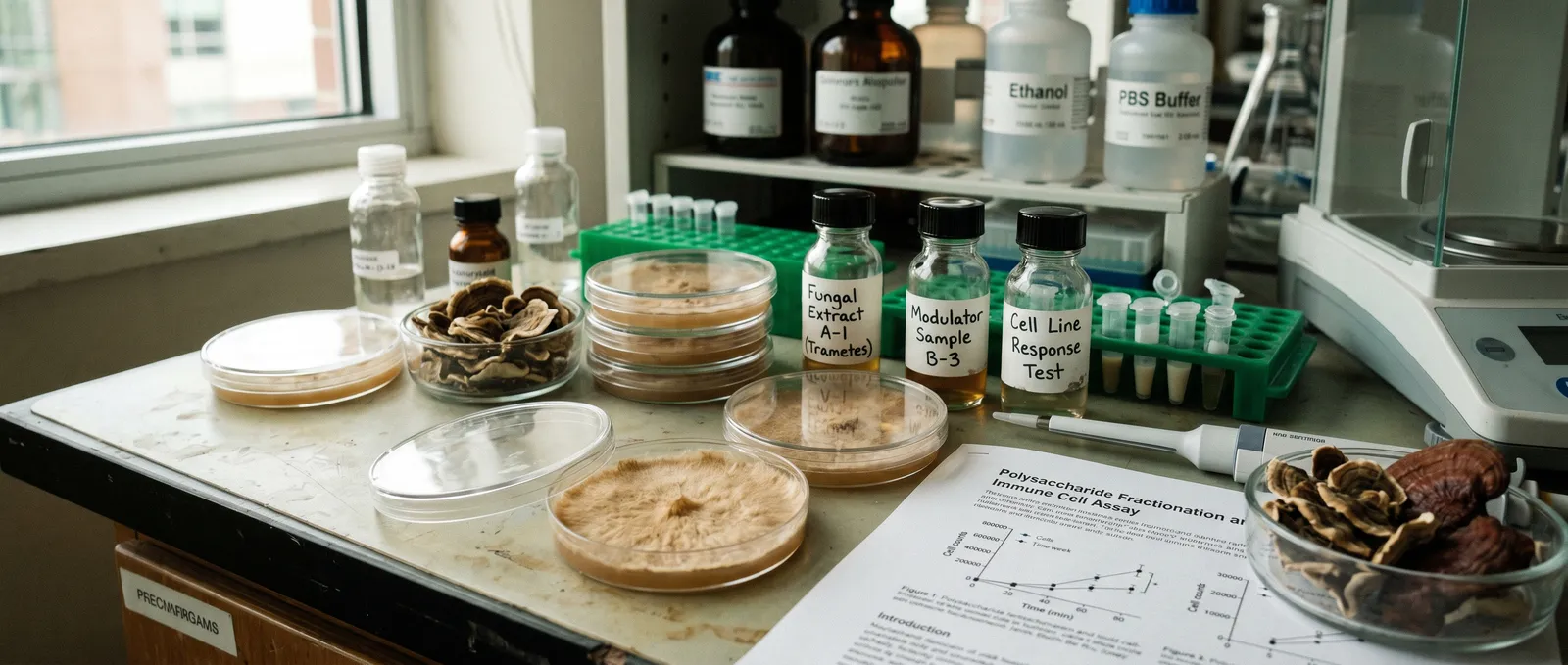
Research on Immune Modulation by Functional Mushrooms
What does research on immune modulation by functional mushrooms actually show? Beta-glucans, Dectin-1 signalling, human trials, and the honest gap...
Allergic Reactions & Mushroom Sensitivities
Understand allergic reactions and mushroom sensitivities: mould cross-reactivity, shiitake dermatitis, species-specific risks, and safer product…
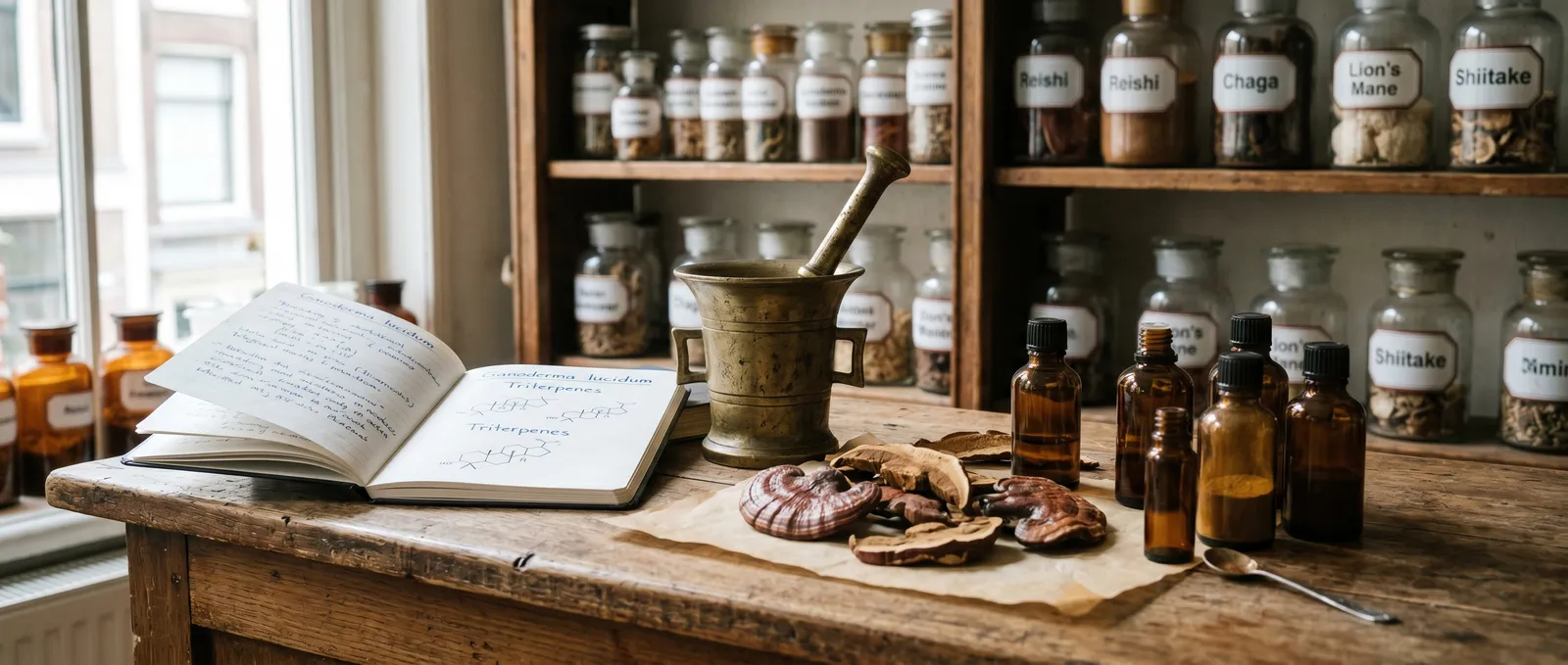
Triterpenes In Medicinal Mushrooms
Triterpenes in medicinal mushrooms are a class of 30-carbon terpenoid compounds produced as secondary metabolites by several functional mushroom species…
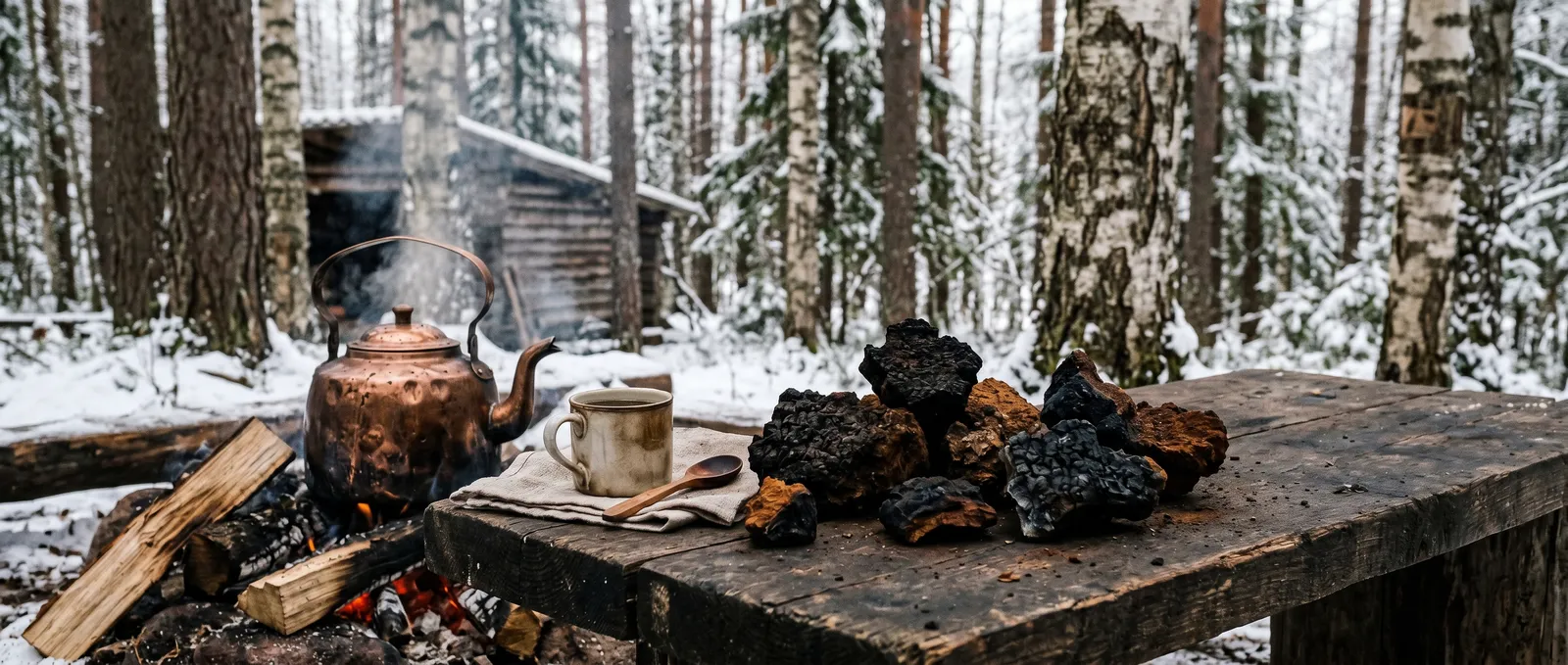
Chaga Siberian Nordic Folk Use
Chaga Siberian Nordic folk use is a centuries-old tradition in which indigenous Siberians and Nordic communities brewed the birch-parasitising fungus…
Red and Black Reishi Varieties
Red reishi (Ganoderma lucidum) and black reishi (Ganoderma sinense) both fall under the lingzhi umbrella in traditional Chinese medicine, but they differ in…
Lion's Mane Identification & Habitat
Hericium erinaceus is a tooth fungus that fruits as a single white, spine-covered mass on wounded or dead hardwood trees.
Cordyceps Lifecycle
The cordyceps lifecycle is a parasitic biological sequence in which a fungus infects an insect host, colonises its body from within, and erupts as a…
Lion's Mane Fresh Dried Extract: What's Actually Different?
Lion's mane fresh dried extract is a collective term for the main preparation forms of Hericium erinaceus — fresh fruiting bodies, dehydrated powder, and…