
Dual Extraction Water Alcohol
Definition
Dual extraction is a two-stage process combining hot water and alcohol to capture both water-soluble polysaccharides (beta-glucans) and alcohol-soluble triterpenes from functional mushrooms. Zhang et al. (2007) demonstrated that sequential water-then-ethanol extraction of Ganoderma lucidum yielded significantly higher total bioactive recovery than either solvent alone. The method is particularly relevant for reishi and chaga, where both compound classes are well-studied.
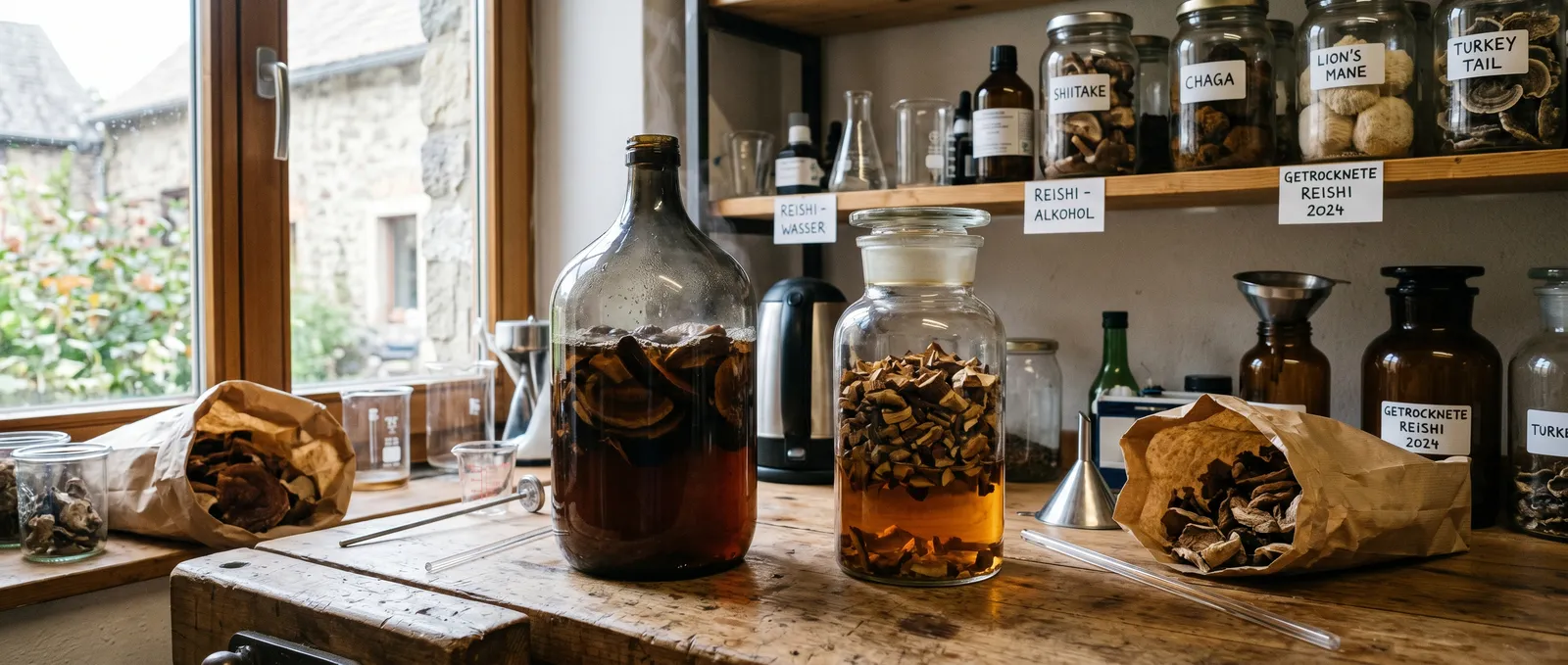
Dual extraction water alcohol processing is a two-stage method that uses both hot water and alcohol (ethanol) to pull the full range of bioactive compounds from functional mushrooms. Hot water alone dissolves polysaccharides — primarily beta-glucans — while alcohol dissolves triterpenes, sterols, and other lipophilic compounds that water leaves behind. By combining both solvents, a dual-extracted preparation captures compound classes that no single extraction method can isolate on its own. Zhang et al. (2007) demonstrated that sequential water-then-ethanol extraction of Ganoderma lucidum yielded significantly higher total bioactive recovery than either solvent used alone.
Why One Solvent Is Not Enough
A single solvent cannot dissolve the full spectrum of bioactive compounds in functional mushrooms. Mushroom cell walls are built from chitin — the same polymer that makes up insect exoskeletons. Chitin is tough, and the bioactive compounds locked inside or bound to these walls dissolve in different solvents depending on their molecular structure. The split is fairly clean:
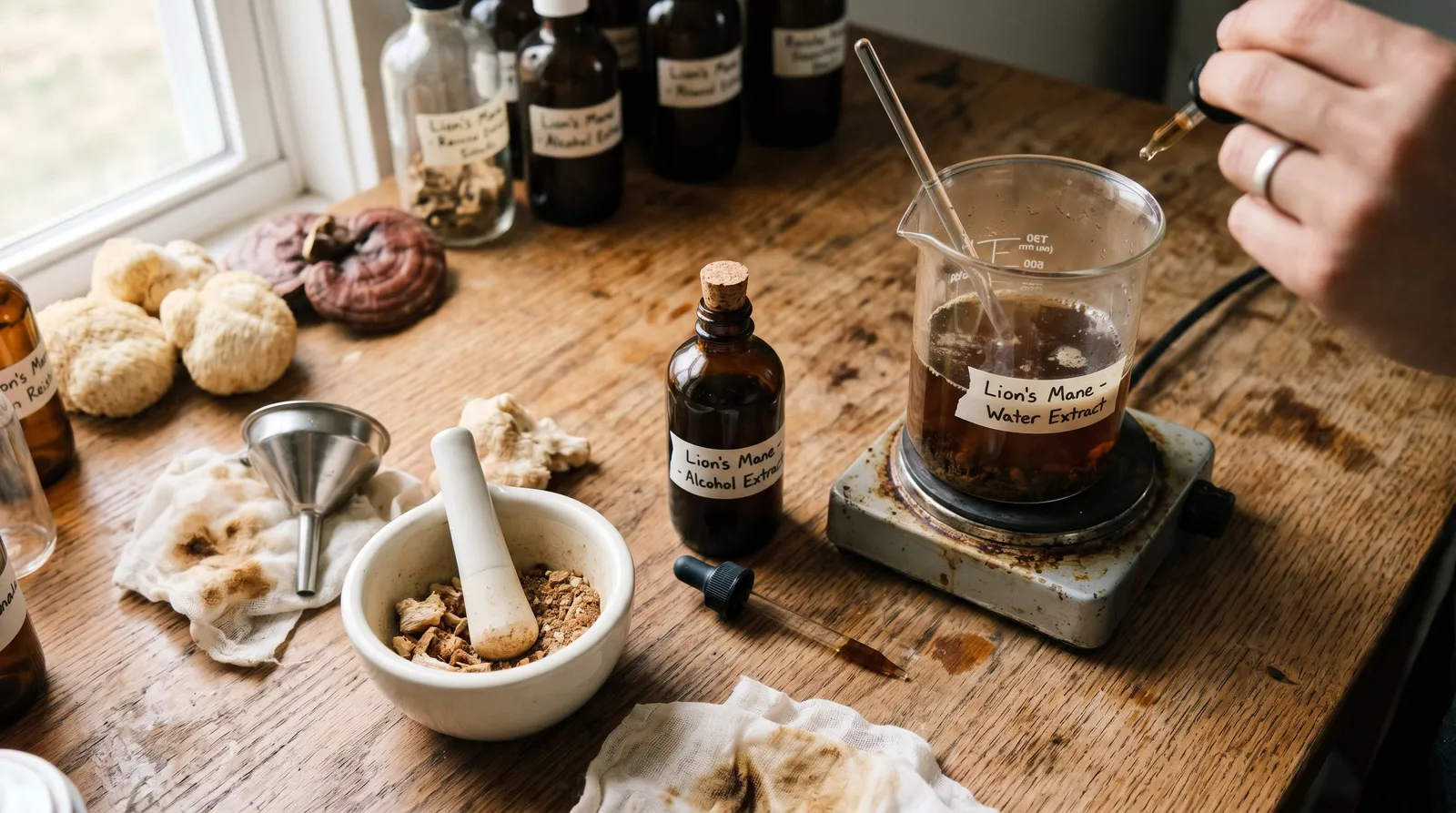
- Water-soluble compounds: Beta-glucans (β-1,3/1,6-linked polysaccharides), certain proteins, and some polysaccharide-protein complexes like PSK and PSP from Trametes versicolor.
- Alcohol-soluble compounds: Triterpenes (ganoderic acids in reishi, betulinic acid in chaga), sterols (ergosterol and its derivatives), and various aromatic terpenes.
A hot-water-only extract — which is essentially what a traditional decoction or a standard hot-water mushroom powder represents — concentrates the polysaccharide fraction well. Beta-glucan content in a good hot-water extract of Ganoderma lucidum fruiting body can reach 30–50% by dry weight. But that same extract will contain negligible triterpene content, because ganoderic acids are poorly soluble in water. Keypetch et al. (2020) measured ganoderic acid A recovery at less than 5% in hot-water extracts of reishi compared to ethanol extracts of the same material.
Conversely, an alcohol-only tincture — the kind you might make by soaking dried mushroom in vodka for a few weeks — pulls triterpenes effectively but leaves most of the beta-glucans behind in the marc (the spent mushroom material). This is why a straightforward alcohol tincture of, say, lion's mane is a somewhat odd product: the compounds most studied in Hericium erinaceus research — hericenones (alcohol-soluble, found in the fruiting body) and erinacines (found primarily in mycelium) — straddle both solubility classes, and the beta-glucans that make up a large portion of the mushroom's studied bioactivity are water-soluble.
Neither solvent on its own tells the whole story. That is the rationale for combining them in a dual extraction water alcohol process.
How Dual Extraction Water Alcohol Processing Works
Dual extraction water alcohol processing works by applying two solvents sequentially or simultaneously to capture both polar and non-polar compound classes from mushroom material. The details — temperature, duration, solvent ratio, sequence — vary between producers and significantly affect the final product's composition.
Sequential Method (Most Common)
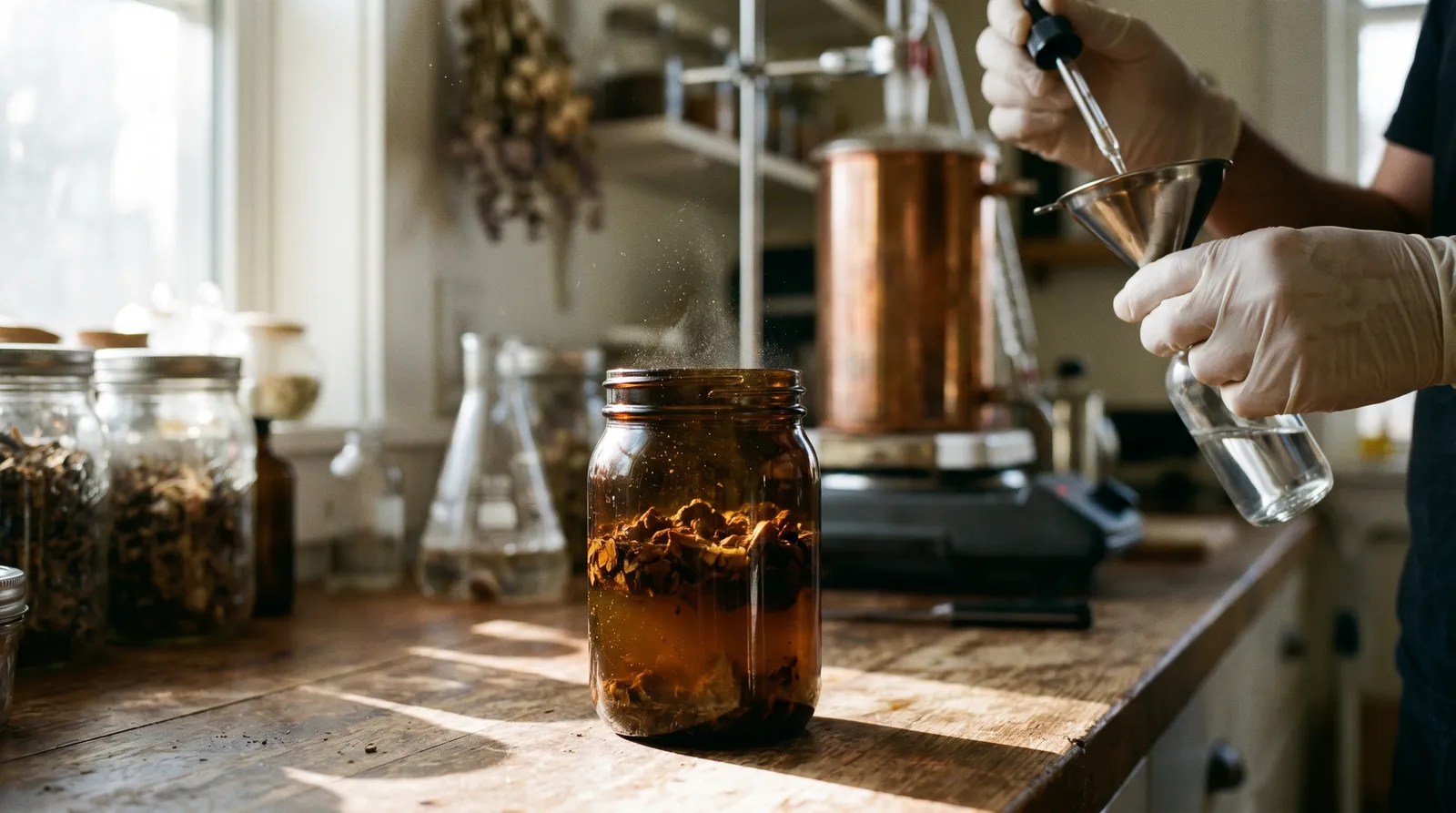
Dried or fresh mushroom material is first simmered in hot water, typically between 80–100 °C, for anywhere from 2 to 12 hours. This step breaks down chitin, releases polysaccharides, and produces a water extract. The spent material is then dried and soaked in ethanol — usually between 60% and 95% concentration — for several weeks. The two liquid extracts are combined, sometimes after the alcohol fraction is concentrated by evaporation. Shashidhar et al. (2013) described this sequential approach as yielding approximately 28% greater total extractable solids from Ganoderma lucidum fruiting bodies compared to hot water extraction alone.
Simultaneous Method
Some producers use a hydroalcoholic solvent — a mixture of water and ethanol — in a single extraction step. This is faster but involves trade-offs: the alcohol concentration must be balanced carefully. Too much ethanol and the polysaccharides precipitate out of solution rather than dissolving. Too little and the triterpenes stay locked in the matrix. The simultaneous approach is more common in industrial settings where time efficiency matters.
Alcohol Concentration Considerations
There is an ongoing technical discussion about whether 60–80% ethanol outperforms 95–96% ethanol for the alcohol phase. Higher-concentration ethanol is a better solvent for non-polar triterpenes, but it can denature certain proteins and precipitate polysaccharides if any remain in the material. Some producers argue that 70–80% ethanol strikes a better balance, capturing triterpenes while retaining some residual water-soluble compounds. The evidence base for a definitive "best" concentration is thin — most comparisons are proprietary and unpublished, and optimal concentration likely varies by species and target compound.
What Dual Extraction Captures by Species
The benefit of dual extraction water alcohol processing is not equal across all functional mushrooms — it depends on which compound classes matter for a given species.
| Species | Key water-soluble compounds | Key alcohol-soluble compounds | Dual extraction relevance |
|---|---|---|---|
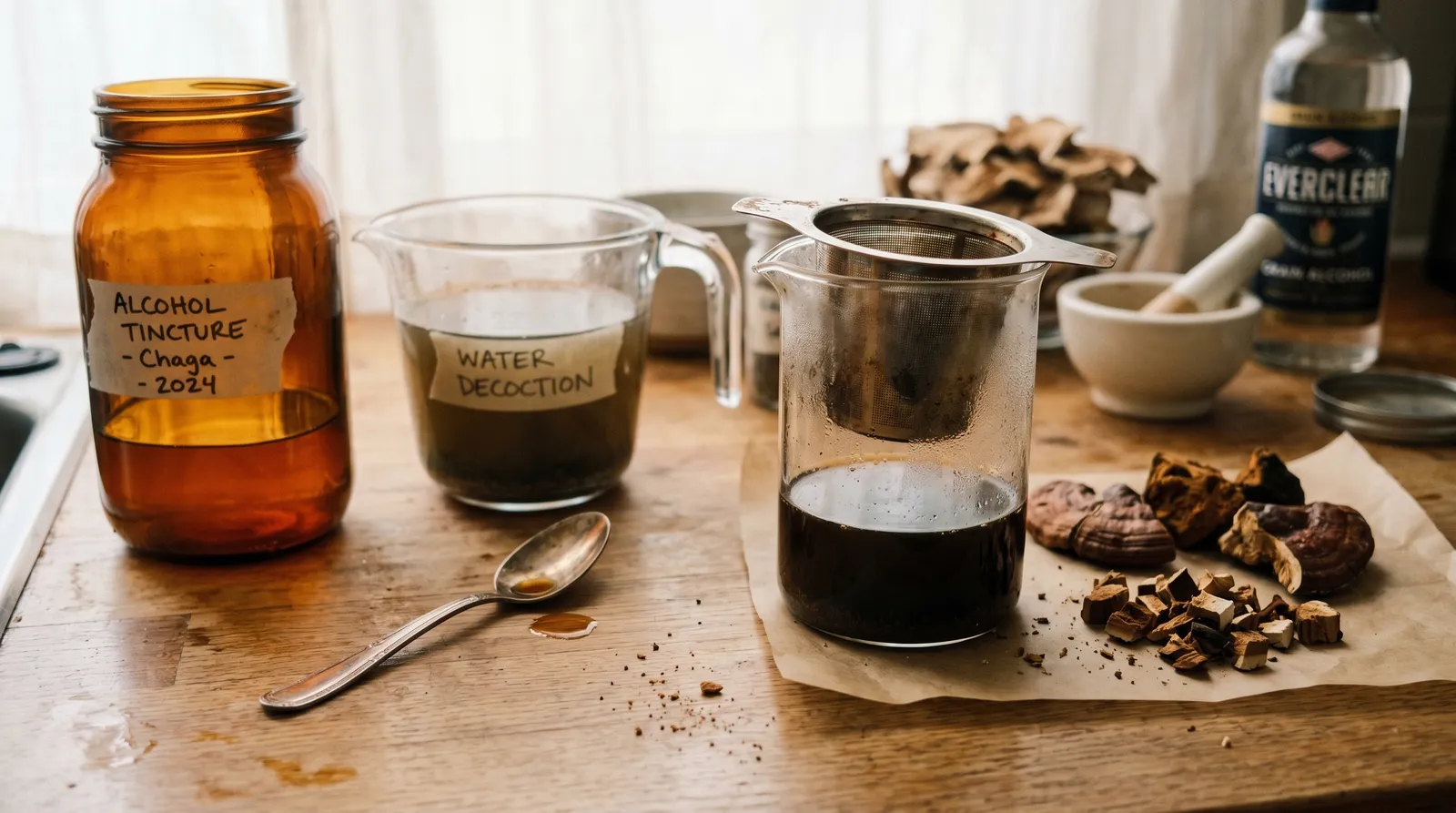
| Ganoderma lucidum (reishi) | Beta-glucans, polysaccharide-protein complexes | Ganoderic acids A–Z, lucidenic acids, ergosterol | High — both compound classes are well-studied |
| Inonotus obliquus (chaga) | Beta-glucans, melanin complexes | Betulinic acid, inotodiol, trametenolic acid | High — triterpene fraction is a significant part of chaga's studied chemistry |
| Hericium erinaceus (lion's mane) | Beta-glucans, erinacines (partially) | Hericenones, some erinacines, aromatic compounds | Moderate to high — hericenones require alcohol; beta-glucans require water |
| Trametes versicolor (turkey tail) | PSK, PSP, beta-glucans | Sterols, minor triterpenes | Moderate — the most-studied compounds (PSK, PSP) are water-soluble |
| Cordyceps militaris | Cordycepin, polysaccharides | Ergosterol, adenosine derivatives | Moderate — cordycepin is actually water-soluble; alcohol adds the sterol fraction |
For reishi and chaga, dual extraction water alcohol processing is arguably the most relevant — the triterpene fraction is large, well-characterised, and absent from hot-water-only preparations. For turkey tail, where the studied compounds (PSK, PSP) are polysaccharide-protein complexes that dissolve in water, the added value of the alcohol step is less pronounced, though it does capture the sterol fraction. If you want to buy a mushroom extract and you are deciding between extraction types, the species determines how much the dual approach matters.
Dual Extraction vs Other Methods
Dual extraction water alcohol processing outperforms single-solvent methods for species with significant bioactives in both solubility classes, but it is not universally superior. Here is how the main approaches compare:
Hot-water extract: The traditional preparation — essentially a long decoction. Strong for polysaccharides, weak for triterpenes. Most traditional Chinese medicine preparations of reishi and other medicinal fungi were water decoctions, which means the historical use literature is largely based on water-soluble fractions. This is worth keeping in mind when reading traditional-use claims: centuries of documented use describe the effects of water-extracted compounds, not necessarily the triterpene-rich fractions that alcohol extraction captures.
Alcohol tincture (no water step): Captures triterpenes and sterols, misses most beta-glucans. A straight alcohol tincture of reishi will contain ganoderic acids but minimal polysaccharide content. For species where the primary studied compounds are water-soluble — turkey tail, for instance — an alcohol-only tincture is a poor match.
Triple extraction: Some producers market a "triple extraction" that adds a fermentation or steam-distillation step. The evidence base for additional bioactive recovery from a third step is limited. Steam distillation captures volatile aromatic compounds, but these represent a very small fraction of most functional mushrooms' studied chemistry. Whether the added step meaningfully changes the product's composition in a way that matters for the end user is not established in published literature.
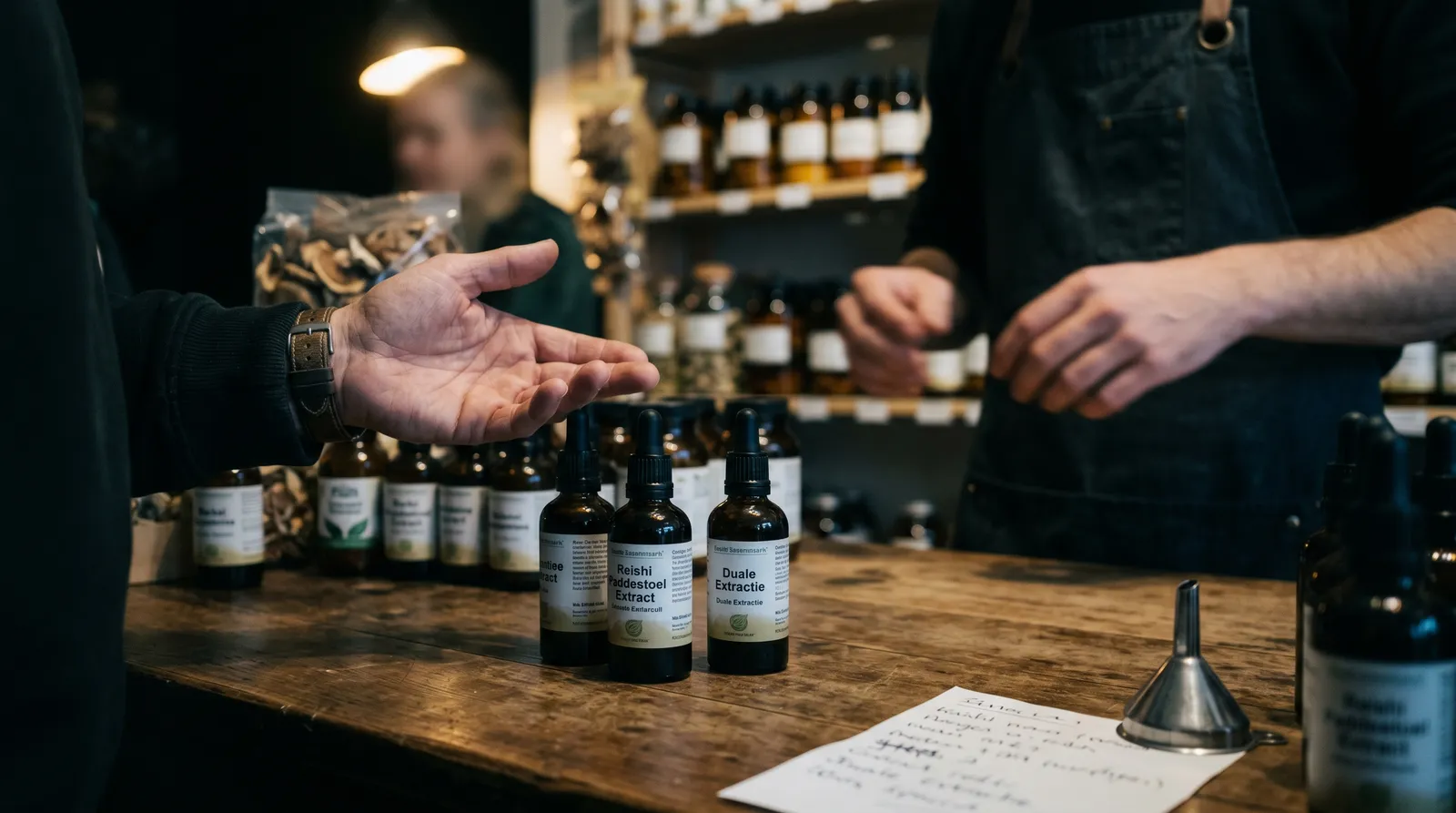
On the other hand, we have seen customers switch from a hot-water reishi extract to a dual-extracted reishi and notice a clear difference in the bitterness of the product — that bitterness comes from ganoderic acids, the triterpenes that only the alcohol step captures. Bitterness is not a bioassay, but it is a rough sensory indicator that the triterpene fraction is present.
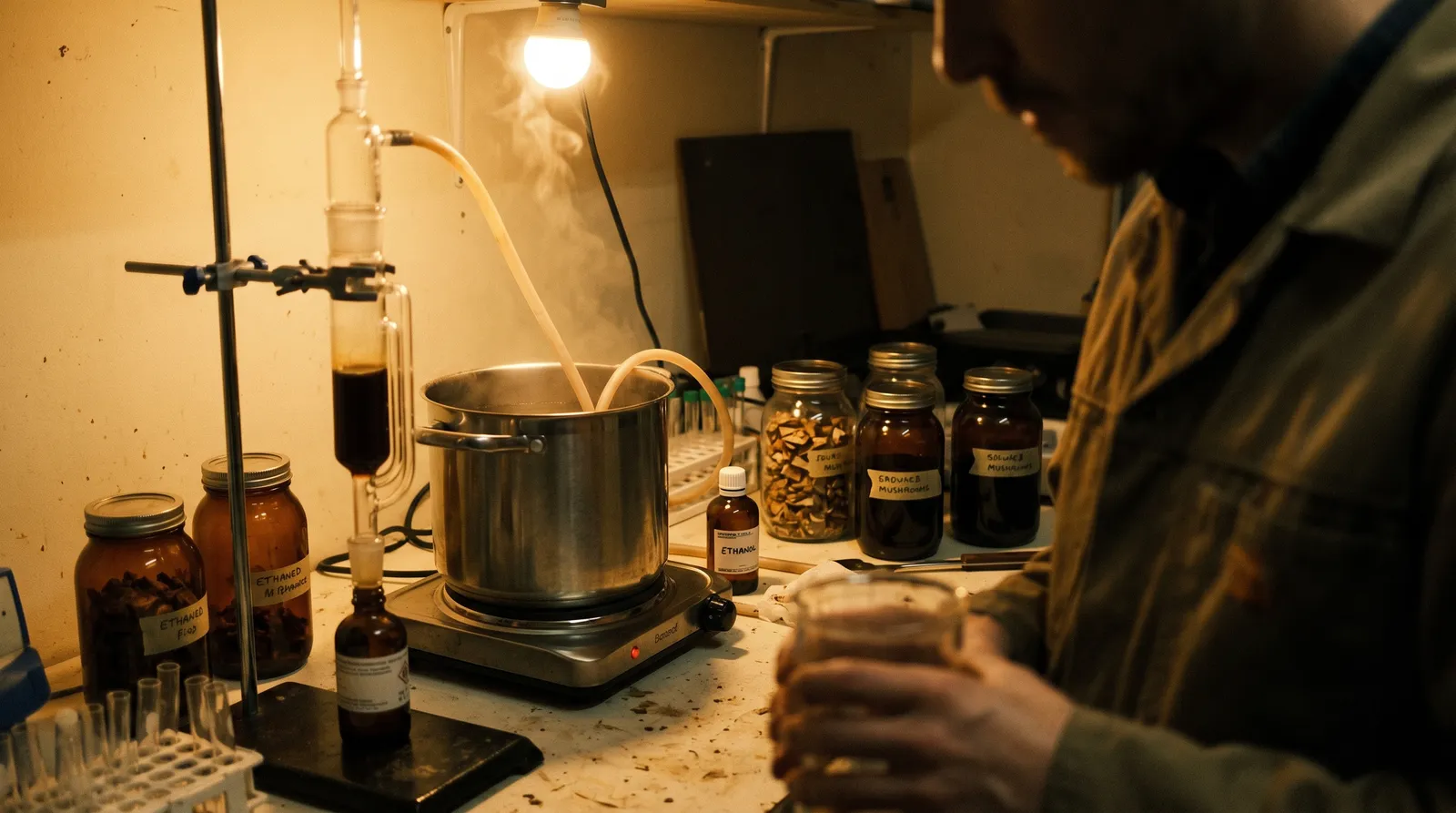
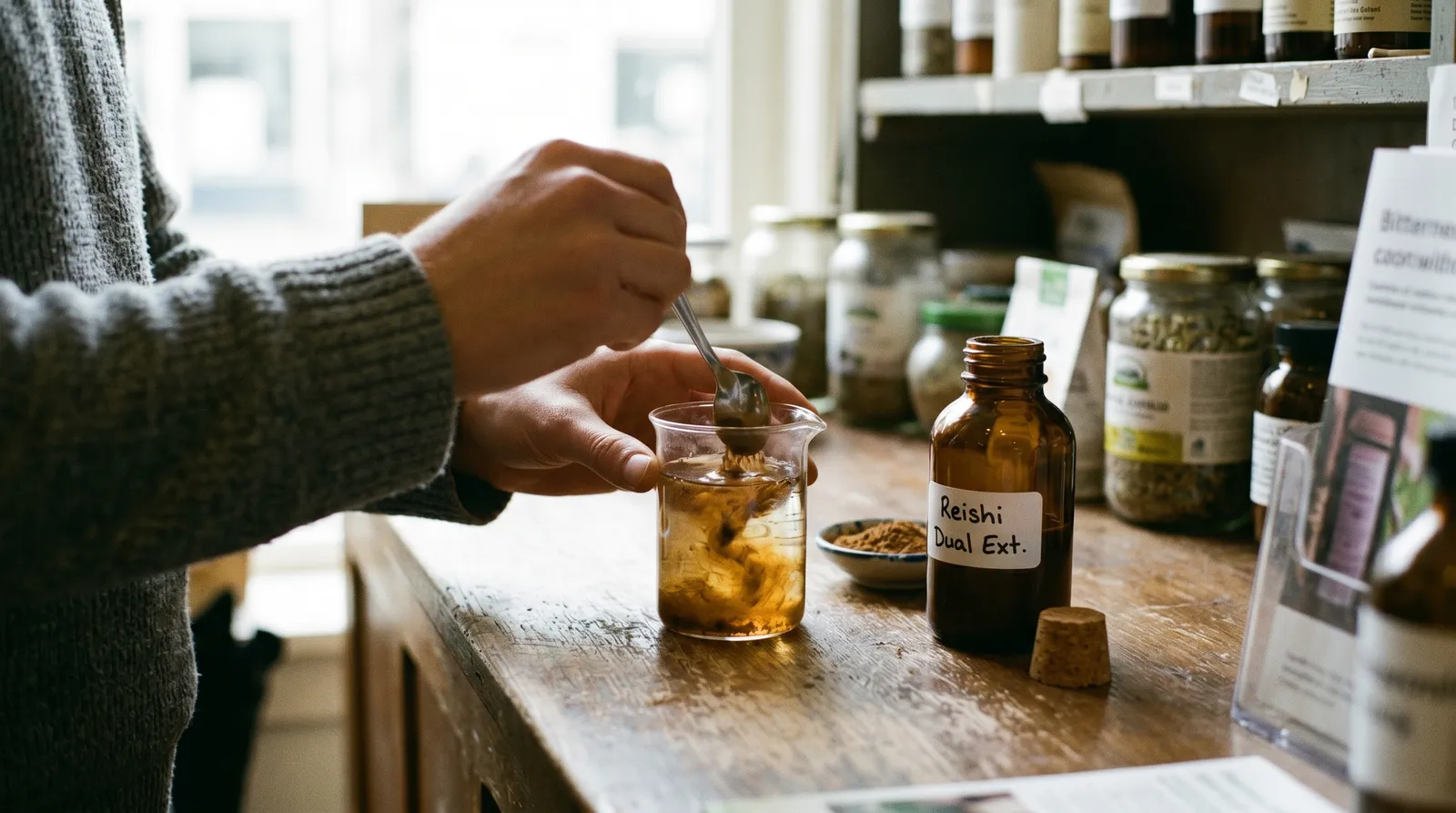
We also get asked whether it is worth making a dual extraction at home. You can — simmering mushroom material and then soaking the marc in high-proof alcohol is not complicated — but controlling extraction parameters at home is difficult, and you will not know the compound profile of your result without analytical testing. For most people, a tested and standardised commercial extract is a more reliable option. Products like the Foodsporen Reishi Dual Extract or the Host Defense Lion's Mane capsules are examples of commercially available dual-extracted preparations — though their extraction parameters and compound profiles differ, which is exactly the point: "dual-extracted" is a category, not a guarantee of equivalence.

What Dual Extraction Does Not Guarantee
The term "dual-extracted" on a label tells you the extraction method, not the final product's potency or composition. Several variables determine what actually ends up in the bottle:
- Source material: A dual extraction of mycelium grown on grain (mycelium-on-grain) will produce a different compound profile than a dual extraction of mature fruiting body. Mycelium-on-grain preparations typically contain lower beta-glucan concentrations and higher starch content from the grain substrate — and the starch can register as polysaccharide in some non-specific assays, inflating apparent beta-glucan numbers. This is a real and ongoing industry debate: some manufacturers argue that mycelium-on-grain preparations contain unique intracellular compounds not found in fruiting bodies, while critics point out that beta-glucan content per gram is substantially lower.
- Extraction parameters: Temperature, time, solvent concentration, and the ratio of mushroom to solvent all affect yield. Two "dual-extracted" products from the same species can have very different compound profiles.
- Standardisation: Some extracts are standardised to a minimum beta-glucan percentage or triterpene content; others are not. Without a certificate of analysis specifying compound content, "dual-extracted" is a process claim, not a potency claim.
Research findings on one specific dual-extracted preparation do not automatically transfer to another. Mori et al. (2009), for example, used a specific proprietary hot-water and ethanol extract of Hericium erinaceus in their cognitive-function trial in older Japanese adults. That result applies to that preparation at that dose — not to every product labelled "dual-extracted lion's mane."
How to Evaluate a Dual Extract Before You Buy
Knowing a product is dual-extracted is a starting point, not an endpoint. When you order or buy a dual extraction water alcohol product, look for these indicators of quality:
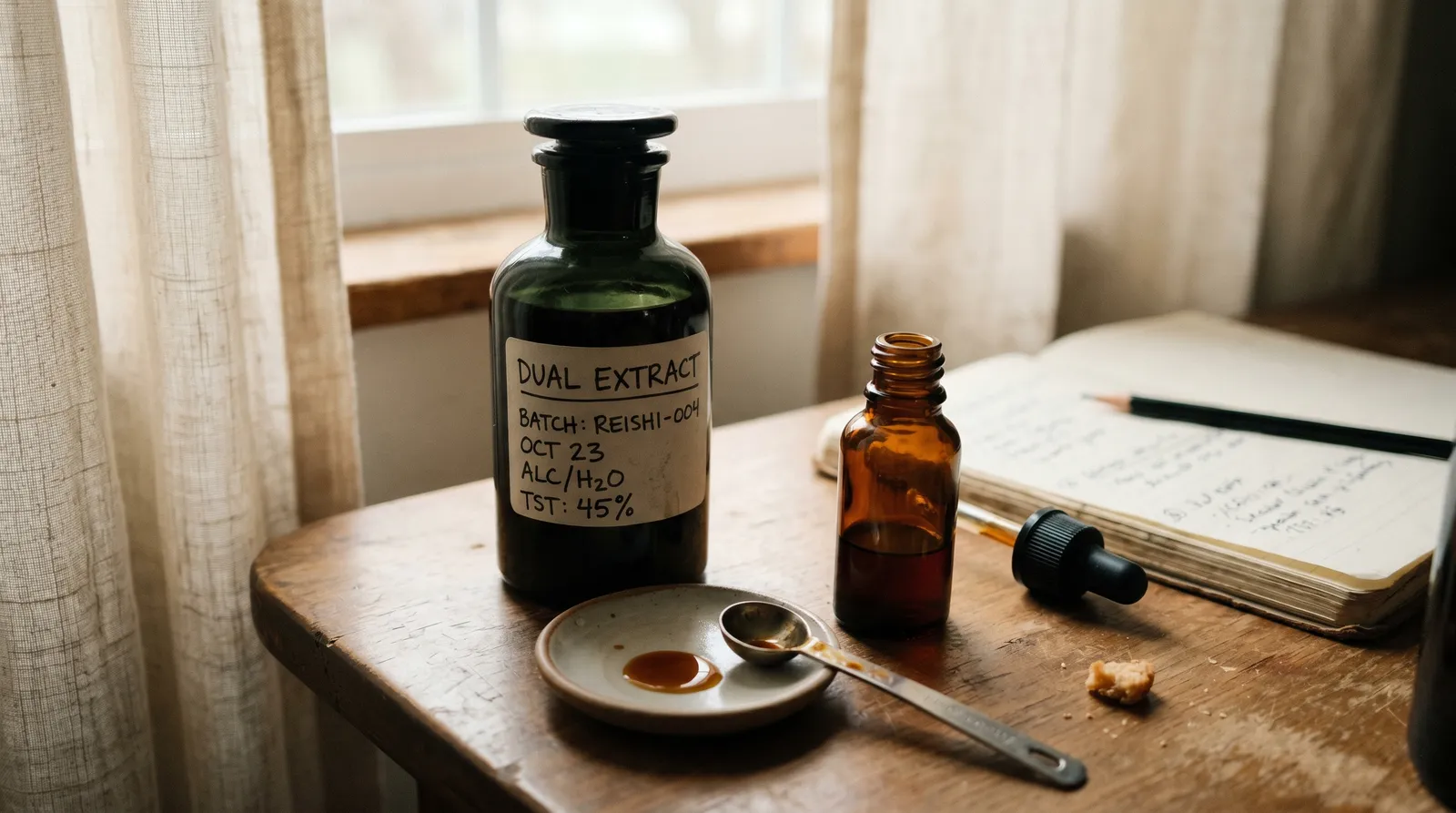
- Certificate of analysis (CoA): A reputable producer will provide a CoA showing beta-glucan content (measured by the Megazyme method, not a non-specific polysaccharide assay) and, for species like reishi and chaga, triterpene content. If a producer cannot provide a CoA, that is a red flag.
- Source material disclosure: Does the label specify fruiting body, mycelium, or mycelium-on-grain? This matters enormously for the compound profile, as discussed above.
- Extraction ratio: Some products list an extraction ratio (e.g., 10:1), meaning 10 kg of raw material produced 1 kg of extract. Higher ratios generally indicate more concentrated products, but the ratio alone does not tell you which compounds were concentrated.
- Species verification: DNA-verified species identification is the gold standard. Misidentification is not common in commercial products from established suppliers, but it does occur in the broader supplement market. The EMCDDA has noted that botanical and fungal supplement adulteration remains a concern across European markets.
Safety Considerations
Dual extraction water alcohol processing concentrates both polysaccharide and triterpene fractions, which means the safety profile covers both compound classes. Reishi triterpenes, particularly ganoderic acids, have demonstrated anticoagulant and antiplatelet activity in vitro — concurrent use with warfarin, apixaban, rivaroxaban, or other blood thinners may increase bleeding risk. Immune-modulating polysaccharides from species like reishi, maitake, and turkey tail may work in opposition to immunosuppressant medications such as methotrexate, tacrolimus, or ciclosporin. Individuals with autoimmune conditions should approach beta-glucan-rich preparations with particular caution, as the theoretical concern — that immune stimulation opposes the goal of autoimmune therapy — is real, even if the clinical evidence on this specific interaction remains limited.
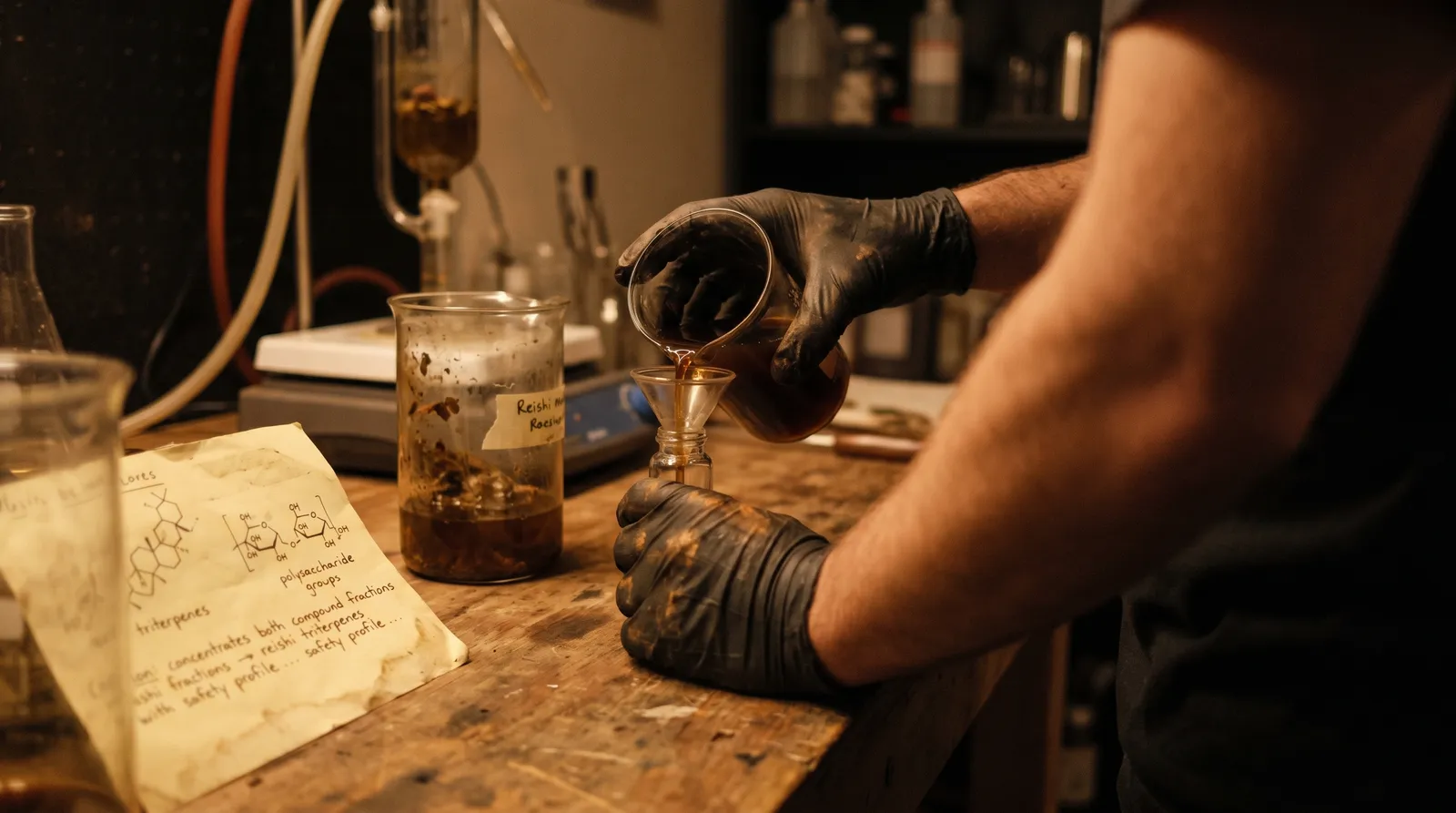
We are honest about the limits of current knowledge here: most interaction data comes from in vitro studies or case reports, not from controlled clinical trials. The absence of reported adverse interactions does not mean they cannot occur — it may simply mean they have not been systematically studied. For a complete overview of mushroom-drug interactions, see the dedicated drug interactions article in this series.
Last updated: April 2026
Frequently Asked Questions
9 questionsDoes dual extraction work better for some mushrooms than others?
Why does alcohol concentration matter in dual extraction?
Is triple extraction better than dual extraction?
Can I tell from a label whether a dual extract is actually potent?
Does dual extraction of mycelium-on-grain produce the same result as fruiting body?
What is the difference between dual extraction and a simple alcohol tincture?
Why is chitin important in mushroom extraction?
How long does a dual extraction typically take to complete?
Can dual extracts be stored at room temperature?
About this article


Adam Parsons is an external cannabis and psychedelics writer and editor who contributes to Azarius's wiki as both author and reviewer. On the writing side, he authors Azarius's kratom and kanna clusters, drawing on exten
This wiki article was drafted with AI assistance and reviewed by Adam Parsons, External contributor. Editorial oversight by Joshua Askew.
Medical disclaimer. This content is for informational purposes only and does not constitute medical advice. Consult a qualified healthcare provider before use of any substance.
Last reviewed April 24, 2026
References (5)
- [1]EMCDDA (European Monitoring Centre for Drugs and Drug Addiction). Reports on supplement quality and adulteration in European markets.
- [2]Keypetch, S. et al. (2020). Comparison of extraction methods on ganoderic acid content from Ganoderma lucidum . Journal of Food Science and Technology , 57(4), 1375–1383.
- [3]Mori, K. et al. (2009). Improving effects of the mushroom Yamabushitake ( Hericium erinaceus ) on mild cognitive impairment: a double-blind placebo-controlled clinical trial. Phytotherapy Research , 23(3), 367–372.
- [4]Shashidhar, M. G. et al. (2013). Bioactive principles from Ganoderma lucidum : extraction, purification, and characterisation. International Journal of Medicinal Mushrooms , 15(5), 449–460.
- [5]Zhang, M. et al. (2007). Antitumor polysaccharides from mushrooms: a review on their isolation process, structural characteristics and antitumor activity. Trends in Food Science & Technology , 18(1), 4–19. DOI: 10.1016/j.tifs.2006.07.013
Related Articles
Medicinal Mushrooms TCM Western Pharmacognosy Guide
Guide to medicinal mushrooms TCM Western pharmacognosy — how reishi, lion's mane, cordyceps are classified, extracted, and studied.
Research on Immune Modulation by Functional Mushrooms
What does research on immune modulation by functional mushrooms actually show? Beta-glucans, Dectin-1 signalling, human trials, and the honest gap...
Allergic Reactions & Mushroom Sensitivities
Understand allergic reactions and mushroom sensitivities: mould cross-reactivity, shiitake dermatitis, species-specific risks, and safer product…
Turkey Tail Trametes versicolor — Buy Supplements
Buy turkey tail Trametes versicolor supplements at Azarius. PSK and PSP evidence, beta-glucan dosage, extraction methods, and safety.
Triterpenes In Medicinal Mushrooms
Triterpenes in medicinal mushrooms are a class of 30-carbon terpenoid compounds produced as secondary metabolites by several functional mushroom species…
Chaga Siberian Nordic Folk Use
Chaga Siberian Nordic folk use is a centuries-old tradition in which indigenous Siberians and Nordic communities brewed the birch-parasitising fungus…
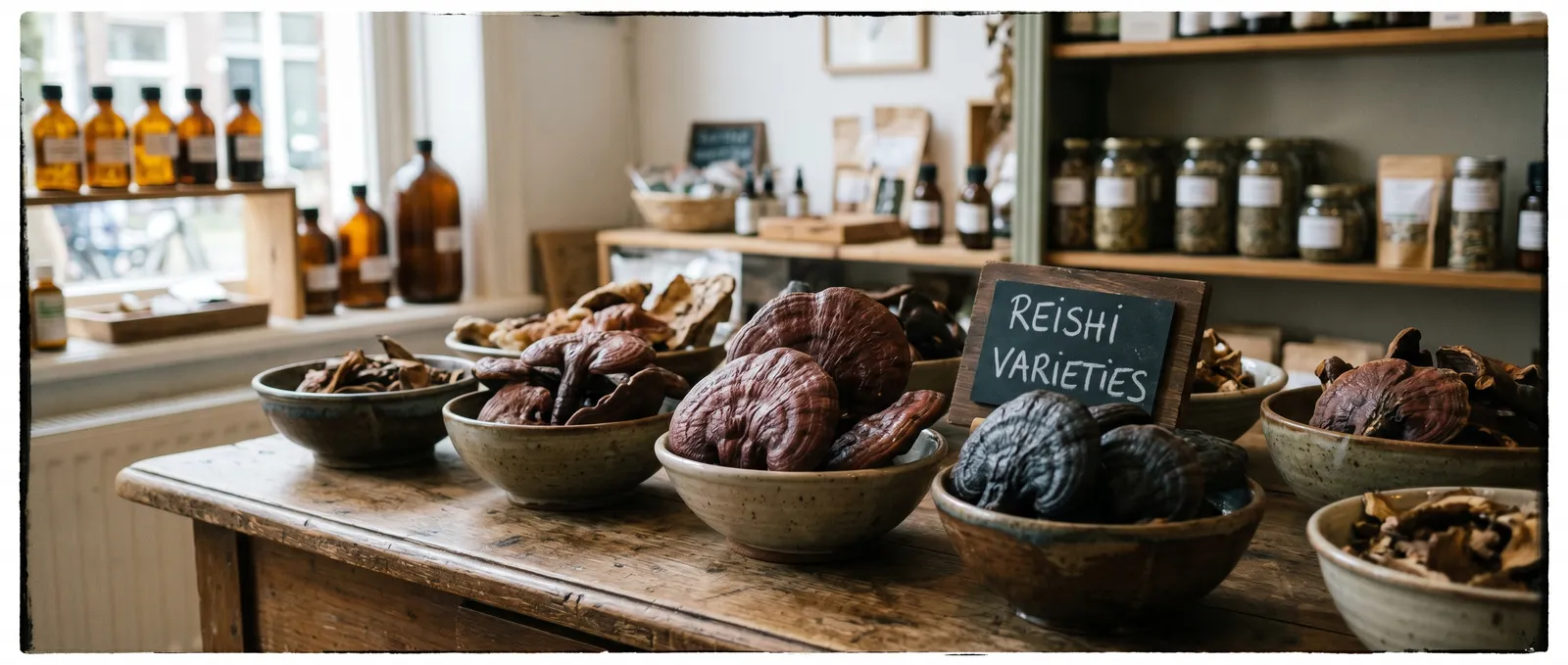
Red and Black Reishi Varieties
Red reishi (Ganoderma lucidum) and black reishi (Ganoderma sinense) both fall under the lingzhi umbrella in traditional Chinese medicine, but they differ in…
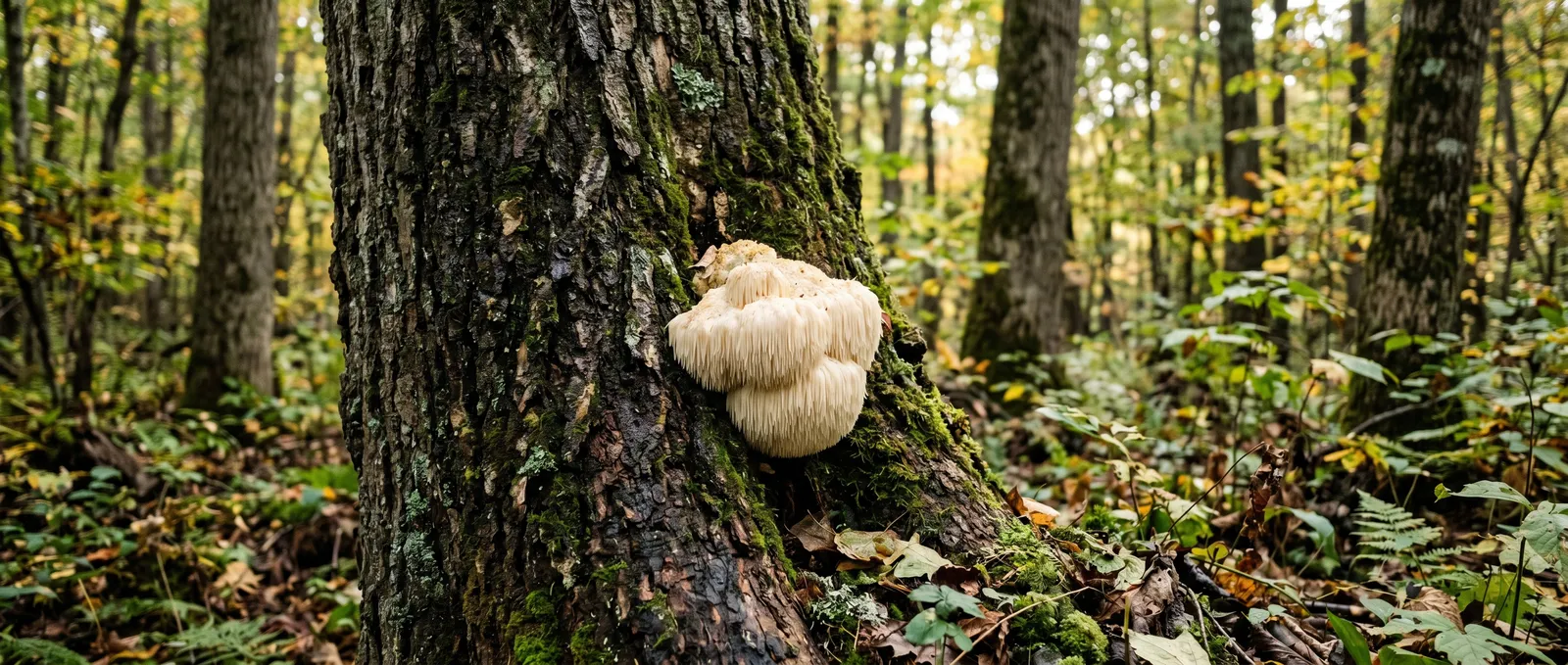
Lion's Mane Identification & Habitat
Hericium erinaceus is a tooth fungus that fruits as a single white, spine-covered mass on wounded or dead hardwood trees.
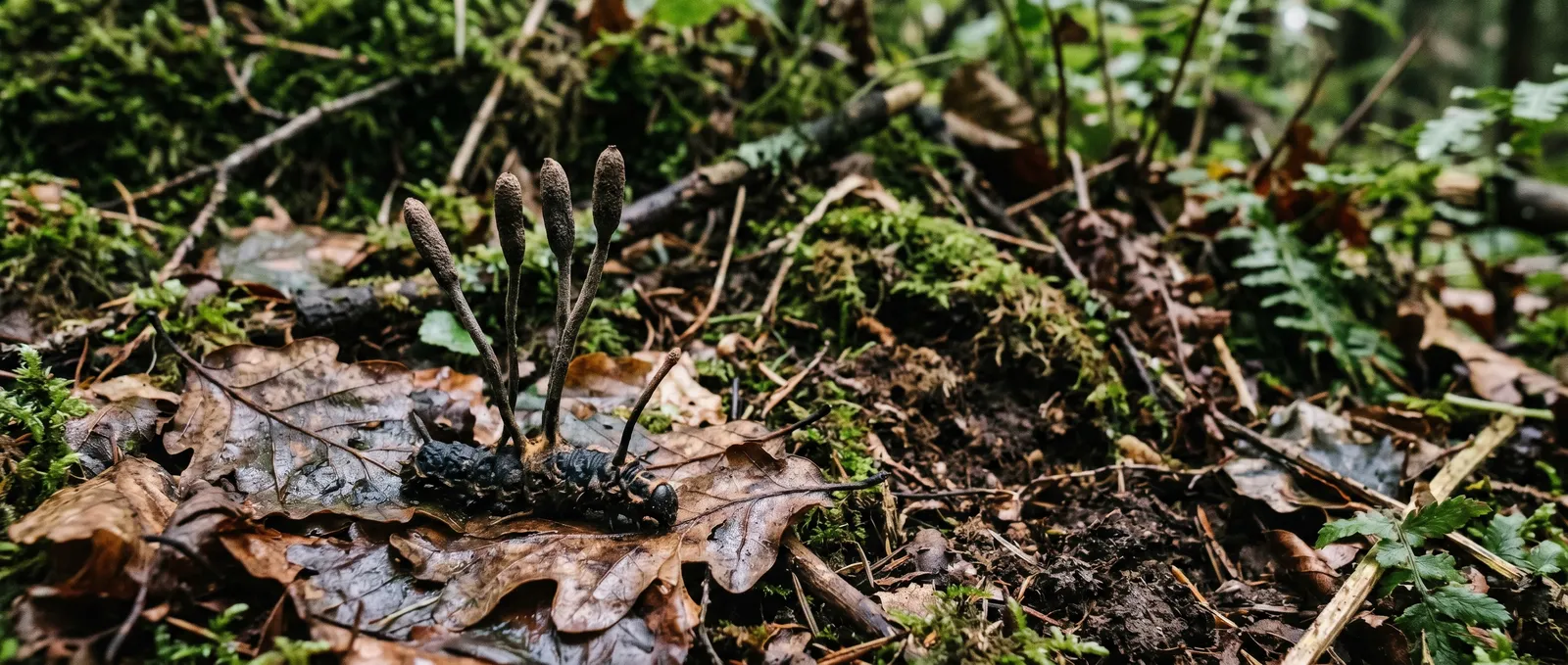
Cordyceps Lifecycle
The cordyceps lifecycle is a parasitic biological sequence in which a fungus infects an insect host, colonises its body from within, and erupts as a…