
Reading a Mushroom Supplement Label and Certificate of Analysis
Definition
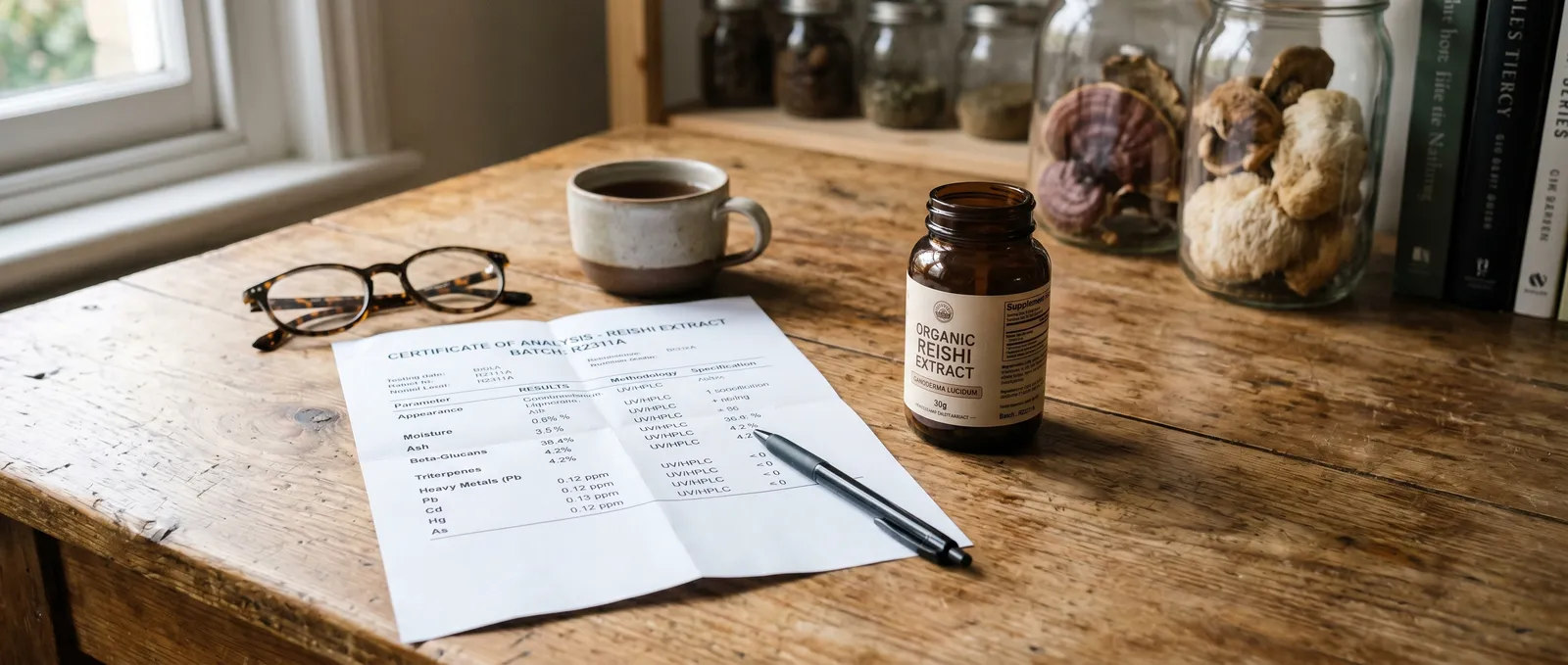
A certificate of analysis (CoA) is a laboratory document reporting the actual active compounds, contaminant levels, and species identity inside a mushroom supplement. McCleary and Draga (2016) showed that stated beta-glucan values on commercial products frequently diverged from validated analytical results. Learning to read one is the most practical way to evaluate any functional mushroom product before you buy it.
Reading a mushroom supplement label and CoA correctly is the single most useful skill for evaluating any functional mushroom product. A certificate of analysis — commonly shortened to CoA — is a document issued by a testing laboratory that reports what is actually inside a mushroom supplement: the active compounds, the contaminants it was screened for, and whether the product matches what the label claims. Reading a mushroom supplement label and CoA side by side reveals gaps between marketing promises and laboratory reality that can be enormous. McCleary and Draga (2016) demonstrated that stated beta-glucan values on commercial mushroom supplements frequently diverged from values obtained through validated analytical methods, sometimes by a factor of two or more.
Adult audience (18+). The dosing ranges and effects described in this article apply to adult physiology. This content is not intended for minors.
Below is a reference table covering the key data points you will encounter when reading a mushroom supplement label and CoA, followed by sections explaining each one in plain language.
| Data Point | Where Found | What It Tells You | Red Flag If… |
|---|---|---|---|
| Beta-glucan content (%) | CoA and sometimes label | Concentration of the primary bioactive polysaccharides | Below 20% for a fruiting-body extract, or absent entirely |
| Polysaccharide content (%) | Label (common) and CoA | Total polysaccharides — includes starch, not just beta-glucans | Listed WITHOUT a separate beta-glucan figure (starch inflates this number) |
| Starch / alpha-glucan content (%) | CoA (not always on label) | Grain-derived starch from mycelium-on-grain products | Above 30%, suggesting substantial grain filler |
| Triterpene content (mg/g or %) | CoA and sometimes label (reishi products mainly) | Concentration of ganoderic acids and related triterpenes | Absent on a reishi product claiming dual extraction |
| Extract source (fruiting body vs mycelium on grain) | Label (sometimes buried in small print) | Whether the product is made from the mushroom itself or from mycelium grown on grain substrate | Label says "mushroom" but ingredients list "mycelium biomass" or "myceliated grain" |
| Extraction method | Label or manufacturer spec sheet | Hot water, alcohol, or dual extraction — determines which compounds are concentrated | No method stated, or method does not match the claimed compound profile |
| Heavy metals panel (Pb, Cd, As, Hg) | CoA | Concentrations of lead, cadmium, arsenic, and mercury | Any value exceeding 1 ppm for lead or 0.3 ppm for cadmium, or panel missing entirely |
| Microbial testing (TPC, yeast, mould, coliforms) | CoA | Whether the product carries harmful microbial contamination | Results absent, or values listed without specification limits |
| Species identification | CoA (DNA or ITS testing) and label | Confirms the product contains the species it claims | No species verification, or only genus-level identification |
| Batch number and test date | CoA and label | Links the CoA to a specific production run | CoA has no batch number, or batch number does not match the product label |
| Testing laboratory name | CoA | Who performed the analysis | No lab named, or the lab is the manufacturer itself (not independent) |
Beta-Glucans vs Total Polysaccharides — the Single Most Important Distinction
Beta-glucans are the specific bioactive polysaccharides responsible for immune-modulating properties, while "total polysaccharides" is a broad category that also includes plain starch. This distinction is where most label confusion lives when reading a mushroom supplement label and CoA. A mycelium-on-grain product can show an impressive 50–60% polysaccharide figure on its label while containing mostly grain starch and relatively little beta-glucan.

The Megazyme assay (a validated enzymatic method) distinguishes beta-glucans from alpha-glucans. McCleary and Draga (2016) used this method to test commercial products and found that some listed polysaccharide values over 50% while their actual beta-glucan content sat below 10%. A CoA worth reading a mushroom supplement label and CoA against will report beta-glucan content specifically, not just total polysaccharides. If a CoA or label reports only "polysaccharides" without breaking out beta-glucans separately, you cannot tell how much of that figure is bioactive and how much is starch.
Fruiting-body extracts typically show beta-glucan content between 20% and 60%, depending on species and extraction method. Hot-water extraction concentrates water-soluble polysaccharides including beta-glucans — this is the preparation most traditional decoctions resemble, and the preparation used in much of the published research on polysaccharide bioactivity. Wu et al. (2004) reported that hot-water extracts of several mushroom species yielded significantly higher beta-glucan recovery than unextracted dried material. If you want to order a mushroom extract and compare it against these benchmarks, the beta-glucan line on the CoA is where to look first.
Starch Content and the Mycelium-on-Grain Debate
Starch content above 30% on a CoA is a strong indicator that the product is a mycelium-on-grain preparation rather than a pure fruiting-body extract. Many commercial mushroom supplements are produced from mycelium grown on grain — typically rice or oats. The mycelium permeates the grain, and the entire substrate is then dried and powdered. The result is a mixture of fungal mycelium and grain. Carvajal et al. (2012) analysed mycelium-on-grain preparations and found starch content ranging from 35% to over 60% in some products, with correspondingly low beta-glucan values.

A CoA that reports alpha-glucan or starch content alongside beta-glucan content gives you the clearest picture. High starch (above roughly 30%) is a strong indicator that you are looking at a mycelium-on-grain product, even if the label does not make this obvious. Reading a mushroom supplement label and CoA side by side is the fastest way to catch this discrepancy.
This is a genuine industry debate, not a settled question. Some manufacturers argue that mycelium-on-grain preparations contain compounds — extracellular metabolites, enzymes, and other secondary metabolites — that are absent from fruiting-body extracts, and that focusing exclusively on beta-glucan percentage misses part of the picture. That argument is not unreasonable, but the published research on immune-modulating polysaccharides (lentinan from shiitake, PSK and PSP from turkey tail, grifolan from maitake) was conducted overwhelmingly on fruiting-body-derived or isolated polysaccharide fractions, not on mycelium-on-grain biomass. When you see a product citing that research while selling a mycelium-on-grain preparation, the evidence does not straightforwardly transfer.
Triterpenes and Extraction Method
Triterpenes are alcohol-soluble compounds found primarily in reishi that a hot-water-only extract will not meaningfully capture. An alcohol-only tincture does the reverse, concentrating triterpenes but leaving most polysaccharides behind. A dual extraction (hot water followed by alcohol, or a simultaneous process) aims to capture both compound classes.

On a CoA, triterpene content is typically reported in mg/g or as a percentage. For reishi specifically, Baby et al. (2015) characterised over 130 distinct triterpenes from Ganoderma species, with ganoderic acids A through Z being the most frequently quantified. If you are buying a reishi product and the CoA shows no triterpene data, either the product was not tested for them or the extraction method did not capture them — both worth knowing.
The extraction method matters for every species, not just reishi. If a lion's mane product claims to contain hericenones (which are alcohol-soluble), a hot-water-only extract is unlikely to deliver meaningful concentrations of those specific compounds. Erinacines, by contrast, are found primarily in the mycelium rather than the fruiting body — another layer of complexity. Check whether the CoA compound profile matches the extraction method and the source material. When you buy a reishi dual extract or get a lion's mane extract, the CoA should reflect the extraction method used.
Contaminant Panels: Heavy Metals, Microbes, and Pesticides
A contaminant panel confirms that a mushroom supplement does not carry unsafe levels of heavy metals, microbial contamination, or pesticide residues. Mushrooms are bioaccumulators — they absorb and concentrate elements from their growing substrate and environment. Chaga (Inonotus obliquus) grows on birch trees and concentrates whatever the tree absorbs from its environment. Reishi cultivated outdoors can accumulate heavy metals from contaminated soil. Falandysz and Borovička (2013) documented that wild-harvested mushrooms in some regions exceeded safe intake thresholds for cadmium and mercury. The European Monitoring Centre for Drugs and Drug Addiction (EMCDDA) has noted the broader challenge of contaminant monitoring in botanical supplement supply chains, a concern that applies equally to functional mushroom products sold across the EU.
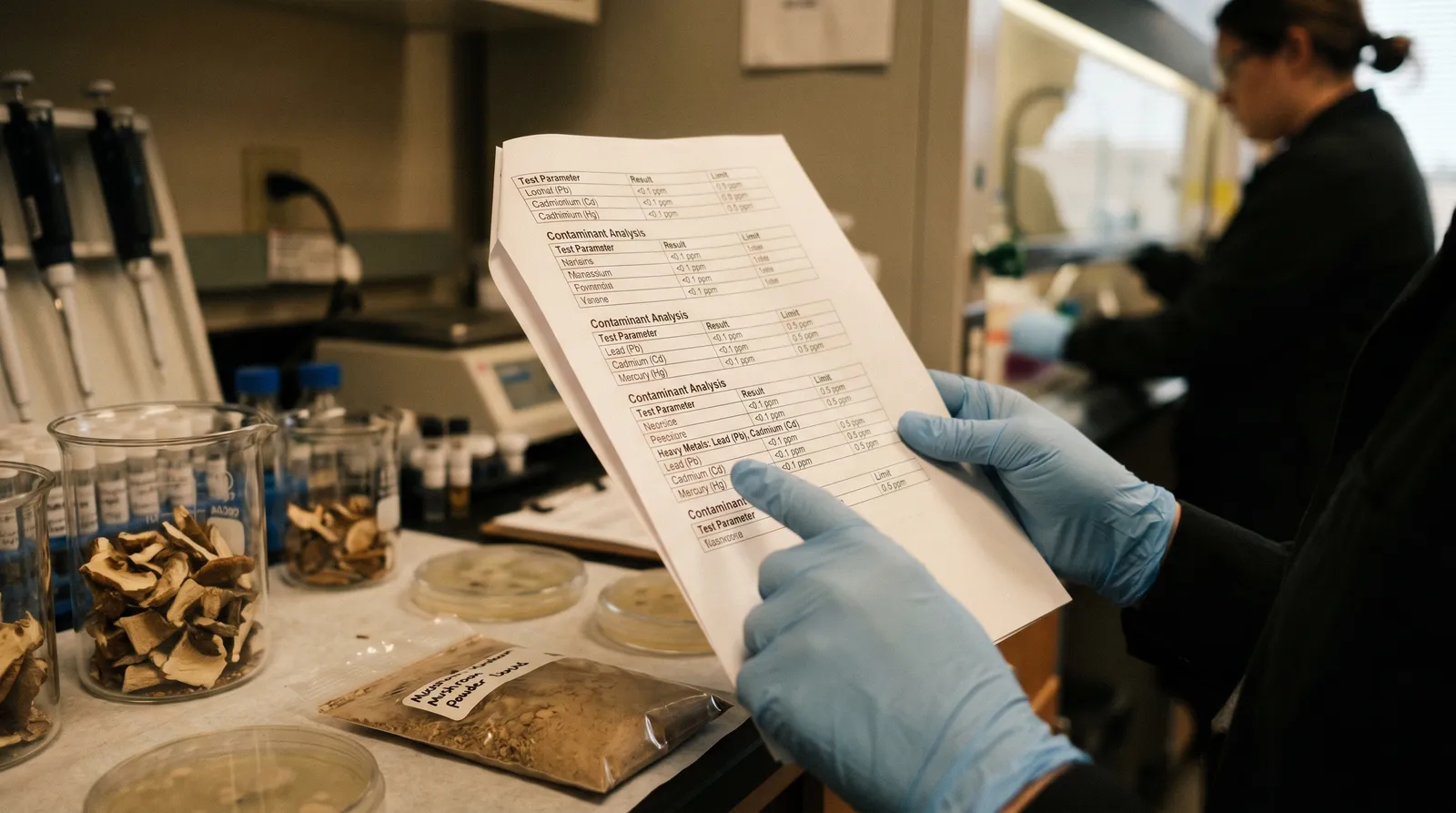
A proper contaminant panel on a CoA should include at minimum:
- Heavy metals: lead (Pb), cadmium (Cd), arsenic (As), mercury (Hg) — each reported in ppm (parts per million) with a specification limit stated. Common thresholds are ≤1 ppm for lead, ≤0.3 ppm for cadmium, ≤1 ppm for arsenic, and ≤0.1 ppm for mercury, though limits vary by jurisdiction and product type.
- Microbial testing: total plate count (TPC), yeast and mould counts, coliforms, and ideally specific pathogen screens (E. coli, Salmonella). Results should show both the measured value and the acceptable limit.
- Pesticide residues: particularly relevant for imported products. A multi-residue screen covering organophosphates and organochlorines is standard.
If a CoA omits the contaminant panel entirely, or reports results without stating specification limits, treat it with scepticism. Reading a mushroom supplement label and CoA without checking the contaminant section is like inspecting a house without looking at the foundation. The point of a CoA is not just to list numbers — it is to show that those numbers fall within defined safety thresholds.
Species Verification
DNA-based species identification using ITS sequencing confirms that the product contains the exact fungal species claimed on the label. Dentinger and Suz (2014) tested commercial dried porcini products and found that 17 of 19 packets contained species other than what the label stated. The functional mushroom supplement market is not immune to the same problem.
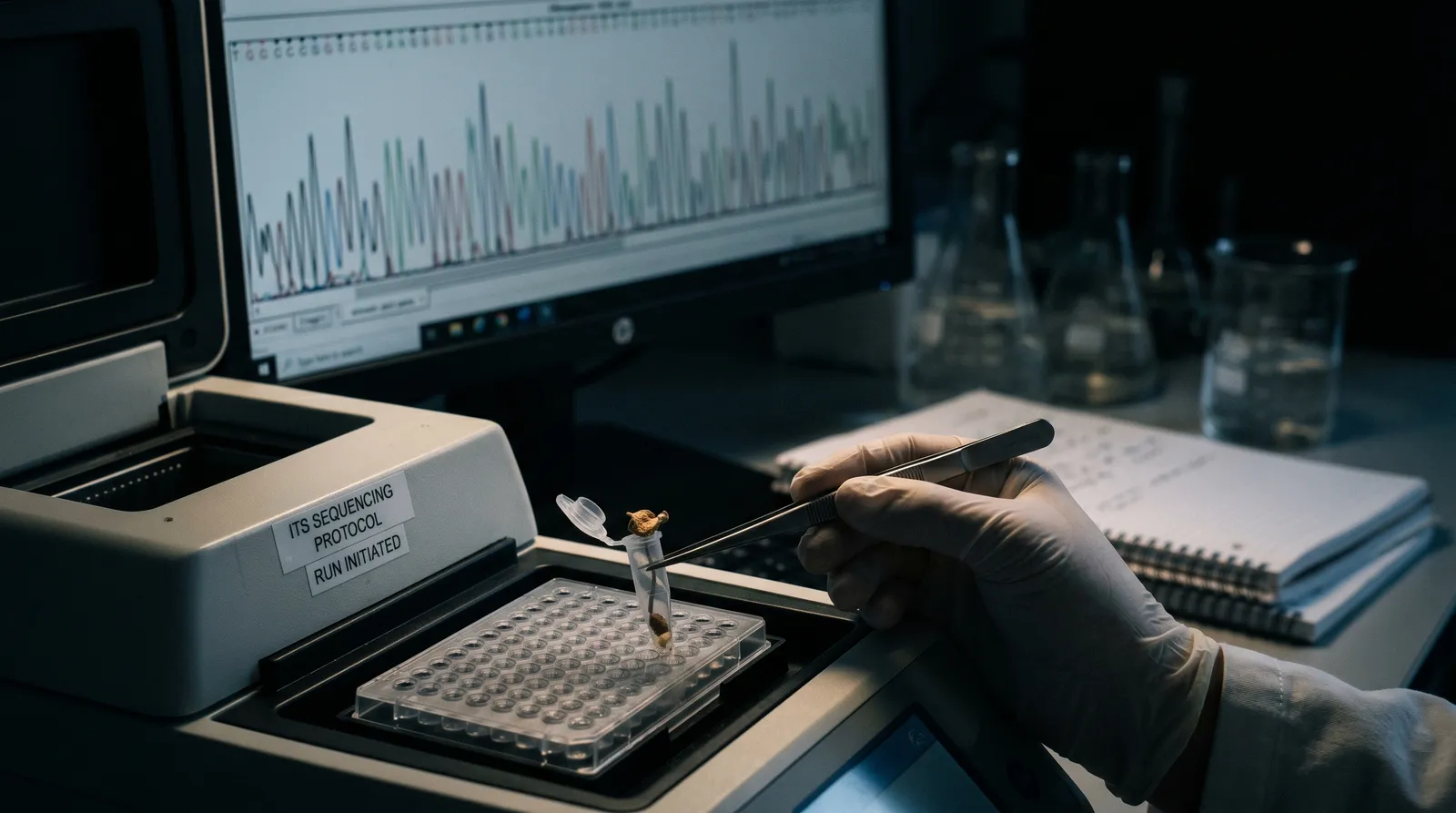
A CoA that includes ITS-based species identification is a strong quality signal. One that lists only a common name ("reishi") without any molecular confirmation could contain any of several Ganoderma species — and the chemical profiles between, say, G. lucidum and G. applanatum differ substantially. When reading a mushroom supplement label and CoA, species verification is one of the easiest quality markers to check.
Batch Numbers and Third-Party Testing
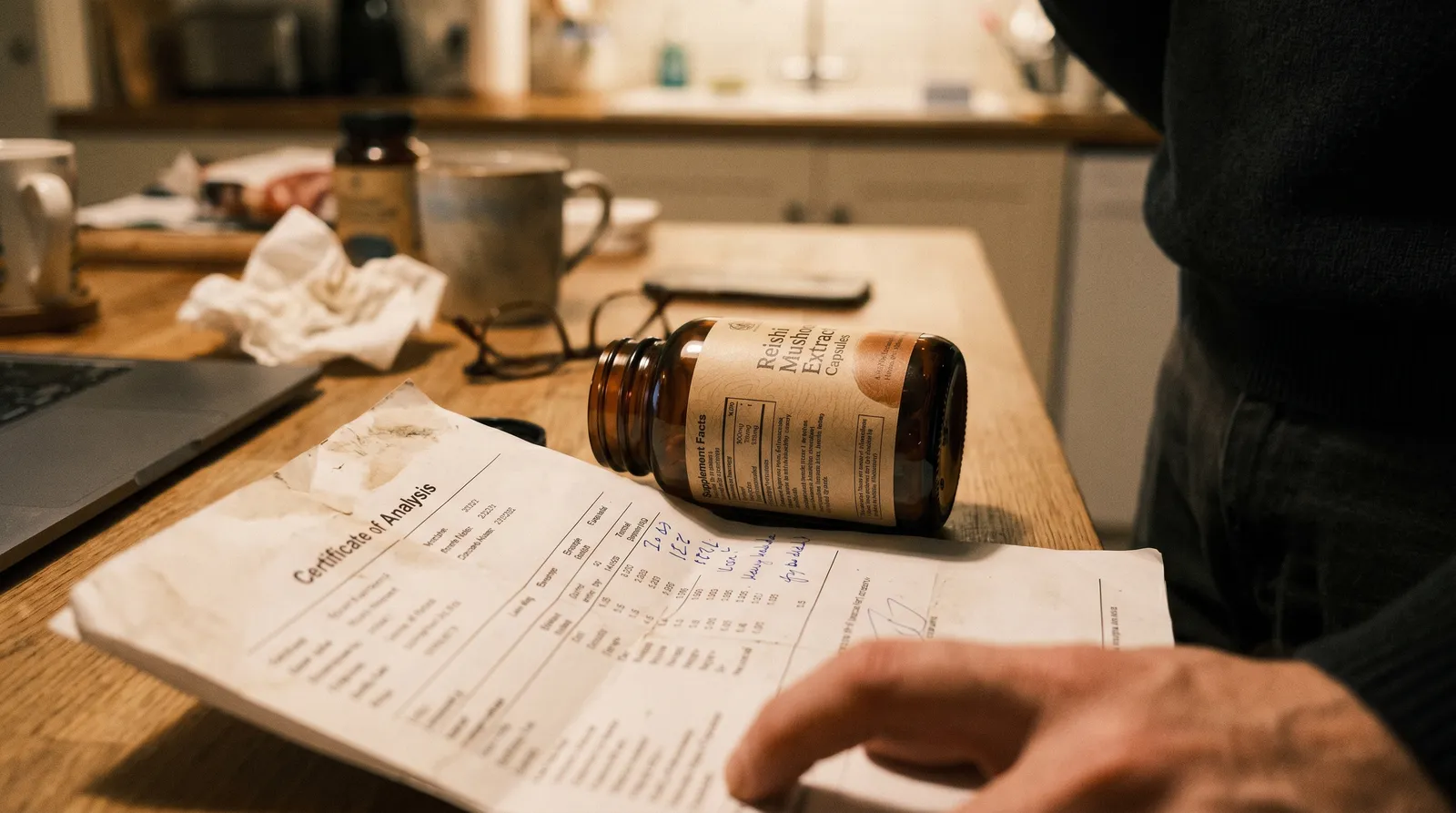
A matching batch number is the only reliable link between a CoA and the specific jar or pouch in your hand. A CoA should carry a batch number that matches the batch number printed on the product label. This links the test results to the specific production run you are holding. If the batch numbers do not match, the CoA may be from a different (possibly better) batch, and tells you nothing about what is in your container.
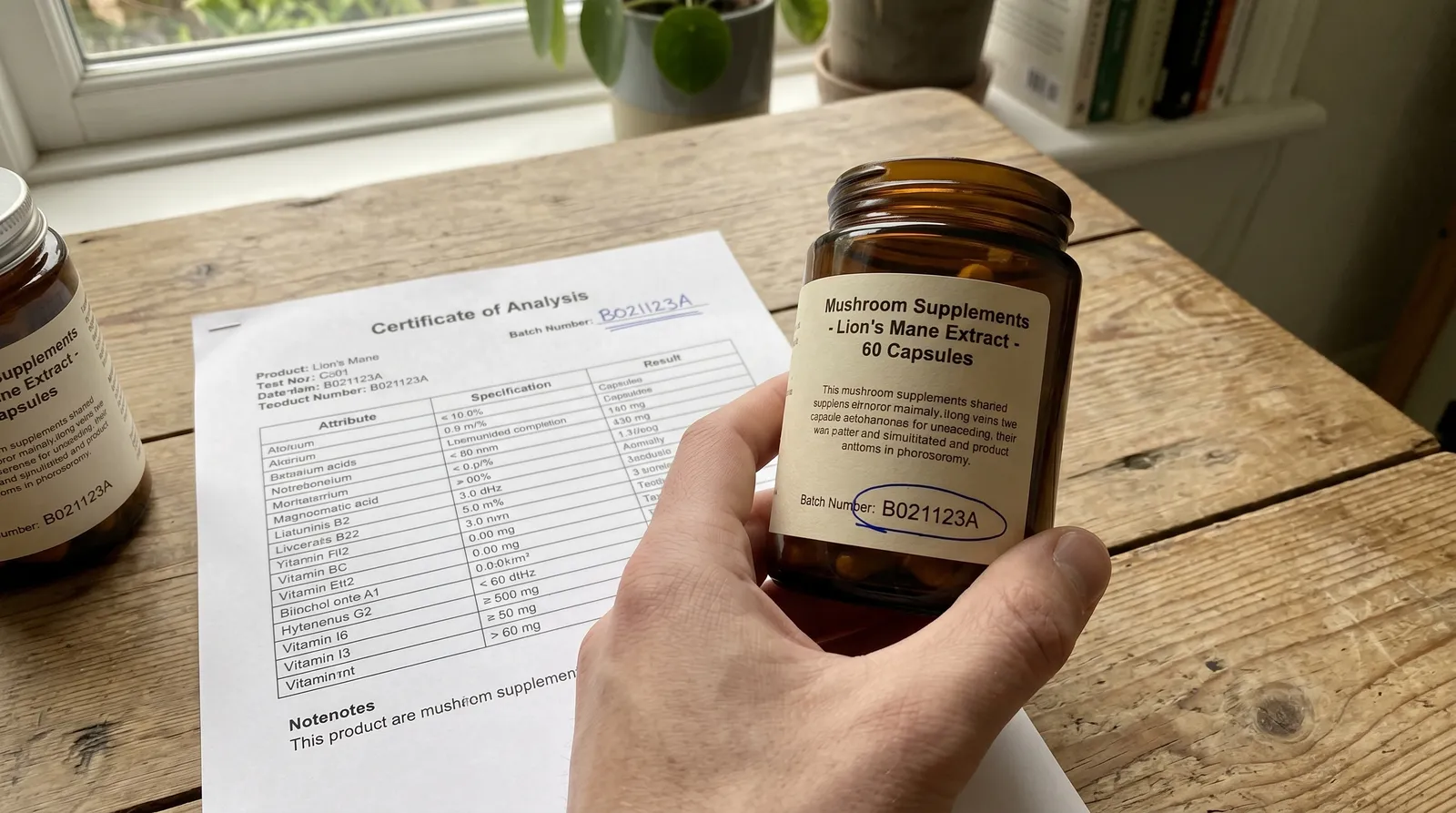
Third-party testing means the analysis was performed by a laboratory independent of the manufacturer. If the testing lab listed on the CoA is a division of the company that made the product, that is in-house testing — not necessarily wrong, but not independent verification. Look for named, accredited analytical laboratories.
Comparing CoA Documents Side by Side
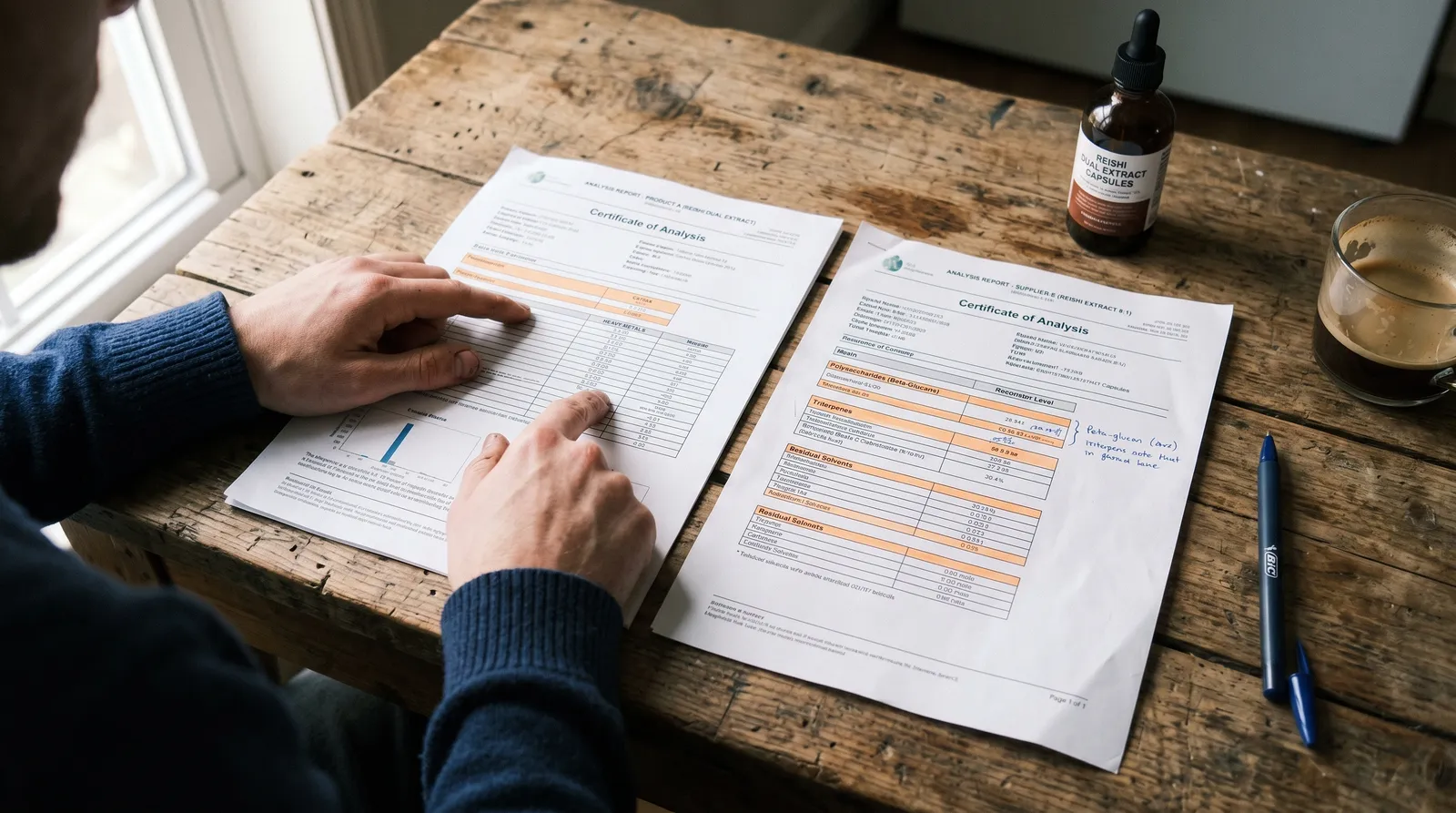
Placing two CoAs next to each other is the fastest way to see quality differences between mushroom supplements. We did this recently with two reishi dual extracts — one from our current supplier and one from a brand a customer asked us to evaluate. The first showed 31% beta-glucans, 4% starch, and 2.8% triterpenes from a named third-party lab. The second showed 48% "polysaccharides" with no beta-glucan breakdown, no starch figure, and triterpenes listed as "present" with no quantification. On paper the second product looked impressive — 48% sounds better than 31% — but without knowing how much of that 48% was starch, the number was meaningless. When reading a mushroom supplement label and CoA, the specificity of the data matters more than the size of the numbers.
Common Label Tricks to Watch For
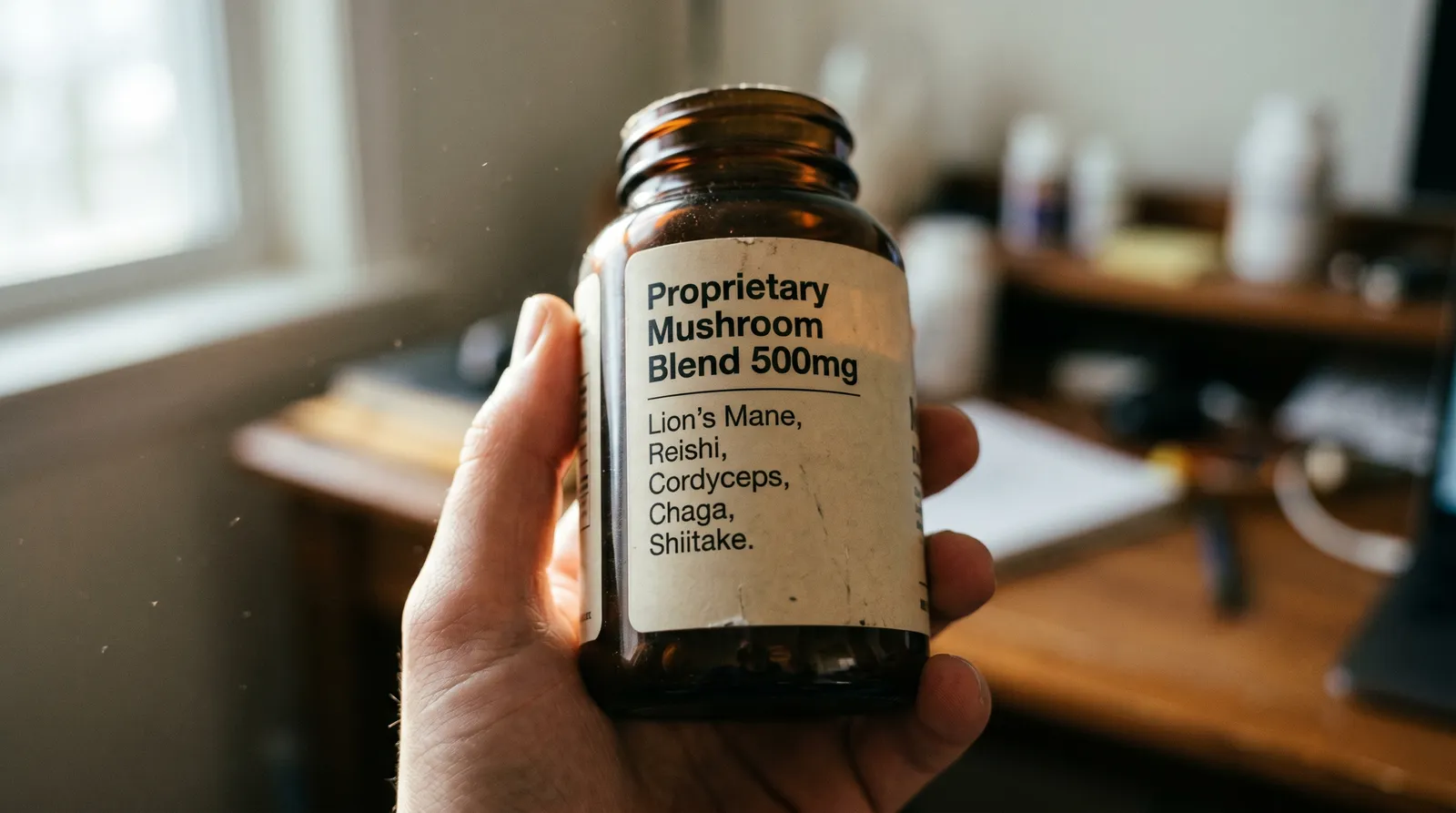
Proprietary blends that hide individual ingredient amounts are one of the most frequent issues when reading a mushroom supplement label and CoA together. A label might list five mushroom species in a "proprietary blend" totalling 500 mg — but without knowing how much of each species is included, you cannot evaluate the dose of any single one. Some products also list impressive-sounding total milligrams that include capsule filler, flow agents, and excipients alongside the actual mushroom material.
European Regulatory Context for Mushroom Supplement Labels
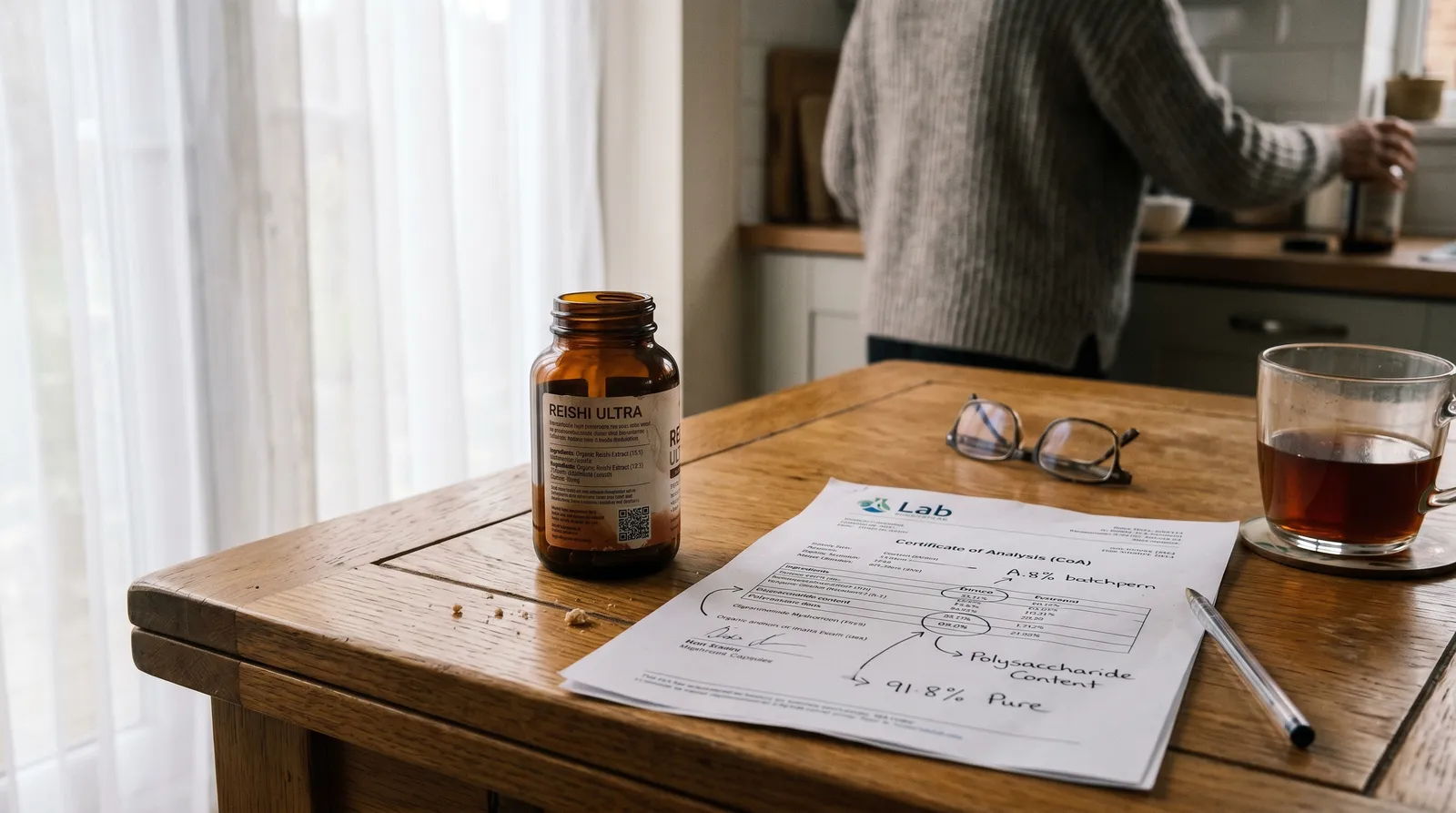
EU food supplement regulations require that labels declare all ingredients in descending order of weight, which makes reading a mushroom supplement label and CoA easier for European consumers than in some other markets. The European Food Safety Authority (EFSA) has not approved specific health claims for most mushroom polysaccharides, meaning that products sold within the EU cannot make certain health claims on the label — though many imported products still carry such claims. If you buy mushroom supplements from a Dutch smartshop like Azarius, the product must comply with EU labelling rules, which generally means more transparent ingredient declarations than you might find on products from unregulated markets.
What a CoA Cannot Tell You
A CoA does not predict how your body will respond to a supplement. It does not confirm bioavailability, absorption rate, or whether a product will produce a noticeable effect for any specific person. It cannot tell you whether the extraction process degraded heat-sensitive compounds, or whether the product was stored properly after testing. A CoA is a snapshot of one batch at one moment in time — it is necessary but not sufficient for evaluating a product. We still think it is the best starting point available to consumers, but it is not the whole story.
Putting It All Together — What to Check First
The three most important checks when reading a mushroom supplement label and CoA catch the majority of quality problems. These three questions should be your starting point every time:
- Does the CoA report beta-glucan content specifically, not just total polysaccharides? If yes, note the percentage. For a fruiting-body extract, values below 20% are low. For a mycelium-on-grain product, values below 10% are common and reflect the grain dilution.
- Is there a contaminant panel with stated limits, and do all results fall within those limits? If the heavy metals panel is missing, that is a problem regardless of how impressive the active-compound figures look.
- Does the batch number on the CoA match the batch number on your product? If it does not, the CoA is not evidence of what is in your specific container.
After those three, check whether the extraction method matches the compound claims (triterpenes require alcohol extraction; beta-glucans require hot-water extraction), and whether the source material is specified as fruiting body or mycelium on grain. A label that says "mushroom extract" but lists "myceliated brown rice" in the ingredients is telling you something — read the ingredients list, not just the front panel.
Research findings from one preparation do not automatically transfer to another. A study using a standardised hot-water fruiting-body extract with 40% beta-glucans tells you nothing about a mycelium-on-grain powder with 8% beta-glucans and 50% starch. The CoA is what lets you see whether the product in your hand resembles the product in the study. Reading a mushroom supplement label and CoA is ultimately about closing the gap between what a product claims and what it delivers.
Honest Limitations of This Guide
No guide — including this one — can substitute for professional analytical training or replace the judgement of a qualified food scientist. We are a smartshop, not a laboratory. Our ability to interpret CoAs has improved over the years through experience and consultation with analytical chemists, but we still encounter documents where we are unsure whether a testing method is appropriate or whether a result is meaningful. We also cannot verify that a CoA has not been fabricated — a determined bad actor can produce a convincing-looking document. Reading a mushroom supplement label and CoA is a powerful consumer skill, but it has limits, and we think being upfront about those limits is more useful than pretending otherwise.
Real-World Example: Two Chaga Products Compared
Testing Methods: What Analytical Approaches Mean on a CoA
The analytical method listed on a CoA determines whether the reported values are meaningful or misleading. The Megazyme beta-glucan assay (K-YBGL) is currently the most widely validated enzymatic method for distinguishing beta-glucans from alpha-glucans in mushroom products. Some CoAs instead report polysaccharide content measured by the phenol-sulfuric acid method, which cannot differentiate between bioactive beta-glucans and plain starch — making the resulting number far less informative for reading a mushroom supplement label and CoA.
HPLC (high-performance liquid chromatography) is the standard method for quantifying triterpenes, hericenones, and other small-molecule compounds. If a CoA lists triterpene content but does not specify the analytical method, you have no way to assess the reliability of the figure. ICP-MS (inductively coupled plasma mass spectrometry) is the gold standard for heavy metals quantification — if you see a CoA reporting heavy metals via a less sensitive method, the detection limits may not be low enough to catch contamination at relevant thresholds.
Related Products
The functional mushroom extracts and capsules we stock come with batch-specific CoA data. If you want to compare what you have read here against a real document, the product pages in our functional mushroom range include links to the relevant test results. You can order lion's mane extract, buy reishi dual extract, or get turkey tail capsules from our smartshop — each with CoA documentation accessible from the product page. Browse our mushroom supplements category or get a mushroom extract sample pack to see how reading a mushroom supplement label and CoA applies in practice.
For background on how functional mushrooms work, see our wiki article on adaptogens and functional mushrooms. Our blog post comparing lion's mane extraction methods goes deeper on the hot-water vs dual-extraction question. You can also explore our nootropics category for products that pair well with mushroom supplements.
Last updated: April 2026
Frequently Asked Questions About Reading a Mushroom Supplement Label and CoA
What is the difference between beta-glucans and polysaccharides on a mushroom supplement label?
Polysaccharides include both beta-glucans (bioactive) and alpha-glucans (starch). A product can show 50% polysaccharides while containing mostly grain starch. Only a beta-glucan-specific figure, measured by an assay like the Megazyme method, tells you the bioactive content. This distinction is the single most important thing to understand when reading a mushroom supplement label and CoA.
How can I tell if a mushroom supplement is mycelium on grain or fruiting body?
Check the ingredients list for terms like "myceliated grain", "mycelium biomass", or "myceliated brown rice". High starch content (above 30%) on a CoA also indicates grain substrate. Fruiting-body extracts typically show higher beta-glucan and lower starch values.
What heavy metal levels are acceptable in a mushroom supplement CoA?
Common thresholds are lead ≤1 ppm, cadmium ≤0.3 ppm, arsenic ≤1 ppm, and mercury ≤0.1 ppm. A proper CoA reports both the measured value and the specification limit. If the panel is missing entirely, that is a red flag regardless of how good the rest of the document looks.
Why should the batch number on a CoA match my product?
A CoA documents a specific production batch. If the batch number on the CoA does not match the one on your product label, the test results may come from a different — possibly better — batch and tell you nothing about what is actually in your container.
Does extraction method affect which compounds appear on a mushroom CoA?
Yes — extraction method directly determines the compound profile. Hot-water extraction concentrates beta-glucans. Alcohol extraction concentrates triterpenes and sterols. Dual extraction captures both. If a product claims triterpene content but uses only hot-water extraction, the numbers will not add up.
Where can I buy mushroom supplements with verified CoA documentation?
Look for brands that publish batch-specific CoAs with named third-party laboratories. At Azarius, every functional mushroom extract we stock includes accessible CoA data on the product page, so you can verify beta-glucan content, contaminant panels, and batch numbers before you order.
Can a CoA be faked or misleading?
Yes — a determined bad actor can fabricate a convincing-looking CoA. Warning signs include identical results across multiple batches, no named laboratory, no batch number, or results that seem too perfect. Cross-referencing the lab name and contacting them to verify the document adds a layer of protection when reading a mushroom supplement label and CoA.
Frequently Asked Questions
10 questionsWhat is the difference between beta-glucans and polysaccharides on a mushroom supplement label?
How can I tell if a mushroom supplement is mycelium on grain or fruiting body?
What heavy metal levels are acceptable in a mushroom supplement CoA?
Why should the batch number on a CoA match my product?
Does extraction method affect which compounds appear on a mushroom CoA?
Where can I buy mushroom supplements with verified CoA documentation?
How do I know if a mushroom supplement CoA was tested by an independent third-party lab?
What does microbial testing on a mushroom supplement CoA include and why does it matter?
What is the shelf life listed on a mushroom supplement CoA and how is it determined?
Should a mushroom supplement CoA show ergosterol or ergothioneine levels?
About this article


Adam Parsons is an external cannabis and psychedelics writer and editor who contributes to Azarius's wiki as both author and reviewer. On the writing side, he authors Azarius's kratom and kanna clusters, drawing on exten
This wiki article was drafted with AI assistance and reviewed by Adam Parsons, External contributor. Editorial oversight by Joshua Askew.
Medical disclaimer. This content is for informational purposes only and does not constitute medical advice. Consult a qualified healthcare provider before use of any substance.
Last reviewed April 24, 2026
References (2)
- [1]ConsumerLab.com. (2022). Mushroom supplement product review. ConsumerLab.com Product Review. Source
- [2]Wasser, S. P. (2017). Medicinal mushrooms in human clinical studies. International Journal of Medicinal Mushrooms, 19(4), 279-317. DOI: 10.1615/IntJMedMushrooms.v19.i4.10
Related Articles

Medicinal Mushrooms TCM Western Pharmacognosy Guide
Guide to medicinal mushrooms TCM Western pharmacognosy — how reishi, lion's mane, cordyceps are classified, extracted, and studied.
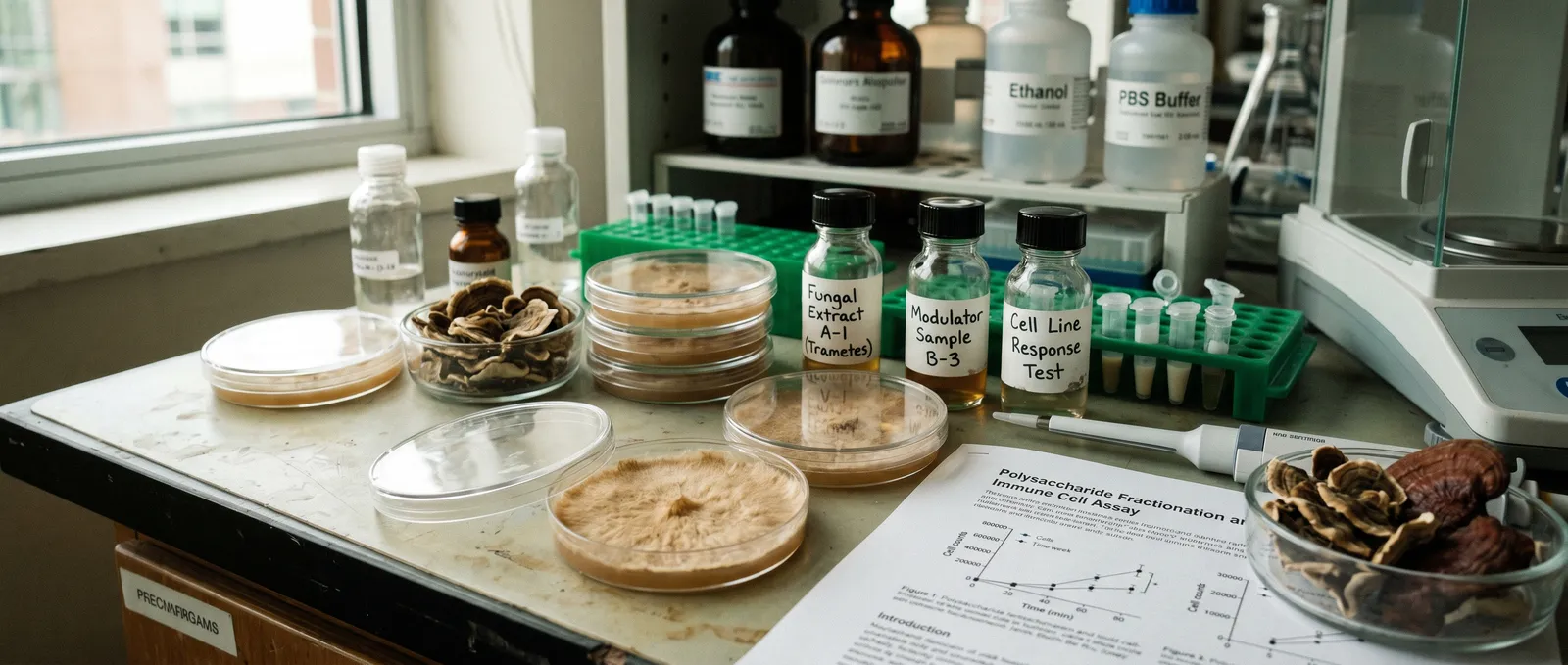
Research on Immune Modulation by Functional Mushrooms
What does research on immune modulation by functional mushrooms actually show? Beta-glucans, Dectin-1 signalling, human trials, and the honest gap...
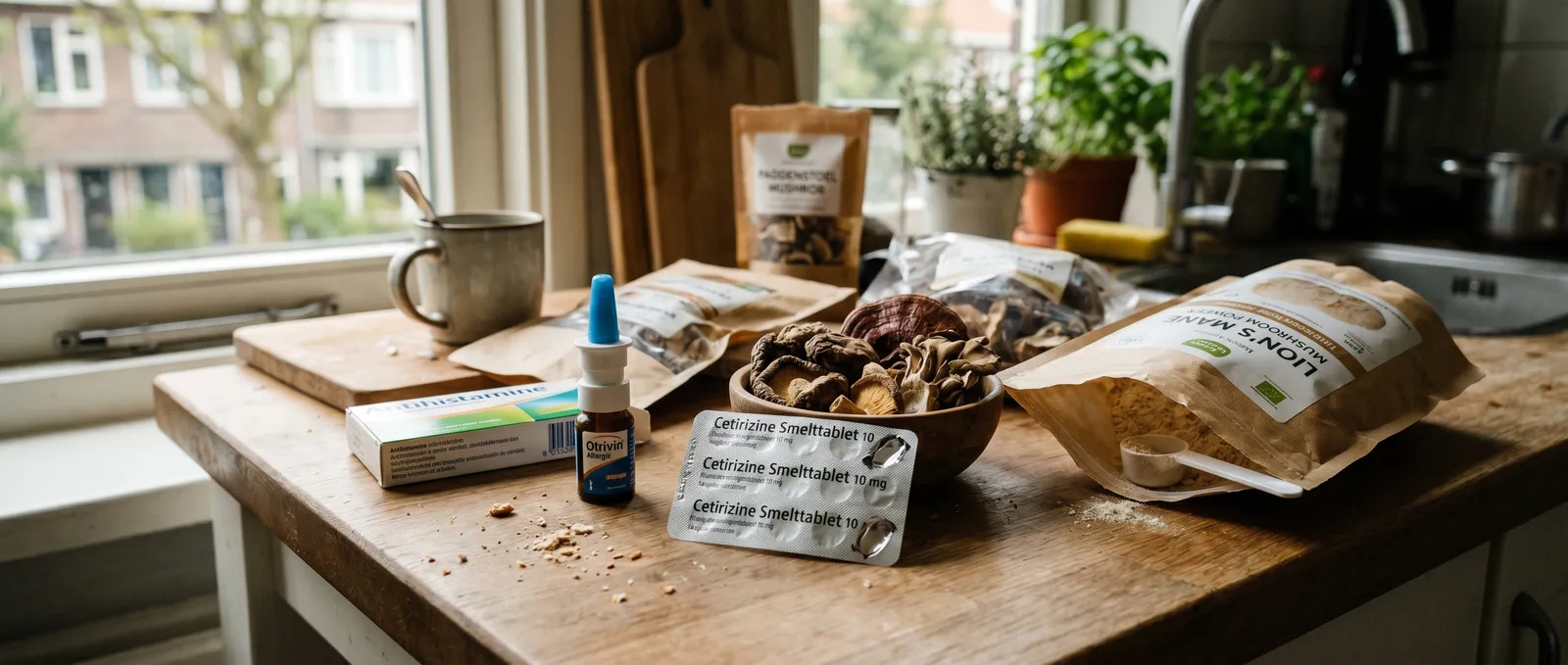
Allergic Reactions & Mushroom Sensitivities
Understand allergic reactions and mushroom sensitivities: mould cross-reactivity, shiitake dermatitis, species-specific risks, and safer product…
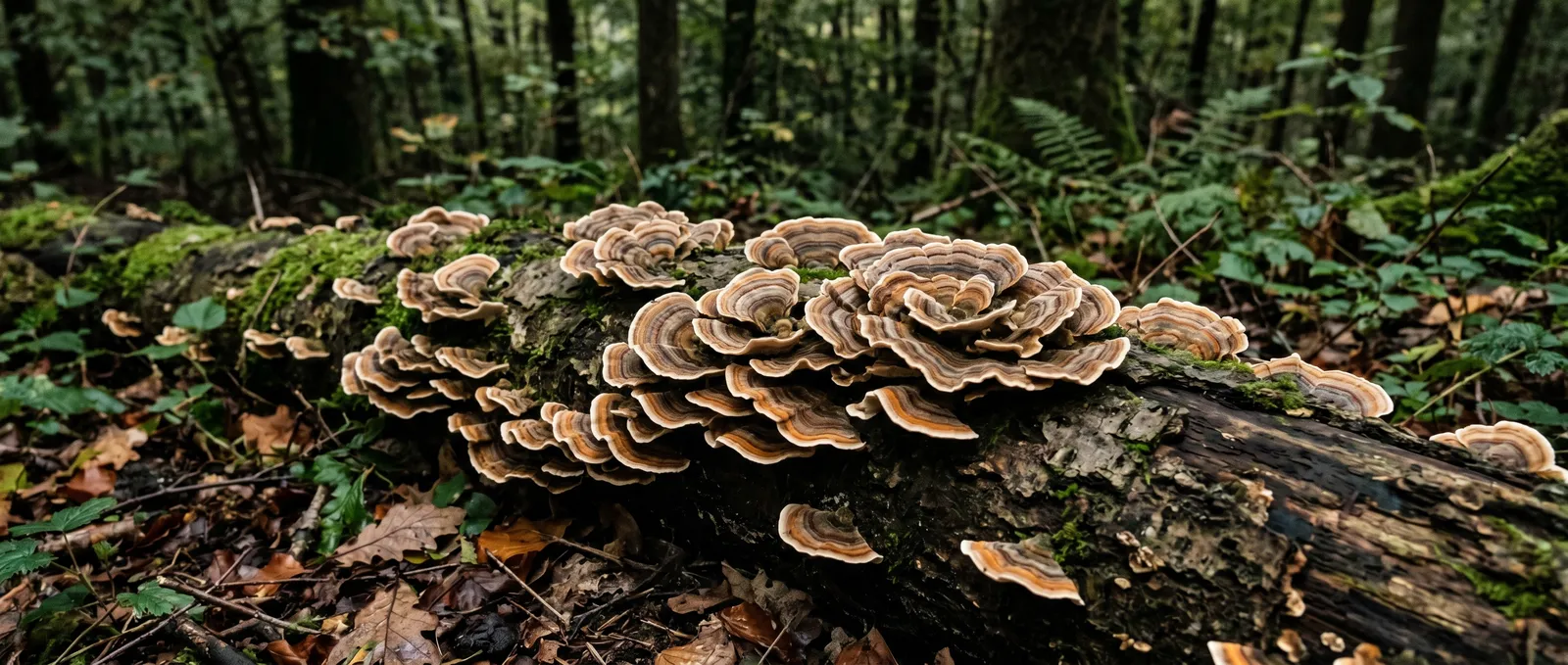
Turkey Tail Trametes versicolor — Buy Supplements
Buy turkey tail Trametes versicolor supplements at Azarius. PSK and PSP evidence, beta-glucan dosage, extraction methods, and safety.
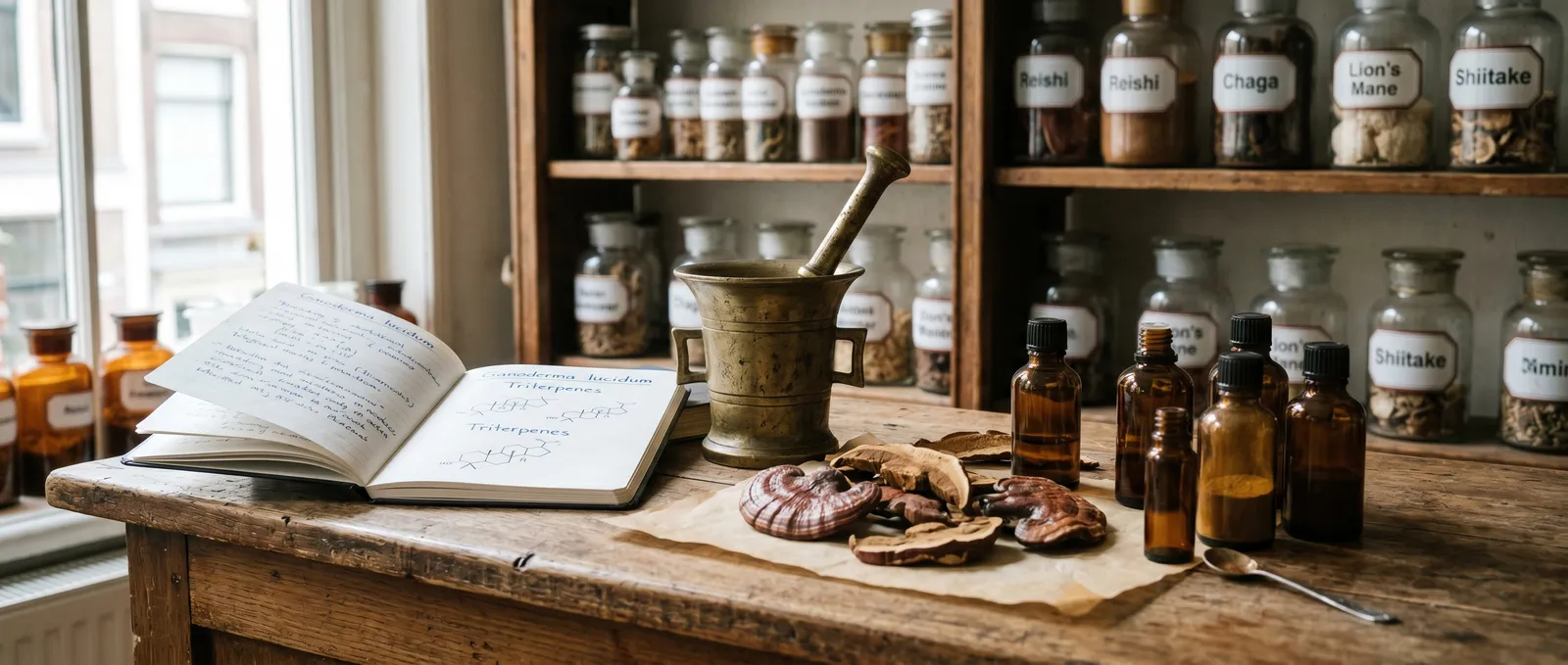
Triterpenes In Medicinal Mushrooms
Triterpenes in medicinal mushrooms are a class of 30-carbon terpenoid compounds produced as secondary metabolites by several functional mushroom species…
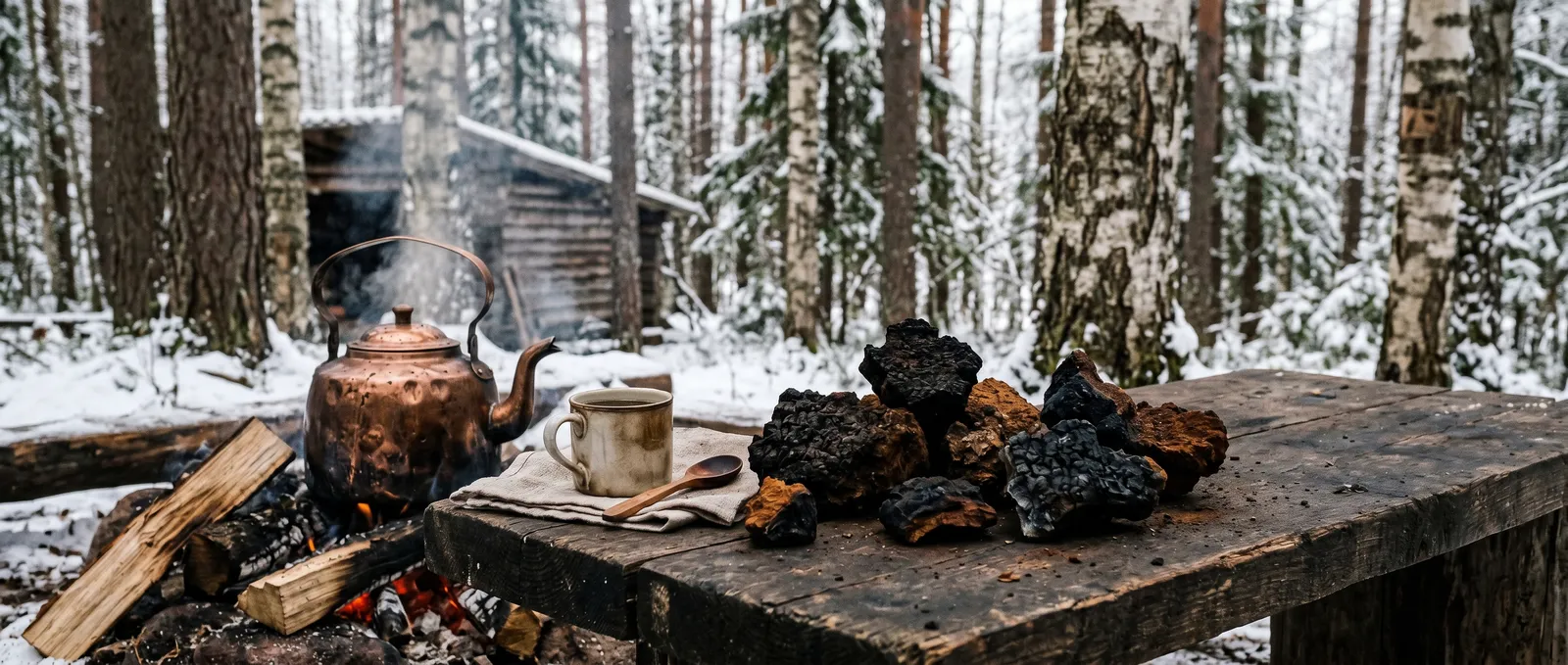
Chaga Siberian Nordic Folk Use
Chaga Siberian Nordic folk use is a centuries-old tradition in which indigenous Siberians and Nordic communities brewed the birch-parasitising fungus…
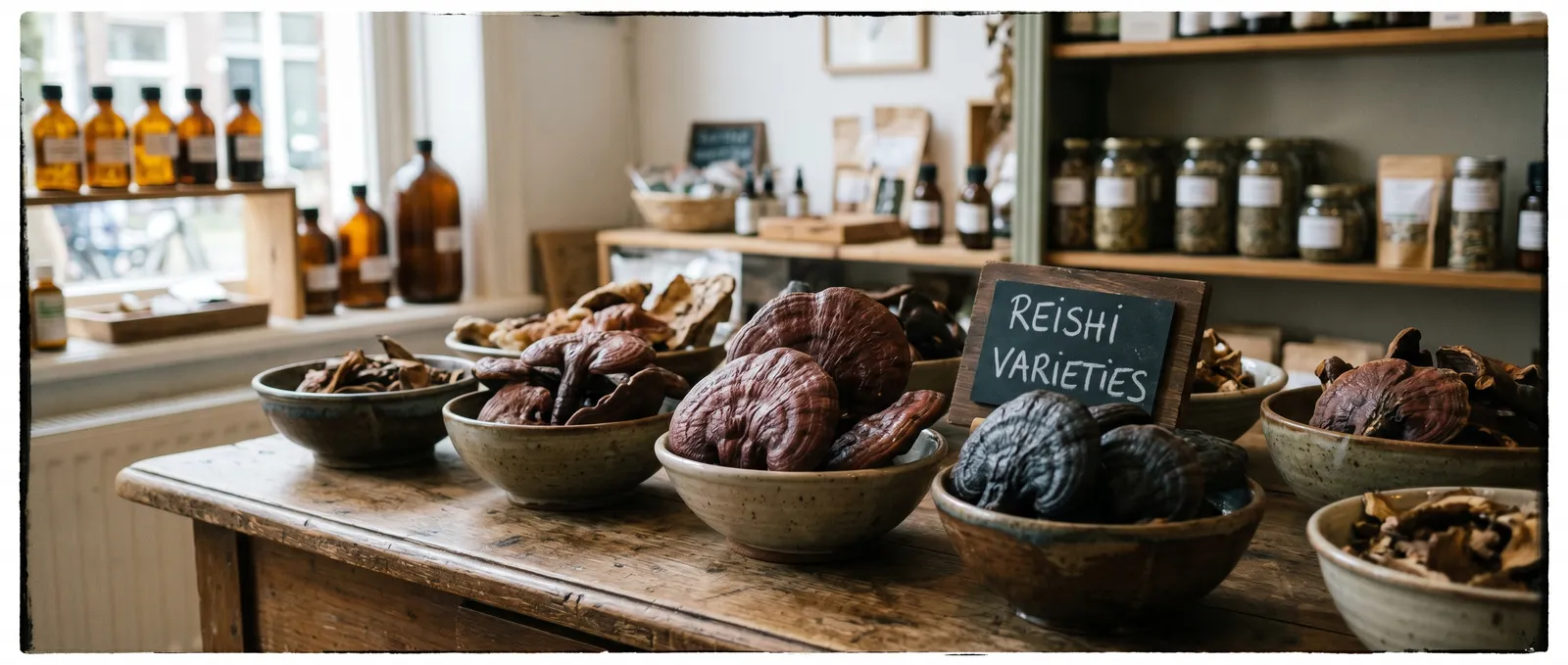
Red and Black Reishi Varieties
Red reishi (Ganoderma lucidum) and black reishi (Ganoderma sinense) both fall under the lingzhi umbrella in traditional Chinese medicine, but they differ in…
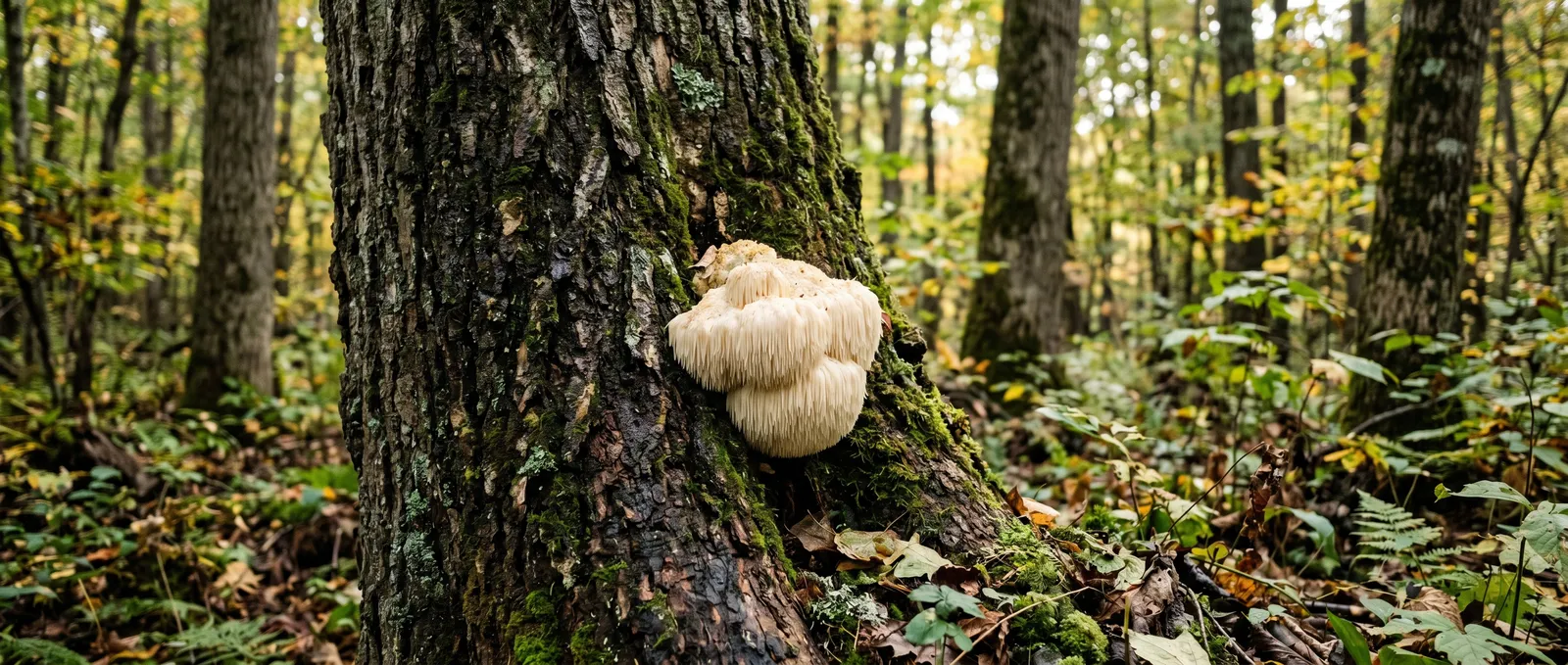
Lion's Mane Identification & Habitat
Hericium erinaceus is a tooth fungus that fruits as a single white, spine-covered mass on wounded or dead hardwood trees.
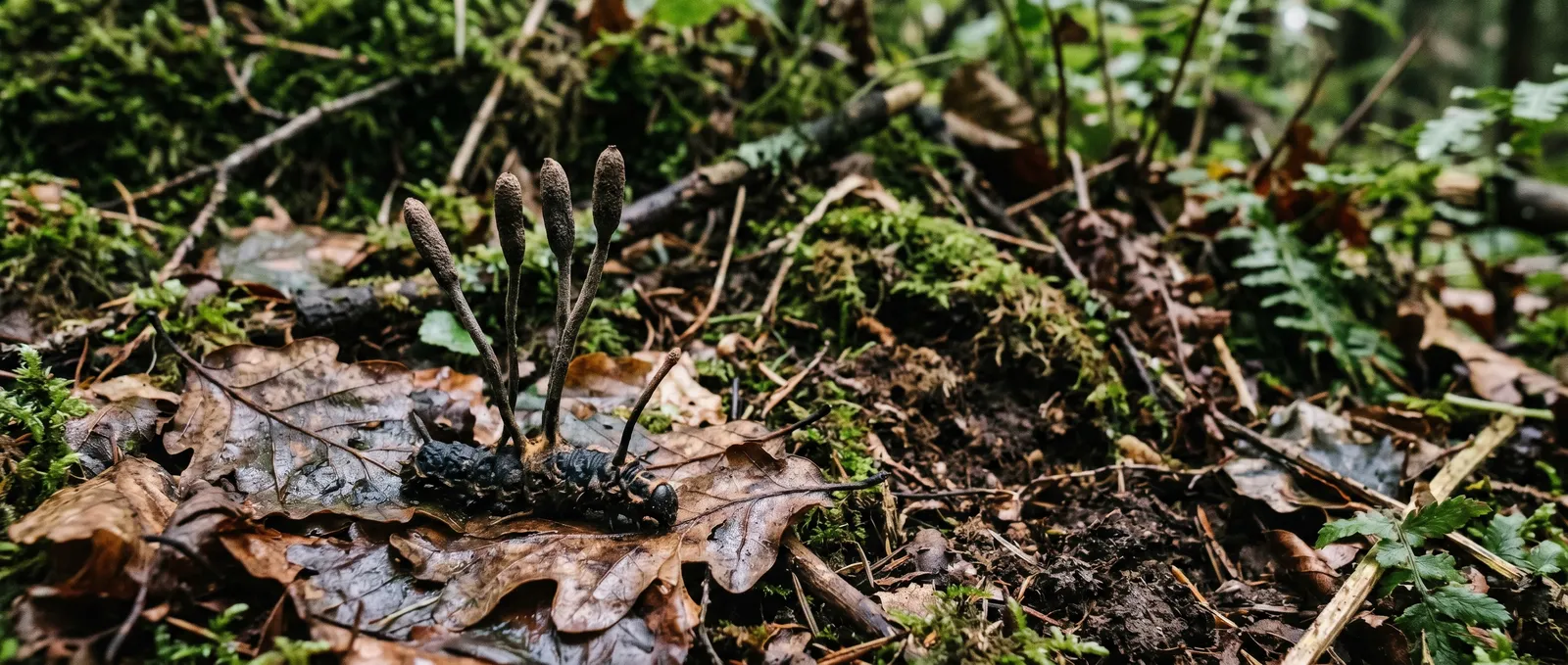
Cordyceps Lifecycle
The cordyceps lifecycle is a parasitic biological sequence in which a fungus infects an insect host, colonises its body from within, and erupts as a…