
Dosage Research vs Supplementation: What the Studies Actually Used vs What's on the Shelf
Definition
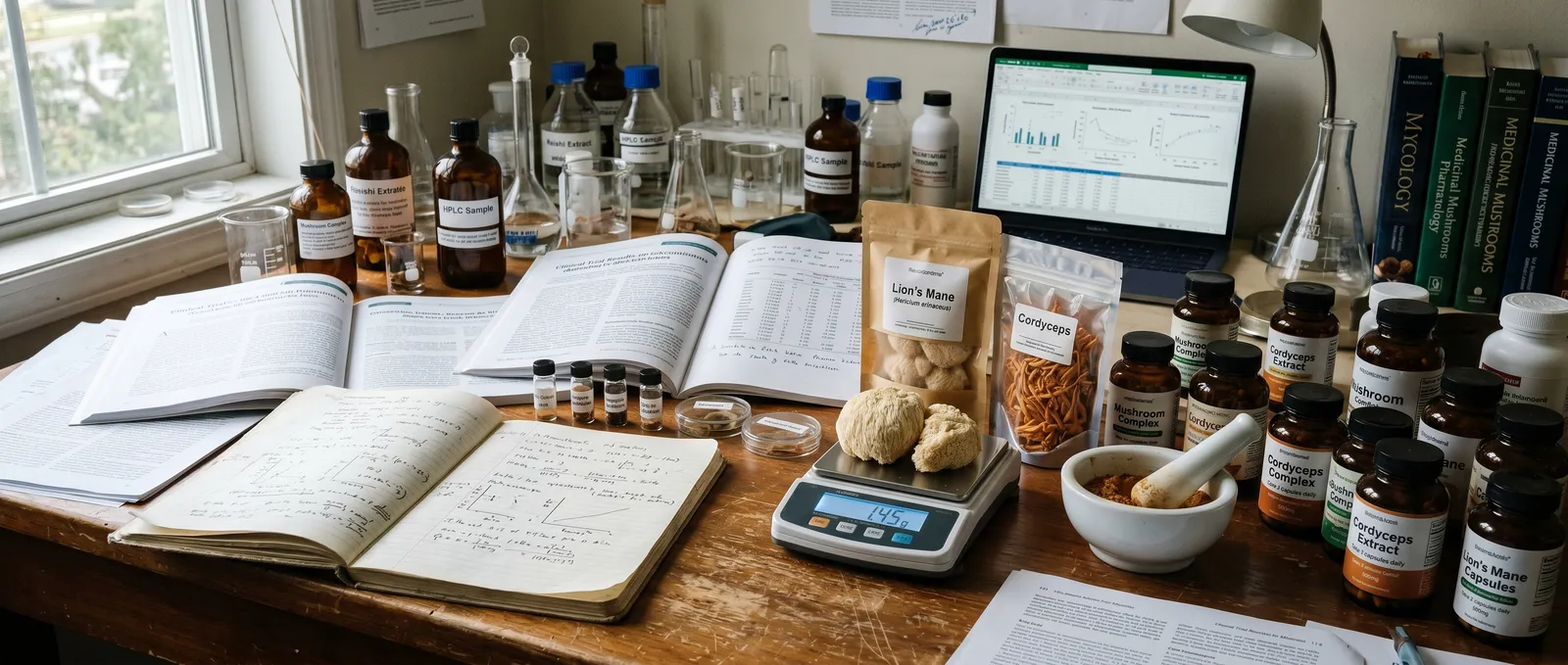
Clinical trials on functional mushrooms use defined extracts at specific doses — often 1,500–4,000 mg/day of characterised preparations. Most over-the-counter supplements deliver lower amounts of less-defined material. Mori et al. (2009) used 3,000 mg/day of fruiting-body powder in their lion's mane cognition trial — a dose and form that few retail capsules replicate. Understanding this gap is essential for interpreting supplement labels honestly.
The gap between dosage research and supplementation practice is one of the least discussed problems in the functional mushroom space. Clinical trials on lion's mane, reishi, cordyceps, and their relatives use specific extracts, at specific doses, prepared in specific ways — and then the supplement industry sells something different and borrows the citation. Understanding this disconnect is not pedantic; it is the difference between an informed purchase and an expensive placebo. Mori et al. (2009), for instance, used 3 g/day of a proprietary Hericium erinaceus tablet — a preparation that bears little resemblance to most lion's mane capsules currently on the market. If you want to buy a functional mushroom supplement that actually reflects the dosage research vs supplementation gap honestly, you need to understand what follows.
Comparison at a Glance
The most important differences between research dosing and retail supplementation fall across seven dimensions, from extract type to outcome measurement.
| Dimension | Research Dosing | Typical Supplementation |
|---|---|---|
| Extract type | Defined, often proprietary, with published chemical profiles | Varies widely — fruiting body, mycelium-on-grain, whole biomass, or unspecified |
| Extraction method | Stated in methods section (hot-water, ethanol, dual, supercritical CO₂) | Often unlisted or described vaguely ("full-spectrum") |
| Active-compound quantification | Beta-glucan %, triterpene content, or marker-compound levels reported | Sometimes listed; sometimes absent; rarely third-party verified on the label |
| Dose precision | Milligrams of extract per day, timed intervals, controlled for body weight | "Two capsules daily" — often without specifying extract equivalence |
| Duration | Defined study period (typically 4–16 weeks in clinical trials) | Open-ended daily use, rarely with a reassessment window |
| Population | Defined inclusion/exclusion criteria (age, health status, medication use) | General adult population, self-selected, no screening |
| Outcome measurement | Validated instruments (MMSE, SF-36, blood biomarkers, VO₂ max testing) | Subjective self-assessment ("I feel sharper") |
What Clinical Trials Actually Dose
Clinical trials on functional mushrooms typically administer 1,500–4,000 mg/day of a characterised extract with a defined chemical profile. When a study reports that a functional mushroom extract produced a measurable effect, the dose described is not "a scoop of powder." It is a defined quantity of a characterised preparation. The specifics matter enormously.
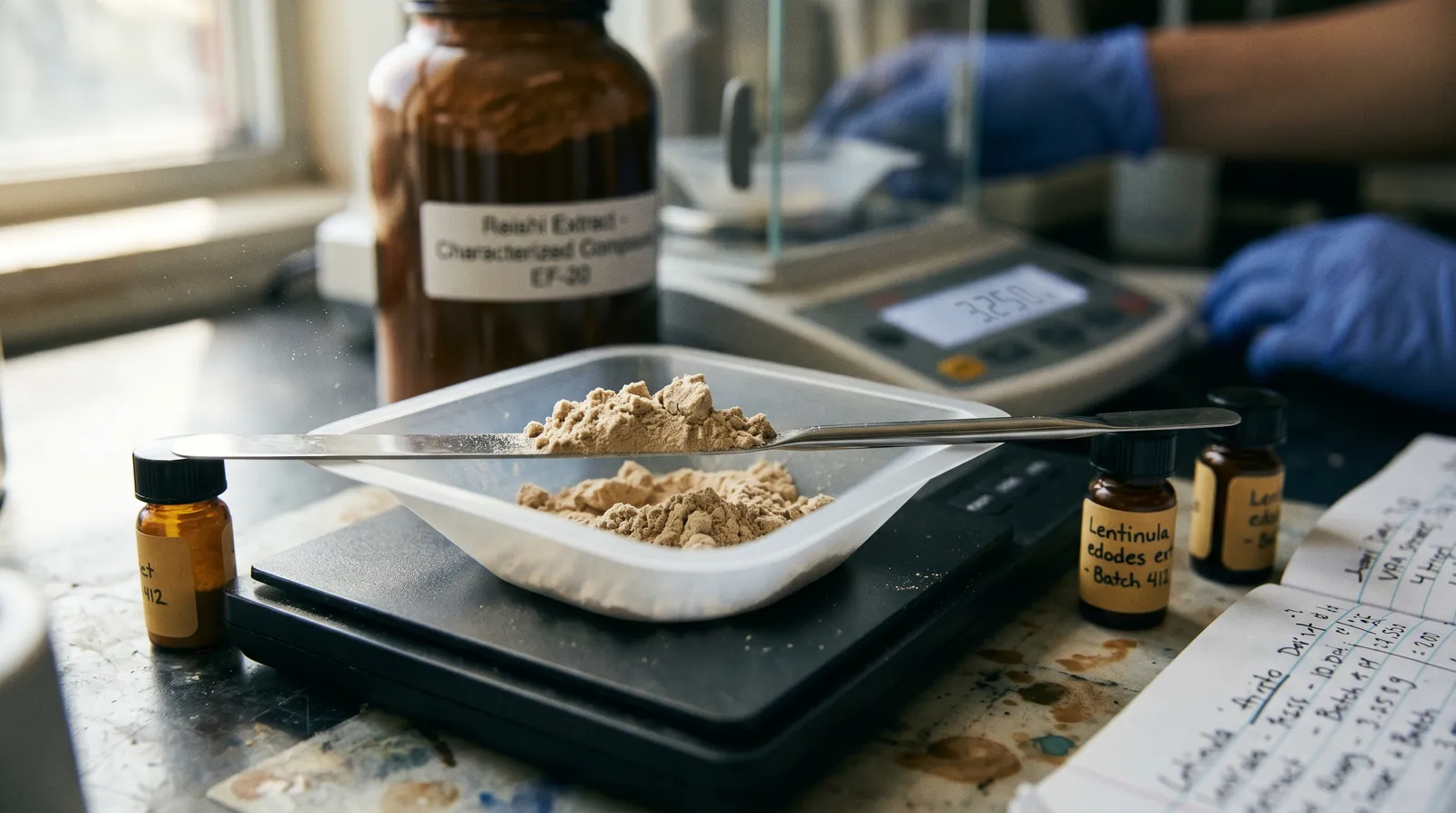
Mori et al. (2009) administered 3,000 mg/day of Hericium erinaceus tablets — each containing 96% dry powder from the fruiting body — to Japanese adults aged 50–80 with mild cognitive impairment. The trial ran for 16 weeks. Cognitive scores on the Hasegawa Dementia Scale improved during supplementation and declined after discontinuation. That finding is frequently cited as evidence that "lion's mane improves cognition," but the preparation was a specific dried fruiting-body powder at a specific gram-level dose in a specific elderly population with pre-existing cognitive decline. Whether a 500 mg capsule of mycelium-on-grain extract produces anything comparable is simply unknown — no head-to-head comparison exists.
Cordyceps research shows the same pattern. Chen et al. (2010) examined Cordyceps militaris fruiting-body extract (equivalent to 2,400 mg/day of Cs-4 mycelium) in healthy older adults for 12 weeks. Modest improvements in oxygen uptake were observed at the higher dose but not the lower. Meanwhile, Hirsch et al. (2017) tested 4,000 mg/day of a Cordyceps militaris blend in young, trained athletes and found no significant effect on VO₂ max or endurance. These are not contradictory results — they are different preparations, different populations, and different outcome measures. Treating them as interchangeable evidence for "cordyceps and athletic performance" is a category error.
Reishi trials similarly specify their preparations with care. Tang et al. (2005) used a Ganoderma lucidum polysaccharide extract (1,440 mg/day equivalent) and observed changes in immune markers in advanced-stage cancer patients — a population, dose, and extract form that has almost nothing in common with a 500 mg reishi capsule taken by a healthy 30-year-old.
What Supplementation Actually Delivers
Most retail mushroom supplements deliver 500–2,000 mg/day of material whose compound profile is rarely equivalent to what clinical trials used. A typical lion's mane capsule contains 500–1,000 mg of material per capsule, with a recommended serving of 1–2 capsules daily. That puts the daily intake at 500–2,000 mg — often below the 3,000 mg used in Mori et al. (2009). But the weight alone is not the real issue.
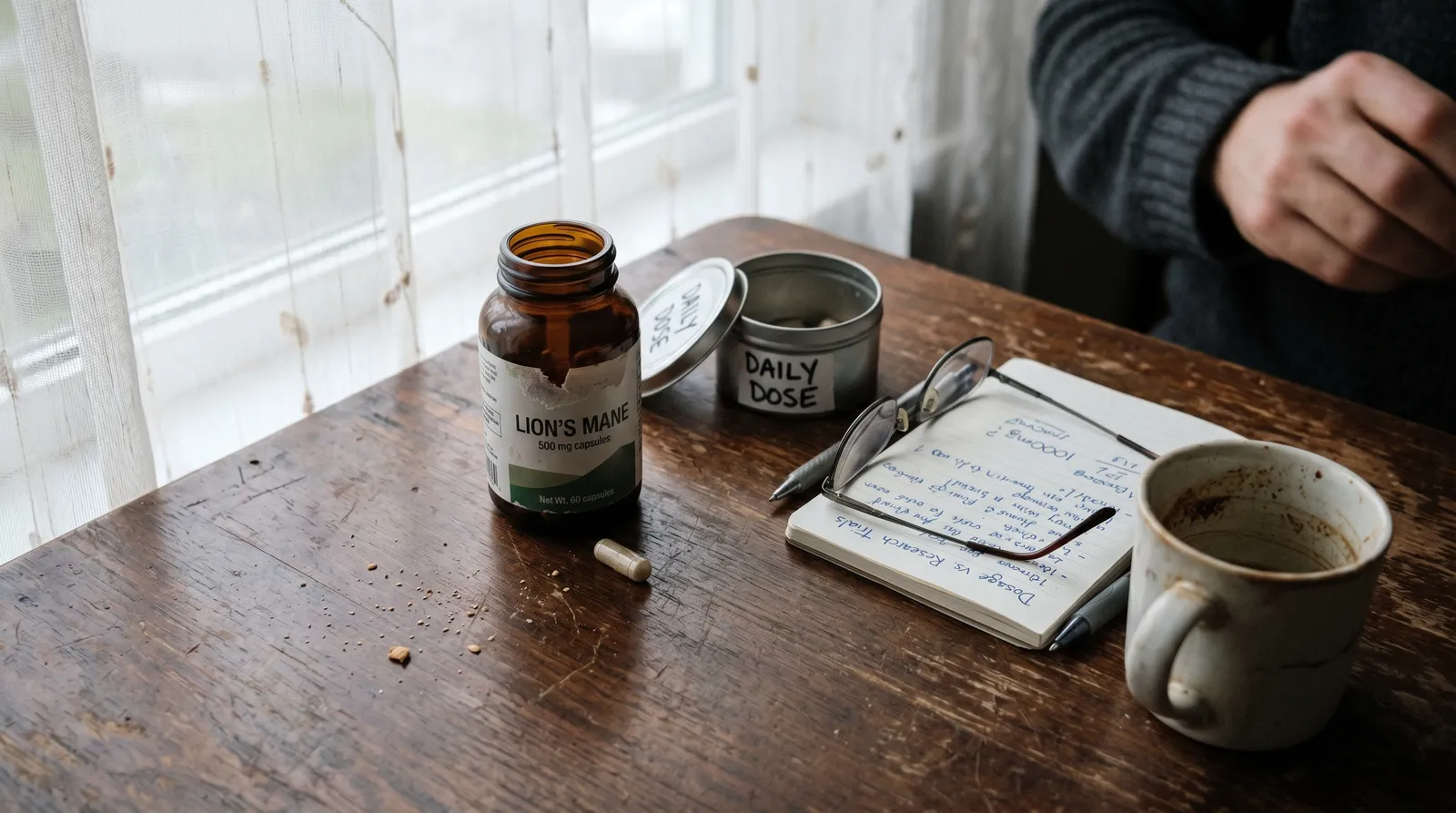
The real issue is what that weight consists of. A fruiting-body hot-water extract standardised to 30% beta-glucans delivers a very different compound profile from mycelium grown on rice grain and dried whole. The mycelium-on-grain product may contain 50–70% starch from the grain substrate, which inflates the weight without contributing the polysaccharides or hericenones that the research literature focuses on. McCleary and Draga (2016) demonstrated that the Megazyme assay — the standard method for measuring beta-glucans — can return misleadingly high values when alpha-glucans from grain starch are not properly excluded. Some products on the market report "polysaccharide" content that includes these grain starches, making label comparison unreliable without knowing the assay method.
Extraction method compounds the problem. Hot-water extraction concentrates water-soluble polysaccharides (beta-glucans), while alcohol extraction pulls triterpenes and sterols. Dual extraction captures both compound classes. A product labelled "reishi extract" could be any of these, and the bioactive profile differs substantially between them. If a study used a hot-water polysaccharide fraction and your supplement is an alcohol tincture, you are not replicating the study — you are taking a different preparation that happens to come from the same species.
The Transferability Problem
Research findings from one preparation do not automatically transfer to another — this is the single most important principle when evaluating functional mushroom evidence. The functional mushroom industry routinely cites studies on isolated polysaccharide fractions (lentinan from shiitake, PSK and PSP from turkey tail, D-fraction from maitake) as evidence for over-the-counter whole-mushroom supplements. These are not the same thing.
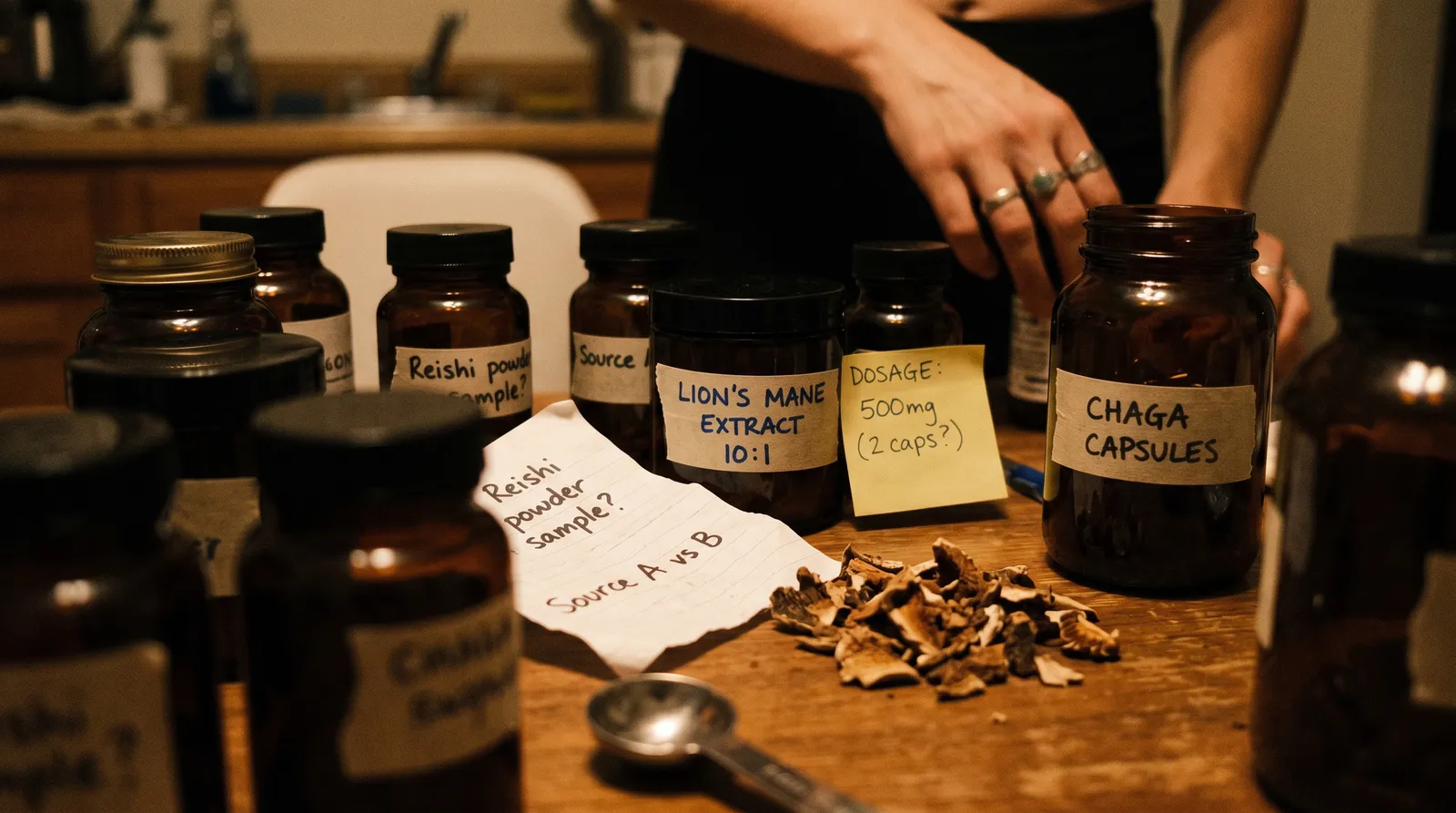
Lentinan, for example, is an injectable beta-glucan fraction derived from Lentinula edodes. It has been studied in specific oncology contexts as an adjunct therapy, administered intravenously. A shiitake capsule taken orally is not lentinan therapy. The route of administration, the purity of the compound, and the clinical context are all different. Citing lentinan research to support a shiitake supplement is like citing intravenous vitamin C trials to sell orange juice.
PSK (polysaccharopeptide Krestin) from Trametes versicolor follows the same pattern. Trials by Tsukagoshi et al. (1984) and others examined PSK as a standardised pharmaceutical-grade extract in post-surgical cancer patients. The extract was characterised, dosed precisely, and administered under medical supervision. A turkey tail powder from a health food shop is a fundamentally different product, even if both originate from the same fungal species. Data from the EMCDDA and broader European pharmacovigilance databases confirm that standardised pharmaceutical-grade fungal extracts and retail supplements are tracked and regulated through entirely separate frameworks — a distinction worth remembering.
Dose Ranges in Published Research
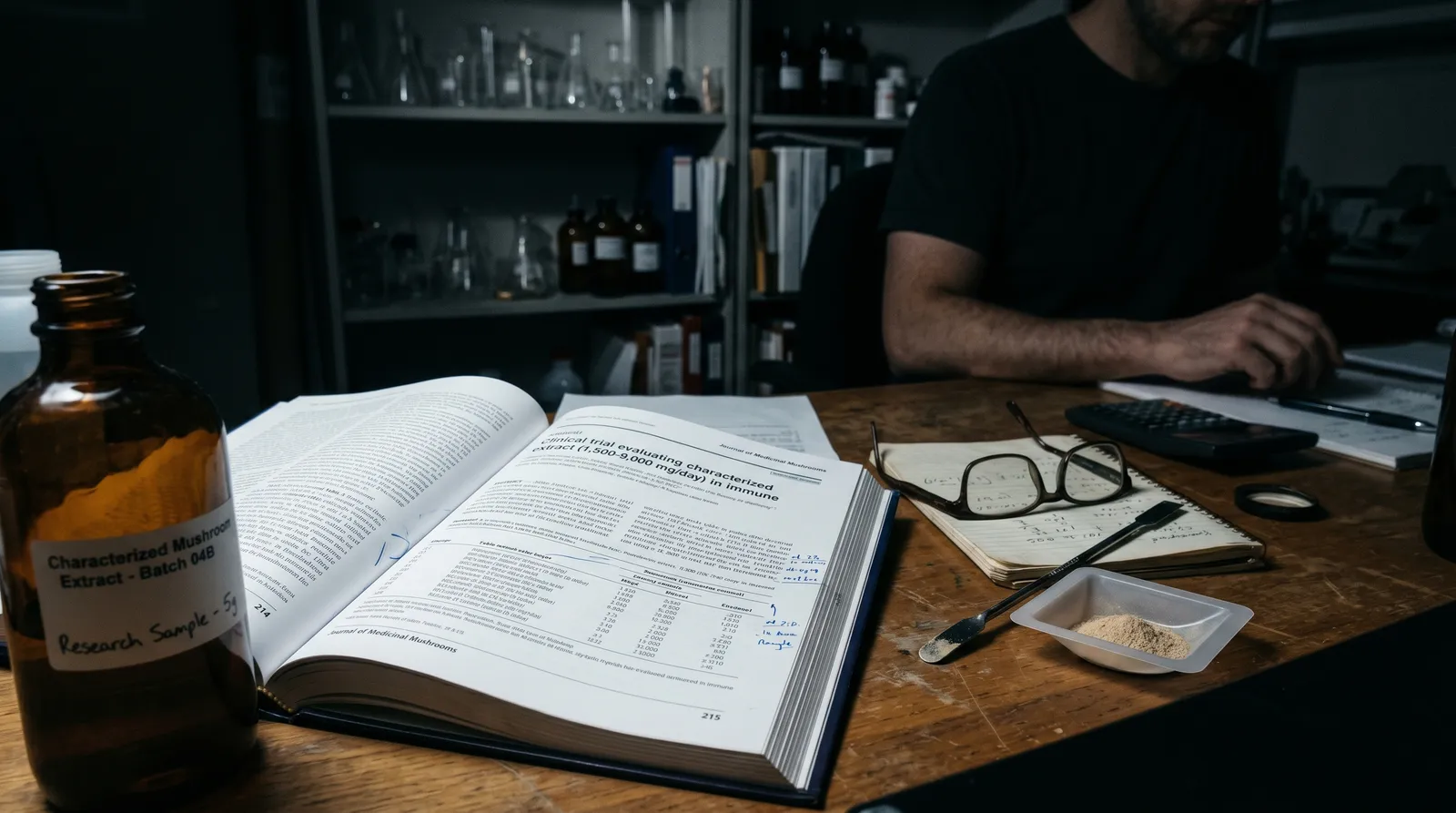
Most commonly cited clinical trials administered between 1,500 and 9,000 mg/day of characterised mushroom extract, as the table below shows. These are not recommendations — they are descriptions of what researchers administered under controlled conditions.
| Species | Study | Preparation | Daily Dose | Duration | Population |
|---|---|---|---|---|---|
| Lion's mane | Mori et al. (2009) | Fruiting-body dry powder tablets | 3,000 mg | 16 weeks | Older adults with mild cognitive impairment |
| Lion's mane | Nagano et al. (2010) | Fruiting-body cookies (baked into food) | 2,000 mg | 4 weeks | Menopausal women |
| Cordyceps | Chen et al. (2010) | Cs-4 mycelium extract | 1,000–2,400 mg equivalent | 12 weeks | Healthy older adults |
| Cordyceps | Hirsch et al. (2017) | Cordyceps militaris blend | 4,000 mg | 3 weeks | Young trained athletes |
| Reishi | Tang et al. (2005) | Polysaccharide extract (Ganopoly) | 1,800 mg (5,400 mg crude) | 12 weeks | Advanced cancer patients |
| Reishi | Ong et al. (2021) | Hot-water extract capsules | 3,000 mg | 6 weeks | Adults with fatigue complaints |
| Turkey tail | Torkelson et al. (2012) | Trametes versicolor freeze-dried mycelium | 3,000–9,000 mg | 6 weeks (dose escalation) | Breast cancer patients post-treatment |
Notice the pattern: most clinical doses sit between 1,500 and 4,000 mg/day of characterised extract. Many over-the-counter supplements deliver 500–1,000 mg/day. The arithmetic alone should give pause — but again, weight is only part of the equation. A 1,000 mg capsule of a dual-extracted fruiting-body product standardised to 30% beta-glucans may deliver more relevant bioactives than 3,000 mg of unstandardised mycelium-on-grain powder.
What This Means in Practice
Informed supplementation requires matching your product's format, dose, and extract type to the specific study you are referencing. A few practical principles follow from the evidence.
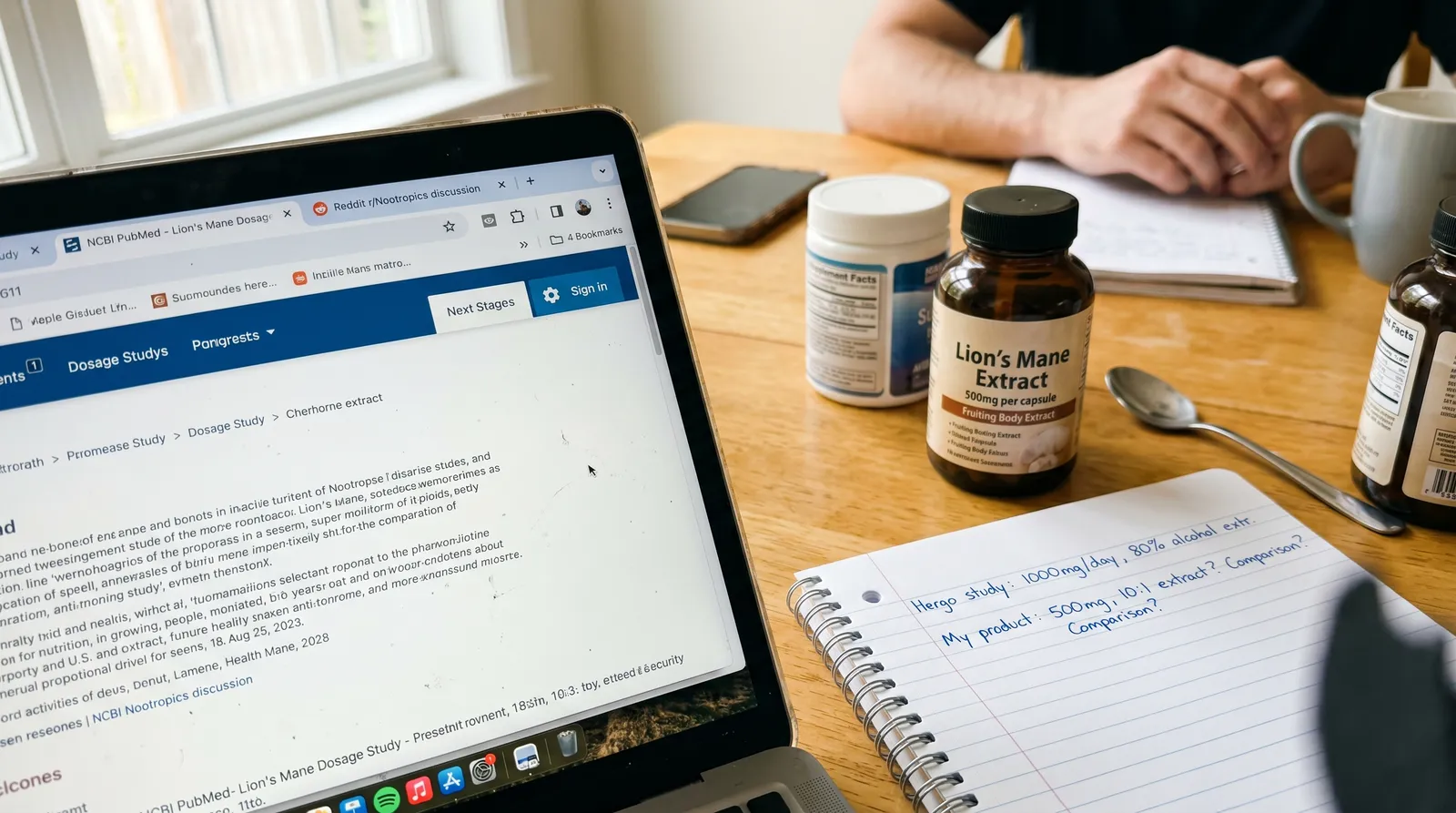
- Check what the study actually used before treating it as relevant to your supplement. If the study used a fruiting-body hot-water extract and your product is mycelium-on-grain, the citation does not straightforwardly apply.
- Look for beta-glucan content on the label — and check whether the manufacturer specifies the assay method. A beta-glucan figure derived from the Megazyme method with alpha-glucan subtraction is more informative than a generic "polysaccharide" percentage.
- Be realistic about dose. If the only positive trial on a species used 3,000 mg/day and your capsule delivers 500 mg, you are not replicating the study conditions. Whether a lower dose produces a proportionally lower effect, no effect, or a qualitatively different effect is unknown — the dose-response data for most functional mushrooms in humans is thin.
- Duration matters. Most positive trials ran for 8–16 weeks. Short-term use of a few days is unlikely to mirror those outcomes, particularly for species where the proposed mechanisms involve gradual immune modulation or neurotrophin stimulation.
- Compare products by extract type, not just species name. When you order or get a functional mushroom supplement, knowing whether it is a hot-water extract, alcohol tincture, dual extract, or whole dried powder tells you more than the species name alone. Two lion's mane products can differ as much as green tea differs from matcha.
Honest Limitations: What We Do Not Know
The dosage research vs supplementation gap is not fully bridgeable with current data. Several important questions remain unanswered, and honesty about these limits matters more than false confidence.
- No controlled trial has directly compared mycelium-on-grain versus fruiting-body extract for any clinical endpoint in humans.
- Dose-response curves for oral functional mushroom supplements barely exist — most studies test one or two doses, not a range.
- Real-world bioavailability of whole-mushroom powders, as distinct from the characterised extracts used in trials, is an area where data are genuinely sparse.
- Long-term safety data for chronic daily supplementation beyond 16 weeks remains limited across all species.
- Individual variation in gut microbiome composition likely affects beta-glucan fermentation and downstream immune signalling, but this has not been studied in the context of dosage research vs supplementation outcomes.
We would love to point to a definitive comparison study. It does not exist yet. Until it does, the honest position is to acknowledge uncertainty rather than paper over it with borrowed citations.
Safety Still Applies at Any Dose
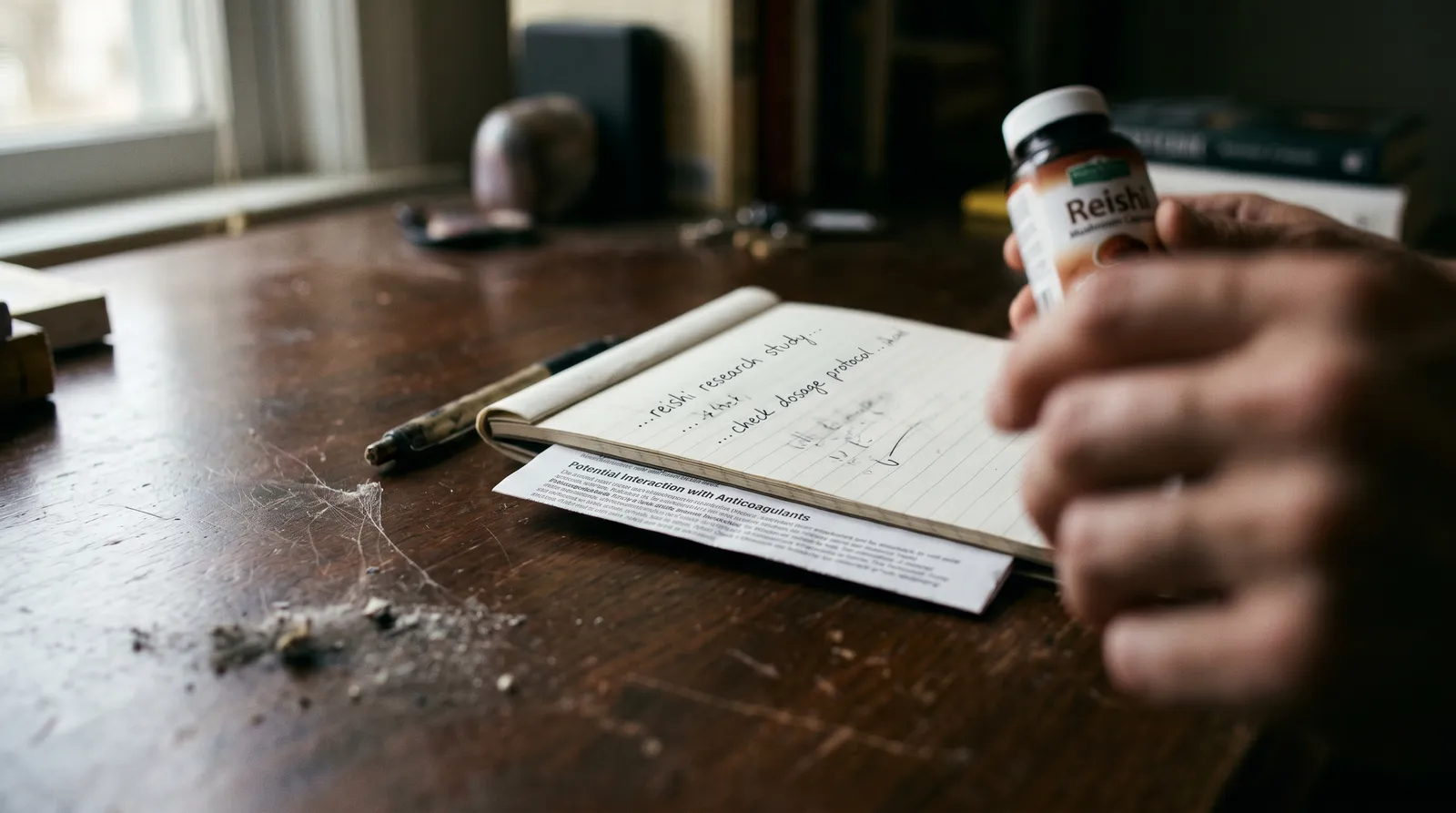
Interaction risks remain relevant whether you follow a research protocol or take a standard supplement serving. Reishi has demonstrated anticoagulant and antiplatelet effects in vitro and may interact with warfarin, apixaban, and other blood thinners. Cordyceps may affect blood glucose levels and could potentiate hypoglycaemic medication such as metformin or insulin. Immune-modulating species — reishi, maitake, turkey tail, and shiitake at high doses — work in theoretical opposition to immunosuppressants like methotrexate, tacrolimus, and ciclosporin. Individuals with autoimmune conditions should approach beta-glucan-rich species with particular caution, as immune stimulation may oppose the goals of autoimmune therapy. The dedicated drug interactions article in this series covers these risks in detail. If you take prescription medication, consult a healthcare provider before adding functional mushrooms to your routine.
The Honest Position
The functional mushroom research base is richer than many supplement categories — beta-glucan immunology has decades of peer-reviewed literature behind it, and the chemistry of triterpenes, hericenones, and erinacines is well characterised. The problem is not a lack of science. The problem is the gap between what the science studied and what the market sells. Recognising that gap does not require cynicism. It requires reading labels as carefully as you read study abstracts, and accepting that "research has examined" is not the same as "this capsule will do."

When you buy a functional mushroom product from Azarius or anywhere else, the dosage research vs supplementation question should be the first thing you investigate — not the last. Products like the Foodsporen Lion's Mane Extract, the McMyco Reishi Extract, and the Mushroom Cups Cordyceps Elixir each represent different approaches to bridging this gap, and comparing their labels against the study parameters above is a useful exercise. The Azarius functional mushroom category and the broader Azarius smartshop wiki both provide additional context for navigating these choices.
Last updated: April 2026
Frequently Asked Questions
8 questionsWhy do functional mushroom studies use higher doses than most supplements provide?
Can I compare beta-glucan percentages across different mushroom supplement brands?
Does mycelium-on-grain deliver the same compounds as fruiting-body extract?
How long do I need to take a functional mushroom supplement to match study conditions?
Are the polysaccharide fractions studied in cancer research the same as what is in mushroom supplements?
What should I look for on a label to judge dosage research vs supplementation alignment?
Why do some mushroom supplements list milligrams of extract instead of active compounds?
Does hot water extraction capture everything researchers measured in mushroom studies?
About this article


Adam Parsons is an external cannabis and psychedelics writer and editor who contributes to Azarius's wiki as both author and reviewer. On the writing side, he authors Azarius's kratom and kanna clusters, drawing on exten
This wiki article was drafted with AI assistance and reviewed by Adam Parsons, External contributor. Editorial oversight by Joshua Askew.
Medical disclaimer. This content is for informational purposes only and does not constitute medical advice. Consult a qualified healthcare provider before use of any substance.
Last reviewed April 24, 2026
References (2)
- [1]Wasser, S. P. (2017). Medicinal mushrooms in human clinical studies. International Journal of Medicinal Mushrooms, 19(4), 279-317. DOI: 10.1615/IntJMedMushrooms.v19.i4.10
- [2]Powell, M. (2014). Medicinal Mushrooms: A Clinical Guide (2nd ed.). Mycology Press.
Related Articles

Medicinal Mushrooms TCM Western Pharmacognosy Guide
Guide to medicinal mushrooms TCM Western pharmacognosy — how reishi, lion's mane, cordyceps are classified, extracted, and studied.
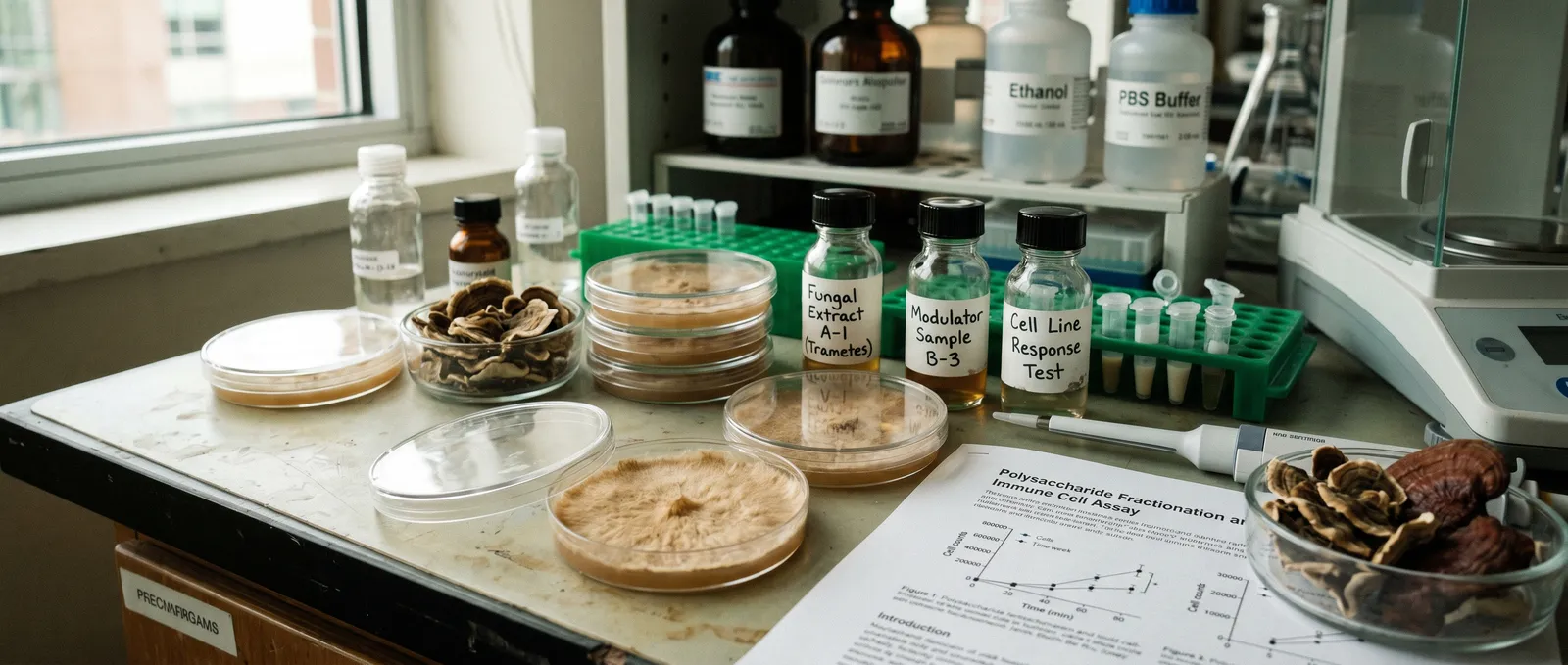
Research on Immune Modulation by Functional Mushrooms
What does research on immune modulation by functional mushrooms actually show? Beta-glucans, Dectin-1 signalling, human trials, and the honest gap...
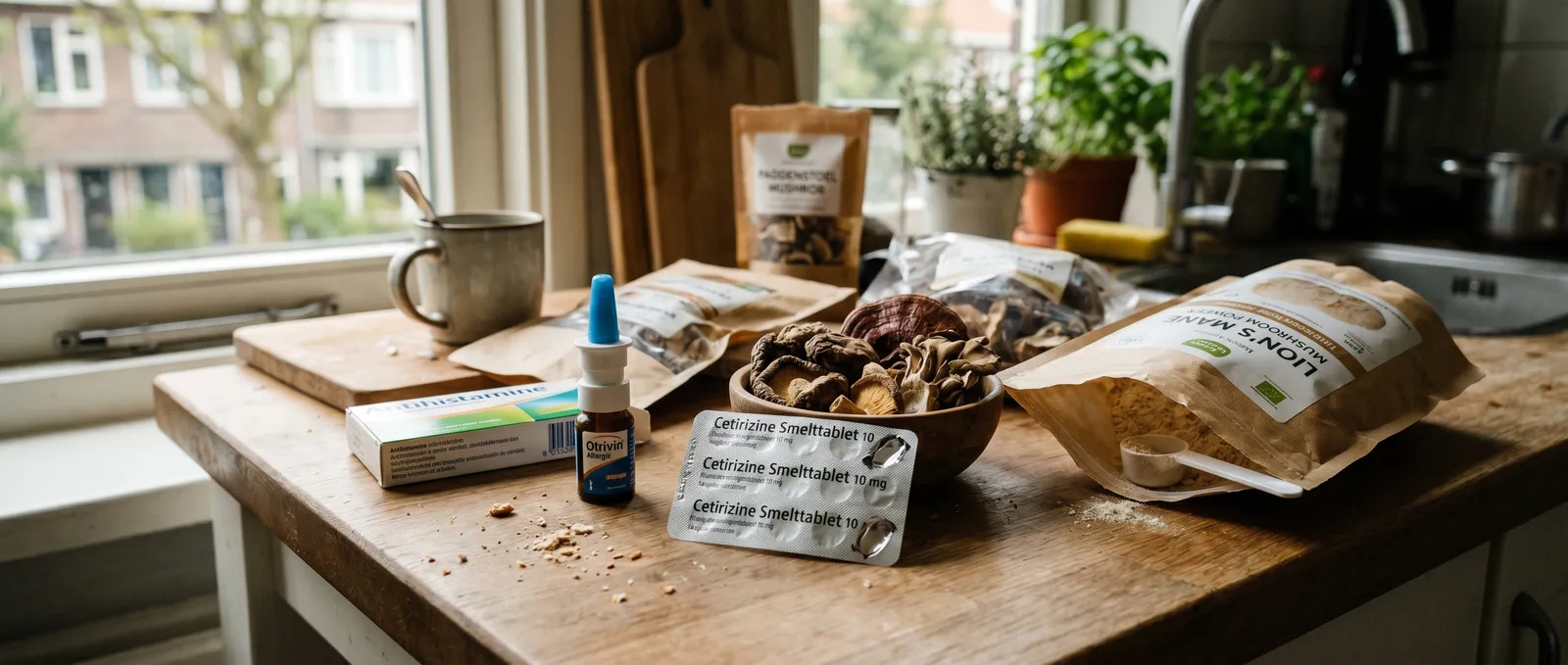
Allergic Reactions & Mushroom Sensitivities
Understand allergic reactions and mushroom sensitivities: mould cross-reactivity, shiitake dermatitis, species-specific risks, and safer product…
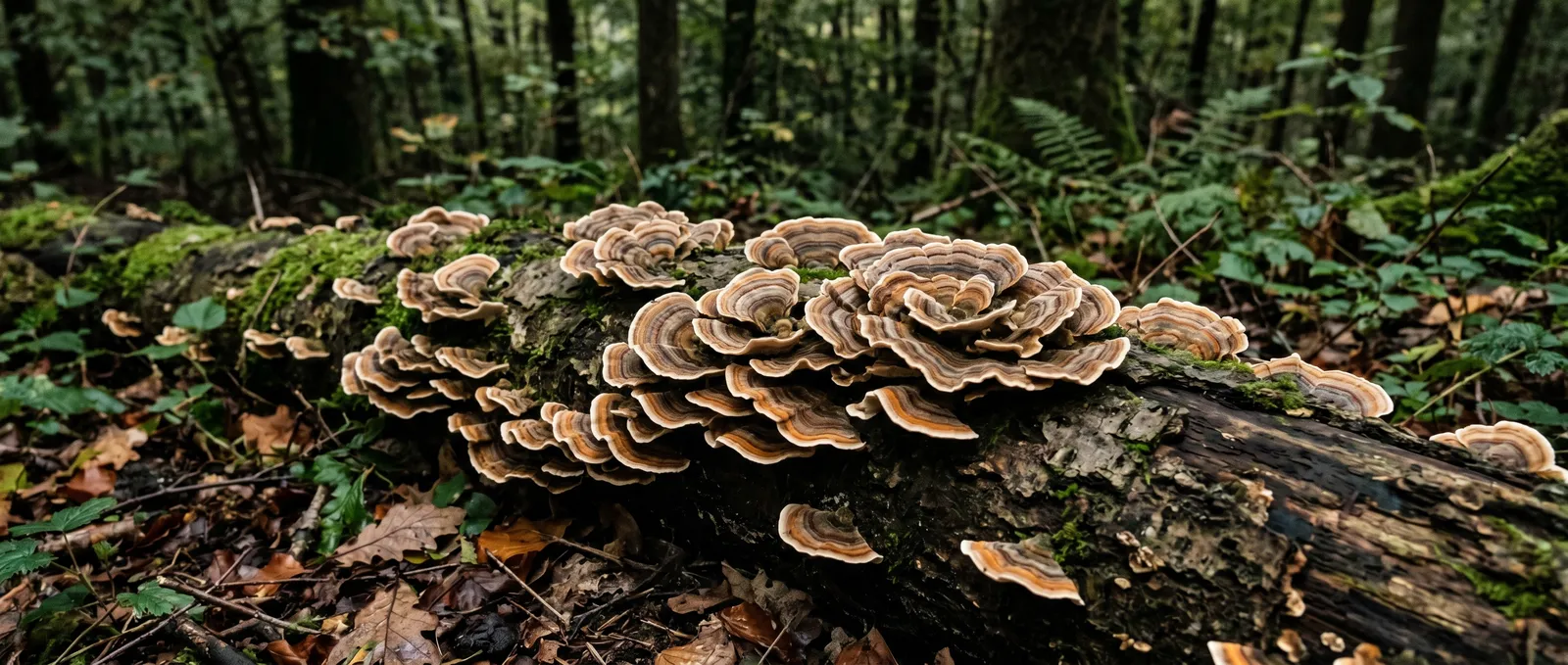
Turkey Tail Trametes versicolor — Buy Supplements
Buy turkey tail Trametes versicolor supplements at Azarius. PSK and PSP evidence, beta-glucan dosage, extraction methods, and safety.
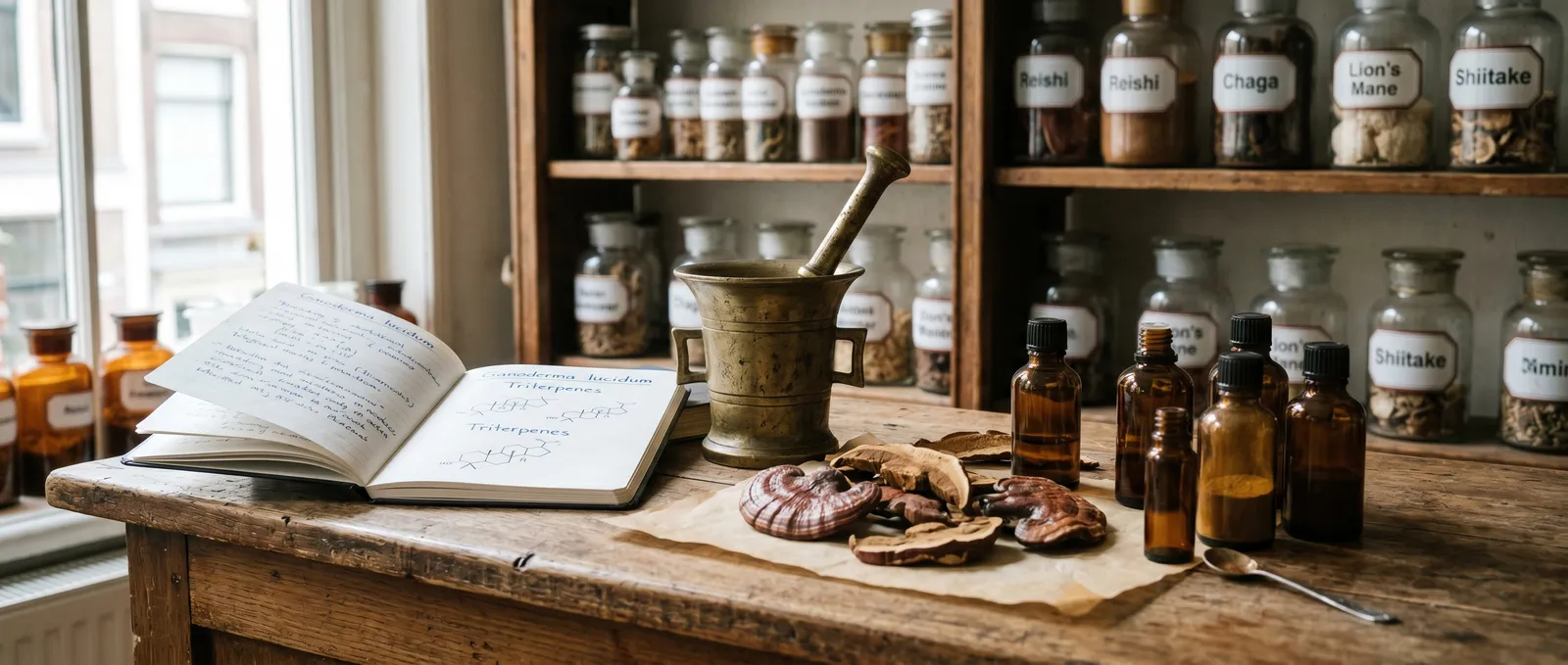
Triterpenes In Medicinal Mushrooms
Triterpenes in medicinal mushrooms are a class of 30-carbon terpenoid compounds produced as secondary metabolites by several functional mushroom species…
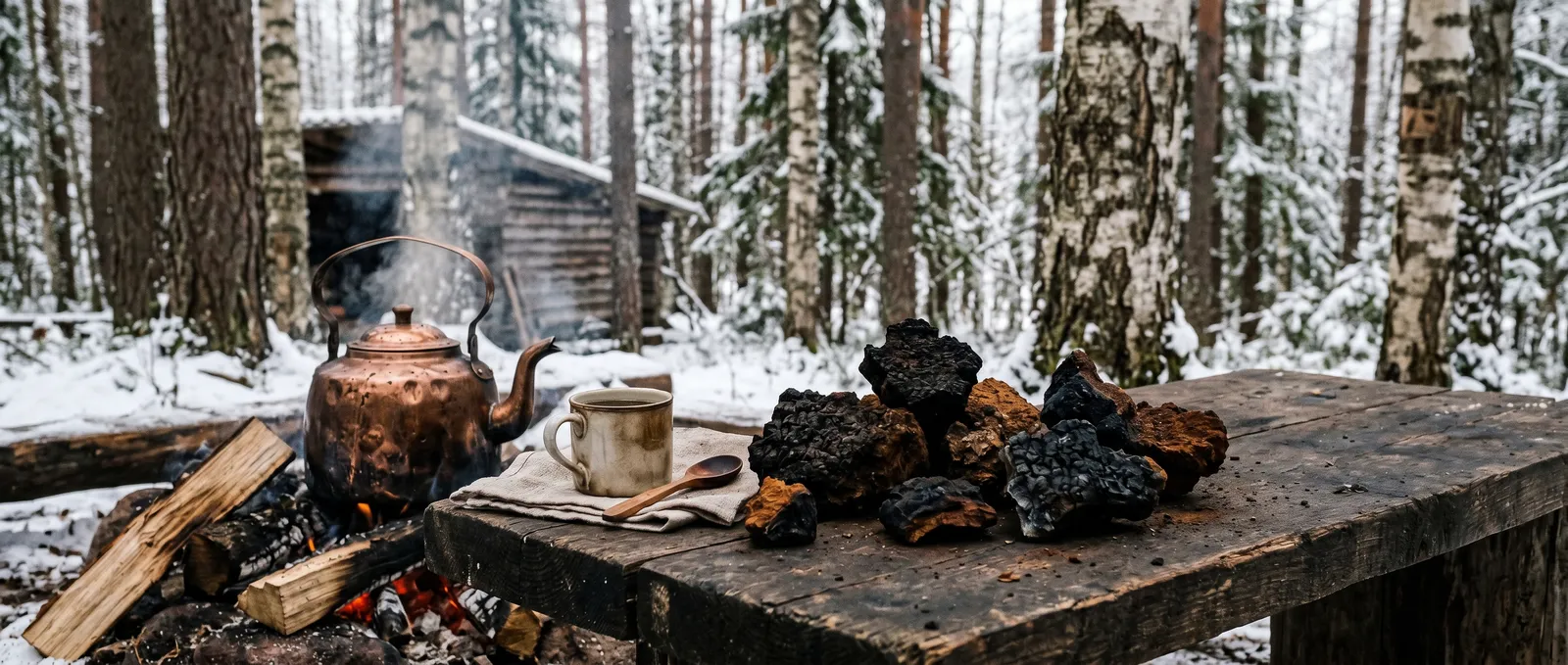
Chaga Siberian Nordic Folk Use
Chaga Siberian Nordic folk use is a centuries-old tradition in which indigenous Siberians and Nordic communities brewed the birch-parasitising fungus…
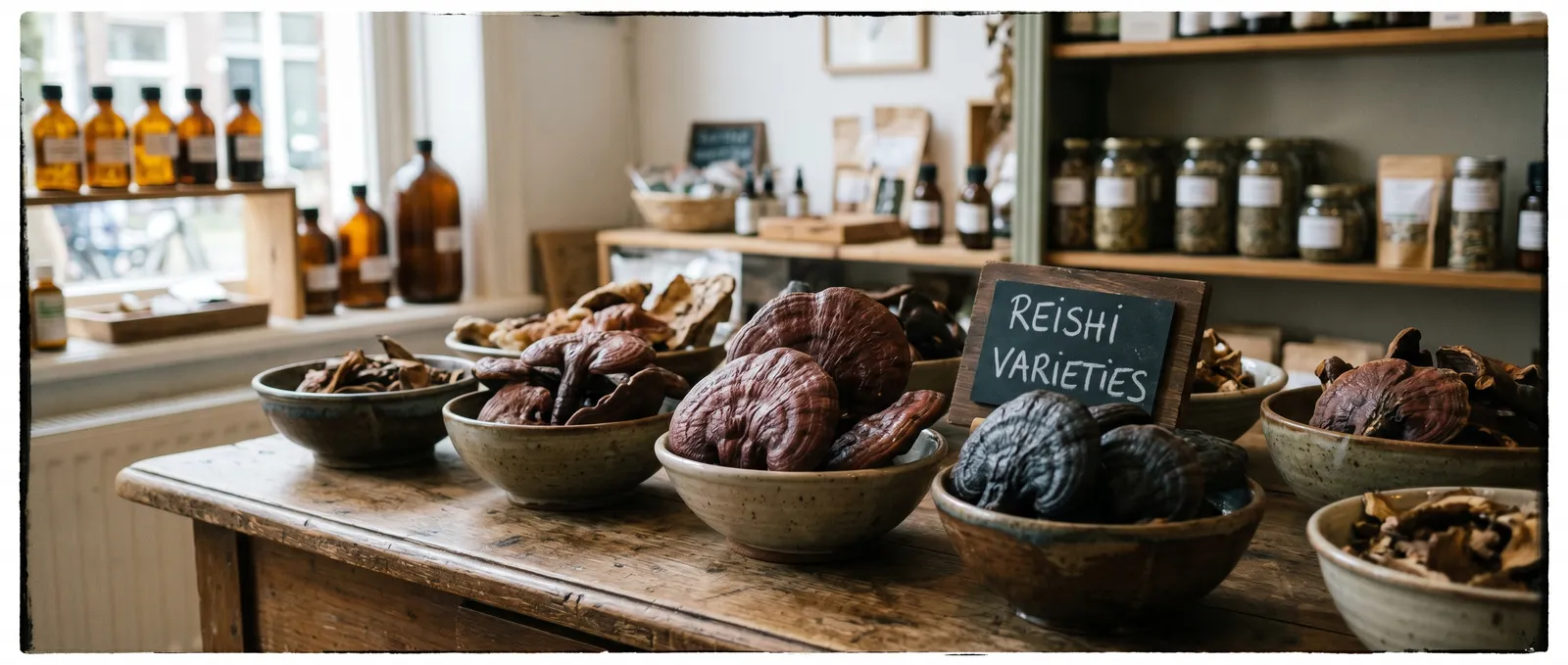
Red and Black Reishi Varieties
Red reishi (Ganoderma lucidum) and black reishi (Ganoderma sinense) both fall under the lingzhi umbrella in traditional Chinese medicine, but they differ in…
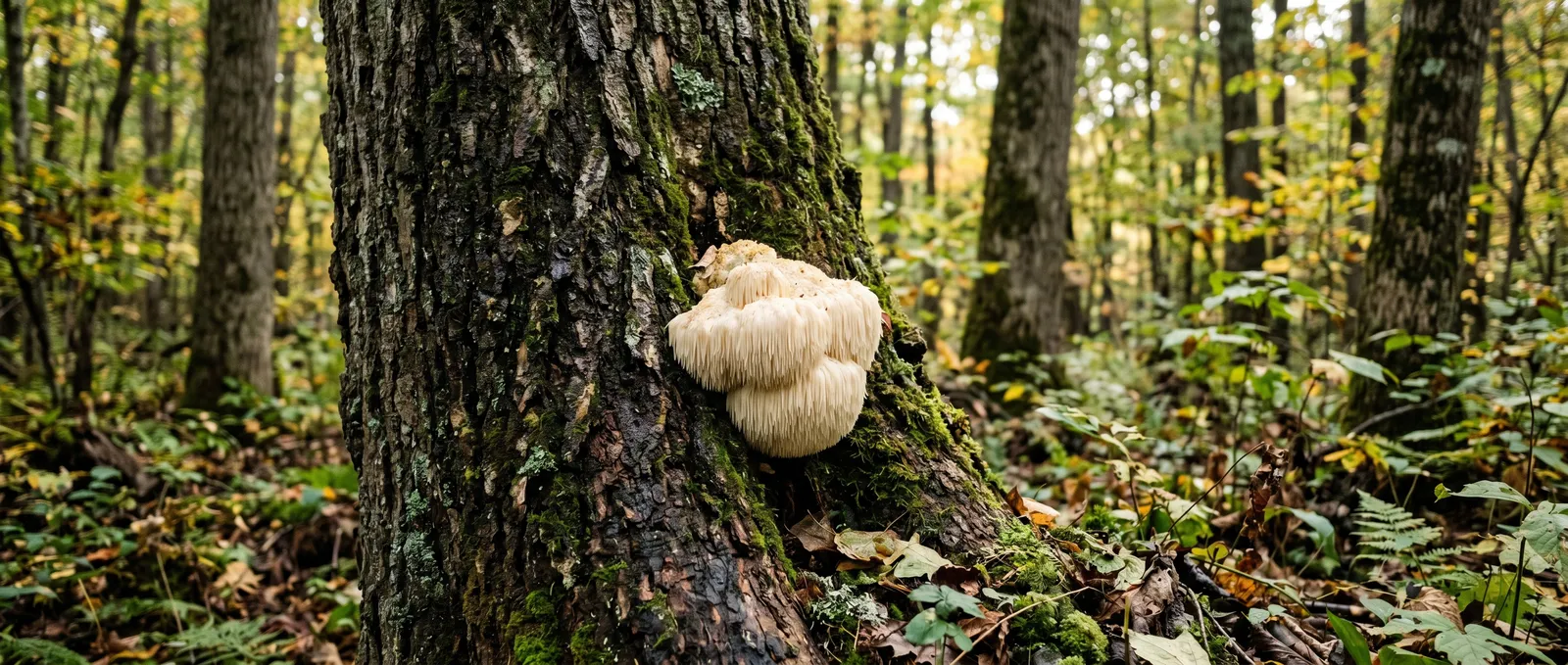
Lion's Mane Identification & Habitat
Hericium erinaceus is a tooth fungus that fruits as a single white, spine-covered mass on wounded or dead hardwood trees.
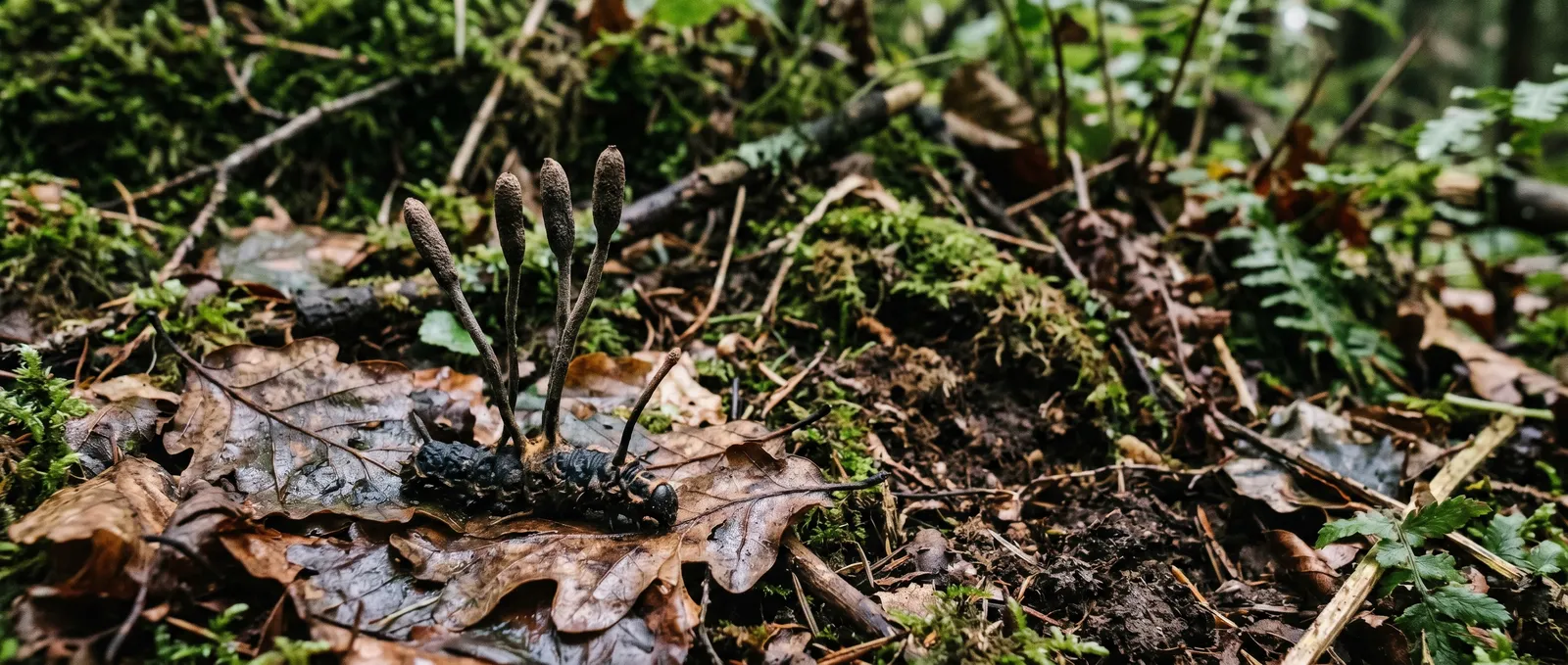
Cordyceps Lifecycle
The cordyceps lifecycle is a parasitic biological sequence in which a fungus infects an insect host, colonises its body from within, and erupts as a…