
This article discusses psychoactive substances intended for adults (18+). If you have a health condition or take medication, consult a doctor before use. Our age policy
Microdosing When Inadvisable

Definition
Microdosing when inadvisable is a harm-reduction framework that identifies the specific medical, psychiatric, pharmacological, and situational circumstances where sub-perceptual dosing of psilocybin, LSD, or similar serotonergic substances carries meaningful risk. Anderson et al. (2019) found roughly 18% of microdosers reported at least one unwanted effect. Knowing when not to microdose is as critical as knowing how.
18+ only — This guide is written for adults. The information below applies to adult physiology and decision-making.
Medical disclaimer: This article is for informational and harm-reduction purposes only. It does not constitute medical advice, diagnosis, or treatment. Always consult a qualified healthcare professional before making decisions about substance use, medication changes, or mental health management. Nothing on this page should replace professional medical guidance.
Microdosing when inadvisable is a harm-reduction framework that identifies the specific medical, psychiatric, pharmacological, and situational circumstances where taking sub-perceptual doses of psilocybin, LSD, or other psychoactive substances carries real risk rather than potential benefit. Most microdosing guides focus on protocols and promises. This one focuses on when to put the jar back on the shelf. Not every brain, body, or life circumstance is suited to regular serotonergic stimulation, and knowing when microdosing is inadvisable — when to stop or never start — is as much a part of harm reduction as knowing how to dose correctly. According to Anderson et al. (2019), roughly 18% of microdosers reported at least one unwanted effect, a figure that shows why understanding when microdosing is inadvisable matters as much as understanding protocols.
Step 1: Check Your Medication List First
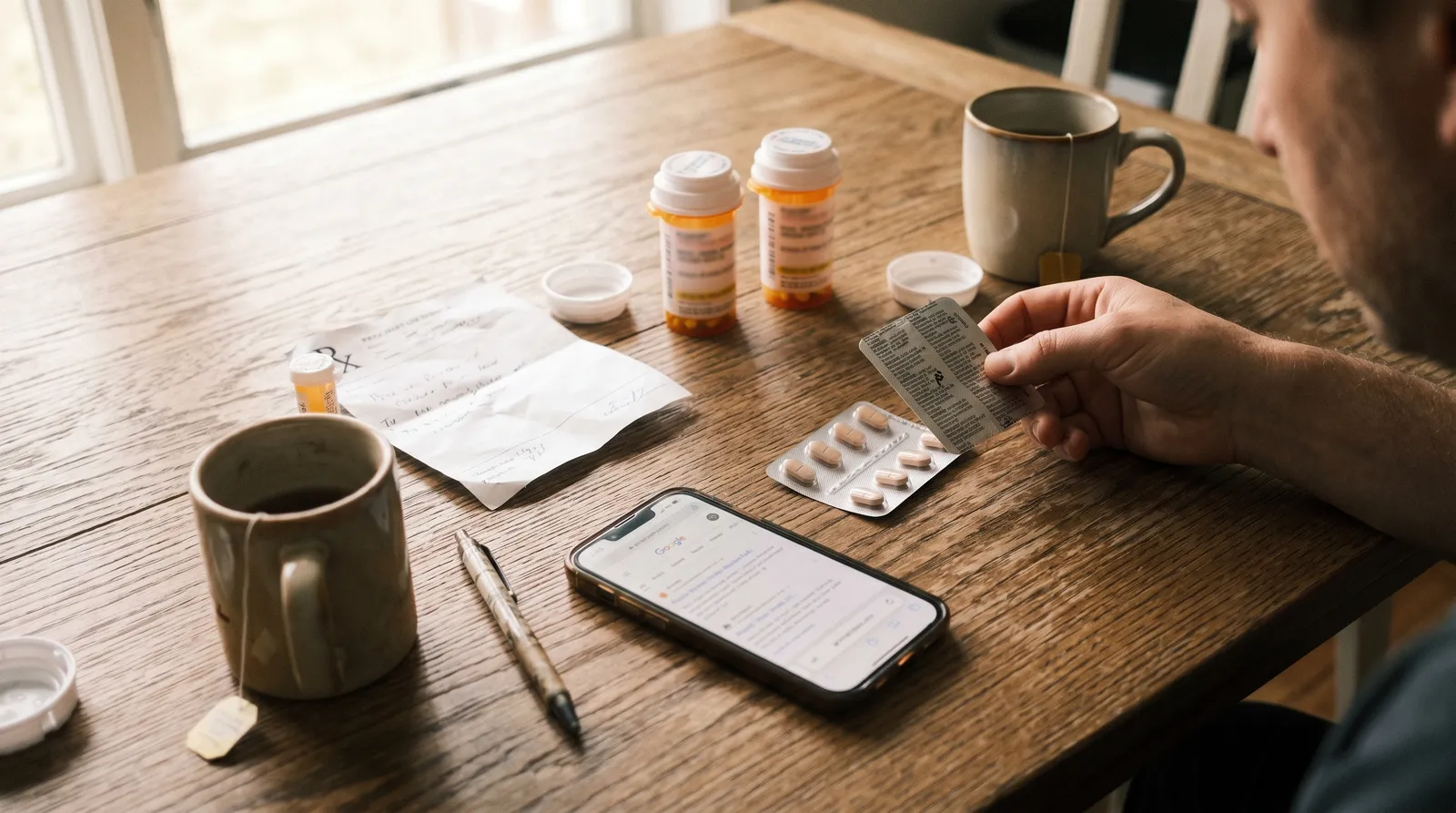
The most common reason microdosing becomes inadvisable is a pharmacological conflict with existing medication. Before anything else, look at what you're already taking. This is the single most frequently ignored consideration in online communities.
SSRIs and SNRIs
Fluoxetine, sertraline, venlafaxine, and their relatives occupy the same serotonin receptors that psilocybin and LSD target. Combining them doesn't just blunt the microdose; it creates unpredictable pharmacological competition at 5-HT2A receptors. A 2022 double-blind study published in Translational Psychiatry found that participants on SSRIs showed significantly attenuated responses to psilocybin, and the interaction profile remains poorly characterised at sub-perceptual doses (Becker et al., 2022). Worse, abruptly stopping your SSRI to microdose introduces discontinuation syndrome — brain zaps, mood crashes, nausea — which is its own medical problem.
Lithium
This is the hard stop. Case reports and harm-reduction databases consistently flag lithium plus classical psychedelics as a seizure risk. Even at microdose levels, the combination is not considered safe. If you're on lithium for bipolar disorder, this is not a grey area.
MAOIs
Monoamine oxidase inhibitors (including some antidepressants like phenelzine and tranylcypromine, and natural sources like Syrian rue) dramatically alter how your body metabolises tryptamines. A microdose plus an MAOI is no longer a microdose — it's an amplified, extended, potentially dangerous experience. For a full breakdown, see the dedicated psilocybin interactions article on the Azarius encyclopedia.
Tramadol and Other Serotonergic Painkillers
These raise serotonin levels independently. Stacking them with a serotonergic microdose increases the theoretical risk of serotonin syndrome, a potentially life-threatening condition characterised by agitation, hyperthermia, and muscle rigidity (Boyer & Shannon, 2005).
| Medication Class | Examples | Risk Level | Primary Concern |
|---|---|---|---|
| SSRIs / SNRIs | Fluoxetine, sertraline, venlafaxine | High | 5-HT2A receptor competition; attenuated or unpredictable effects |
| Lithium | Lithium carbonate | Severe — hard stop | Seizure risk, even at microdose levels |
| MAOIs | Phenelzine, tranylcypromine, Syrian rue | Severe | Dramatically amplified and extended tryptamine effects |
| Serotonergic painkillers | Tramadol | High | Increased theoretical risk of serotonin syndrome |
| 5-HT2B-active drugs | Certain migraine medications | Moderate–High | Compounded valvular heart disease risk with chronic use |
Step 2: Assess Your Psychiatric History Honestly
Certain psychiatric conditions are clinical contraindications for microdosing, regardless of positive anecdotes found in online forums. This step requires genuine self-reflection, not optimism.

Psychotic Spectrum Conditions
If you have a personal or strong family history of schizophrenia, schizoaffective disorder, or psychotic episodes, serotonergic psychedelics at any dose are contraindicated. Clinical trials at Johns Hopkins, Imperial College London, and MAPS uniformly exclude participants with psychotic spectrum diagnoses. A 2019 systematic review by Anderson et al. noted that while microdosing self-reports skew positive, participants with psychosis-related conditions were virtually absent from the data — meaning there's no safety signal either way, which itself is a reason to avoid it (Anderson et al., 2019).
Bipolar Disorder
Even outside the lithium interaction mentioned above, bipolar disorder introduces the risk of triggering manic or hypomanic episodes. Sub-perceptual serotonergic stimulation repeated over weeks could destabilise mood cycling. Clinical microdosing research has not included bipolar participants in sufficient numbers to establish safety.
Severe Anxiety Disorders
This is more varied. Mild-to-moderate anxiety sometimes responds well to microdosing in self-report data. But if you're in the middle of a panic disorder flare-up, daily derealization, or acute PTSD symptoms, adding a substance that alters serotonin signalling — even subtly — can amplify the very symptoms you're trying to manage. A 2022 observational study in Scientific Reports found that while microdosers reported mood improvements at one month, a subset reported increased anxiety, particularly during the first two weeks (Rootman et al., 2022).
Step 3: Evaluate Your Cardiovascular Health
The cardiovascular risk of repeated microdosing is the concern most advocates don't mention, and it's the one that keeps pharmacologists up at night.
Psilocybin and LSD are agonists at the 5-HT2B receptor. Chronic stimulation of this receptor is associated with valvular heart disease (VHD) — the same mechanism that got fenfluramine (the diet drug fen-phen) pulled from the market in the 1990s, as documented in FDA safety reviews. A 2023 analysis published by Harvard's Petrie-Flom Center flagged this as an under-researched safety concern specific to repeated low-dose use (Smith & Bhatt, 2023). A single full-dose session stimulates 5-HT2B for hours; a microdosing protocol stimulates it for months.
Nobody has yet demonstrated that typical microdosing protocols cause VHD. But nobody has demonstrated that they don't, either — the longitudinal cardiac data simply doesn't exist yet. If you have a pre-existing heart valve condition, a history of cardiac murmurs, or are taking other medications that act on 5-HT2B (certain migraine drugs, some antidepressants), the theoretical risk stacks up.
Microdosing also produces mild, transient increases in blood pressure, according to clinical observations reported in multiple psilocybin trials. For most healthy adults, this is irrelevant. For someone with uncontrolled hypertension, it's another variable to consider.
Step 4: Consider Your Life Circumstances
Not every contraindication is medical — sometimes the timing is simply wrong, and recognising that microdosing is inadvisable in your current situation is a sign of maturity, not defeat.
Pregnancy and breastfeeding — There is zero clinical safety data on microdosing during pregnancy or lactation. Serotonergic compounds cross the placental barrier. This is a firm no.
Active substance dependency — If you're currently struggling with alcohol or drug dependency, introducing a microdosing protocol adds pharmacological complexity to an already unstable situation. Some research explores full-dose psilocybin for addiction in supervised clinical settings (Johnson et al., 2014), but that's supervised, single-session work — not self-directed repeated dosing at home.
High-stress professional obligations — Microdosing is supposed to be sub-perceptual, but individual sensitivity varies enormously. If you're a surgeon, heavy machinery operator, or professional driver, even a slight perceptual shift on a day you misjudged your dose could have serious consequences. The first few sessions of any protocol should happen on days with zero professional obligations and no driving.
Ongoing grief or acute emotional crisis — Psychedelics, even at micro levels, can surface buried emotions. If you're in the raw early stages of bereavement, a traumatic breakup, or a family crisis, the emotional amplification may not be therapeutic — it may simply be overwhelming. Stability first, exploration later.
Step 5: Recognise Warning Signs During a Protocol
The most important warning signs appear after you've already started dosing, which is why ongoing self-monitoring is non-negotiable. Say you've checked all the boxes above and begun microdosing — the work isn't done. You need to monitor yourself honestly throughout the protocol and be willing to stop.
Stop or pause if you notice:
- Increasing anxiety on dose days — A single uncomfortable day can happen. Three in a row is a pattern. The Rootman et al. (2022) study noted that negative emotional responses, while less common than positive ones, tended to persist when participants continued dosing through them rather than pausing.
- Sleep disruption — Microdosing psilocybin too late in the day can interfere with sleep onset. If you're consistently sleeping worse, adjust timing first. If that doesn't help, stop the protocol.
- Emotional blunting or flatness — The opposite of the promised mood lift. Some people report feeling "muted" after several weeks. This could indicate 5-HT2A receptor downregulation — your brain adapting to repeated stimulation by reducing receptor sensitivity.
- Heart palpitations or chest discomfort — Given the 5-HT2B concerns discussed above, any cardiovascular symptoms during a microdosing protocol should be taken seriously. Stop dosing and seek medical evaluation.
- Dose creep — If you find yourself gradually increasing the amount because the "standard" dose stopped feeling effective, you've left microdosing territory. This is tolerance building, and the correct response is a break, not a bigger dose.
Step 6: Know When the Answer Is "Not Now"
"Not now" is different from "never," and understanding this distinction is central to knowing when microdosing is inadvisable versus permanently off the table. Many of the contraindications above are situational. If you're on SSRIs today, that doesn't mean microdosing is permanently excluded — it means you'd need to work with a prescriber to safely taper first, which is a months-long process that should never be rushed for the sake of a microdosing experiment. If you're in acute crisis, stabilising comes first. If your cardiovascular health is uncertain, get a check-up and a clear picture before making decisions.
The microdosing community sometimes treats these substances as universally gentle and risk-free. They're not. Psilocybin and LSD are powerful serotonergic agents. At sub-perceptual doses, they're gentler — but "gentler" is not "harmless," especially when repeated over weeks or months. According to a 2019 survey-based study, roughly 18% of microdosers reported at least one unwanted effect, with anxiety (8.8%) and physiological discomfort (7%) being the most common (Anderson et al., 2019).
What We Honestly Don't Know
Transparency matters more than confidence when the science is still catching up. Here's what the research hasn't settled yet:
- Whether microdosing protocols at standard doses (e.g., 0.1–0.3 g dried psilocybin truffles every third day) produce clinically meaningful 5-HT2B stimulation over six months or longer. The cardiac data simply doesn't exist.
- Whether the reported benefits of microdosing in survey studies survive rigorous placebo controls. A 2021 self-blinding study by Szigeti et al. in eLife suggested that expectation effects account for a significant portion of reported improvements.
- How individual genetic variation in serotonin receptor density affects who responds well and who responds badly to repeated low-dose serotonergic stimulation.
- Whether microdosing interacts differently with the ageing brain, particularly regarding cardiovascular and neurological vulnerability.
We don't pretend to have answers the researchers themselves don't have yet. When you buy microdosing products — psilocybin truffles, for instance, from the Azarius catalogue — you're working with substances that are well-characterised at full doses but still poorly understood at the sub-perceptual, repeated-use level. That's worth sitting with.
Microdosing When Inadvisable vs. Alternative Approaches
When microdosing is inadvisable, it doesn't mean all self-improvement tools are off the table. Here's how some common alternatives compare:
| Approach | Serotonergic Risk | Medication Conflicts | Evidence Base | Accessibility |
|---|---|---|---|---|
| Psilocybin microdosing | Moderate (5-HT2A/2B) | Many (SSRIs, lithium, MAOIs) | Growing but limited RCTs | Legal in NL (truffles) |
| Meditation / mindfulness | None | None | Strong (multiple meta-analyses) | Universal |
| Lion's Mane supplementation | None known | Minimal known conflicts | Moderate (mostly preclinical) | Widely available; you can order Lion's Mane supplements from Azarius |
| Exercise protocols | None | Rare | Very strong | Universal |
| Therapy (CBT, ACT) | None | None | Very strong | Requires practitioner |
If you've determined that microdosing is inadvisable for you right now, non-serotonergic nootropics like Lion's Mane or adaptogenic herbs may offer cognitive support without the receptor conflicts. These aren't equivalent to microdosing — the mechanisms are entirely different — but they're worth exploring as part of a broader well-being toolkit. You can buy Lion's Mane capsules and other nootropic supplements from the Azarius smartshop, and they make a reasonable starting point when serotonergic options are off the table.
Tools and Preparation If Microdosing Is Right Later
If your current situation makes microdosing inadvisable but you want to be ready for when circumstances change, preparation is a productive use of the waiting period. A precision milligram scale is essential for any future microdosing protocol — inconsistent dosing is one of the most common causes of accidental perceptual effects. You can order a reliable milligram scale from the Azarius catalogue. A dedicated microdosing journal helps you track mood, sleep, and any side effects once you do begin, and it also serves as a baseline record during your waiting period. Some people use the interim to get a cardiovascular check-up, work with their prescriber on medication questions, or simply build the mindfulness and self-awareness habits that make any future protocol safer and more intentional.

The most responsible thing a microdosing guide can tell you is this: if any of the above applies to you, the smart move is to wait, get more information, or choose a different approach entirely. There's no rush. The substances aren't going anywhere.
Last updated: April 2026
Frequently Asked Questions
10 questionsCan you microdose psilocybin while taking SSRIs?
Does microdosing cause heart problems?
Is microdosing safe during pregnancy?
What are warning signs to stop a microdosing protocol?
Can people with bipolar disorder microdose safely?
Why is lithium dangerous to combine with psychedelics?
Can you microdose psilocybin while taking tramadol or other serotonergic painkillers?
Is it safe to microdose if you take an MAOI antidepressant or natural MAO inhibitor like Syrian rue?
Should you avoid microdosing before surgery or anesthesia?
Is microdosing a bad idea if you have a personal or family history of psychosis or schizophrenia?
About this article

Joshua Askew serves as Editorial Director for Azarius wiki content. He is Managing Director at Yuqo, a content agency specialising in cannabis, psychedelics and ethnobotanical editorial work across multiple languages. Th
This wiki article was drafted with AI assistance and reviewed by Joshua Askew, Managing Director at Yuqo. Editorial oversight by Adam Parsons.
Medical disclaimer. This content is for informational purposes only and does not constitute medical advice. Consult a qualified healthcare provider before use of any substance.
Last reviewed April 24, 2026
References (7)
- [1]Anderson, T., Petranker, R., Christopher, A., et al. (2019). Psychedelic microdosing benefits and challenges: an empirical codebook. Harm Reduction Journal, 16(1), 43.
- [2]Becker, A. M., Holze, F., Grandinetti, T., et al. (2022). Acute effects of psilocybin after escitalopram or placebo pretreatment in a randomized, double-blind, placebo-controlled, crossover study in healthy subjects. Translational Psychiatry, 12, 209.
- [3]Boyer, E. W. & Shannon, M. (2005). The serotonin syndrome. New England Journal of Medicine, 352(11), 1112–1120.
- [4]Johnson, M. W., Garcia-Romeu, A., Cosimano, M. P., & Griffiths, R. R. (2014). Pilot study of the 5-HT2AR agonist psilocybin in the treatment of tobacco addiction. Journal of Psychopharmacology, 28(11), 983–992.
- [5]Rootman, J. M., Kryskow, P., Harvey, K., et al. (2022). Psilocybin microdosers demonstrate greater observed improvements in mood and mental health at one month relative to non-microdosing controls. Scientific Reports, 12, 11091.
- [6]Smith, W. R. & Bhatt, S. (2023). Prolonged receptor activation safety risk: 5-HT2B and VHD. Petrie-Flom Center, Harvard Law School [blog post].
- [7]Szigeti, B., Kartner, L., Blemings, A., et al. (2021). Self-blinding citizen science to explore psychedelic microdosing. eLife, 10, e62878.
Related Articles

Microdosing Silicon Valley History: How Sub-Perceptual Doses Went from Fringe to Boardroom
Sub-perceptual psychedelic dosing and Silicon Valley share roots stretching back to the 1960s, when engineers at Menlo Park research labs first combined LSD…

Microdosing vs Macrodosing
Microdosing vs macrodosing is a comparison between two psychedelic dosing strategies that use the same substances at vastly different levels — microdosing…

Microdosing Myths and Misconceptions
Microdosing myths and misconceptions is a category of persistent misinformation that has grown alongside the practice itself.

Microdosing Protocols Fadiman Stamets: Full Comparison Guide
A microdosing protocol is a structured schedule dictating dose days and rest days, designed to produce sub-perceptual cognitive shifts without tolerance buildup.
The Microdosing Placebo Debate: How to Tell If It's Actually Working
The microdosing placebo debate is a scientific and practical controversy that examines whether sub-perceptual doses of psilocybin or LSD produce genuine…

Origin of Microdosing Fadiman: How His Protocol Became the Standard
The origin of microdosing as a formalised practice traces to James Fadiman's 2011 book The Psychedelic Explorer's Guide, which introduced sub-perceptual…

Microdosing Research Current State
The current state of microdosing research reveals a field caught between enthusiastic self-reports and sobering controlled data.

Microdosing Medication Interactions
Microdosing medication interactions describe how sub-perceptual doses of psilocybin or LSD affect — or are affected by — prescribed drugs.

Microdosing Contraindications
A microdosing contraindication is a medical condition, psychiatric history, or concurrent medication that makes sub-perceptual psychedelic dosing inadvisable…