
This article discusses psychoactive substances intended for adults (18+). If you have a health condition or take medication, consult a doctor before use. Our age policy
Microdosing Silicon Valley History: How Sub-Perceptual Doses Went from Fringe to Boardroom
Definition
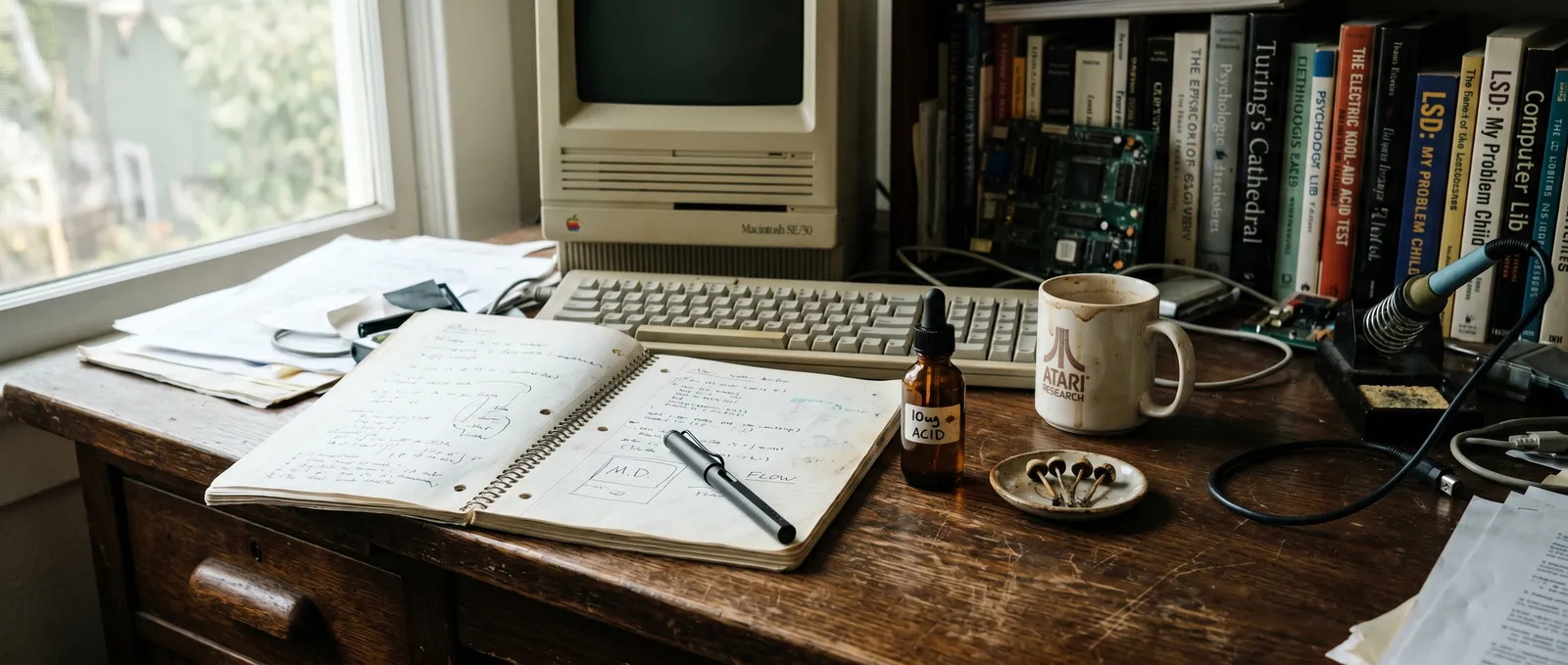
Sub-perceptual psychedelic dosing and Silicon Valley share roots stretching back to the 1960s, when engineers at Menlo Park research labs first combined LSD with technical problem-solving. James Fadiman, who ran those early sessions, later codified the modern microdosing protocol that tech culture adopted in the 2010s (Fadiman, 2011).
18+ only — This article covers psychoactive substance use and is written for adults.
Disclaimer: This article is for informational purposes only. Microdosing involves substances that are controlled in many jurisdictions. Azarius does not encourage illegal activity. Consult a healthcare professional before considering any psychedelic protocol, especially if you take psychiatric medication. Nothing in this article constitutes medical advice.
Microdosing Silicon Valley history is a cultural and scientific narrative that traces how sub-perceptual psychedelic dosing evolved from Cold War-era research labs to a mainstream productivity practice embraced by technology professionals. The roots of microdosing Silicon Valley history run decades deeper than most people realise — back to government-funded research labs, renegade psychologists, and a particular stretch of the San Francisco Peninsula where computing culture and psychedelic culture have been swapping notes since the 1950s. Understanding how sub-perceptual dosing moved from fringe curiosity to boardroom protocol tells you something real about both the substances involved and the culture that adopted them.
The 1950s and 60s: Before Anyone Said "Microdose"
The earliest chapter of microdosing Silicon Valley history begins in 1955, when former OSS officer Al Hubbard started distributing lysergic acid diethylamide to engineers, scientists, and executives across California. He wasn't handing out sub-perceptual doses; these were full sessions, often 200µg or more. But the seed was planted: psychedelics and technical problem-solving could coexist.
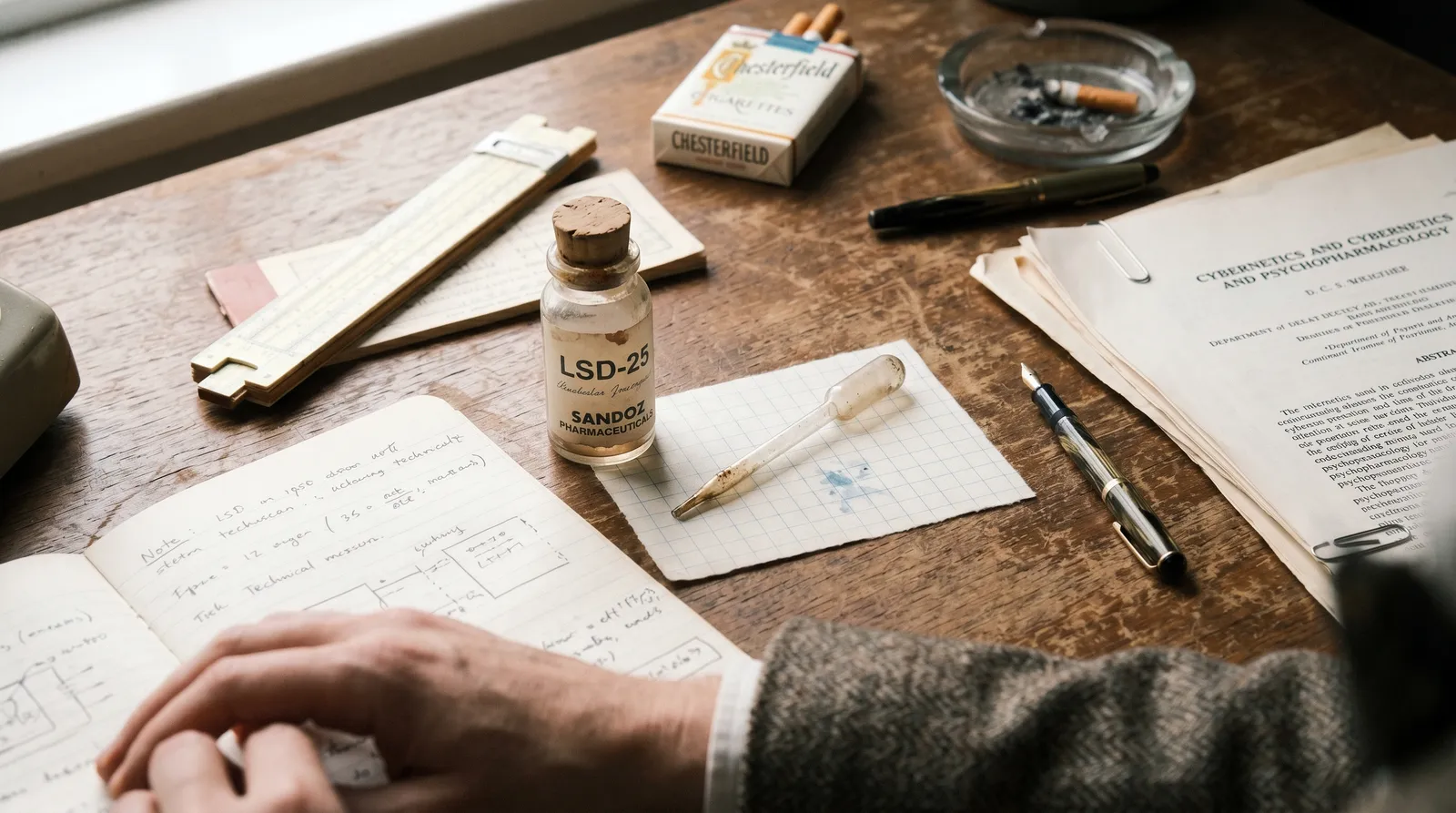
The more direct ancestor of today's microdosing Silicon Valley history came from the International Foundation for Advanced Study (IFAS) in Menlo Park, which operated from 1961 to 1965. Led by James Fadiman and Willis Harman, the IFAS ran structured sessions where engineers, architects, and mathematicians took mescaline or LSD — typically at moderate doses, not micro — and worked on real professional problems they'd been stuck on. According to Fadiman's own documentation, participants reported solutions to technical challenges that their employers later implemented (Fadiman, 2011). The doses weren't sub-perceptual, but the framework was already there: psychedelics as cognitive tools, not just consciousness exploration.
Meanwhile, just down the road, Doug Engelbart's Augmentation Research Center at Stanford Research Institute was inventing the computer mouse, hypertext, and video conferencing. Multiple accounts place members of Engelbart's team at Ken Kesey's gatherings and at IFAS sessions. The overlap between the people building personal computing and the people experimenting with LSD wasn't coincidental — it was geographical, social, and philosophical. John Markoff documented this convergence extensively in What the Dormouse Said (2005), arguing that the personal computer revolution owed a genuine debt to the psychedelic counterculture of the same postcode.
The Quiet Decades: 1970s to 2000s
Sub-perceptual psychedelic use survived criminalisation by going underground, persisting as a quiet practice among a small number of researchers and self-experimenters for three decades. Steve Jobs famously called his LSD experiences "one of the two or three most important things" he'd done in his life, a quote he repeated to multiple biographers. That wasn't microdosing either — Jobs was talking about full psychedelic sessions in the mid-1970s. But it kept the cultural link between psychedelics and tech innovation alive in Silicon Valley's mythology.
Through the 1980s and 1990s, sub-perceptual dosing existed without a name, protocol, or community. Albert Hofmann — the chemist who first synthesised LSD in 1938 and accidentally discovered its effects in 1943 — reportedly used low doses of LSD in his later years for cognitive clarity during long walks. He lived to 102, a fact that microdosing advocates love to mention, though it proves nothing about causation.
The practice had no formal structure until 2011, when James Fadiman published the protocol that changed everything.
Fadiman and the Protocol That Launched a Movement
James Fadiman's 2011 book The Psychedelic Explorer's Guide is the single most influential text in modern microdosing culture, directly codifying sub-perceptual dosing into a repeatable system that would later define microdosing Silicon Valley history. Fadiman — the same researcher from the 1960s IFAS studies — dedicated a chapter to sub-perceptual dosing and proposed what became known as the "Fadiman Protocol": one dose day, two days off, repeat. He suggested roughly 10µg of LSD or 0.1–0.3g of dried psilocybin mushrooms — amounts intended to sit below the threshold of noticeable psychoactive effects.
Fadiman also began collecting self-reports from volunteers who followed the protocol and emailed him their experiences. By 2019, he'd gathered over 1,800 reports. The data was self-selected, uncontrolled, and not blinded — Fadiman himself is the first to acknowledge this — but the sheer volume of consistently positive reports caught attention (Fadiman & Korb, 2019). People described improved mood, sharper focus, and greater creativity. Whether that was pharmacology or expectation is a question we'll get to.
The Rolling Stone Moment: 2015
Rolling Stone's November 2015 article "How LSD Microdosing Became the Hot New Business Protocol" was the tipping point that brought microdosing Silicon Valley history into mainstream awareness. The article profiled tech workers in San Francisco who were taking 10–20µg of LSD every few days, claiming enhanced productivity, better code, and improved interpersonal skills at work. It wasn't the first piece of journalism on the topic — Tim Ferriss had been discussing it on his podcast, and Ayelet Waldman's self-experiment was already generating attention — but Rolling Stone had mainstream reach.
Within a year, microdosing had its own subreddit (which grew to over 200,000 members by 2023), its own coaches, its own branded capsule protocols, and a firmly established association with Silicon Valley culture. Paul Austin, a 27-year-old entrepreneur, launched Third Wave in 2016, offering online courses on microdosing protocols. The practice had gone from underground experiment to marketable lifestyle.
The Silicon Valley framing was key to this cultural shift. Microdosing wasn't being pitched as recreational substance use or spiritual practice — it was biohacking. The same culture that embraced nootropic stacks, intermittent fasting, and sleep-tracking rings absorbed sub-perceptual psychedelics into its optimisation toolkit. The language was productivity, not transcendence.
What the Science Actually Found
Controlled trials on microdosing have produced mixed results, with the largest studies suggesting expectation effects may account for most reported benefits. The cultural phenomenon exploded years before rigorous science could catch up, and when controlled trials finally arrived, the findings challenged the narrative.
The largest and most cited controlled study came from Szigeti et al. (2021), published in eLife. It was a self-blinding citizen science study involving 191 participants who microdosed LSD. The results showed significant improvements in psychological wellbeing — but no difference between the microdose group and the placebo group. Both groups improved equally. The authors concluded that expectation, not pharmacology, was likely driving the reported benefits.
A smaller but tightly controlled study by Family et al. (2020), published in the Journal of Psychopharmacology, found that 13µg of LSD did not significantly enhance creative thinking or cognitive flexibility compared to placebo in 24 healthy volunteers. There were some signals in specific sub-measures of creativity, but the headline finding was null.
On the other side, Hutten et al. (2020) at Maastricht University found that repeated low doses of LSD (5–20µg) did produce measurable changes in pain perception and mood in a controlled setting, suggesting the doses aren't pharmacologically inert. And EEG research by Prochazkova et al. (2018) at Leiden University found that a single microdose of psilocybin truffles (0.37g dried) improved convergent and divergent thinking scores in an open-label design — though without a placebo control, expectation effects can't be ruled out.
The honest summary: sub-perceptual doses of classical psychedelics probably do something at the neurochemical level — they bind to 5-HT2A serotonin receptors, and even low-level agonism can influence downstream signalling. But whether that "something" translates into the creativity boosts and mood improvements that thousands of self-reporters describe remains genuinely unclear. The placebo response in this area is enormous, partly because people who choose to microdose already believe it will work. The EMCDDA continues to monitor emerging evidence on low-dose psychedelic use across EU member states, and the Beckley Foundation's ongoing research programme remains one of the best independent sources for tracking where the science lands.
The Neuroplasticity Angle
The strongest mechanistic argument for microdosing centres on neuroplasticity — the brain's ability to form new synaptic connections — rather than acute perceptual effects. Ly et al. (2018), publishing in Cell Reports, demonstrated that psychedelics — including LSD, psilocybin, and DMT — promote dendritic growth and synaptogenesis in cortical neurons, even at low concentrations. The effect was comparable to ketamine, an established rapid-acting antidepressant. This was in vitro (cell cultures) and in vivo (rodent models), not in humans taking 10µg tabs, so the translation gap is significant. But it offers a plausible mechanism for long-term benefits that wouldn't show up in a single-session creativity test.
If microdosing works through gradual structural changes in neural connectivity rather than acute perceptual shifts, you'd expect benefits to emerge over weeks or months — and you'd expect them to be subtle enough to be nearly impossible to distinguish from placebo in short-term trials. This is the strongest argument that microdosing advocates have, and it's not unreasonable. It's also not proven.
Silicon Valley Today and the Culture Beyond
By the early 2020s, microdosing had spread well beyond tech, with a Global Drug Survey in 2020 reporting the practice across 40+ countries. The highest prevalence appeared in North America, Western Europe, and Australasia. The Silicon Valley association persists in media coverage, but the actual user base is far broader — artists, therapists, retirees, students.
What Silicon Valley did contribute to microdosing Silicon Valley history, beyond early adoption, was a specific cultural framework: quantification. Tech-culture microdosers track their doses, mood, productivity, and sleep in spreadsheets and apps. They run n=1 experiments with off-days as controls. This data-driven approach is both the movement's strength (it generates usable self-report data at scale) and its weakness (self-tracking without blinding is just structured confirmation bias).
Revelations of psychedelic use among high-profile tech figures continue to surface. Reports in 2023 described regular use of various psychedelics among executives and board members at major companies, though most of this use involves full doses at retreats rather than sub-perceptual protocols at the office. The line between microdosing and recreational use has always been blurrier than the wellness branding suggests.
Comparing Microdosing Substances: LSD vs Psilocybin Truffles
Not all microdosing is the same. The two most common substances — LSD and psilocybin truffles — differ in duration, legal status, and user experience. Here's how they compare for sub-perceptual protocols:
| Factor | LSD Microdose | Psilocybin Truffle Microdose |
|---|---|---|
| Typical dose | 5–20µg | 0.5–1.0g fresh truffle (or 0.1–0.3g dried) |
| Duration of effects | 8–12 hours sub-threshold | 4–6 hours sub-threshold |
| Legal availability | Illegal in most jurisdictions | Legal to buy in the Netherlands as fresh truffles |
| Dose consistency | Variable (blotter distribution uneven) | More consistent with weighed fresh material |
| Research base | More controlled trials (Szigeti 2021, Family 2020) | Fewer controlled trials; Prochazkova 2018 open-label |
| User preference (Global Drug Survey 2020) | Most common in North America | Most common in Europe |
For those in the Netherlands looking to get started with a legal microdosing protocol, psilocybin truffles from Azarius offer consistent dosing in pre-weighed portions. You can buy the Microdosing XP Truffles pack, which is specifically designed for sub-perceptual use, or order Fresh Mushroom Grow Kits for a renewable supply suited to longer protocols.
Three Popular Microdosing Protocols Compared
The Fadiman Protocol is the most widely known schedule, but it is not the only option that microdosing Silicon Valley history produced. Three protocols now dominate self-report communities, each with a different rhythm and rationale:
| Protocol | Schedule | Origin | Typical Use Case |
|---|---|---|---|
| Fadiman Protocol | 1 day on, 2 days off | James Fadiman, 2011 | General wellbeing and creativity |
| Stamets Stack | 4 days on, 3 days off (psilocybin + lion's mane + niacin) | Paul Stamets, circa 2017 | Neuroplasticity-focused stacking |
| Every-Other-Day | 1 day on, 1 day off | Community-derived | Users who report tolerance build-up on Fadiman schedule |
- Fadiman Protocol — The most studied schedule. Two rest days allow tolerance to reset fully. Best suited for newcomers.
- Stamets Stack — Combines psilocybin with lion's mane mushroom and niacin. Paul Stamets hypothesises the combination enhances neurogenesis, though no controlled human trial has tested the stack as a unit.
- Every-Other-Day — Popular on Reddit communities. Some users report stronger cumulative effects, but the shorter rest window increases the risk of tolerance and makes self-blinding harder.
If you want to try the Stamets Stack legally, you can buy psilocybin truffles from Azarius alongside lion's mane supplements from the Azarius smartshop supplement range. For those who prefer the Fadiman Protocol, the Microdosing XP Truffles pack includes a six-week supply with dosing guidance.
Timeline: Key Moments in Microdosing Silicon Valley History
The full arc of microdosing Silicon Valley history spans seven decades. Here are the key moments:
- 1955 — Al Hubbard begins distributing LSD to Bay Area professionals
- 1961–1965 — IFAS in Menlo Park runs psychedelic problem-solving sessions for engineers
- 1966–1968 — LSD criminalised in California (1966) then federally (1968)
- 1970s — Steve Jobs takes LSD; calls it among the most important things he ever did
- 2005 — John Markoff publishes What the Dormouse Said, documenting the psychedelic-computing link
- 2011 — Fadiman publishes The Psychedelic Explorer's Guide with the first formal microdosing protocol
- 2015 — Rolling Stone article brings microdosing to mainstream awareness
- 2016 — Third Wave launches; microdosing subreddit grows rapidly
- 2018 — Ly et al. publish neuroplasticity findings in Cell Reports; Prochazkova et al. study truffle microdoses at Leiden
- 2021 — Szigeti et al. placebo-controlled study finds no difference between LSD microdose and placebo
- 2023–2024 — Practice continues growing globally despite inconclusive evidence base
What This History Actually Tells You
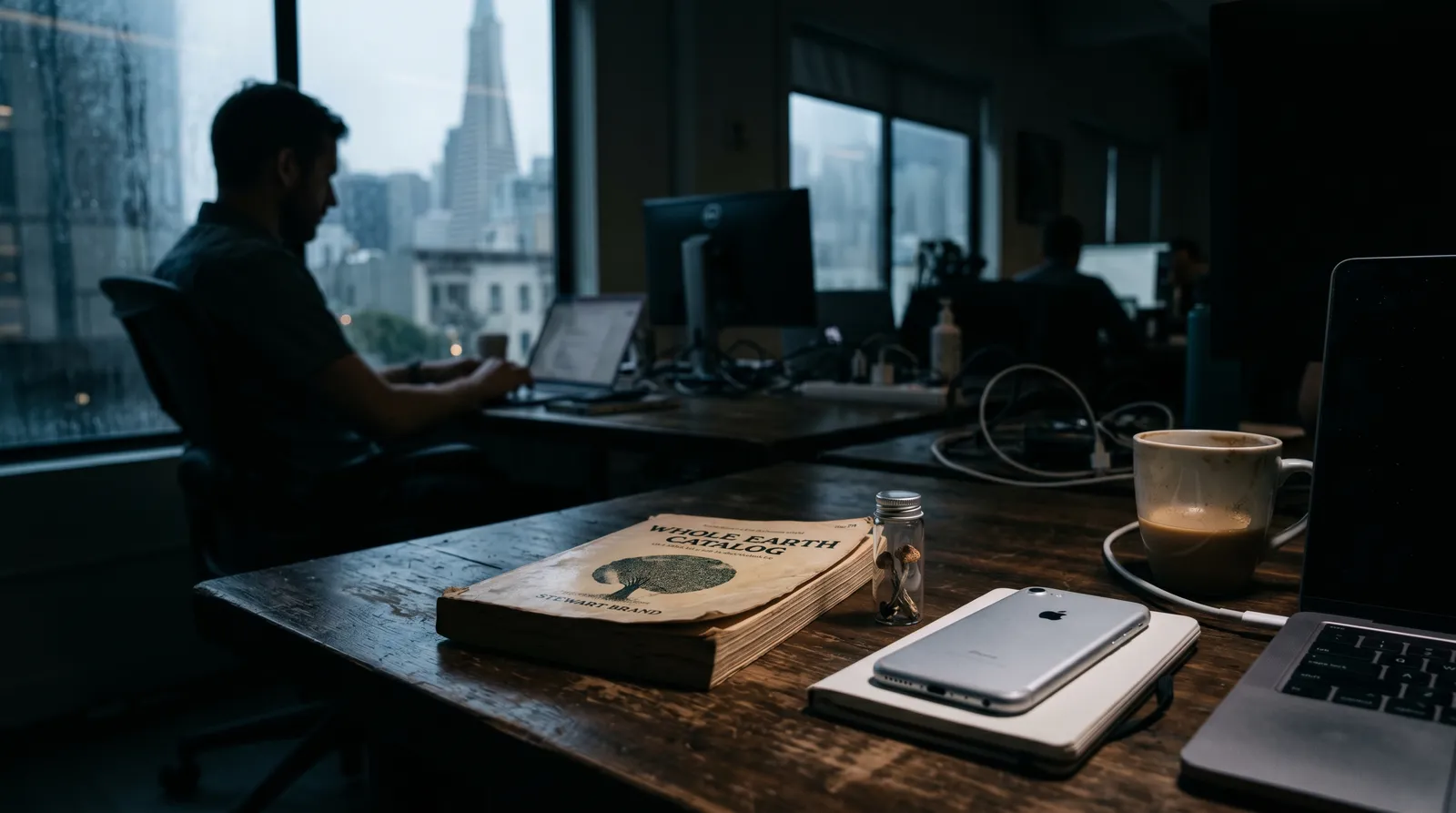
The trajectory from Menlo Park in 1962 to a San Francisco co-working space in 2024 is primarily a cultural story rather than a linear scientific progression. It's about a specific community's willingness to experiment on itself, a set of substances that genuinely do interact with serotonin signalling in interesting ways, and a media cycle that amplified anecdote into trend before the data could catch up.
If you're interested in the practice itself — protocols, dosing ranges, what the research says about risks — the dedicated microdosing guide on the Azarius Encyclopedia covers that ground in detail. Those looking to buy psilocybin truffles for a legal microdosing protocol can find pre-portioned options in the Azarius truffle category, and you can also order Fresh Mushroom Grow Kits for a longer-term supply. If you take any psychiatric medication, particularly SSRIs, MAOIs, or lithium, read the interactions article on the Azarius Encyclopedia before considering any psychedelic protocol, even at sub-perceptual levels.
The Silicon Valley chapter of microdosing history is real and worth knowing. Just remember that the most honest thing any scientist has said about microdosing came from Balázs Szigeti after his 2021 placebo-controlled study: "Microdosing might work. But right now, we can't tell whether it works because of the substance or because you think it does." That uncertainty hasn't stopped anyone, of course. It never has in the Bay Area.
Last updated: April 2026
Frequently Asked Questions
9 questionsWho started microdosing in Silicon Valley?
Did the 2021 placebo-controlled microdosing study find any benefits?
What is the Fadiman Protocol for microdosing?
Is there evidence that microdoses cause brain changes?
When did microdosing become mainstream in tech culture?
What role did the International Foundation for Advanced Study (IFAS) play in microdosing history?
How did the connection between psychedelics and early personal computing develop in Silicon Valley?
What substances are most commonly used for microdosing in Silicon Valley?
Why did tech workers start microdosing for productivity?
About this article
Joshua Askew serves as Editorial Director for Azarius wiki content. He is Managing Director at Yuqo, a content agency specialising in cannabis, psychedelics and ethnobotanical editorial work across multiple languages. Th
This wiki article was drafted with AI assistance and reviewed by Joshua Askew, Managing Director at Yuqo. Editorial oversight by Adam Parsons.
Medical disclaimer. This content is for informational purposes only and does not constitute medical advice. Consult a qualified healthcare provider before use of any substance.
Last reviewed April 24, 2026
References (2)
- [1]Fadiman, J. (2011). The Psychedelic Explorer's Guide: Safe, Therapeutic, and Sacred Journeys. Park Street Press.
- [2]Pollan, M. (2018). How to Change Your Mind: What the New Science of Psychedelics Teaches Us. Penguin Press.
Related Articles
Microdosing vs Macrodosing
Microdosing vs macrodosing is a comparison between two psychedelic dosing strategies that use the same substances at vastly different levels — microdosing…

Microdosing Myths and Misconceptions
Microdosing myths and misconceptions is a category of persistent misinformation that has grown alongside the practice itself.

Microdosing When Inadvisable
Microdosing when inadvisable is a harm-reduction framework that identifies the specific medical, psychiatric, pharmacological, and situational circumstances…
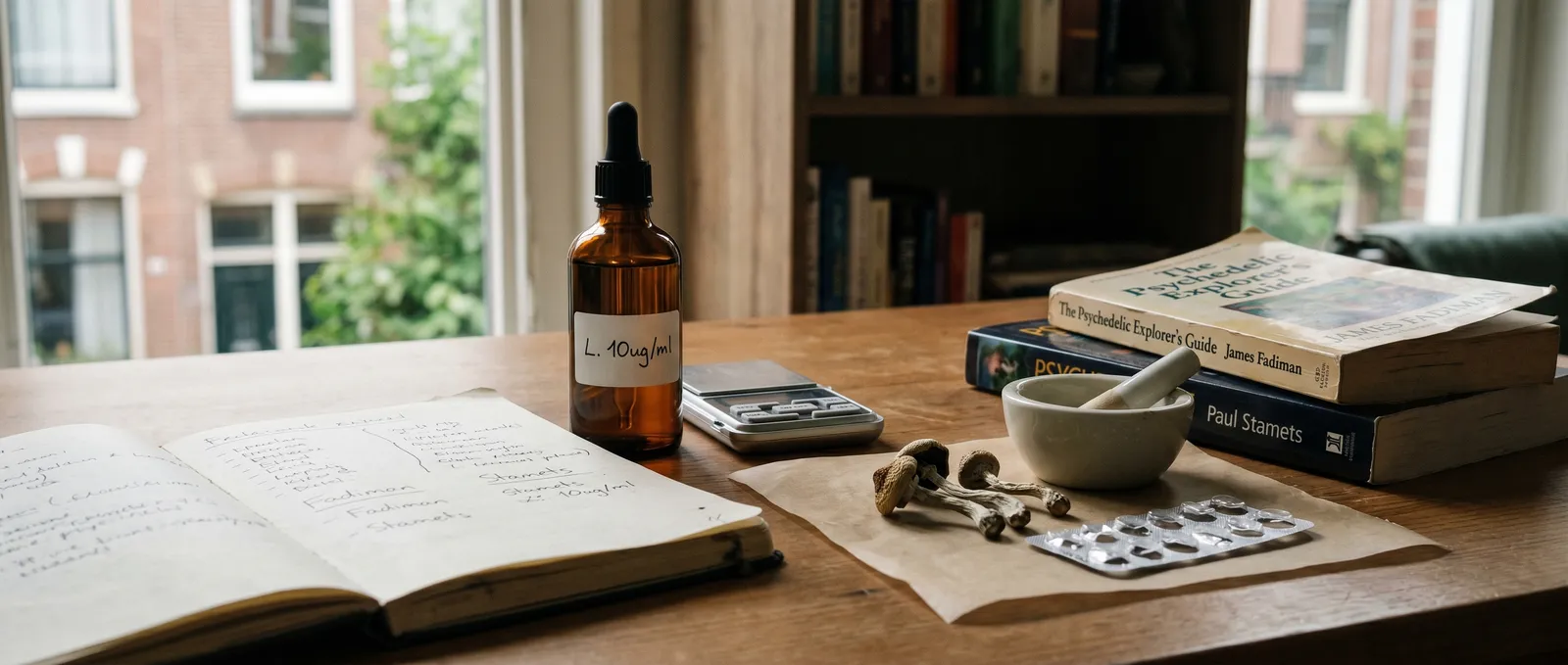
Microdosing Protocols Fadiman Stamets: Full Comparison Guide
A microdosing protocol is a structured schedule dictating dose days and rest days, designed to produce sub-perceptual cognitive shifts without tolerance buildup.
The Microdosing Placebo Debate: How to Tell If It's Actually Working
The microdosing placebo debate is a scientific and practical controversy that examines whether sub-perceptual doses of psilocybin or LSD produce genuine…

Origin of Microdosing Fadiman: How His Protocol Became the Standard
The origin of microdosing as a formalised practice traces to James Fadiman's 2011 book The Psychedelic Explorer's Guide, which introduced sub-perceptual…
Microdosing Research Current State
The current state of microdosing research reveals a field caught between enthusiastic self-reports and sobering controlled data.

Microdosing Medication Interactions
Microdosing medication interactions describe how sub-perceptual doses of psilocybin or LSD affect — or are affected by — prescribed drugs.
Microdosing Contraindications
A microdosing contraindication is a medical condition, psychiatric history, or concurrent medication that makes sub-perceptual psychedelic dosing inadvisable…