
This article discusses psychoactive substances intended for adults (18+). If you have a health condition or take medication, consult a doctor before use. Our age policy
Microdosing Research Current State

Definition
The current state of microdosing research reveals a field caught between enthusiastic self-reports and sobering controlled data. Placebo-controlled trials — notably Szigeti et al. (2021) — have struggled to confirm the dramatic benefits reported in observational surveys, while long-term safety data remains almost entirely absent.
Microdosing research current state is a field caught between enthusiastic self-reports and sobering controlled data — a kind of scientific adolescence where promising anecdotes stack against a thin pile of controlled trials that mostly fail to replicate them. If you're trying to separate signal from noise in the published literature on sub-perceptual psychedelic dosing, this guide walks you through what the science actually says as of early 2026, where the gaps are, and what questions remain genuinely unanswered. This content is written for adults interested in the pharmacology and evidence base — not as a dosing guide.
Disclaimer: This article is for educational and harm-reduction purposes only. It does not constitute medical advice. Psilocybin and LSD are controlled substances in most jurisdictions. Always consult a qualified healthcare professional before making decisions about your health. Azarius does not encourage or condone any illegal activity.
What is a microdose? Definition and research context
A microdose is a sub-perceptual quantity of a psychedelic substance — roughly 1/10th to 1/20th of a full psychoactive dose — that is taken on a repeating schedule with the intention of remaining below the threshold of conscious alteration. A 2019 commentary in the Journal of Psychopharmacology (Kuypers et al., 2019) attempted to standardise this definition. For psilocybin, that translates to approximately 0.1–0.3 g of dried mushroom material or its equivalent in magic truffles. For LSD, the commonly cited range is 5–20 µg. Understanding the microdosing research current state requires grasping this definitional challenge first.
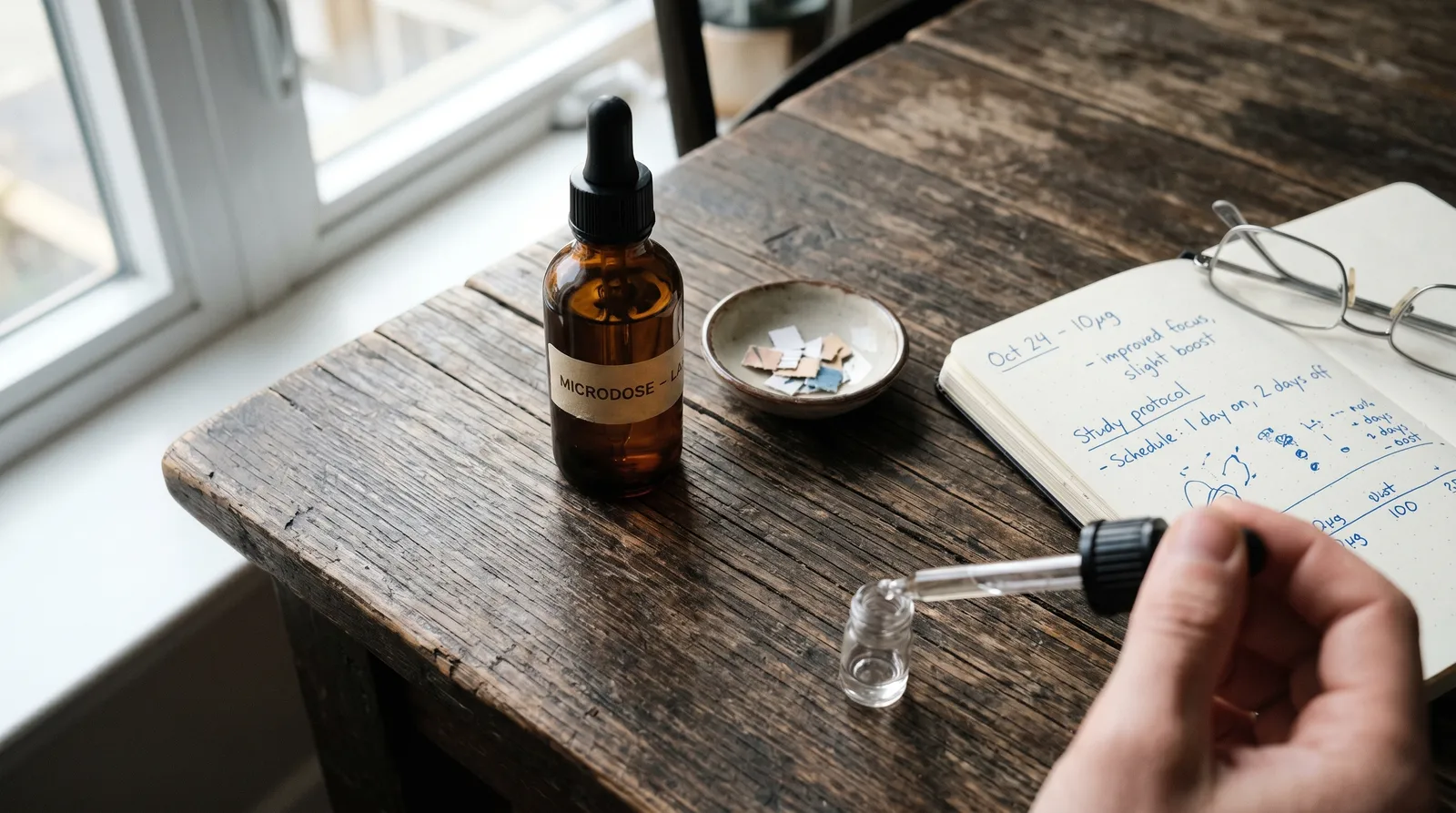
The problem — and this matters for interpreting every study below — is that "sub-perceptual" is subjective. A dose that produces zero noticeable effects in one person might produce mild visual shimmering in another. Individual variation in CYP2D6 metabolism, body composition, and receptor density means that a fixed milligram number doesn't guarantee identical pharmacological exposure across participants. Several controlled trials have struggled with this: participants in the active-dose arm sometimes correctly guess they received the real substance, which compromises blinding.
What do controlled trials actually show?
Controlled trials show far less benefit than self-reports suggest, but not zero effect. That is the honest summary of the microdosing research current state as it stands in early 2026.
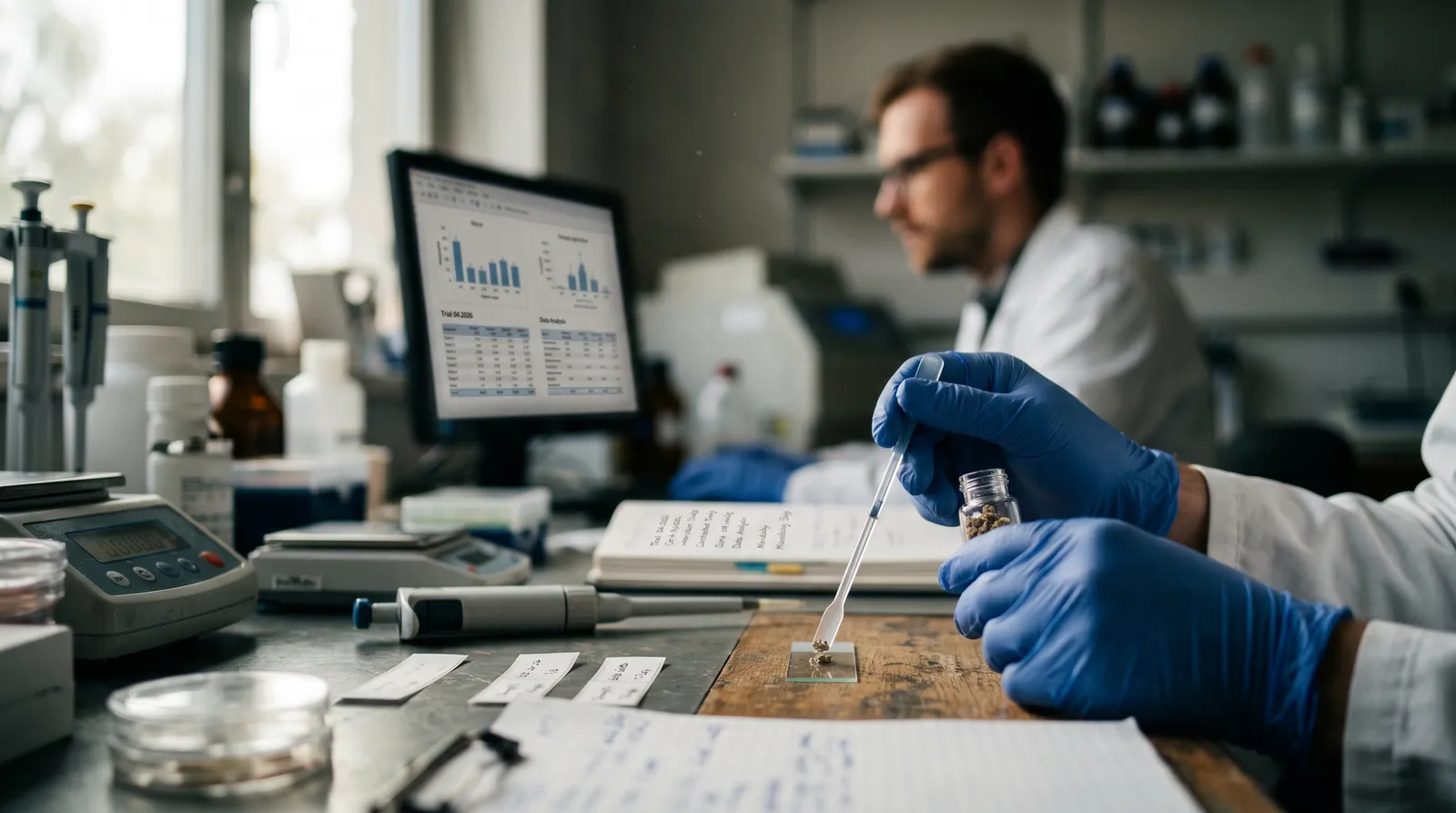
A 2022 systematic review published in The Journal of Clinical Psychiatry (Rootman et al., 2022) analysed all available controlled studies and found that while observational and open-label data consistently report improvements in mood, creativity, and focus, randomised placebo-controlled trials paint a more modest picture. The largest placebo-controlled study to date — the self-blinding citizen-science trial by Szigeti et al. (2021), published in eLife with 191 participants — found that both the microdosing group and the placebo group improved on measures of psychological well-being. The active group did not significantly outperform placebo on most outcomes.
A double-blind laboratory study by Marschall et al. (2022) administered psilocybin microdoses (0.5 mg) versus placebo to healthy volunteers under controlled conditions. They found no significant differences in creativity, cognition, or subjective well-being between groups. The authors noted that expectation effects were large enough to account for most of the improvements participants reported in unblinded settings.
That said, not every controlled trial has been null. A study by Hutten et al. (2020) found that repeated low-dose LSD (5–20 µg) produced detectable changes in pain tolerance and time perception — though these were subtle effects that participants didn't necessarily notice subjectively. And a 2023 trial by Murphy et al. found modest improvements in emotional processing at 10 µg LSD versus placebo, suggesting the substance does something at these doses, even if that something doesn't map neatly onto the dramatic self-reports circulating online.
Why is there such a gap between self-reports and trial data?
Expectancy, regression to the mean, and self-selection bias explain most of the discrepancy between anecdotal reports and controlled findings in the microdosing research current state.

- Expectancy effects. People who choose to microdose tend to be optimistic about psychedelics generally. They've read the testimonials, they've chosen a protocol, and they expect improvement. The Szigeti et al. (2021) study demonstrated this directly: participants who believed they were microdosing improved regardless of whether they actually received psilocybin or a placebo capsule. Expectation is a powerful pharmacological agent in its own right.
- Regression to the mean. Many people start microdosing during a low point — a depressive episode, a creative block, a period of burnout. Natural fluctuation means some of those people would improve regardless of any intervention. Without a control group, you can't distinguish drug effect from time effect.
- Observational study design. Most of the positive data comes from surveys and self-selected cohorts. A 2021 study (Polito & Stevenson, 2019, with follow-up data published in 2021) tracked 98 microdosers over six weeks and found improvements in attention, well-being, and mystical experiences — but without a placebo arm, those findings remain suggestive rather than confirmatory. The authors themselves acknowledged this limitation.
- Cultural amplification. Online communities and media coverage create a feedback loop where positive experiences get shared widely while neutral or negative ones go unreported. This publication bias in informal settings inflates the perceived success rate of microdosing well beyond what the microdosing research current state can substantiate.
What about long-term safety — particularly cardiac risk?
Long-term safety data for microdosing is almost entirely absent, and the theoretical cardiac risk from 5-HT2B receptor activation remains the most pressing unresolved concern in the field.
Psilocin and LSD both act as agonists at the 5-HT2B serotonin receptor. Chronic activation of 5-HT2B is associated with valvular heart disease (VHD) — this is the mechanism that led to the withdrawal of fenfluramine (the "fen" in fen-phen) and pergolide from the market.
A 2023 analysis published by researchers at Harvard's Petrie-Flom Center flagged this as a theoretical concern for repeated microdosing protocols. The key word is "theoretical" — no human study has yet demonstrated cardiac valve changes in microdosers. However, no study has looked for them either, which is a different kind of problem. Animal data from Flanagan et al. (2019) showed that chronic intermittent low-dose DMT in rats produced measurable cardiac changes, though the translation to human psilocybin dosing schedules remains uncertain.
The concern is amplified by the fact that many microdosing protocols involve dosing 2–4 times per week for months or years. That's a very different exposure pattern than taking a full dose once or twice in a lifetime. The safety profile of acute high-dose psilocybin — which is reasonably well-established from clinical trials at Johns Hopkins and Imperial College — simply doesn't apply to chronic low-dose exposure. These are pharmacologically different questions.
For anyone taking medications that affect cardiac function, the interaction between 5-HT2B agonism and existing cardiovascular load is an unanswered question. The dedicated psilocybin interactions article in this wiki cluster covers the specifics of combining microdoses with SSRIs, MAOIs, and lithium.
What are the methodological challenges holding the field back?
Four structural problems prevent the microdosing research current state from producing definitive answers. A 2023 review paper in Psychopharmacology (Polito & Liknaitzky, 2022, updated 2023) catalogued them clearly:
| Challenge | Why it matters | Current status |
|---|---|---|
| Dose standardisation | Different studies use different substances (LSD vs psilocybin vs 1P-LSD), different doses, different schedules (Fadiman protocol vs Stamets stack vs every-other-day), and different durations | No consensus protocol exists |
| Blinding failure | Even at sub-perceptual doses, some participants report subtle body sensations that break the blind; Szigeti et al. found 72% correctly guessed their condition | Active placebo designs being explored |
| Outcome measure sprawl | Studies measure everything from creativity to depression to pain to time perception; with many endpoints, some hit significance by chance | Pre-registration improving slowly |
| Small sample sizes | Most trials enrol fewer than 50 participants, sufficient only for detecting large effects; a Cohen's d of 0.2–0.3 requires 200+ participants per arm | Larger trials underway as of 2025–2026 |
What does the observational data suggest, even if it can't prove causation?
Observational data consistently shows microdosers reporting lower anxiety and depression scores compared to non-microdosing controls, though causation cannot be established from these designs.
A 2021 prospective study by Rootman et al. (published in Scientific Reports) tracked over 8,000 participants and found that microdosers reported improvements in mood, mental health, and psychomotor performance over a 30-day period. The psilocybin-plus-lion's-mane combination (the "Stamets stack") showed slightly larger effects than psilocybin alone, though the difference was small. Those interested in lion's mane supplements can buy lion's mane extract capsules from the Azarius smartshop to explore the non-psychoactive component of this stack independently.
Another observational dataset from Hutten et al. (2019) found that current and former microdosers exhibited lower dysfunctional attitudes and negative emotionality compared to non-microdosing controls, along with higher levels of wisdom and open-mindedness. These are interesting correlations, but they're equally consistent with the hypothesis that open-minded, psychologically flexible people are simply more likely to try microdosing in the first place.
Where is the field heading next?
The field is moving toward larger sample sizes, better blinding techniques, and — critically — long-term safety monitoring that has been absent until now.
Several larger, better-designed trials are underway or recently completed as of early 2026. The Beckley Foundation's collaboration with Maastricht University has been running dose-finding studies for LSD microdosing with proper pharmacokinetic measurements — their 2024 interim data suggested that 13 µg LSD produces detectable cognitive effects without subjective intoxication in most participants, though full results are pending peer review.
Imperial College London's Centre for Psychedelic Research has shifted focus toward neuroimaging studies, attempting to identify whether microdoses produce measurable changes in brain connectivity patterns (functional MRI) even when subjective effects are absent. Early data suggests subtle changes in default mode network connectivity, but replication is needed.
The most critical gap remains long-term safety monitoring. No published study has followed microdosers for more than six months with objective health markers (echocardiography, liver function, cognitive testing). Until that data exists, anyone engaging in extended protocols is essentially running an uncontrolled experiment on themselves — which may turn out fine, but "probably fine" is not the same as "demonstrated to be safe."
Microdosing compared to other cognitive wellness approaches
Microdosing has a weaker evidence base than most established cognitive and mood interventions, which is an honest limitation worth acknowledging. Here is how the microdosing research current state compares to evidence for other popular approaches:
- Meditation: Meta-analyses show small-to-moderate effects on anxiety and depression (Hedges' g ≈ 0.3–0.5) across hundreds of controlled trials. The evidence base is vastly more mature than microdosing research.
- Exercise: Robust evidence from large RCTs supports moderate exercise as comparable to SSRIs for mild-to-moderate depression. Effect sizes are well-established.
- Lion's mane mushroom: A handful of small RCTs suggest mild cognitive benefits in older adults, but the evidence base is thin — comparable in maturity to microdosing research, though without the legal and blinding complications. You can order lion's mane extract capsules from the Azarius smartshop if you want to explore this non-psychoactive nootropic on its own terms.
- Full-dose psilocybin therapy: Larger effect sizes in clinical trials for treatment-resistant depression (Cohen's d ≈ 0.8–1.2 in some studies), but administered in controlled therapeutic settings with professional support — a fundamentally different intervention than self-directed microdosing.
The honest limitation here is that microdosing occupies a uniquely difficult position: too subtle for easy measurement, too legally restricted for easy study, and too culturally hyped for unbiased self-reporting. That doesn't mean it's ineffective — it means we genuinely don't know yet.
An honest limitation we want to flag
We sell magic truffles and lion's mane — so we have a commercial interest in this topic. We want to be transparent about that. Nothing in this article should be read as a claim that microdosing is proven to work. We wrote this piece because customers deserve an accurate picture of the microdosing research current state, including the parts that don't support the hype. If the science eventually catches up and validates the self-reports, great. If it doesn't, we'd rather you know that upfront than find out after spending money based on inflated expectations.
What practical conclusions can you draw from the current evidence?
The most defensible conclusion is that microdosing probably produces real but modest pharmacological effects that are substantially amplified by expectation and ritual in uncontrolled settings.
The pharmacology makes it implausible that a 5-HT2A agonist at any dose is truly inert. But the something it does may be considerably smaller than the dramatic improvements reported in surveys and online communities. Expectation, ritual, and the placebo response appear to account for a substantial portion of reported benefits.
If you're evaluating the literature yourself, weight controlled trials above observational data, and weight studies with successful blinding above those where participants guessed their condition. The Szigeti et al. (2021) and Marschall et al. (2022) studies are currently the most methodologically rigorous — and both found limited evidence for effects beyond placebo.
The cardiac safety question (5-HT2B receptor activation) remains unresolved and deserves monitoring as the field matures. For a detailed breakdown of specific drug interactions relevant to microdosing protocols, see the dedicated psilocybin interactions article in this wiki cluster. And for those exploring non-psychoactive nootropic support, the Azarius smartshop carries a selection of herbal supplements and focus aids that don't carry the same legal or safety uncertainties — you can get lion's mane, ginkgo biloba, and other cognitive support products from the Azarius webshop.
Last updated: April 2026
Frequently asked questions about microdosing research
Do placebo-controlled microdosing studies show benefits?
Most don't. The largest controlled trial (Szigeti et al., 2021) found both microdosing and placebo groups improved equally. A few smaller studies detected subtle effects on pain tolerance or emotional processing, but nothing matching the dramatic self-reports from uncontrolled settings.
Is there a cardiac risk from long-term microdosing?
Theoretically yes — psilocin and LSD activate 5-HT2B receptors, and chronic 5-HT2B activation is linked to heart valve disease. No human study has confirmed this in microdosers, but no study has specifically looked for it either. The risk remains unquantified.
Why do microdosers report benefits that trials can't replicate?
Expectancy effects, regression to the mean, and self-selection bias. People who choose to microdose expect improvement, often start during low points, and are predisposed to rate their experiences positively. Controlled trials remove these confounds, and effects shrink accordingly.
How large do microdosing trials need to be to detect real effects?
If the true effect size is small (Cohen's d of 0.2–0.3), trials need 200+ participants per arm. Most published studies have fewer than 50, meaning they can only detect large effects and will miss subtle genuine benefits.
What is the standard psilocybin microdose used in research?
Clinical studies typically use 0.5–3 mg of pure psilocybin, which corresponds roughly to 0.1–0.3 g of dried mushroom material. The exact equivalent varies with mushroom potency, and no universal standard exists across research groups.
Does the Stamets stack (psilocybin plus lion's mane) have clinical evidence?
Only observational data. Rootman et al. (2021) found slightly larger self-reported improvements with the combination versus psilocybin alone in a survey of 8,000+ participants, but no placebo-controlled trial has tested this specific combination.
Frequently Asked Questions
10 questionsDo placebo-controlled microdosing studies show benefits?
Is there a cardiac risk from long-term microdosing?
Why do microdosers report benefits that trials can't replicate?
How large do microdosing trials need to be to detect real effects?
What is the standard psilocybin microdose used in research?
Does the Stamets stack (psilocybin plus lion's mane) have clinical evidence?
Why is blinding so difficult in microdosing trials?
Can microdosing LSD and psilocybin be compared directly in research?
What brain imaging changes have been observed in microdosing studies?
How long do typical microdosing research protocols last?
About this article

Joshua Askew serves as Editorial Director for Azarius wiki content. He is Managing Director at Yuqo, a content agency specialising in cannabis, psychedelics and ethnobotanical editorial work across multiple languages. Th
This wiki article was drafted with AI assistance and reviewed by Joshua Askew, Managing Director at Yuqo. Editorial oversight by Adam Parsons.
Medical disclaimer. This content is for informational purposes only and does not constitute medical advice. Consult a qualified healthcare provider before use of any substance.
Last reviewed April 24, 2026
References (3)
- [1]Szigeti, B., Kartner, L., Blemings, A., Rosas, F., Feilding, A., Nutt, D. J., et al. (2021). Self-blinding citizen science to explore psychedelic microdosing. eLife, 10, e62878. DOI: 10.7554/eLife.62878
- [2]Polito, V., & Stevenson, R. J. (2019). A systematic study of microdosing psychedelics. PLoS ONE, 14(2), e0211023. DOI: 10.1371/journal.pone.0211023
- [3]Anderson, T., Petranker, R., Christopher, A., Rosenbaum, D., Weissman, C., Dinh-Williams, L. A., et al. (2019). Psychedelic microdosing benefits and challenges. Harm Reduction Journal, 16(1), 43. DOI: 10.1186/s12954-019-0308-4
Related Articles

Microdosing Silicon Valley History: How Sub-Perceptual Doses Went from Fringe to Boardroom
Sub-perceptual psychedelic dosing and Silicon Valley share roots stretching back to the 1960s, when engineers at Menlo Park research labs first combined LSD…

Microdosing vs Macrodosing
Microdosing vs macrodosing is a comparison between two psychedelic dosing strategies that use the same substances at vastly different levels — microdosing…

Microdosing Myths and Misconceptions
Microdosing myths and misconceptions is a category of persistent misinformation that has grown alongside the practice itself.

Microdosing When Inadvisable
Microdosing when inadvisable is a harm-reduction framework that identifies the specific medical, psychiatric, pharmacological, and situational circumstances…

Microdosing Protocols Fadiman Stamets: Full Comparison Guide
A microdosing protocol is a structured schedule dictating dose days and rest days, designed to produce sub-perceptual cognitive shifts without tolerance buildup.

The Microdosing Placebo Debate: How to Tell If It's Actually Working
The microdosing placebo debate is a scientific and practical controversy that examines whether sub-perceptual doses of psilocybin or LSD produce genuine…

Origin of Microdosing Fadiman: How His Protocol Became the Standard
The origin of microdosing as a formalised practice traces to James Fadiman's 2011 book The Psychedelic Explorer's Guide, which introduced sub-perceptual…

Microdosing Medication Interactions
Microdosing medication interactions describe how sub-perceptual doses of psilocybin or LSD affect — or are affected by — prescribed drugs.

Microdosing Contraindications
A microdosing contraindication is a medical condition, psychiatric history, or concurrent medication that makes sub-perceptual psychedelic dosing inadvisable…