
This article discusses psychoactive substances intended for adults (18+). If you have a health condition or take medication, consult a doctor before use. Our age policy
The Microdosing Placebo Debate: How to Tell If It's Actually Working
Definition
The microdosing placebo debate is a scientific and practical controversy that examines whether sub-perceptual doses of psilocybin or LSD produce genuine pharmacological benefits or whether reported improvements stem largely from expectation. A rapid review by Polito and Liknaitzky (2022) concluded it is not yet possible to determine whether microdosing effects exceed placebo. This guide helps you design a self-blinding protocol to gather your own data.
18+ only — This guide covers psychoactive substance use and applies to adult physiology.
The microdosing placebo debate is a scientific and practical controversy that examines whether sub-perceptual doses of psilocybin or LSD produce genuine pharmacological benefits or whether reported improvements stem largely from expectation and ritual. This matters because if you're going to build a microdosing practice, you need a way to separate genuine pharmacological effects from the powerful pull of expectation. What follows is a practical framework — grounded in the current microdosing placebo debate literature — for designing your own self-assessment, so you're not just guessing.
What does the research actually say about placebo effects in microdosing?
The evidence is genuinely mixed, and no large-scale trial has settled the microdosing placebo debate in either direction. Anyone telling you it's resolved is overselling their position.
A rapid review by Polito and Liknaitzky (2022) examined all available controlled studies on low-dose LSD and psilocybin and concluded that "it is not yet possible to determine whether microdosing is a placebo." That's not a dismissal — it's an honest reading of limited data. The review found that some studies showed small but measurable cognitive or emotional effects at sub-perceptual doses, while others showed the placebo group reporting nearly identical improvements.
One of the more rigorous trials — a double-blind placebo-controlled study by Szigeti et al. (2021), published in eLife — used a clever "self-blinding" protocol where participants prepared their own microdoses and placebos in opaque capsules, then tracked outcomes without knowing which they'd taken on any given day. The result: both groups improved on measures of wellbeing and life satisfaction, with no statistically significant difference between active dose and placebo. The authors estimated that roughly 75–80% of the reported benefits could be attributed to expectation effects.
Meanwhile, a 2022 double-blind study by Rootman et al., published in Translational Psychiatry, found that active psilocybin microdoses did produce significantly more intense acute effects than placebo — but only among participants who correctly guessed they'd received the real thing. When participants couldn't tell which condition they were in, the gap shrank dramatically. This is what researchers call "breaking blind," and it's the central headache of microdosing research: the substance produces subtle body signals (mild visual brightening, slight warmth) that tip people off, which then activates expectation.
The European Monitoring Centre for Drugs and Drug Addiction (EMCDDA) has flagged microdosing as an emerging trend requiring more robust clinical data, noting that most current evidence comes from self-selected survey samples rather than controlled trials.
Why is the placebo effect so strong with microdosing specifically?
Three converging factors make the placebo response unusually powerful in the microdosing placebo debate: high expectation, elaborate ritual, and subjective outcome measures.
Placebo effects aren't imaginary. They involve real neurobiological changes — dopamine release, endorphin activity, measurable shifts in brain connectivity. The placebo response tends to be strongest when three conditions are met:
- The person expects benefit based on prior accounts or community enthusiasm
- The ritual around the intervention is elaborate — specific doses, specific schedules, journaling, intention-setting
- The outcome being measured is subjective (mood, focus, creativity rather than, say, tumour size)
Microdosing ticks all three boxes. People typically come to it after reading enthusiastic accounts. The ritual is specific — a particular dose on a particular schedule, often with journaling and intention-setting. And the outcomes people track are almost entirely self-reported and subjective. According to Hartogsohn (2016), set and setting don't just influence psychedelic experiences at macro doses — they shape the entire interpretive framework a person brings to any substance interaction, including sub-perceptual ones.
There's also a phenomenon called "confirmation bias in self-tracking." If you take a microdose on Monday and have a productive day, you attribute the productivity to the dose. If you take it and have a rubbish day, you attribute the bad day to external factors — traffic, poor sleep, annoying colleagues. Over weeks, this selective attribution builds a convincing personal narrative that the microdose is working, even if a controlled analysis would show no pattern.
Does "placebo" mean the benefits are fake?
No — a placebo effect that genuinely reduces your anxiety or improves your focus is still a real reduction in anxiety and a real improvement in focus. Your brain actually changed. The question at the heart of the microdosing placebo debate is whether the psilocybin molecule caused that change, or whether your belief system and daily ritual did.
This distinction matters for practical reasons. If the benefit comes primarily from the ritual — the intention-setting, the journaling, the deliberate attention to your mental state — then you could potentially get the same result with an inert capsule and the same practice. That's not a trivial insight. It means the habit architecture around microdosing might be more valuable than the substance itself.
A 2020 survey analysis by Kaertner et al. in Psychopharmacology found that microdosers who maintained structured routines (consistent timing, journaling, mindfulness practice) reported greater benefits than those who dosed irregularly — regardless of the substance used. The structure was doing heavy lifting.
How can you design your own self-blinding protocol?
You can adapt the self-blinding method from the Szigeti et al. (2021) study using materials you buy at any supplement shop — empty gel capsules, a kitchen scale, and an inert filler. Here's the step-by-step process:
Step 1: Prepare identical capsules. You'll need empty gel capsules (size 0 or 00 work for most doses). You can buy empty capsules from Azarius or any supplement supplier. Fill half with your microdose material and half with an inert filler of similar weight — ground rice flour works. The point is that you cannot tell them apart by look, weight, or feel.
Step 2: Label and randomise. Place each capsule in a small envelope. Have someone else number the envelopes randomly, keeping a separate log of which numbers contain active doses and which contain placebo. You should not have access to this log during the trial. If you live alone, you can use a simple method: write "A" or "P" on slips of paper, seal them in the envelopes alongside the capsules, and only open the slip after you've recorded your day's observations.
Step 3: Follow your normal schedule. Whether you use a one-day-on, two-days-off protocol or the Fadiman schedule (dose on day 1, observe day 2, rest day 3), stick to it. Take whichever capsule comes next in your numbered sequence on each dosing day.
Step 4: Track outcomes before unblinding. Every evening, rate your day on a few simple scales before you know whether you took an active dose or placebo. Keep it to 3–5 measures you actually care about: mood (1–10), focus (1–10), anxiety (1–10), creativity (1–10), sleep quality the previous night (1–10). Use the same measures every day. Don't add new ones mid-trial — that introduces noise.
Step 5: Run it for at least four weeks. You need enough data points to see a pattern. With a typical dosing schedule, four weeks gives you roughly 8–10 dosing days — enough to compare active vs. placebo with some statistical meaning, though far from clinical-trial rigour.
Step 6: Unblind and compare. After the trial period, open the log. Average your scores on active days vs. placebo days. If there's a consistent, meaningful gap (not just 0.3 points on a 10-point scale), you have some personal evidence that the substance is contributing beyond placebo. If the scores are similar, the ritual and intention may be doing most of the work — which, as discussed above, doesn't mean the benefit isn't real.
What are the most common mistakes people make when self-assessing?
The five most frequent errors all let expectation contaminate the data you're trying to collect about the microdosing placebo debate in your own experience.
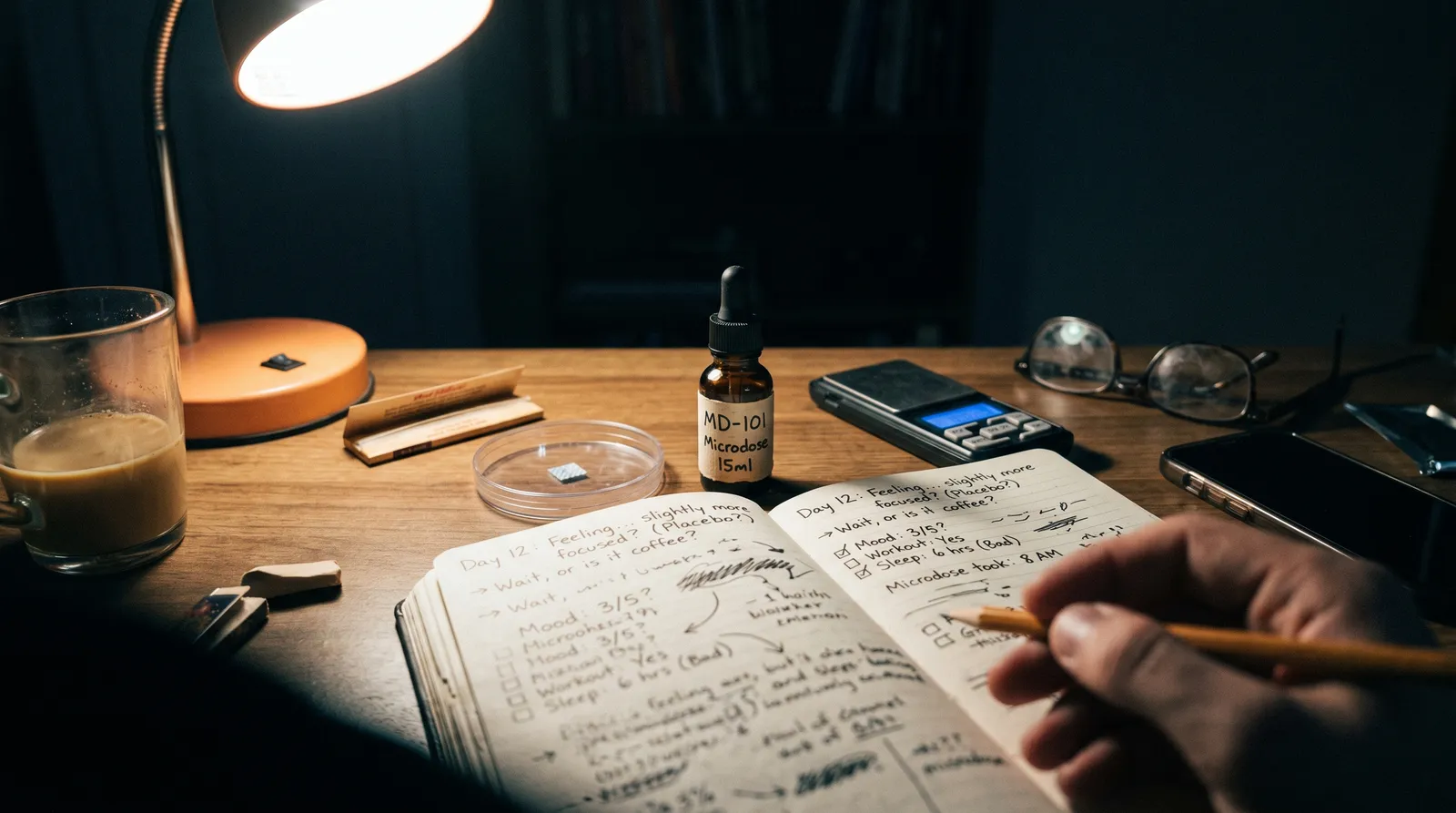
Tracking too many variables. If you're rating 15 different aspects of your day, you'll find a "significant" difference somewhere just by chance. Pick 3–5 outcomes that matter to you and stick with them.
Not controlling for day-of-week effects. If your active doses always fall on Mondays and your placebos always fall on Fridays, you're measuring the difference between Monday-you and Friday-you, not between microdose and placebo. Randomisation handles this — don't skip it.
Rating after unblinding. The moment you know which capsule you took, your ratings become unreliable. Always record your scores first, then check the log if you must. Better yet, batch the unblinding at the end of the full trial.
Stopping early because "it's obviously working." That feeling of certainty is exactly what the protocol is designed to test. If you stop at week two because you're convinced, you've learned nothing about whether the substance or the conviction is responsible.
Ignoring the off-days. Some protocols include observation days (the day after dosing, when residual effects are sometimes reported). Track these too. If your best days are consistently the day after dosing — regardless of whether the dose was active or placebo — that tells you something interesting about anticipation and recovery rhythms.
Quick-reference self-blinding checklist
| Step | What to do | Common pitfall |
|---|---|---|
| Capsule prep | Fill half active, half inert; make them identical | Weight mismatch gives it away |
| Randomisation | Have someone else assign numbers, or use sealed slips | Skipping this step entirely |
| Tracking | Rate 3–5 outcomes every evening before unblinding | Adding new measures mid-trial |
| Duration | Minimum 4 weeks (8–10 dosing days) | Stopping early due to certainty |
| Unblinding | Batch at end of trial; compare averages | Checking after each dose |
What supplies do you need to get started with self-blinding?
You need a small set of affordable items, most of which you can buy from the Azarius smartshop or order from any supplement supplier.
- Psilocybin microdosing truffles or strips — available to buy from Azarius
- Empty gel capsules (size 0 or 00) — buy these from Azarius or a pharmacy
- A precision milligram scale — essential for consistent dosing; order one from the Azarius accessories range
- Inert filler such as rice flour — get this from any grocery shop
- Small numbered envelopes and a notebook or spreadsheet for daily tracking
Having the right tools matters. A kitchen scale that only reads to the nearest gram is not precise enough for microdosing — you need milligram accuracy. The Azarius smartshop stocks precision scales suitable for this purpose.
What if it turns out to be mostly placebo — should you stop?
That's genuinely up to you, and there's no single right answer in the microdosing placebo debate. If a practice improves your life and carries minimal risk, the mechanism matters less than the outcome to most people. Plenty of well-studied interventions — from cognitive behavioural therapy to exercise — work partly through expectation and self-efficacy. Nobody tells runners to stop because some of the mood benefit comes from believing running helps.
The practical concern is different: if you're spending money on a substance that isn't adding pharmacological value beyond what you'd get from a structured daily check-in with yourself, you might redirect that spending or simplify the practice. Some people who discover their results are placebo-driven switch to the ritual alone — same journaling, same intention-setting, same schedule — and report similar benefits. Others find that knowing the substance is "real" is part of what makes the ritual feel meaningful, and that's a perfectly human response.
The Beckley Foundation has published ongoing research summaries noting that expectancy effects in psychedelic research are not a confound to be eliminated but a variable to be understood — they may actually be part of how these substances produce lasting change at full doses, and the same principle likely applies at microdose levels.
How does the microdosing placebo debate compare to placebo effects in other wellness practices?
The placebo contribution in microdosing appears comparable to — or slightly larger than — what researchers find in supplement and nootropic studies, and smaller than what's seen in acupuncture trials.
| Practice | Estimated placebo contribution | Key similarity to microdosing |
|---|---|---|
| Microdosing psilocybin/LSD | ~75–80% (Szigeti et al., 2021) | Subjective outcomes, strong ritual |
| Nootropic supplements | ~50–70% (varies by compound) | Self-selected users, expectation-driven |
| Acupuncture for pain | ~60–90% (Madsen et al., 2009) | Elaborate ritual, practitioner belief |
| Antidepressant medication | ~30–50% (Kirsch, 2014) | Subjective mood outcomes |
| Exercise for mood | ~20–35% (Lindheimer et al., 2015) | Routine and self-efficacy effects |
This comparison isn't meant to dismiss microdosing — it's meant to show that placebo contributions are normal across wellness practices. The microdosing placebo debate is unusual only in how openly the psychedelic research community discusses it. Most supplement companies would rather you didn't think about this at all.
Where does the science actually stand right now?
As of early 2026, no large-scale, multi-site, double-blind randomised controlled trial of microdosing has been published — which means the microdosing placebo debate remains genuinely open. The studies we have are small (typically 20–80 participants), short (2–8 weeks), and use varied doses and substances. A systematic review by Kuypers et al. (2019) in Journal of Psychopharmacology identified significant methodological inconsistencies across the field — different definitions of "microdose" (ranging from 5–20 µg LSD equivalent), different schedules, different outcome measures — making cross-study comparison unreliable.
What we can say: microdosing probably does something at the neurochemical level. Sub-perceptual doses of psilocybin still bind to 5-HT2A receptors, and LSD at 5–20 µg still shows measurable effects on time perception and emotional processing in some controlled settings. Whether those neurochemical nudges translate into the life-changing benefits reported in surveys — that remains genuinely unclear, and the placebo contribution appears to be substantial.
If you're interested in the pharmacology of how psilocybin interacts with serotonin receptors, see the Azarius wiki article on psilocybin pharmacology. For specific safety considerations around combining microdoses with SSRIs, MAOIs, or lithium, the dedicated interactions and safety article in this wiki cluster covers those topics in detail. You can also buy psilocybin microdosing products and accessories like precision scales from the Azarius smartshop catalogue.
An honest limitation: this entire article draws on a small and methodologically inconsistent evidence base. We've done our best to represent the microdosing placebo debate fairly, but new trials could shift the picture substantially. If a large, well-powered RCT lands next year and shows clear pharmacological effects, we'll update accordingly. If it confirms the placebo explanation, we'll update for that too. The self-blinding protocol above is the best tool available to you personally in the meantime — imperfect, but far better than relying on vibes.
The EMCDDA and the Beckley Foundation both continue to call for larger and more rigorous trials. Until those arrive, the honest position stands: microdosing might work, placebo definitely works, and the ritual around both probably matters more than most people assume. A self-blinding protocol won't give you clinical certainty, but it will give you better personal data than guessing — and that's worth the four weeks.
Last updated: April 2026
Frequently Asked Questions
10 questionsCan you self-blind a microdosing protocol at home?
Did the self-blinding study find any difference between microdose and placebo?
Does a placebo result mean microdosing benefits aren't real?
How many dosing days do you need for a meaningful self-blinding test?
Why is breaking blind such a problem in microdosing research?
Where can I buy microdosing supplies for a self-blinding experiment?
How much of the reported microdosing benefit is due to expectation?
What is 'breaking blind' and why does it matter in microdosing studies?
What dose did the Imperial College self-blinding study use?
Can active placebos help solve the blinding problem in microdosing research?
About this article
Joshua Askew serves as Editorial Director for Azarius wiki content. He is Managing Director at Yuqo, a content agency specialising in cannabis, psychedelics and ethnobotanical editorial work across multiple languages. Th
This wiki article was drafted with AI assistance and reviewed by Joshua Askew, Managing Director at Yuqo. Editorial oversight by Adam Parsons.
Medical disclaimer. This content is for informational purposes only and does not constitute medical advice. Consult a qualified healthcare provider before use of any substance.
Last reviewed April 24, 2026
References (2)
- [1]Szigeti, B., et al. (2021). Self-blinding citizen science to explore psychedelic microdosing. eLife, 10, e62878. DOI: 10.7554/eLife.62878
- [2]Kaertner, L. S., Steinborn, M. B., Kettner, H., Spriggs, M. J., Roseman, L., Buchborn, T., et al. (2021). Positive expectations predict improved mental-health outcomes linked to psychedelic microdosing. Scientific Reports, 11(1), 1941. DOI: 10.1038/s41598-021-81446-7
Related Articles
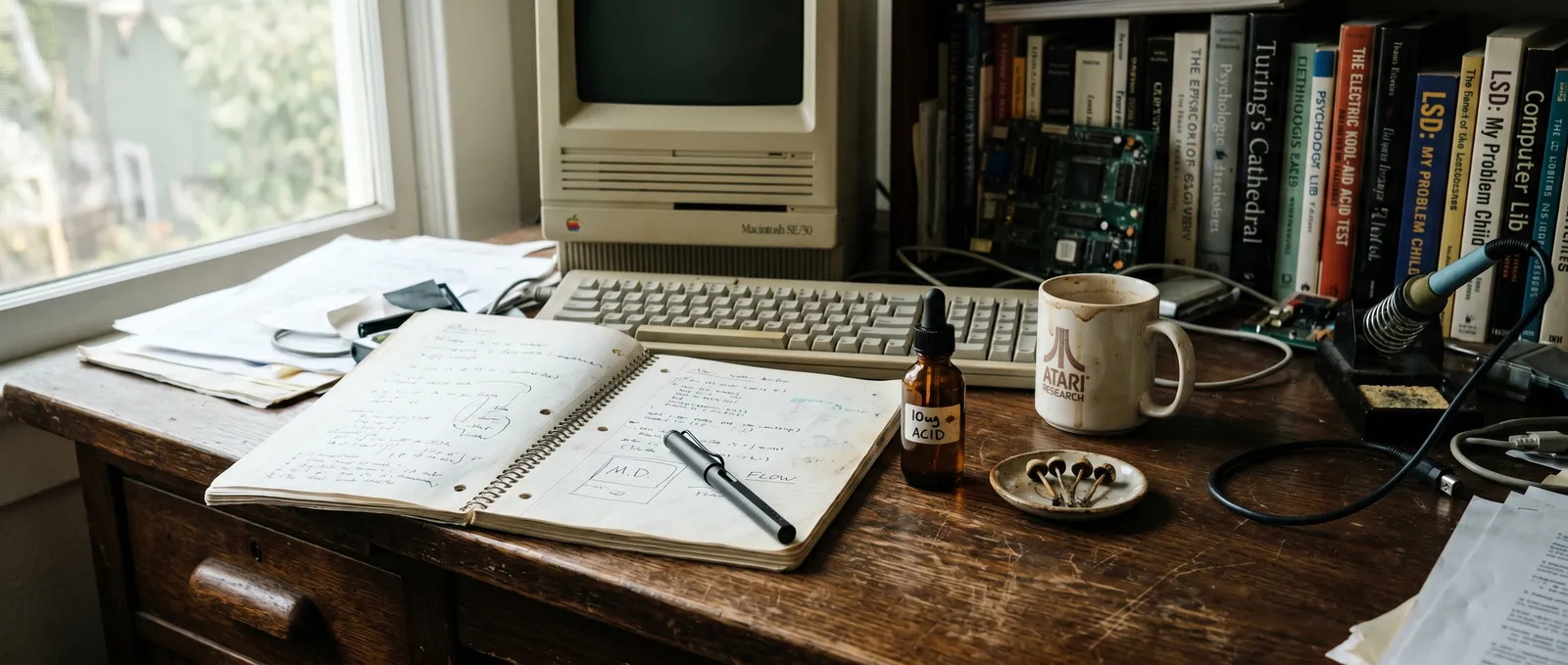
Microdosing Silicon Valley History: How Sub-Perceptual Doses Went from Fringe to Boardroom
Sub-perceptual psychedelic dosing and Silicon Valley share roots stretching back to the 1960s, when engineers at Menlo Park research labs first combined LSD…
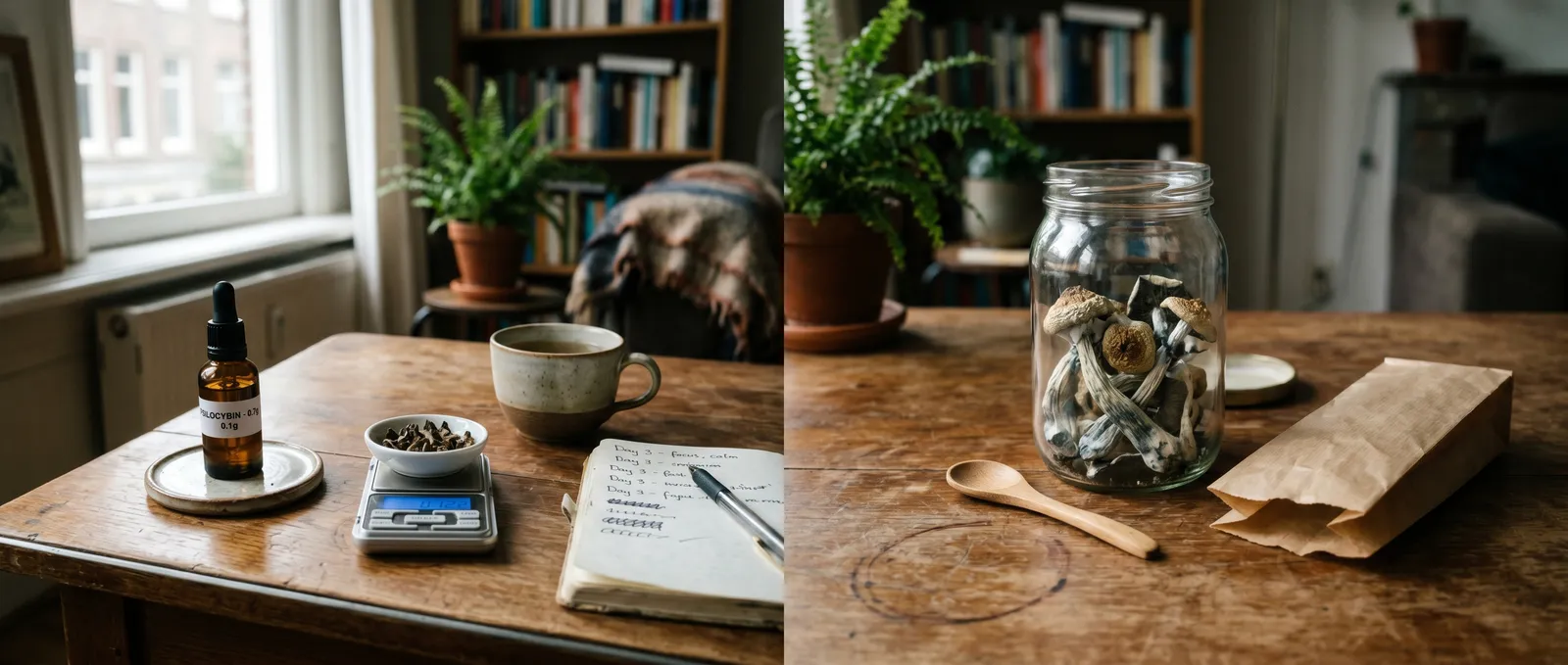
Microdosing vs Macrodosing
Microdosing vs macrodosing is a comparison between two psychedelic dosing strategies that use the same substances at vastly different levels — microdosing…
Microdosing Myths and Misconceptions
Microdosing myths and misconceptions is a category of persistent misinformation that has grown alongside the practice itself.
Microdosing When Inadvisable
Microdosing when inadvisable is a harm-reduction framework that identifies the specific medical, psychiatric, pharmacological, and situational circumstances…
Microdosing Protocols Fadiman Stamets: Full Comparison Guide
A microdosing protocol is a structured schedule dictating dose days and rest days, designed to produce sub-perceptual cognitive shifts without tolerance buildup.

Origin of Microdosing Fadiman: How His Protocol Became the Standard
The origin of microdosing as a formalised practice traces to James Fadiman's 2011 book The Psychedelic Explorer's Guide, which introduced sub-perceptual…
Microdosing Research Current State
The current state of microdosing research reveals a field caught between enthusiastic self-reports and sobering controlled data.
Microdosing Medication Interactions
Microdosing medication interactions describe how sub-perceptual doses of psilocybin or LSD affect — or are affected by — prescribed drugs.
Microdosing Contraindications
A microdosing contraindication is a medical condition, psychiatric history, or concurrent medication that makes sub-perceptual psychedelic dosing inadvisable…