
This article discusses psychoactive substances intended for adults (18+). If you have a health condition or take medication, consult a doctor before use. Our age policy
Cannabis Seedling Stage: A Grower's Step-by-Step Guide
Definition
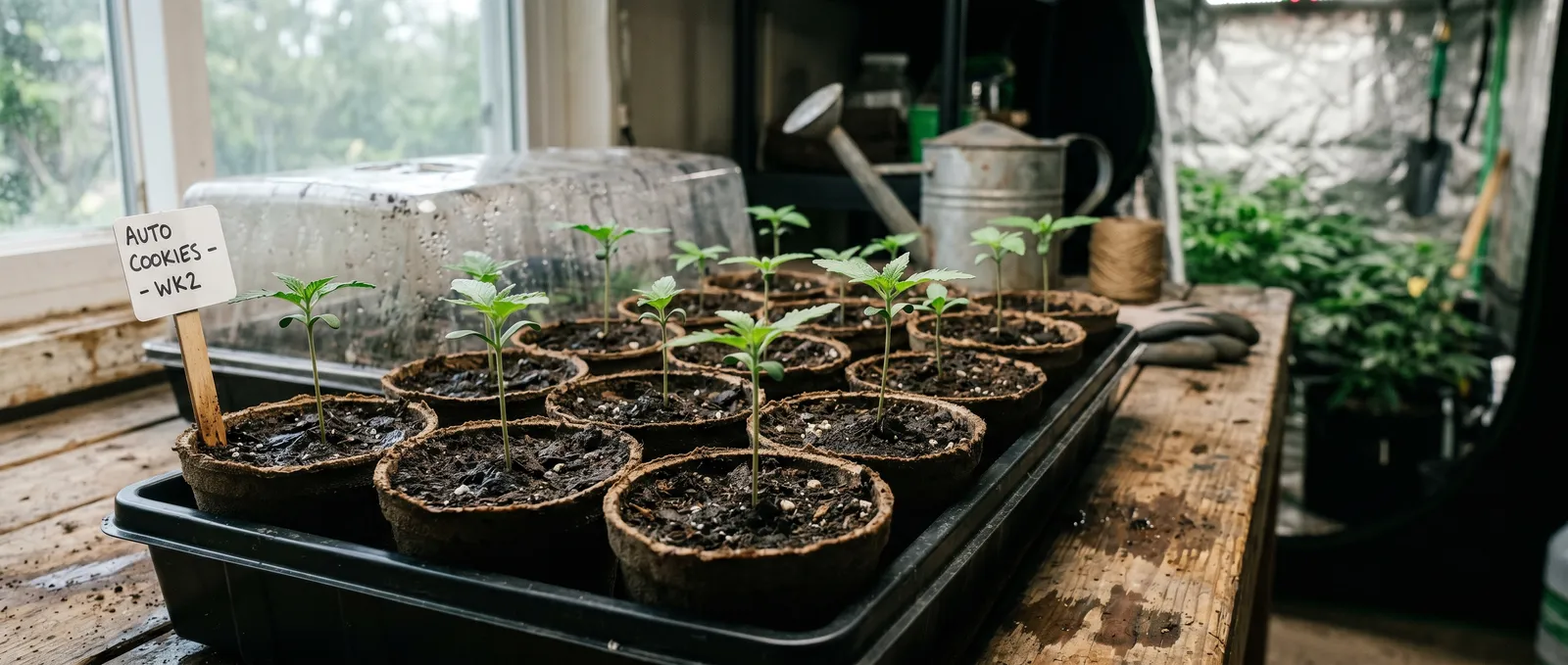
The cannabis seedling stage is the 14–21 day window from cotyledon emergence to the third or fourth set of true leaves, when roots establish and the plant is most sensitive to light intensity, humidity and overwatering. Caplan et al. (2019) identifies environmental control at this stage as a primary driver of later vigour and yield.
Adult use only — this cultivation guide is written for growers aged 18 and over.
The cannabis seedling stage is a 14–21 day growth window that establishes root health, stem strength and the foundation for later vigour and yield. It begins the moment your germinated seed breaks the surface and the cotyledons unfurl, and ends when the plant puts out its third or fourth true node. Get it right and the rest of the grow is mostly maintenance. Get it wrong — overwater, cook it under a 600W HPS, let humidity crash to 30% — and you're starting over. In our own tent we tested a 70% RH humidity dome against a bare propagator in 2022, and the dome seedlings hit their fourth node four days earlier. Small window, big lever.
This guide is educational. Azarius does not provide formal advice — before you buy seeds or grow supplies, verify the current rules for your jurisdiction.
Step 1: Recognise when the cannabis seedling stage begins and ends
The cannabis seedling stage starts the moment your germinated seed breaks the surface of the medium and the cotyledons (those two round embryonic leaves) unfurl. It ends when the plant has developed three to four sets of true, serrated leaves — usually 14 to 21 days from emergence on photoperiod genetics, slightly faster on autoflowers because they're already on the clock (Burgel et al., 2020).
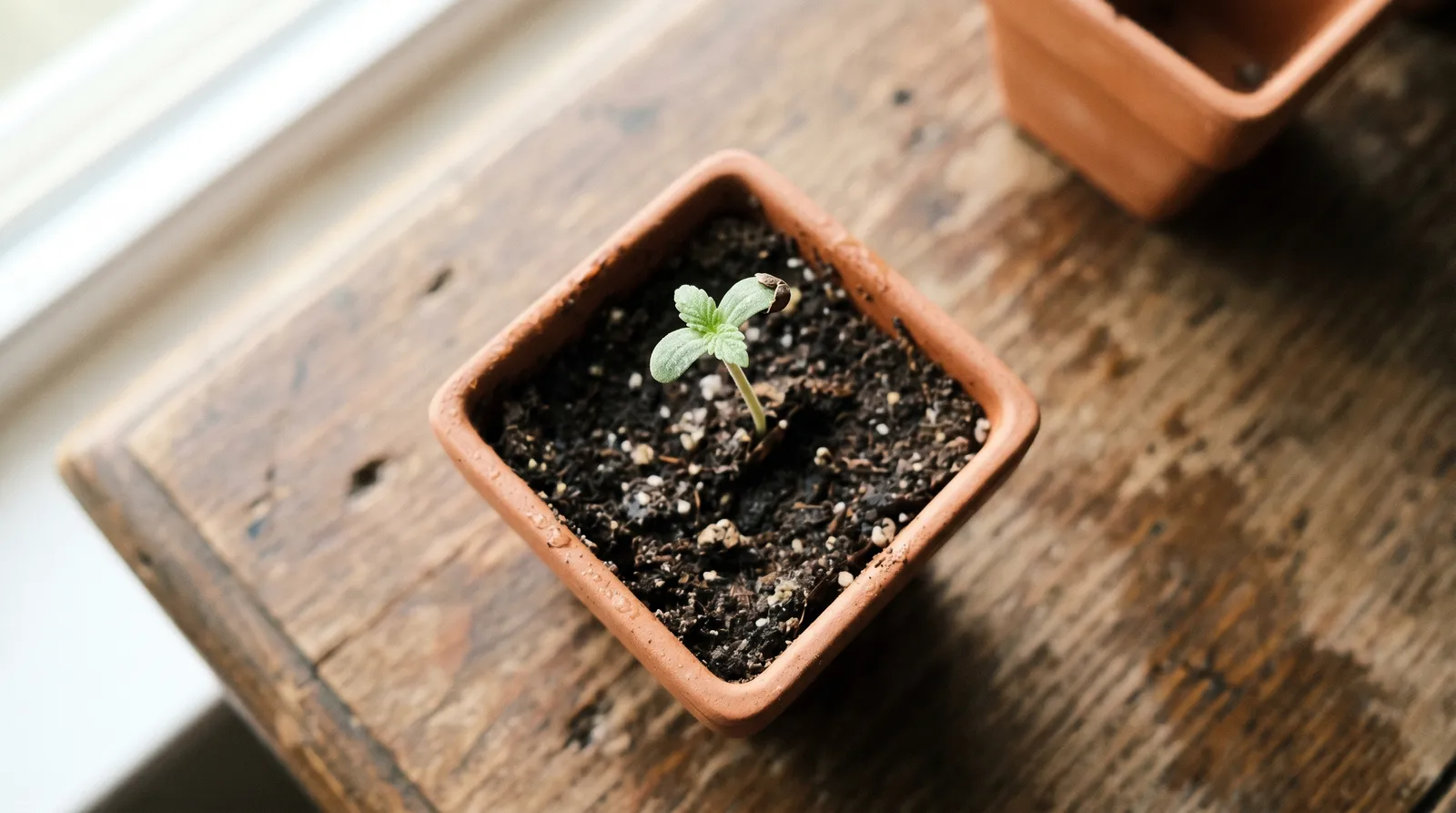
Practical markers:
- Day 1–3: cotyledons open, first pair of single-bladed true leaves emerges.
- Day 7–10: three-bladed then five-bladed leaves appear, root system establishing.
- Day 14–21: plant transitions into early veg — noticeable node stacking, stem thickening (Burgel et al., 2020).
Autoflowers compress this slightly and you should treat them as seedlings for roughly 10–14 days before they start their pre-flower stretch. Photoperiod plants stay in this fragile mode longer and punish impatience.
Step 2: Lock in temperature and humidity (VPD matters)
Seedlings drink through their leaves as much as through the medium, so humidity is the single biggest variable people get wrong during the cannabis seedling stage.
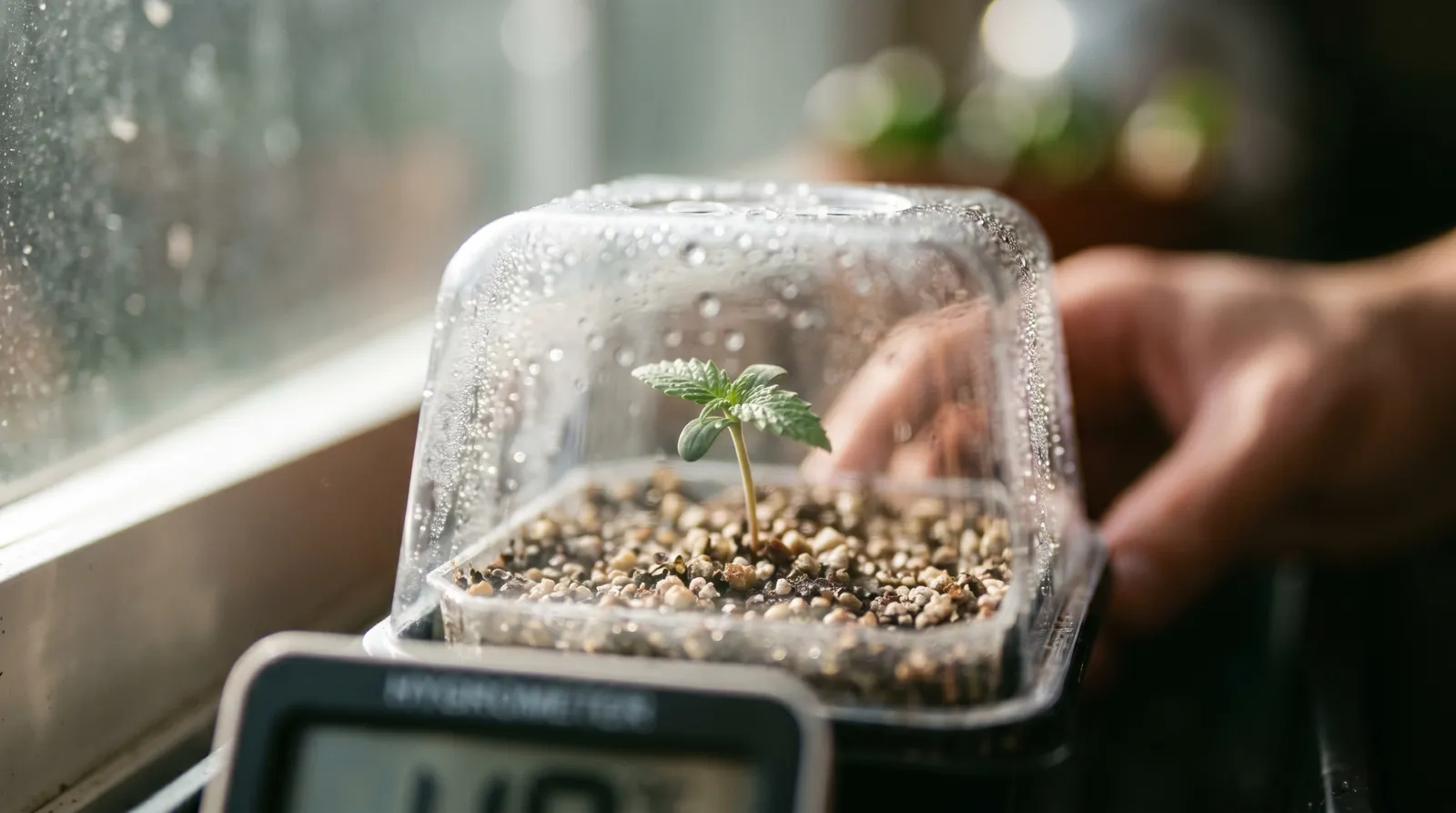
Target ranges backed by controlled-environment horticulture data (Fluence, 2023):
| Parameter | Target range | Notes |
|---|---|---|
| Temperature (lights on) | 22–26°C (72–78°F) | No more than 4°C drop lights off |
| Relative humidity | 65–75% | Propagation dome gets you there cheaply |
| VPD | 0.4–0.8 kPa | Lower than veg on purpose |
| PPFD | 150–300 µmol/m²/s | Roughly one-third of late veg |
Drop below 50% RH and you'll see the edges of the first true leaves curl upward and the plant stall (Vanhove et al., 2011). Push above 80% and you're breeding damping-off pathogens (Pythium, Fusarium) that kill seedlings overnight (Punja, 2021). A cheap thermo-hygrometer in the canopy pays for itself the first time it tells you your tent hit 31°C on a warm afternoon.
Step 3: Light it properly — less than you think
New growers cook seedlings by running full-power lamps too close. A 600W HPS or a 320W LED at full blast 30 cm above a two-day-old sprout is an industrial sunlamp on a sunbather.
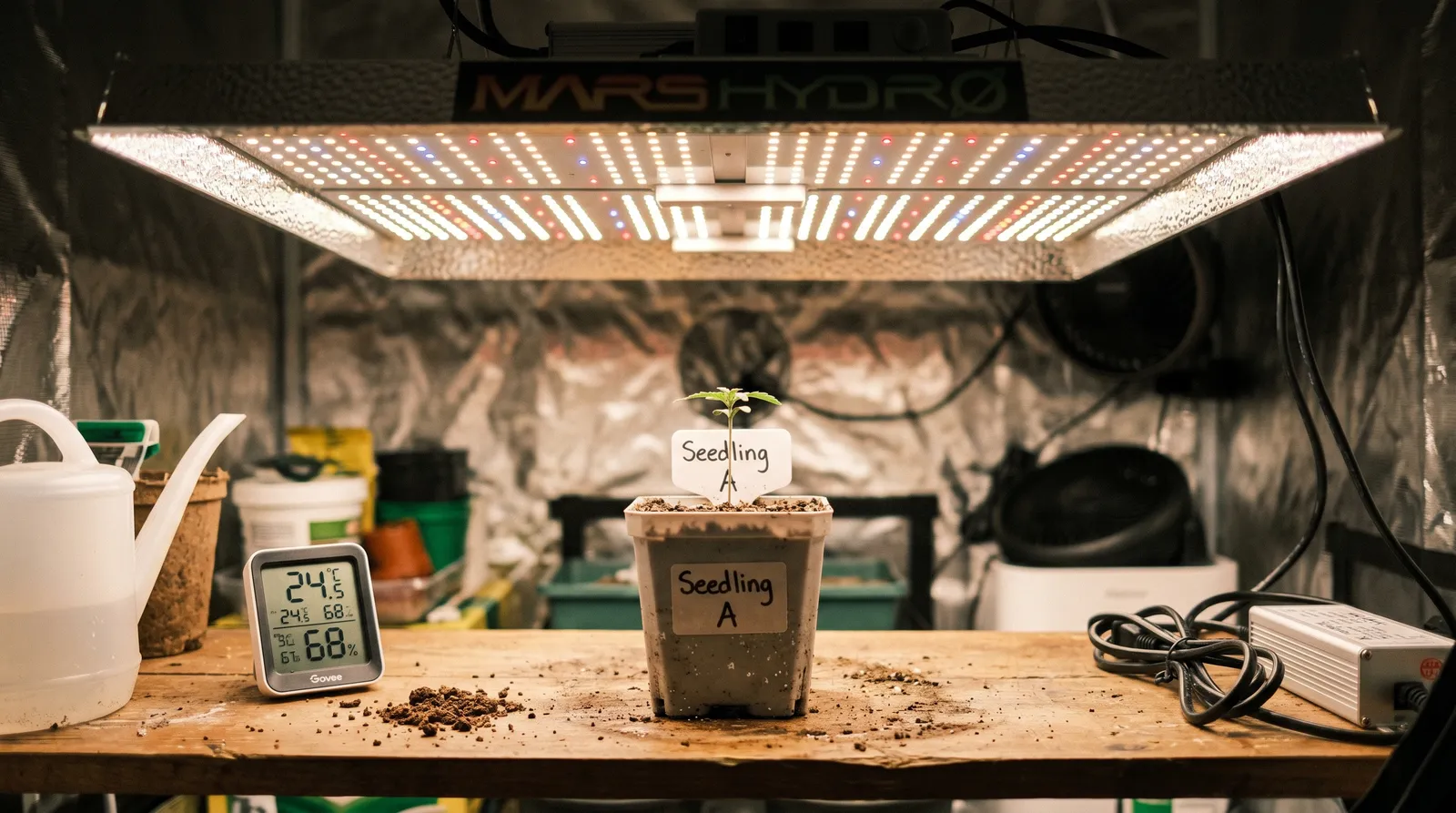
Target PPFD for seedlings: 150–300 µmol/m²/s (Magagnini et al., 2018). That's roughly a third of what you'll use in late veg (Chandra et al., 2008). Practical setup guidance:
- LED panels: dim to 30–40%, hang 50–70 cm above the canopy. Check manufacturer distance charts — a Mars Hydro TS1000 and a Spider Farmer SF2000 have different minimum heights.
- HPS: honestly, don't use HPS for seedlings. If it's your only option, use the lowest-wattage bulb you have and hang high.
- T5 fluorescents or CFLs: genuinely ideal for this stage. Cheap, cool, forgiving.
- Photoperiod: 18/6 or 20/4 for photoperiod genetics (Shiponi & Bernstein, 2021). Autoflowers: 18/6 from day one through harvest is the most common schedule.
If your seedling is "stretching" — long thin stem, big gap between cotyledons and first node — your light is too weak or too far away (Magagnini et al., 2018). Lower it 5 cm at a time and watch for recovery.
Step 4: Water carefully, by medium
Watering during the cannabis seedling stage depends entirely on your medium — generic "water when dry" advice kills more seedlings than any pest.
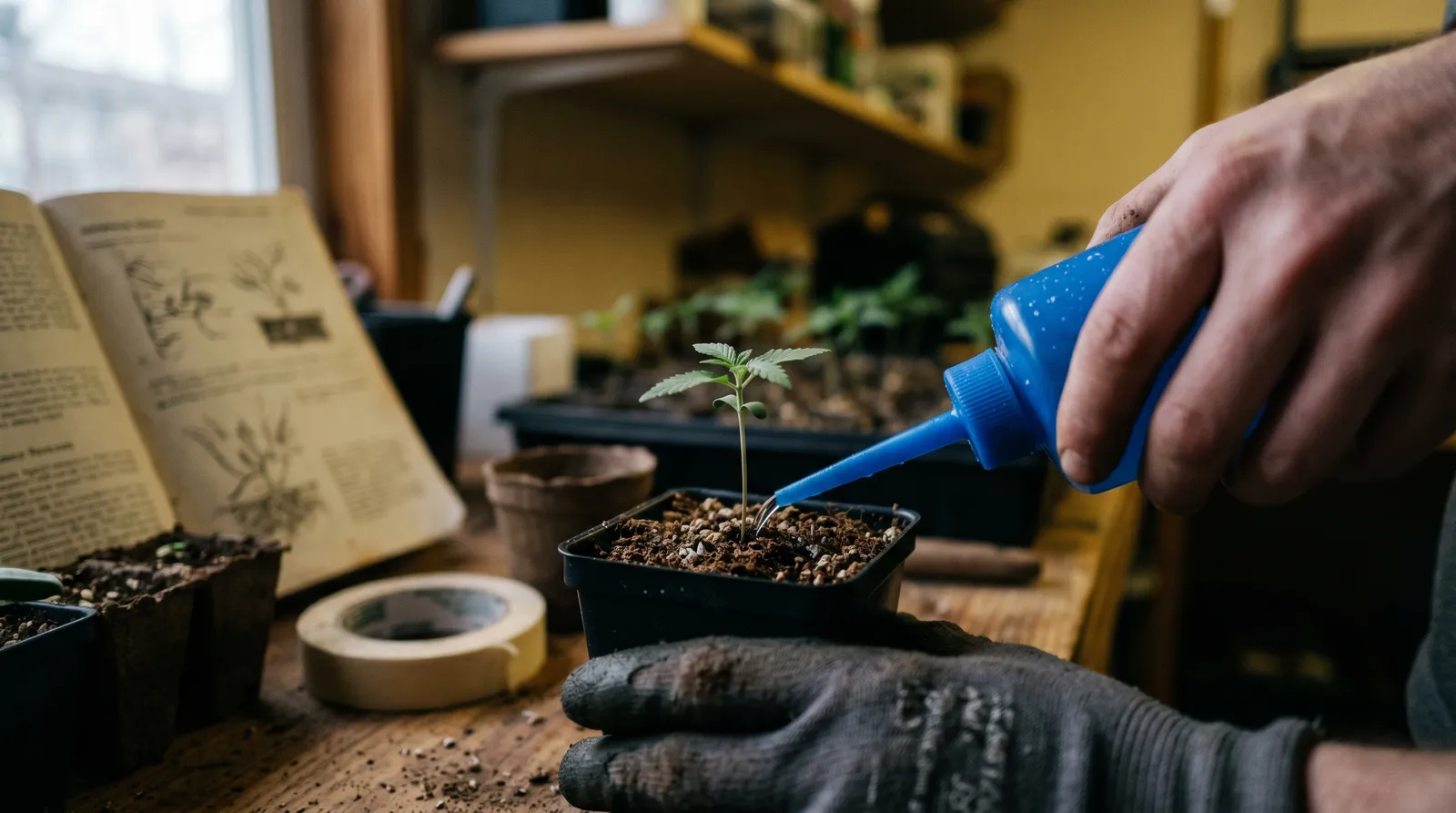
- Soil: moisten the top 2–3 cm with a sprayer or small cup. Do not saturate a 11L pot for a 2 cm sprout — the roots can't use the water, the medium turns anaerobic, and you get root rot. Water in a small ring around the stem and expand outward as the plant grows.
- Coco coir: coco dries faster and buffers less. Small, frequent waterings — 50–100 ml every 1–2 days at pH 5.8–6.2, EC 0.4–0.6 with a light seedling nutrient (Caplan et al., 2017).
- Rockwool/Jiffy plugs: dip in pH 5.8 water to rehydrate, squeeze gently (not bone dry, not dripping), place under dome. Re-wet when the plug feels light.
Seedlings don't need nutrients in the first 7–10 days if they're in a pre-amended soil — the cotyledons feed the plant (Shiponi & Bernstein, 2021). In coco or hydro, start at 25% of label strength around day 5 and scale up slowly (Caplan et al., 2017). Label-strength feeding on a week-old seedling is the fastest way to nute-burn and stall growth.
Step 5: Choose the right starter container and plan the transplant
Two schools of thought exist: start in the final pot, or start small and transplant up. Both work.
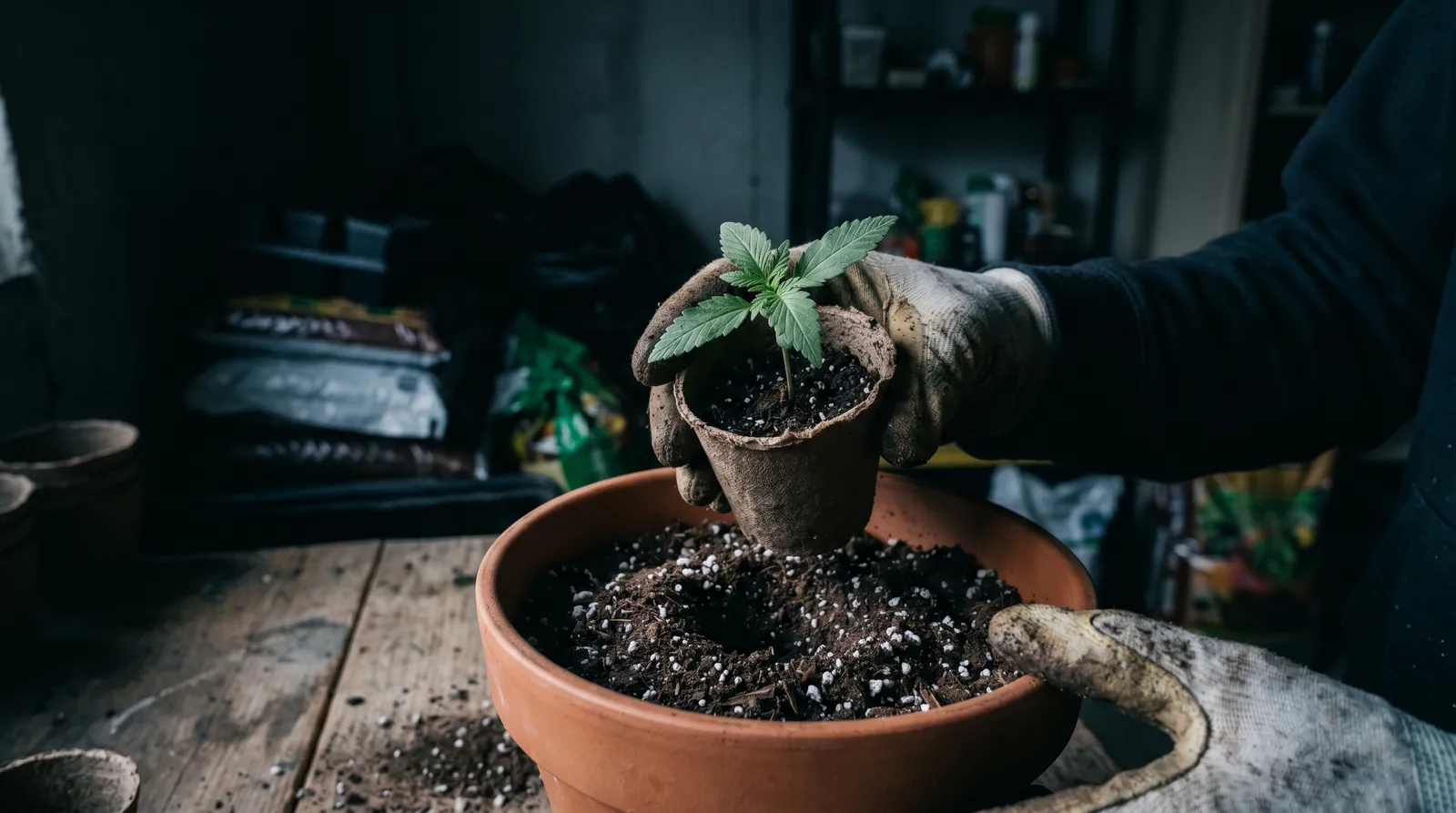
- Start in final pot: best for autoflowers (they don't handle transplant stress well — a check of even 3–5 days can cost you 20% of final yield, per Dutch Passion's cultivation notes on autoflower stress response). Use a fabric pot so the medium dries evenly.
- Start small, transplant up: better for photoperiods. Seedling in a solo cup or 0.5L pot for 10–14 days, then up-pot into 5–11L. Smaller medium volume dries faster, which forces roots to search — you get a tighter, more vigorous root ball.
Transplant when you see roots at the drainage holes of a small pot, or when the true leaves reach the edge of the container. Do it in the dark period or under dimmed light to reduce stress.
Step 6: Spot the common failures early
Most seedling disasters look the same for the first 24 hours — the plant looks sad. The cause varies:
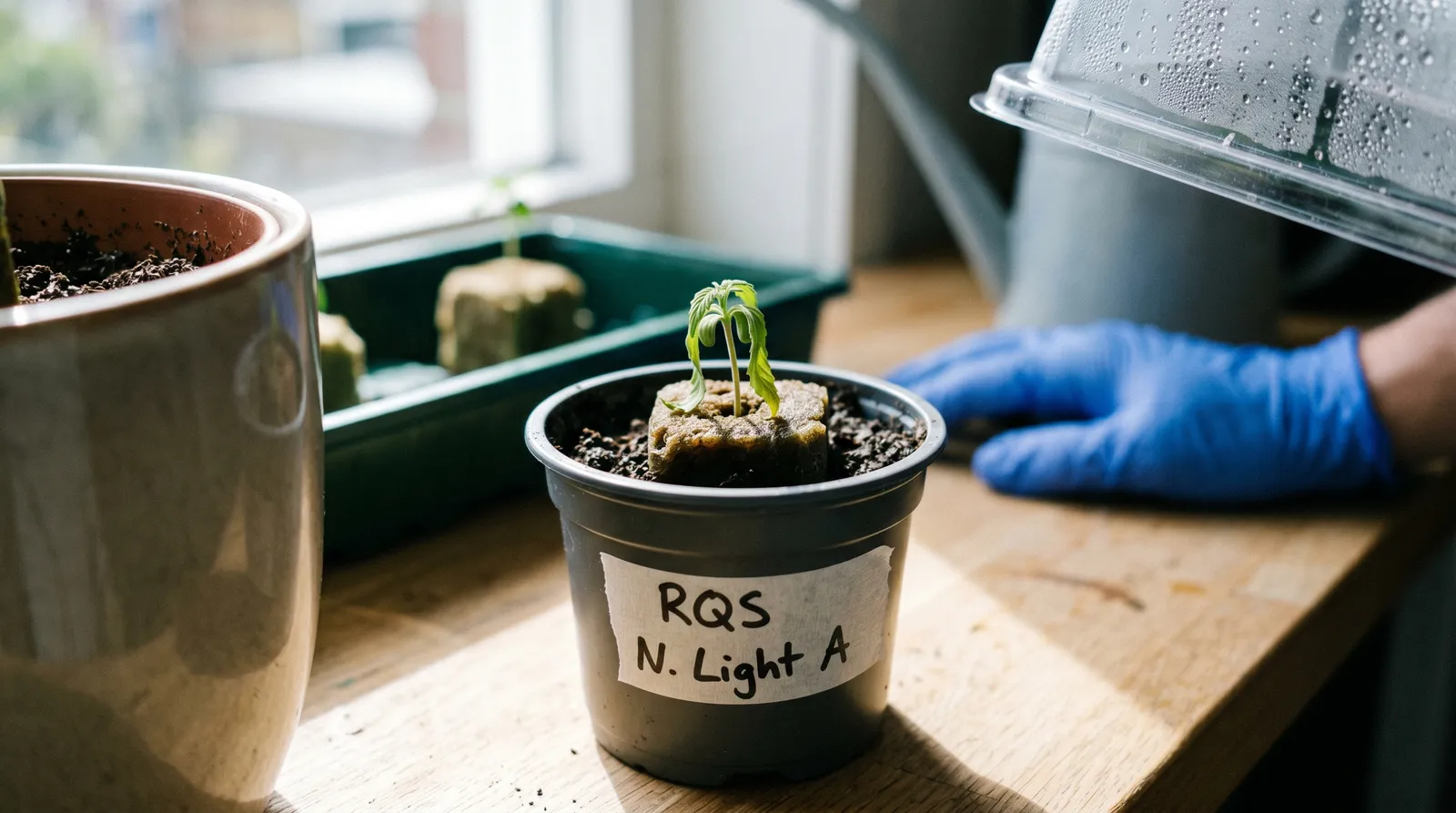
- Damping-off: stem pinches and falls over at soil line. Caused by overwatering + high RH + poor airflow (Punja, 2021). Usually fatal. Prevention: don't saturate the medium, keep a gentle oscillating fan moving air across the canopy.
- Stretch: tall, spindly stem. Too little light, too far away. Move light closer, add a thin bamboo stake to support until the stem thickens.
- Nute burn: yellow-brown tips on the first true leaves. You fed too early or too strong. Flush with pH-corrected plain water and skip the next feed.
- Cotyledons yellowing early: normal after week 2 as the plant transitions to leaf feeding. Premature yellowing (week 1) suggests overwatering.
- Fungus gnats: tiny black flies around the medium. Top-dress with a 1 cm layer of dry sand or perlite and let the top of the medium dry out between waterings.
Quick tips we wish we'd known sooner
- A clear plastic propagator dome with the vents half-open is worth more than any fancy seedling nutrient.
- Don't peel the seed shell off the cotyledons. If it's stuck after 24 hours, mist it and wait — peeling tears the leaf.
- pH your water even in soil. Tap water at pH 7.8 over three weeks locks out iron and you'll blame the genetics.
- Airflow is not ventilation. A small clip-on fan on low, pointed at the wall (not the seedling), gives you stem-strengthening breeze without desiccation.
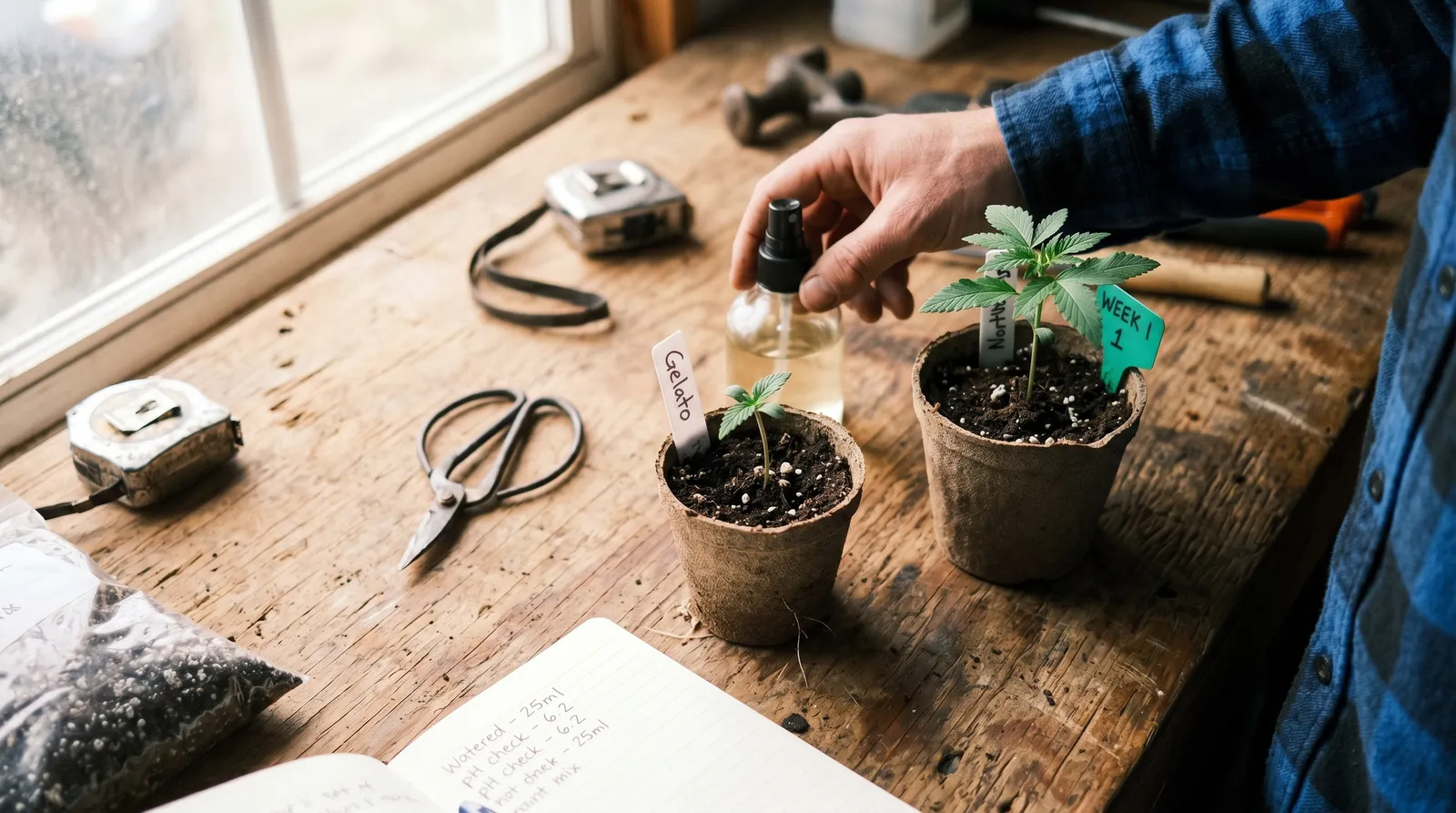
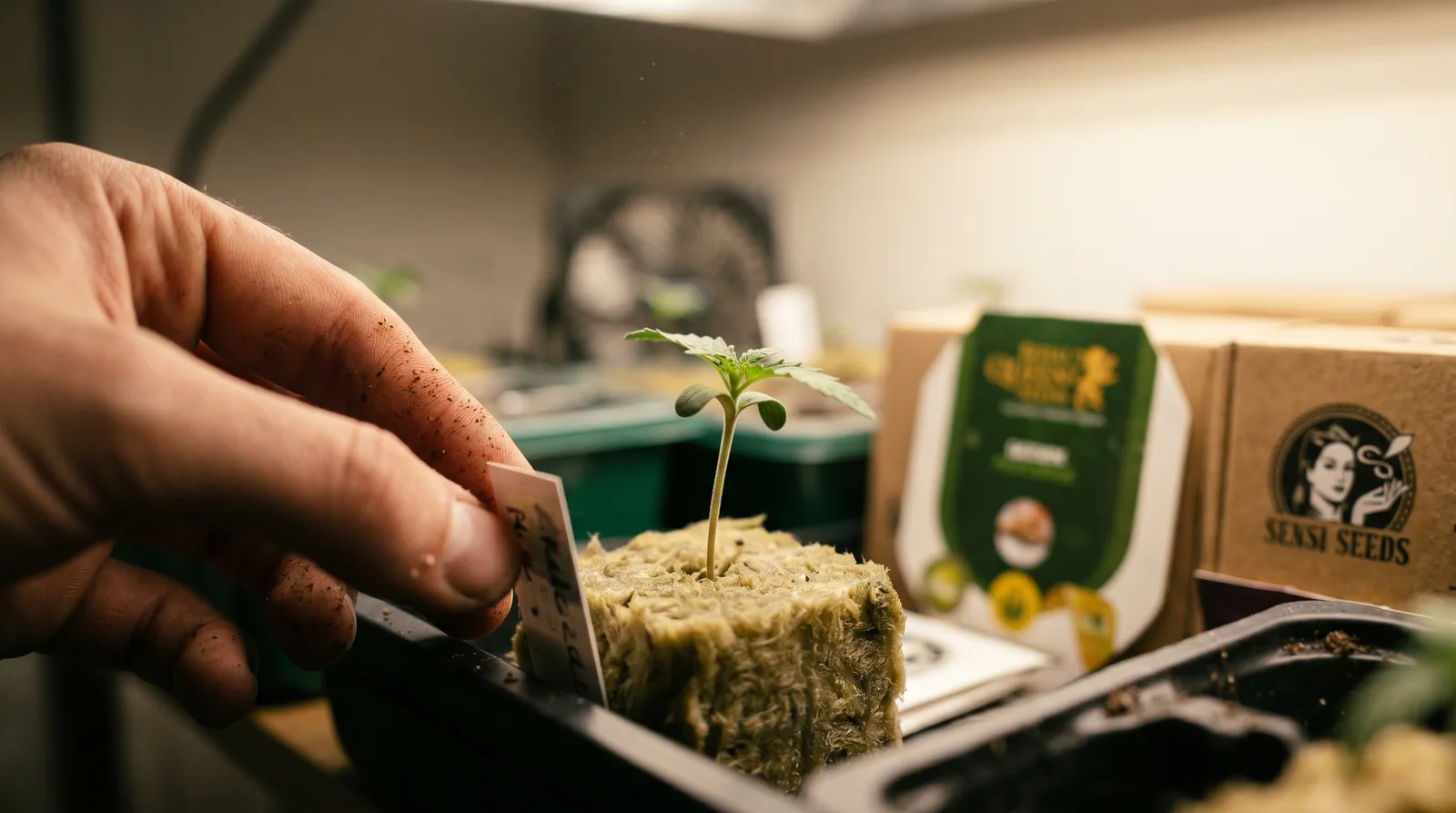
- Label your pots. By week three, a Barney's Farm Pineapple Chunk and a Sensi Seeds Skunk #1 seedling look identical.
Legal notice: Cannabis cultivation laws vary by country and region and change frequently. This guide is educational. Before growing, verify current laws for your specific jurisdiction. Azarius does not provide legal advice.
Azarius cannabis seeds and grow supplies
If you're setting up from scratch and want to buy a kit in one order, we stock photoperiod and autoflower seeds from Royal Queen Seeds, Dutch Passion, Sensi Seeds, Barney's Farm and Paradise Seeds, alongside propagation domes, T5 fixtures, and pH meters suited to small-tent seedling work. Get the propagation environment right first — genetics come second.
Last updated: April 2026
Frequently Asked Questions
8 questionsHow long does the cannabis seedling stage last?
What humidity do cannabis seedlings need?
How close should my light be to a cannabis seedling?
Do cannabis seedlings need nutrients?
Should I start autoflowers in their final pot?
Why is my cannabis seedling stretching?
What is the ideal VPD for cannabis seedlings?
How do I prevent damping-off in cannabis seedlings?
About this article


Luke Sholl has been writing about cannabis, cannabinoids, and the broader benefits of nature since 2011, and has personally grown cannabis in home grow tents for more than a decade. That first-hand cultivation experience
This wiki article was drafted with AI assistance and reviewed by Luke Sholl, External contributor since 2026. Editorial oversight by Adam Parsons.
Medical disclaimer. This content is for informational purposes only and does not constitute medical advice. Consult a qualified healthcare provider before use of any substance.
Last reviewed April 24, 2026
References
- [1]Caplan, D., Dixon, M., & Zheng, Y. (2017). Optimal rate of organic fertilizer during the vegetative-stage for cannabis grown in two coir-based substrates. HortScience, 52(9), 1307-1312. DOI: 10.21273/HORTSCI11903-17
- [2]Magagnini, G., Grassi, G., & Kotiranta, S. (2018). The effect of light spectrum on the morphology and cannabinoid content of Cannabis sativa L.. Medical Cannabis and Cannabinoids, 1(1), 19-27. DOI: 10.1159/000489030
- [3]Chandra, S., Lata, H., Khan, I. A., & ElSohly, M. A. (2008). Photosynthetic response of Cannabis sativa L. to variations in photosynthetic photon flux densities, temperature and CO2 conditions. Physiology and Molecular Biology of Plants, 14(4), 299-306. DOI: 10.1007/s12298-008-0027-x
- [4]Vanhove, W., Van Damme, P., & Meert, N. (2011). Factors determining yield and quality of illicit indoor cannabis (Cannabis spp.) production. Forensic Science International, 212(1-3), 158-163. DOI: 10.1016/j.forsciint.2011.06.006
- [5]Burgel, L., Hartung, J., Schibano, D., & Graeff-Hönninger, S. (2020). Impact of different phytohormones on morphology, yield and cannabinoid content of Cannabis sativa L.. Plants, 9(6), 725. DOI: 10.3390/plants9060725
- [6]Punja, Z. K. (2021). Emerging diseases of Cannabis sativa and sustainable management. Pest Management Science, 77(9), 3857-3870. DOI: 10.1002/ps.6307
- [7]Fluence Bioengineering (2023). Cannabis Cultivation Guide: Photobiology. Fluence by OSRAM. Source
- [8]Shiponi, S., & Bernstein, N. (2021). Response of medical cannabis (Cannabis sativa L.) genotypes to K supply under long photoperiod. Frontiers in Plant Science, 12, 657323. DOI: 10.3389/fpls.2021.657323
Related Articles
Cannabis Hermaphrodite: Identify, Prevent, Act
A cannabis hermaphrodite is a female plant that develops male pollen sacs or banana-shaped anthers (nanners), self-pollinating and seeding your harvest.
DIY Cannabis Fertilizer: Homemade Nutrient Guide
DIY cannabis fertilizer guide: compost, teas, banana ferments and feed schedules, with safety notes and cited research for home growers.
What To Do With Male Cannabis Plants: 6 Practical Uses
What to do with male cannabis plants: identify, isolate, breed, extract, or compost. A practical 6-step guide with sourcing and safety notes.
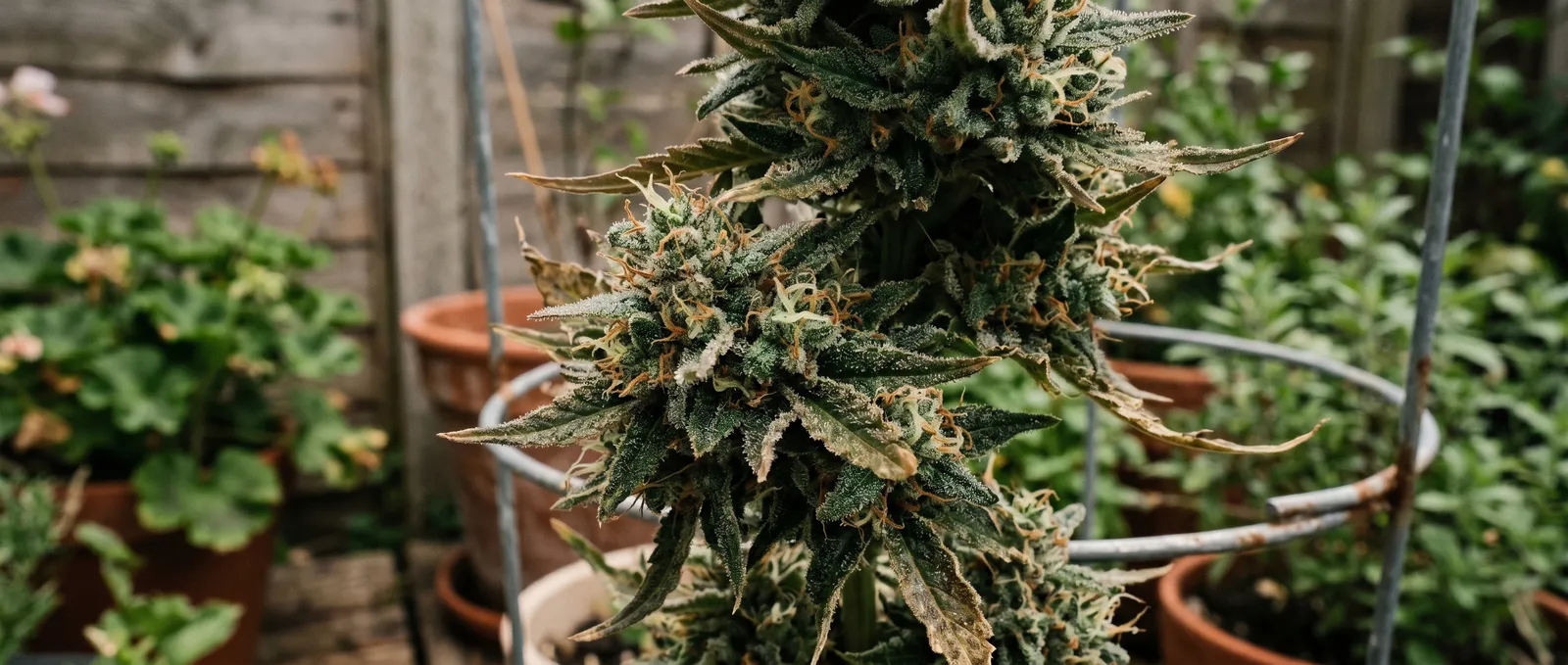
When To Harvest Cannabis Trichomes: A Grower's Guide
Deciding when to harvest cannabis trichomes means reading the resin glands on your calyxes under 60x–100x magnification and cutting when the milky-to-amber…
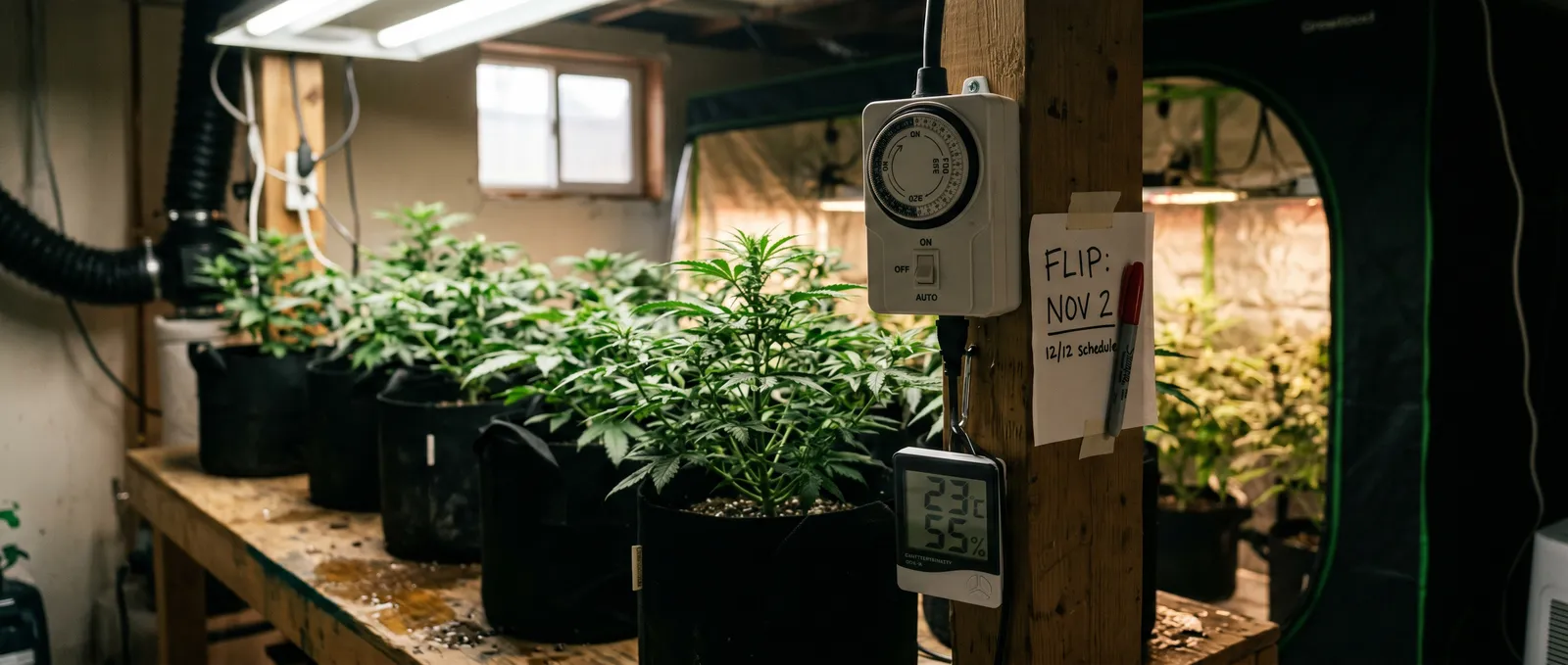
When To Flip Cannabis To 12/12: Timing The Switch
When to flip cannabis to 12/12 is a timing decision that switches photoperiod plants to 12 hours light and 12 hours dark to trigger flowering via florigen…
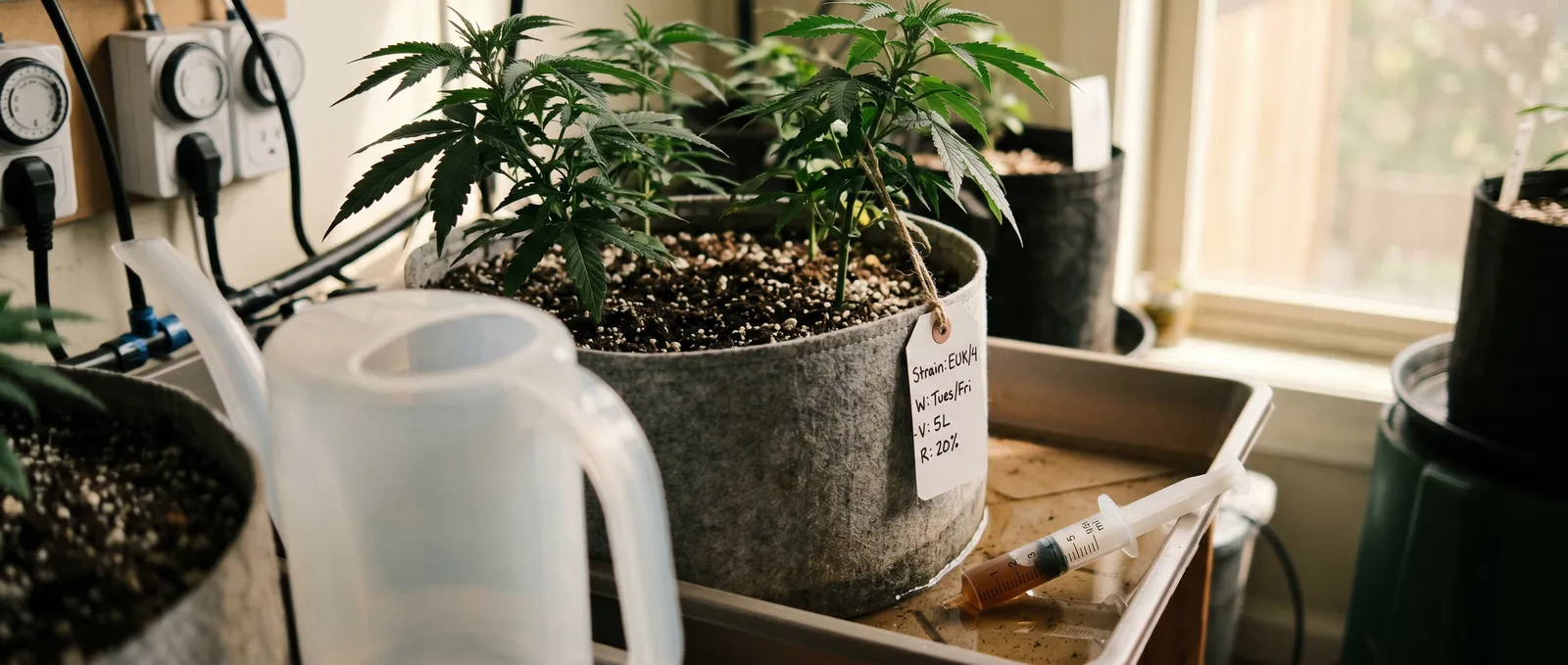
Watering Cannabis Frequency Volume Runoff: Full Guide
Watering cannabis frequency volume runoff is the feedback loop between how often you irrigate, how much you apply, and what drains from the pot.
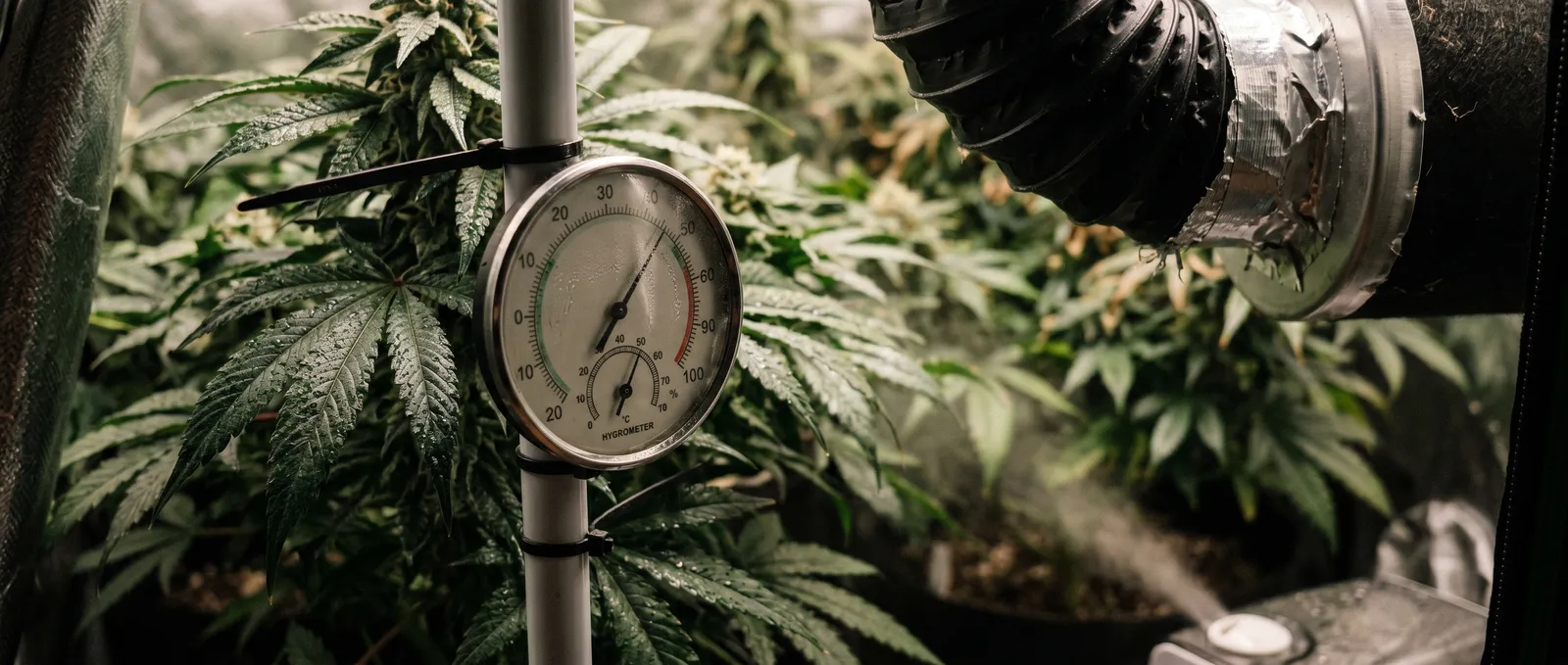
VPD for Cannabis: Targets by Growth Stage
VPD for cannabis is the kilopascal gap between the moisture the air holds and its saturation point, controlling how fast plants transpire.
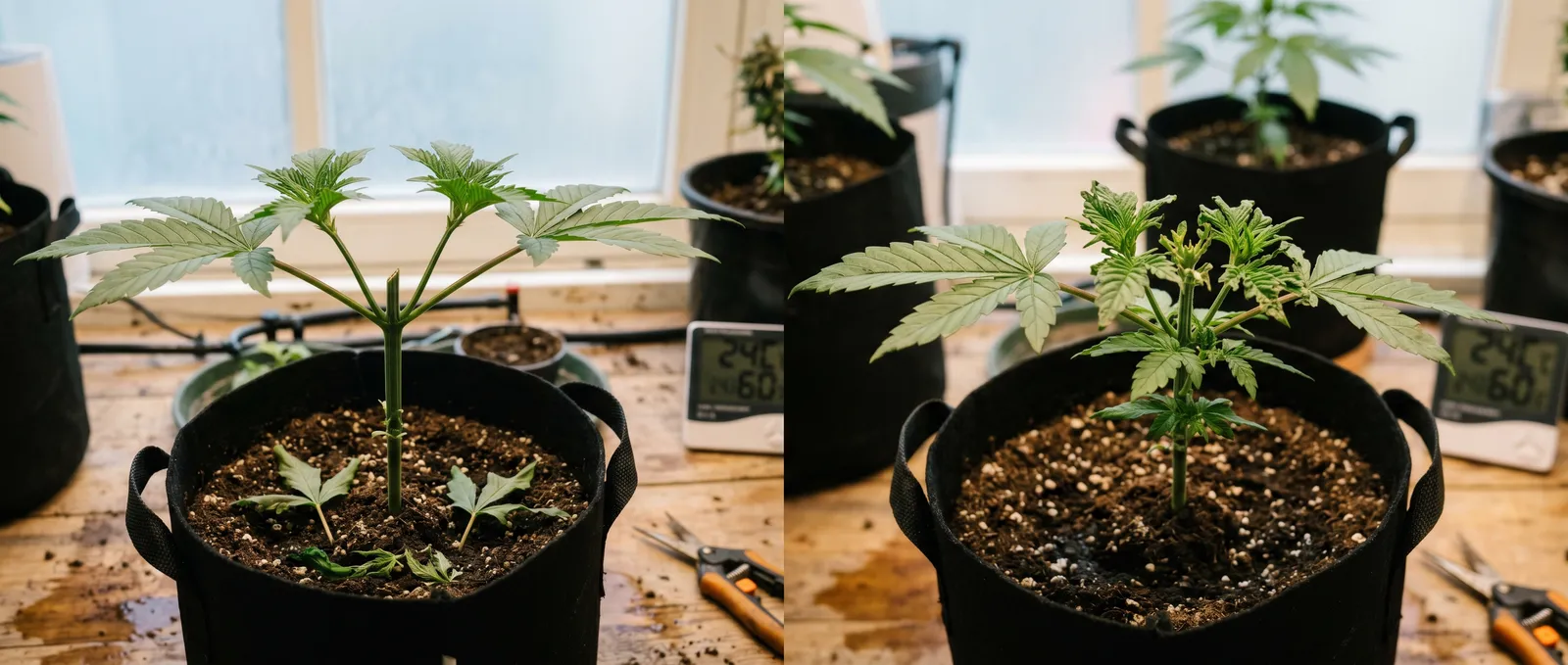
Topping vs FIMing Cannabis: Which Training Cut Wins?
Topping vs FIMing cannabis is a pair of high-stress training cuts that break apical dominance to produce more main colas.
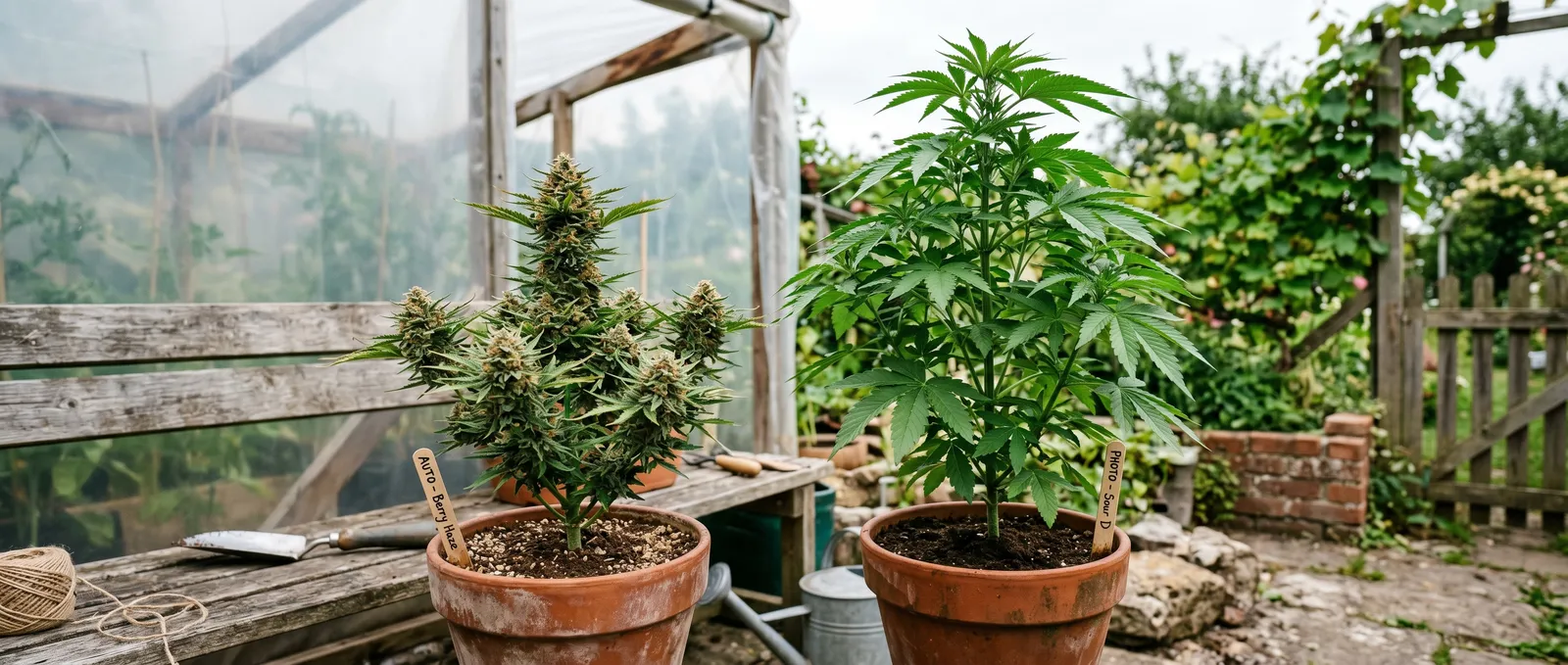
Photoperiod vs Autoflower Cannabis: Key Differences
Photoperiod vs autoflower cannabis is a genetics choice: photoperiod strains flower when light cycles shift to 12 hours dark, while autoflowers — crosses…