
This article discusses psychoactive substances intended for adults (18+). If you have a health condition or take medication, consult a doctor before use. Our age policy
What To Do With Male Cannabis Plants: 6 Practical Uses
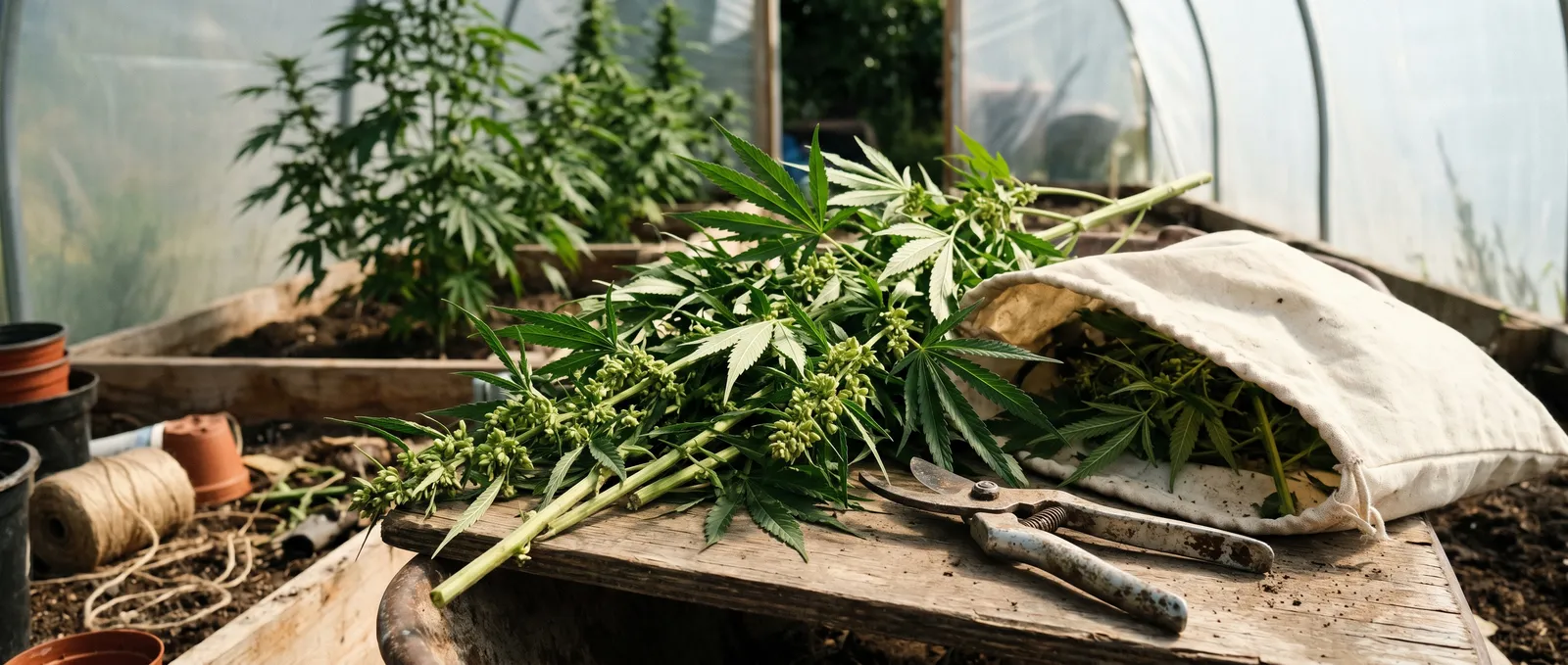
Definition
Male cannabis plants are the pollen-producing half of dioecious Cannabis sativa, typically removed by sinsemilla growers but useful for breeding, fibre, pest defence, and low-cannabinoid extracts, containing roughly 1/10th the cannabinoids of female inflorescences (Fischedick et al., 2010).
What to do with male cannabis plants
What to do with male cannabis plants is a practical decision that determines whether you get seeded bud, clean sinsemilla, useful fibre, or wasted biomass. Male cannabis plants are the pollen-producing half of Cannabis sativa — usually binned by growers chasing sinsemilla buds, but genuinely useful for breeding, fibre, pest defence, and low-cannabinoid extracts. This guide is written for adults aged 18 and over. Before you yank that pre-flowering male out of the tent, there are six practical things worth knowing, whether you grow your own or buy seeds from a seedbank.
18+ only
Key facts
- Males typically show sex 3–6 weeks into veg, earlier than females (Punja et al., 2017).
- Cannabis is dioecious — roughly 50% of seeds from non-feminised stock grow male (Small, 2015).
- Male cannabis plants contain cannabinoids, but at roughly 1/10th the concentration of female inflorescences (Fischedick et al., 2010).
- A single mature male can pollinate every female within a 1–5 km radius under open-air conditions (Small & Antle, 2003).
- Hemp fibre from male stalks is historically finer than female stalks — the reason medieval rope-makers separated them.
Commercial disclosure
Azarius sells cannabis seeds and grow supplies and has a commercial interest in this topic. Our editorial process includes independent horticultural review to mitigate commercial bias.
Step 1 — Identify the male before he flowers
The single most important thing is catching males early, before pollen sacs crack open. According to Punja et al. (2017), pre-flowers appear at the nodes (where branches meet the main stem) between weeks 3 and 6 of vegetative growth, and earlier once you flip the light cycle to 12/12.
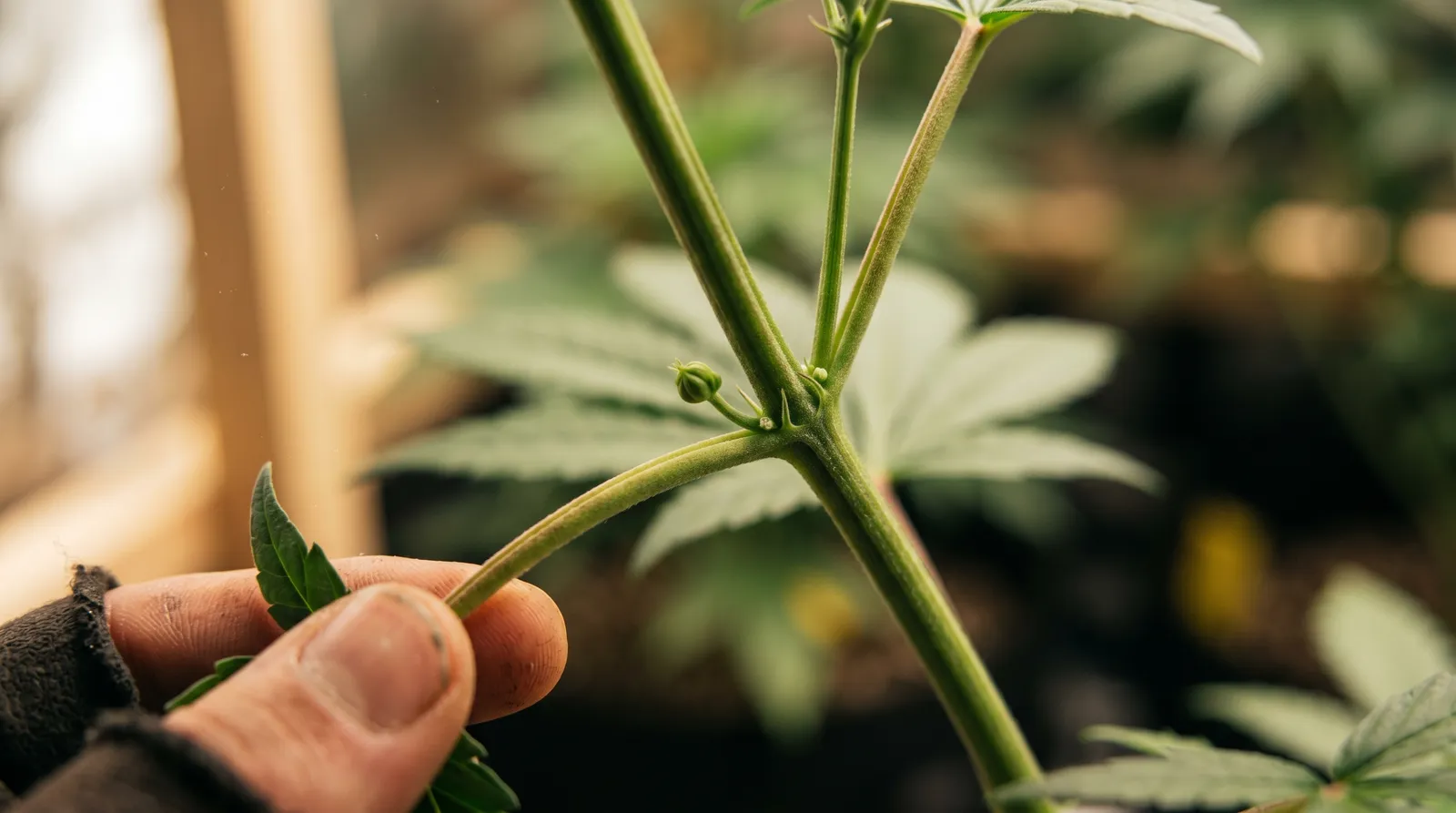
Look at the node joints with a jeweller's loupe or phone macro. Males show small round or teardrop-shaped sacs on short stalks — no white hairs, no pistils. Females show two white wispy pistils emerging from a calyx. If you see a cluster that looks like a tiny bunch of grapes, that's a male, and you've got maybe a week before it cracks open and dusts your garden.
Get it right the first time. A 2015 review by Small noted that a single missed male in a sinsemilla crop can reduce yield of seedless flower by 40–90% depending on proximity and airflow. Compared to female pre-flowers, which take longer to show and can be mistaken for stipules, male sacs are genuinely easier to ID once you've seen one up close.
Step 2 — Decide: keep, isolate, or cull
You have three options, and they're all valid depending on your goal. Which one you pick should come down to whether you want seeds, clean bud, or both.
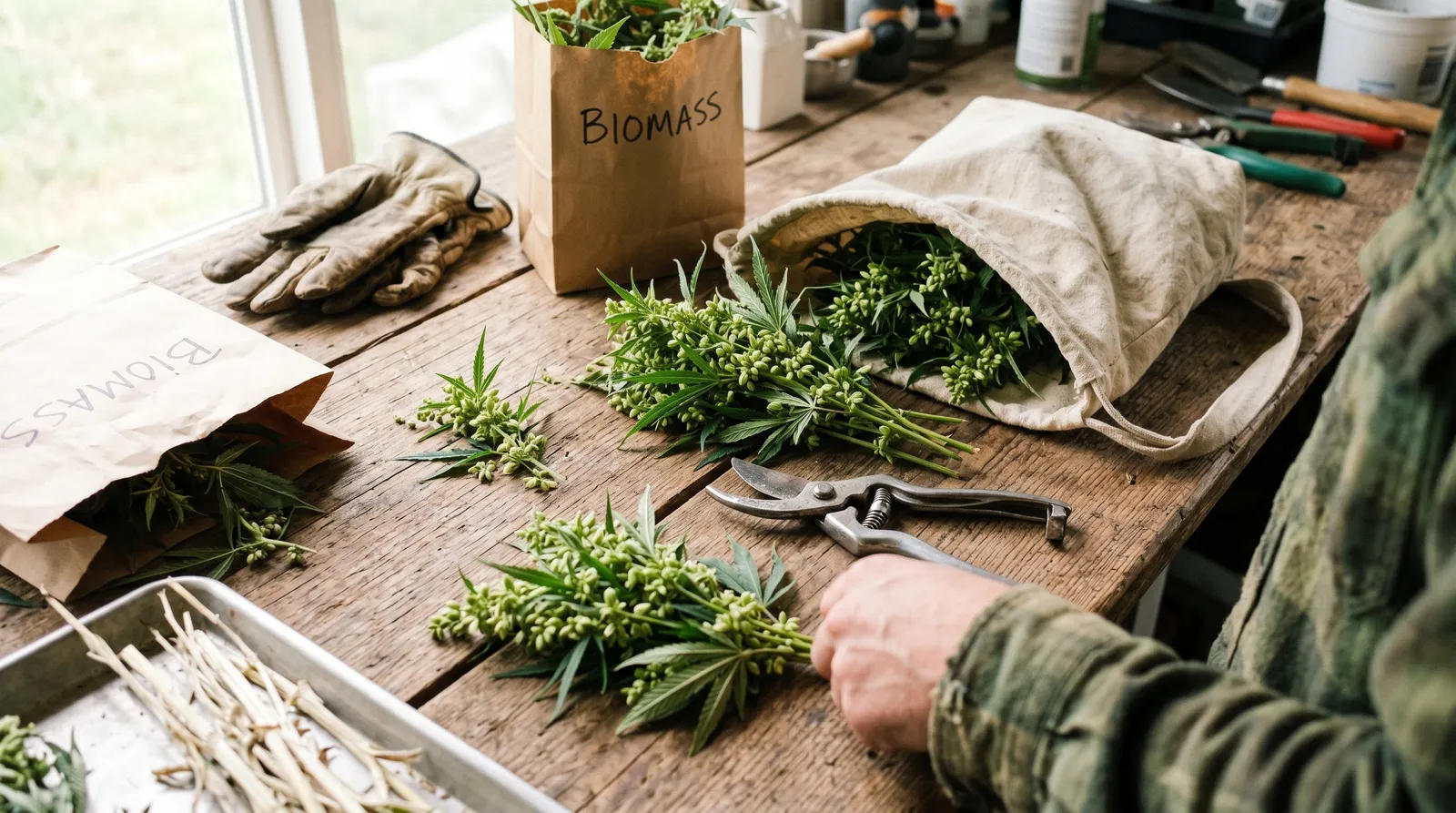
- Cull — if you're growing sinsemilla and have no interest in breeding, the male goes. Compost, fibre, or extract it (more below) rather than binning it whole.
- Isolate — move the male to a separate room, closet, or outdoor plot at least 100 metres from any females, downwind ideally. Pollen is microscopic and travels on clothing, hair, and airflow. Change your shirt before re-entering the flower room.
- Keep in place — only if you want a seeded crop. Some growers deliberately let one male pollinate a lower branch of a female for next season's seeds, then harvest the rest as sinsemilla. It's risky but workable with a bag over the pollinating branch.
Step 3 — Use it for breeding (if the genetics are worth it)
Males are half of every seed line and deserve the same scrutiny as mothers. According to Clarke & Merlin (2013), commercial breeders select males by sniffing stems, rubbing leaves, and tracking vigour, branching structure, and flowering time of siblings — because you can't judge a male by his flowers the way you can a female.
Practical selection criteria:
- Stem rub aroma — snap a low fan leaf and smell the stem. Terpene intensity here correlates loosely with terpene production in sister plants.
- Vigour and internode spacing — tight nodes, thick stems, fast growth.
- Flowering time — mark when pollen sacs first crack, as this often predicts finish time in female offspring.
- Resistance — any male that shrugs off powdery mildew, spider mites, or heat stress is worth keeping for that trait alone.
Honest limitation: stem-rub aroma is a rough proxy, not a guarantee. Plenty of beautiful-smelling males produce mediocre offspring, and plenty of boring-smelling ones throw fire daughters. Breeding is probabilistic, not deterministic, and you need multiple test crosses to know what a male really carries.
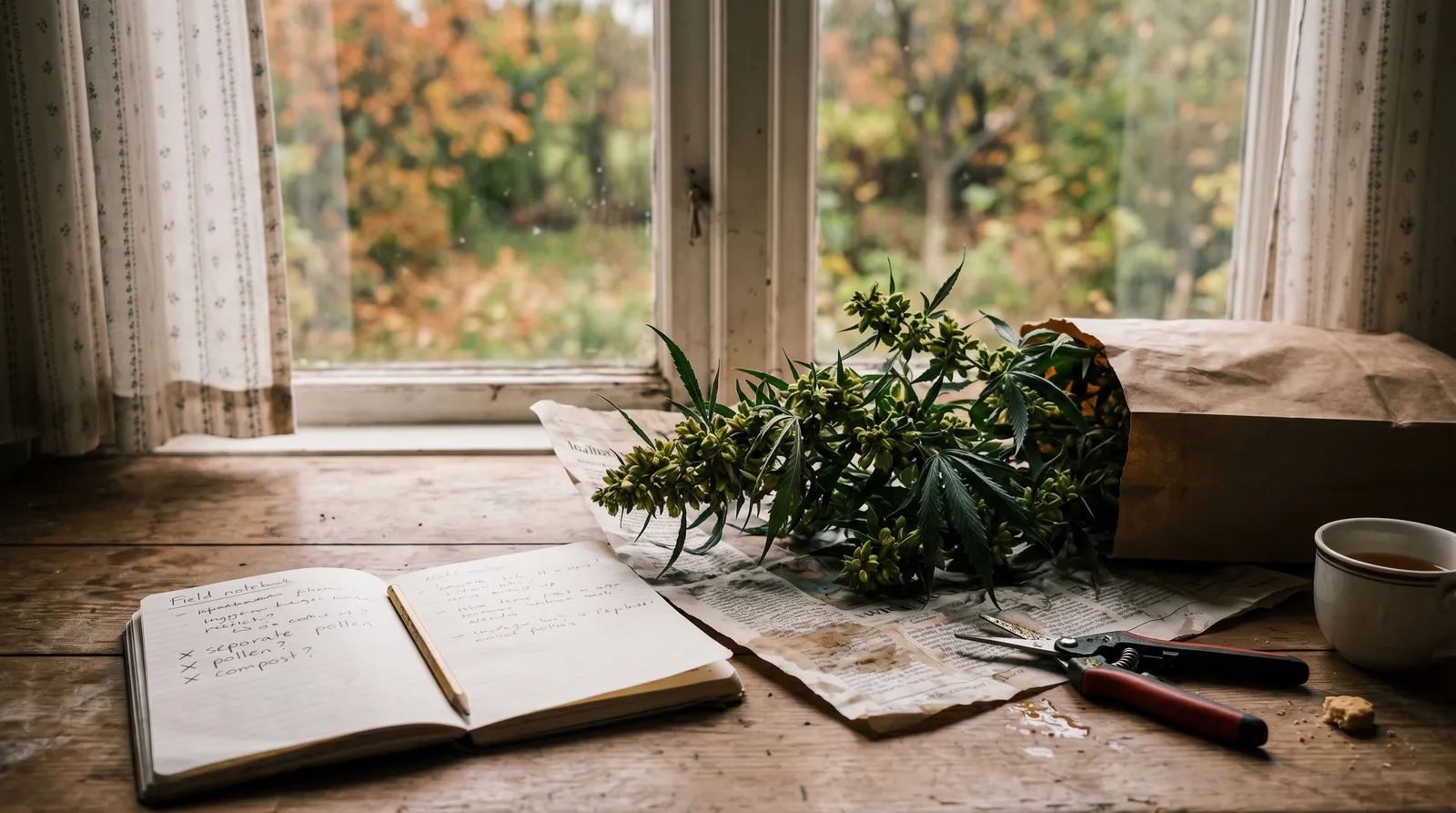
Collect pollen by hanging the male over wax paper or inside a large paper bag once the sacs start to open. Dry it for 24–48 hours, sieve through a fine mesh, then store in a freezer in a silica-gel vial. Frozen pollen stays viable for 6–12 months, though the data on long-term storage is thin and claims of multi-year viability should be taken with salt.
Step 4 — Make fibre, juice, or low-potency extract
Male plants are not potency-dead, despite the common grower myth. Fischedick et al. (2010) measured cannabinoids across male and female tissues and found THC and CBD in male leaves and flowers at roughly 0.1–0.4% — low compared to female bud (15–25%) but comparable to industrial hemp.
| Use | What you get | Effort |
|---|---|---|
| Compost | Nitrogen-rich green matter; decent mulch after chopping | Low |
| Juice (raw leaves) | THCA/CBDA precursors, chlorophyll, no psychoactivity | Low |
| Fibre / cordage | Bast fibre from stalks — historically used for fine textiles | Moderate (retting + processing) |
| Hash / bubble | Low-yield but workable from leaves and staminate flowers | Moderate |
| Ethanol extract | Full-spectrum terpene-rich tincture, low cannabinoid | High |
Sensi Seeds' breeders have written that ice-water hash from male plants is a real thing, just low-yielding — expect maybe 1–2% return versus 4–8% from good female material. It's not going to replace your usual bubble, but it's a better end than the compost bin.
Pollen viability at a glance
| Storage method | Expected viability | Notes |
|---|---|---|
| Room temperature, paper envelope | 1–2 weeks | Humidity kills it fast |
| Fridge with silica gel | 1–3 months | Good for same-season use |
| Freezer with silica gel, sealed vial | 6–12 months | Standard breeder practice |
| Liquid nitrogen / -80°C | Potentially multi-year | Lab-only; data is thin |
Step 5 — Put males to work in the garden
Male plants can earn their keep as pest deterrents and green manure, not just as breeding stock. Cannabis produces terpenes — limonene, pinene, myrcene, beta-caryophyllene — that a 2008 study by Ibrahim et al. identified as repellent to several common garden pests including aphids, thrips, and certain mite species. Males produce these compounds too, often in comparable concentrations in leaves.
Practical applications:
- Companion planting — a male tucked between tomatoes or brassicas can reduce aphid pressure. This is anecdotal among outdoor growers rather than peer-reviewed, but the terpene chemistry supports the observation.
- Soil enrichment — chop-and-drop the whole plant at the base of heavy feeders. Cannabis is a known bioaccumulator, so avoid this method if your soil has heavy-metal issues (McPartland & McKernan, 2017).
- Mulch — dried stalks shredded into chips make decent moisture-retaining mulch.
Step 6 — Watch for hermaphrodites afterwards
Removing every male doesn't end the pollen problem — stressed females can throw male flowers and self-pollinate. Punja & Holmes (2020) documented hermaphroditism rates of 5–15% in stressed commercial crops, with higher rates in light-stressed or heat-stressed plants.
Common triggers:
- Light leaks during dark period (even 30 seconds of phone torch can do it)
- Heat above 30°C during flowering
- Late harvest — plants run out of pistils and throw bananas as a last-ditch seed effort
- Genetic predisposition — some lines are notorious for it
Inspect weekly from week 3 of flower onwards. Look for yellow banana-shaped anthers emerging directly from bud sites, not on separate stalks. Remove them with tweezers or, if widespread, harvest the plant early and accept the loss.
Safety notes and genetic integrity
Handling pollen around other growers' crops is the main "interaction" to worry about. Pollen viability is preserved by cold and dry conditions — exactly the conditions your clothes experience walking between grow rooms. Shower and change before visiting another garden if you've been working with males.
For anyone consuming cannabis extracts derived from male plants: the cannabinoid content is lower but not zero. Fischedick et al. (2010) measured roughly 0.1–0.4% THC in male flowers, which means a gram of male-derived hash could still contain meaningful THC. Standard cannabis contraindications apply — avoid combining with benzodiazepines, alcohol, or opioids; exercise caution with SSRIs and MAOIs; not appropriate during pregnancy or for people with a personal or family history of psychosis (Hoch et al., 2019). The EMCDDA has published monitoring data on cannabis exposure patterns across Europe that is worth reading if you're producing extracts at any scale.
Tips and common mistakes
- Don't rush the chop. Wait until you're 95% certain — confirm pre-flowers with magnification before removing any plant.
- Label everything. If you're saving a male for breeding, tag it with strain, clone source, and date of first pollen.
- Use a paper bag, not plastic. Plastic traps moisture and ruins pollen viability.
- Quarantine isn't optional. A male in another room on the same HVAC system is a male in the flower room.
- Don't trust "feminised" blindly. Even feminised seeds can throw 1–3% males under stress — keep inspecting.
Related products
If you're working with non-feminised seeds and want to breed, it's worth getting pollen-collection gear, jewellery loupes, and silica storage vials before week 3 of veg. Growers who prefer to avoid the whole question can buy feminised seed lines, which reduce — though don't eliminate — the need for male identification. Order early in the season so kit arrives before the first pre-flowers do.
Disclaimer
This article is for educational and harm-reduction purposes only and is intended for adults aged 18 and over. It is not medical advice. Cannabis use carries risks, particularly for pregnant or breastfeeding people, adolescents, and anyone with a personal or family history of psychosis or cardiovascular disease. Consult a qualified healthcare professional before using cannabis products, especially if you take prescription medication. Azarius does not encourage growing, consumption, or any activity contrary to the rules of your jurisdiction.
References
- Clarke, R.C. & Merlin, M.D. (2013). Cannabis: Evolution and Ethnobotany. University of California Press.
- EMCDDA (2023). European Drug Report: Cannabis trends and developments. European Monitoring Centre for Drugs and Drug Addiction, Lisbon.
- Fischedick, J.T., Hazekamp, A., Erkelens, T., Choi, Y.H. & Verpoorte, R. (2010). Metabolic fingerprinting of Cannabis sativa L. chemotypes. Phytochemistry, 71(17–18), 2058–2073.
- Hoch, E., Volkow, N.D., Friemel, C.M., Lorenzetti, V., Freeman, T.P. & Hall, W. (2019). Cannabis: from a plant to medicine and back. European Archives of Psychiatry and Clinical Neuroscience.
- Ibrahim, M.A., Kainulainen, P., Aflatuni, A., Tiilikkala, K. & Holopainen, J.K. (2008). Insecticidal, repellent, antimicrobial activity and phytotoxicity of essential oils. Agricultural and Food Science, 10(3), 243–259.
- McPartland, J.M. & McKernan, K.J. (2017). Contaminants of concern in cannabis: microbes, heavy metals and pesticides. In Cannabis sativa L. — Botany and Biotechnology, Springer.
- Punja, Z.K., Collyer, D., Scott, C., Lung, S., Holmes, J. & Sutton, D. (2017). Pathogens and molds affecting production and quality of Cannabis sativa L. Frontiers in Plant Science, 10, 1120.
- Punja, Z.K. & Holmes, J.E. (2020). Hermaphroditism in marijuana (Cannabis sativa L.) inflorescences. Frontiers in Plant Science, 11, 718.
- Small, E. (2015). Evolution and classification of Cannabis sativa in relation to human utilization. Botanical Review, 81(3), 189–294.
- Small, E. & Antle, T. (2003). A preliminary study of pollen dispersal in Cannabis sativa. Journal of Industrial Hemp, 8(2), 37–50.
Frequently Asked Questions
Last updated: April 2026
Frequently Asked Questions
6 questionsHow do you identify male cannabis plants early?
Are male cannabis plants completely useless?
Can male cannabis plants pollinate females from far away?
How do you store cannabis pollen for breeding?
What stressors cause female plants to turn hermaphrodite?
Can you smoke male cannabis plants?
About this article


Luke Sholl has been writing about cannabis, cannabinoids, and the broader benefits of nature since 2011, and has personally grown cannabis in home grow tents for more than a decade. That first-hand cultivation experience
This wiki article was drafted with AI assistance and reviewed by Luke Sholl, External contributor since 2026. Editorial oversight by Adam Parsons.
Medical disclaimer. This content is for informational purposes only and does not constitute medical advice. Consult a qualified healthcare provider before use of any substance.
Last reviewed April 26, 2026
Related Articles
Cannabis Hermaphrodite: Identify, Prevent, Act
A cannabis hermaphrodite is a female plant that develops male pollen sacs or banana-shaped anthers (nanners), self-pollinating and seeding your harvest.
DIY Cannabis Fertilizer: Homemade Nutrient Guide
DIY cannabis fertilizer guide: compost, teas, banana ferments and feed schedules, with safety notes and cited research for home growers.
Mushroom Grow Kit Temperature & Humidity: Full Setup Guide
A temperature humidity control grow kit is the small set of climate tools — hygrometer, heat mat, humidifier or perlite tray — that keeps a mushroom fruiting…
When to Harvest Mushrooms: Veil Break Timing Explained
Harvest timing veil break is a cultivation technique that uses the tearing of the partial veil on maturing Psilocybe cubensis to mark peak alkaloid content.
First Grow Checklist: What You Need for Mushroom Kits
A first grow checklist is the short list of supplies and environmental conditions needed to run a home psilocybin mushroom kit from inoculated substrate to…
Sclerotia vs Fruit Bodies: Cultivation Comparison
Sclerotia and fruit bodies are two different life stages of Psilocybe fungi: sclerotia are hardened underground mycelial storage bodies (the 'magic…
Storing Dried Mushrooms Long Term: Full Guide
Storing dried mushrooms long term means keeping well-dried Psilocybe fruit bodies in airtight, opaque containers with desiccant, cool and dark, to slow…
Drying Mushrooms Air Desiccant Oven: Methods Compared
Drying mushrooms air desiccant oven refers to the three home methods for reducing fresh fruit bodies from ~90% water to cracker-dry (<5%). Gotvaldová et al.
Grow Kit vs Ready 2 Grow Bag: Which to Pick
The grow kit vs Ready 2 Grow Bag choice compares two Psilocybe cubensis home-cultivation formats: a tub with rye substrate and casing layer designed for…