
Buy more, pay less
We'll only email you about this product — no marketing.
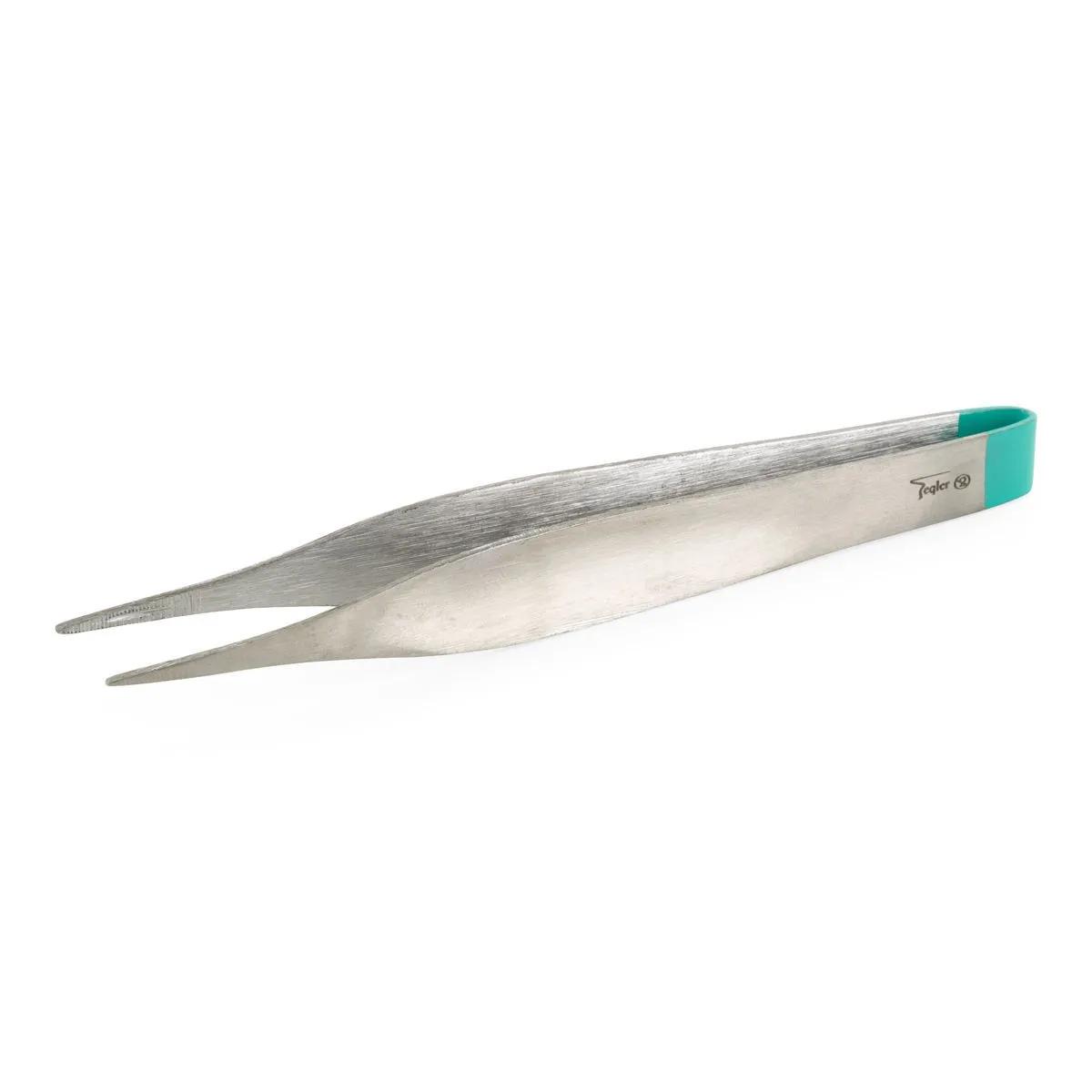
Sterile Tweezers for Spore Print Work
Sterile tweezers are a small stainless steel tool individually sealed in sterile packaging, designed for handling spore prints and other contamination-sensitive tasks in mushroom cultivation. At 9 cm long, they fit comfortably between your fingers and give you the precision to lift a spore print from its ziplock bag without fumbling or introducing unwanted microbes. If you've ever tried to peel a print off aluminium foil with your bare hands, you already know why these exist.
| Spec | Value |
|---|---|
| Material | Stainless steel |
| Length | 9 cm |
| Packaging | Individually sterile sealed |
| SKU | SH0006 |
| Reusable | Yes, after flame sterilisation |
| Weight | Negligible (under 15 g) |
Complete your inoculation setup with a still air box, sterile gloves, and a spore syringe or spore print. Pair these sterile tweezers with an alcohol lamp or lighter for flame sterilisation between uses, and you've got a proper aseptic workstation without the lab budget.
Why Sterile Tweezers Matter in Mushroom Cultivation
Contamination is the number-one reason home grows fail. We've seen growers invest in premium spore prints, top-shelf substrate, and a solid grow kit, then ruin everything by reaching into the bag with unwashed fingers. One stray mould spore on your skin — that's all it takes. A single touch can introduce Trichoderma, Aspergillus, or any number of competing organisms that will outrun mycelium every time.
These 9 cm stainless steel tweezers arrive in a sealed sterile pouch, so the tips are clean from the moment you tear it open. No pre-wiping with isopropyl, no guesswork about whether your kitchen drawer tweezers are actually clean. You open the pack, grab your spore print by the edge, place it where it needs to go, and close up. The whole interaction takes about 10 seconds, and your contamination risk drops dramatically compared to bare-handed handling.
The honest limitation? At 9 cm, these are compact. If you've got large hands, the grip can feel a bit fiddly — especially if you're working inside a still air box with gloves on. They're built for precision, not for heavy clamping. For picking up spore prints and placing small agar wedges, they're spot on. For anything that needs serious grip force, you'd want a longer pair of forceps.
How to Use Sterile Tweezers with Spore Prints
- Set up your workspace. Wipe down all surfaces with 70% isopropyl alcohol. If you have a still air box, work inside it. Close windows, turn off fans — still air is your friend.
- Wash your hands thoroughly, then put on sterile gloves if you have them. Even with tweezers, your hands are near the work area.
- Open the sterile pouch by peeling from the top. Don't touch the tweezer tips — hold them by the body only.
- Open your spore print ziplock bag carefully. Use the tweezers to grip the edge of the print (the foil or paper, not the spore deposit itself).
- Lift the print out and transfer it to your agar plate, substrate, or wherever you're inoculating. Work quickly — every second the print is exposed is a second airborne contaminants can land on it.
- If you plan to reuse the tweezers, flame-sterilise the tips with a lighter or alcohol lamp until they glow red, then let them cool for 15–20 seconds before touching anything biological. Alternatively, wipe with 70% isopropyl and allow to air dry.
- Seal everything back up. Label your work with the strain name and date.
Sterile Tweezers vs. Regular Tweezers
| Feature | These Sterile Tweezers | Regular Household Tweezers |
|---|---|---|
| Packaging | Individually sterile sealed | Open packaging or loose in drawer |
| Contamination risk | Minimal out of the pack | Unknown — could carry oils, dust, bacteria |
| Material | Stainless steel (corrosion-resistant) | Varies — some chrome-plated, some not |
| Length | 9 cm — built for precision tasks | Typically 8–12 cm, often cosmetic-grade tips |
| Cost per unit | Low — designed as affordable consumable | Free (already own them), but not sterile |
| Best use in cultivation | Spore print handling, agar transfers | Not recommended for aseptic work |
Can you sterilise your bathroom tweezers with isopropyl and use those instead? Technically, yes. But cosmetic tweezers often have textured grips that trap residue, and you can never be 100% sure the tips are truly clean unless you autoclave them. For the price of these, it's not worth the gamble. Grab a few packs and use a fresh pair each session — or flame-sterilise between uses if you prefer to reuse.
Frequently Asked Questions
Can I reuse these sterile tweezers?
Yes. Flame the tips with a lighter until they glow orange, let them cool for 15–20 seconds, and they're ready again. Alternatively, soak in 70% isopropyl alcohol for 60 seconds and air dry. The stainless steel holds up well to repeated sterilisation.
Why can't I just use my fingers to handle spore prints?
Your skin carries oils, bacteria, and fungal spores that are invisible but very much alive. Even freshly washed hands can introduce contaminants to a spore print. Sterile tweezers keep your skin out of the equation entirely, which is the simplest way to reduce contamination risk.
Are 9 cm tweezers long enough for working inside a still air box?
They work, but they're compact. If your still air box is deep or you're wearing thick gloves, you may find the reach a bit short. For most standard setups, 9 cm is fine for spore print transfers and small agar work.
How should I store these if I don't use them straight away?
Leave them in the sealed sterile pouch until you need them. Store in a dry place at room temperature. The packaging keeps them sterile indefinitely as long as the seal isn't broken or punctured.
Do I need sterile tweezers if I already have a laminar flow hood?
A flow hood provides clean air, but it doesn't sterilise your tools or your hands. You still want sterile instruments for any direct contact with spore prints or agar. The hood and the tweezers solve different parts of the contamination problem — use both.
Can I use these for agar-to-agar transfers?
You can, though a sterile scalpel gives you cleaner cuts on agar. Tweezers are better for lifting and placing — picking up a spore print, positioning a small wedge, or handling grain. For slicing through agar, a blade is the better tool.
Last updated: April 2026
Related products
Medical disclaimer. This content is for informational purposes only and does not constitute medical advice. Consult a qualified healthcare provider before use of any substance.