
This article discusses psychoactive substances intended for adults (18+). If you have a health condition or take medication, consult a doctor before use. Our age policy
When To Flip Cannabis To 12/12: Timing The Switch
Definition
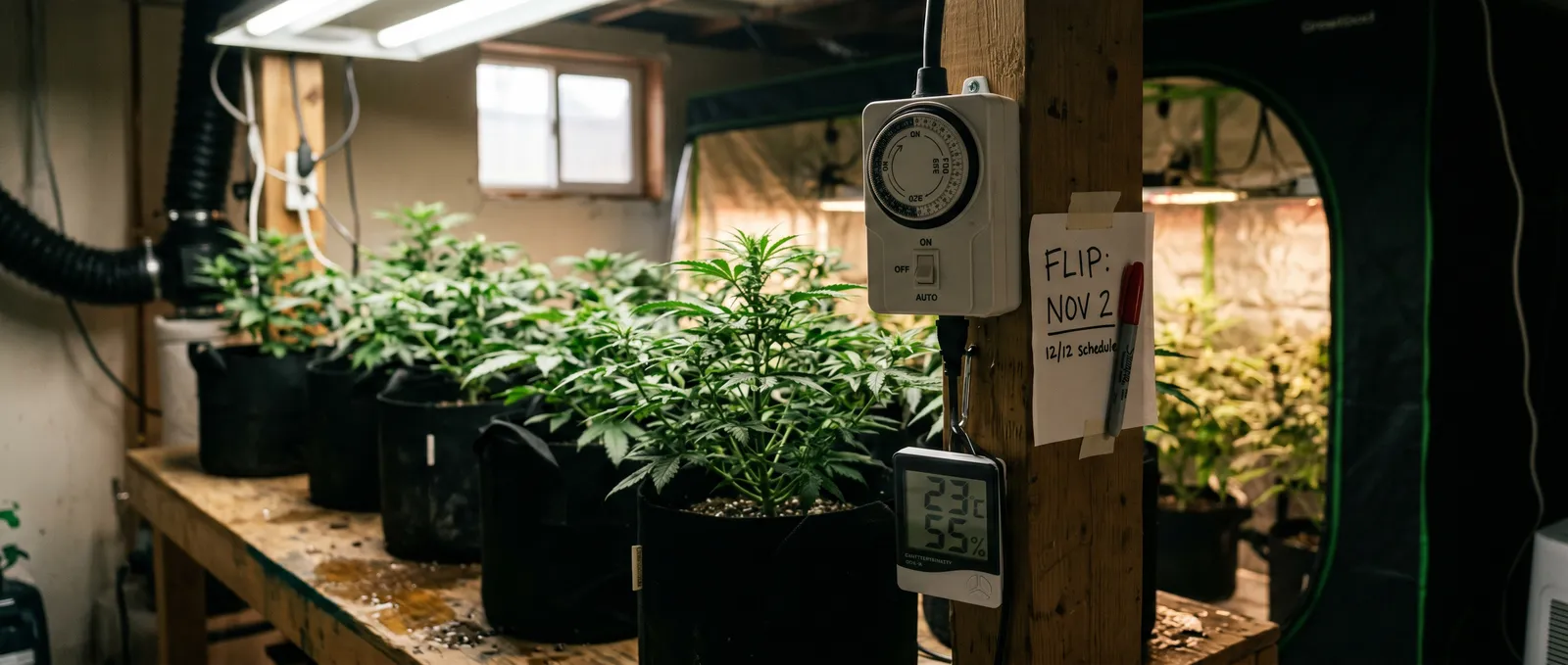
When to flip cannabis to 12/12 is a timing decision that switches photoperiod plants to 12 hours light and 12 hours dark to trigger flowering via florigen signalling (Lynn et al., 2021). Most growers flip when plants fill roughly 60-70% of their target height, because photoperiod strains typically double in size during the first weeks of bloom.
When to flip cannabis to 12/12 is a timing decision that switches photoperiod plants from vegetative growth to flowering by giving them 12 hours of light and 12 hours of uninterrupted darkness. This guide is educational. Before you start to grow, buy seeds, or order supplies, check what applies in your specific area. Azarius does not provide formal advice.
The switch from 18/6 to 12/12 is the single moment that decides how big your plants get, how long your cycle runs, and — indirectly — how much you harvest. It only applies to photoperiod genetics: autoflowers flower on an internal clock and ignore light schedules entirely. The short answer most growers want: flip when your plant has filled roughly two-thirds of the space you've given it. The longer answer depends on tent height, training, and strain stretch — which is what the rest of this article unpacks.
What does flipping to 12/12 actually do?
Flipping to 12/12 tells a photoperiod cannabis plant that summer is ending and it's time to make flowers instead of leaves. Cannabis is a short-day plant: when the dark period crosses a critical threshold (roughly 11 hours of uninterrupted darkness for most cultivars), the leaves produce a hormonal signal — florigen — that triggers the switch from vegetative growth to reproductive growth (Lynn et al., 2021). Indoors, you force this by setting your timer to 12 hours light, 12 hours dark. Outdoors, the shortening autumn daylength does it for you.
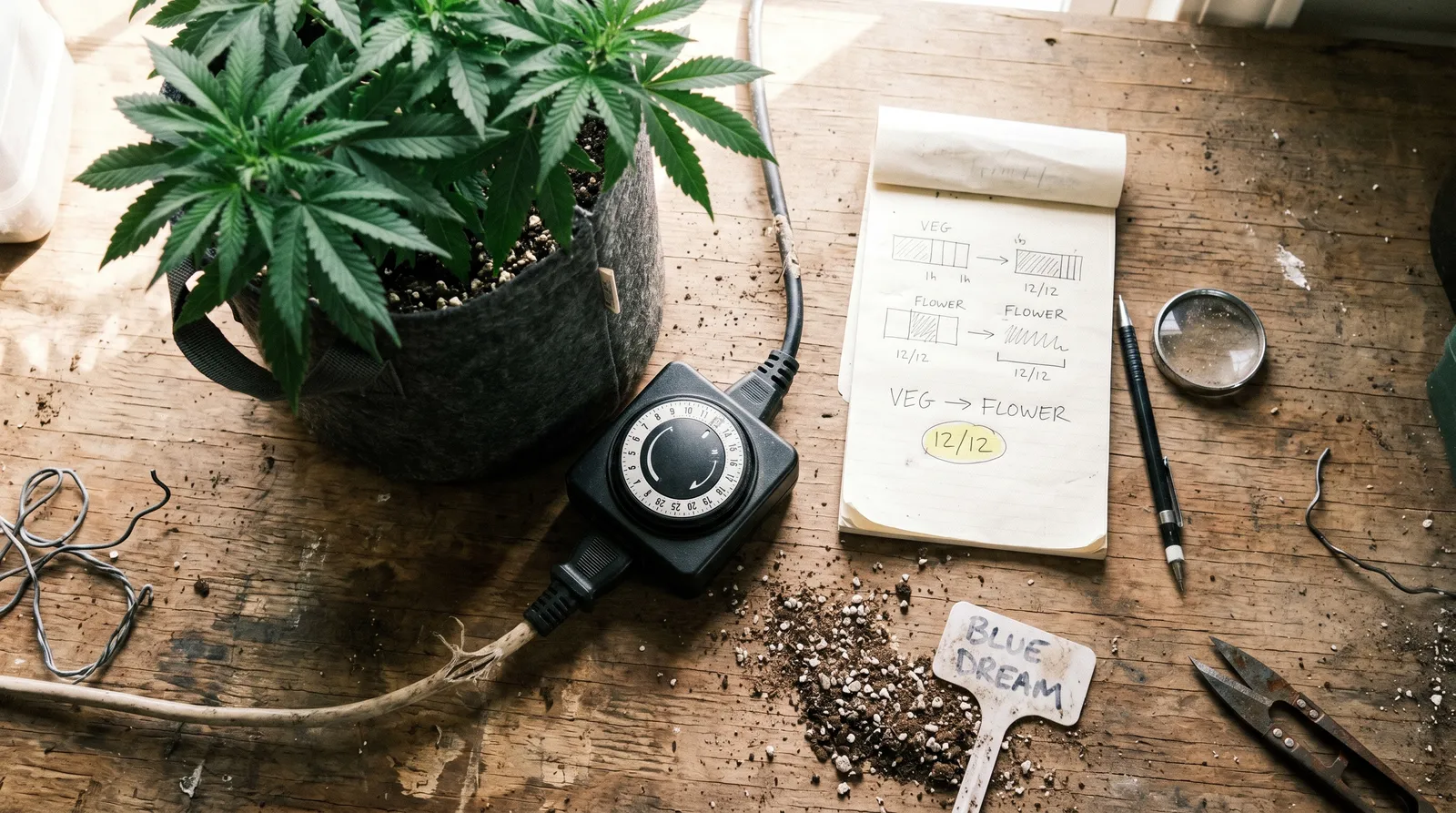
The key mechanic is the dark period, not the light period. A 30-second light leak from a phone charger LED at 3am can be enough to revert plants back to veg or cause hermaphroditism in sensitive strains. Light-proof your space before you flip — not after.
When is the right moment to flip?
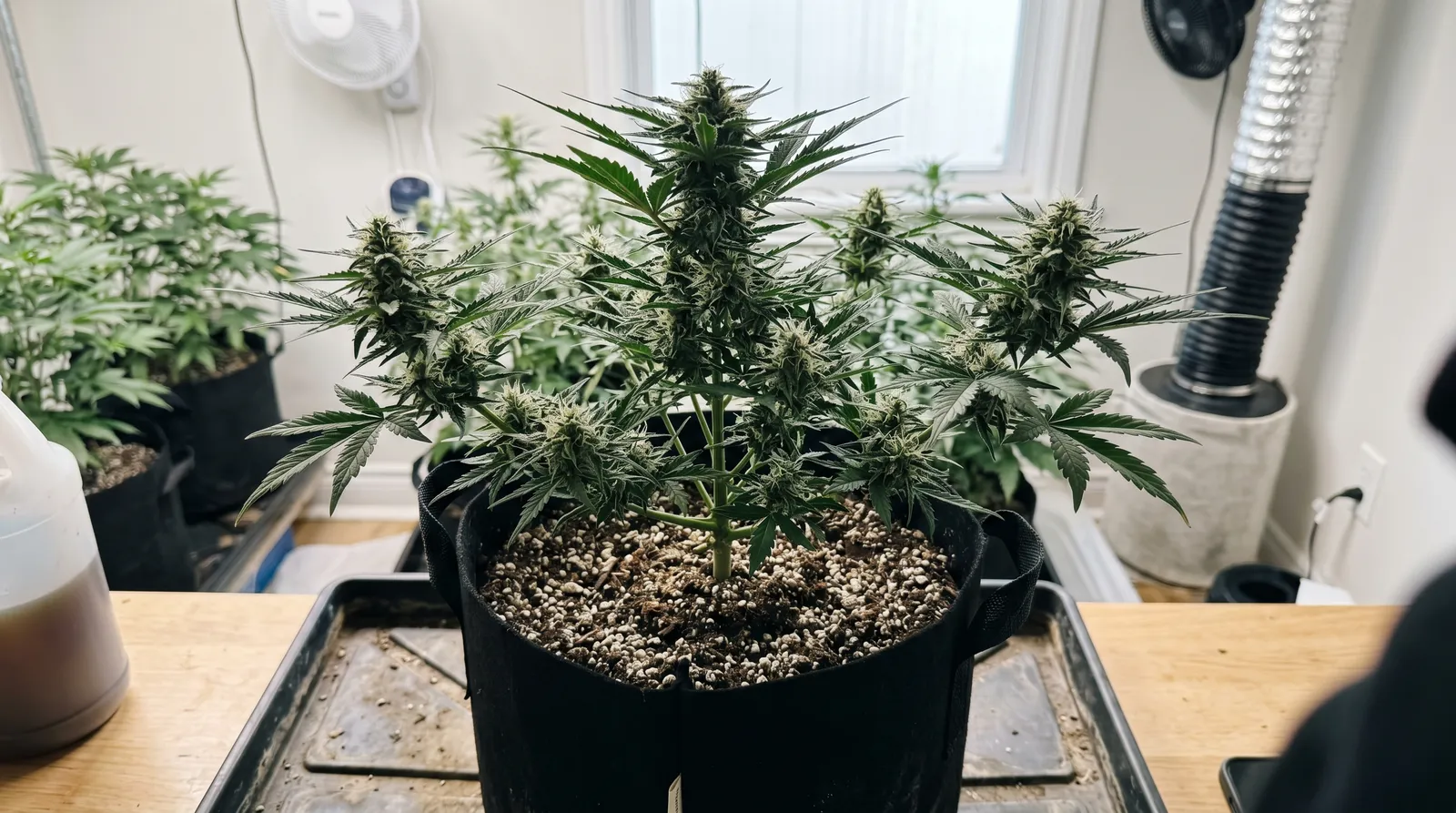
Flip when your plant occupies roughly 60-70% of the vertical space you want it to finish in. That's because photoperiod cannabis roughly doubles — sometimes triples — in height during the first 2-3 weeks of flowering. This burst is called the flowering stretch, and it's where most first-time grow tents fail.
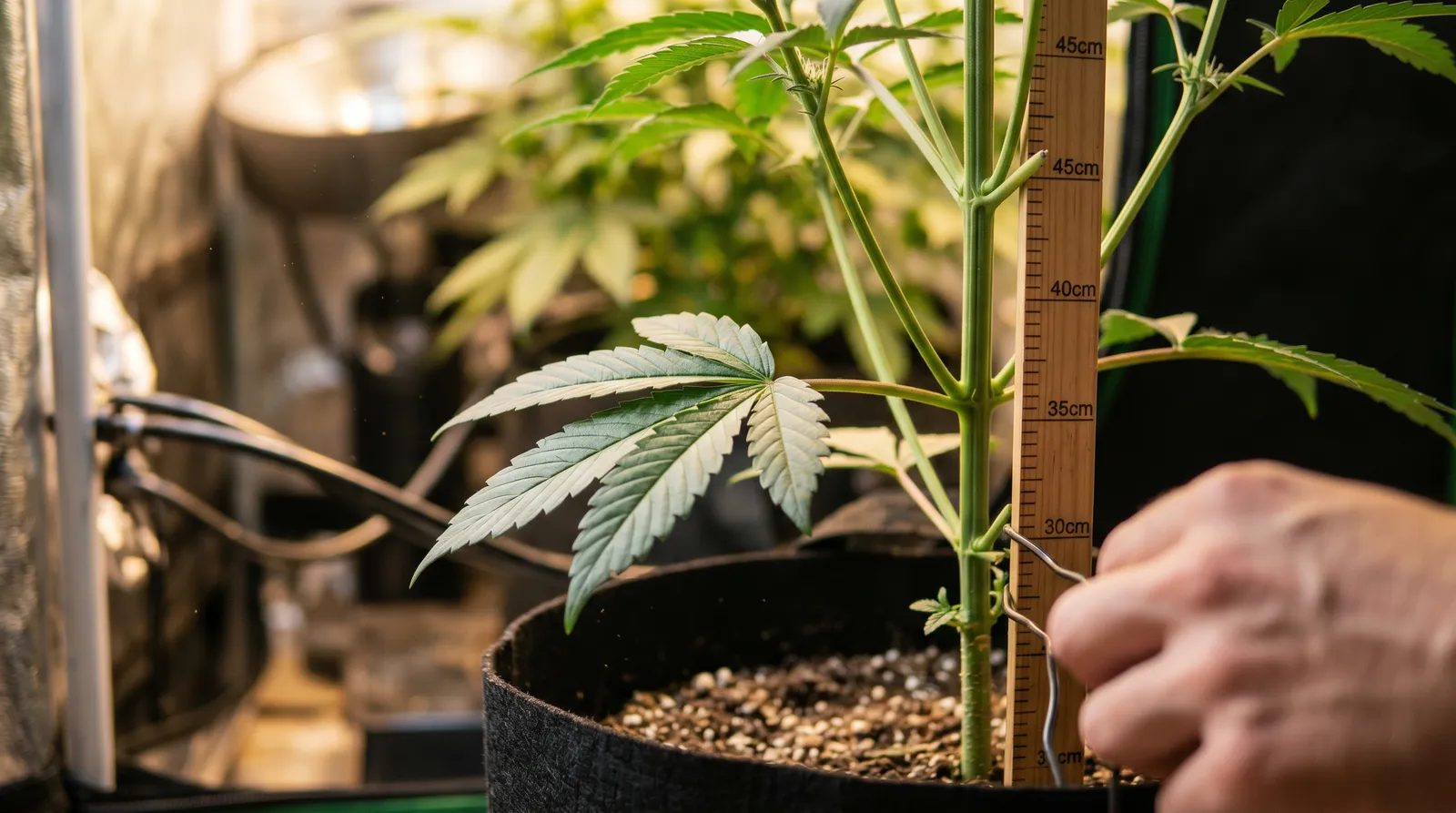
Rough guidance by tent size, assuming indica-leaning or hybrid genetics and a standard 60cm pot with an LED at sensible hanging distance:
| Tent height | Flip plant height (approx) | Typical veg time from seed |
|---|---|---|
| 80cm grow box | 15-20cm | 2-3 weeks |
| 120cm tent | 25-35cm | 3-4 weeks |
| 160-180cm tent | 40-60cm | 4-6 weeks |
| 200cm+ tent | 60-80cm | 6-8 weeks, or until training is done |
Sativa-dominant strains stretch harder — sometimes 3x — so flip them earlier than you'd think. Indica-dominant lines stretch less, maybe 1.5-1.8x. Breeder descriptions from the likes of Royal Queen Seeds, Dutch Passion or Sensi Seeds usually note stretch characteristics; read them before you decide.
Don't I need to wait for the plant to show sex first?
No — you can flip as soon as the plant is sexually mature, and feminised seeds make the question almost irrelevant. A cannabis plant needs to reach sexual maturity before it can respond to 12/12, which typically happens around the 4th-5th node. Past that point, the plant is biologically capable of flowering whenever you tell it to. Growers on forums like 420 Magazine will confirm what breeders have documented for years: from node 5 onward, the flip is your call.
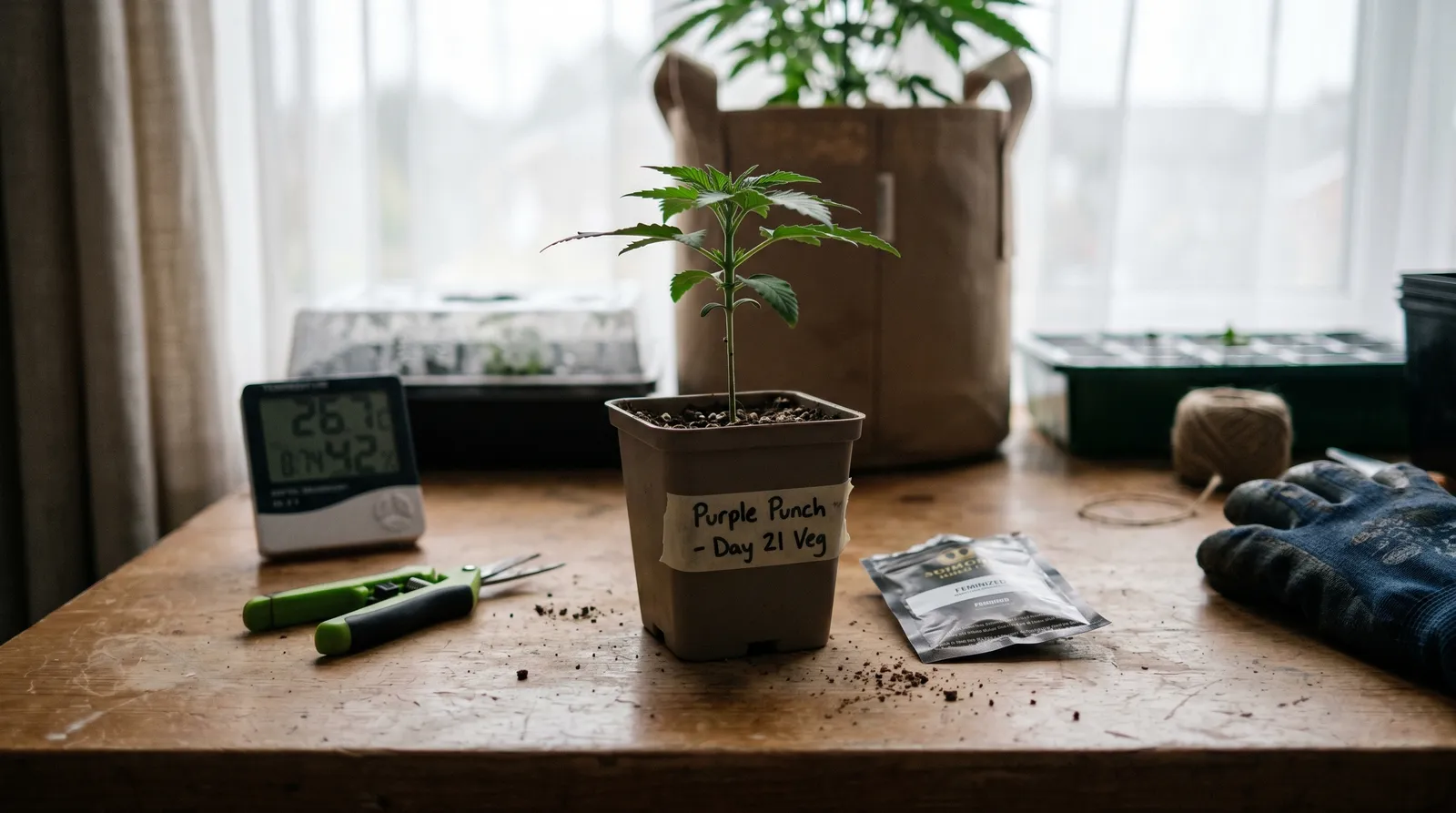
Regular (non-feminised) seeds are a different story. If you're running regs, many growers veg an extra week or two so they can spot pre-flowers and cull males early — saves you flipping a whole tent only to discover half of it is pollen sacs.
What's the trade-off between flipping early and flipping late?
Early flip means smaller plants and a shorter cycle; late flip means bigger plants and more headroom risk. Early flip (2-3 weeks veg) gives you more plants per square metre — the classic "sea of green" (SOG) approach. You'll harvest sooner but get less per plant. Late flip (6-8+ weeks veg) means fewer, larger plants with heavier main colas but a longer cycle.
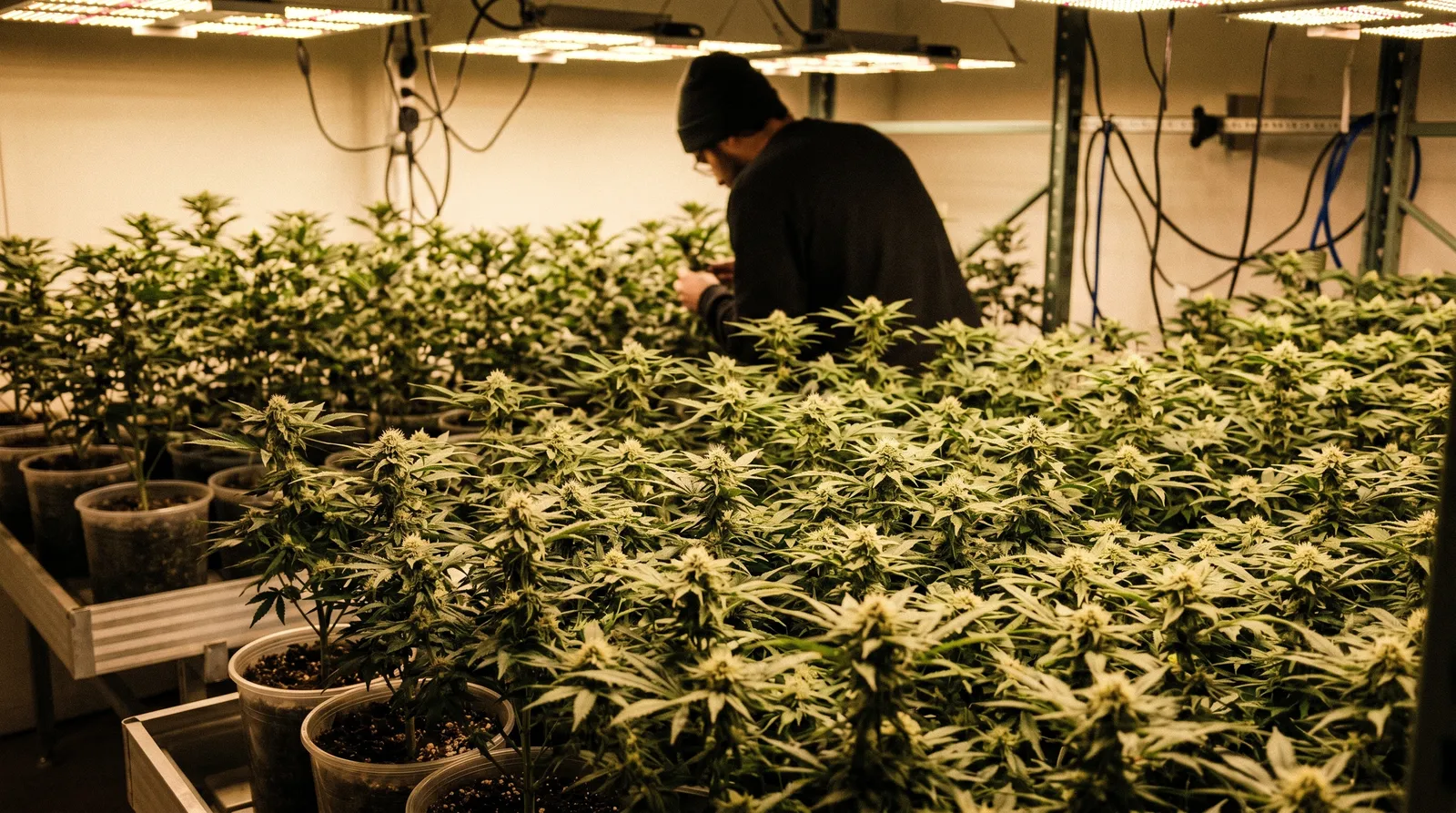
The Premium Cultivars grow guides reference a popular rule of thumb: flip at 3-4 weeks for plant count efficiency, or at 6 weeks for maximum per-plant yield. Neither is "better" — it depends on your tent dimensions, the plant count allowed where you are, and whether you're running a SCROG net. Compared with outdoor seasonal growing, indoor 12/12 control is faster but less forgiving of mistakes.
How does training change the timing?
Training pushes the flip later. If you're topping, FIMing, main-lining, or filling a SCROG net, you need the extra veg time to recover from stress and spread the canopy horizontally. A rough framework:
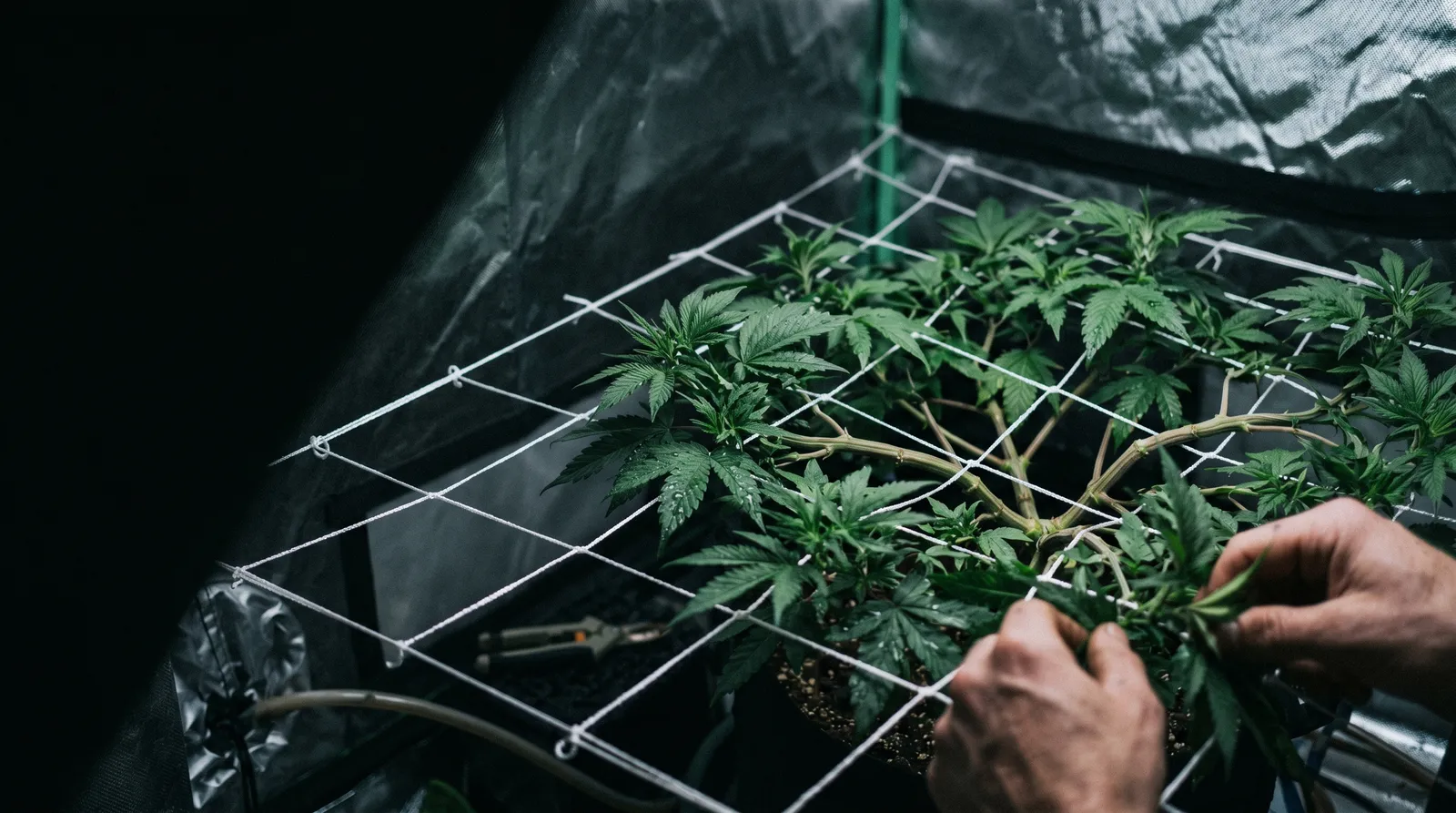
- No training: flip when plants hit 60% of target height.
- LST only: add 3-5 days post-bend for recovery.
- Topping / FIM: wait 7-10 days after the last topping before flipping — you want new growth established.
- SCROG: flip when the screen is roughly 60-70% full. The stretch finishes the job.
- Main-lining: typically 6-8 weeks of veg minimum to build the manifold properly.
Honest limitation: defoliation is a separate debate. Moderate lollipopping 2-3 days before the flip is widely practised; heavy "schwazzing" of mid-canopy fan leaves remains contested in horticultural literature — some growers swear by it, controlled trials are thin, and we won't pretend the evidence is settled.
What about autoflowers — when do you flip them?
You don't flip autoflowers at all. Autoflowering genetics (derived from Cannabis ruderalis) flower based on age, not light cycle. Most growers run them on 18/6 or even 20/4 from seed to harvest, because more light hours mean more photosynthesis and more yield, with no flip required. Seed-to-harvest is typically 9-11 weeks depending on the cultivar. If you're running an autoflower alongside a photoperiod in the same tent, you've already made a scheduling problem for yourself — the autoflower will want 18+ hours throughout while the photoperiod needs 12/12 to bloom. Separate tents, separate timers.
What should you check before pulling the trigger?
Check light-tightness, headroom, pot size, feed schedule, VPD and timer reliability before you flip. In order:
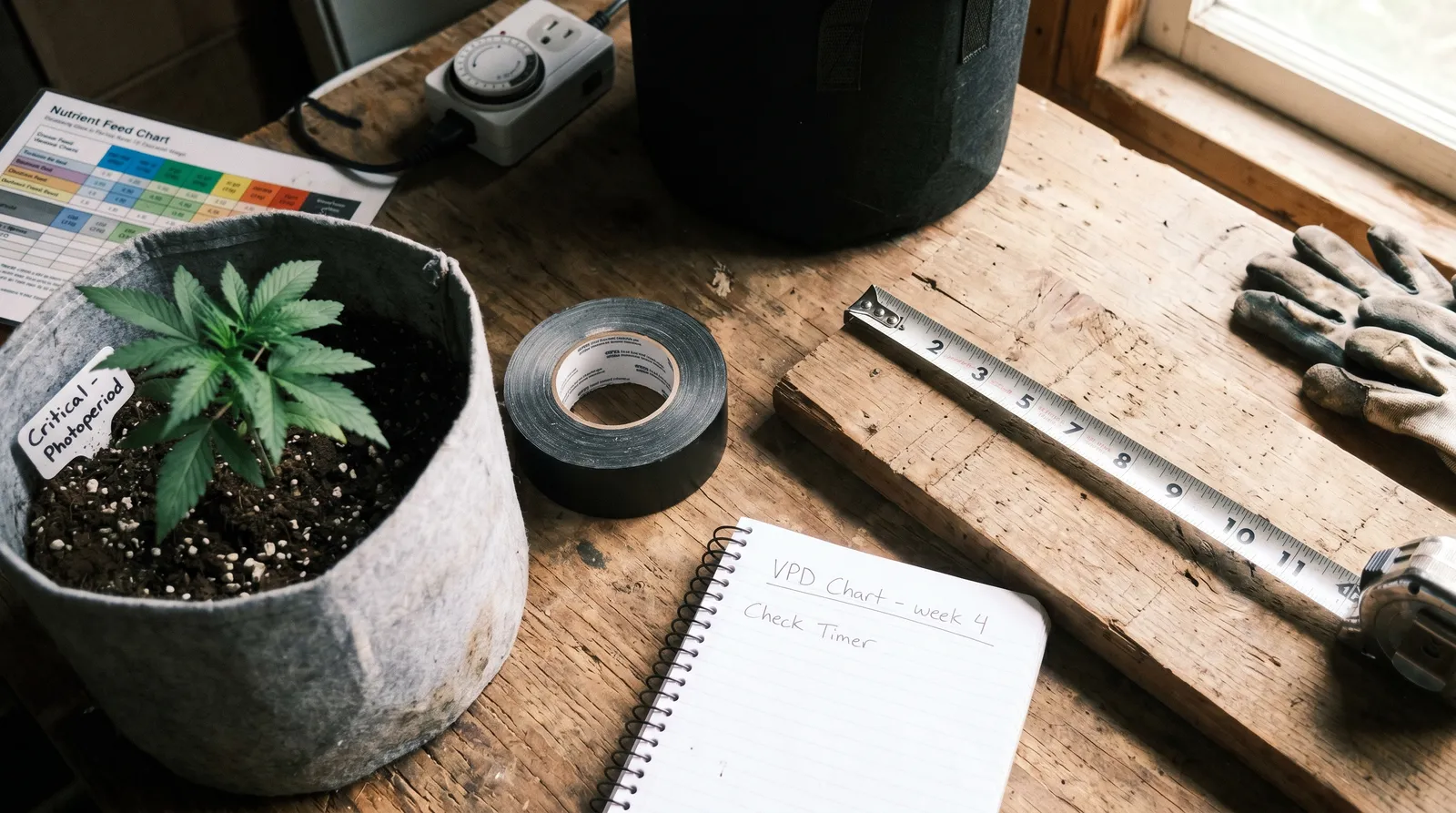
- Light-tightness. Seal zippers, cover passive vents with light traps, tape over LED standby lights on any gear inside the tent. A single pinhole opposite a streetlight is enough to stress a sensitive strain.
- Headroom calculation. Current height × 2 + 30cm (for LED hang distance) should fit under your tent ceiling. If it doesn't, you're already too late — train harder or lower the plant in the pot.
- Pot size. Rootbound plants in flower give disappointing yields. In coco, 11-15L fabric pots handle most 8-week flowering cultivars. In soil, 15-25L is more forgiving.
- Feed schedule. Transition to a bloom-focused nutrient ratio over the first week of 12/12 — shift from ~3-1-2 N-P-K veg feeds to ~1-3-2 flowering feeds. Keep pH at 5.8-6.2 in coco, 6.0-6.8 in soil.
- VPD target. Drop from ~0.8-1.1 kPa in veg toward 1.0-1.5 kPa across flower. For most setups that means nudging RH from ~65% down to ~55% gradually.
- Timer reliability. Mechanical pin timers fail. Get a digital timer with battery backup — worth the small outlay.
Can you force-flower outdoors or mid-season?
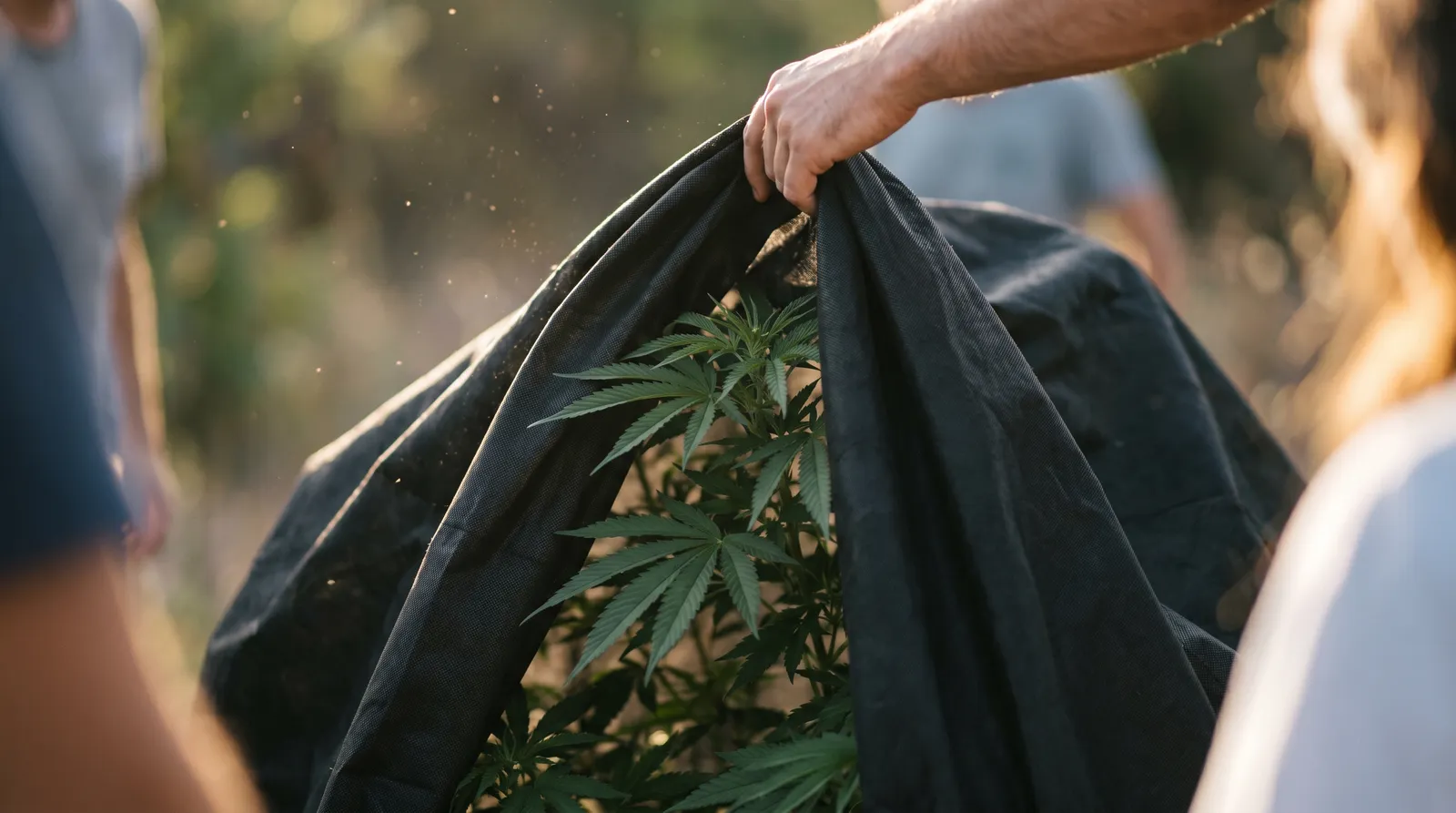
Yes — you can force-flower outdoors by covering plants for 12 hours of darkness daily. It's how growers in Southern Europe pull two harvests a year. You build or drape a light-proof cover over the plant to create artificial 12-hour darkness, typically from around 7pm to 7am, regardless of the actual daylength. It works, but it's a daily chore — miss a night and you risk revegging or hermaphroditism. Most home growers just run the natural season and accept the single autumn harvest.
Legal notice: Cannabis cultivation laws vary by country and region and change frequently. This guide is educational. Before growing, verify current laws for your specific jurisdiction. Azarius does not provide legal advice.
Azarius cannabis seeds & grow supplies
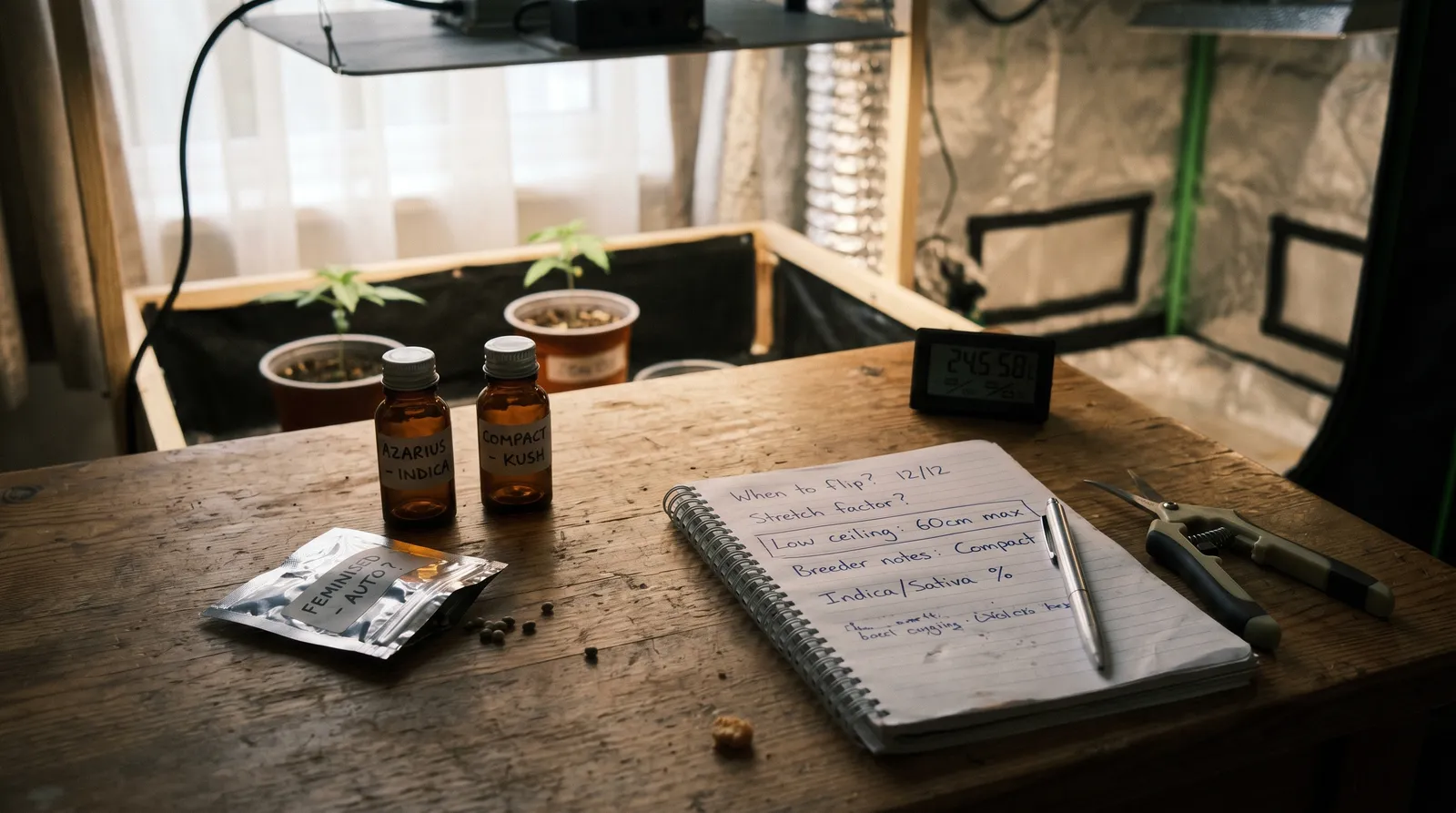
If you're picking genetics specifically for a low-ceiling grow, look for breeder notes that mention "compact", "short stretch", or indica-dominant parentage. Photoperiod feminised lines give you control over the flip timing; autoflowers skip the question entirely. You can buy seeds from Royal Queen Seeds, Dutch Passion, Sensi Seeds, Paradise Seeds, Ministry of Cannabis and Barney's Farm at Azarius, plus tents, timers and LED fixtures for indoor setups.
Educational information only. Cultivation rules vary widely by country and region; check what applies where you are before you start. Azarius does not provide formal advice, medical guidance, or cultivation authorisation. Adult use only.
Last updated: April 2026
Frequently Asked Questions
8 questionsHow long should I veg before flipping to 12/12?
Do I need to see pre-flowers before flipping?
What happens if I flip too early?
What happens if I flip too late?
Do autoflowers need a 12/12 flip?
Can a light leak ruin my 12/12 cycle?
How much do cannabis plants stretch after flipping to 12/12?
Should I change nutrients when I flip to 12/12?
About this article


Luke Sholl has been writing about cannabis, cannabinoids, and the broader benefits of nature since 2011, and has personally grown cannabis in home grow tents for more than a decade. That first-hand cultivation experience
This wiki article was drafted with AI assistance and reviewed by Luke Sholl, External contributor since 2026. Editorial oversight by Adam Parsons.
Medical disclaimer. This content is for informational purposes only and does not constitute medical advice. Consult a qualified healthcare provider before use of any substance.
Last reviewed April 24, 2026
References (6)
- [1]Lynn, J.S., Miller, G.L., & Rutowski, R.L. (2021). Florigen and the photoperiodic control of flowering. Journal of Experimental Botany, 72(2).
- [2]Royal Queen Seeds. (2024). Understanding the Veg-to-Flower Transition. Grow guide.
- [3]Premium Cultivars. (2024). Flipping to Flower: Critical Factors in Transitioning Cannabis. Cultivation reference.
- [4]Chandra, S., Lata, H., ElSohly, M.A. (Eds.). (2017). Cannabis sativa L. — Botany and Biotechnology. Springer.
- [5]Trilogene Seeds. (2024). Daily Light Integral and Plant Categories by Light Needs. Horticultural reference.
- [6]EMCDDA. (2023). Cannabis cultivation in Europe: policy and practice. European Monitoring Centre reference.
Related Articles
Cannabis Hermaphrodite: Identify, Prevent, Act
A cannabis hermaphrodite is a female plant that develops male pollen sacs or banana-shaped anthers (nanners), self-pollinating and seeding your harvest.
DIY Cannabis Fertilizer: Homemade Nutrient Guide
DIY cannabis fertilizer guide: compost, teas, banana ferments and feed schedules, with safety notes and cited research for home growers.
What To Do With Male Cannabis Plants: 6 Practical Uses
What to do with male cannabis plants: identify, isolate, breed, extract, or compost. A practical 6-step guide with sourcing and safety notes.
Mushroom Grow Kit Temperature & Humidity: Full Setup Guide
A temperature humidity control grow kit is the small set of climate tools — hygrometer, heat mat, humidifier or perlite tray — that keeps a mushroom fruiting…
When to Harvest Mushrooms: Veil Break Timing Explained
Harvest timing veil break is a cultivation technique that uses the tearing of the partial veil on maturing Psilocybe cubensis to mark peak alkaloid content.
First Grow Checklist: What You Need for Mushroom Kits
A first grow checklist is the short list of supplies and environmental conditions needed to run a home psilocybin mushroom kit from inoculated substrate to…
Sclerotia vs Fruit Bodies: Cultivation Comparison
Sclerotia and fruit bodies are two different life stages of Psilocybe fungi: sclerotia are hardened underground mycelial storage bodies (the 'magic…
Storing Dried Mushrooms Long Term: Full Guide
Storing dried mushrooms long term means keeping well-dried Psilocybe fruit bodies in airtight, opaque containers with desiccant, cool and dark, to slow…
Drying Mushrooms Air Desiccant Oven: Methods Compared
Drying mushrooms air desiccant oven refers to the three home methods for reducing fresh fruit bodies from ~90% water to cracker-dry (<5%). Gotvaldová et al.