
This article discusses psychoactive substances intended for adults (18+). If you have a health condition or take medication, consult a doctor before use. Our age policy
Photoperiod vs Autoflower Cannabis: Key Differences
Definition
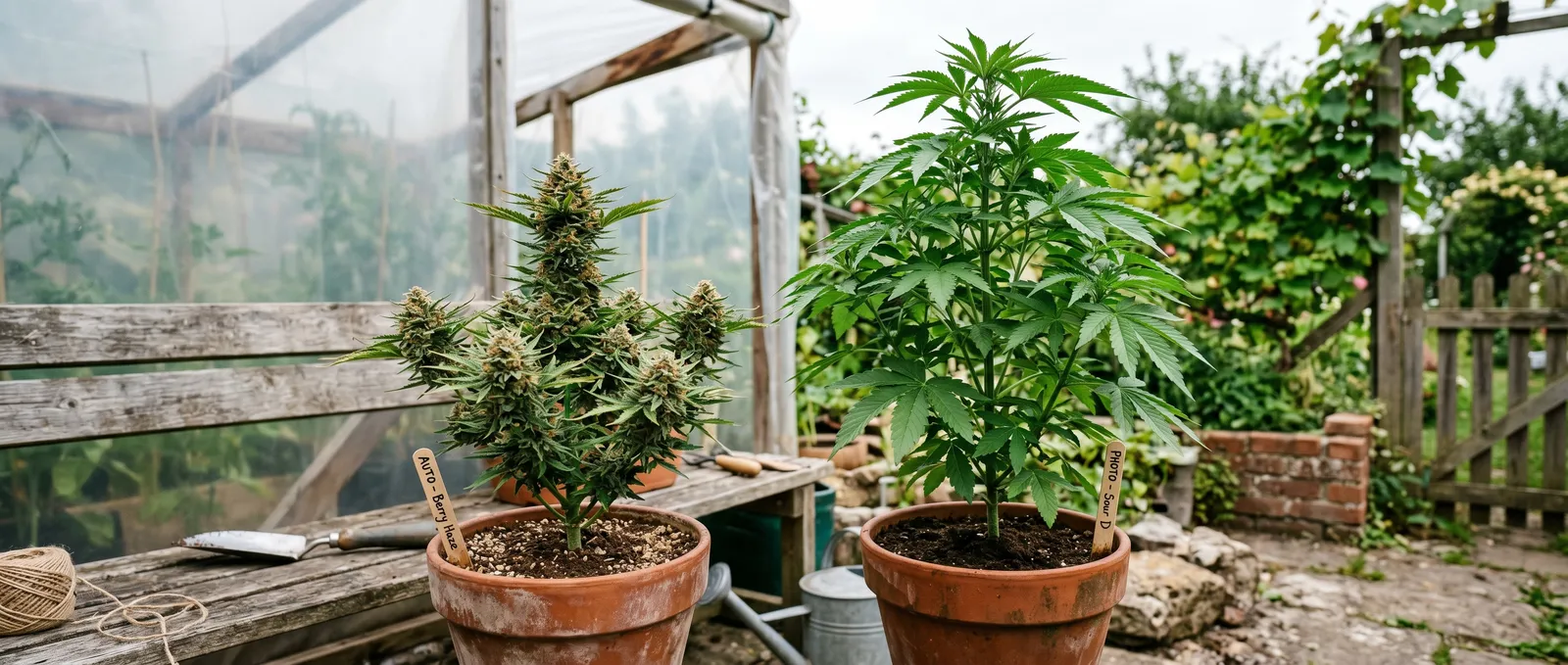
Photoperiod vs autoflower cannabis is a genetics choice: photoperiod strains flower when light cycles shift to 12 hours dark, while autoflowers — crosses with Cannabis ruderalis — flower on an internal age clock around 3–5 weeks from seed (Clarke & Merlin, 2013). The choice shapes timeline, plant size, yield potential, and how much training the plant will tolerate.
Adult use only (18+). Cannabis cultivation rules vary by country and region and change frequently. This guide is educational.
Photoperiod vs autoflower cannabis is a genetics decision that shapes your tent size, lighting schedule, timeline, and how much training you can realistically do. Choosing between these two plant types is the first real fork in the road for a home grower. They descend from different lineages — photoperiod strains from Cannabis sativa and C. indica, autoflowers from crosses with C. ruderalis — and they behave so differently in a tent that treating them the same is the single fastest way to underperform your setup (Small & Cronquist, 1976). Before you buy seeds, it pays to know which type fits your space and schedule.
Quick comparison at a glance
Photoperiod plants flower on a light cycle trigger and take 14–22 weeks seed-to-harvest; autoflowers flower on age (3–5 weeks) and finish in 9–11 weeks. Here's the full side-by-side.
| Trait | Photoperiod | Autoflower |
|---|---|---|
| Flowering trigger | Light cycle (12/12) | Age (~3–5 weeks from seed) |
| Seed-to-harvest | 14–22 weeks | 9–11 weeks |
| Typical light schedule | 18/6 veg, 12/12 flower | 18/6 or 20/4 throughout |
| Typical final height | 80–200 cm (controllable) | 40–100 cm |
| Genetics base | sativa / indica | sativa / indica × ruderalis |
| Yield per plant (indoor, 1m², ~300W LED) | ~100–400g (varies widely) | ~40–150g (varies widely) |
| Training tolerance | High (topping, SCROG, main-lining) | Low–medium (gentle LST only) |
| Cloning | Yes — mother plants viable | No — clones inherit the age clock |
| Harvests per year (outdoor, N. Europe) | 1 | 2–3 |
| Beginner-friendly | Medium | High |
How flowering gets triggered
Photoperiod cannabis flowers in response to long dark periods, while autoflowers flower on an internal age clock regardless of light schedule. This is the whole game. Photoperiod is a short-day plant — it starts flowering when it perceives long, uninterrupted dark periods. Flip your lights from 18 hours on to 12 hours on (and 12 hours genuinely dark), and within 7–14 days you'll see pre-flowers and the stretch begin. Light leaks during that dark period — a standby LED on a fan controller, a phone screen — can revert plants or cause hermaphroditism. We've seen a single red charging LED inside a cheap tent throw a whole flower cycle — honestly, one of the most frustrating things to diagnose.
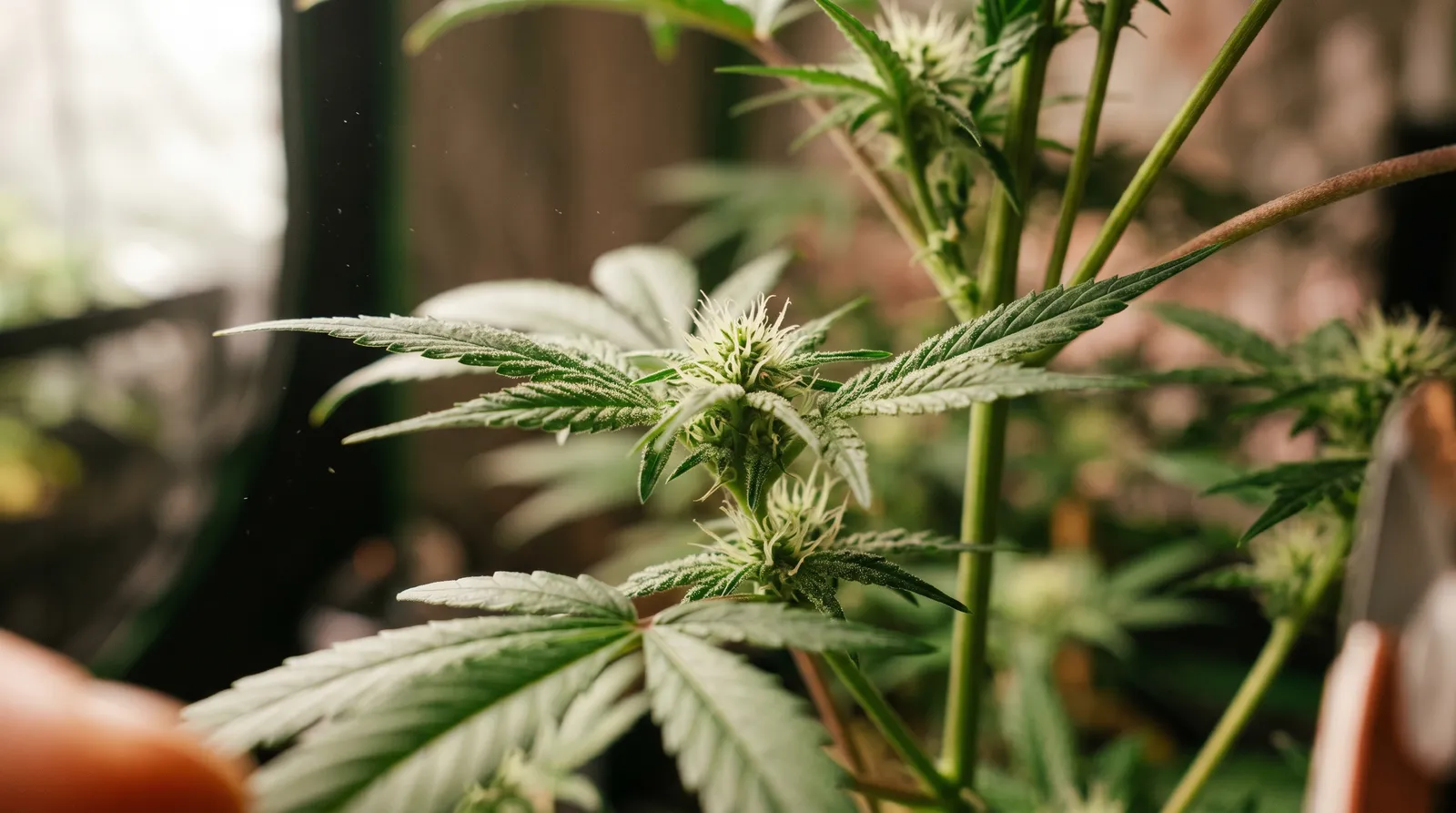
Autoflowers ignore all of that. Thanks to the Cannabis ruderalis genes in their background — wild populations from Central Asia and Eastern Europe adapted to short, erratic summers — they flower on an internal clock, usually 3–5 weeks after germination, regardless of light schedule (Clarke & Merlin, 2013). You can run them at 18/6, 20/4, or even 24/0, and they'll still transition on cue. That ruderalis inheritance is also why they stay shorter, finish faster, and — honestly — yield less per plant.
Timeline and light schedule
A photoperiod indoor cycle runs roughly 14–19 weeks total; autoflowers condense the same journey into 70–80 days. Typical photoperiod: 1 week germination/seedling, 4–8 weeks vegetative growth under 18/6, then 8–10 weeks of flowering under 12/12. Sometimes 22 weeks for long-flowering sativas like Amnesia Haze. The veg stage is where you choose your plant size. Want a SCROG that fills a 120×120 tent? Veg for 6–8 weeks. Want a small personal plant? Flip at week 3.
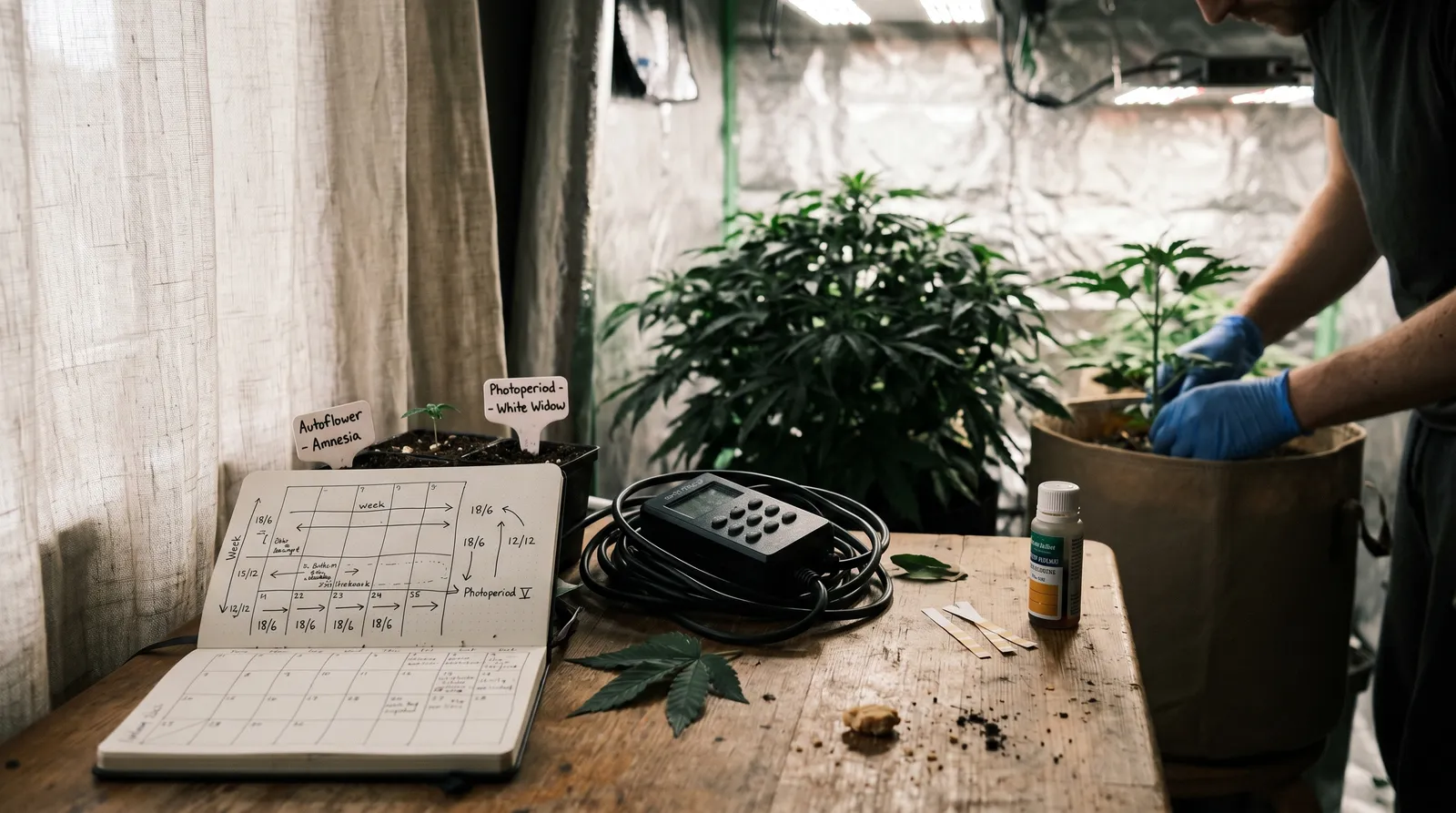
Autoflowers condense everything. Germination through harvest is typically 70–80 days. Most growers run 18/6 from seed to chop — it's the sweet spot between energy cost and canopy light. Some push 20/4 for slightly more growth, though the returns diminish fast and your electricity bill doesn't. Running 12/12 on an autoflower, by contrast, just starves it of photons; the plant will still flower on schedule but yield substantially less.
Under LED, target PPFD sits around 400–600 µmol/m²/s during vegetative growth and 600–900 µmol/m²/s in flower (Fluence Bioengineering, 2021). Autoflowers, being smaller and on a compressed timeline, tend to do best at the lower end of those ranges — they don't have weeks of recovery time if you burn them.
Yield, size, and training
Photoperiod plants out-yield autoflowers per plant because you control veg length, which means you control final plant size. A well-trained photoperiod under a 300W LED in a 1m² footprint can produce 300–500g dry in good hands, though "300–500g" does a lot of lifting — genetics, medium, environment, and grower skill all swing it hard. A first-time grower in soil should mentally budget half that.
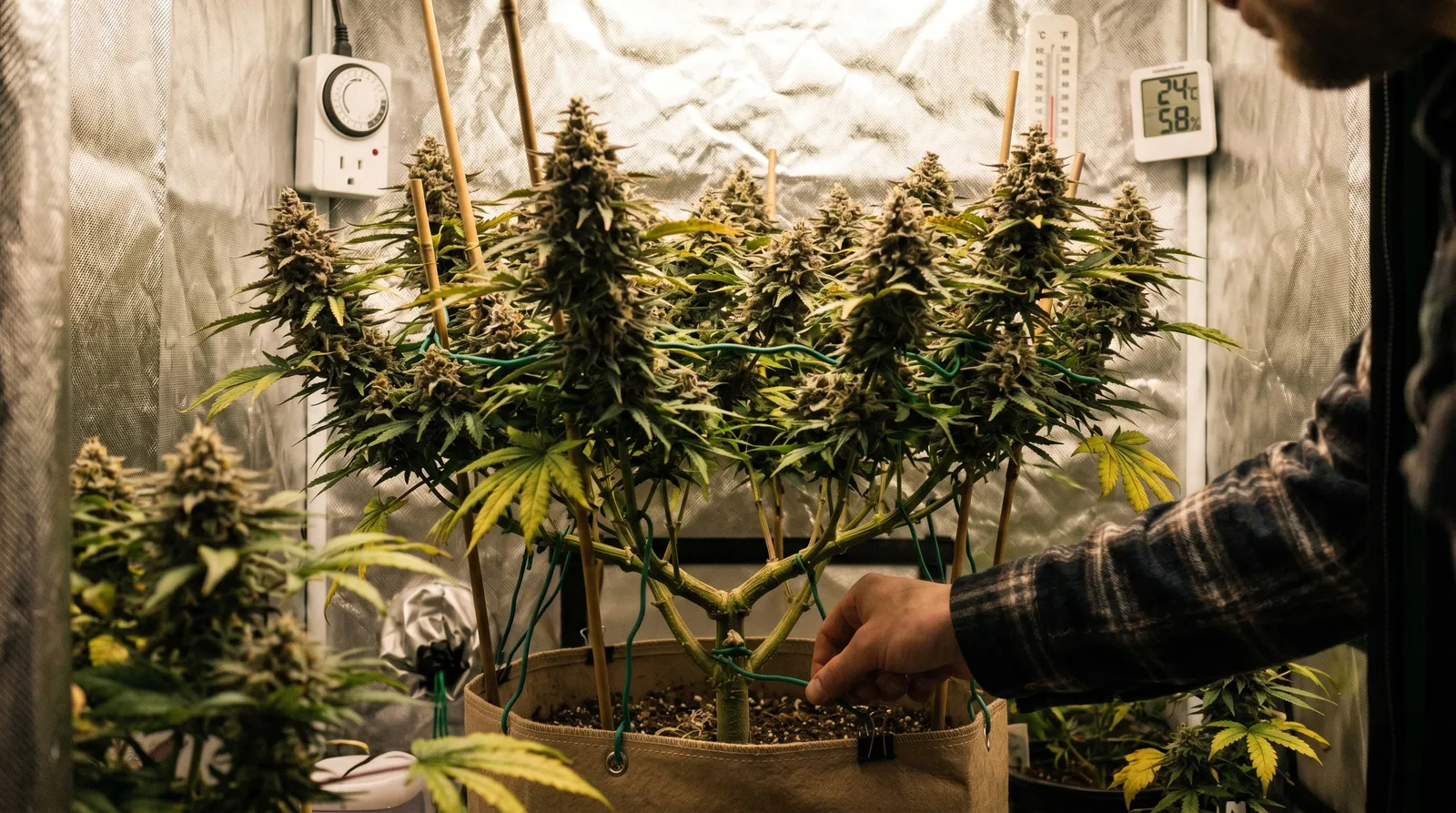
They also take training beautifully. Topping, FIMing, main-lining, SCROG, supercropping — all of it works because you can veg an extra week to let the plant recover before flipping. A SCROG net over a photoperiod in a 120×120 tent, vegged 6 weeks, is still the highest-yield-per-watt configuration most home growers will run.
Autoflowers don't have that recovery time. A topping done at the wrong moment — say, week 4, right as they're transitioning — can cost you 20–30% of your final yield. Low-stress training (LST) with soft plant ties is the safe ceiling. Bend, don't cut. Some experienced growers top autoflowers successfully at the 3–4 node stage, but it's a gamble. Expected yield from a single autoflower indoors sits around 40–150g dry depending on genetics, pot size, and light — with larger "photo-style" autoflowers from breeders like Mephisto or Dutch Passion pushing the upper end.
Outdoor growing, especially in Northern Europe
Outdoors in Northern Europe, autoflowers generally outperform photoperiods because they finish before autumn rains. Photoperiod plants planted in spring flower when days naturally shorten in late August through October. That's great in southern Spain, less great in the Netherlands, Germany, or the UK, where September rains arrive right as flowering peaks and botrytis (bud rot) becomes a real threat. A sativa-dominant photoperiod that wants 10 weeks of flowering may simply not finish before frost.
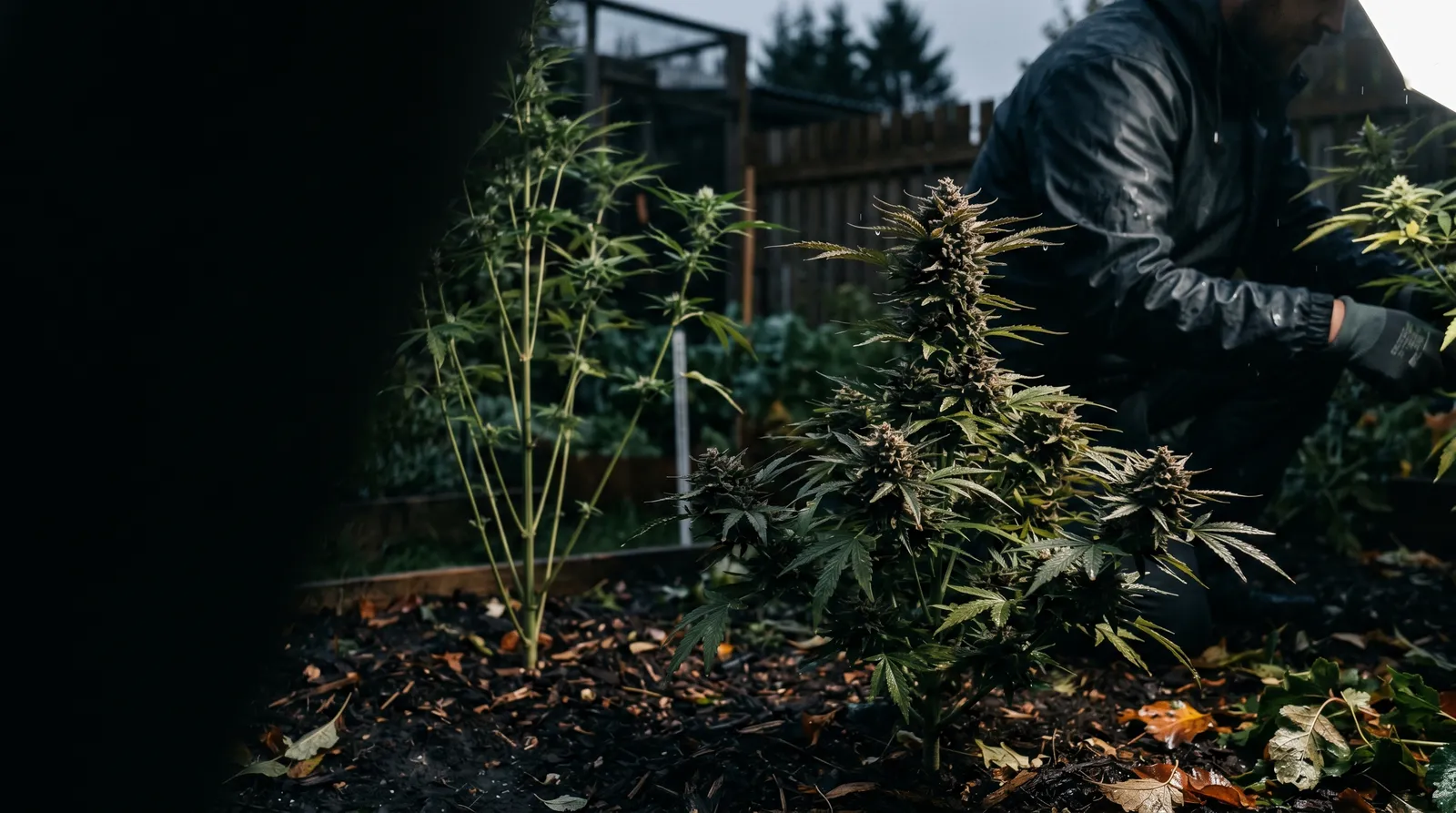
Autoflowers sidestep this. Plant in late April or early May, harvest in July or early August — well before the autumn rains. Plant again in June, harvest in September. Two or even three outdoor harvests in a single Dutch summer is routine with autos. This is why autoflower genetics have exploded in popularity across Northern Europe over the last decade (EMCDDA, 2022).
Cloning and mother plants
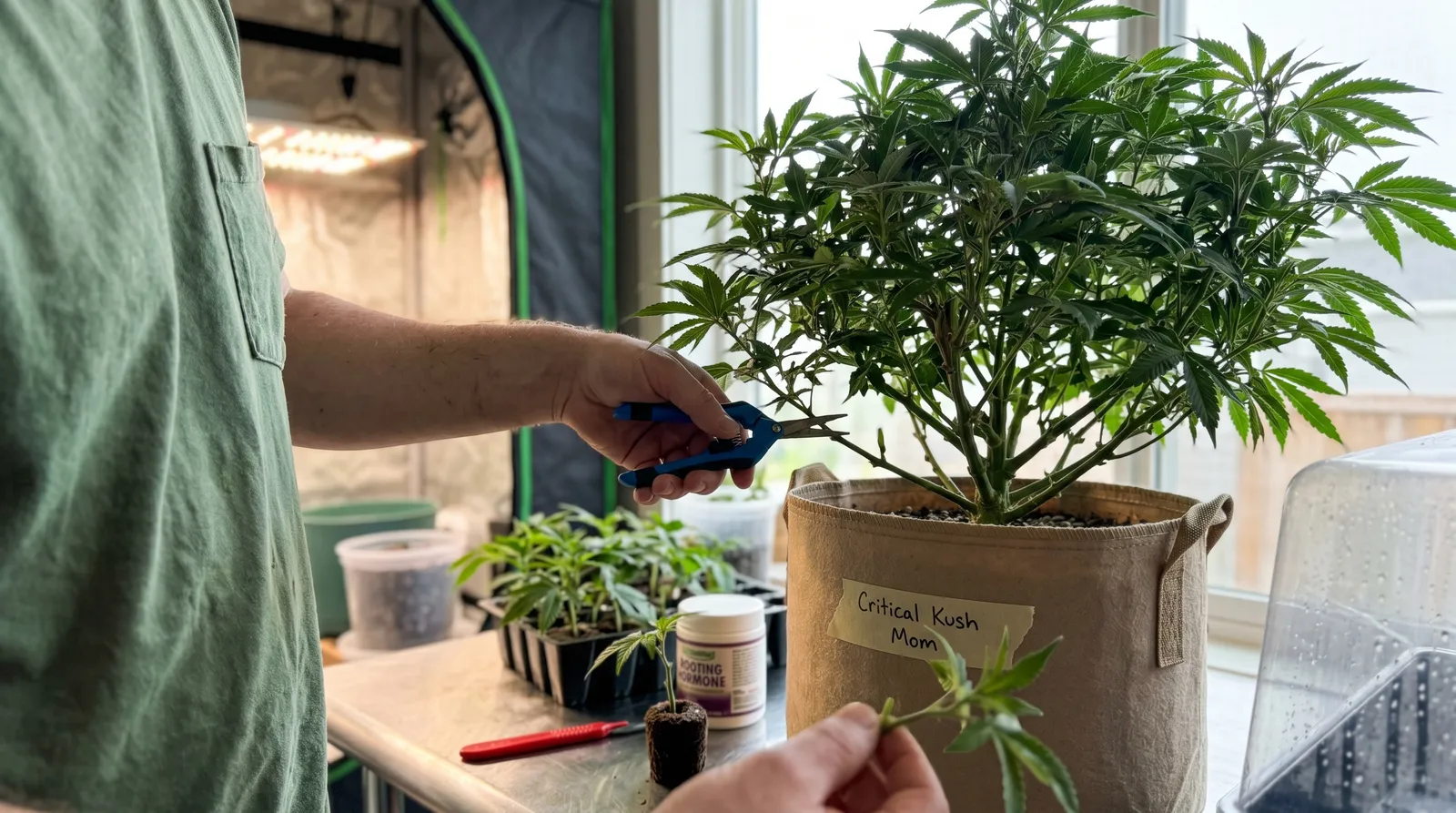
Photoperiod plants can be cloned indefinitely; autoflowers cannot. Keep a mother under 18/6 and you can take cuttings for years, locking in a phenotype you like. Autoflowers can't be cloned in any useful sense — a cutting inherits the mother's age, so a clone taken from a 5-week-old autoflower will try to flower at ~15g of biomass. You're stuck growing from seed every time, which is both a cost and a flexibility limit.
The feminised vs regular layer
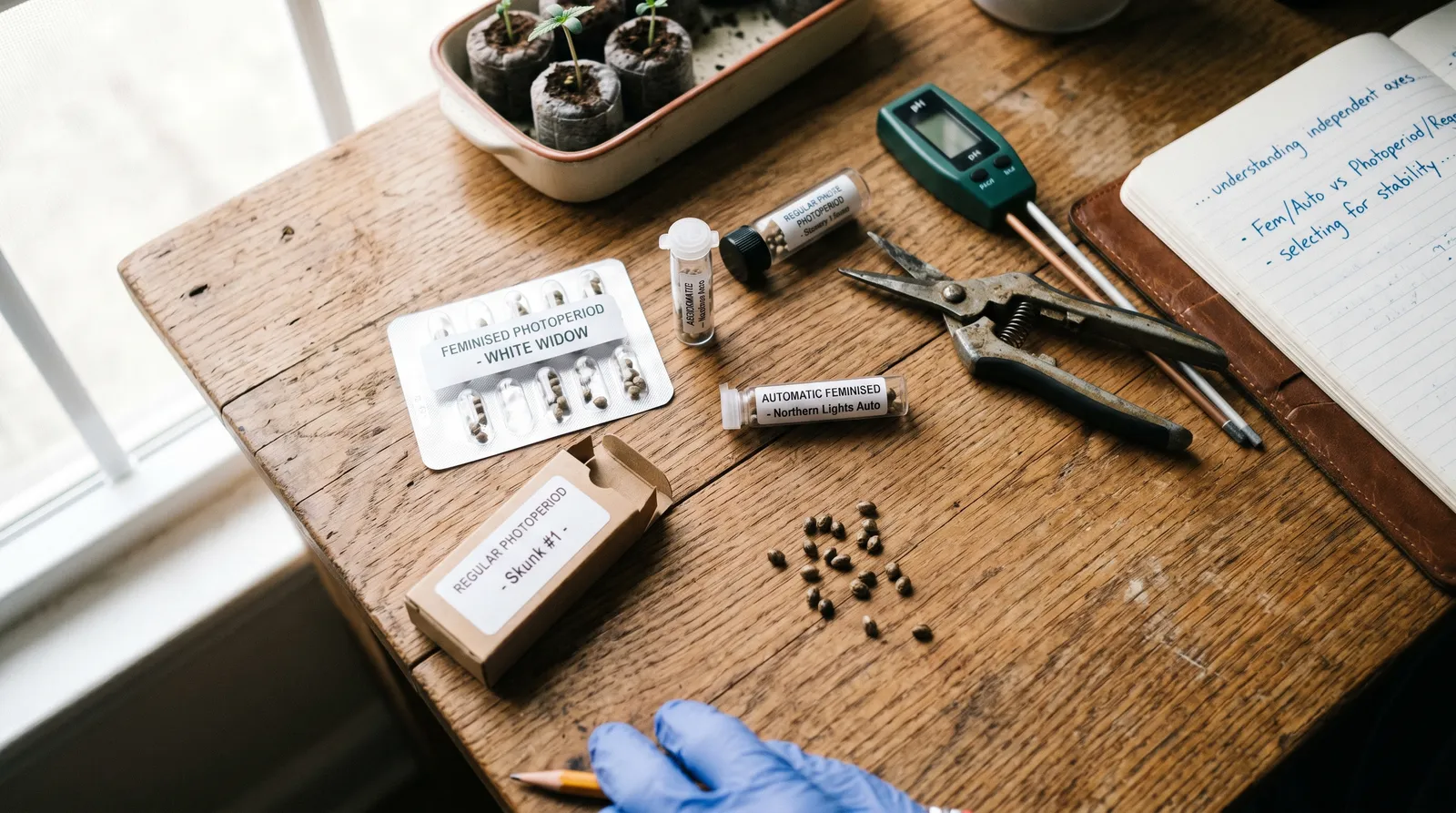
Feminised and autoflower aren't opposites — they're independent axes. You can order feminised photoperiod seeds, feminised autoflower seeds, regular photoperiod, or regular autoflower. Feminisation — the breeding technique that produces ~99% female plants — applies to both types. Regular seeds (roughly 50/50 male/female) are mostly ordered by breeders who need males for pollen. For most home growers chasing buds, feminised is the default regardless of whether you go photoperiod or auto.
So which should you pick?
Pick autoflower if you want speed and simplicity; pick photoperiod if you want yield and control. Go autoflower if: you're new to growing, you want a harvest in under 3 months, you're growing outdoors in Northern Europe, your space is short (under 1m of vertical room), your light schedule is inconsistent (partially lit closet, shared room), or you want multiple harvests per year without juggling mother plants.
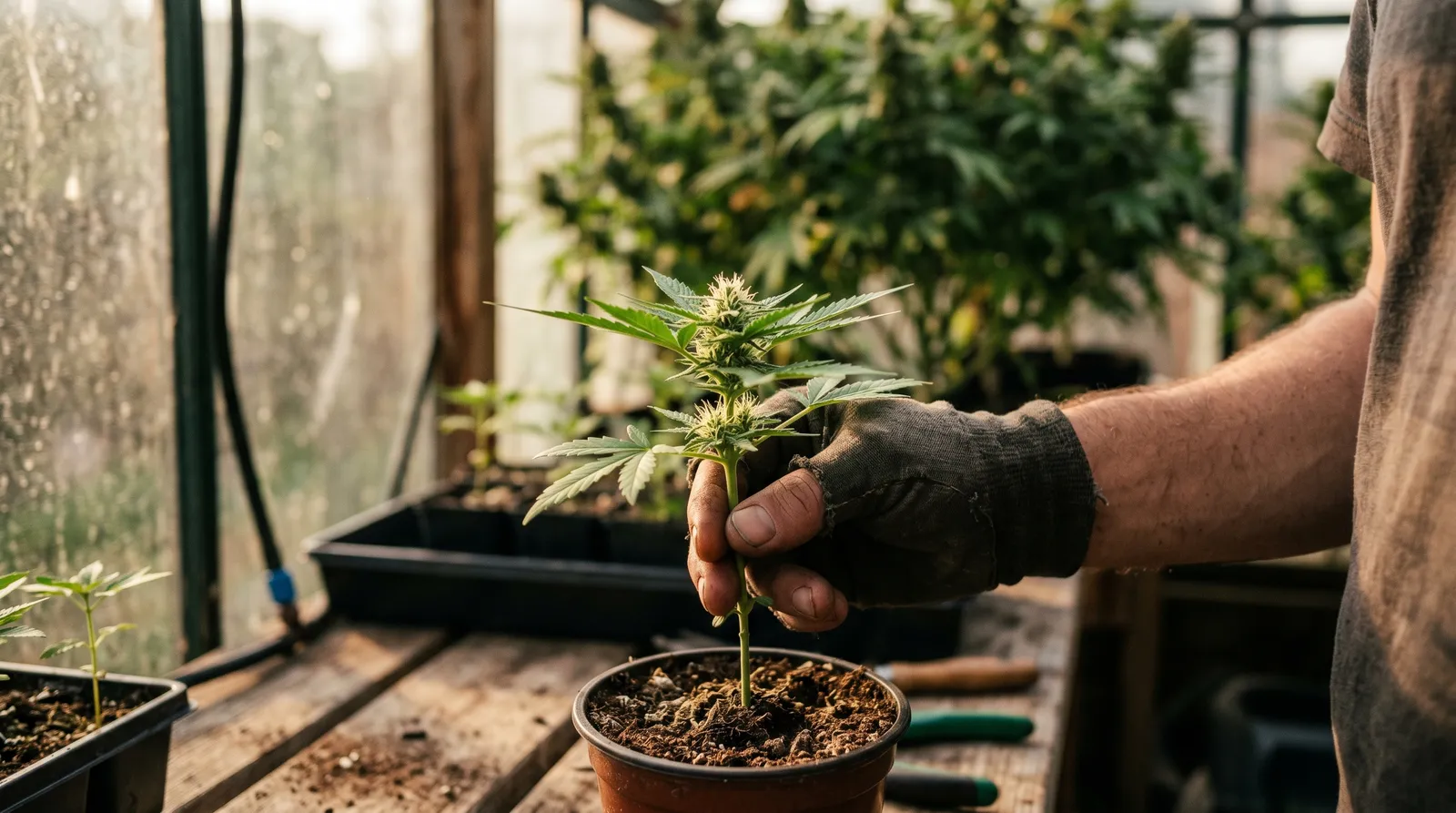
Go photoperiod if: you want maximum yield per watt, you want to clone and preserve a phenotype, you have proper light-sealed space, you want to SCROG or main-line, you're drawn to long-flowering sativa genetics (Haze, Kush varieties at full expression), or you simply enjoy the longer, more engaged cultivation process.
Neither is objectively "better" — they're different tools. Compared to most other plant choices in a tent, the photoperiod vs autoflower cannabis decision is less about quality and more about workflow. A lot of growers run both — a photoperiod SCROG in the main tent for the big quarterly harvest, a rotation of autoflowers in a smaller tent for continuous supply.
Verdict
For a first grow, get a feminised autoflower from a reputable breeder and accept the lower per-plant yield in exchange for a forgiving timeline. Good starting points to buy include Dutch Passion's Auto range, Royal Queen Seeds' Quick One, Paradise Seeds' Auto line, or Mephisto Genetics for the hobbyist-obsessive end of the market. You'll learn the fundamentals — watering, pH, VPD, pest checks — on a plant that forgives your scheduling mistakes.
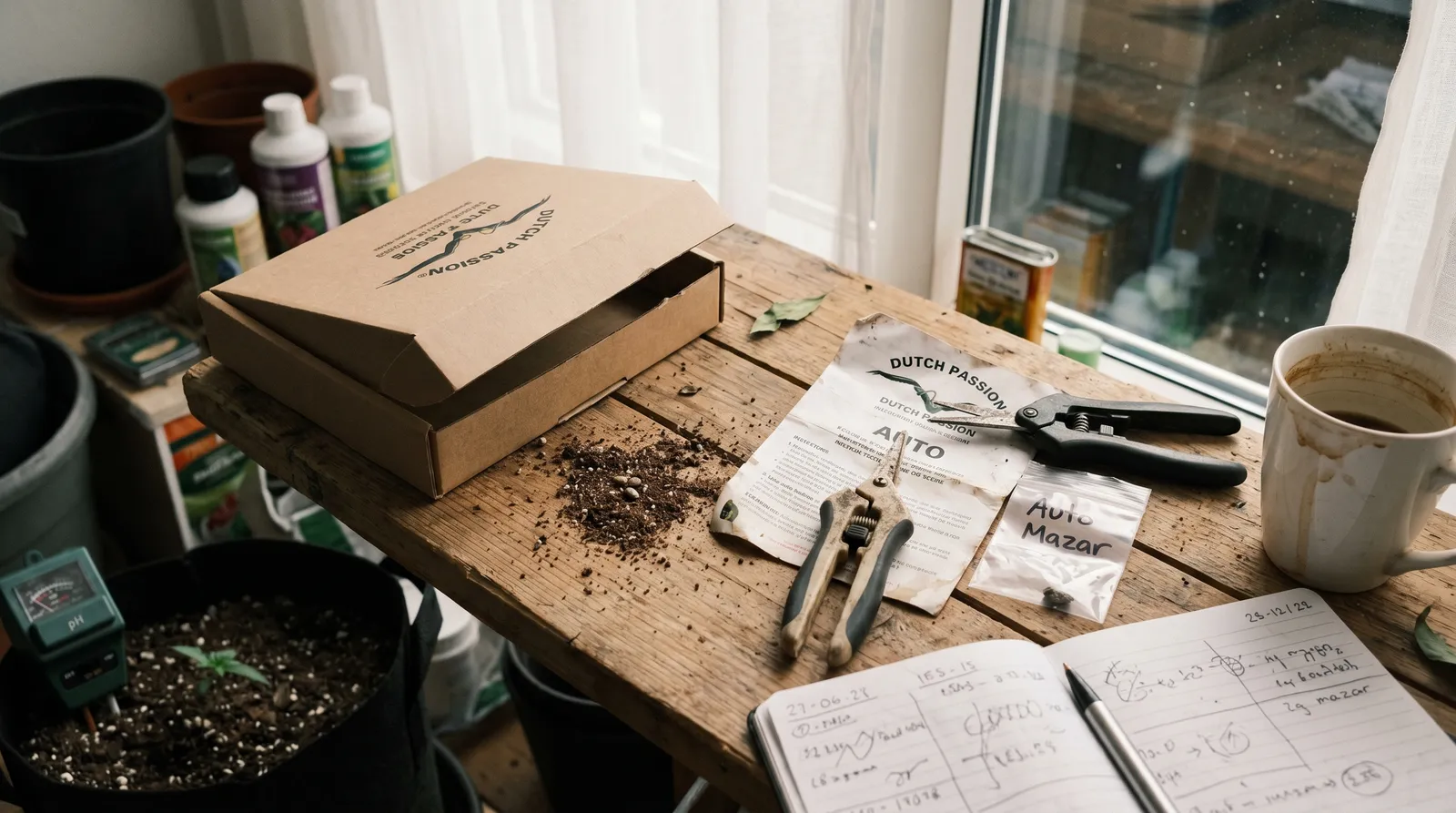
Once you've got one cycle under your belt and you want to push yield, move to a feminised photoperiod, veg for 5–6 weeks, and try a basic SCROG. That's where the real yield-per-watt numbers live. The interactions and harm-reduction side of cannabis consumption — if you're curious about that — lives on our cannabinoids hub, not here. This guide is about the plant in the pot.
Related products at Azarius
Azarius has sold cannabis seeds since 1999, from Dutch Passion, Royal Queen Seeds, Sensi Seeds, Paradise Seeds, Ministry of Cannabis, and Barney's Farm — both photoperiod and autoflower, feminised and regular. For beginners leaning autoflower, the Dutch Passion Auto range and Royal Queen Seeds Quick One are sensible starting points to order. For photoperiod growers, Sensi Seeds' classics and Paradise Seeds' feminised catalogue cover most phenotypes worth chasing.
Legal notice: Cannabis cultivation laws vary by country and region and change frequently. This guide is educational. Before growing, verify current laws for your specific jurisdiction. Azarius does not provide legal advice.
This guide is educational and written for adult readers (18+). It does not constitute medical or horticultural advice. Cultivation rules vary widely by jurisdiction and change frequently; verify current rules where you live before germinating seeds. Azarius does not provide medical or formal advice. Always use personal judgement; this content is for information only.
Last updated: April 2026
Frequently Asked Questions
8 questionsCan you grow photoperiod and autoflower plants in the same tent?
Do autoflowers really yield half as much as photoperiods?
Can you top or SCROG an autoflower?
Why can't you clone autoflowers?
Which is better for outdoor growing in Northern Europe?
Do autoflowers need different nutrients than photoperiods?
How much electricity do autoflowers save compared to photoperiods?
Can light leaks really cause a photoperiod plant to hermaphrodite?
About this article


Luke Sholl has been writing about cannabis, cannabinoids, and the broader benefits of nature since 2011, and has personally grown cannabis in home grow tents for more than a decade. That first-hand cultivation experience
This wiki article was drafted with AI assistance and reviewed by Luke Sholl, External contributor since 2026. Editorial oversight by Adam Parsons.
Medical disclaimer. This content is for informational purposes only and does not constitute medical advice. Consult a qualified healthcare provider before use of any substance.
Last reviewed April 24, 2026
References (6)
- [1]Small, E., & Cronquist, A. (1976). A practical and natural taxonomy for Cannabis. Taxon, 25(4), 405–435.
- [2]Clarke, R. C., & Merlin, M. D. (2013). Cannabis: Evolution and Ethnobotany. University of California Press.
- [3]Fluence Bioengineering (2021). Cannabis Cultivation Guide: Light Intensity and Photoperiod Recommendations. Fluence by OSRAM technical documentation.
- [4]Chandra, S., Lata, H., Khan, I. A., & ElSohly, M. A. (2017). Cannabis cultivation: Methodological issues for obtaining medical-grade product. Epilepsy & Behavior, 70, 302–312.
- [5]EMCDDA (2022). Cannabis cultivation trends in Europe. European Monitoring Centre for Drugs and Drug Addiction.
- [6]Beckley Foundation (2020). Cannabis policy and cultivation in Europe: a review. Beckley Foundation Policy Programme.
Related Articles
Cannabis Hermaphrodite: Identify, Prevent, Act
A cannabis hermaphrodite is a female plant that develops male pollen sacs or banana-shaped anthers (nanners), self-pollinating and seeding your harvest.
DIY Cannabis Fertilizer: Homemade Nutrient Guide
DIY cannabis fertilizer guide: compost, teas, banana ferments and feed schedules, with safety notes and cited research for home growers.
What To Do With Male Cannabis Plants: 6 Practical Uses
What to do with male cannabis plants: identify, isolate, breed, extract, or compost. A practical 6-step guide with sourcing and safety notes.
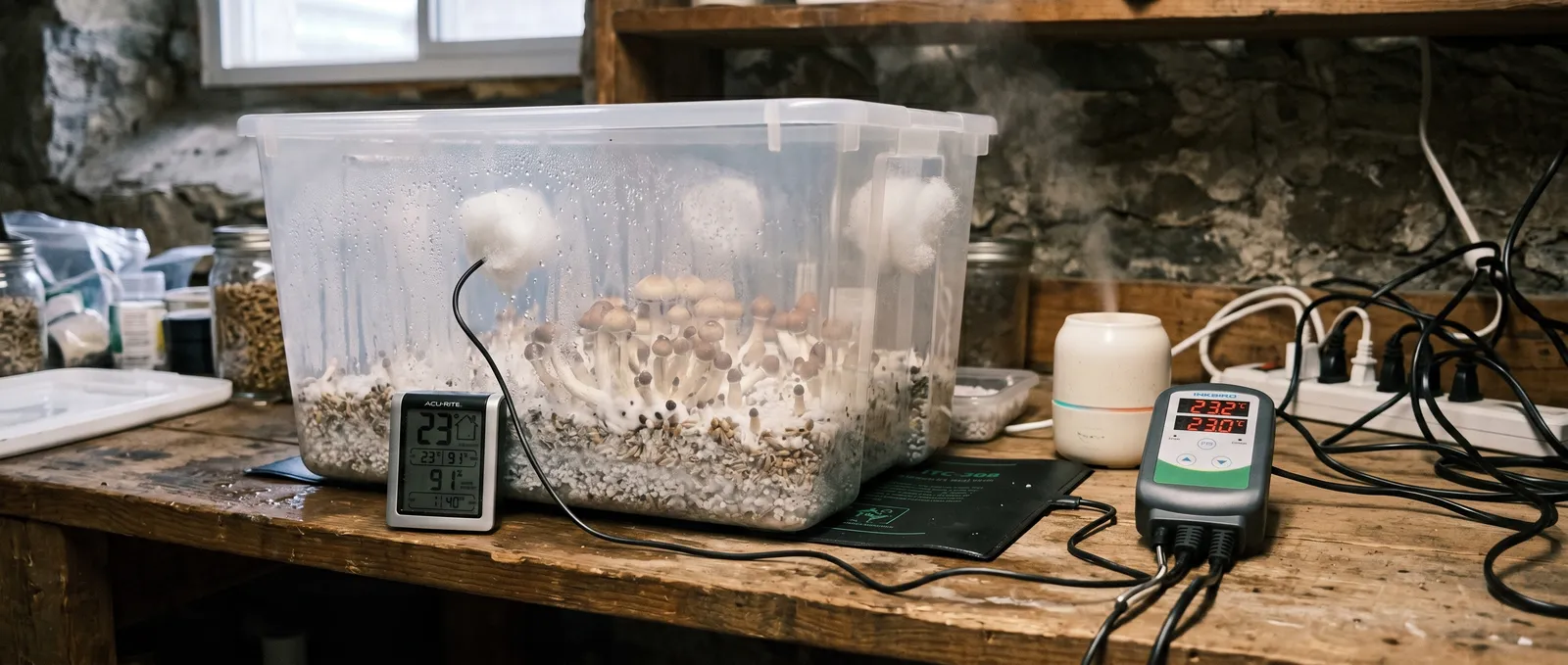
Mushroom Grow Kit Temperature & Humidity: Full Setup Guide
A temperature humidity control grow kit is the small set of climate tools — hygrometer, heat mat, humidifier or perlite tray — that keeps a mushroom fruiting…
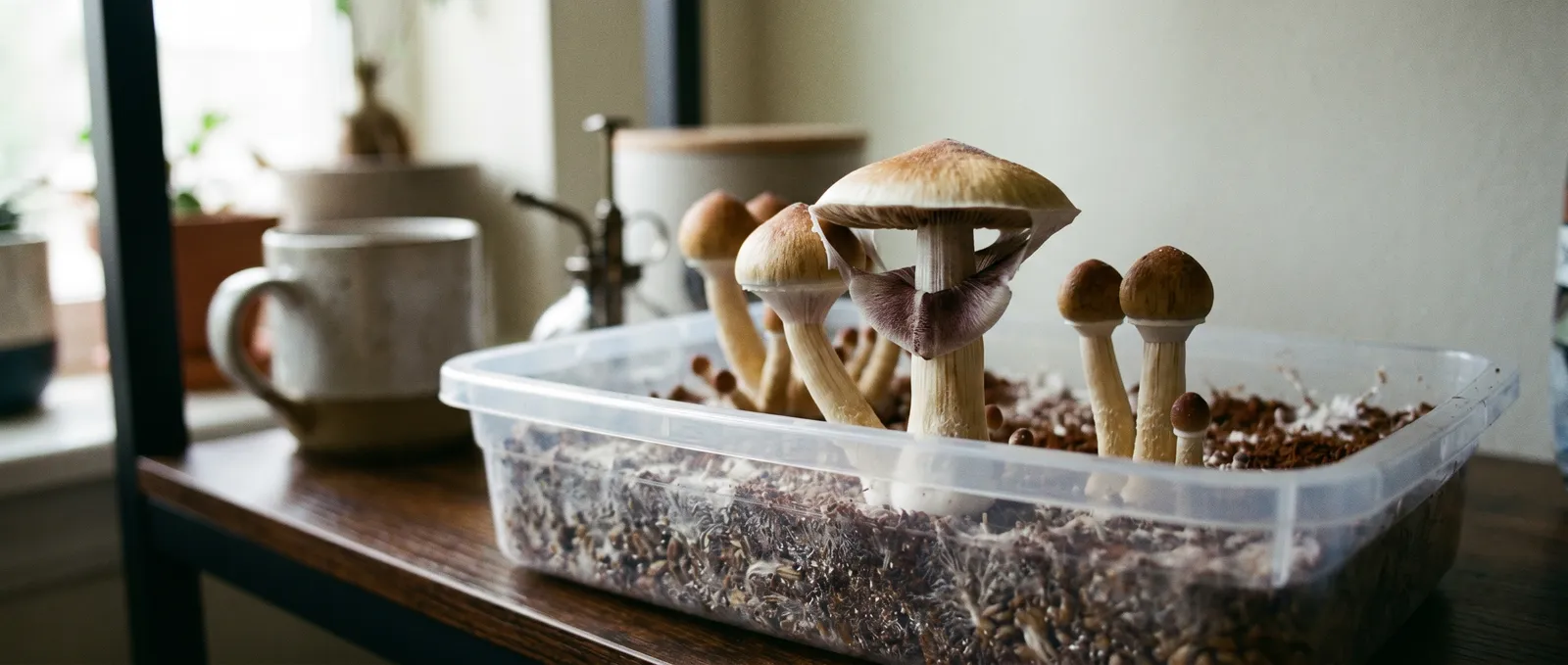
When to Harvest Mushrooms: Veil Break Timing Explained
Harvest timing veil break is a cultivation technique that uses the tearing of the partial veil on maturing Psilocybe cubensis to mark peak alkaloid content.
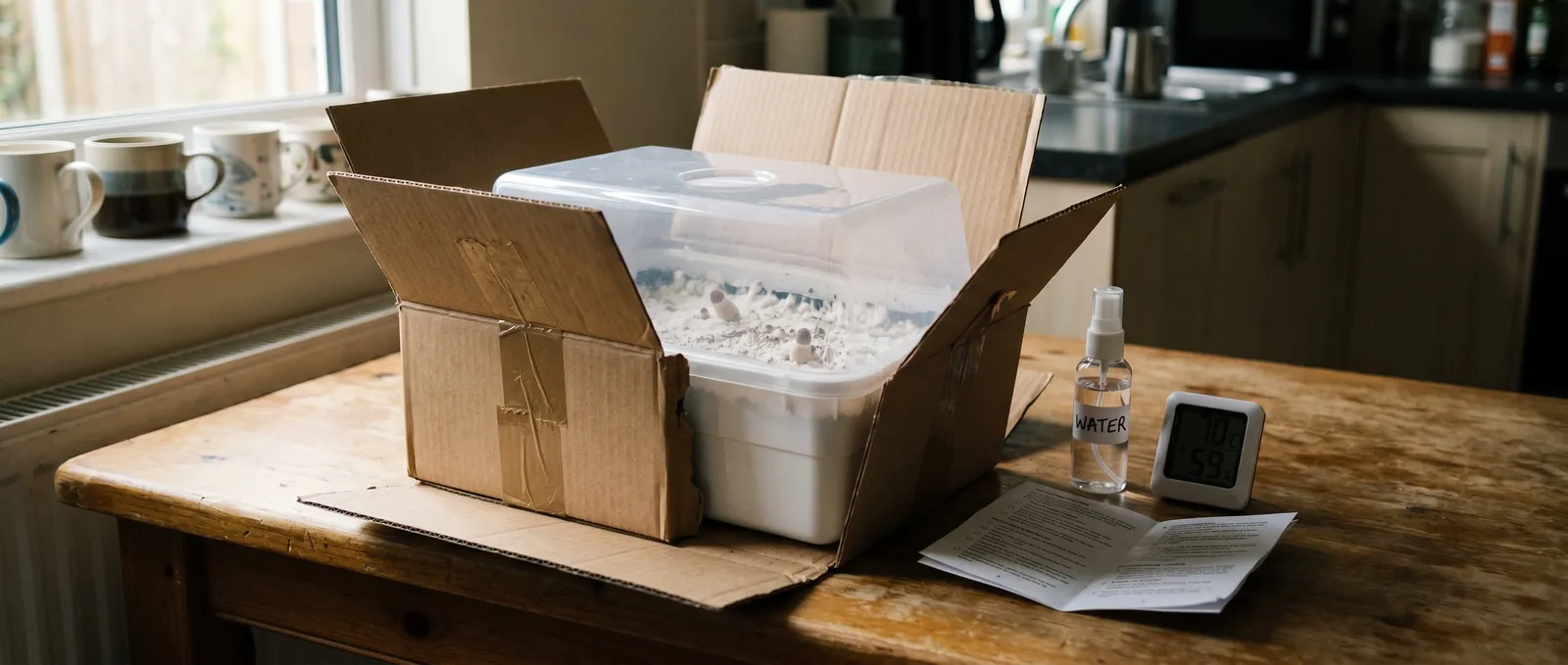
First Grow Checklist: What You Need for Mushroom Kits
A first grow checklist is the short list of supplies and environmental conditions needed to run a home psilocybin mushroom kit from inoculated substrate to…
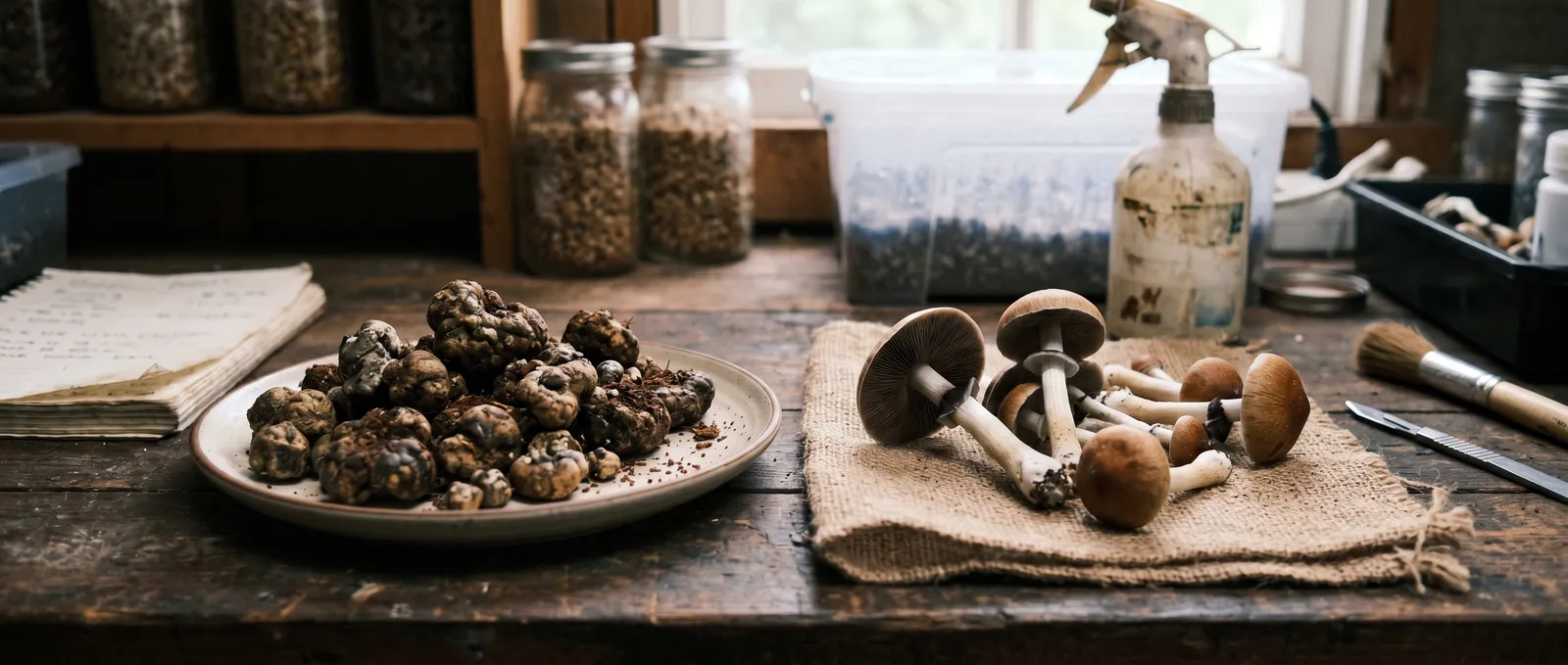
Sclerotia vs Fruit Bodies: Cultivation Comparison
Sclerotia and fruit bodies are two different life stages of Psilocybe fungi: sclerotia are hardened underground mycelial storage bodies (the 'magic…
Storing Dried Mushrooms Long Term: Full Guide
Storing dried mushrooms long term means keeping well-dried Psilocybe fruit bodies in airtight, opaque containers with desiccant, cool and dark, to slow…
Drying Mushrooms Air Desiccant Oven: Methods Compared
Drying mushrooms air desiccant oven refers to the three home methods for reducing fresh fruit bodies from ~90% water to cracker-dry (<5%). Gotvaldová et al.