
This article discusses psychoactive substances intended for adults (18+). If you have a health condition or take medication, consult a doctor before use. Our age policy
Cannabis Hermaphrodite: Identify, Prevent, Act
Definition
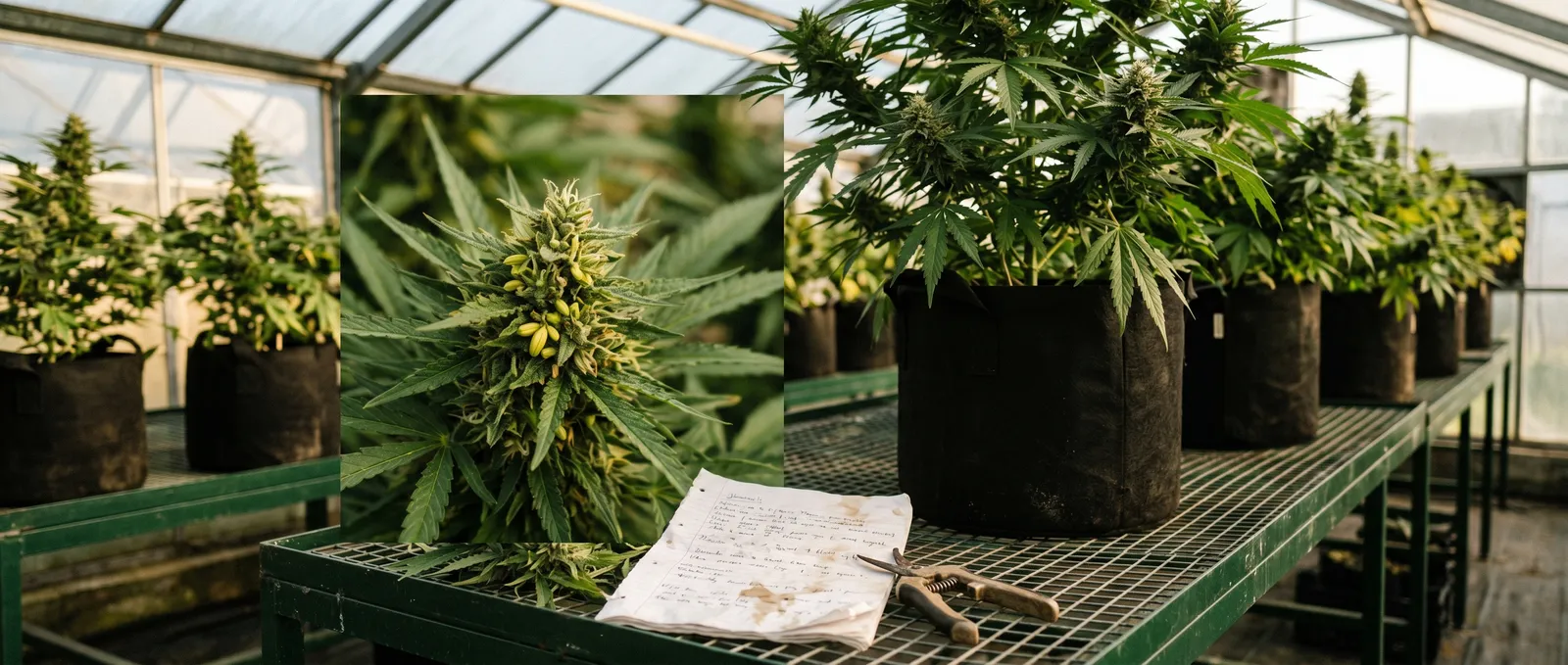
A cannabis hermaphrodite is a female plant that develops male pollen sacs or banana-shaped anthers (nanners), self-pollinating and seeding your harvest. According to Punja et al. (2019), stress-induced hermaphroditism is a leading cause of indoor yield loss. Prevention is environmental discipline and stable genetics; action means immediate removal or isolation.
Cannabis cultivation laws vary by country and region and change frequently. This guide is educational. Before growing, verify current laws for your specific jurisdiction. Azarius does not provide legal advice.
What a hermie actually is, and why you should care
A hermaphrodite cannabis plant — a "hermie" in grower shorthand — is a female that develops male flower structures alongside its pistillate flowers. The pollen sacs it produces can self-pollinate that same plant or drift across a tent and pollinate every other female in the canopy. The outcome is the same either way: seeded flower, reduced floral mass, and a harvest that weighs less and smokes worse. A 2019 review in Frontiers in Plant Science (Punja et al., 2019) identified stress-induced hermaphroditism as one of the leading causes of yield loss in indoor cannabis cultivation, alongside powdery mildew and botrytis.
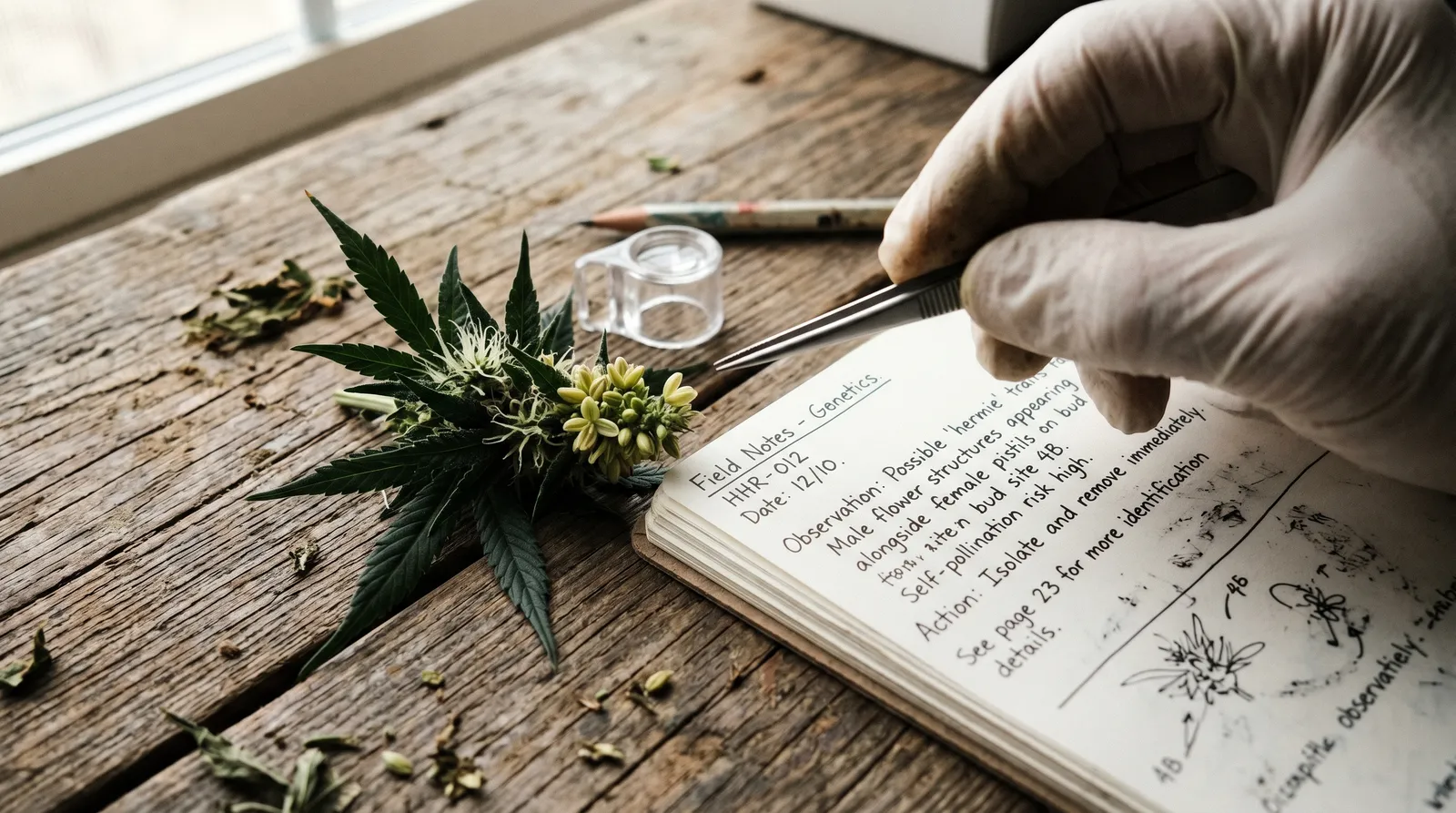
There are two flavours of hermie, and they behave differently:
- True hermaphrodite — develops full staminate (male) flowers and pollen sacs on the same plant, often in clusters near the main cola. Usually genetic in origin.
- "Nanners" or banana hermies — yellow, banana-shaped anthers that emerge directly from female calyxes, typically late in flower. Usually stress-induced. They release pollen without the protective sac, so they dust a tent fast.
True hermies show up early and cannot be saved. Nanners show up late, can sometimes be managed if caught within hours, and tell you something went wrong with your environment or timing.
Step 1 — Know the causes before you hunt symptoms
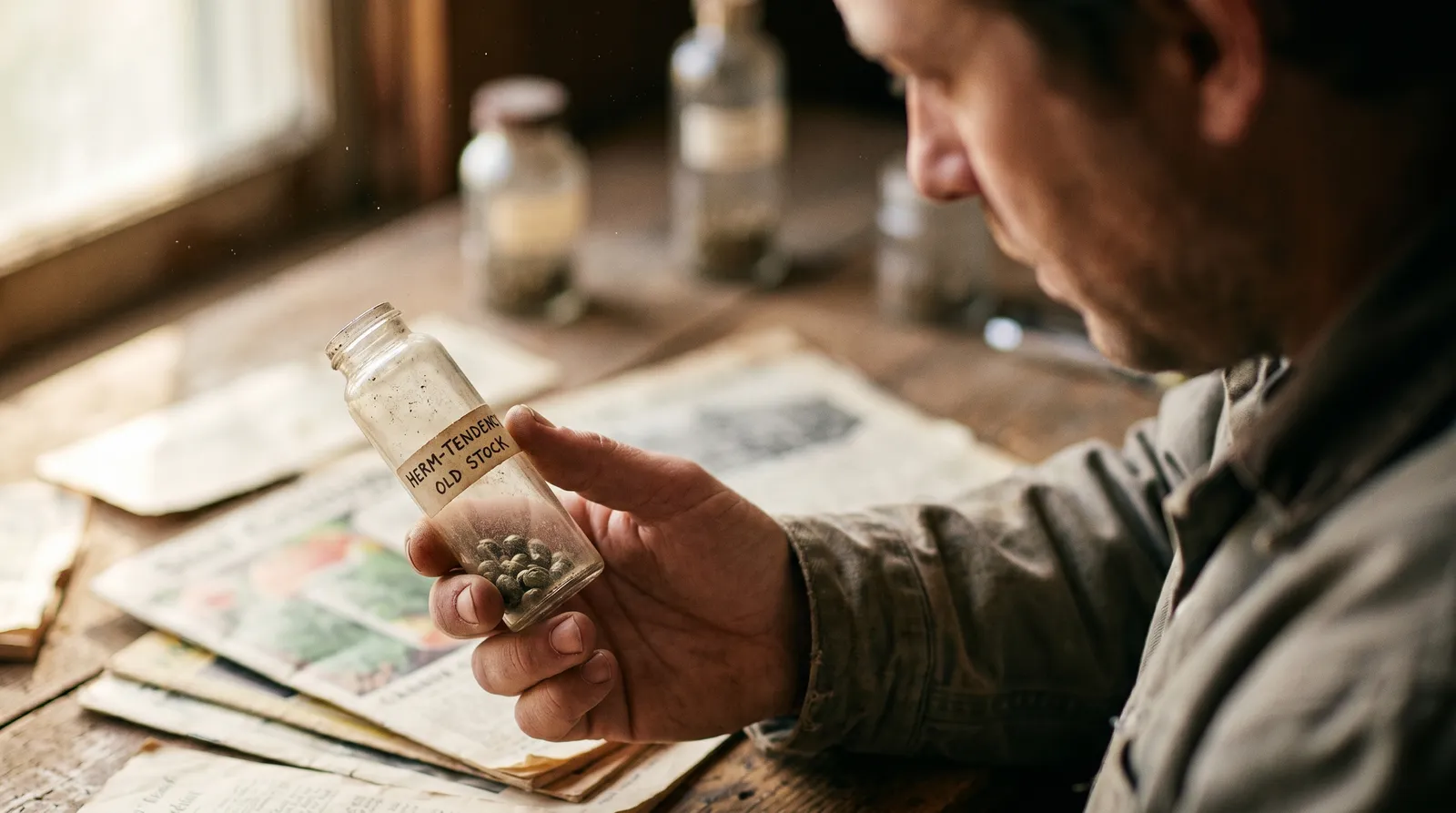
Genetic instability. Some seed lines carry hermaphroditic tendencies — particularly older feminised stock produced by colchicine or rodelisation, and unstable backcrosses. Reputable breeders now use silver thiosulphate (STS) to produce feminised seeds, which delivers more stable female-only progeny. Even so, no feminised line is 100% hermie-proof — breeders typically quote 99%+ female expression, and that last fraction of a percent is real.
Environmental stress. This is the big one for home growers. Heat spikes above 30°C in flower, light leaks during the 12-hour dark period, severe nutrient burn, pH swings, root damage from overwatering, and extreme VPD excursions (below 0.6 kPa or above 1.8 kPa) can all trigger the plant's emergency reproductive response. A 2020 paper in Plants (Moher et al., 2020) documented that even brief light interruptions during the dark period — as little as 10 minutes of low-intensity light at 3 lux — were enough to trigger re-vegetation and stress responses in photoperiod cannabis.
Cultivation errors. Running flower past the breeder's recommended window, harsh late-flower defoliation, heavy-handed topping during pre-flower, or leaving a broken branch untreated. Each of these tells the plant: "Finish now. Make seeds if you have to."
Step 2 — Identify early, because timing is everything
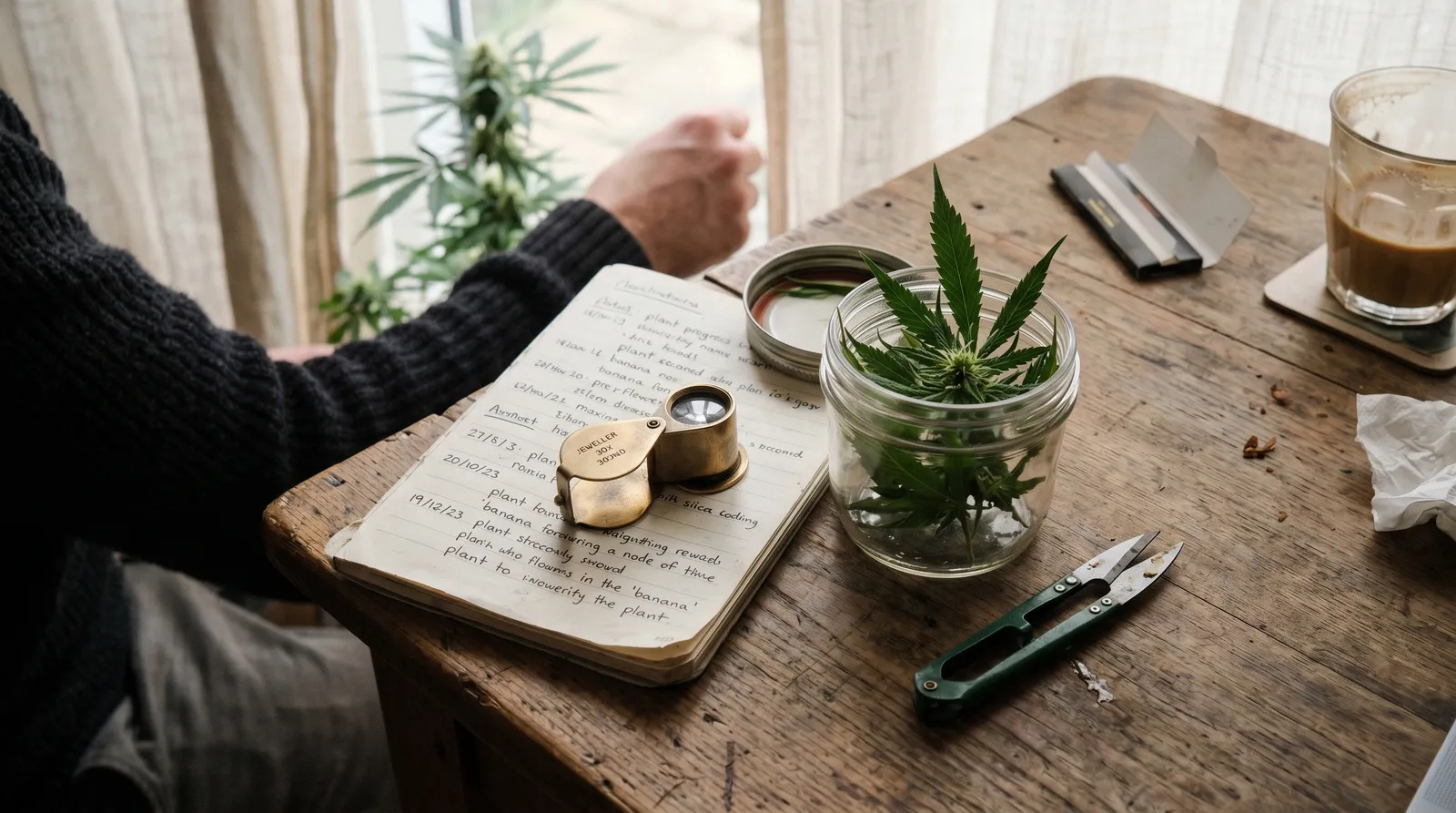
Pollen release is the point of no return. Once an open anther has shed, you have pollinated flowers whether you can see it or not. Daily inspection from week 3 of flower onward — with a 30x–60x jeweller's loupe or USB microscope — is how you catch problems before they become crop-wide.
Early flower (weeks 1–3)
- Pistils and pollen sacs on the same node. A healthy female shows white pistils emerging from tear-drop-shaped calyxes. A true hermie shows round, ball-like pollen sacs on the same branches. If you see this in week 1 or 2, the plant is genetically unstable.
- Pre-flower sex check. After flipping to 12/12, inspect nodes at day 10–14. Mixed morphology this early is a cull decision.
Mid flower (weeks 4–6)
- Pollen sac clusters in the canopy interior. Hermies often show first on lower, shaded branches where the microclimate is warmest and least inspected.
- Yellowish sac-like structures near the main stem. These are developing anthers. If they are still green and closed, you have days — not weeks — to act.
Late flower (weeks 7+)
- Nanners. Bright yellow or pale green banana-shaped structures protruding directly from calyxes. These are naked anthers and can release pollen within 24–48 hours of appearing.
- Suddenly swollen calyxes without fresh pistils. Can indicate self-pollination has already begun. If you split one open and find an early seed, the clock has already run.
Inspect with lights-on, using a headlamp to see into the canopy interior. Check every plant, every day, from week 3 onwards.
Step 3 — Lock down the environment
The majority of home-grow hermies are preventable with environmental discipline. Specifics below apply to photoperiod genetics; autoflowers flower by age, so the light-leak point matters less — but every other stress factor still applies.
Light integrity (photoperiod plants only)
- No LED indicator lights inside the tent — cover with electrical tape.
- No phone screens, no opening the tent during lights-off.
- Check for zip-gap leaks with all room lights off. If you can see your hand inside from ambient light, a plant can feel it.
- Timer discipline — no drift. A stuck timer that gives 13 hours of light one night and 11 the next is a nanner factory.
Temperature and VPD
Keep flowering tent temperature between 22–27°C with lights on, no more than a 5–8°C drop at night. VPD targets sit in the 1.0–1.5 kPa range for flower. Sustained temperatures above 30°C, particularly combined with low humidity (below 40% RH), drive hermaphroditism hard.
Feeding and pH
Soil growers target pH 6.0–6.8; coco coir 5.8–6.2; hydroponic systems 5.5–6.2. EC/PPM in flower typically sits at 1.4–2.0 EC depending on genetics and medium. Creeping pH lockout is a slower hermie driver than a light leak but just as real over a 10-week flower. Measure every feed.
Mechanical stress
Avoid heavy defoliation or training after week 3 of flower. Topping, FIMing, and main-lining belong in late veg. If you snap a branch, support it immediately with soft plant wire or tape.
Step 4 — Start with genetics that don't betray you
You can do everything right environmentally and still get hermies from a bad seed line. Stable genetics tolerate more abuse before they throw nanners.
- Breeder reputation and production method. STS-produced feminised seeds from established Dutch and Spanish breeders are the current gold standard.
- Regular seeds over feminised — in some cases. Regular seeds (50/50 male/female) from stable breeding stock are the most hermie-resistant option. You pay for it with the hassle of sexing and culling males.
- Autoflowers — mixed story. Modern autoflower genetics are now stable enough for reliable tent growing, finishing in 9–11 weeks seed-to-harvest. Older autoflower lines (pre-2015) had significant hermie problems; modern lines do not.
- Avoid unknown-source clones. A cutting from a friend with a hermie-prone mother carries the same tendency.
Step 5 — Act decisively when you find one
Early flower, true hermie with open sacs. Remove the plant from the tent. Do not try to rescue it. Pollen has almost certainly already released.
Mid-flower, isolated nanners on one plant. Spray the affected areas lightly with water first (water neutralises pollen), then remove each nanner by hand with sharp tweezers. Bag each removed part immediately — don't flick them onto the floor. Inspect every 12 hours for the remainder of flower.
Late flower, scattered nanners on multiple plants. If you are within two weeks of harvest, consider chopping early. A slightly under-ripe harvest is better than a heavily seeded one. Check trichomes with a loupe — if 60%+ are cloudy with some amber, harvest is defensible.
Any stage, pollen visibly released. Accept that the crop is compromised. Turn off all fans, spray the plants with water to knock airborne pollen down, wait an hour, then assess whether you are finishing the grow or cutting losses.
The "spray with water to neutralise pollen" advice does work mechanically (wet pollen cannot travel or fertilise), but it is a containment tool — not a reset button. Pollen already released before you noticed is already doing its job.
Step 6 — After the fact: learn, don't repeat
Post-mortem every hermie. Before you clean the tent, write down:
- Which plant, which genetics, which seed batch.
- When nanners first appeared (week and day).
- Temperature, RH, and VPD extremes in the previous two weeks.
- Any recent interventions: feeding changes, defoliation, transplant, training.
- Whether this genetics has hermied before in your tent.
Two hermies from the same breeder's line in consecutive runs is a genetics problem. Two hermies in the same week of flower across different genetics is an environment problem — and almost always a light leak or a heat spike you didn't catch. A 2021 analysis in Journal of Cannabis Research (Small & Naraine, 2021) noted that reported hermaphroditism rates in home-grow settings vastly exceed rates in controlled commercial facilities with identical genetics — which points at environment as the dominant variable.
Quick reference: hermie prevention checklist
| Risk factor | Prevention target | Priority |
|---|---|---|
| Light leaks during 12-hour dark period | Zero visible light; all indicator LEDs covered | Very High |
| Heat spikes above 30°C in flower | Keep 22–27°C with adequate exhaust | Very High |
| Unstable genetics | STS-produced feminised seeds from reputable breeders | High |
| Running past breeder finish window | Harvest at 60%+ cloudy trichomes, some amber | High |
| pH swings and nutrient burn | Measure every feed; medium-specific targets | Moderate |
| Heavy late-flower defoliation or training | Major training in veg only; light tidy-up in early flower | Moderate |
| Broken or damaged branches | Immediate repair with soft tie or tape | Low |
References
- Punja, Z. K., Collyer, D., Scott, C., Lung, S., Holmes, J., & Sutton, D. (2019). Pathogens and molds affecting production and quality of Cannabis sativa L. Frontiers in Plant Science, 10, 1120.
- Moher, M., Jones, M., & Zheng, Y. (2020). Photoperiodic response of in vitro Cannabis sativa plants. HortScience, 56(1), 108–113.
- Small, E., & Naraine, S. G. U. (2021). Expansion of female sex organs in response to prolonged virginity in Cannabis sativa. Journal of Cannabis Research, 3(1).
- Lubell-Brand, J. D., Kurtz, L. E., & Brand, M. H. (2021). An induced polyploid line of Cannabis sativa L. HortScience, 56(8), 957–962.
- Clarke, R. C., & Merlin, M. D. (2016). Cannabis: Evolution and Ethnobotany. University of California Press.
- European Medicines Agency. (2022). Assessment report on Cannabis sativa L., herba.
- Advanced Nutrients Cultivator's Vault. (2024). Managing hermaphroditic expression in commercial cannabis production.
- Dutch Passion Seed Company. (2023). Technical documentation on feminised seed production using silver thiosulphate.
Last updated: April 2026
Frequently Asked Questions
6 questionsCan a hermaphrodite cannabis plant be saved?
Do feminised seeds turn into hermaphrodites?
What causes banana-shaped flowers on cannabis?
How do you tell a hermaphrodite from a male cannabis plant?
Will one hermaphrodite ruin the whole grow?
Does light stress cause cannabis to hermie?
About this article


Luke Sholl has been writing about cannabis, cannabinoids, and the broader benefits of nature since 2011, and has personally grown cannabis in home grow tents for more than a decade. That first-hand cultivation experience
This wiki article was drafted with AI assistance and reviewed by Luke Sholl, External contributor since 2026. Editorial oversight by Adam Parsons.
Medical disclaimer. This content is for informational purposes only and does not constitute medical advice. Consult a qualified healthcare provider before use of any substance.
Last reviewed May 3, 2026
Related Articles
DIY Cannabis Fertilizer: Homemade Nutrient Guide
DIY cannabis fertilizer guide: compost, teas, banana ferments and feed schedules, with safety notes and cited research for home growers.
What To Do With Male Cannabis Plants: 6 Practical Uses
What to do with male cannabis plants: identify, isolate, breed, extract, or compost. A practical 6-step guide with sourcing and safety notes.
Mushroom Grow Kit Temperature & Humidity: Full Setup Guide
A temperature humidity control grow kit is the small set of climate tools — hygrometer, heat mat, humidifier or perlite tray — that keeps a mushroom fruiting…
When to Harvest Mushrooms: Veil Break Timing Explained
Harvest timing veil break is a cultivation technique that uses the tearing of the partial veil on maturing Psilocybe cubensis to mark peak alkaloid content.
First Grow Checklist: What You Need for Mushroom Kits
A first grow checklist is the short list of supplies and environmental conditions needed to run a home psilocybin mushroom kit from inoculated substrate to…
Sclerotia vs Fruit Bodies: Cultivation Comparison
Sclerotia and fruit bodies are two different life stages of Psilocybe fungi: sclerotia are hardened underground mycelial storage bodies (the 'magic…
Storing Dried Mushrooms Long Term: Full Guide
Storing dried mushrooms long term means keeping well-dried Psilocybe fruit bodies in airtight, opaque containers with desiccant, cool and dark, to slow…
Drying Mushrooms Air Desiccant Oven: Methods Compared
Drying mushrooms air desiccant oven refers to the three home methods for reducing fresh fruit bodies from ~90% water to cracker-dry (<5%). Gotvaldová et al.
Grow Kit vs Ready 2 Grow Bag: Which to Pick
The grow kit vs Ready 2 Grow Bag choice compares two Psilocybe cubensis home-cultivation formats: a tub with rye substrate and casing layer designed for…