
This article discusses psychoactive substances intended for adults (18+). If you have a health condition or take medication, consult a doctor before use. Our age policy
VPD for Cannabis: Targets by Growth Stage
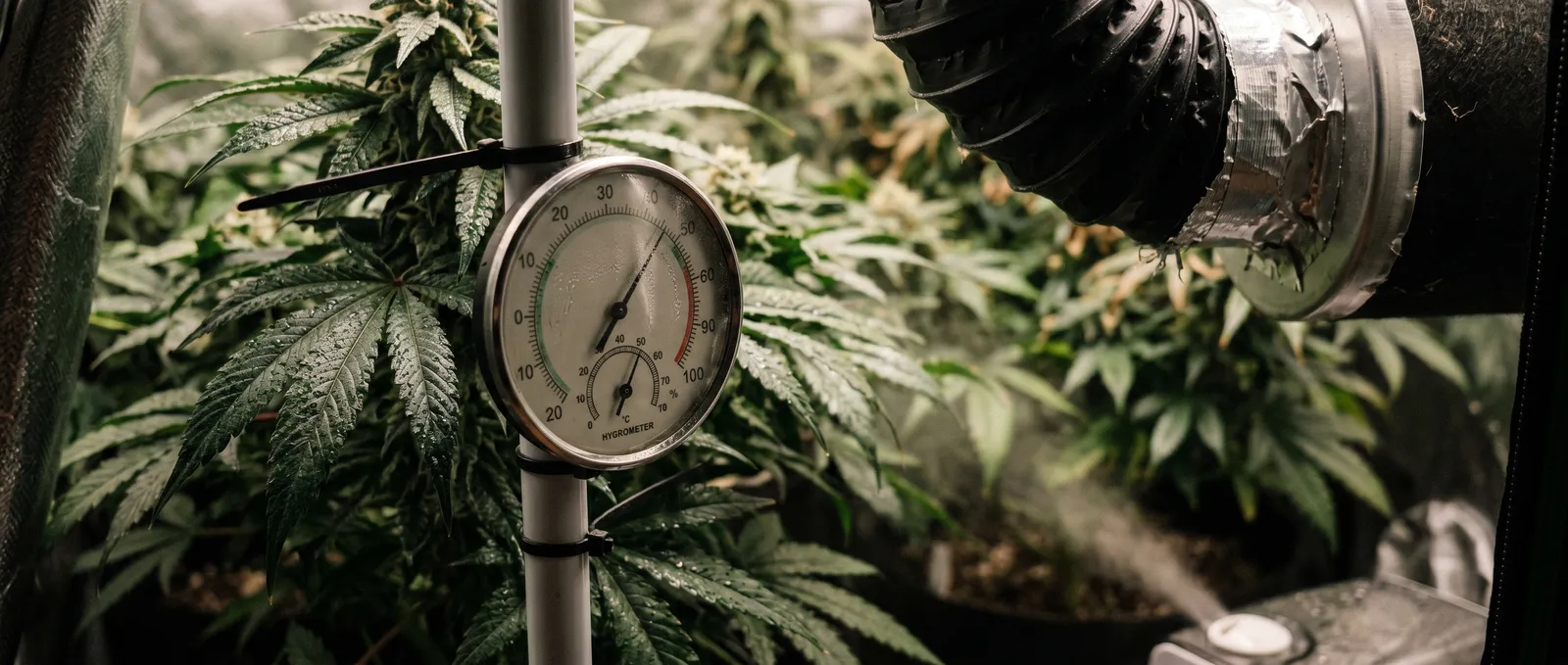
Definition
VPD for cannabis is the kilopascal gap between the moisture the air holds and its saturation point, controlling how fast plants transpire. According to Prˇíbilová et al. (2023), transpiration scales linearly with VPD up to ~1.5 kPa, where stomata begin to close. Target bands run 0.8–1.1 kPa in veg and 1.0–1.5 kPa in flower.
18+ only Adult-audience guide. VPD for cannabis is a kilopascal measurement that tells you whether your grow tent's temperature and humidity are actually working together or quietly fighting each other. Dialling in VPD for cannabis means your plants transpire at the right rate — pulling water and nutrients up through the roots without either drowning in humid stagnation or desiccating under dry heat. Get it wrong and you'll see slow growth, nutrient lockout, or botrytis; get it right and the plant does what it's supposed to do.
VPD reference table by growth stage
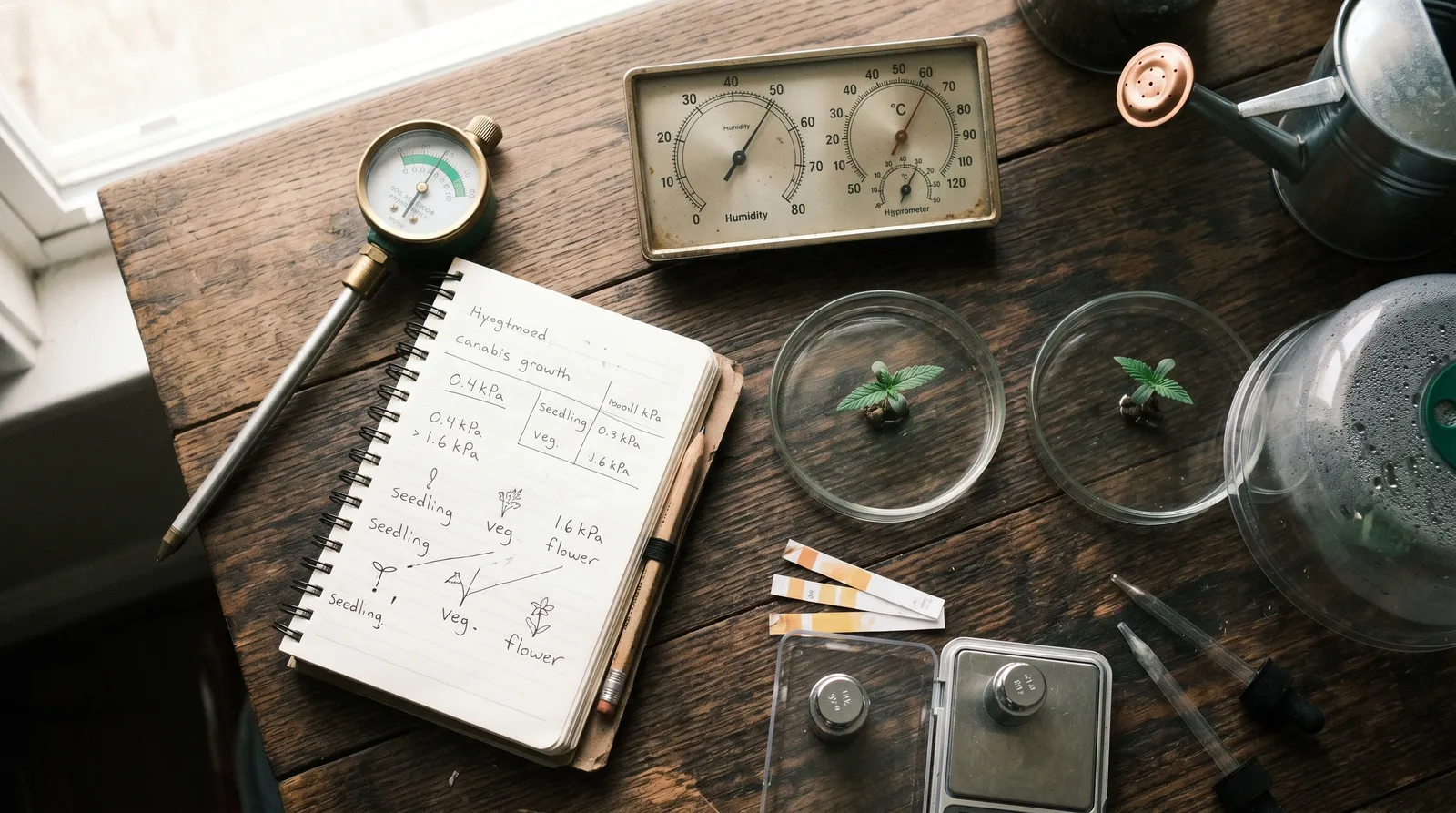
VPD for cannabis targets sit between 0.4 kPa for seedlings and 1.6 kPa in late flower, stepping up through each growth stage. The numbers below are the working targets most indoor cannabis growers aim for. VPD is calculated from leaf temperature and air humidity — if you don't have a leaf-surface thermometer, assume leaf temp sits roughly 1–3°C below air temp under LED, closer to air temp under HPS (Fluence, 2021).
| Stage | Target VPD (kPa) | Air temp (°C) | Relative humidity (%) | Why |
|---|---|---|---|---|
| Seedlings / clones | 0.4 – 0.8 | 22 – 26 | 65 – 75 | Undeveloped root systems can't replace water fast; low VPD protects against desiccation |
| Early vegetative | 0.8 – 1.0 | 22 – 27 | 55 – 70 | Encourages transpiration without stressing young tissue |
| Late vegetative | 1.0 – 1.2 | 24 – 28 | 50 – 65 | Plants are robust; push transpiration to drive nutrient uptake |
| Early flower (weeks 1–3) | 1.0 – 1.3 | 24 – 28 | 45 – 60 | Transitional — stretch phase benefits from slightly higher VPD |
| Mid flower (weeks 4–6) | 1.2 – 1.5 | 23 – 27 | 40 – 55 | Maximum nutrient demand; high VPD keeps transpiration strong |
| Late flower / ripening | 1.3 – 1.6 | 20 – 25 | 35 – 45 | Lower RH protects dense buds from botrytis; plant slows water uptake anyway |
What VPD actually measures
VPD is the gap, in kilopascals, between how much moisture the air currently holds and how much it could hold if it were fully saturated at the same temperature. Warm air has a higher saturation point than cold air, which is why relative humidity alone is a poor target — 60% RH at 20°C is a very different atmosphere from 60% RH at 28°C, and your plants feel the difference.
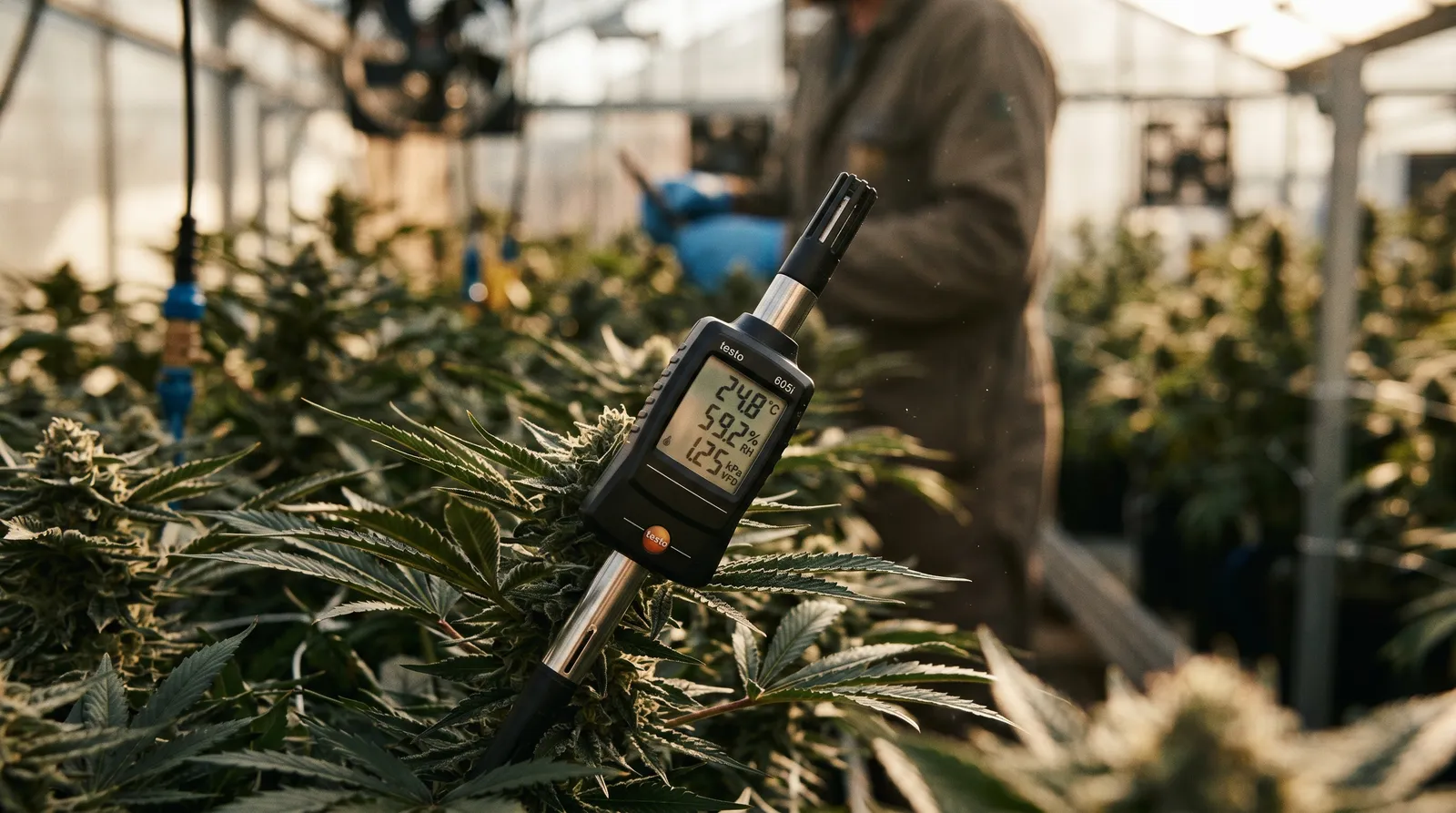
Transpiration is the mechanism that links VPD to growth. According to Prˇíbilová et al. (2023), transpiration rate in Cannabis sativa scales roughly linearly with VPD between 0.5 and 1.5 kPa, plateauing above that as stomata begin to close defensively. When stomata close, CO₂ stops entering the leaf, photosynthesis stalls, and calcium transport (which rides the transpiration stream) slows — which is why chronically high VPD shows up as tip burn even when your EC is fine.
Leaf temperature matters more than you think
Leaf temperature shifts true VPD by 0.2–0.3 kPa compared with air readings, enough to push a plant out of its target band. Air VPD and leaf VPD are not the same thing. Leaves under LED run cooler than the surrounding air because LEDs emit very little infrared; leaves under HPS run warmer because HPS dumps IR straight onto the canopy. That 2–4°C offset is what causes the gap.
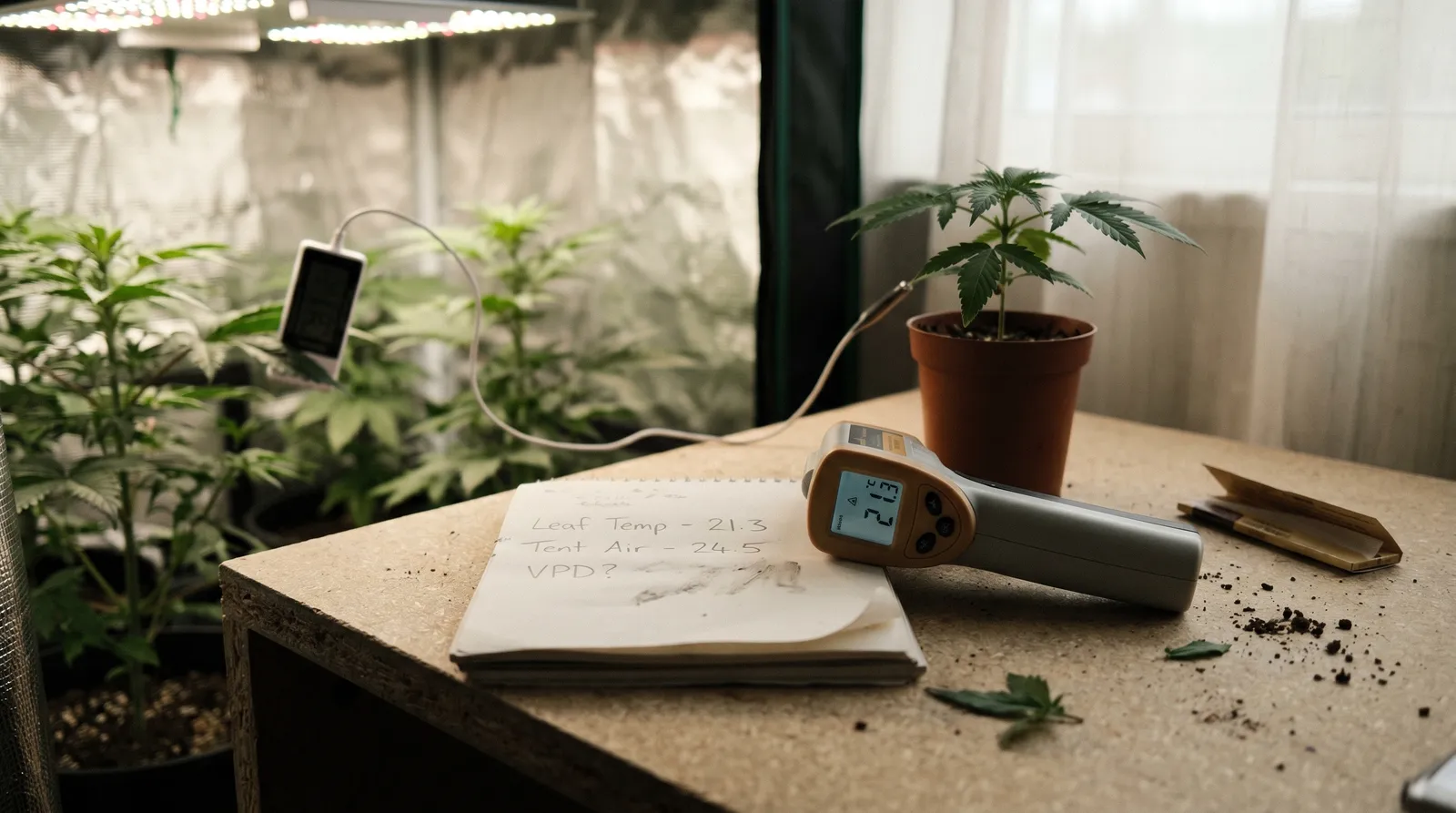
A cheap infrared thermometer (the kind used for checking pizza ovens) pointed at a sun leaf will tell you more than any hygrometer. In our own tent testing across a decade of LED and HPS setups, leaf temps under a 600W HPS sat consistently 2–3°C above air, while leaves under a quantum-board LED sat 1–2°C below — the same room reading meant materially different VPDs for the plant. An honest limitation: infrared thermometers read surface temp at a single point, so take several measurements across the canopy and average them.
How to adjust VPD in a small tent
To adjust VPD in a small tent, change humidity first, temperature second, and airflow third. In a 1–1.5m² home tent, the practical levers are humidity (humidifier or dehumidifier), temperature (lamp intensity, extraction fan speed, lights-on timing), and airflow (oscillating fan inside the canopy). Airflow doesn't change the VPD number your sensor reports, but it thins the boundary layer of still, saturated air that sits directly on the leaf surface — which is the VPD the plant actually experiences.
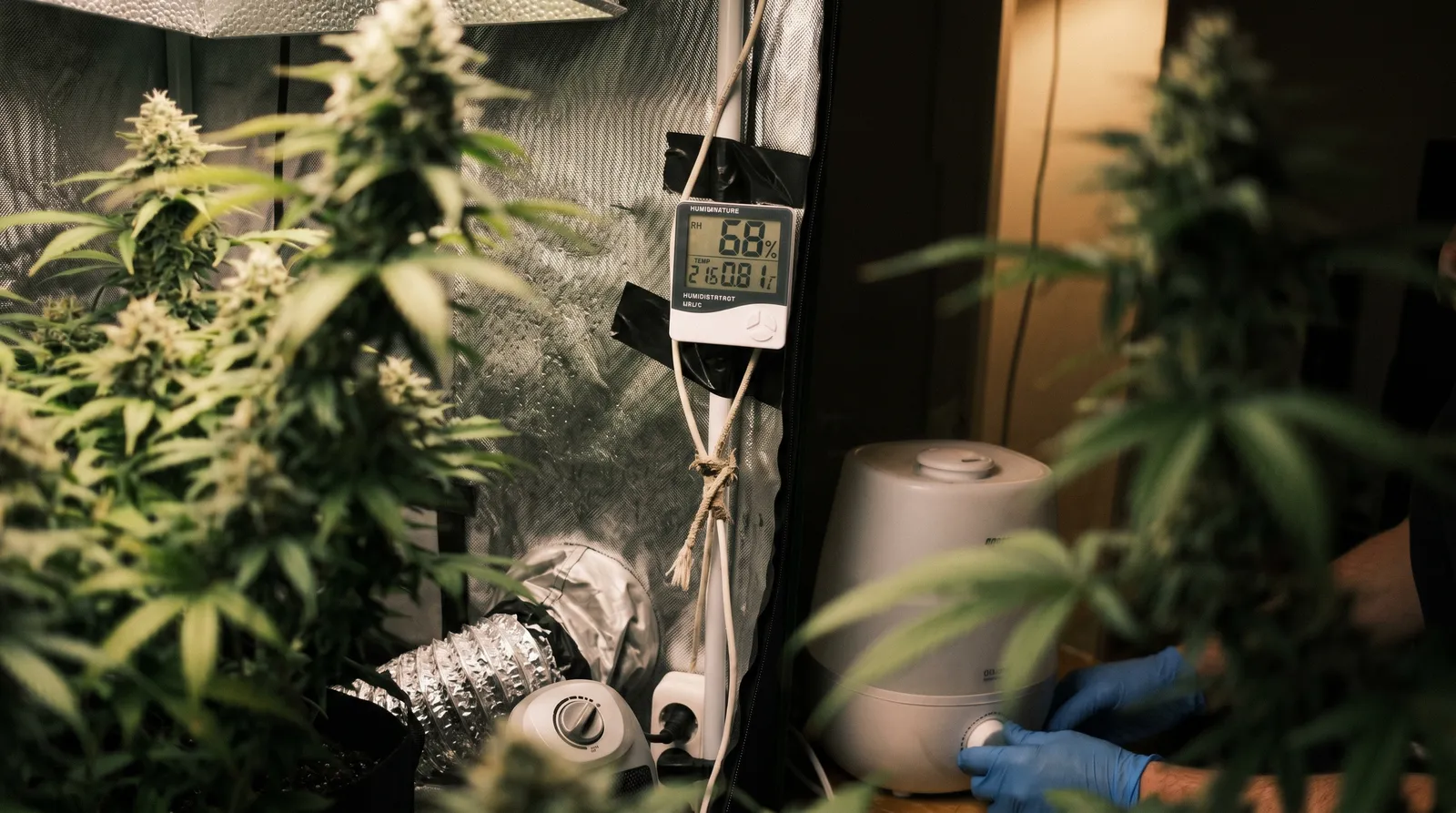
If your VPD is too low (air too wet or too cool), a dehumidifier is usually the first move in flower, where raising temperature would push buds into unfavourable ripening territory. If VPD is too high (air too dry or too hot), an ultrasonic humidifier on a controller handles it cleanly; turning the extraction fan down is a blunter option that risks CO₂ depletion. Blimburn Seeds (2023) notes that swing between lights-on and lights-off shouldn't exceed ~0.4 kPa — big daily VPD oscillations stress plants more than a steady suboptimal value. Growers looking to buy a controller should get one with separate day/night setpoints; it's the single upgrade that pays back fastest.
Common VPD mistakes
The most common VPD mistake is chasing a single number instead of working within a band. VPD targets are bands, not setpoints, and the optimal value within that band depends on genetics — a Kush-dominant plant bred for arid mountain climates tolerates higher VPD than a humid-tropical sativa. Cervantes (2015) and subsequent cultivation manuals consistently frame 1.0–1.2 kPa in veg as a broad working range, with genetics-specific tuning on top.
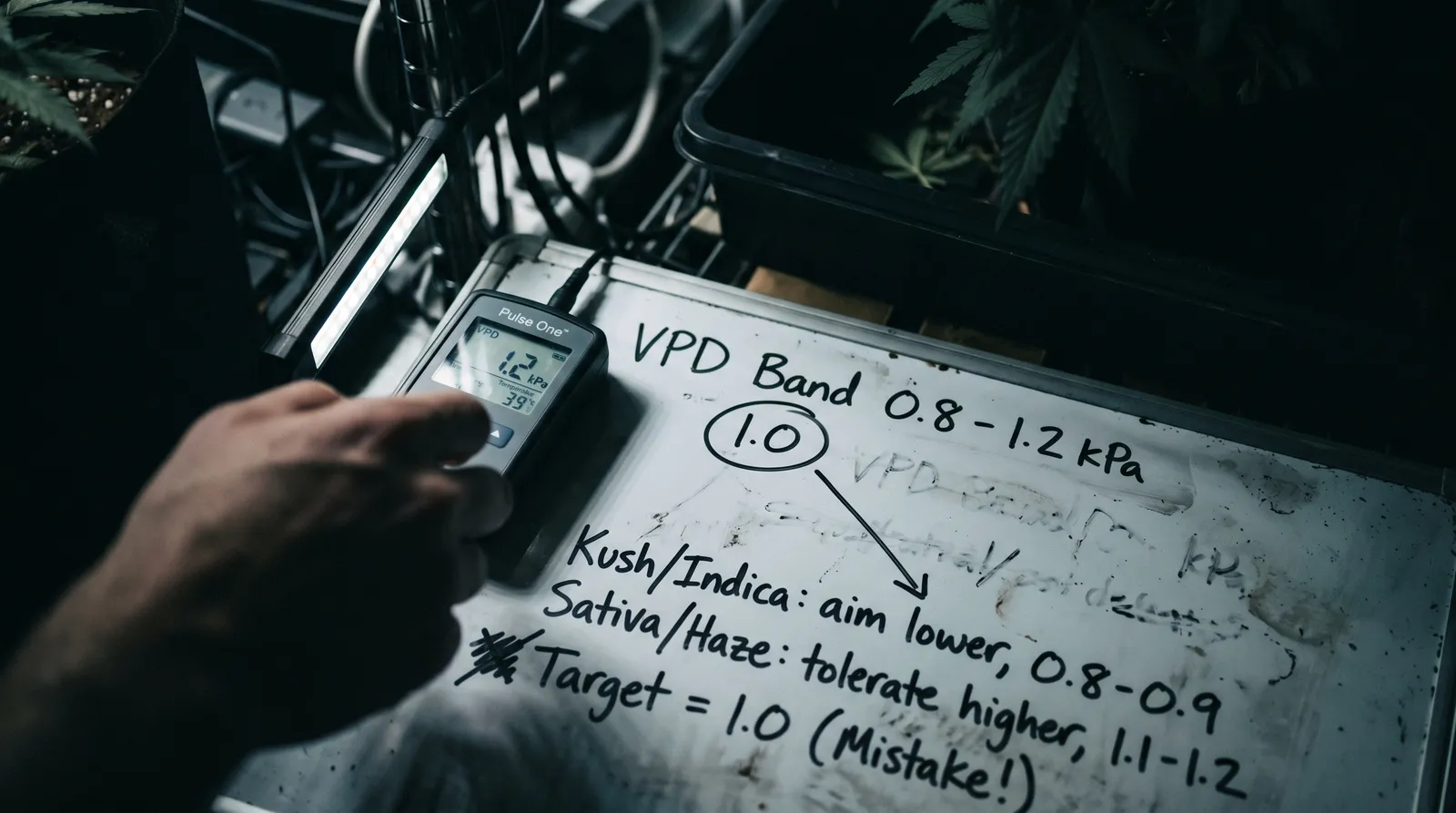
The second mistake is measuring VPD only at canopy height. A thermohygrometer sitting on the tent floor or clipped to a pole above the canopy reports air that plants aren't actually breathing. Clip the sensor at mid-canopy level, away from the direct light path, and away from the humidifier plume.
The third: ignoring the lights-off period. Plants still transpire in the dark, and humidity climbs fast when the lamp stops heating the air. A tent that sits at 1.2 kPa during lights-on can drop to 0.4 kPa at night — fine for early veg, risky for late flower where the 0.4 kPa end of the scale invites powdery mildew and bud rot. A nighttime dehumidifier or a slight extraction-fan bump during dark hours closes that gap.
VPD vs other environmental metrics
VPD works alongside PPFD, DLI, and CO₂ rather than replacing any of them. Higher light intensity demands higher VPD because the plant is photosynthesising harder and needs more throughput. Supplemented CO₂ (1000–1200 ppm) lets you push VPD slightly higher still, because CO₂ enrichment partially compensates for the stomatal narrowing that high VPD causes. Athena Agriculture (2022) published environment targets for commercial cannabis that pair 1.3–1.5 kPa flower VPD with ~1000 PPFD and 1000 ppm CO₂ — that's the intensive end, and it assumes your HVAC can actually hold those conditions under a full canopy load. Compared with chasing PPFD alone, tuning VPD for cannabis gives a bigger return on a home-tent budget because the gear is cheaper and the margin for error is wider.
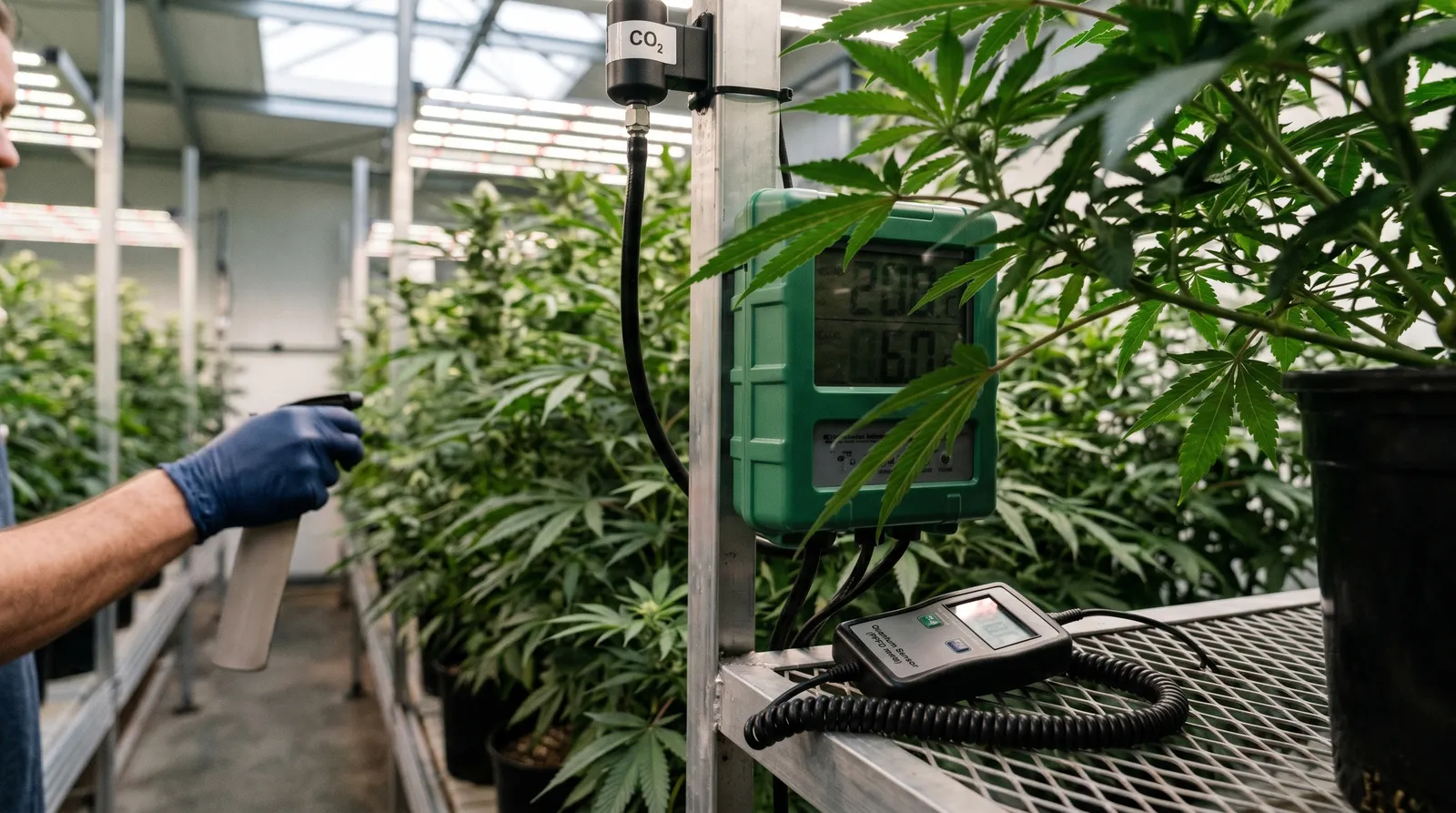
For a home grower without CO₂ supplementation, staying in the conservative half of each band (say 1.0–1.2 kPa in mid-flower rather than 1.4–1.5) is almost always the better bet. You lose a fraction of potential yield and gain a much wider margin for error when the weather outside your tent changes. The MAPS cultivation archive and EMCDDA environmental-growing references both support conservative targets for amateur setups.
Jurisdiction
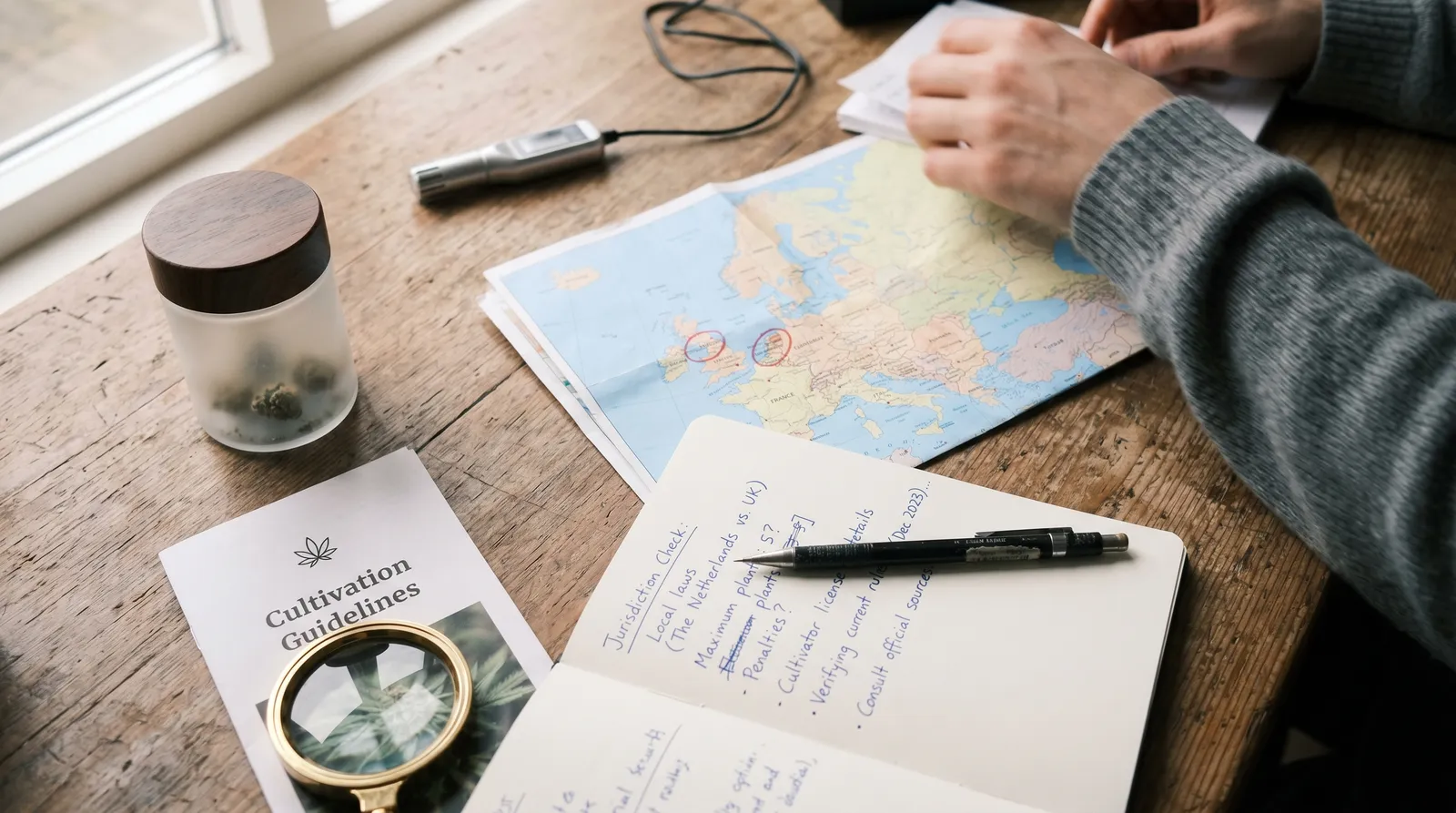
Cannabis cultivation rules vary by country and region and change frequently. This guide is educational. Before growing, verify current rules for your specific jurisdiction. Azarius does not provide formal advice.
Disclaimer
This article is for educational purposes only and does not constitute medical, horticultural, or professional advice. Growing cannabis affects your health, safety, and finances; consult qualified professionals before making decisions based on this information. Azarius provides this content as general reference and makes no guarantees about outcomes in your specific setup.
Last updated: April 2026
Frequently Asked Questions
8 questionsWhat is the ideal VPD for cannabis in flowering?
How do I measure VPD accurately in a grow tent?
Can VPD be too low for cannabis?
Does LED versus HPS change VPD targets?
Should VPD change between lights-on and lights-off?
How does VPD interact with CO₂ supplementation?
What happens if VPD is too high for cannabis?
How do I adjust VPD when transitioning from vegetative to flower?
About this article


Luke Sholl has been writing about cannabis, cannabinoids, and the broader benefits of nature since 2011, and has personally grown cannabis in home grow tents for more than a decade. That first-hand cultivation experience
This wiki article was drafted with AI assistance and reviewed by Luke Sholl, External contributor since 2026. Editorial oversight by Adam Parsons.
Medical disclaimer. This content is for informational purposes only and does not constitute medical advice. Consult a qualified healthcare provider before use of any substance.
Last reviewed April 24, 2026
References (8)
- [1]Prˇíbilová, M. et al. (2023). Transpiration response of Cannabis sativa L. to vapour pressure deficit under controlled environment. Frontiers in Plant Science.
- [2]Fluence Bioengineering (2021). LED Lighting and Leaf-Surface Temperature in Cannabis Cultivation. Technical whitepaper.
- [3]Athena Agriculture (2022). Environmental Targets for Commercial Cannabis Production. Cultivation reference guide.
- [4]Blimburn Seeds (2023). VPD management for indoor cannabis. Blimburn cultivation resources.
- [5]Cervantes, J. (2015). The Cannabis Encyclopedia. Van Patten Publishing.
- [6]MAPS (Multidisciplinary Association for Psychedelic Studies). Cultivation environment archive.
- [7]EMCDDA. Cannabis cultivation and indoor environment references.
- [8]Beckley Foundation. Plant science and controlled-environment research notes.
Related Articles
Cannabis Hermaphrodite: Identify, Prevent, Act
A cannabis hermaphrodite is a female plant that develops male pollen sacs or banana-shaped anthers (nanners), self-pollinating and seeding your harvest.
DIY Cannabis Fertilizer: Homemade Nutrient Guide
DIY cannabis fertilizer guide: compost, teas, banana ferments and feed schedules, with safety notes and cited research for home growers.
What To Do With Male Cannabis Plants: 6 Practical Uses
What to do with male cannabis plants: identify, isolate, breed, extract, or compost. A practical 6-step guide with sourcing and safety notes.
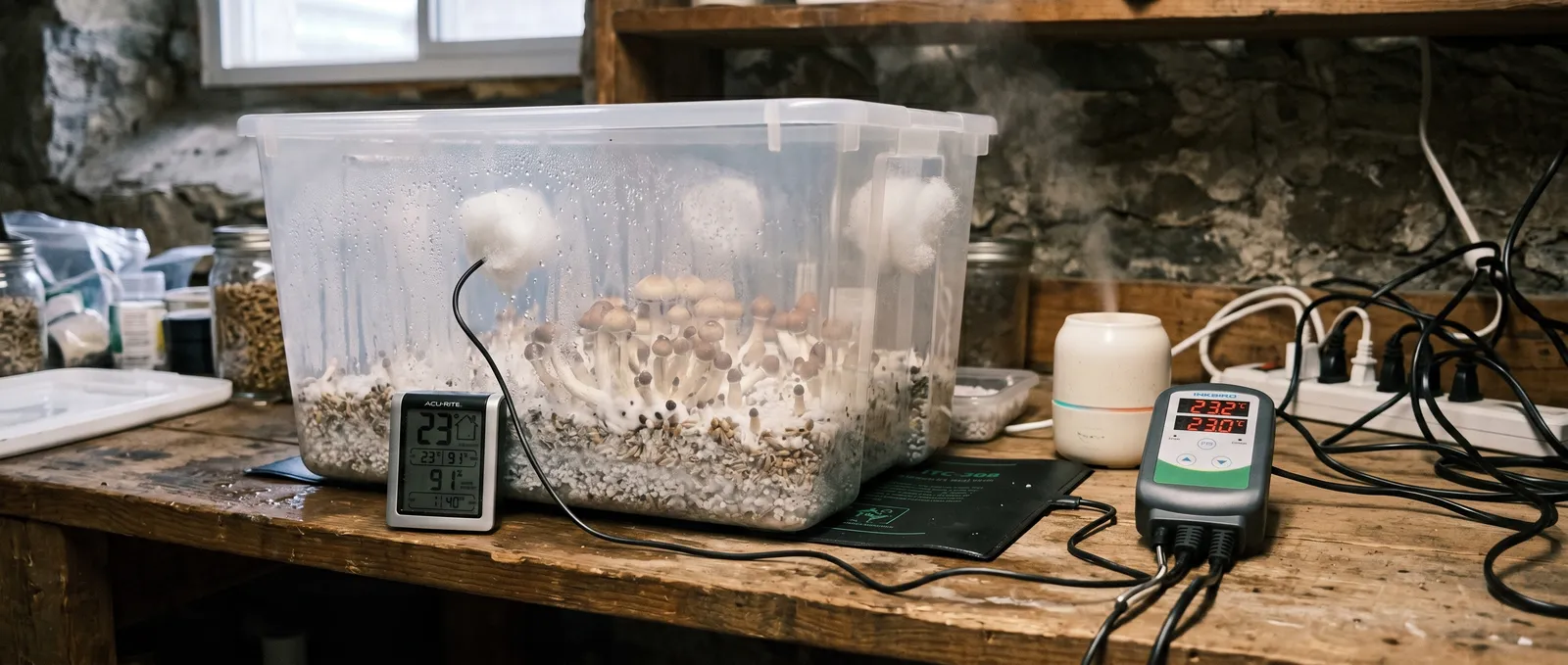
Mushroom Grow Kit Temperature & Humidity: Full Setup Guide
A temperature humidity control grow kit is the small set of climate tools — hygrometer, heat mat, humidifier or perlite tray — that keeps a mushroom fruiting…
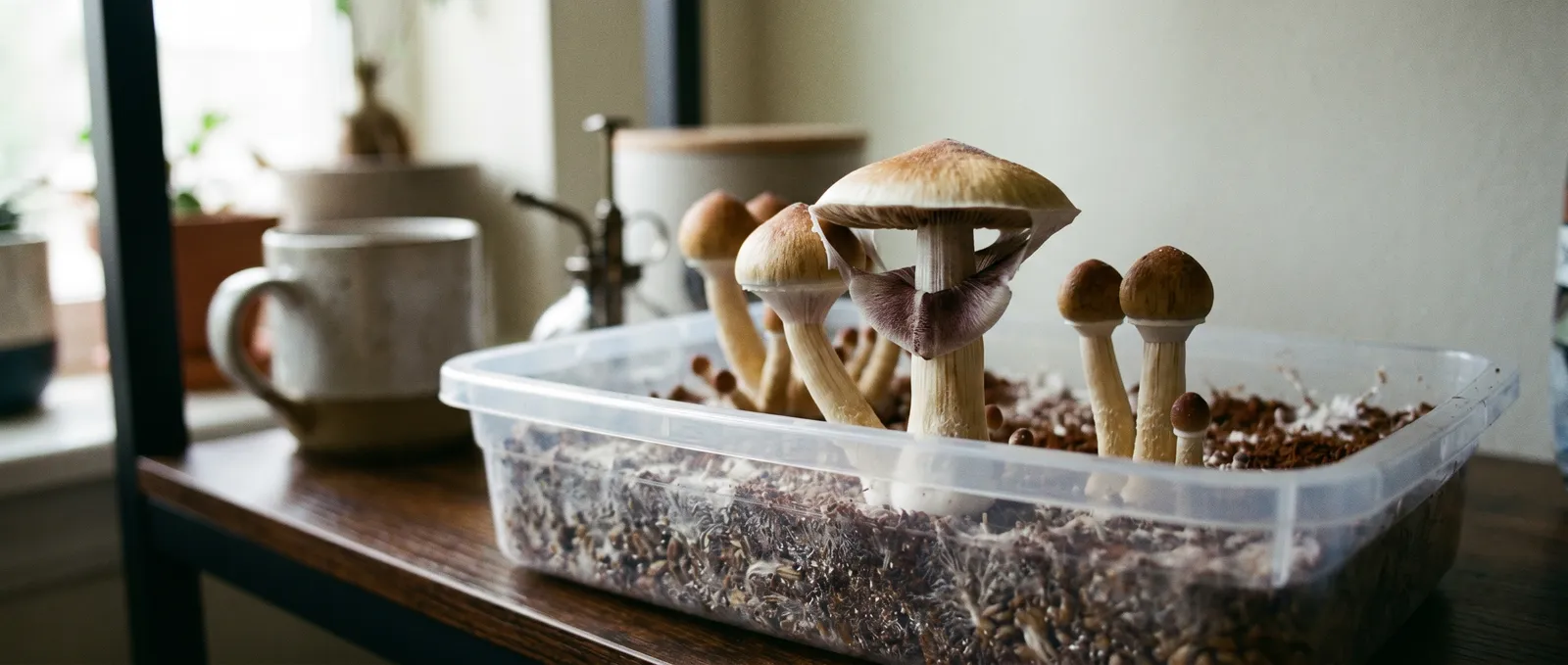
When to Harvest Mushrooms: Veil Break Timing Explained
Harvest timing veil break is a cultivation technique that uses the tearing of the partial veil on maturing Psilocybe cubensis to mark peak alkaloid content.
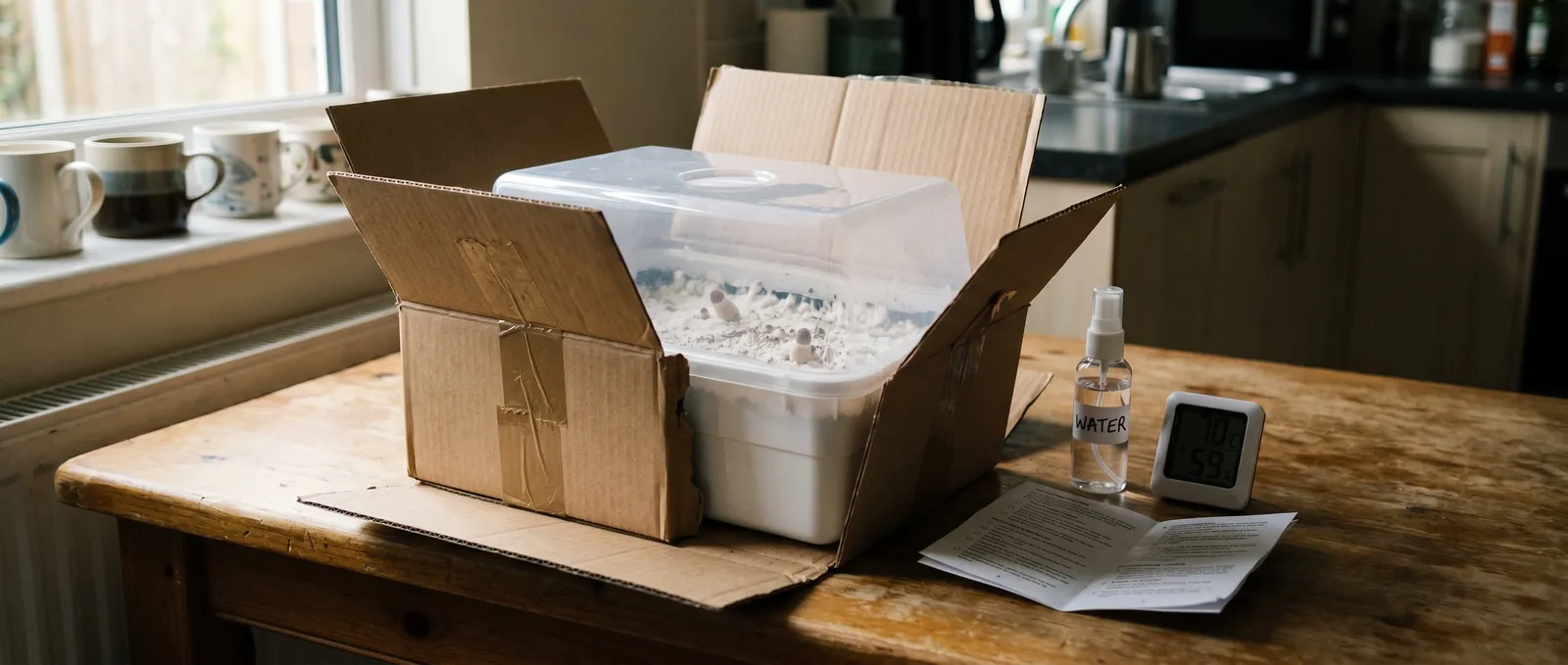
First Grow Checklist: What You Need for Mushroom Kits
A first grow checklist is the short list of supplies and environmental conditions needed to run a home psilocybin mushroom kit from inoculated substrate to…
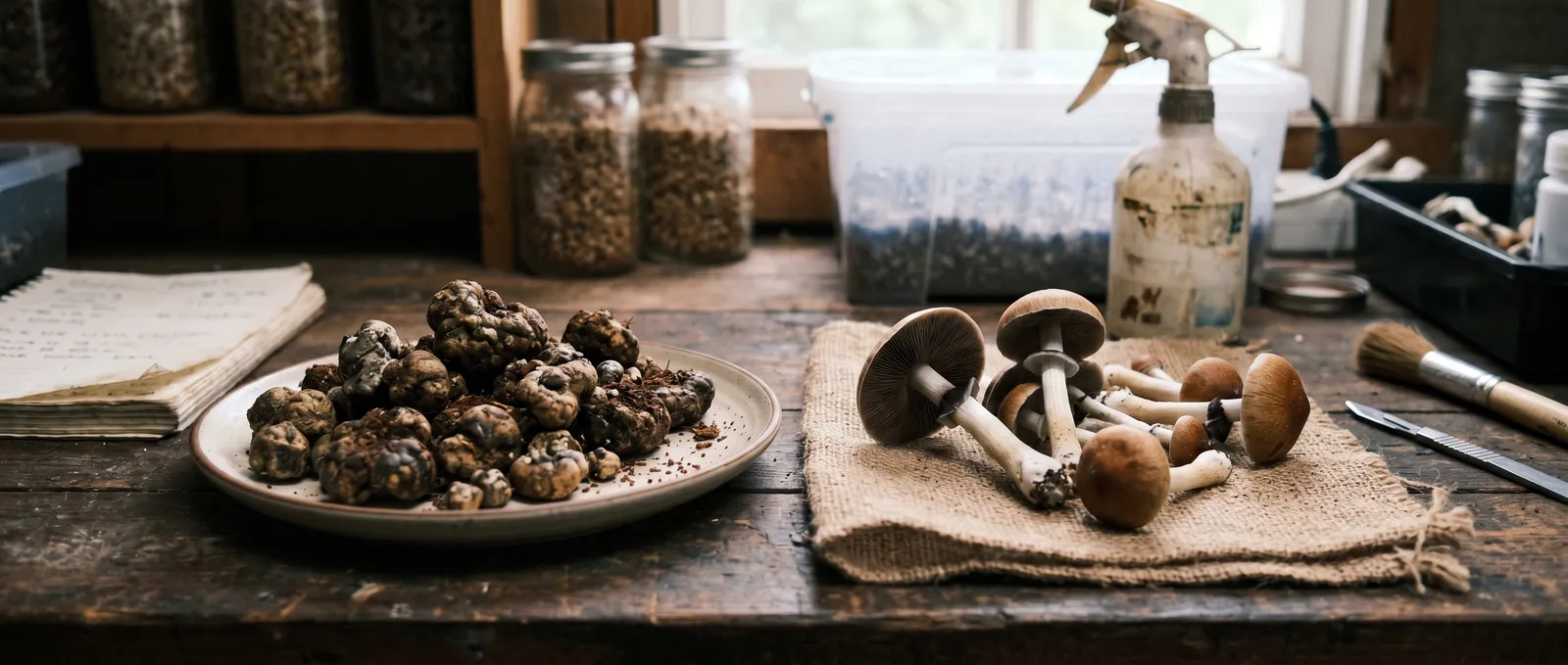
Sclerotia vs Fruit Bodies: Cultivation Comparison
Sclerotia and fruit bodies are two different life stages of Psilocybe fungi: sclerotia are hardened underground mycelial storage bodies (the 'magic…
Storing Dried Mushrooms Long Term: Full Guide
Storing dried mushrooms long term means keeping well-dried Psilocybe fruit bodies in airtight, opaque containers with desiccant, cool and dark, to slow…
Drying Mushrooms Air Desiccant Oven: Methods Compared
Drying mushrooms air desiccant oven refers to the three home methods for reducing fresh fruit bodies from ~90% water to cracker-dry (<5%). Gotvaldová et al.