
This article discusses psychoactive substances intended for adults (18+). If you have a health condition or take medication, consult a doctor before use. Our age policy
When To Harvest Cannabis Trichomes: A Grower's Guide
Definition
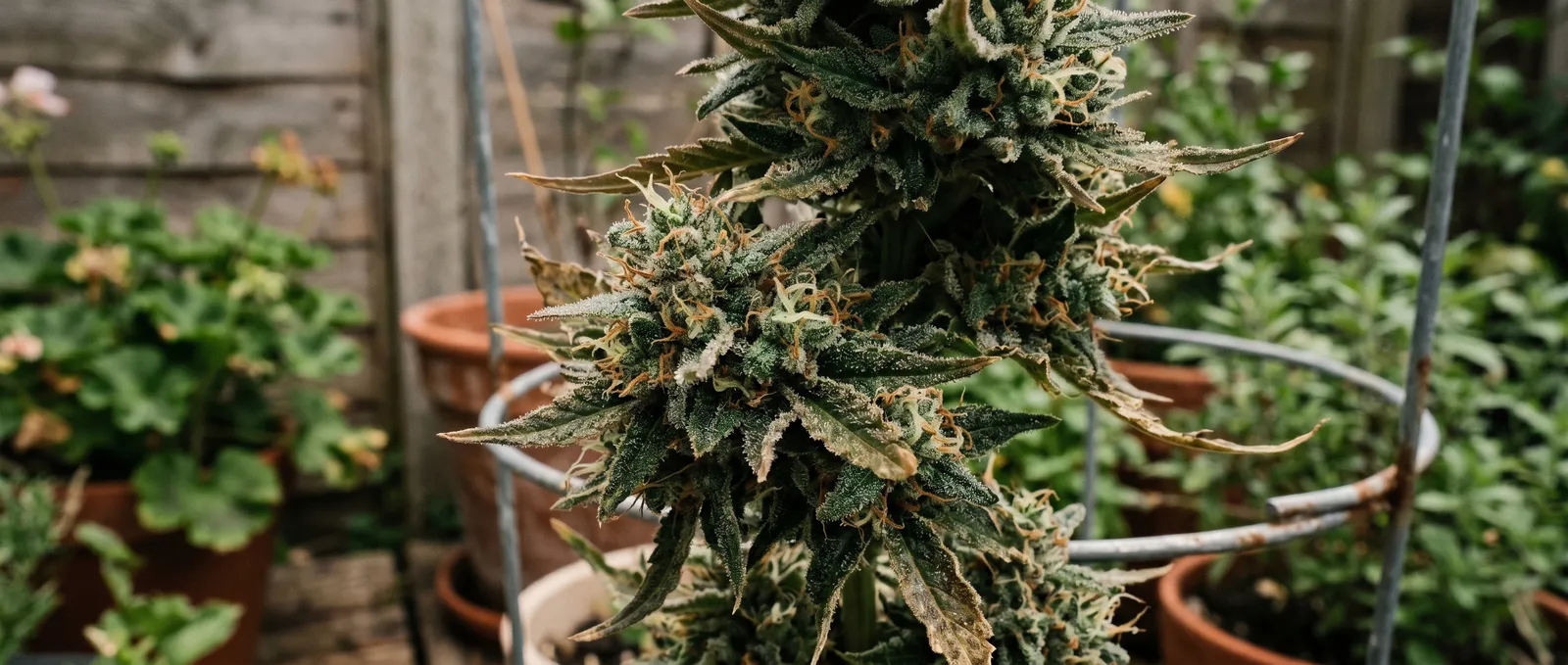
Deciding when to harvest cannabis trichomes means reading the resin glands on your calyxes under 60x–100x magnification and cutting when the milky-to-amber ratio matches your target chemovar profile. According to Livingston et al. (2020), those glandular trichomes are where cannabinoids are synthesised — and their colour shift tracks maturity reliably.
This guide is written for adults.
Why trichomes decide harvest day
When to harvest cannabis trichomes is a timing decision that determines the cannabinoid and terpene profile of your dried flower. Knowing when to harvest cannabis trichomes is the single biggest call you'll make in the final fortnight of flower. Pistils turning orange, leaves fading, buds fattening — all secondary. The resin glands on the calyxes are where cannabinoids and terpenes actually live, and their colour tells you whether the plant has finished cooking its chemistry or is still building it. According to Livingston et al. (2020), Plant Journal, the stalked glandular trichomes on cannabis flowers are the primary site of cannabinoid biosynthesis, and their optical density shifts predictably as those compounds mature and degrade (Livingston et al., 2020).
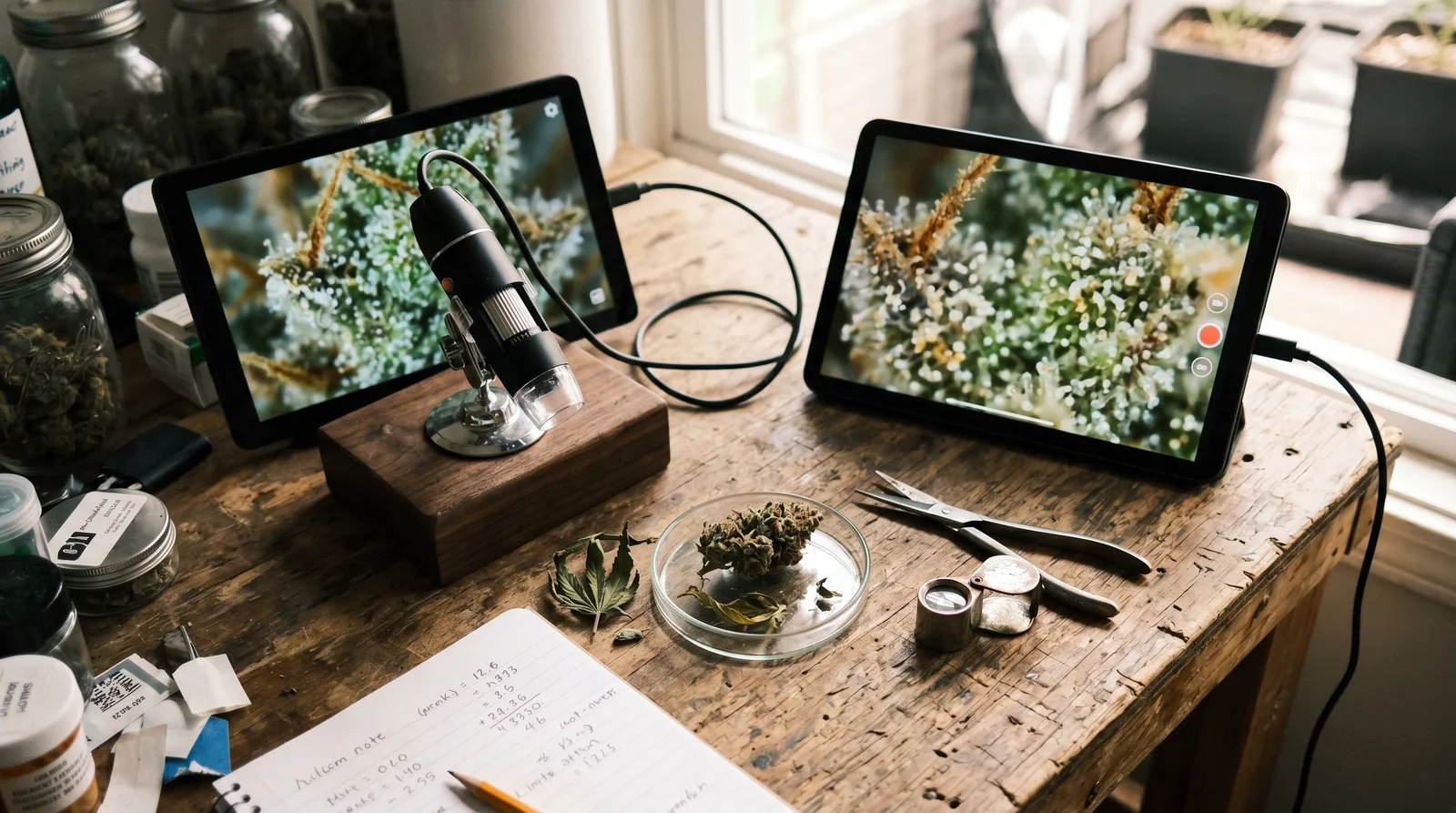
Three colour stages matter: clear, milky (cloudy), and amber. Clear means the factory is still open. Milky means cannabinoid content has peaked. Amber means THC has begun oxidising to CBN, which shifts the terpene/cannabinoid balance of the dried flower. The window between "mostly milky" and "mostly amber" is roughly 7–14 days on a photoperiod plant — miss it in either direction and you end up with something other than what you were aiming for.
This is a cultivation question, not a consumption one. For cannabinoid pharmacology and what those compounds actually do in the body, see the cannabinoids hub.
Step 1 — Get actual magnification, not a loupe guess
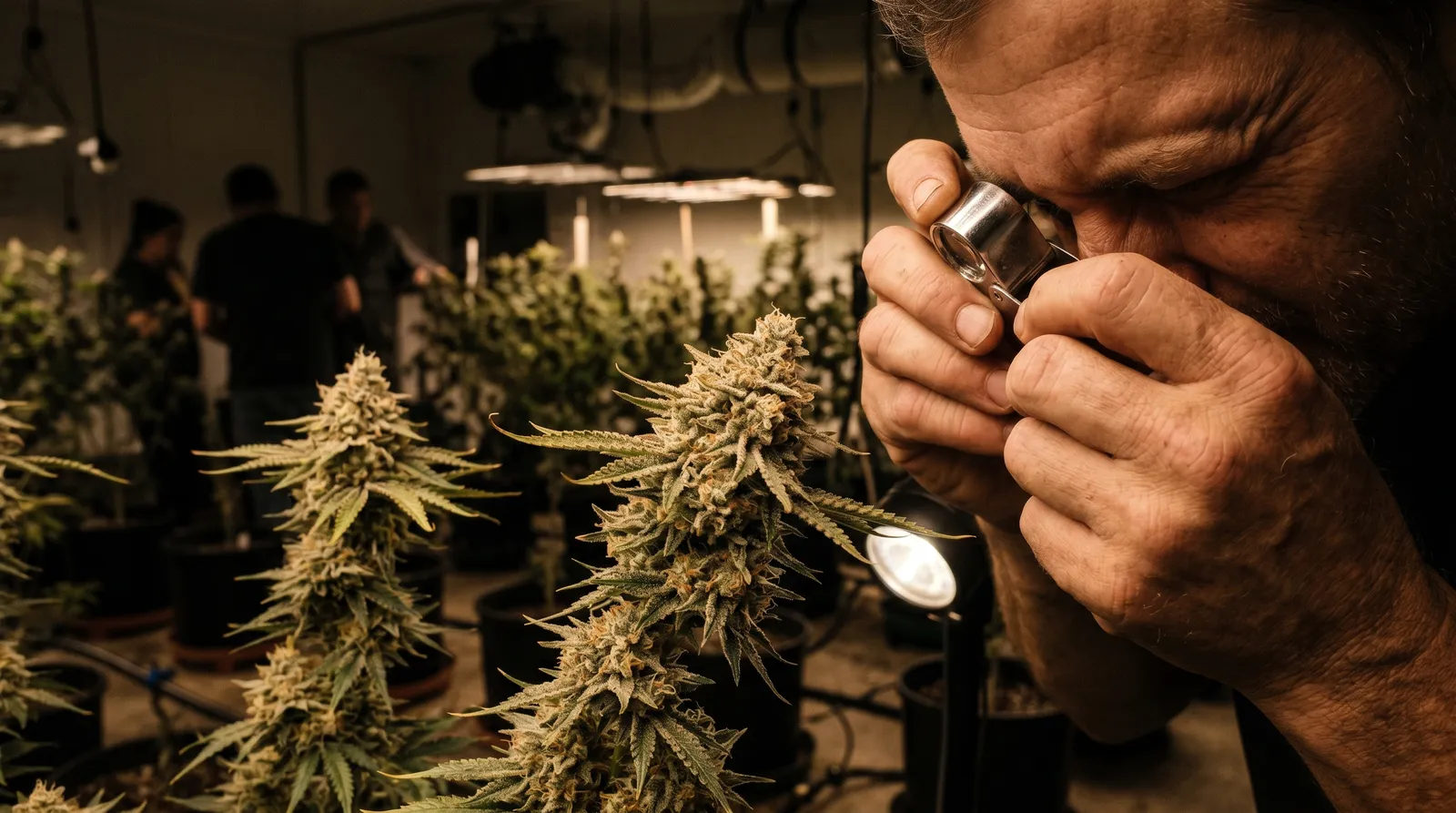
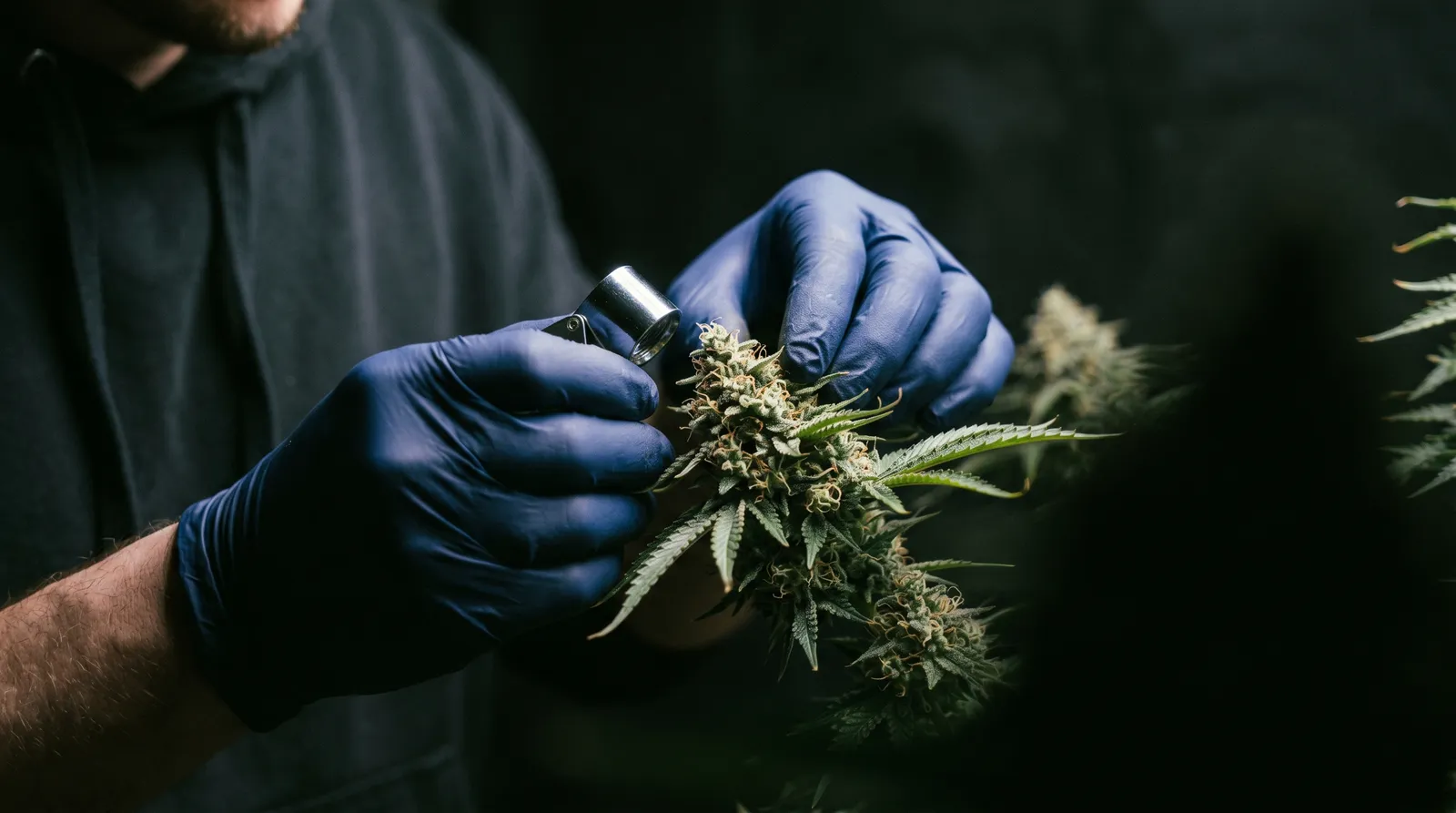
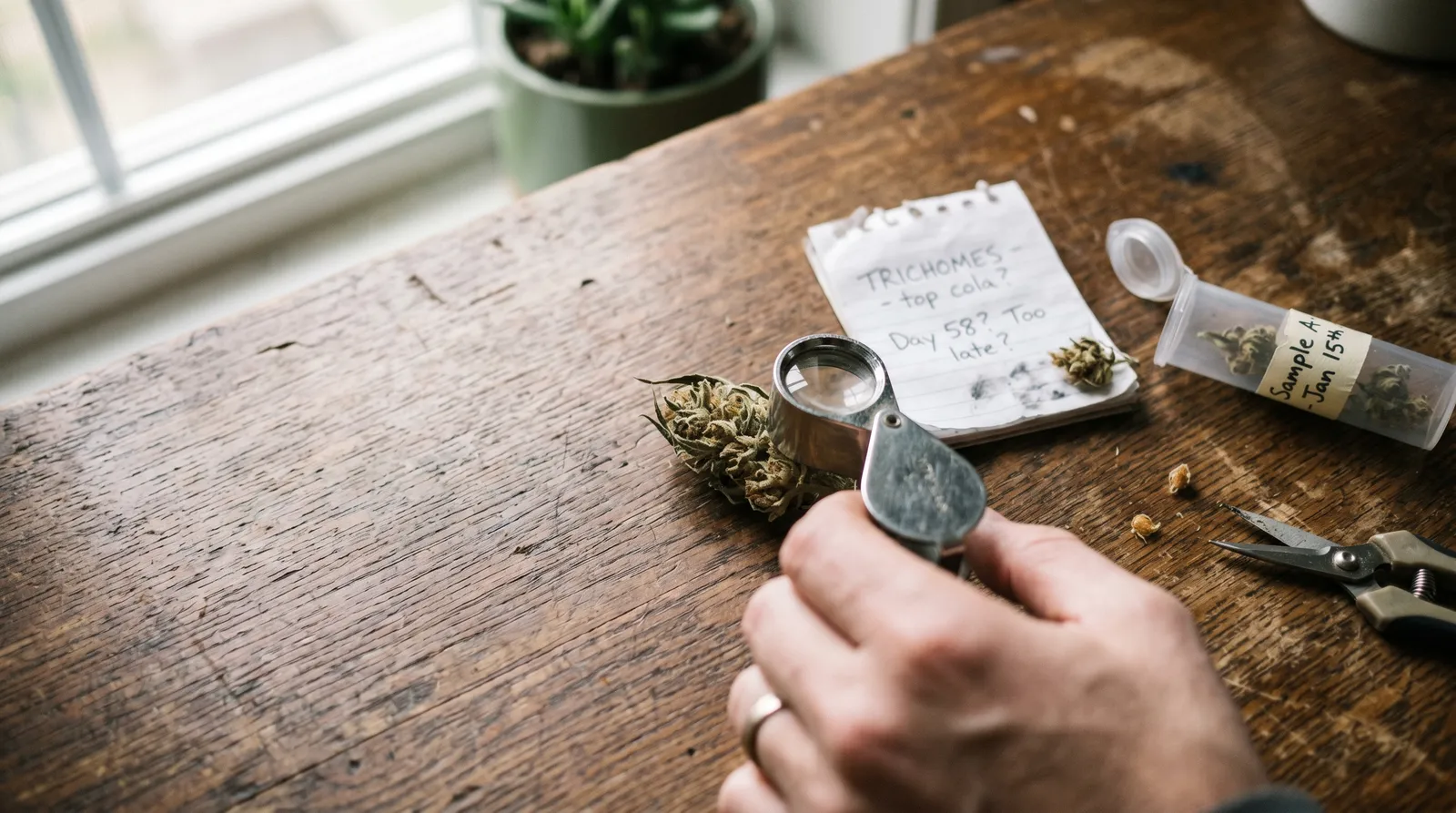
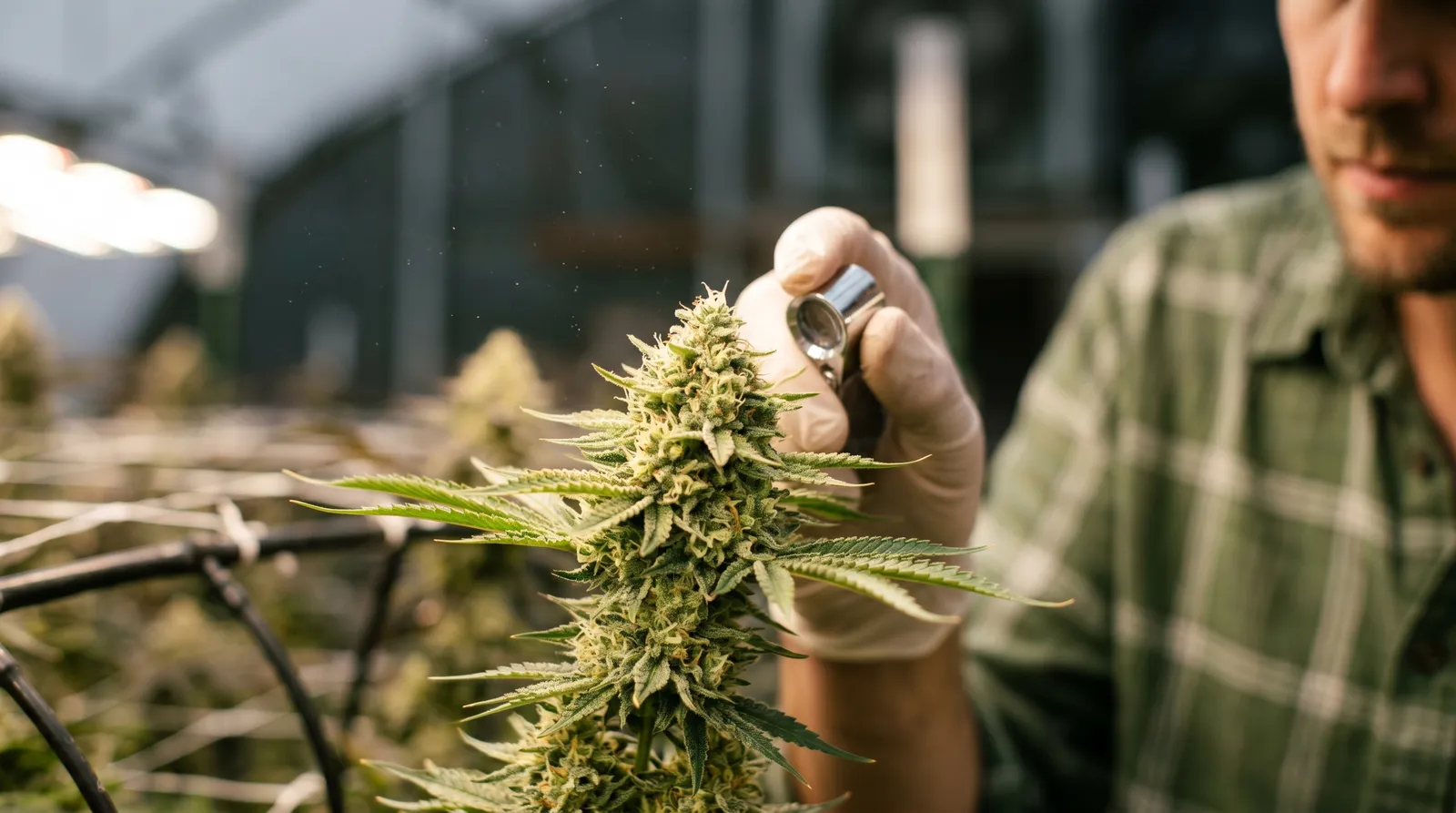
You cannot judge trichomes with the naked eye, and a 10x jeweller's loupe is borderline. You want 60x–100x minimum. A USB microscope (the kind you buy online for a modest sum) or a clip-on smartphone macro lens gives you the resolution to see gland heads as individual spheres rather than a sparkly blur. Pocket digital microscopes with built-in LEDs work well in a dark tent because you're not fighting your grow light's colour cast.
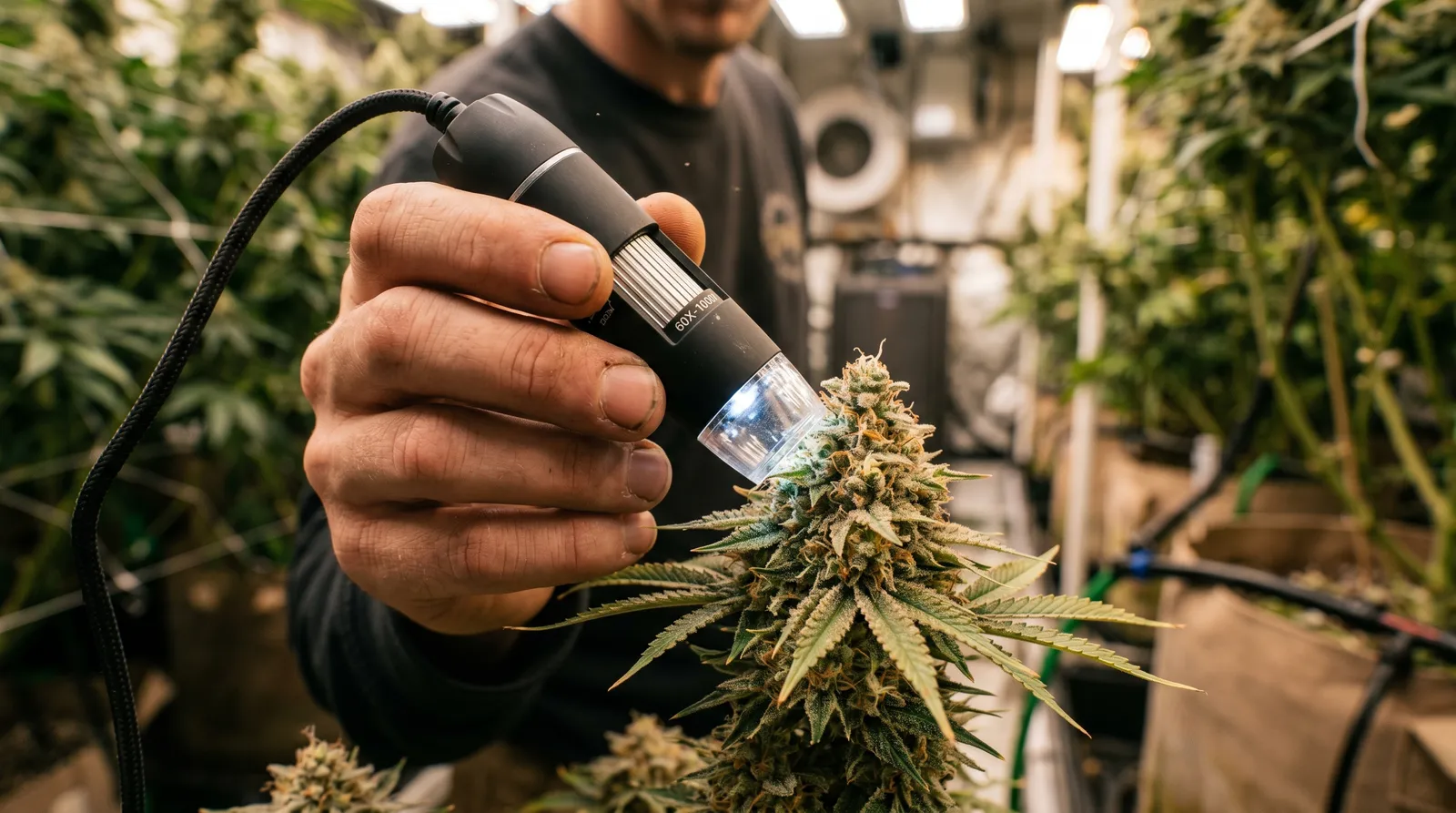
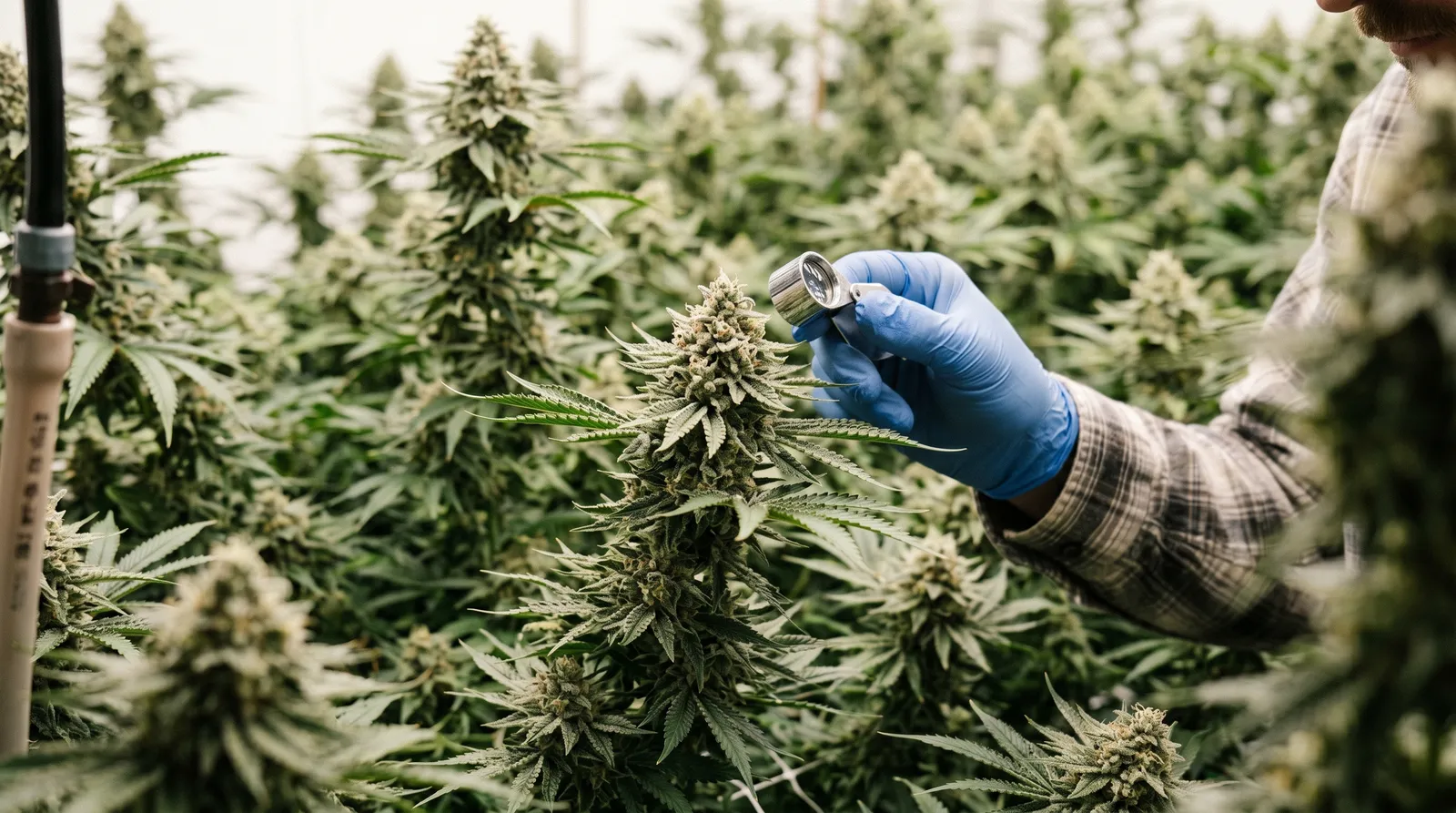
Check multiple sites on each plant: upper colas (fastest to ripen under direct light) (Magagnini et al., 2018; Namdar et al., 2018), mid-canopy buds, and lower larf. The top of the plant often runs 4–7 days ahead of the bottom (Magagnini et al., 2018). You're sampling the dominant colas, because that's where most of your yield sits.
Ignore trichomes on sugar leaves for the final call — they mature earlier than the ones on the calyxes. Focus your lens on the calyx itself, the little swollen cushion the pistils come out of. That's the reference surface.
Step 2 — Read the three trichome stages
Trichomes pass through three visible stages — clear, milky, and amber — and each one signals a different point in cannabinoid maturation. Clear trichomes look like tiny glass mushrooms — translucent bulbs on translucent stalks. If the field of view is mostly clear, you are early. Harvesting here gives you low cannabinoid content and usually a harsher, grassier flower because the plant hasn't finished translocating sugars and compounds.
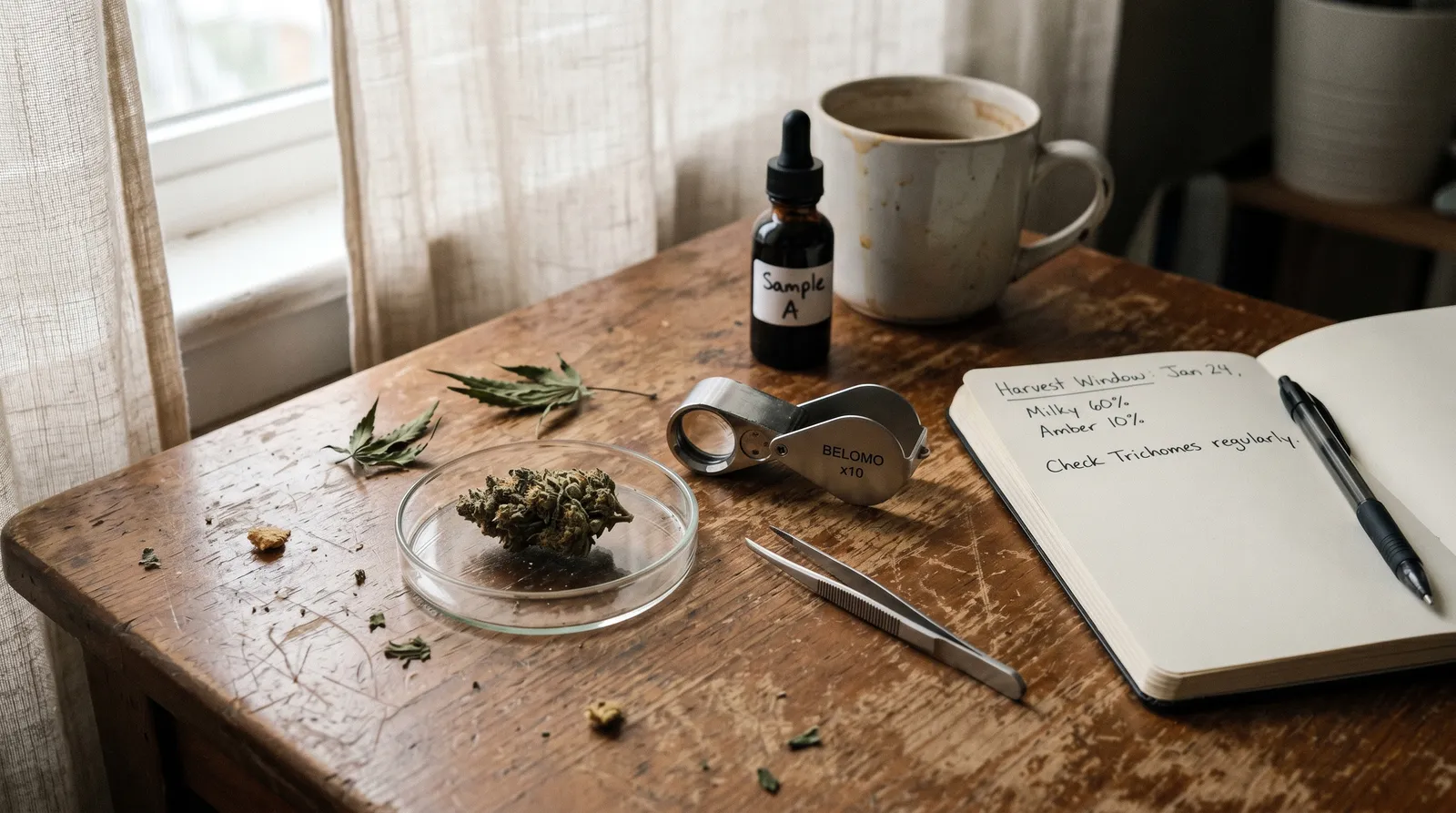
Milky (or cloudy) trichomes have an opaque, milky-white appearance — think of a frosted lightbulb. This is peak THC according to most breeder documentation and corroborated by the morphological work in Livingston et al. (2020) (Livingston et al., 2020). Growers commonly target the window where roughly 70–80% of heads on the main colas read milky.
Amber trichomes have a warm honey-gold tint. As THC oxidises to CBN, the resin picks up amber-orange hues. A proportion of amber — roughly 10–30% depending on what profile you're after — shifts the dried flower toward a more sedative, heavier character. Go past ~40% amber and you're harvesting a plant whose cannabinoid profile is measurably past its peak.
Step 3 — Choose your target ratio
Your target milky-to-amber ratio should match the chemovar you want from that specific genetic. This is where grower preference legitimately enters the picture. There is no single "correct" harvest point — there's the point that matches the profile you want out of that particular plant.
Here's a quick reference table for common target ratios:
| Target ratio | Profile | Best suited to |
|---|---|---|
| Mostly milky, ~10% amber | Brighter, terpene-forward | Sativa-dominant and hybrid photoperiod |
| 70% milky / 20–30% amber | Balanced character | Most indica-leaning hybrids (common default) |
| 50% milky / 40–50% amber | Heavier, sedative-leaning | Indica landraces, CBD-dominant cultivars |
- Mostly milky, ~10% amber: brighter, more terpene-forward dried flower. Good default for sativa-dominant and hybrid photoperiod plants. Royal Queen Seeds and Dutch Passion breeder notes often point growers here.
- 70% milky / 20–30% amber: balanced character. The most commonly recommended target across indica-leaning hybrids.
- 50% milky / 40–50% amber: heavier, more sedative-leaning profile. Some indica landraces and CBD-dominant cultivars are traditionally pulled later.
Autoflowers complicate this slightly. Because ruderalis genetics ripen on an internal clock rather than a light cycle, the top colas on an autoflower frequently hit mostly-amber while lower buds are still milky. Many autoflower growers do a staggered harvest: cut the tops at the milky/amber ratio they want, then leave the lower buds another 5–10 days under the same 18/6 or 20/4 schedule to finish.
Step 4 — Corroborate with secondary signs
Secondary signs confirm the trichome read but should never override it on their own. Trichomes are the primary signal — confirm with the surrounding evidence:
- Pistils: 70–90% should have darkened from white to orange, red, or brown, and curled back into the calyx. If pistils are still mostly white and sticking straight out, you're early regardless of what the trichomes look like.
- Calyx swell: mature calyxes puff up and look almost translucent around the edges.
- Fan leaves: lower leaves yellowing and dropping is normal senescence, not nutrient deficiency, in the final 1–2 weeks (Bernstein et al., 2019).
- Smell: aroma intensifies and sharpens as the plant finishes.
If trichomes say "ready" but pistils are 40% white, trust the pistils — something in your read is off, probably because you sampled a newer bud site on a plant that's still throwing fresh calyxes.
Step 5 — Time the final days
The final 72 hours before harvest are about dialling down inputs, not adding anything new. Common practice (though the evidence base on "flushing" itself is contested — see Caplan et al., 2019, HortScience, on nutrient deprivation in late-flower cannabis) (Caplan et al., 2019) includes:
- Plain-water or low-EC feeding for the final 7–14 days in soil; shorter and debated in coco and hydro (Steele et al., 2019).
- Drop tent temperature by 2–4°C at lights-on during the last week. Lower temps can encourage anthocyanin expression in genetics that have the trait (purples, reds).
- Some growers give 24–48 hours of total darkness before cutting, on the theory that it preserves terpenes. The evidence for meaningful resin-content gains is thin — anecdotal rather than controlled — so treat it as preference, not protocol.
Harvest at lights-off or just before lights-on. Terpene content is highest after the dark period, before photosynthesis restarts and plant metabolism ramps up (Aizpurua-Olaizola et al., 2016). Snip at the base of each main branch, handle by the stem not the bud, and move straight into your drying space at 18–20°C and 55–60% RH (Chandra et al., 2017).
Common mistakes to avoid
The most common harvest-timing errors come from trusting the wrong signal or sampling the wrong part of the plant. Watch for these:
- Judging by pistils alone. Pistil colour is influenced by humidity, handling, and genetics. Trichomes are the signal.
- Reading sugar-leaf trichomes. They mature first. You'll harvest 5–7 days early.
- Sampling one bud. Check at least three sites per plant.
- Waiting for all trichomes to turn amber. At that point THC has been degrading for a week-plus. CBN-forward flower is a choice, not a destination.
- Harvesting under the grow light. HPS yellow and LED magenta distort colour perception. Use a neutral white LED on the microscope itself and judge in that light.
Autoflower vs photoperiod timing notes
Autoflowers and photoperiod plants follow different timing logic, so the trichome-checking schedule has to adjust. Photoperiod plants flower on the 12/12 flip and typically need 8–11 weeks of flower depending on genetics. You can extend veg to build plant size and still pull harvest at the trichome window you want. Autoflowers run 9–11 weeks seed-to-harvest on an 18/6 or 20/4 schedule and flower on age, not light cycle — so you cannot "hold" them if they ripen a week early. Check trichomes from week 7 onwards on autoflowers to avoid being caught out. When you order autoflower seeds, the breeder's stated finish time is a rough guide — check glands from week 7 regardless.
Legal notice: Cannabis cultivation laws vary by country and region and change frequently. This guide is educational. Before growing, verify current laws for your specific jurisdiction. Azarius does not provide legal advice.
This guide is educational information about cannabis cultivation and is not medical, horticultural, or professional advice. Individual results vary with genetics, environment, and grower experience. Azarius provides this content for informational purposes only.
Last updated: April 2026
Frequently Asked Questions
8 questionsWhat percentage of milky vs amber trichomes is best?
Can I tell if trichomes are ready without a microscope?
Should I check trichomes on sugar leaves or buds?
Do autoflowers follow the same trichome rules?
What happens if I harvest with mostly amber trichomes?
Does a pre-harvest dark period actually help?
How often should I check trichomes during the final weeks of flowering?
Why do the trichomes on the top of my plant look more mature than the lower buds?
About this article


Luke Sholl has been writing about cannabis, cannabinoids, and the broader benefits of nature since 2011, and has personally grown cannabis in home grow tents for more than a decade. That first-hand cultivation experience
This wiki article was drafted with AI assistance and reviewed by Luke Sholl, External contributor since 2026. Editorial oversight by Adam Parsons.
Medical disclaimer. This content is for informational purposes only and does not constitute medical advice. Consult a qualified healthcare provider before use of any substance.
Last reviewed April 24, 2026
References
- [1]Livingston, S.J., Quilichini, T.D., Booth, J.K., Wong, D.C.J., Rensing, K.H., Laflamme-Yonkman, J., Castellarin, S.D., Bohlmann, J., Page, J.E., & Samuels, A.L. (2020). Cannabis glandular trichomes alter morphology and metabolite content during flower maturation. The Plant Journal, 101(1), 37-56. DOI: 10.1111/tpj.14516
- [2]Caplan, D., Dixon, M., & Zheng, Y. (2019). Increasing inflorescence dry weight and cannabinoid content in medical cannabis using controlled drought stress. HortScience, 54(5), 964-969. DOI: 10.21273/HORTSCI13510-18
- [3]Magagnini, G., Grassi, G., & Kotiranta, S. (2018). The effect of light spectrum on the morphology and cannabinoid content of Cannabis sativa L.. Medical Cannabis and Cannabinoids, 1(1), 19-27. DOI: 10.1159/000489030
- [4]Steele, G., Arneson, D., & Gage, D. (2019). Flushing Trial – RX Green Technologies. RX Green Technologies White Paper, 1-16. Source
- [5]Chandra, S., Lata, H., ElSohly, M.A., Walker, L.A., & Potter, D. (2017). Cannabis cultivation: Methodological issues for obtaining medical-grade product. Epilepsy & Behavior, 70, 302-312. DOI: 10.1016/j.yebeh.2016.11.029
- [6]Bernstein, N., Gorelick, J., Zerahia, R., & Koch, S. (2019). Impact of N, P, K, and humic acid supplementation on the chemical profile of medical cannabis (Cannabis sativa L.). Frontiers in Plant Science, 10, 736. DOI: 10.3389/fpls.2019.00736
- [7]Aizpurua-Olaizola, O., Soydaner, U., Öztürk, E., Schibano, D., Simsir, Y., Navarro, P., Etxebarria, N., & Usobiaga, A. (2016). Evolution of the cannabinoid and terpene content during the growth of Cannabis sativa plants from different chemotypes. Journal of Natural Products, 79(2), 324-331. DOI: 10.1021/acs.jnatprod.5b00949
- [8]Namdar, D., Mazuz, M., Ion, A., & Koltai, H. (2018). Variation in the compositions of cannabinoid and terpenoids in Cannabis sativa derived from inflorescence position along the stem and extraction methods. Industrial Crops and Products, 113, 376-382. DOI: 10.1016/j.indcrop.2018.01.060
Related Articles
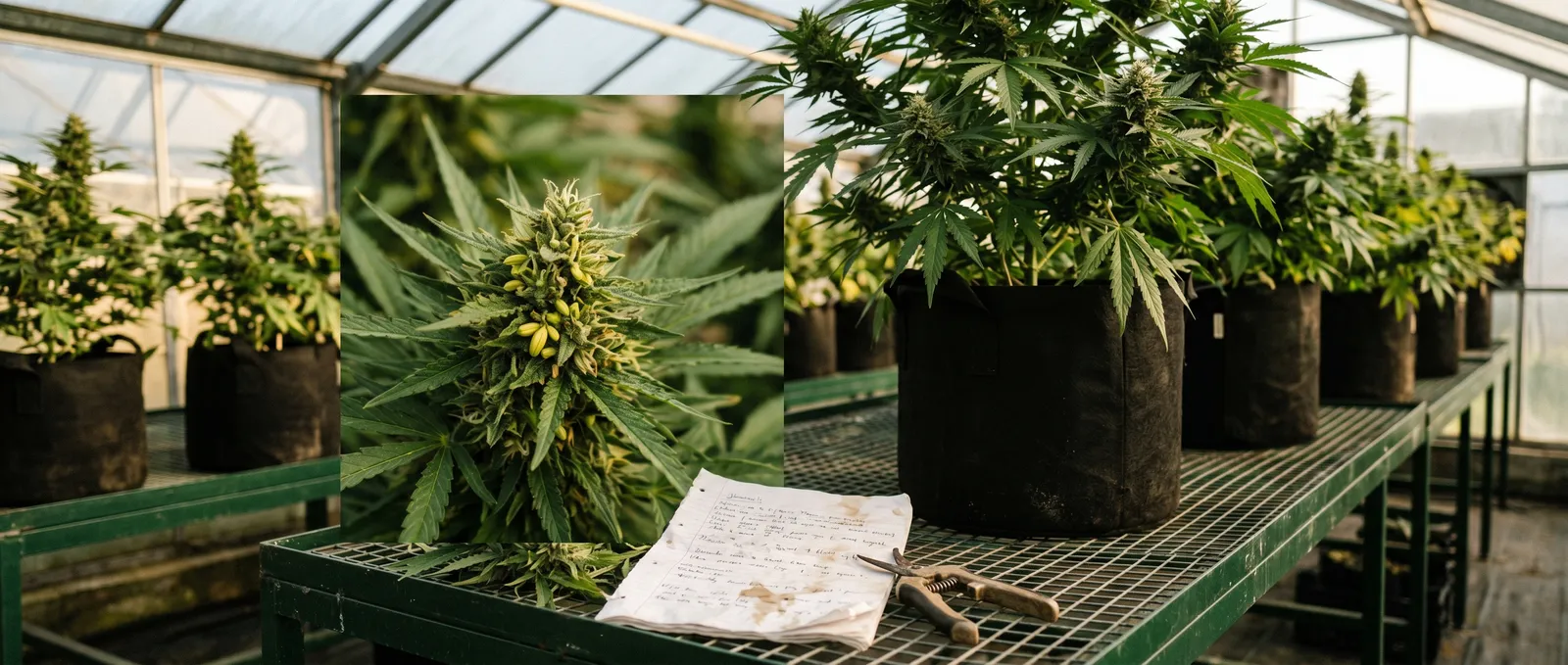
Cannabis Hermaphrodite: Identify, Prevent, Act
A cannabis hermaphrodite is a female plant that develops male pollen sacs or banana-shaped anthers (nanners), self-pollinating and seeding your harvest.
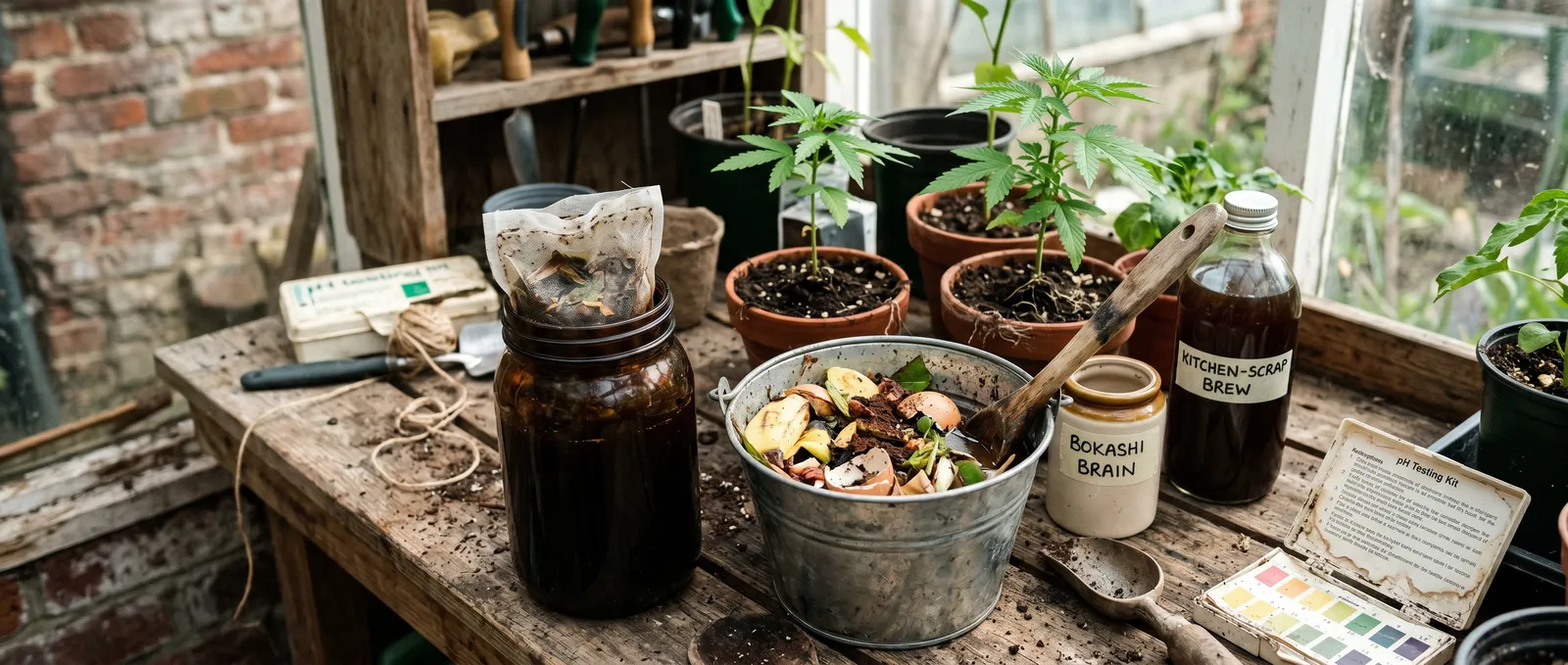
DIY Cannabis Fertilizer: Homemade Nutrient Guide
DIY cannabis fertilizer guide: compost, teas, banana ferments and feed schedules, with safety notes and cited research for home growers.
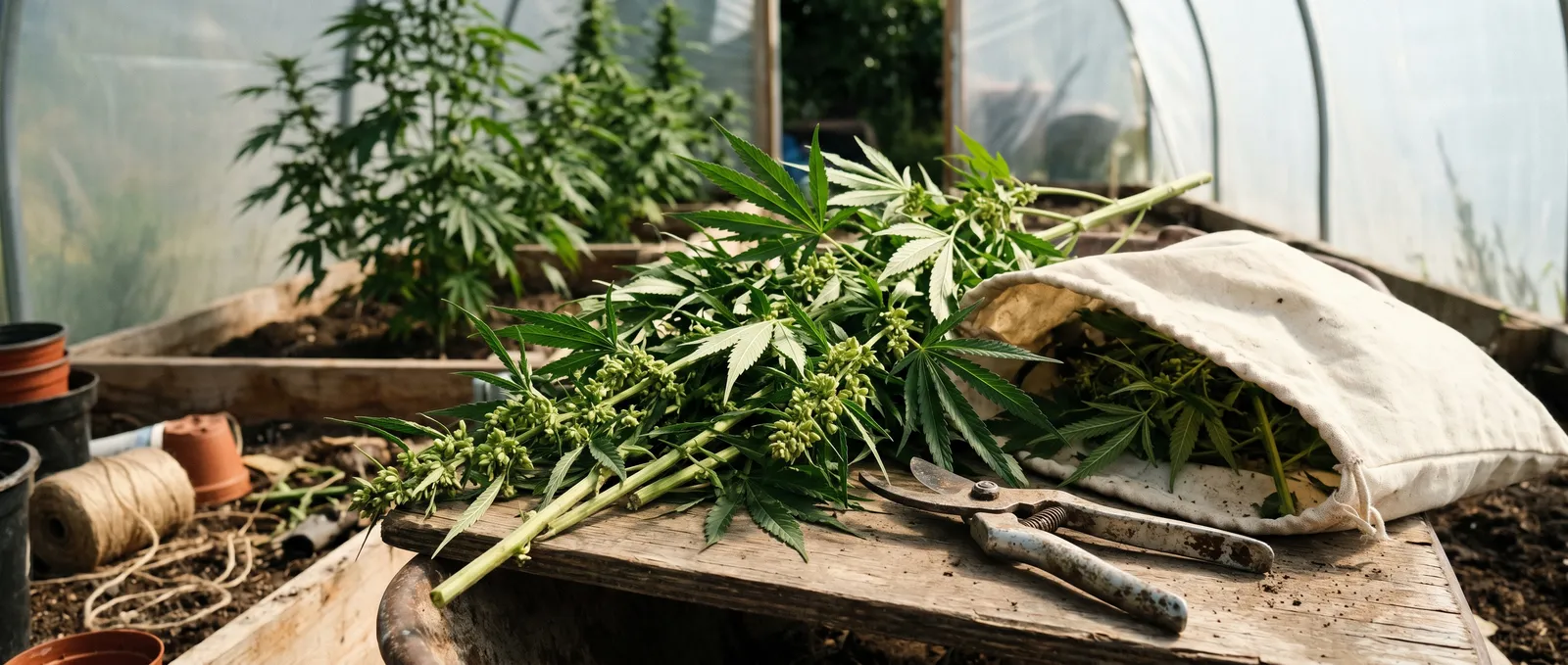
What To Do With Male Cannabis Plants: 6 Practical Uses
What to do with male cannabis plants: identify, isolate, breed, extract, or compost. A practical 6-step guide with sourcing and safety notes.
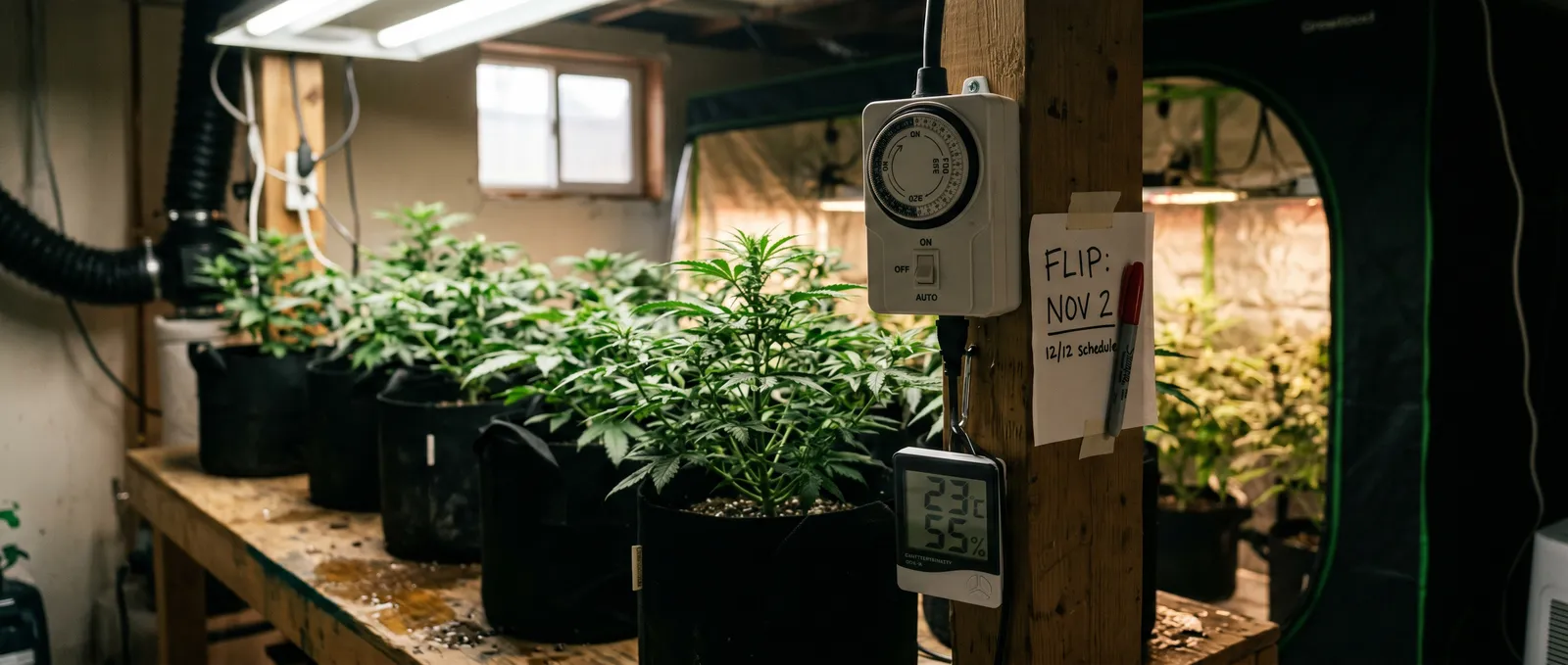
When To Flip Cannabis To 12/12: Timing The Switch
When to flip cannabis to 12/12 is a timing decision that switches photoperiod plants to 12 hours light and 12 hours dark to trigger flowering via florigen…
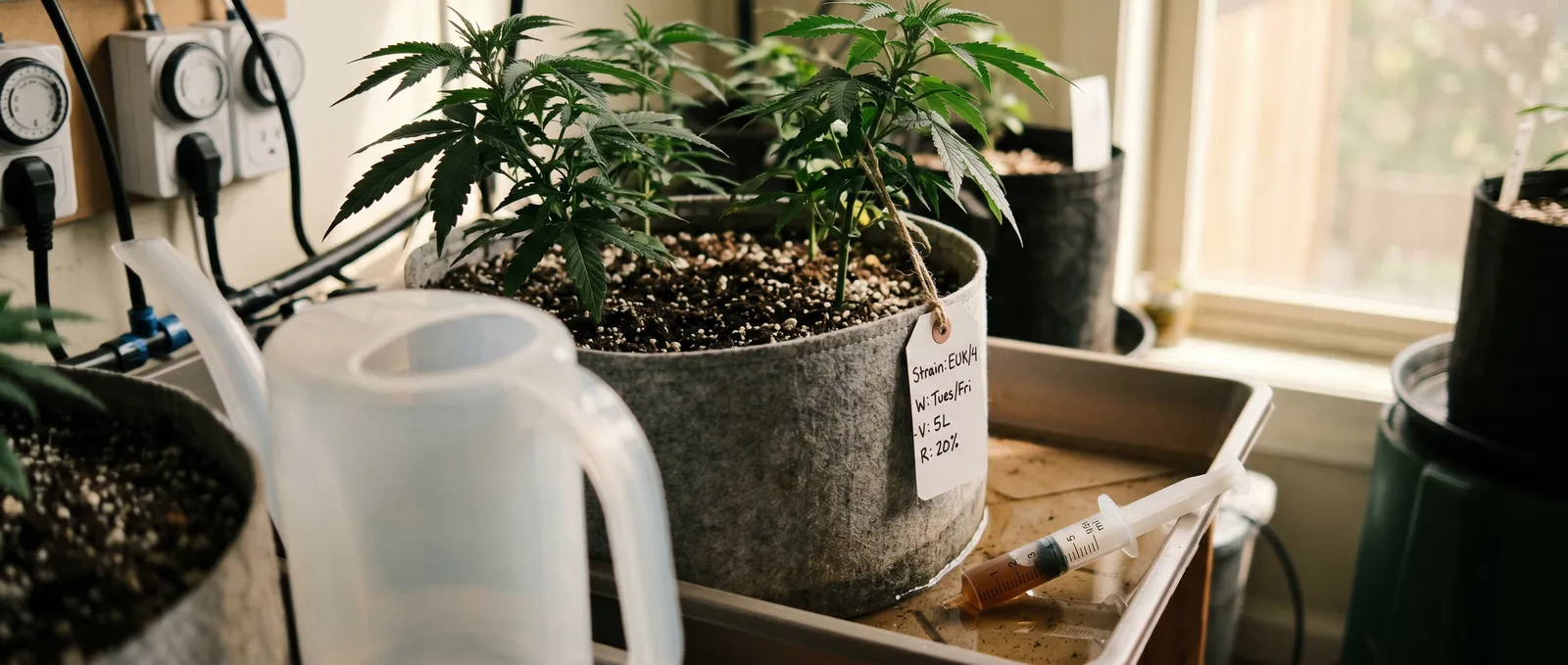
Watering Cannabis Frequency Volume Runoff: Full Guide
Watering cannabis frequency volume runoff is the feedback loop between how often you irrigate, how much you apply, and what drains from the pot.
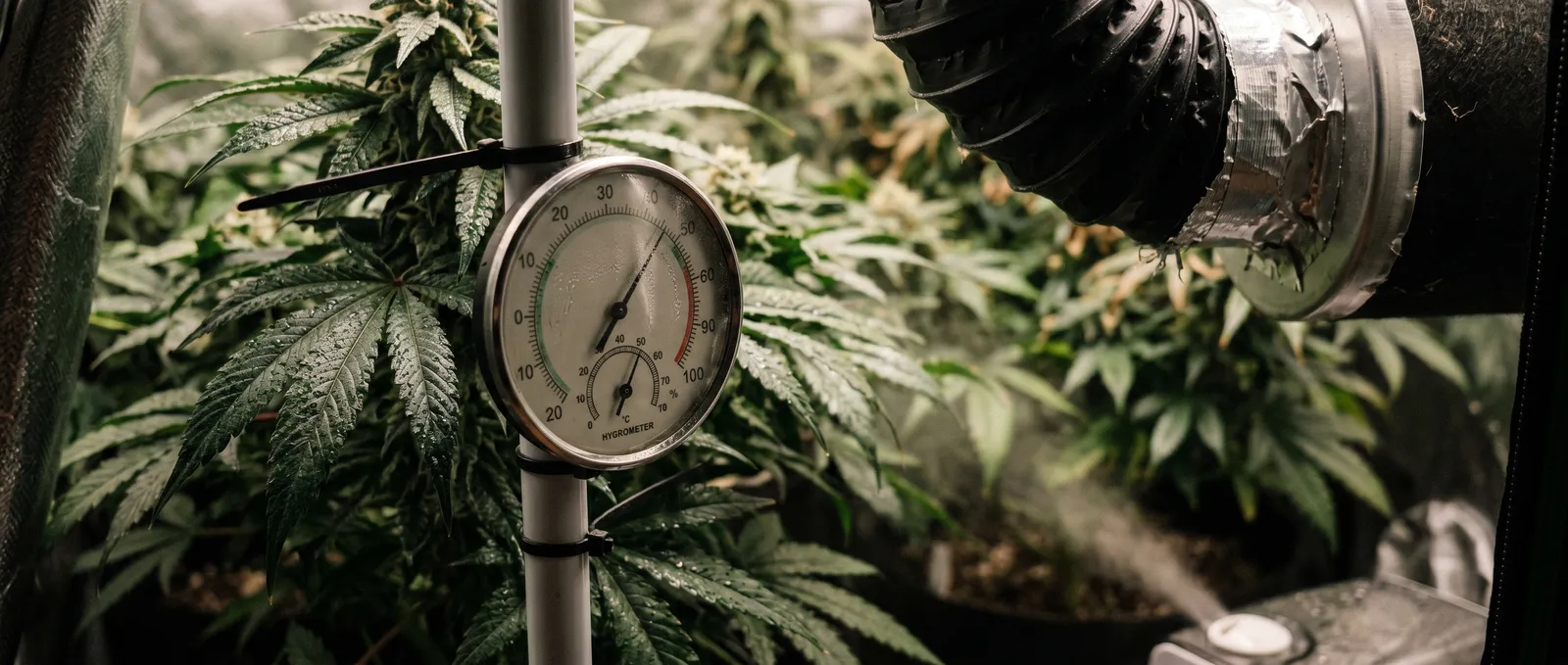
VPD for Cannabis: Targets by Growth Stage
VPD for cannabis is the kilopascal gap between the moisture the air holds and its saturation point, controlling how fast plants transpire.
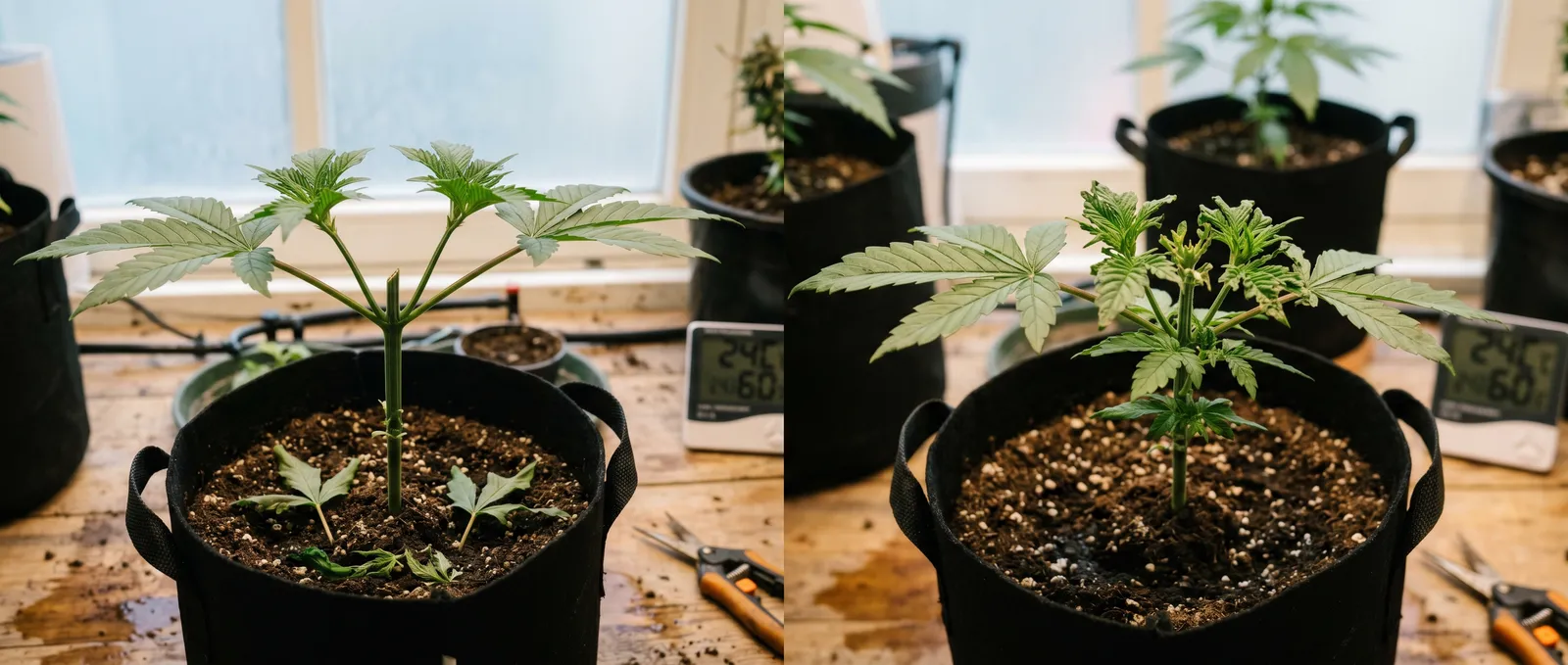
Topping vs FIMing Cannabis: Which Training Cut Wins?
Topping vs FIMing cannabis is a pair of high-stress training cuts that break apical dominance to produce more main colas.
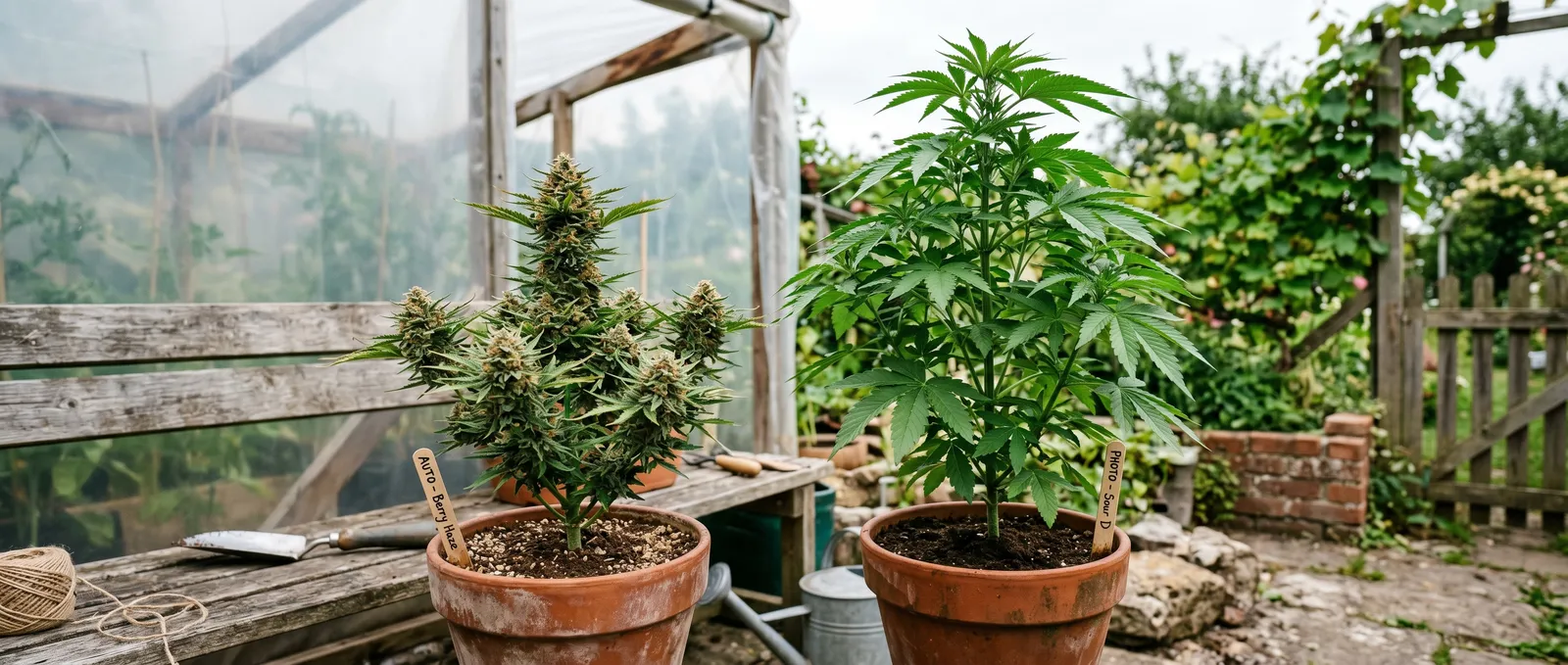
Photoperiod vs Autoflower Cannabis: Key Differences
Photoperiod vs autoflower cannabis is a genetics choice: photoperiod strains flower when light cycles shift to 12 hours dark, while autoflowers — crosses…
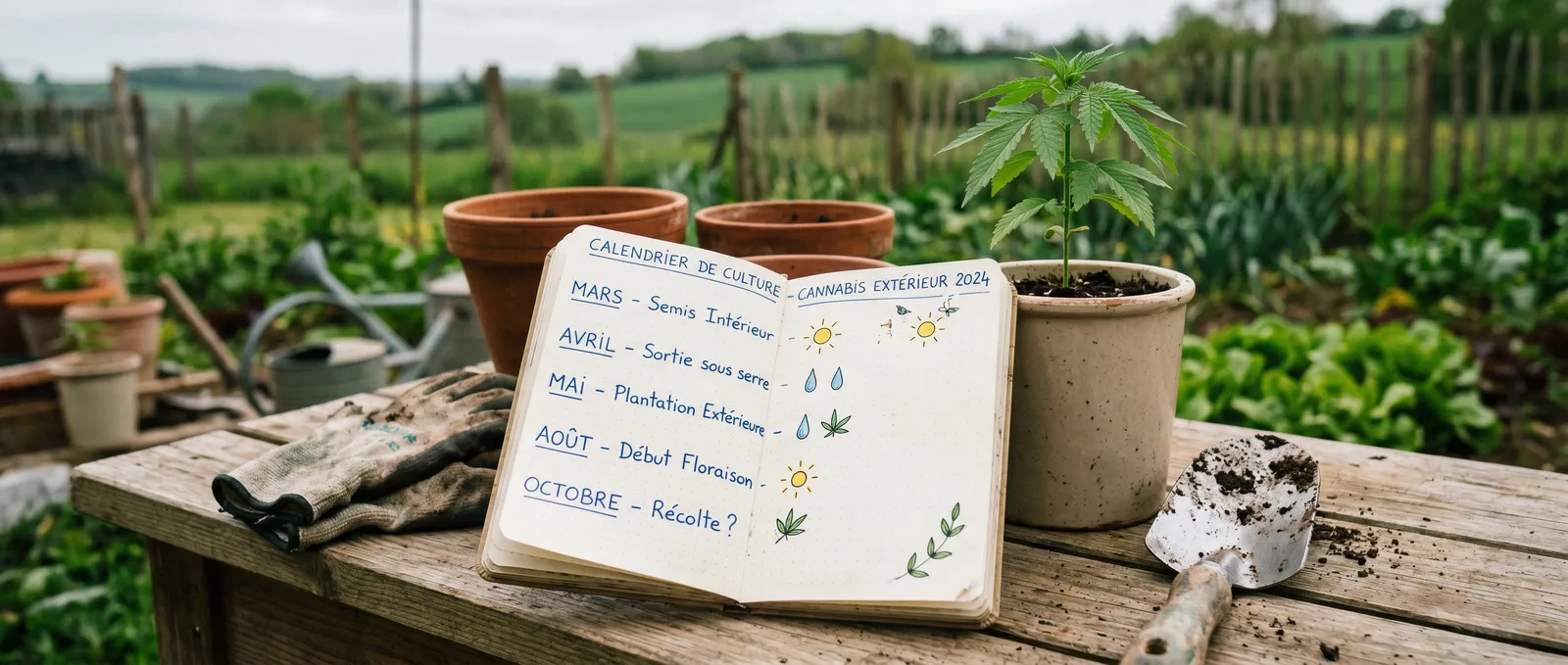
Outdoor Cannabis Grow Calendar Europe: Month-by-Month
An outdoor cannabis grow calendar for Europe is a latitude-adjusted month-by-month plan covering germination, transplant, training, flowering and harvest.