
This article discusses psychoactive substances intended for adults (18+). If you have a health condition or take medication, consult a doctor before use. Our age policy
Outdoor Cannabis Grow Calendar Europe: Month-by-Month
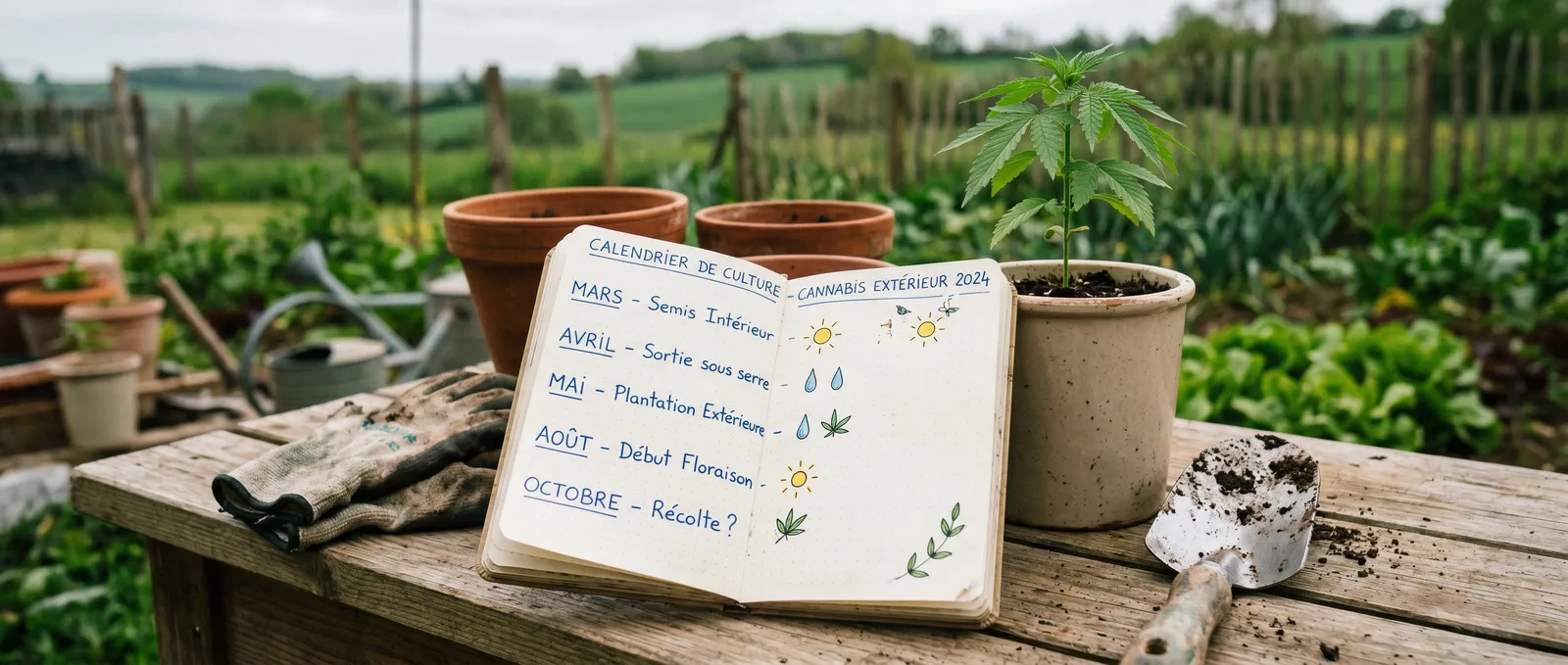
Definition
An outdoor cannabis grow calendar for Europe is a latitude-adjusted month-by-month plan covering germination, transplant, training, flowering and harvest. Timings shift roughly 6–8 weeks between southern Iberia and Scandinavia, driven by frost dates and photoperiod curves documented by the Copernicus Climate Service (2023) and climate datasets from EMCDDA-affiliated European environmental maps.
Adult use only — this guide is written for growers aged 18 and over. Cannabis cultivation rules vary by country and region and change frequently. This guide is educational. Before growing, verify current rules for your specific jurisdiction. Azarius does not provide formal advice.
An outdoor cannabis grow calendar Europe is a latitude-adjusted month-by-month plan that helps growers match genetics, start dates and harvest deadlines to their actual climate. Europe is not one climate: a photoperiod plant that finishes by early October in Málaga will still be soaking in rain and botrytis in Hamburg. Seville and Reykjavik are on the same continent but share almost nothing in terms of daylight hours, frost windows, or finishing weather. What follows is a month-by-month backbone you can adapt to your region, with the key decisions (which seeds to order, when to get plants outside, when to harvest) called out where they actually matter.
Step 1 — Know your latitude before you buy seeds
Latitude fixes the two dates that define your season: average last spring frost and average first autumn frost. Before you order a single seed, pin these down for your specific location. According to the European Union's Copernicus Climate Service (2023), last-frost dates across continental Europe range from early March in southern Iberia to mid-May in Scandinavia and alpine regions; first frosts swing from late September in the north to early December on Mediterranean coasts.

Latitude also dictates your photoperiod curve. Cannabis photoperiod genetics flower when night length exceeds roughly 11 hours (Magagnini et al., 2018), which in Amsterdam (52°N) happens around late July, in Madrid (40°N) around mid-August, and in Oslo (60°N) not until early August but with much shorter overall days. Autoflowers sidestep this entirely — they flower by age (usually around week 3–4 from seed) regardless of light cycle, which is why they dominate Northern European outdoor calendars.
Step 2 — Pick genetics that actually finish in your region
Genetics choice is where most outdoor grows are won or lost. The rule is simple: the further north you grow, the shorter the flowering window you have before cold, damp, botrytis-friendly weather rolls in.
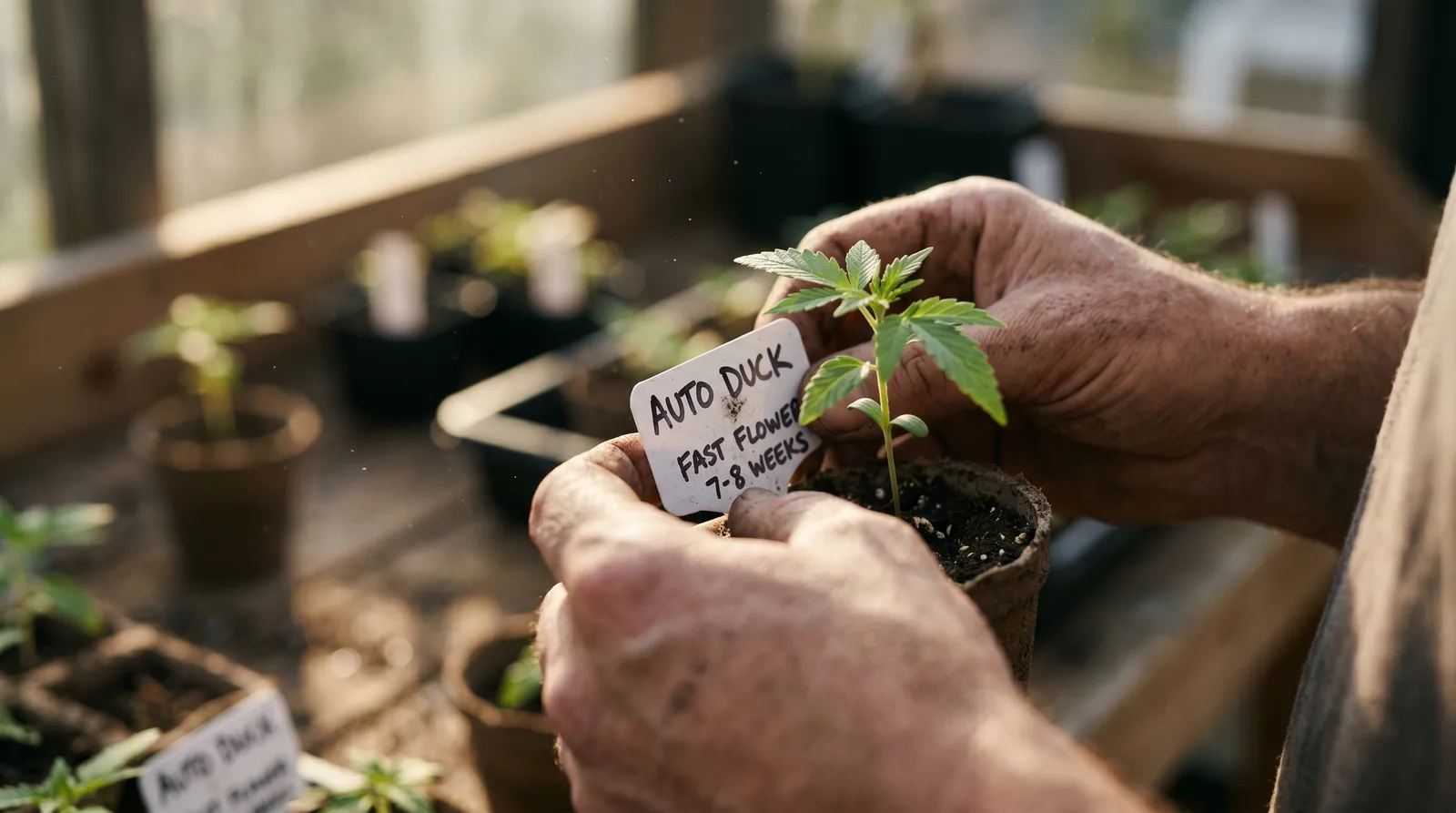
- Northern Europe (Scandinavia, UK, Ireland, Netherlands, northern Germany, Baltics): autoflowers, or early-finishing photoperiods bred for short seasons. Think 7–8 week flowering windows max. Breeders like Dutch Passion (Frisian Dew, Think Different auto), Paradise Seeds (Auto Wappa), and Sensi Seeds (Early Skunk) document genetics selected for this climate.
- Central Europe (France, southern Germany, Poland, Czechia, Hungary): most 8–9 week photoperiod strains finish in time, provided you get them outside by late May. Autoflowers give you two staggered harvests per season.
- Southern Europe (Iberia, Italy, Greece, southern Balkans): almost anything finishes, including 10-week sativa-dominant hybrids and landraces. Heat stress and water management become the bigger worry.
Breeder-stated flowering times assume indoor conditions. Outdoors, add 1–2 weeks to the stated window and plan your harvest deadline backwards from your first-frost date.
Latitude snapshot: three European cities compared
Timing shifts dramatically across the continent, as the three cities below show. The table compares transplant dates, flowering starts, harvest windows and suitable genetics at three representative latitudes.

| City (Latitude) | Transplant outdoors | Flowering starts | Harvest window | Best genetics |
|---|---|---|---|---|
| Seville (37°N) | Mid-April | Mid-August | Late Sep – early Nov | Sativa-dominant, landraces, 10-week hybrids |
| Amsterdam (52°N) | Mid-to-late May | Late July | Late Sep – mid Oct | Early photoperiods, autoflowers |
| Oslo (60°N) | Early June | Early August | Late Aug – mid Sep | Autoflowers, very early photoperiods |
Step 3 — February–March: plan, order, prep soil
February and March are planning months — nothing goes outside yet, but the season starts here. Source seeds, plan your plot or pot positions (minimum 6 hours direct sun, ideally 8+), and amend your soil. If you're growing in the ground, test pH — cannabis performs best between 6.0 and 6.8 in soil according to Bugbee's horticultural work at Utah State University (Bugbee, 2019). Compost, worm castings, and a slow-release organic base (something like a BioTabs-style schedule, or bokashi if you compost at home) go in now so biology has time to activate before transplant (Caplan et al., 2017).
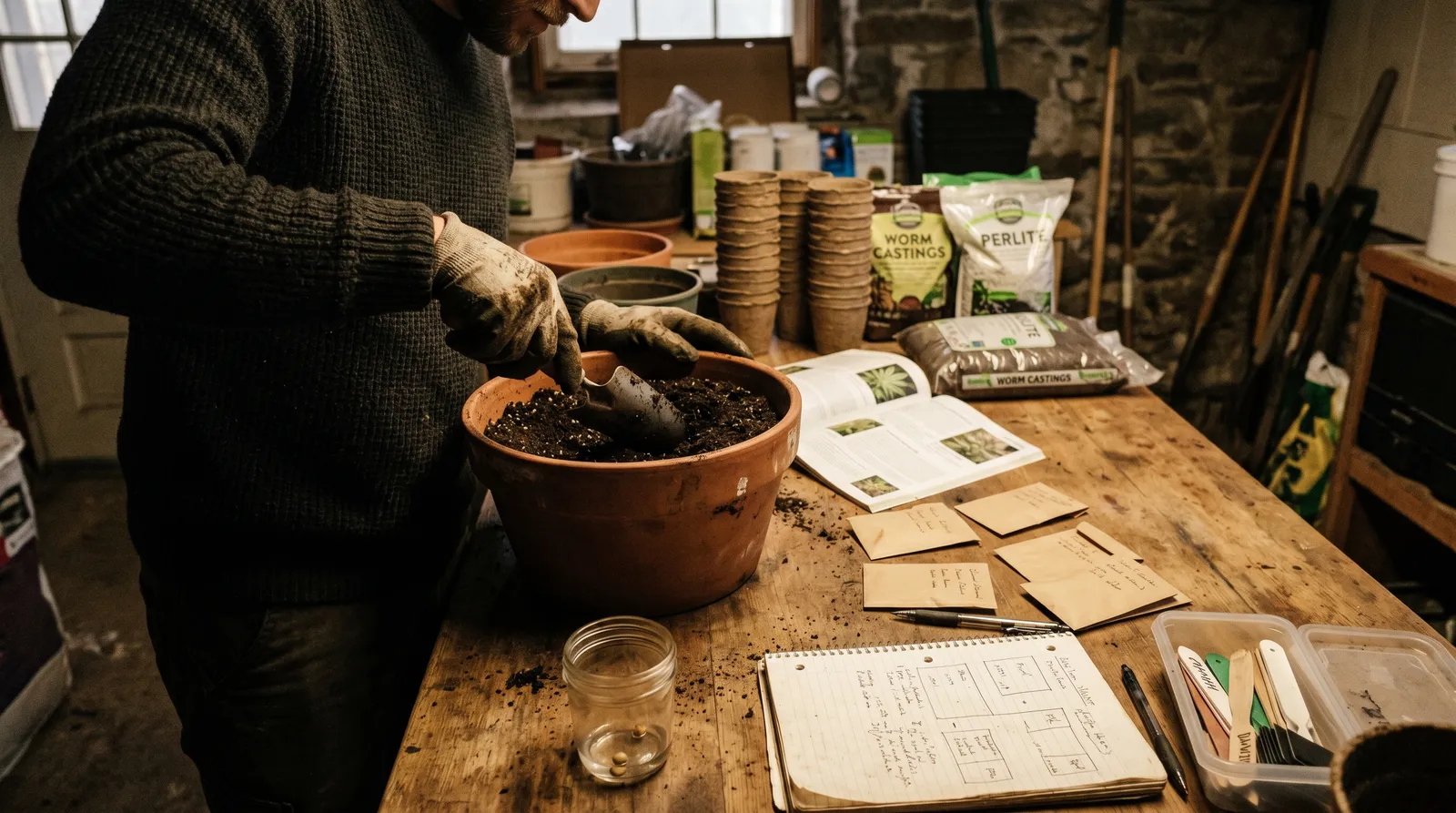
In Southern Europe (March), you can start germinating indoors under a small T5 or LED for a 4–6 week head start. In Northern Europe, hold off until April. If you need to buy a few things before the season — seeds, pH meter, mycorrhizae — order them now while stock is still wide.
Step 4 — April: germination and indoor seedling stage
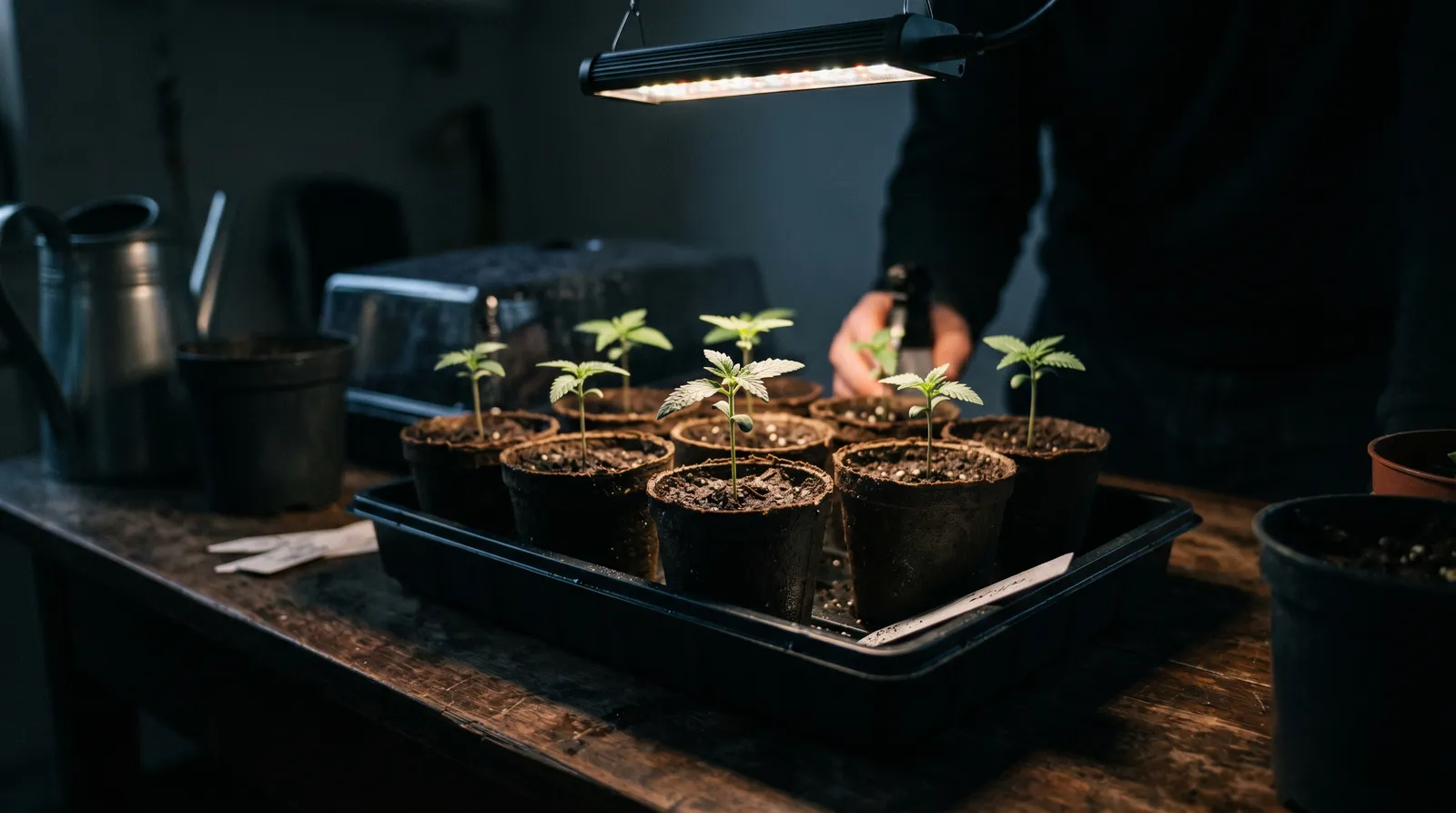
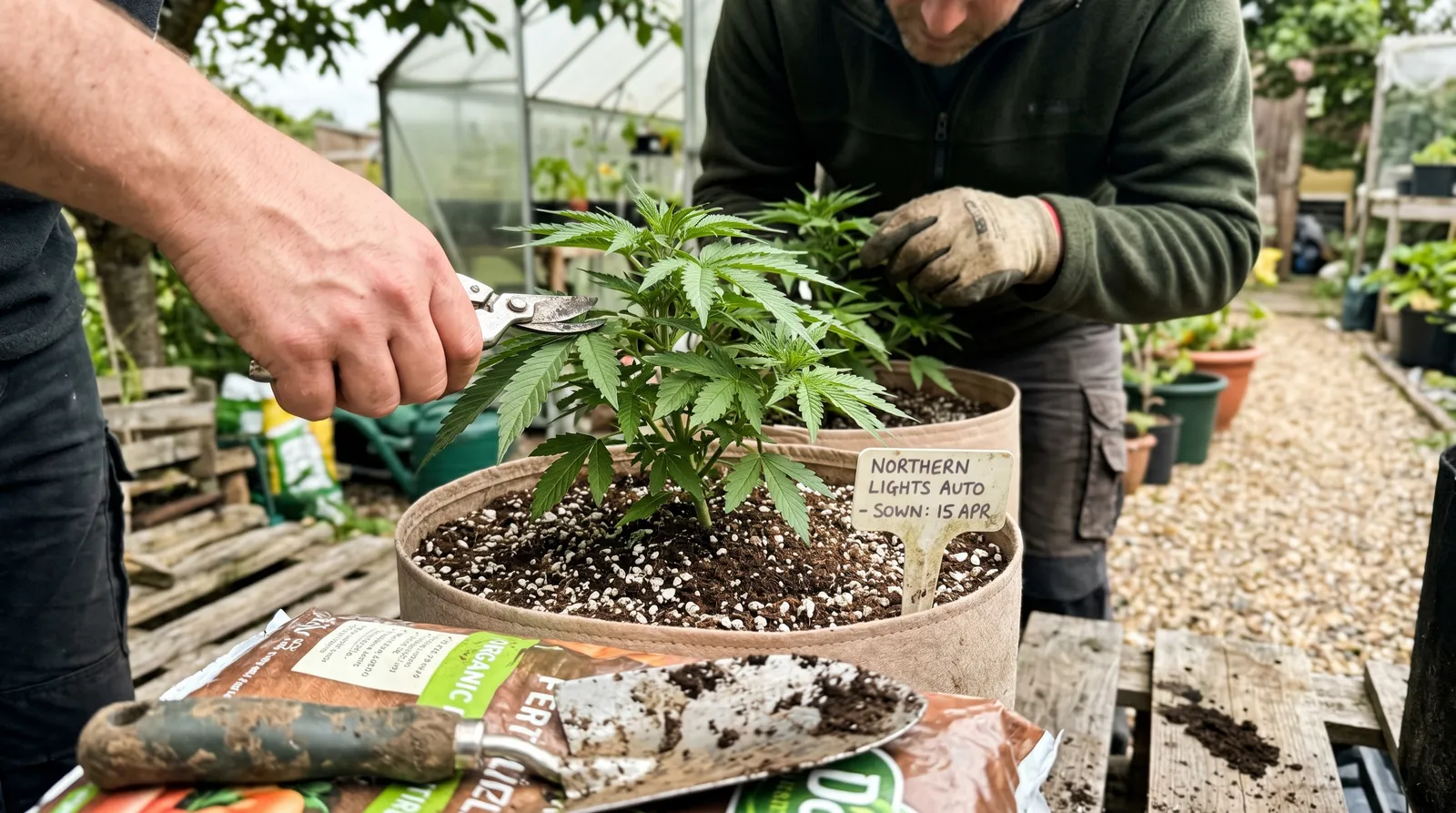
April is germination month across most of Europe. Germinate in paper towel or direct-to-pot in lightly moistened seedling mix at 22–25°C. Once seedlings show their second set of true leaves, keep them under modest light (a 100W LED at roughly 200–300 PPFD is plenty) (Fluence, 2021) and hold them indoors until night temperatures at your plot stay reliably above 10°C. Transplanting into cold soil stalls root development for weeks — a far bigger setback than a late start.
Step 5 — May: harden off and get them outside
May is transplant month for most of Europe, preceded by a hardening-off week. Start with an hour outside in dappled shade on day one, two hours on day two, building up to full sun over 7–10 days (Llewellyn et al., 2022). Skip this step and you'll watch your leaves bleach white in 48 hours.
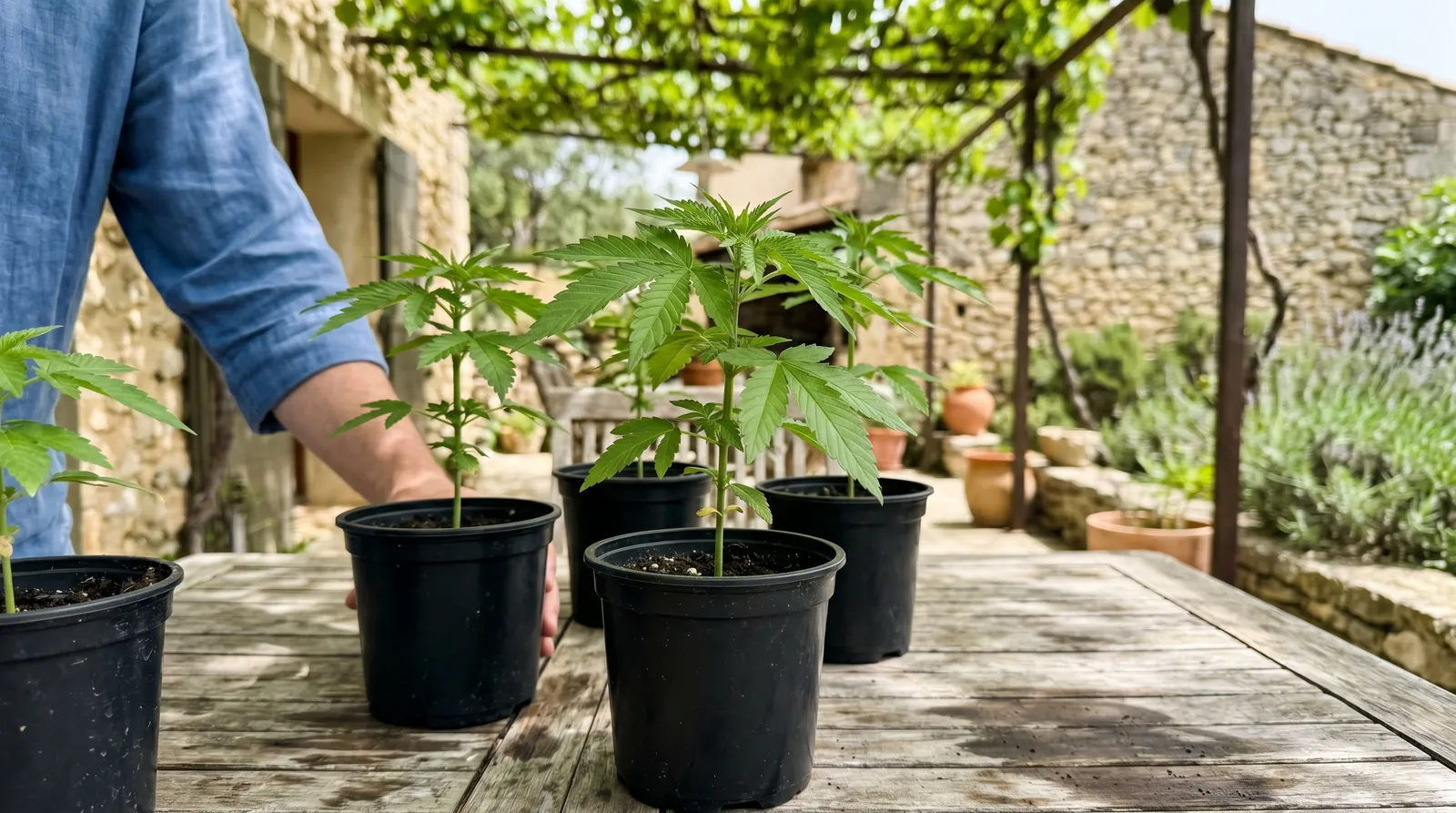
- Southern Europe: transplant outdoors early-to-mid May, sometimes late April in coastal Spain.
- Central Europe: mid-to-late May, after the "Ice Saints" (11–15 May) — a reliable folk marker for last frost risk across Germany, Austria, and the Czech lands.
- Northern Europe: late May to early June. Photoperiod plants going out this late need early-finishing genetics or they won't ripen.
Step 6 — June–July: vegetative growth and training
June and July are the stretch window, when plants put on most of their structural size. Photoperiod plants in Central and Southern Europe will double or triple in size during June (Saloner & Bernstein, 2021). Low-stress training (LST) — tying down the main stem horizontally to open up the canopy — is the single highest-return technique for outdoor growers. Topping at the 4th–5th node, done once by mid-June, produces a bushier plant with more colas. After mid-July, stop any training; plants start pre-flowering and you don't want to stress them during the transition.
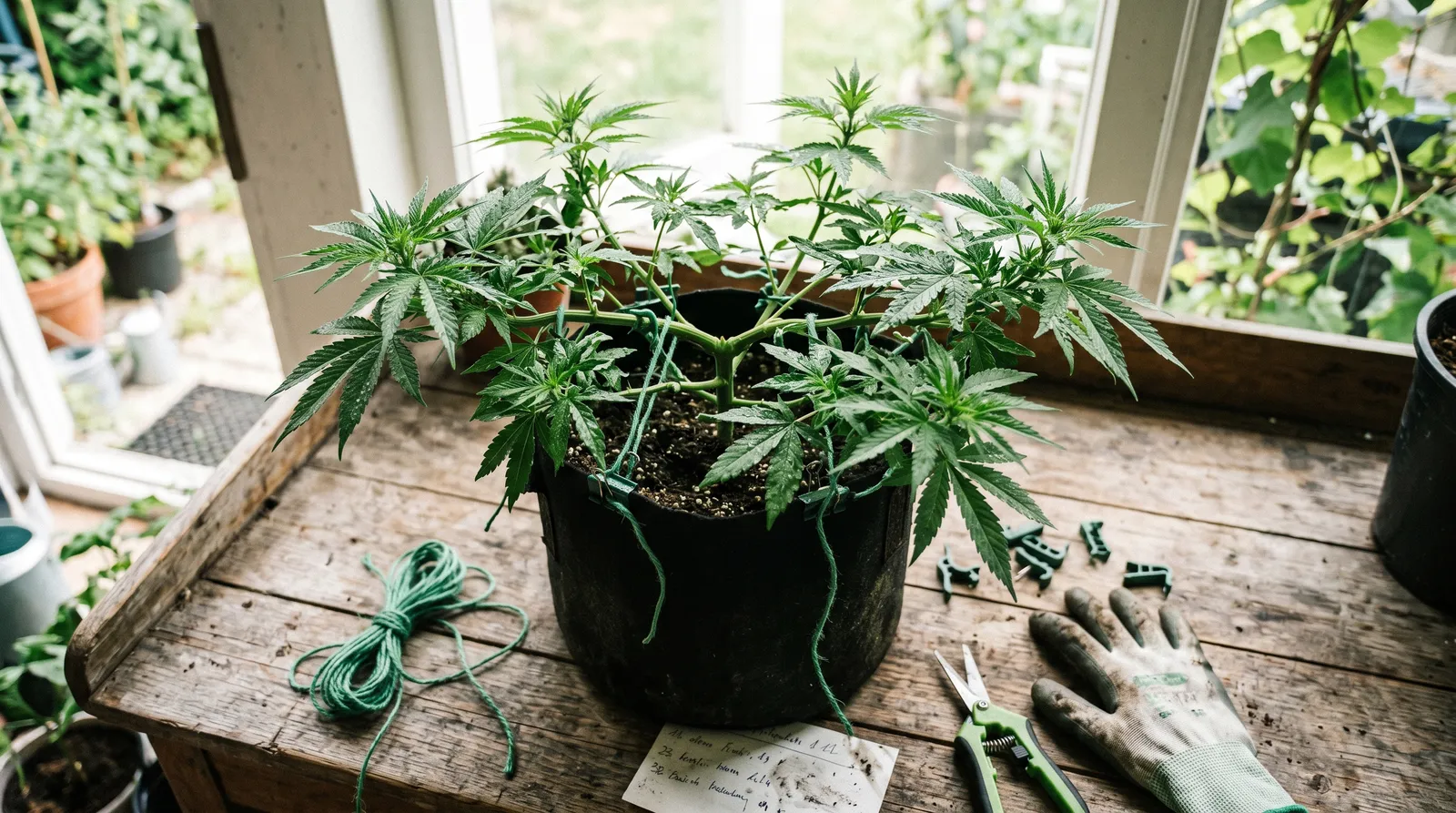
Water deeply and less often rather than shallow-daily. For container grows, expect to go from 2L every few days in June to 10–15L daily on a mature plant in July heat. Mulch the top of pots and plots — straw, bark, or hemp mulch — to retain moisture and moderate root-zone temperature.
Step 7 — August: flowering begins, IPM gets serious
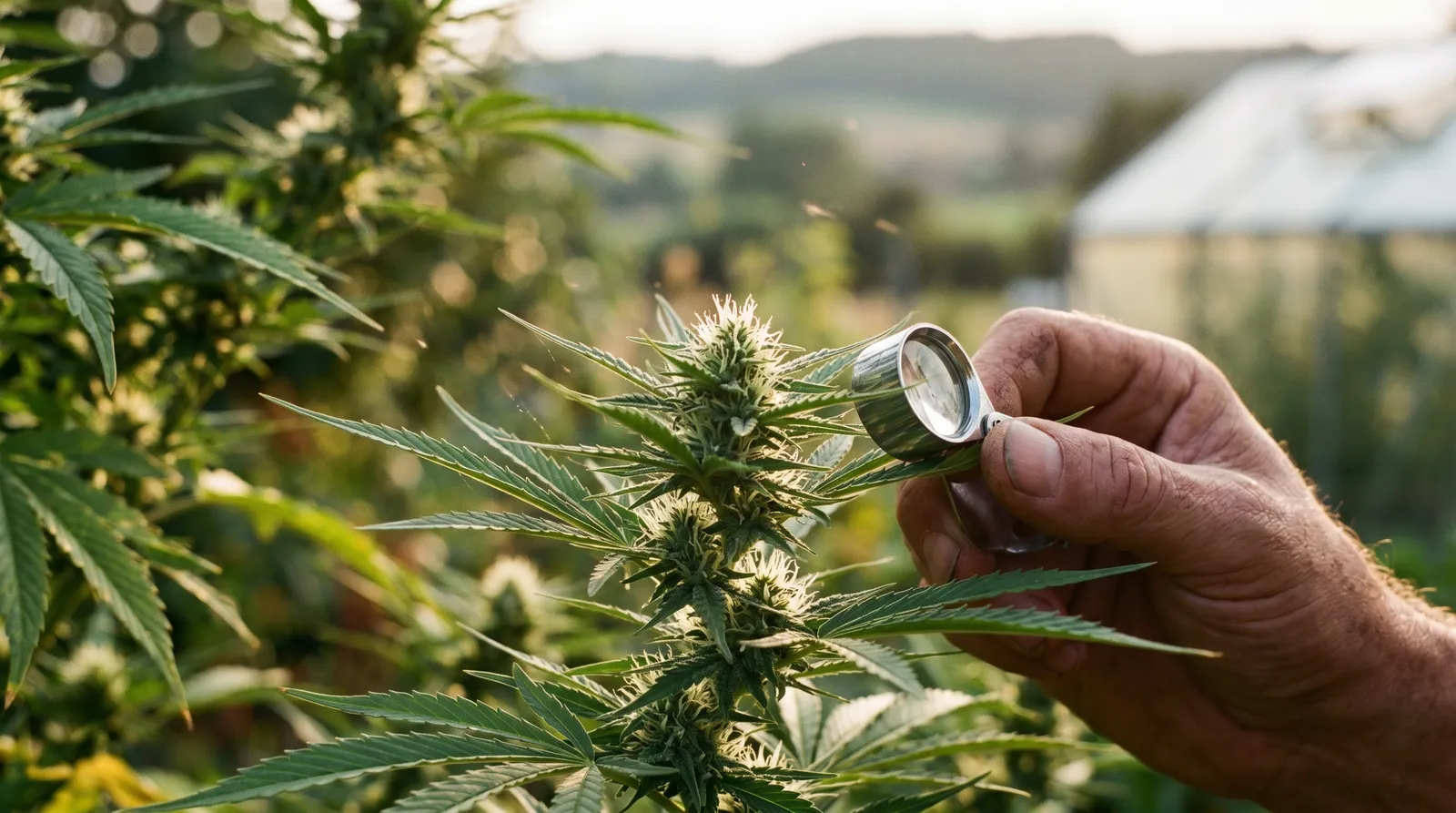
August is when photoperiod plants in most of Europe visibly transition into flower, usually by the first or second week. This is also when pest and mould pressure spikes. Walk your plants every few days looking for:
- Spider mites — fine webbing, stippled leaves. Rinse off with water, follow with predatory mites if you catch it early.
- Caterpillars — especially the European corn borer and tobacco budworm. Bacillus thuringiensis (Bt) sprayed weekly until mid-flower is the standard organic tool.
- Powdery mildew — white dust on leaves. Airflow, spacing, and defoliation of lower leaves reduce pressure (Punja, 2021).
Stop all foliar sprays, including neem, by week 3 of flower at the latest. Residues on finished buds are a real problem.
Step 8 — September–October: ripening and harvest
Harvest season runs from late July (earliest autos) through early November (long-flowering southern sativas). Autoflowers started in April finish across most of Europe by late July to mid-September depending on strain. Photoperiod plants ripen on this rough schedule:
- Southern Europe: late September through early November for long-flowering sativas.
- Central Europe: late September to mid-October.
- Northern Europe: early to late September for early-finishers; anything still flowering in mid-October is a gamble against botrytis.
Check trichomes with a 60x loupe or jeweller's scope. Cloudy with 10–20% amber is the commonly-cited ripeness window for balanced effects, though this is a matter of grower preference more than hard science. Harvest in the morning after dew has dried. Wet, cold conditions in the 10 days before harvest are the single biggest botrytis risk (Punja, 2021) — if rain is forecast and your plants are 90% ripe, pull them early rather than lose them.
Step 9 — Dry and cure (October–November)
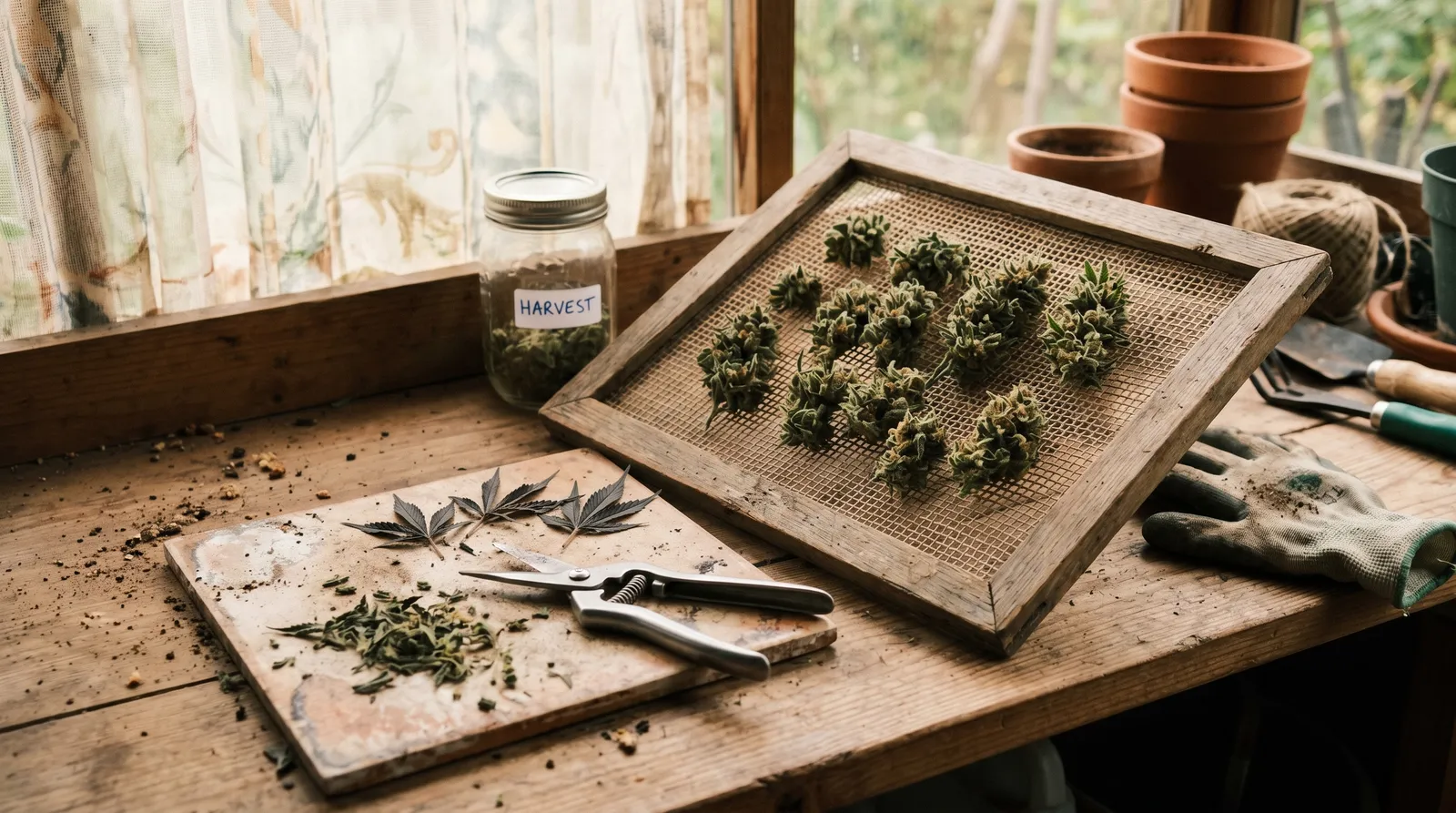
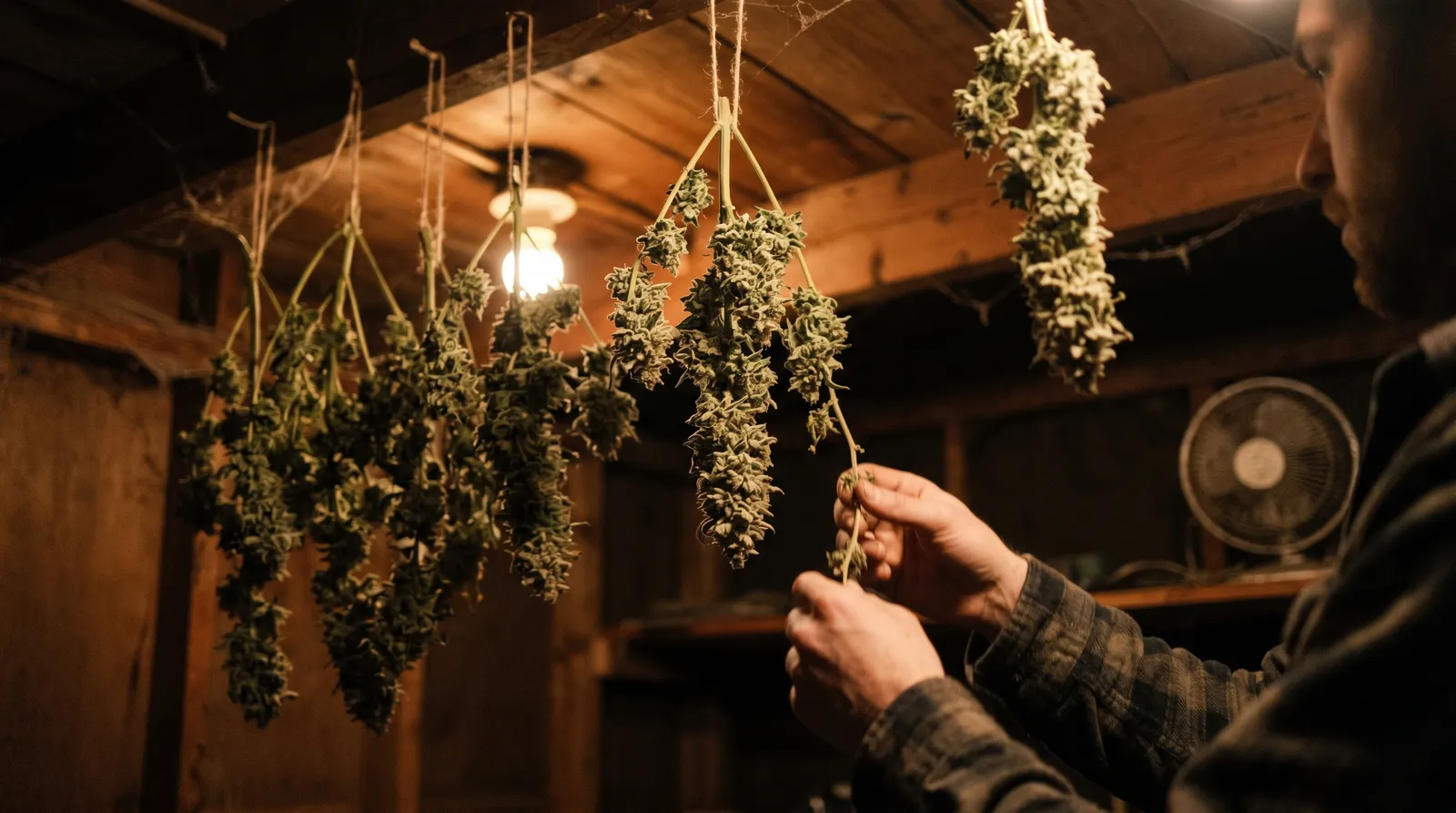
Drying and curing determine final quality more than any feeding decision you made in July. Hang whole branches in a dark room at 18–20°C and 55–60% relative humidity for 10–14 days. When small stems snap rather than bend, trim and move buds into glass jars at 62% RH (Boveda or Integra packs make this trivial — get a few in different sizes before harvest). Burp jars daily for the first two weeks, then weekly. A proper cure takes 4–8 weeks and is the difference between harsh and smooth.
Honest limitations of any Europe-wide calendar
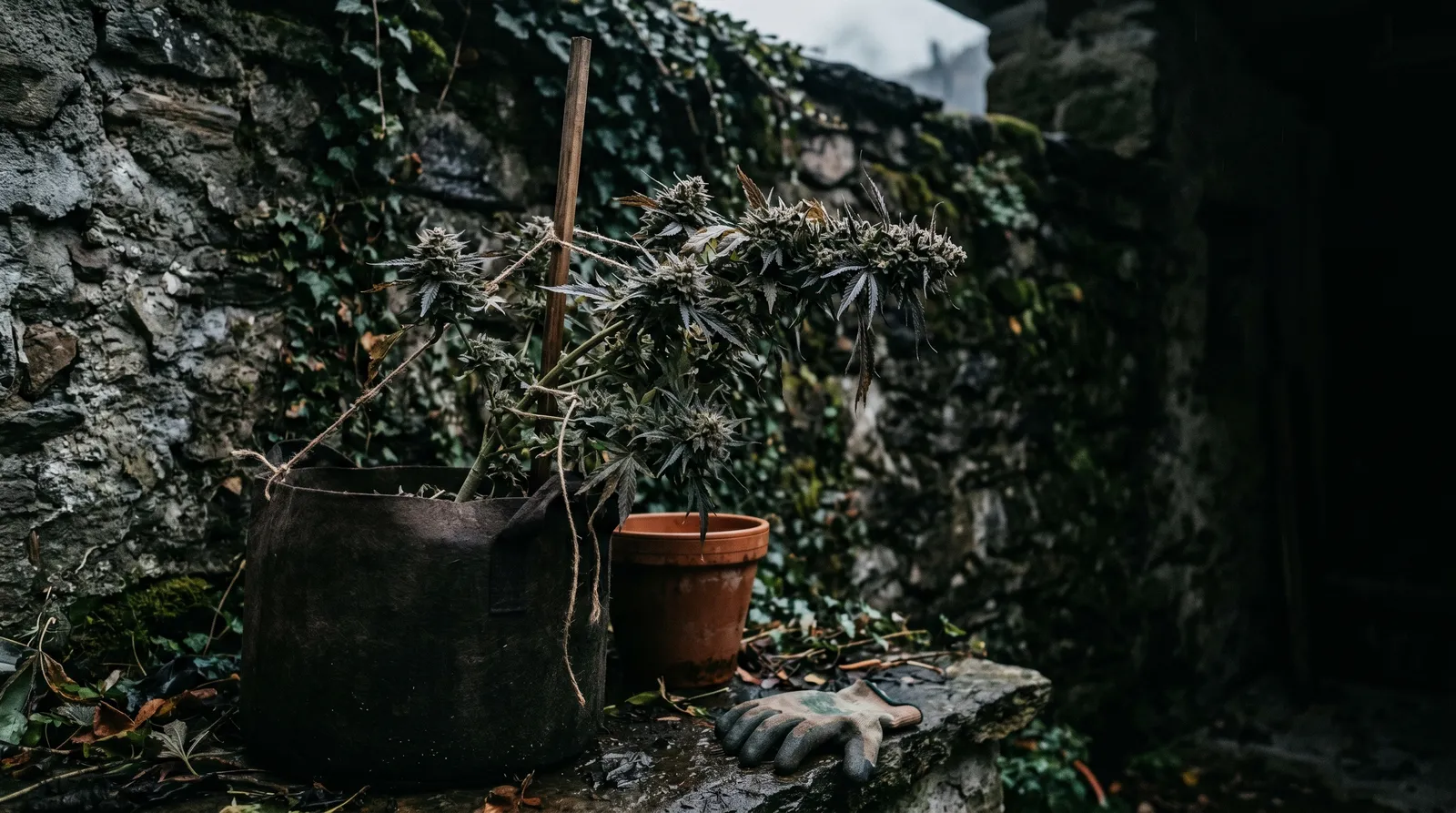
No single calendar fits a continent this varied, and this one is no exception. Microclimates matter: a south-facing wall in Munich can out-perform an open field 200km further south, and a damp river valley in Bordeaux can finish later than a dry hillside in Berlin. Urban rooftops hold heat into October; coastal sites get salt spray and wind. Climate change is also shifting long-term averages — the frost dates cited here come from 2023 Copernicus data and may drift within a few years. Treat this calendar as a starting scaffold, then overwrite it with two or three seasons of your own notes from your actual plot.
Tips and common mistakes
- Don't transplant into cold soil. Wait for consistent 10°C+ nights. A two-week delay is cheaper than a stunted plant.
- Don't pick photoperiod genetics rated for 10+ weeks of flower above 50°N. You're gambling against the weather.
- Don't skip the cure. Harvest-to-jar in three days produces grassy, harsh flower regardless of genetics.
- Don't water on a schedule. Lift the pot or stick a finger in the soil. Overwatering kills more outdoor plants in cool climates than underwatering.
- Do keep a grow log. Next year's calendar writes itself from this year's notes.
Educational information only. This outdoor cannabis grow calendar Europe guide is not medical, agronomic or formal advice. Cultivation rules vary widely across European jurisdictions and change frequently — verify the current rules that apply where you live before taking any action. Adults only (18+). Azarius does not encourage activity contrary to applicable local rules.
Last updated: April 2026
Frequently Asked Questions
8 questionsWhen should I plant cannabis outdoors in Northern Europe?
Are autoflowers or photoperiod plants better for European outdoor grows?
What's the best harvest window for outdoor cannabis in Europe?
How do I prevent bud rot outdoors in a wet climate?
Can I grow cannabis outdoors in Scandinavia?
How much water does an outdoor cannabis plant need in summer?
How many extra weeks should I add to breeder-stated flowering times for outdoor grows in Europe?
What latitude-related factors should I check before choosing cannabis seeds for outdoor growing in Europe?
About this article


Luke Sholl has been writing about cannabis, cannabinoids, and the broader benefits of nature since 2011, and has personally grown cannabis in home grow tents for more than a decade. That first-hand cultivation experience
This wiki article was drafted with AI assistance and reviewed by Luke Sholl, External contributor since 2026. Editorial oversight by Adam Parsons.
Medical disclaimer. This content is for informational purposes only and does not constitute medical advice. Consult a qualified healthcare provider before use of any substance.
Last reviewed April 24, 2026
References (7)
- [1]Caplan, D., Dixon, M., & Zheng, Y. (2017). Optimal rate of organic fertilizer during the vegetative-stage for cannabis grown in two coir-based substrates. HortScience, 52(9), 1307-1312. DOI: 10.21273/HORTSCI11903-17
- [2]Bugbee, B. (2019). Cannabis Production in Controlled Environments. Utah State University Extension. Source
- [3]Magagnini, G., Grassi, G., & Kotiranta, S. (2018). The effect of light spectrum on the morphology and cannabinoid content of Cannabis sativa L.. Medical Cannabis and Cannabinoids, 1(1), 19-27. DOI: 10.1159/000489030
- [4]Saloner, A. & Bernstein, N. (2021). Response of medical cannabis (Cannabis sativa L.) to nitrogen supply under long photoperiod. Frontiers in Plant Science, 12, 657323. DOI: 10.3389/fpls.2021.657323
- [5]Punja, Z. K. (2021). Emerging diseases of Cannabis sativa and sustainable management. Pest Management Science, 77(9), 3857-3870. DOI: 10.1002/ps.6307
- [6]Fluence Bioengineering (2021). Cannabis Cultivation Guide: Best Practices for Growing Cannabis with LED Technology. Fluence White Paper. Source
- [7]Llewellyn, D., Golem, S., Foley, E., Dinka, S., Jones, A. M. P., & Zheng, Y. (2022). Indoor grown cannabis yield increased proportionally with light intensity, but ultraviolet radiation did not affect yield or cannabinoid content. Frontiers in Plant Science, 13, 974018. DOI: 10.3389/fpls.2022.974018
Related Articles
Cannabis Hermaphrodite: Identify, Prevent, Act
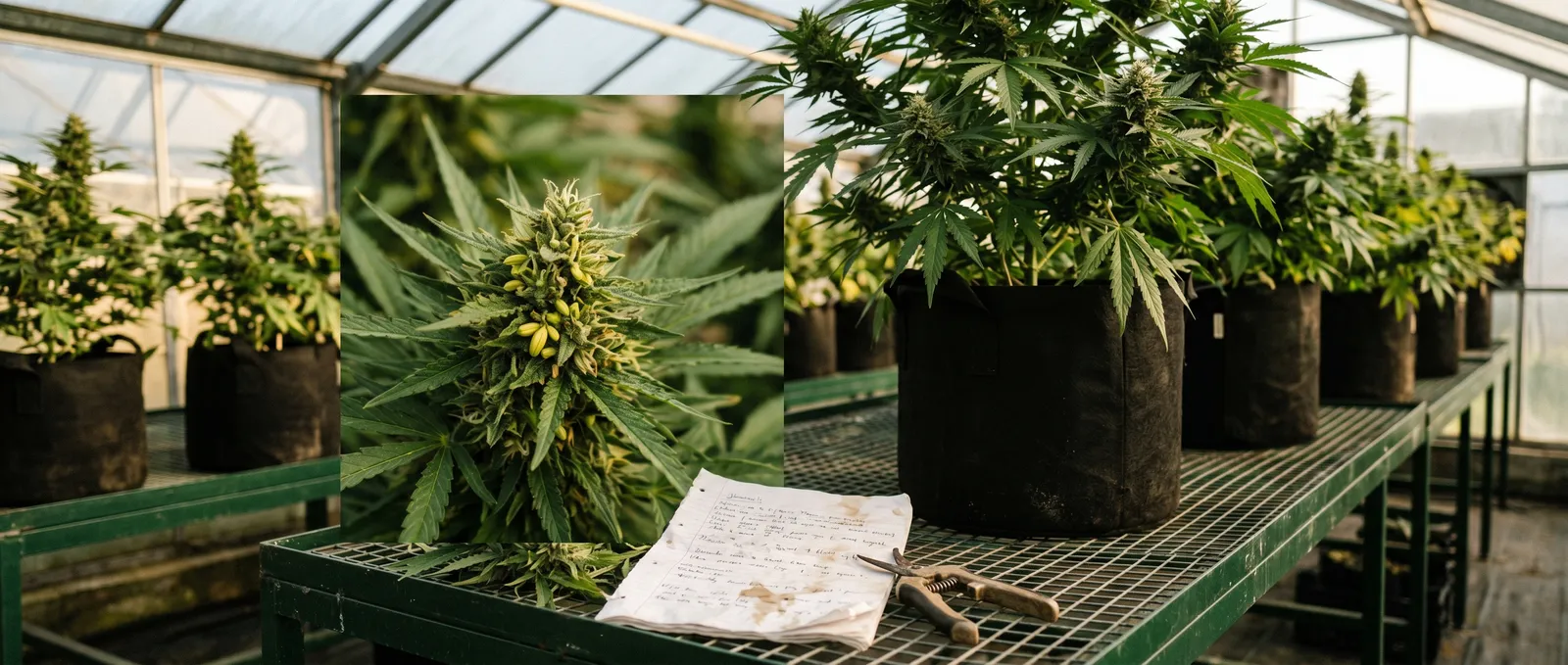
A cannabis hermaphrodite is a female plant that develops male pollen sacs or banana-shaped anthers (nanners), self-pollinating and seeding your harvest.
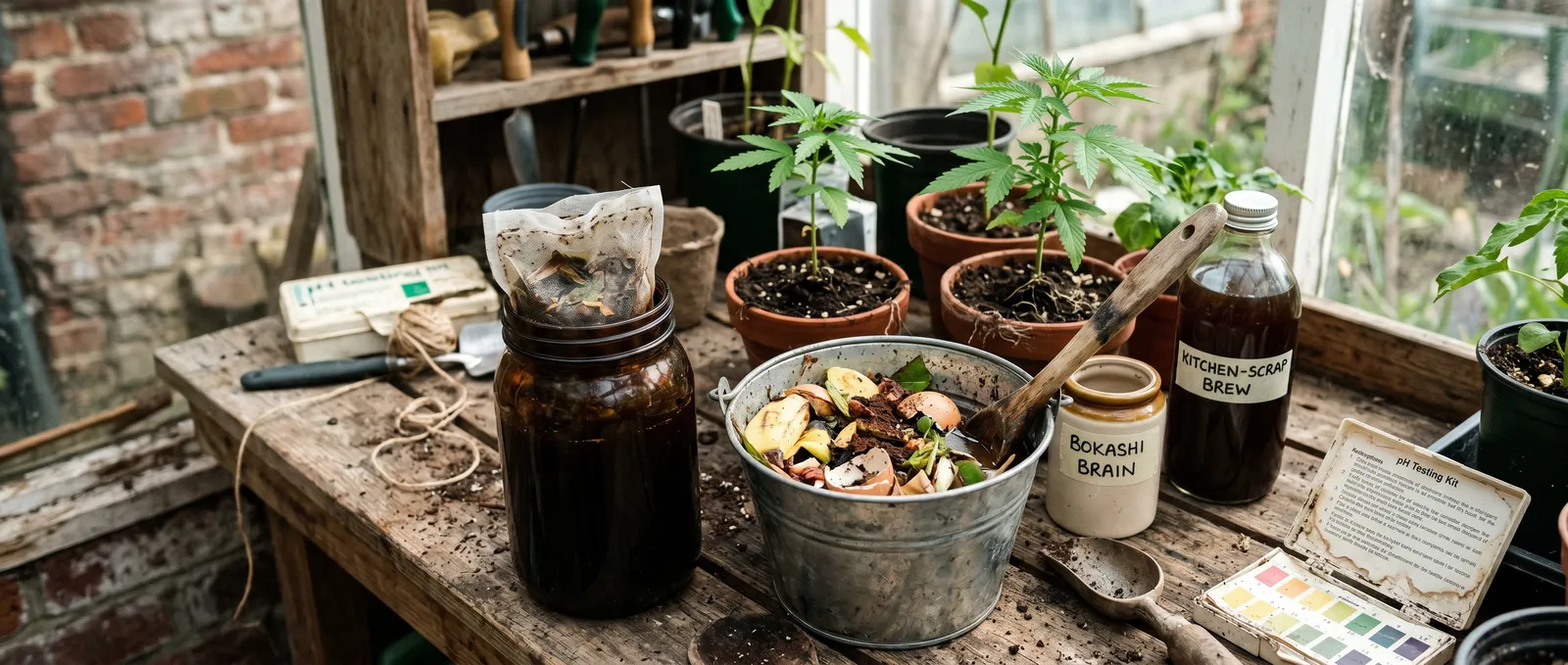
DIY Cannabis Fertilizer: Homemade Nutrient Guide
DIY cannabis fertilizer guide: compost, teas, banana ferments and feed schedules, with safety notes and cited research for home growers.
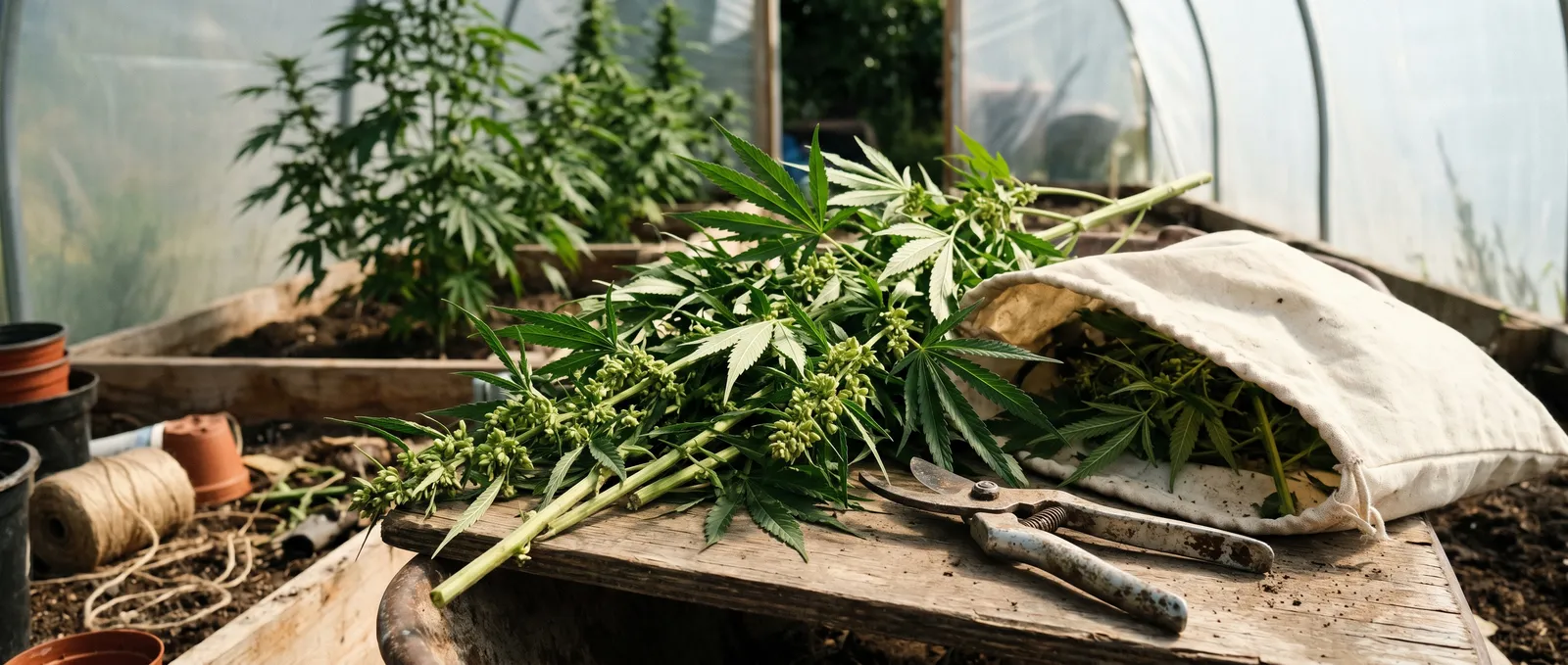
What To Do With Male Cannabis Plants: 6 Practical Uses
What to do with male cannabis plants: identify, isolate, breed, extract, or compost. A practical 6-step guide with sourcing and safety notes.
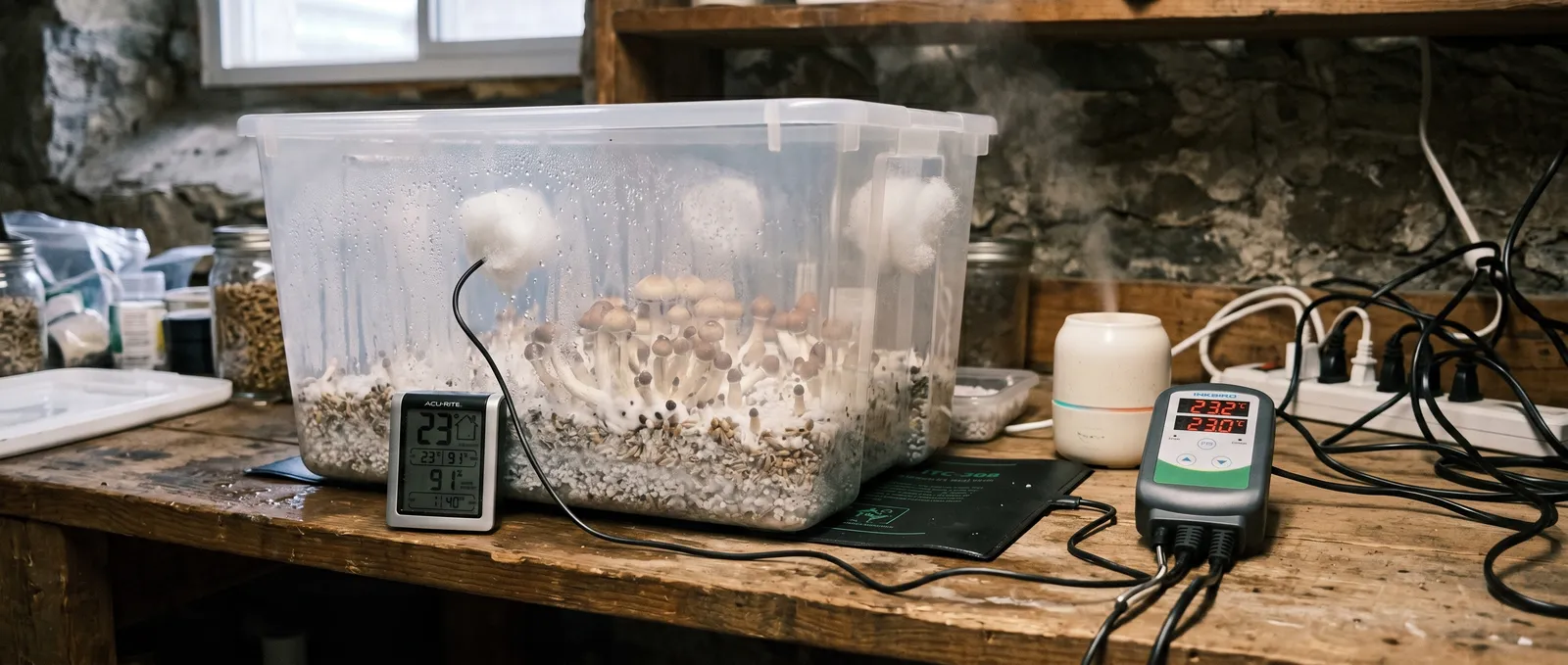
Mushroom Grow Kit Temperature & Humidity: Full Setup Guide
A temperature humidity control grow kit is the small set of climate tools — hygrometer, heat mat, humidifier or perlite tray — that keeps a mushroom fruiting…
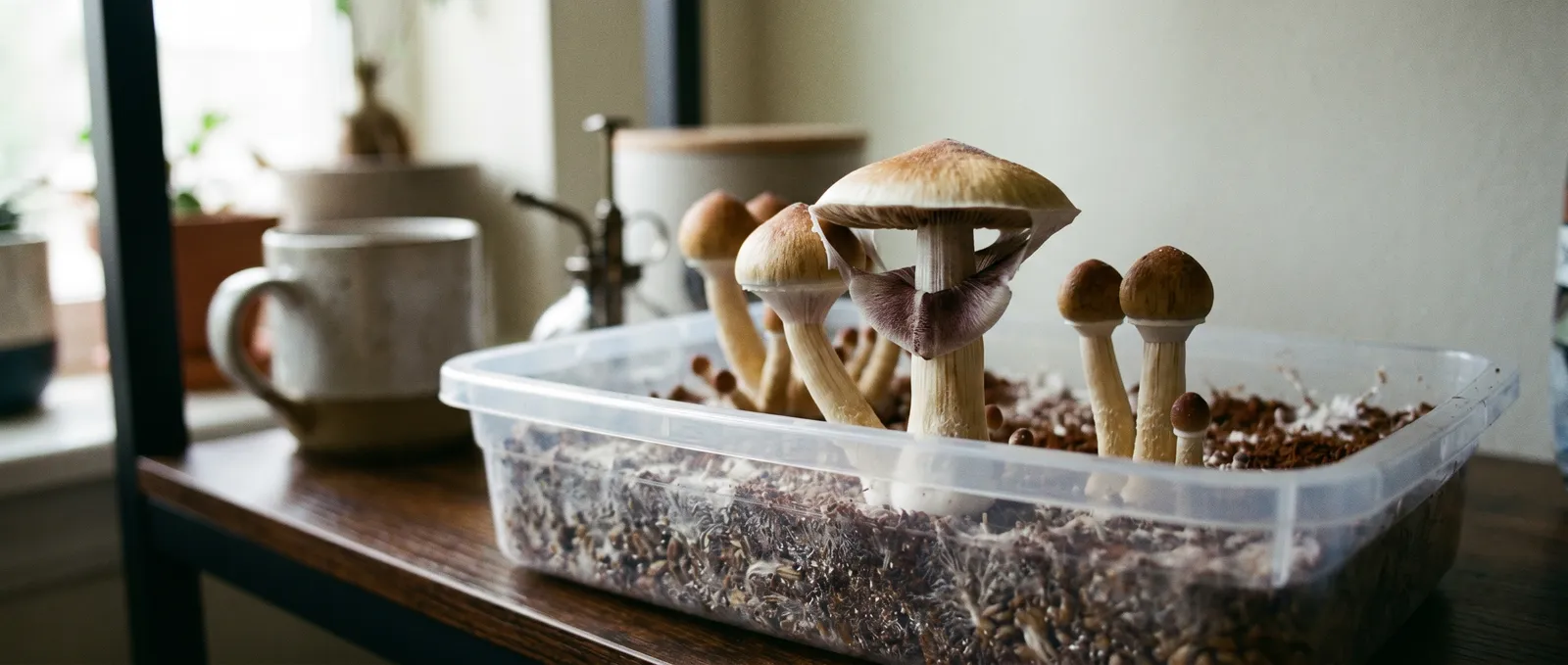
When to Harvest Mushrooms: Veil Break Timing Explained
Harvest timing veil break is a cultivation technique that uses the tearing of the partial veil on maturing Psilocybe cubensis to mark peak alkaloid content.
First Grow Checklist: What You Need for Mushroom Kits
A first grow checklist is the short list of supplies and environmental conditions needed to run a home psilocybin mushroom kit from inoculated substrate to…
Sclerotia vs Fruit Bodies: Cultivation Comparison
Sclerotia and fruit bodies are two different life stages of Psilocybe fungi: sclerotia are hardened underground mycelial storage bodies (the 'magic…
Storing Dried Mushrooms Long Term: Full Guide
Storing dried mushrooms long term means keeping well-dried Psilocybe fruit bodies in airtight, opaque containers with desiccant, cool and dark, to slow…
Drying Mushrooms Air Desiccant Oven: Methods Compared
Drying mushrooms air desiccant oven refers to the three home methods for reducing fresh fruit bodies from ~90% water to cracker-dry (<5%). Gotvaldová et al.