
This article discusses psychoactive substances intended for adults (18+). If you have a health condition or take medication, consult a doctor before use. Our age policy
Cannabis Seed Germination Methods: 4 Ways That Work
Definition
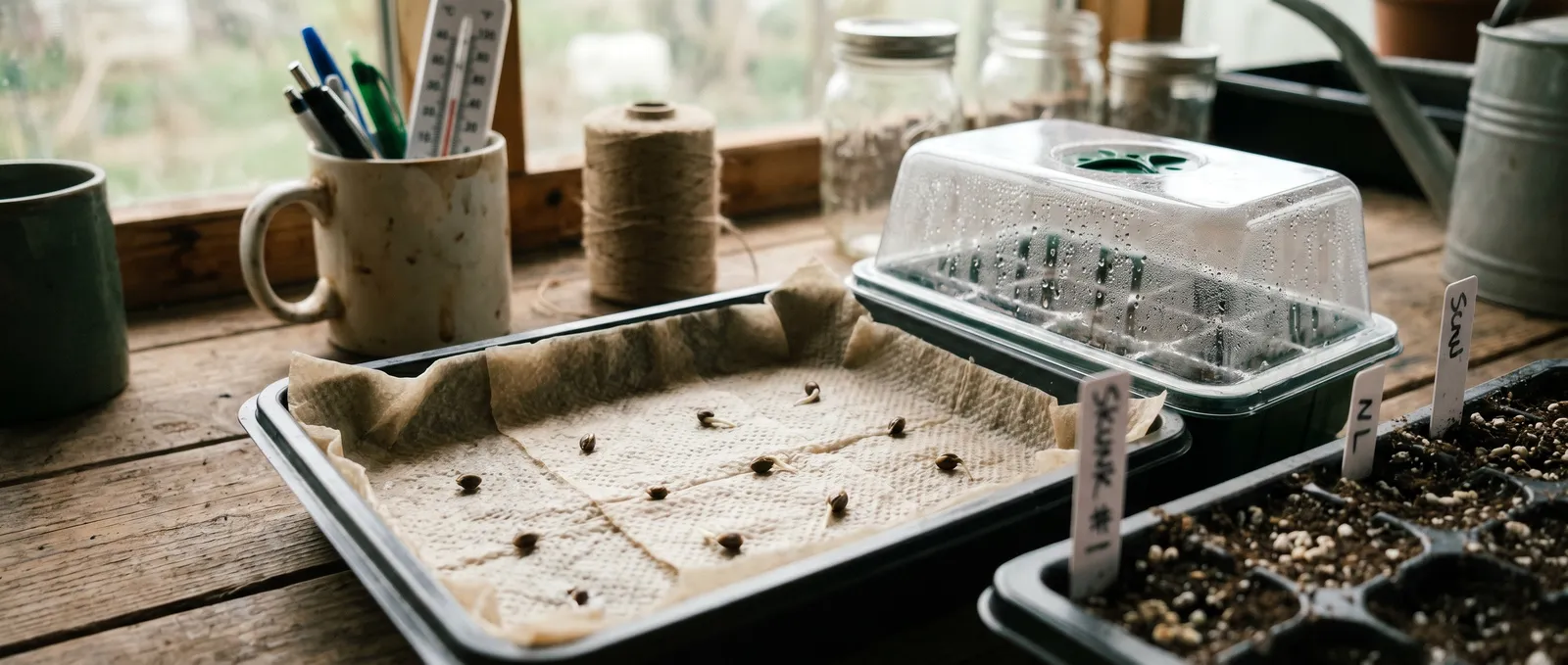
Cannabis seed germination is the process of breaking seed dormancy with moisture, warmth (21–25°C), and darkness until a taproot emerges. Pelc and Durczyńska (2022) found germination rates cluster tightly around 22–24°C on moist substrate, with the method mattering less than steady conditions and fresh seed.
This guide is written for adults. Cannabis cultivation rules vary by country and region and change frequently. This guide is educational only and is not medical or professional advice. Consult a qualified professional before acting on anything here. Azarius does not provide medical advice.
Cannabis seed germination methods are home techniques that wake a dormant seed with moisture, warmth, and darkness so it pushes out a taproot within 24 to 96 hours. Get the conditions right and you've got a vigorous seedling in two to four days, ready to move into soil, coco, or a hydroponic net pot. Get them wrong and you're staring at a soggy seed in a kitchen towel on day seven, wondering whether to throw it out — it usually is already dead. There are four cannabis seed germination methods that actually work reliably at home — paper towel, glass of water, direct-to-medium, and starter plugs — and each has tradeoffs worth knowing before you order a ten-pack of Dutch Passion or Royal Queen Seeds beans you paid real money to buy.
The biology is straightforward and has been studied in detail for decades. A viable seed needs three things to wake up: moisture, warmth in the 21 to 25°C sweet spot, and darkness for steady substrate humidity. Pelc and Durczyńska (2022) tested hemp germination across a broad range of moisture and temperature conditions and found optimal germination rates clustered tightly around 22 to 24°C on a moist substrate, which is the band most home growers should aim for if they want consistent results. Outside that band, rates drop and rot risk climbs steeply within 48 hours. Reactive oxygen species signalling inside the seed controls dormancy break — too dry and nothing happens, too wet and the embryo suffocates or moulds before the taproot emerges (Bailly, 2019).
Cannabis seed germination methods at a glance
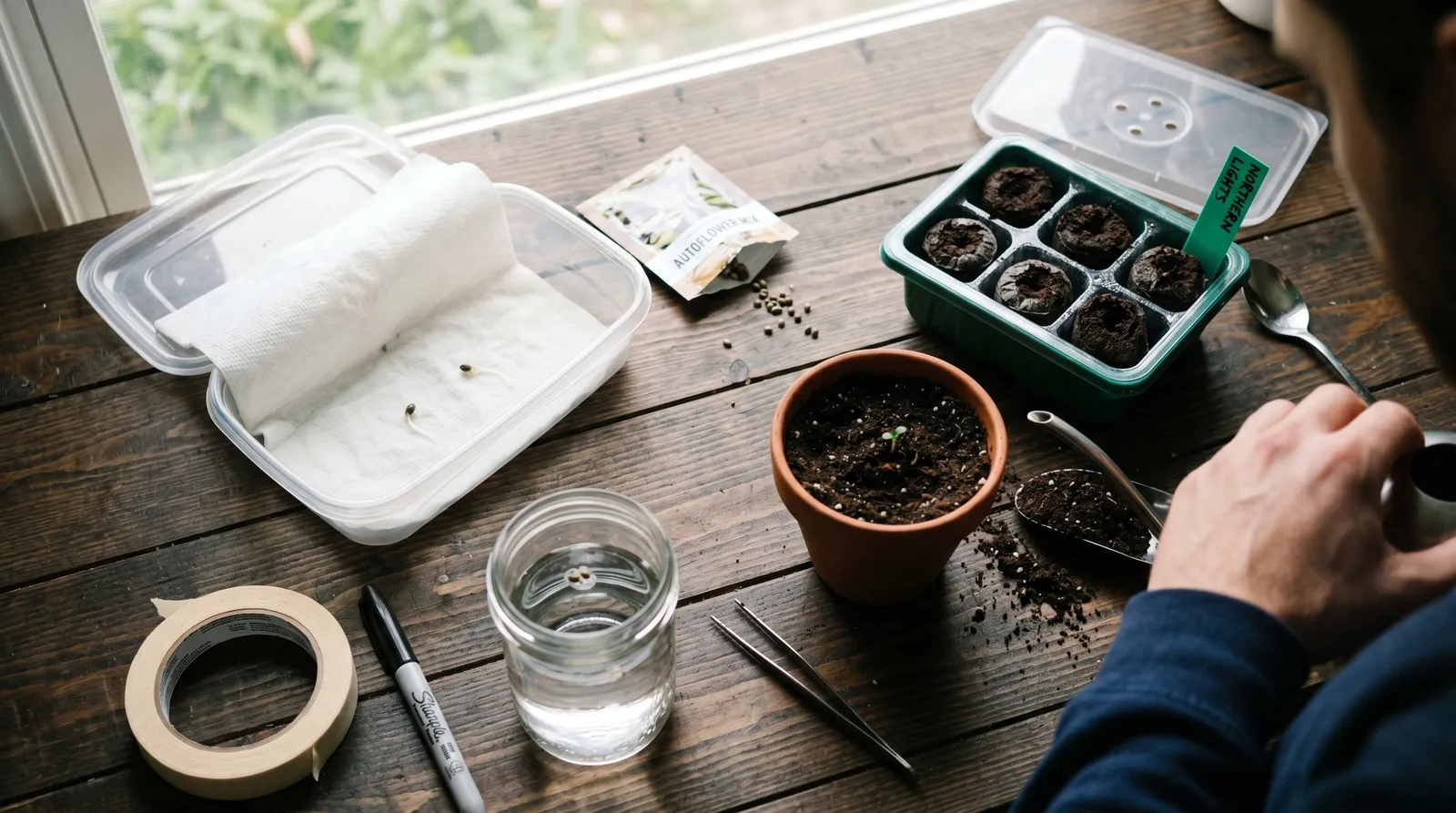
The four cannabis seed germination methods differ mainly in visibility, transplant shock, and setup cost for the home grower. The table below summarises what to expect before you pick one and order your kit from a grow shop like Azarius.
| Method | Typical time to taproot | Transplant shock risk | Best for |
|---|---|---|---|
| Paper towel | 24–72 hours | Medium | Beginners who want visual feedback |
| Glass of water (pre-soak) | 12–24 hours soak, then transfer | Medium | Older or hard-shelled seeds |
| Direct-to-medium | 3–10 days | Lowest | Soil and coco growers, autoflowers |
| Starter plugs | 3–7 days | Low | Hydroponic and clean propagation setups |
Method 1: The paper towel method
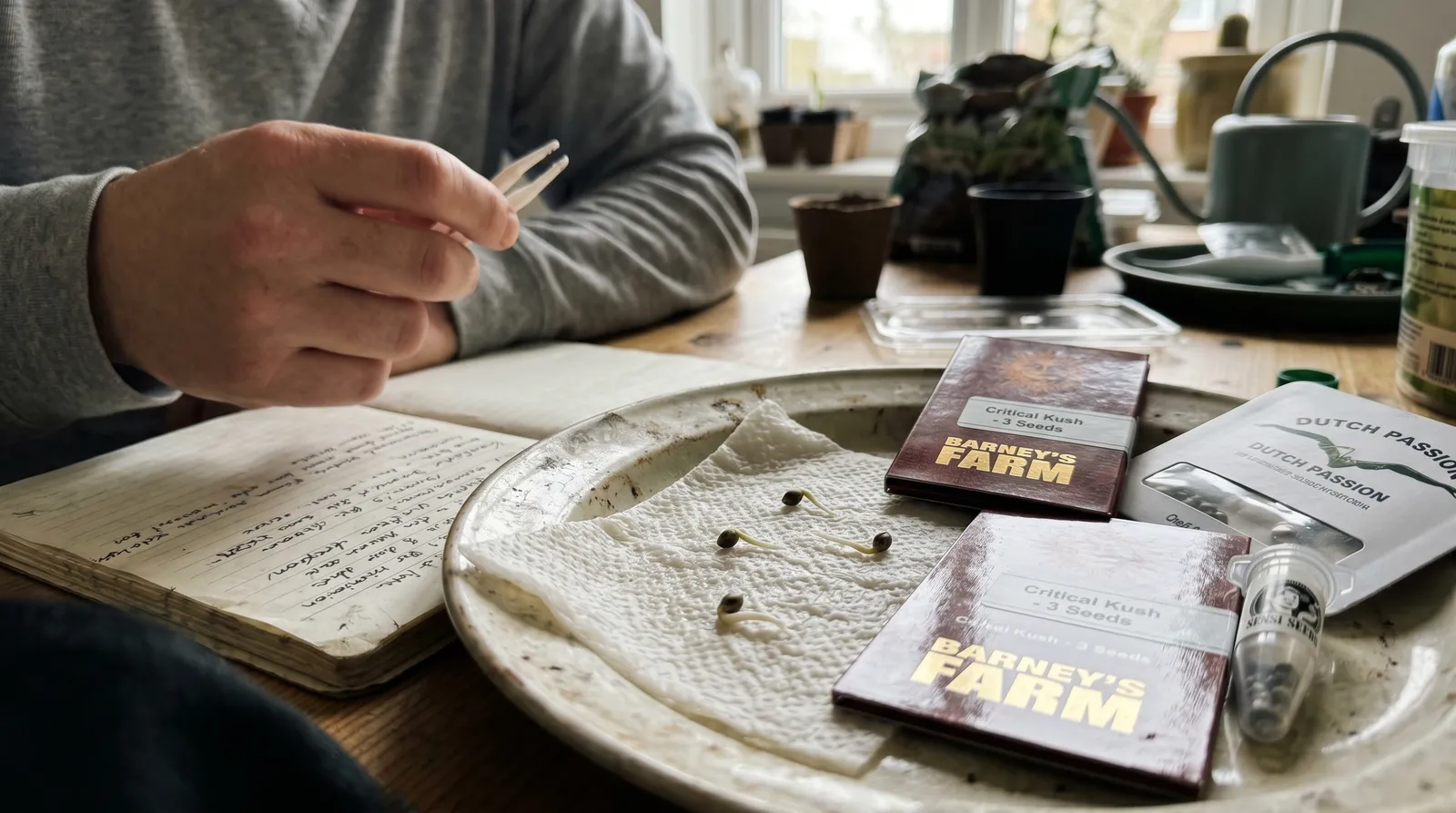
The paper towel method is the most visual and most beginner-friendly approach because you can watch the taproot emerge in real time between two damp sheets. It works with any seed stock and needs almost nothing you can't find in a kitchen drawer.
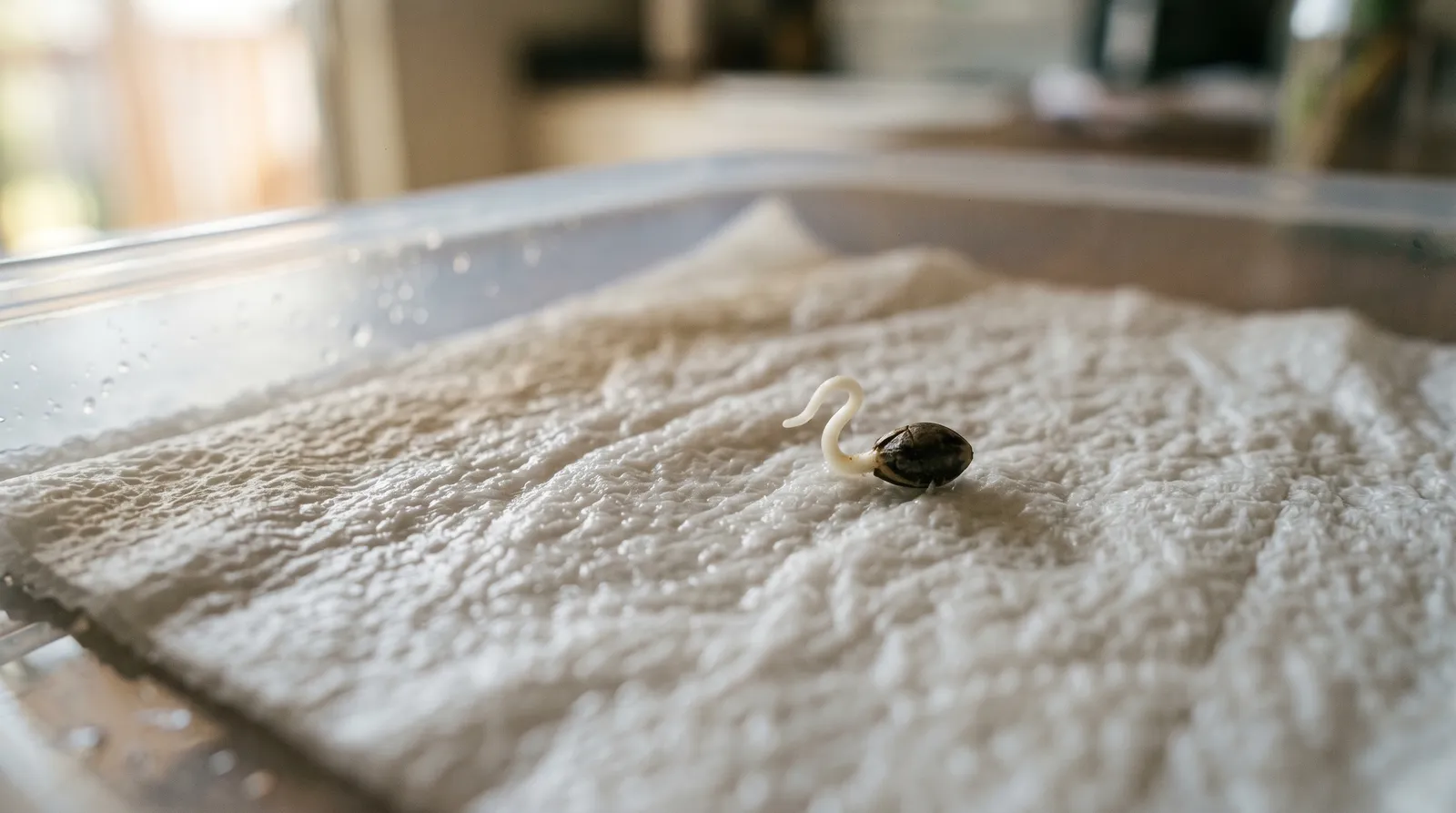
- Soak two sheets of unbleached paper towel in room-temperature water, ideally pH 6.0 to 6.5, using RO or bottled water if your tap is heavily chlorinated. Wring them so they're damp but not dripping — think wrung-out flannel, not wet sponge.
- Place seeds on one sheet, spaced 2 to 3 cm apart, and cover them with the second sheet of damp towel.
- Slide between two plates or into a zip-lock bag left slightly open for gas exchange. Two plates create a dark, humid chamber — the bag works too but you should ventilate it daily to avoid stale air.
- Keep the setup at 21 to 25°C. Top of a fridge, inside a cupboard near a boiler, or on a seedling heat mat on the lowest setting are all fine spots. Check the towel twice a day for moisture.
- Transplant when the taproot is 3 to 5 mm long — usually 24 to 72 hours for fresh seeds, up to 5 to 7 days for older stock. Do NOT wait until the taproot is 2 cm long and tangled in the fibres of the towel. Handle the seed by the shell, root pointing down, and bury it 1 to 1.5 cm deep.
The downside is that it's easy to let the towel dry out, and the fibres can grip the emerging root if you wait too long. Check moisture every 12 hours without fail.
Method 2: Glass of water (pre-soak)
The glass-of-water method is a pre-soak that softens stubborn shells on older seeds before you move them to a finishing medium. Amsterdam Genetics and several Dutch breeders recommend this as a first step rather than a full standalone method.
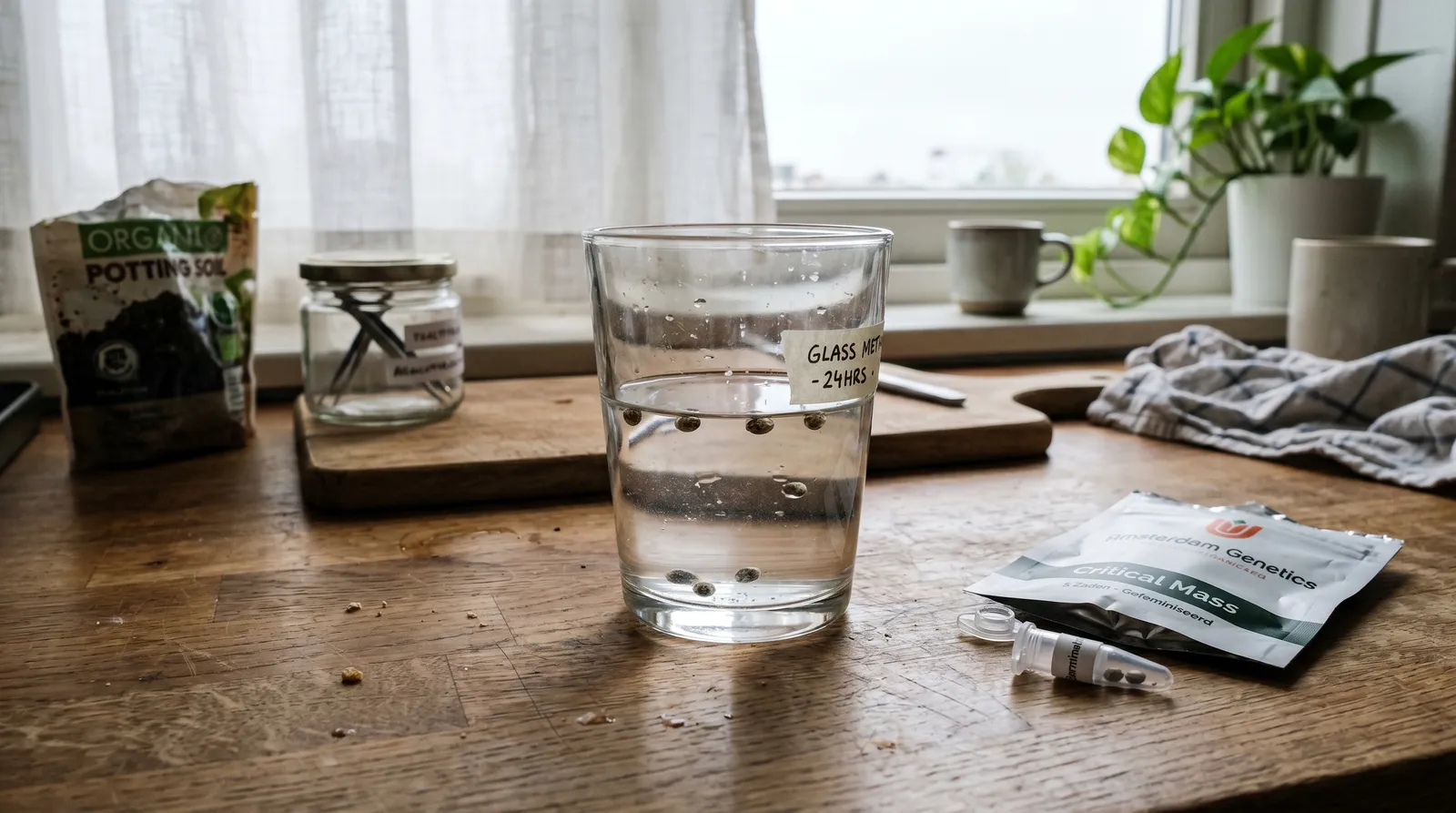
- Fill a glass with 21 to 24°C water at pH 6.0 to 6.5. Tap water works fine if you dechlorinate it by leaving the glass out overnight.
- Drop the seeds into the glass. Floaters aren't necessarily dead — give them 6 to 8 hours and most will sink as the shell absorbs water through its micropyle.
- Leave the glass in darkness for 12 to 24 hours maximum. Past 24 hours the embryo starts drowning from oxygen starvation. This is the single biggest mistake with this method — people leave seeds soaking for three days "because nothing has happened yet."
- Transfer to paper towel or directly to the medium once the shell has clearly softened or a tiny taproot has emerged from the side.
Treat it as a wake-up bath, not a finishing move. A soak is the prep step; it is not where the seedling actually emerges and opens its cotyledons.
Method 3: Direct-to-medium (soil or coco)
Direct-to-medium germination is how the process happens in nature, and it produces the lowest transplant shock rate because the seedling never gets moved mid-germination. Lower visible feedback, but higher success rates once you've done it a few times and trust your watering.
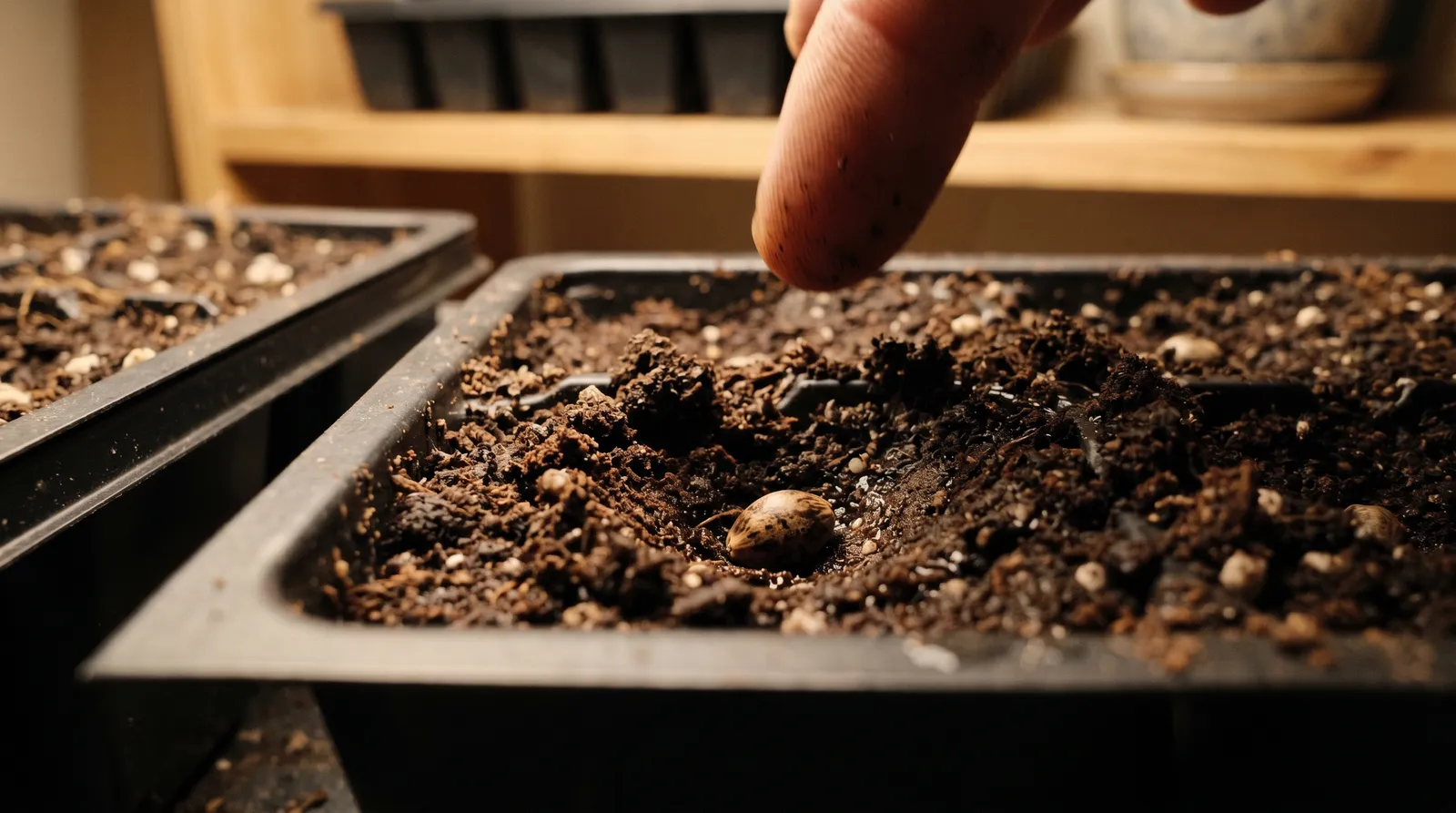
- Choose your medium carefully. For soil, use a light seedling mix such as Plagron Seedling Soil or BioBizz Light-Mix, which are both low in nutrients. Hot soil with high-nitrogen potting compost will burn seedling roots within days. For coco, get a pre-buffered and rinsed product from a trusted brand.
- Fill an 8 to 10 cm (3 to 4 inch) pot or seedling tray. Press the surface down lightly to remove large air pockets.
- Pre-moisten the medium. For soil, water until just-damp with no runoff from the bottom. For coco, moisten to the point where squeezing a handful produces 2 to 3 drops of water.
- Make a 1 to 1.5 cm deep hole using a pencil or your finger.
- Drop the seed in, pointy end up if you can tell — in practice it doesn't really matter, because the root geotropes downward regardless of orientation. Lightly cover the hole and do not pack it.
- Mist the surface and cover with a humidity dome or a clear cup, then keep the setup at 22 to 25°C in low light or full darkness.
- The seedling emerges in 3 to 10 days. Remove the dome once the cotyledons are open and the first true leaves are forming.
Medium matters here more than most new growers realise. Coco and soil want different watering rhythms from day one — soil tolerates a drier cycle between waterings, whereas coco wants consistent moisture without saturation.
Method 4: Starter plugs (Rockwool, Jiffy, Root Riot)
Starter plugs are the standard choice for hydroponic growers and anyone running a clean propagation setup at home. They give high germination rates, uniform seedlings, and easy transfer into any medium afterwards without root disturbance.
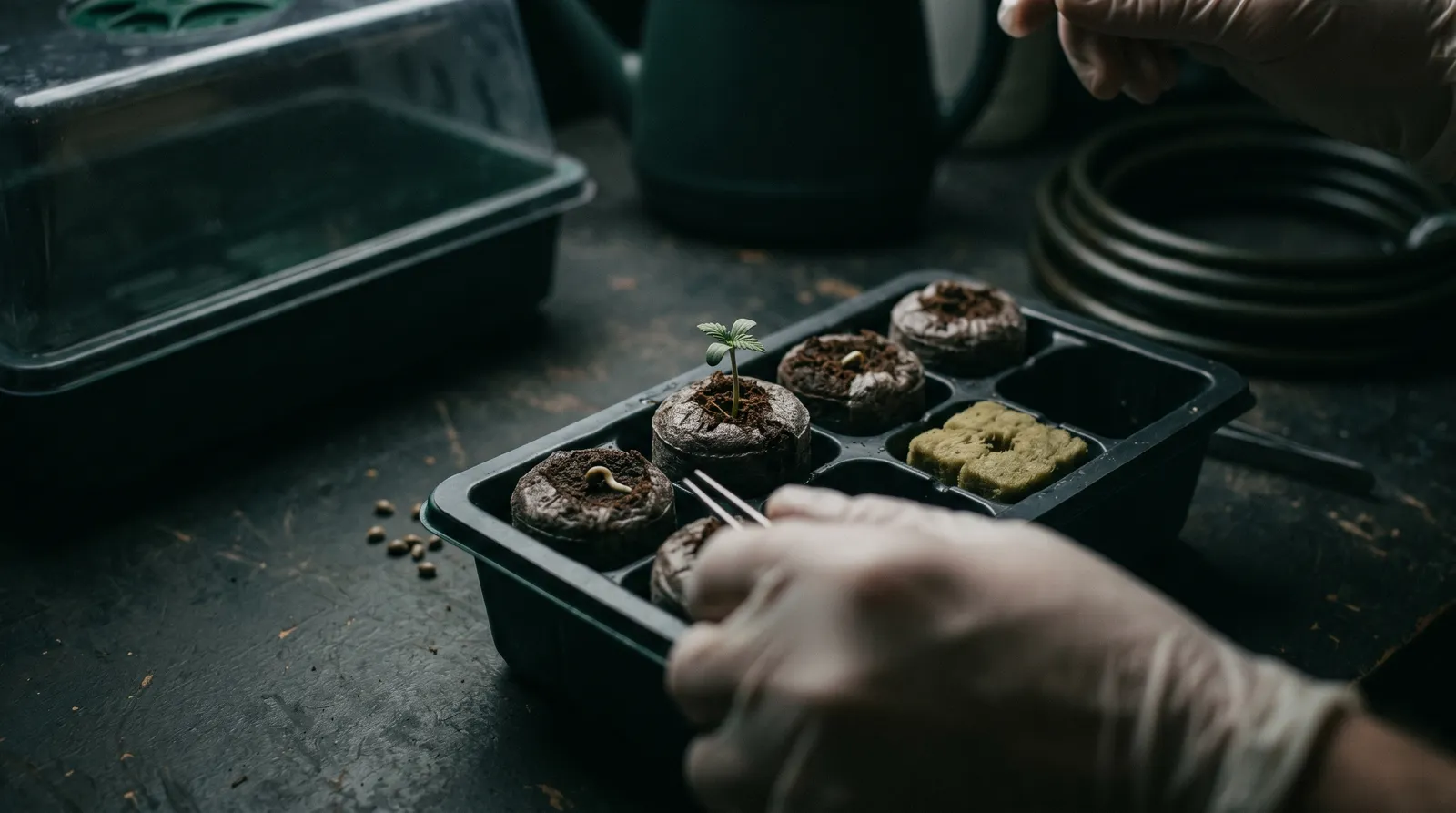
- Pre-soak the plug before use. Rockwool needs pH 5.5 soak water because it's alkaline out of the bag — unsoaked Rockwool at pH 7.5 or higher will stall germination completely. Jiffy peat pellets and Root Riot plugs just want plain pH 6.0 water until they expand fully.
- Drop the seed into the pre-made hole, 5 to 10 mm deep. Pinch the top of the plug closed gently.
- Place the plug in a propagator at 22 to 25°C with humidity around 70 to 80 percent. A cheap heated propagator with a vented lid does the job perfectly.
- Keep the plug damp but not waterlogged. The squeeze test: it should feel like a wrung-out sponge and never drip when held up.
- The seedling emerges in 3 to 7 days. Transplant the entire plug into soil, coco, or a hydroponic net pot once roots show at the sides.
None of these methods can save a dead or hollow seed. If your beans came from a dodgy reseller, were stored in a hot glovebox for a summer, or are three years past harvest without cold storage, expect 40 to 60 percent viability regardless of which method you pick. Order fresh stock from a reputable breeder and you'll see the numbers above; get bargain-bin seed and no heat mat in the world fixes that.
Paper towel wins on visibility and speed-to-taproot, so it's the easiest method to troubleshoot as a beginner. Direct-to-medium wins on long-term seedling vigour because the root never gets shocked by a transplant. Starter plugs win on uniformity across a batch, which matters if you want ten identical plants under one light. The water-glass soak isn't really a full method — use it as a prep step for older seeds before paper towel or medium.
What actually affects germination success
Conditions matter far more than the method you pick. Fresh, properly stored seeds from a reputable breeder such as Barney's Farm, Dutch Passion, Paradise Seeds, Sensi Seeds, Ministry of Cannabis, or Royal Queen Seeds will germinate at 90 percent or higher across any of the four methods, provided you hold temperature, moisture, and darkness steady for the full window.
- Temperature: aim for 21 to 25°C. Below 20°C germination stalls noticeably; above 28°C you risk cooking the embryo inside the shell. Seedling heat mats with a thermostat are the single best piece of kit to buy for winter germination in a cold Dutch attic.
- Moisture: keep things consistently damp, never saturated. Waterlogged seeds suffocate within hours.
- Darkness: light isn't strictly required for most cannabis genetics to germinate, but it dries substrates out faster and has no upside at this stage of the plant's life.
- pH: 6.0 to 6.5 for soil-based methods, 5.5 to 6.0 for Rockwool and hydroponic plug systems.
- Seed age and storage: seeds stored cool, dark, and dry — ideally in a sealed container in the fridge — stay viable for two to five years. After that window, viability drops and a water pre-soak becomes more useful.
- Genetics: autoflower seeds are just as vigorous as photoperiod seeds at germination, so there's no meaningful difference at this stage. The real difference comes later, in lifecycle and light schedule.
Schuyler et al. (2020) compared germination testing methods for industrial hemp, which is the same species C. sativa L., and found paper-between-paper and sand-substrate methods both produced more than 90 percent germination on fresh seed within 7 days at 20 to 25°C. The method was less predictive of success than seed quality and moisture consistency across the whole window.
Common mistakes that kill seeds
Most failed germinations come down to a handful of repeat offenders that are easy to avoid once you know what to watch for. Run through this checklist before you blame your seed stock or your breeder.
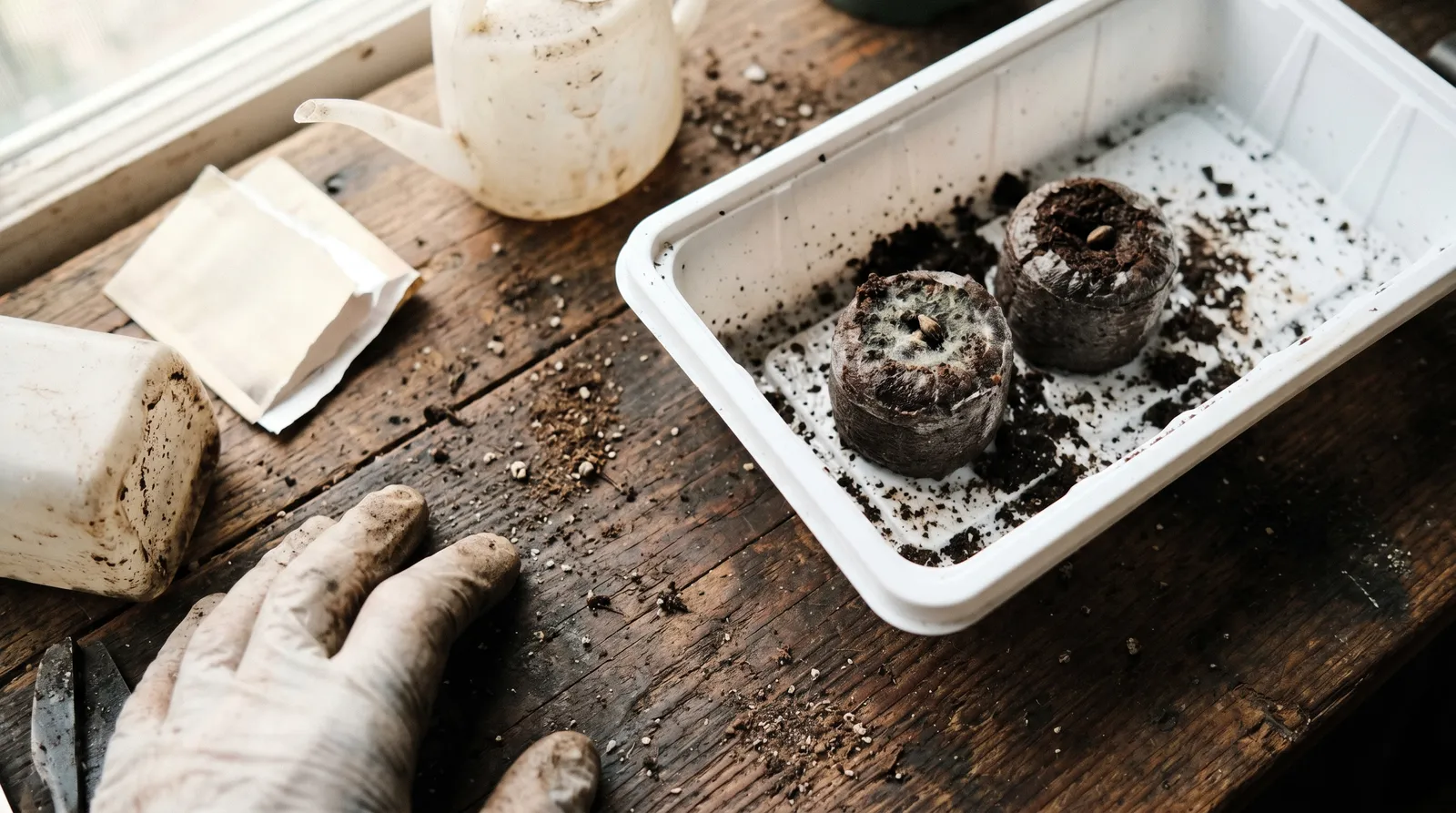
- Planting too deep. More than 1.5 cm down and the seedling runs out of stored energy before it reaches the surface.
- Drowning in a water glass for 48 or more hours. Stick to a 24-hour maximum soak.
- Hot soil with nutrients. Seedlings don't need feeding for the first 10 to 14 days — they live off the cotyledons.
- Dry paper towel. Check every 12 hours and re-moisten as needed.
- Unsoaked Rockwool. pH 5.5 conditioning is non-negotiable for this medium.
- Handling the taproot. Once it has emerged from the shell, touch only the shell and never the root itself.
- Giving up too early. Fresh seeds can pop in 24 hours; older seeds sometimes take 7 to 10 days to crack. If it hasn't cracked and there's no rot smell, keep going.
Legal notice: Cannabis cultivation laws vary by country and region and change frequently. This guide is educational. Before growing, verify current laws for your specific jurisdiction. Azarius does not provide legal advice.
Last updated: April 2026
Frequently Asked Questions
8 questionsHow long does cannabis seed germination take?
What's the most reliable cannabis germination method?
Should cannabis seeds be planted pointy end up or down?
Why do cannabis seeds float in water?
Do I need a heat mat to germinate cannabis seeds?
Can I germinate autoflower seeds the same way as photoperiod seeds?
What pH water should I use to germinate cannabis seeds?
What happens if cannabis seeds are too wet during germination?
About this article


Luke Sholl has been writing about cannabis, cannabinoids, and the broader benefits of nature since 2011, and has personally grown cannabis in home grow tents for more than a decade. That first-hand cultivation experience
This wiki article was drafted with AI assistance and reviewed by Luke Sholl, External contributor since 2026. Editorial oversight by Adam Parsons.
Medical disclaimer. This content is for informational purposes only and does not constitute medical advice. Consult a qualified healthcare provider before use of any substance.
Last reviewed April 24, 2026
References
- [1]Bailly, C. (2019). The signalling role of ROS in the regulation of seed germination and dormancy. Biochemical Journal, 476(20), 3019–3032.
- [2]Pelc, J., & Durczyńska, Z. (2022). Comparison of methods for germination testing of Cannabis sativa L. seeds. Industrial Crops and Products, 188, 115656.
- [3]Schuyler, D., et al. (2020). Evaluation of germination testing protocols for industrial hemp. Seed Technology, 41(1).
- [4]EMCDDA (2024). Cannabis policy in Europe: an overview.
- [5]Beckley Foundation (2023). Cannabis policy briefing papers.
Related Articles
Cannabis Hermaphrodite: Identify, Prevent, Act
A cannabis hermaphrodite is a female plant that develops male pollen sacs or banana-shaped anthers (nanners), self-pollinating and seeding your harvest.
DIY Cannabis Fertilizer: Homemade Nutrient Guide
DIY cannabis fertilizer guide: compost, teas, banana ferments and feed schedules, with safety notes and cited research for home growers.
What To Do With Male Cannabis Plants: 6 Practical Uses
What to do with male cannabis plants: identify, isolate, breed, extract, or compost. A practical 6-step guide with sourcing and safety notes.
When To Harvest Cannabis Trichomes: A Grower's Guide
Deciding when to harvest cannabis trichomes means reading the resin glands on your calyxes under 60x–100x magnification and cutting when the milky-to-amber…
When To Flip Cannabis To 12/12: Timing The Switch
When to flip cannabis to 12/12 is a timing decision that switches photoperiod plants to 12 hours light and 12 hours dark to trigger flowering via florigen…
Watering Cannabis Frequency Volume Runoff: Full Guide
Watering cannabis frequency volume runoff is the feedback loop between how often you irrigate, how much you apply, and what drains from the pot.
VPD for Cannabis: Targets by Growth Stage
VPD for cannabis is the kilopascal gap between the moisture the air holds and its saturation point, controlling how fast plants transpire.
Topping vs FIMing Cannabis: Which Training Cut Wins?
Topping vs FIMing cannabis is a pair of high-stress training cuts that break apical dominance to produce more main colas.
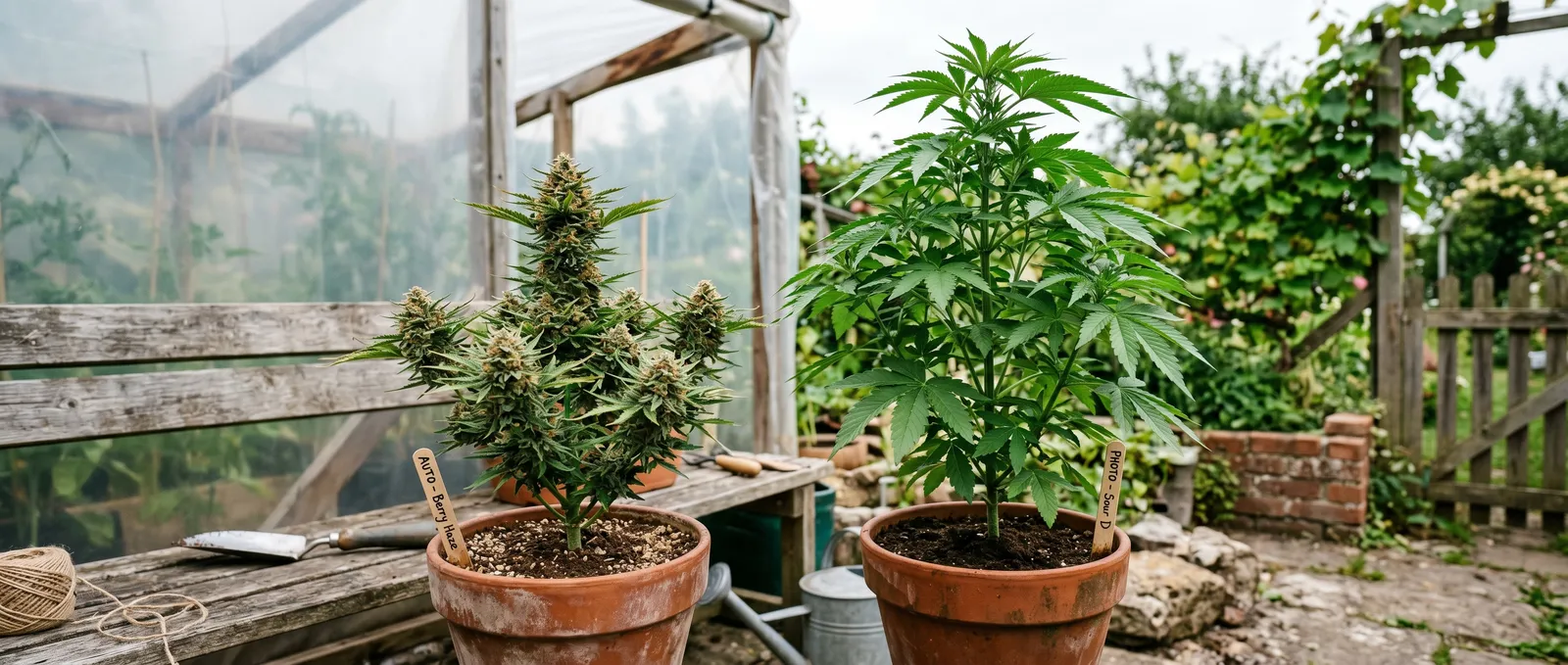
Photoperiod vs Autoflower Cannabis: Key Differences
Photoperiod vs autoflower cannabis is a genetics choice: photoperiod strains flower when light cycles shift to 12 hours dark, while autoflowers — crosses…