
This article discusses psychoactive substances intended for adults (18+). If you have a health condition or take medication, consult a doctor before use. Our age policy
Cannabis Seedbanks: What To Look For When Choosing One
Definition
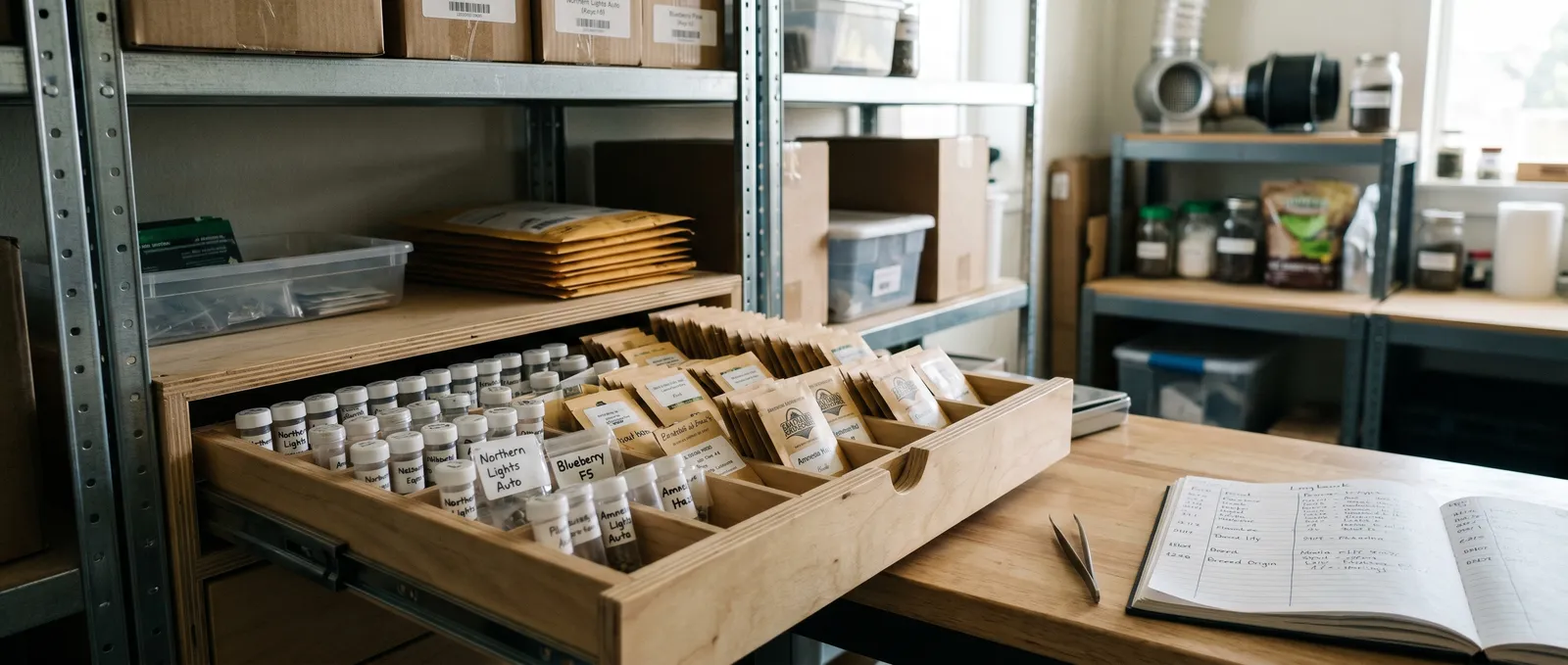
Cannabis seedbanks are retailers that source, store, and ship seeds from breeders to home growers. Choosing well means checking genetics provenance, germination rates, storage conditions, and seed-type clarity — strain names alone are a poor predictor of genetic identity (Schwabe & McGlaughlin, 2019).
Cannabis seedbanks are retailers that source, store, and ship seeds from breeders to home growers who want to buy quality genetics. Picking the right one is the single decision that sets a ceiling on everything that follows. You can dial in VPD, run 900 PPFD, feed like a professional — but if the seed came from a sketchy reseller with no cold storage and no germination data, you've already lost the grow.
What follows is how to tell a proper seedbank from a dropshipping middleman, based on a decade of ordering seeds across the EU and the questions we'd ask before spending €60 on a pack of ten cannabis seeds.
What actually is a cannabis seedbank, and how is it different from a breeder?
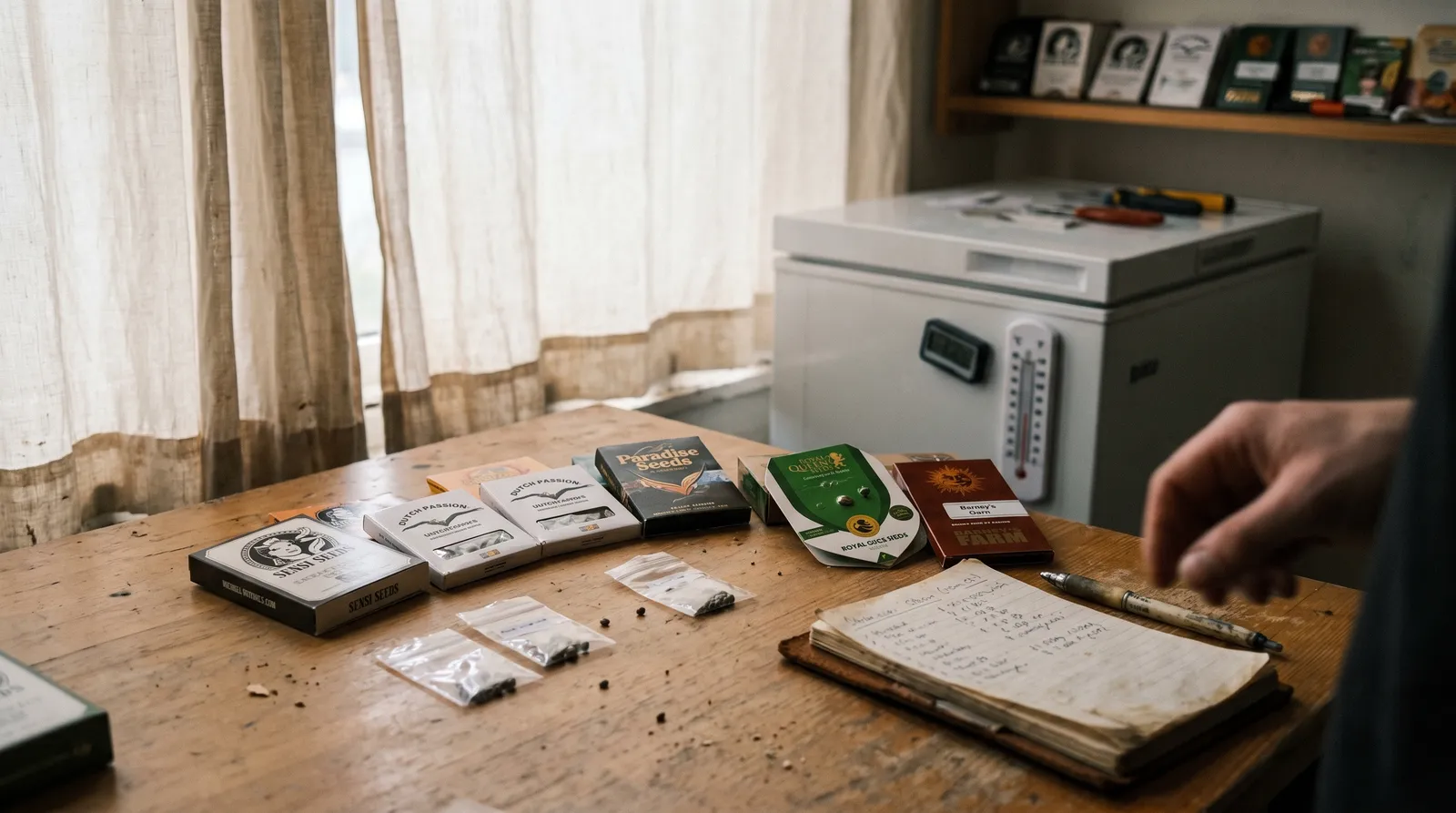
A seedbank is the retailer; a breeder is the genetics house. Sensi Seeds, Dutch Passion, Paradise Seeds, Ministry of Cannabis, Barney's Farm, Royal Queen Seeds — those are breeders. They run mother rooms, do the crosses, stabilise the line over generations, and package the seeds. A seedbank is the shop that stocks those packs and ships them to you when you order. Some operations are both (Sensi breeds and sells direct), but most retailers are pure distributors.
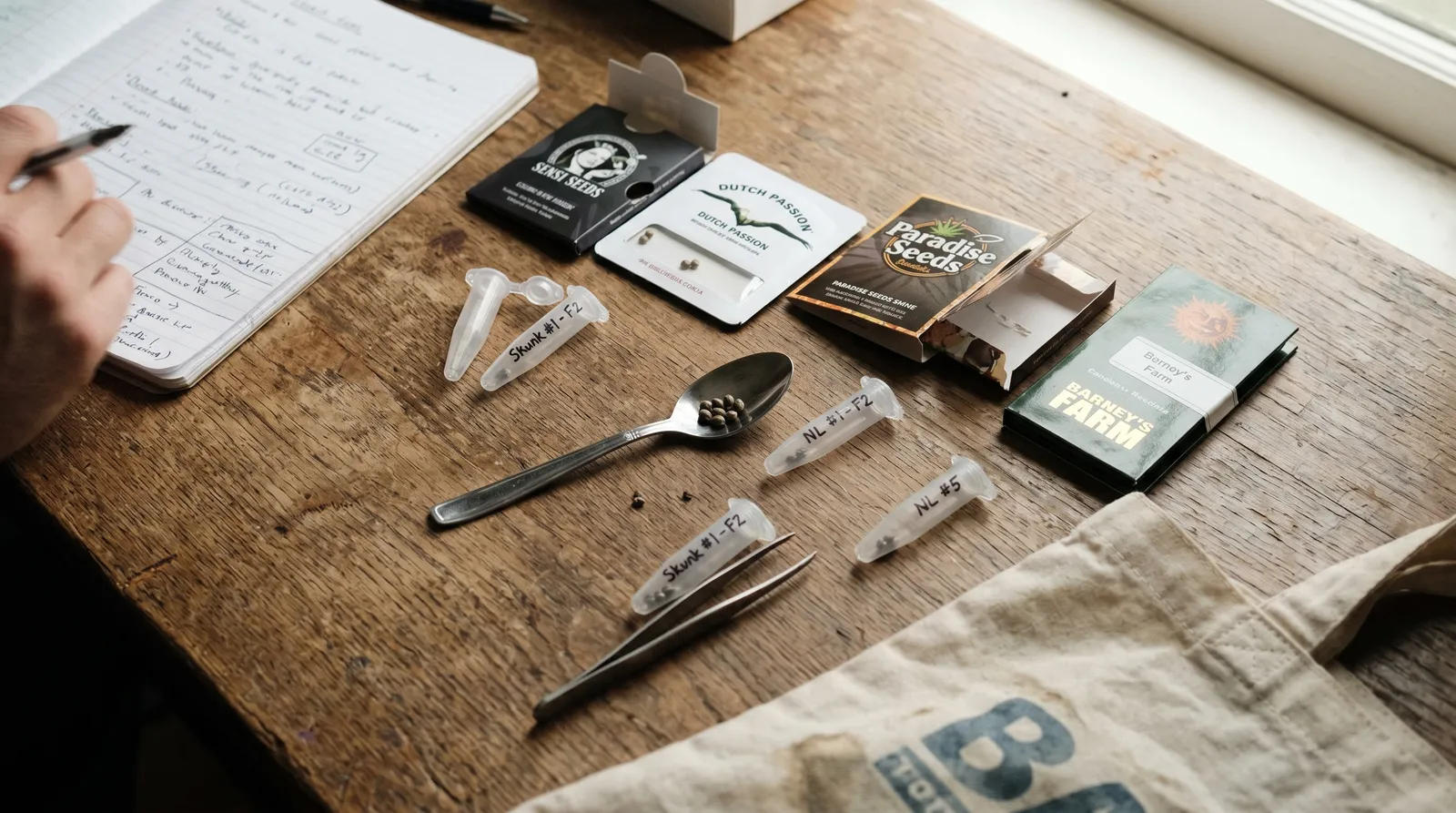
Why does the distinction matter? Because a good seedbank is a curator — they choose which breeders to list, they store seeds correctly between arrival and shipment, and they stand behind what leaves the warehouse. A bad seedbank is a middleman with a Shopify theme and a dropship agreement, sending you packs they've never seen.
How do you know the genetics are what the label says?
You don't, fully — and anyone who tells you otherwise is selling. What you can do is stack probabilities. Buy packs in sealed breeder packaging with the breeder's holographic or batch sticker intact. Check that the seedbank names the breeder explicitly rather than selling house-branded "OG Kush" with no lineage. If the site lists a cross like "Skunk #1 × Afghani" with a flowering window of 8–9 weeks and a yield range the breeder themselves publishes, that's a seedbank reading from official documentation. If the description is pure vibes ("incredible frost, massive buds, connoisseur's choice"), that's marketing copy pulled from thin air.
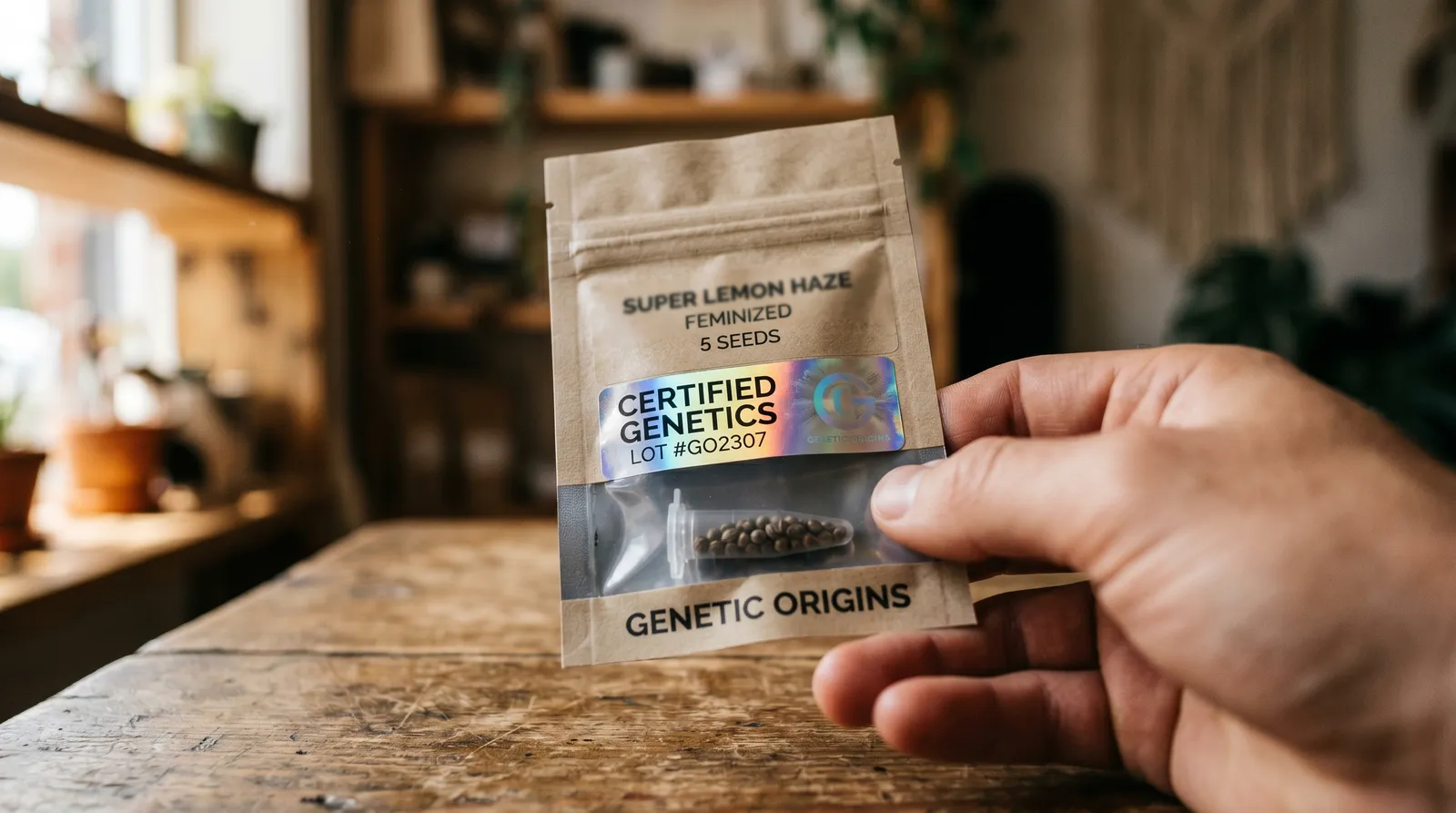
Cannabis genetics are, to be blunt, a bit of a Wild West (Small, 2015). The same strain name from two breeders can be genetically unrelated. A study in Journal of Cannabis Research (Schwabe & McGlaughlin, 2019 — and replicated since) found that strain names are a poor predictor of genetic identity, with substantial variation even within the same name from the same vendor. Your best defence is sticking to established breeders with a long track record on specific lines.
What germination rates should you expect, and who guarantees them?
Fresh, properly stored cannabis seeds from a reputable breeder should germinate at 90–95% or better. Anything under 80% means either the seeds are old, were stored warm, or weren't finished properly before packaging. Autoflowers can be slightly more variable than photoperiod lines, but the floor is the same — a tenth seed that doesn't pop in a pack of ten is a bad sign.
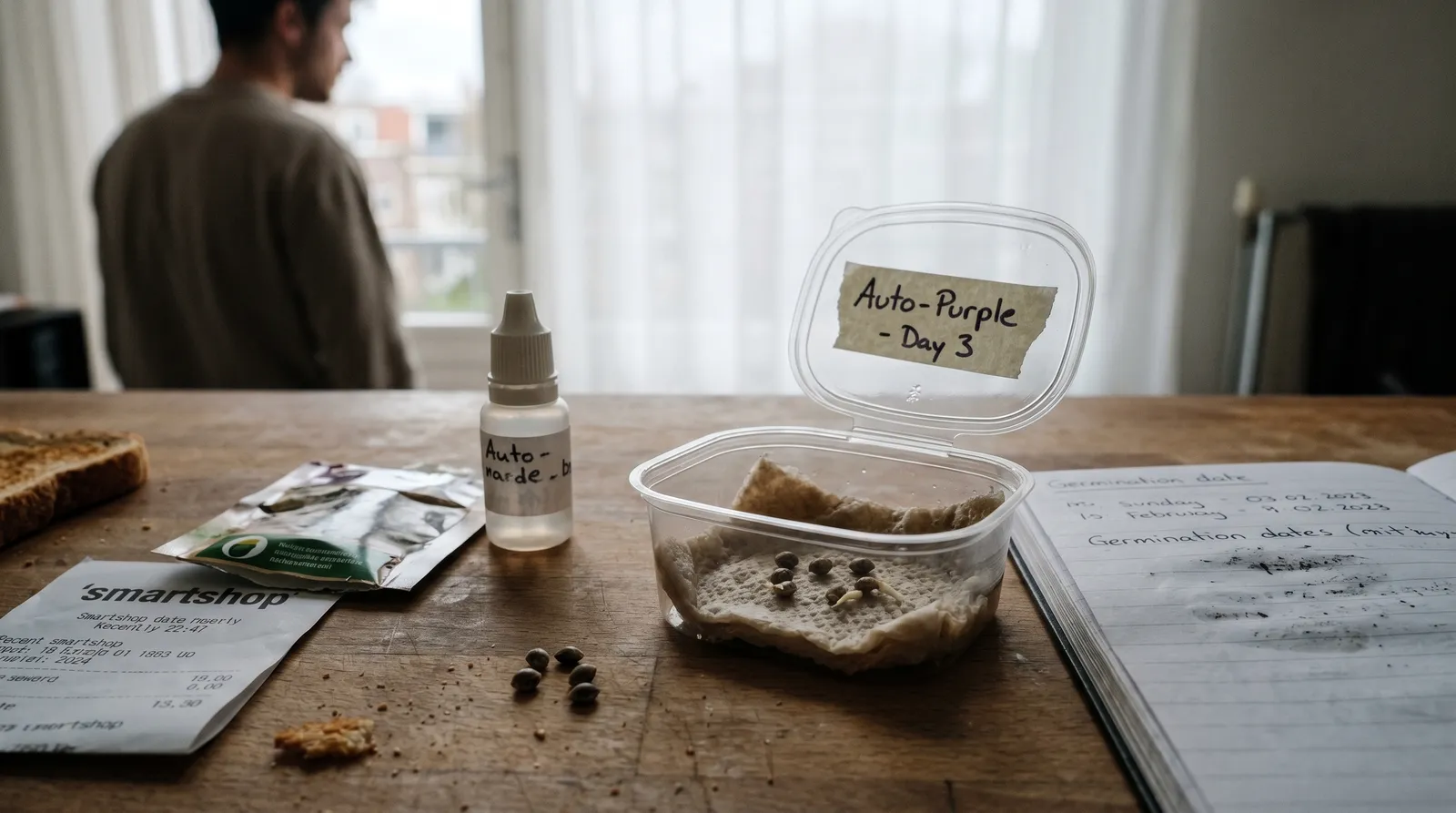
A proper seedbank will publish either a germination guarantee (replacement seeds if a documented percentage fails using their recommended method) or at least a clear returns policy on clearly non-viable seed. Read the fine print: most guarantees require you to use a specific germination method (paper towel or direct-to-medium with specified temperature and moisture) and to report failures within a set window, usually 10–14 days.
How should seeds be stored and shipped — and what's a red flag?
Cannabis seeds stay viable for years if kept cool, dry, and dark (Walters et al., 2005). The rough benchmark: sealed at 4–8°C and ~20–30% relative humidity, good seeds hold >80% germination for 3–5 years (Walters et al., 2005), and longer if deep-frozen. A warehouse shelf at 25°C in an Amsterdam summer degrades germination noticeably within a year.
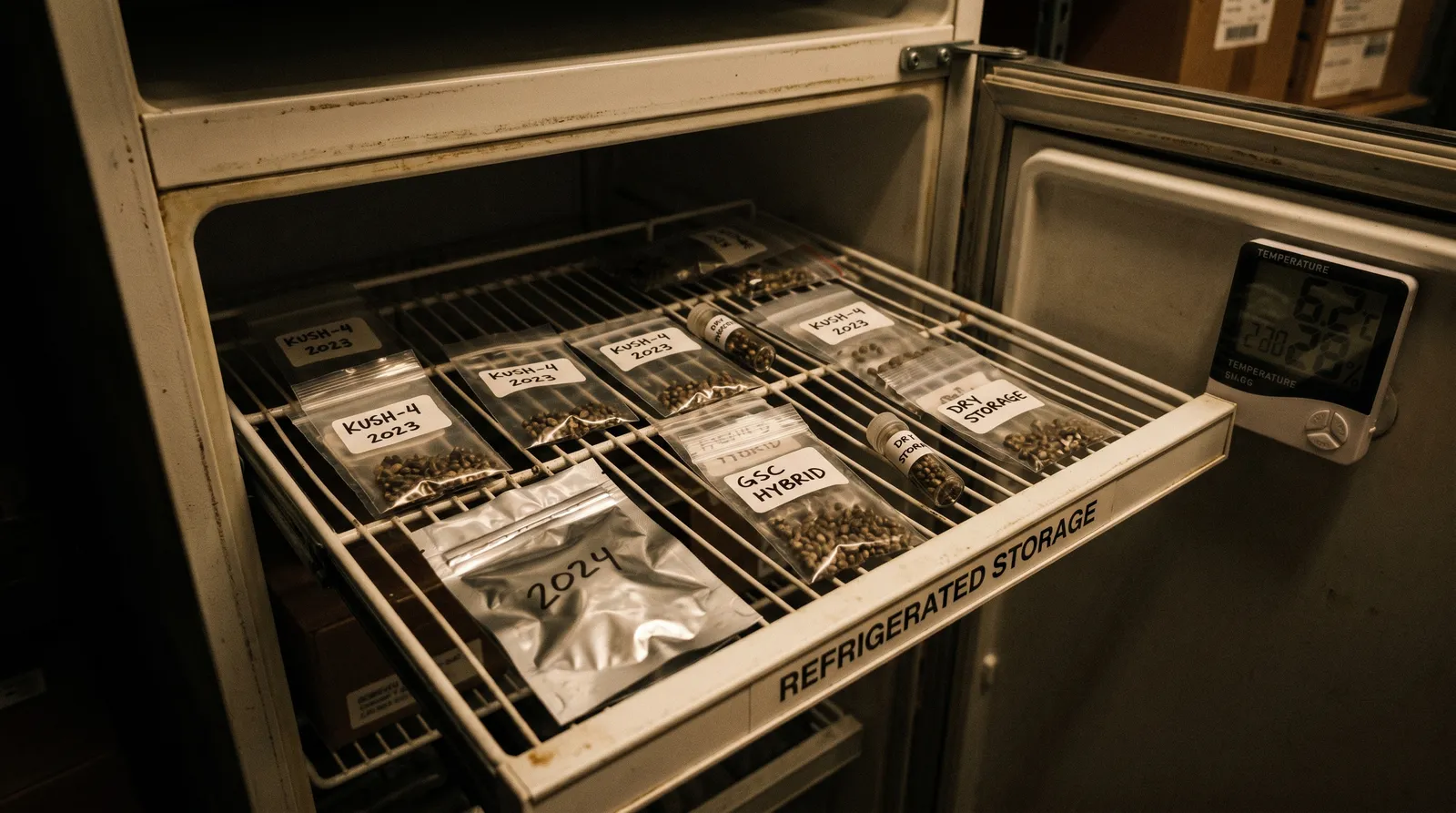
| Storage condition | Temperature | Humidity | Expected viability |
|---|---|---|---|
| Optimal (fridge) | 4–8°C | 20–30% RH | 3–5 years >80% |
| Deep-frozen | -18°C | Sealed dry | 5–10+ years |
| Room temperature | 20–22°C | Variable | 1–2 years |
| Warm warehouse | 25°C+ | Uncontrolled | <12 months |
Signs a seedbank takes storage seriously: they mention climate-controlled storage or refrigeration, they ship in light-blocking packaging, and stock rotates — packs have recent batch dates rather than the same 2021 lot sitting for four years. Red flags: seeds arriving loose in zip bags without breeder packaging, cracked or pale seeds (viable seeds are dark, striped, and firm — a pale green seed is immature), or any seedbank that won't tell you when a batch was packed.
Feminised, regular, or autoflower — which type should the seedbank actually stock?
A serious seedbank carries all three and is clear about which is which on the pack.
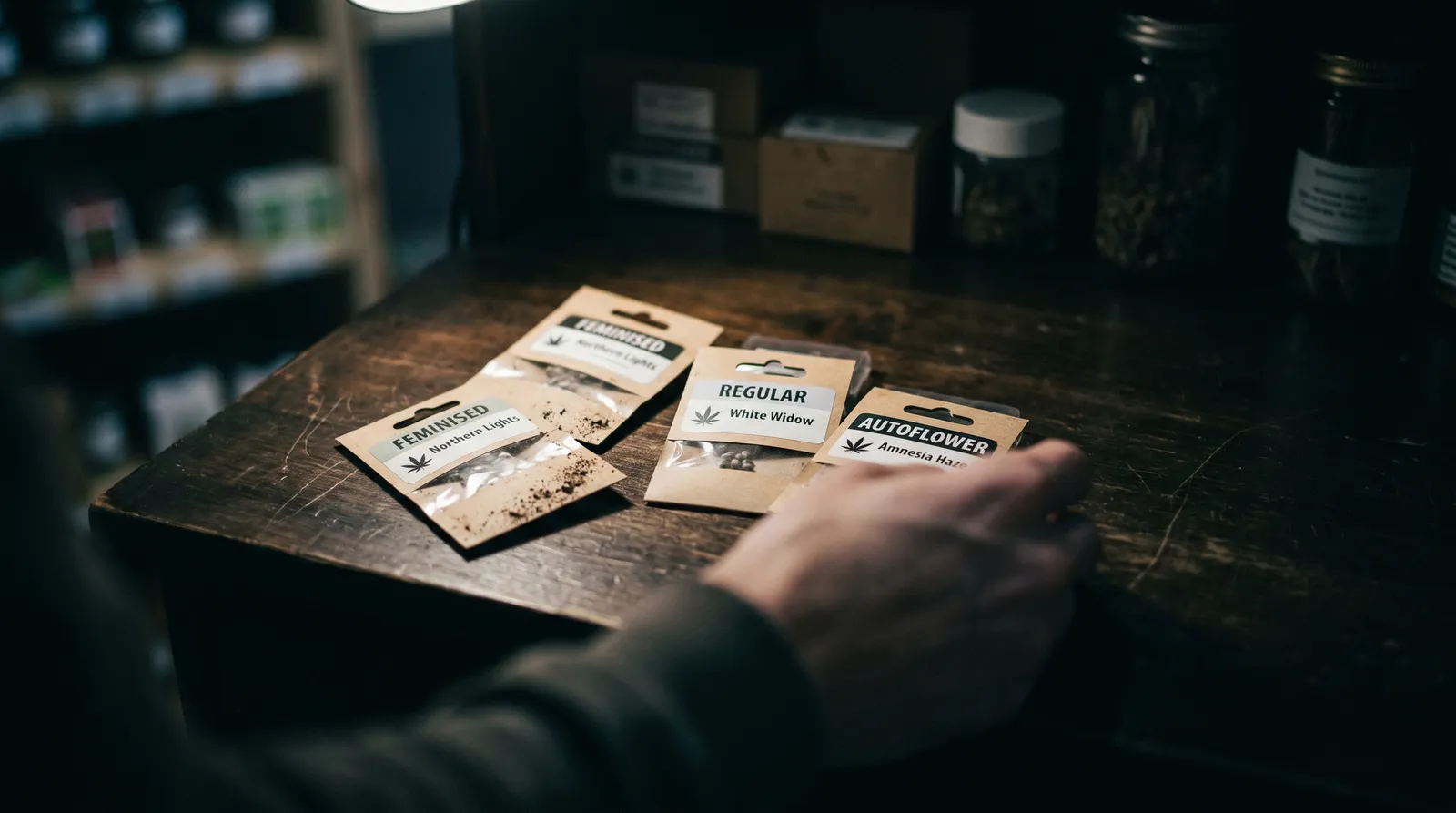
- Feminised seeds produce effectively all female plants (the ones that make buds) (Toth et al., 2020). Easiest for beginners — no culling males, every seed counts.
- Regular seeds produce roughly 50/50 male and female. Required if you want to breed (Salentijn et al., 2015), make seeds, or select a mother from a wide phenotype pool.
- Autoflowering seeds flower on age rather than light cycle — typically 9–11 weeks seed-to-harvest (Caplan et al., 2017) under an 18/6 or 20/4 photoperiod throughout. Smaller plants, no 12/12 flip, harder to train aggressively.
If a site only lists "feminised" with no autoflower or regular options from a given breeder, that's fine — but if the listings mix types without labelling them clearly, that's sloppy catalogue management, which usually correlates with sloppy everything else. Honest limitation: no catalogue tag replaces growing a line yourself and keeping notes — strain descriptions are a starting point, not a contract.
Does the seedbank help you match genetics to your grow environment?
Matching genetics to climate is where most outdoor disappointments start. Short northern-European summers — the reality for growers in the Netherlands, Germany, Belgium, the UK — punish long-flowering sativa-dominant photoperiod lines (Amaducci et al., 2015) grown outdoors. A Haze that needs 11 weeks of flower will still be finishing in October rain when botrytis arrives. Mould-resistant indica-leaning hybrids (think Frisian Dew, Early Skunk, Pamir Gold types) or autoflowers that run their cycle before autumn humidity peaks are a better match for outdoor Dutch/German gardens.
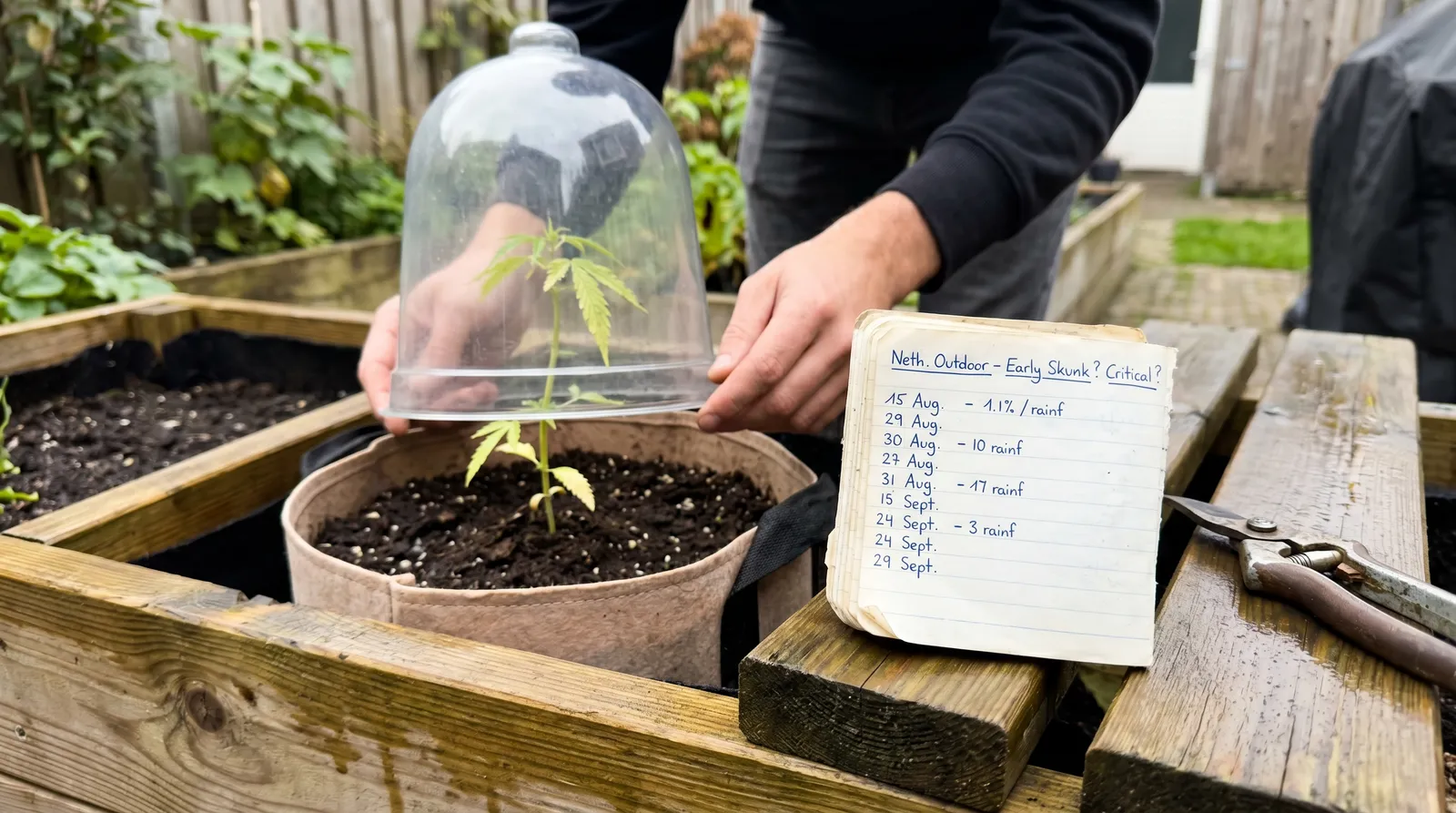
A good seedbank filters by indoor/outdoor/greenhouse, flowering time, and stretch. A great one writes honestly — "this is a big sativa, 10–11 week flower, not ideal for a 1x1m tent" — rather than claiming every strain is perfect for every setup. The 60x60 tent technically fits a 12-week Haze. So does a hamster in a shoebox.
What about payment options, privacy, and shipping discretion?
Cannabis seed sales operate under a patchwork of national rules across the EU. A seedbank that ships across Europe should handle payments through established processors (bank transfer, iDEAL within the Netherlands, credit card via specialised processors), ship in plain, unmarked packaging, and store customer data under GDPR-compliant terms. If a site pushes only cryptocurrency and won't provide a company registration number or physical address, you're outside consumer-protection territory if something goes wrong.
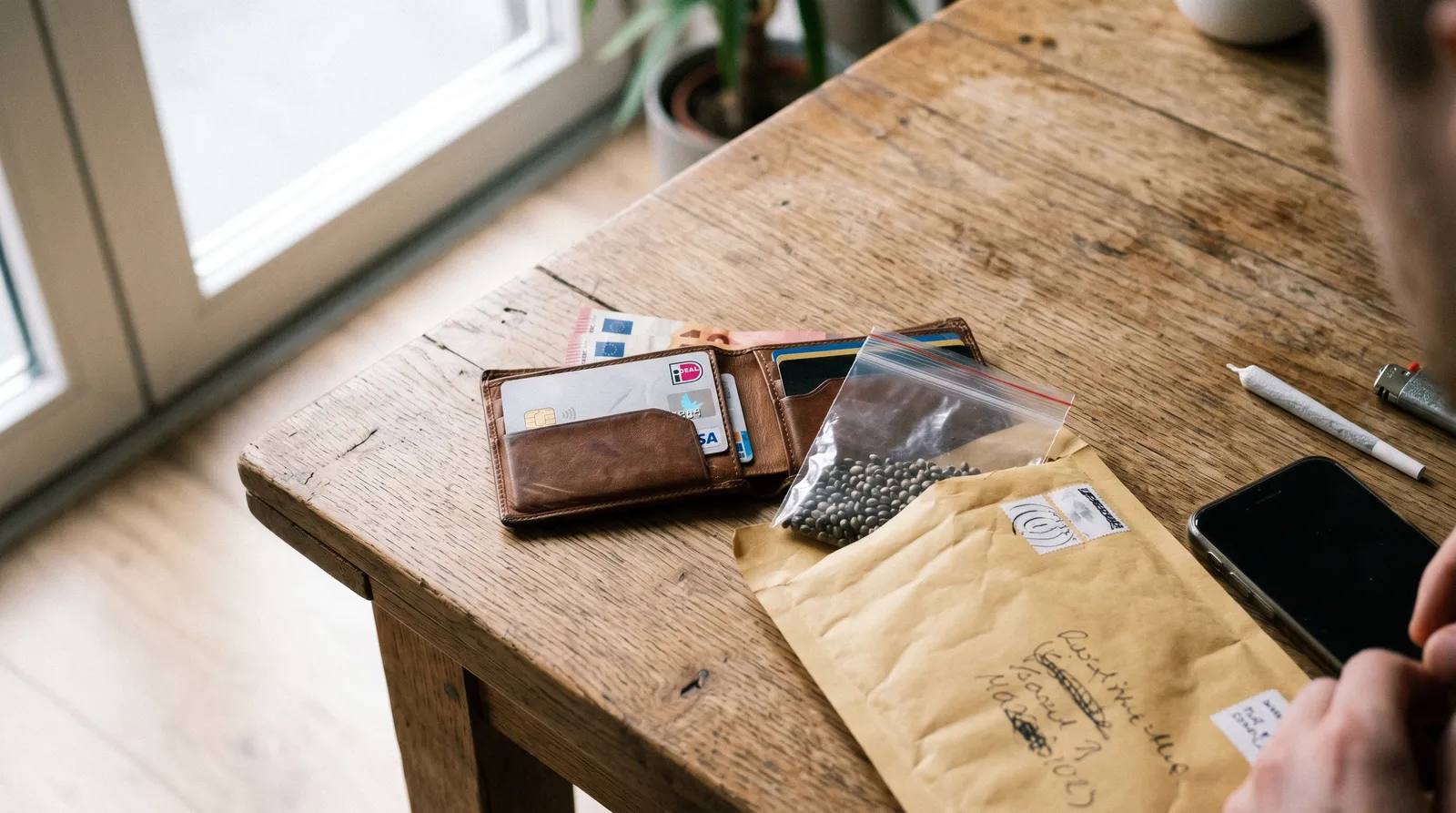
The seedbank can ship; whether you can germinate and grow at your destination depends on where you are. As of Q2 2026, home cultivation rules differ sharply between, say, Germany's Cannabisgesetz framework (limited personal cultivation permitted under specific conditions) and most neighbouring countries. Check the EUDA (formerly EMCDDA) country profile for your specific jurisdiction before you order.
What to ask before you click buy
Use this checklist as a quick filter before you order from any new seedbank.
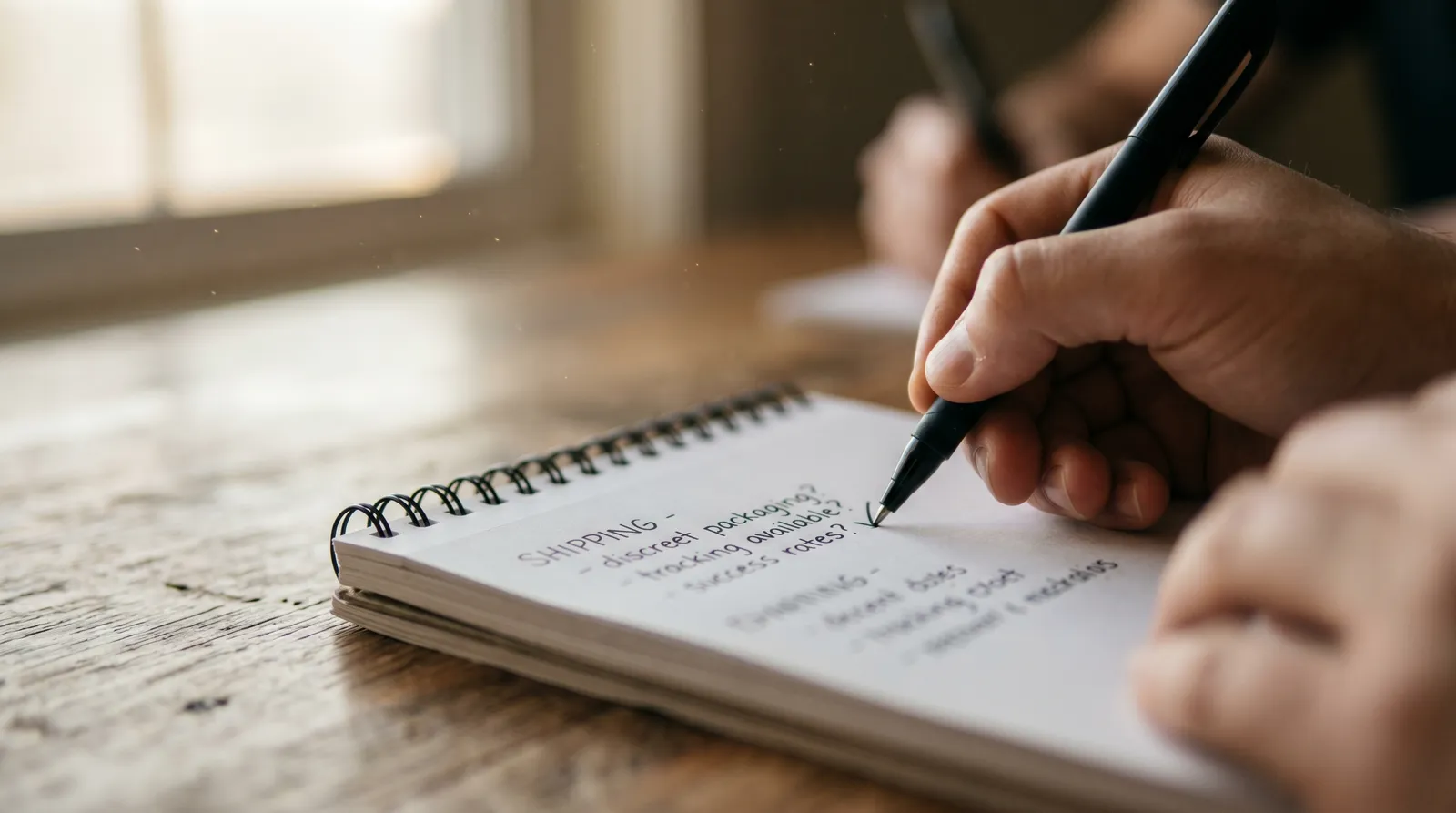
- Does the seedbank name the breeder and show sealed breeder packaging?
- Is there a germination figure or guarantee, and what method do they require?
- Can you see batch or pack dates, or at least confirmation that stock rotates?
- Are flowering times, stretch, and indoor/outdoor suitability listed from breeder documentation rather than marketing copy?
- Is there a real company behind the site — registration, address, working customer support?
- Do reviews mention the same specific strains (good sign) or generic praise that could be anywhere (bad sign)?
None of this guarantees a perfect grow. Compared with the hardware side of the hobby — where a tent is a tent and PAR is PAR — genetics variance, grower skill, and environment still do most of the work. But a well-sourced pack of cannabis seeds gives you the one thing you can't fix later: a plant that is what the label says it is.
Legal notice: Cannabis cultivation laws vary by country and region and change frequently. This guide is educational. Before growing, verify current laws for your specific jurisdiction. Azarius does not provide legal advice.
Azarius cannabis seeds
Azarius has stocked cannabis seeds from established breeders — Sensi Seeds, Dutch Passion, Paradise Seeds, Royal Queen Seeds, Barney's Farm, Ministry of Cannabis — since 1999. Seeds are stored cool and dark, ship in original breeder packaging with batch information intact, and are listed by breeder, variety, and type (feminised, regular, or autoflower) with flowering times and documentation pulled from the breeder rather than invented. If you want to get reliable genetics without playing dropship roulette, buy from a shop that has actually handled the pack.
Frequently Asked Questions
8 questionsWhat germination rate should I expect from a good cannabis seedbank?
How long do cannabis seeds stay viable?
Should I buy feminised, regular, or autoflowering seeds?
How can I tell if cannabis seeds are fresh and viable?
Are strain names reliable across different cannabis seedbanks?
What's the difference between a cannabis breeder and a seedbank?
How should a cannabis seedbank store seeds before shipping them?
Is it safe to order cannabis seeds online and will they arrive discreetly?
About this article


Luke Sholl has been writing about cannabis, cannabinoids, and the broader benefits of nature since 2011, and has personally grown cannabis in home grow tents for more than a decade. That first-hand cultivation experience
This wiki article was drafted with AI assistance and reviewed by Luke Sholl, External contributor since 2026. Editorial oversight by Adam Parsons.
Medical disclaimer. This content is for informational purposes only and does not constitute medical advice. Consult a qualified healthcare provider before use of any substance.
Last reviewed April 24, 2026
References (7)
- [1]Schwabe, A. L., & McGlaughlin, M. E. (2019). Genetic tools weed out misconceptions of strain reliability in Cannabis sativa: Implications for a budding industry. Journal of Cannabis Research, 1, 3. DOI: 10.1186/s42238-019-0001-1
- [2]Toth, J. A., Stack, G. M., Cala, A. R., Carlson, C. H., Wilk, R. L., Crawford, J. L., Viands, D. R., Philippe, G., Smart, C. D., Rose, J. K. C., & Smart, L. B. (2020). Development and validation of genetic markers for sex and cannabinoid synthase genes in Cannabis sativa L.. GCB Bioenergy, 12(3), 213-222. DOI: 10.1111/gcbb.12667
- [3]Salentijn, E. M. J., Zhang, Q., Amaducci, S., Yang, M., & Trindade, L. M. (2015). New developments in fiber hemp (Cannabis sativa L.) breeding. Industrial Crops and Products, 68, 32-41. DOI: 10.1016/j.indcrop.2014.08.011
- [4]Caplan, D., Dixon, M., & Zheng, Y. (2017). Optimal rate of organic fertilizer during the vegetative-stage for cannabis grown in two coir-based substrates. HortScience, 52(9), 1307-1312. DOI: 10.21273/HORTSCI11903-17
- [5]Walters, C., Wheeler, L. M., & Grotenhuis, J. M. (2005). Longevity of seeds stored in a genebank: species characteristics. Seed Science Research, 15(1), 1-20. DOI: 10.1079/SSR2004195
- [6]Amaducci, S., Scordia, D., Liu, F. H., Zhang, Q., Guo, H., Testa, G., & Cosentino, S. L. (2015). Key cultivation techniques for hemp in Europe and China. Industrial Crops and Products, 68, 2-16. DOI: 10.1016/j.indcrop.2014.06.041
- [7]Small, E. (2015). Evolution and classification of Cannabis sativa (marijuana, hemp) in relation to human utilization. The Botanical Review, 81(3), 189-294. DOI: 10.1007/s12229-015-9157-3
Related Articles
Cannabis Hermaphrodite: Identify, Prevent, Act
A cannabis hermaphrodite is a female plant that develops male pollen sacs or banana-shaped anthers (nanners), self-pollinating and seeding your harvest.
DIY Cannabis Fertilizer: Homemade Nutrient Guide
DIY cannabis fertilizer guide: compost, teas, banana ferments and feed schedules, with safety notes and cited research for home growers.
What To Do With Male Cannabis Plants: 6 Practical Uses
What to do with male cannabis plants: identify, isolate, breed, extract, or compost. A practical 6-step guide with sourcing and safety notes.
Mushroom Grow Kit Temperature & Humidity: Full Setup Guide
A temperature humidity control grow kit is the small set of climate tools — hygrometer, heat mat, humidifier or perlite tray — that keeps a mushroom fruiting…
When to Harvest Mushrooms: Veil Break Timing Explained
Harvest timing veil break is a cultivation technique that uses the tearing of the partial veil on maturing Psilocybe cubensis to mark peak alkaloid content.
First Grow Checklist: What You Need for Mushroom Kits
A first grow checklist is the short list of supplies and environmental conditions needed to run a home psilocybin mushroom kit from inoculated substrate to…
Sclerotia vs Fruit Bodies: Cultivation Comparison
Sclerotia and fruit bodies are two different life stages of Psilocybe fungi: sclerotia are hardened underground mycelial storage bodies (the 'magic…
Storing Dried Mushrooms Long Term: Full Guide
Storing dried mushrooms long term means keeping well-dried Psilocybe fruit bodies in airtight, opaque containers with desiccant, cool and dark, to slow…
Drying Mushrooms Air Desiccant Oven: Methods Compared
Drying mushrooms air desiccant oven refers to the three home methods for reducing fresh fruit bodies from ~90% water to cracker-dry (<5%). Gotvaldová et al.