
When Did Humans Start Smoking Cannabis? 12,000 Years
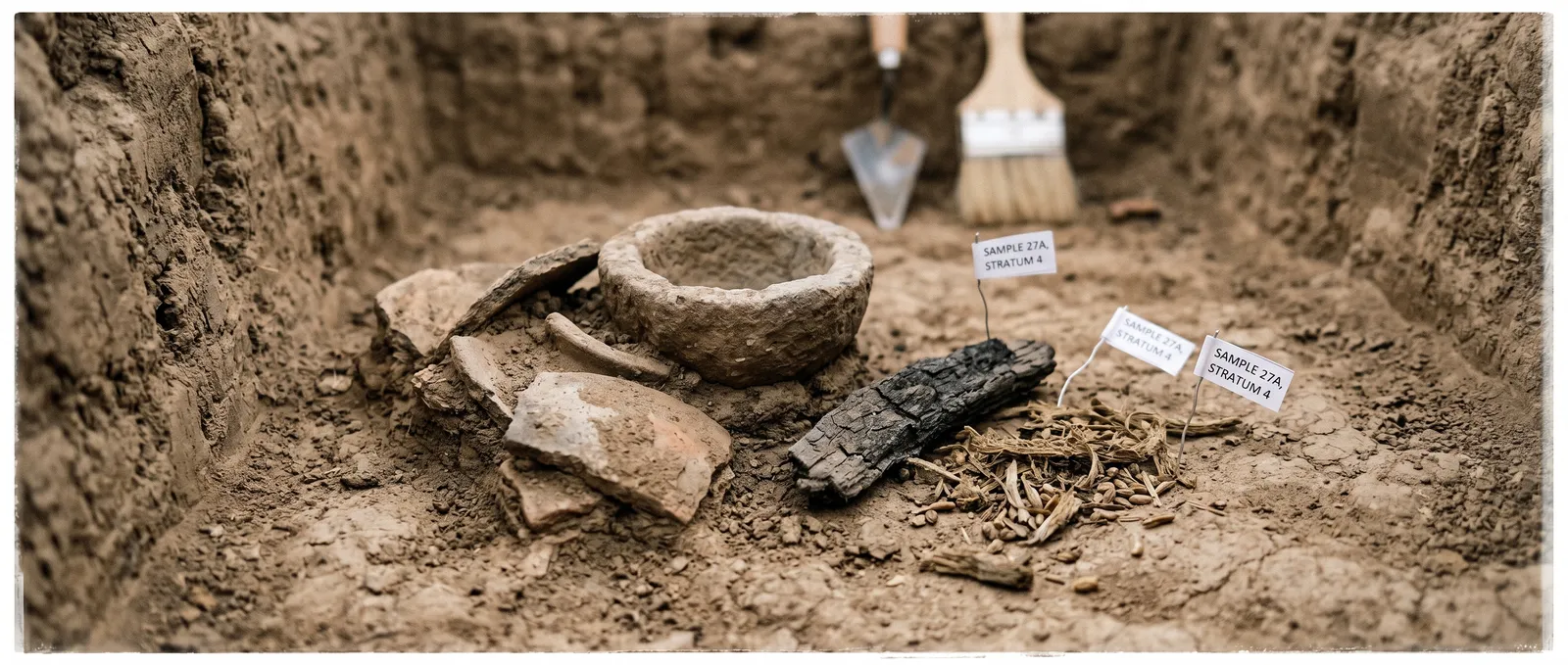
When did humans start smoking cannabis is a question that archaeology answers with surprising precision: chemical evidence places the practice at roughly 2,700 years ago in the Pamir Mountains of western China. Cannabis and humans go back roughly 12,000 years — longer than written language, longer than the wheel, longer than most of the crops in your kitchen. Smoking it for the effect is younger, but still ancient: the first chemical fingerprints of psychoactive cannabis smoke come from a 2,700-year-old mountain cemetery in western China. The documentary below traces the full arc, from Neolithic farmers to Harry Anslinger, and we'll walk through it era by era underneath.
Here's the through-line worth holding onto before we start: cannabis has walked alongside humans for roughly 12,000 years, and has been broadly restricted for about 90 of them. That's under 1% of our shared history. Everything else — the rituals, the medicine, the rope, the recipes — is the other 99%.
~12,000 years ago: cannabis was one of humanity's first domesticated crops in East Asia
Cannabis was domesticated around 12,000 years ago in East Asia, making it one of the earliest crops humans ever bothered to cultivate. A 2021 genomic study in Science Advances (Ren et al., 2021) traced every modern cannabis lineage back to a single ancestral pool in what is now northwest China. From day one it was a four-in-one plant: fibre for cordage, seeds for food, oil for lamps and skin, and resin for medicine. Neolithic farmers weren't smoking it yet — they were weaving it, eating it, and pressing it. The psychoactive use comes later, and it comes from people who deliberately bred for it.
2,700 years ago at Jirzankal: the earliest chemical proof of humans smoking cannabis
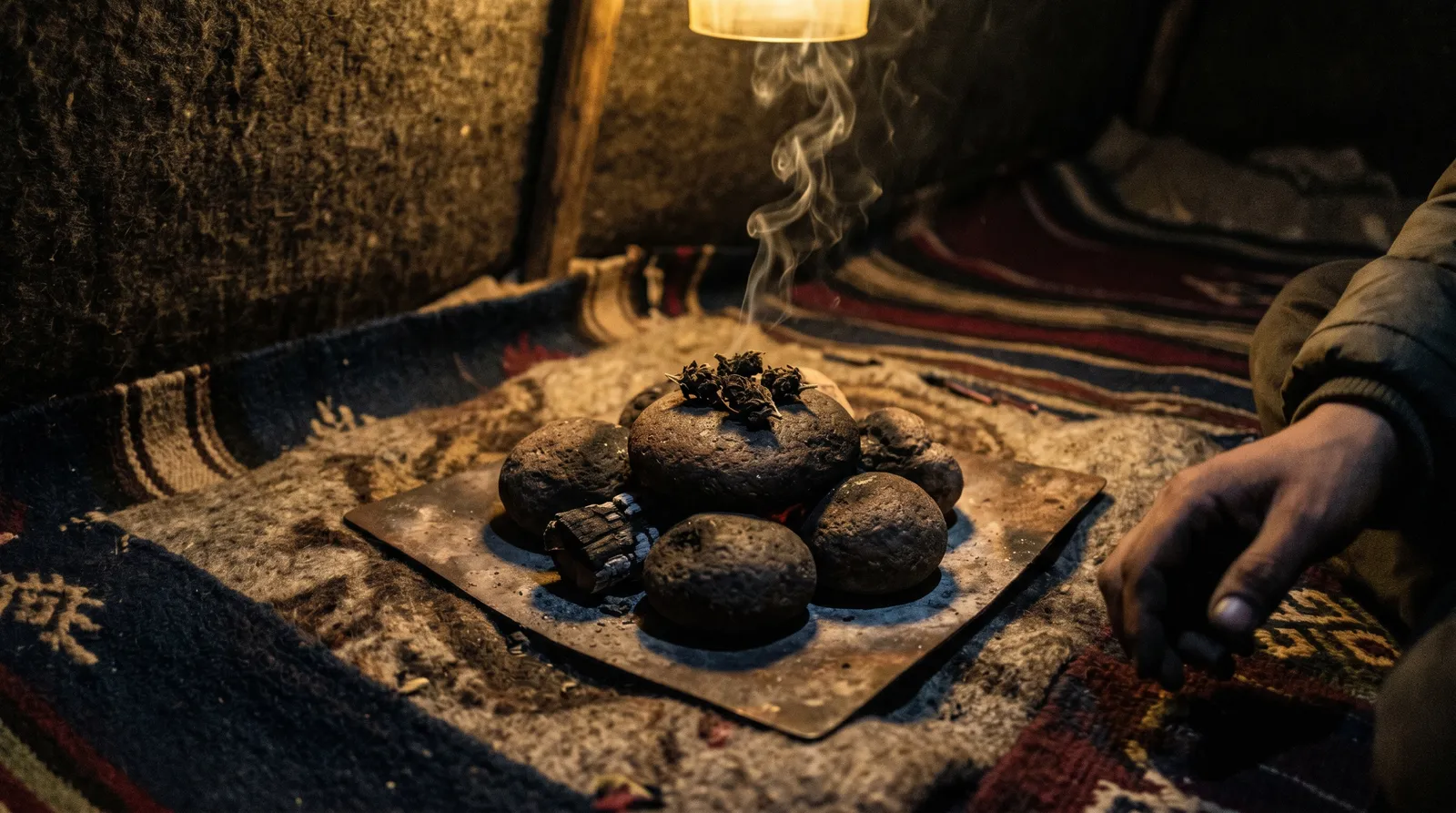
The oldest hard evidence of when humans started smoking cannabis for psychoactive effect comes from the Jirzankal Cemetery in the Pamir Mountains of western China, around 500 BCE. Archaeologists found wooden braziers packed with hot stones and burnt cannabis residue inside 2,700-year-old tombs. The kicker: residue analysis (Ren et al., Science Advances, 2019) showed unusually high THC levels compared to wild cannabis of the period. Mourners weren't grabbing whatever grew by the river — they were selecting potent plants on purpose, heating stones, dropping flower onto them, and inhaling the smoke as part of funeral rites at 3,000 metres altitude. That is, by any honest reading, smoking cannabis.
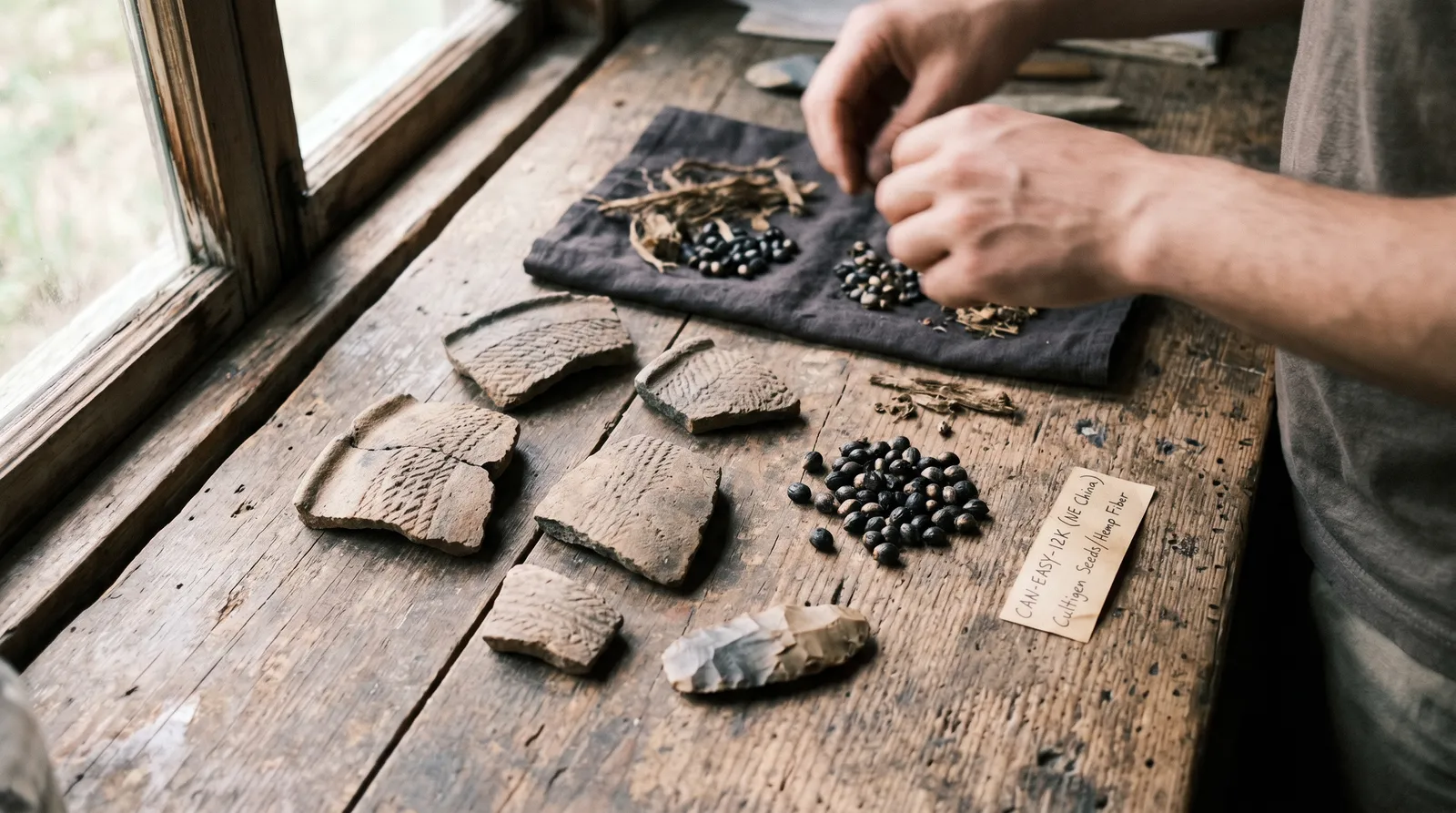
The Yanghai shaman: a 2,700-year-old grave with nearly a kilo of still-green cannabis
The Yanghai Tombs of the Turpan Basin contained the grave of a man buried with nearly a kilogram of cannabis — leaves, shoots and flowering tops, still faintly green after 27 centuries underground. He's widely interpreted as a shaman, given the careful arrangement of the plant material around his body. The cannabis had been cultivated, not gathered wild, and the female flowering tops were specifically selected. Same era, same region, same message: this plant was sacred working material, not a casual indulgence.
Herodotus, the Scythians, and the Pazyryk tents that proved him right
Herodotus, the Greek historian, described Scythian nomads crawling into small felt tents, throwing cannabis onto red-hot stones, and "howling with pleasure" at the smoke — and for centuries classicists dismissed it as travellers' tall tales. Then in 1947, Soviet archaeologist Sergei Rudenko excavated the frozen Pazyryk tombs in the Siberian Altai and found the exact apparatus: small six-pole tent frames, bronze censers full of heated stones, and cannabis seeds. Herodotus, it turned out, had been a careful reporter. The Scythians ran a portable steam-room hotbox across the Eurasian steppe roughly 2,400 years ago.
2,400-year-old Scythian gold cups: cannabis and opium together in the Caucasus
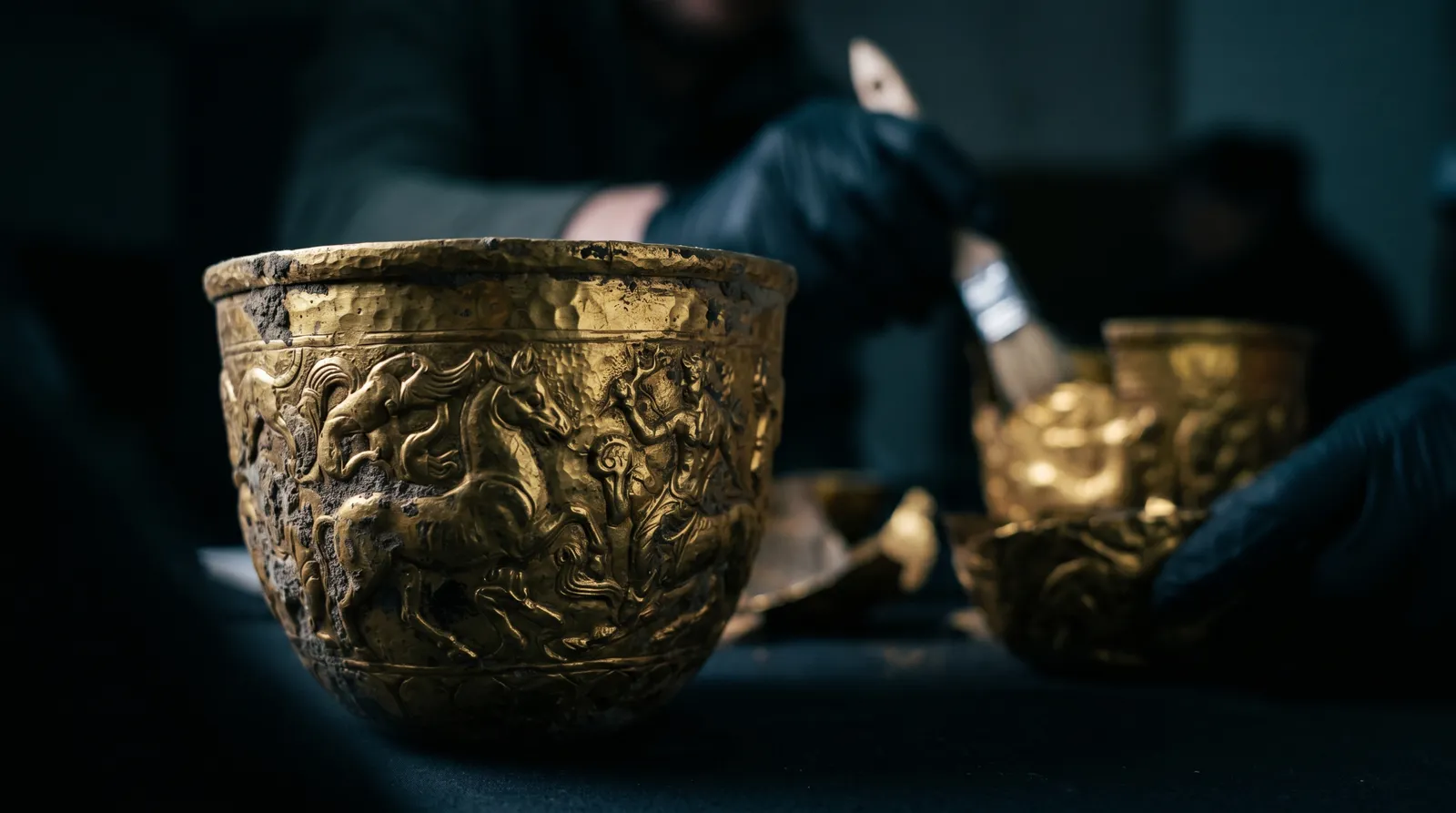
Scythian ritual vessels carried evidence of combined cannabis and opium use. In 2015, a pair of ornate gold cups recovered from a 2,400-year-old kurgan in the Caucasus tested positive for residues of both plants. The combined residue suggests the two were used together in ceremonial drinking — a pharmacology more sophisticated than the "primitive nomads" label ever allowed. Add the Pazyryk tents to the gold cups and a picture emerges: Scythian society had layered, region-specific cannabis customs centuries before Rome was a power.
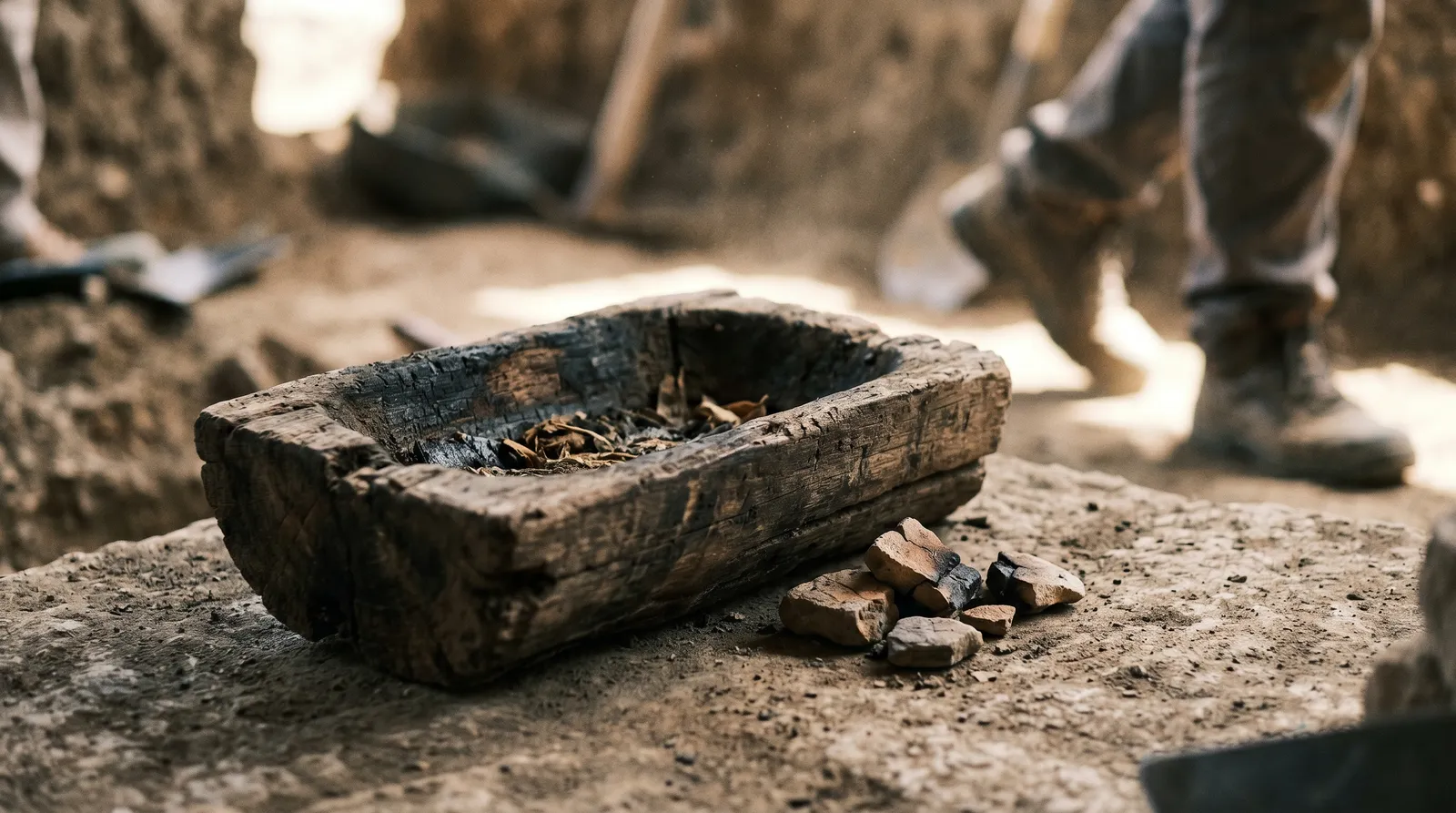
The Tel Arad altar: cannabis smoke in the temples of ancient Judah
Cannabis smoke was burned ritually at a Judahite shrine 2,700 years ago. At the Tel Arad site in the Negev desert, archaeologists in 2020 confirmed that one of two limestone altars carried burnt cannabis residue, mixed with animal dung. The dung wasn't filler — it was a slow-burn agent, lowering the combustion temperature so the THC released as inhalable smoke rather than torching off as flame. This is in a Judahite shrine contemporary with the First Temple in Jerusalem. Whoever ran that altar understood combustion chemistry well enough to dial in a slow, smouldering release. Ritual cannabis smoke, in other words, was on the menu in the ancient Near East.
The Atharvaveda, bhang, and Shiva: cannabis as sacrament in India
The Atharvaveda, compiled roughly 3,000 years ago, names cannabis as one of the five sacred plants of India and describes it as a "source of happiness" and "liberator." That tradition never broke. Bhang — cannabis ground into milk with almonds, ghee and spices — is still drunk in temples and homes during Holi and Maha Shivaratri, offered to Shiva, the deity most associated with the plant. You can walk into a government-licensed bhang shop in Varanasi today and order a cup. India is the longest continuous example of a culture that simply never restricted cannabis at the ritual level, regardless of what the colonial paperwork said.
The endocannabinoid system: humans are wired for this plant
Humans have an endocannabinoid system, and that biology is the reason cannabis caught on in every corner of the Old World. Our own bodies make a molecule called anandamide — named after the Sanskrit ananda, meaning bliss. Anandamide binds to the CB1 and CB2 receptors scattered through the brain and body. THC, the main psychoactive in cannabis, binds the same receptors. So when our ancestors at Jirzankal inhaled the smoke off those hot stones, they weren't doing something foreign to their physiology — they were tickling a system that was already running. Almost every vertebrate has one. The fit between plant and primate is uncannily good.
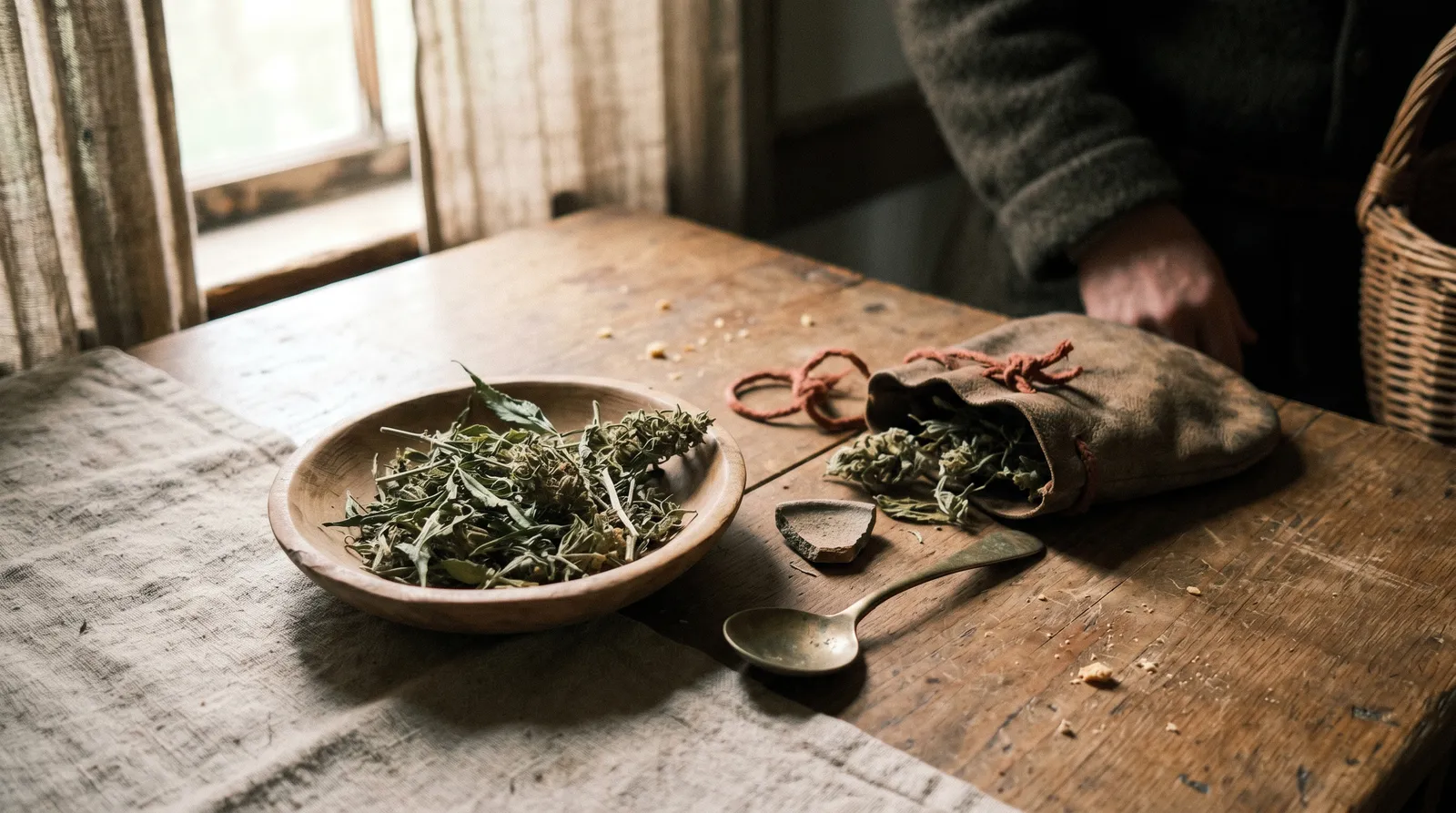
Shen Nong, Hua Tuo, and the lost cannabis anaesthetic of ancient China
Ancient Chinese medicine documented cannabis use for over 100 conditions. The Pen Tsao Ching, the Chinese pharmacopeia attributed to the legendary emperor Shen Nong, recommended it for pain, gout and malaria. Around 200 AD, the physician Hua Tuo — often called the father of Chinese surgery — used an anaesthetic called mafeisan, a cannabis-and-wine preparation, to perform abdominal operations that were otherwise impossible. The formula was lost when warlord Cao Cao had Hua Tuo executed and his medical writings destroyed. We know cannabis surgery existed in 200 AD China; we just don't know the recipe.
The Bena Riamba: a Congo society that rebuilt itself around hemp
The Bena Riamba — the "Sons of Hemp" of the Bashilange people in 19th-century Central Africa — reorganised their society around communal cannabis smoking. They laid down their weapons, abolished capital punishment, and resolved disputes at riamba gatherings; oaths were sworn over the pipe; visitors were greeted with smoke instead of spears. European explorers in the 1880s described the change with a mix of fascination and bafflement. It is one of the cleanest historical examples of cannabis being used not as escape, but as social glue.
Hemp and the Age of Exploration: required by colonial rules in Virginia
Hemp was critical infrastructure for European empires by the 1600s. A single tall ship needed up to 60 tonnes of hemp for rope, rigging, sails and caulking, and the plant didn't grow well in northern Europe's climate. So in 1619 the Virginia Assembly passed a statute requiring every colonial farmer to grow hemp. Similar mandates followed in Massachusetts and Connecticut. For roughly 250 years across the British, Dutch, Spanish and Portuguese empires, refusing to grow hemp could carry penalties. Sit with that for a second: the same plant a Virginia farmer was forced to cultivate in 1619 would, three centuries later, get his great-great-grandchildren arrested.
Harry Anslinger, the Gore Files, and the 1937 rebrand from cannabis to marijuana
Harry J. Anslinger, head of the new US Federal Bureau of Narcotics, drove the 1930s flip. Anslinger needed an enemy to keep his agency funded after alcohol prohibition collapsed, and he picked cannabis. He deliberately swapped the medical-sounding "cannabis" for the Mexican Spanish "marijuana" to make the plant feel foreign, then fabricated a dossier of lurid crime stories — the so-called Gore Files — most of which fell apart on inspection. He targeted Black jazz musicians explicitly, including a years-long campaign of harassment against Billie Holiday. The 1937 Marihuana Tax Act criminalised the plant federally in the United States, and the model was exported worldwide.
1970 Schedule I and the Nixon admission that quietly leaked out
Nixon's 1970 Controlled Substances Act placed cannabis on Schedule I — alongside heroin, defined as having "no accepted medical use and a high potential for abuse." Years later, top Nixon aide John Ehrlichman told journalist Dan Baum what the policy had actually been for: "We knew we couldn't make it a crime to be either against the war or Black, but by getting the public to associate the hippies with marijuana and Blacks with heroin… we could disrupt those communities." It was, by his own admission, a tool of social control dressed up as drug policy.
1988: a DEA judge ruled cannabis didn't belong on Schedule I — and was overruled
DEA Administrative Law Judge Francis Young issued a 69-page ruling in 1988 stating that cannabis "in its natural form is one of the safest therapeutically active substances known to man" and recommending it be moved off Schedule I. The DEA's administrator overruled him after two years of hearings. The plant stayed where Nixon had put it, and most of the world followed the US lead for another three decades. That ruling is still worth reading today — a federal judge inside the agency itself, looking at the evidence, and saying out loud what the science kept showing.
The through-line: 12,000 years together, 90 years apart
The era of broad criminalisation runs from 1937 to today — call it 90 years out of 12,000. From a Pamir brazier in 500 BCE to a Virginia hemp field in 1619 to a Bashilange peace pipe in 1880, cannabis has been farmed, smoked, drunk, woven, prayed with, and prescribed. That's under 1% of the shared history. The ban is the anomaly, not the plant.
Key milestones in the cannabis-human story
- ~10,000 BCE — East Asia: Cannabis domesticated for fibre, food, oil and medicine.
- ~700 BCE — Yanghai, Turpan: Shaman buried with ~1 kg of green cannabis.
- ~700 BCE — Tel Arad, Judah: Altar residue shows cannabis burned with dung as a slow-release agent.
- ~500 BCE — Jirzankal, Pamirs: Earliest chemical proof of smoking high-THC cannabis.
- ~450 BCE — Scythian steppe: Herodotus on tent hotboxes; confirmed by Rudenko in 1947.
- ~400 BCE — Caucasus: Gold cups with cannabis and opium residue.
- ~200 AD — Han China: Hua Tuo's cannabis-wine surgical anaesthetic.
- 1619 — Virginia: Colonial farmers required to grow hemp.
- 1937 — USA: Marihuana Tax Act; Anslinger and the Gore Files.
- 1970 — USA: Nixon places cannabis on Schedule I.
- 1988 — USA: Judge Francis Young rules against Schedule I; overruled.
Honest limitation: we're a shop, not an archaeology department. The dates above come from published peer-reviewed work (Ren et al. in Science Advances, the Tel Arad team in Archaeometry, Rudenko's mid-century field reports), but archaeology is a moving target. New digs in Central Asia keep pushing the smoking timeline around, and we'll update this piece when they do. For policy context across Europe specifically, the EMCDDA's country profiles remain the most reliable comparative source.
Frequently Asked Questions
The takeaway is short. Twelve thousand years of farming, smoking, brewing, weaving and worshipping this plant — and a 90-year detour into criminalisation that the science, the history and even a DEA judge in 1988 said didn't add up. If you want to keep going down the rabbit hole, our culture and science blog categories have more on the archaeology, the pharmacology and the people behind it.
Last updated: April 2026
Frequently Asked Questions
5 questionsWhen did humans start smoking cannabis?
How long have humans used cannabis in any form?
Were the Scythians really smoking cannabis like Herodotus said?
Why was cannabis restricted in the 20th century if humans had used it for millennia?
What is the endocannabinoid system and why does it matter?
About this article


Adam Parsons is an external cannabis and psychedelics writer and editor who contributes to Azarius's wiki as both author and reviewer. On the writing side, he authors Azarius's kratom and kanna clusters, drawing on exten
This blog article was drafted with AI assistance and reviewed by Adam Parsons, External contributor. Editorial oversight by Joshua Askew.
Last reviewed June 7, 2026
Related Articles

Substrata: Our First Psybient Album
Substrata is our first psybient album: 20 tracks, 1h 22m of psydub and downtempo, free on YouTube with custom trippy visuals for every song.
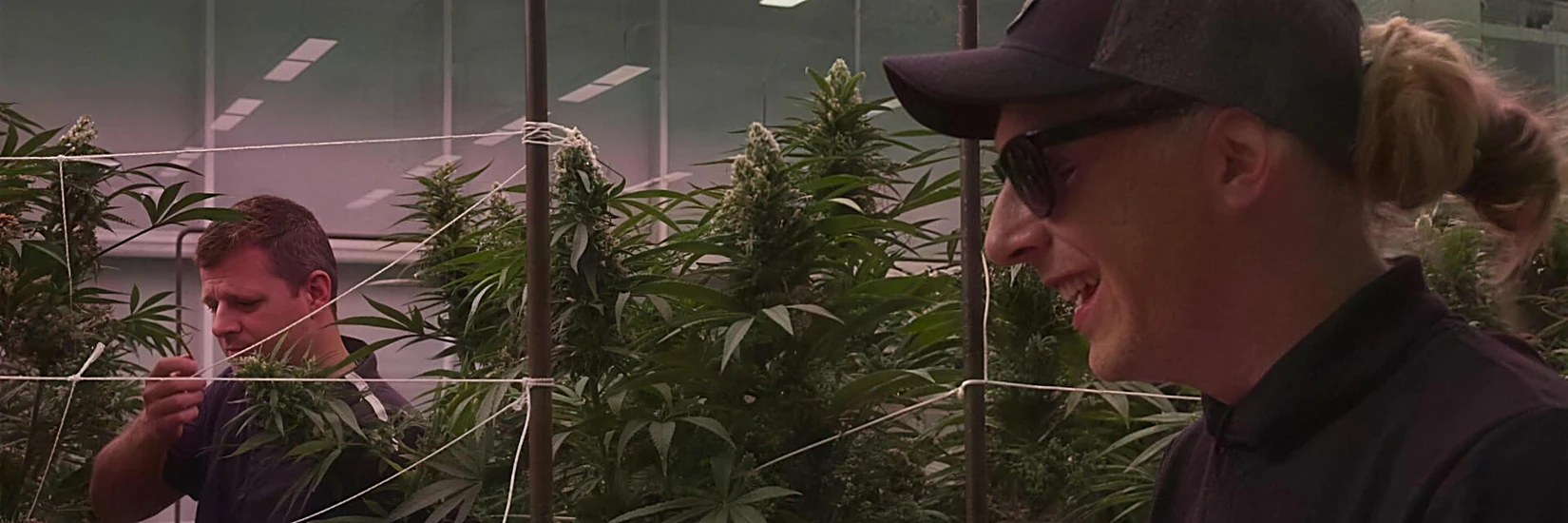
F1 Hybrid Cannabis Genetics: Inside RQS Testing at Inexo
Royal Queen Seeds field-tested new F1 hybrid cannabis genetics for 3+ years at Inexo. Inside the trials, the traits selected, and the story of strain…
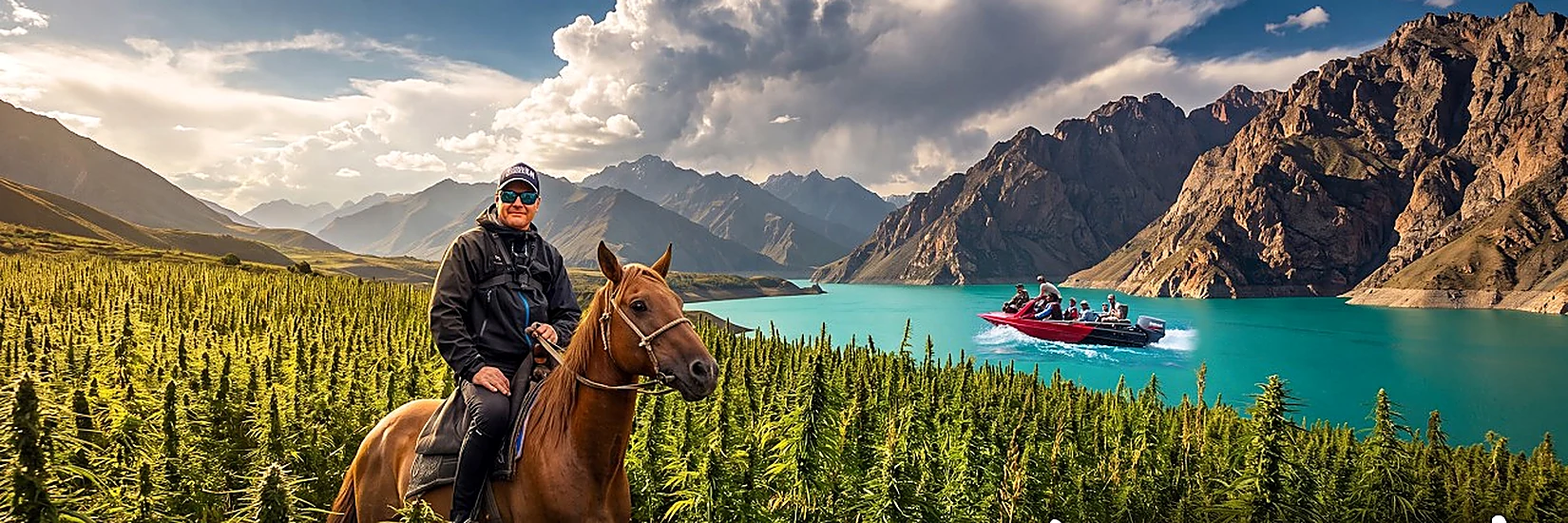
Strain Hunters Kyrgyzstan: Wild Landrace Hunt Recap
Strain Hunters Kyrgyzstan documentary recap: horseback landrace hunt to 3,550 m, purple high-altitude phenos, the 1971 ban, and what it means for…
Cloning Magic Mushrooms: Inside VICE's Blueprint
An Amsterdam smartshop take on VICE's Blueprint documentary — grow-room cloning, María Sabina's Oaxaca, and the mycology behind Psilocybe.

Amsterdam Smartshop History: From 1993 to Today
Amsterdam smartshop history from Conscious Dreams in 1993 to the 2008 mushroom ban and the rise of truffles — the full story, decade by decade.
Stoned Ape Theory: Did Magic Mushrooms Make Us Human?
The Stoned Ape Theory claims psilocybin shaped human evolution. We weigh McKenna's hypothesis against modern neuroscience and its critics.
Ancient Psychedelic Mushrooms: Every Species Explained
A tour of ancient psychedelic mushrooms — from Aztec teonanácatl and the liberty cap to Amanita muscaria, María Sabina and the Stoned Ape idea of…
The Best Stoner Movies Ever — Ranked by Tier
The best stoner movies ever, ranked S to F tier. From Fear and Loathing to Pineapple Express — and the sequels to skip tonight.
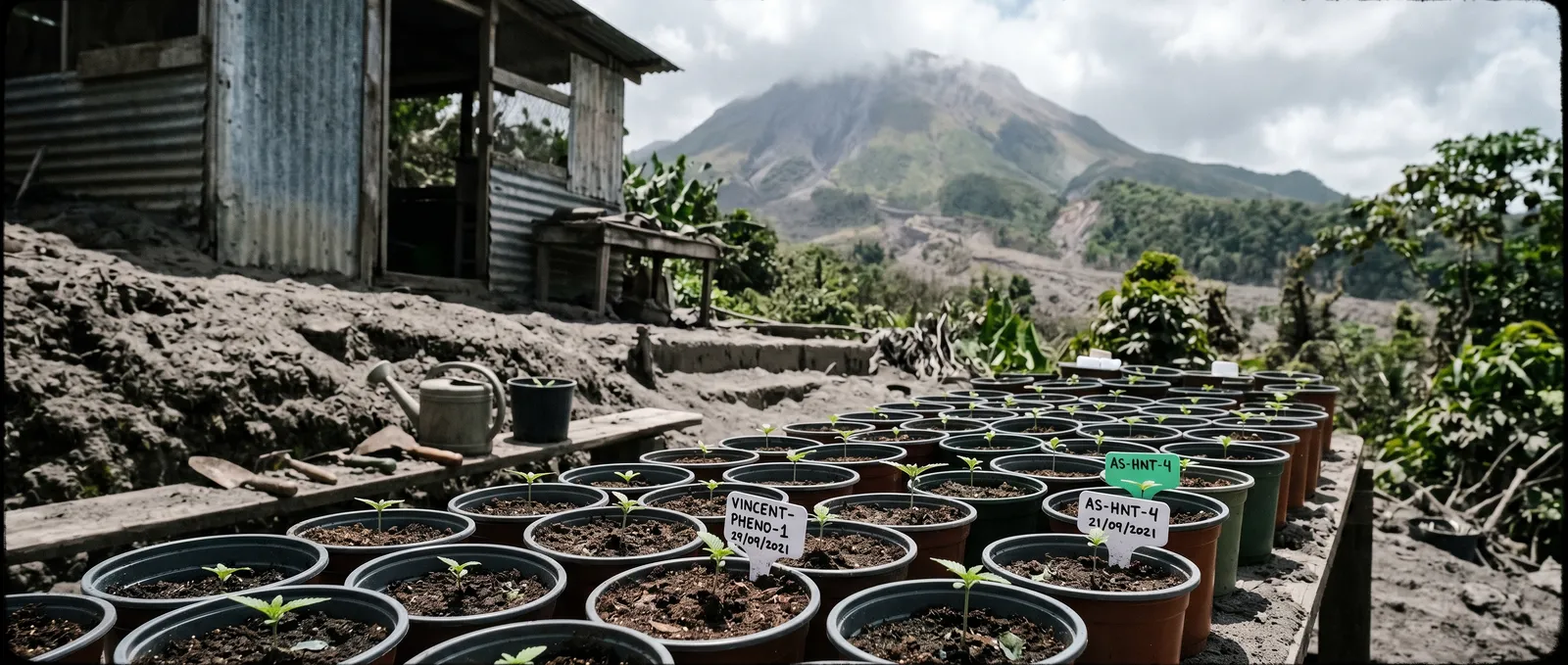
Saint Vincent Pheno Hunt: A Landrace Survives a Volcano
The Saint Vincent pheno hunt documents Caribbean landrace sativa genetics rescued by Rastafarian farmers after La Soufrière erupted in 2021.