
Cloning Magic Mushrooms: Inside VICE's Blueprint
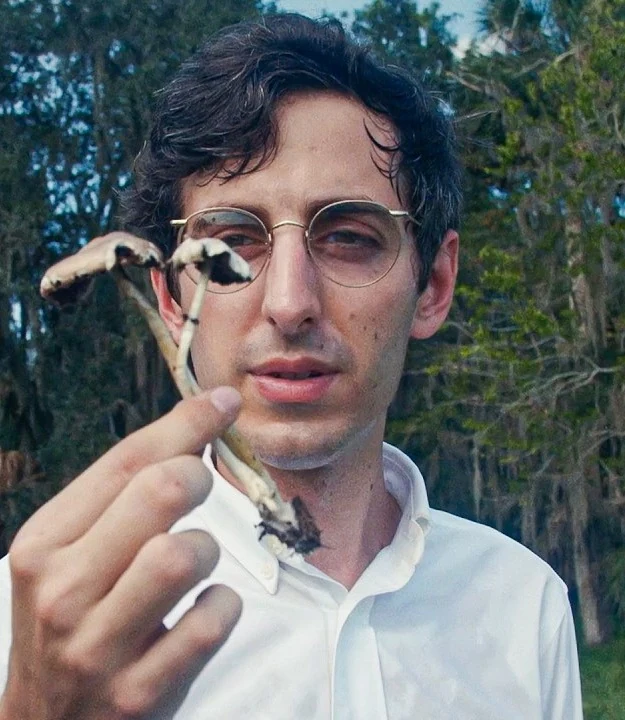
Cloning magic mushrooms is a tissue-culture technique that copies a single desirable fungus by isolating its mycelium on a nutrient dish and multiplying it — no sex, no genetic lottery, just the same organism, over and over. That definition sounds clinical, and in VICE's Blueprint documentary it looks it too: a masked crew in a North American grow room treats petri dishes like surgical instruments. Then the camera flies south, into the pine-forested mountains of Huautla de Jiménez in Oaxaca, where a farmer named Arnulfo cultivates cathedral-sized Psilocybe in a sugar-cane garden and insists these things must never be sold for money. Between those two worlds — the sterile lab and the family cabin — sits the whole modern story of psilocybin.
From Our Counter: We've been selling grow kits, spore prints and fresh magic truffles from this Amsterdam shop since 1999, which is long enough to watch mushrooms shift from a whispered subculture into something a cardiologist might mention at a dinner party. What Blueprint gets right is the strangeness of that arc — that the same organism can be a Mazatec sacrament, an underground crop worth thousands, and a Phase II clinical trial candidate, all in the same week.
Video by VICE (Blueprint series). The piece below pulls out the cultivation science, history and species worth knowing — watch the full documentary for the deep dive.
The clandestine grow room where Golden Teacher rules
The first thing the VICE crew shows us is that the underground doesn't look underground anymore — it looks like a biotech startup with better lighting. The grow op, run by a collective calling itself MOAB, is a large, temperature-controlled clean room in North America. Their only crop is Golden Teacher, a strain of Psilocybe cubensis. They're not chasing the most potent species on the planet, and they're honest about it. Golden Teacher is grown because it forgives you. It tolerates swings in humidity, fruits reliably in a plastic tub, and produces those instantly recognisable caramel-capped mushrooms that people already trust on sight.
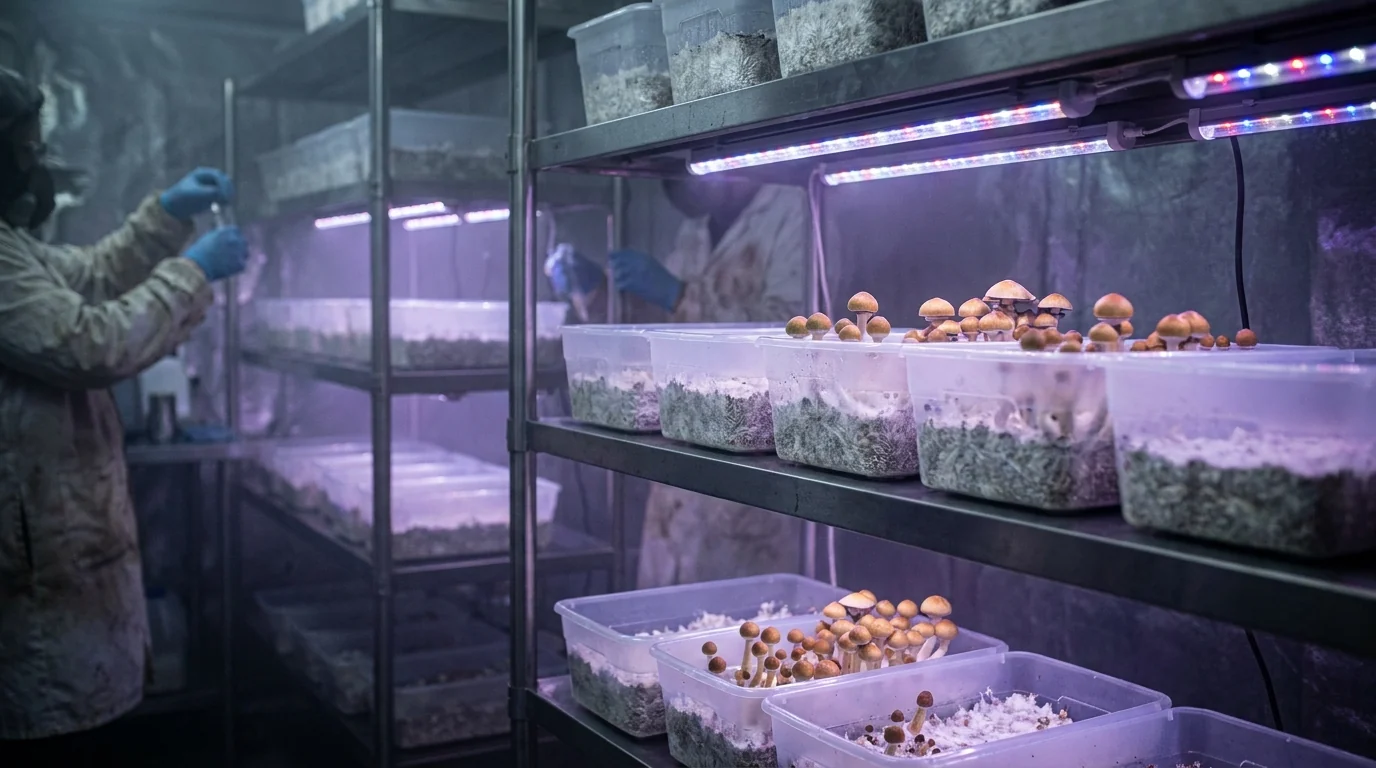
That choice tells you everything about the illicit mushroom market. It isn't a race to the strongest chemistry set. It's a race to the most reproducible, most shippable, most beginner-friendly fungus — and Golden Teacher has been winning that race for decades.
Why domesticated mushrooms can't survive without us
These aren't wild organisms in any meaningful sense. VICE makes the point around the three-minute mark: after decades of selective breeding indoors, underground strains like Golden Teacher have become so dependent on human caretakers that they'd likely struggle to fruit outside the tub. Growers select for fat stems, dense flushes, quick colonisation and forgiving temperature ranges — traits that make life easier for the cultivator and harder for the mushroom in an open forest full of competitors.
It's the same story as broccoli, or the modern dairy cow, or a French bulldog. We shaped them into what we wanted, and now they need us. The Mazatec mushrooms Arnulfo picks in Oaxaca are the wild ancestors of that domestication story — same genus, radically different lifestyle.
Sterility is the whole game
Every serious cultivator will tell you the same thing: mould is the enemy, not the mushroom. The MOAB growers compare their room to a surgical environment, and they mean it literally — flow hoods, gloves, sterilised jars, pressure cookers. Agar plates and grain jars are essentially five-star hotels for airborne bacteria and Trichoderma mould. If a single spore of green mould lands in an open jar, it can eat a month of work and thousands of dollars of crop in 72 hours.
From Our Counter: The number one reason a first-time home grower's kit fails isn't bad genetics or wrong temperature — it's contamination introduced by a curious hand lifting the lid too often. If you buy a grow kit, resist the urge to peek. The kit is doing something quietly miraculous in the dark; your job is mostly to leave it alone and keep the room clean.
From spore print to monotub: how cloning actually works
The technical heart of Blueprint is a four-step walk through the fungal lifecycle as it happens in a lab. It's worth understanding conceptually, even if you never touch a petri dish yourself:
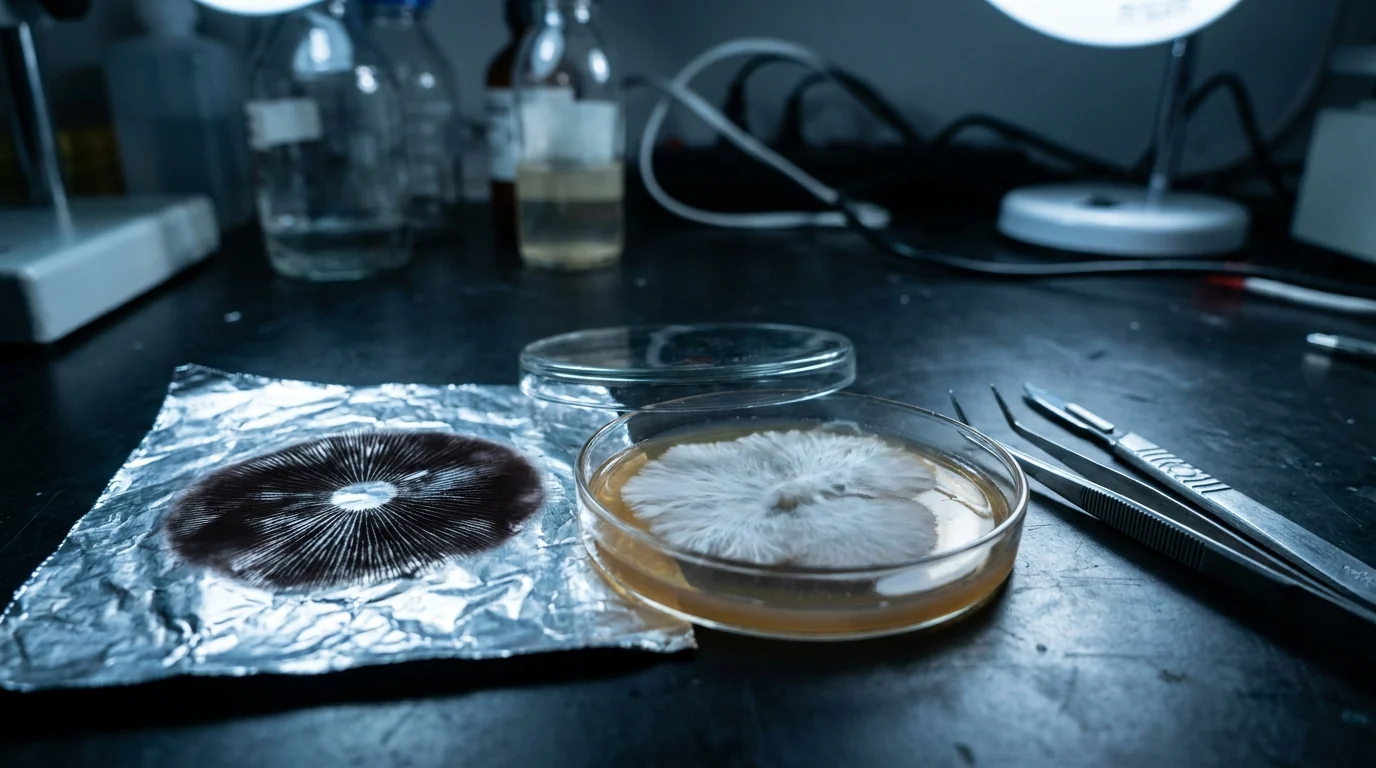
- The spore print. A fresh cap is laid gills-down on foil or paper. Overnight it drops tens of thousands of microscopic spores in the exact radial pattern of its gills — a beautiful, almost fingerprint-like map used for identification and genetic archiving.
- Agar inoculation. Wild spores are haploid, meaning each carries only half the genetic information needed to grow. Scraped onto a petri dish of nutrient agar (made from seaweed), they hunt for a compatible partner spore and fuse, sprouting the first white threads of mycelium.
- Grain colonisation. A clean wedge of healthy mycelium is cut from the agar and dropped into a sterilised jar of millet, rye or oats. Over roughly a month the fungus eats the grain, turning the jar into a brilliant white block of living tissue.
- Fruiting in monotubs. The colonised grain is broken into a bulk substrate — usually coco coir — inside a plastic tub with controlled humidity and fresh-air exchange. Tiny pins appear, and once they do, a full-sized mushroom can mature in less than 48 hours.
Cloning proper happens between steps two and three: instead of germinating new spores every time, a grower keeps snipping mycelium from a favourite plate onto fresh agar, essentially xeroxing one exceptional individual indefinitely.
María Sabina and the article that opened the door
Sixty years ago the Western world knew almost nothing about magic mushrooms. That changed because of one Mazatec curandera in a mountain town most maps didn't bother with. María Sabina, a healer in Huautla de Jiménez, allowed the American banker and amateur mycologist R. Gordon Wasson to sit through a traditional vigilia in the 1950s. Wasson wrote it up for Life magazine in 1957, and the door came off its hinges. We mapped the deeper backstory of these species in our guide to ancient psychedelic mushrooms.
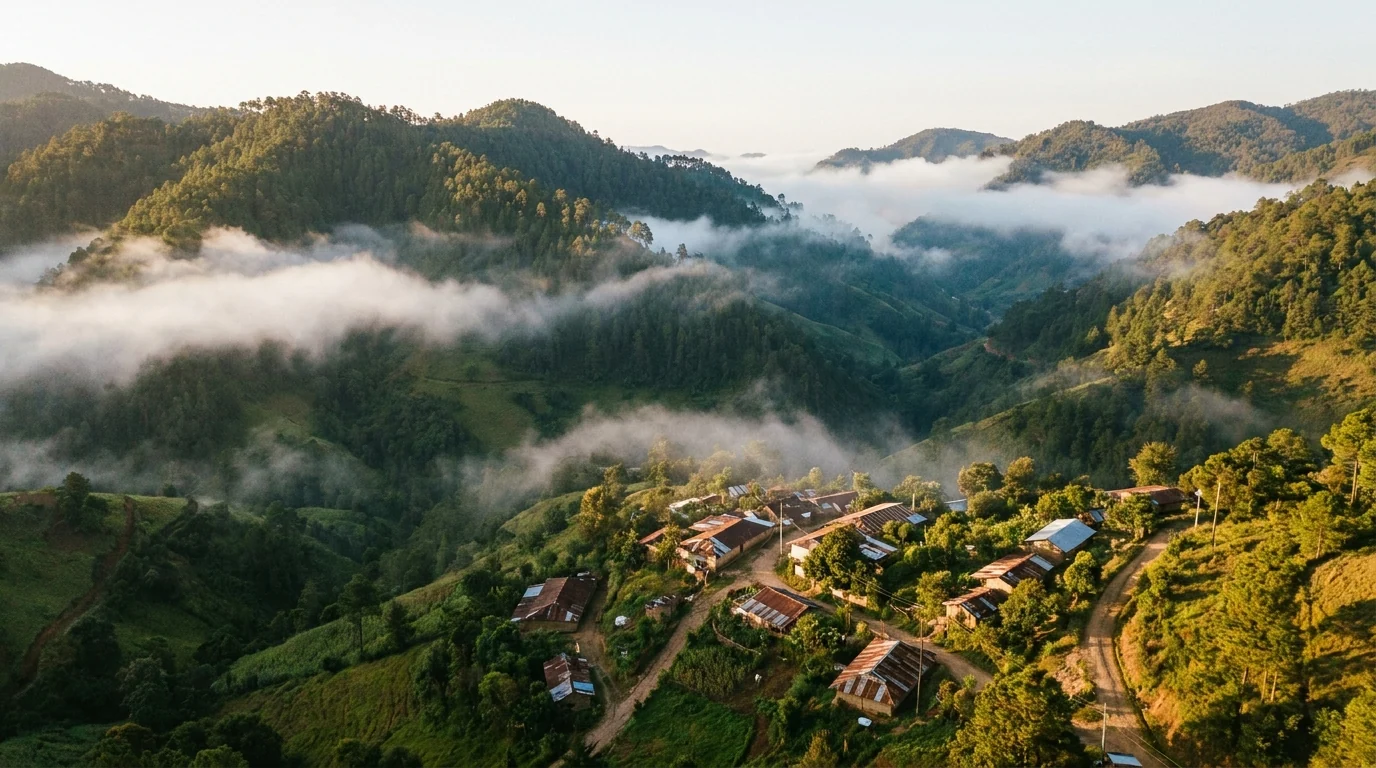
The 1960s and 70s pilgrimage that followed reads like a rock magazine index — John Lennon, Bob Dylan, Janis Joplin all reportedly made the trip to Oaxaca looking for her. Huautla got roads and electricity out of it. María Sabina got harassment, a burned house, community friction and a grief she never fully described in public. The mushrooms that had healed her neighbours for generations became, briefly, a tourist attraction. That tension — between opening a tradition and protecting it — hasn't gone away.
Sacrament, not merchandise
Up in the surrounding mountains VICE meets Arnulfo, a farmer growing enormous wild specimens in a sugar-cane patch. He says something that should be printed on the wall of every psilocybin startup: these mushrooms are a divine gift, and they should never be exchanged for money. In the Mazatec view, selling the sacrament breaks it. You can accept a gift for the healer's time, food, a chicken, tobacco — but the mushroom itself sits outside the economy.
That's an uncomfortable idea for a smartshop to sit with, and we do sit with it. The Western answer has been to separate the ceremony from the commodity: you can buy the organism, but the meaning is your own responsibility to build. It's not the same as the Mazatec model. It's not pretending to be.
Reading the land: the three Mazatec categories
Traditional shamans in Huautla don't work from a taxonomy textbook. They recognise three practical categories of sacred mushroom, each tied to where it grows and how it behaves:
- San Isidro — Psilocybe cubensis, the cow-pasture mushroom, named for the patron saint of farmers.
- Pajaritos — Psilocybe mexicana, the "little birds," small and delicate. This is the species whose sclerotia are the ancestor of the magic truffles we sell fresh.
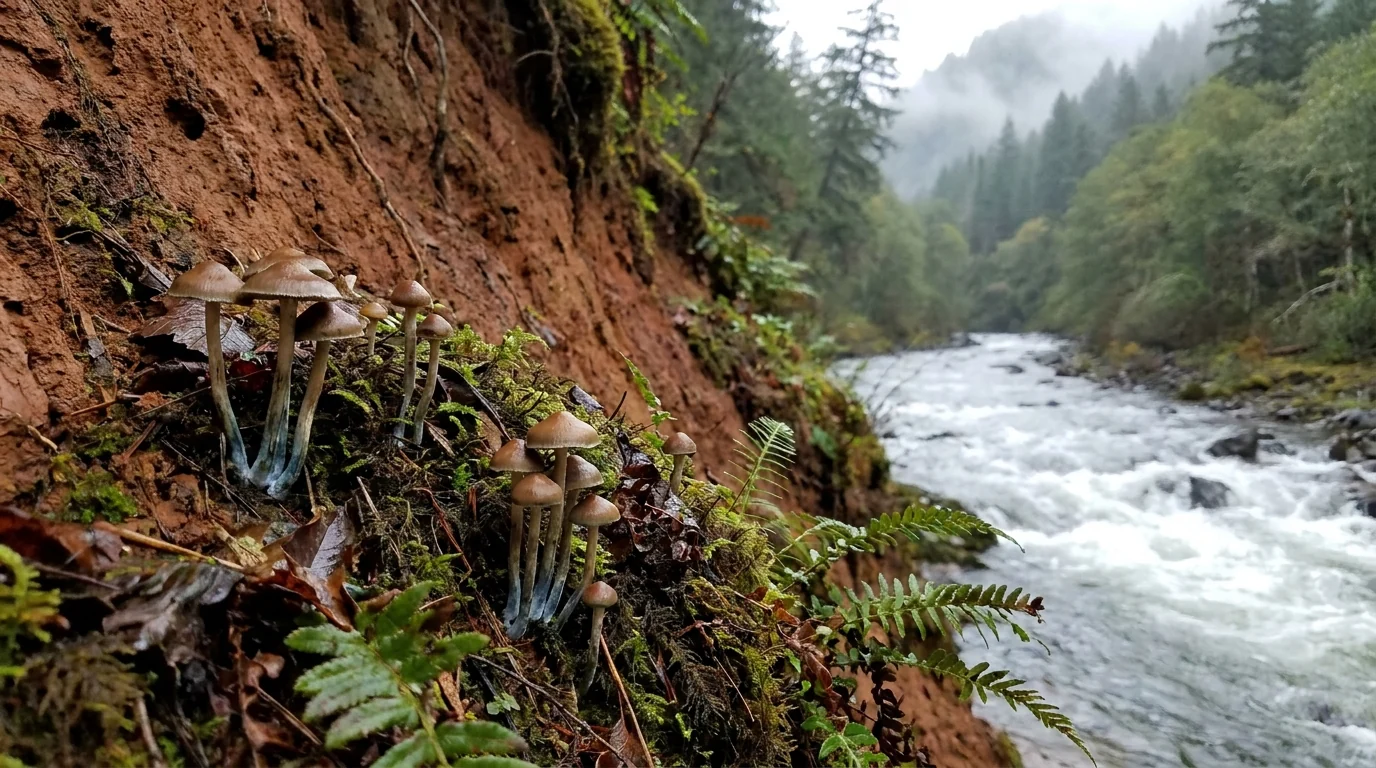
- Derrumbe — the "landslide" mushrooms, usually Psilocybe caerulescens or Psilocybe zapotecorum.
The mycologist Alan Rockefeller, on camera in the Oaxacan hills, points out that Psilocybe zapotecorum has an oddly specific ecological niche: it fruits on the steep, exposed clay left by landslides near mountain rivers — but only landslides that are a few years old, once the soil has settled into the right chemistry. The mushroom's name honours the Zapotec civilisation, who, alongside the Aztecs, used these fungi ritually for centuries before the Spanish arrived. When Gastón Guzmán and later mycologists catalogued the genus, they eventually counted well over a hundred Psilocybe species worldwide — but only a small handful ever appear in Mazatec ceremony.
From Our Counter: A question we hear constantly is "what's the strongest?" — and it's the wrong question. The strongest Psilocybe in the lab (P. azurescens, for instance) is a terrible first experience for most people; it's a freight train. Golden Teacher and magic truffles from P. mexicana lineage are moderate, well-mapped, and let a first-timer actually remember what happened. Strongest ≠ best.
The medical renaissance and the family cabin
Decades after María Sabina's death, the medical establishment she was ignored by is finally catching up. Psilocybin is now in serious clinical trials for treatment-resistant depression, PTSD, cluster headaches and addiction, and preliminary results have been strong enough that the FDA has flagged it as a breakthrough therapy candidate. Universities that wouldn't touch it in 1975 now have dedicated psychedelic research centres. We go deeper into the neuroscience in magic mushrooms and the brain, and for the wilder, unprovable end of the story there's the stoned ape theory.
What Blueprint quietly emphasises, though, is a cultural contrast the clinical world hasn't figured out yet. In Western framing, a psychedelic experience is individual — one patient, one therapist, one eye mask. In Huautla it is fundamentally a family affair. Several relatives sit together in a small wooden cabin through the night, addressing illness, alcoholism, grief and rupture out loud, in front of each other. The mushroom isn't a private tool; it's a communal one. Whatever the pharmaceutical model eventually looks like, it's worth remembering that the tradition it borrows from was never solo.
What makes Blueprint worth 40 minutes of your evening is the way it holds two truths at once: a fungus can be a family's ancestor and a laboratory's tissue culture, and neither cancels the other out. If the video leaves you curious, the accessible doorway from a smartshop counter is modest — fresh magic truffles from Psilocybe mexicana lineage, or a Golden Teacher grow kit that lets you watch the same four steps VICE films in a professional lab happen quietly on your kitchen shelf. Thanks to VICE and the Blueprint team for the source documentary; go watch the whole thing.
Last updated: July 2026
Frequently Asked Questions
7 questionsWhat strain is easiest to grow at home?
Why do growers keep everything sterile?
Who was María Sabina?
What is a spore print for?
What is the strongest Psilocybe species?
Is psilocybin being used in medicine?
Why shouldn't sacred mushrooms be sold?
About this article

Adam Parsons is an external cannabis and psychedelics writer and editor who contributes to Azarius's wiki as both author and reviewer. On the writing side, he authors Azarius's kratom and kanna clusters, drawing on exten
This blog article was drafted with AI assistance and reviewed by Adam Parsons, External contributor. Editorial oversight by Joshua Askew.
Last reviewed July 13, 2026
Related Articles

Substrata: Our First Psybient Album
Substrata is our first psybient album: 20 tracks, 1h 22m of psydub and downtempo, free on YouTube with custom trippy visuals for every song.
F1 Hybrid Cannabis Genetics: Inside RQS Testing at Inexo
Royal Queen Seeds field-tested new F1 hybrid cannabis genetics for 3+ years at Inexo. Inside the trials, the traits selected, and the story of strain…
Strain Hunters Kyrgyzstan: Wild Landrace Hunt Recap
Strain Hunters Kyrgyzstan documentary recap: horseback landrace hunt to 3,550 m, purple high-altitude phenos, the 1971 ban, and what it means for…

Amsterdam Smartshop History: From 1993 to Today
Amsterdam smartshop history from Conscious Dreams in 1993 to the 2008 mushroom ban and the rise of truffles — the full story, decade by decade.
Stoned Ape Theory: Did Magic Mushrooms Make Us Human?
The Stoned Ape Theory claims psilocybin shaped human evolution. We weigh McKenna's hypothesis against modern neuroscience and its critics.
When Did Humans Start Smoking Cannabis? 12,000 Years
When did humans start smoking cannabis? Chemical proof goes back 2,700 years — and the full plant-human story runs 12,000 years deep.
Ancient Psychedelic Mushrooms: Every Species Explained
A tour of ancient psychedelic mushrooms — from Aztec teonanácatl and the liberty cap to Amanita muscaria, María Sabina and the Stoned Ape idea of…
The Best Stoner Movies Ever — Ranked by Tier
The best stoner movies ever, ranked S to F tier. From Fear and Loathing to Pineapple Express — and the sequels to skip tonight.
Saint Vincent Pheno Hunt: A Landrace Survives a Volcano
The Saint Vincent pheno hunt documents Caribbean landrace sativa genetics rescued by Rastafarian farmers after La Soufrière erupted in 2021.