
By continuing to use this site, you agree to the Terms & Conditions and our use of cookies.
Free shipping
Free shipping |
On orders over €25
Fast & Discreet
Order before 11:00 |
Shipped the same day
Free seeds
Free seeds |
With seed orders over €25

What Happens to Your Brain and Body When You Take Magic Mushrooms?


Magic mushrooms don’t just make you “see things.” They temporarily change how different areas of your brain talk to one another, and how your body responds to that conversation.

For background on an overview of what magic mushrooms are, start with the basics before exploring effects and research.

Modern neuroscience reveals that psilocybin, the primary active compound in these mushrooms, alters the brain’s communication patterns, influences sensory processing, and has a subtle impact on physical regulation. Many users report that the result can feel deeply meaningful, even if the experience itself is temporary.1

How Do Magic Mushrooms Create Psychedelic Effects in the Brain and Body?

Once psilocybin enters the body, it’s converted into psilocin, a compound that closely resembles serotonin, one of the brain’s key neurotransmitters. Psilocin binds mainly to what are called 5-HT2A receptors, which play an important role in how we experience mood, emotion, and perception.2

When these receptors are activated, normal communication between brain regions starts to loosen and reorganise.3 Areas that usually operate separately begin sharing information more freely, which helps explain why thoughts, senses, and memories can blend in ways that feel unusually vivid or symbolic during a psychedelic experience.

Psilocybin side effects also affect more than just the brain. It can also influence the body’s automatic functions, such as heart rate and temperature regulation.

Temporary increases in blood pressure, mild elevation of heart rate, and changes in body temperature are fairly common, not because the substance is inherently dangerous, but because serotonin pathways are active throughout the body, as well as in the brain.4

How Long Do the Effects of Magic Mushrooms Typically Last?

Most people start to feel the first shifts about 20–60 minutes after taking magic mushrooms. The experience usually reaches its peak between an hour and a half and three hours, then gradually tapers off.

For practical guidance on timing and methods, see how to take magic mushrooms.

In total, the effects tend to last around 4–6 hours, although higher doses or slower metabolism can extend that window closer to eight hours.5

Even after the main effects fade, many users describe a softer, emotional, or reflective “afterglow” that can linger into the following day, a period when insights, calmness, or a sense of connection may still be present.

What Happens in the Brain When You Take Magic Mushrooms?

When someone takes magic mushrooms, the effects go far beyond colourful visuals or a temporary shift in mood. Psilocybin reshapes how different parts of the brain communicate, loosening rigid loops of self-talk, heightening emotional sensitivity, and opening pathways that are normally less active.

Researchers use imaging tools like fMRI and EEG to map these changes, helping explain why experiences can feel so fluid, vivid, and interconnected.

Functional Connectivity and Network Changes

Brain scans show that psilocybin reduces activity in what’s known as the Default Mode Network (DMN), the part of the brain that handles self-referential thinking, daydreaming, and the inner narrator voice. At the same time, communication between sensory, emotional, and associative regions increases dramatically.6

This combination is often described as a temporary “reset” or loosening of control, where the usual mental boundaries become more fluid, allowing ideas, feelings, and memories to interact more freely.

Scientists view this as the neural foundation for what many users refer to as “ego dissolution,” a state in which the sense of self feels less rigid and more interconnected with the world.1

Enhanced Emotional and Sensory Processing

When those rigid predictive patterns are relaxed, the brain becomes more responsive to emotions and sensations. Psilocybin appears to increase activity in the amygdala and thalamus, regions central to emotional processing and sensory filtering.7

This is why many people report heightened empathy, a stronger sense of awe, or a deep emotional release. For others, that same openness can surface anxiety or fear, depending on what’s being processed internally.

Visual distortions, time dilation, and even cross-sensory blending (like hearing colours or seeing sounds) are also part of this expanded sensory landscape.

Neuroplasticity and Mental-Health Correlates

Psilocybin appears to encourage short-term signals of neuroplasticity, the brain’s ability to form and reorganise connections. Studies in both animals and humans have demonstrated increases in brain-derived neurotrophic factor (BDNF), a protein linked to learning and neural growth.8 These changes may help explain why many people feel temporarily lighter or more emotionally flexible after a session.

In clinical research, these neural shifts have been associated with reduced depressive rumination and improved mood regulation.3 However, scientists emphasise that context, emotional readiness, and integration after the experience all play huge roles in whether these effects feel positive or destabilising.

Physical Effects of Magic Mushrooms on the Body

Magic mushrooms don’t just affect the mind; they also influence the body. Because psilocybin interacts with serotonin, a chemical that’s active throughout the whole nervous system, it can trigger a range of temporary physical sensations. These effects are usually mild and short-lived, but knowing what to expect helps people stay grounded and less alarmed if they arise.

For a deeper look at magic mushroom risks and side effects, including warning signs, review the dedicated guide.

Immediate Physiological Responses

When psilocybin begins to take effect, the body may respond in subtle ways that mirror changes happening in the brain. Typical short-term effects include:

  • A mild, temporary rise in heart rate or blood pressure, which generally resolves on its own in healthy adults.9
  • Dilated pupils and slight hand tremors.
  • Small fluctuations in body temperature, often felt as alternating chills or warmth.
  • Light muscle tension or a sense of physical energy during the peak, sometimes followed by gentle fatigue as the effects fade.

These reactions are usually harmless and tend to settle as the experience progresses, especially in calm, comfortable environments.

Gastrointestinal and Autonomic Reactions

Since serotonin receptors are also present throughout the digestive system, some individuals experience stomach sensations during the onset phase. Nausea or mild stomach unease are the most common examples and usually ease after the first hour or so.5

Other automatic bodily reactions may include yawning, changes in saliva production, or a shift in muscle tone, all of which are linked to the body’s serotonin network adjusting to the temporary chemical change.

Simple steps, such as staying hydrated, breathing slowly, and remaining seated or lying down, can help these sensations pass more smoothly. Having a relaxed mindset and a steady environment often makes the difference between discomfort and a manageable transition.

Do the Effects of Magic Mushrooms on the Brain Last Beyond the Psychedelic Experience?

The psilocybin experience doesn’t simply “end” when the visuals fade. In fact, some of its neurological and emotional effects appear to linger well beyond the session itself. Researchers using fMRI and EEG imaging have found that certain changes in brain connectivity can remain active for days or even weeks after a single guided experience.6

Participants in clinical studies often report a sustained sense of emotional openness, mental clarity, or increased cognitive flexibility. In animals, researchers have also observed short-term increases in synaptic density, essentially the number of neural connections, and signals associated with neurogenesis, the process of forming new brain cells.8

That said, these effects are temporary. The brain’s networks typically return toward their normal baseline within about a month. What may last longer are the psychological or behavioural changes that emerge from the experience, the insights, reflections, or emotional recalibrations that someone takes the time to integrate afterwards.

It’s also important to note that long-term safety data are still limited. Repetitive or high-frequency unsupervised use could increase psychological strain, so moderation and thoughtful integration remain key.10

The Psilocybin Experience: A Step-by-Step Journey

Every psilocybin experience moves through recognisable stages, each with its own rhythm, sensations, and emotional tone. While the timing can vary slightly between people, the general flow looks something like this:

  • 0–30 minutes (digestion and onset): The body begins metabolising psilocybin into psilocin. Some people feel mild nausea, yawning, warmth, or light tension as their system adjusts.
  • 30–90 minutes (early effects and sensory expansion): Colours may appear more vivid, sounds richer, and thoughts more fluid. Associations and ideas begin connecting in novel ways.
  • 90–180 minutes (the peak): This is the most immersive phase, marked by strong imagery, changes in perception of time or self, and deep emotional material surfacing. For some, it’s joyful and awe-filled; for others, it may bring cathartic tears.
  • 180–360 minutes (descent and reflection): The effects begin to fade, leaving space for calm, contemplation, and emotional grounding. Fatigue or a gentle afterglow are common.
  • 24 hours and beyond (integration and afterglow): The next day often brings a clearer perspective, emotional lightness, or a lingering sense of connection. Some feel quietly reflective or creatively inspired, while others simply feel tired but peaceful.

Mindset, environment, and the presence of supportive people strongly shape whether this journey feels healing, neutral, or distressing. These are the key ingredients behind both positive outcomes and the prevention of difficult experiences.9

For de-escalation strategies, see how to prevent a bad psychedelic trip.

What Science Still Doesn’t Know About Magic Mushrooms

Although psilocybin is one of the most researched psychedelics today, there are still big questions science hasn’t fully answered. Researchers are currently exploring:

  • How long-term or repeated use might influence serotonin receptor sensitivity or cognitive processing over decades.
  • Whether the brain’s neuroplastic benefits eventually plateau, compound with time, or depend on how far apart sessions are spaced.
  • What the full long-term cognitive and emotional safety profile looks like in frequent, unsupervised users.
  • How psilocybin interacts with hormonal, cardiovascular, or metabolic systems beyond the short-term effects already observed.

So far, data suggest encouraging potential and generally manageable short-term safety in structured settings, but responsible discussion means holding space for both the promise and the unknowns. Research is moving fast, but there’s still much to learn.8

Comparison Chart: Short-Term vs Long-Term Effects

Psilocybin doesn’t act in just one simple way. Its effects unfold across different timelines. The short-term phase encompasses the immediate sensory and emotional changes that occur during and shortly after the session, while the longer-term phase examines the temporary after-effects observed in research, such as improved mood or shifts in connectivity.

This brief overview highlights how scientists currently understand these two windows and the level of confidence the research community has in each area of evidence.

Category Brain & Body Changes Research Confidence
Short-Term (0–48 h) Heightened sensory processing, DMN reduction, mild ↑BP/HR, nausea, pupil dilation High, replicated in lab studies
Long-Term (>1 week) Transient connectivity increase, improved mood, introspection Moderate, supported by imaging & clinical trials

Beginner Checklist (Harm Reduction)

If someone chooses to explore magic mushrooms, a bit of preparation goes a long way. The aim isn’t to overcomplicate the process, but to create conditions that feel grounded, safe, and easy to navigate. Taking time to plan ahead can make the difference between a confusing experience and one that feels meaningful and manageable.

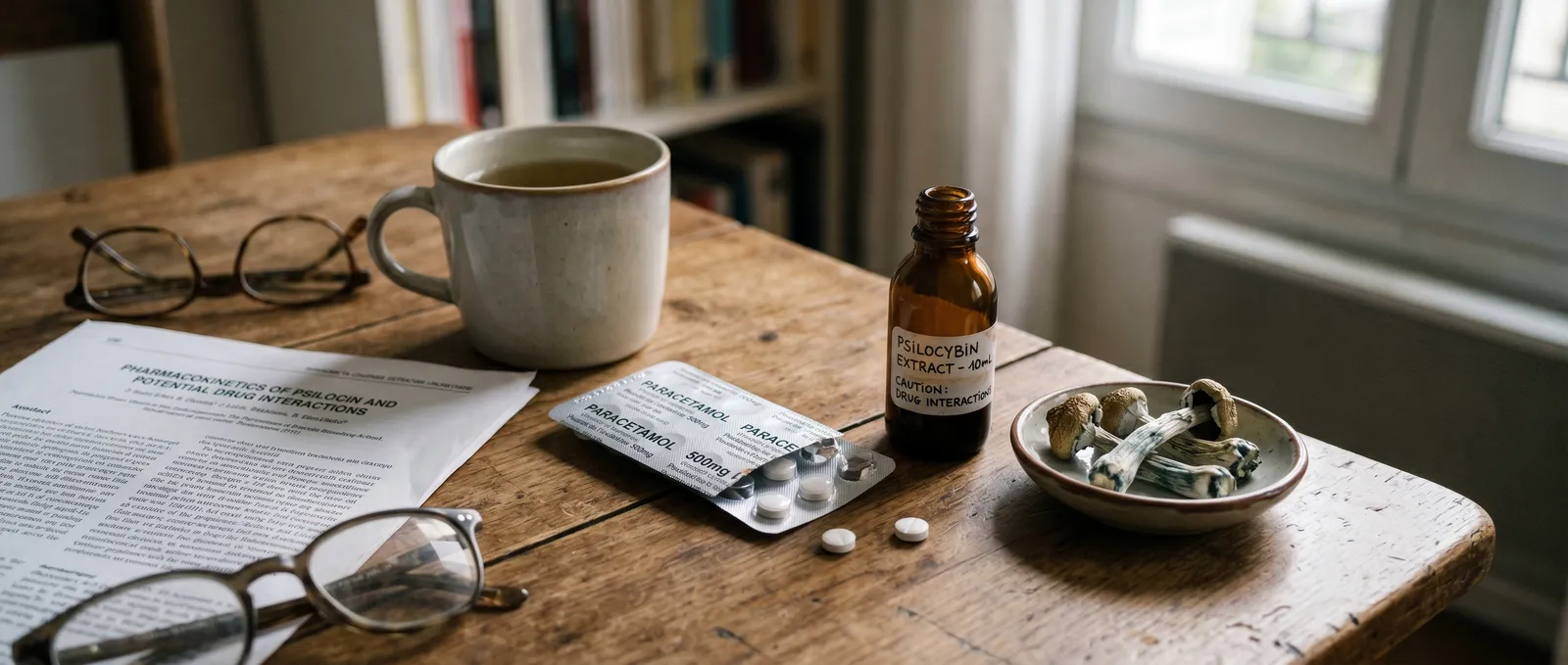
  • Health screening: Share any psychiatric or cardiac history with a clinician, and review current medications before use. Some prescriptions, especially antidepressants or heart medicines, can interact in unpredictable ways.9
  • Set & setting: Choose a calm, familiar indoor space with trusted, sober support nearby. Comfort, privacy, and a sense of emotional safety all help reduce anxiety and confusion.
  • Substance safety: Avoid mixing psilocybin with alcohol, stimulants, or MAOIs. These combinations can strain the body and increase the risk of panic or cardiovascular stress.
  • Hydration & nutrition: Eat lightly before the session, and keep water close at hand. Overeating or consuming heavy foods may contribute to nausea, while dehydration can exacerbate fatigue during the comedown.
  • Integration: After the experience, take time to reflect. Journaling, quiet walks, or sharing with trusted friends can help anchor insights and emotional material that surfaced during the session.
  • Emergency signs: If confusion, severe anxiety, or lingering perceptual disturbances continue beyond a few hours, seek medical support immediately. It’s rare, but early intervention helps prevent panic escalation.

You can also read how to prepare for a psychedelic trip for a structured plan.

Related Product

Mazatapec

Magic Mushroom Grow Kits

€41.28

References

  1. Doctrow B. How psychedelic drugs alter the brain. National Institutes of Health (NIH). Published August 13, 2024. https://www.nih.gov/news-events/nih-research-matters/how-psychedelic-drugs-alter-brain ↩︎
  2. National Institute on Drug Abuse. Psilocybin (Magic Mushrooms). nida.nih.gov. Published January 24, 2024. https://nida.nih.gov/research-topics/psilocybin-magic-mushrooms ↩︎
  3. Hinkle JT, Graziosi M, Nayak SM, Yaden DB. Adverse Events in Studies of Classic Psychedelics: A Systematic Review and Meta-Analysis. JAMA Psychiatry. Published online 2024. doi:https://doi.org/10.1001/jamapsychiatry.2024.2546 ↩︎
  4. Wsół A. Cardiovascular safety of psychedelic medicine: current status and future directions. Pharmacological reports: PR. 2023;75(6). doi:https://doi.org/10.1007/s43440-023-00539-4 ↩︎
  5. Akhila Yerubandi, Thomas JE, Alam M, Harrington C, Lorenzo Villa Zapata, Caballero J. Acute Adverse Effects of Therapeutic Doses of Psilocybin: A Systematic Review and Meta-Analysis. JAMA Network Open. 2024;7(4):e245960-e245960. doi:https://doi.org/10.1001/jamanetworkopen.2024.5960 ↩︎
  6. Frautschi PC, Singh AP, Stowe NA, Yu JPJ. Multimodal Neuroimaging of the Effect of Serotonergic Psychedelics on the Brain. American Journal of Neuroradiology. Published online February 15, 2024. doi:https://doi.org/10.3174/ajnr.A8118 ↩︎
  7. Beneš M, Páleníček T, Horáček J. What fMRI studies say about the nature of the psychedelic effect: a scoping review. Frontiers in Neuroscience. 2025;19. doi:https://doi.org/10.3389/fnins.2025.1606798 ↩︎
  8. Calder AE, Hasler G. Towards an understanding of psychedelic-induced neuroplasticity. Neuropsychopharmacology. 2022;48(48):1-9. doi:https://doi.org/10.1038/s41386-022-01389-z ↩︎
  9. Johnson M, Richards W, Griffiths R. Human hallucinogen research: guidelines for safety. Journal of Psychopharmacology. 2008;22(6):603-620. doi:https://doi.org/10.1177/0269881108093587 ↩︎
  10. Hosein MM, Reid MJ, Walser S, et al. Considerations and cautions for the integration of psilocybin into routine clinical care: a consensus statement from the US National Network of Depression Centers’ Task Group on Psychedelics and Related Compounds. EClinicalMedicine. 2025;89:103517-103517. doi:https://doi.org/10.1016/j.eclinm.2025.103517 ↩︎
 
Posted in: Fungi, Magic Mushrooms