
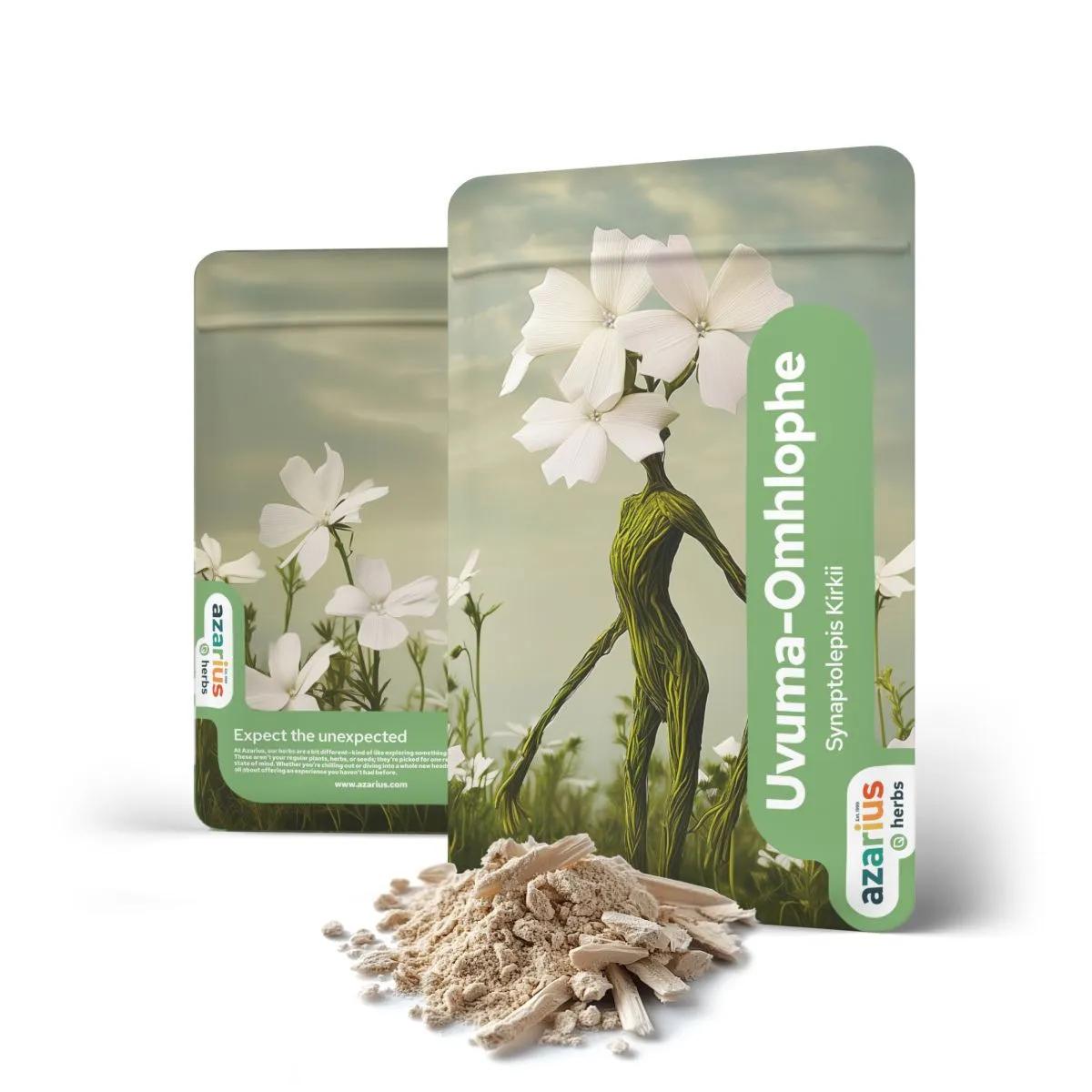
Uvuma-Omhlophe Root — African Dream Root for Ritual and Relaxation
Uvuma-omhlophe root (Synaptolepis kirkii) is a traditional African botanical prized for its reported ability to promote vivid, lucid dreaming and deep relaxation. The name comes from the Zulu words uvuma ("to agree") and omhlophe ("white") — a reference to the distinctive white colour of the roots. For centuries, this plant has played a central role in South African spiritual ceremonies, where it's been used to induce trance states and foster a sense of connection with ancestral traditions.
We've carried uvuma-omhlophe for years now, and it's one of those products that quietly builds a loyal following. Customers who discover it tend to come back for it — particularly those who are already experimenting with dream herbs like calea zacatechichi or silene capensis. The crushed root format makes preparation straightforward: steep it, drink it, sleep on it.
What Makes Uvuma-Omhlophe Root Worth Trying
Uvuma-omhlophe sits in a specific niche: it's a dream herb with deep cultural roots in South African spiritual practice, not just another sleep aid. The crushed root arrives ready to brew — no grinding, no capsule-filling, just add hot water. The texture is fibrous and woody, with a mildly bitter, earthy taste that's not unpleasant once you're used to it. Think somewhere between valerian and a mild bark tea.
Where uvuma-omhlophe distinguishes itself from other dream herbs is in its traditional use for inducing lucid, sometimes visionary dreams. According to ethnobotanical records, indigenous healers in southern Africa have long employed the root in rituals designed to receive guidance and connect with ancestors. The plant is traditionally valued for its grounding and mind-clearing properties — users often describe a sense of mental stillness before sleep, followed by unusually vivid dream imagery.
One honest note: this isn't a product that hits you over the head. The effects are subtle and tend to build over several nights of use. If you're expecting something dramatic on night one, you might be underwhelmed. But stick with it for 3–5 consecutive evenings, and most people start noticing a real shift in dream recall and vividness. We've heard this from enough customers over the years to feel confident saying it.
How Uvuma-Omhlophe Compares to Other Dream Herbs
Uvuma-omhlophe (Synaptolepis kirkii) is often mentioned alongside two other African dream botanicals: silene capensis (also called African dream root) and entada rheedii. Each works differently, and knowing the distinction saves you guessing.
| Feature | Uvuma-Omhlophe (S. kirkii) | Silene Capensis | Calea Zacatechichi |
|---|---|---|---|
| Origin | Southern Africa (Zulu tradition) | Eastern Cape, South Africa (Xhosa tradition) | Mexico (Chontal Maya tradition) |
| Preparation | Tea infusion from crushed root | Foam method or capsule | Tea or smoked leaf |
| Typical starting amount | 250–500 mg before bed | 250 mg root powder | 1–2 g dried leaf as tea |
| Taste | Mildly bitter, earthy | Soapy, foamy | Intensely bitter |
| Onset pattern | Gradual over several nights | Often noticeable first night | Same-night effects common |
| Traditional use | Ancestral communication, trance | Prophetic dreaming | Dream divination |
If you want the best dream herb for a patient, cumulative approach, uvuma-omhlophe root is the one we'd point you toward. Calea zacatechichi is more immediate but tastes genuinely awful — like chewing a paracetamol wrapped in lawn clippings. Silene capensis sits somewhere in between. Many of our regular dream-herb customers end up rotating all three.
Specifications
| Specification | Detail |
|---|---|
| Botanical name | Synaptolepis kirkii |
| Common names | Uvuma-omhlophe, Kirkii dream root |
| Plant part | Crushed root |
| Origin | Southern Africa |
| Form | Dried, crushed root pieces |
| Colour | White to pale cream |
| Sourcing | Sustainably harvested |
| Recommended preparation | Hot water infusion (tea) |
Building a dream herb collection? Pair uvuma-omhlophe root with Calea zacatechichi for a broader range of dream-enhancing botanicals. A dream journal next to your bed helps too — there's no point having vivid dreams if you forget them by breakfast. We also carry Silene capensis (African dream root) if you want to compare the two African traditions side by side.
Why Uvuma-Omhlophe Root Deserves a Spot on Your Shelf
Most people come to dream herbs after realising they barely remember their dreams at all. That's normal — modern life, screen time before bed, irregular sleep schedules — it all chips away at dream recall. Uvuma-omhlophe root comes from a tradition where dreaming wasn't just a byproduct of sleep but an active practice, a way of processing experience and seeking insight.
What we appreciate about this particular root is its gentleness. It doesn't force anything. You brew a cup before bed, let it do its thing, and over a few nights the dream world starts to feel more accessible. According to ethnobotanical research, Synaptolepis kirkii has been traditionally used in South African healing practices for promoting relaxation and a sense of well-being. A review published in PMC on traditionally used African medicinal plants notes that root preparations of plants in this category have a long history in indigenous healing contexts (PMC, 2022).
The limitation? There's currently no standardised clinical dosing for uvuma-omhlophe. According to Healthline's review of African dream root compounds, "there's a lack of research on the safety and side effects" of these botanicals, and most dosing guidance comes from traditional practice rather than controlled trials. That's worth knowing. Start conservatively, pay attention to how you respond, and keep a dream journal to track changes.
How to Use Uvuma-Omhlophe Root
- Measure out approximately 250–500 mg of crushed uvuma-omhlophe root. Research sources and vendors consistently suggest starting at the lower end — around 250–300 mg — and adjusting from there. A small kitchen scale accurate to 0.1 g is genuinely useful here.
- Place the crushed root in a cup and pour freshly boiled water over it. Let it steep for 10–15 minutes. The water will turn a pale, slightly cloudy colour.
- Strain the root pieces out and drink the tea approximately 30–60 minutes before going to sleep. The taste is mildly bitter and earthy — manageable without sweetener, but a small spoon of honey won't hurt if you prefer.
- Keep a notebook and pen next to your bed. Dream recall fades fast — writing down whatever you remember immediately upon waking is the single most effective thing you can do to get results from any dream herb.
- Repeat for 3–5 consecutive nights. Uvuma-omhlophe traditionally builds in effect with repeated use. Don't judge it after a single cup.
Frequently Asked Questions
What is uvuma-omhlophe root?
Uvuma-omhlophe is the crushed root of Synaptolepis kirkii, a plant native to southern Africa. It's traditionally used in Zulu spiritual practices for promoting vivid dreams and entering meditative or trance-like states. The name translates roughly to "agree with the white" — a reference to the root's pale colour.
How much uvuma-omhlophe root should I use?
Most sources recommend starting with 250–300 mg steeped as a tea before bed. Some users report needing up to 400–500 mg. There's no standardised clinical dose, so starting low and adjusting over several nights is the sensible approach.
Can I combine uvuma-omhlophe with other dream herbs?
Many dream herb enthusiasts do combine it with calea zacatechichi or silene capensis. If you're new to dream herbs, try each one individually first so you can tell what's actually working. Combining from day one makes it impossible to know which herb is doing what.
Are there any side effects of uvuma-omhlophe?
According to Healthline, there's limited clinical research on the safety profile of African dream roots. Traditional use suggests it's generally well-tolerated, but some users report nausea at higher amounts or unusually intense dreams. Sticking to the 250–500 mg range and not exceeding it is the safest approach.
How long before I notice effects from uvuma-omhlophe root?
Most customers report that effects build gradually over 3–5 nights of consecutive use. Some notice increased dream vividness on the first or second night, but the traditional practice involves repeated use over several days. Patience and a dream journal are your best tools.
What does uvuma-omhlophe tea taste like?
Mildly bitter and earthy — similar to a light bark tea. It's far more palatable than calea zacatechichi, which is notoriously harsh. Most people drink it straight without any sweetener, though honey works fine if you want to take the edge off.
Is uvuma-omhlophe the same as African dream root (Silene capensis)?
No. Uvuma-omhlophe is Synaptolepis kirkii, while African dream root typically refers to Silene capensis — a different species from a different cultural tradition (Xhosa rather than Zulu). Both are used for dream work, but they have different preparation methods and slightly different effect profiles.
Last updated: April 2026
Related products
You might also like
Medical disclaimer. This content is for informational purposes only and does not constitute medical advice. Consult a qualified healthcare provider before use of any substance.