
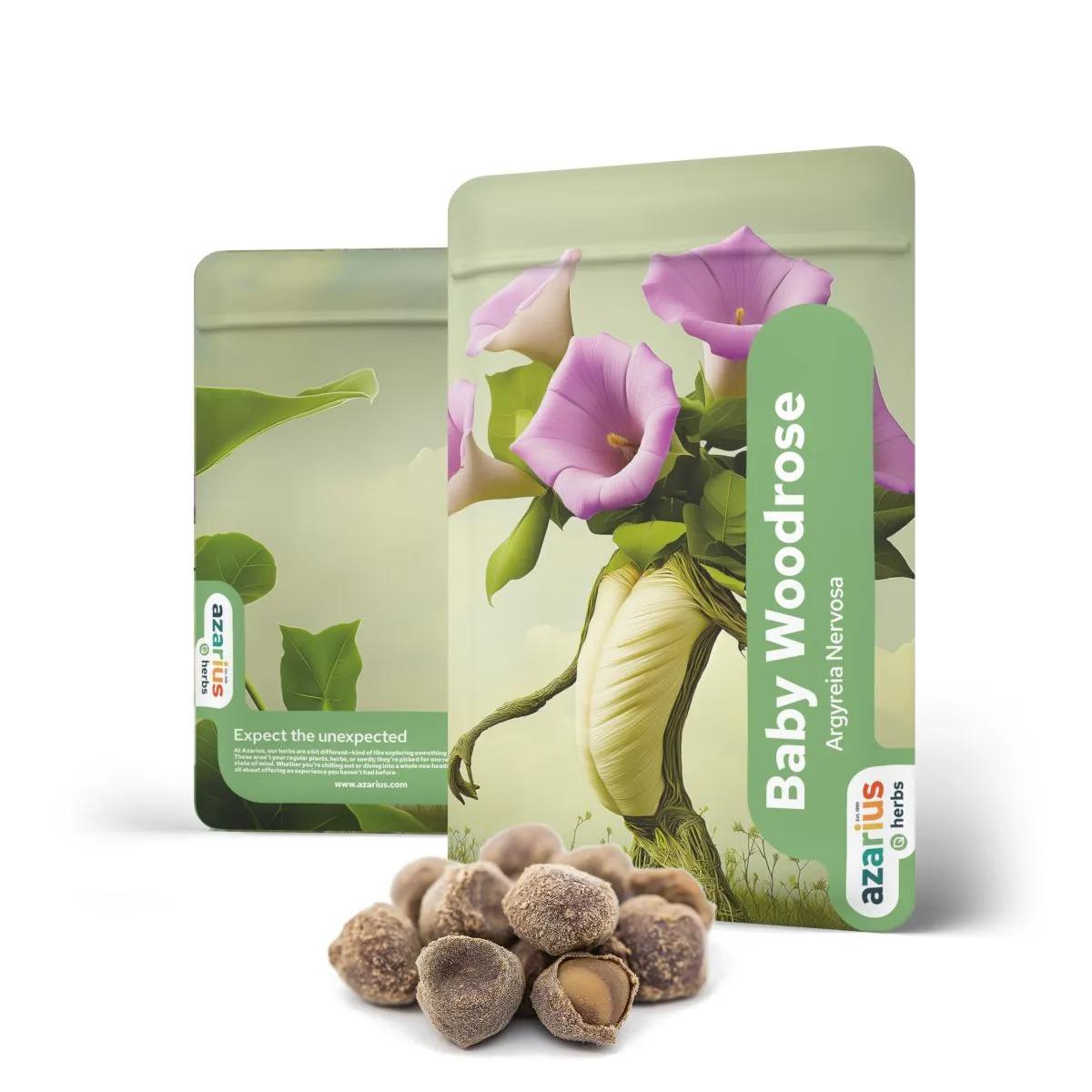
Baby Woodrose seeds
Hawaiian seeds (10x)
by Azarius
Buy more, pay less
Baby Woodrose Seeds — Concentrated LSA from Argyreia nervosa
Baby woodrose seeds are the seeds of Argyreia nervosa, a perennial climbing vine native to the Indian subcontinent that serves as the most concentrated natural source of LSA (lysergic acid amide) available. The name translates to "silvery nervous" — a reference to the plant's distinctive silvery leaves and prominent veining. We've stocked these since 1999, and they remain one of the most asked-about items on our shelves for good reason: fewer seeds, less plant material, more straightforward preparation than any other natural LSA source. If you want to buy baby woodrose seeds from a shop that actually knows the product, you're in the right place.
Why Baby Woodrose Seeds Over Morning Glory
Baby woodrose seeds contain significantly more LSA per seed than morning glory, making them the most practical natural lysergamide source available. LSA sits in the same chemical family as LSD — both are lysergamides — but the experience is its own thing entirely. The critical difference between baby woodrose and morning glory (Ipomoea tricolor) comes down to concentration. Morning glory seeds require hundreds of seeds for a comparable LSA content. Baby woodrose seeds are significantly more concentrated, which means fewer seeds, less bulk to process, and a much simpler preparation ritual. If you've been reading about natural lysergamides and keep landing on baby woodrose, that's because it's the most practical option by a wide margin.
According to a systematic review on lysergic acid amide published in PMC (PMC12286086), LSA interacts with serotonin 5-HT2A receptors — the same receptor system that LSD and psilocybin bind to. The pharmacological profile is related but distinct, producing effects that researchers describe as sedating and introspective rather than the visual intensity associated with LSD. The European Monitoring Centre for Drugs and Drug Addiction (EMCDDA) has also documented LSA-containing seeds within its monitoring of novel psychoactive substances, noting the lysergamide classification and serotonergic mechanism of action.
What the Seeds Look and Feel Like
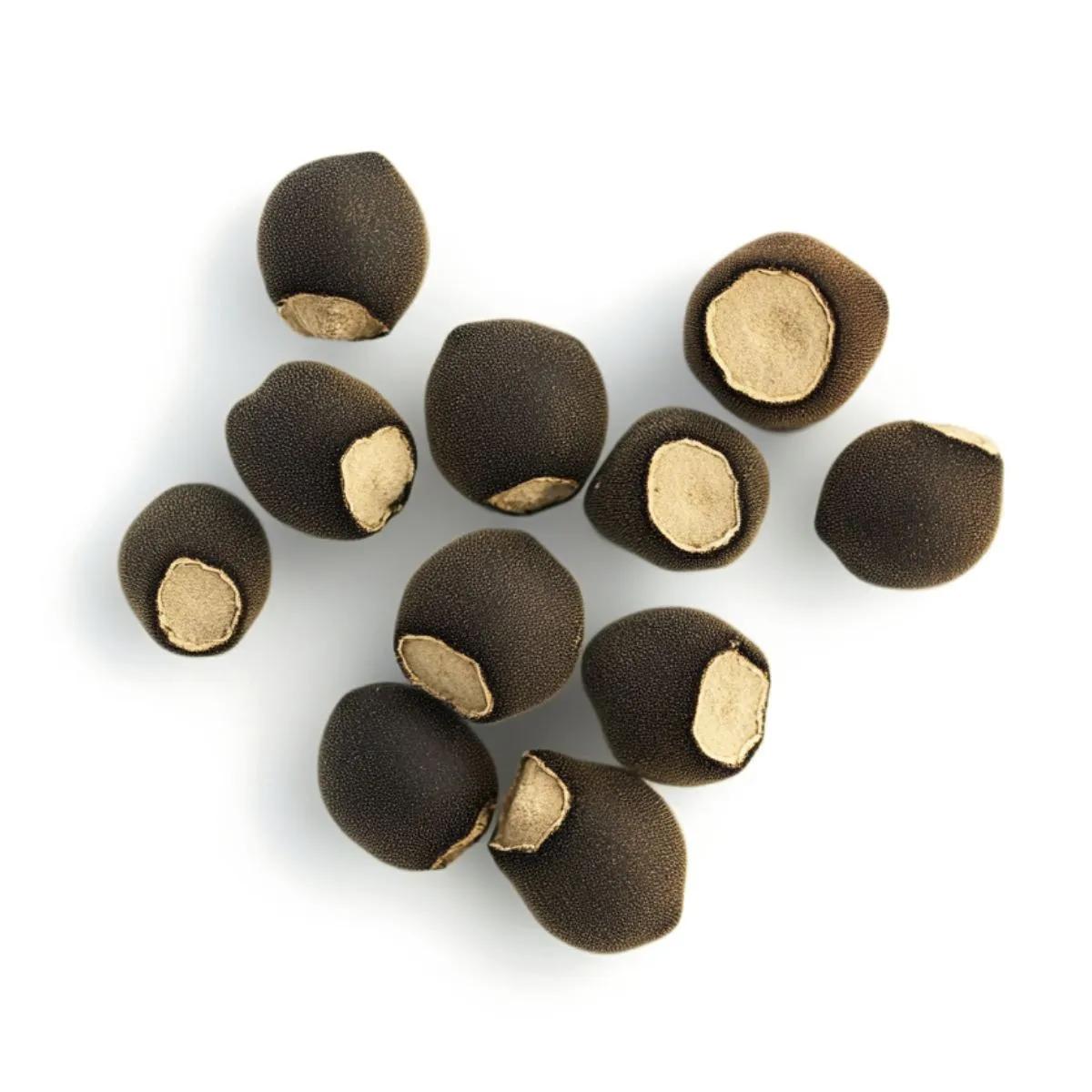
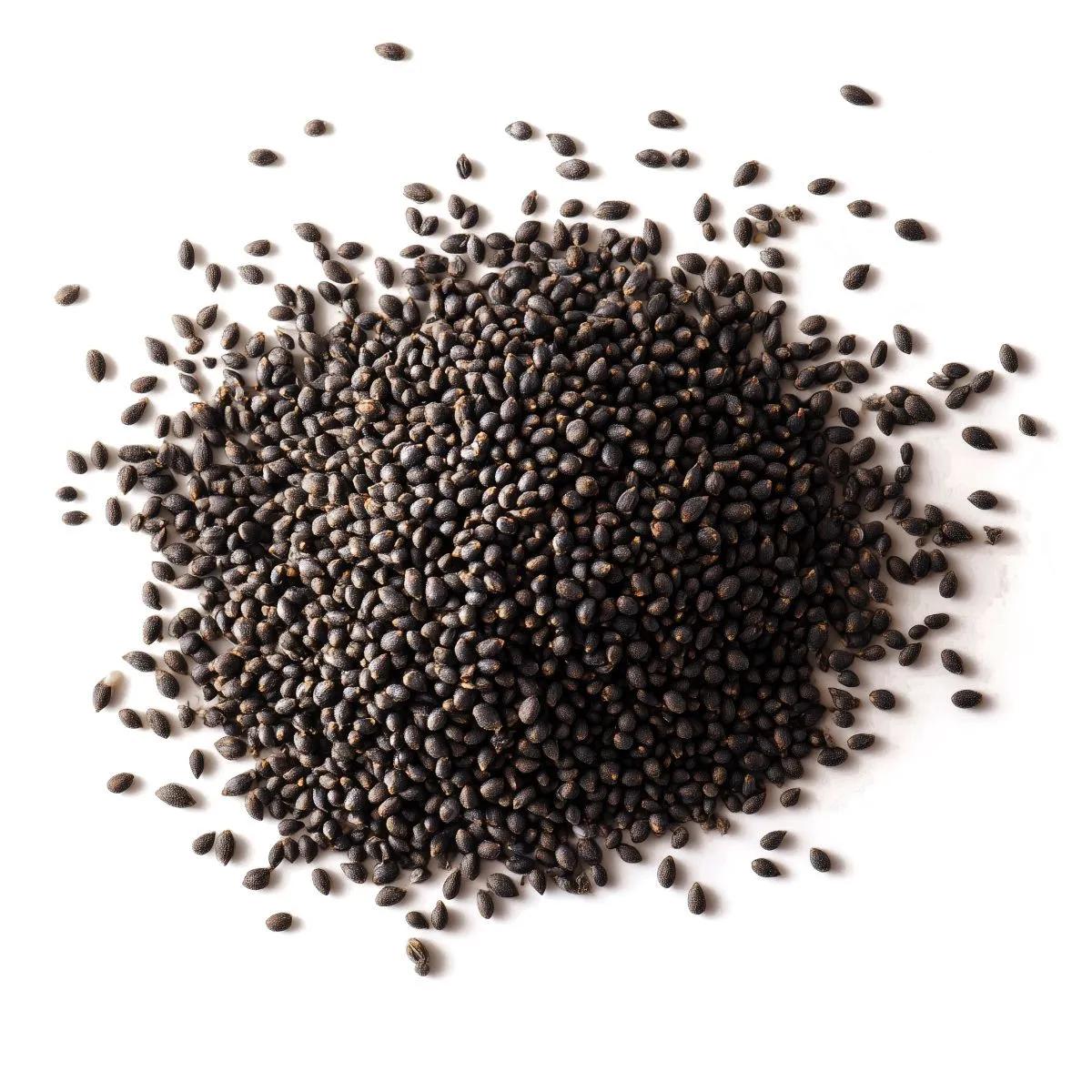
Baby woodrose seeds are hard, round, and coated in a waxy brown-to-dark-grey husk with a slightly fuzzy texture, almost like fine suede. Crack one open and the inside is lighter, with a dense, starchy core. The taste? Bitter, earthy, and not something you'd describe as pleasant. That bitterness is part of the territory — it's the alkaloid content making itself known. Most people who chew them directly describe the flavour as somewhere between raw acorn and old coffee grounds. Not awful, not great.
The honest limitation here: nausea. It's the single most common complaint we hear, and it's been consistent across 25 years of customer feedback. The outer husk contains most of the compounds responsible for stomach upset. Removing it before ingestion makes a noticeable difference. More on that below.
| Specification | Detail |
|---|---|
| Species | Argyreia nervosa |
| Common names | Baby woodrose, Hawaiian baby woodrose, elephant creeper, woolly morning glory |
| Primary alkaloid | LSA (lysergic acid amide / ergine) |
| Alkaloid family | Lysergamides |
| Receptor affinity | Serotonin 5-HT2A |
| Onset | 1–2 hours |
| Duration | Several hours |
| Seed condition | Whole, untreated, with husk |
| Origin | Indian subcontinent (perennial climbing vine) |
| Suitable preparations | Cold-water extraction, tincture, direct chewing |
Preparation Methods for Baby Woodrose Seeds
Cold-water extraction is the most effective preparation method for reducing nausea while preserving LSA content. The method you choose affects both the intensity and the side-effect profile. Here are the most common approaches, ranked by how well they reduce stomach discomfort.
- Remove the outer husk. This is step one regardless of method. Use a small knife or your fingernails to scrape off the fuzzy outer coating. It peels away in flakes. The husk contains a higher concentration of the glycoside compounds associated with nausea and vasoconstriction. Removing it won't eliminate discomfort entirely, but it cuts it significantly.
- Cold-water extraction. Grind the de-husked seeds into a fine powder using a coffee grinder or mortar and pestle. Add the powder to cold (not hot — heat degrades LSA) distilled water. Let it sit for 2–4 hours, stirring occasionally. Strain through a coffee filter or cheesecloth. Drink the liquid, discard the plant material. This method extracts the LSA while leaving behind much of the indigestible seed matter that causes stomach issues.
- Tincture preparation. Grind de-husked seeds and submerge in high-proof alcohol (vodka works, though higher proof is more efficient). Store in a dark glass container for 3–7 days, shaking daily. Strain and dose by volume. Tinctures keep longer than water extractions and allow for more precise dosing over time.
- Direct chewing. The simplest method. Remove the husk, chew the seeds thoroughly, and hold the mush under your tongue for 15–20 minutes before swallowing. Sublingual absorption means faster onset but you're also ingesting all the seed material, so expect more stomach discomfort.
- Ginger tea on the side. Regardless of method, brew a strong ginger tea (fresh ginger root, sliced, steeped in hot water for 10 minutes) and sip it alongside your preparation. Ginger is a well-documented antiemetic and takes the edge off the nausea that LSA seeds are known for.
What to Expect and What to Watch Out For
The onset of effects from baby woodrose seeds typically sits at 1–2 hours, though cold-water extractions can come on slightly faster since the LSA is already dissolved. Duration stretches across several hours, with a gradual wind-down rather than a sharp cutoff. The come-up often includes some physical heaviness and, yes, potential nausea — this is where your ginger tea earns its keep.
According to research published in PMC (PMC12031634), Argyreia nervosa — commonly known as Hawaiian baby woodrose, Adhoguda, Vidhara, elephant creeper, and woolly morning glory — is a perennial climbing plant with a documented history of traditional use in the Indian subcontinent. The seeds have been used in spiritual and ceremonial contexts for generations.
Safety-wise, the literature is clear on a few points. According to a case report published in PubMed (PMID 33661700), ingestion of baby woodrose seeds has been associated with psychotic adverse effects in susceptible individuals, including dissociative reactions. Major side effects reported across the literature include nausea, vomiting, and dizziness. These seeds interact with the serotonin system, so combining them with SSRIs, MAOIs, or other serotonergic substances is a serious risk — serotonin syndrome is not something you want to experience.
Set and setting matter here as much as they do with any serotonergic substance. A calm, familiar environment with someone you trust nearby is the baseline. According to harm-reduction guidance, a light meal 2–3 hours before may help balance absorption and stomach comfort.
Baby Woodrose vs Morning Glory — Side by Side
Baby woodrose seeds require single-digit seed counts to match the LSA content of 150–300+ morning glory seeds, making them the more efficient and practical choice. Both are natural lysergamide sources, but the practical differences are significant enough to warrant a direct comparison.
| Factor | Baby Woodrose (Argyreia nervosa) | Morning Glory (Ipomoea tricolor) |
|---|---|---|
| LSA concentration per seed | High — fewer seeds needed | Low — hundreds of seeds required |
| Typical seed count | Single digits | 150–300+ |
| Preparation complexity | Lower — less plant material | Higher — large volume of seeds |
| Nausea potential | Moderate (reduced by de-husking) | High (large seed volume) |
| Taste | Bitter, earthy | Bitter, slightly floral |
| Onset | 1–2 hours | 1–3 hours |
| Duration | Several hours | Several hours |
| Extraction suitability | Excellent — cold water or tincture | Good — cold water preferred |
If you're choosing between the two, baby woodrose is the more practical option. Less material, simpler prep, same active compound. Morning glory seeds have their own following, but the sheer volume required makes the process more cumbersome.
Pair your seeds with a digital milligram scale for precise preparation, or get some dried ginger root to brew alongside your extraction. If you're interested in other natural LSA sources, we also stock morning glory seeds for comparison. Order a mortar and pestle set if you plan on doing cold-water extractions regularly — it makes grinding de-husked seeds much easier than improvising with kitchen tools.
Storage and Shelf Life
Baby woodrose seeds maintain their potency for well over a year when stored in an airtight container, in a cool, dark place. The key enemies are moisture, heat, and light — all of which degrade LSA over time. A small glass jar in a cupboard away from the cooker is fine. Some people refrigerate them, which is overkill for short-term storage but reasonable if you're sitting on them for months.
Frequently Asked Questions
How many baby woodrose seeds should I use?
Dosage information from Erowid and community sources varies, but published reports typically reference single-digit seed counts for baby woodrose versus hundreds for morning glory. Start conservatively and always remove the outer husk first. Specific dosing is best researched through harm-reduction resources like Erowid's baby woodrose vault.
Do baby woodrose seeds cause nausea?
Yes, nausea is the most commonly reported side effect. The outer husk is the main culprit — scraping it off before ingestion reduces stomach discomfort noticeably. A cold-water extraction further helps by separating the LSA from indigestible plant material. Ginger tea alongside any method is strongly recommended.
What is the difference between baby woodrose and morning glory seeds?
Both contain LSA, but baby woodrose seeds are far more concentrated. You need single-digit numbers of baby woodrose seeds versus 150–300+ morning glory seeds for comparable LSA content. Baby woodrose is simpler to prepare and involves less plant material, making it the more practical choice for most people.
Can I make a tincture from baby woodrose seeds?
Yes. Grind de-husked seeds, submerge in high-proof alcohol, store in a dark container for 3–7 days while shaking daily, then strain. Tinctures offer more precise dosing than chewing and have a longer shelf life than water extractions. Use cold or room-temperature alcohol — heat degrades LSA.
How long do the effects of baby woodrose seeds last?
Onset is typically 1–2 hours after ingestion, with the full duration stretching across several hours. Cold-water extractions may come on slightly faster. The wind-down is gradual rather than abrupt. Plan for a full evening and don't schedule anything demanding the following morning.
Can I combine baby woodrose seeds with other substances?
Baby woodrose seeds interact with the serotonin system. Combining them with SSRIs, MAOIs, or other serotonergic drugs risks serotonin syndrome, which is dangerous. Avoid alcohol as well — it worsens nausea and adds unpredictability. Keep it simple and don't mix.
Should I eat before taking baby woodrose seeds?
A light meal 2–3 hours beforehand strikes the best balance. A completely empty stomach speeds absorption but intensifies nausea. A full stomach delays onset and can make the whole experience sluggish. Something light — toast, a banana — is the sweet spot.
Last updated: April 2026
Related products
Medical disclaimer. This content is for informational purposes only and does not constitute medical advice. Consult a qualified healthcare provider before use of any substance.