
This article discusses psychoactive substances intended for adults (18+). If you have a health condition or take medication, consult a doctor before use. Our age policy
Hawaiian Baby Woodrose Plant Botany
Definition
Argyreia nervosa, commonly called Hawaiian baby woodrose, is a perennial climbing vine native to the Indian subcontinent, not Hawai'i. Introduced to the Pacific islands as an ornamental (Staples & Herbst, 2005), it belongs to the Convolvulaceae family and produces large, silver-backed heart-shaped leaves, purple trumpet flowers, and the alkaloid-bearing seeds that have drawn ethnobotanical interest worldwide.
Hawaiian baby woodrose plant botany is a subject that begins with a single species: Argyreia nervosa is a perennial climbing vine in the family Convolvulaceae that produces alkaloid-bearing seeds and has drawn ethnobotanical interest worldwide. 18+ only — This article covers the botany of a plant whose seeds contain psychoactive alkaloids. The content below is written for adults. Despite the common name, the plant is not Hawaiian at all. It originated in the Indian subcontinent and was introduced to Hawai'i as an ornamental sometime in the early twentieth century. What makes hawaiian baby woodrose plant botany interesting goes well beyond its seeds: the plant itself is a vigorous, large-leaved climber with a growth habit that can overtake entire tree canopies in tropical conditions.
What Does the Plant Actually Look Like?
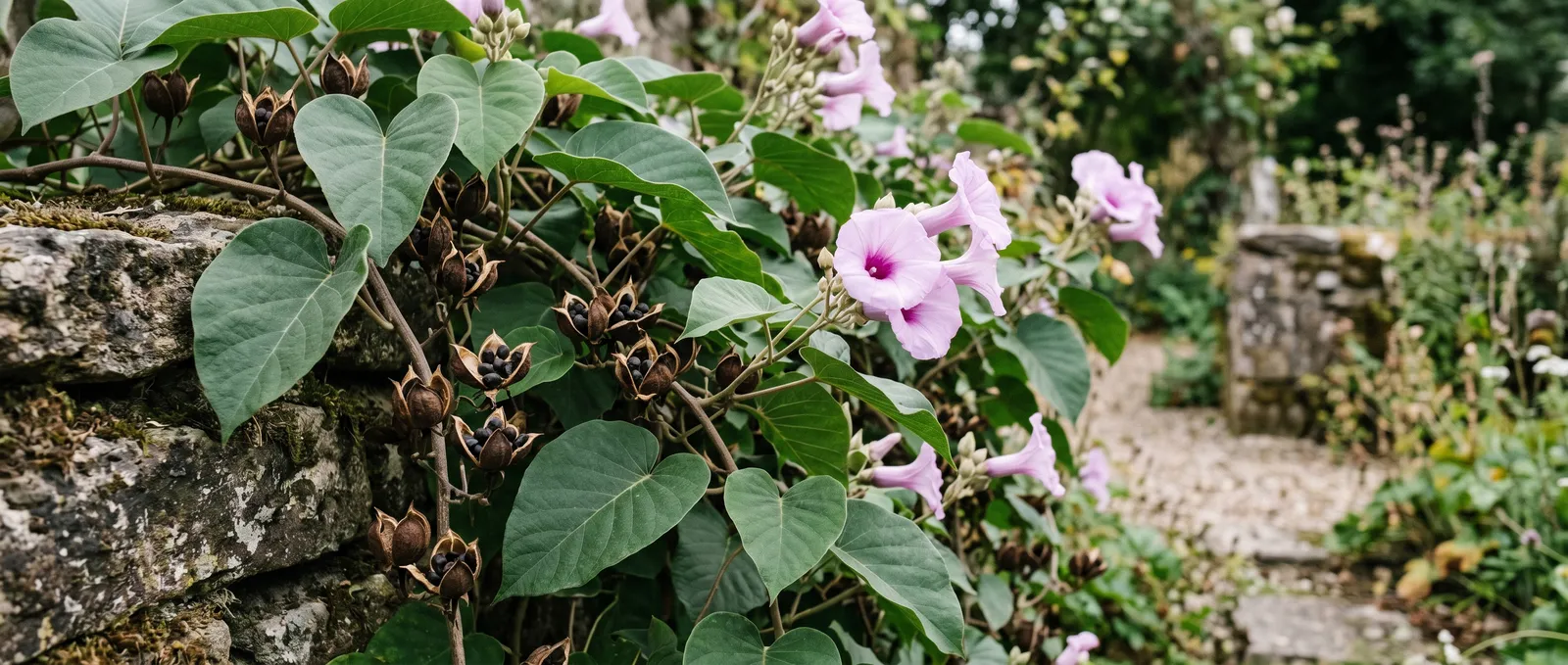
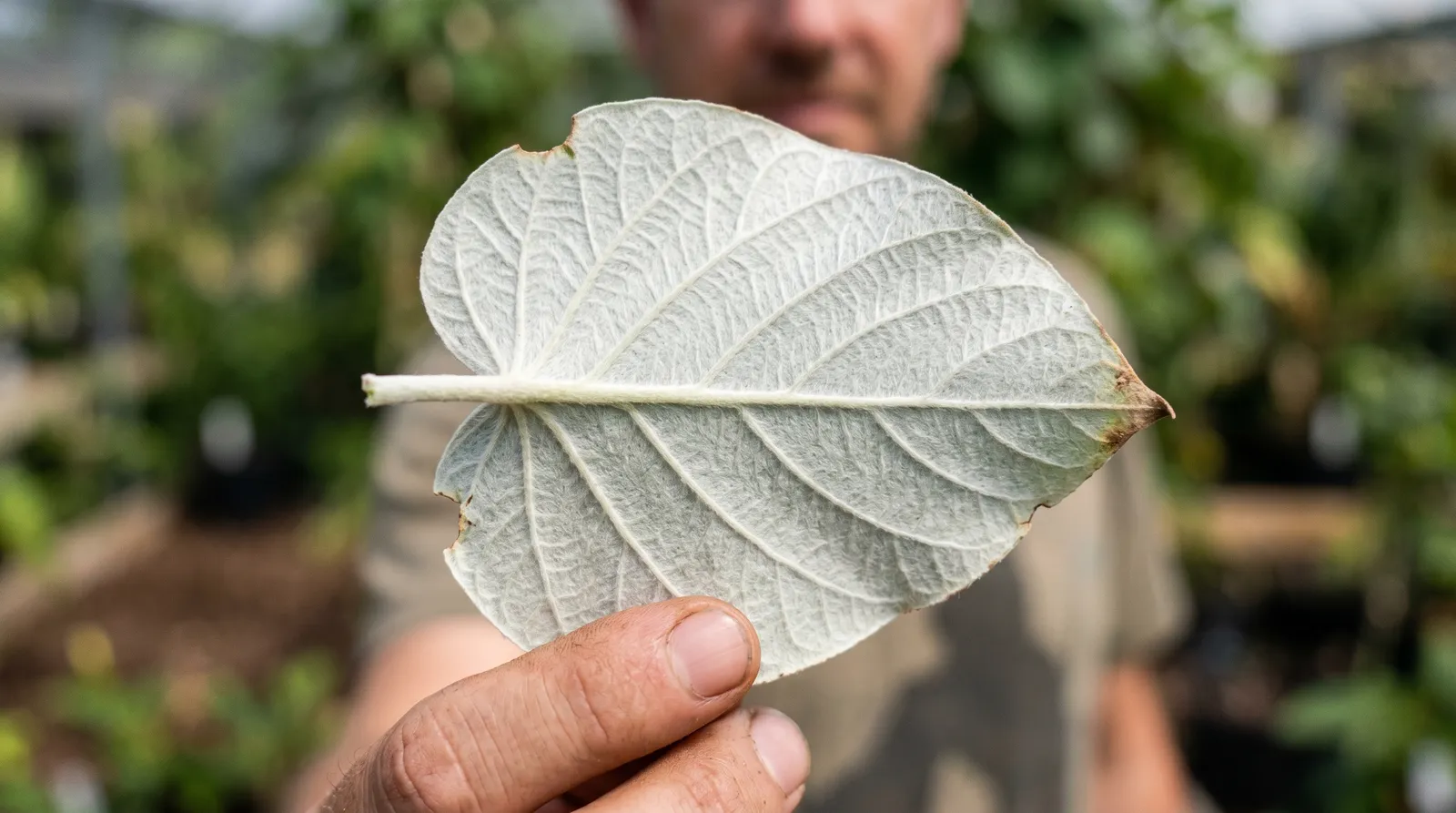
Argyreia nervosa is a woody liana that can reach 10 metres or more in a single growing season under ideal conditions, making it one of the most vigorous climbers in the Convolvulaceae. If you've only ever seen the seeds — those fuzzy, dark-brown spheres about 5–8 mm across — you might be surprised by the plant. The leaves are the giveaway: large, heart-shaped (cordate), 15–30 cm across, with a deep green upper surface and a distinctive silvery-white underside covered in fine hairs. That silver pubescence is where the genus name Argyreia comes from — the Greek argyreos, meaning silvery (Mabberley, 2017).
The flowers are trumpet-shaped, as you'd expect from a Convolvulaceae member, typically 5–7 cm long, and range from lavender to deep purple with a darker throat. They appear in clusters (cymes) and are pollinated primarily by large bees. After pollination, each flower produces a dry, woody capsule containing 1–4 seeds — those same seeds that have made the plant famous in ethnobotanical circles. The seeds are enclosed in a papery calyx that persists and dries around the fruit, giving the seed pods a distinctive lantern-like appearance. If you want to buy Hawaiian baby woodrose seeds to study the plant's morphology firsthand, Azarius carries them in the smartshop seed catalogue.
Where Does It Actually Come From?
The native range of Hawaiian baby woodrose is the Indian subcontinent, specifically the Western Ghats, Bengal, and parts of Sri Lanka. In Ayurvedic medicine, the plant has been referenced under the Sanskrit name vidhara for centuries, though the traditional uses centred on the root and leaves rather than the seeds. Staples and Herbst (2005) documented its introduction to Hawai'i as a garden ornamental, where it naturalised aggressively in lowland mesic environments — exactly the kind of warm, humid conditions it thrives in.
Today you'll find naturalised populations across the tropics: Hawai'i, Florida, parts of the Caribbean, sub-Saharan Africa, and Southeast Asia. In several of these regions, it's considered an invasive species. The plant grows fast, tolerates poor soil, and its dense foliage can smother native vegetation. The Pacific Island Ecosystems at Risk project (PIER) lists it as a high-risk species for tropical Pacific islands. The EMCDDA has also noted the plant's spread in the context of monitoring novel psychoactive substance sources across European markets.
How Is It Related to Morning Glory?
Both Argyreia nervosa and morning glory belong to Convolvulaceae, but they sit in different genera — think of them as cousins rather than siblings. The family contains around 1,600 species across roughly 60 genera (Stefanović et al., 2003). What links the two genera in most people's minds is chemistry: both produce ergine (d-lysergic acid amide, or LSA) and related ergot alkaloids in their seeds. But morphologically, they're quite different. Argyreia species tend to be woodier, with larger leaves and a more robust growth habit. Ipomoea tricolor (the classic "Heavenly Blue" morning glory) is a much more delicate annual vine with smaller, thinner leaves and those iconic sky-blue funnel flowers. Those interested in comparing the two can order morning glory seeds alongside Hawaiian baby woodrose seeds from the Azarius smartshop to examine both species side by side.
The shared alkaloid profile is thought to result from endophytic fungi — specifically Periglandula species — that live within the plant tissues and produce the ergot alkaloids. Steiner et al. (2011) confirmed the presence of these clavicipitaceous fungi in Ipomoea and Argyreia, suggesting the alkaloids are not synthesised by the plant genome itself but by its fungal symbionts. This is a genuinely strange arrangement: the plant provides a home, the fungus provides the chemistry. Whether this constitutes a defensive mutualism (the alkaloids may deter herbivores) or something else entirely is still debated, though Schardl et al. (2007) argued for the defensive hypothesis based on analogous loline alkaloid systems in grasses.
Can You Grow It Outside the Tropics?
You can grow Hawaiian baby woodrose outside the tropics, but only indoors or in a heated greenhouse if you live in northern Europe — Argyreia nervosa has zero frost tolerance. Temperatures below about 5 °C will kill it back to the roots, and a hard freeze finishes it off entirely. In the Netherlands or the UK, it's strictly an indoor or greenhouse plant, or at best a summer patio specimen that gets brought inside before October.
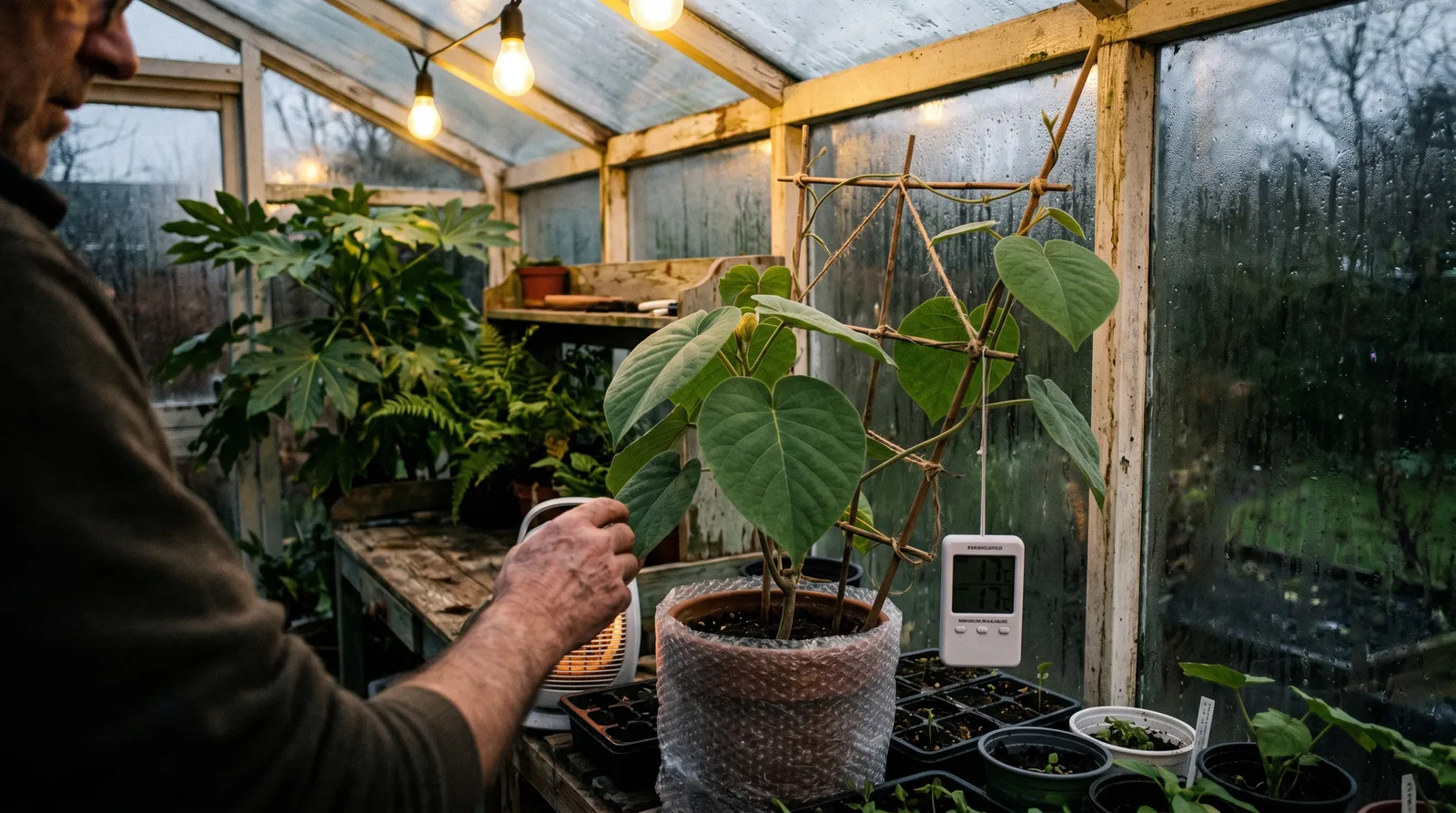
Germination is the first hurdle. The seeds have a very hard outer coat (testa) that can delay germination for weeks or months without scarification. Most growers nick the seed coat with a blade or soak the seeds in warm water for 24 hours before planting. Even then, germination rates are inconsistent — somewhere between 50–80% depending on seed freshness and storage conditions, though hard data on this is limited to anecdotal cultivation reports rather than controlled studies.
Once germinated, the seedlings grow slowly for the first few weeks, then accelerate dramatically once the root system establishes. In a heated greenhouse with good light, you can expect a vine of 2–3 metres within a single growing season. Flowering, however, is another matter: the plant typically needs at least two years of growth and consistently warm conditions (above 20 °C) to produce blooms. Many growers in temperate climates never see flowers at all. Understanding hawaiian baby woodrose plant botany at this level helps set realistic expectations for anyone attempting cultivation in cooler regions.
What About the Alkaloid-Producing Fungi?
The ergot alkaloids in Hawaiian baby woodrose seeds are produced not by the plant itself but by endophytic Periglandula fungi living within the plant's tissues. The alkaloids — including LSA, ergometrine, and lysergol — were long assumed to be products of the plant's own metabolic pathways. But work by Steiner et al. (2011) and earlier investigations by Kucht et al. (2004) showed that these fungi, which colonise the plant's seed coat and leaf tissues, carry the gene clusters responsible for ergot alkaloid biosynthesis. These fungi are vertically transmitted through the seeds, meaning each new generation of plants inherits its fungal partner.
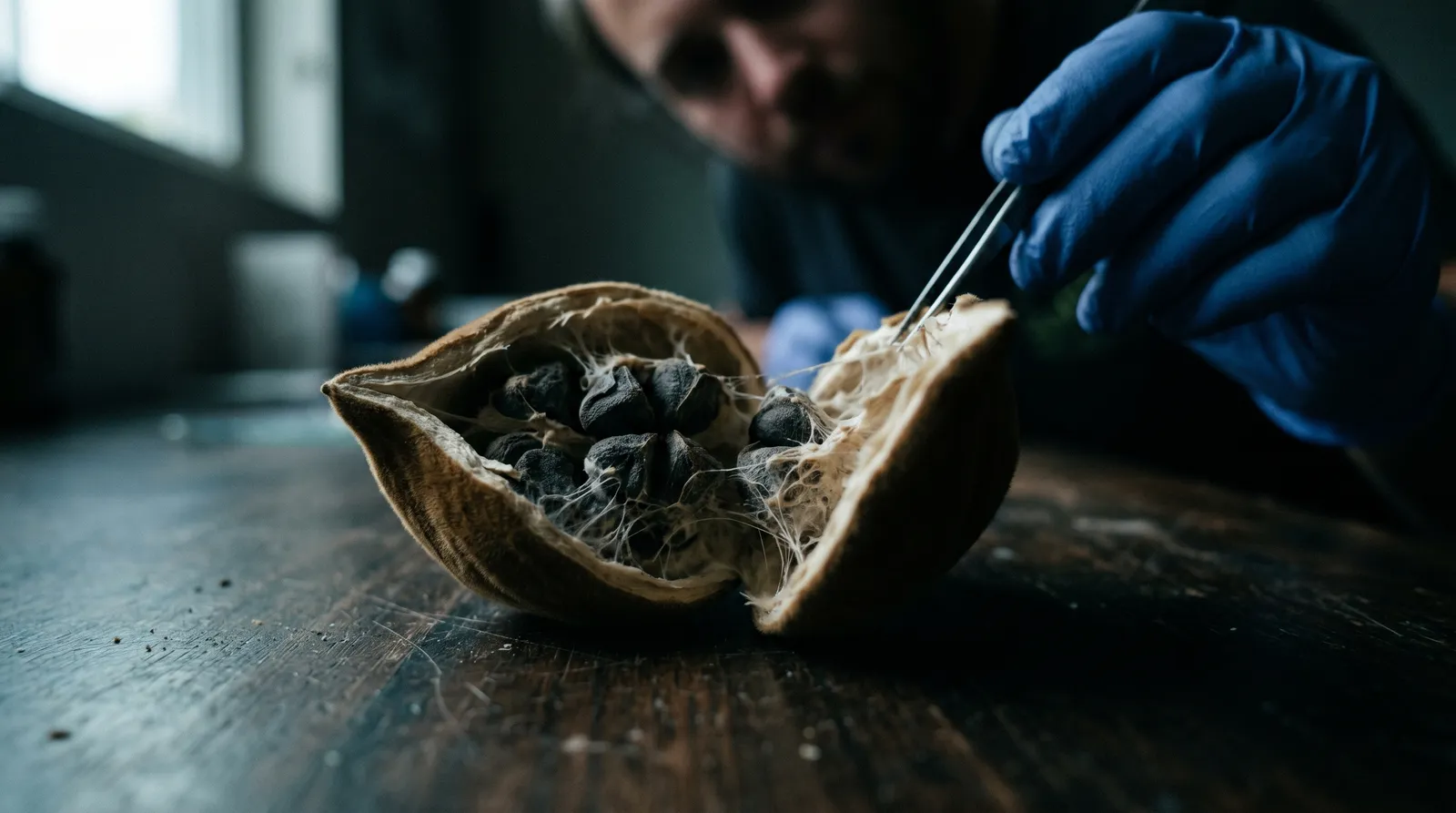
This has practical implications for hawaiian baby woodrose plant botany and seed quality alike: seeds that have been heavily processed, stored improperly, or treated with fungicides may have reduced or absent alkaloid content — not because the plant genes changed, but because the fungal symbiont was damaged or killed. It also means that alkaloid concentrations can vary significantly between seed batches, even from the same parent plant, depending on how robust the fungal colonisation is in that particular generation. Quantitative data on batch-to-batch variation remains sparse in the published literature, with most figures coming from forensic case analyses rather than systematic agricultural studies.
What Are the Key Botanical Identifiers?
The single most reliable field identifier for hawaiian baby woodrose plant botany is the silvery-white pubescence on the leaf underside, which distinguishes Argyreia nervosa from nearly all look-alikes. The table below summarises the key differences between Hawaiian baby woodrose and its most commonly confused relative.
| Feature | Argyreia nervosa | Ipomoea tricolor (Morning Glory) |
|---|---|---|
| Growth habit | Woody perennial liana, up to 10 m | Herbaceous annual vine, 2–4 m |
| Leaf size | 15–30 cm, cordate | 5–12 cm, cordate to ovate |
| Leaf underside | Silvery-white pubescence | Green, smooth or lightly hairy |
| Flower colour | Lavender to deep purple | Blue, purple, pink, or white |
| Flower size | 5–7 cm | 6–10 cm |
| Seeds per fruit | 1–4 | 4–6 |
| Seed diameter | 5–8 mm | 3–5 mm |
| Frost tolerance | None | None (dies at season end) |
| Native range | Indian subcontinent | Mexico, Central America |
How Hawaiian Baby Woodrose Compares to Other LSA-Containing Plants
Hawaiian baby woodrose contains the highest concentration of LSA per seed of any commonly available Convolvulaceae species. Ipomoea tricolor seeds also contain LSA, but at roughly one-tenth the concentration per seed by weight, meaning far more seeds are needed for equivalent alkaloid exposure. Turbina corymbosa (ololiuqui), used historically in Mesoamerican ritual contexts, falls somewhere in between. For those looking to get a closer look at the botanical differences, the Azarius encyclopedia pages on morning glory seeds and Hawaiian baby woodrose seeds cover each species in detail.
From a hawaiian baby woodrose plant botany perspective, the key distinction is that Argyreia nervosa produces fewer but larger and more alkaloid-dense seeds, while the Ipomoea species produce many smaller seeds with lower individual alkaloid loads. This likely reflects different reproductive strategies rather than any "purpose" behind the alkaloid production — the fungal symbionts simply colonise the larger seed more thoroughly.
Seed Size and Alkaloid Density Across Convolvulaceae
When studying hawaiian baby woodrose plant botany alongside related species, seed morphology offers one of the clearest points of comparison. Argyreia nervosa seeds are roughly twice the diameter and several times the mass of Ipomoea tricolor seeds. The larger seed provides more tissue for the Periglandula endophyte to colonise, which likely explains the higher alkaloid density per seed. Turbina corymbosa seeds are intermediate in size and alkaloid content. Anyone wanting to compare seed morphology directly can buy Hawaiian baby woodrose seeds and morning glory seeds from the Azarius smartshop catalogue.
Ecological Impact and Invasiveness
Hawaiian baby woodrose is classified as invasive in multiple tropical jurisdictions, including Hawai'i, parts of Florida, and several Pacific island territories. The PIER database and the EMCDDA both track the species — PIER for its ecological threat, the EMCDDA for its relevance to psychoactive substance monitoring in Europe. The plant's vigorous growth, tolerance of poor soils, and ability to smother native canopy vegetation make it a serious concern in tropical conservation. In its native range on the Indian subcontinent, natural herbivores and pathogens keep it in check, but in introduced habitats those controls are absent.
From a hawaiian baby woodrose plant botany standpoint, the invasiveness is directly related to the plant's reproductive efficiency: each fruit produces 1–4 large, durable seeds with hard coats that remain viable in soil for years. Birds and water disperse the seeds readily. Once established, the woody vine is difficult to remove because it regenerates from root fragments. Land managers in Hawai'i have noted that manual removal must include the entire root system to prevent regrowth, and even then, the persistent seed bank means new seedlings can appear for several seasons after the parent plant is gone.
Last updated: April 2026
Frequently Asked Questions
7 questionsIs Hawaiian baby woodrose native to Hawai'i?
How can you tell Hawaiian baby woodrose apart from morning glory?
Why do Hawaiian baby woodrose seeds contain ergot alkaloids?
Can you grow Hawaiian baby woodrose in northern Europe?
Is Hawaiian baby woodrose considered invasive?
How big do Hawaiian baby woodrose leaves get?
What do Hawaiian baby woodrose flowers look like?
About this article


Joshua Askew serves as Editorial Director for Azarius wiki content. He is Managing Director at Yuqo, a content agency specialising in cannabis, psychedelics and ethnobotanical editorial work across multiple languages. Th
This wiki article was drafted with AI assistance and reviewed by Joshua Askew, Managing Director at Yuqo. Editorial oversight by Adam Parsons.
Medical disclaimer. This content is for informational purposes only and does not constitute medical advice. Consult a qualified healthcare provider before use of any substance.
Last reviewed April 24, 2026
References (7)
- [1]EMCDDA (2024). European Drug Report: New psychoactive substances monitoring. European Monitoring Centre for Drugs and Drug Addiction.
- [2]Kucht, S., et al. (2004). Elimination of ergoline alkaloid biosynthesis in Claviceps purpurea by gene disruption. Applied and Environmental Microbiology, 70(11), 6971–6974.
- [3]Mabberley, D.J. (2017). Mabberley's Plant-Book. 4th edition. Cambridge University Press.
- [4]Schardl, C.L., et al. (2007). Loline alkaloids: Currencies of mutualism. Phytochemistry, 68(7), 980–996.
- [5]Staples, G.W. & Herbst, D.R. (2005). A Tropical Garden Flora. Bishop Museum Press.
- [6]Stefanović, S., et al. (2003). Phylogenetic relationships of Convolvulaceae inferred from multiple chloroplast loci. American Journal of Botany, 90(2), 316–329.
- [7]Steiner, U., et al. (2011). Molecular characterization of a seed transmitted clavicipitaceous fungus occurring on dicotyledoneous plants (Convolvulaceae). Planta, 224(3), 533–544.
Related Articles
Hawaiian Baby Woodrose Sourcing
Hawaiian baby woodrose sourcing is a practice that covers how to obtain quality Argyreia nervosa seeds — a vine whose seeds contain LSA (lysergic acid amide).
LSA Legal Status in Europe
LSA (lysergic acid amide, or ergine) occupies a legal grey zone across Europe — rarely scheduled as a compound, yet subject to varied NPS legislation that…
Ololiuqui Mazatec Tradition: Ceremonial Seeds of the Sierra Mazateca
Ololiuqui — the seeds of Turbina corymbosa — played a specific ceremonial role among the Mazatec people of Oaxaca, distinct from their better-known use of…
Morning Glory LSA Plants Family
Morning glory LSA plants family is a group of Convolvulaceae vines whose seeds contain d-lysergic acid amide (ergine), a naturally occurring tryptamine first…
Magic Truffle Quality Indicators
Magic truffle quality indicators are the measurable and sensory characteristics — psilocybin content, texture, aroma, packaging integrity, and storage…
Mescaline Cactus Market Observations
Mescaline cactus market observations is a research and retail term that describes the shifting patterns in sourcing, species selection, and consumption of…
Growing Mescaline Cacti as Ornamental Plants
Growing mescaline cacti ornamental is a horticultural practice that involves cultivating species like San Pedro, Peruvian Torch, and peyote for their…
Commercial Magic Truffle Cultivation
Commercial magic truffle cultivation is a large-scale agricultural process that produces psilocybin-containing sclerotia in climate-controlled indoor…
Huachuma Andean Tradition
The huachuma Andean tradition is a ceremonial healing lineage centred on the San Pedro cactus (Echinopsis pachanoi) that has been documented across at least…